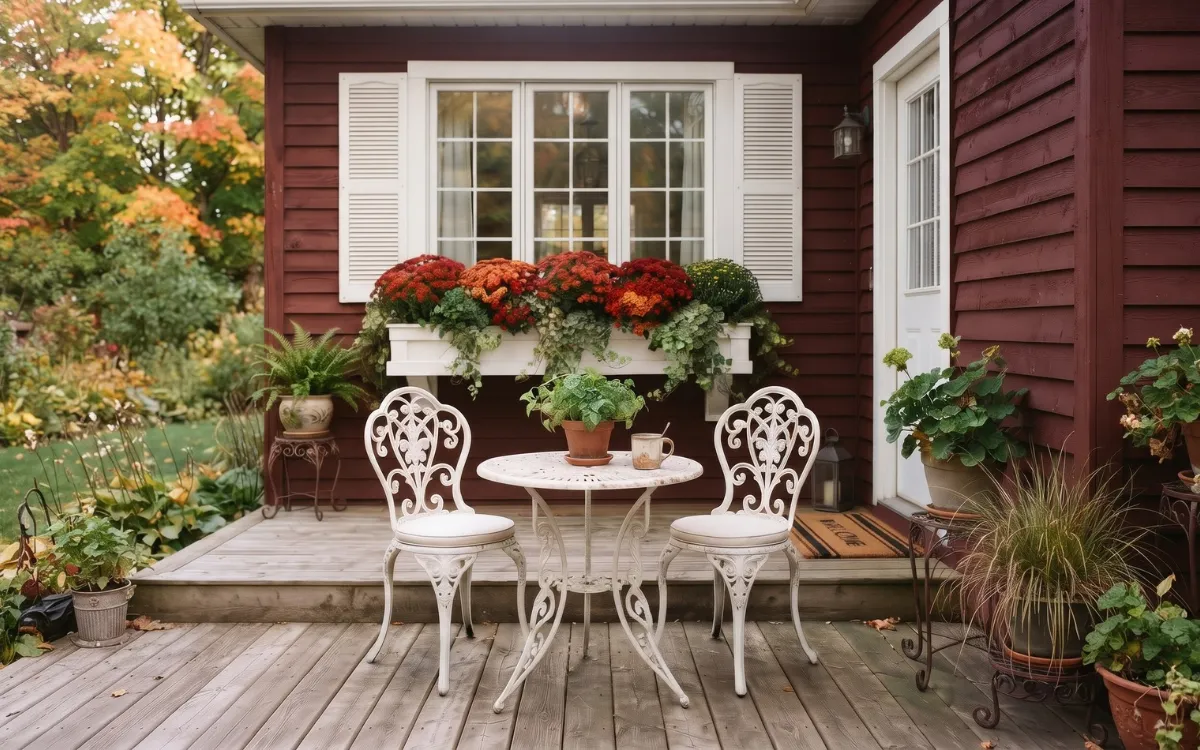
Autumn window boxes offer a simple way to bring seasonal color and natural texture to your home’s exterior. The challenge is choosing plants and decorative elements that work together without creating an overcrowded arrangement or one that loses its appeal too quickly.
From colorful chrysanthemums and ornamental cabbage to trailing ivy and ornamental grasses, these autumn window box ideas show how to combine flowers, foliage, and seasonal accents into balanced displays.
You will also learn how to select suitable plants, coordinate colors, and maintain your arrangements throughout the season.
Autumn Window Box Ideas
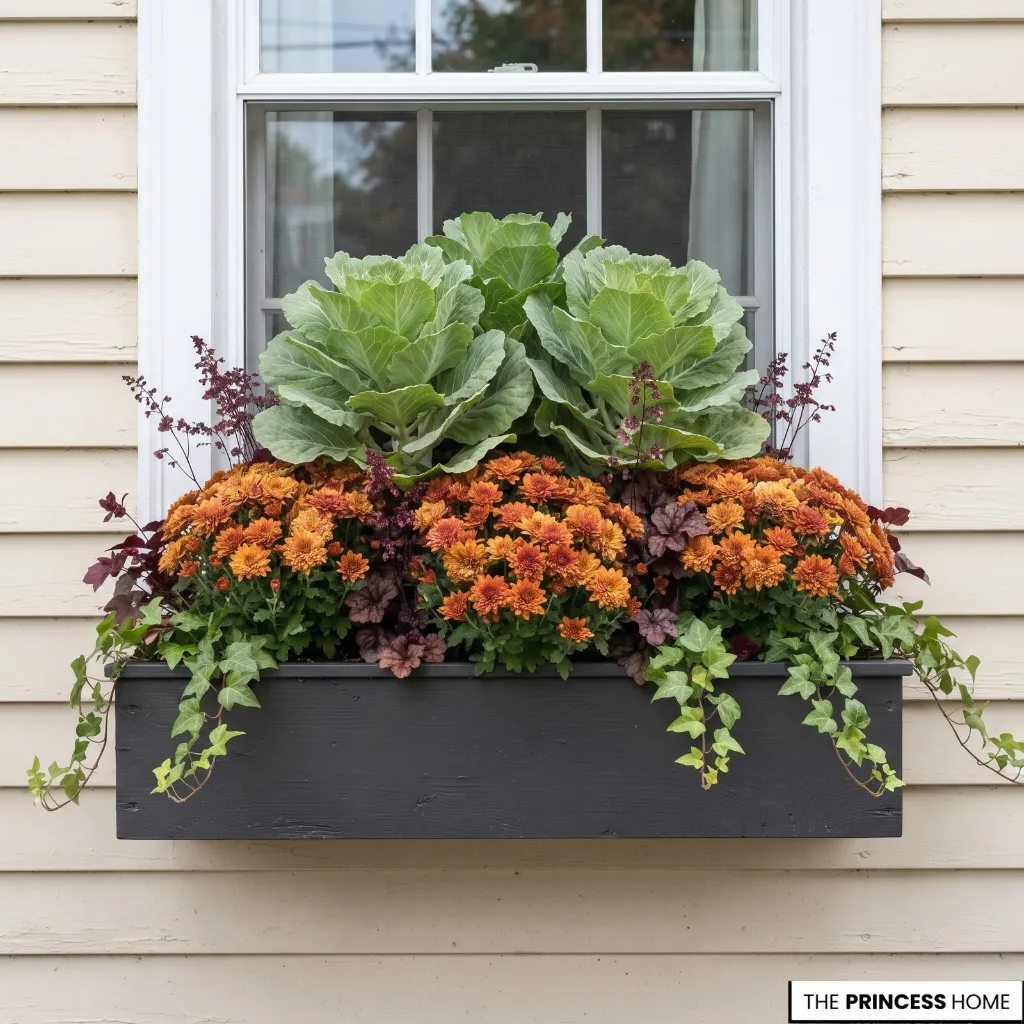
The most successful autumn window boxes combine plants with different heights, textures, and growing habits. Some arrangements emphasize flowers, while others rely on foliage, ornamental grasses, or natural seasonal accents.
These ideas offer different approaches to help you create a display that complements your home’s exterior and available growing conditions.
Chrysanthemums & Cabbage
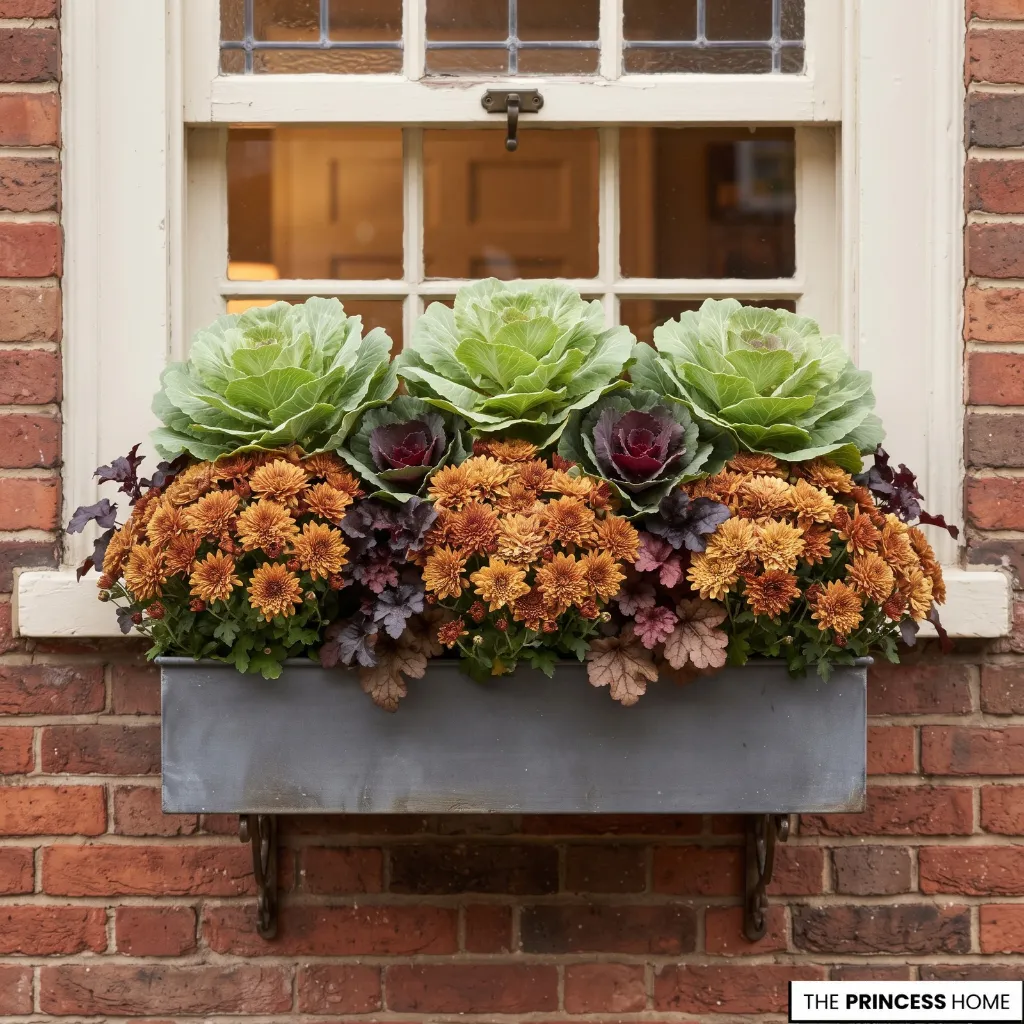
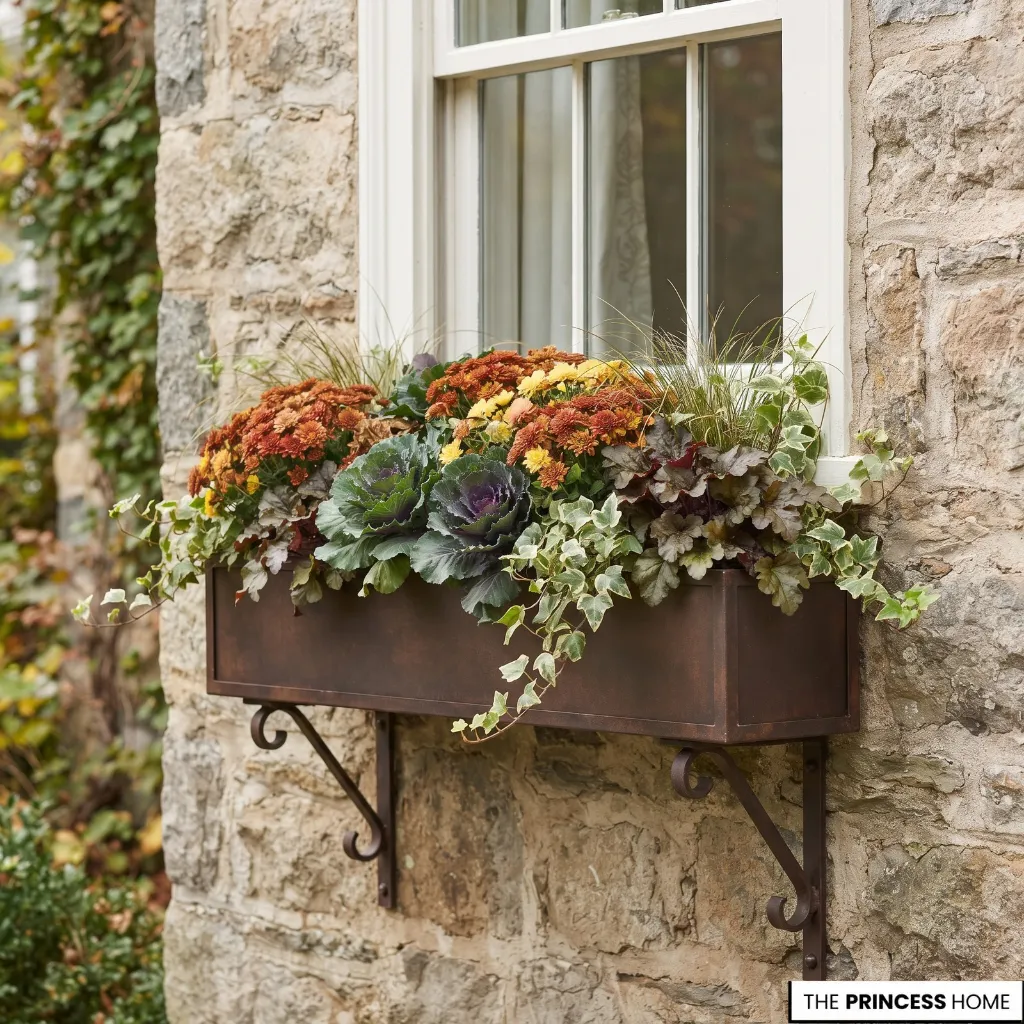
Chrysanthemums and ornamental cabbage make a distinctive autumn combination because they provide different forms of seasonal interest.
With rounded flower heads in shades of yellow, orange, bronze, and burgundy, chrysanthemums bring vibrant color, while ornamental cabbage contributes broad, layered leaves.
Place chrysanthemums toward the front or middle of the box, depending on their mature height, and position ornamental cabbage where its foliage can remain visible. Combining different flower and leaf shapes prevents the arrangement from looking repetitive.
For a coordinated display, choose chrysanthemums in warm colors and ornamental cabbage with purple, rose, or pale green centers. Allow enough room for each plant to develop rather than packing the box tightly.
For a practical arrangement, begin by positioning the ornamental cabbage toward the back or middle of the box, then place compact chrysanthemums in front or beside it where their flower heads remain visible.
If the box is viewed mainly from outside, keep the tallest foliage toward the window and avoid placing large plants directly in front of smaller flowers. Adjust the positions according to the mature size of the varieties you select.
A Warm Rustic Arrangement
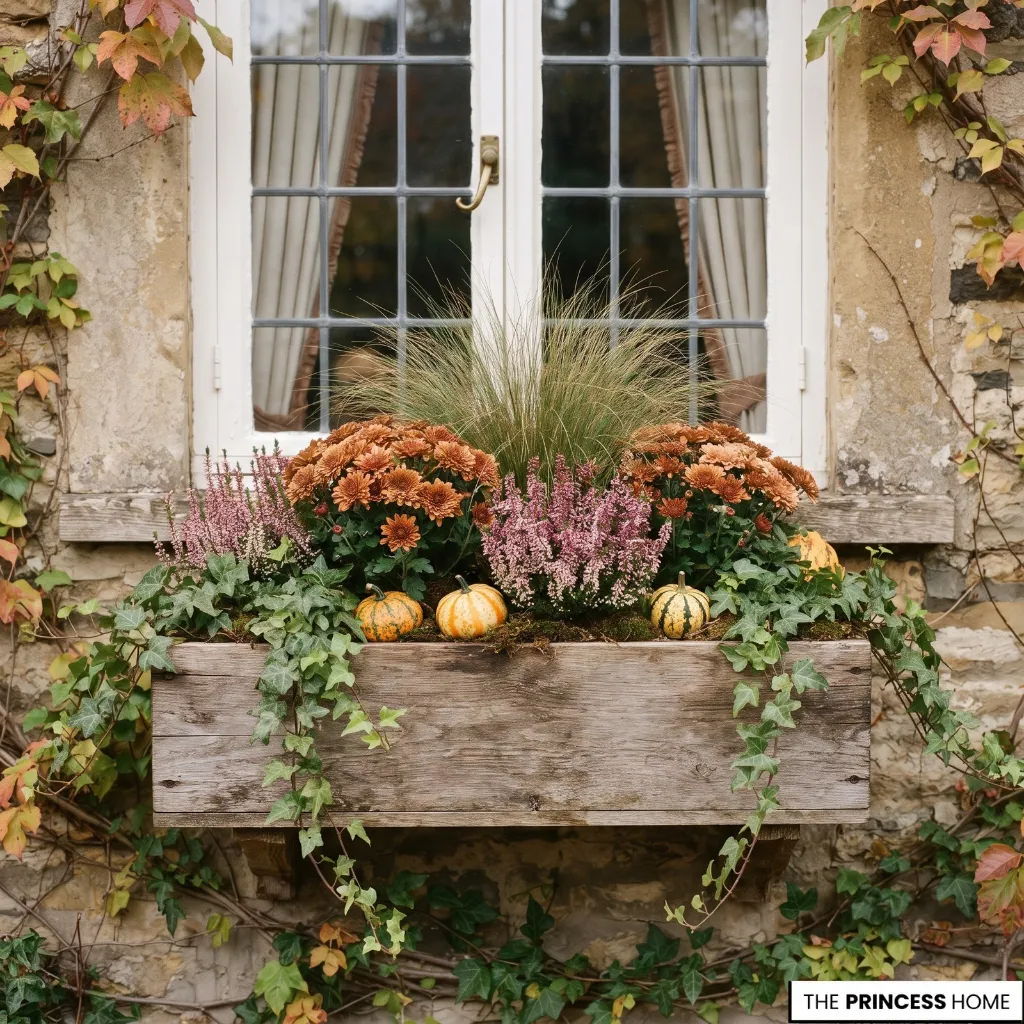
A rustic autumn window box works well with natural materials, earthy colors, and plants with varied textures. Combine bronze chrysanthemums, ornamental grasses, heather, and trailing ivy to create an arrangement with both upright and cascading forms.
A weathered wooden box or a simple terracotta-colored planter can reinforce this look. If you prefer a more restrained display, limit the flowers to one dominant color and let the foliage provide additional variation.
Small natural accents, such as a few miniature gourds or decorative seed heads, can complement the planting. Keep them positioned between the plants without covering the foliage or restricting their growth.
To put this combination together, use an ornamental grass as the taller element at the back or near one end of the box. Add bronze chrysanthemums and heather through the middle, then position ivy near the front corners so it can trail over the edge.
Place any miniature gourds in open spaces where they remain visible without pressing against the plants. This arrangement creates a clear progression from upright foliage to flowering plants and trailing stems.
Purple & Burgundy Flowers
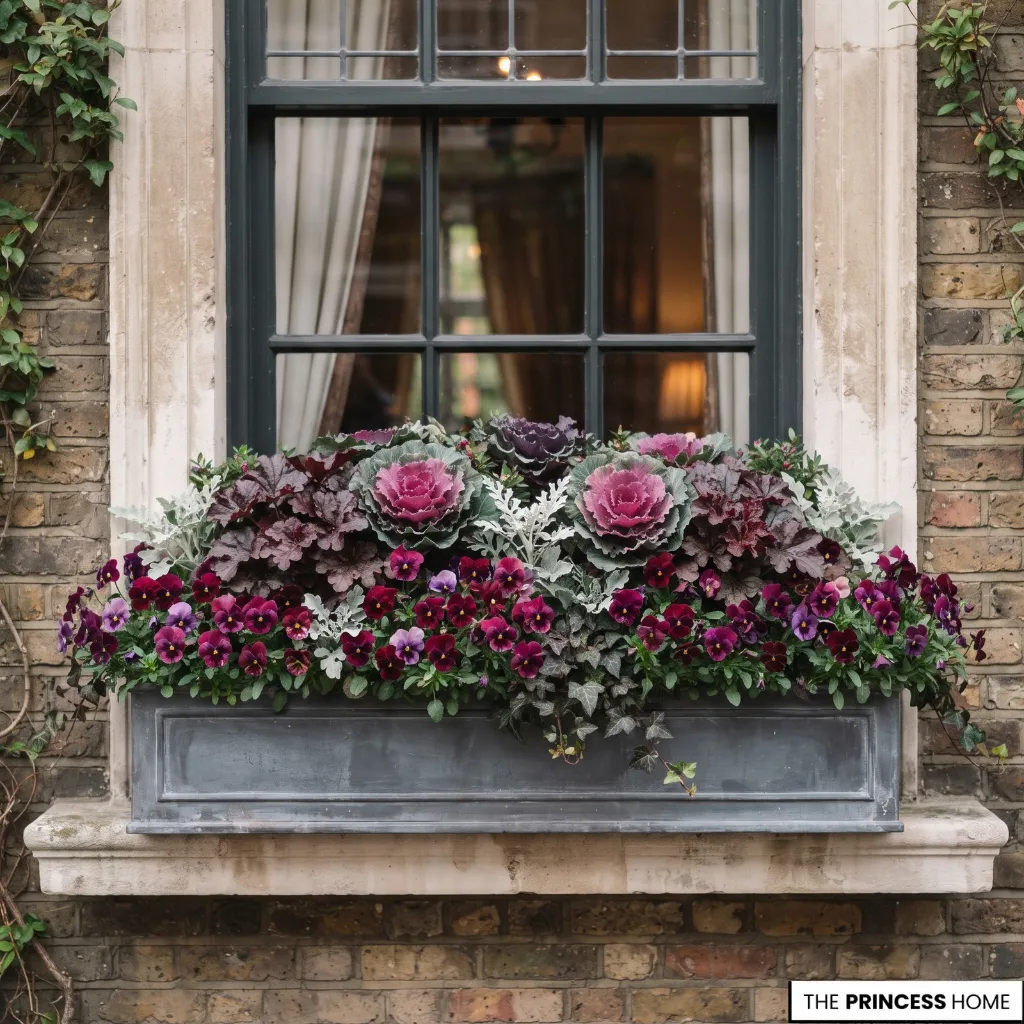
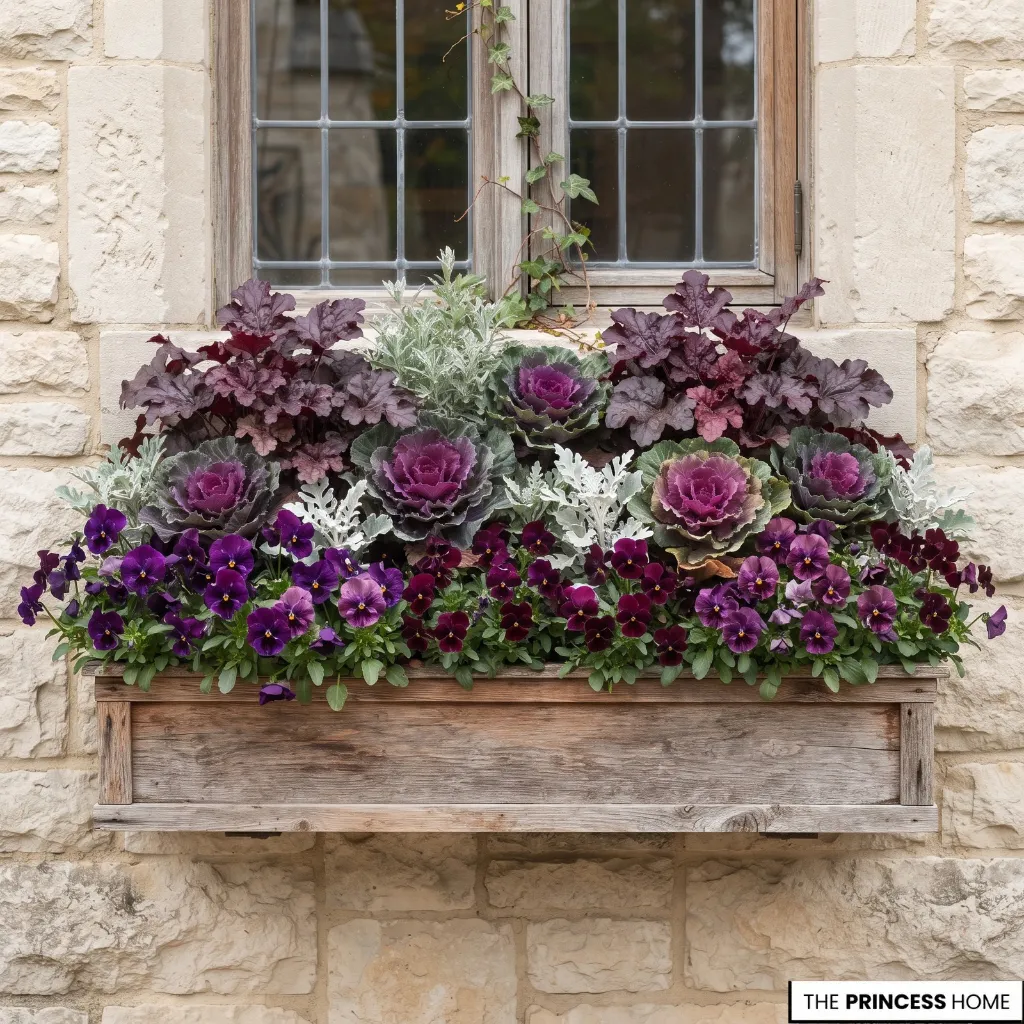
Purple and burgundy create a rich autumn palette without relying entirely on traditional orange and yellow. These deeper shades work particularly well against pale stone, cream-colored walls, and painted window frames.
Combine purple pansies or violas with burgundy heuchera and ornamental cabbage. Their differences in flower size and leaf shape provide enough variation to make the arrangement interesting.
Introduce a small amount of silver-green foliage if the combination feels too dark. This creates separation between the deeper colors while keeping the overall display coordinated.
When arranging these plants, use the burgundy heuchera or ornamental cabbage as the main foliage element, then place purple pansies or violas toward the front where their flowers can be seen.
A small amount of silver-green foliage can be added between the darker plants to prevent the colors from blending together. Keep the palette limited so that the different leaf and flower shapes provide most of the variation.
Ornamental Grasses
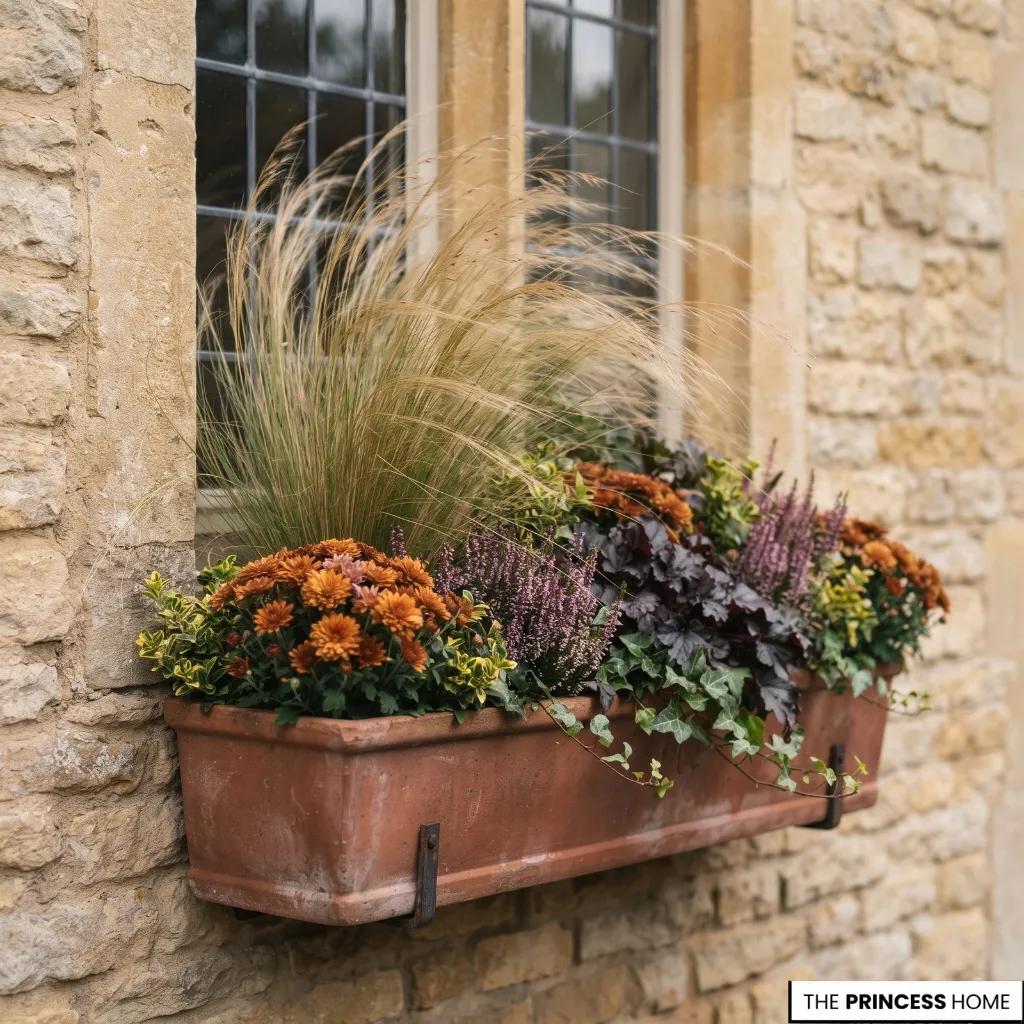
Ornamental grasses introduce fine textures and movement that larger flowers and broad leaves cannot provide. Their narrow foliage creates a lighter visual contrast against compact flowering plants.
Choose a suitable compact grass and position it toward the back or at one end of the box. Combine it with chrysanthemums, heather, or colorful foliage to create different levels of height.
Check the mature size of the grass before planting. Some ornamental varieties grow too large for a window box, while others are better suited to small containers. Choose varieties according to the available space and local climate.
For a simple composition, use one compact grass as the focal point rather than filling the entire box with tall foliage. Place lower flowers or foliage plants around its base, leaving enough space for the grass to spread naturally. This gives the arrangement height while allowing the smaller plants to remain visible.
Colorful Pansies & Violas
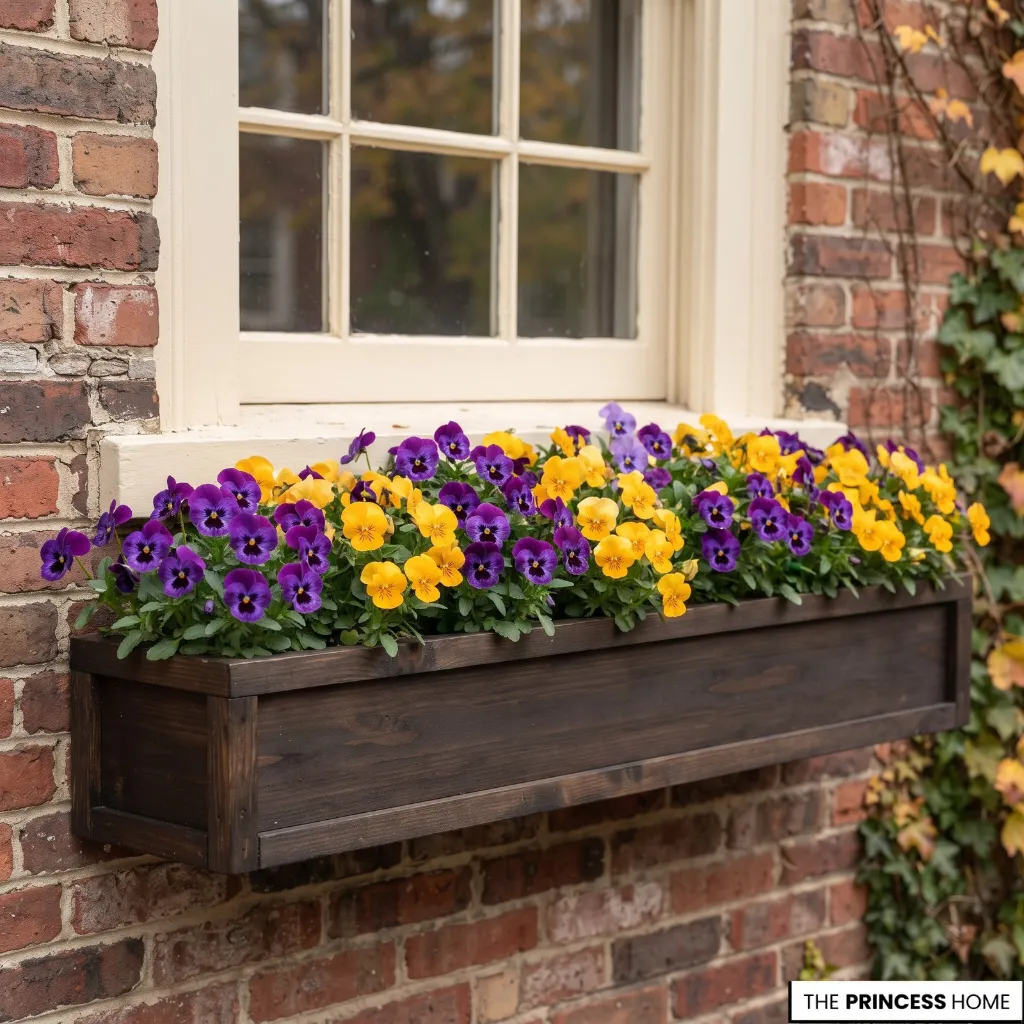
Pansies and violas are useful choices for autumn window boxes because they provide compact flowers in a wide range of colors. Their relatively low growth makes them suitable for the front of an arrangement, where larger plants might otherwise hide them.
Combine two or three complementary colors rather than mixing every available shade. Purple with golden yellow creates a noticeable contrast, while burgundy, cream, and soft violet produce a more restrained combination.
These flowers can also provide color as temperatures become cooler, although their performance depends on the variety, exposure, and local weather. Remove faded flowers when appropriate to encourage continued flowering.
For an easy-to-follow arrangement, plant pansies or violas along the front edge of the box, where their flowers can be seen clearly. You can repeat one color across the length of the container and introduce a second shade in small groups to create a coordinated pattern.
If you combine them with taller plants, leave enough space between the groups so the flowers are not hidden as the foliage develops.
Heather for Lasting Texture
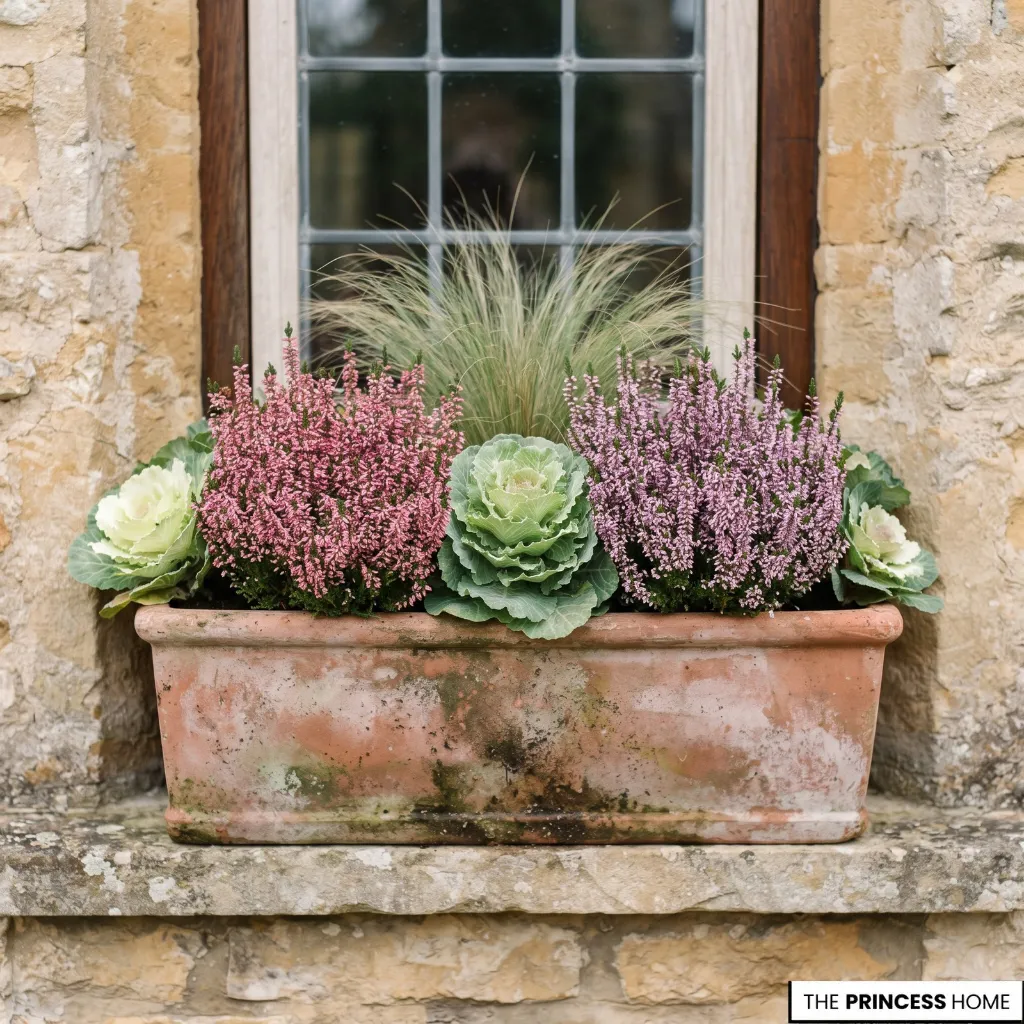
Heather introduces small flowers and dense foliage that can help fill gaps between larger plants. Its compact growth makes it useful for window boxes where maintaining a relatively controlled arrangement is important.
Choose varieties suited to your growing conditions, as different heathers have different preferences for soil acidity, drainage, and moisture.
Combine pink or purple heather with ornamental cabbage, small grasses, or trailing foliage. The fine texture of its flowers provides contrast without competing with larger flowering plants.
Use heather to fill spaces between larger plants rather than placing it where it will be hidden by taller foliage. For example, position it beside ornamental cabbage or in front of a compact grass, then repeat the same variety in another part of the box to create a more connected arrangement.
Before planting, check that the selected heather and its neighboring plants can share the same growing medium and watering conditions.
A Cascading Ivy Display
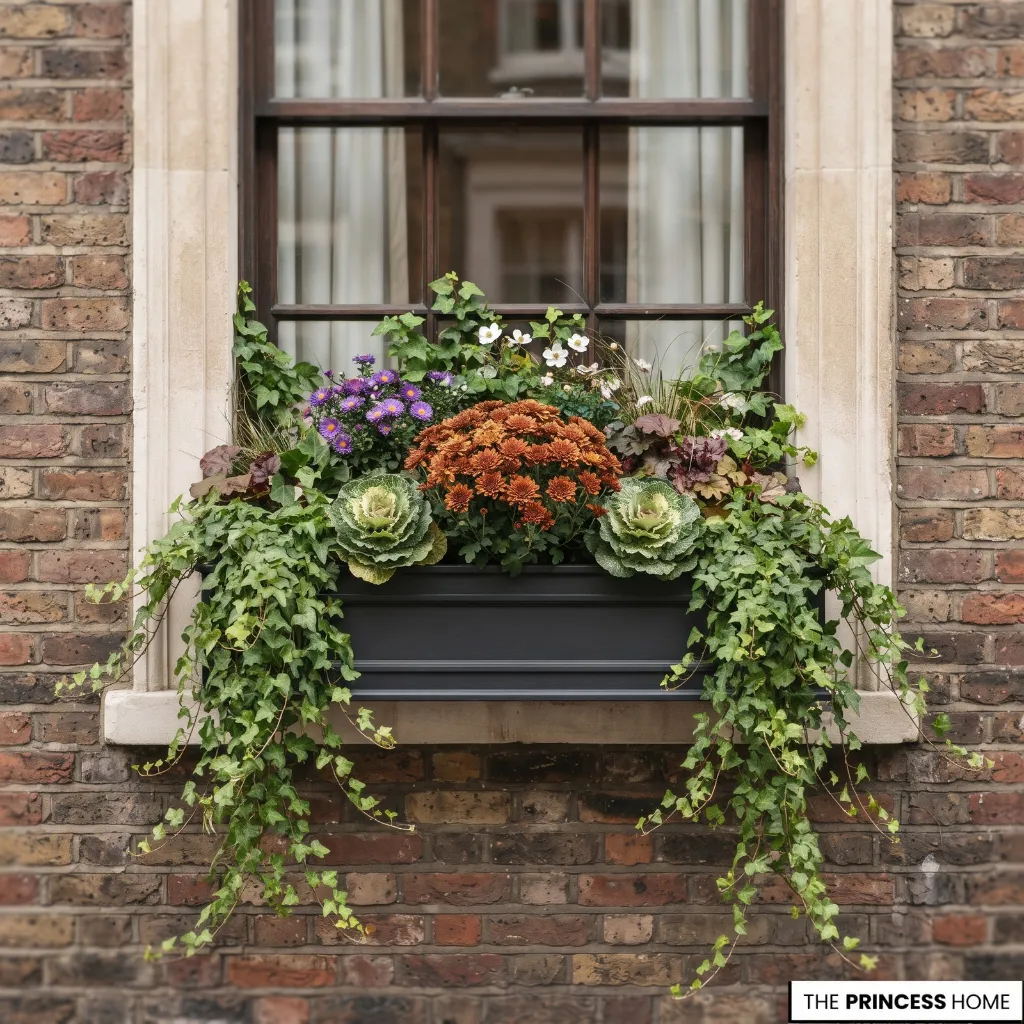
Trailing ivy softens the edges of a window box and connects the planting visually with the exterior of the house. Its green foliage also provides a useful background for seasonal flowers.
Plant ivy near the front corners so its stems can extend naturally over the sides. Add chrysanthemums, pansies, or ornamental cabbage behind it to create a layered arrangement.
Avoid allowing trailing stems to become excessively dense or cover the other plants. Occasional trimming helps maintain the intended shape and keeps the arrangement balanced.
If the window box is long, you can use ivy at both front corners to create a balanced frame around the central planting. In a shorter box, one trailing plant may be enough. Guide the stems outward as they grow, keeping the center open so that the flowers and foliage behind them remain visible.
Miniature Pumpkins & Gourds
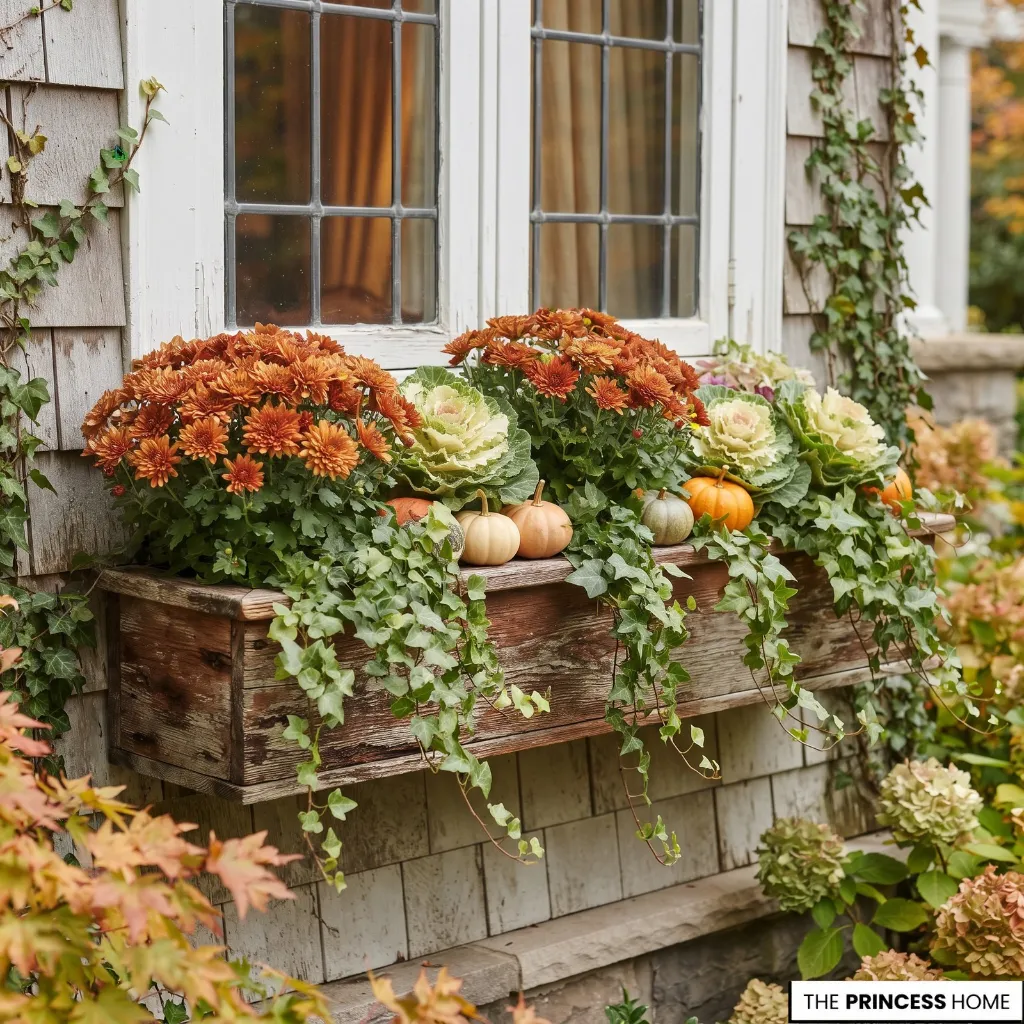
Miniature pumpkins and gourds introduce recognizable autumn details without requiring additional flowering plants. Their rounded shapes and warm colors contrast with the softer forms of foliage and flowers.
Place a few small decorative gourds between established plants or toward the corners of the box. Choose lightweight pieces that do not press against stems or cover the soil completely.
This approach works particularly well with ornamental cabbage, trailing ivy, and chrysanthemums. Keep the decorative elements secondary to the planting so the window box still looks like a living arrangement rather than a collection of seasonal ornaments.
Before adding the gourds, complete the planting and check where there are natural gaps between the plants. Place the accents in those spaces, keeping them clear of flower heads, stems, and the main growing area.
If the box is narrow or already full, use only one or two small pieces rather than forcing several decorations into the arrangement.
Warm Autumn Colors
Color selection influences how the entire window box relates to the home’s exterior. Autumn offers several useful palettes, from traditional warm combinations to deeper arrangements with cooler accents.
Rather than combining every seasonal color, select a dominant shade and use one or two complementary colors to support it.
Rust and gold: Orange, copper, bronze, and golden yellow create a familiar autumn combination. Chrysanthemums, ornamental grasses, and warm-toned foliage can provide these colors.
Burgundy and plum: Deep red, wine, and purple shades produce a richer display. Combine burgundy foliage with purple pansies or heather, then introduce a small amount of green to separate the colors.
Cream and green: Pale flowers and varied green foliage create a quieter arrangement. This combination works particularly well when the exterior already has strong architectural details or a distinctive paint color.
Purple and silver: Purple flowers combined with silver-toned foliage create contrast without relying on warm colors. This palette is useful for a more restrained autumn display.
Before choosing plants, consider the color of the window frame, exterior walls, shutters, and window box itself. A combination that looks attractive on its own may become less effective when placed against a strongly colored exterior.
A useful way to apply these palettes is to choose the main flower color first, then select foliage that either supports or contrasts with it. For example, bronze chrysanthemums can be paired with green foliage and a small amount of burgundy, while purple pansies can be balanced with silver-green leaves.
Arrange the plants so that the supporting colors appear in more than one place rather than gathering all of them in a single corner. This helps the palette feel connected across the length of the box.
Flowers and Foliage
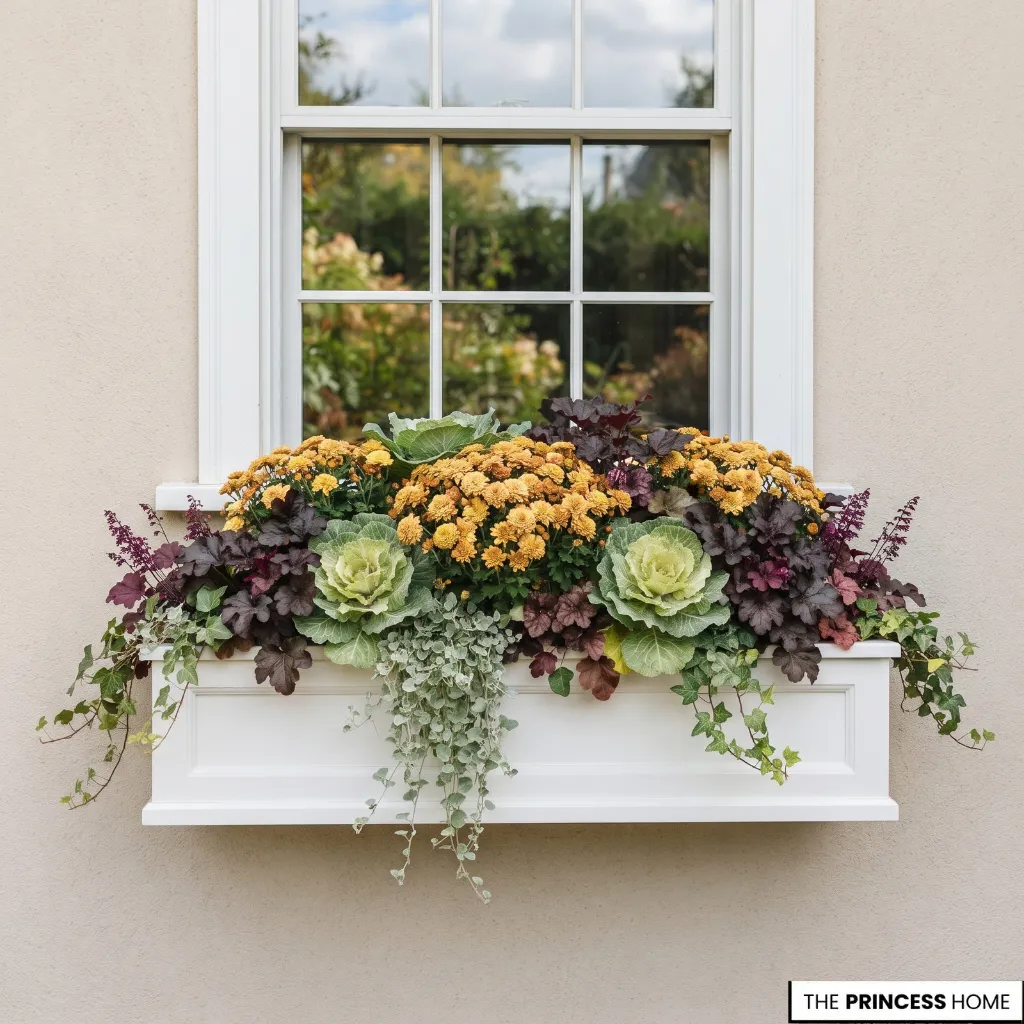
A successful autumn window box does not depend on flowers alone. Foliage plants provide structure, fill spaces between flowering varieties, and help the arrangement remain attractive when individual blooms fade. Choose plants according to their growing requirements as well as their appearance.
Chrysanthemums: Available in several autumn colors, chrysanthemums provide rounded flower heads and a concentrated display of seasonal color. Select compact varieties suitable for containers.
Pansies and violas: Their smaller flowers and compact growth make them useful for the front of the box. They are available in many color combinations and can continue flowering in suitable cool conditions.
Ornamental cabbage and kale: Their broad, layered leaves provide strong visual structure. Many varieties develop more pronounced color as temperatures cool.
Heuchera: Also known as coral bells, heuchera is grown for its attractive foliage. Depending on the variety, its leaves may be burgundy, purple, bronze, lime, or silver-green.
Heather: Its small flowers and dense growth provide fine texture. Choose a variety suited to the soil and climate in your area.
Ornamental grasses: Compact varieties introduce vertical growth and narrow foliage, helping balance plants with broader leaves and rounded flowers.
Trailing ivy: Its cascading stems soften the front and sides of a window box. It can also provide a relatively consistent green element among more seasonal plants.
Not every plant will perform equally well in every location. Check its sunlight requirements, mature size, temperature tolerance, and watering needs before combining it with other varieties.
When selecting plants at a garden center, compare their labels before buying rather than choosing them by color alone. Check whether they need full sun or partial shade, how large they are expected to grow, and whether they have similar watering requirements.
This is particularly important when combining flowering plants with foliage varieties, as a visually attractive combination may be difficult to maintain if the plants need different growing conditions.
Layered Planting
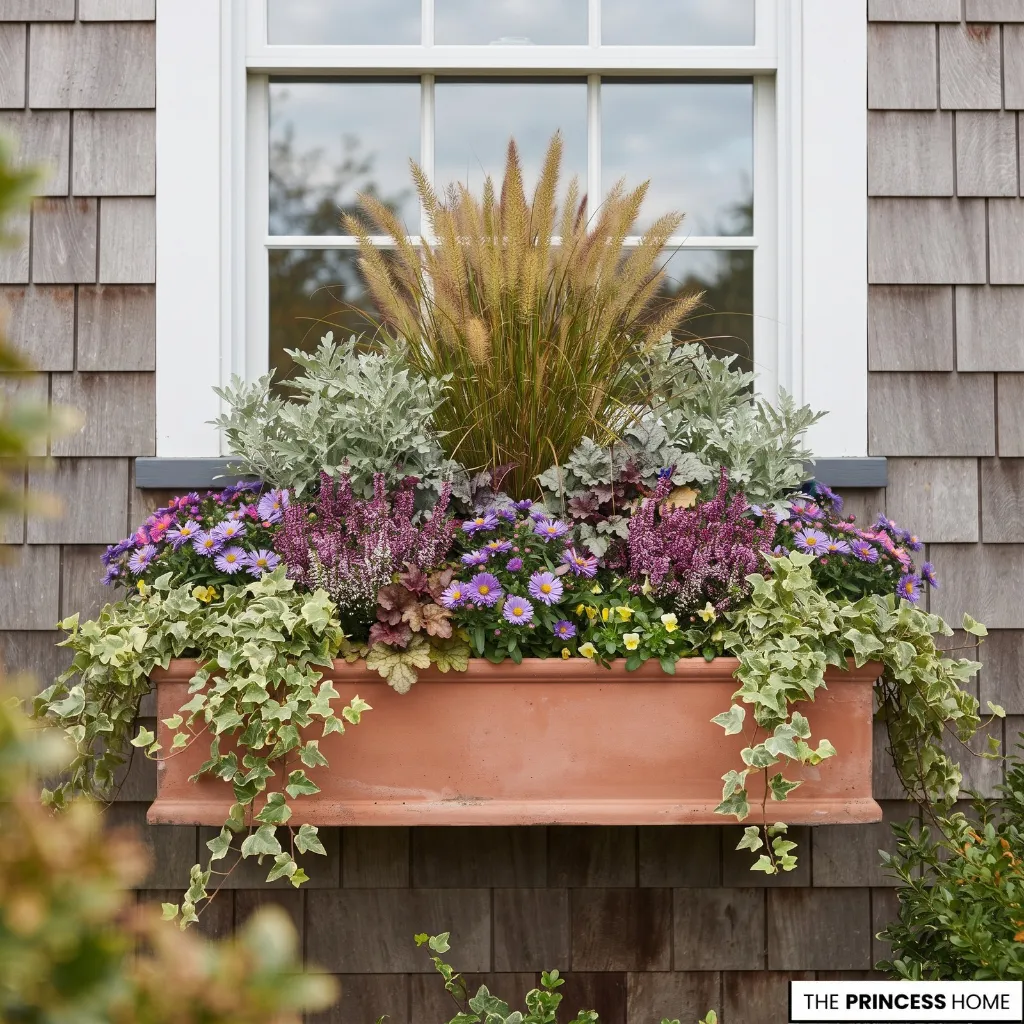
Layering gives an autumn window box a clear structure and prevents it from appearing flat. Instead of arranging plants at the same height, combine upright, compact, and trailing forms. A useful starting point is the thriller, filler, and spiller approach.
Thrillers: Taller plants that provide height or a focal point. Suitable compact ornamental grasses can perform this role.
Fillers: Plants that occupy the middle of the arrangement, such as chrysanthemums, heather, and ornamental cabbage.
Spillers: Trailing plants that extend over the front or sides, such as ivy.
The arrangement should remain balanced from both inside and outside the house. Taller plants generally work toward the back, while lower plants can occupy the front. However, the exact placement depends on the depth of the box and the position of the window.
For a window box viewed mainly from outside, begin by placing taller plants toward the back, closest to the window, and position medium-height plants through the center. Add compact flowers along the front and trailing varieties near the front corners.
If the box can be seen clearly from both sides, distribute the taller plants more carefully so they do not hide the lower planting from the opposite viewing angle.
For example, a combination of one compact ornamental grass, two or three chrysanthemums, a small group of heather, and ivy at the front corners can create a complete layered arrangement. The grass provides height, the chrysanthemums and heather fill the middle, and the ivy softens the edges.
The exact number of plants depends on the length and depth of the box, so use this combination as a starting point rather than a fixed planting formula.
Pay attention to the mature size of each plant. A box that looks full immediately after planting may become overcrowded as the plants develop. Leave enough space for foliage and flowers to expand.
Texture is equally important. Combine broad leaves with fine foliage and rounded flowers with more upright forms. These differences help individual plants remain visible within the composition.
Window Box Styles
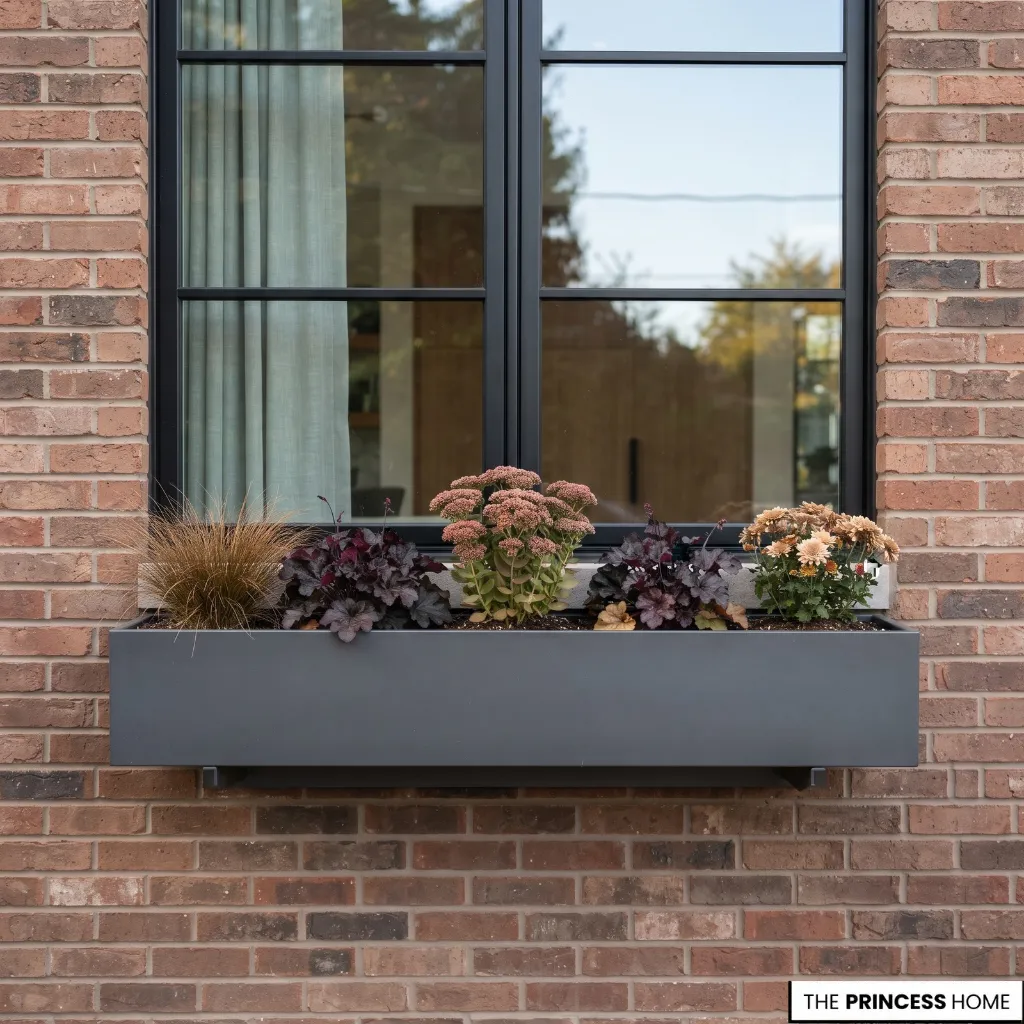
The window box should complement the architectural character of the home. Its planting, color, and container material all influence the final appearance.
Traditional Homes
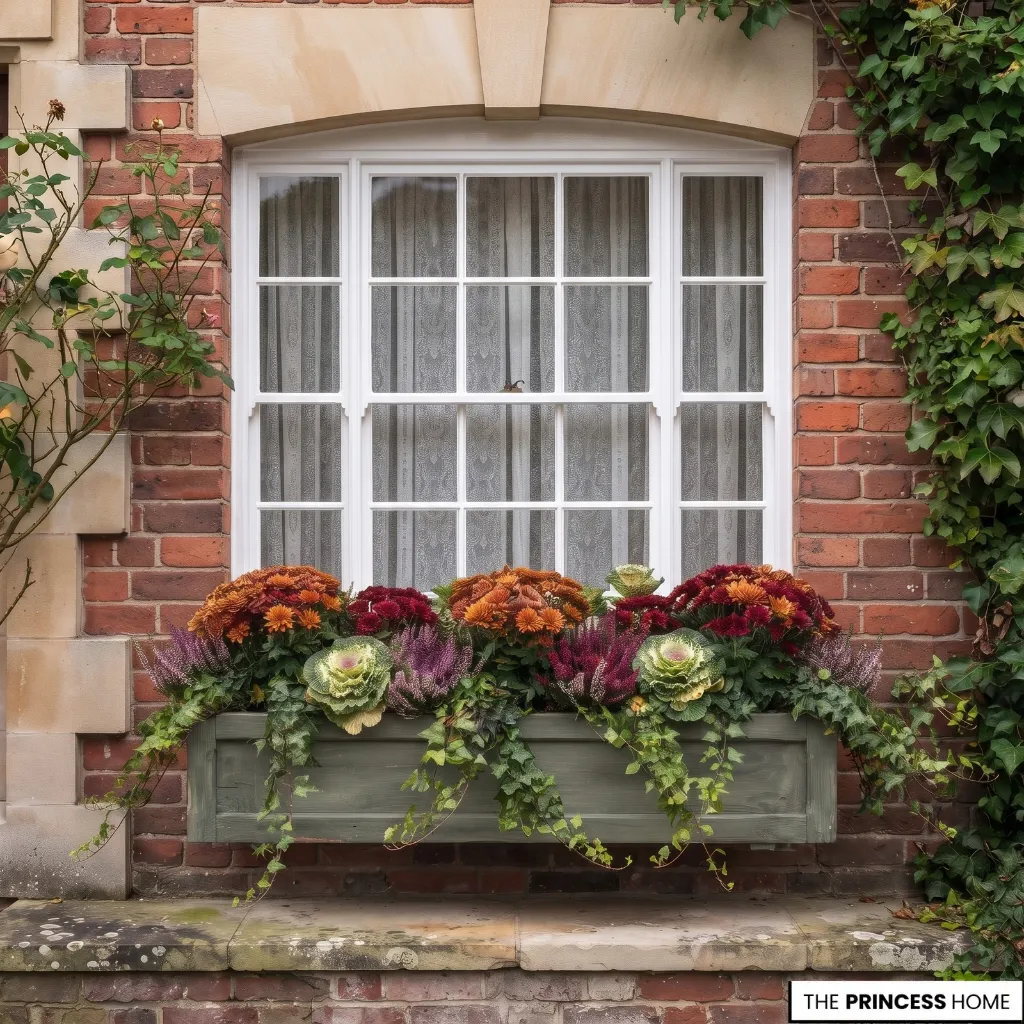
Traditional homes often suit fuller arrangements with recognizable seasonal flowers and foliage. Combine chrysanthemums, ornamental cabbage, ivy, and heather in a wooden or painted window box.
Choose colors that relate to the exterior, such as burgundy and cream against brick or warm yellow and green against pale stone.
For a more balanced result, repeat the main flower color across the box and use foliage to connect the different planting groups. A wooden or painted container can support the traditional character without competing with the flowers.
Cottage-Style Homes
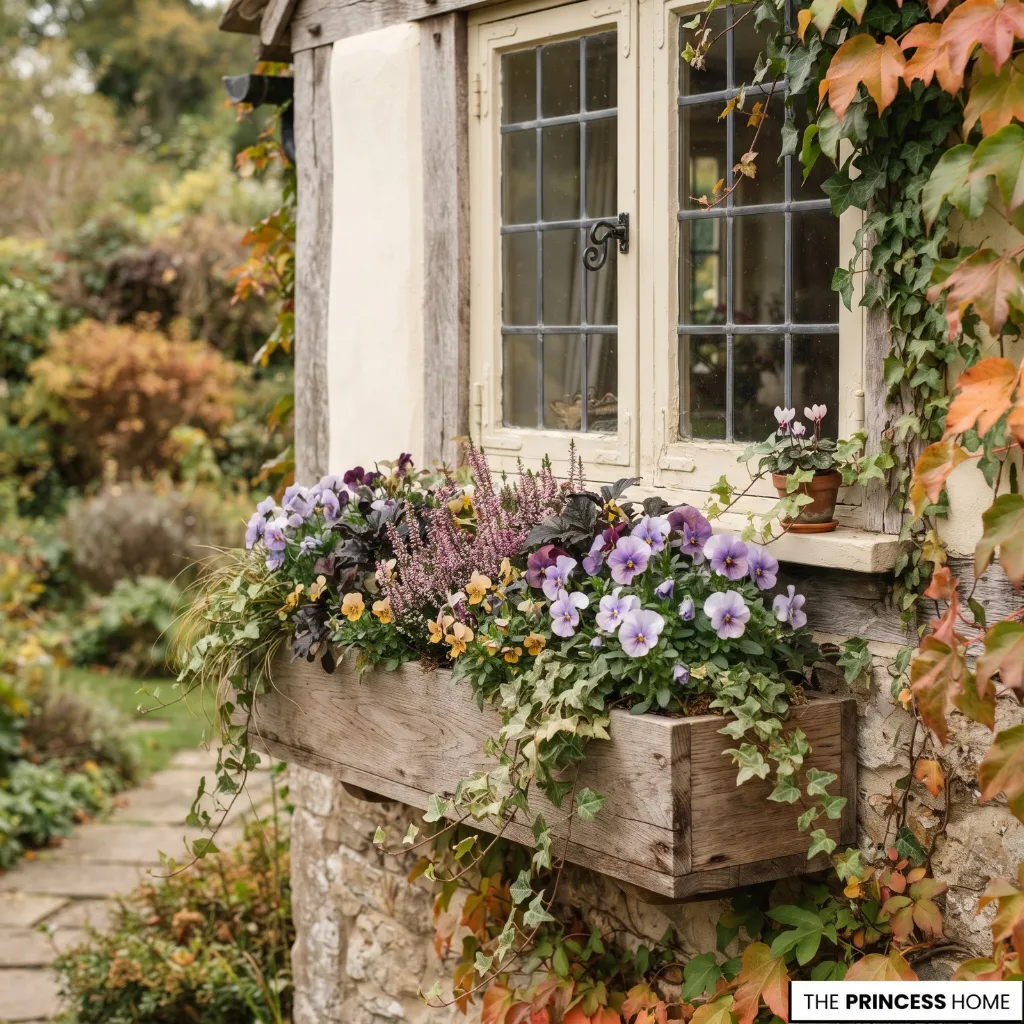
Cottage-style window boxes can accommodate a more relaxed mixture of flowers and foliage. Pansies, violas, heather, and trailing plants create a varied arrangement without requiring strict symmetry.
A weathered wooden planter or a simple painted box complements this approach. Allow the plants to develop naturally while keeping the overall arrangement balanced.
To create this effect, group plants in small clusters rather than spacing every variety at equal intervals. Allow some foliage to overlap naturally while keeping the main flowers visible. This gives the arrangement a relaxed appearance without making it look crowded.
Modern Homes
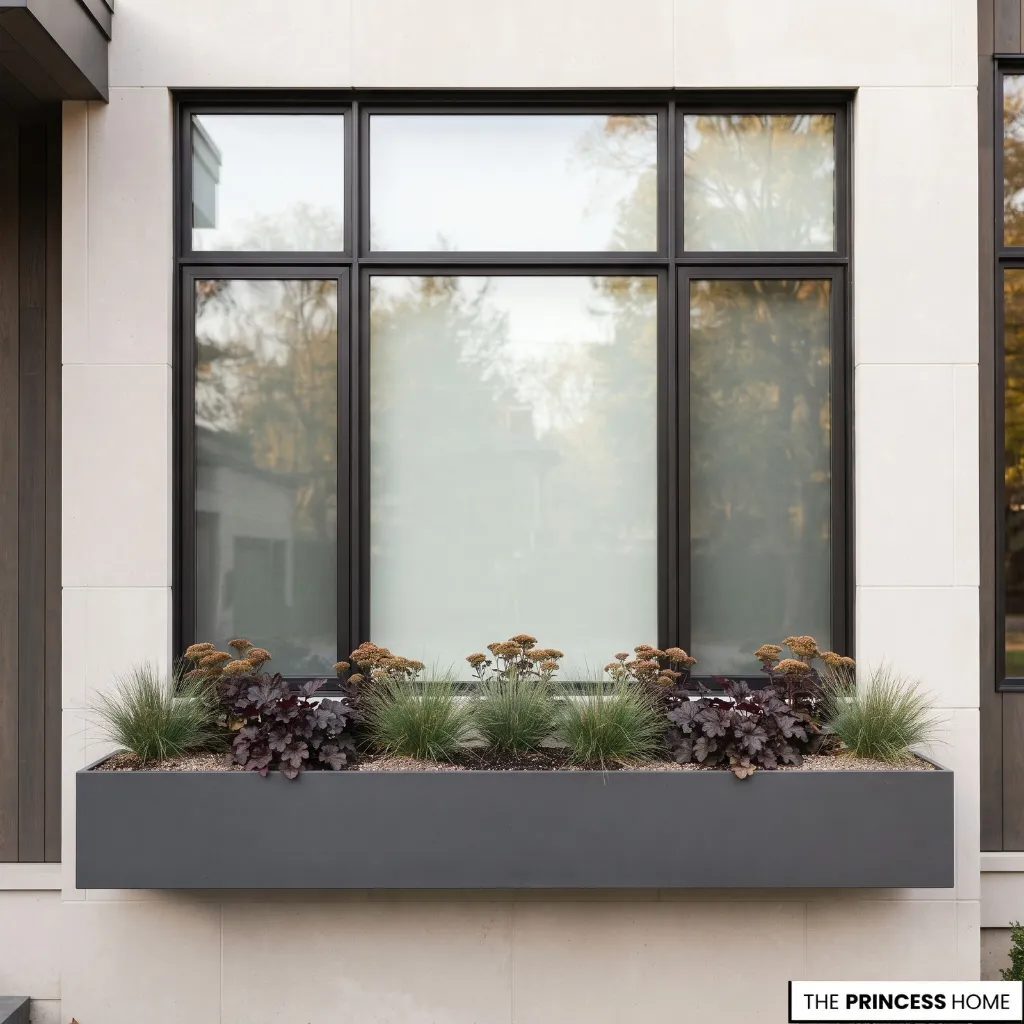
Modern exteriors generally benefit from more controlled planting. Choose a limited color palette and use plants with clear shapes, such as ornamental grasses, heuchera, and compact flowering varieties.
A dark, neutral, or understated window box can provide a simple background. Avoid overcrowding the arrangement or introducing too many unrelated decorative elements.
For this style, repeat a small number of plant varieties in a clear arrangement. One grass variety, a consistent foliage plant, and a compact flowering plant can provide enough contrast without making the box appear busy. Keep the spacing deliberate and allow the shape of each plant to remain visible.
Planting and Care
Even a well-designed window box needs suitable growing conditions to remain attractive throughout autumn. Container plants have limited soil volume, so drainage, watering, and exposure require particular attention.
Check Sunlight Observe how much direct sunlight reaches the window box during the day. Some plants perform best in full sun, while others prefer partial shade.
Chrysanthemums and many flowering pansies generally need good light for healthy growth. Other foliage plants may tolerate different conditions depending on the variety.
Choose plants with compatible light requirements rather than placing varieties with conflicting needs in the same box.
Before buying the plants, observe the window at different times of the day and note when direct sunlight reaches the box.
A window that receives morning sun may offer different conditions from one exposed to strong afternoon light. Use this observation to narrow your plant choices, then check the growing requirements of each variety.
Use Suitable Growing Medium Use a quality container-growing medium rather than ordinary garden soil. Container mixtures are generally lighter and designed to support drainage and root development.
Choose a medium appropriate for the selected plants. For example, some heathers require more acidic growing conditions than many common bedding plants.
When filling the box, leave enough space near the top for watering without allowing the growing medium to spill over the edges. Arrange the plants before filling all the gaps so you can check their positions and make adjustments while there is still room to work.
Provide Adequate Drainage Make sure the window box has drainage holes and that excess water can escape freely. Waterlogged growing medium can damage roots and encourage plant problems.
If the box sits on a solid support, check that drainage openings are not blocked and that water does not collect beneath the container.
Before adding the growing medium, check that the drainage holes are open and that the container can release excess water. If you use an inner liner or removable planting container, make sure it does not prevent water from escaping.
Water According to Conditions Check the moisture level of the growing medium regularly. Containers can dry out faster than garden beds, particularly when exposed to wind or direct sunlight.
Water when the medium begins to dry according to the needs of the plants. Avoid keeping it constantly saturated, especially during cooler weather when water evaporates more slowly.
Check the box after periods of strong wind or rain as well as during dry weather. Exposure and container size can affect how quickly the growing medium loses moisture, so use its condition as a guide rather than following a fixed watering schedule.
Check Weight and Support A window box becomes heavier when its growing medium absorbs water. Make sure the mounting brackets and supporting surface are suitable for the combined weight of the container, plants, and wet medium.
Use secure fixings appropriate for the wall or window structure. This is particularly important for boxes installed above entrances, walkways, or areas where people pass.
Before planting, check that the box is firmly supported and that its brackets are suitable for the container when fully loaded. If you are unsure about the strength of the wall, sill, or fixings, seek appropriate installation advice before placing a heavy box above an area where people walk.
Remove Damaged Growth Remove faded flowers, dead leaves, and damaged stems as needed. This keeps the arrangement tidy and reduces material that could interfere with healthy growth.
Check trailing plants periodically and trim them if they begin covering neighboring plants or extending too far beyond the box.
As you maintain the arrangement, look at the whole box rather than trimming each plant in isolation. Remove growth that hides neighboring flowers, but retain enough foliage to preserve the shape and fullness of the planting.
Seasonal Transitions
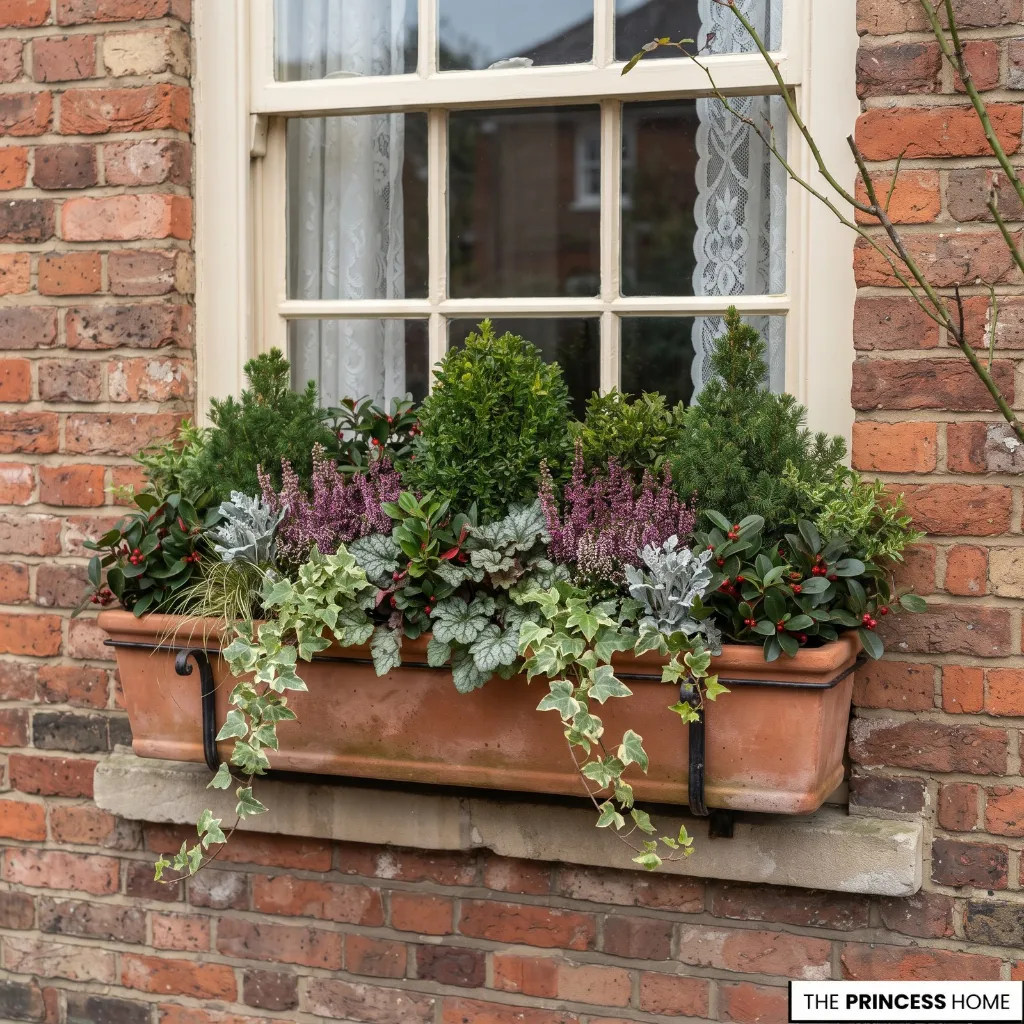
An autumn window box can remain attractive as the season progresses if its planting includes elements that do not depend on flowers alone.
Foliage plants, ornamental grasses, and evergreen trailing varieties can help maintain structure after some seasonal blooms have faded. When choosing plants, consider how they will look at different stages of autumn rather than judging the arrangement only on planting day.
As temperatures decrease, remove plants that have finished flowering or cannot tolerate the approaching cold. Replace them with varieties suited to the conditions if you want to maintain the display into early winter.
You can also adjust a few decorative details without replacing the entire planting. Remove damaged seasonal accents, retain healthy foliage, and introduce small natural elements where appropriate.
The most effective transition comes from planning ahead. Select a combination of plants with different periods of interest so that the window box does not depend on one short flowering season.
When planning this transition, identify which plants are likely to remain attractive as temperatures change and which ones may need replacing. Keep the foliage and structural plants that are still healthy, then remove individual flowers or seasonal accents as they fade.
If you intend to extend the display into winter, choose replacements according to the temperatures and growing conditions in your area rather than assuming that every autumn plant will tolerate colder weather.
Conclusion
Beautiful autumn window boxes come from combining suitable plants, coordinated colors, and contrasting forms. Whether you prefer colorful chrysanthemums, layered foliage, trailing ivy, or a restrained arrangement of ornamental grasses, the key is to consider how each element contributes to the whole display.
Choose plants that suit your local climate and available sunlight, allow enough room for growth, and provide the drainage and care they need. With thoughtful selection, your window boxes can complement your home’s architecture and maintain their appeal throughout autumn.