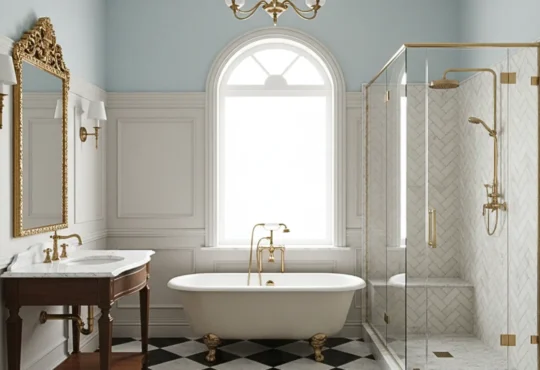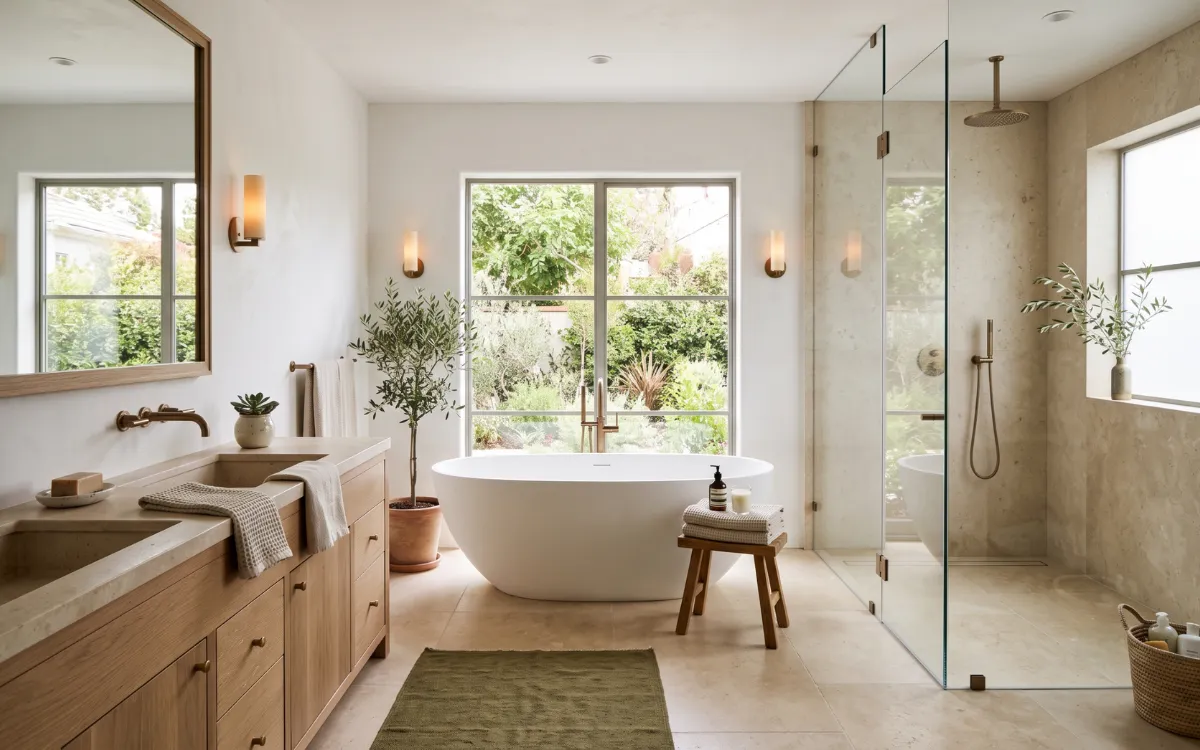
There is a quiet moment when a bathroom begins to feel different. It is no longer simply the first room visited in the morning or the last before bed. Light settles more gently across the walls, familiar textures become comforting, and every detail seems to slow the pace of the day.
A thoughtful bathroom transformation is often less about dramatic change than about creating a space that restores balance and supports everyday well-being.
Whether tucked inside a city apartment, integrated into a modern home, or opening from a spacious primary suite, the room gradually becomes a personal sanctuary shaped by atmosphere as much as design.
Bathroom Sanctuary Design
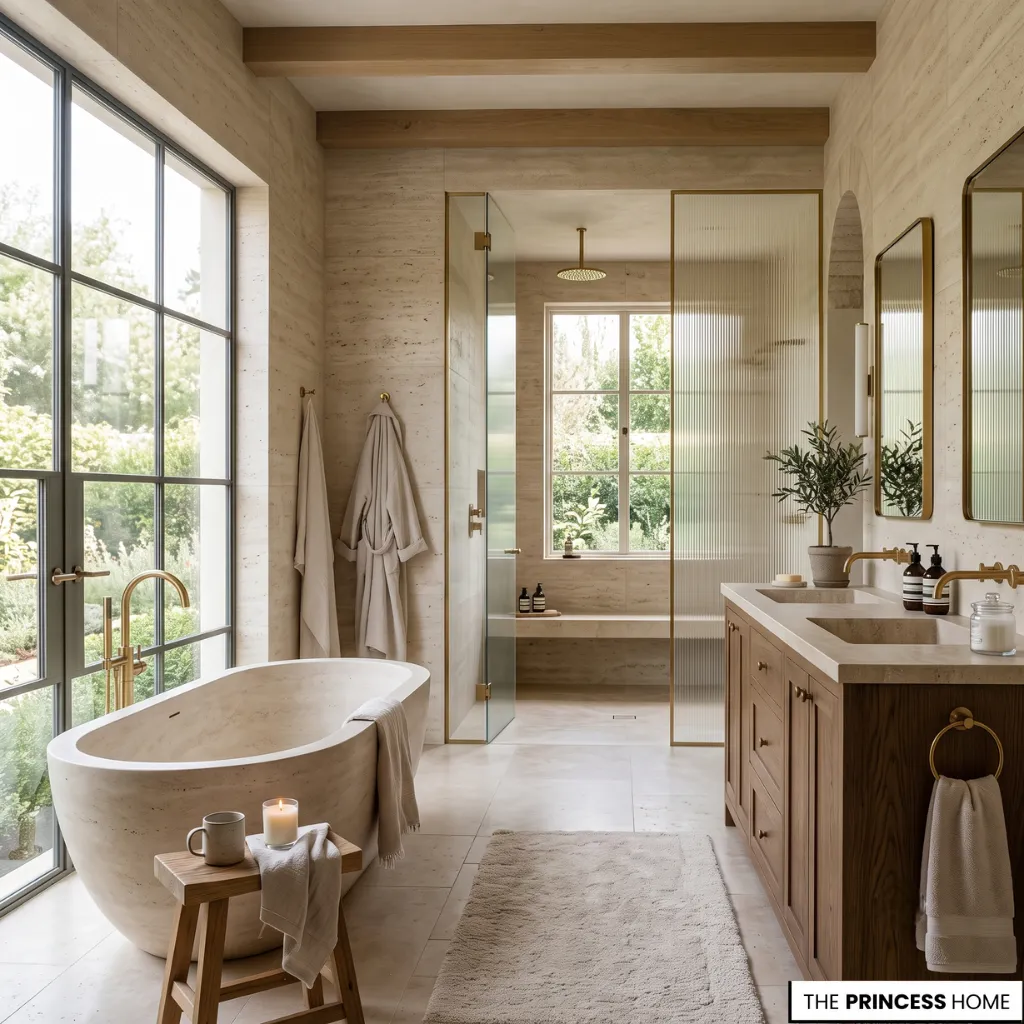
The most memorable interiors rarely announce themselves all at once. Instead, they reveal their character through quiet layers that invite people to pause. A successful bathroom transformation follows the same rhythm, replacing purely functional surroundings with an environment that feels intentional, visually balanced, and deeply restorative.
Natural daylight softens hard edges. Gentle reflections travel across stone, ceramic, and brushed metal, giving familiar materials a quieter presence. Warm wood introduces a subtle sense of comfort, while carefully chosen finishes keep the room feeling composed rather than crowded.
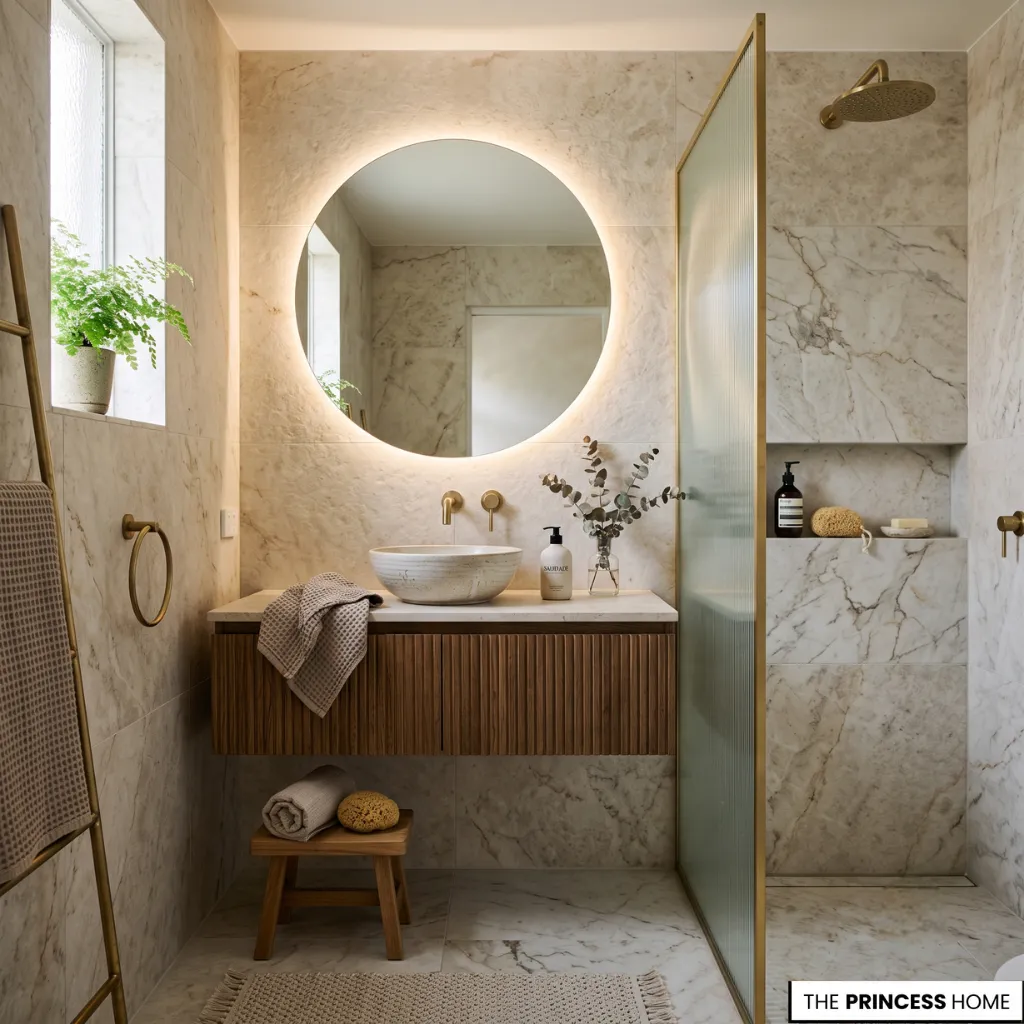
Even the smallest bathrooms can take on an unexpected sense of openness when every surface contributes to the same visual story. What emerges is not simply a remodeled bathroom but a thoughtfully composed space where architecture, materials, and light work together to elevate everyday rituals.
Bathroom Color Palette
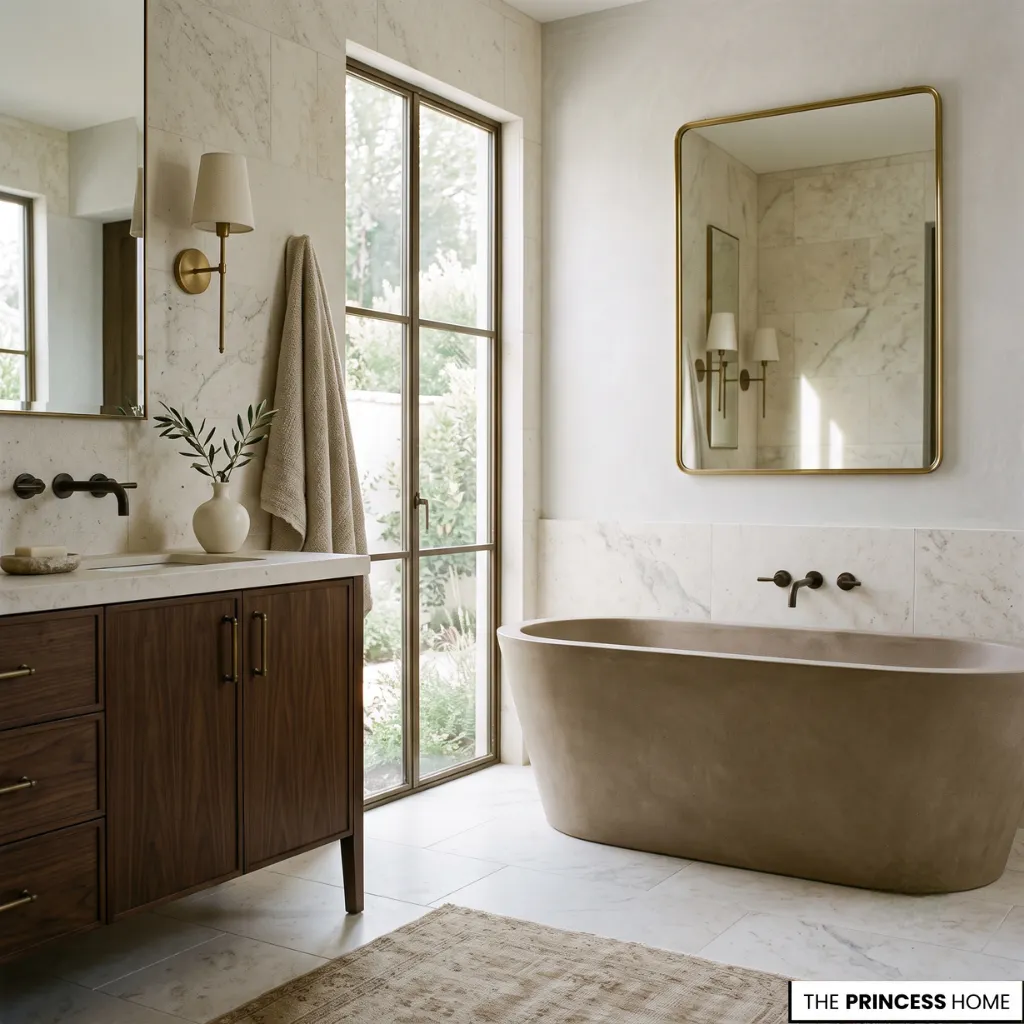
Color has an extraordinary ability to influence how a room is experienced before a single object is noticed. Soft limestone tones, creamy whites, muted sand, delicate gray, and earthy taupe create an effortless foundation that feels timeless rather than trend-driven.
Occasional moments of deeper contrast give the room definition without disturbing its serenity. Charcoal accents, aged bronze fixtures, or dark walnut cabinetry add quiet sophistication while allowing lighter surfaces to remain luminous.
Throughout the day, these colors respond gently to changing natural light, giving the bathroom a living quality that feels subtly different each morning and evening while maintaining a calm, cohesive atmosphere.
Bathroom Materials & Finishes
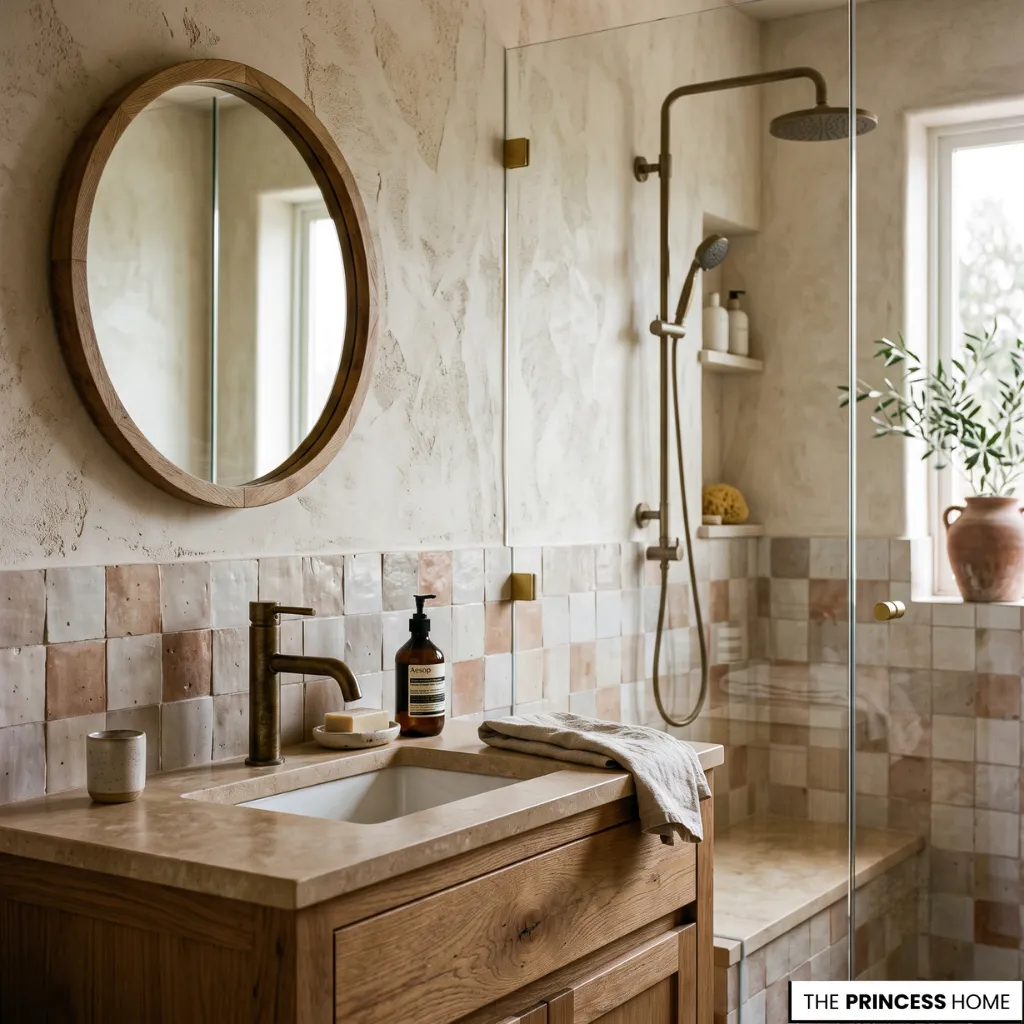
Some of the most beautiful bathrooms are remembered less for what they contain than for how they feel. A honed stone countertop carries a soft matte texture beneath the hand. Handmade tiles introduce subtle variation that prevents uniformity from becoming cold. Fine wood grain adds warmth that polished surfaces alone cannot provide.
Natural materials age gracefully, gathering character instead of losing appeal. Their imperfections become part of the room’s identity, creating an environment that feels authentic rather than manufactured.
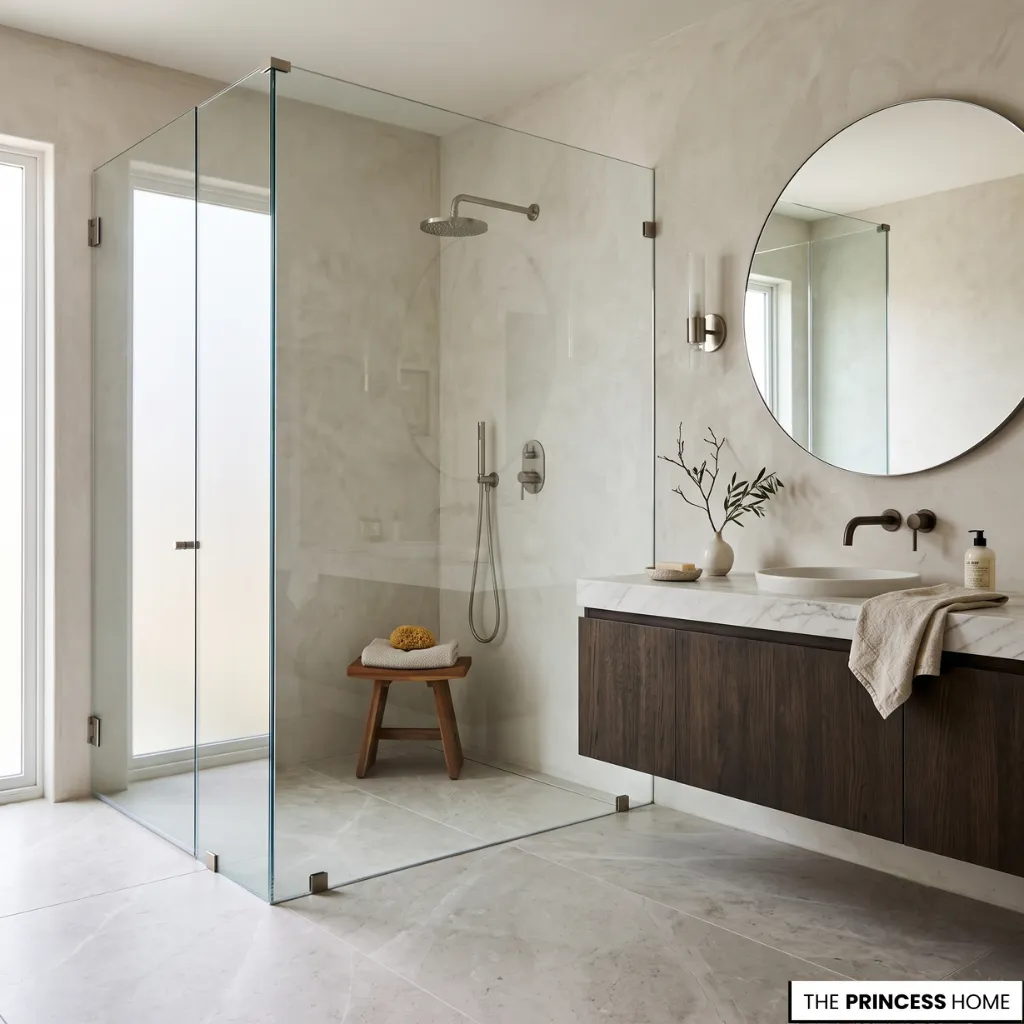
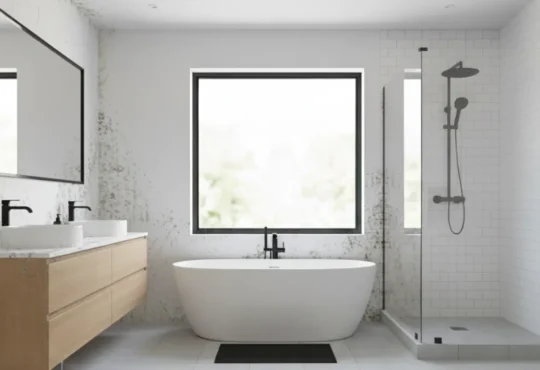
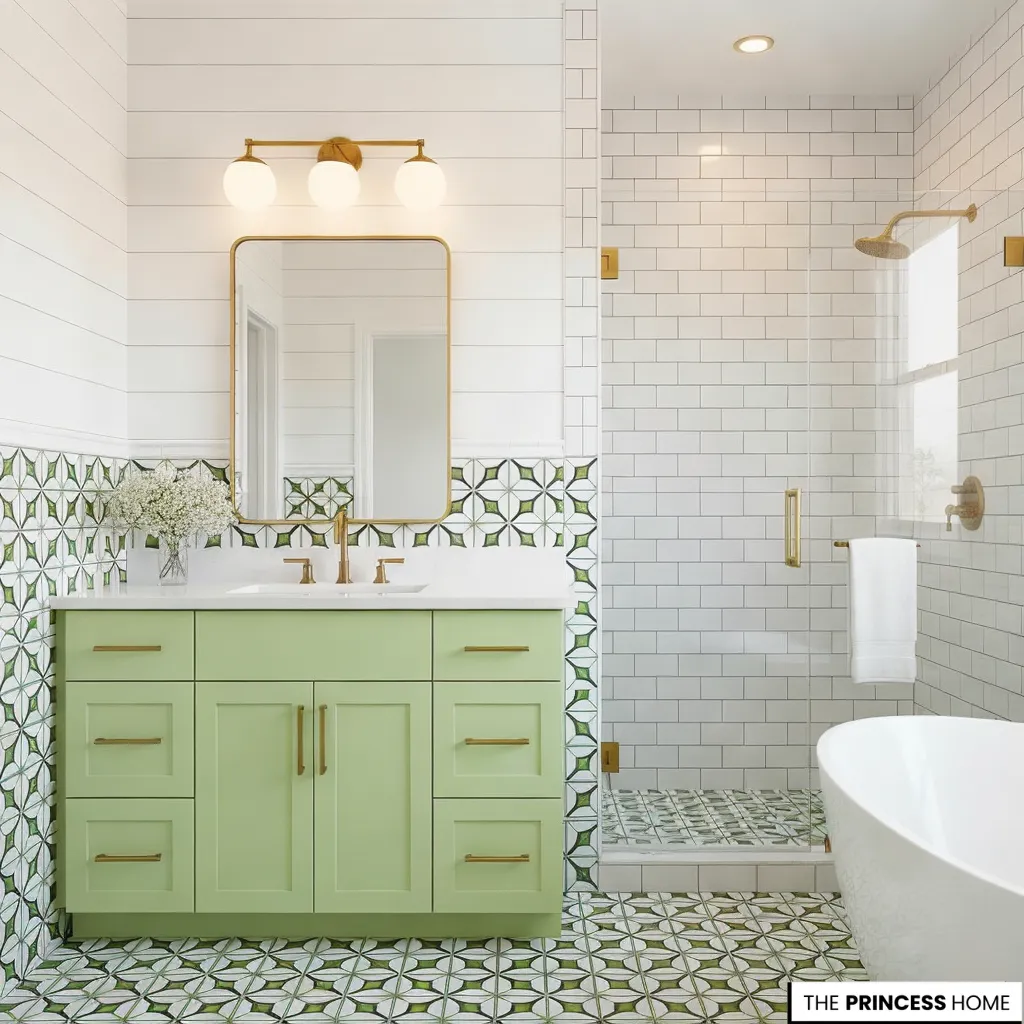
Glass also plays an understated role. Large shower enclosures allow light to travel uninterrupted across the room, while reflective surfaces quietly expand the perception of space without becoming visually dominant.
Large-format flooring, textured plaster walls, natural stone, porcelain tile, and subtle variations in finish create a layered composition that feels refined without appearing overly designed.
Bathroom Lighting Ideas
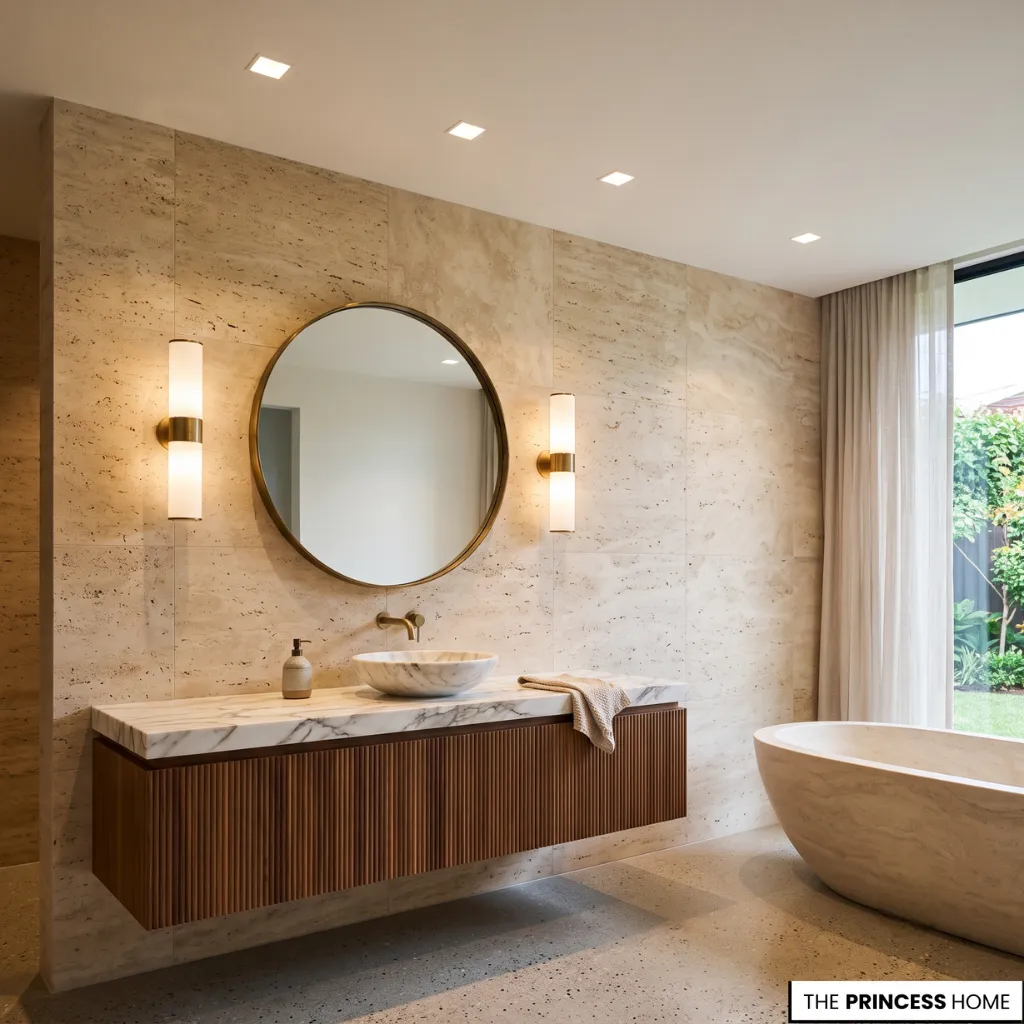
Long before decorative objects are introduced, lighting establishes the emotional tone of a bathroom transformation. Gentle ambient illumination creates an atmosphere that feels relaxed from the moment the door opens.
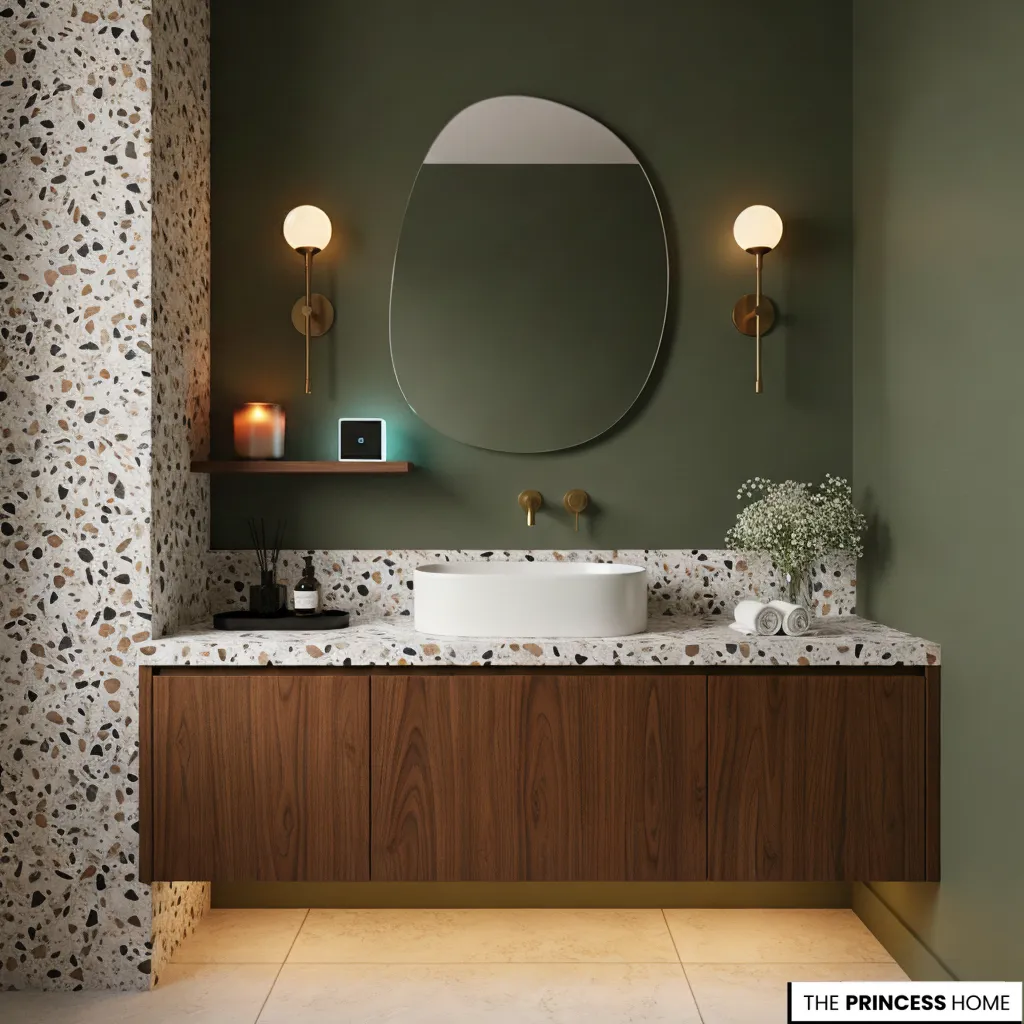
Wall sconces frame mirrors with flattering, balanced light, reducing harsh shadows while emphasizing texture and depth. Recessed ceiling fixtures disappear into the architecture, allowing attention to remain on the materials themselves.
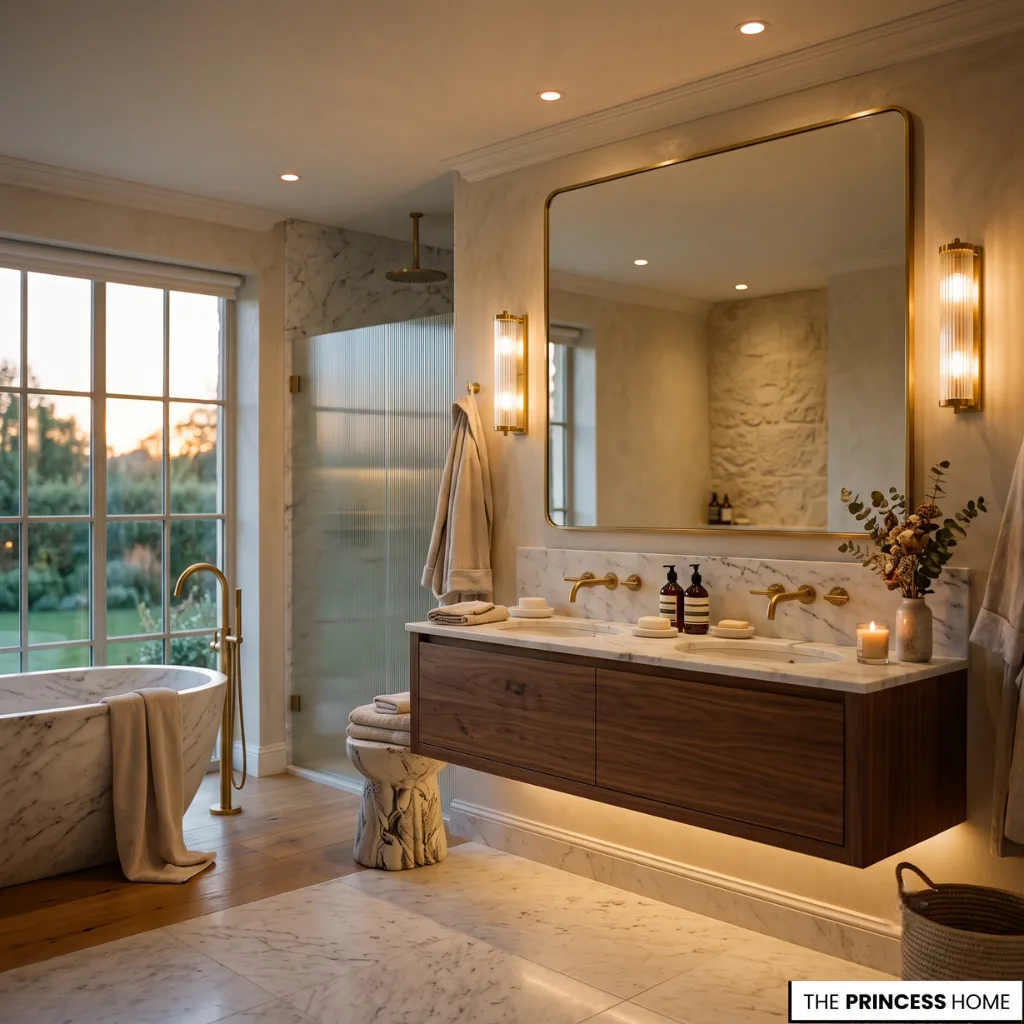
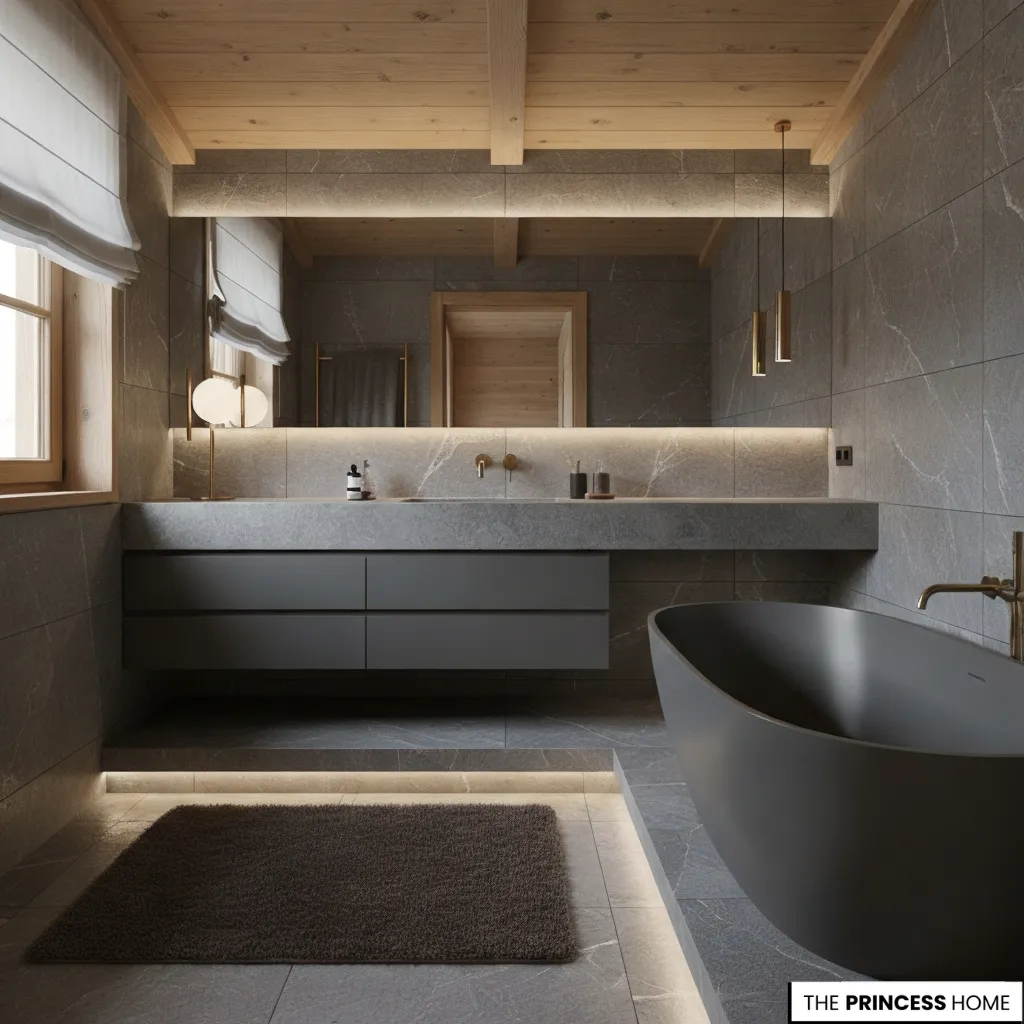
Small accent lights beneath floating vanities or recessed shelving introduce another layer of softness that becomes especially beautiful in the evening.
As daylight fades, artificial lighting takes over almost imperceptibly, preserving the room’s calm rather than interrupting it. The transition feels effortless, allowing the bathroom to shift naturally from a bright morning space to a peaceful evening retreat.
Bathroom Layout & Storage
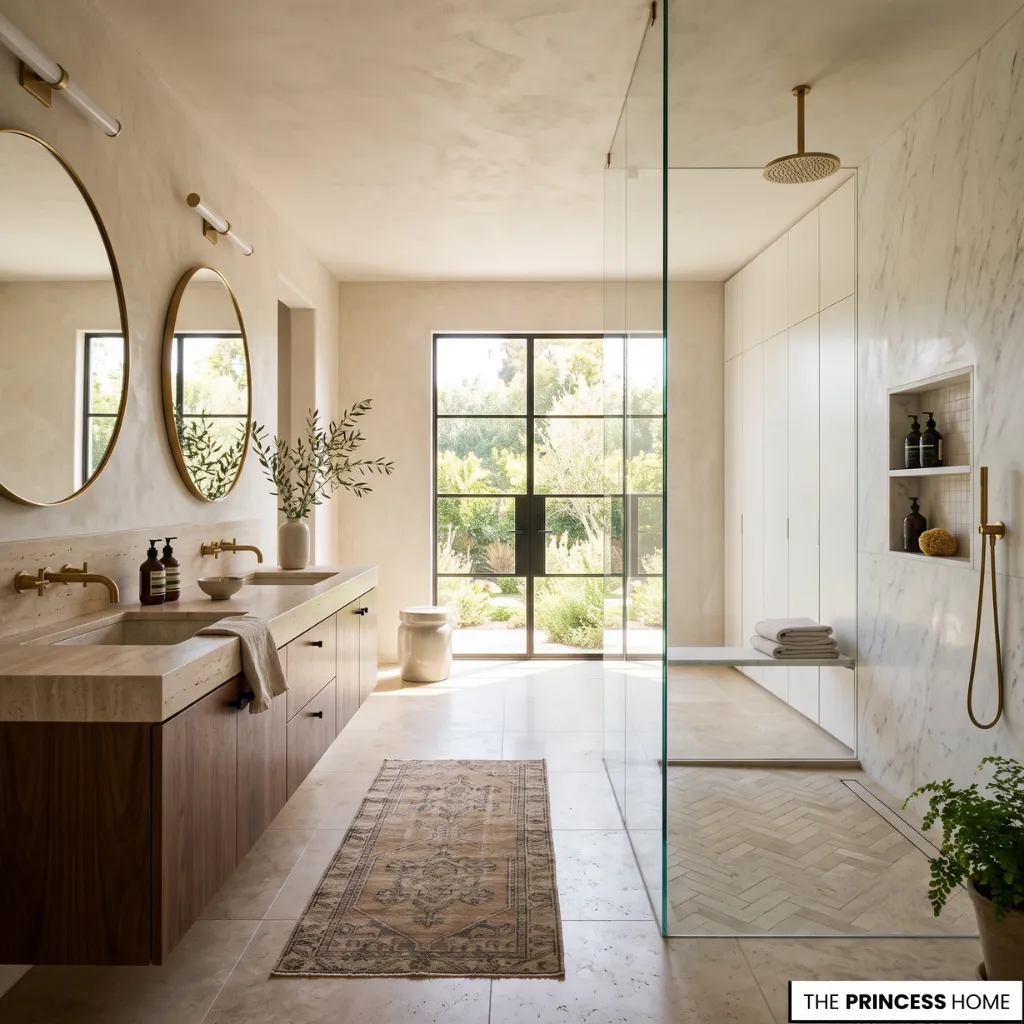
Luxury is often expressed through what is absent. Clear surfaces, generous circulation, and thoughtful proportions allow every object to feel purposeful. Floating vanities reveal more flooring, making compact bathrooms appear lighter and more spacious.
Open shelving introduces carefully curated moments instead of visual clutter. Recessed niches blend naturally into shower walls, keeping daily essentials close without interrupting clean architectural lines.
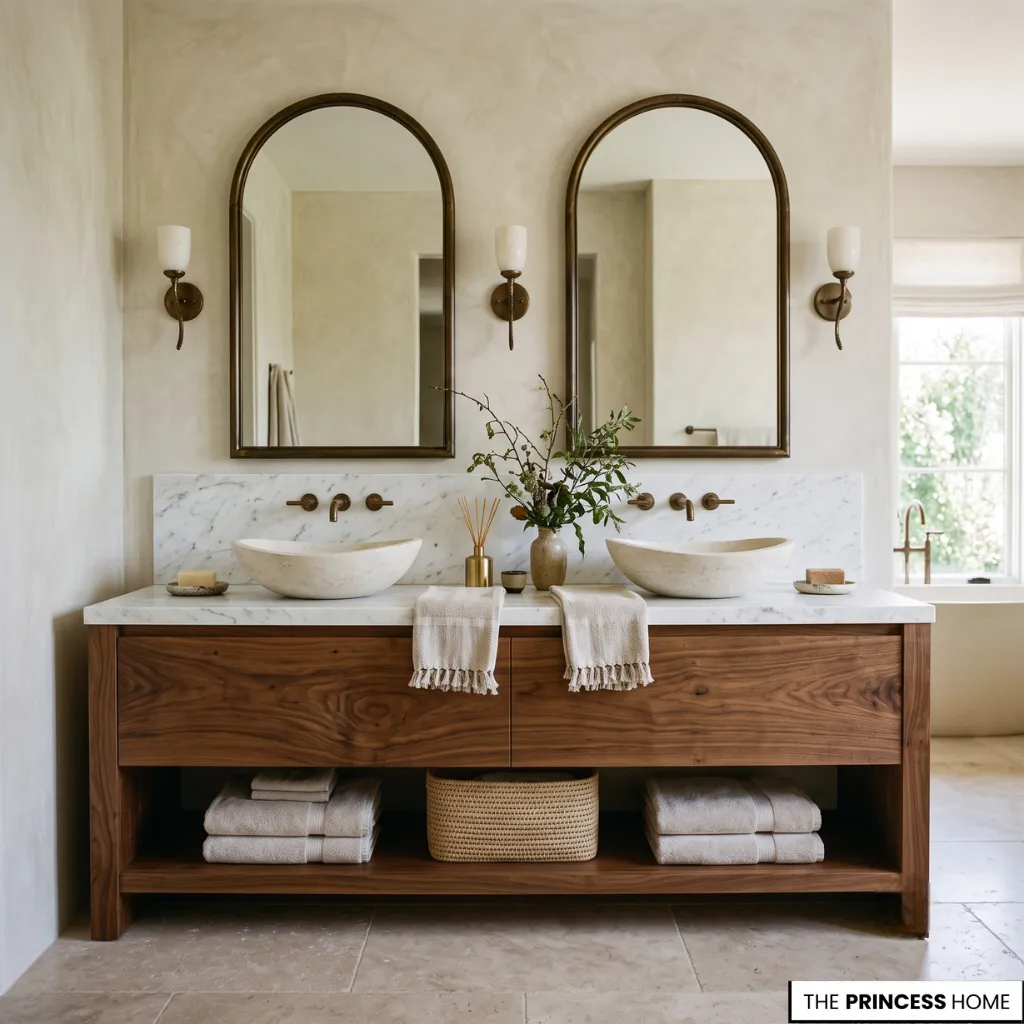
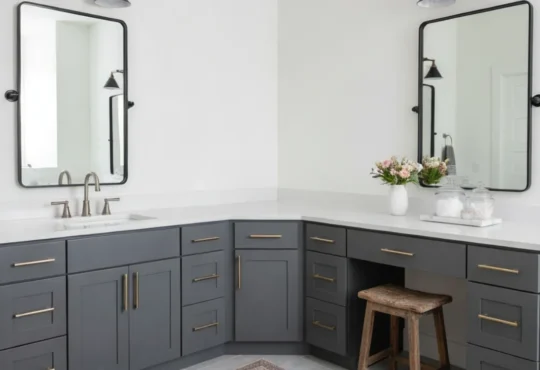
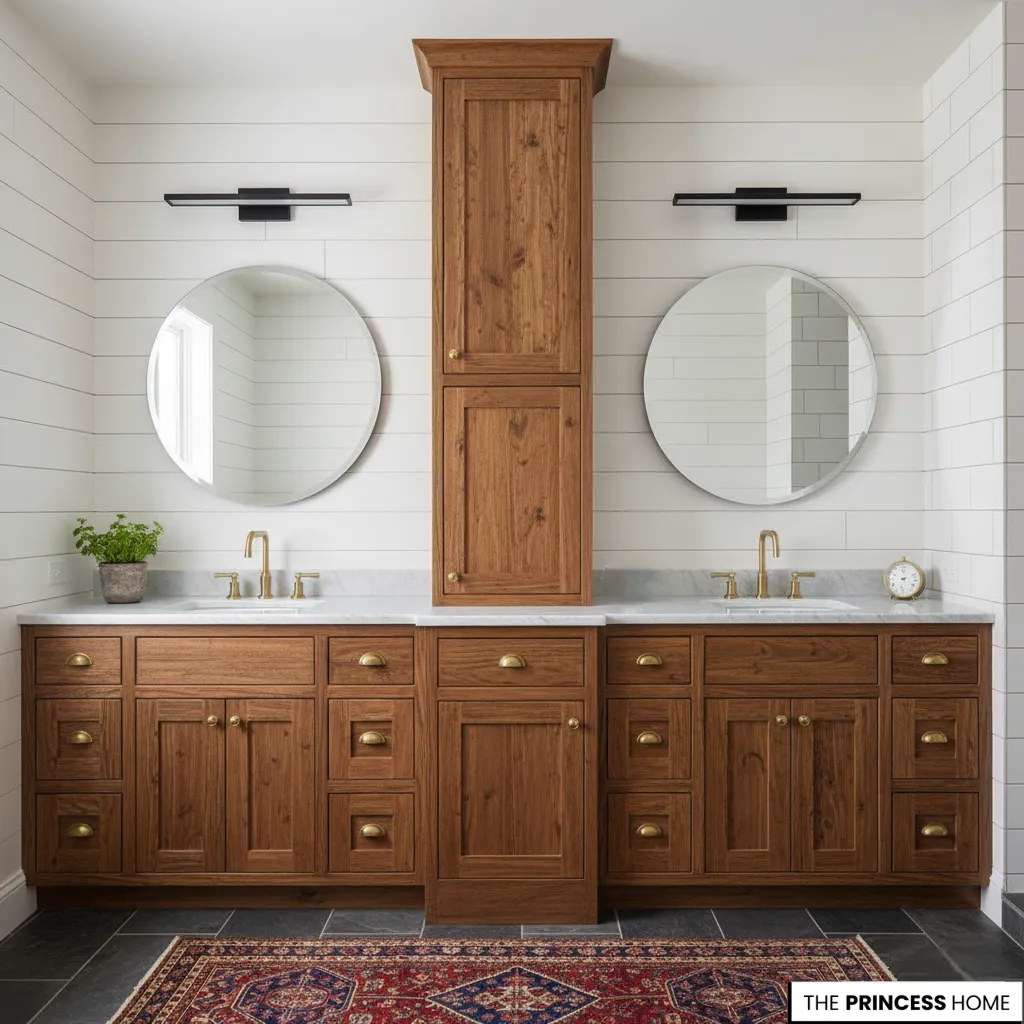
The vanity often becomes the visual anchor of the room. A single sculptural basin creates a calm, gallery-like presence, while a double vanity brings symmetry and ease to larger layouts. Mirrors framed in wood, bronze, or understated metal quietly reinforce the room’s character while reflecting light deeper into the space.
In larger homes, spacious layouts emphasize openness through longer sightlines and balanced furniture placement. In modern apartments and smaller bathrooms, the same principles create a refined sense of scale by allowing every centimeter to serve both beauty and function.
Regardless of size, the room feels composed because every element contributes to visual clarity instead of competing for attention.
Modern & Classic Bathroom
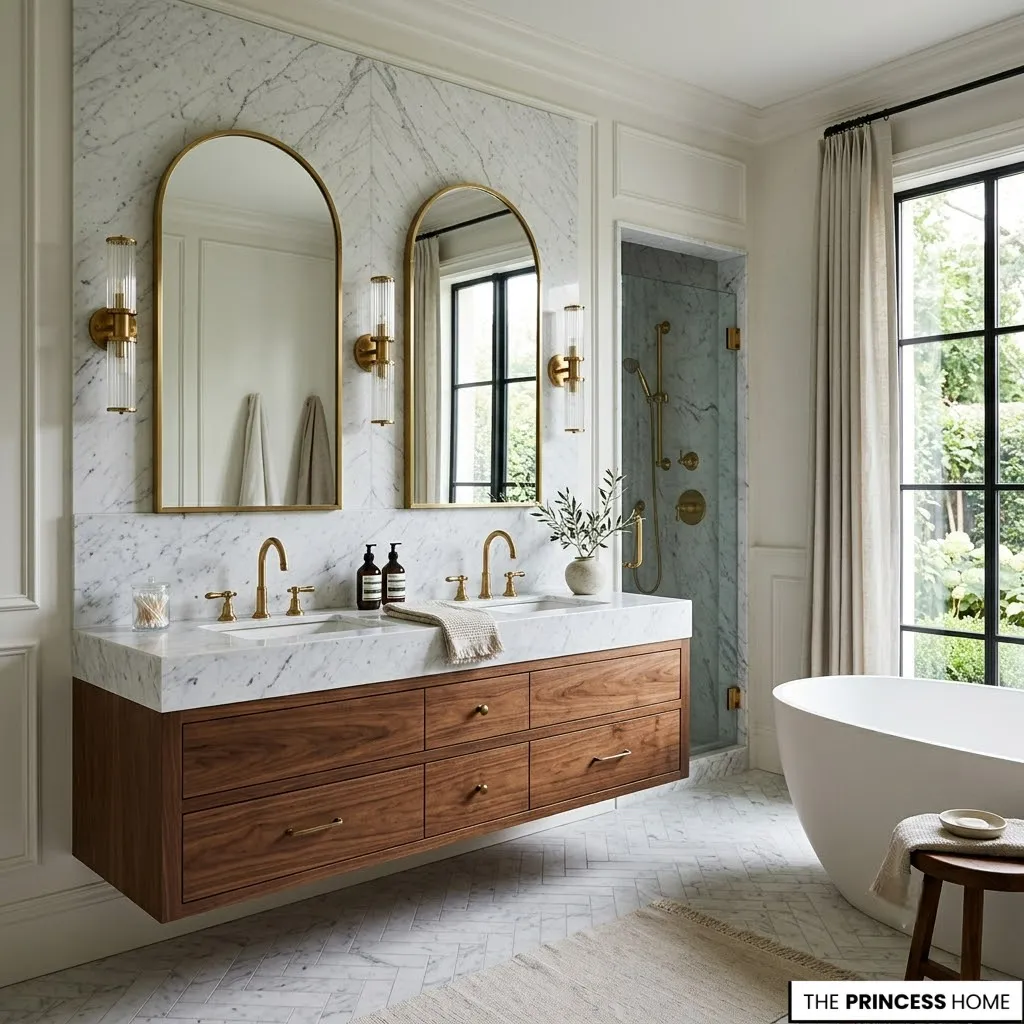
Contemporary bathrooms often favor clean lines, minimal hardware, and uninterrupted surfaces. More traditional interpretations introduce framed mirrors, timeless stone detailing, classic millwork, and richer wood tones.
The most enduring bathroom transformations borrow from both approaches, combining modern clarity with lasting warmth so the room feels current without becoming tied to a single design trend.
This balance is especially effective in homes where the bathroom must harmonize with a broader architectural story, whether that story is coastal, transitional, minimalist, or quietly luxurious.
Walk-In Shower
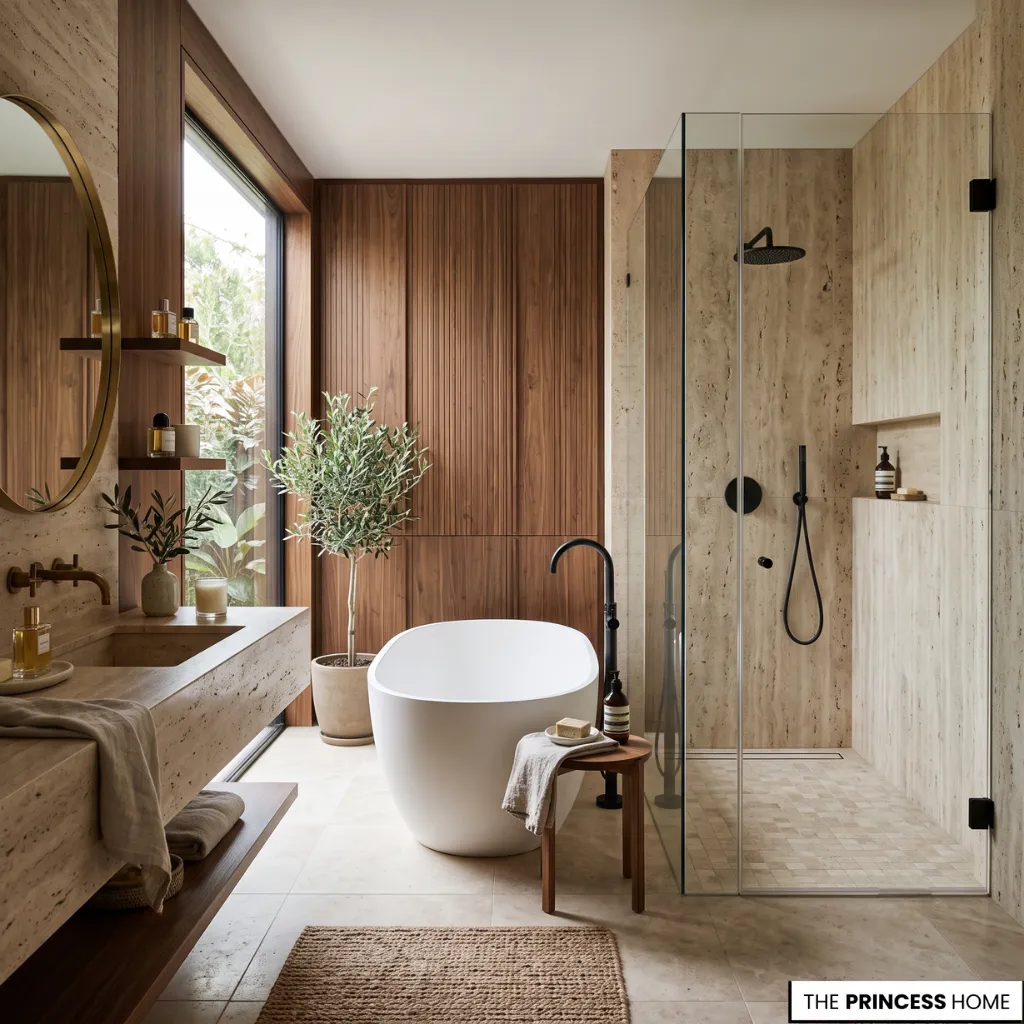
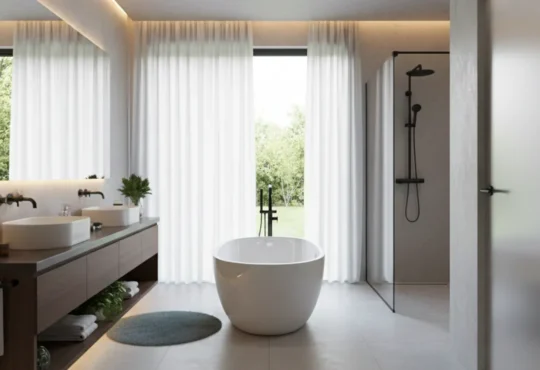
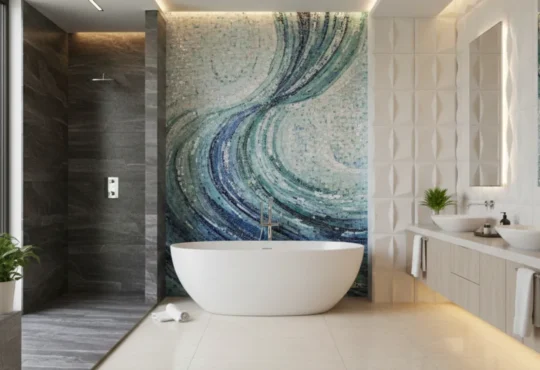
The emotional center of a bathroom transformation is sometimes found in a walk-in shower and sometimes in a freestanding tub. A generous shower wrapped in stone and glass creates a spa-inspired experience that feels effortless and open.
A sculptural bathtub, positioned near a window or beneath soft lighting, invites slower rituals and a deeper sense of retreat. Many contemporary renovations combine both, allowing the room to adapt to different rhythms of daily life.
In compact bathrooms, a beautifully detailed walk-in shower often delivers the same feeling of luxury while preserving valuable floor space.
Bathroom Texture &Layers
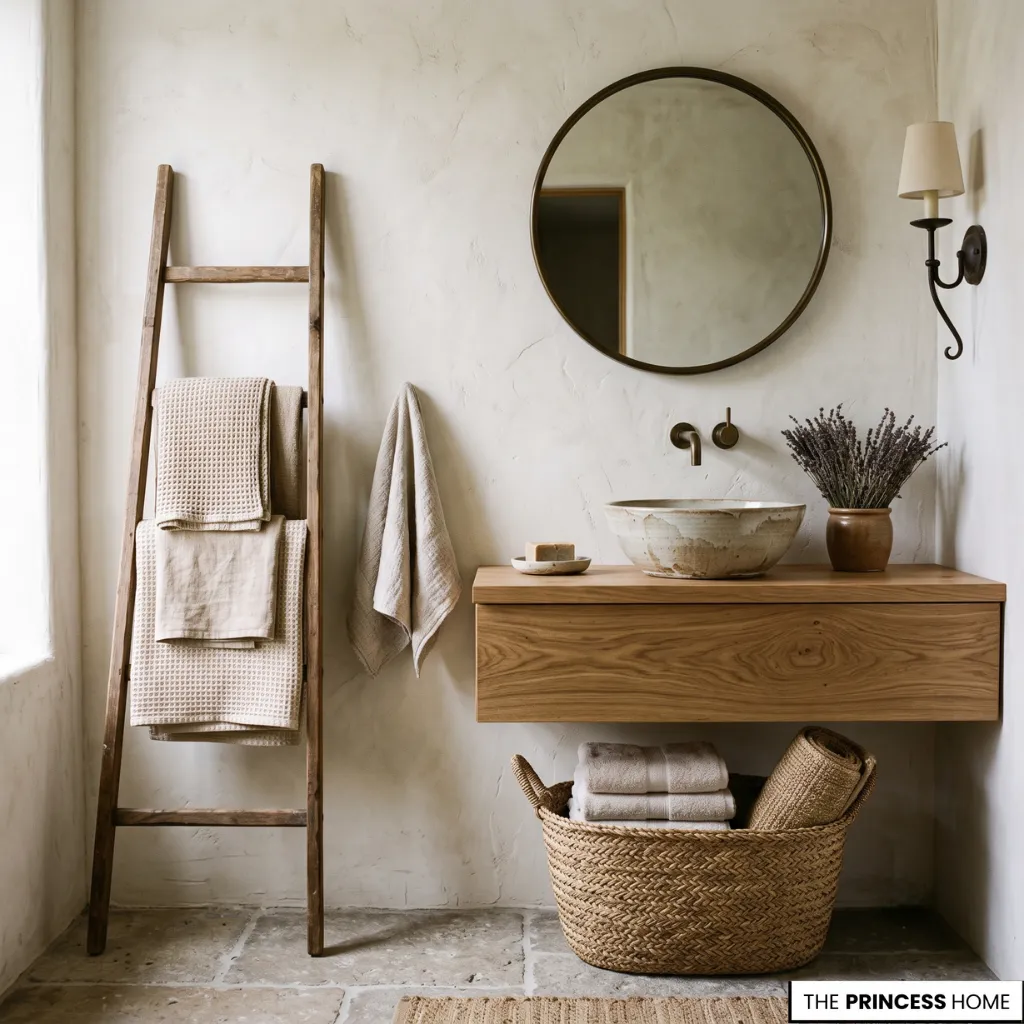
A monochromatic bathroom becomes richer when texture replaces excessive decoration. Linen window treatments soften incoming light, woven baskets introduce handcrafted character, and textured plaster or natural stone walls create subtle movement that changes throughout the day.
Layering smooth ceramics beside tactile fabrics and organic wood prevents the space from feeling overly polished. These quiet contrasts encourage closer observation, revealing new details each time the room is experienced. The atmosphere remains restrained, balanced, and quietly sophisticated without ever feeling flat.
Personal Bathroom
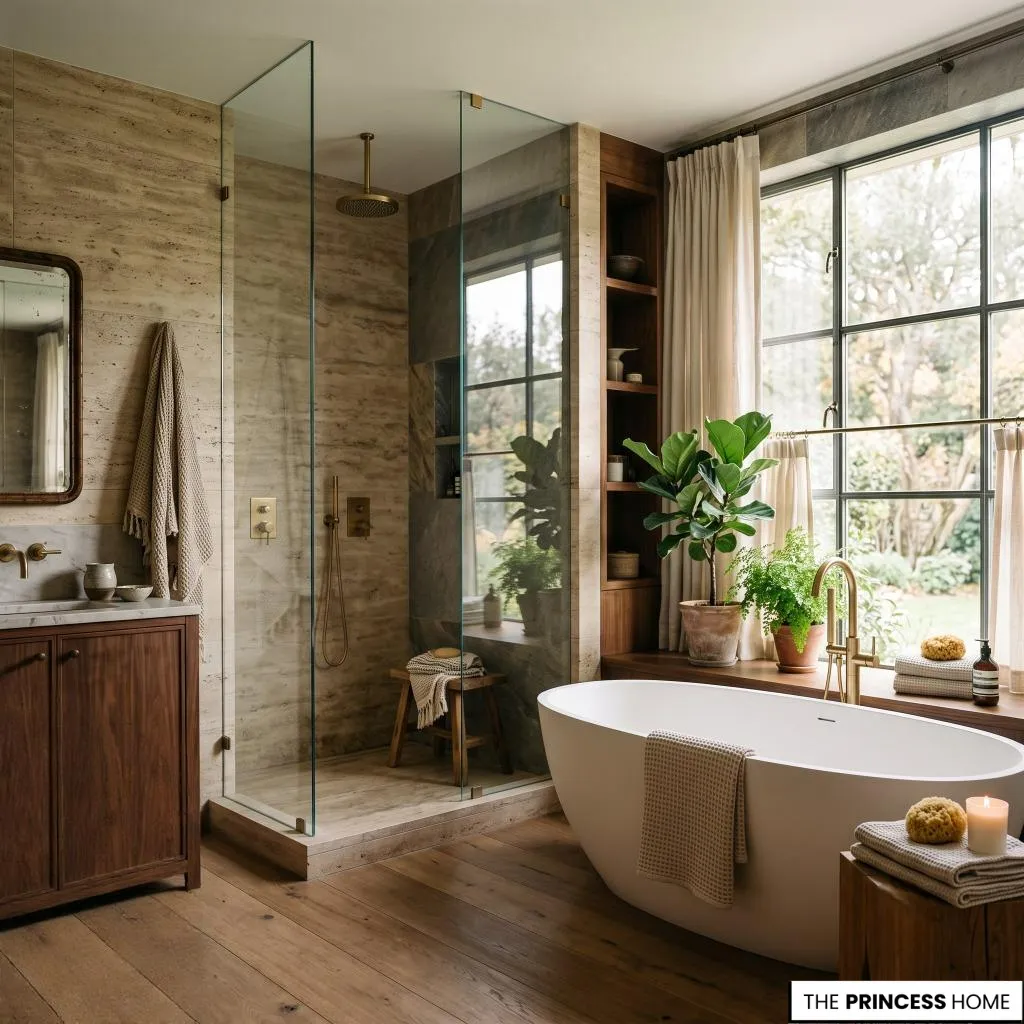
No transformation feels complete until it reflects the people who live with it. A carefully selected piece of artwork leaning casually against the wall, a handcrafted ceramic vessel beside the sink, or a small arrangement of fresh greenery introduces warmth without overwhelming the composition.
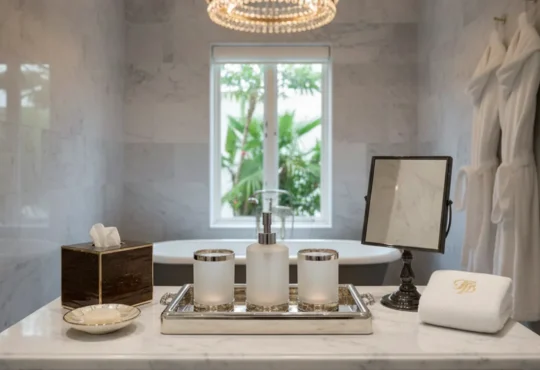
Fragrance quietly becomes another design element. Notes of eucalyptus, cedarwood, lavender, or citrus linger softly in the background, connecting memory with place. Plush towels folded with intention and understated accessories arranged with restraint reinforce the sense that every detail belongs.
These finishing touches rarely demand attention individually, yet together they shape a bathroom that feels deeply personal and effortlessly welcoming.
Bathroom Transformation
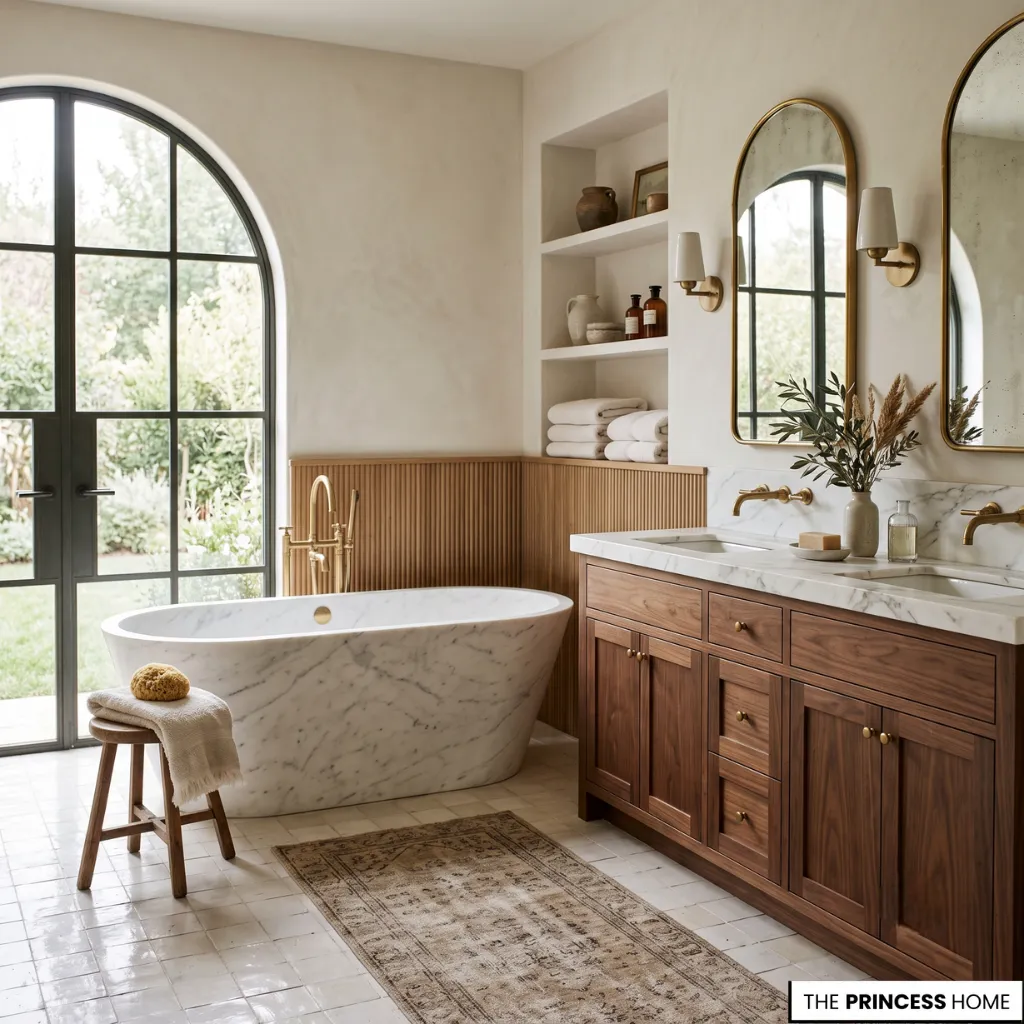
The beauty of a bathroom transformation is measured less by visible change than by the experience it creates every day. Light feels softer, materials become more inviting, and ordinary routines unfold with unexpected calm.
The room becomes a gentle pause between the demands of daily life, offering moments of quiet reflection that linger long after the renovation itself has faded into memory.
In that sense, the most successful bathroom transformation is never simply about updating finishes or replacing fixtures. It is about creating a sanctuary where thoughtful design, enduring materials, and everyday comfort exist in effortless harmony.
Inspiration Gallery
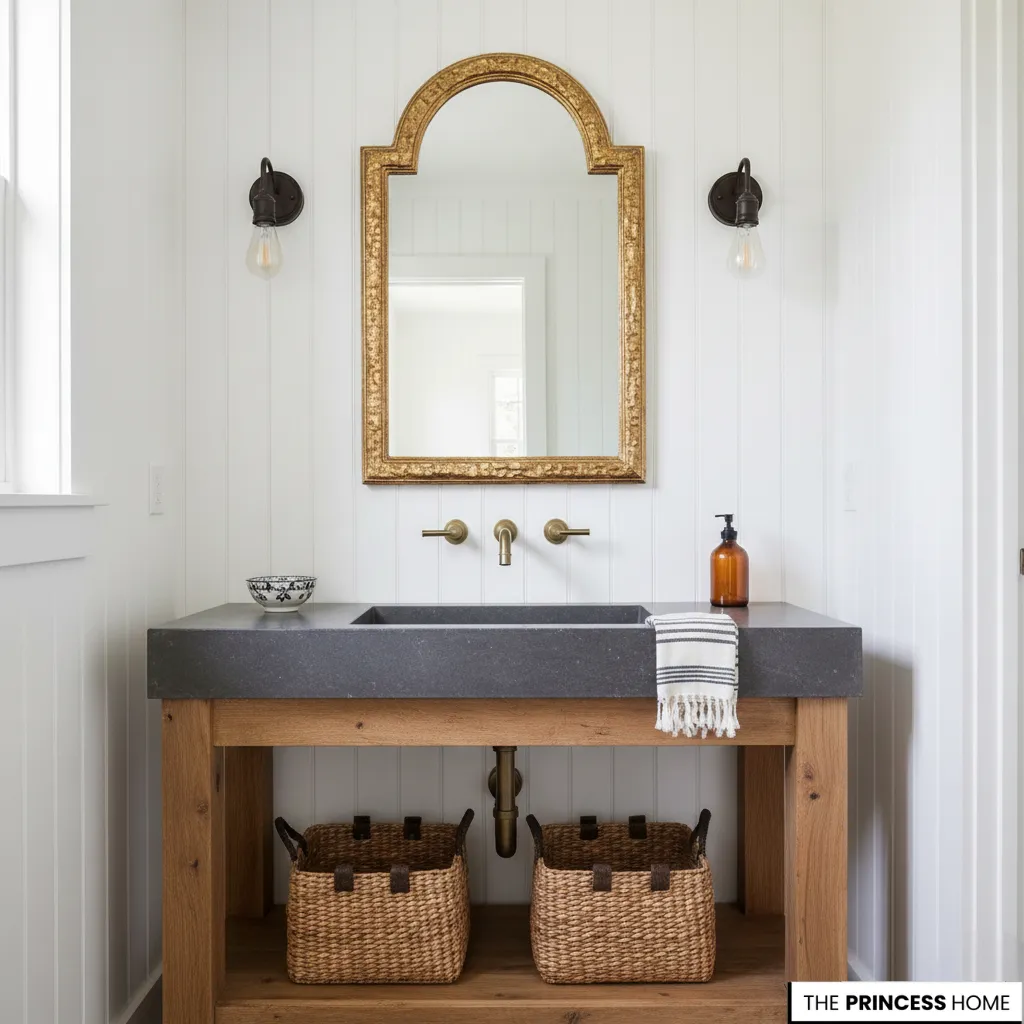
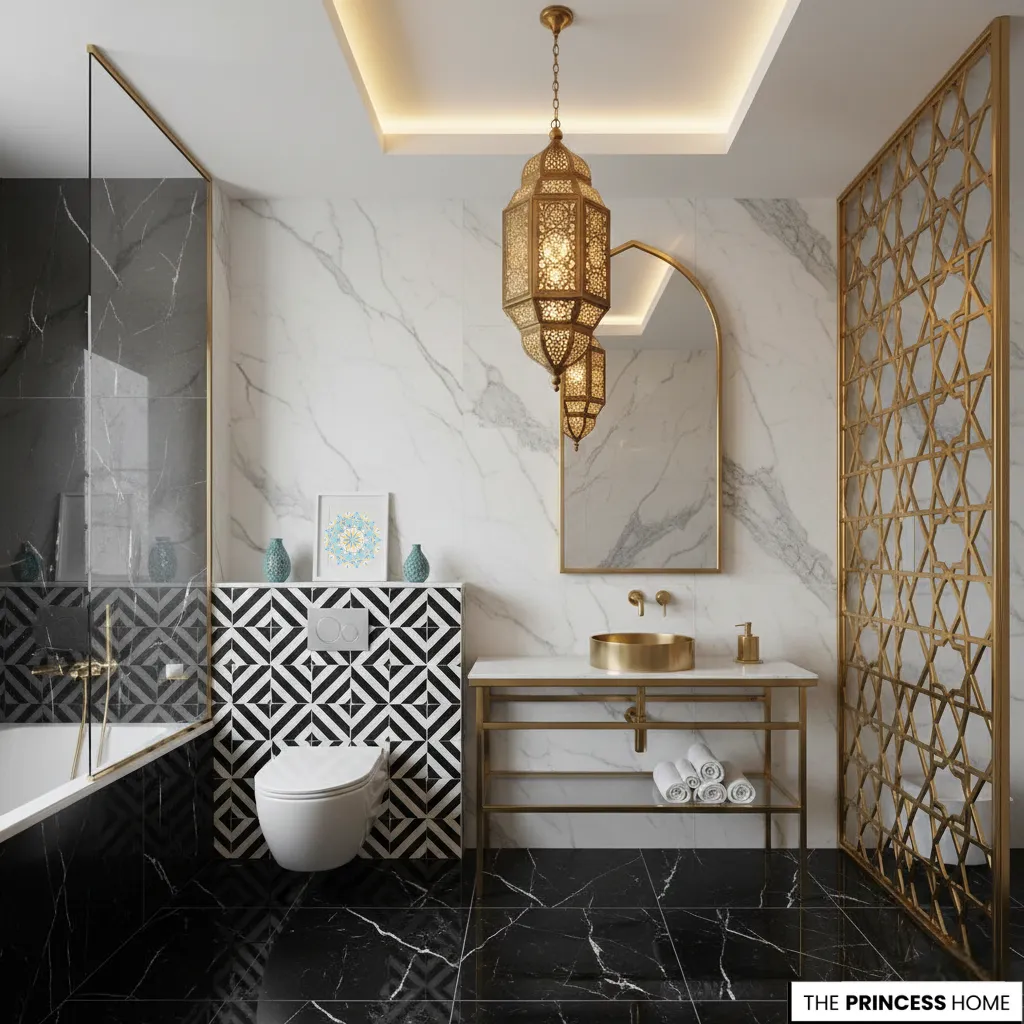
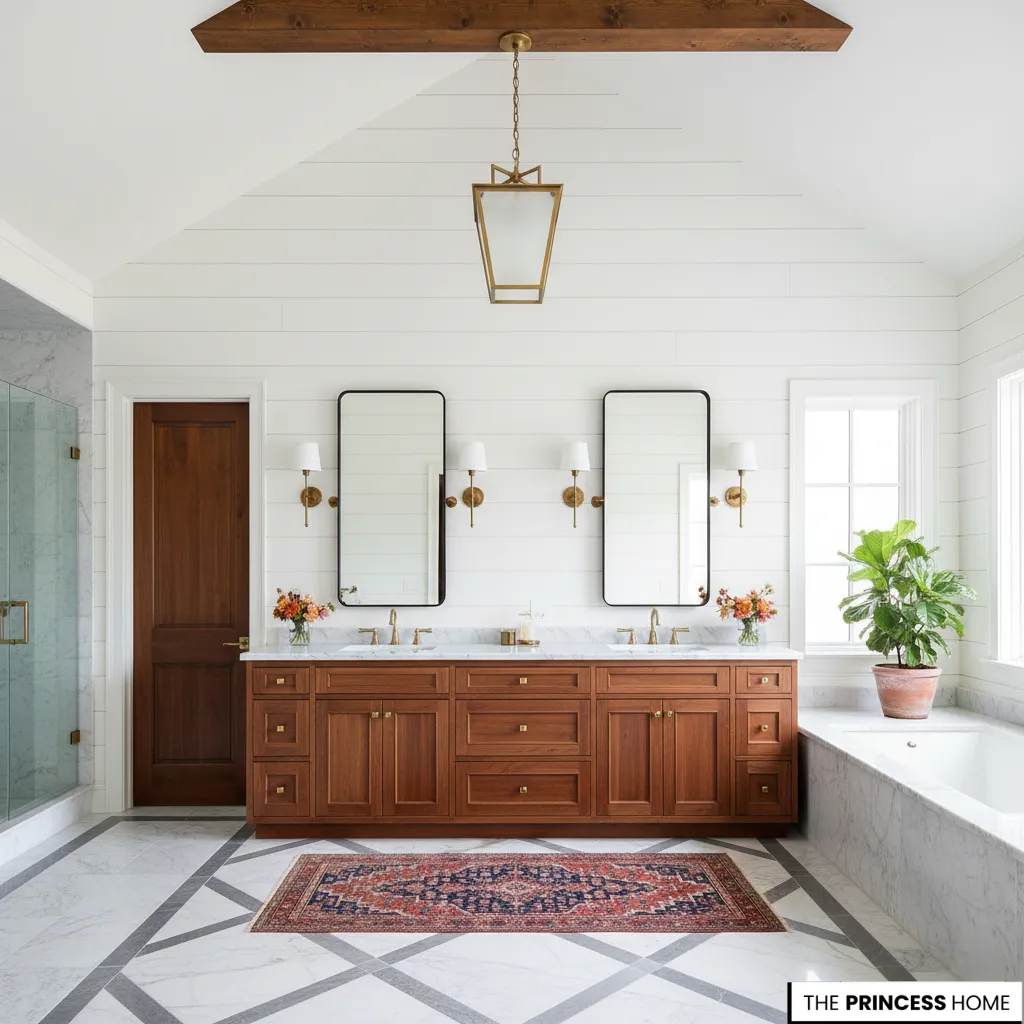
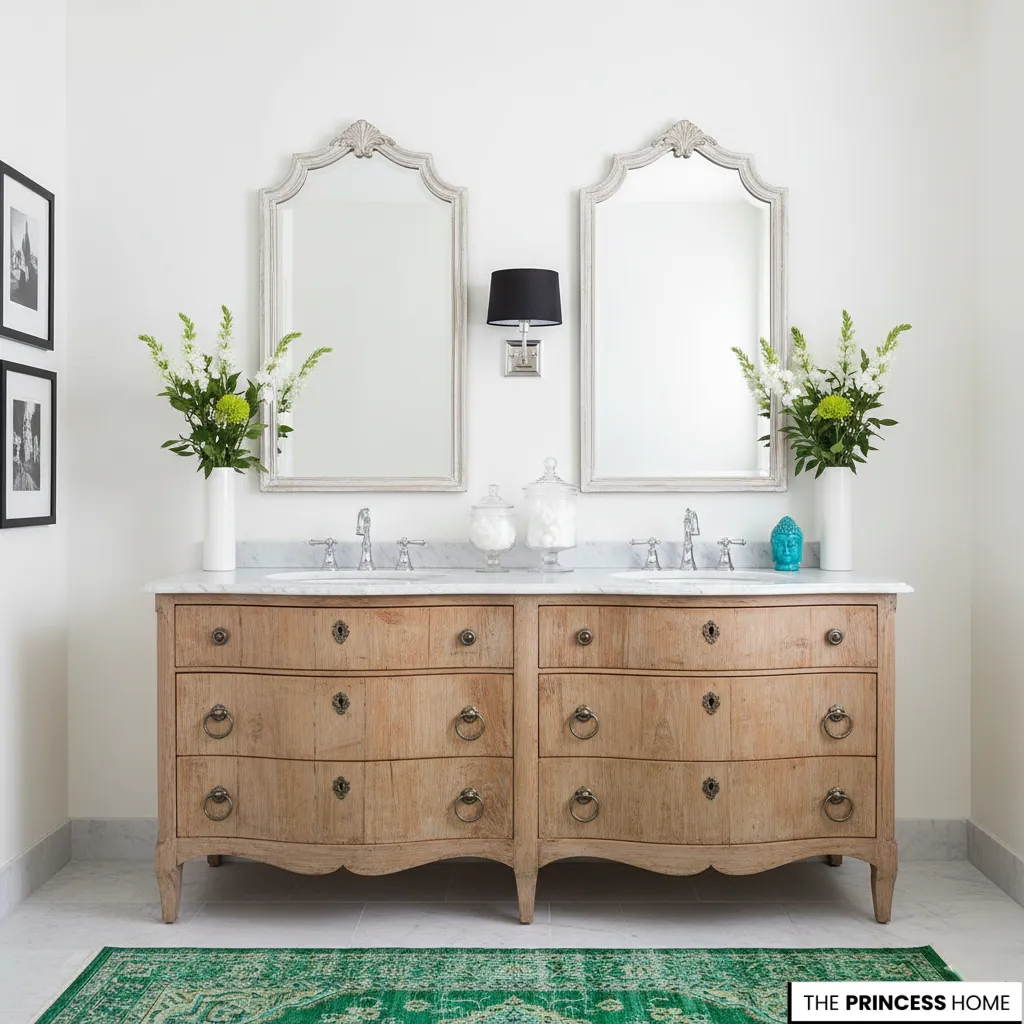
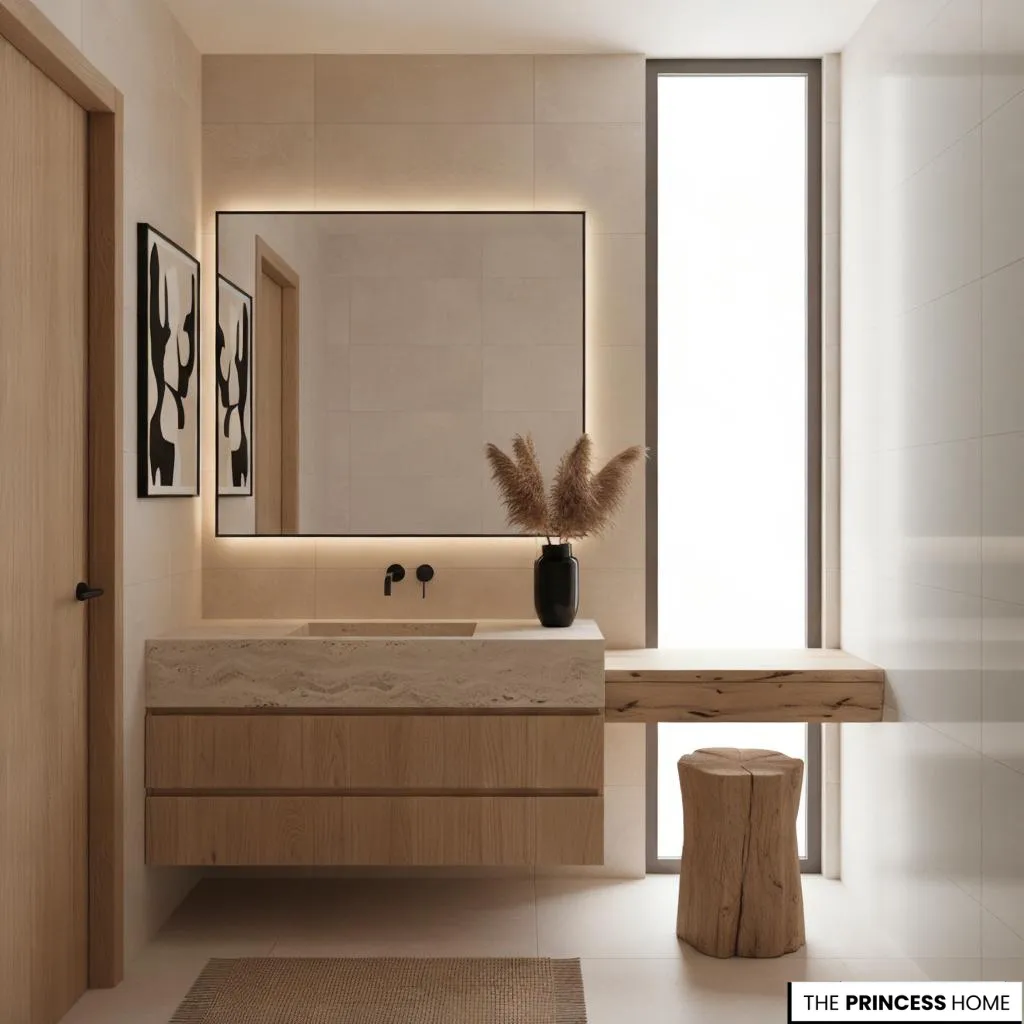
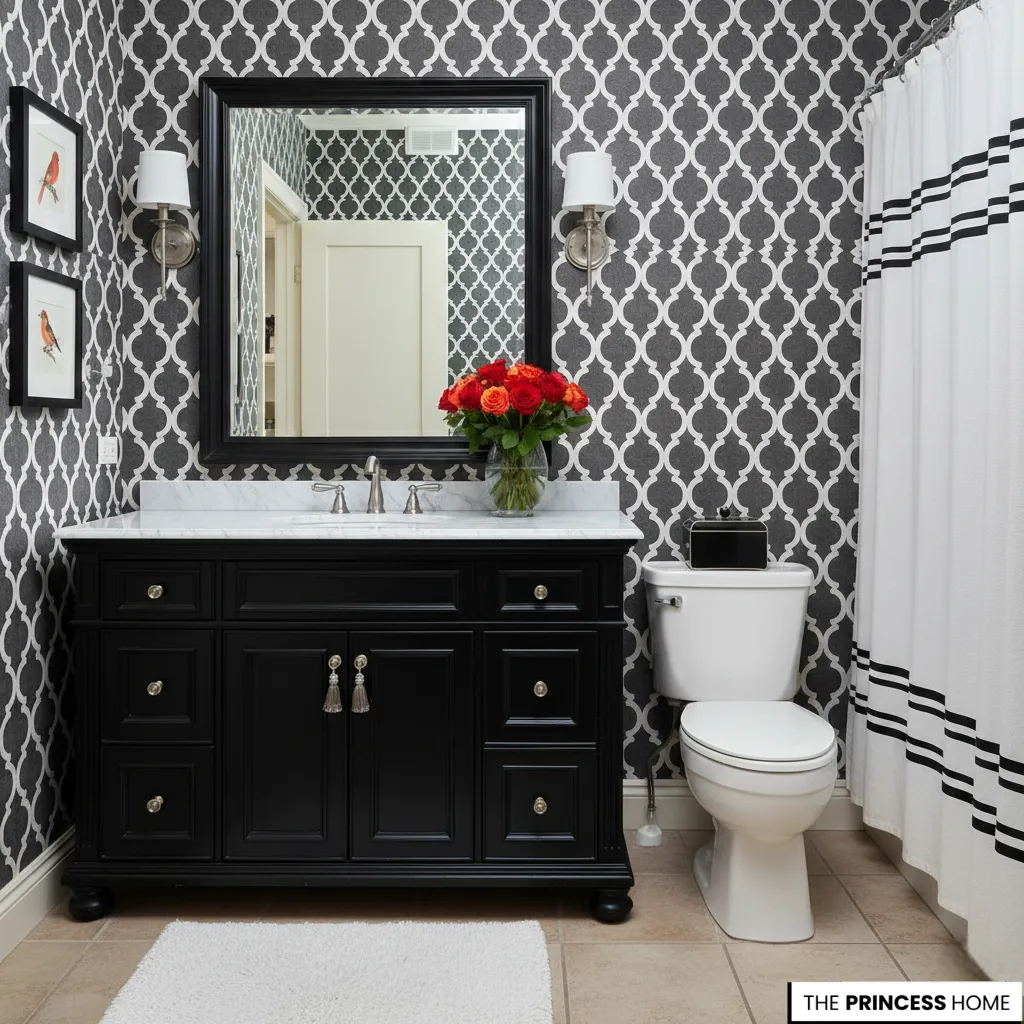
After exploring these curated interior design ideas, let’s translate visual inspiration into reality. Below, we address your most defining home decor questions, offering clarity for your own styling journey:”
FAQ
What is a bathroom transformation?
A bathroom transformation is the process of reimagining a bathroom through updated layouts, materials, lighting, and finishes to create a more functional, comfortable, and visually cohesive space.
How to design a relaxing bathroom transformation?
Start with a calm color palette, layered lighting, natural materials, and thoughtful storage to create a bathroom that feels balanced, welcoming, and easy to enjoy every day.
Can a bathroom transformation work in a small apartment?
Yes. Floating vanities, walk-in showers, light colors, and smart storage can make a compact bathroom feel brighter, more spacious, and highly functional.
Which colors work best for a bathroom transformation?
Soft whites, warm neutrals, gentle grays, taupe, and natural stone tones create a timeless foundation, while darker accents add depth without overwhelming the space.
What materials create a timeless bathroom design?
Natural stone, porcelain tile, wood, textured plaster, brushed metal, and clear glass offer durability, warmth, and a refined look that remains stylish for years.
Is a walk-in shower better than a freestanding tub?
It depends on the space and lifestyle. Walk-in showers maximize functionality in smaller bathrooms, while freestanding tubs create a luxurious focal point in larger layouts.
Why is bathroom transformation still popular?
It improves everyday comfort while enhancing the atmosphere, functionality, and long-term appeal of one of the home’s most frequently used spaces.
Final Thoughts
A successful bathroom transformation goes beyond new finishes or fixtures. By combining thoughtful layouts, timeless materials, balanced lighting, and personal details, any bathroom—whether in a compact apartment or a spacious home—can become a relaxing sanctuary that feels elegant, practical, and enduring.