

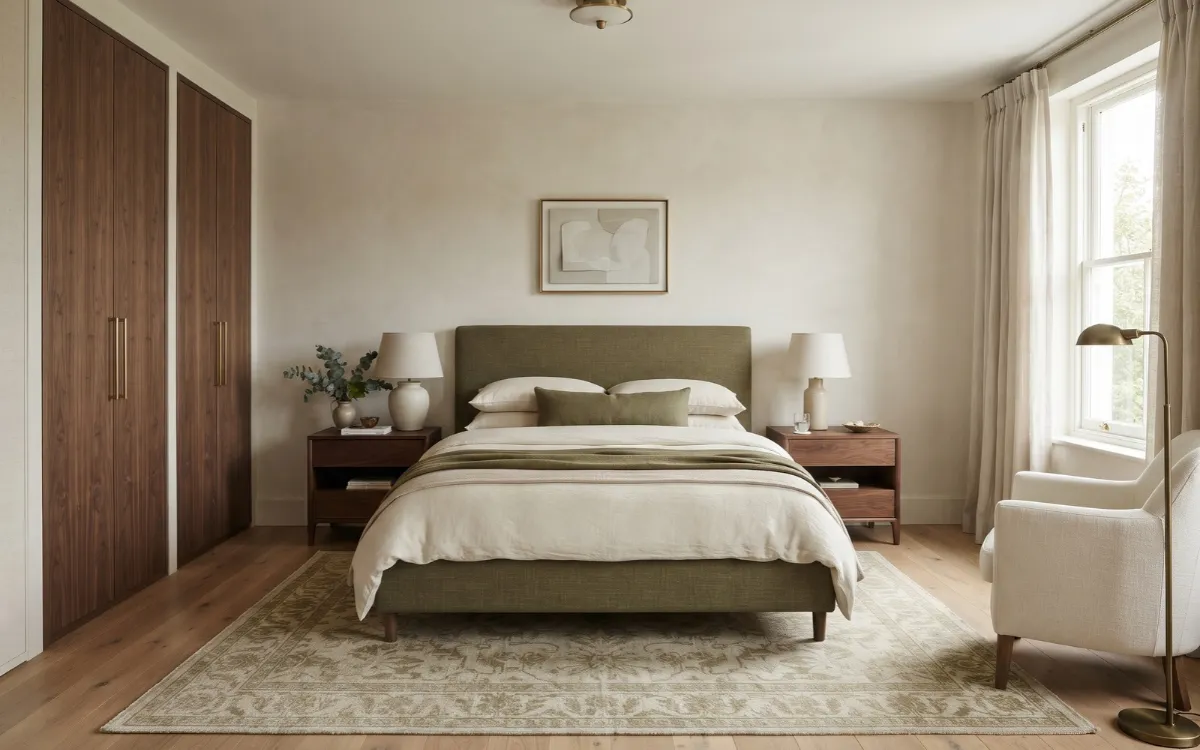

A well-designed bedroom requires more than attractive furniture and coordinated colors. The layout, furniture proportions, storage, lighting, and textiles must work together to create a space that supports everyday comfort and practical use.
This bedroom design guide explains how to plan each element, make suitable choices, and create a cohesive bedroom that reflects your needs and personal style.
Assess Your Space
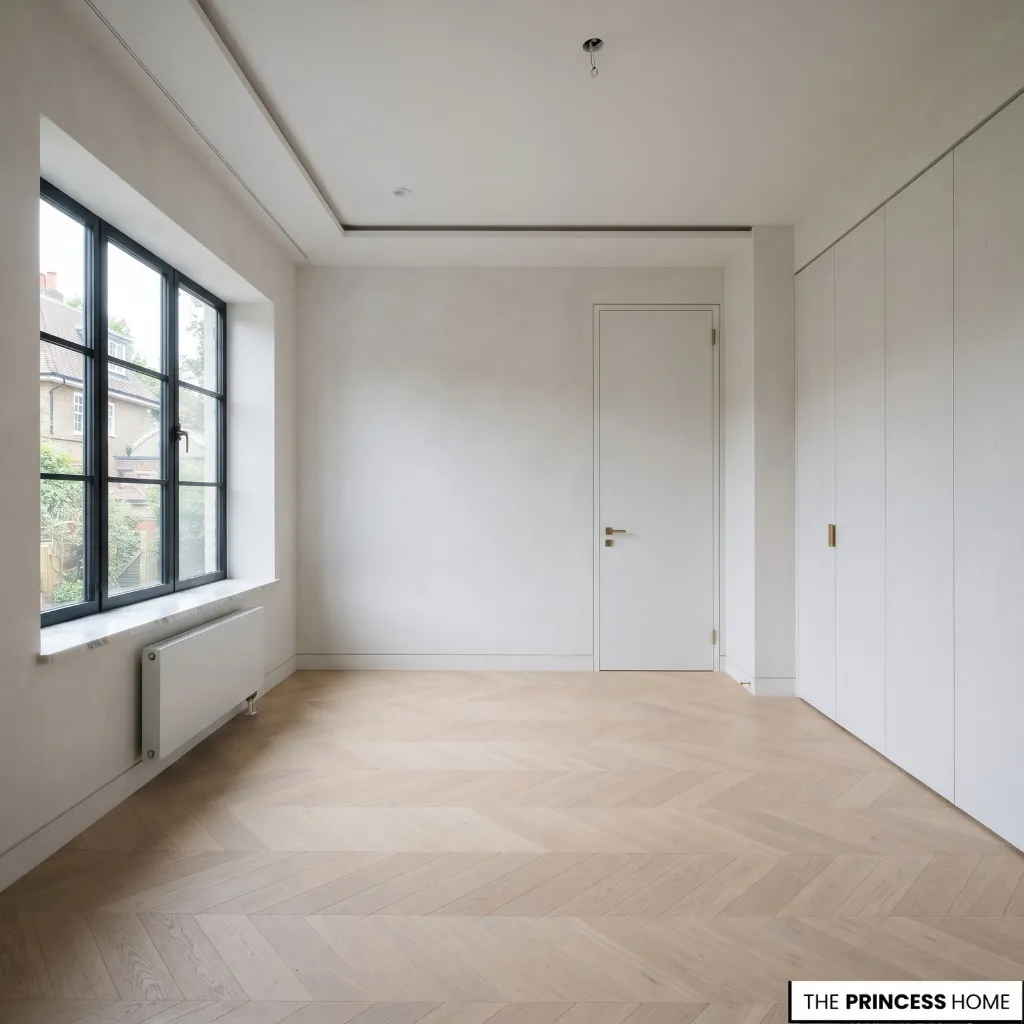
Before choosing furniture or colors, examine the bedroom and identify its existing features and practical requirements. The room’s dimensions, shape, natural light, windows, and door positions will influence almost every design decision.
Start by measuring the length, width, and ceiling height. Record the positions of doors, windows, built-in wardrobes, radiators, and electrical outlets. These details help you understand where furniture can fit and which areas need to remain accessible.
Next, consider how you use the bedroom. A primary bedroom may need a comfortable bed, bedside storage, a wardrobe, and a dressing area. Another bedroom may need additional space for a desk, occasional seating, or children’s belongings.
Examine the existing finishes and furniture before deciding what to replace. Flooring, wall treatments, fitted storage, and architectural features may provide a useful starting point. Keeping suitable existing elements can also reduce renovation costs.
Finally, establish your priorities. Decide whether the main challenge is insufficient storage, an awkward layout, inadequate lighting, outdated finishes, or a lack of comfortable furnishings. Addressing these needs first will help you develop a more practical design plan.
If you are working with a limited budget, use these priorities to decide where improvements will make the greatest difference. Resolve layout problems first, then address essential furniture and mattress requirements, inadequate lighting, and storage.
Colors, textiles, and decorative details can follow. This order is a practical starting point rather than a fixed spending formula, since the room’s existing condition may change what needs attention most.
Plan Bedroom Layout
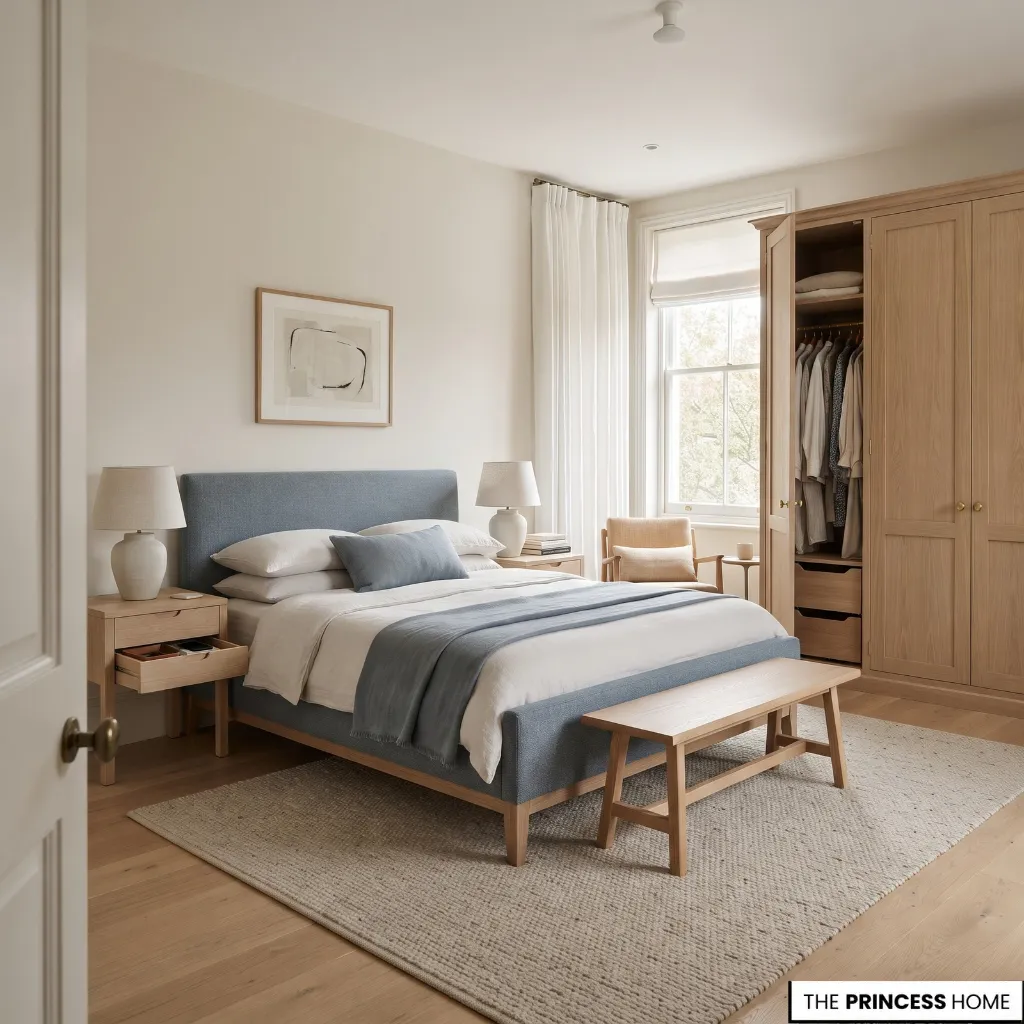
The bedroom layout determines how furniture relates to one another and how easily you can move through the room. Begin with the bed because it usually occupies the largest area and influences the placement of other furniture.
A centered bed with bedside tables on both sides works well when the room has sufficient width. This arrangement provides convenient access and creates a balanced composition. However, a symmetrical layout is not essential.
A narrow bedroom may work better with the bed positioned against one wall, provided access remains comfortable.
Consider the relationship between the bed, windows, doors, and wardrobe. Avoid placing furniture where it blocks window access or interferes with door operation. Leave enough room to walk around the bed where possible and ensure that drawers and wardrobe doors can open fully.
Also consider the space needed to make the bed and change the bedding. An arrangement may allow someone to walk past the bed but still make routine tasks difficult if one side is too restricted. Check how you will reach the corners, access bedside surfaces, and move around the bed during everyday use.
Think about the main circulation route between the bedroom entrance, bed, wardrobe, and bathroom if one is connected. Keep this route clear rather than filling every available corner with furniture.
A simple floor plan can help you test different arrangements before moving heavy pieces. Draw the room to scale, mark fixed features, and add furniture according to its actual dimensions. Include the full footprint of each piece rather than measuring only its visible storage or seating area.
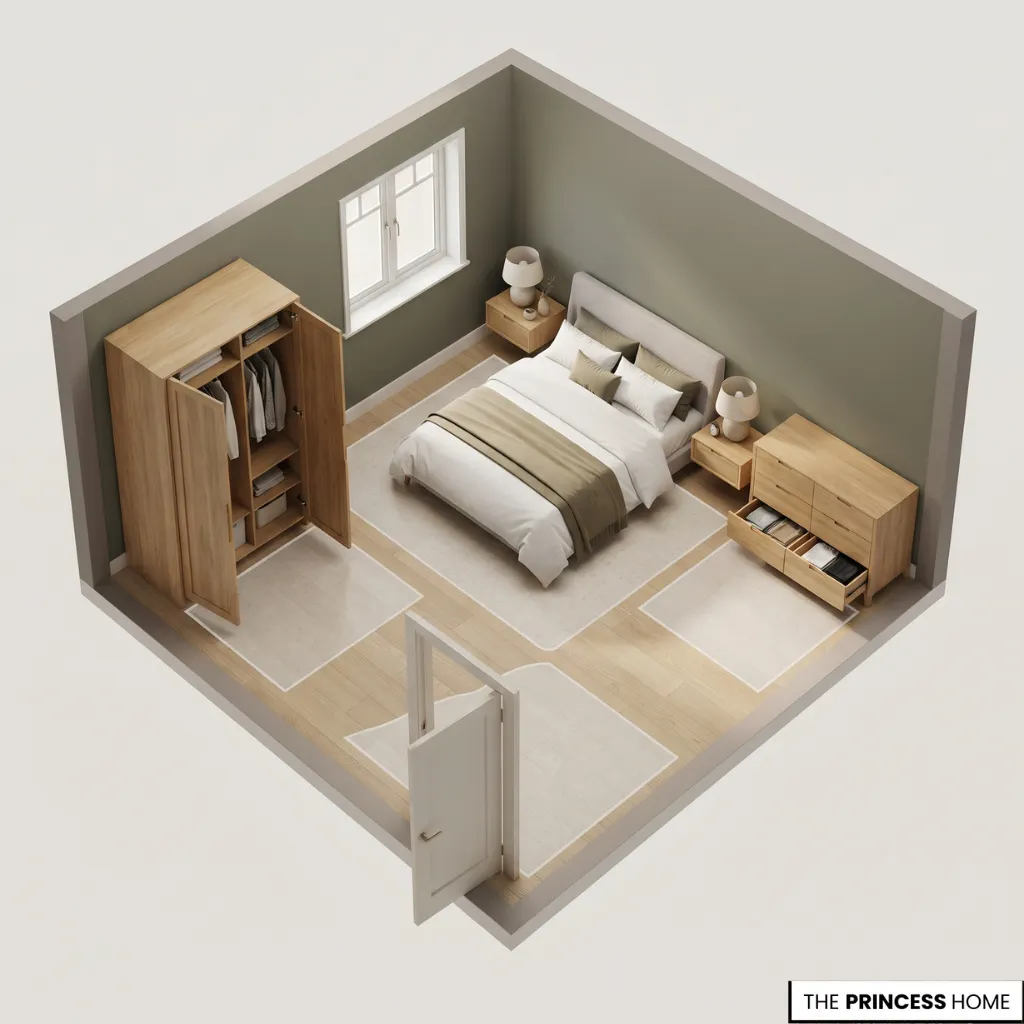
Mark the space needed for doors, drawers, and other moving parts as well, so that the plan reflects how the furniture will operate.
For larger bedrooms, consider dividing the space into useful areas. A reading chair beside a window, a dressing table near suitable lighting, or a small seating arrangement can provide additional functions without disrupting the sleeping area.
Choose Bedroom Furniture
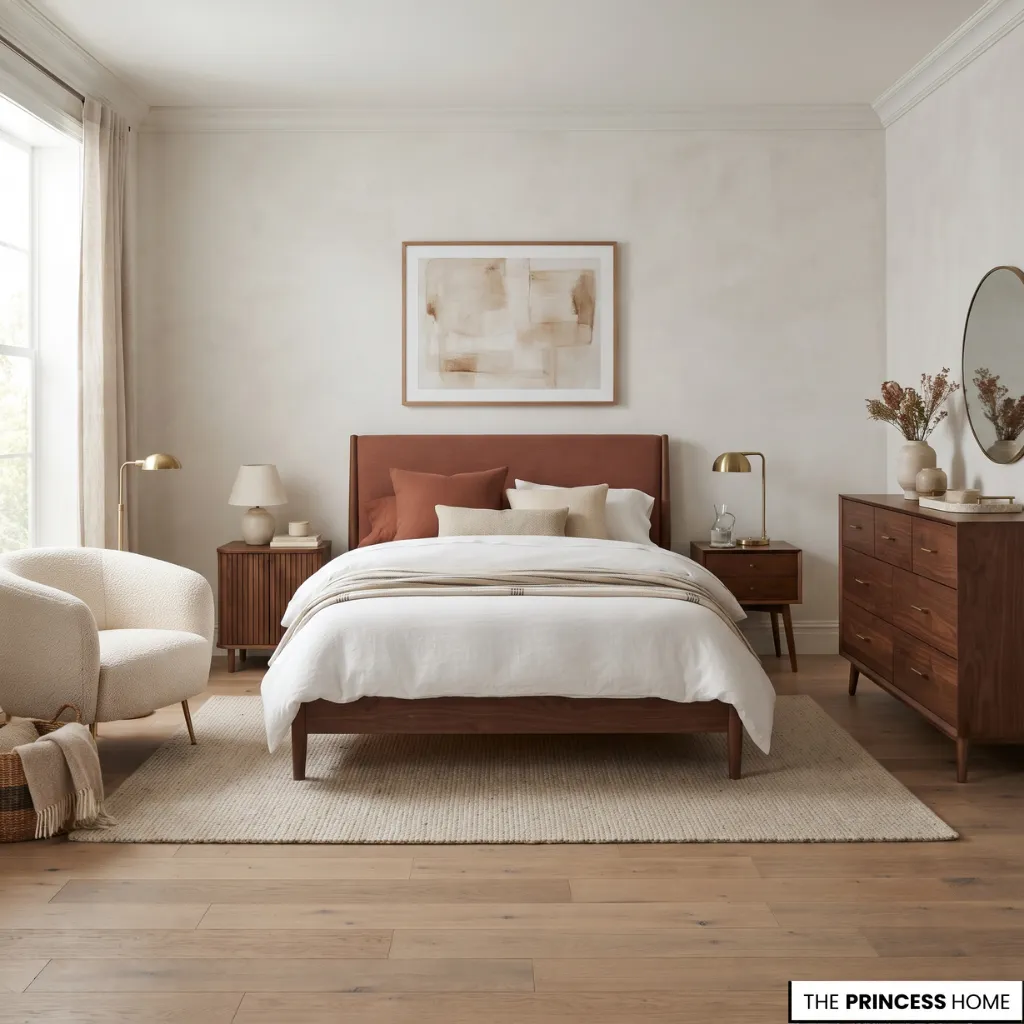
Bedroom furniture should meet practical needs while remaining proportionate to the available space. Selecting pieces according to their function, dimensions, and construction helps create a comfortable arrangement without unnecessary purchases.
Bed and Headboard
The bed is usually the main piece of bedroom furniture, so its size should reflect both sleeping requirements and available floor space. Consider the mattress dimensions, bed frame, headboard, and the additional space needed to move around it.
When measuring for a bed, check the full dimensions of the frame rather than relying only on the mattress size. Some frames and headboards extend beyond the mattress and may affect how much floor space remains available.
Their visual weight also matters: a tall, wide, or heavily upholstered headboard can make a stronger statement than a simple frame, even when both beds have similar dimensions.
Bed frames are available in wood, metal, upholstered finishes, and combinations of materials. Wooden frames introduce visible grain and natural texture, while upholstered designs provide a softer surface and can incorporate different fabrics and colors.
Headboards also influence the room’s appearance. A tall upholstered headboard can establish a strong focal point, while a simple wooden or metal design may suit a more restrained interior. Choose a height and width that relate comfortably to the bed and surrounding furniture.
Bedside Tables
Bedside tables provide convenient surfaces for lamps, books, and everyday belongings. Their height should work with the mattress so that frequently used objects remain easy to reach.
Matching bedside tables create a coordinated arrangement, particularly when the bed is centered. However, complementary pieces can also work when they share a related finish, color, or visual proportion.
In smaller bedrooms, floating shelves, narrow cabinets, or compact bedside tables can provide useful storage without occupying excessive floor space.
Additional Furniture
Wardrobes and dressers provide clothing storage, while dressing tables and desks serve more specific activities. A bedroom may also benefit from a bench at the foot of the bed or a comfortable chair where space permits.
Choose additional pieces according to actual use. A large dresser may be unnecessary if a built-in wardrobe already provides sufficient storage. Similarly, a decorative bench should not obstruct the main walking route.
Furniture does not need to come from one matching collection. Combining different pieces can create a more individual interior when their proportions, finishes, and overall character work together.
Before replacing furniture, consider whether an existing piece can still meet your needs. Repainting a dresser, updating its hardware, or refinishing a suitable wooden bedside table may give it a new role in the room.
This can also help preserve the existing character of the bedroom while keeping more of the budget available for essential improvements.
Organize Bedroom Storage
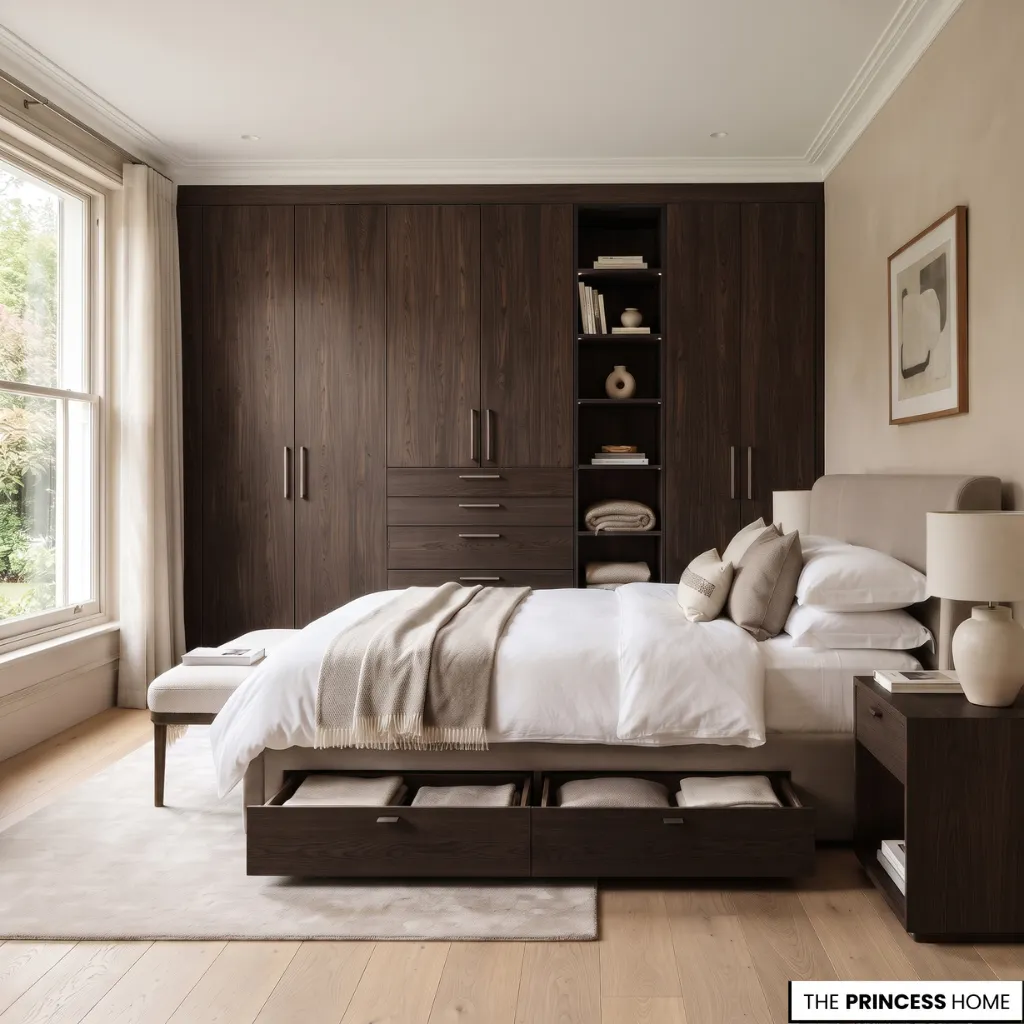
Storage should be considered early in the bedroom design process because it influences furniture selection, available floor space, and the amount of visible clutter.
Begin by identifying what needs to be stored. Clothing, shoes, bedding, accessories, and personal belongings may require different arrangements. Estimate the amount of storage needed before deciding between a wardrobe, dresser, fitted cabinets, or a combination of solutions.
Built-in wardrobes can make effective use of wall space, particularly in bedrooms with limited floor area. They can extend from floor to ceiling and provide storage without introducing several separate furniture pieces. Freestanding wardrobes offer greater flexibility when permanent installation is unsuitable.
Dressers provide accessible drawers for folded clothing and smaller belongings. Their upper surfaces can also accommodate a mirror, lamp, or a small selection of personal objects, provided the arrangement remains practical.
Under-bed storage is another useful option. Beds with integrated drawers can accommodate seasonal clothing, spare bedding, or other items that do not require daily access. If the bed has sufficient clearance, suitable storage containers may provide a simpler alternative.
Consider vertical storage when floor space is limited. Tall cabinets, wall-mounted shelves, and carefully positioned hooks can use otherwise overlooked areas. Keep frequently used belongings within convenient reach and reserve higher shelves for occasional items.
When choosing a storage unit, consider how you will use it rather than judging it by capacity alone. Check whether drawers can open fully, shelves are easy to reach, and wardrobe doors can operate without obstructing nearby furniture.
A storage solution that is difficult to access may not serve its intended purpose effectively.
The most effective storage arrangement depends on the room’s dimensions and the household’s needs. The objective is to provide enough accessible storage without allowing cabinets and containers to dominate the bedroom.
Select Bedroom Colors
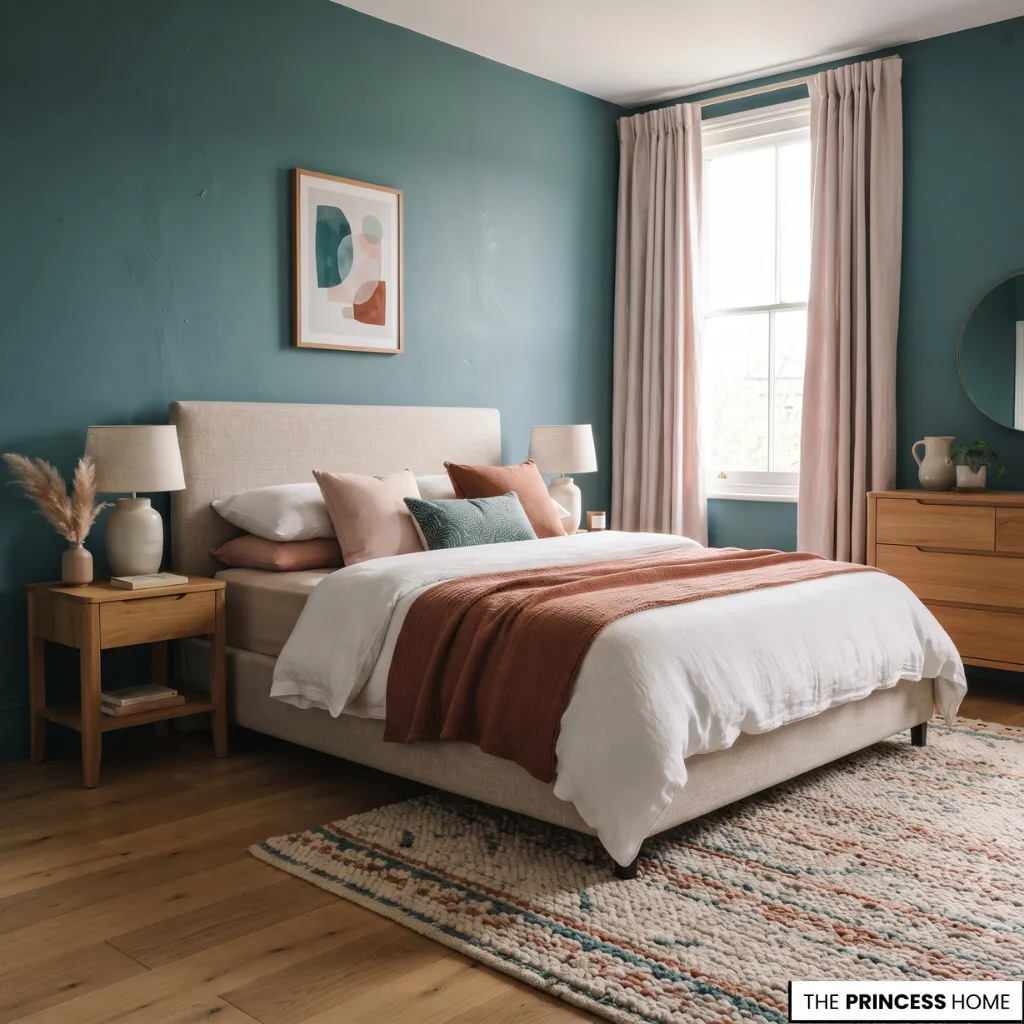
The bedroom color scheme should coordinate walls, furniture, flooring, and textiles while responding to the room’s natural and artificial lighting. Begin with an overall color direction, then select supporting shades that create a consistent relationship between the different surfaces.
Choose a Dominant Color
Wall colors often provide the foundation for the bedroom palette. Warm neutrals such as cream, taupe, and soft beige can work with natural wood and a range of textile finishes. Cooler neutrals, muted greens, soft blues, and deeper shades offer other possibilities depending on the desired character.
Consider the amount of natural light before selecting a paint color. A bedroom with limited daylight may require a different approach from one with large windows and strong sunlight.
Paint undertones also matter. Two colors that appear similar on a sample card may look different when placed beside warm flooring, cool upholstery, or darker furniture.
Coordinate Supporting Colors
Once the dominant color is established, introduce supporting shades through furniture, curtains, bedding, and rugs. For example, muted green walls can work with natural wood, cream bedding, and darker accents.
A warm neutral palette can combine different shades of ivory, taupe, and brown, while a deeper blue scheme may benefit from lighter textiles and warm wood finishes.
The colors do not need to match exactly. Repeating selected tones in different parts of the room helps connect the overall scheme.
Use Contrast Carefully
Contrast helps distinguish furniture, architectural details, and decorative features. Dark bedside tables against lighter walls, for example, can give the arrangement definition.
Accent colors can appear through cushions, artwork, lampshades, or a headboard. Use them selectively so that they contribute to the existing palette rather than compete with it.
Before painting the entire room, test samples on the intended walls. Observe them at different times of day and under the artificial lighting you plan to use. This simple step helps prevent unexpected color changes after application.
If the existing furniture and flooring are still in good condition, changing the wall color and selected textiles may be enough to establish a different atmosphere. This approach allows you to update the palette without replacing large or expensive pieces.
Coordinate Materials
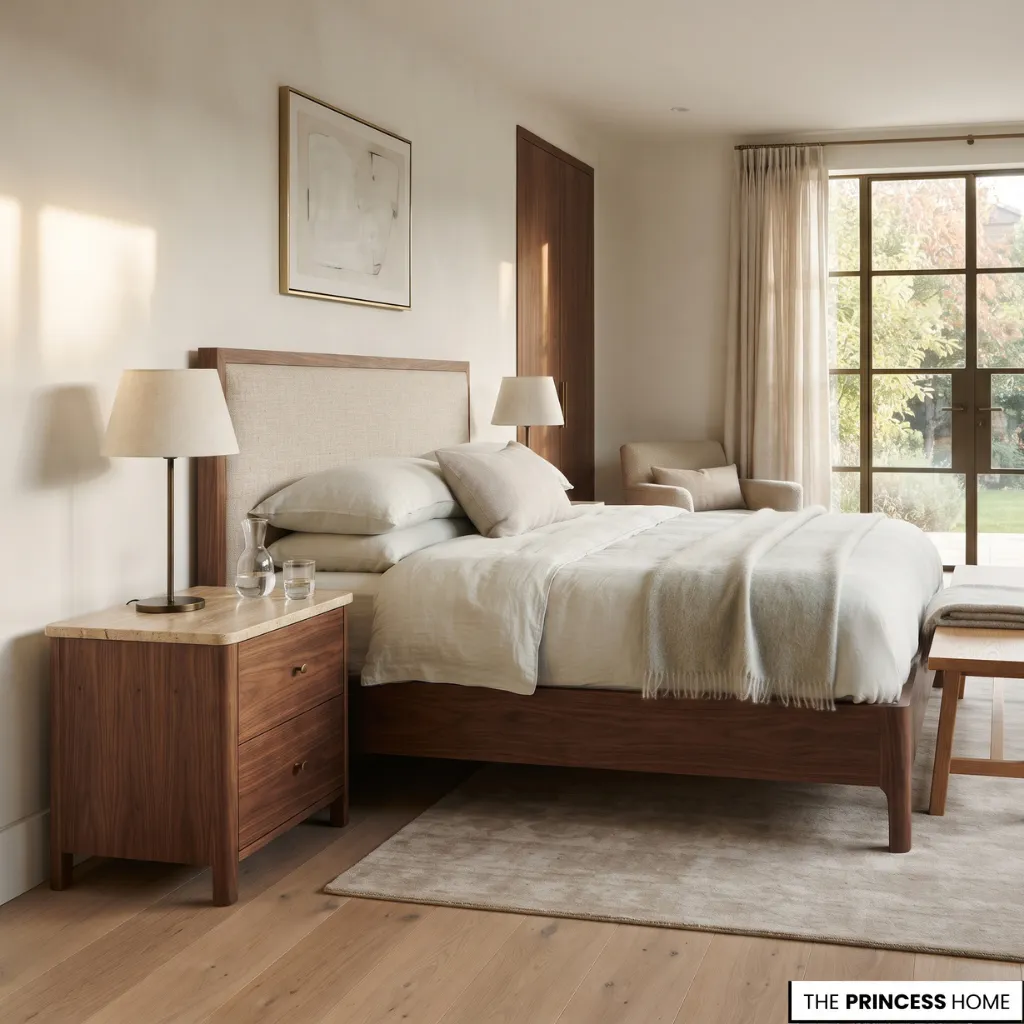
Materials influence the appearance, texture, durability, and maintenance requirements of a bedroom. A coordinated selection should relate to the room’s furniture, flooring, wall finishes, and textiles without relying on identical surfaces throughout.
Wood and Natural Finishes
Wood is commonly used for bed frames, bedside tables, wardrobes, flooring, and decorative details. Different wood tones can work together when their undertones and finishes have a compatible relationship.
For example, a darker wooden bed can be combined with lighter bedside tables when the overall palette connects the pieces. Matching every wood surface is not necessary, but introducing too many unrelated tones can make the room feel disjointed.
Upholstery and Fabric
Upholstered beds and bedroom seating introduce softer surfaces. Linen, cotton, velvet, and other upholstery fabrics offer different textures and maintenance requirements.
Consider how frequently a piece will be used and how easily its fabric can be cleaned. A delicate decorative fabric may suit a headboard, while a more durable material may be preferable for frequently used seating.
Metal, Glass, and Stone
Metal finishes can appear on bed frames, furniture hardware, mirrors, and lighting fixtures. Brass, bronze, black, and chrome finishes each create different visual relationships with surrounding materials.
Glass can introduce transparency and reflect light, particularly on smaller furniture pieces. Stone and ceramic surfaces may appear on lamps, tabletops, or selected decorative objects.
Rather than introducing every material available, choose a few complementary finishes and repeat them where appropriate. Consider texture as well as color: smooth glass, natural wood grain, soft upholstery, and textured fabrics can provide variety without requiring an excessive number of finishes.
The practical demands of each surface should also influence the choice. Consider whether upholstery needs regular cleaning, whether a finish is likely to show marks, and how much maintenance a particular material requires. A suitable choice balances appearance with durability and the way the bedroom is used.
A coordinated bedroom does not depend on expensive materials. Affordable finishes can work well when their colors, textures, and proportions relate to the existing furniture and surfaces. Retaining sound furniture and updating selected details may be more useful than replacing every finish at once.
Layer Bedroom Lighting
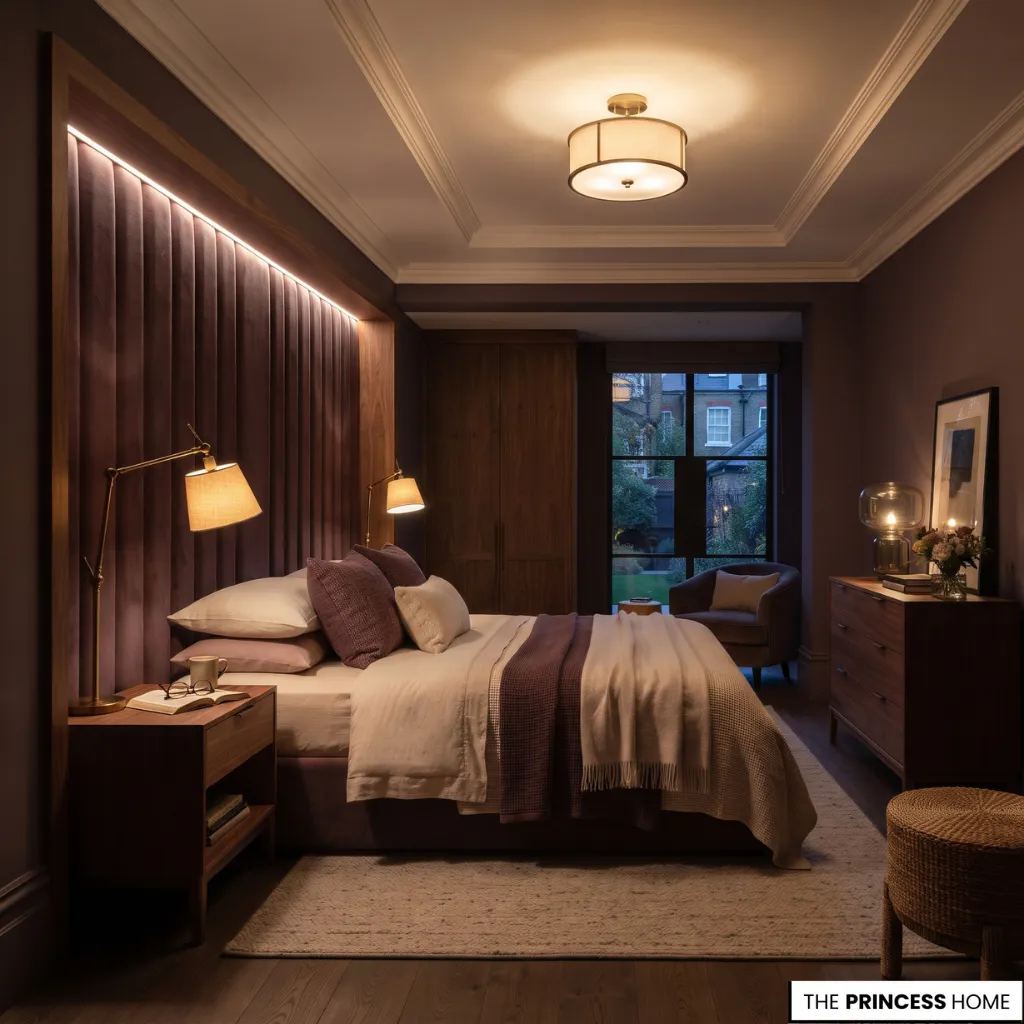
Bedroom lighting should support different activities throughout the day. A single ceiling fixture may provide general illumination, but it rarely meets every lighting requirement.
A more useful plan combines ambient, task, and accent lighting, with natural daylight considered alongside artificial sources.
Ambient Lighting
Ambient lighting provides general illumination. Ceiling fixtures, chandeliers, recessed lights, and suitable flush-mounted fittings can serve this purpose.
Choose a fixture that relates to the room’s dimensions and ceiling height. A large chandelier may suit a spacious bedroom with sufficient ceiling clearance, while a compact ceiling fitting may be more appropriate for a smaller room.
The light should distribute comfortably throughout the space without producing excessive glare.
Task Lighting
Task lighting supports specific activities such as reading, dressing, and using a mirror.
Bedside lamps are a familiar option, particularly when placed on tables within convenient reach. Wall-mounted reading lights can provide a useful alternative when bedside surfaces are small.
Dressing areas may need additional lighting around mirrors to provide clear visibility. Position fixtures to reduce harsh shadows and uneven illumination.
Accent and Decorative Lighting
Accent lighting highlights selected architectural or decorative features. Wall lights, concealed LED strips, and carefully positioned fixtures can emphasize a headboard, artwork, or a particular wall detail.
Decorative fixtures can also contribute to the bedroom’s overall design. However, their appearance should not replace their practical lighting function.
Lighting Controls & Natural Light
Separate switches for different lighting layers make the room easier to use. Dimmers can provide additional control where compatible fixtures and electrical installations allow them.
Natural light should also influence the lighting plan. Keep windows accessible and choose curtains or blinds that provide suitable privacy and daylight control.
For evening use, comfortable warm-toned lighting is often a practical choice. However, the appropriate light depends on the activity, fixture, and individual preference.
If the existing lighting is inadequate, identify the main problem before replacing every fixture. Improving bedside reading light or adding suitable mirror lighting may provide more practical value than changing a decorative ceiling fitting.
Where installing wall lights is impractical, a well-positioned floor lamp can provide supplementary illumination without requiring changes to the electrical installation.
Choose Bedroom Textiles
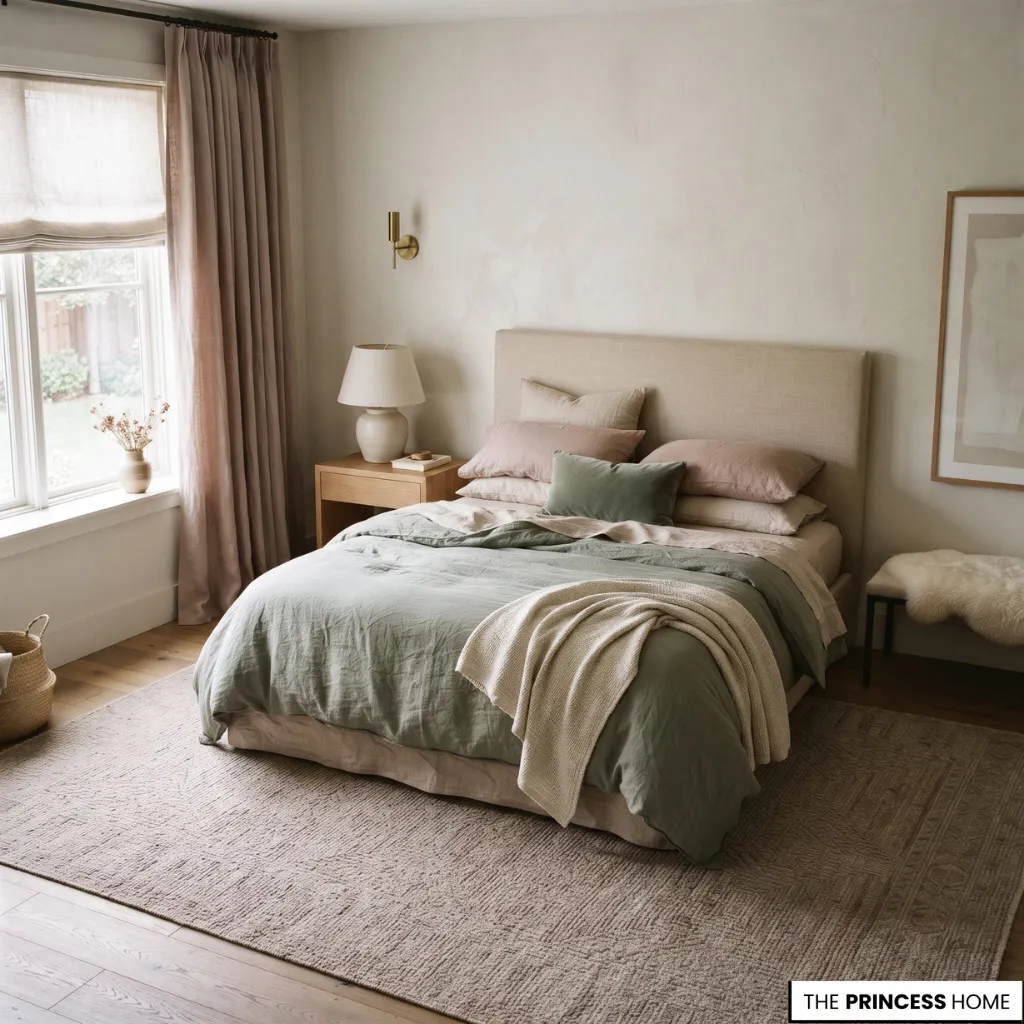
Textiles contribute to everyday comfort and connect the different elements of the bedroom. Bedding, curtains, rugs, and upholstered surfaces should relate to the established color scheme while meeting practical requirements.
Bedding & Bed Layers
Begin with sheets and pillowcases that feel comfortable against the skin and suit the climate. Cotton and linen are common choices, while other fabrics may offer different textures and care requirements.
Duvet covers, comforters, blankets, and throws provide additional layers. Their weight should reflect seasonal conditions and personal preferences.
When coordinating bedding, consider the headboard, wall color, and surrounding furniture. A neutral duvet cover can provide a flexible foundation for patterned cushions or a colored throw. Alternatively, a patterned bed covering can become a focal point when the rest of the scheme remains relatively simple.
Pillows should serve a practical purpose as well as a decorative one. Choose an arrangement that remains comfortable and easy to maintain.
Curtains & Window Treatments
Curtains influence privacy, daylight, and the visual relationship between windows and walls.
Lightweight fabrics allow more daylight to enter, while lined or heavier curtains can provide greater light control. Blackout window treatments may be useful for bedrooms where unwanted outdoor light affects comfort.
Consider the window’s size and position when selecting curtain length and fullness. Curtains that extend beyond the window frame can provide greater coverage, while a suitable curtain track or pole should support the fabric without restricting window operation.
Blinds can offer an alternative where a simpler or more compact treatment is needed. The choice depends on privacy, light requirements, and the overall design.
Rugs and Floor Textiles
A bedroom rug can provide a comfortable surface beside the bed and help define the sleeping area. Its size should relate to the bed and surrounding furniture rather than appear as an isolated small patch.
A larger rug extending beneath the bed can visually connect the furniture arrangement. Alternatively, smaller rugs placed along the sides may work in rooms where a large rug would be impractical.
Consider the flooring, rug texture, cleaning requirements, and door clearance before choosing a suitable size.
Coordinate the Layers
Textiles should share a clear relationship without becoming identical. Repeat selected colors, introduce contrasting textures, and use patterns according to the room’s visual balance.
A bedroom with patterned curtains may benefit from simpler bedding, while a neutral window treatment can provide flexibility for more expressive bed textiles.
Textiles can also provide a practical way to refresh an existing bedroom. Replacing worn bedding, updating curtains, or introducing a suitable rug can change the room’s appearance without requiring new furniture or major renovation work.
Prioritize the pieces that need replacing or would make the most noticeable difference.
Create a Restful Environment
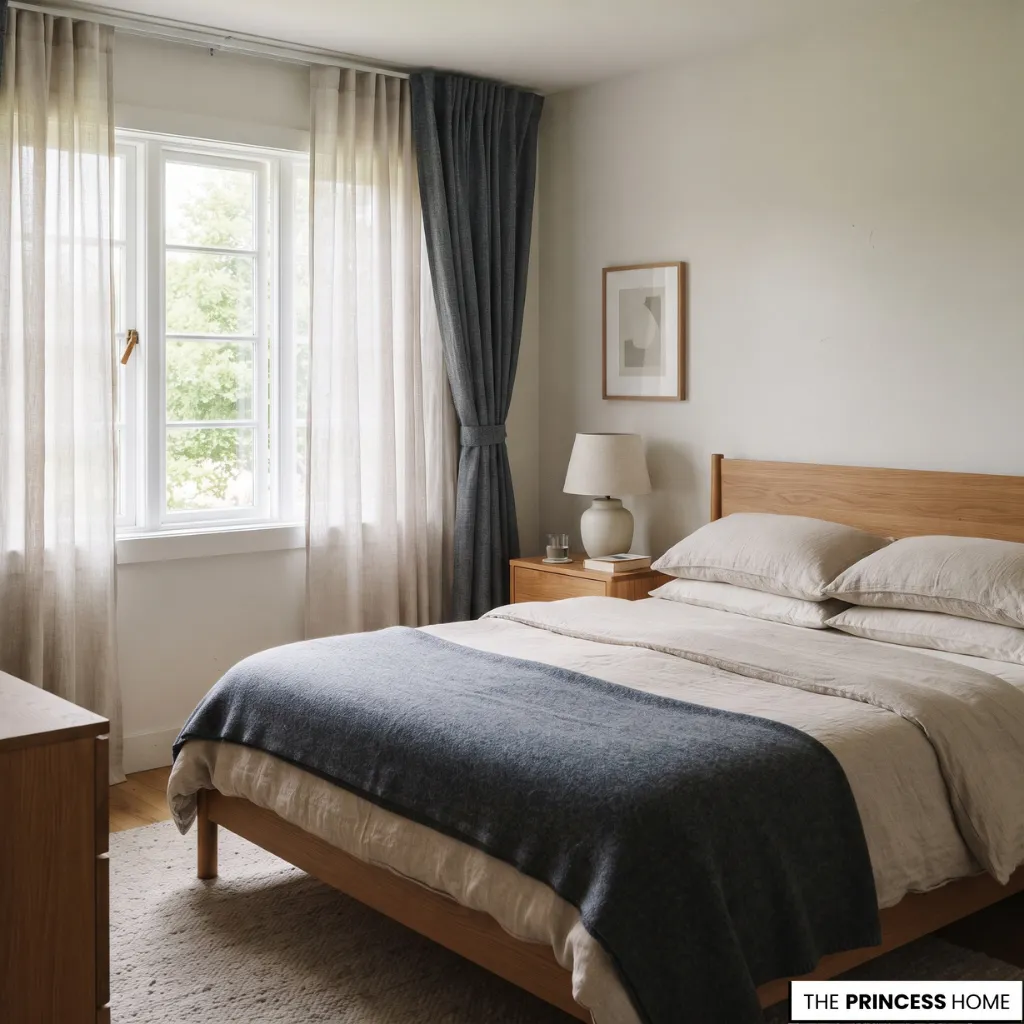
A comfortable bedroom must support its main function as a place for rest. Beyond furniture and decoration, consider the environmental conditions that influence everyday comfort.
Control Unwanted Light
Window coverings should provide sufficient privacy and allow you to manage daylight. Blackout curtains or suitable blinds can help limit unwanted outdoor light when needed.
Also consider light from electronic devices and other sources that may be distracting at night. Position devices and lighting controls according to how the room is used.
Consider Noise
Outside noise can affect the comfort of a bedroom. If traffic, neighboring rooms, or other sounds are noticeable, consider appropriate adjustments.
Well-fitted curtains, rugs, upholstered furniture, and suitable window improvements may help manage some noise, although their effectiveness varies. Where noise is a persistent problem, addressing the source or improving the building’s sound insulation may be necessary.
Maintain Ventilation and Temperature
Good ventilation supports a more comfortable indoor environment. Allow suitable airflow through windows or an appropriate ventilation system, taking local weather and outdoor conditions into account.
Temperature preferences vary, so consider the household’s needs and the climate. Bedding layers, window coverings, and suitable ventilation can help adapt the room to changing seasons.
Consider Mattress and Pillow Comfort
The mattress and pillows directly affect how the bed feels during everyday use. Select them according to personal comfort, support preferences, sleeping position, and practical requirements.
A bedroom’s visual design cannot compensate for an uncomfortable mattress or unsuitable bedding. These functional choices deserve attention alongside the room’s appearance.
Finally, keep frequently used surfaces organized and avoid unnecessary objects around the bed. A manageable arrangement makes everyday cleaning and room maintenance easier.
Finish With Details
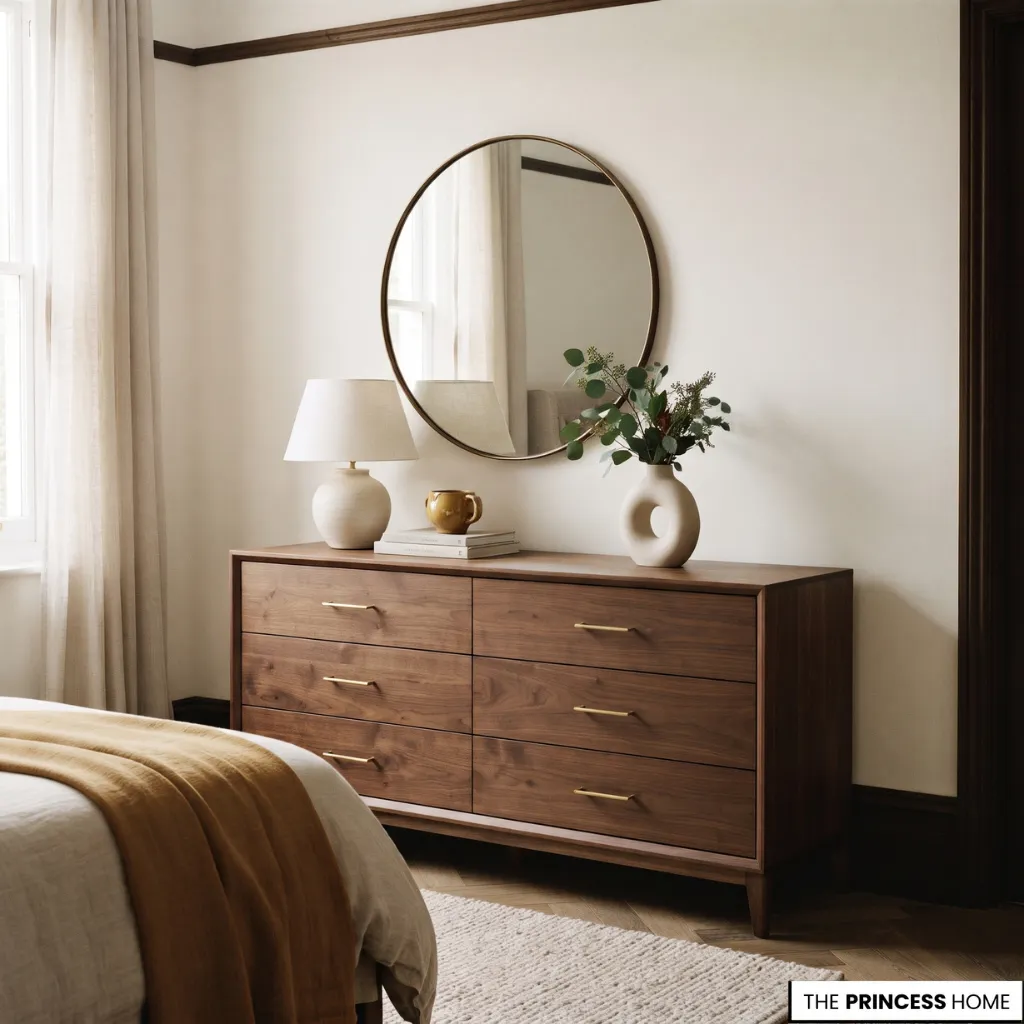
Once the main furniture, colors, materials, and lighting are established, introduce finishing details that reflect personal preferences and complete the design.
Artwork and Wall Decoration
Artwork can provide a focal point above the headboard or on an otherwise unused wall. Choose pieces that relate to the room’s colors, proportions, and overall character.
A single large artwork may suit a spacious wall, while a carefully arranged group of smaller pieces can work in another setting. Keep the placement proportionate to the furniture beneath it.
Mirrors
Mirrors provide a practical surface for dressing and can reflect available light. A full-length mirror may be useful near a wardrobe, while a smaller decorative mirror can complement a dressing table.
Consider what the mirror reflects before choosing its position. Its location should improve everyday use without creating an awkward visual arrangement.
Decorative Objects
Lamps, books, trays, ceramics, and personal objects can complete bedside tables and dressers. Select pieces that have a clear purpose or personal meaning rather than filling every available surface.
Varying heights can create a more balanced arrangement, but leave enough room for everyday items.
Plants and Natural Details
Plants can introduce natural color and texture where suitable light and care conditions are available. Select varieties according to the bedroom’s daylight and maintenance requirements.
Natural wood, woven baskets, and other simple materials can also introduce texture without requiring a large number of accessories.
Small finishing changes can be enough to complete an existing room. Repositioning artwork, updating furniture hardware, or displaying meaningful objects can give the bedroom a more considered appearance without filling every surface with new accessories.
The final selection should support the established design. Leave some surfaces relatively clear so that the furniture, materials, and architectural features remain visible.
Adapt Small Bedrooms
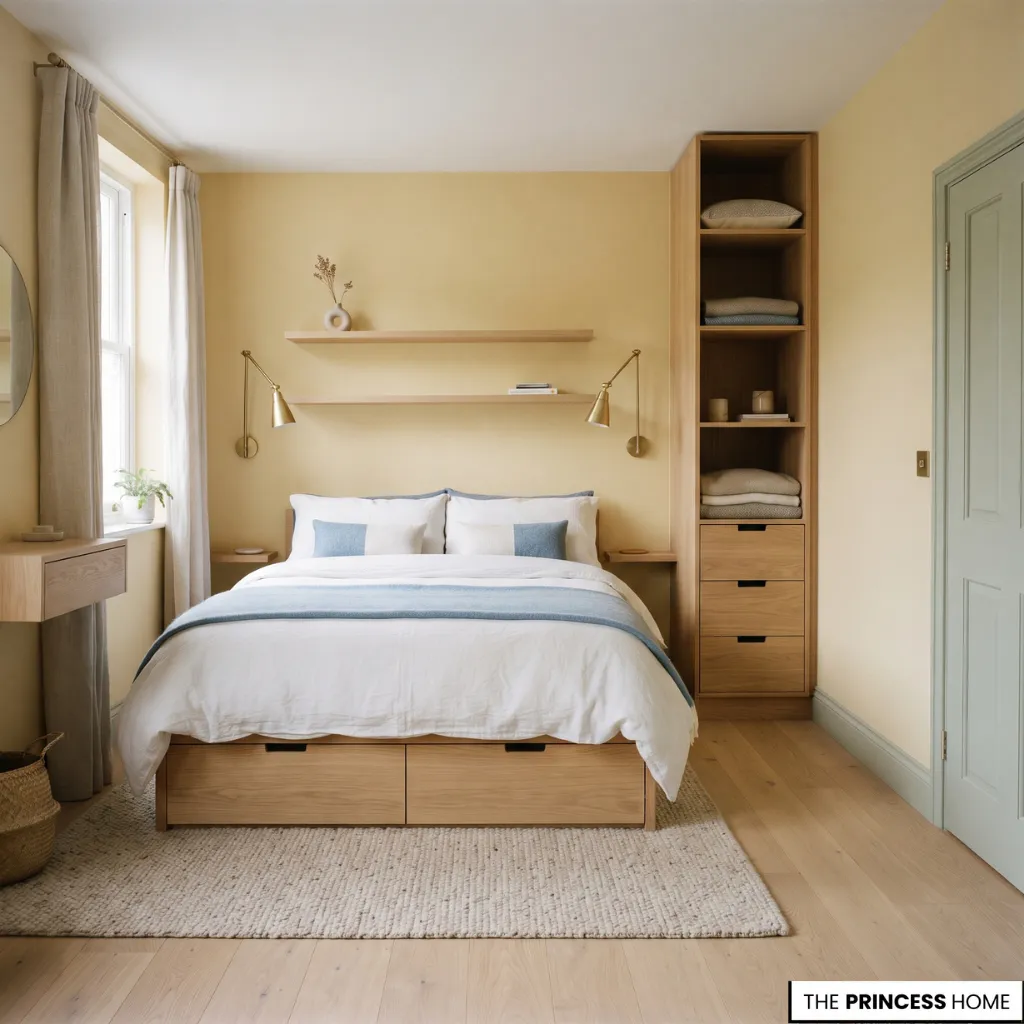
A small bedroom requires careful prioritization because the bed, storage, and circulation compete for limited floor space. The goal is to accommodate essential functions without overcrowding the room.
Prioritize Essential Furniture
Begin with the bed and select a size that meets sleeping requirements while leaving sufficient room for movement. An oversized frame can occupy significantly more space than its mattress dimensions suggest.
Choose bedside furniture according to available width. A narrow table, floating shelf, or wall-mounted cabinet may provide sufficient everyday storage without requiring a large footprint.
Additional furniture should have a clear function. A separate dresser may not be necessary when the wardrobe already offers suitable drawer storage.
Use Vertical Space
Tall wardrobes, wall-mounted shelves, and cabinets can provide storage without spreading furniture across the floor.
Where possible, choose storage that uses the full available wall height. Keep frequently used belongings accessible and reserve higher compartments for occasional items.
Consider Multifunctional Furniture
Furniture that serves more than one purpose can reduce the number of pieces required.
A bed with integrated drawers may provide additional storage, while a compact desk can also function as a dressing surface when its dimensions and lighting are suitable.
Avoid multifunctional furniture that introduces unnecessary complexity or does not meet the actual needs of the room.
Use Light and Mirrors Thoughtfully
Light wall colors can help a small bedroom maintain a bright appearance, particularly when combined with sufficient natural light. However, darker colors can also work when used deliberately and supported by suitable lighting.
Mirrors can reflect light and create a greater sense of visual openness when positioned carefully. They should complement the arrangement rather than become an additional obstacle.
Wall-mounted reading lights can free up bedside surfaces, while a compact floor lamp may be suitable when its position does not interfere with movement. The best option depends on the available wall space, electrical access, and the activities that need lighting.
Finally, limit unnecessary accessories and preserve clear walking routes. A small bedroom benefits more from a well-planned arrangement than from filling every available corner.
Avoid Common Mistakes
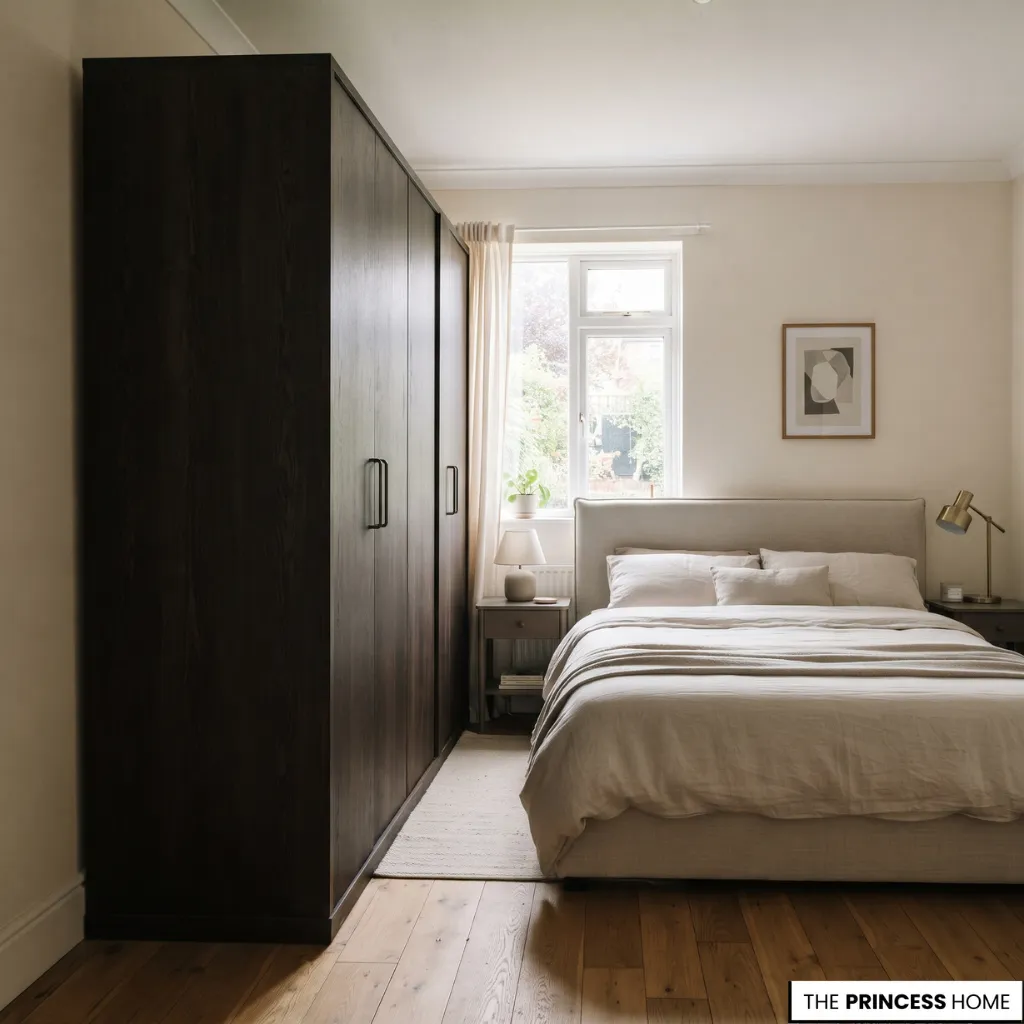
Some bedroom design problems result from making individual choices without considering how they affect the complete room. Recognizing these issues early can prevent unnecessary purchases and improve the final arrangement.
Buying Furniture Before Measuring
Furniture may appear suitable in a showroom but overwhelm the bedroom once installed. Measure the room, furniture, and access routes before purchasing large pieces. Remember to account for wardrobe doors and drawers that need space to open.
Choosing an Oversized Bed
A large bed may leave insufficient room for bedside tables, storage, or comfortable movement. Select the bed according to both sleeping requirements and the available floor area.
Blocking Windows and Doorways
Placing large furniture in front of windows or restricting door openings can interfere with daylight, ventilation, and everyday access. Include these fixed features in the initial layout plan.
Ignoring Storage Requirements
Insufficient storage can lead to cluttered surfaces and belongings without a suitable place. Establish storage needs before selecting additional furniture.
Relying on One Light Source
A central ceiling fixture may illuminate the room generally but provide inadequate reading or dressing light. Combine ambient lighting with appropriate task and accent fixtures.
Choosing Paint Without Testing It
A color may look different in the bedroom than it does on a sample card. Test paint on the intended wall and observe it under changing daylight and evening lighting.
Mixing Too Many Finishes
Introducing several unrelated wood tones, metal finishes, and surface materials can weaken visual coordination. Establish a consistent material direction and introduce variation selectively.
Overcrowding With Accessories
Too many decorative objects can reduce useful surface space and make the bedroom harder to maintain. Choose fewer pieces that relate to the overall design and leave room for everyday belongings.
Selecting Textiles Independently
Curtains, bedding, and rugs may look attractive individually but fail to work together. Consider their colors, patterns, and textures as part of one coordinated scheme.
Ignoring Everyday Comfort
A bedroom can look attractive while remaining inconvenient to use. Check the layout, lighting, mattress, ventilation, storage, and window treatments before considering the design complete.
Conclusion
Successful bedroom design begins with understanding the space and identifying the needs it must accommodate. From furniture placement and storage to colors, materials, lighting, and textiles, each decision should contribute to a comfortable and coordinated environment.
Rather than following a fixed decorating formula, develop the room according to its dimensions, practical requirements, and personal preferences. When the essential elements work together, the bedroom becomes both functional and visually balanced.