Creating a home office in a bedroom requires more than finding room for a desk. The workspace needs to support comfortable, productive work while allowing the bedroom to remain a place for rest.
With thoughtful furniture placement, suitable lighting, practical storage, and subtle visual separation, you can accommodate both functions without making the room feel overcrowded or dominated by office equipment. The key is to plan around the bedroom’s existing layout and your actual working needs.
A compact laptop station for occasional use requires a different arrangement from a full-time workstation with a monitor, paperwork, and additional equipment. Understanding that difference will help you make better decisions about furniture, space, and everyday comfort.
Assess Your Bedroom
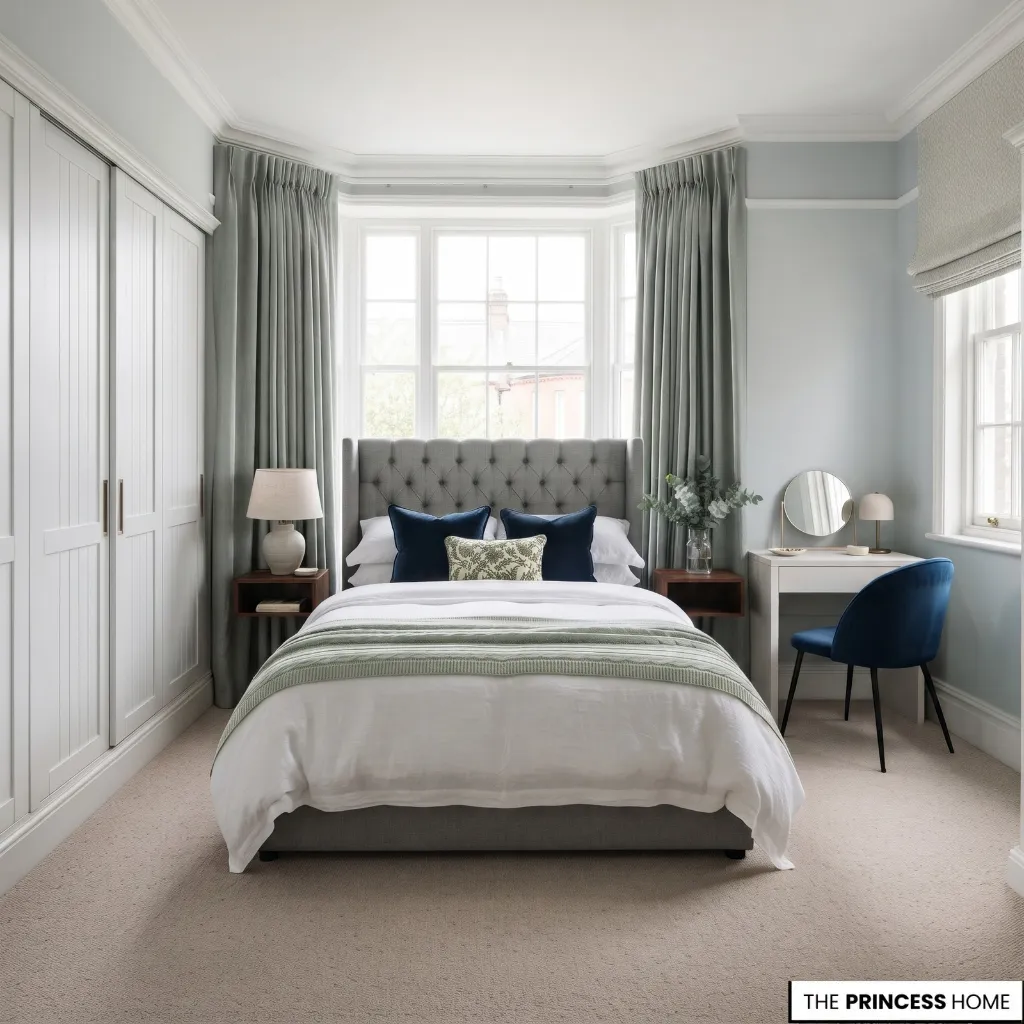
Before choosing furniture or deciding where to place a desk, assess the bedroom’s existing layout. The available space, position of the bed, windows, wardrobe, doors, and electrical outlets will determine which workspace arrangements are practical.
Start by identifying an area that can accommodate a desk and chair without obstructing access to essential furniture.
Measure the available width and depth, remembering to account for the space needed to pull out the chair and move comfortably around it. A desk that fits against a wall may still create a problem if the chair blocks a wardrobe or bedroom doorway.
Consider your working requirements as well. A laptop used occasionally requires less space than a desktop computer with multiple monitors, paperwork, and additional equipment. The desk surface, storage, and electrical access should reflect how you actually work.
Think about whether you need room for writing, video calls, documents, or equipment that must remain connected throughout the day.
Natural light is another important consideration. Identify the windows and observe how sunlight enters the room at different times. A position that receives comfortable daylight may become unsuitable when direct sunlight creates screen glare.
Also consider whether curtains, blinds, or window access could be obstructed by the proposed desk position.
Finally, decide which existing furniture should remain and whether any pieces can serve more than one purpose. An existing chest of drawers, for example, may provide storage for office supplies without introducing another bulky furniture item.
Before settling on a position, sketch a simple floor plan showing the bed, wardrobe, doors, windows, and available desk area. Mark the approximate desk footprint and allow for the chair to move back from the desk. You can also use masking tape on the floor to outline the proposed desk and chair positions.
This makes it easier to test whether the arrangement leaves enough room to open doors and drawers, reach the wardrobe, and move around the bed. If two locations appear suitable, compare them using the same checks rather than choosing based on appearance alone.
The starting point is to plan around the bedroom you have, rather than buying furniture and trying to fit it into the room afterward.
Choose the Right Layout
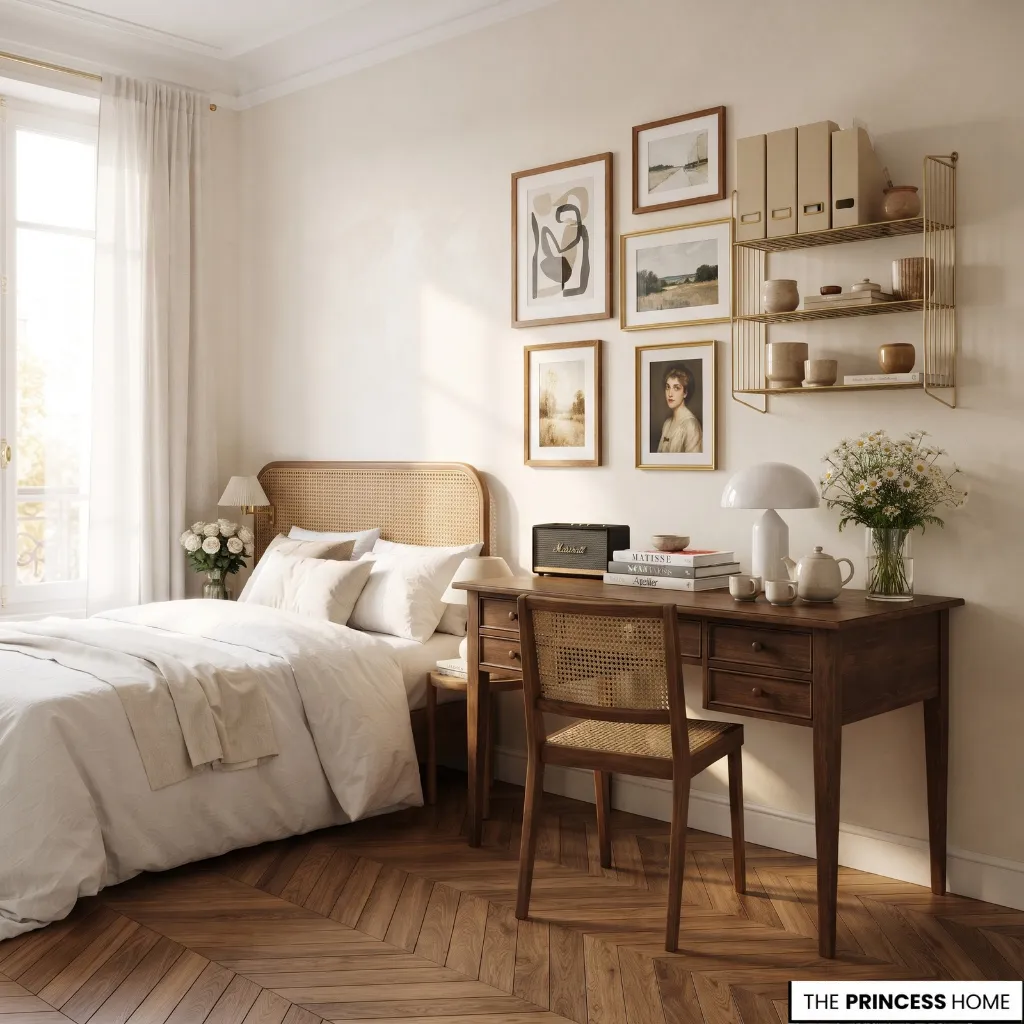
Desk placement influences working comfort, circulation, and the visual relationship between the office and sleeping areas. The most suitable arrangement depends on the bedroom’s dimensions, available wall space, natural light, and the amount of equipment required.
Beside a Window
Placing a desk beside a window can make good use of natural daylight while establishing a defined working corner. This arrangement is particularly useful when the window wall has enough space for a desk without obstructing curtains, window operation, or access.
Where possible, position the computer screen so that the window is to one side rather than directly in front of or behind it. This can help reduce reflections and excessive contrast. Adjustable curtains or blinds provide additional control when sunlight becomes too strong.
A desk beside a window can also work well with a small drawer unit or a wall-mounted shelf, provided these additions do not obstruct the window or make the area feel crowded.
Before choosing this position, check that the desk will not interfere with opening the window, operating the curtains, or accessing any balcony or outdoor area.
If the window receives strong direct sunlight for part of the day, consider whether adjustable blinds can manage the glare without leaving the workspace too dark. A window-side position is most suitable when it offers useful daylight while preserving convenient access and a comfortable screen position.
Against an Empty Wall
An unused wall offers a straightforward location for a bedroom workspace. It keeps the desk within a defined area and can separate working activities from the immediate sleeping space.
A narrow desk can sit against the wall, with shelves or a small cabinet above or beside it for frequently used supplies. This arrangement is especially practical when the window area is already occupied or when direct daylight creates screen reflections.
Consider the wall’s relationship to the bed and the room’s main circulation route. A desk positioned along a separate wall can help maintain distinct working and sleeping areas without requiring a physical divider.
This option is often a practical alternative when a window-side position would block natural light or interfere with access. Compare the available wall space with the desk’s required depth and the chair’s movement.
If the wall is close to the bed or wardrobe, test the arrangement with the chair pulled out and the storage doors open. A clear wall is useful only when the complete workstation fits without creating a new circulation problem.
In an Unused Corner
An unused corner can accommodate a workspace without taking over an entire wall. A compact corner desk or a suitably sized straight desk can make use of an area that might otherwise remain empty.
Check the available depth before choosing corner furniture. The desk should provide enough surface for the equipment, while the chair needs sufficient room to move in and out. Avoid placing shelves or cabinets where they interfere with the chair or restrict access.
This arrangement is particularly useful in bedrooms where the main walls are needed for the bed and wardrobe. However, a corner is only practical when it provides adequate light, working space, and comfortable access.
Do not choose a corner simply because it appears unused. Check whether you can position the chair comfortably, whether the desk surface suits your equipment, and whether the location provides enough light for your daily tasks.
If the corner is too narrow for the chair or leaves the monitor facing an uncomfortable source of glare, an empty wall may be a better choice.
Behind or Beside the Bed
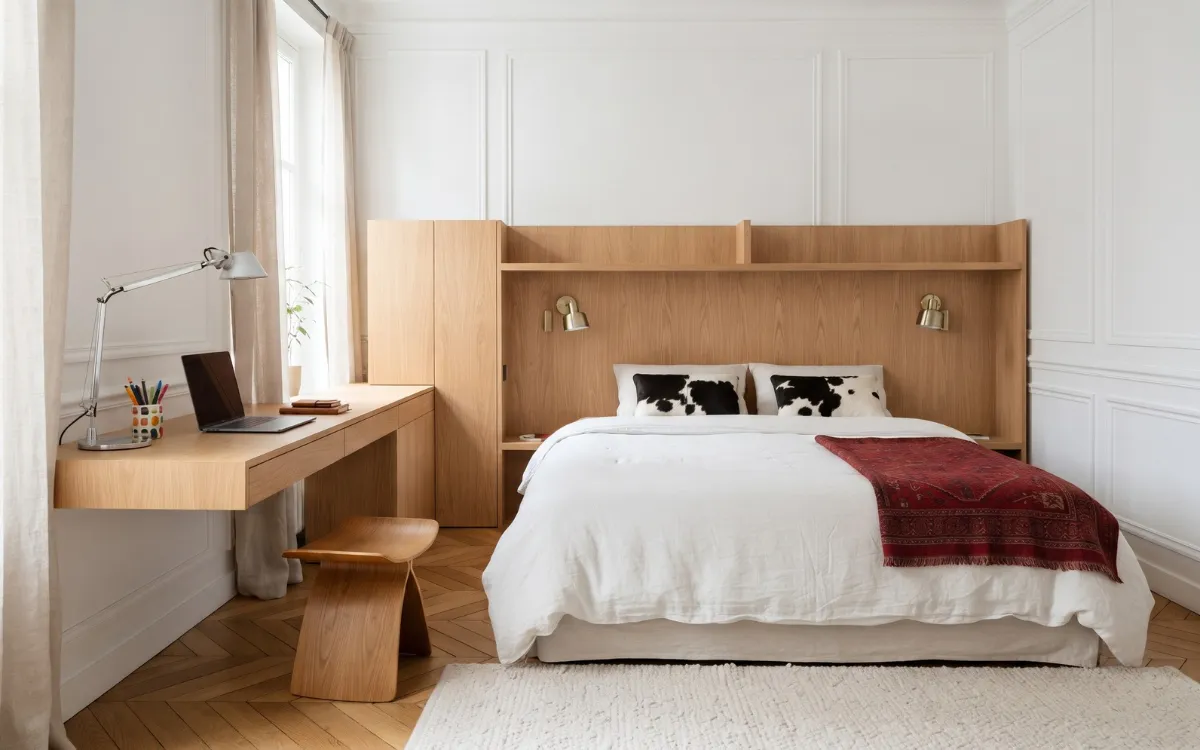
When the bedroom has sufficient depth, you can position a desk behind the headboard or along the side of the bed. This arrangement can create a natural distinction between the two functions, especially when you choose furniture that gives each area its own visual identity.
A headboard or carefully arranged furniture can provide some separation, but the desk should not restrict access to the bed or make the sleeping area difficult to use. Check that the chair can be pulled out without interfering with bedside tables or the main walking route.
This solution is more appropriate for larger bedrooms or rooms with an existing alcove than for narrow spaces where every part of the floor is needed for circulation.
Before using this arrangement, consider how much space remains between the desk, bed, and surrounding furniture. The workspace should be accessible without requiring you to squeeze past the bed or move other furniture whenever you sit down.
If the desk is positioned behind the headboard, make sure the chair has enough room and that the workstation does not make changing the bedding or accessing bedside storage difficult.
Inside a Closet or Cabinet
A suitable closet or cabinet can accommodate a concealed workstation, allowing the office to be closed away when work finishes. This can be particularly useful when there is little free wall or floor space.
The interior needs enough depth for the desk surface, computer, and comfortable working position. Check the available space for the chair, legroom, electrical connections, and equipment ventilation. Appropriate task lighting is also necessary, especially when the cabinet has no direct access to daylight.
A fitted cupboard workstation is not suitable for every bedroom. It needs to provide a genuinely usable working position, not simply a surface on which to place a laptop. When the dimensions and ventilation allow it, however, it offers a practical way to reduce the visible presence of office equipment.
Check the cabinet’s usable dimensions with its doors in the position they will occupy during work. Hinged doors, sliding panels, and internal shelves can affect how much space is actually available.
Also consider whether the chair can be moved into position and whether the workstation can remain open safely while equipment is in use. If the cabinet becomes too enclosed or uncomfortable during longer working sessions, a more open desk arrangement may be the better solution.
Select Suitable Furniture
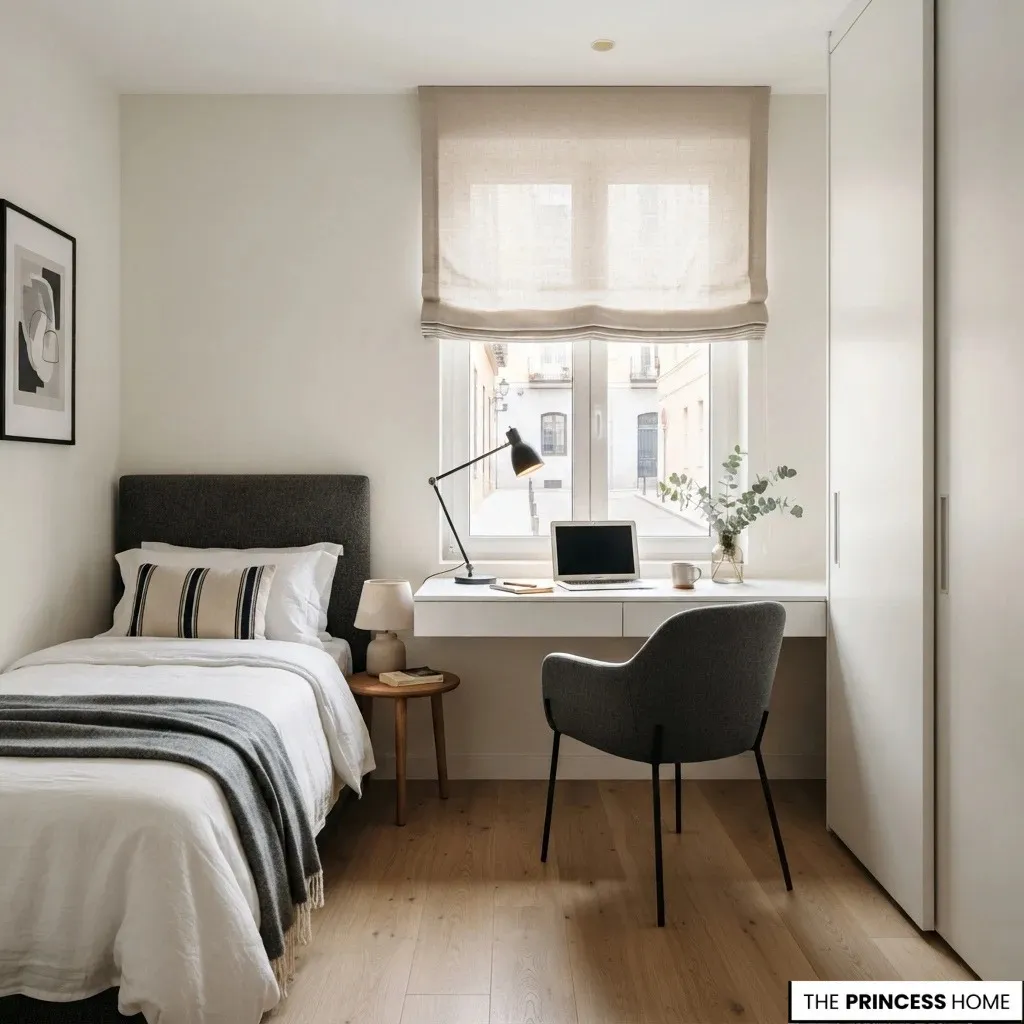
The desk and chair determine whether the workspace can support comfortable daily use. Their dimensions, functions, and relationship to the bedroom furniture should be considered together rather than selected independently.
Choose a Suitable Desk
Choose a desk according to the equipment and activities it needs to accommodate. A compact writing desk may be sufficient for a laptop and occasional paperwork, while regular computer work may require a deeper surface for a monitor, keyboard, and other accessories.
Several designs can work well in bedrooms. Narrow desks are suitable for rooms with limited wall depth, provided the working surface remains adequate. Wall-mounted desks reduce the number of floor-supported furniture pieces and can work in compact areas.
Corner desks make use of suitable unused corners, while fold-down desks provide a work surface that can be closed when not needed.
Built-in desks can make use of alcoves or available wall recesses, and small writing desks offer a furniture-like appearance that can coordinate with traditional or contemporary bedrooms.
Avoid choosing a desk solely because it looks compact. If it cannot accommodate your equipment comfortably, it will become difficult to use. For regular work, consider the space needed for the monitor, keyboard, mouse, documents, and any other items you use throughout the day.
To compare desk options, begin with the equipment you intend to use at the same time. Place the monitor, keyboard, mouse, and any frequently used documents within the available working area, allowing enough room to use them without crowding the surface.
Then compare the desk’s depth and width with the space available in the bedroom. A desk may fit along a wall but still be unsuitable if it leaves too little room for the chair or prevents access to nearby furniture.
The best choice is the smallest desk that comfortably accommodates your actual work, rather than the smallest model available.
Prioritize a Supportive Chair
The chair should provide suitable back support, adjustable height where possible, and dimensions that allow you to sit comfortably at the desk. Your feet should rest on the floor or an appropriate footrest, while your shoulders and arms remain relaxed during work.
An adjustable office chair is generally more suitable for regular working hours than a decorative bedroom chair. However, the design does not need to look industrial. Upholstered chairs with supportive backs and appropriately designed adjustable options can complement bedroom furniture.
Check the chair’s overall dimensions before purchasing. Armrests may prevent it from sliding beneath the desk, while a wide base can restrict movement in a narrow bedroom. A chair that fits the available space but does not support your working position is not a good compromise.
The desk and chair should be tested as a pair whenever possible. At the intended working height, check that you can sit with your feet supported, your shoulders relaxed, and your arms comfortably positioned while using the keyboard.
Make sure the chair can move close enough to the desk without its armrests or base colliding with it. If the chair is adjustable, confirm that its range suits both the desk height and your sitting position. This is more reliable than selecting each piece separately based only on its appearance or advertised dimensions.
Add Only Necessary Furniture
Additional furniture should solve a specific storage or working need. A small drawer unit can hold documents and accessories, while wall-mounted shelves provide space for books without occupying more floor area.
If the bedroom already contains a suitable chest of drawers, consider using part of its storage for office supplies instead of adding another cabinet. A bedside cabinet may also provide useful storage if it is conveniently positioned and has enough capacity.
For occasional work, a simple desk and one suitable storage solution may be sufficient. For a full-time workstation, prioritize adequate working dimensions and comfortable seating before spending money on decorative accessories.
Before adding a separate cabinet, drawer unit, or shelf, identify what you need to store and how often you use each item. Keep frequently used items close to the desk, and store documents and equipment you use less often elsewhere in the bedroom.
This helps prevent unnecessary furniture from taking up floor space and keeps the workstation organized without making the room feel like a separate office.
Improve Lighting
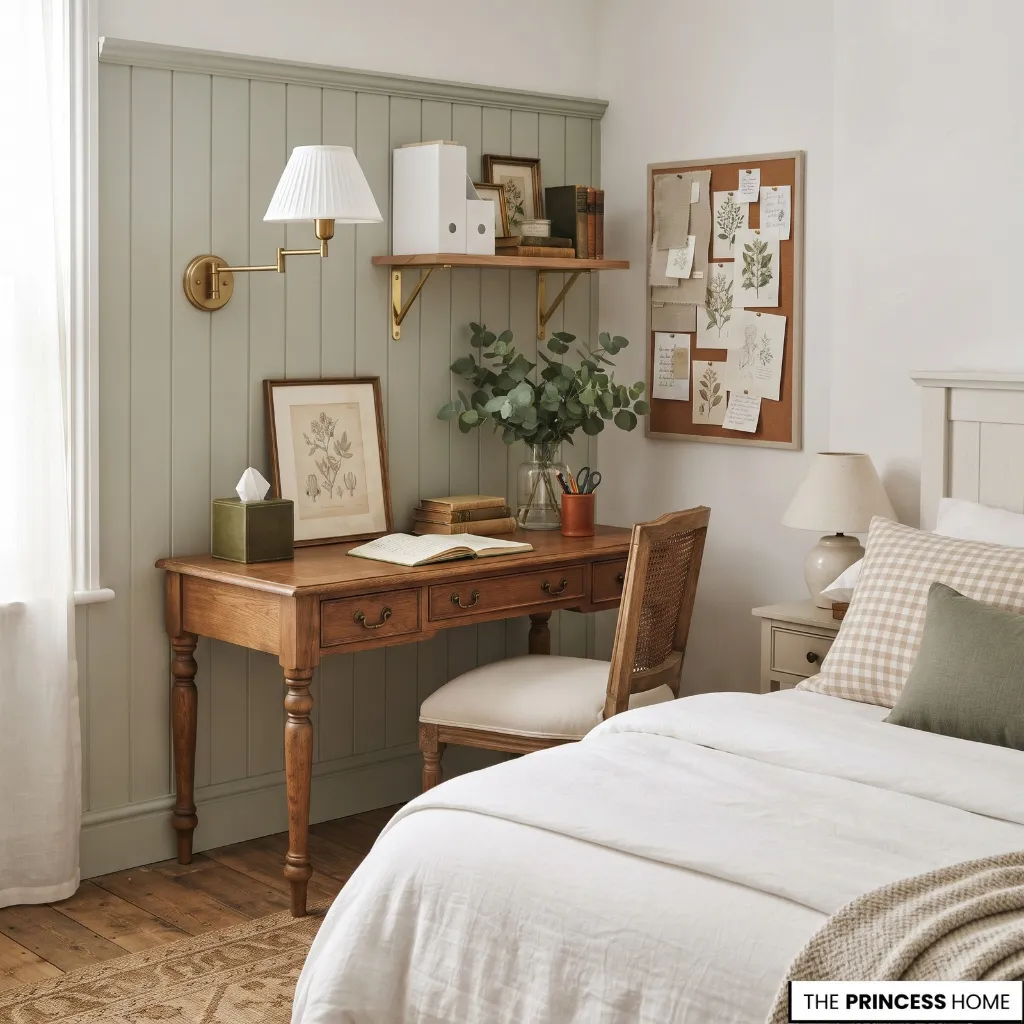
A bedroom office needs sufficient light for screen work, reading, and writing without making the entire room feel like a conventional office. The best arrangement combines natural daylight, appropriate task lighting, and the existing bedroom lighting.
Make Use of Natural Light
Position the workstation to make use of daylight while avoiding direct sunlight on the computer screen. Where possible, place the window to one side of the monitor rather than directly behind or in front of it.
This arrangement can help manage reflections and differences in brightness between the screen and its surroundings. Adjustable blinds or curtains provide additional control throughout the day.
If the bedroom has only one suitable window, prioritize a desk position that balances available daylight with screen visibility and comfortable circulation. Do not sacrifice convenient access to the window simply to place the desk in the brightest possible position.
If the screen still reflects sunlight after the desk has been positioned, adjust the monitor angle or use blinds to control the light entering the room.
The aim is not to avoid daylight, but to make it comfortable for the work being done. A position with slightly less direct light may be more practical than one that requires constant adjustments or makes the screen difficult to see.
Add Adjustable Task Lighting
A desk lamp provides localized illumination for reading, writing, and other close-up tasks. Choose an adjustable design that directs light toward the working surface without shining directly into your eyes or creating unwanted screen reflections.
A wall-mounted adjustable lamp is useful when desk space is limited. A compact table lamp can also work when there is sufficient room for it alongside the computer.
The lamp should support the work being done rather than serve only as a decorative accessory. If you regularly work in the evening, make sure the task light provides enough illumination for the desk without requiring the bedroom’s general lighting to remain excessively bright.
Consider where you usually write or read when choosing the lamp’s position. The light should reach the working surface without being blocked by the monitor or creating strong shadows from your hands. If you use the desk for several activities, an adjustable lamp offers more flexibility than a fixed decorative light.
Keep Bedroom Lighting Separate
The bedroom’s general lighting should remain comfortable for activities outside working hours. Ceiling lighting provides overall illumination, while bedside lamps offer a more localized source for reading and evening use. You do not need to illuminate the sleeping area at the same intensity as the workstation.
Keeping task lighting separate allows the desk to function effectively without changing the entire bedroom’s lighting arrangement. This also makes it easier to return the room to its usual evening setting when work finishes.
Create Visual Separation
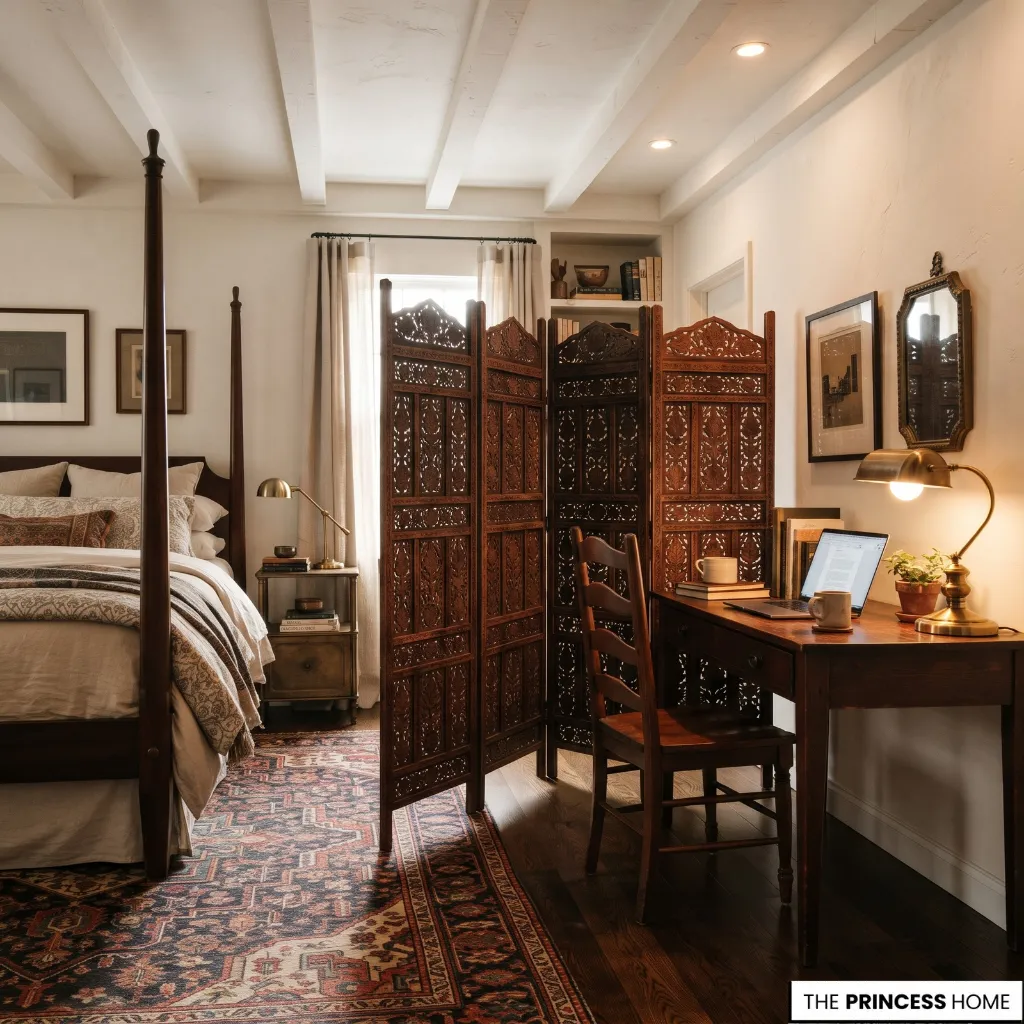
A bedroom office does not always require a wall or permanent partition. The aim is to make the workspace recognizable as a separate functional area while maintaining an open, practical bedroom layout.
Use Furniture as a Divider
A low open bookcase can distinguish the working area from the sleeping area while providing accessible storage. Its open construction allows more light to pass through than a solid partition.
This arrangement works best when the bedroom has enough floor space for the bookcase without restricting movement around the bed. Position it carefully so that it does not block a window, doorway, or access to storage.
For smaller rooms, a narrow shelving unit or carefully positioned furniture may provide sufficient separation without introducing another bulky element.
An open bookcase is most useful when the room has enough space for it and the workspace needs a clearer boundary. If it blocks the natural light, narrows the route to the bed, or makes the room feel divided into two cramped areas, it is not the right solution.
In those circumstances, changing the desk’s orientation or using a wall treatment can create a distinction without adding another large piece of furniture.
Introduce a Different Wall Treatment
A different paint color, wallpaper, or wall treatment behind the desk can visually identify the workspace without dividing the room physically.
The distinction can be subtle. A deeper color, a coordinated wallpaper pattern, or framed artwork above the desk can establish a recognizable working zone while remaining consistent with the bedroom’s overall palette.
This is particularly useful in rental properties or compact bedrooms where a physical divider would be impractical. It also allows the workspace to feel intentional without requiring additional furniture.
A wall treatment is especially suitable when the desk already has a practical position but needs a clearer visual identity. It will not replace the need for suitable storage or a comfortable layout, but it can distinguish the workstation without reducing floor space or blocking daylight.
Define the Work Area with a Rug
A small rug can help define the desk area, particularly when the workspace occupies a corner or an open section of the bedroom.Choose a size that accommodates the desk and, where practical, the chair’s movement.
Avoid a rug that creates an uneven surface beneath a rolling office chair or becomes a tripping hazard. A flat, stable rug or an appropriate chair mat may be more practical, depending on the flooring and chair.
In very small bedrooms, the desk’s position and furniture arrangement may already provide enough distinction, making an additional rug unnecessary.
A rug is most effective when it marks out an area without interfering with the chair or surrounding furniture. If the chair needs to roll freely, consider whether the rug will make daily movement difficult before choosing it. The visual benefit should not come at the expense of a usable workstation.
Consider a Movable Screen
A folding screen creates temporary visual separation and hides office equipment when you use the room for rest. It works particularly well when you can see the desk from the bed or need to conceal the workstation during video calls.
Choose a screen that is proportionate to the available floor space. A tall, solid divider can obstruct daylight and make a small bedroom feel enclosed.
If the room is narrow or already crowded, furniture orientation or a coordinated wall treatment may be a better alternative. A screen is an optional visual solution, not a requirement for every bedroom office.
A movable screen is most useful when it can be opened during work and folded away when it is no longer needed. Before choosing one, check that there is a suitable place to store it and that it will not obstruct the route between the bed, door, and wardrobe.
It provides visual screening rather than soundproofing or complete separation, so it should be chosen for the specific purpose it can realistically serve.
Organize Storage
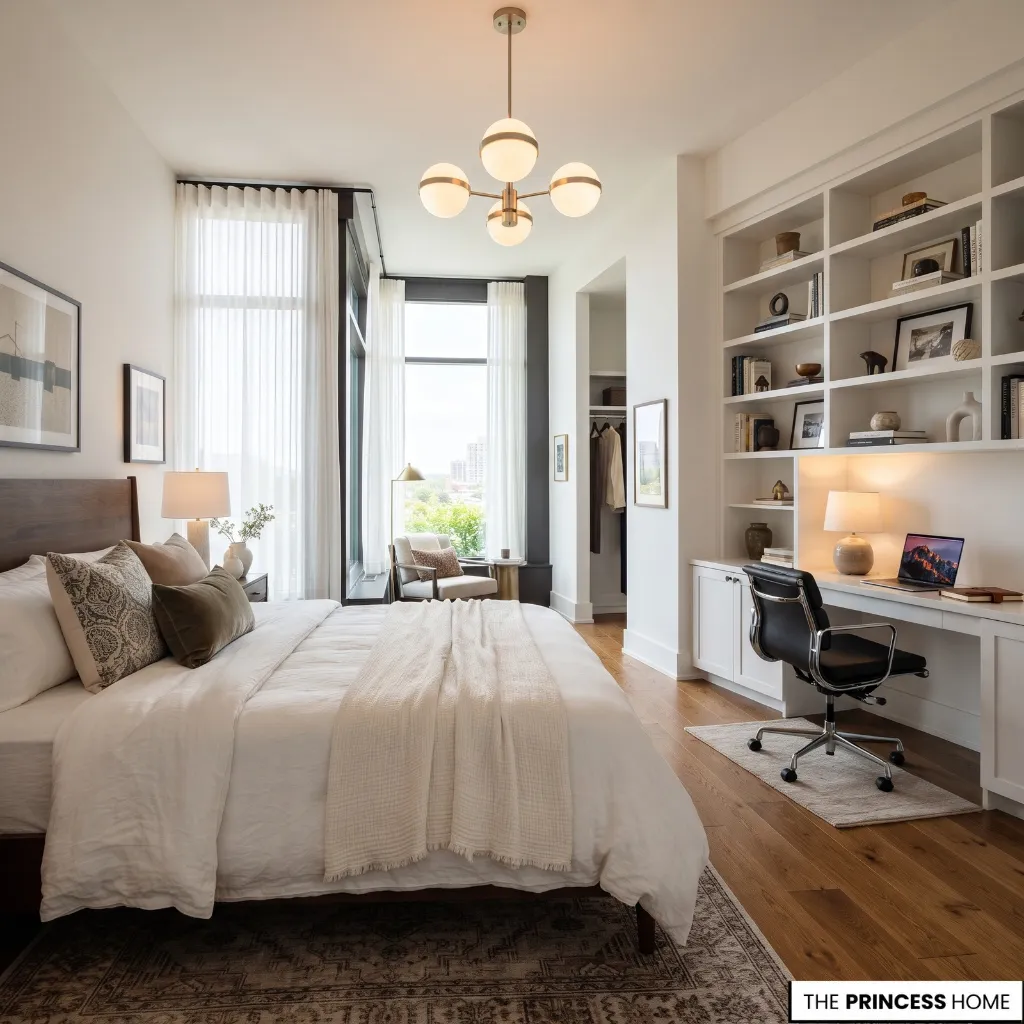
Office supplies, documents, chargers, and computer accessories can quickly spread beyond the desk if they do not have designated storage. Planning these items alongside the workstation helps prevent the bedroom from becoming visually cluttered.
Use Desk Drawers
Drawers provide convenient storage for stationery, documents, chargers, and frequently used accessories. A desk with integrated drawers can reduce the need for separate storage furniture, particularly in smaller bedrooms.
Keep everyday items within easy reach and store less frequently used materials in lower drawers or another suitable cabinet.
If the desk has no drawers, a compact drawer unit positioned beside it can provide additional storage without requiring a large filing cabinet. Check that the unit does not interfere with legroom or chair movement.
Organize the drawers according to how you use the workstation. Keep frequently needed items in the most accessible space, and store paperwork or spare accessories that are used less often in a separate drawer. This makes it easier to clear the desktop without having to search for essential items whenever you begin working.
Make Use of Vertical Storage
Wall-mounted shelves can provide storage above the desk while preserving valuable floor space. They are suitable for books, document holders, small containers, and a limited selection of accessories. Arrange heavier or frequently accessed items where they can be reached comfortably.
Avoid positioning shelves so low that they interfere with the monitor or working area.For a more integrated appearance, coordinate shelf finishes with the desk or other bedroom furniture. Use closed boxes or small containers for items that would otherwise create visual clutter.
The amount of vertical storage should reflect the work being done. A laptop user may need only a shelf for a few books and small accessories, while someone who handles documents regularly may need additional organized storage.
Plan the shelves around the items they will hold rather than filling the wall simply because space is available.
Conceal Equipment and Cables
Closed cabinets and storage boxes help conceal equipment that does not need to remain visible. A dedicated place for chargers, headphones, paperwork, and spare accessories makes it easier to clear the desk after work.
Cable trays, clips, and cable-management boxes can organize wires beneath or behind the desk. Keep cables away from walking paths and ensure that ventilation openings on electronic equipment remain unobstructed.
If the bedroom has limited storage, reuse a suitable existing cabinet or drawer unit rather than adding another large piece of furniture. The aim is to give work materials a defined place, not to create a second storage-heavy area in the bedroom.
Before choosing cable-management accessories, identify where the computer, monitor, lamp, and chargers will be connected.
Keep the cables grouped along the desk or wall where possible, while ensuring that plugs remain accessible and wires do not cross the main walking route. Avoid enclosing equipment in a way that restricts the airflow it needs.
Maintain Bedroom Comfort
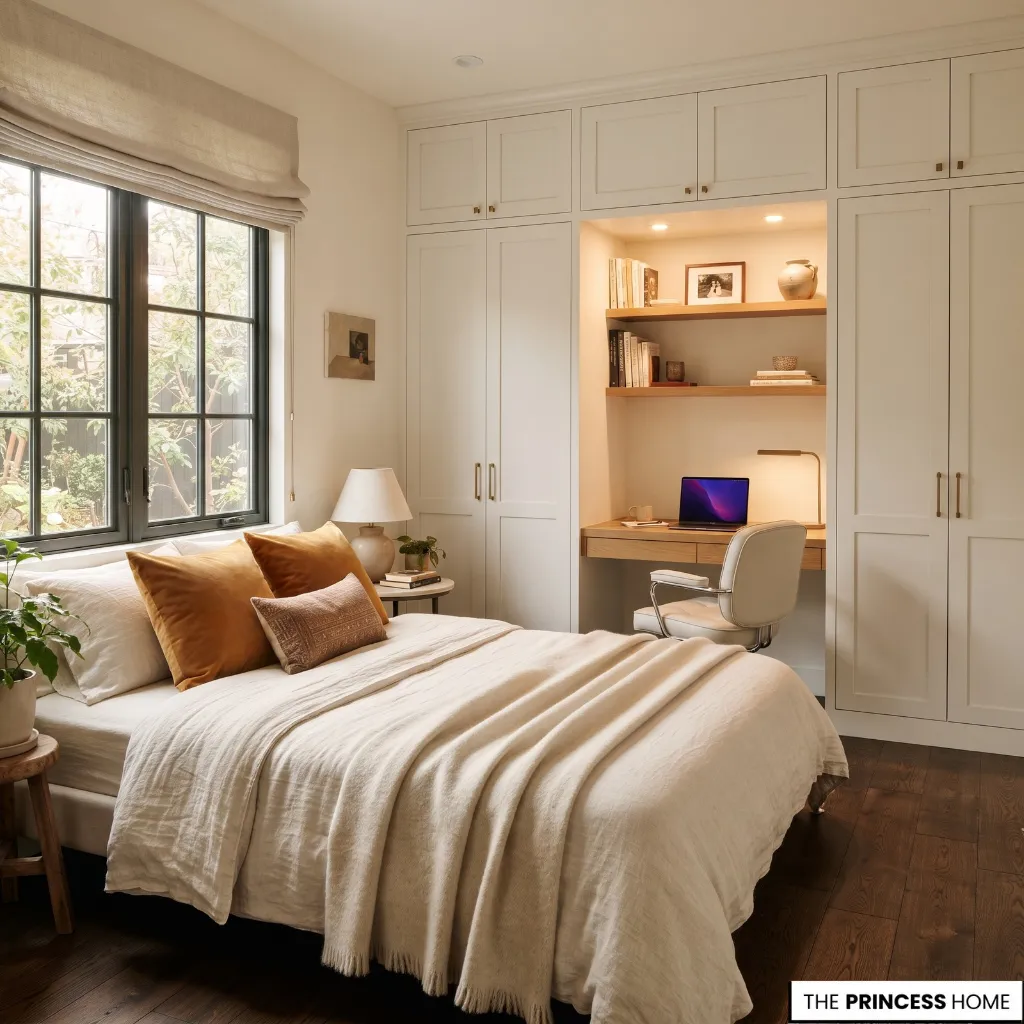
Once you establish the workstation, make sure the entire room still functions comfortably as a bedroom. Consider not only the desk but also the bed, circulation, visible equipment, and how you use the room outside working hours.
A separate room is generally preferable when one is available, particularly for people who work long hours. A bedroom workstation cannot fully separate work from the sleeping environment. However, thoughtful planning and clear daily routines can make a shared room more practical.
Keep the Bed as the Main Feature
The bed should remain the main furniture element, with the desk occupying a clearly defined supporting position. Avoid arrangements in which office furniture blocks the view of the bed or takes up so much space that the sleeping area becomes secondary.
Choose a desk finish and chair design that relate to the bedroom’s existing furniture, but do not feel obliged to match every piece. Repeating a wood tone, metal finish, or upholstery color can create continuity without making the arrangement look like a matching furniture set.
The workstation should feel like a considered part of the room rather than an office that has displaced the bedroom.
This does not mean that the desk must be hidden or visually insignificant. It means that its size and position should remain proportionate to the room and the bed.
If the workstation becomes the first and most dominant feature, reconsider its location, reduce unnecessary accessories, or use a more integrated furniture arrangement.
Preserve Everyday Circulation
Maintain convenient access to the bed, wardrobe, windows, and doors. The desk chair should not obstruct the main walking route when pulled out, and drawers or cabinet doors should open without interfering with other furniture.
Avoid filling every available corner with office storage. Leaving sufficient usable floor space is more important than adding furniture simply to accommodate every possible accessory.
Test the arrangement in everyday use. Pull the chair out, open the wardrobe, access the bedside table, and walk between the main pieces of furniture. This helps reveal practical problems that may not be obvious from a floor plan alone.
If the arrangement works only when you push the chair completely beneath the desk, it may become inconvenient during regular use. Allow enough space for someone to sit comfortably at the workstation, not just when the chair remains tucked away. Apply the same principle to drawers, cabinet doors, and movable dividers.
Establish an End-of-Day Routine
A simple closing routine helps reduce the visual presence of work equipment when the bedroom returns to its primary role.
At the end of the working day, put away paperwork and stationery, store the laptop or close the workstation where possible, place chargers and accessories in their designated storage, switch off unnecessary equipment, and clear the desk surface of items that do not need to remain there.
If the workspace is inside a cabinet, close its doors after storing equipment appropriately. If the desk remains visible, keeping the surface clear can still make the room feel less like a working environment.
These measures help establish a practical transition between working hours and personal time. They do not make a bedroom office equivalent to a separate workroom, but they help keep the two functions more clearly organized.
For people who work from the bedroom for much of the day, the routine can also include putting away work-related documents, closing work applications, and moving equipment that is not needed overnight.
The aim is to make the transition realistic and repeatable rather than create a complicated daily task. A workstation that is easy to clear is more likely to remain organized.
Adapt Small Bedrooms
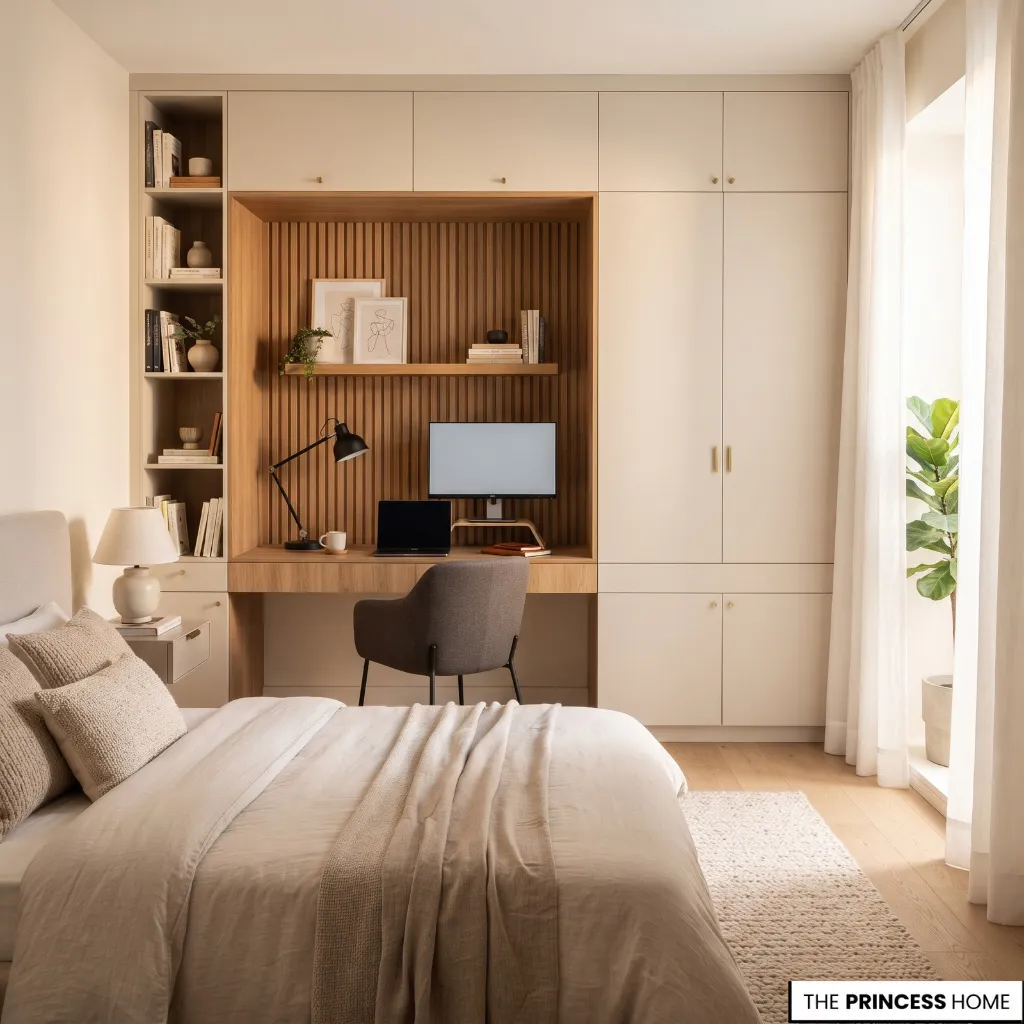
A small bedroom requires more selective planning because the desk, chair, and storage must fit alongside the existing furniture without restricting movement. The solution is not necessarily to choose the smallest possible pieces, but to select furniture that performs its function efficiently.
Choose a Wall-Mounted Desk
A wall-mounted desk can reduce the visual weight of the workstation and free the floor beneath it. It works particularly well for laptop-based work when the available wall space is limited.
Before installation, check the wall’s suitability, the desk’s load capacity, and the required working depth. The arrangement must still accommodate a chair and allow comfortable legroom.
If the desk is intended for extended daily use, make sure the reduced footprint does not compromise the working surface. A compact desk that cannot accommodate the equipment you need will create more problems than it solves.
A wall-mounted desk is especially useful when a conventional desk would occupy too much floor space, but the available wall must still allow a comfortable sitting position. Check the position of sockets, the height of the work surface, and the space required for the chair before installation.
If the desk is too shallow for the equipment or leaves insufficient legroom, consider a different compact design rather than compromising the working position.
Use Vertical Storage
When floor space is limited, shelves above or beside the desk can provide additional storage without introducing another cabinet.
Use the available wall height carefully, keeping frequently used items within comfortable reach. Closed storage boxes or cabinet fronts can reduce the number of visible accessories.
Avoid installing so many shelves that the workspace becomes visually crowded or difficult to access. A few well-planned storage areas are often more useful than filling the entire wall.
In a small bedroom, prioritize the items that genuinely need to remain near the desk. Books and documents used regularly may need accessible shelves, while spare supplies can be stored elsewhere. This keeps the workstation functional without allowing vertical storage to become another source of clutter.
Consider a Fold-Down Workstation
A fold-down desk can provide a temporary working surface that closes against the wall when not needed. This is particularly useful for occasional laptop work or bedrooms where a permanent desk would interfere with daily activities.
The desk must still provide sufficient surface area and appropriate seating while open. Check the installation, stability, weight capacity, and clearance required for the chair.
For full-time work, evaluate a fold-down arrangement carefully to make sure it provides adequate support and enough working space throughout the day. This option works best when your equipment and daily working habits suit its limitations.
Consider what happens to the chair and equipment when the desk is folded away. The workstation is only space-saving if the remaining furniture can also be stored or positioned conveniently. If you need to move several items every time you open or close it, a compact permanent desk may prove more practical.
Make Use of Existing Furniture
Before purchasing additional storage, consider whether existing bedroom furniture can accommodate office supplies. A suitable chest of drawers may provide space for documents and accessories, while an existing shelf can hold books or equipment.
A compact desk paired with existing storage may be more practical than introducing a complete office furniture set.
The important consideration is to keep work materials organized and separate from everyday bedroom belongings. Reusing furniture should also preserve its original purpose: do not fill a bedside cabinet or wardrobe to the point that it becomes inconvenient to use.
In a particularly small room, compare the space required by a new storage unit with the unused capacity of furniture already in place. If an existing drawer can hold office supplies without making everyday bedroom storage difficult, using it may be the more efficient solution.
Keep work materials grouped together so that they can be accessed and put away without spreading across the room.
Avoid Common Mistakes
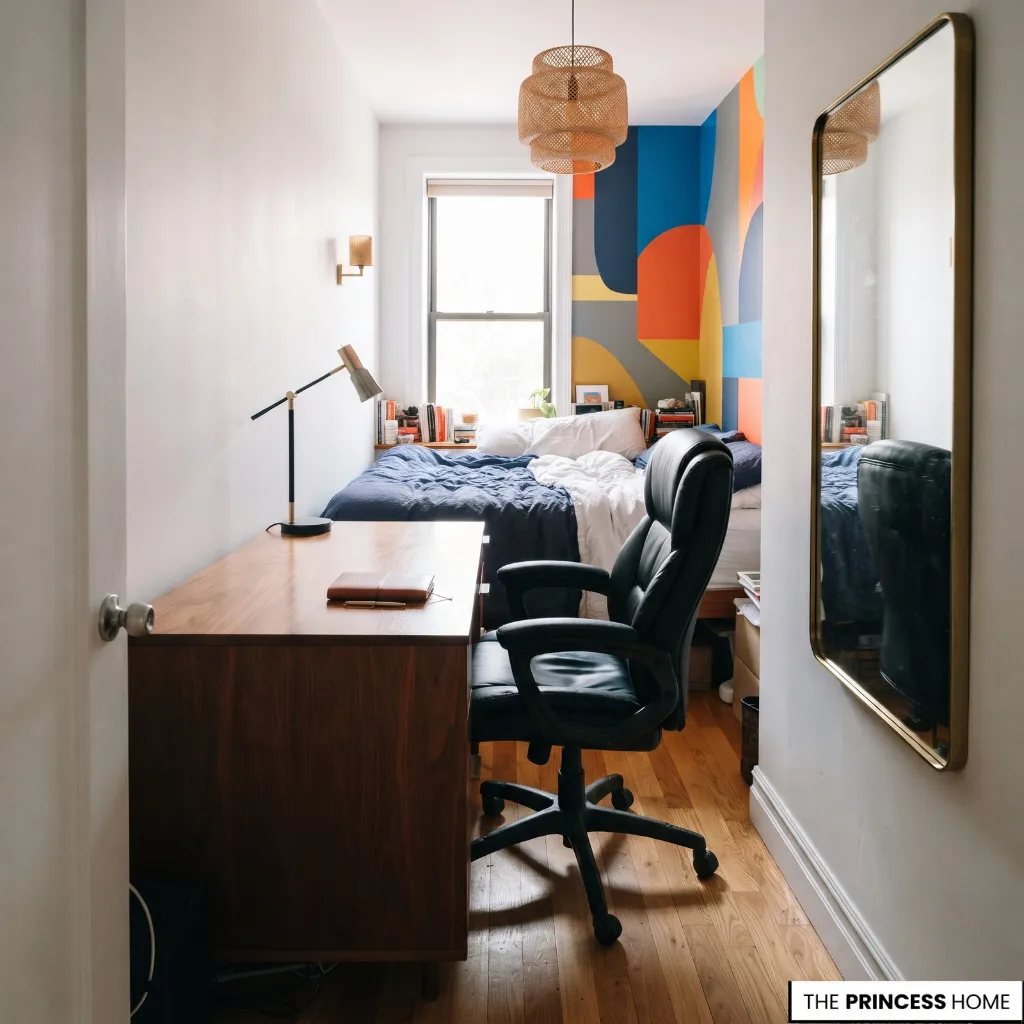
Even a well-chosen desk can create problems when the surrounding layout, lighting, or furniture is poorly planned. Recognizing these mistakes before purchasing or arranging furniture can prevent unnecessary changes later.
Choosing a Desk Before Measuring
A desk that is too large can obstruct circulation or limit access to bedroom furniture. Measure the available area and allow enough room for the chair before choosing a desk.
Selecting an Undersized Desk
A desk that is too small may not accommodate essential equipment comfortably. Choose a working surface that suits your daily tasks and the items you need within reach.
Prioritizing Chair Appearance Over Support
A decorative chair may complement the bedroom but fail to provide adequate support for regular work. Choose a comfortable, supportive chair that also fits the room’s design.
Blocking the Window
Placing a desk in front of a window can restrict access and make the arrangement awkward. Consider alternative positions that preserve natural daylight and easy window access.
Placing the Screen Where Glare Occurs
Direct sunlight and reflections can make screen viewing uncomfortable. Position the monitor carefully and use suitable window treatments to control glare.
Installing a Bulky Divider
A large partition can make a bedroom feel crowded and block natural light. Use open shelving, thoughtful furniture placement, or subtle visual zoning to distinguish the workspace without closing off the room.
Neglecting Storage
Without adequate storage, documents and work accessories can spread into the sleeping area. Plan drawers, shelves, or concealed storage alongside the desk to keep work essentials organized.
Leaving Cables Exposed
Loose cables create visual clutter and can become tripping hazards. Use cable clips, under-desk trays, and suitable storage solutions to keep wires organized and out of sight.
Allowing Office Furniture to Dominate
Oversized or overly commercial-looking furniture can make the bedroom feel more like an office. Keep the workstation proportionate to the room and coordinate its finishes with the existing furniture.
Working Regularly From the Bed
Using the bed as a regular workstation can make it harder to maintain a clear distinction between working and resting. Whenever possible, use a properly arranged desk and supportive chair for daily tasks.
A successful bedroom office depends on thoughtful planning rather than adding more furniture or elaborate dividers. Appropriate dimensions, comfortable seating, clear circulation, suitable lighting, and practical storage help create a workspace without compromising the bedroom’s everyday comfort.
Conclusion
A comfortable home office in a bedroom depends on giving both functions enough space and attention. Choose a desk location that supports your working needs, select suitable furniture, manage lighting and storage, and establish a clear distinction between the workspace and sleeping area.
Not every bedroom can accommodate a full workstation, and not every solution suits every working routine. By assessing the available space before buying furniture and making practical compromises where necessary, even a compact bedroom can accommodate a useful workspace while retaining its identity as a comfortable place to rest.