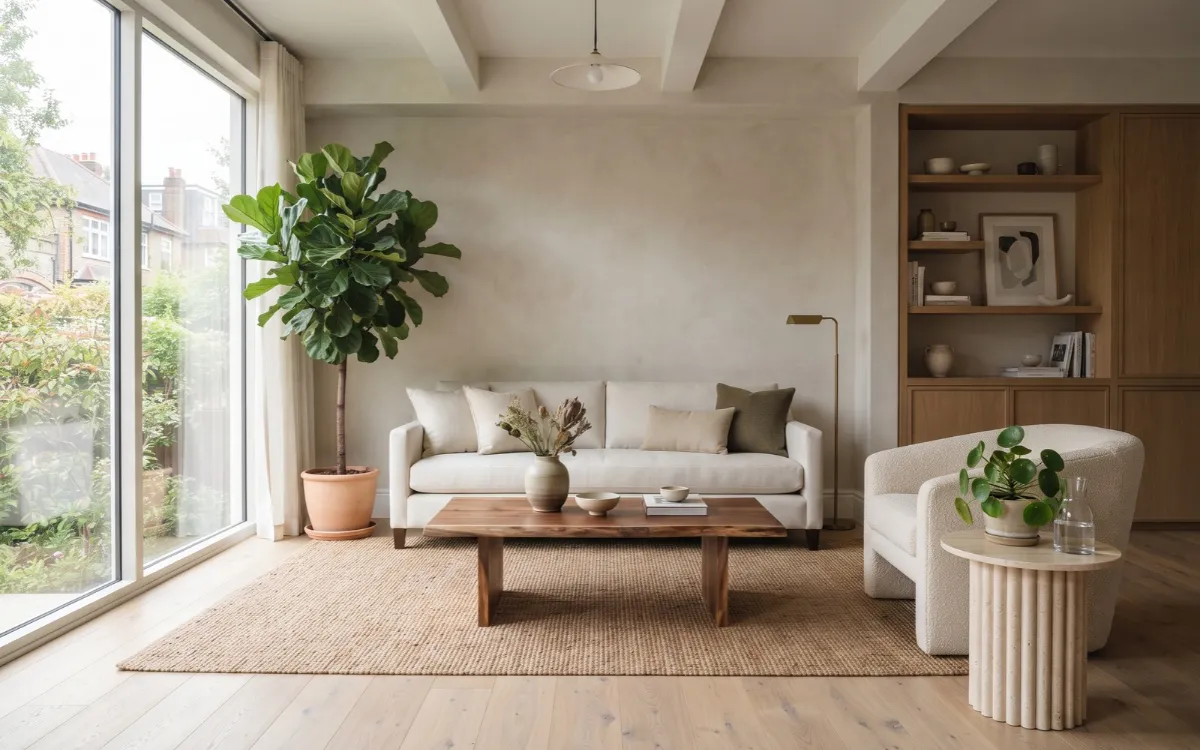
House plants bring color, texture, and natural shapes into interior spaces, but successful decorating requires more than choosing attractive greenery. Plants must suit the room’s light and temperature, fit the scale of the furniture, and work with the existing colors and materials.
This guide explains how to select, arrange, and maintain house plants so they complement your decor without creating clutter or compromising their growing needs.
Assess Your Space
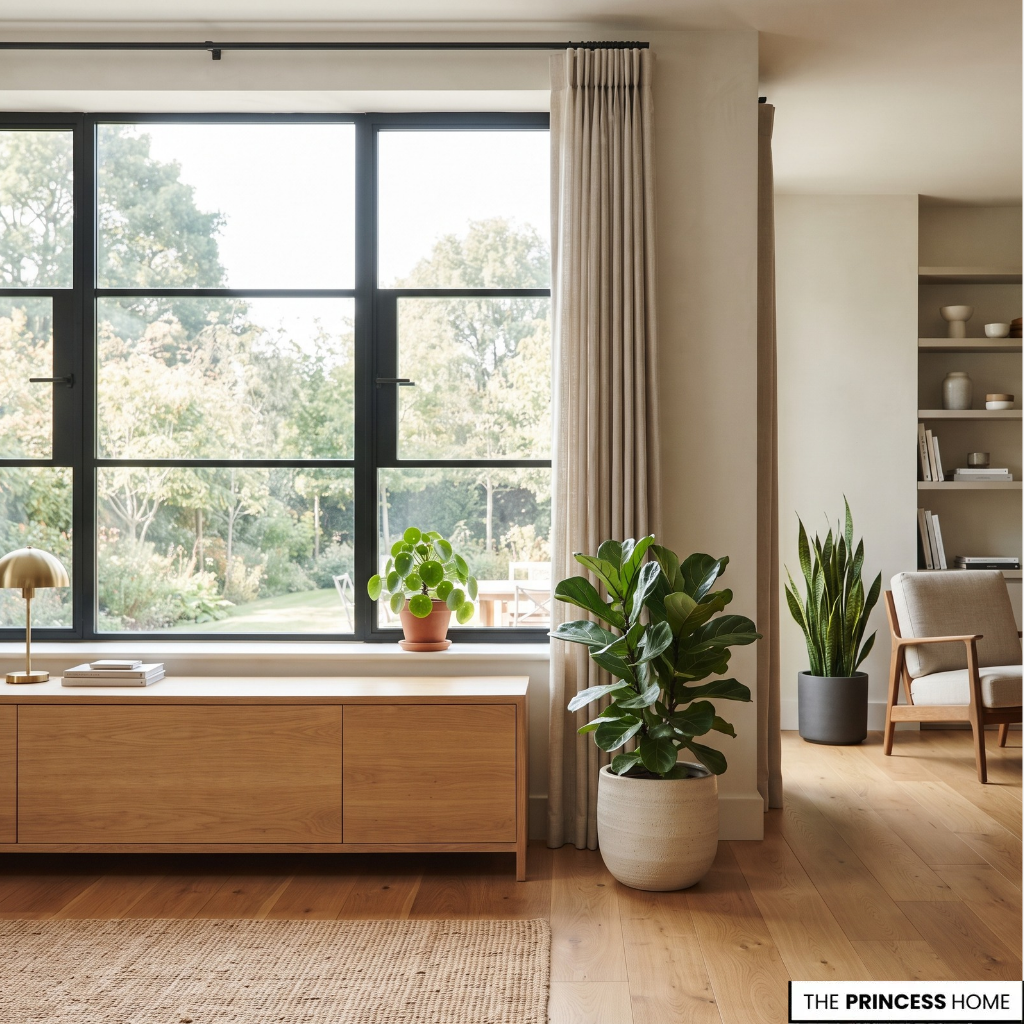
Start by examining the room before buying plants or rearranging existing ones. Assess natural light, temperature, humidity, available surfaces, and the space needed for everyday activities. These conditions determine which plants will thrive and where they can contribute most effectively to the interior.
Observe how sunlight reaches different areas throughout the day. A bright windowsill, a position several feet from a window, and a shaded corner provide different growing conditions.
The right location depends on the plant species, window orientation, glazing, and season. Choose plants according to the light available rather than assuming every indoor plant will tolerate a dim corner.
To assess the light more practically, observe the area at different times of day and note whether it receives direct sunlight, bright indirect light, or mostly shade. A spot that looks bright in the morning may receive much less light later in the day.
If you are unsure, compare the conditions with the specific light requirements of the plant before choosing its permanent position.
Check for drafts and temperature changes near exterior doors, windows, heating vents, and air conditioners. Humidity also varies between rooms. A bathroom may offer more moisture than a living room, for example, but it may not provide enough light for the plants you want to grow.
Next, identify the room’s main features, such as a fireplace, a large window, a substantial sofa, or a console. Decide where greenery could complement these elements without obstructing views or competing with artwork and other focal points.
Finally, assess available floor space and surfaces. A large plant may suit an open corner, while a compact one may fit better on a shelf or side table. Keep walkways, doorways, seating areas, and frequently used surfaces clear.
Before purchasing anything, review the plants and containers you already own. Moving an existing plant or rearranging a group may solve the problem without adding more objects to the room.
Choose Suitable Plants
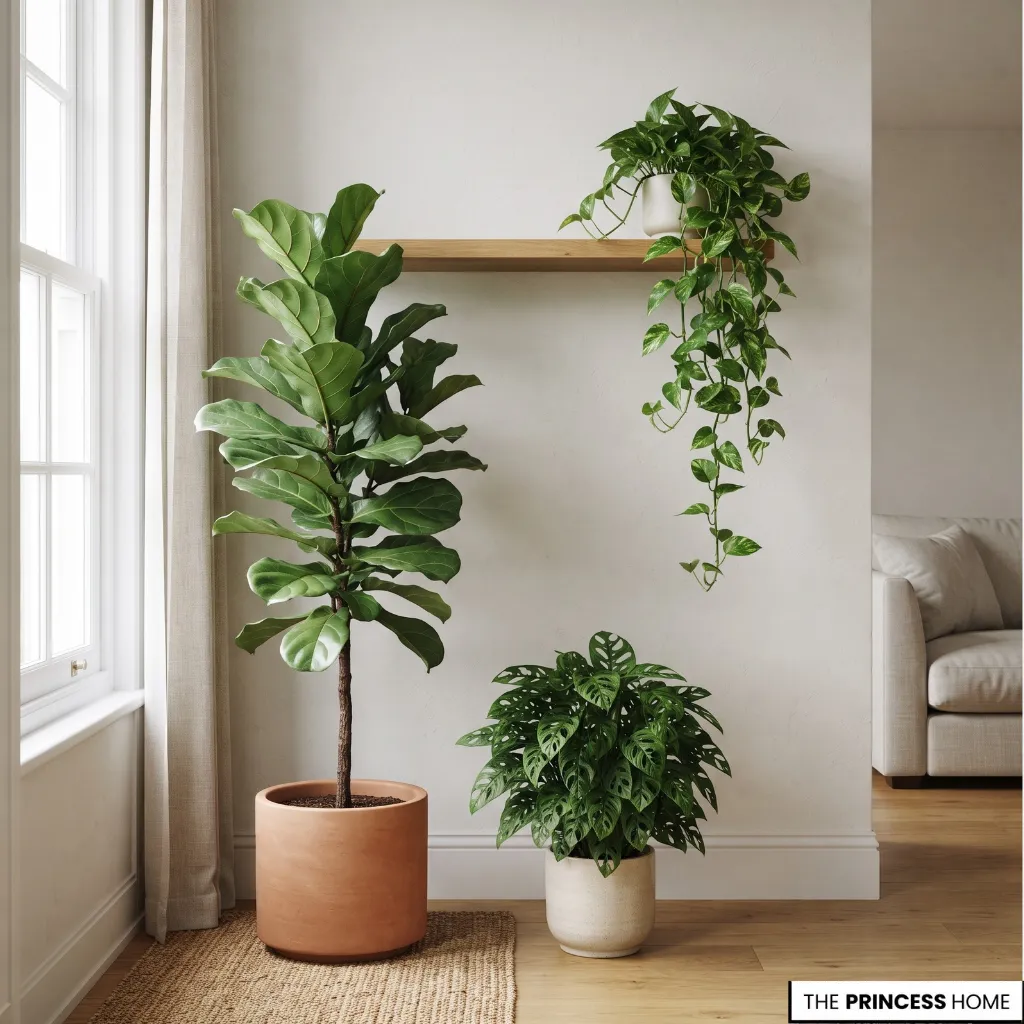
The best house plants for your decor are those that suit both the room’s conditions and your design goals. Consider their growing requirements, mature size, foliage, shape, and maintenance needs before choosing a species.
A practical way to choose house plants is to work through four factors in order: light, available space, maintenance, and visual fit. First, identify the light conditions at the intended location and shortlist plants suited to them. Next, check the plant’s mature height and width against the space available.
Then consider how much watering, pruning, and monitoring you can manage. Finally, compare the foliage shape, color, and growth habit with the room’s furniture and finishes.
For example, a bright corner with enough floor space may suit a tall upright plant, provided its light requirements match the conditions. A narrow shelf may be better suited to a compact plant that tolerates the available light and will not quickly outgrow the surface.
If several plants meet these practical requirements, choose the one that contributes the most useful shape or color to the arrangement.
When these factors point to different choices, prioritize the plant’s growing needs and the space available before its decorative appearance. This helps you select greenery that can thrive in its position and remain a practical part of the room.
Light conditions deserve particular attention. Some plants need bright light, while others tolerate lower levels. Shade tolerance does not mean a plant can grow indefinitely without adequate light. If a room receives very little natural light, consider suitable supplemental lighting or choose a different location.
Growth habit also affects placement. Upright plants establish a vertical accent, spreading plants occupy more horizontal space, and trailing plants soften the edges of shelves or elevated surfaces. Compact plants can fill smaller positions without overwhelming nearby objects.
Foliage provides another way to assess visual fit. Large leaves have a different effect from fine, delicate foliage, while dark green, pale green, and variegated leaves interact differently with walls, upholstery, and wood finishes.
Choose a plant whose shape and color contribute something useful to the existing arrangement.
Consider mature dimensions rather than judging a plant only by its appearance at purchase. A young plant may fit comfortably on a side table but eventually outgrow the surface. Check its expected height and width, as well as its growth rate, before deciding where it belongs.
Maintenance matters, too. If you have limited time for watering, pruning, and monitoring plant health, choose species with care requirements you can manage consistently. Easy-care plants still need appropriate light, water, and growing conditions.
Where pets or young children have access to plants, check the toxicity of the exact species before placing it within reach. A decorative choice should remain appropriate for the household.
Balance Plant Scale
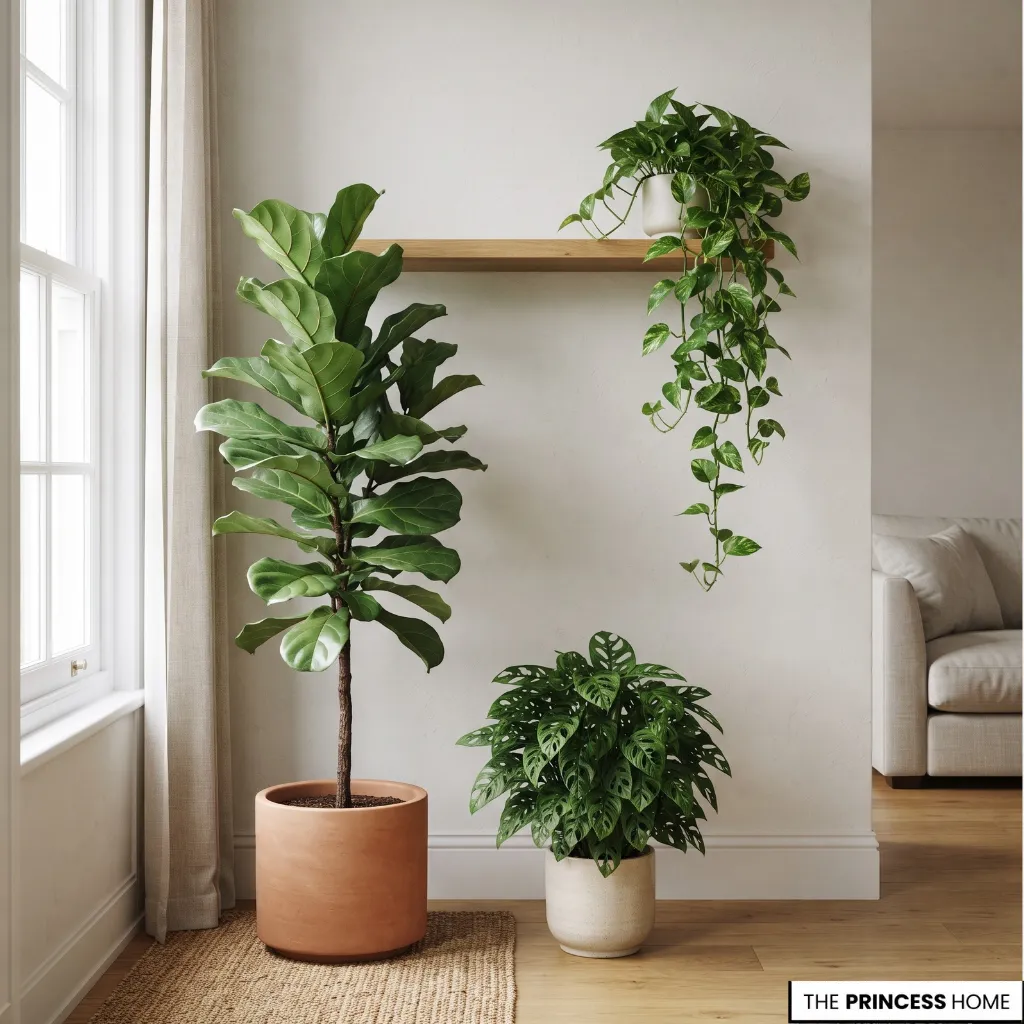
Plant scale determines how well greenery relates to the furniture and architecture around it. A plant that is too small may disappear beside substantial furniture, while an oversized specimen can overwhelm a compact arrangement or obstruct movement.
A tall, upright plant can complement a low sofa or occupy an open corner with sufficient clearance. Smaller plants often suit side tables, consoles, and shelves. Relate the plant’s mature dimensions to nearby furniture rather than judging it in isolation.
When grouping plants, combine different heights and growth habits. An upright plant can establish the main point of interest, while shorter or trailing plants create a transition around it. Varying leaf shapes and textures helps distinguish individual plants within the group.
A practical starting point is to arrange one dominant plant with one or two smaller companions. Place the tallest plant slightly behind or to one side, then position the smaller plants where their foliage remains visible rather than hiding behind the main plant.
Adjust the spacing so the leaves relate naturally without pressing against one another or crowding nearby objects. The exact arrangement depends on the plants’ light requirements, mature size, and available space.
Adjust the number according to the available space, the plants’ growing requirements, and the amount of visual detail already present in the room. Larger collections can work well when the setting provides enough space and a clear arrangement.
Leave visible gaps between foliage, furniture, and surrounding objects. Crowded plants can merge into one mass, making the arrangement harder to appreciate and maintain. Allow enough room for future growth.
Repetition can connect separate parts of a room. Similar foliage shapes or matching container finishes can establish continuity without requiring identical plants throughout the home.
The aim is to establish a clear visual hierarchy: a few plants provide the main points of interest, while the remaining plants support the arrangement.
Coordinate Pots & Materials
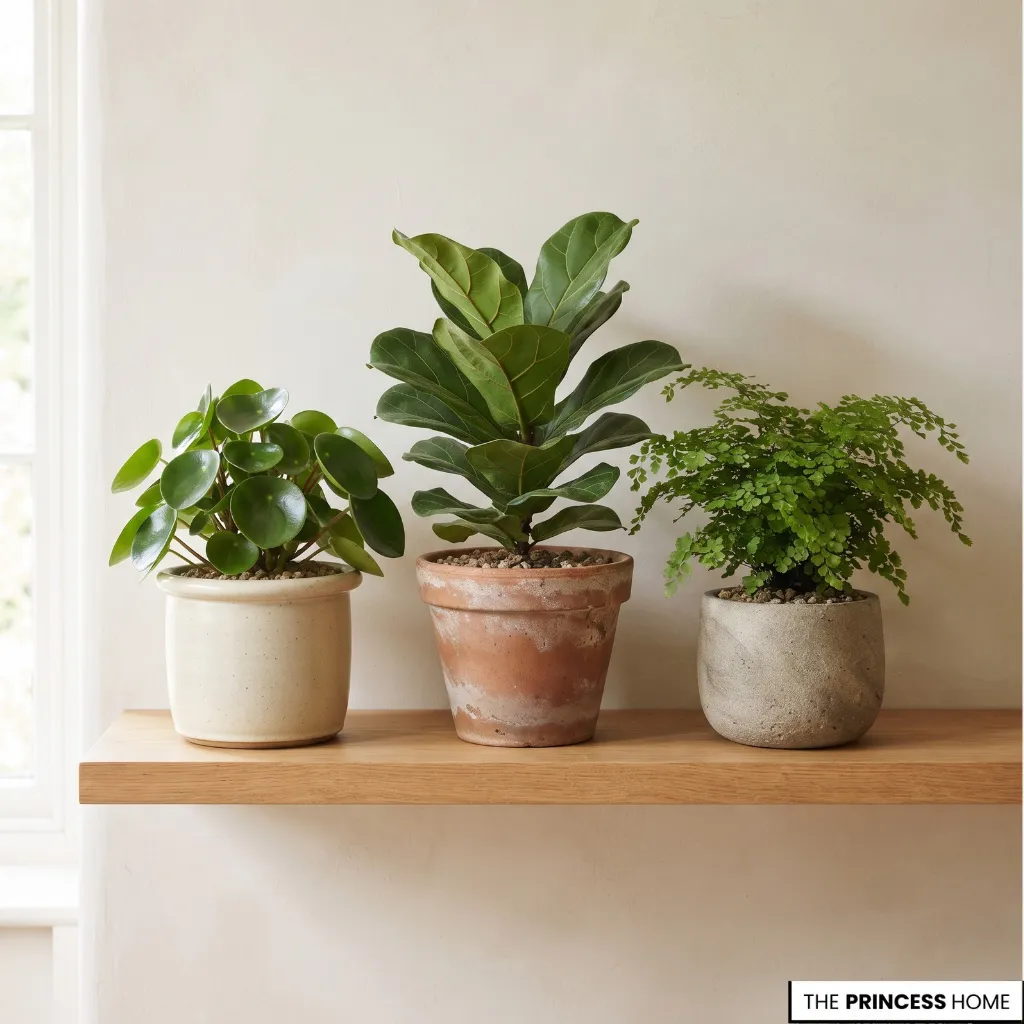
Plant pots and planters are part of the interior design. Their colors, shapes, and finishes should complement the room, while their construction must support healthy plant growth.
Choose container colors in relation to the existing palette. White, cream, gray, and earthy tones can work across many interiors.
Dark planters stand out against pale walls, while colored or patterned containers introduce a stronger accent. The right choice depends on the room’s finishes and how prominent you want the plant to be.
Consider how different materials relate to nearby surfaces. Terracotta introduces a warm, natural finish. Glazed ceramic can provide a smooth surface or a more noticeable color accent.
Stone-like textures and woven outer baskets offer different visual qualities, while simple matte containers often suit restrained interiors.
Repeat a material or finish where it helps connect plants with existing furniture, hardware, or decorative objects. However, every pot does not need to match. A coordinated collection can combine different shapes and finishes while sharing a consistent color range or overall character.
For example, you could combine a rounded ceramic pot, a simple matte planter, and a terracotta container in related earthy tones.
Their shapes and materials can vary while the shared color range connects them visually. If the room already contains several strong finishes or patterns, keep the pots simpler so they do not compete with the foliage and surrounding decor.
Match the container’s proportions to the plant. A compact plant may look lost in an oversized planter, while a tall plant needs a stable base appropriate to its weight and growth. Consider the pot alongside the foliage and the furniture supporting it.
Practical requirements come first. Most house plants need a suitable growing pot with drainage and enough room for their roots.
If you prefer a decorative outer planter without drainage, keep the plant in a functional inner pot that you can remove for watering and draining. Avoid leaving excess water trapped around the roots.
Protect wood, stone, and other vulnerable surfaces from moisture. A suitable saucer or waterproof protective layer can help prevent water marks and damage.
Place Plants Thoughtfully
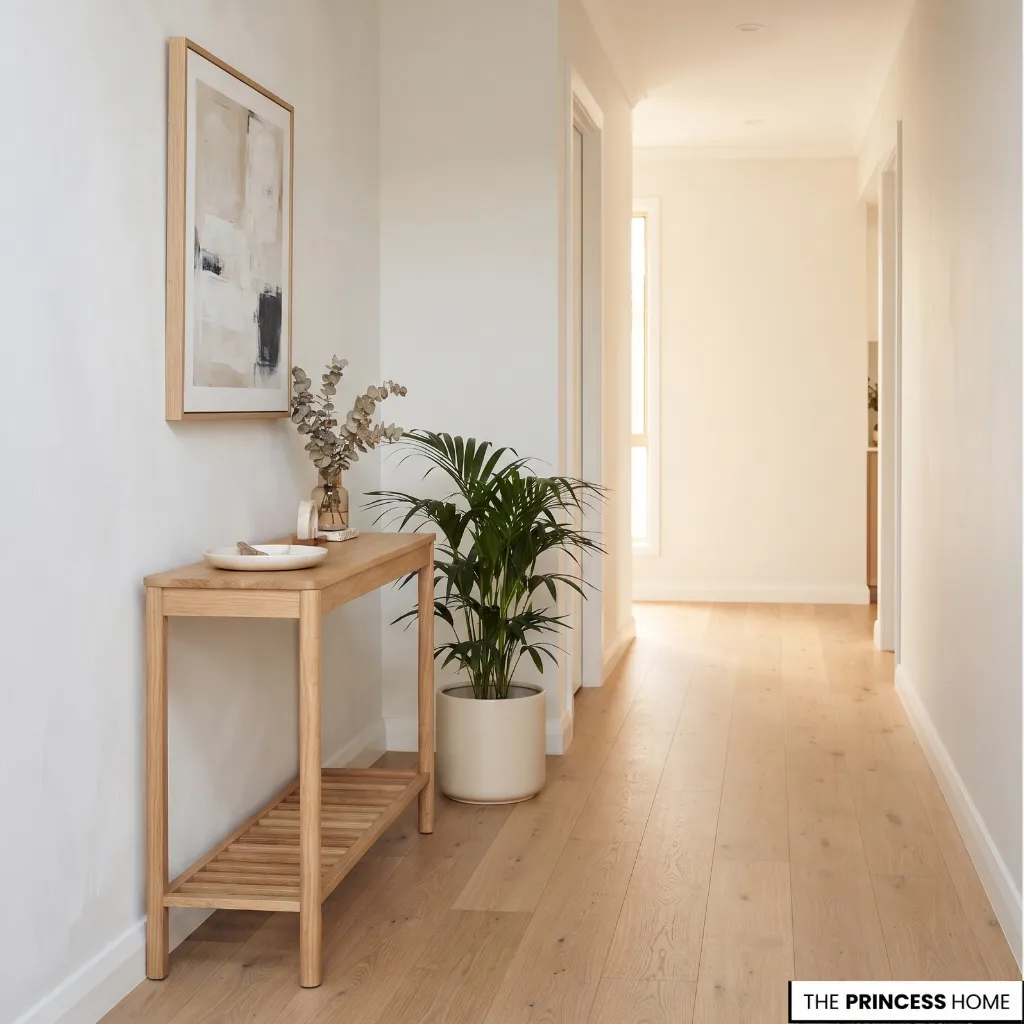
Plant placement should suit the plant’s growing needs and contribute to the room’s arrangement. Rather than filling every empty surface, identify what the room needs and choose greenery that serves a clear purpose.
A substantial floor plant can occupy an open corner or complement a large piece of furniture. Check its mature width and make sure it will not obstruct doors, walkways, windows, or seating.
Smaller plants can sit on consoles, side tables, and shelves where there is enough room for other necessary objects. Keep lamps, books, and frequently used items accessible. A plant should complement the arrangement rather than displace everything the surface needs to hold.
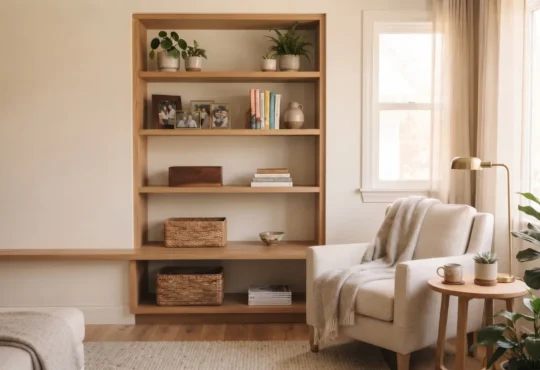
Shelves and suitable hanging planters can introduce greenery without using additional floor space. Ensure that supports can carry the weight of the plant, growing medium, and water. Allow trailing foliage enough clearance to avoid interfering with people, doors, or everyday activities.
Consider how plants relate to artwork, mirrors, lamps, and other focal points. A plant beside a substantial artwork, for example, can complement the arrangement when the two elements have enough separation. Avoid placing foliage where it obscures the main feature.
Check environmental conditions at the exact position. Sunlight through glass may be intense, and nearby heating or cooling equipment can create unsuitable conditions. Move the plant when necessary rather than preserving a decorative arrangement that compromises its health.
Finally, consider watering and cleaning access. A plant that is difficult to reach may become neglected, while spilled water can damage furniture finishes. Good placement makes both the arrangement and its maintenance manageable.
Style Different Rooms
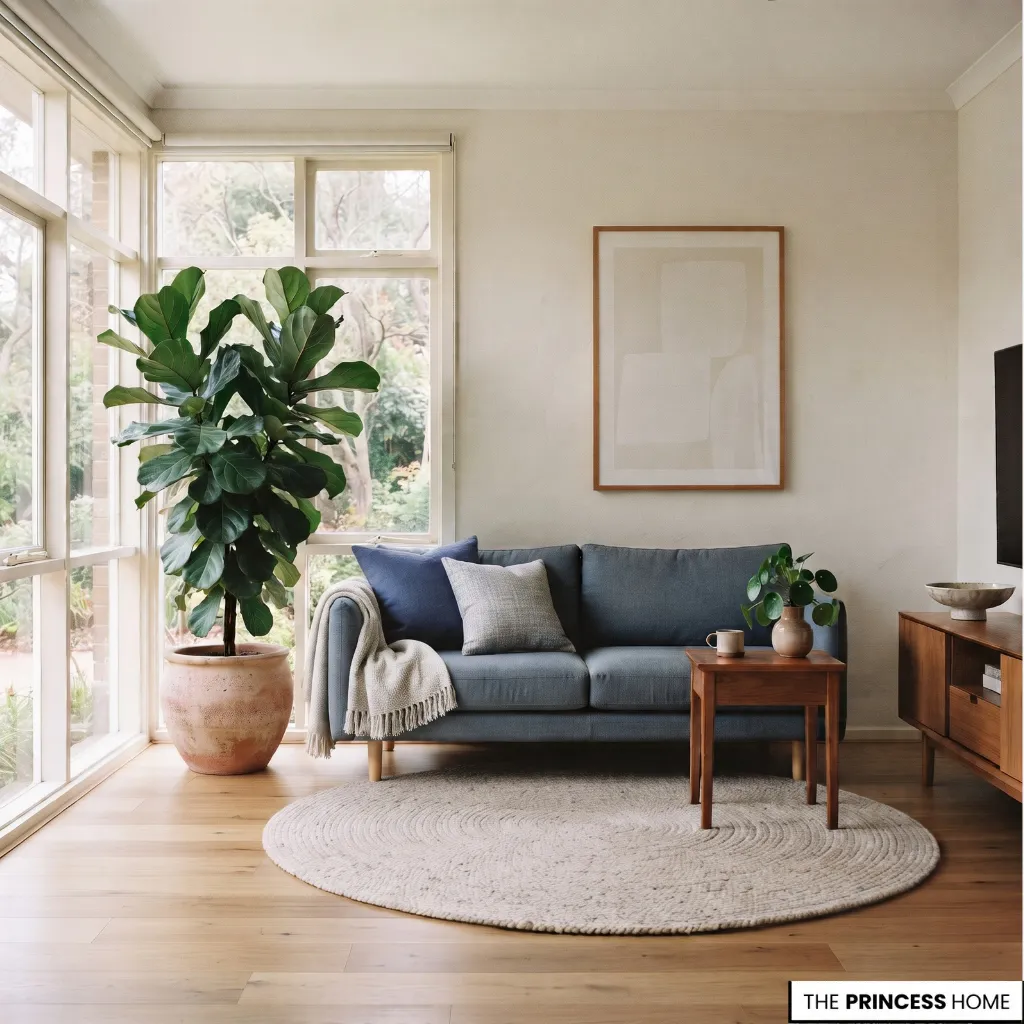
Each room presents different opportunities for decorating with house plants. The right arrangement depends on the room’s function, available space, and environmental conditions.
Living rooms: Use plants to complement the scale of larger furniture. A substantial floor plant can balance a low sofa or occupy an open corner, while smaller plants can sit on side tables or shelves.
If several plants share one area, vary their heights and forms while leaving enough space between the foliage. In a compact living room, one well-positioned plant may be more effective than a large collection.
Bedrooms: Choose plants that suit the available light and fit comfortably around the bed, bedside tables, and wardrobes. A small plant can complement a bedside arrangement, while a larger specimen may work in an open corner.
Keep plants clear of doors, drawers, and frequently used surfaces. Consider maintenance requirements rather than selecting a plant solely for its appearance in a bedroom photograph.
Kitchens: Suitable plants can occupy a windowsill, an open shelf, or a clear section of countertop. Compact forms are often easier to accommodate than wide, spreading plants. Keep greenery away from cooking heat, splashes, and food-preparation areas where it would interfere with daily work.
Check the available light, particularly when cupboards or nearby buildings shade the window.
Bathrooms: Plants that tolerate the bathroom’s actual humidity and temperature can complement tile, stone, or painted finishes. A compact plant may suit a shelf, while a larger specimen needs sufficient floor space and suitable light.
Humidity alone does not make a bathroom suitable for every tropical plant. A windowless bathroom generally requires an appropriate grow light to support living plants.
Entryways: A plant can make an entryway more welcoming when it fits the available space. Use a floor plant in a suitable open corner or a compact plant on a console.
Coordinate its container with the furniture and finishes, and keep the entrance clear. Exterior doors, drafts, and temperature changes may affect plant suitability.
Home offices: A compact plant can complement a desk or occupy a suitable shelf near the workspace. Choose a position that does not block the monitor, task lighting, or frequently used surfaces.
If desk space is limited, a nearby shelf or floor position may be more practical, provided the plant receives suitable light and can be watered without disturbing equipment.
Across all rooms, evaluate conditions at the intended location rather than relying on general claims that a plant is suitable for a particular room.
Work With Color & Texture
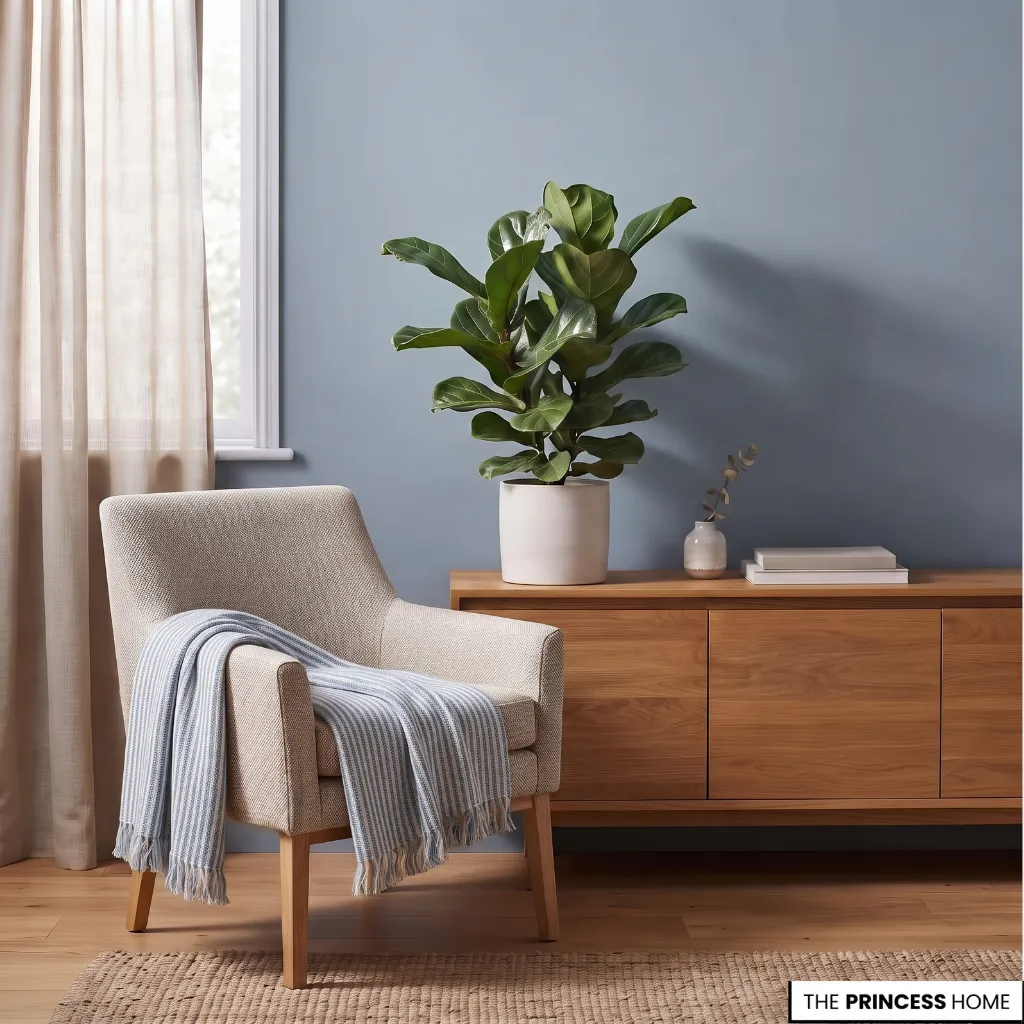
Foliage introduces color and texture into a room, so consider it alongside wall finishes, textiles, artwork, and furniture. The aim is to understand how the plant’s appearance interacts with the surrounding elements rather than matching every plant to the decor.
Contrast helps foliage remain visible. Dark leaves can stand out against a pale wall, while lighter or variegated foliage may be more noticeable against a deeper background. If a plant disappears visually against its surroundings, try a different position or container before adding more decorative objects.
Relate foliage to existing colors. Green leaves can complement warm wood, neutral upholstery, earthy tones, and many other palettes. Different greens, however, vary in depth and intensity. Compare the actual foliage with the room’s finishes before committing to a prominent position.
Texture matters as well. Large, smooth leaves differ from fine, delicate foliage. A textured plant can contrast with smooth furniture or stone, while a simpler leaf shape can provide a visual pause among patterned textiles and detailed finishes.
When combining several plants, consider both the foliage and the containers. If the leaves already have strong patterns or contrasting colors, simpler pots may help the arrangement remain coherent. A restrained plant grouping, by contrast, can accommodate a more distinctive container.
Repeating a similar foliage form or container color in different areas of the home can connect the spaces without making them identical. For example, a related planter finish in the living room and entryway can establish continuity while allowing each arrangement to suit its own setting.
If the interior already contains strong colors, patterns, and textures, a restrained plant arrangement may work better than several competing accents.
Adapt Small Spaces
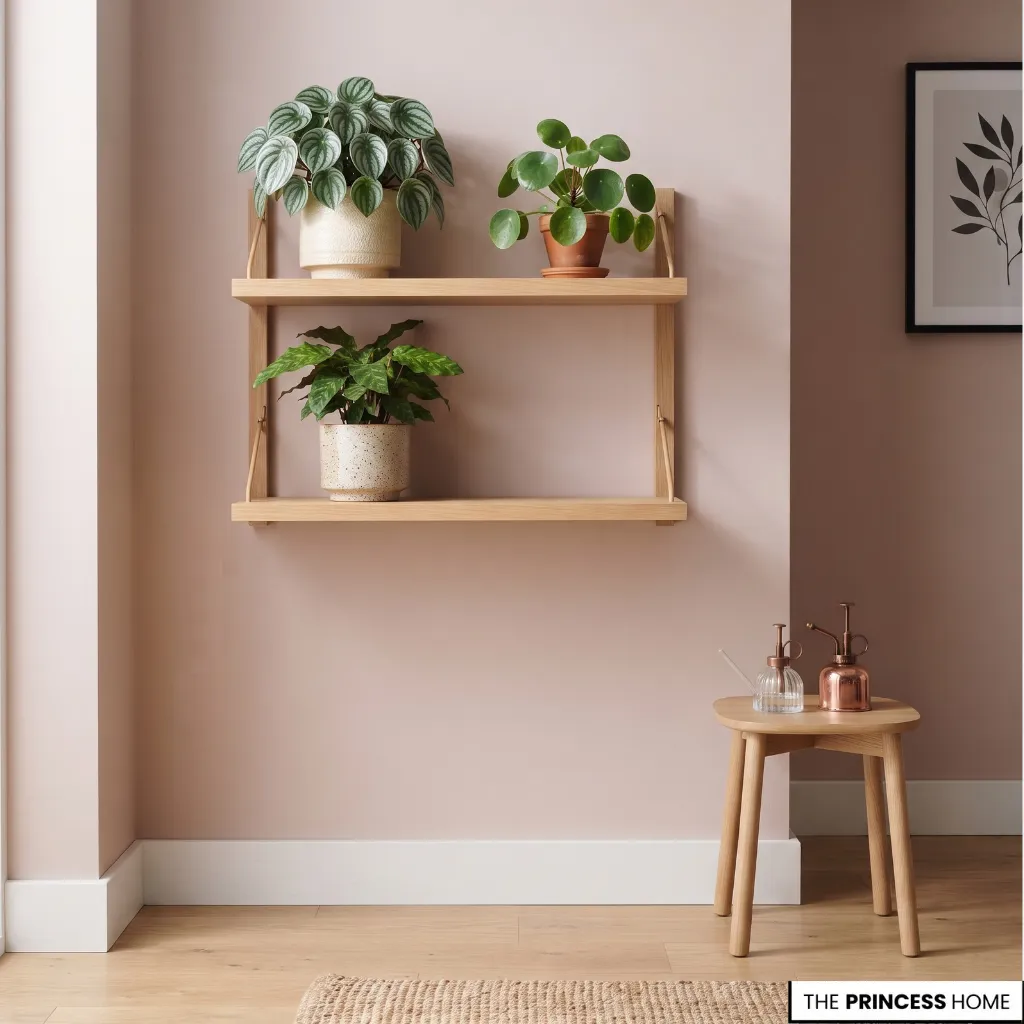
Small rooms can accommodate house plants without sacrificing useful space. Prioritize placement, scale, and access instead of trying to fit as many plants as possible into the room.
Use vertical space where appropriate. Suitable shelves, secure wall-mounted planters, and carefully chosen elevated positions can keep floor areas clear. Check the strength of the supports and make sure plants remain accessible for watering and maintenance.
Choose compact or slow-growing plants for narrow shelves and limited surfaces. Check their expected mature dimensions, since a plant that fits today may eventually crowd the arrangement.
One focal plant may provide enough greenery for a compact room. If you prefer a group, keep it within a defined area instead of spreading pots across every available surface. Preserve the space needed for doors, furniture, cleaning, and everyday movement.
Windowsills can provide useful positions when their dimensions, light, and temperature are suitable. Do not assume every windowsill receives appropriate light or can safely support a heavy pot.
Before buying new furniture or containers, try relocating existing plants or rearranging a shelf. A suitable container already in the home may work well if it provides enough room and supports the plant’s growing requirements.
The same principle applies to small apartments and open-plan homes: prioritize the areas where greenery contributes most to the overall arrangement while protecting circulation and everyday use.
Maintain Healthy Plants
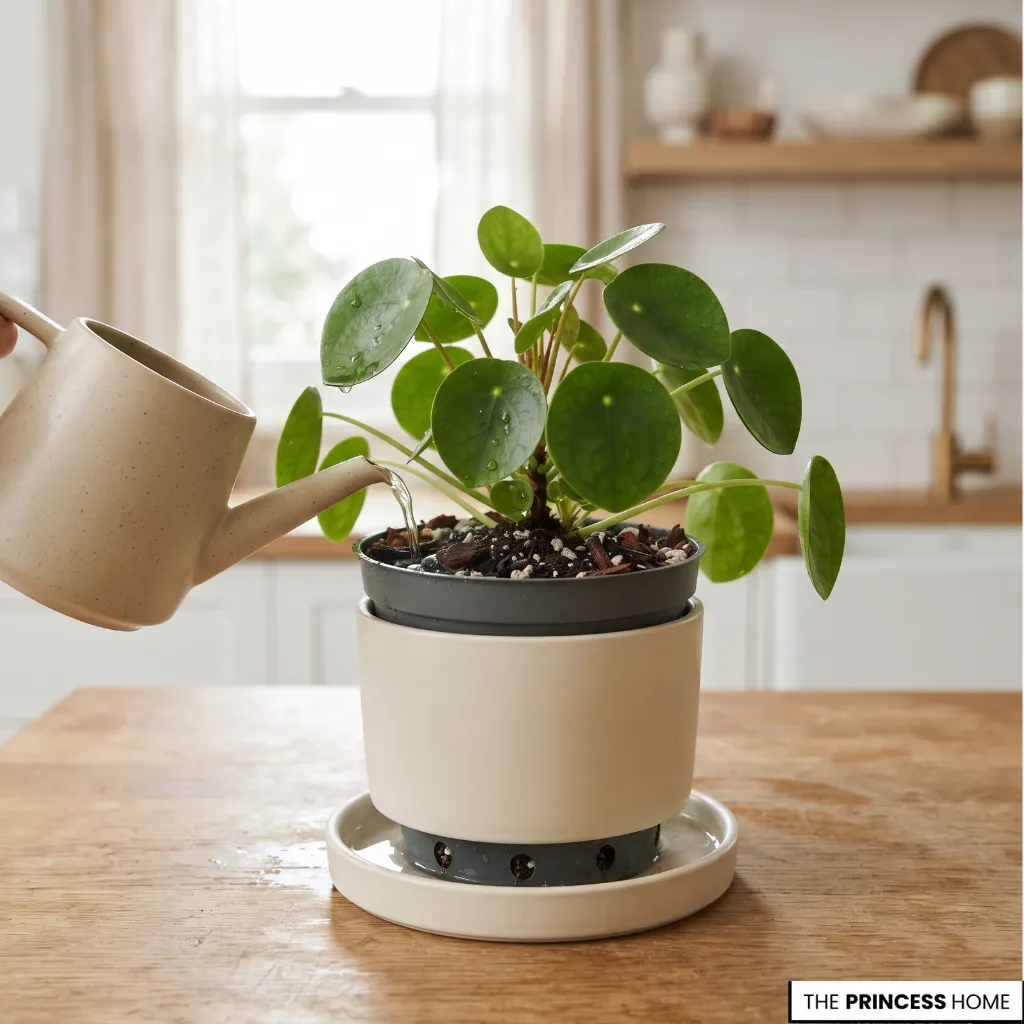
An attractive plant arrangement needs ongoing care. When plants become unhealthy, they may lose foliage, change shape, or require relocation. Maintenance should therefore be part of the decorating plan from the beginning.
Water according to the plant’s needs rather than following a rigid schedule. Different species use water at different rates, and light, temperature, pot size, and the growing season affect how quickly the growing medium dries. Check the medium and follow the requirements of the plant.
Provide suitable drainage. Most house plants need a growing medium and container that allow excess water to escape. Empty standing water from saucers or outer planters after watering, and protect nearby furniture from moisture.
Monitor environmental changes throughout the year. Seasonal light levels, indoor heating, air conditioning, and temperature fluctuations can affect plant growth. If foliage deteriorates, reassess the plant’s position and growing conditions instead of assuming it simply needs more water.
When a plant begins to decline, look for patterns in the symptoms before changing its care. Yellowing leaves, wilting, brown edges, or sudden leaf drop can have different causes, including watering problems, unsuitable light, temperature stress, or pests.
Check the growing medium for excessive dryness or persistent moisture, inspect the leaves and stems for signs of insects, and compare the current location with the plant’s light and temperature requirements.
These observations can help identify what to investigate first, although a single symptom does not always reveal the cause.
Remove dead or damaged leaves when appropriate and clean dust from foliage using a method suitable for the species. Inspect plants regularly for pests and signs of declining health. If a plant deteriorates, investigate its conditions before changing its watering routine.
Allow room for growth. Pruning, repotting, or relocating may become necessary when a plant outgrows its position or its roots need more space. Choose the appropriate approach for the species and its condition.
A consistent routine is more useful than an elaborate schedule that ignores the plant’s needs. Selecting plants that suit your home and the time you can provide makes the arrangement easier to maintain.
Avoid Common Mistakes
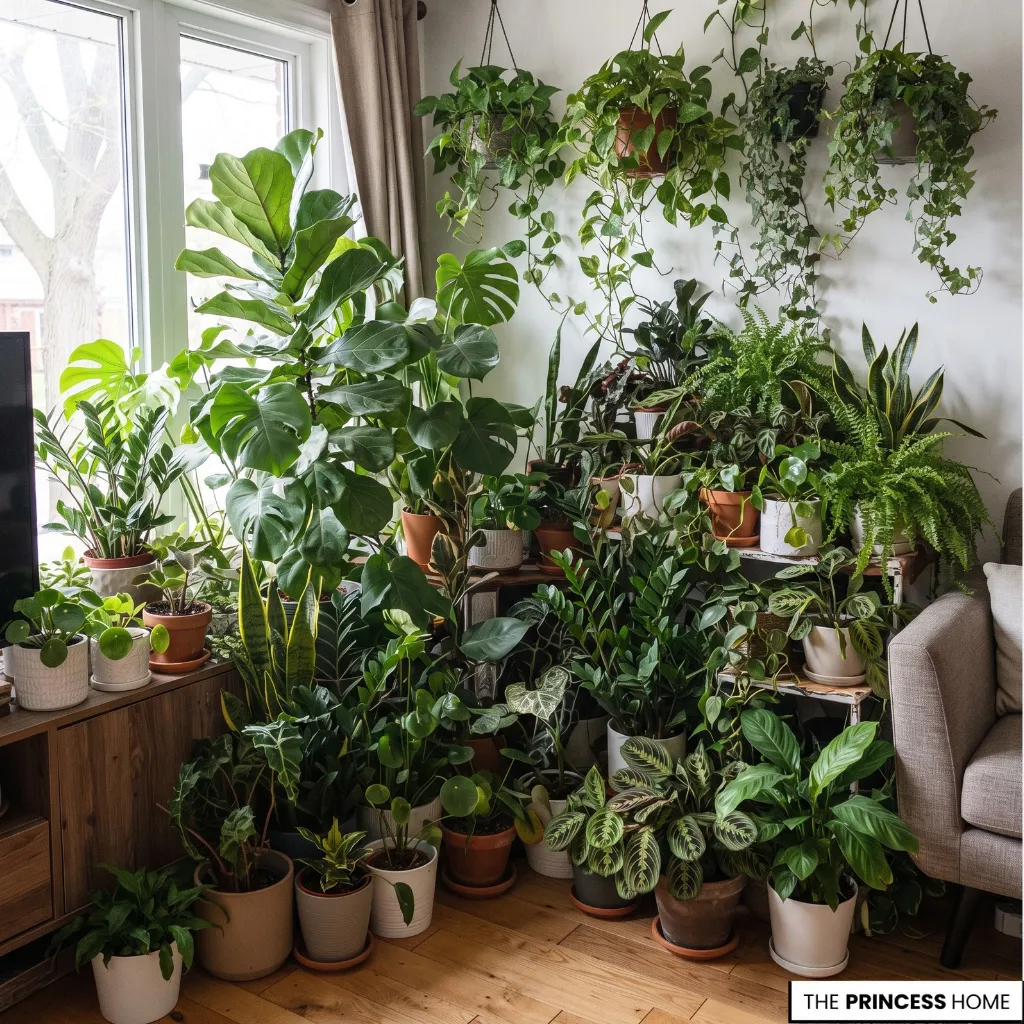
Several common decorating decisions can make house plants less effective or more difficult to maintain. Correcting them often requires repositioning or editing the arrangement rather than buying additional plants.
Choosing by appearance alone. An attractive plant may struggle if its light, temperature, or humidity requirements are unmet. Check its needs before purchasing and identify an appropriate location first.
Ignoring mature size. A plant that initially fits a shelf may eventually block a window or crowd nearby objects. Check expected growth and leave enough room for the plant to develop.
Overcrowding the arrangement. Too many plants can obscure individual forms, compete with surrounding decor, and restrict movement. Remove or relocate some plants and preserve visible space between them.
Using unsuitable containers. A decorative pot may be too small, unstable, or poorly suited to the plant. Choose an appropriately sized growing pot, provide drainage where needed, and use a suitable outer planter if you prefer a particular finish.
Ignoring the background. Foliage may disappear against a similar wall color or compete with a heavily patterned surface. Try a different position or simplify the surrounding elements.
Placing plants in unsuitable light. A dark corner may look like an ideal decorative position but may not support healthy growth. Choose a plant that suits the available light or provide appropriate supplemental lighting.
Blocking circulation or daily activities. A plant that obstructs a doorway, work surface, or walking route undermines the room’s function. Reduce its size, move it, or choose a more appropriate position.
Neglecting maintenance access. Plants placed too high, too tightly together, or behind furniture can be difficult to water and inspect. Arrange them so routine care remains practical.
The best correction addresses the actual problem. More plants will not solve poor placement, and a decorative container cannot compensate for unsuitable growing conditions.
Conclusion
House plants work best when their placement, scale, foliage, and containers are considered together. Start with the conditions of the room, choose plants that suit those conditions, and arrange them according to the space’s proportions and function.
With deliberate choices and manageable care, greenery becomes an integrated part of the interior rather than an afterthought.