The entranceway serves as the handshake of your home a silent introduction that sets the tone for everything that follows. In 2026, entrance decor has evolved far beyond mere functionality into an art form that combines personal storytelling, sustainable luxury, and technological innovation.
This comprehensive guide explores the cutting-edge trends, designer insights, and practical techniques that will transform your entryway from a simple pass through space into a captivating preview of your home’s character.
Entrance First Impression
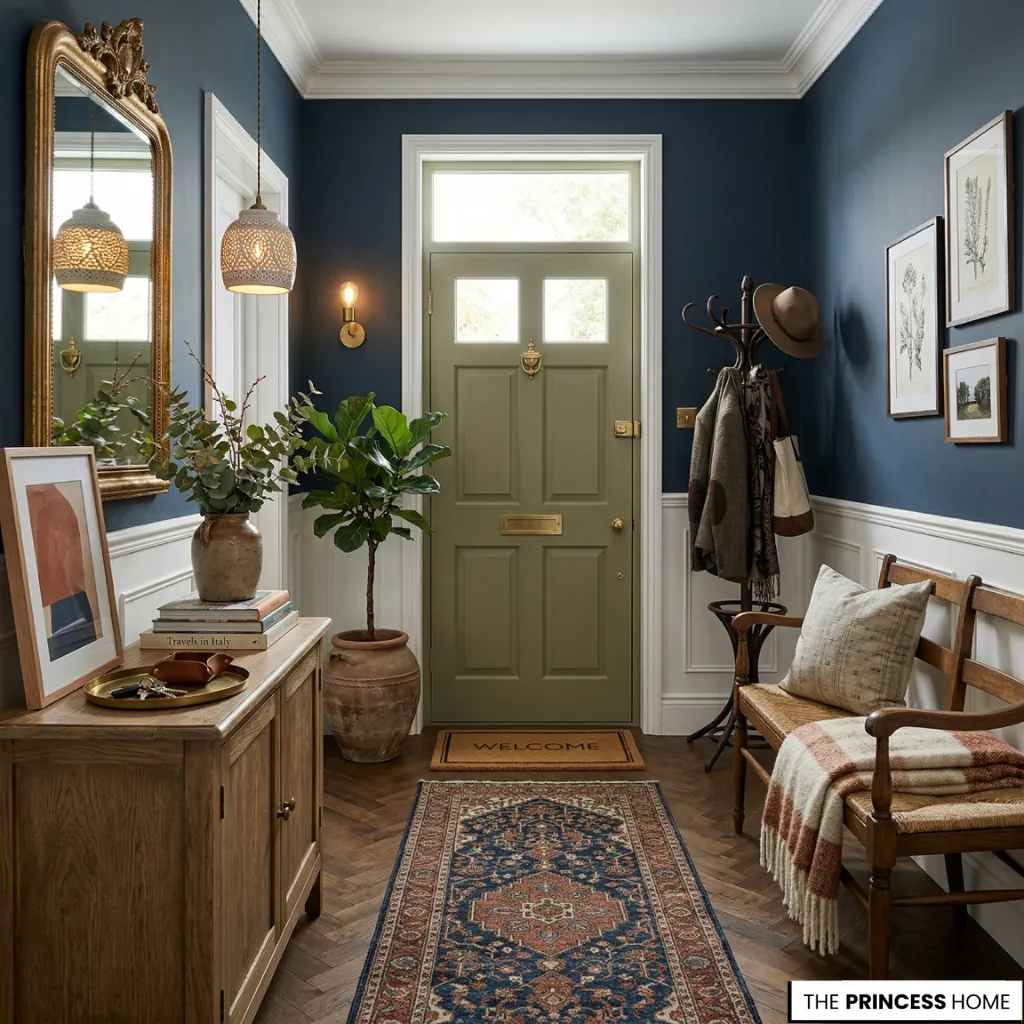
“A foyer is often your first chance to impress guests,” says Gideon Mendelson. “It’s an opportunity to set the tone for the entire home or create a standout moment.” Mendelson emphasizes that entrances should never be an afterthought instead,
design a dedicated space that fits both the function and style of your home. A thoughtfully curated entryway immediately communicates personality, purpose, and sophistication from the moment someone steps inside.
The 2026 Philosophy
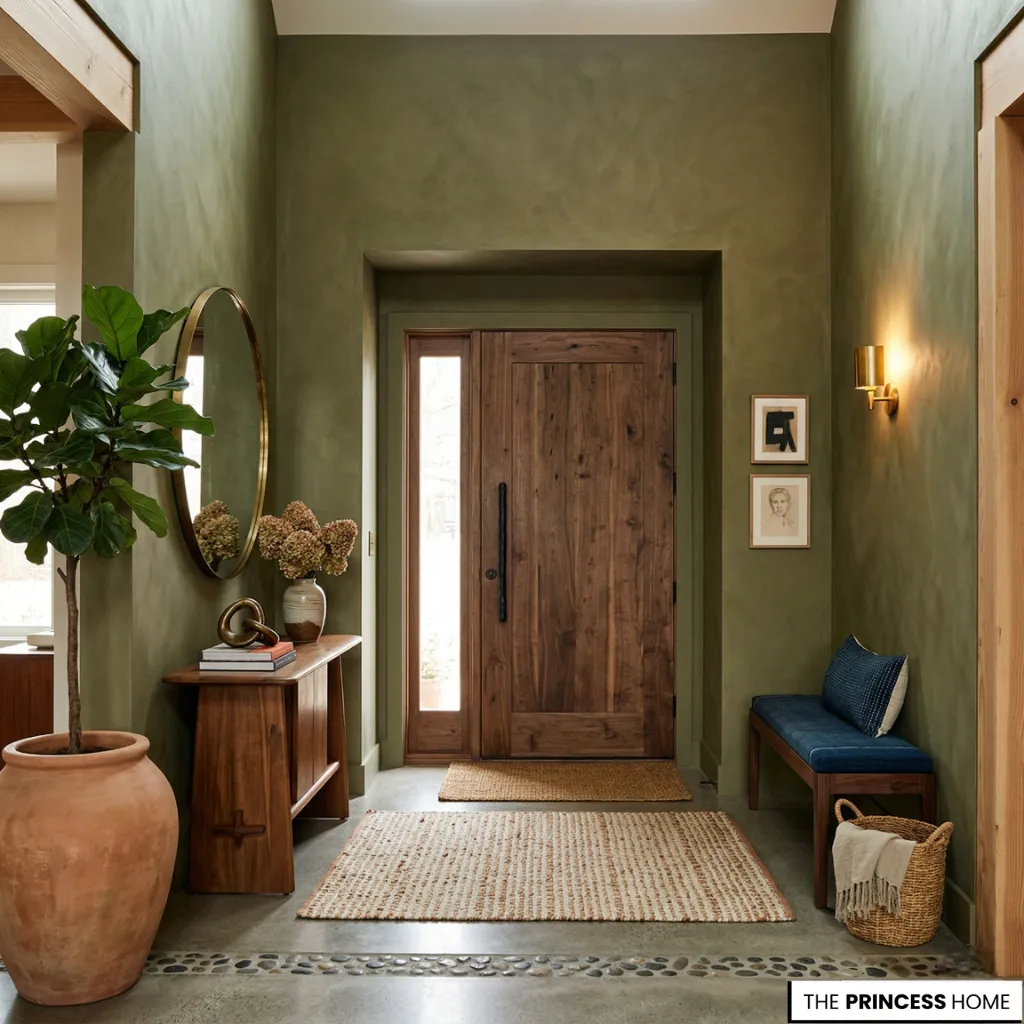
This year’s entrance decor trends reflect a broader cultural shift toward spaces that feel both deeply personal and thoughtfully designed. “If 2025 has been the year of rediscovering warmth and personality, then 2026 is shaping up to be the year we fully commit to it,” says Ashley Rose Walsh, interior designer at Mojo Stumer Associates.
The focus has moved away from sterile, picture-perfect spaces toward entrances that tell stories, embrace imperfection, and prioritize genuine comfort over staged perfection. “I’ve noticed a growing awareness on social media that decorating should never be just for the photograph,” says Lucy Hammond Giles, director at Sibyl Colefax & Fowler.
“There’s a real upswell of people showing their rooms as they’re actually used and lived-in.” This authenticity movement has revolutionized how we approach entrance design, encouraging spaces that reflect real life rather than curated fantasies.
Entrance Design Trends 2026
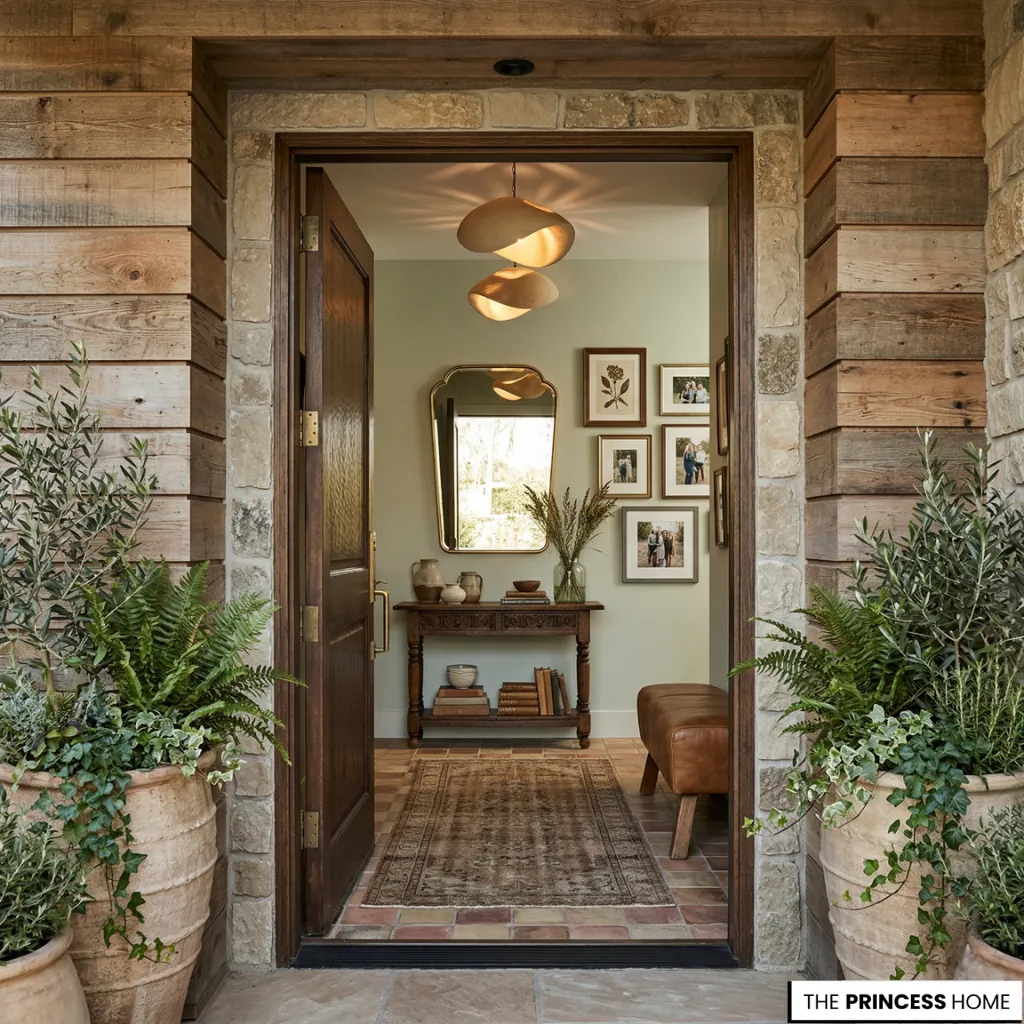
In 2026, entrance design is evolving into a sensory-first experience, where layered textures, sculptural lighting, and rich materials like reclaimed wood and stone create an immediate emotional impact, as highlighted by designers such as Tiffany Duggan and Lauren McGrath.
Experts like Lucy Hammond Giles emphasize “lived-in” aesthetics, encouraging foyers that feel personal rather than staged, blending vintage elements with modern finishes. Meanwhile, designers including Cortney Bishop and Katie Harbison point to warmer tones.
tactile surfaces, and character driven details as key to making entrances more welcoming and memorable. Overall, the modern entryway is no longer just a transition space it’s a curated introduction to the home’s identity, combining functionality, storytelling, and wellbeing-focused design.
1. Hyper Local Craftsmanship
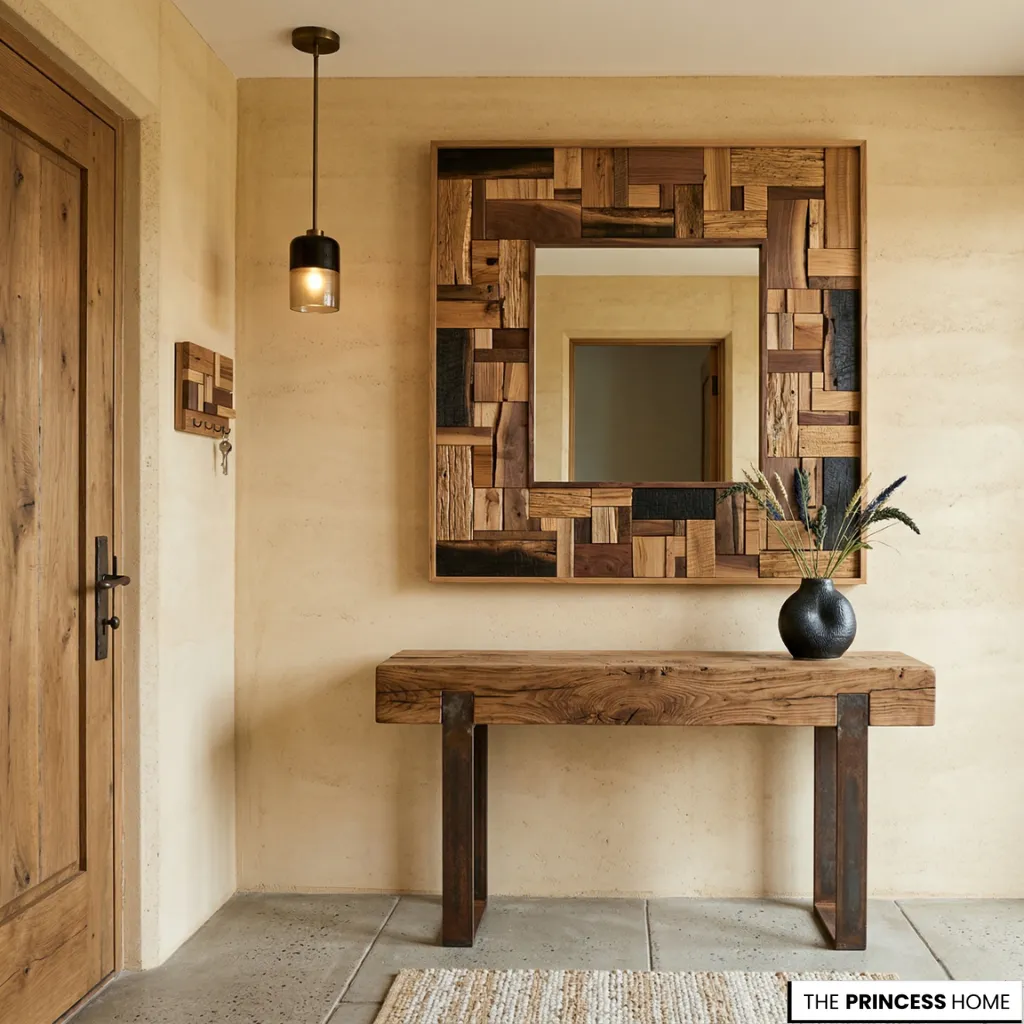
The polished “eco chic” of the early 2020s still leaned on mass production, but interior design trends 2026 obsess over one-off pieces with origins buyers can actually trace. The focus is also on hyper-local craft. Makers use both hand tools and CNC machines to turn offcuts and salvaged wood into furniture built to last.
This approach brings soul and story to entrance spaces through pieces that connect to local artisans and sustainable practices. Designer Spotlight: Jeff D from Decorilla demonstrates this trend with his mosaic mirror in a modern entryway, combining artisanal techniques with contemporary aesthetics.
2. Bold Entry Colors
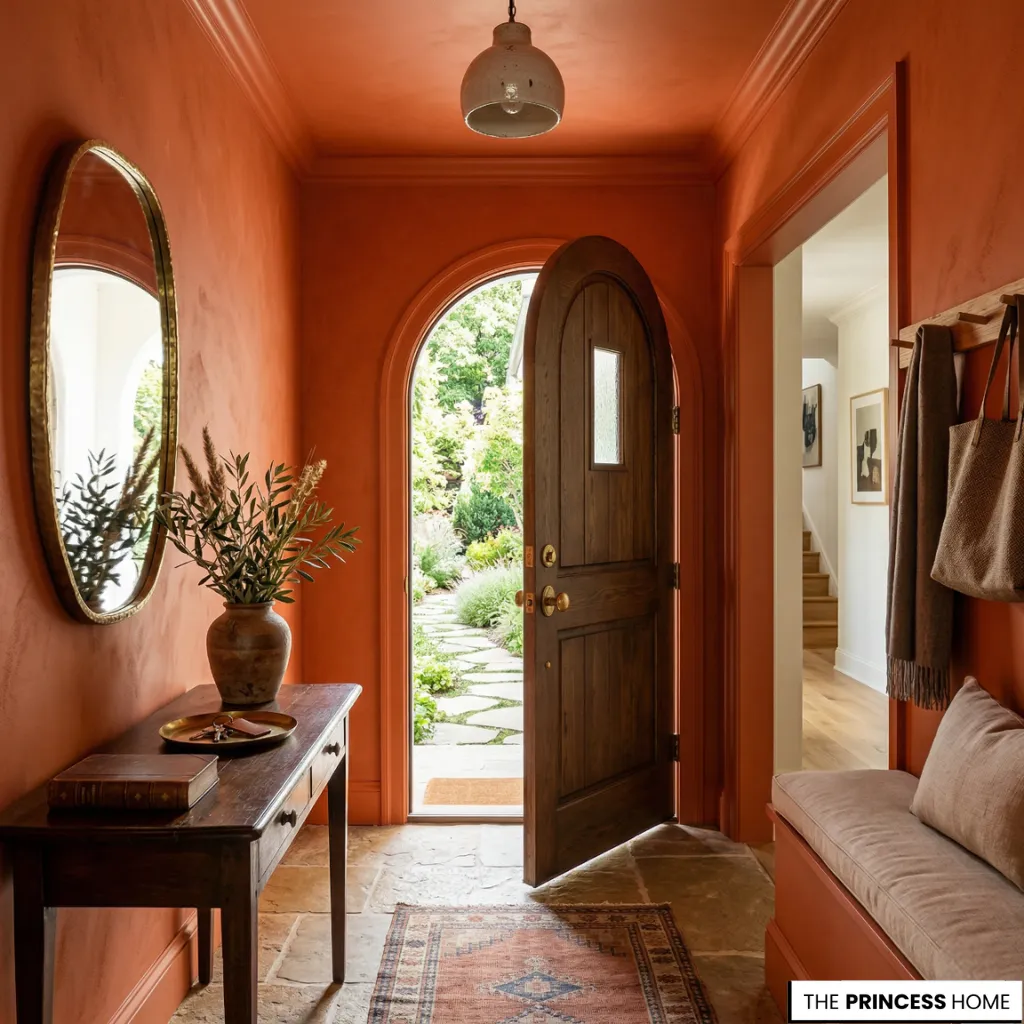
After years of safe neutrals, 2026 is all about expressive, personality-led color in entryways. Designers note that “color-drenching” works best in contained spaces making the foyer the perfect place to experiment with a signature hue that sets the tone for the entire home.
As Walsh explains, the key is pairing bold color with tactile finishes like limewash, clay-based paints, and raw wood to create depth and a bespoke, highm end feel. The result is an entry that feels both striking and timeless designed to reflect who you are from the very first step inside.
3. Tech Meets Tactility
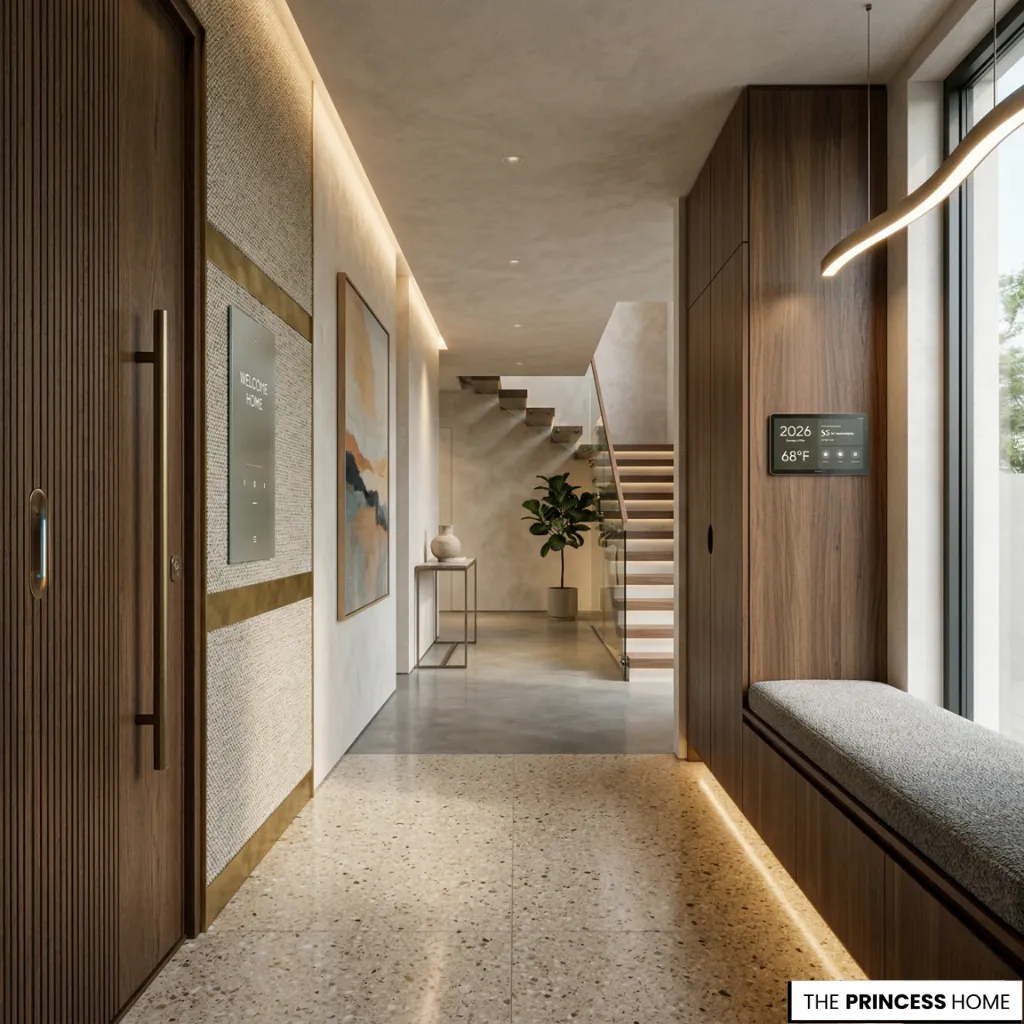
In 2026, the most captivating entryways blend intelligent technology with rich, tactile design creating spaces that both respond and resonate. Designers highlight seamless integrations like adaptive smart lighting, voice-activated entry systems, and climate-responsive materials, all discreetly embedded within luxurious finishes.
The focus is on invisible innovation, where technology enhances comfort without disrupting the visual warmth of the space. The result is an entrance that feels effortlessly sophisticated high-tech in function, yet deeply human in experience.
4. Functional Art Entry
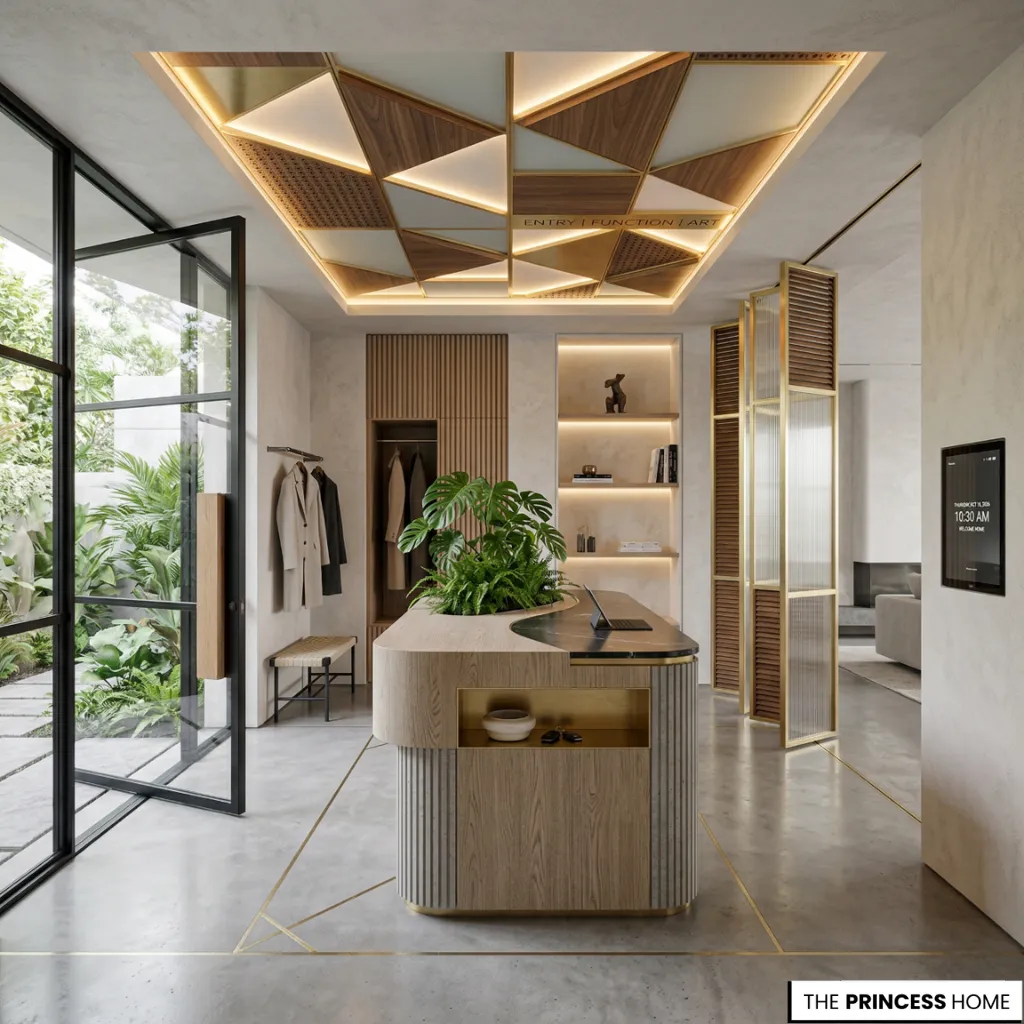
In 2026, entryways are defined by functional features that double as artistic statements—think movable partitions, statement ceilings, and sculptural islands that command attention. Designers are reimagining utility as beauty, turning everyday elements into focal points that elevate the entire space.
This approach, often described as “operational beauty,” ensures that entrances are not only visually striking but also highly practical. The result is a dynamic, design-forward entry that seamlessly blends purpose with bold, sculptural impact.
Expressive Entry Design
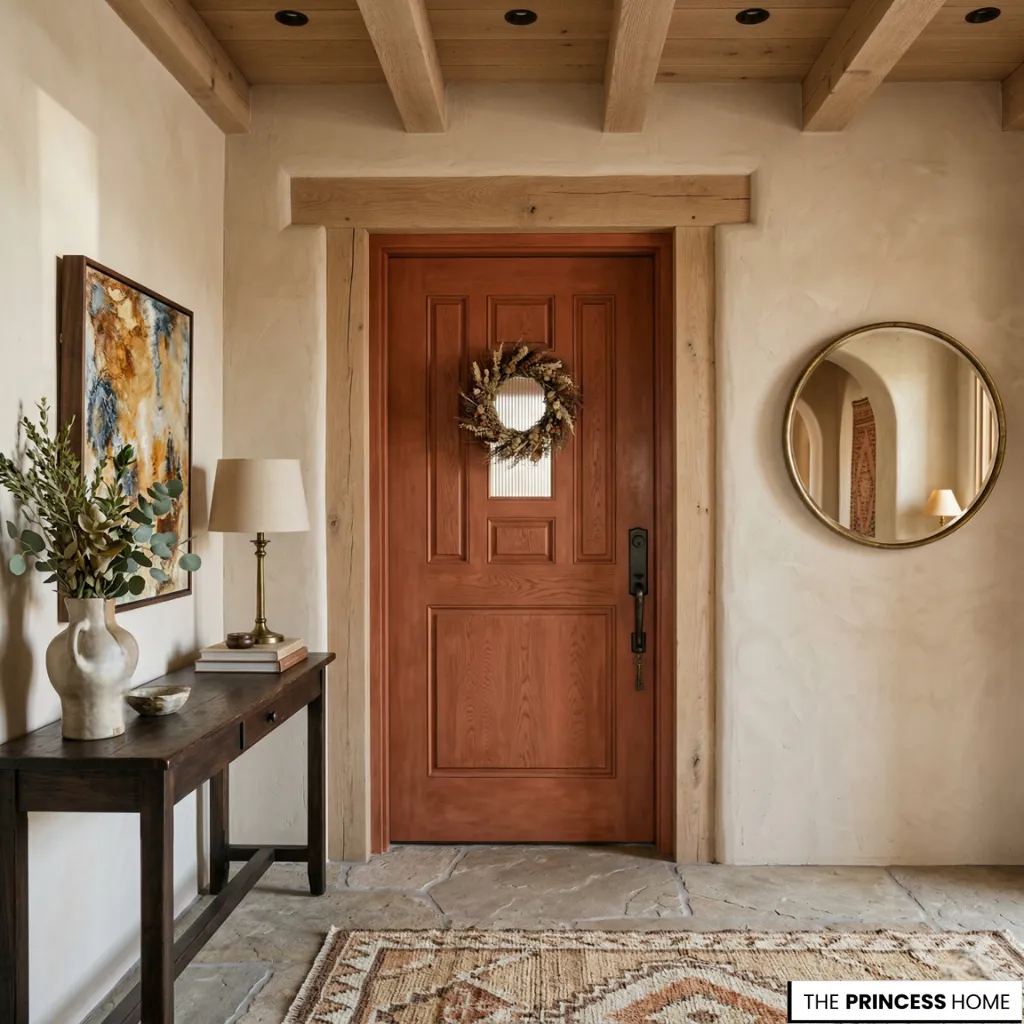
At Ashley Rose Walsh of Mojo Stumer Associates, entrance design in 2026 is rooted in personal expression and emotional connection. She emphasizes choosing a color that truly reflects your personality, then elevating it with tactile finishes like limewash, clay-based paints, or raw wood to create a layered, custom feel.
Rather than following rigid trends, her philosophy encourages homeowners to treat the entryway as a canvas for individuality. The result is a space that feels both timeless and deeply personal from the very first impression.
Zoë Feldman Design
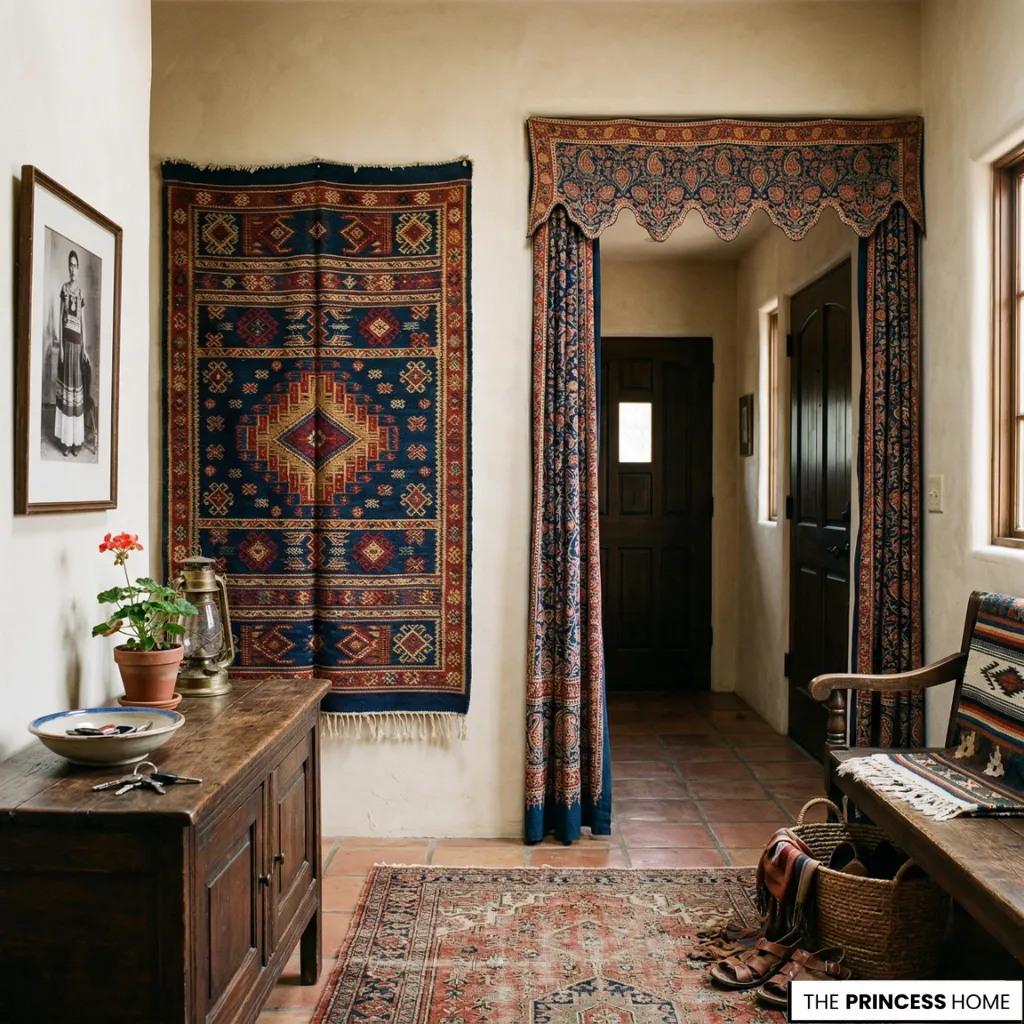
Feldman highlights a growing shift toward patterned textiles with a sense of provenance in 2026 entrance design. She explains that these pieces bring soul, narrative, and lasting character to a space, avoiding anything that feels overly manufactured.
From drapery and canopies to statement wall hangings, incorporating textiles with personal or cultural meaning adds depth and authenticity. The result is an entryway that not only looks beautiful but tells a story the moment you step inside.
Ryan Saghian Designer
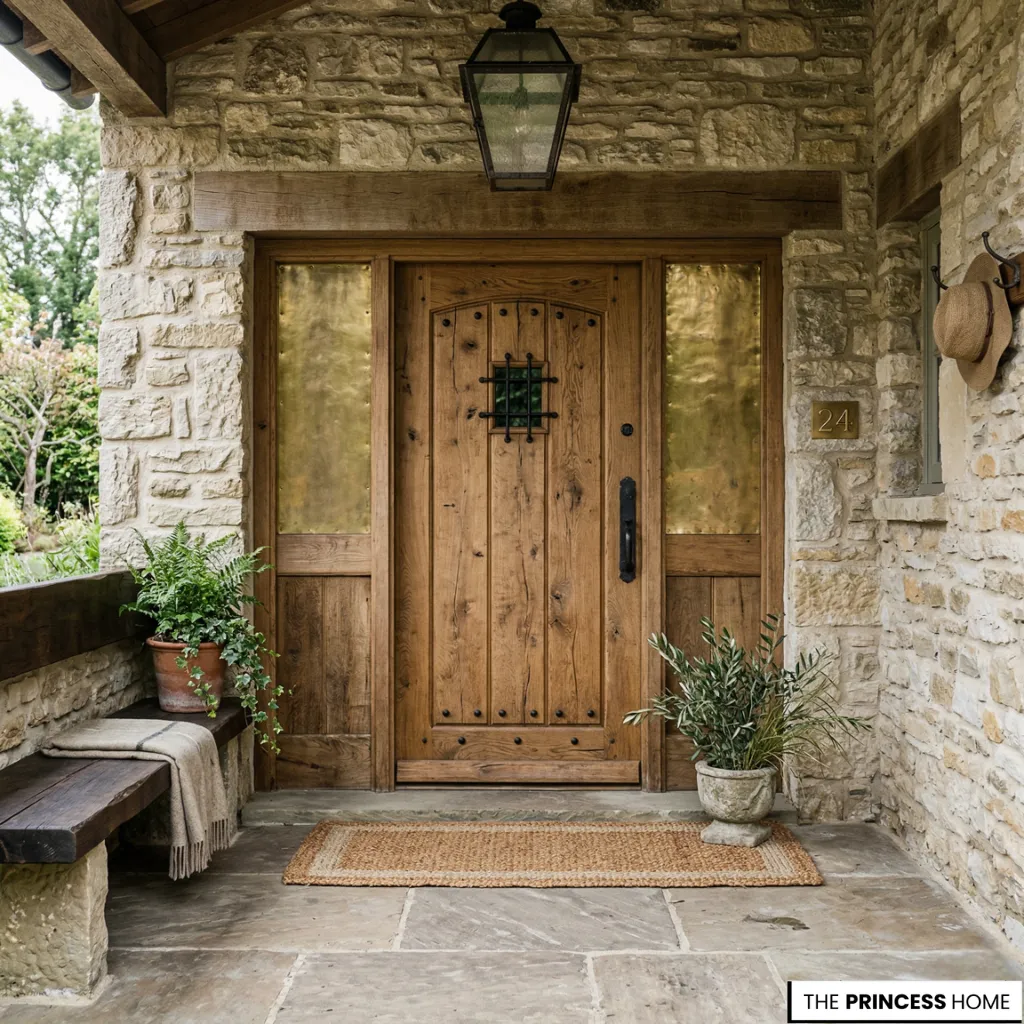
Saghian notes a clear shift in 2026 toward authenticity, with designers moving away from faux finishes in favor of real, enduring materials. He emphasizes that nature offers the best inspiration, encouraging the use of genuine stone, solid wood, and natural fibers to create depth and integrity in entrance spaces.
This approach brings a grounded, organic feel that elevates both the look and longevity of the design. Ultimately, the modern entryway becomes a tactile, honest introduction to the home—rooted in materials that age beautifully and feel inherently real.
Olivia Botrie, Dart Studio
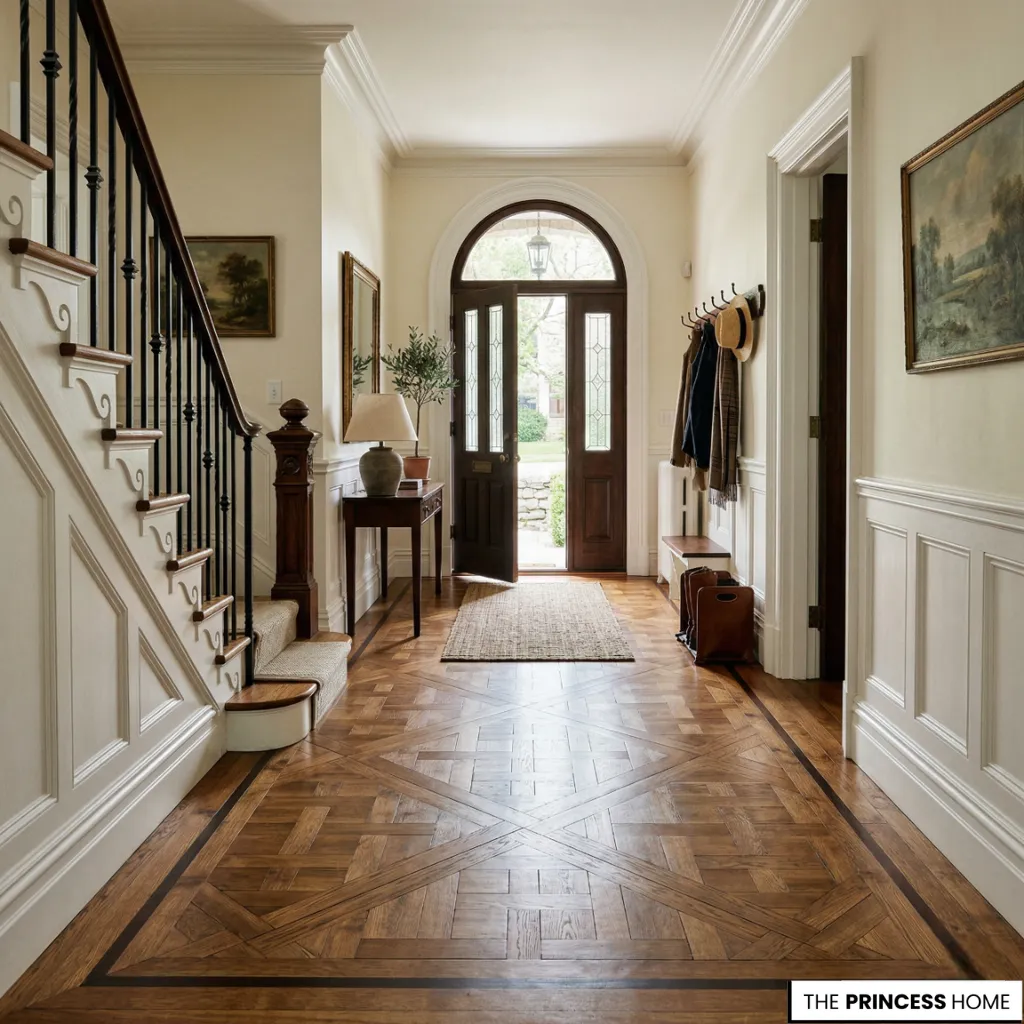
Botrie highlights a strong return to architectural detail in flooring for 2026, with patterns like herringbone, chevron, and Versailles making a refined comeback. These classic layouts, often inspired by historical design language, bring depth, rhythm, and visual interest to entrance spaces.
Especially in renovations, they offer a way to introduce a sense of heritage and craftsmanship, even within modern homes. The result is an entryway floor that feels intentional, timeless, and rich with character from the ground up.
2026 Entrance Design
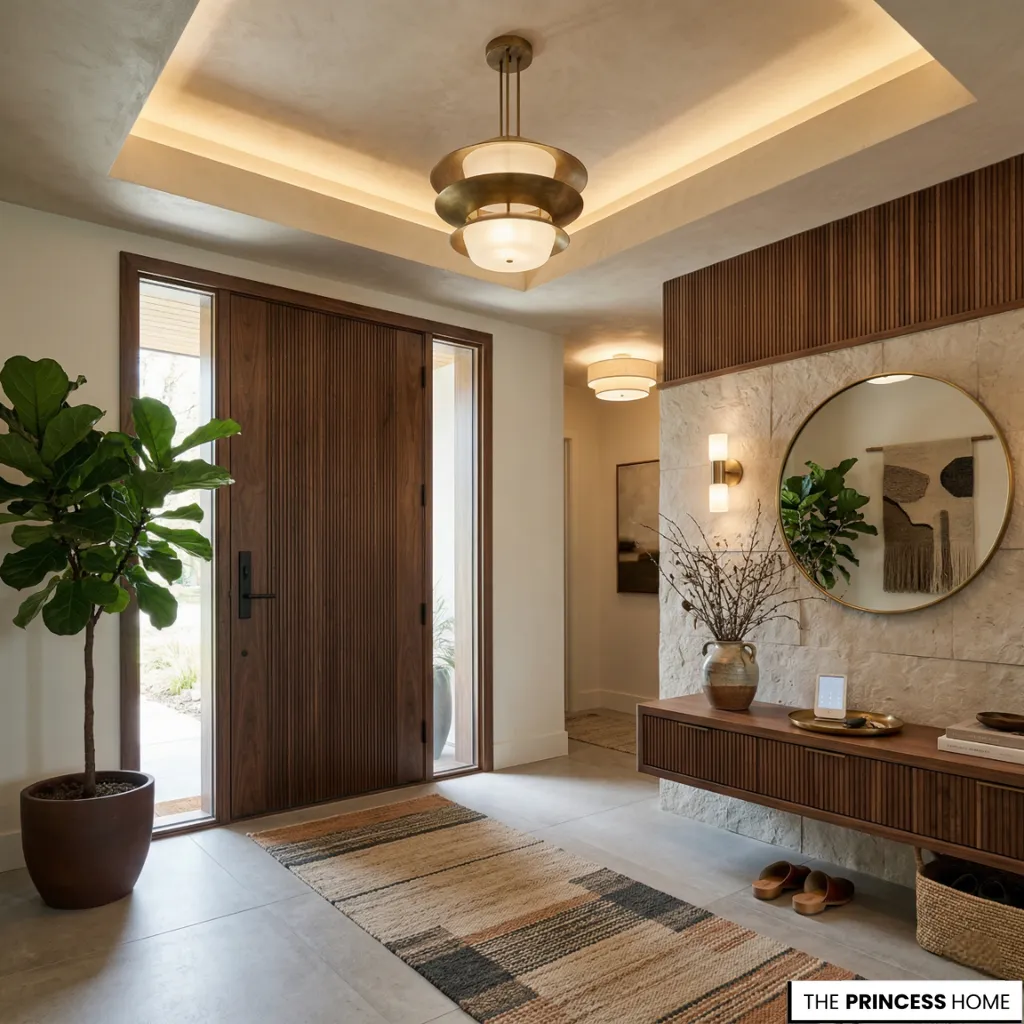
In 2026, standout entryways are defined by a thoughtful balance of function, emotion, and design impact. Leading designers emphasize layered lighting, combining ambient, task, and sculptural fixtures to create a warm and welcoming atmosphere from the first step inside.
Natural materials like stone, wood, and textured finishes remain essential, bringing authenticity and tactile richness to the space. Smart integrations such as concealed lighting systems or seamless storage enhance usability without compromising aesthetics.
Ultimately, the modern entrance is curated with intention, blending beauty, practicality, and personal expression into one cohesive experience.
Sculptural Mirror Focus
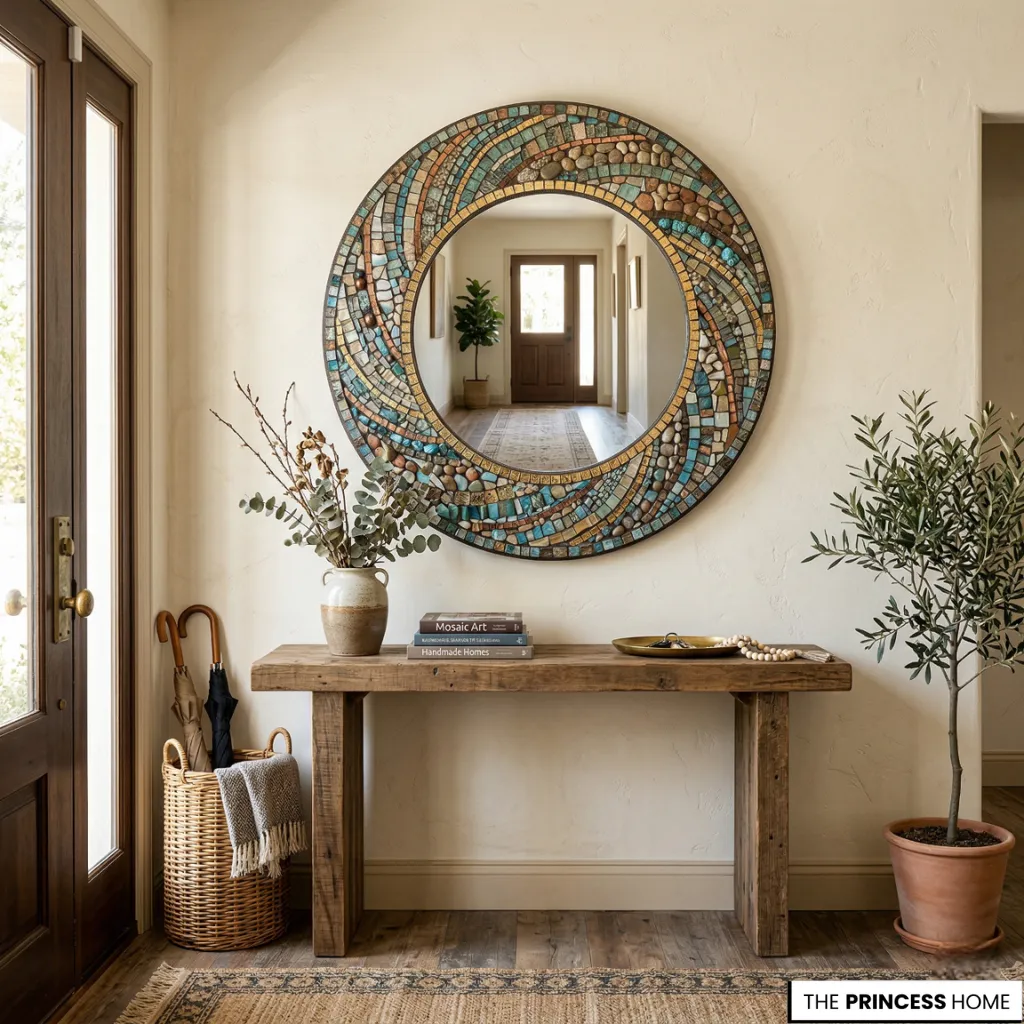
Mirrors in 2026 have transcended their basic function, emerging as statement pieces that anchor the entire entrance design. As highlighted by Jeff D, mosaic and artisanal mirrors blend reflection with sculptural artistry, turning a practical element into a visual centerpiece.
Designers recommend choosing pieces with distinctive shapes, handcrafted details, or unexpected materials that add depth and personality. The result is a mirror that enhances light and space while standing on its own as a work of art.
Layered Lighting Solutions
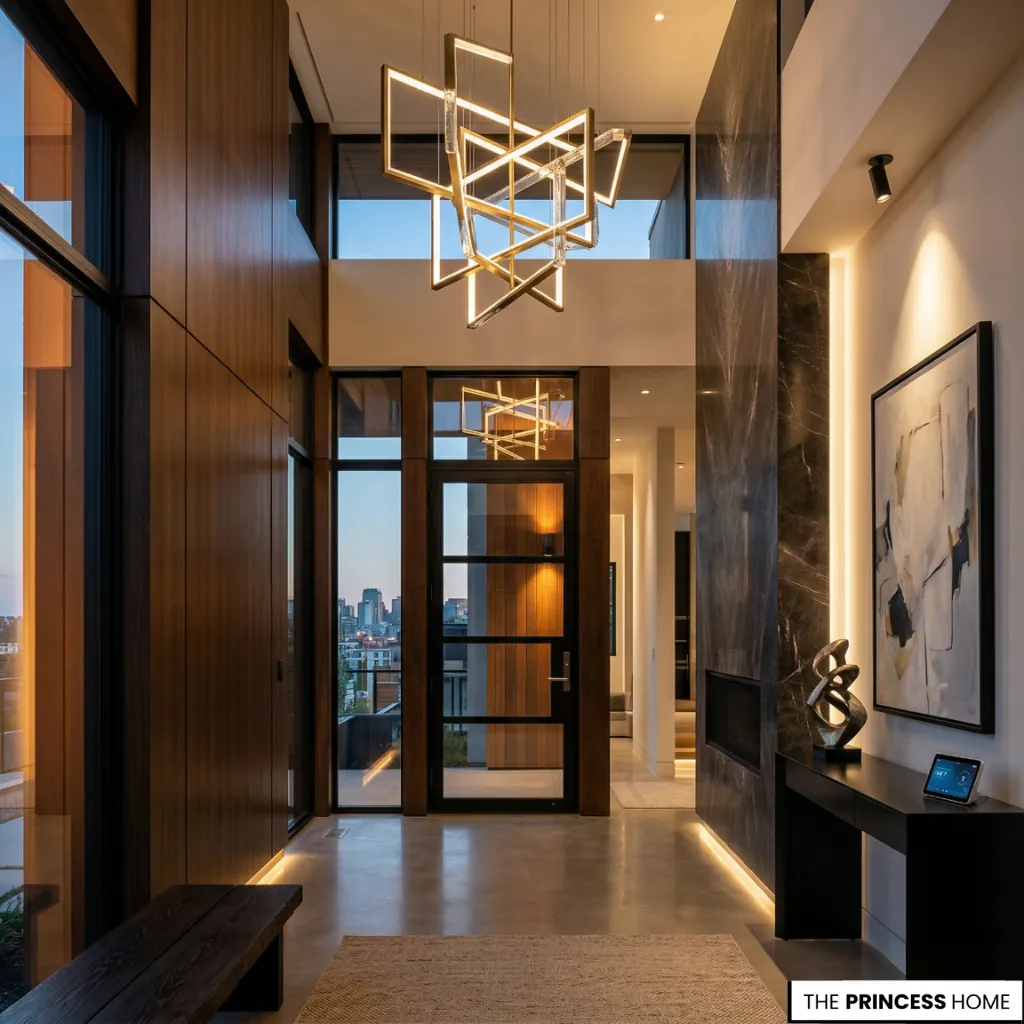
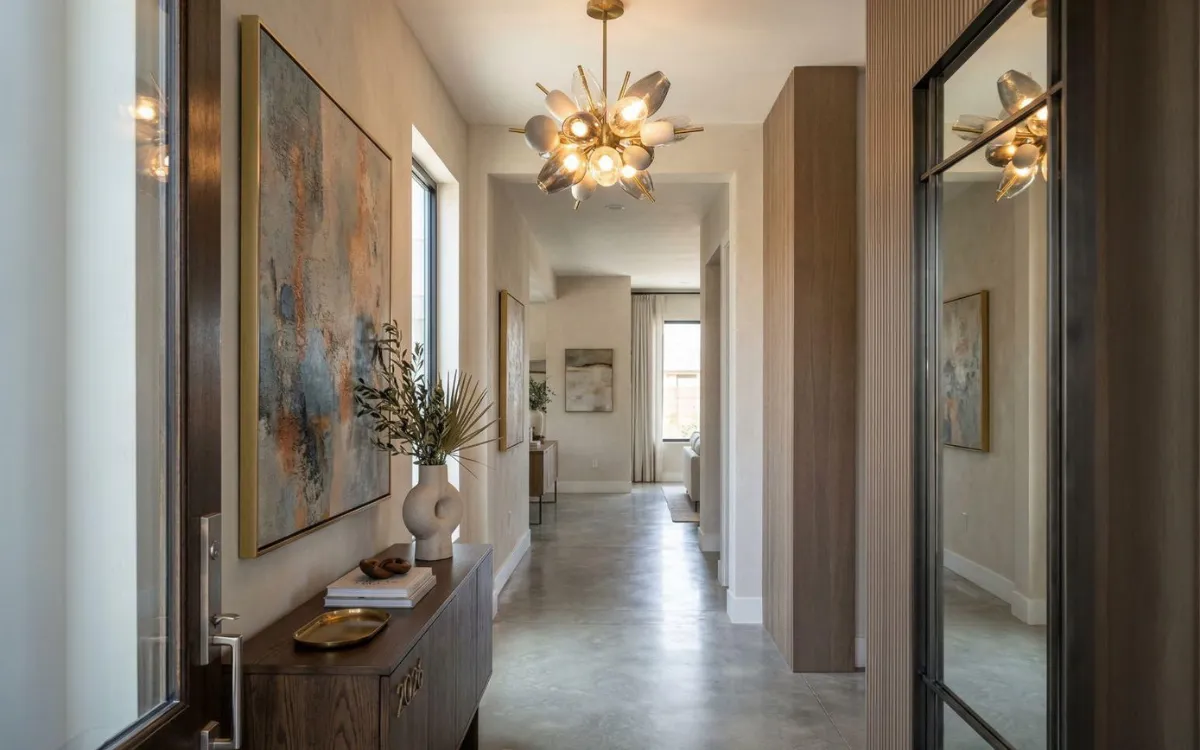
In 2026, entrance lighting is all about layering blending ambient, task, and accent illumination to create depth, warmth, and visual drama. Designers recommend incorporating sculptural fixtures that double as statement art, alongside smart systems that adapt to natural light and daily routines.
Thoughtfully placed lighting can also highlight architectural features, adding dimension and guiding the eye through the space. The result is an entryway that feels dynamic, inviting, and intentionally designed from every angle.
Textured Entrance Trends
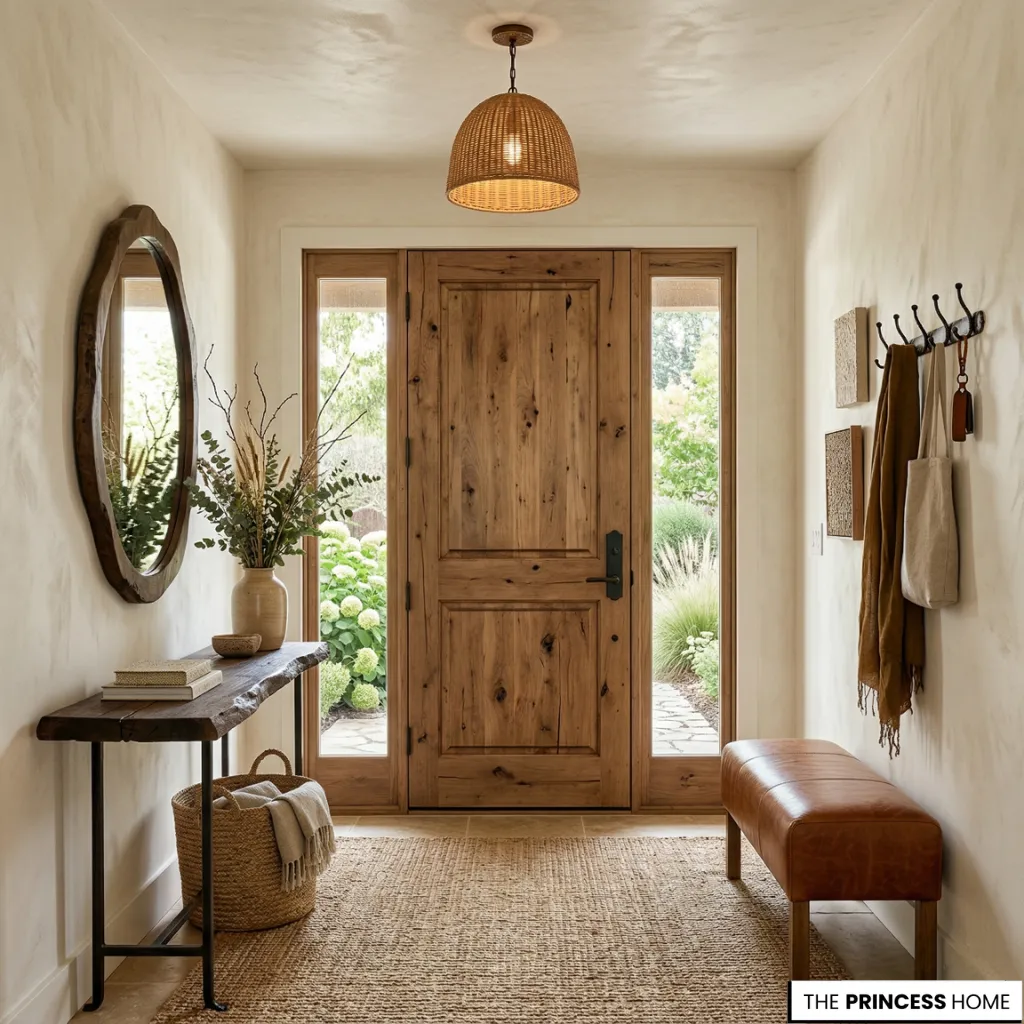
Interior designers like Sarah Akbary of Sarah Akbary Interiors and Huma Sulaiman of Huma Sulaiman Design say 2026 entrance spaces are all about engaging the senses with tactile materials from limewash and Venetian plaster walls to reclaimed wood, raw silks, woven naturals, and leather that instantly communicate warmth and depth.
Texture isn’t just decorative; it shapes how people feel and move through a space, with surfaces that react to light and touch rather than appearing flat. Designers note that layering these organic finishes with irregular, handcrafted elements creates a sense of hospitality and human connection that flat paint and cold minimalism can’t match.
Functional Artistry
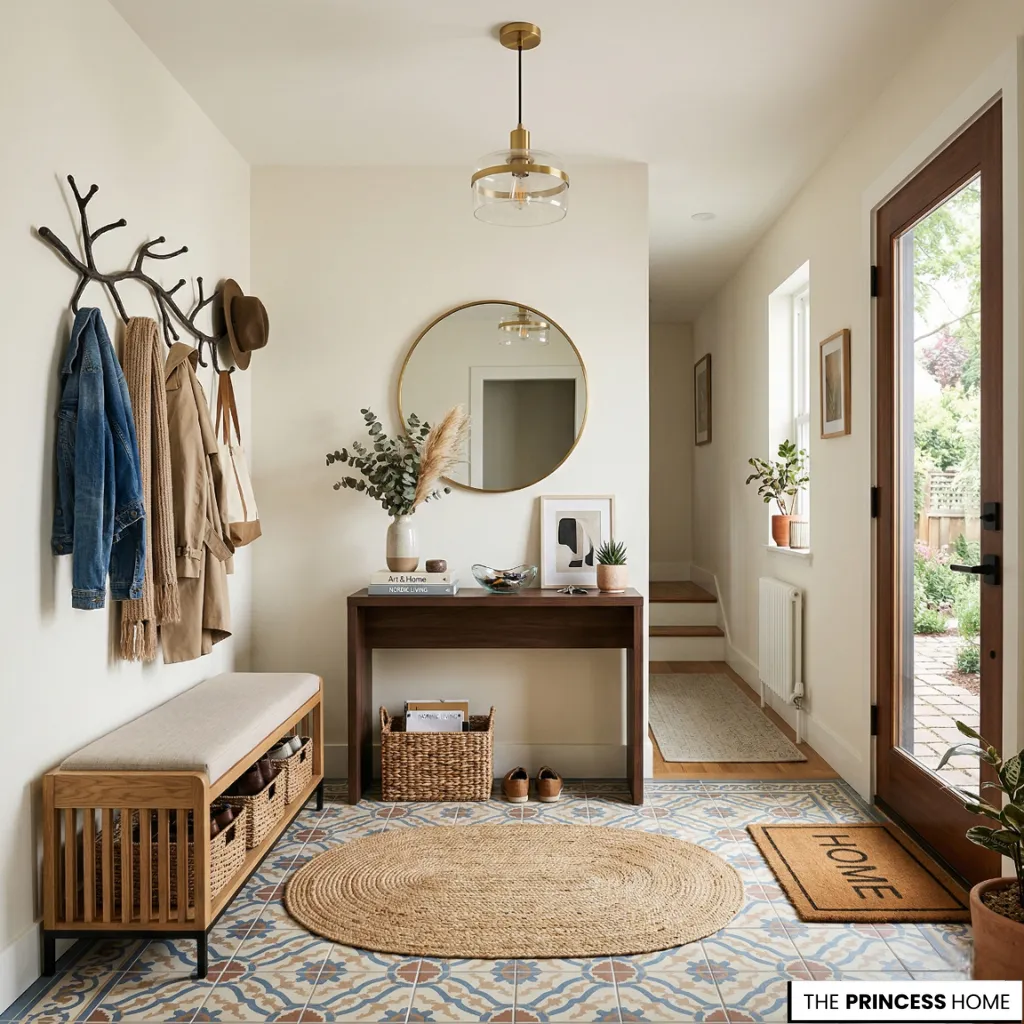
Every element in your entrance should work and wow functional pieces that also elevate the look. Think sculptural storage benches that hide clutter, console tables that showcase style while organizing keys and mail, and coat racks that read like art installations rather than afterthoughts.
Top designers like Ariel Okin and Jamie Drake emphasize that purposeful design in entryways enhances daily flow and creates an inviting first impression that feels both practical and personal. When you blend utility with striking form, your entrance becomes a curated space that sets the tone for the entire home.
Evaluate Before Designing
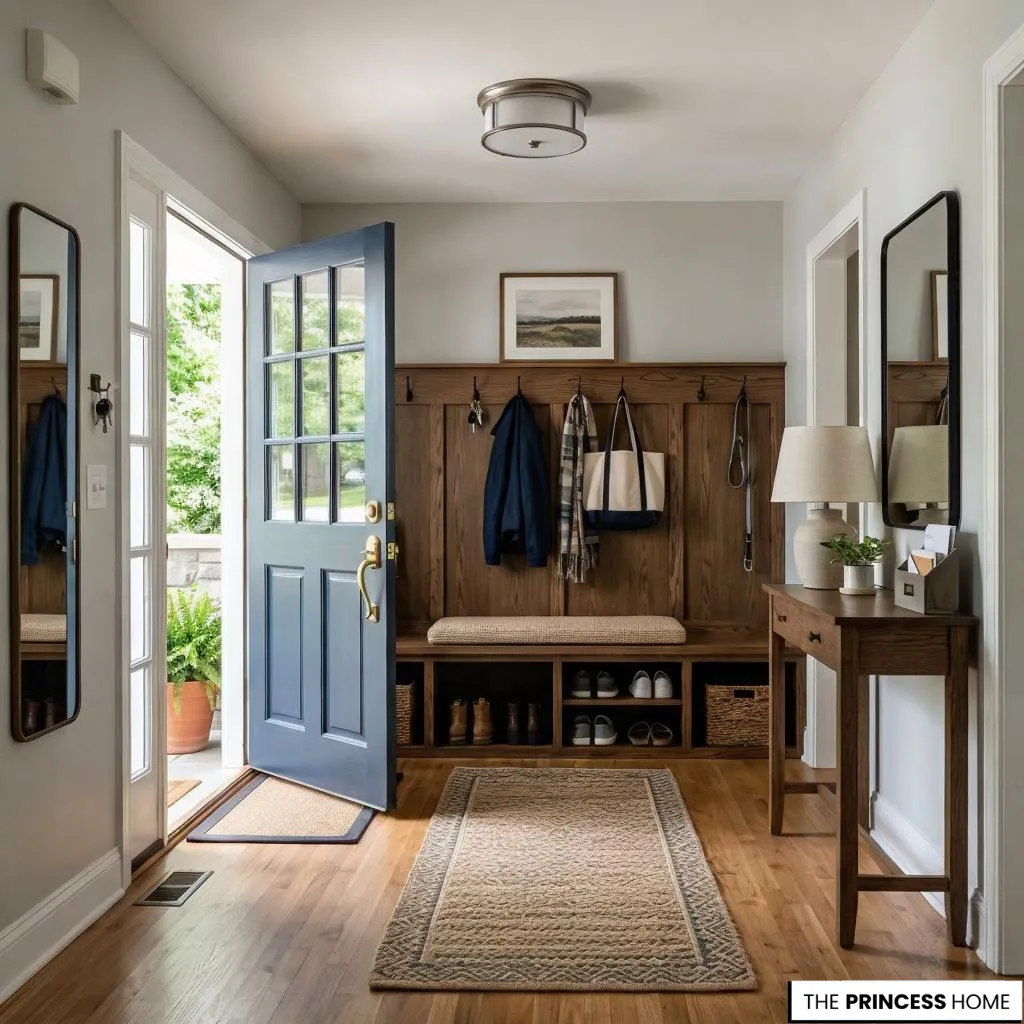
Before jumping into 2026 entrance trends, assess how your entryway actually works day-to-day. Ask yourself: Do you need more storage, smarter lighting, or a seamless transition between outdoors and indoors? Leading designers like Jamie Drake and Ariel Okin say the best entrances don’t just look good.
They balance style and function. The space should feel effortless, welcoming, and practical for everyday life. A thoughtful evaluation now prevents costly missteps later and makes trend-forward design genuinely livable.
Choose Statement Piece
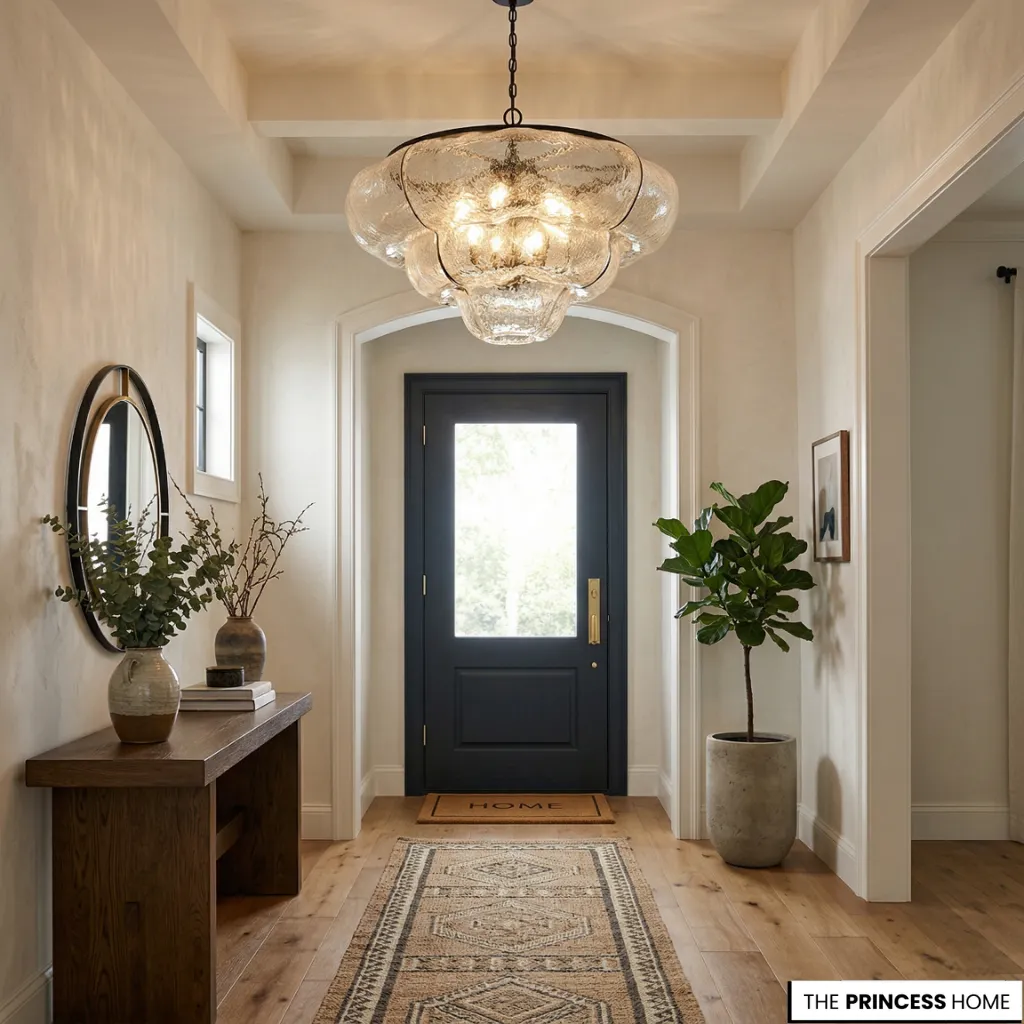
Choose one dramatic element to serve as the anchor of your entrance design. This could be a sculptural light fixture that casts artful shadows, an oversized artistic mirror that doubles as décor and function, or a bold, unexpected color that immediately catches the eye.
Designers like Sarah Akbary stress that a strong focal point guides all other design choices, creating cohesion while delivering instant visual impact. When done thoughtfully, this single statement piece transforms an entryway from ordinary to unforgettable.
Layered Entrance Design
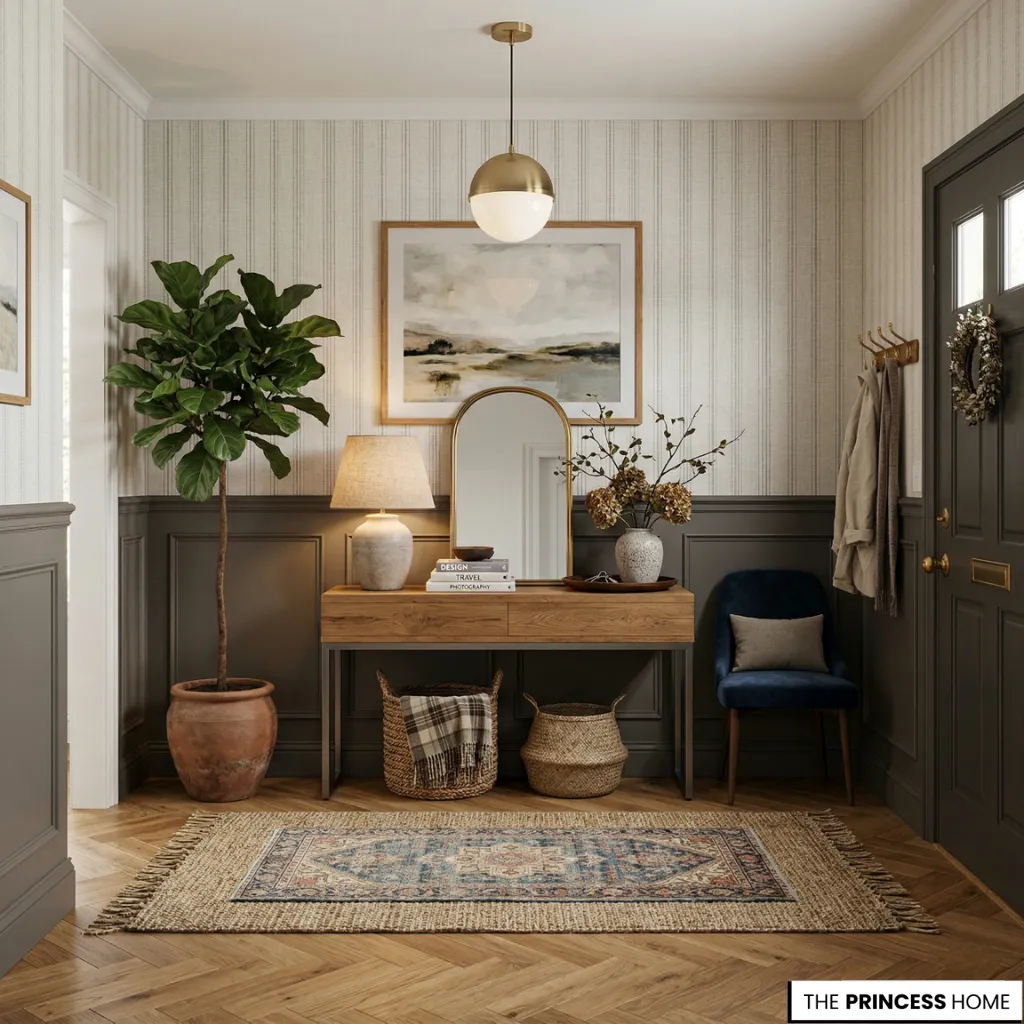
Create depth and sophistication in your entryway by building in layers of color, texture, and objects. Begin with foundational elements like flooring, wall finishes, or textured plaster, then layer in furniture, lighting, and artwork that complement the base.
Finally, add finishing touches decorative objects, plants, or textiles to make the space feel curated and welcoming. Interior designers like Huma Sulaiman highlight that this layered approach not only enhances visual interest but also ensures every element serves a purpose, creating an entrance that’s both stylish and functional.
Personalized Entrance Style
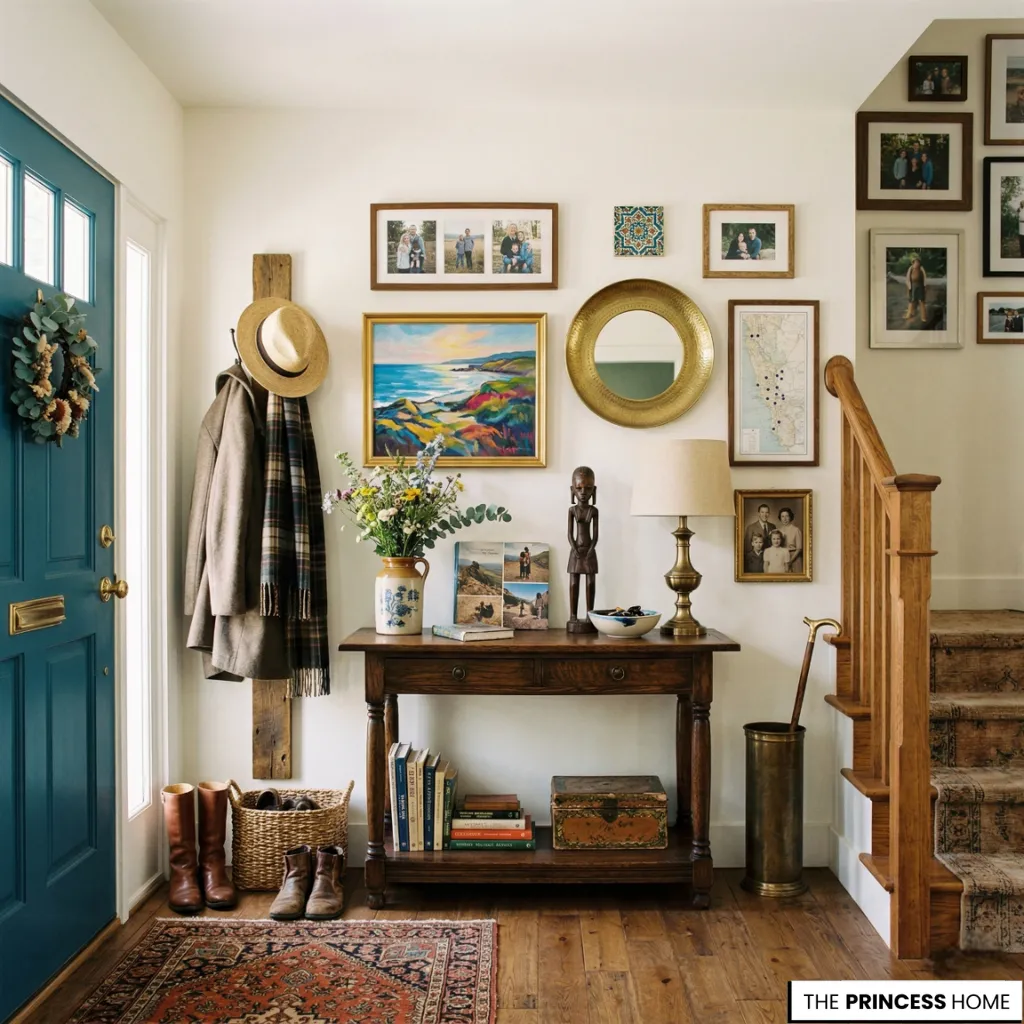
The most compelling entrances tell a story your story. Incorporate family heirlooms, travel souvenirs, or artwork by local artists to give the space personality and meaning. Designers like Jamie Drake emphasize that these personal touches transform an entryway from a functional space into a welcoming narrative,
making every guest feel connected to the home and every resident feel at ease. Thoughtful curation ensures your entrance is not just stylish, but uniquely yours.
Sustainability & Wellness
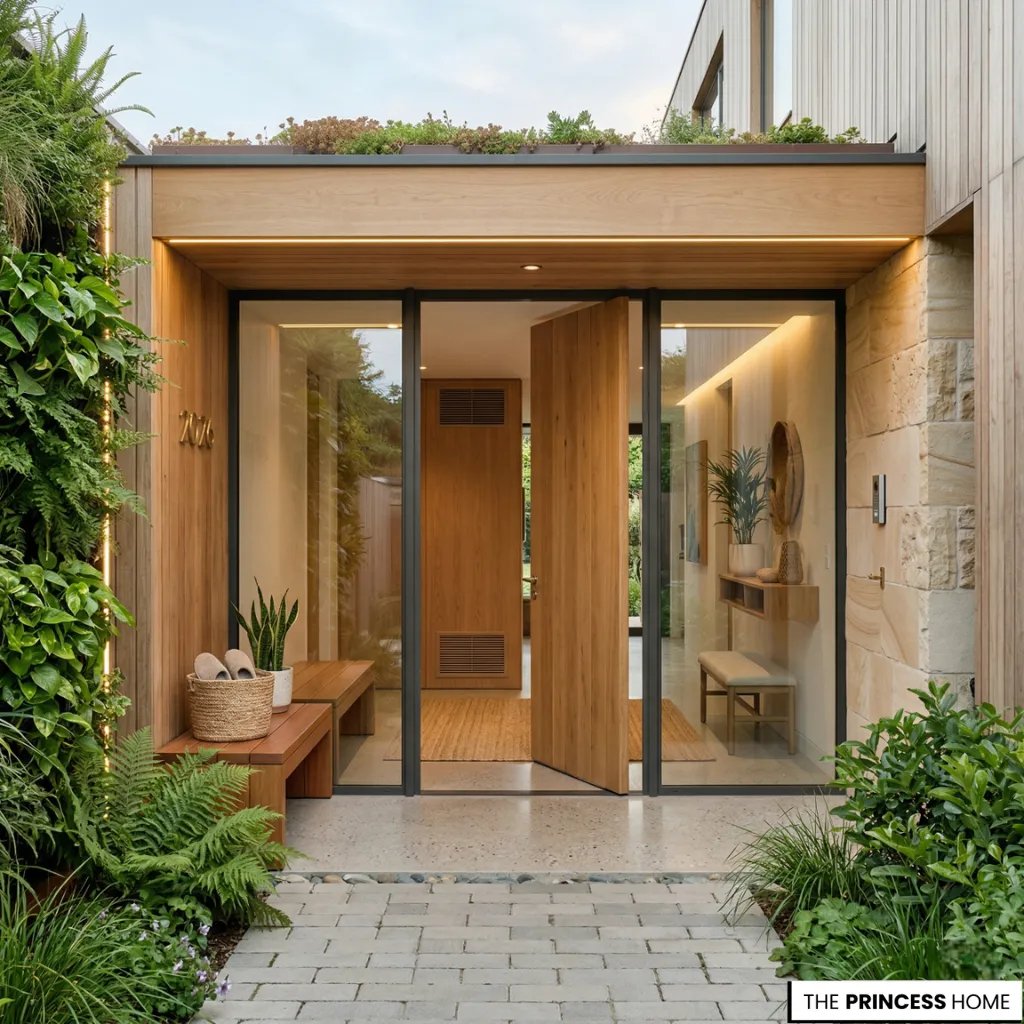
2026 entrance design prioritizes both environmental sustainability and personal wellness. This includes choosing materials with low environmental impact, incorporating plants for air quality, and creating smooth transitions that reduce stress when entering or leaving your home.
Consider elements like natural air purification systems, circadian lighting that supports natural rhythms, and materials free from harmful chemicals. These features align with the growing trend toward homes that support both planetary and personal health.
Architectural Color Blocking
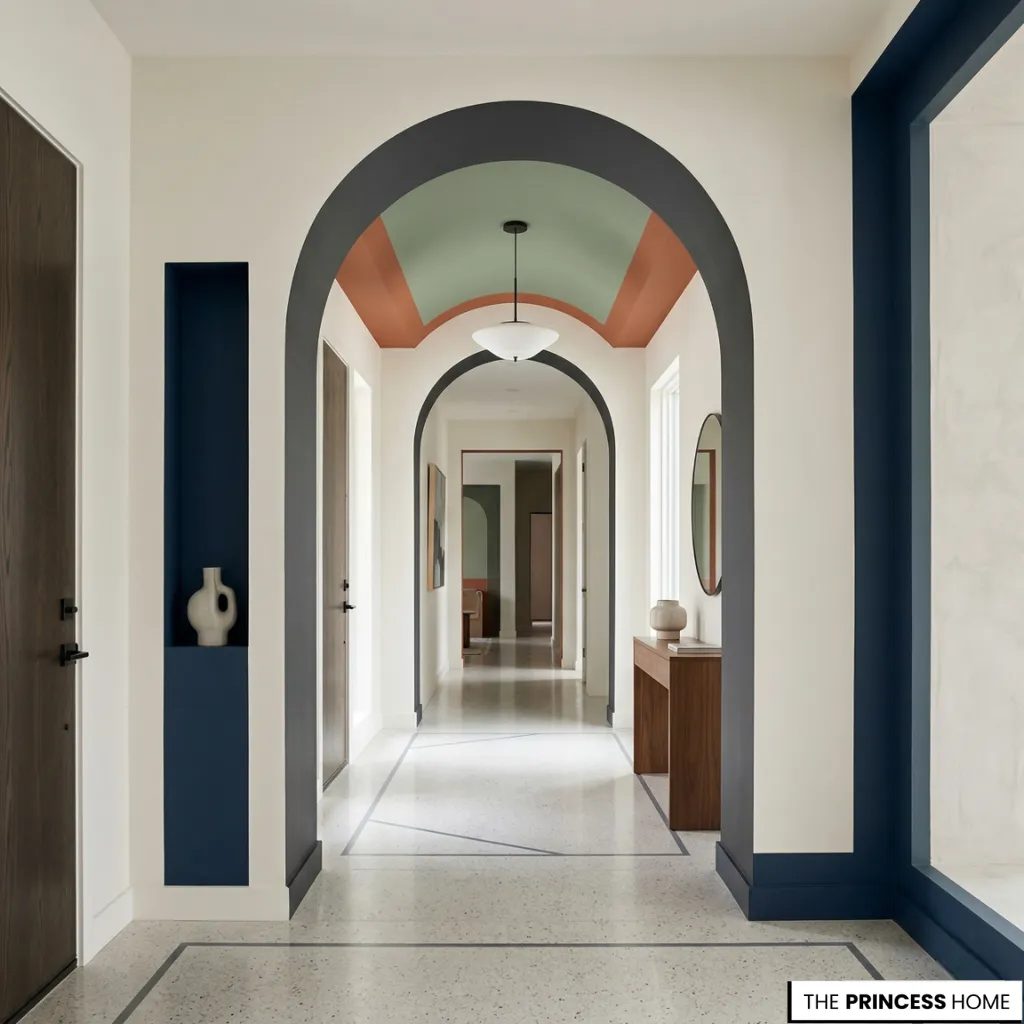
In 2026, designers are using paint as an architectural tool, not just decoration, to shape how entrances are seen and experienced. By strategically highlighting ceilings, arches, panels, and thresholds, paint can either emphasize existing features or visually create new ones a technique praised by designers like Kelly Wearstler and Ilse Crawford for its ability to guide the eye and define space.
Instead of relying on bold contrasts alone, this approach focuses on precision and placement, turning color into a subtle yet powerful design element. The result is an entrance that feels thoughtfully structured, visually dynamic, and effortlessly sophisticated.
The Mauve Renaissance
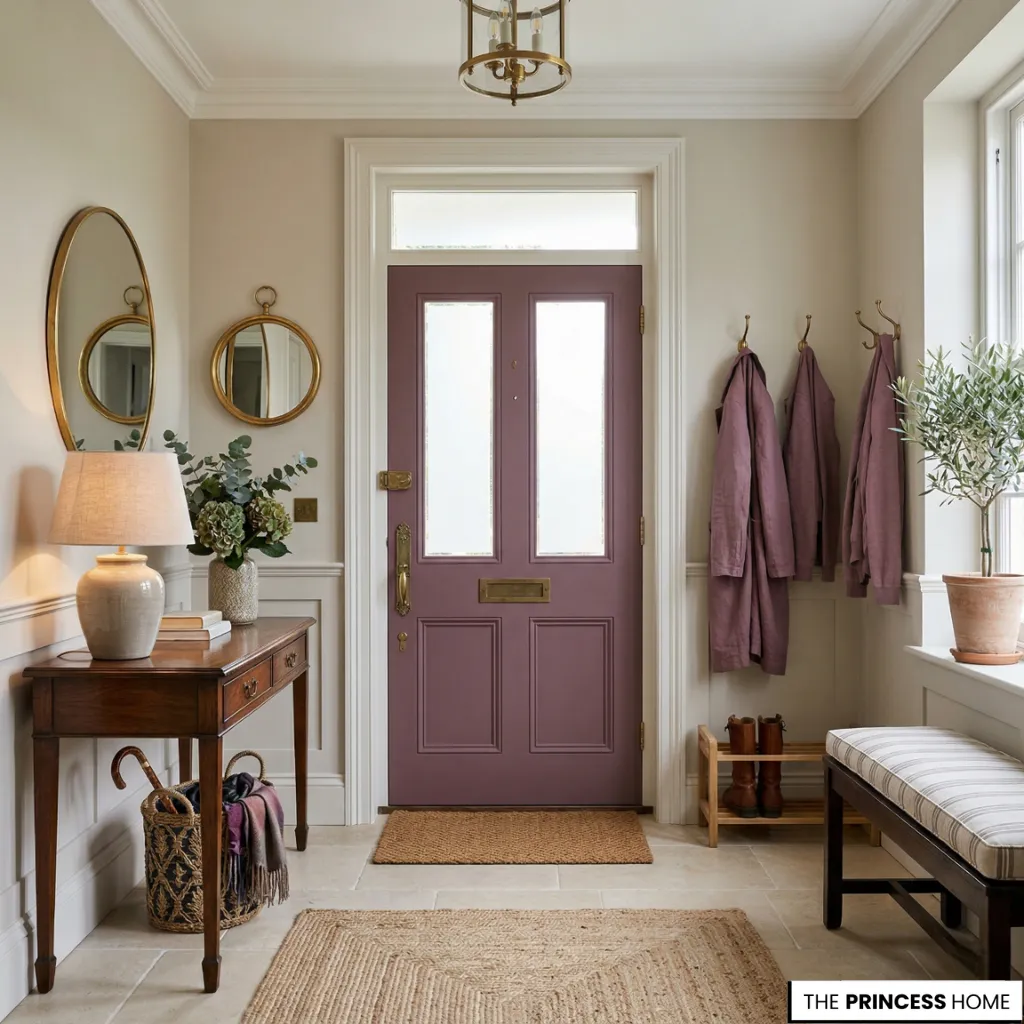
In a surprising revival, mauve is making a sophisticated comeback in entrance design. “The return of mauve to our home color palettes now showcases a more grounded and sophisticated side of the ’80s-era shade,” notes designer Andrea Schumacher. “It’s showing up with depth and discipline, displaying unexpected versatility.”
Schumacher calls it “having a full-fledged comeback part nostalgia, part modern sophistication,” and says it “acts almost like a neutral with personality.” This versatile shade works particularly well in entrance spaces where it can create an immediate impression of refined elegance.
Deep Brown Elegance
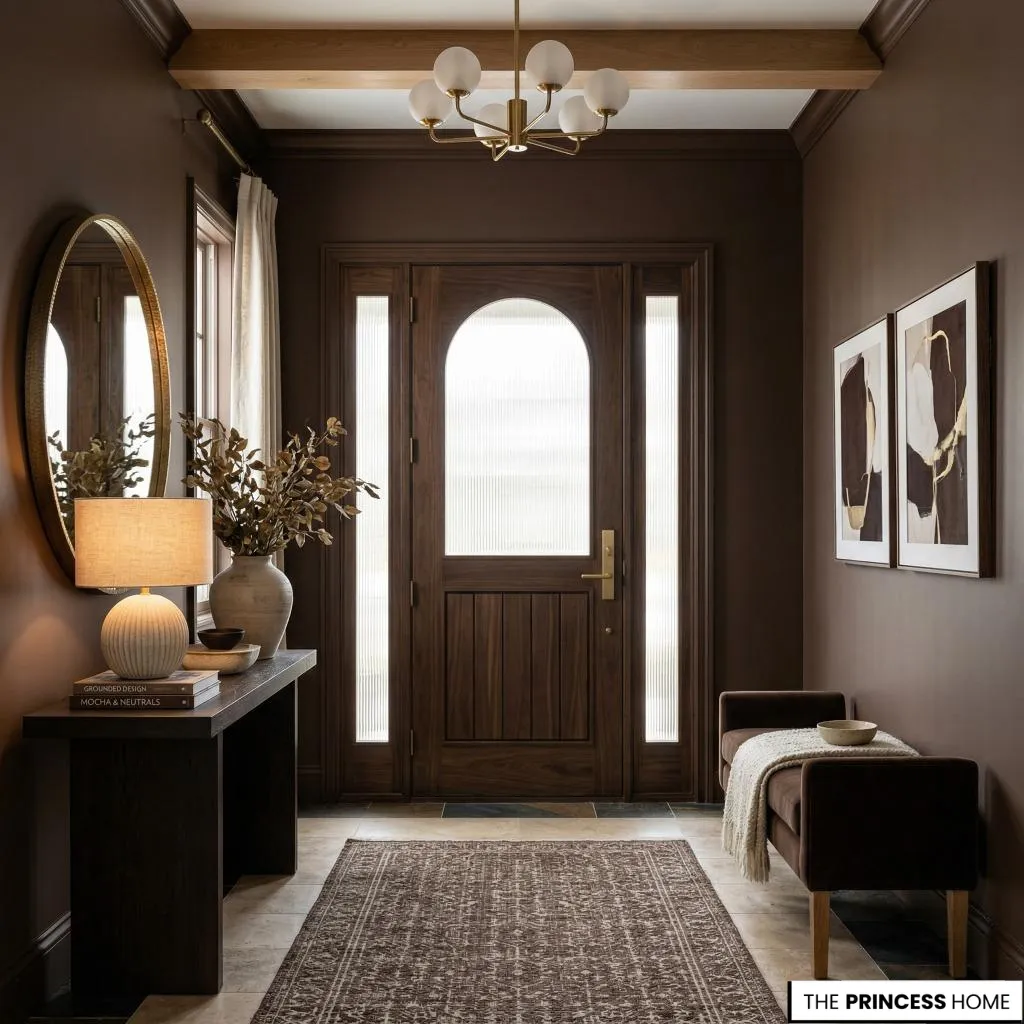
In 2026, brown takes a richer turn, evolving into deep chocolate and espresso tones inspired by Mocha Mousse. Designers like Bobby Berk highlight these shades for their grounding, sophisticated presence, especially when balanced with soft, lighter neutrals.
Applied to walls, upholstery, or wood finishes, darker browns deliver warmth without visual heaviness, offering a refined alternative to black. The result is an entrance that feels luxurious, calm, and quietly impactful, setting a timeless tone from the very first step inside.
Material Craft Revival
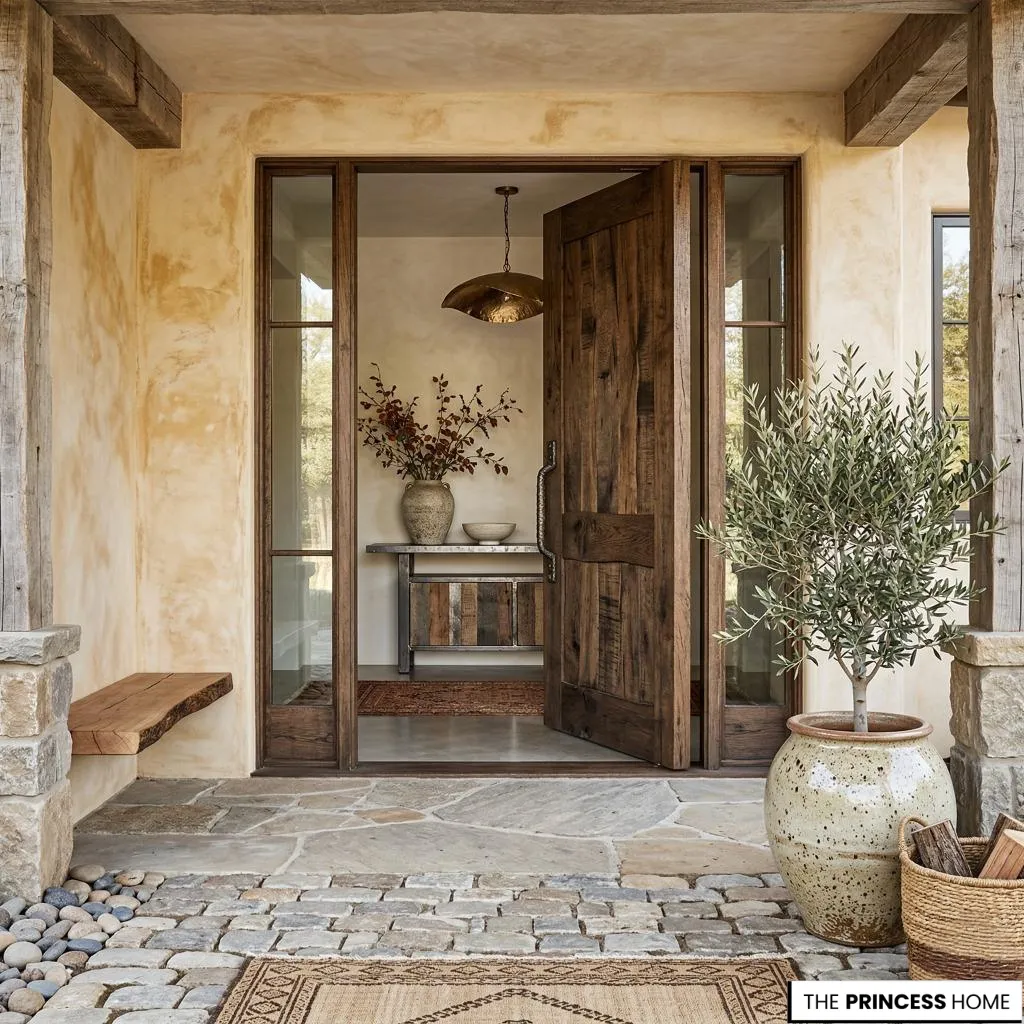
In 2026, entrance design is being redefined by a renewed focus on material innovation and craftsmanship, where quality and authenticity take center stage. Designers like Ilse Crawford and Kelly Wearstler emphasize the use of handcrafted finishes, sustainable materials, and artisanal techniques that bring depth and individuality to entryways.
From custom woodwork to textured plaster and mixed natural elements, these details create a sense of timeless luxury rather than fast trends. The result is an entrance that feels thoughtfully made, rich in character, and designed to age beautifully over time.
Imperfect Design Beauty
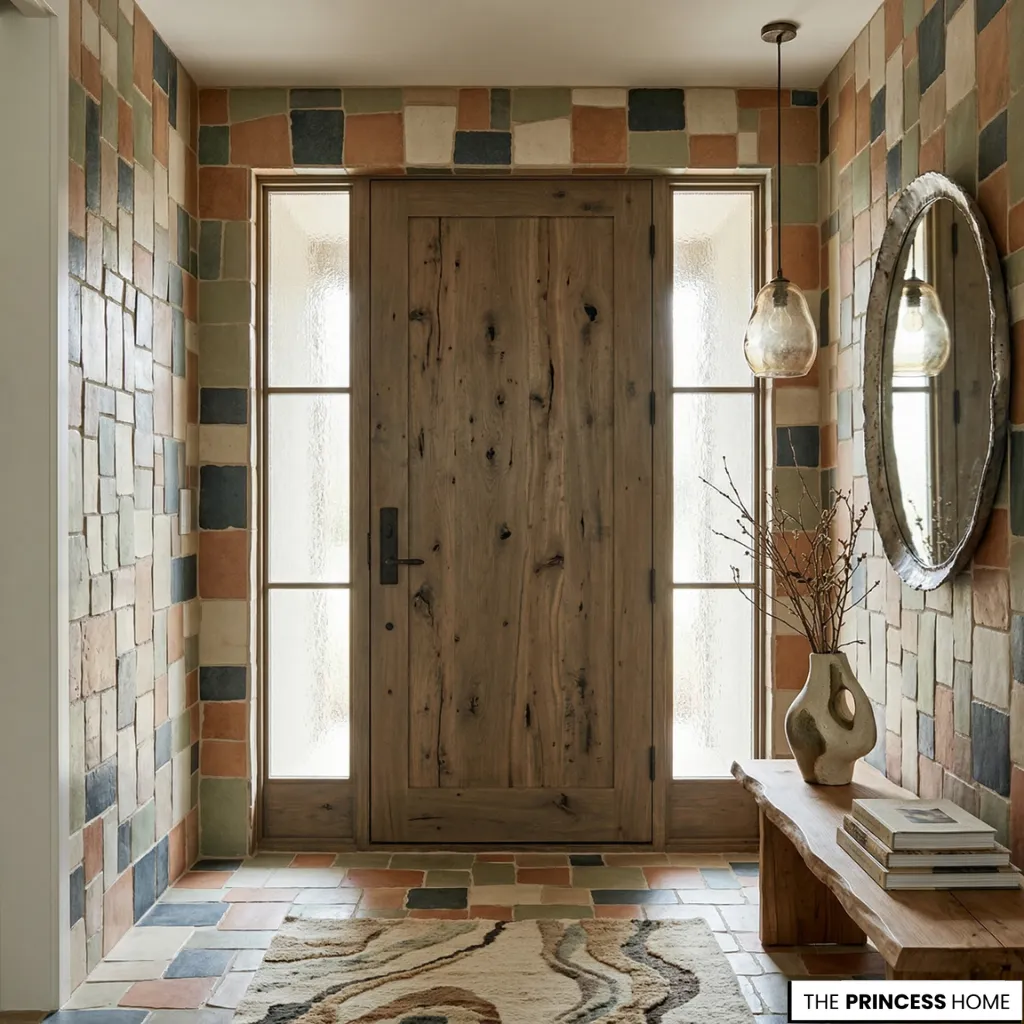
“Irregularity” is emerging as a defining theme in 2026 interiors, shaping entrance design with a celebration of imperfection and natural variation. Designers like Yvonne Ireland highlight the appeal of handmade clay tiles, character-rich timber, and organic forms that bring depth, texture, and subtle movement into the space.
Rather than striving for flawless finishes, this approach embraces authenticity and craftsmanship, creating entrances that feel warm, lived-in, and visually dynamic. The result is a space that feels effortlessly human and uniquely expressive, setting a welcoming tone from the very first step inside.
Expressive Tile Statements
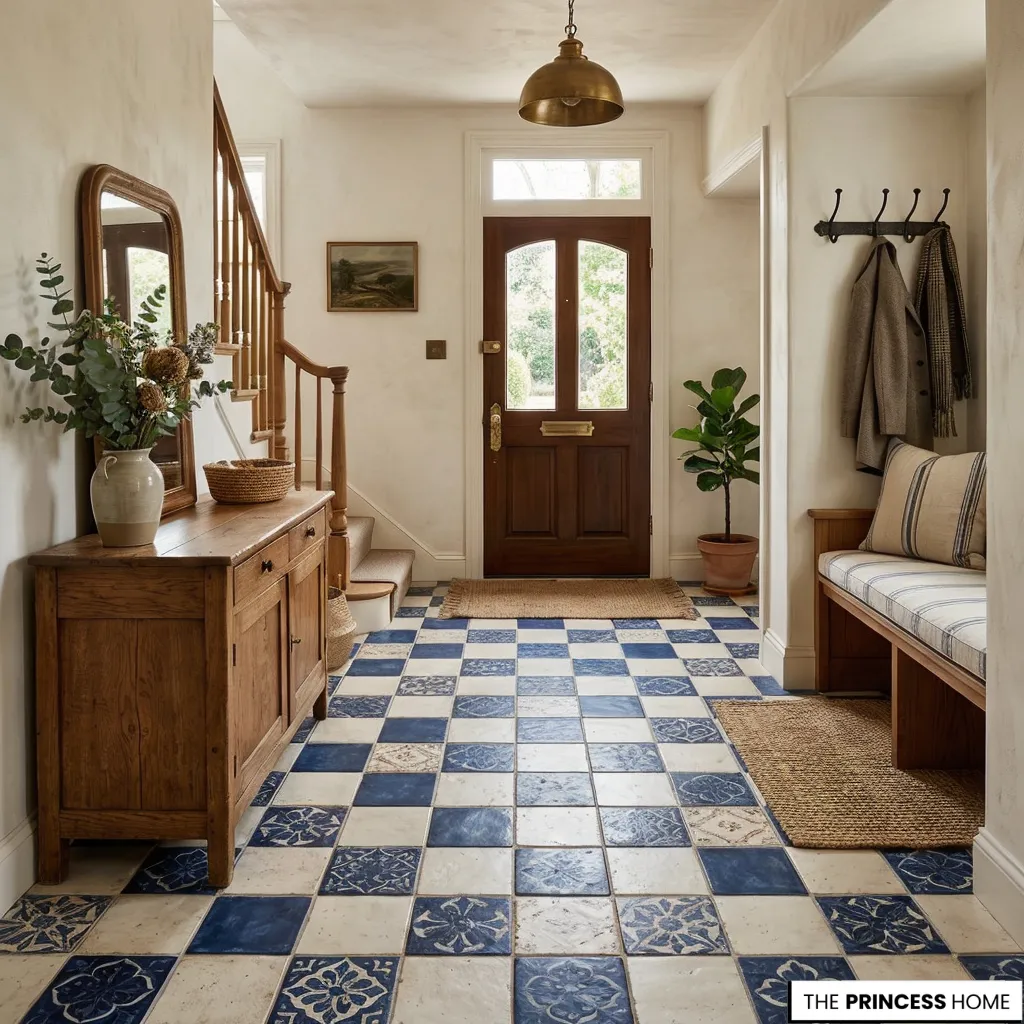
In 2026, tiles are becoming bold design statements, with custom layouts and hand-painted finishes bringing individuality into entrance spaces. Designers like Kelly Wearstler highlight the rise of checkerboard patterns and bespoke tile compositions that can fully envelop an entryway, creating instant visual drama.
This shift toward personalized tile work transforms floors into artistic focal points, setting a strong foundation for the entire design. The result is an entrance that feels creative, curated, and uniquely expressive from the moment you step inside.
Fabric as Architecture
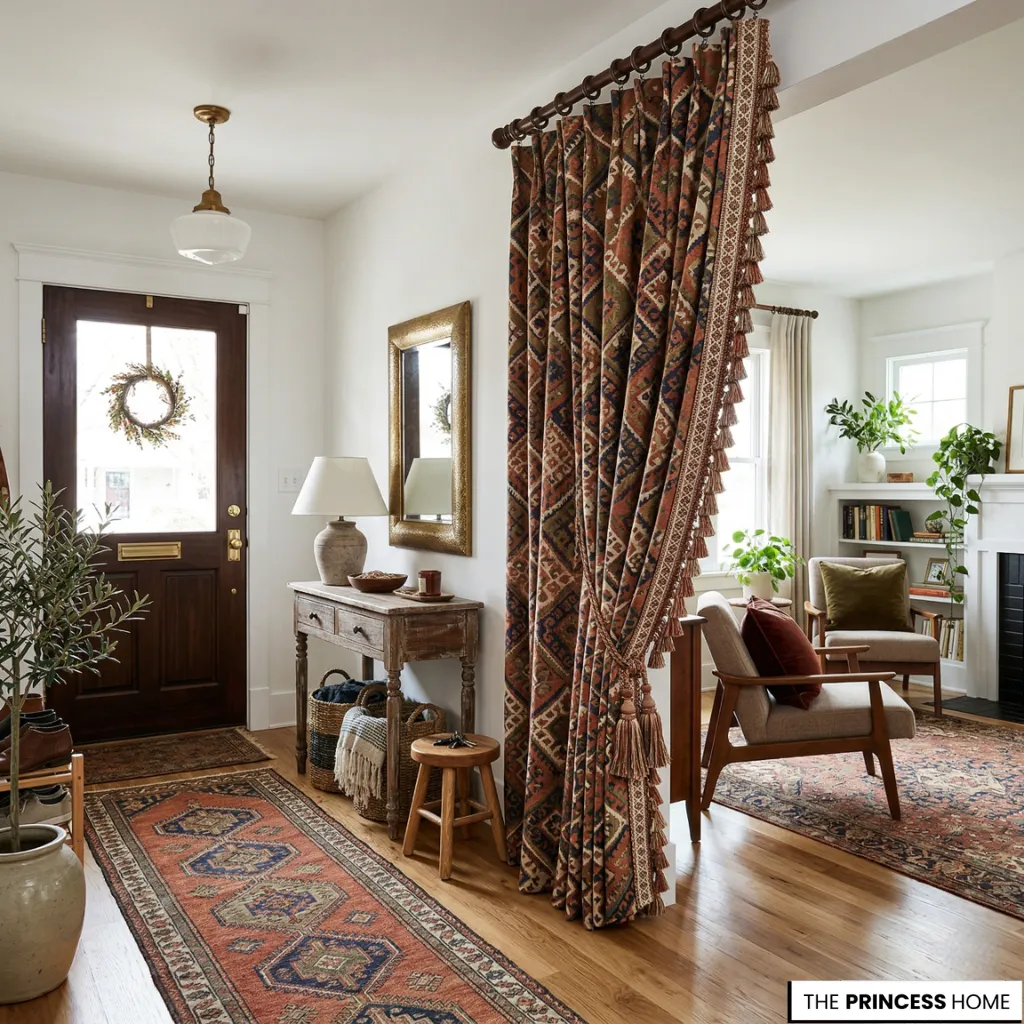
In 2026, designers are rethinking structure by using fabric in place of hard architectural lines to define entrance spaces. Interior voices like Ilse Crawford highlight how patterned textiles, decorative trims, and tassels can create privacy while adding softness and movement.
Beyond function, this approach introduces a theatrical, intentional layer that transforms simple partitions into design features. In open-plan entrances, fabric solutions offer a flexible, elegant way to define zones without the permanence of walls.
Acoustic Art Integration
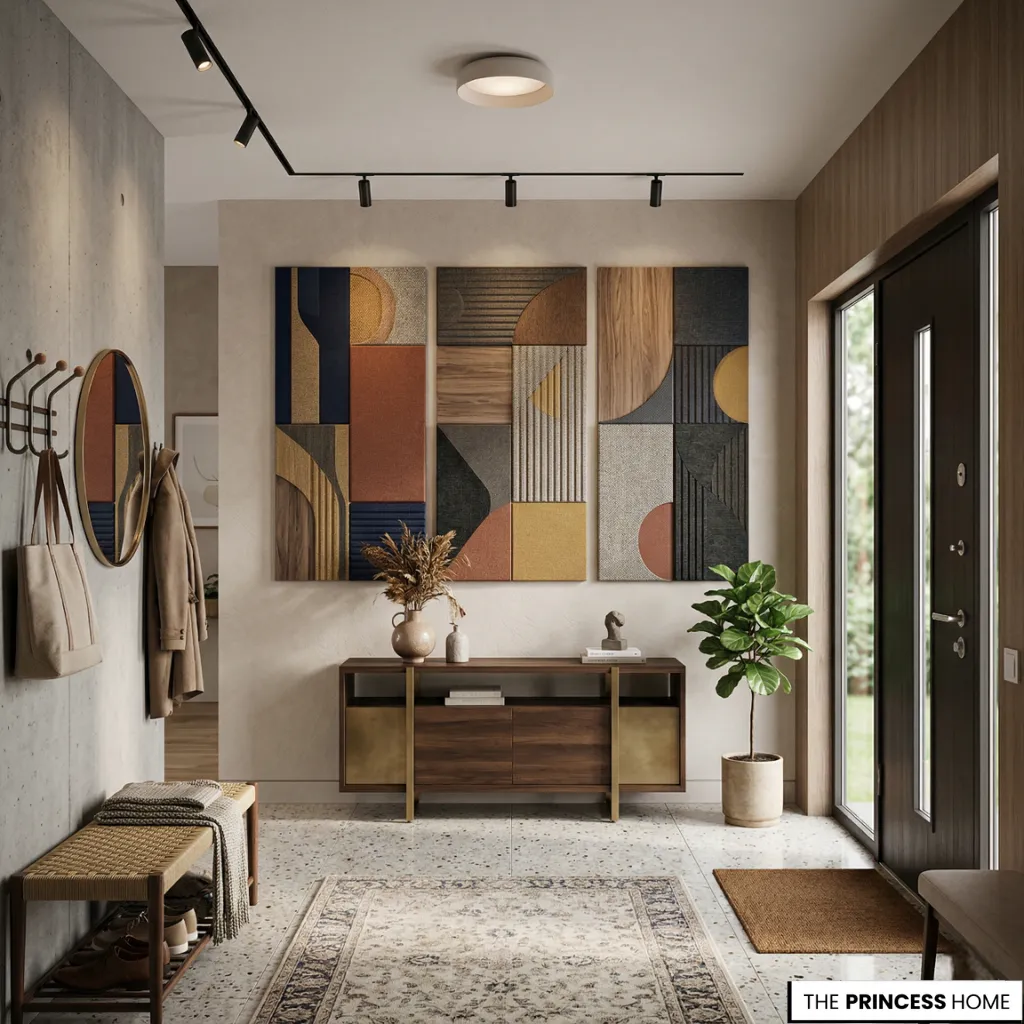
In 2026, the fusion of art and functionality is redefining entrance design through statement-making acoustic panels. Designers like Kelly Hoppen highlight how these pieces feature artistic finishes that double as décor while effectively reducing echo and noise.
No longer purely technical, acoustic panels now act as visual focal points, enhancing both comfort and style. The result is an entrance that feels calm, curated, and acoustically refined, proving that beauty and performance can coexist seamlessly.
Lived-In Luxury
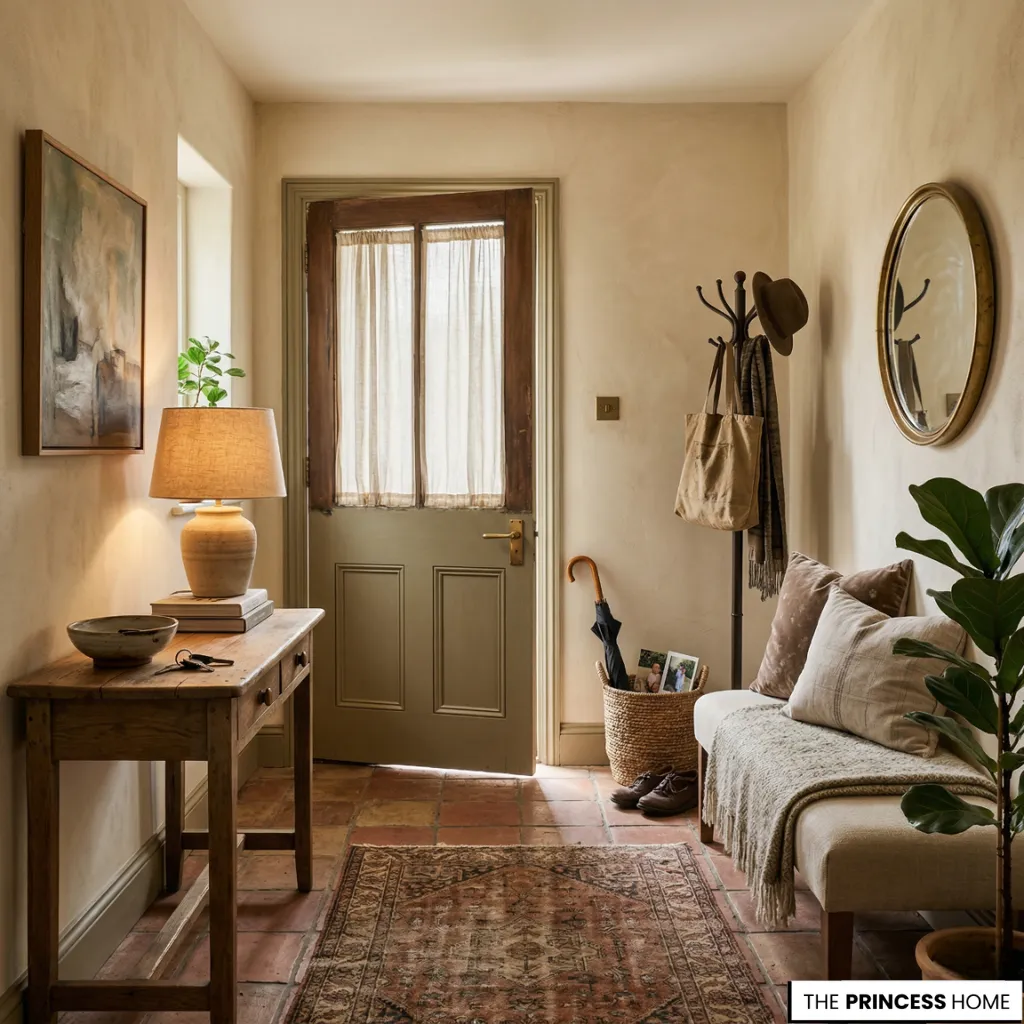
“Overall, 2026 celebrates lived-in luxury and emotional warmth, leaving behind anything cold, sterile, or overly formal,” notes Beth Haley. In entrance design, this philosophy translates into spaces that feel immediately welcoming and genuinely livable, rather than staged or intimidating.
By combining comfort, texture, and personal touches, entryways become inviting thresholds that set the tone for a home that feels both stylish and authentically human.
Luxury Through Detailing
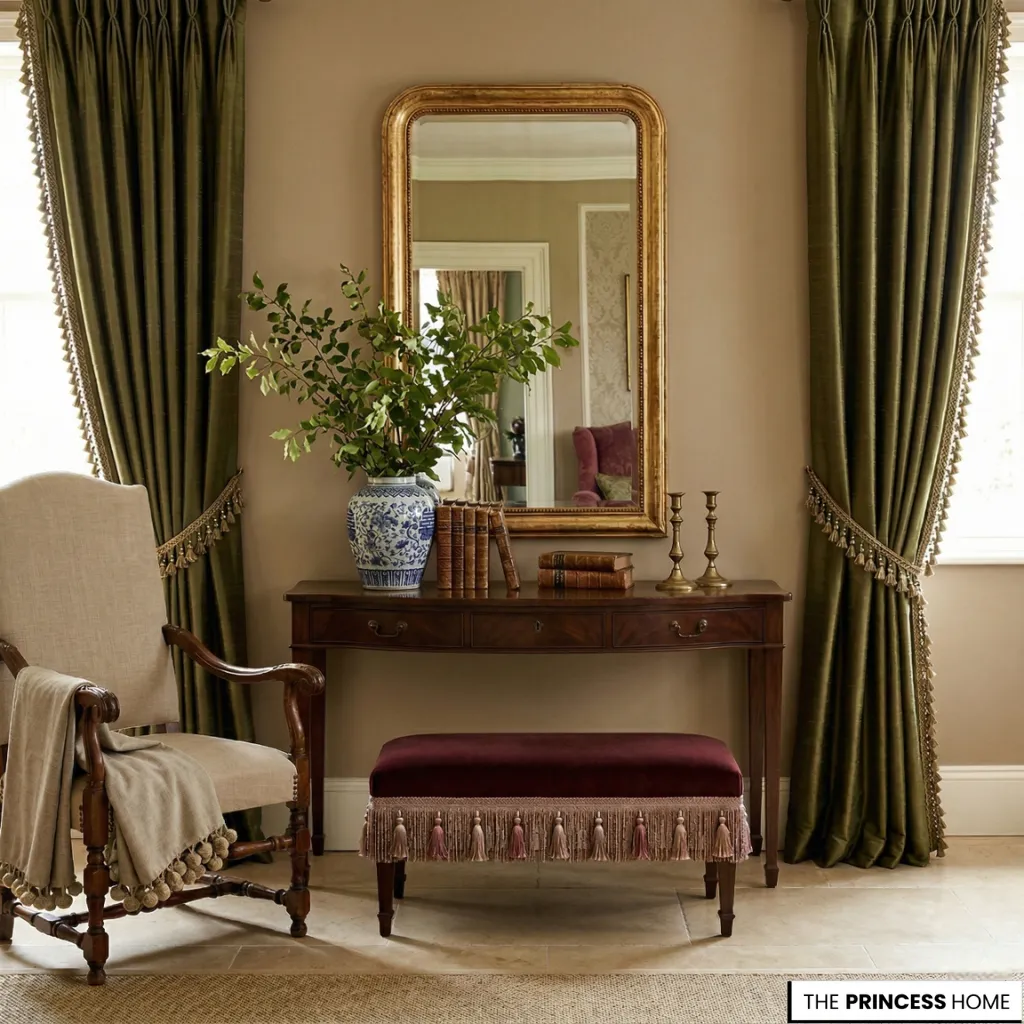
“Decorative detailing like fringing on upholstery, curtains, and cushions is one of the easiest ways to elevate soft furnishings,” say Rose Hanson and Charlotte Tilbury of Penrose Tilbury. With styles ranging from bullion and beaded to brushed and tasselled.
fringes can be subtle or extravagantly bold, instantly transforming plain fabrics into luxurious statements. They recommend Samuel & Sons as a top source for high-quality trims, allowing entrances and living spaces to gain effortless texture, elegance, and tactile appeal.
Entrance First Impact
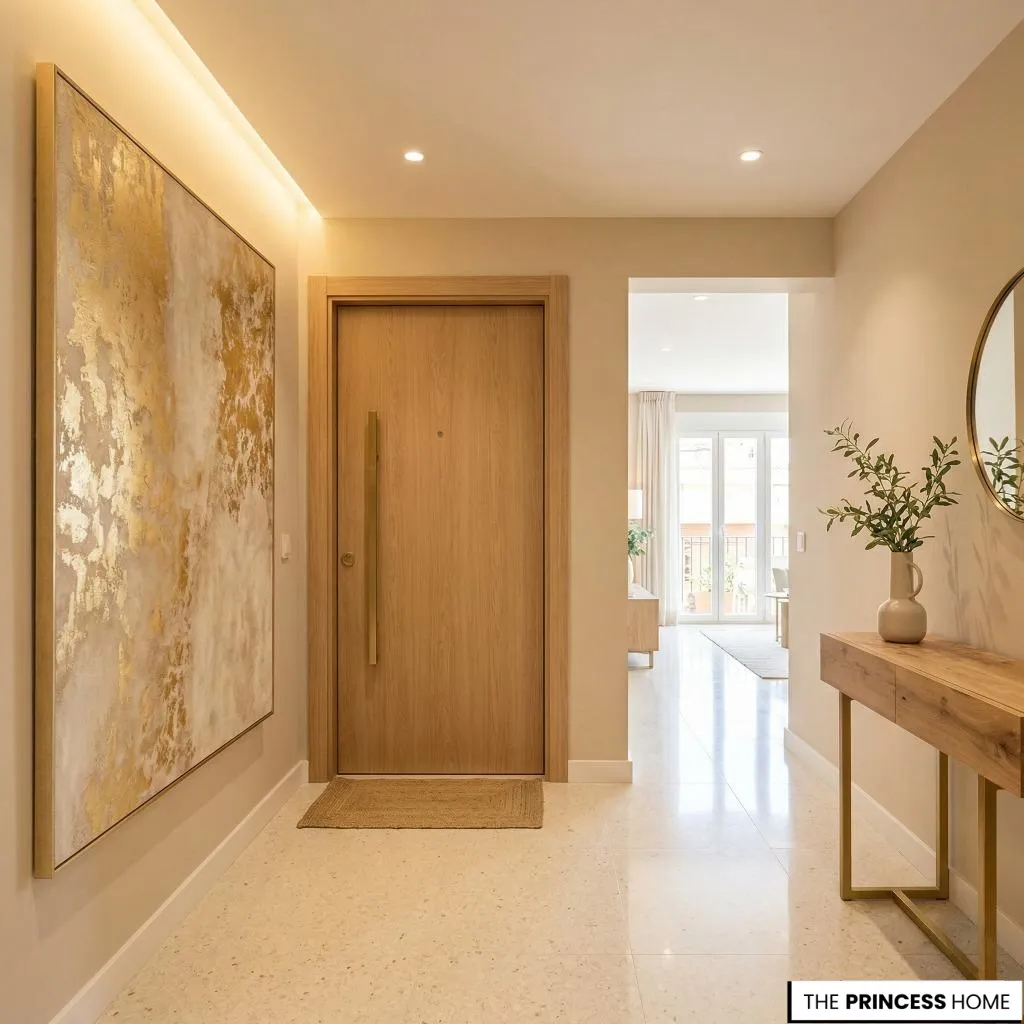
Recent studies on interior design psychology in 2025 revealed that humans form emotional connections to interiors within the first few seconds of experience. This scientific understanding underscores the importance of thoughtful entrance design your entryway literally shapes how people feel about your entire home in mere moments.
One case featured a Hong Kong apartment owner who chose a luminous gold and beige entryway canvas to connect natural daylight from the balcony with the foyer corridor. “The result was a soaring spatial perception and consistent color rhythm across the interior path,” designers report.
Sustainable Entrance Design
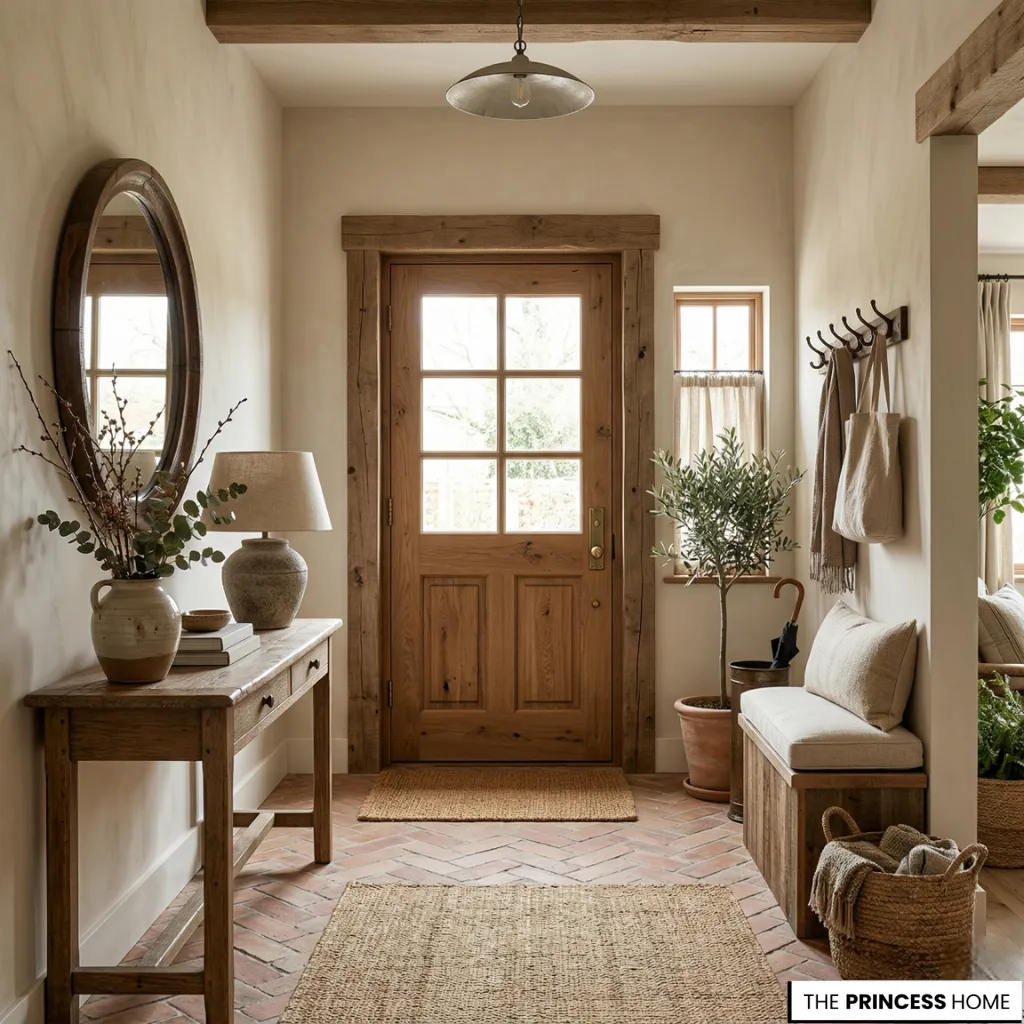
“Sustainability is no longer a headline feature it’s the baseline,” explain design experts. Fast furniture is out, conscious choices are in, from antique pieces and reclaimed materials to locally crafted finishes. This eco conscious approach is particularly evident in entrance design, where reclaimed wood framing, water based pigments, and locally sourced linen create beautiful, responsible, and enduring spaces.
Reflecting this trend, the global foyer décor market valued at over $12 billion in 2025 is projected to grow steadily through 2030, driven by urban living and demand for personalized, meaningful entryways. Modern entrances now blend sustainability, style, and functionality, proving that responsible design can be both elegant and impactful.
Create Visual Hierarchy
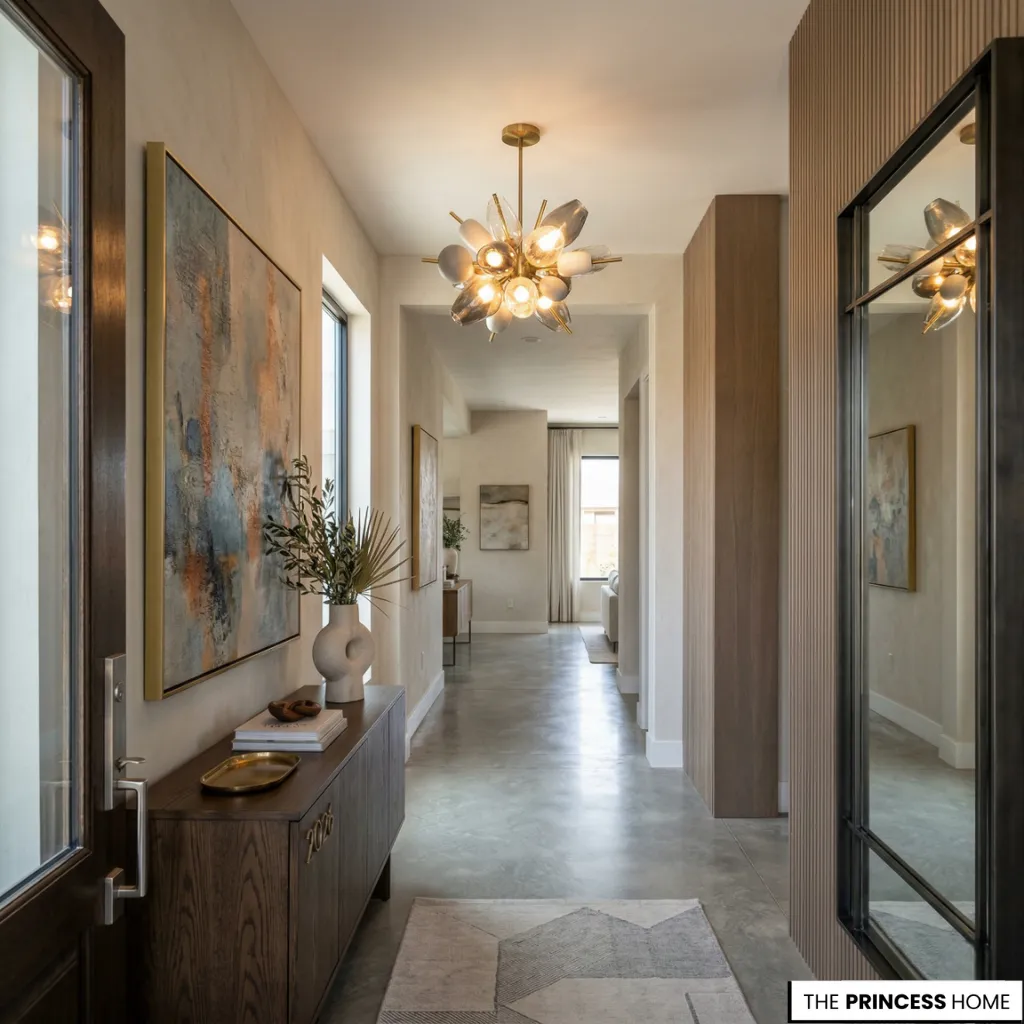
The most successful entrances in 2026 rely on clear visual hierarchy, carefully arranging key elements to guide the eye. A dramatic light fixture can serve as the focal point, supported by complementary artwork, furniture, and architectural details that lead visitors naturally through the space.
Designers like Gideon Mendelson emphasize that this intentional layering of elements creates balance, flow, and an immediate sense of sophistication, making the entrance feel both curated and welcoming.
Layered Entrance Lighting
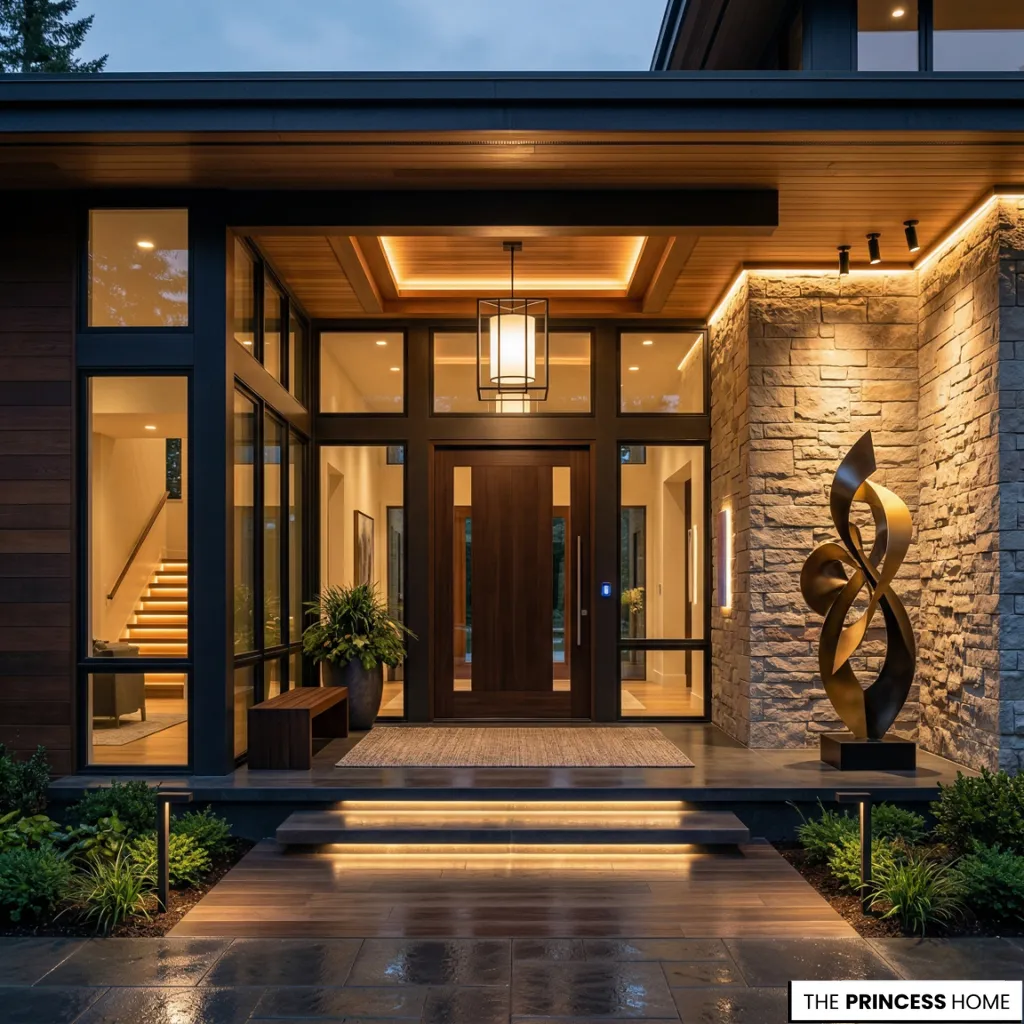
Advanced entrance lighting in 2026 blends multiple sources to create depth, mood, and functionality. Designers recommend combining ambient lighting for overall glow, task lighting for functional areas, and accent lighting to highlight artwork or architectural features.
Smart systems that adjust automatically to natural light and time of day add a layer of technological sophistication, ensuring the space feels inviting, dynamic, and effortlessly curated from morning to night.
Functional Statement Design
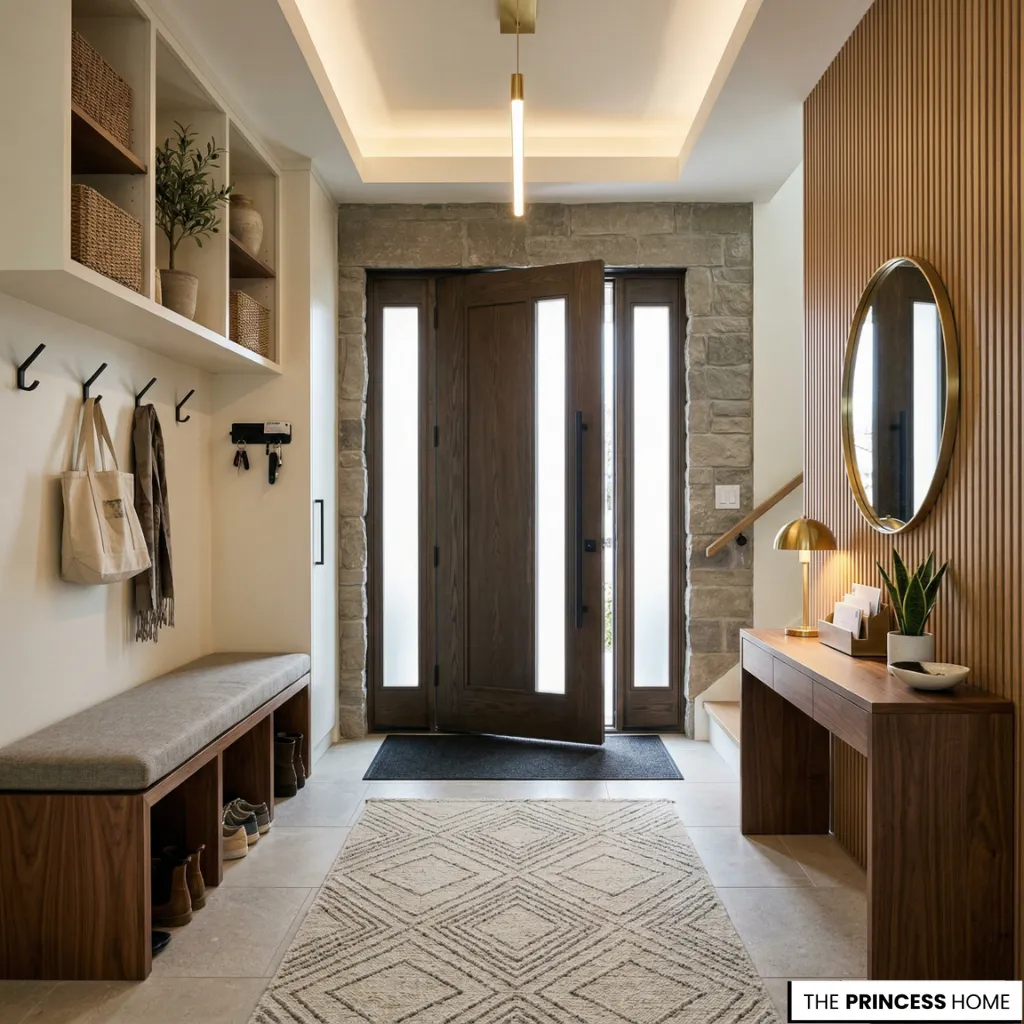
While 2026 trends celebrate dramatic design statements, the most successful entrances balance visual impact with practical functionality. Every element whether it’s storage, seating, lighting, or wayfinding should serve a purpose while contributing to the overall aesthetic.
Designers like Jamie Drake emphasize that this approach ensures entryways are not just striking, but livable, intuitive, and welcoming from the moment you step inside.
Details Define Design
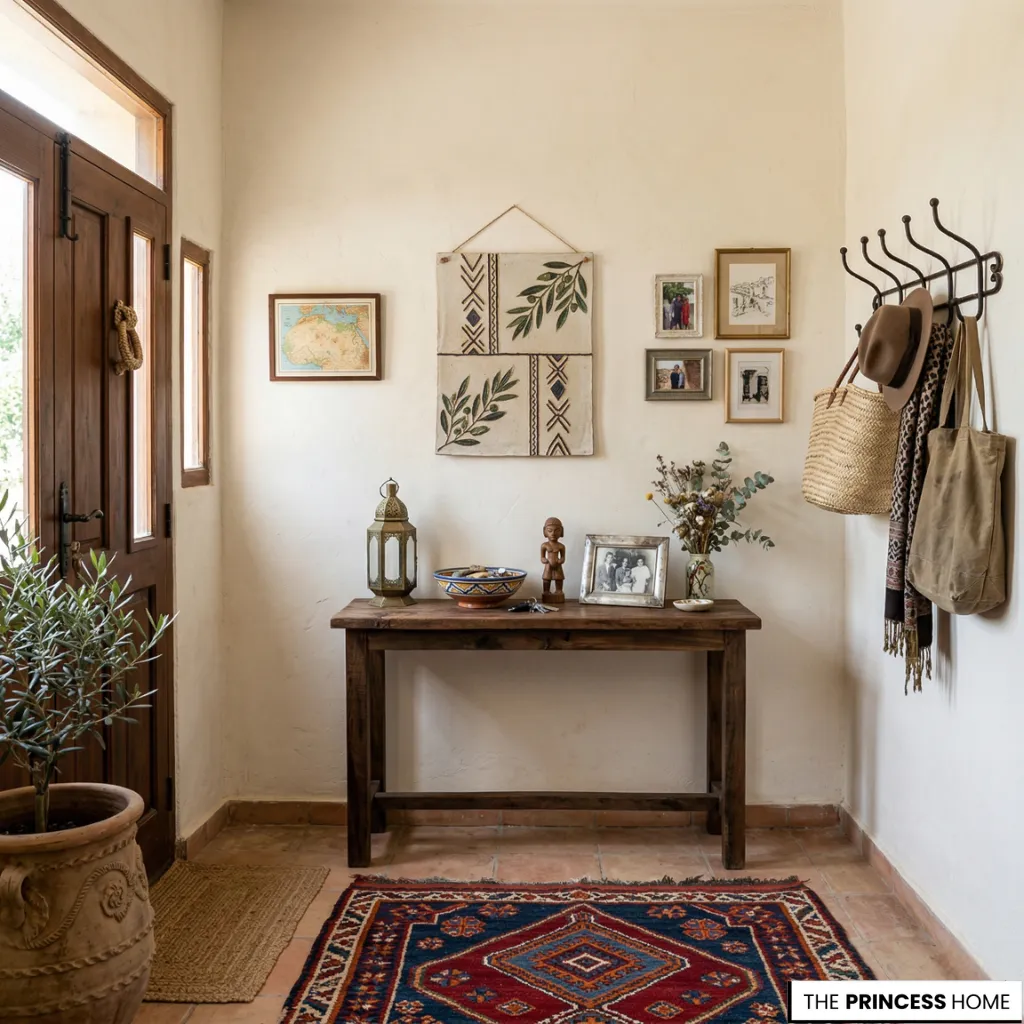
The difference between a generic entrance and an exceptional one often comes down to the small, meaningful details. Designers like Ilse Crawford emphasize incorporating personal elements family heirlooms, travel finds, or commissioned pieces from local artisans to create a space that feels authentic.
These thoughtful touches move your entryway beyond trends, turning it into a reflection of your story and identity. The result is an entrance that feels deeply personal, inviting, and truly one of a kind.
Designer Voices 2026
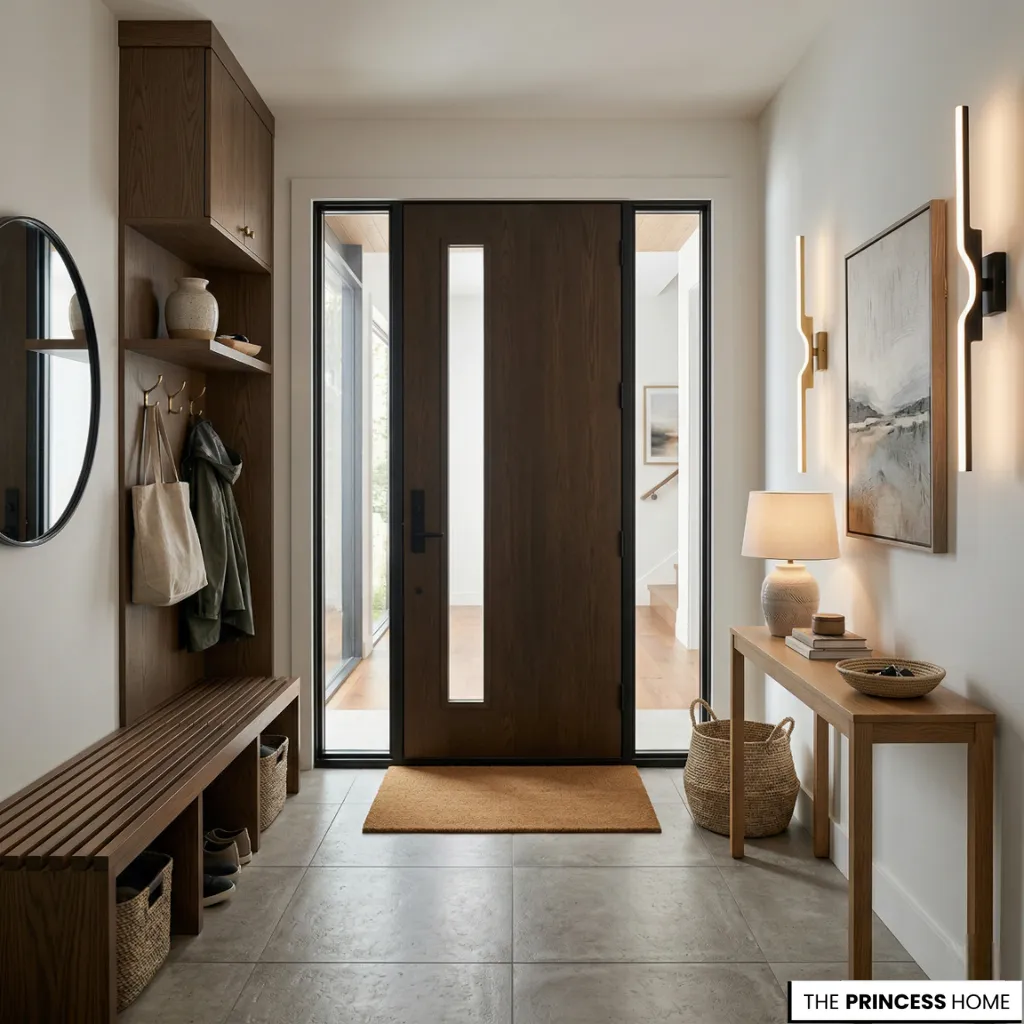
Leading interior designers are redefining entrance design in 2026 by prioritizing emotion, individuality, and sensory impact. Designers like Tiffany Duggan, Lauren McGrath, and Lucy Hammond Giles emphasize layered textures, meaningful color, and spaces that feel lived in rather than staged.
Meanwhile, creatives such as Cortney Bishop and Katie Harbison highlight the importance of storytelling using materials, lighting, and personal details to create a memorable first impression. Together, their insights reveal a shift toward entryways that are not just functional, but deeply expressive and intentionally curated.
Conclusion
The entrance of 2026 serves as more than a threshold—it’s a preview of the thoughtful design and personal expression that awaits within. By embracing trends that celebrate authenticity, craftsmanship, and innovation, you can create an entrance that not only welcomes guests but also reflects your unique story and values.
Here are some frequently asked questions related to the article :
1. What are the most important colors for 2026 entrance design?
The return of mauve showcases a more grounded and sophisticated side of the ’80s-era shade, displaying unexpected versatility and acting “almost like a neutral with personality.” Additionally, brown deepens toward richer chocolate and espresso shades—a natural progression from Pantone’s 2025 Colour of the Year, Mocha Mousse. These tones feel grounding and sophisticated, particularly when paired with lighter neutrals.
2. How can I make a small entrance feel larger?
Studies on interior design psychology in 2025 revealed that humans form emotional connections to interiors within the first few seconds of experience. One effective strategy is using luminous artwork that connects natural daylight with the foyer corridor, creating a soaring spatial perception and consistent color rhythm across the interior path. Additionally, acoustic panels with artistic finishes can reduce ambient echoes while complementing modern decor aesthetics for quieter, elevated interiors.
3. What materials are trending for 2026 entrance design?
2026 will celebrate tactile, natural, and artisanal materials including “tactile finishes such as limewash or Venetian plaster walls, woven naturals, reclaimed wood, raw silks, leather, and irregular organic forms. There’s also a strong move toward interiors built around real materials rather than decorative finishes, because nature does it best. Hyper-local craft and one-off pieces with traceable origins are particularly valued.
4. How important is sustainability in 2026 entrance design?
Sustainability is no longer a headline feature but an assumed baseline. Fast furniture is out and conscious choices are in, embedded into every layer of the home, from antique pieces and reclaimed materials to locally made finishes. Reclaimed wood framing, water-based pigments, and locally sourced linen canvases embody conscious design in entrance spaces.
5. What lighting trends should I incorporate in my entrance?
Multifunctionality meets new meanings of “adaptable” in interior lighting trends 2026. Modular lighting has taken a real leap this year, with systems that break down into individual components clicking together in different configurations, so one fixture can change shape depending on the room and the mood. Layered lighting approaches that balance ambient, task, and accent illumination create depth and atmosphere.
6. How can I add personality to my entrance without overwhelming the space?
Color-drenching can start in a contained space like an entryway. Choose a hue that speaks to your personality, then pair it with textured finishes like limewash, clay-based paints, or raw woods for an elevated and layered effect that feels custom and timeless. The key to a put-together entryway idea is to pull hues from the rest of your home’s color scheme, thinking of this space as the summary of your home’s design choices.
7. What artwork styles work best in 2026 entrance design?
Abstract gestural works, organic minimalism, and textured contemporary canvases define 2026’s direction in foyer art, balancing serenity with personality. Trend reports emphasize multi-functional art such as acoustic panels that beautify while improving indoor acoustics—a category modern entrance decor now embraces. Every entryway deserves a moment of artistry, whether through a single large canvas, a pair of vertical panels, or an acoustic masterpiece.