Entryway storage helps keep shoes, coats, bags, keys, and everyday essentials organized without obstructing the entrance. The challenge is choosing storage that fits the available space, supports daily routines, and complements the home’s interior.
From built-in cabinets to compact freestanding furniture, the right combination makes the entryway easier to use and maintain.
Assess Your Space
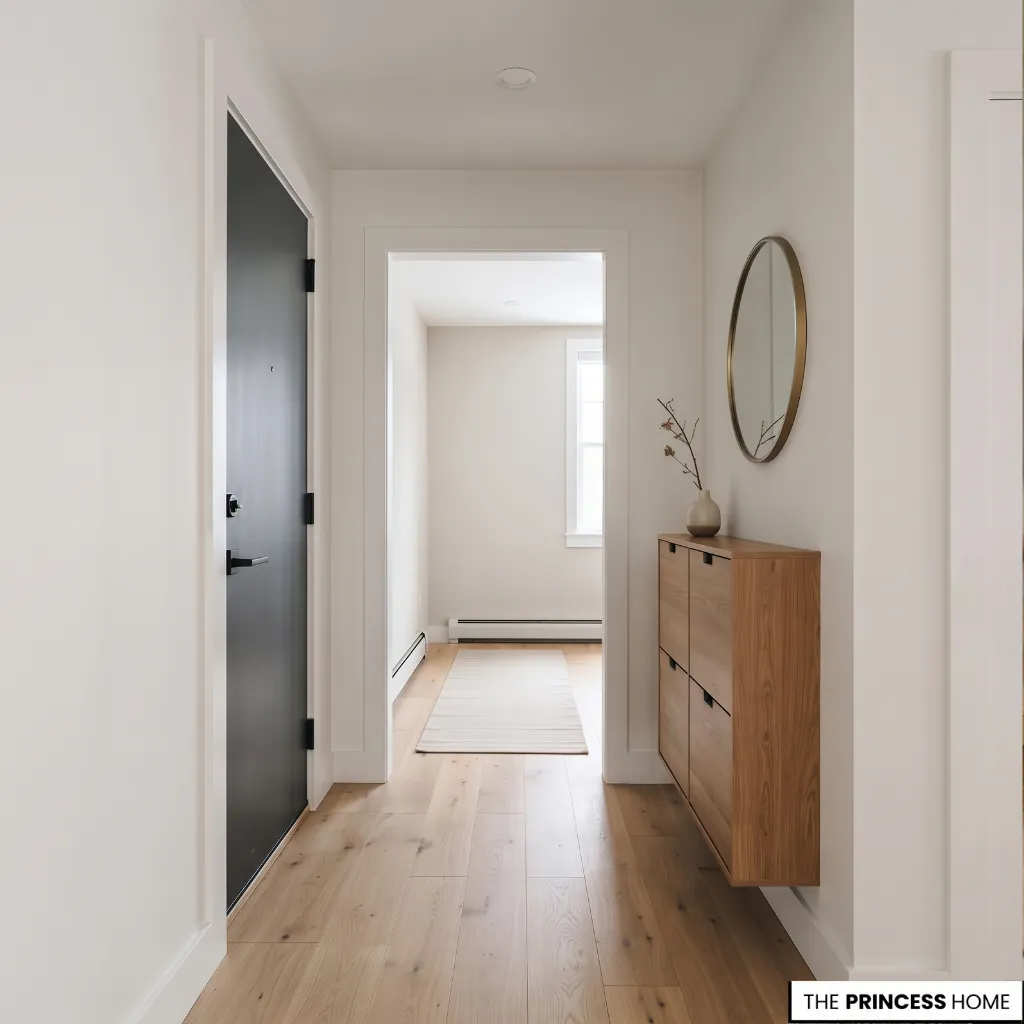
Before choosing entryway storage, identify what needs to be stored and how much room is available. Measure the usable wall space, hallway width, and potential furniture depth. Check door swings, nearby openings, and walking routes so cabinets, benches, and drawers do not interfere with movement.
Consider the household’s daily routine. A family with several pairs of frequently worn shoes, coats, and school bags needs a different arrangement from a household that uses the entrance mainly for keys and a handbag.
Separate everyday belongings from seasonal items to determine how much accessible storage is necessary.
Existing closets, wall recesses, and unused vertical space may already provide part of the solution. Use these features before adding more furniture. The goal is to establish the storage capacity you genuinely need while preserving enough room to enter, leave, and move comfortably.
Choose Storage Types
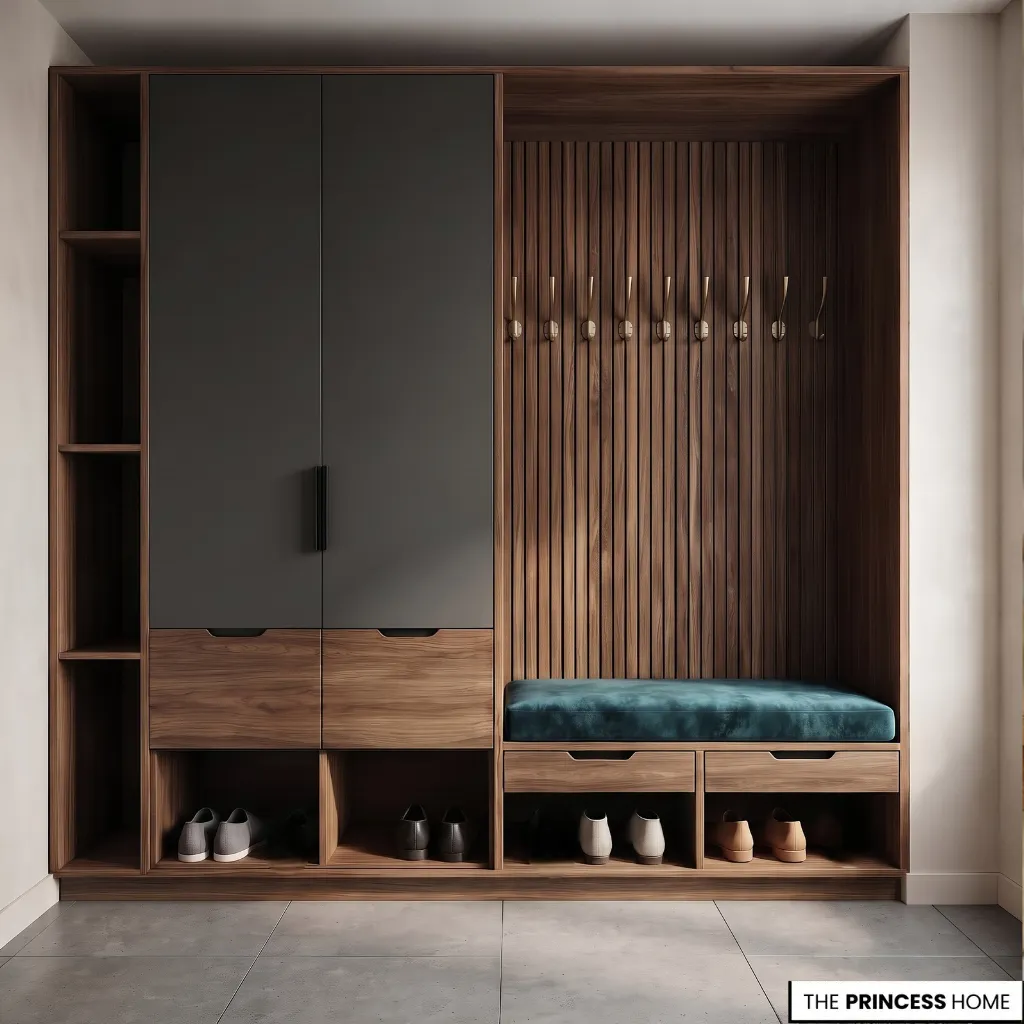
The main entryway storage options are built-in cabinetry, freestanding furniture, and wall-mounted organizers. Each offers different advantages depending on the layout, budget, and level of customization required.
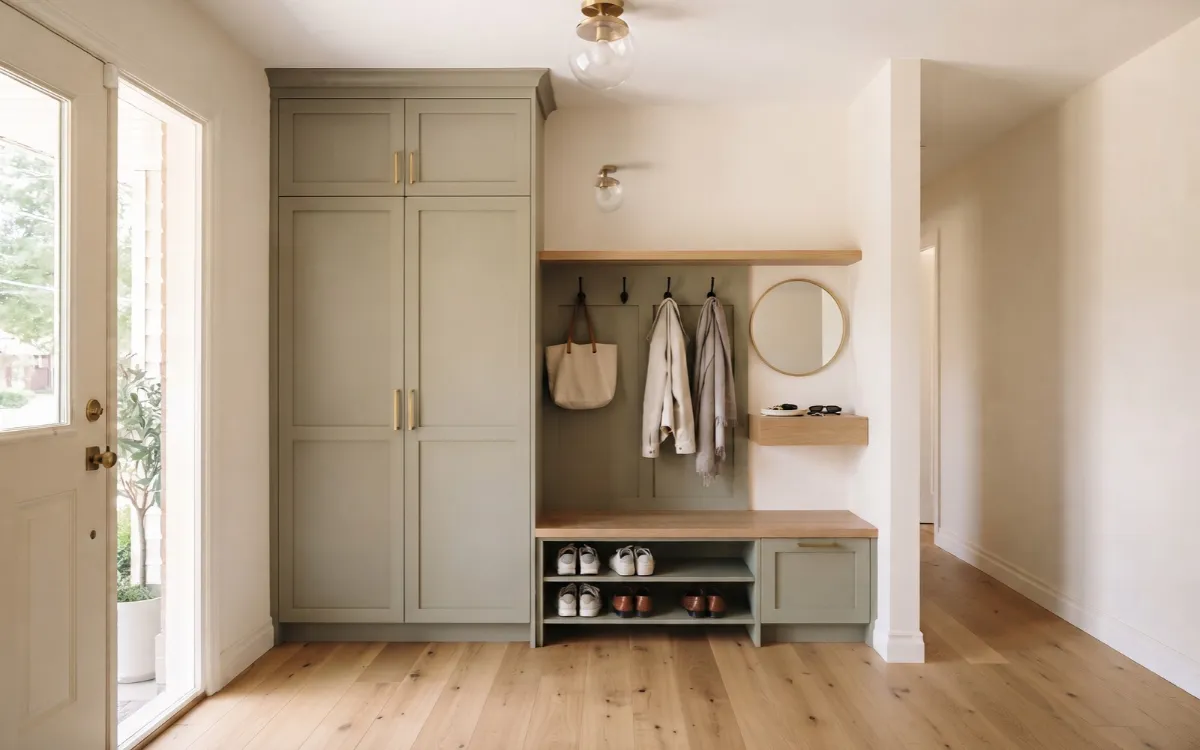
Built-in storage fits the available architecture and can combine shoe compartments, coat hanging, shelves, and drawers in one coordinated system. It is useful when a household needs substantial storage or wants to use an awkward recess efficiently.
However, installation generally requires more planning and expense, and the finished arrangement is less adaptable if needs change.
Freestanding storage includes shoe cabinets, benches, coat racks, and wardrobes. These pieces are generally easier to install, replace, or rearrange. Their main limitation is the floor space they occupy, so their dimensions and opening mechanisms matter in narrow entrances.
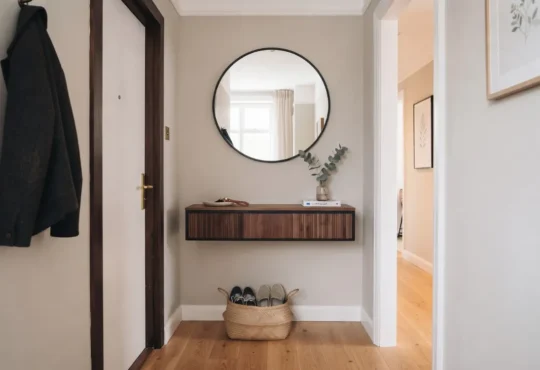
Wall-mounted storage includes hook rails, floating shelves, key holders, and wall-mounted cabinets. It can preserve valuable floor space, particularly in compact apartments, but requires suitable fixings and secure installation.
A combination often works best. For example, a shallow shoe cabinet, a row of coat hooks, and a small shelf for keys may provide more practical storage than one oversized unit. Choose each component according to the items it must hold and the space available.
Organize Shoes
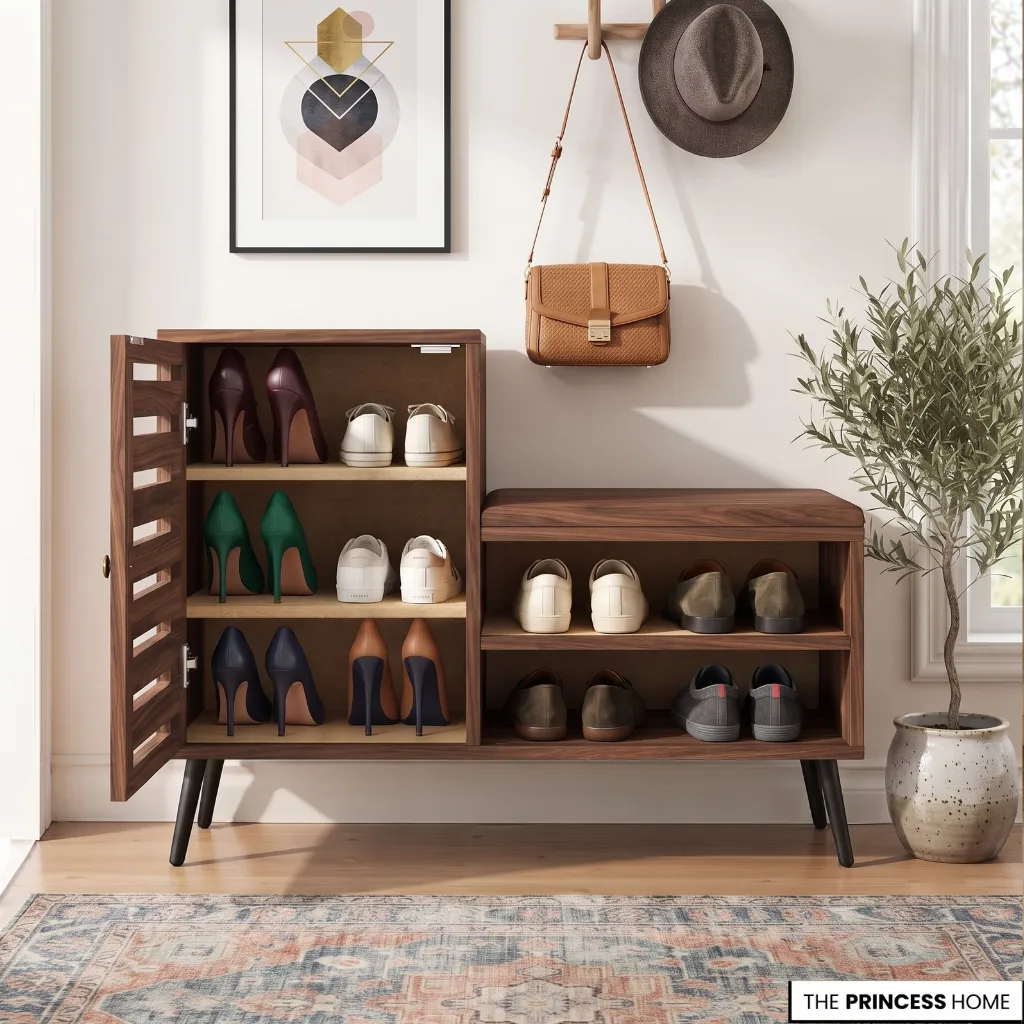
Shoes are often the largest source of everyday clutter near the front door. The right storage solution depends on how many pairs the household uses regularly, the types of footwear involved, and whether quick access or a concealed appearance matters most.
Open shoe racks work well for frequently worn shoes because pairs are easy to see and retrieve. They suit busy households, although visible footwear can make an entrance look untidy when the rack becomes overcrowded.
Choose a rack with enough space between shelves for the actual footwear, including trainers and bulkier shoes.
Closed shoe cabinets keep footwear out of sight and create a more contained appearance. Tilt-out cabinets are useful when floor depth is limited, provided their compartments accommodate the shoes being stored. Check the internal dimensions rather than relying only on the cabinet’s advertised capacity.
A storage bench can combine seating with shoe compartments, making it useful when household members need somewhere to sit while putting on footwear. In a narrow hallway, however, the bench should not reduce the space needed for comfortable movement.
For wet or muddy shoes, use a washable tray or another surface that can be cleaned easily. Allow footwear to dry appropriately before placing it in enclosed storage. Boots may require taller compartments, while seasonal shoes can be kept elsewhere to prevent everyday storage from becoming overloaded.
Store Coats & Bags
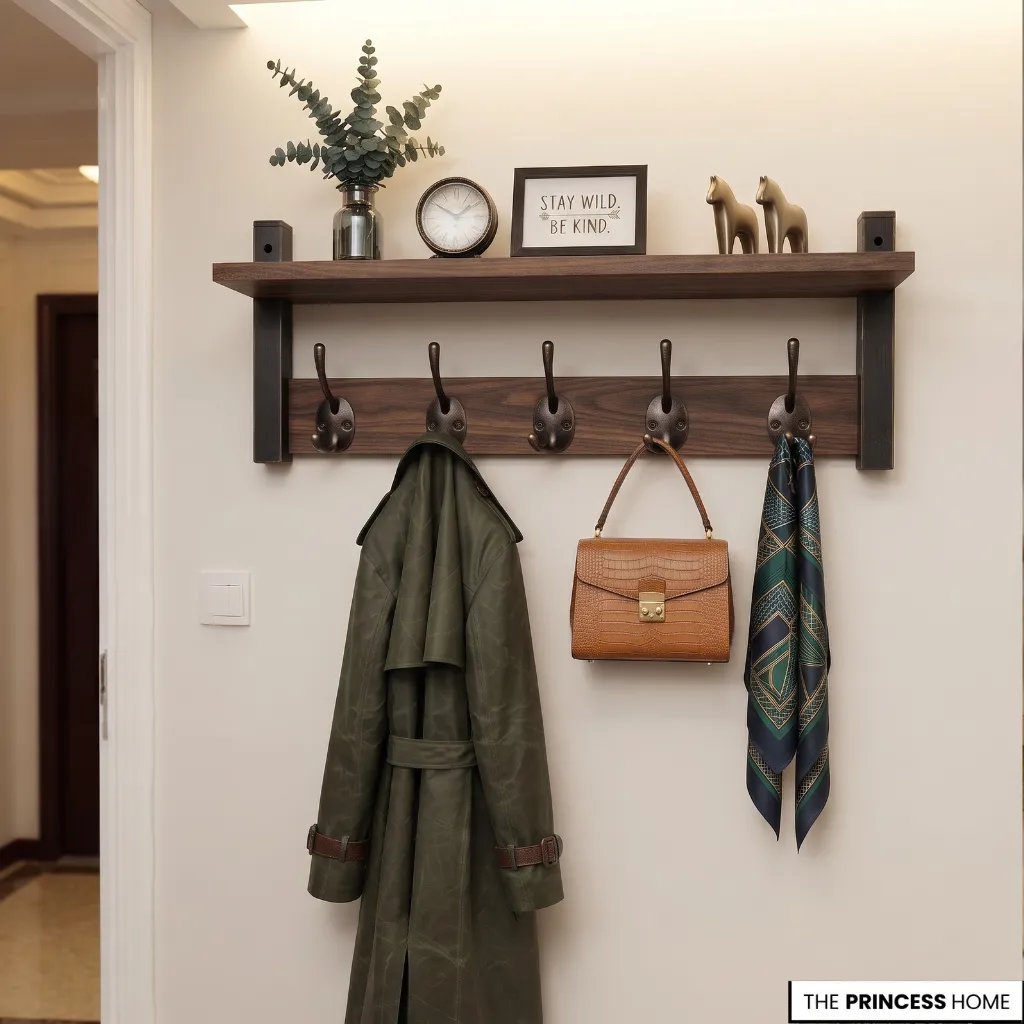
Coats, handbags, backpacks, and umbrellas need designated places near the entrance. Without them, these items tend to collect on chairs, door handles, or whichever surface is easiest to reach.
Wall-mounted hooks are a straightforward option for frequently worn coats and bags. Install them at practical heights for the people who will use them, leaving enough space between items to prevent garments from becoming crowded.
In family homes, a separate lower row can help children manage their own belongings. A freestanding coat rack offers flexibility when wall installation is unsuitable, but its base occupies floor space. In a narrow entryway, a wall-mounted rail may be more practical.
For households with substantial outerwear, a closed wardrobe or hall tree with concealed compartments can provide more capacity and reduce visible clutter.
Before choosing one, check the available depth, door clearance, and hanging space. Long coats need sufficient vertical room, while backpacks and bulky bags may require shelves or larger compartments.
Keep everyday items near the entrance and store seasonal outerwear elsewhere when it is not needed. This prevents the main storage area from becoming difficult to use during busy mornings.
Create Drop Zones
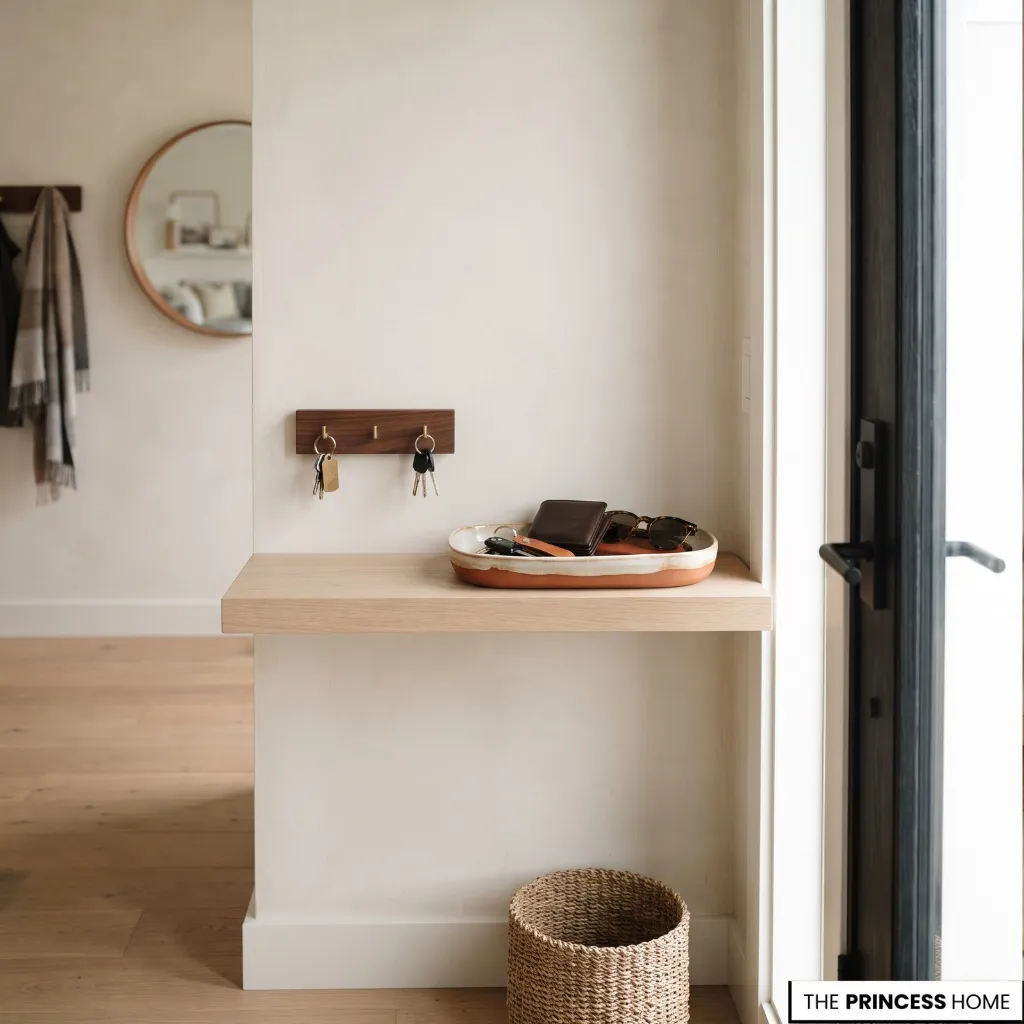
Keys, wallets, sunglasses, mail, and other small essentials need a consistent place near the door. A compact drop zone makes these items easier to find and reduces the tendency for small objects to spread across nearby surfaces.
A shallow shelf, small tray, or drawer can serve this purpose. Choose a location that is convenient when entering and leaving but does not obstruct the doorway or interfere with other storage. A wall-mounted key holder is particularly useful when there is little room for furniture.
Assign specific spaces to frequently used items. Keys might have a hook or small compartment, while sunglasses and wallets can share a tray. If outgoing mail or items that need to be taken somewhere regularly accumulate near the door, give them a separate container rather than mixing them with everyday essentials.
Keep the drop zone limited to things that genuinely belong there. A large surface may initially appear useful, but it can quickly become a collection point for unrelated objects. A small, clearly defined area is often easier to maintain.
Choose Open Or Closed
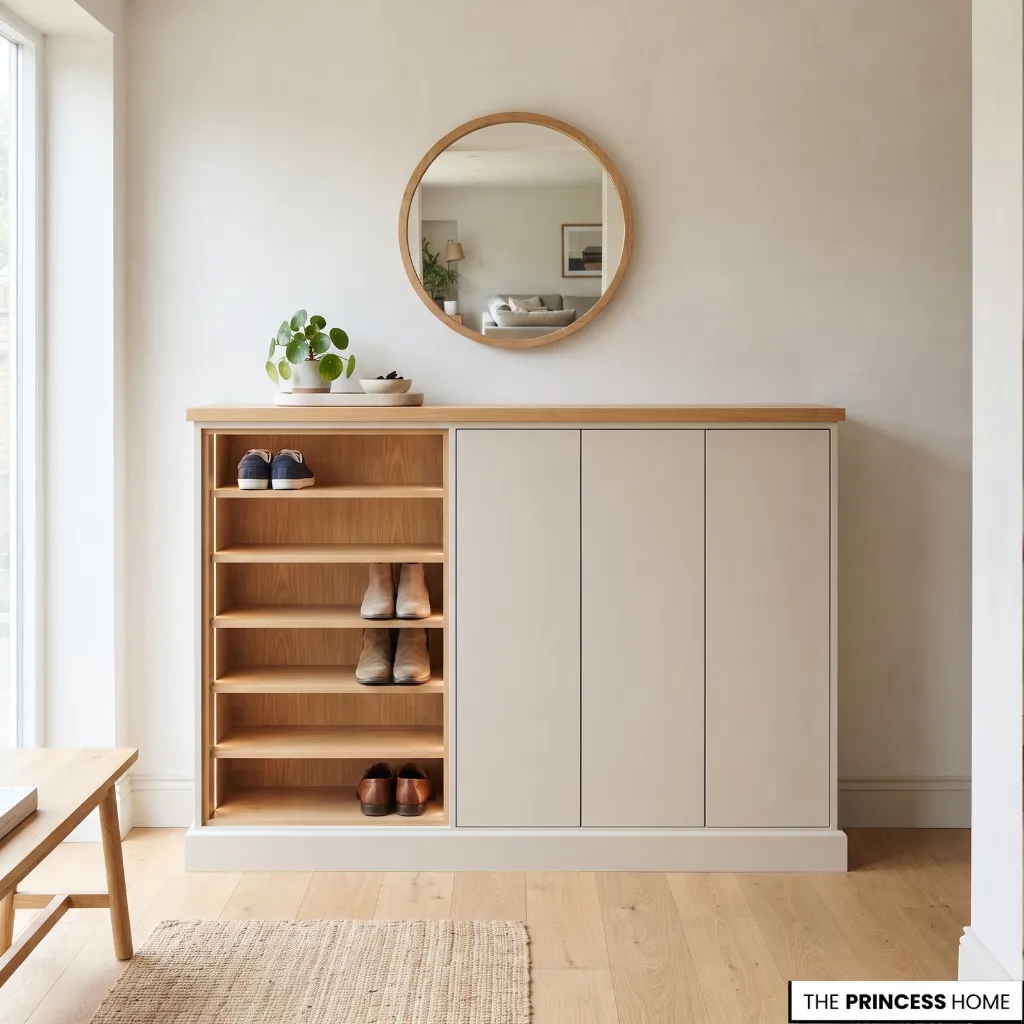
Open and closed storage serve different purposes, and the most useful entryways often combine both.
Open storage keeps frequently used belongings visible and accessible. Hooks, open shelves, and shoe racks reduce the effort needed to retrieve everyday items. They are particularly practical for households that move in and out frequently, but they require enough space between belongings to avoid a crowded appearance.
Closed storage conceals shoes, bags, accessories, and less frequently used items behind cabinet doors or inside drawers. It creates a more orderly visual arrangement, although items may become harder to find when compartments are poorly organized or inconvenient to open.
A mixed system provides a practical balance. Keep everyday coats and frequently worn shoes accessible, while placing seasonal footwear, spare accessories, and less-used belongings inside cabinets or drawers.
The decision should reflect how the household actually behaves. If a storage system requires several steps to put away a frequently used item, people may leave it outside instead. Convenient storage is more likely to remain organized over time.
Maximize Small Entries
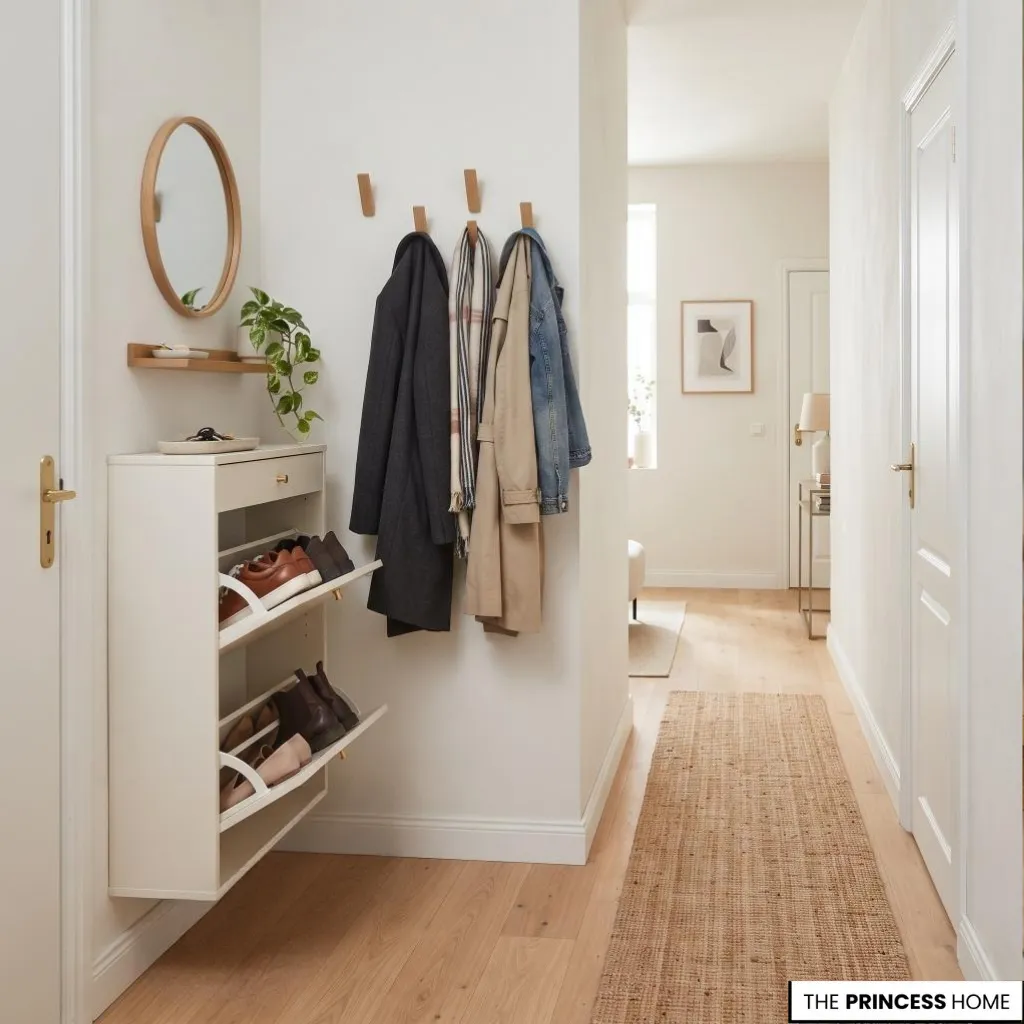
Small entryways benefit from storage that uses available wall space without making the entrance harder to navigate. The priority is to provide for essential belongings while avoiding furniture that consumes too much usable floor area.
Wall-mounted hooks can accommodate coats and bags without requiring a freestanding rack. A shallow shoe cabinet may hold everyday footwear where a deeper unit would obstruct the hallway. Measure the full projection of the furniture, including handles, and check the space required for doors and drawers to open.
Vertical storage can make use of otherwise unused wall height. Shelves above a hook rail or a narrow cabinet with several compartments may provide additional capacity without spreading furniture across the floor. Place frequently used items within easy reach and reserve higher shelves for occasional belongings.
Multifunctional furniture is useful when each function serves a genuine need. A compact bench with shoe storage, for example, may replace two separate pieces. However, a multifunctional unit is not automatically the best choice if its compartments are too small or its footprint is excessive.
If the entrance has almost no available floor space, prioritize wall-mounted essentials and store seasonal or rarely used belongings elsewhere. Reducing the number of items kept near the door can be more effective than trying to accommodate everything in a limited area.
Select Durable Materials
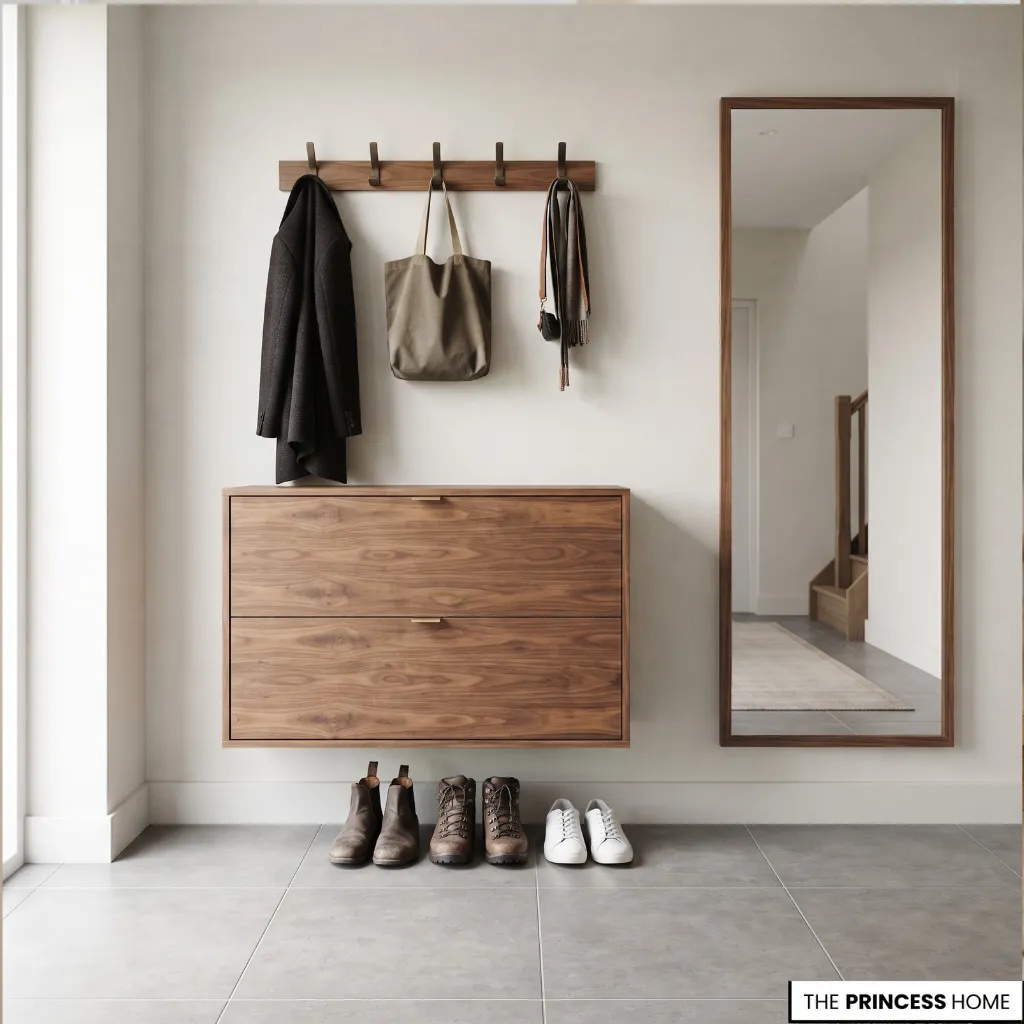
Entryway storage must withstand frequent handling, contact with footwear, and everyday dirt. Some areas may also experience moisture from wet shoes, coats, and umbrellas, so materials should suit the conditions in which they will be used.
Wood and wood-based panels are common choices for shoe cabinets, benches, and wardrobes. Their suitability depends on construction, edge treatment, finish, and exposure to moisture.
In areas where wet footwear is common, choose surfaces that can be wiped clean and protect vulnerable edges from repeated dampness.
Metal works well for coat hooks, shoe racks, and support frames. Check the construction, load rating, finish, and suitability for the intended environment rather than assuming every metal component will resist corrosion or wear equally well.
For upholstered benches, consider a fabric or cover that can be cleaned without excessive difficulty. Removable covers may help with maintenance, while a hard seating surface may be more practical in a high-traffic entrance.
Visual coordination matters, too. The storage finish should work with nearby flooring, doors, trim, and furniture. Matching every element is unnecessary; a small number of compatible materials can create a coherent result without making the entrance feel overly coordinated.
Integrate Storage Beautifully
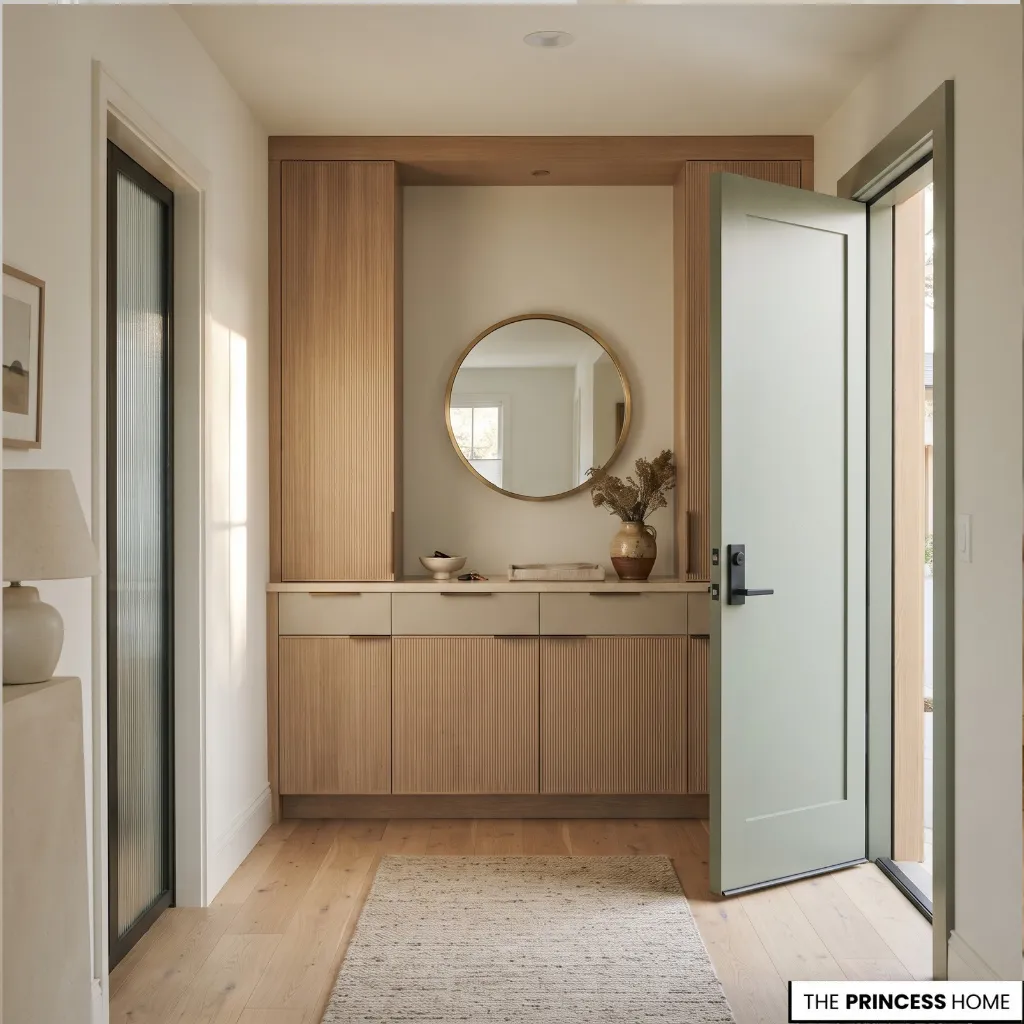
Practical storage can become part of the interior design when its proportions, finishes, and arrangement are considered alongside the existing room.
Begin with the largest storage element. A substantial cabinet may need a simple finish and restrained detailing to avoid overwhelming a compact entrance. In a larger foyer, a coordinated cabinet and bench can establish a more substantial arrangement without requiring every piece to match exactly.
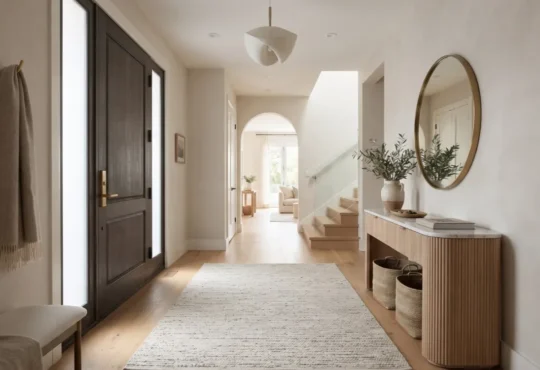
Repeat a limited number of finishes where appropriate. For example, a wood shoe cabinet can work alongside a simple metal hook rail if the materials complement the surrounding interior. Baskets and containers should fit the compartments they occupy rather than introducing unnecessary shapes or colors.
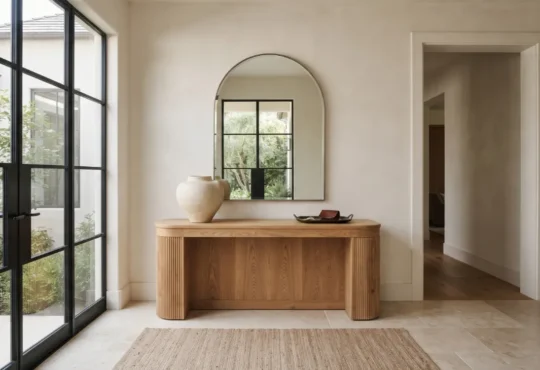
Keep frequently used surfaces relatively clear so the storage remains convenient. A shelf intended for keys and wallets should not become a permanent display area for unrelated decorative objects.
Similarly, visible coats and shoes should have enough room to be retrieved and returned without disturbing other belongings.
The most successful arrangement is one in which appearance follows practical decisions. Suitable proportions, consistent finishes, and a clear place for each category of belongings help storage feel intentional without sacrificing everyday usability.
Avoid Storage Mistakes
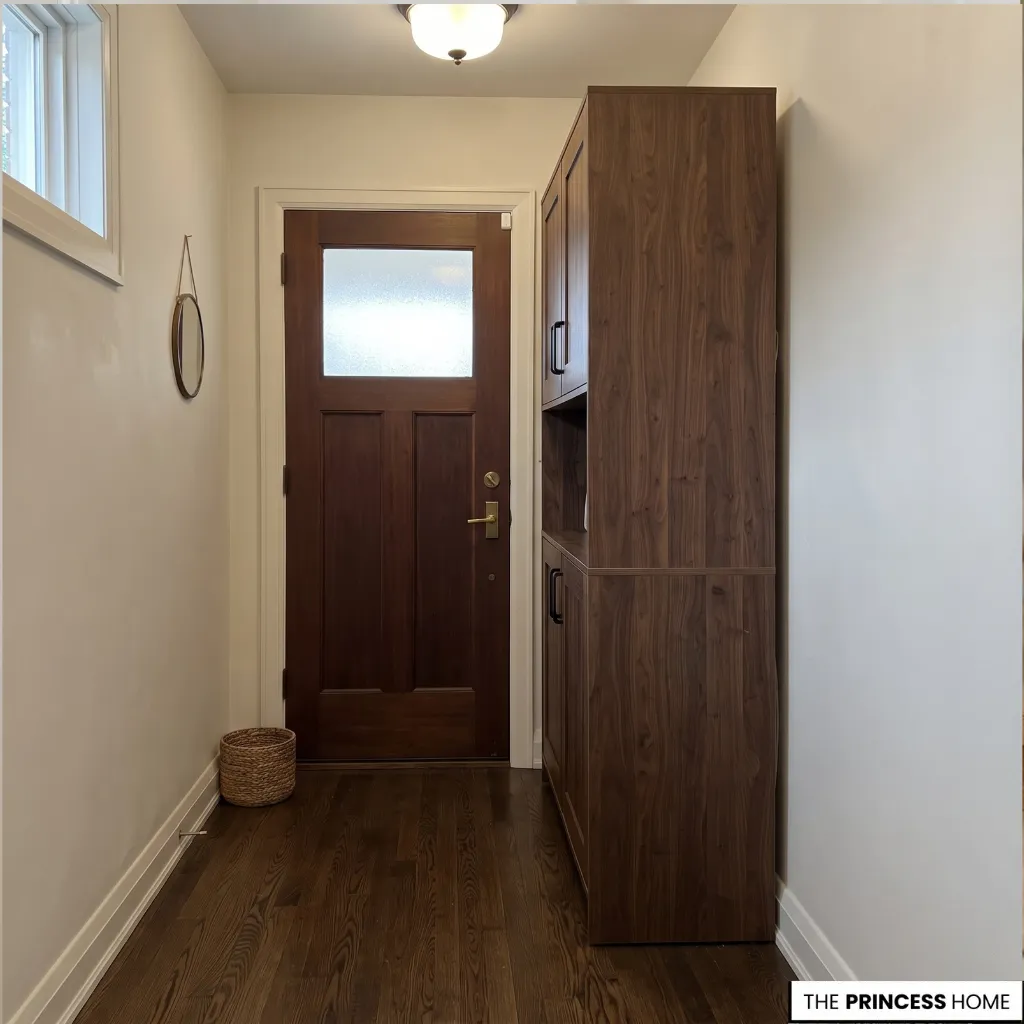
Several common mistakes can undermine an otherwise sensible entryway storage plan.
Buying before measuring. A cabinet may fit against a wall but still obstruct a doorway or leave insufficient room to pass. Measure the usable space and account for doors, drawers, handles, and the way people move through the entrance.
Choosing the wrong capacity. A small rack may overflow within days, while an oversized wardrobe can dominate the room. Estimate the actual number and types of belongings to be stored, allowing for the footwear and outerwear used regularly.
Relying entirely on open storage. Open racks and hooks provide quick access, but they expose every item. If the entrance looks crowded, move seasonal belongings elsewhere or use closed compartments for items that do not need to remain visible.
Hiding everything without considering access. Closed cabinets can reduce visual clutter, but awkward doors, cramped compartments, or inconvenient placement may discourage consistent use. Keep daily essentials easy to reach.
Ignoring moisture and maintenance. Wet shoes placed directly inside a cabinet can create cleaning and drying problems. Use appropriate trays and finishes, and allow damp footwear to dry before storing it in enclosed compartments.
Installing storage insecurely. Wall-mounted shelves, hooks, and cabinets must be fixed to suitable supports and used within their intended load limits. Choose appropriate hardware for the wall construction and the weight the storage will carry.
Adding too many separate pieces. Multiple racks, baskets, and cabinets can consume space without improving organization. Begin with the main storage needs and add components only when they solve a distinct problem.
A useful storage system should make daily routines easier, not introduce extra obstacles or maintenance.
Conclusion
Effective entryway storage starts with understanding what needs to be stored, how much space is available, and which belongings must remain accessible. Choose built-in, freestanding, or wall-mounted solutions according to those requirements, then assign practical places for shoes, coats, bags, and small essentials.
The best system accommodates everyday routines without overcrowding the entrance. When each component serves a clear purpose, storage becomes easier to maintain and the entryway remains comfortable, organized, and visually composed.