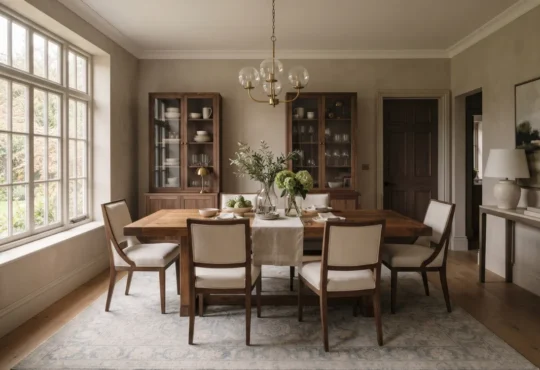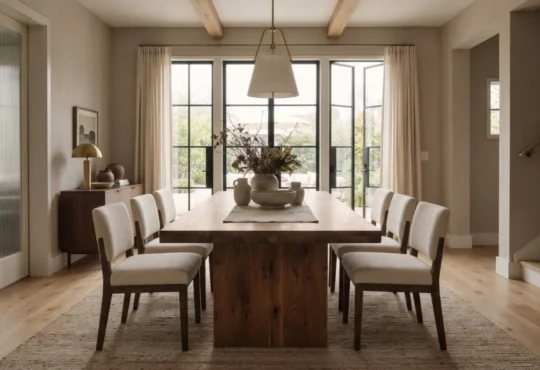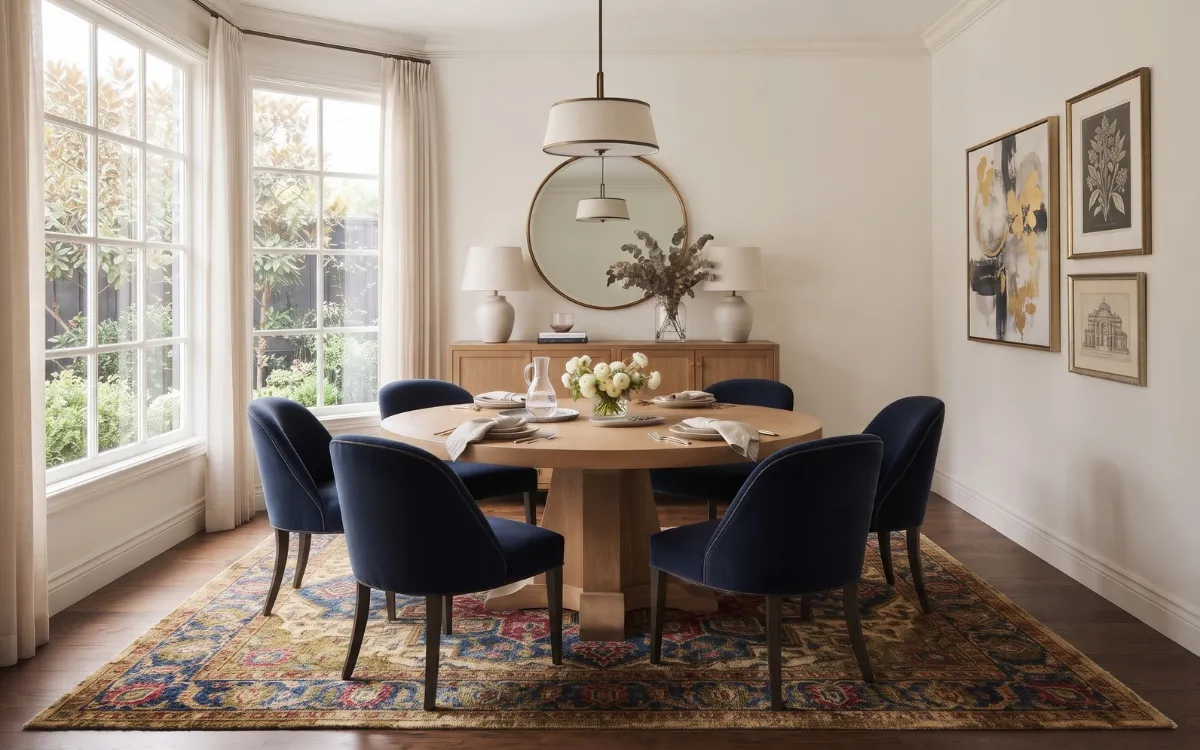
Dining room chair ideas should begin with comfort, fit, and the proportions of the room. The right chairs work with the dining table, allow people to sit and move comfortably, and complement the surrounding furniture and finishes.
By understanding chair styles, materials, dimensions, and color relationships, you can create a dining area that looks considered and works well for everyday meals and longer gatherings.
Assess Your Space
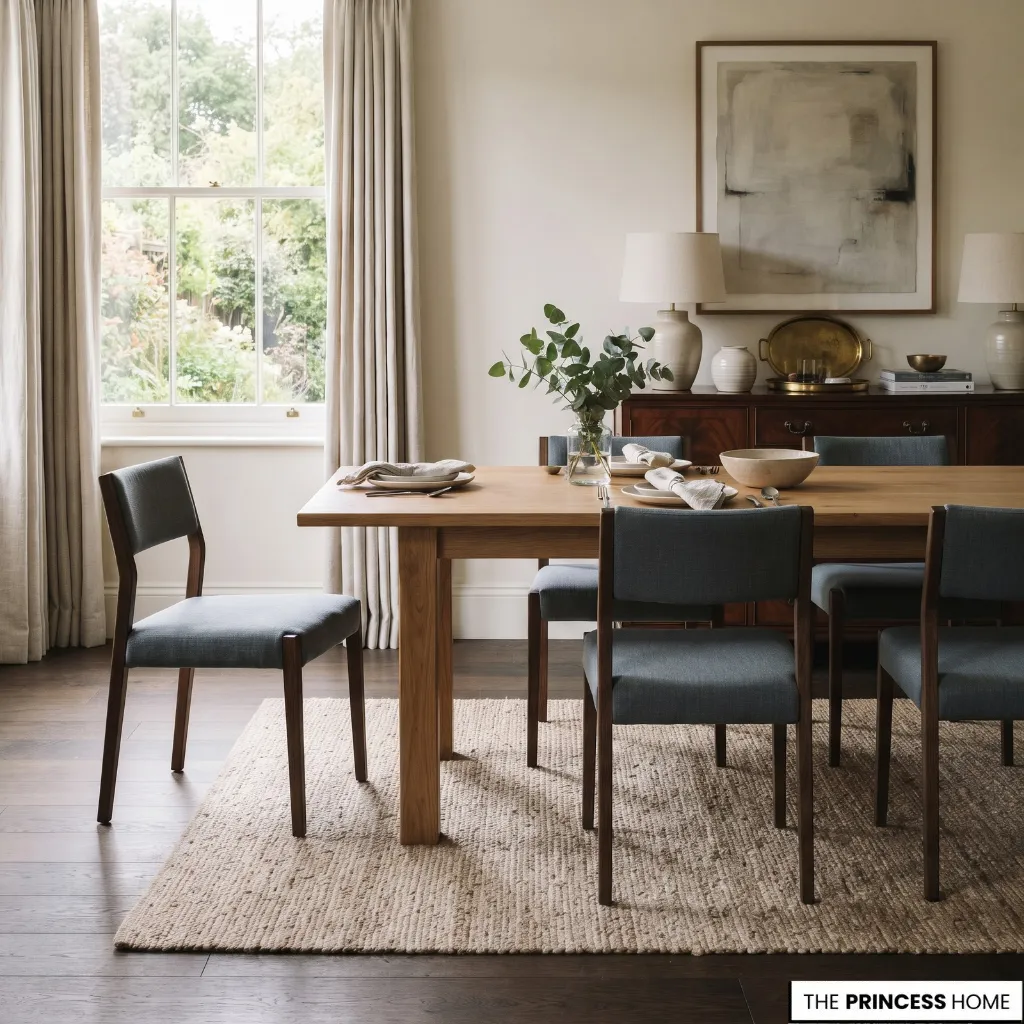
Before choosing dining chairs, assess your table, available floor space, and everyday seating needs. The table’s height, shape, leg positions, and underside construction determine which chairs will fit comfortably.
A chair that looks suitable in isolation may not slide beneath the table or may leave too little room for people to move around it.
Measure the tabletop height and the clearance beneath it, including any apron or supporting structure. Measure the chair’s seat height, overall width, depth, and arm height if applicable. Check how much space remains when the chair is pulled out, not just when it is tucked beneath the table.
For each seating position, consider the width available between neighboring chairs and the table legs. This helps you avoid choosing chairs that technically fit but leave diners with too little elbow room.
Consider how the dining area is used. A household that gathers for long meals may benefit from supportive backs and padded seats, while a compact breakfast area may require slimmer, easier-to-move chairs.
If you regularly accommodate additional guests, consider how occasional seating can be added without overcrowding the room.
For a practical starting point, mark the proposed chair positions on the floor with masking tape. This helps you assess the space occupied by each chair and the paths people need to use.
You can also mark the area needed to pull each chair out and sit down, paying particular attention to nearby walls, cabinets, and walkways. The goal is to identify suitable dimensions before narrowing the choices by style.
Choose Chair Styles
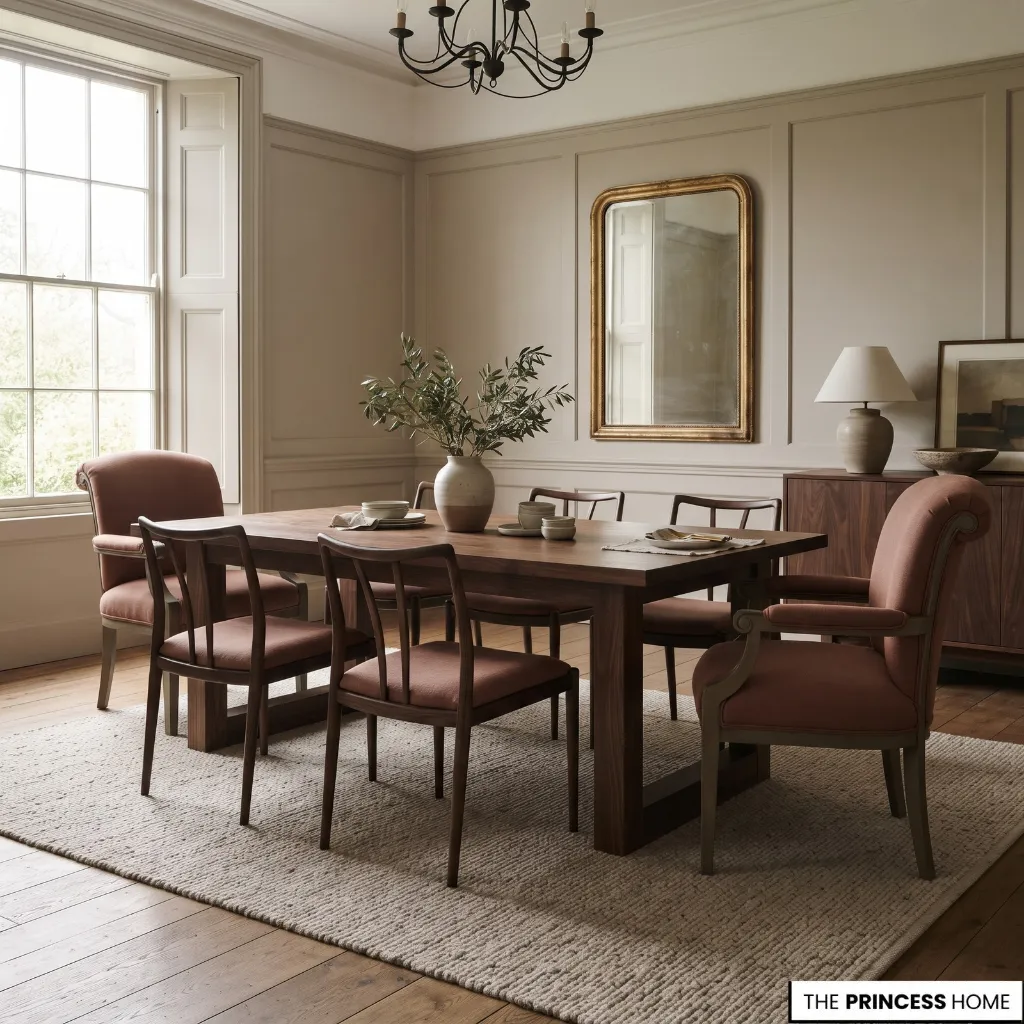
Dining chairs come in several forms, each with a different combination of comfort, visual weight, and space requirements. The best option depends on the table, the room, and how the chairs will be used.
Armless side chairs are versatile and often easier to arrange around a table because they occupy less width. They work well in compact dining rooms, with rectangular tables, and in arrangements where several chairs must fit along one side.
Armchairs provide a more substantial seat and can make the ends of a dining table feel distinct. They are useful when the room has enough space, but their arms must clear the tabletop and apron. An armchair that cannot slide beneath the table may obstruct circulation when not in use.
Upholstered chairs introduce cushioning and can soften the appearance of a solid timber or stone table. Wooden chairs with exposed frames offer a more defined silhouette and are available in styles ranging from traditional ladder-backs to simple contemporary designs.
Curved backs can soften a rectangular table, while straight lines often complement furniture with a more architectural form.
High-back chairs create a stronger vertical presence, whereas lower or open backs can help preserve a sense of openness. Neither is automatically more suitable: the decision depends on the chair’s support, the table’s proportions, and the amount of visual weight the room can accommodate.
Before choosing a high-back design, consider what it will look like from adjoining rooms and whether it will interrupt a window view or compete with a prominent light fixture.
Check Comfort First
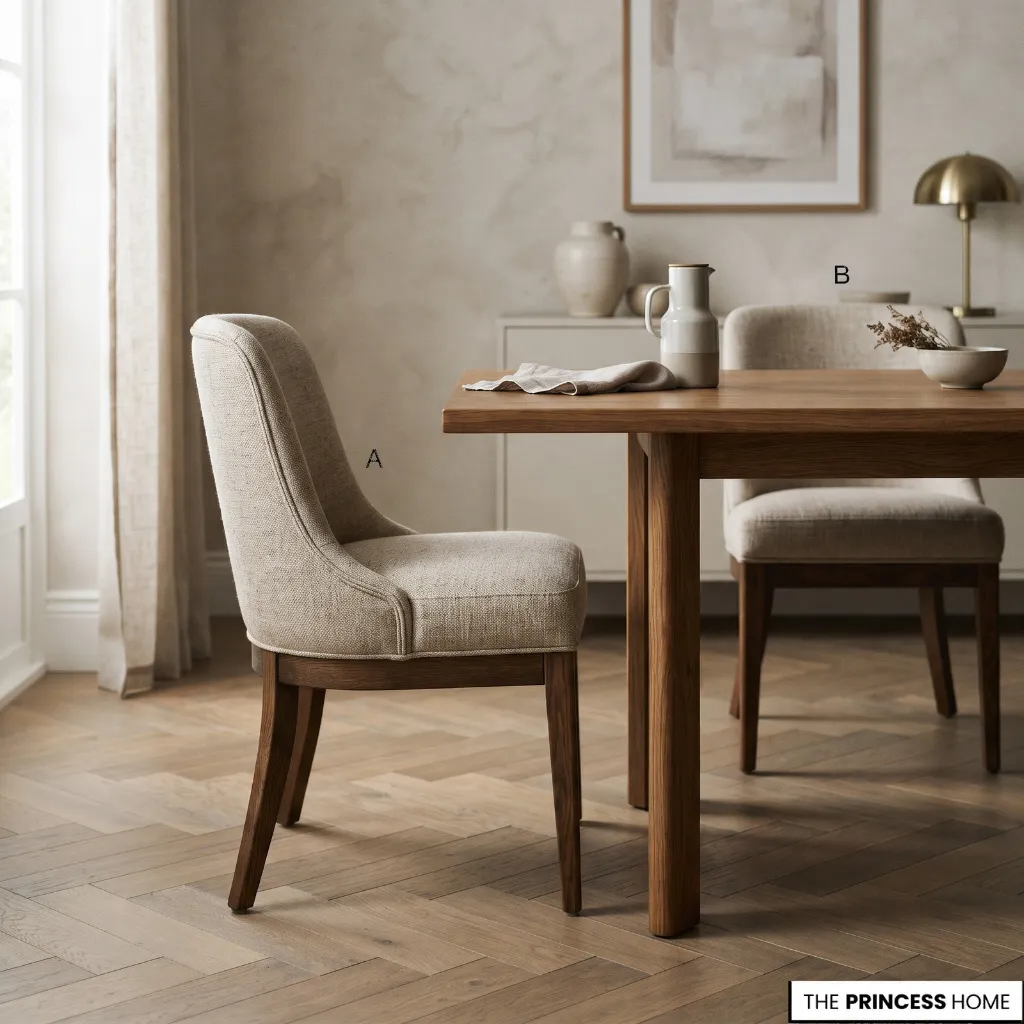
A dining chair should support a comfortable sitting position while allowing the user to approach the table naturally. Seat height is an important starting point, but seat depth, back support, cushion firmness, and armrest position also affect comfort.
Many standard dining chairs have a seat height of approximately 43–48 cm. A gap of roughly 25–30 cm between the seat and the underside of the table can serve as an initial guide, but the appropriate fit varies with the user’s body, the table construction, and the chair design.
Treat these measurements as a starting point rather than a guarantee of comfort, especially when comparing chairs with thick cushions that may compress under body weight.
Check the clearance beneath the table rather than relying only on its advertised height. A deep apron or low crossbar may interfere with a chair even when the seat height appears correct.
If the chair has arms, measure them against the underside of the table and confirm that the chair can be moved into its intended position.
Seat depth matters as well. A seat that is too deep may prevent shorter users from reaching the backrest comfortably, while a seat that is too shallow may offer insufficient thigh support. The backrest should feel supportive rather than forcing the sitter into an awkward position.
When testing a chair, sit with your back against the backrest and your feet supported. Check that the front edge of the seat does not press sharply against the back of your knees and that you can sit upright without straining.
Whenever possible, sit in the chair before purchasing it. Test the position with your feet supported, check that the seat edge does not press uncomfortably against your legs, and assess whether the backrest suits the length of time you usually spend at the table.
For online purchases, review the dimensions carefully and check the return policy. If several people of different heights will use the chairs, consider their needs rather than judging comfort only from the perspective of the person making the purchase.
Balance Chair Proportions
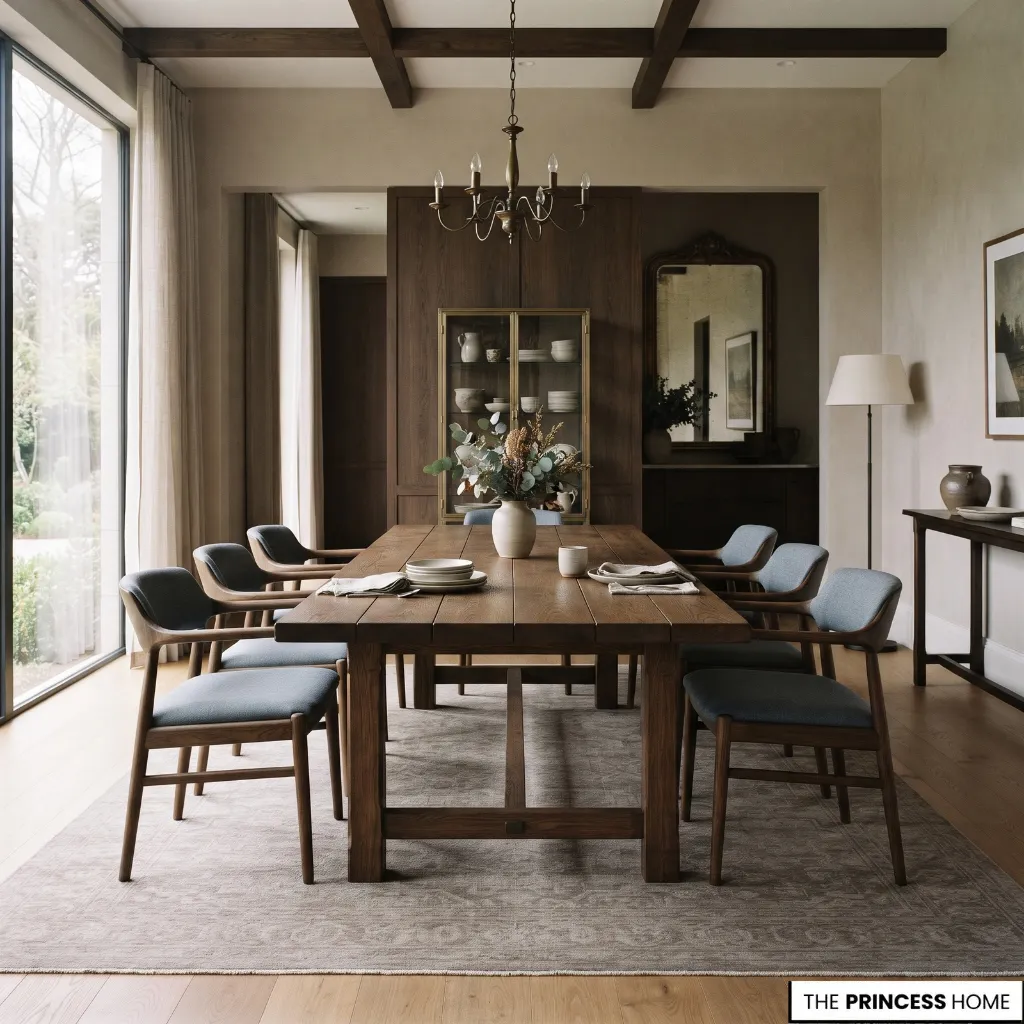
The visual relationship between the chairs and the dining table affects how cohesive the dining area appears. Consider the height and width of the chair backs, the thickness of the legs, the amount of upholstery, and the table’s overall scale.
A substantial wooden table can accommodate chairs with solid frames or generous upholstery, provided the combination does not overwhelm the room.
Alternatively, slender chairs can create contrast by reducing the visual weight around a heavy table. Both approaches can work; the important consideration is whether the pieces feel balanced together.
In a small dining room, several wide chairs with tall, padded backs may make the arrangement appear crowded. Chairs with open backs, narrower frames, or less bulky seats can preserve visual openness without sacrificing the number of seats the room needs.
Consider the table’s shape, too. A round table often benefits from chairs that can be arranged comfortably around its perimeter without their backs colliding. A rectangular table may accommodate more angular chair designs, although rounded backs can soften its straight lines.
Check the spacing around the entire table, since a chair that fits comfortably at one position may conflict with a table leg or another chair elsewhere.
Do not judge proportions from a single chair alone. Look at the complete arrangement. Six substantial chairs can create a very different effect from one substantial chair surrounded by five lighter ones. The combined silhouette, along with the available space between chairs, determines the final balance.
Match Table and Chairs
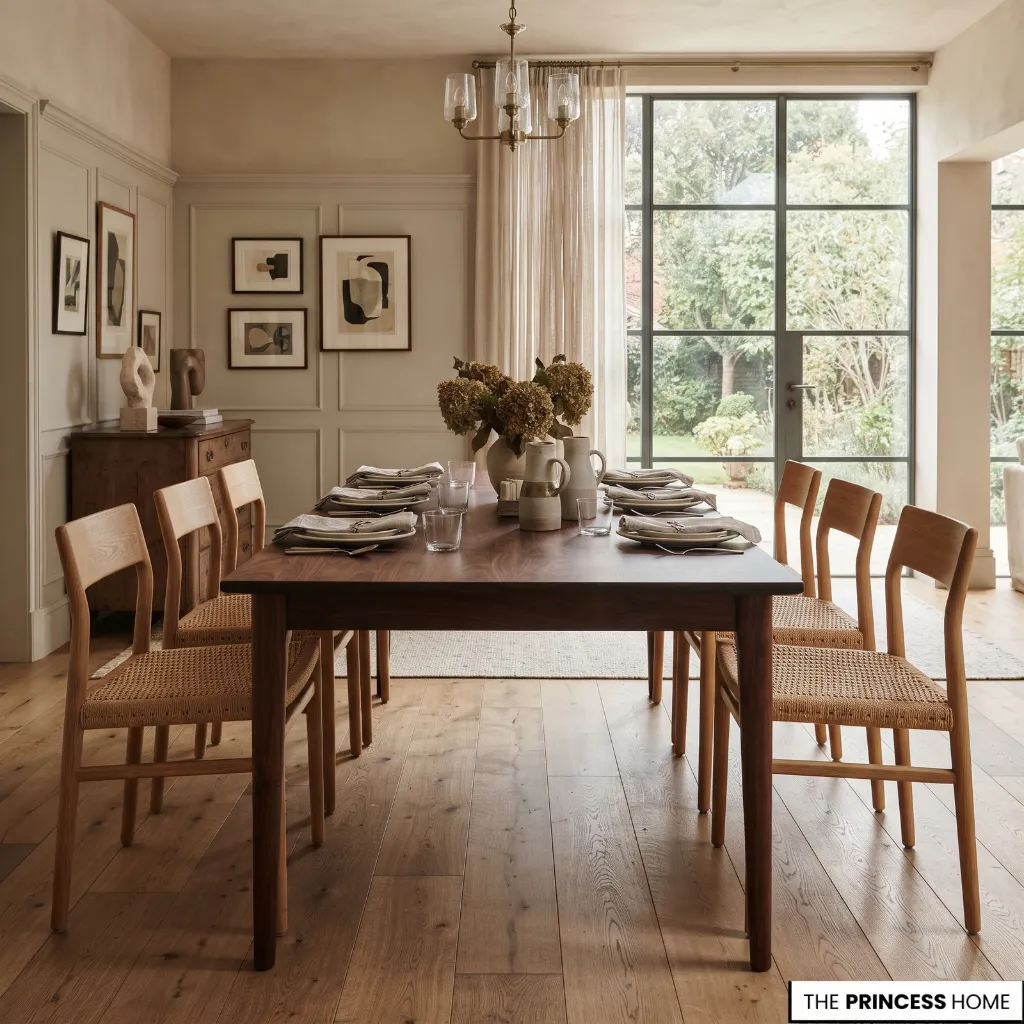
Dining chairs do not have to come from the same furniture set as the table. A combination of different materials, finishes, or styles can look coherent when the pieces share a clear visual relationship.
A dark wooden table paired with lighter timber chairs creates contrast while keeping the arrangement connected through natural materials. A simple table can also work with upholstered chairs that introduce a softer texture.
Conversely, a traditional wooden table may suit restrained contemporary chairs if their scale and finishes complement the table rather than compete with it.
When combining different wood tones, compare their undertones and finishes. Two woods do not need to match exactly, but the relationship should appear intentional. A warm oak table, for example, may work with darker walnut chairs if other elements help connect the colors.
Check the table’s base and leg arrangement before choosing a chair. Pedestal tables may provide different seating possibilities from tables with legs at the corners. Even when the chair fits beneath the tabletop, its legs may collide with the table base or restrict where people can sit.
A useful approach is to establish one shared feature, such as a related finish, similar shape, or consistent color family, and allow the remaining elements to differ. This provides coordination without requiring a perfectly matched set.
You can also use the table as the starting point for your decision: keep its shape and finish in mind when comparing chairs, then check how the proposed combination relates to existing flooring, lighting, and storage furniture.
Select Chair Materials
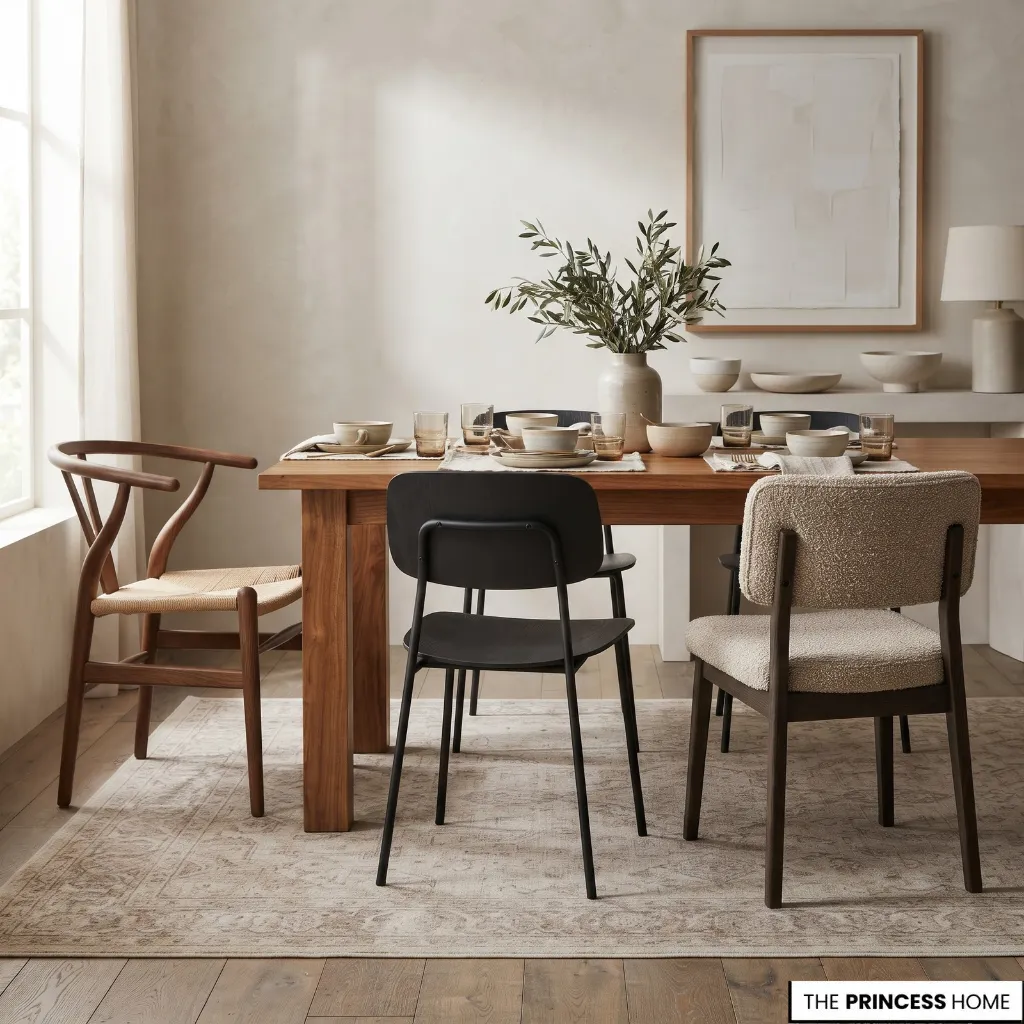
The material of a dining chair affects its appearance, maintenance, durability, and everyday comfort. Choose according to how the dining area is used rather than appearance alone.
Wooden chairs suit a wide range of interiors, from traditional dining rooms to simple contemporary spaces. Their appearance varies with the wood species, finish, frame shape, and construction. Before purchasing, check the stability of the joints, the quality of the finish, and whether the chair is designed for regular use.
Metal chairs can provide a slim frame and a more industrial or contemporary appearance. Their suitability depends on the construction, seat design, and finish. A metal chair with a shaped or upholstered seat may feel different from one with a hard, flat surface, so assess the complete chair rather than the frame alone.
Upholstered dining chairs provide cushioning and introduce fabric texture or color. They may be especially suitable for households that spend extended periods at the table.
However, fabric choice matters: consider the manufacturer’s cleaning instructions, the likelihood of spills, and the amount of wear the chairs will receive. In a busy dining area, removable or cleanable covers may be useful if the design offers them.
Check the fabric’s care label and any stain-treatment limitations before assuming that upholstery will be easy to maintain.
Leather and suitable leather alternatives offer a different surface and may be easier to wipe clean, depending on the material and finish. They can also develop wear differently from woven fabrics, so check care requirements rather than assuming all such surfaces behave alike.
Woven seats and other textured materials can add visual interest, but their suitability depends on construction, comfort, and how easily the surface can be maintained.
For a practical compromise, consider chairs with durable frames and replaceable or upholstered seat pads where appropriate. This can provide cushioning without requiring a fully upholstered chair. Regardless of material, construction quality and proper care influence how well a chair performs over time.
Choose Color and Finish
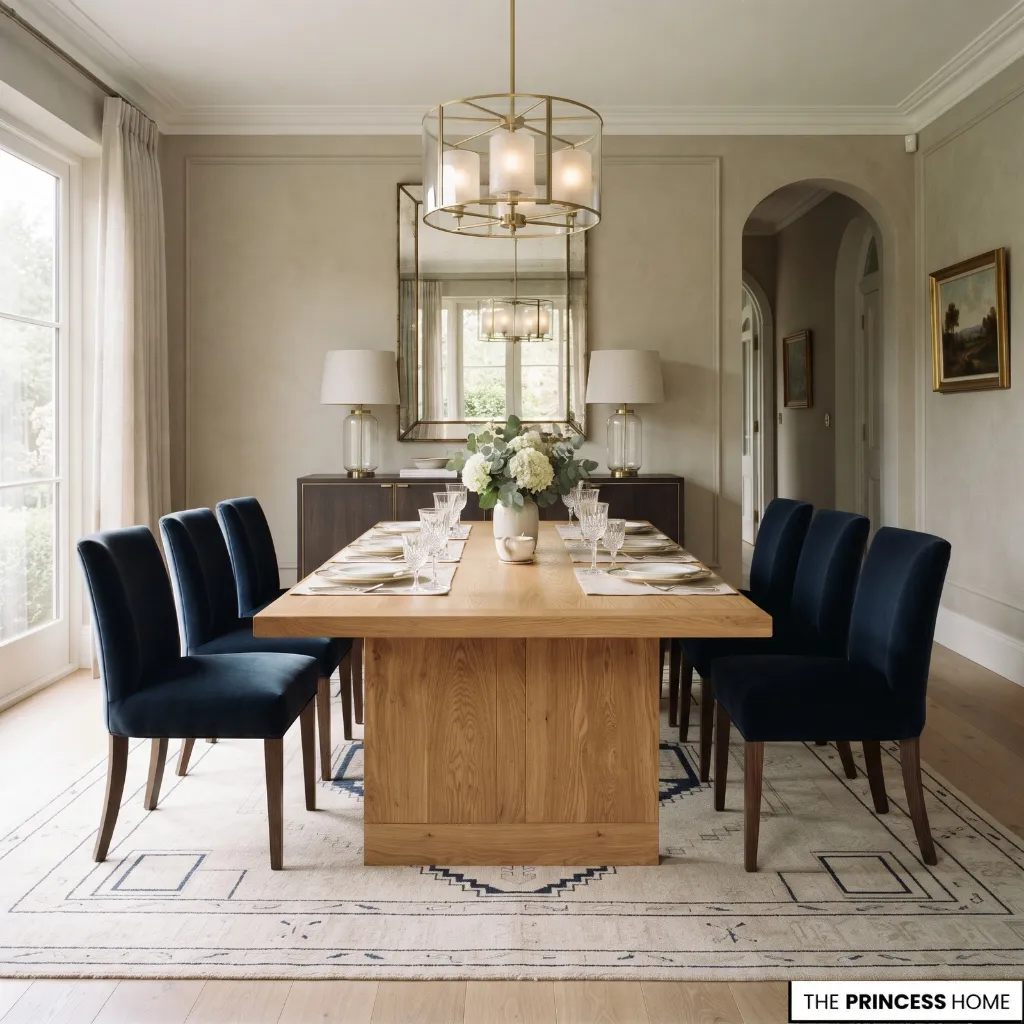
Dining chair color can connect the table to the rest of the room or provide a deliberate point of contrast. Start by considering the table finish, flooring, wall color, curtains, and nearby furniture.
Chairs in a related wood tone can create a coordinated arrangement, while a contrasting finish can distinguish the seating from the table. For example, dark blue chairs can stand out against warm timber, while muted terracotta upholstery can introduce color alongside natural wood and neutral walls.
A neutral palette is one option, not a requirement. Deep green, blue, rust, burgundy, and other considered colors can work well when they relate to the surrounding finishes and the room’s natural light.
If the chairs have different finishes, look for a connection that makes the combination feel intentional. This might be a shared undertone, a similar frame shape, or a color repeated elsewhere in the room.
Layering related shades across the walls, trim, and furniture can also create continuity while allowing different materials to retain their own character.
Texture is useful when colors are similar. A smooth wooden frame, woven seat, and softly textured upholstery can provide variety without introducing many competing colors.
Before committing to a finish, view samples in the actual room if possible. Daylight and artificial lighting can change how colors appear, and a finish that looks balanced in a showroom may appear warmer, cooler, lighter, or darker at home.
Compare samples beside the dining table and flooring, and view them at different times of day if the room receives changing natural light.
Mix Dining Chairs
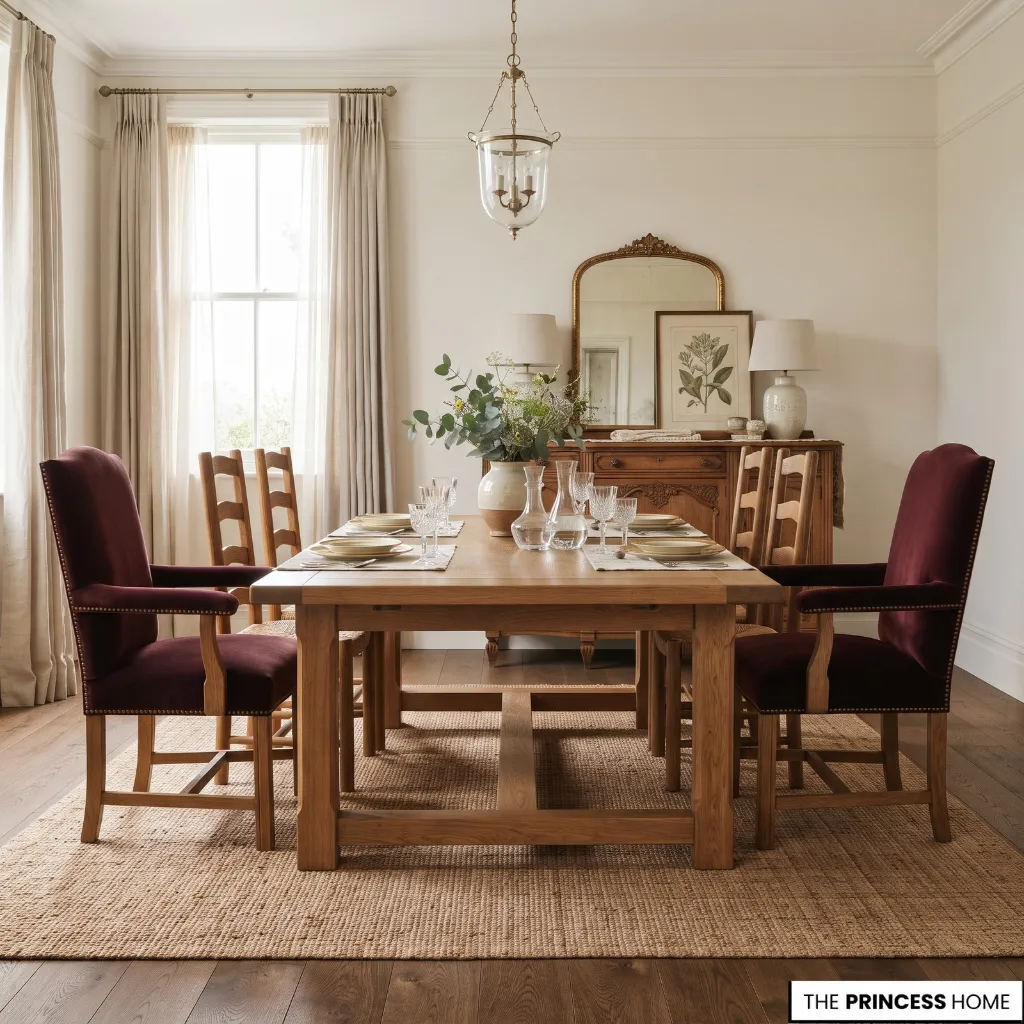
Mixing dining chairs can make a room feel more individual, especially when the table is already established or the owner wants to combine existing furniture with new pieces. The key is to introduce variation while maintaining a few consistent relationships.
One straightforward approach is to use the same side chairs around the table and place different armchairs at the ends. The end chairs become a distinct feature, while the repeated side chairs maintain order. This arrangement is particularly useful when the table has enough room for armchairs at its shorter ends.
Another option is to combine chairs with different shapes but related finishes. For example, wooden chairs with different backrest designs may work together when their heights, timber tones, and overall proportions are compatible.
Upholstered chairs can also be mixed with wooden ones. A shared seat color or related frame finish can connect the designs, while the difference in texture adds variety. Vintage and contemporary chairs can work together as well, provided they fit the table and have a deliberate visual relationship.
Start with the practical requirements: seat heights should work with the table, chairs must fit their assigned positions, and the arrangement must allow people to sit and move comfortably. Then decide which features will remain consistent and which will differ.
Avoid introducing too many unrelated elements at once. When chair shapes, colors, materials, and heights all vary significantly, the arrangement may lack a clear point of connection. A limited number of deliberate differences usually makes mixing easier to control.
If you are combining existing chairs with new purchases, place the options together around the table before committing. Seeing the full arrangement helps reveal whether the differences feel balanced or whether one chair appears out of place.
Adapt Small Spaces
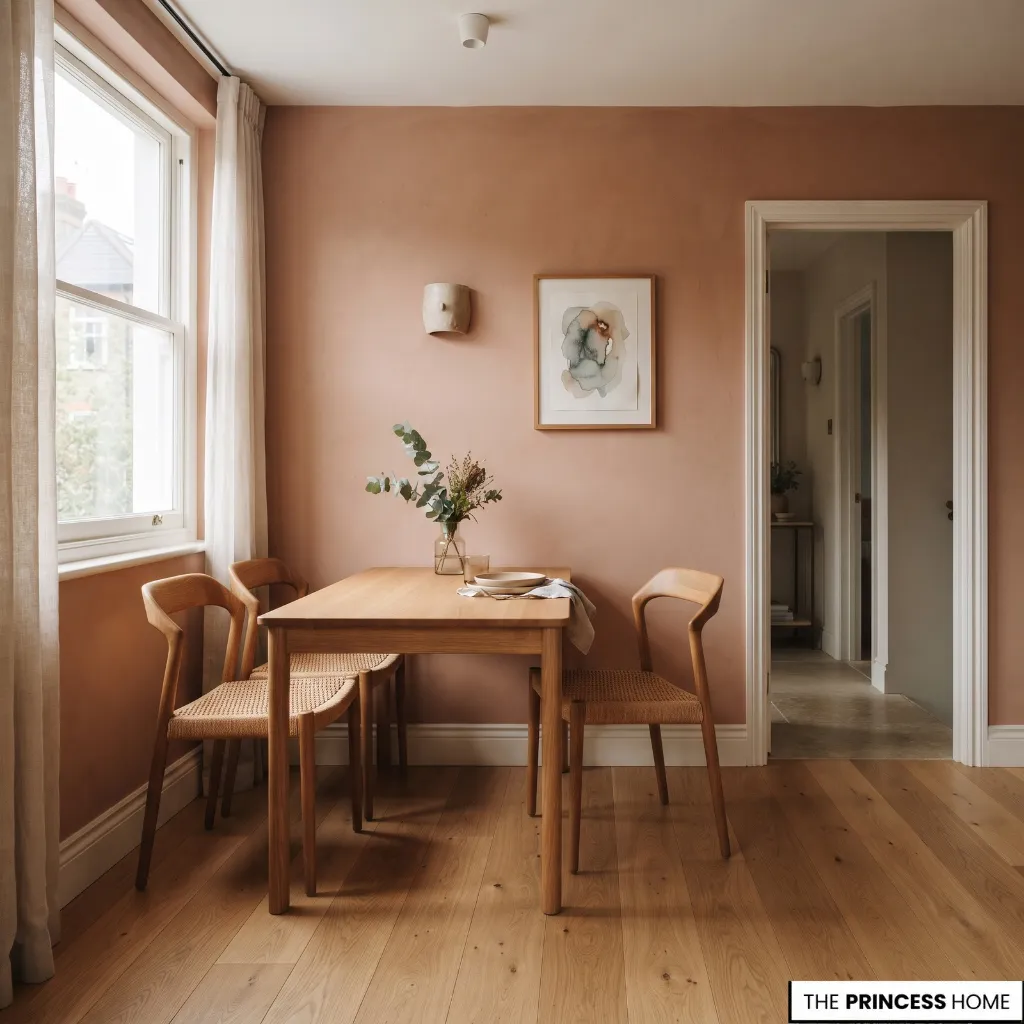
In a compact dining room, the most useful chair is one that fits the available space without making everyday seating difficult. Focus on the chair’s actual footprint, including the room needed to pull it out and sit down.
Armless chairs are often practical because they can fit into narrower positions and are less likely to collide with the table apron. Slim frames and open backs may also reduce visual bulk, particularly when several chairs surround a small table.
Check whether the chairs can slide beneath the table when not in use. This can free up floor space, but only if the seat and backrest clear the table structure. Measure the chair’s depth and consider how far it projects into the room when occupied.
If armchairs are important to the design, use them selectively rather than automatically placing them at every position. A pair of armchairs at the ends may work when the layout allows sufficient clearance, with simpler chairs along the sides.
A bench can be another option along one side of a suitable table, particularly where chairs would obstruct a walkway. However, consider access, comfort, and how easily people can get in and out. A bench is not always a more practical solution, especially for households that need individual seats with back support.
The priority is to preserve useful seating and movement. Avoid choosing a chair solely because it looks small; verify its measurements and how it functions in the actual layout. In particular, check the route between the table and nearby doors, kitchen units, or other furniture.
A compact chair arrangement should make the room easier to use, not simply create more visible floor space while leaving diners with insufficient room to sit comfortably.
Plan Your Budget
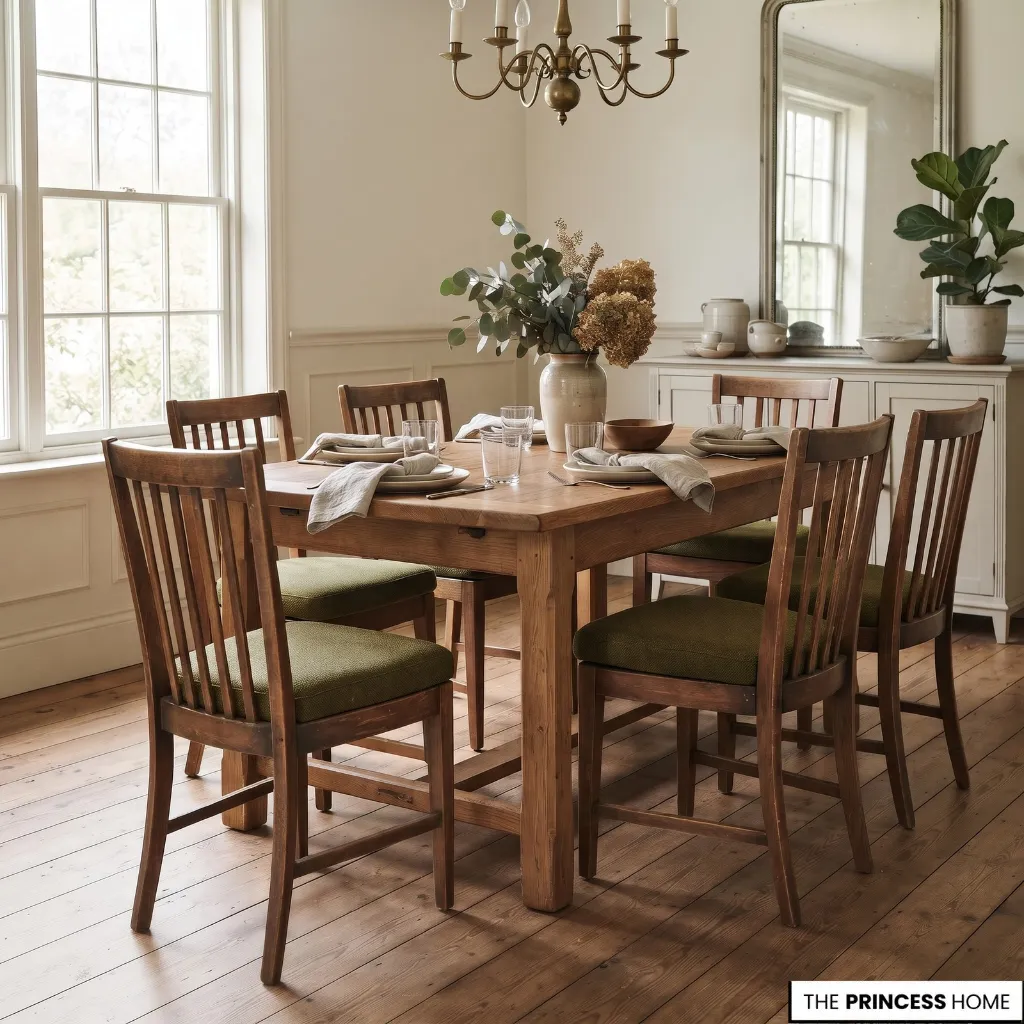
A considered dining arrangement does not require replacing every chair or buying the most expensive design. Prioritize a good fit, stable construction, comfortable seating, and materials suited to your household.
If the existing chairs are structurally sound, refinishing wooden frames or replacing suitable seat pads may be more practical than purchasing a complete set. These changes can improve appearance and comfort while retaining furniture that already fits the table.
If only some chairs need replacing, consider introducing new chairs gradually. A pair of upholstered end chairs, for example, can change the arrangement while the existing side chairs remain in use. The new pieces should still fit the table and relate to the original chairs through a shared finish, color, or shape.
When comparing lower-cost options, examine the construction, dimensions, stability, and care requirements rather than relying on appearance alone. A simple chair with suitable proportions may serve the room better than a more elaborate option that does not fit properly.
Compare the total cost of the chairs you need, rather than judging the price of one chair in isolation, and consider whether the materials and construction are appropriate for the expected frequency of use.
Before ordering, account for delivery, assembly, return conditions, and whether the chairs can be carried through doorways and into the dining area. These practical checks help prevent an attractive purchase from becoming an inconvenient one.
Make the Final Choice
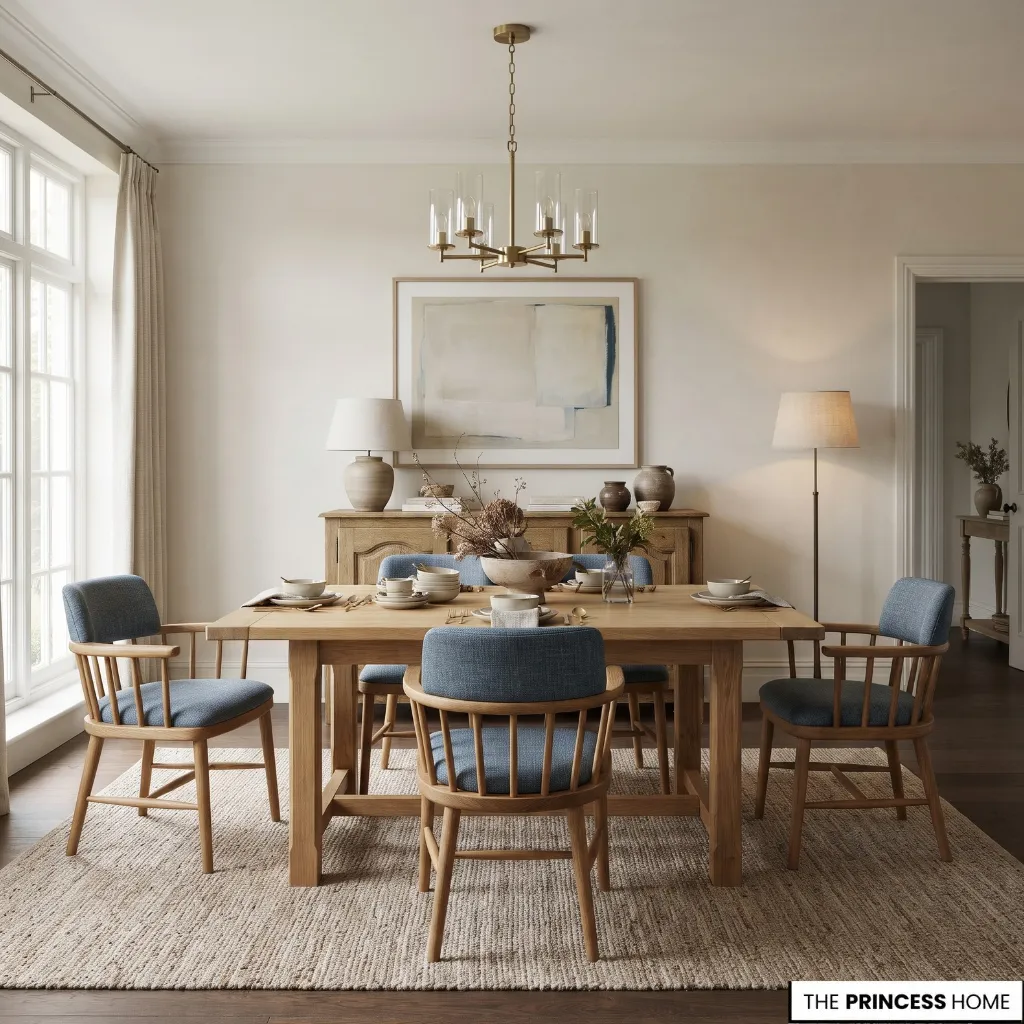
Before purchasing, compare your shortlisted dining chairs against the same practical requirements. Confirm the seat height and underside clearance, check the chair’s width and depth, and ensure that the table base and surrounding space allow comfortable movement.
Test the sitting position where possible, paying attention to the seat, backrest, and armrests. Then evaluate the material, maintenance needs, construction, color, and visual relationship with the table. If you are buying several chairs, review their dimensions as a group and confirm that each one fits the position intended for it.
Avoid Common Mistakes
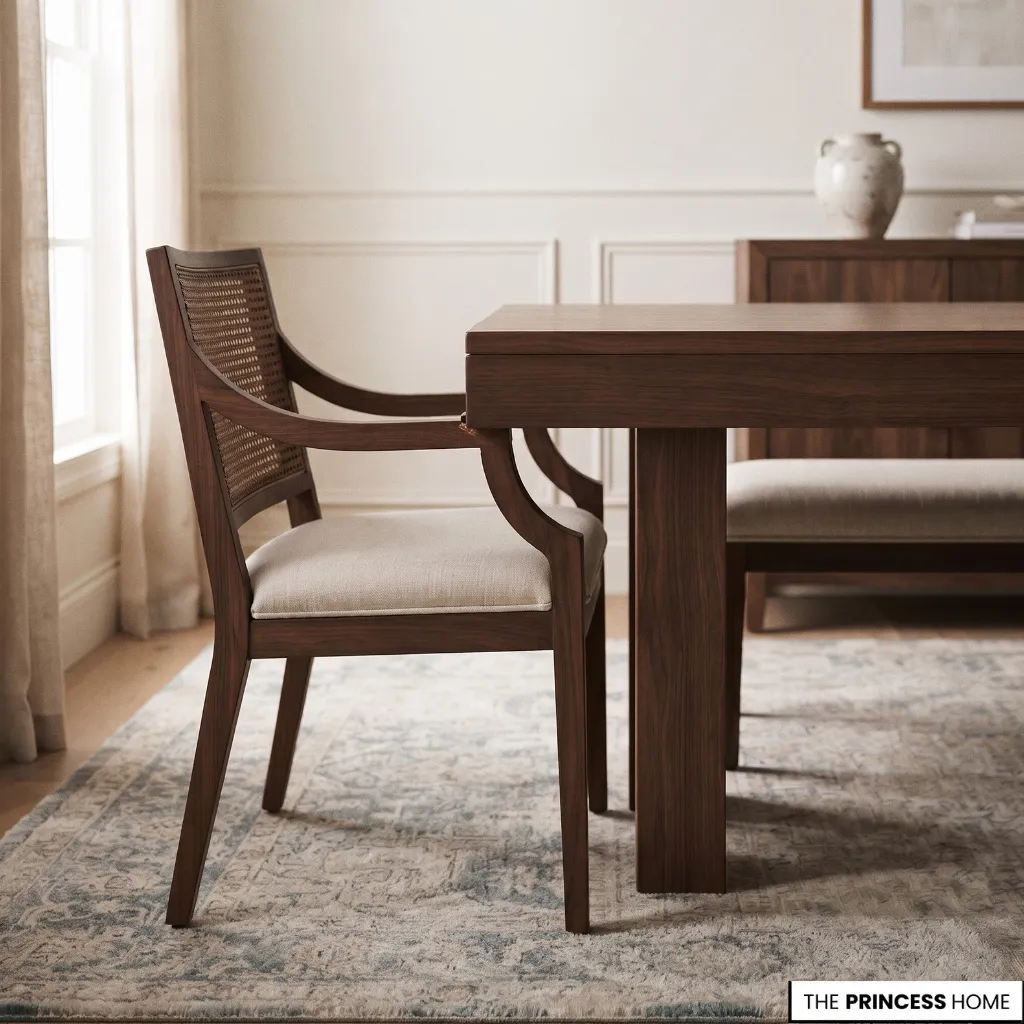
One frequent mistake is measuring only the tabletop height. The underside of the table, including its apron and supports, may restrict seat height or prevent armchairs from sliding underneath. Measure both the table and the proposed chair before purchasing.
Another mistake is choosing chairs that are too wide for the available seating positions. Even if each chair technically fits around the table, the arrangement may feel cramped when people sit down. Check the width of the chair at its widest point and allow for the space needed to use it comfortably.
Ignoring seat depth and back support can also lead to disappointment. A chair may look refined but feel uncomfortable during a long meal. Whenever possible, test it in person and consider the needs of the people who will use it most often.
Visual mismatch is another concern. Chairs that are all substantial may overwhelm a small table, while very light chairs may appear undersized around a heavy one. Assess the complete arrangement rather than choosing each chair independently.
Finally, consider maintenance before choosing upholstery or finishes. A delicate surface may be unsuitable for a busy household if it requires care that is difficult to maintain. Select materials according to actual use, and follow the manufacturer’s care guidance.
Conclusion
A useful chair is one that works comfortably every day and contributes to the overall design of the room. Start with the measurements and the way your household uses the dining area, then choose the shapes, materials, and finishes that best support those needs.