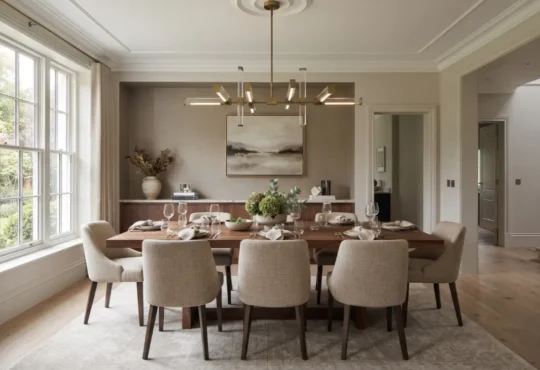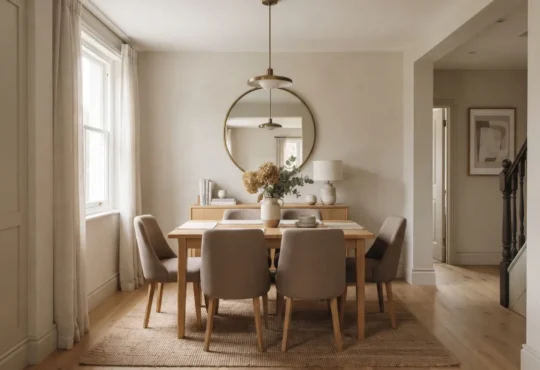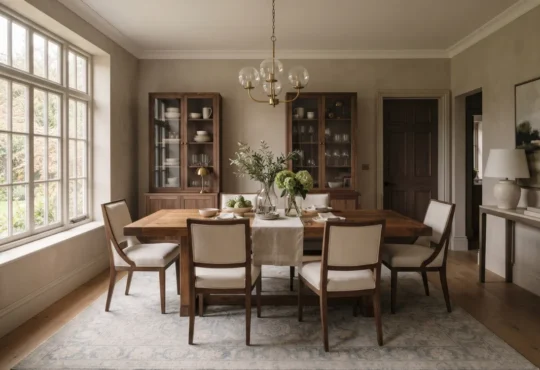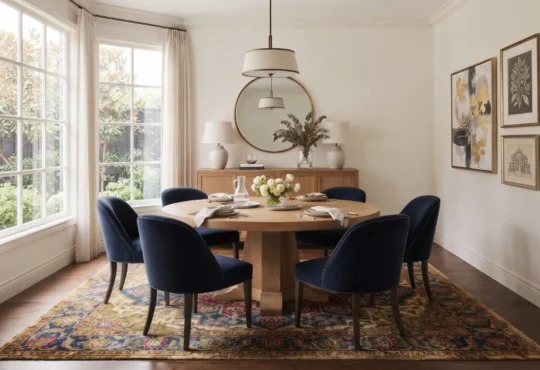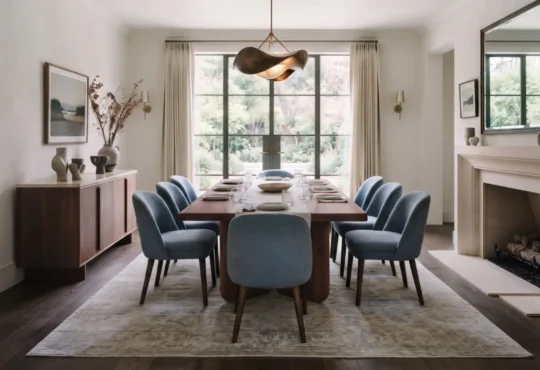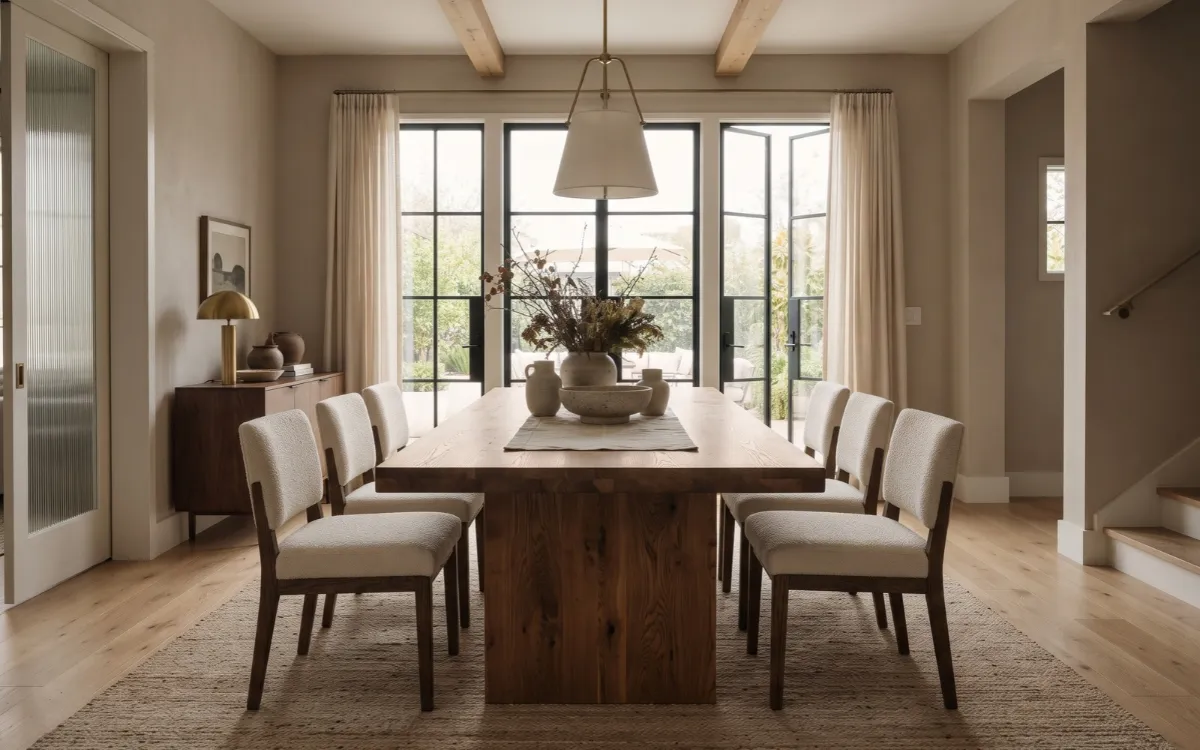
Dining room table ideas should begin with the size of the room, the number of people who will use the table, and the way the space functions every day. A table may look beautiful but still leave too little room for chairs or obstruct movement.
Understanding dimensions, shapes, materials, and seating options helps you choose a table that fits comfortably and works with the rest of your interior.
Assess Your Space
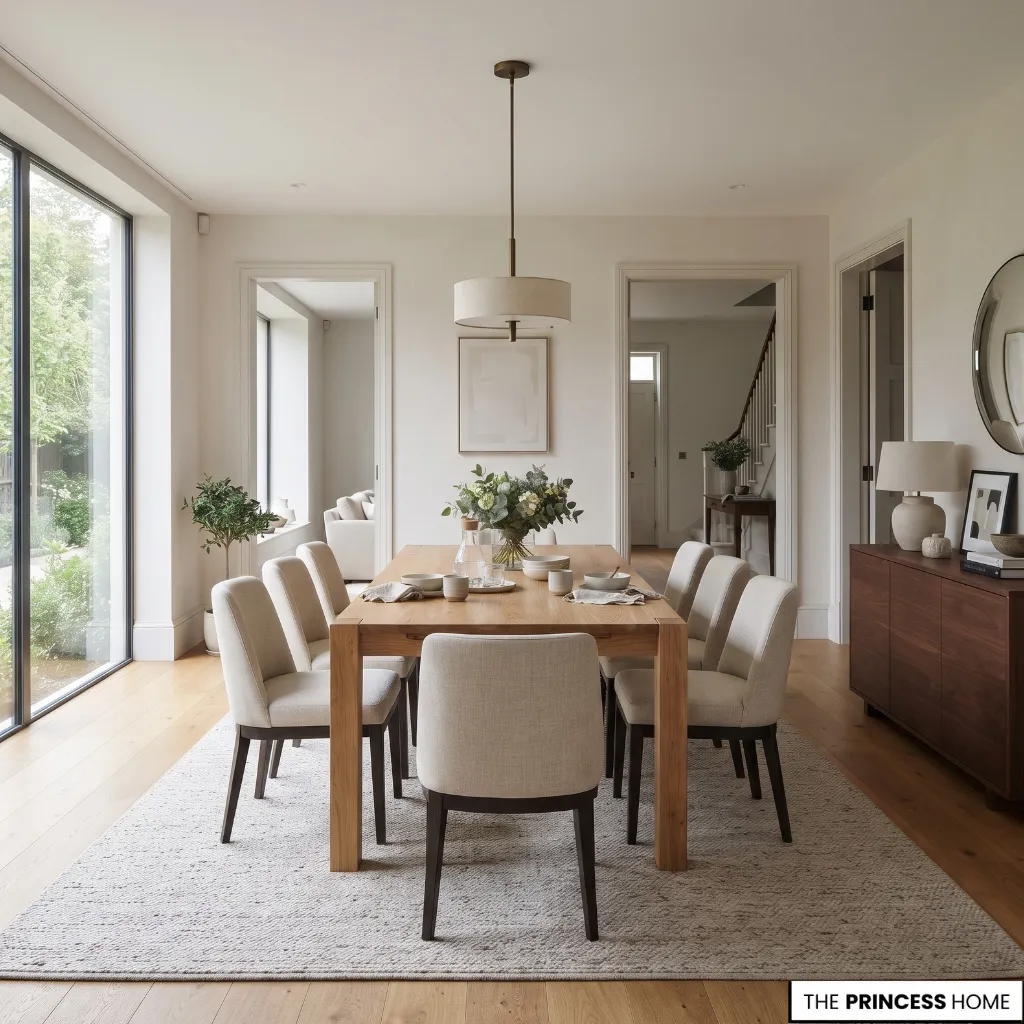
Before choosing a dining table, measure the available floor space and identify the areas that must remain accessible. Consider doorways, windows, radiators, cabinets, and the routes people use to move between the dining area, kitchen, and adjoining rooms.
In an open-plan layout, the table must fit within the dining zone without interfering with nearby furniture.
Allow approximately 75–90 cm between the table edge and a wall or other furniture as a practical starting point. This space can accommodate chair movement in many layouts, but a busy walkway may require more.
The necessary clearance depends on the chair dimensions and whether people need to pass behind someone who is seated.
A simple way to test the arrangement is to mark the proposed tabletop dimensions on the floor with masking tape. Add the approximate positions of the chairs, then check whether you can pull them out and move around the table comfortably.
To test the layout more accurately, position the chairs as they would be used during a meal, pull each one back as someone would when sitting down or standing up, and walk behind the seated positions.
This helps reveal whether the table allows comfortable access in everyday use rather than simply fitting within the measured area.
Also consider how the table will enter the home. Large tabletops, heavy stone designs, and assembled pedestal bases may require careful delivery planning, particularly where staircases, narrow corridors, or doorways restrict access.
For more ideas: Dining Room Layout Ideas: Space, Clearance & Flow
Choose the Right Size
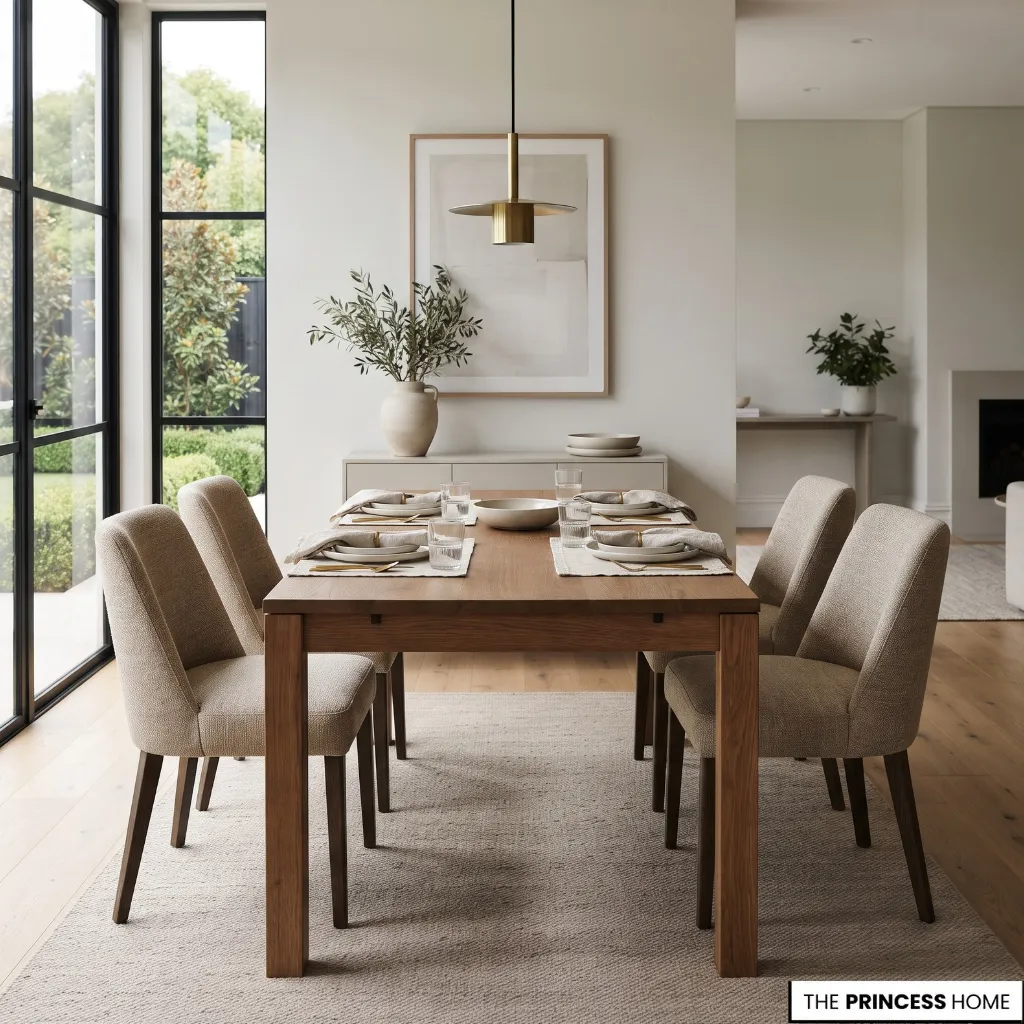
The right dining table size depends on the number of people you need to seat, the dimensions of your chairs, and the space available around the table. Start with your usual household requirements rather than choosing a large table solely for occasional gatherings.
Allow approximately 60 cm of table-edge space per diner as an initial planning estimate. Wider chairs, armrests, large place settings, and table legs can reduce the number of people who fit comfortably.
End seating may provide additional places at rectangular and oval tables, but only when the table’s width and base arrangement allow it.
The following dimensions are approximate starting points, not guarantees of comfortable seating. Actual seating capacity also depends on the shape of the tabletop, the width of the chairs, the position of the legs or pedestal, and whether diners need extra room for armrests or serving dishes.
Use these dimensions to narrow your options, then check the manufacturer’s seating recommendations and compare the table with the chairs you intend to use.
| Seating capacity | Approximate table dimensions |
|---|---|
| 2–4 people, rectangular | 120 × 75 cm |
| 4 people, round | 100–120 cm diameter |
| 4–6 people, rectangular | 140–180 × 80–90 cm |
| 6–8 people, rectangular | 180–240 × 90–100 cm |
| 6 people, round | 135–150 cm diameter |
Table depth matters as well as length. People sitting opposite each other need room for plates, glasses, and comfortable arm movement. If meals regularly include shared serving dishes, allow enough central tabletop space without crowding individual place settings.
The table must also fit within the room’s usable footprint. A six-person table that accommodates everyone comfortably may be more suitable than an eight-person model that leaves little room to move.
If you frequently entertain larger groups, consider an extendable design rather than permanently occupying the additional floor space. When comparing options, test the compact and extended configurations separately, including the space required to pull out chairs and maintain the main walking routes.
Compare Table Shapes
For more ideas: Dining Room Design Guide: Layout, Furniture, Lighting & Decor
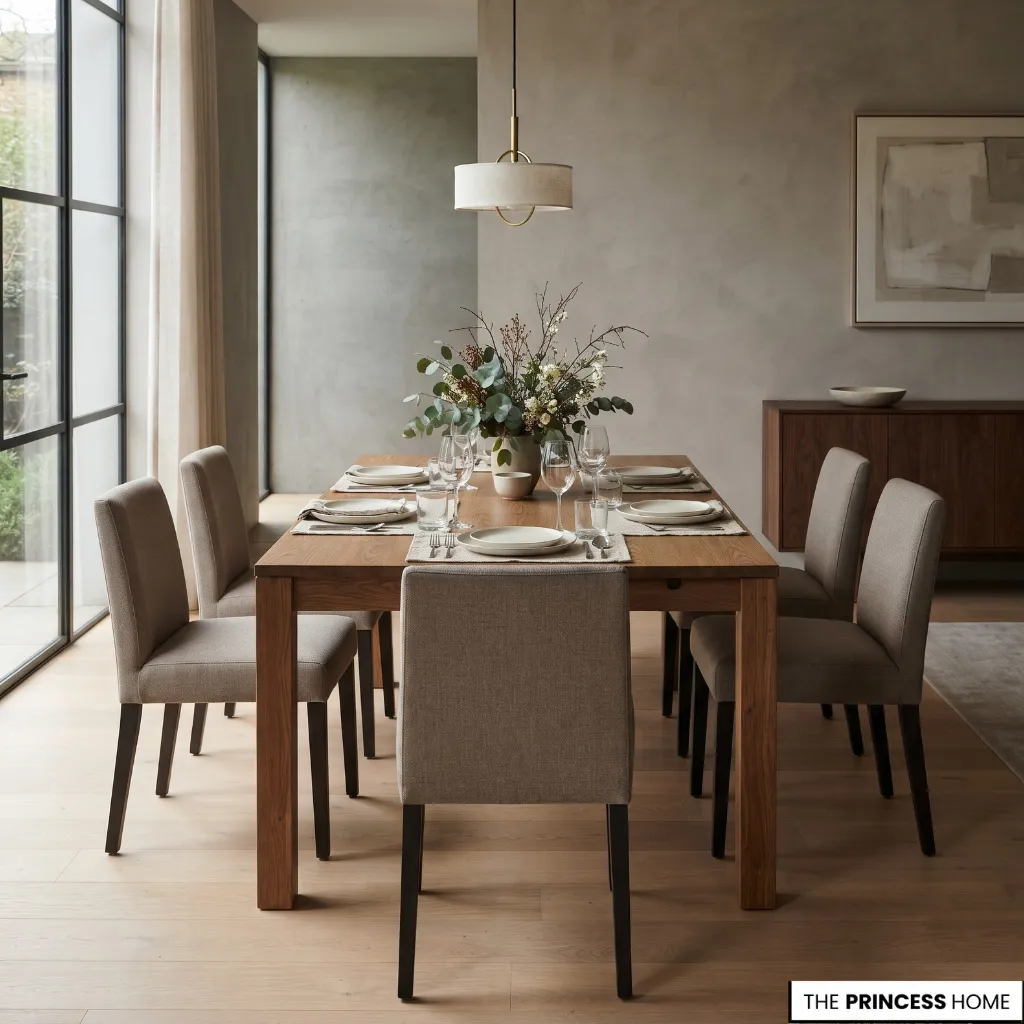
Dining table shapes influence seating, circulation, and how the furniture relates to the room. The best option depends on the layout rather than a universal rule about which shape saves the most space.
Compare each shape using the room’s actual dimensions, the number of people who will sit there regularly, and the space needed to access the chairs.
Rectangular Tables
Rectangular tables suit many elongated dining rooms and open-plan layouts. Their long sides accommodate several chairs, while the ends can provide additional seating when dimensions and leg placement permit. They also work well when the dining area follows the proportions of a long room.
Measure the space at both ends as well as along the sides. A table may fit between two walls but still restrict movement at its shorter ends. In a compact room, a narrower rectangular table can provide useful seating without occupying unnecessary width.
Before choosing a longer model, check whether people can reach the end seats and move around the table without disrupting the main route through the room.
Round Tables
Round tables work well in many square rooms and smaller dining areas. Their curved edges eliminate corners that can interrupt movement, and diners can face one another without a fixed head of the table.
The diameter must still accommodate the intended number of people. A small round table may be comfortable for everyday meals but crowded when several place settings and serving dishes are added.
Check the base too: a pedestal can free space around the perimeter, although its central support may affect foot placement. When comparing a round table with a rectangular alternative, consider both the table’s full footprint and the position of the chairs rather than judging by the tabletop alone.
Oval Tables
Oval tables combine the elongated seating arrangement of a rectangular table with rounded ends. They can suit rooms where a long tabletop is needed but sharp corners would interrupt the layout.
Their overall length and width still determine how much floor space they occupy. Compare the full dimensions with those of a rectangular alternative rather than assuming that curved ends automatically make an oval table smaller.
The rounded ends may make movement around the table easier in some layouts, but the space required for chairs and access must still be measured.
Square Tables
Square tables work naturally in some square dining rooms and are often practical for smaller groups. Their balanced proportions can make it easier to position the table centrally within a compact dining area.
Larger square tables require considerable space, and diners may need to reach farther across the tabletop. If you regularly seat more than four people, compare the dimensions and seating arrangement with those of rectangular and round alternatives before deciding.
For a compact room used mainly by two or four people, check that the table leaves enough room to pull out each chair without blocking nearby furniture or doorways.
Consider Table Bases
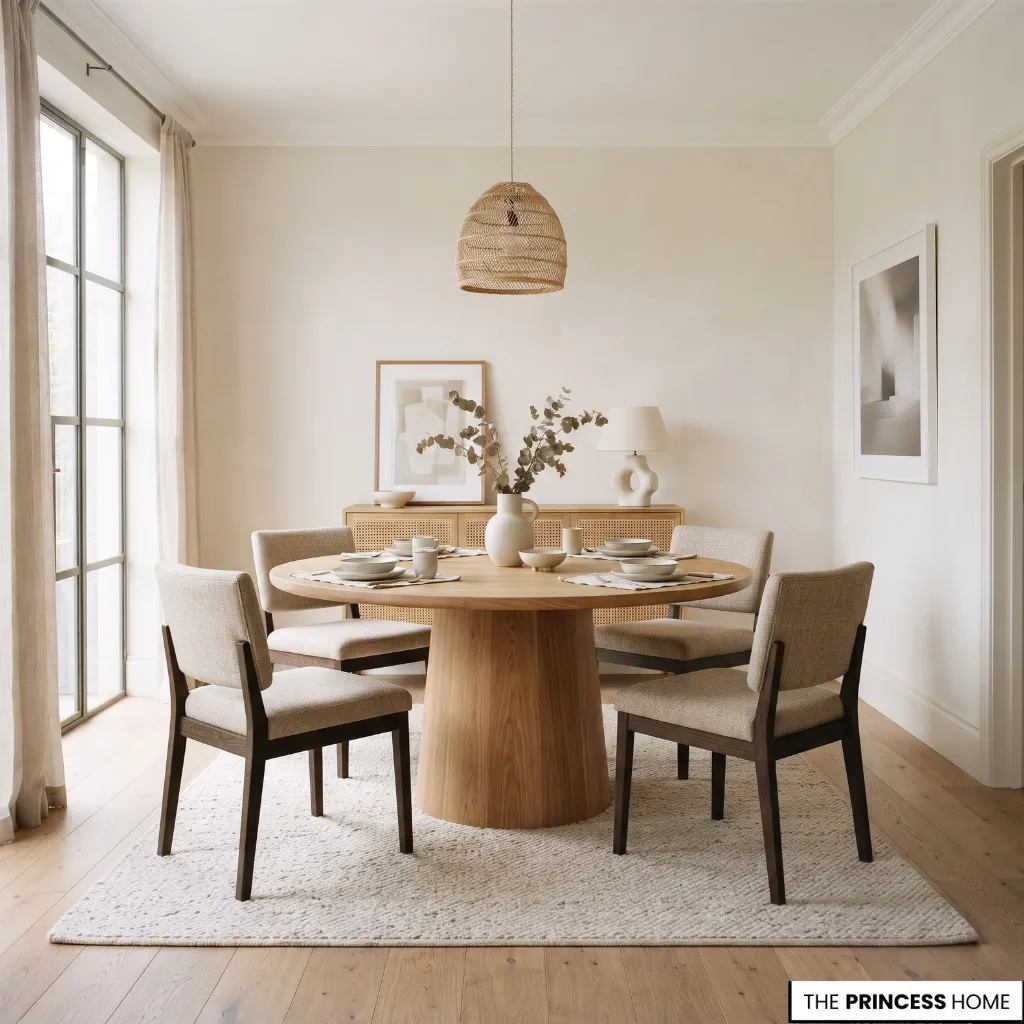
The base affects how many people can sit comfortably, where chairs can be positioned, and how much legroom the table provides. It should be evaluated alongside the tabletop rather than treated as a purely decorative feature.
Four-leg tables provide support near the corners, but the legs may interfere with chairs placed close to the ends or sides. Before purchasing, check whether the intended seating positions align with the available space between the supports.
If the table has a fixed number of recommended seats, compare those positions with the actual widths of your chairs rather than assuming each side can accommodate the same number of diners.
Pedestal tables can provide more flexibility around the perimeter because they do not require a leg at every corner. However, the pedestal’s width and position determine whether diners have enough room for their feet. A central base is not automatically more comfortable for every seating arrangement.
Trestle and other support designs also vary in how they distribute weight and occupy space beneath the tabletop. Check the construction, stability, and placement of the supports, especially when choosing a large or extendable table.
If possible, test the table with chairs similar to those you intend to use. Confirm that the chairs slide underneath comfortably and that seated diners will not repeatedly bump their knees against the base.
If you cannot test the table in person, compare the manufacturer’s measurements for the tabletop, base, and underside clearance with the dimensions of your chairs.
Select the Material
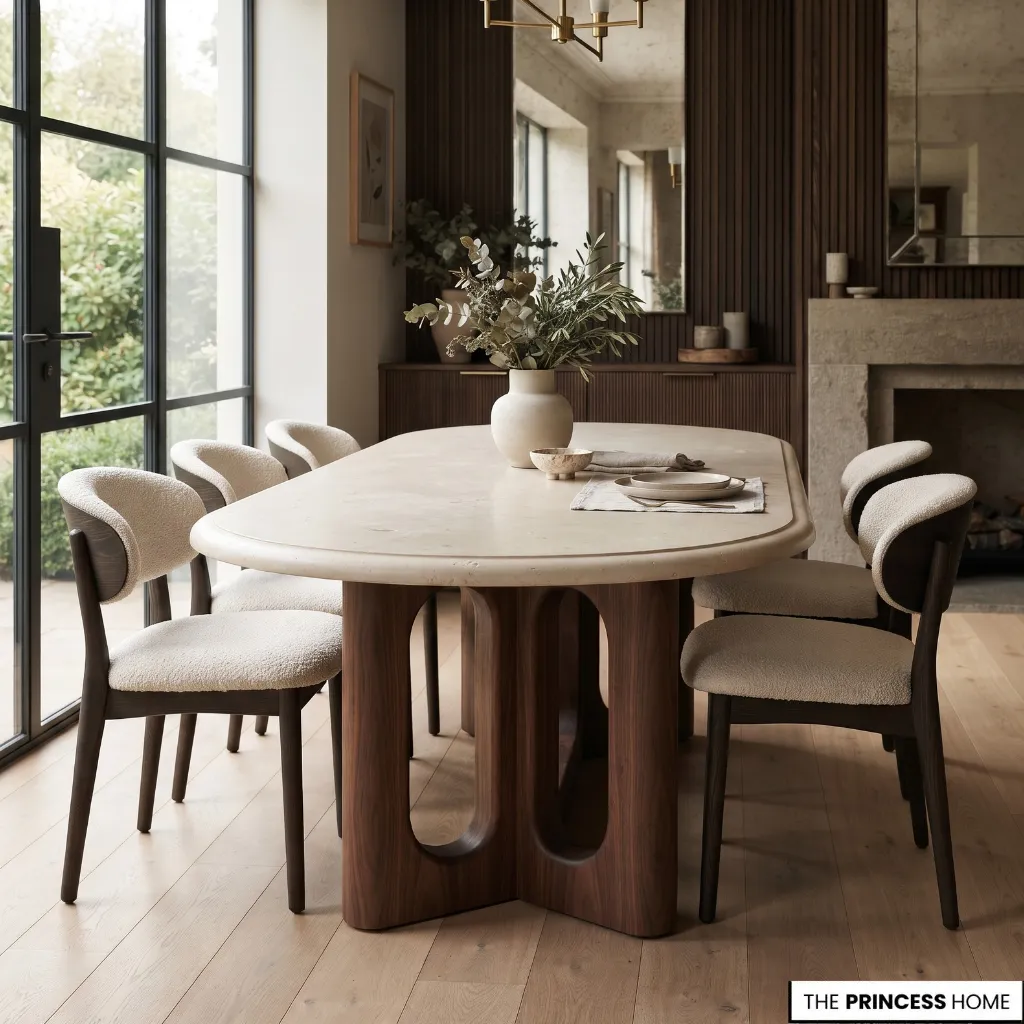
The tabletop material influences the table’s appearance, maintenance requirements, and suitability for daily use. Consider how often the table will be used, what kinds of meals take place there, and how much care you are willing to provide.
Solid wood offers natural grain and can sometimes be repaired or refinished, depending on the wood species, construction, and existing finish. It suits many interior styles, from traditional dining rooms to contemporary spaces.
Wood can respond to changes in humidity, and its resistance to stains and heat depends partly on the finish and care routine.
Wood veneer provides a natural wood surface over an underlying substrate. It can offer the appearance of timber at a different price point from comparable solid-wood furniture.
Quality depends on the veneer, substrate, edge construction, and overall workmanship. Repair and refinishing options may be more limited than with solid wood.
Glass creates a visually light appearance because the floor and furniture remain visible through the tabletop. It can work well in rooms where a solid surface might feel visually heavy.
Fingerprints and smudges may require frequent cleaning, and the type of glass, edge treatment, and construction should be checked for suitability.
Natural stone provides distinctive patterns and a substantial surface. Marble and other stones differ in porosity, hardness, and sensitivity to particular substances. Some require sealing or specific cleaning products, so verify the care requirements of the exact stone before buying.
Ceramic and engineered surfaces are available in a range of colors and finishes. Some products offer strong resistance to particular stains, scratches, or heat, but performance varies by composition and manufacturer. Check product specifications rather than assuming every surface is damage-proof.
Metal can create an industrial, contemporary, or more traditional appearance depending on the design. Consider the finish, weight, corrosion resistance, and susceptibility to scratches. A metal base paired with a wood, glass, or stone top may provide a useful combination of materials.
Laminate and other engineered surfaces can offer accessible pricing and straightforward everyday cleaning. Their resistance to heat, moisture, and edge damage depends on the product’s construction and finish.
The most suitable material is the one that fits both your design preferences and your daily routine. A family dining table may need a surface that tolerates frequent use and is easy to clean, while a table used occasionally may allow more time for specialized care.
Before making a final choice, consider the likely sources of wear in your household, such as spills, hot serving dishes, children’s activities, or frequent cleaning, and check whether the specific product is designed to handle them.
For more ideas: Classic Living Room Ideas with Leather and Warm Wood
Choose the Finish
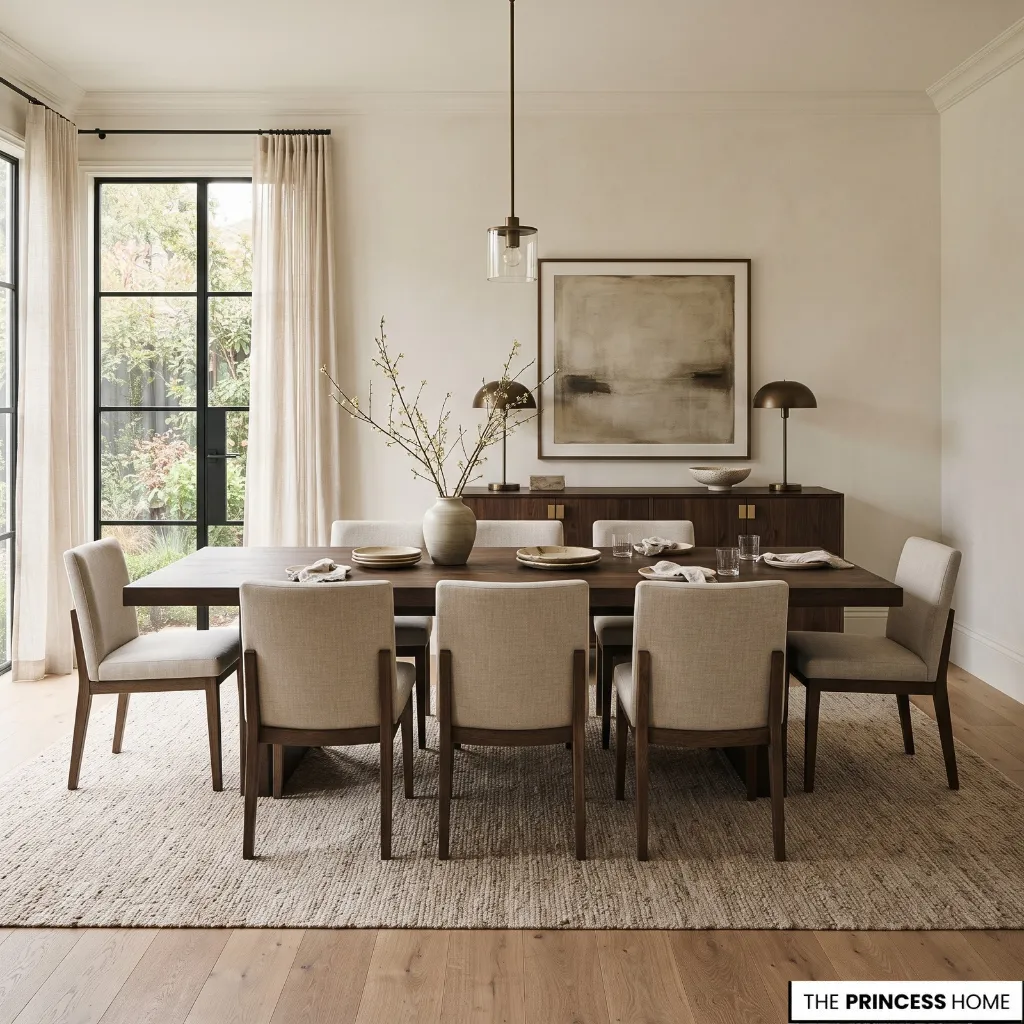
Once you have selected a suitable material, consider its color, surface finish, and relationship with the existing room. These decisions influence how much visual weight the table carries and how easily it coordinates with the chairs, floor, walls, and storage furniture.
Light wood finishes can complement pale floors and soft wall colors, while medium and dark woods can provide contrast against lighter surroundings. Neither approach is universally preferable. A dark table can work in a bright room, and a light table can balance darker cabinetry or flooring.
Look at undertones as well as overall color. A warm wood finish may relate naturally to warm flooring or upholstery, while a cooler or more neutral finish may suit a different palette. The aim is to establish a considered relationship between the finishes rather than make every wooden surface identical.
Matte, satin, and glossy finishes also behave differently. A matte surface may make reflections less noticeable, while a glossy finish reflects more light. The practical performance of either depends on the product and its care requirements.
Before committing to a finish, compare a sample or reliable product image with the room’s existing materials under its usual lighting.
If possible, view the sample beside the flooring and chairs at different times of day, since daylight and artificial lighting can change how its color appears. Consider fingerprints, visible scratches, and cleaning needs alongside appearance.
Plan Flexible Seating
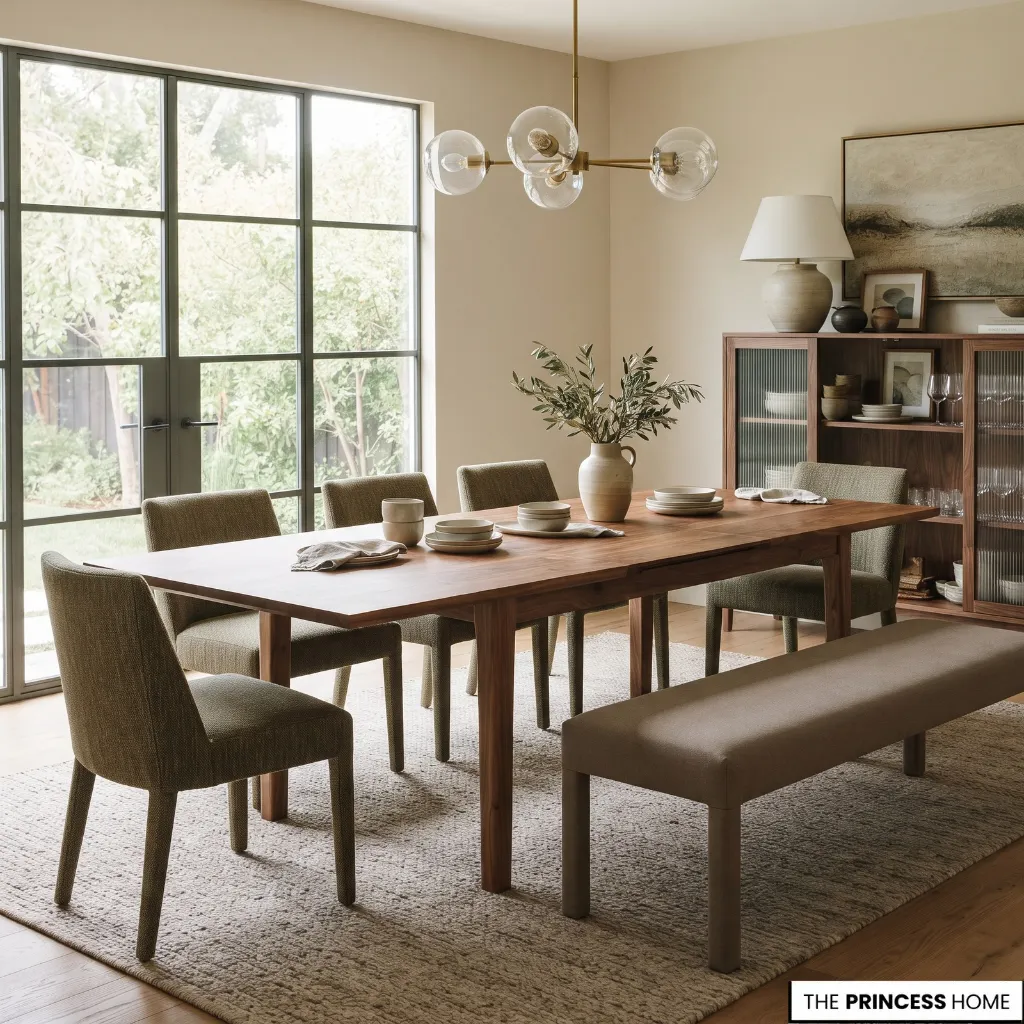
A fixed dining table is often practical when the number of diners remains consistent. An extendable table may be more useful when the household regularly accommodates additional guests but needs a smaller footprint for everyday meals.
Check how the extension works, whether the leaves are stored inside the table or separately, and how much room the extended arrangement requires. Measure both configurations. An extended tabletop may fit the room while leaving insufficient space for chairs or obstructing a walkway.
If the leaves are stored separately, consider where they will be kept and whether they can be handled and fitted easily when needed.
Seating also affects flexibility. Armless chairs may slide beneath the table more easily than chairs with wide arms, while benches can accommodate several people along one side. However, the actual space saved depends on the furniture’s dimensions and the arrangement.
Do not choose extra seating capacity at the expense of comfort. A table advertised for eight people may not accommodate eight broad chairs comfortably, particularly when its legs occupy the corners. Check the usable space along each edge and the dimensions of the chairs you intend to use.
The right arrangement reflects how the room is used most often. If everyday meals involve four people but larger gatherings happen occasionally, a compact table with a practical extension may be preferable to a permanently oversized model.
Before deciding, mark out the table in both sizes and confirm that the extended arrangement still allows chairs to move and people to pass safely.
Coordinate the Dining Room
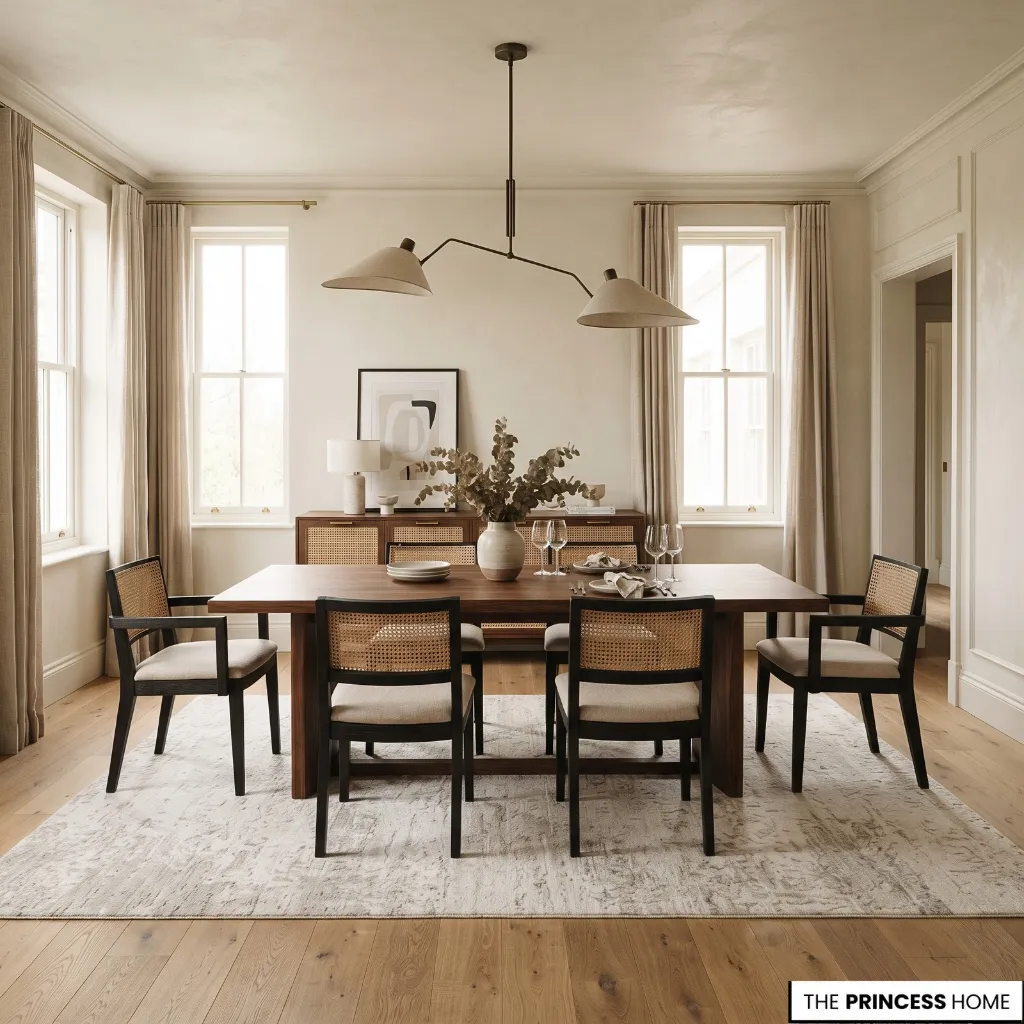
The dining table should work with the surrounding furniture, but the room does not need to be furnished as a matching set. Coordinating proportions, materials, and selected colors usually provides more flexibility than requiring every piece to have the same finish.
Dining chairs should suit the table’s height, allow comfortable legroom, and fit the available space. Different chair styles can work together when they share a clear relationship, such as similar proportions, complementary materials, or a consistent color.
Check the chair dimensions before purchasing the table or committing to a complete set. Seat height and the space between the seat, tabletop, and apron also affect comfort, so compare these dimensions where the information is available.
Rugs can define a dining area within a larger room, particularly in open-plan interiors. If you use one, allow enough space for chairs to remain on the rug when pulled back.
A rug that is too small can cause chair legs to catch at its edges. A rug-free arrangement may be more practical in a busy household or where maintenance is a priority.
Lighting should relate to the table’s size and position. A pendant or chandelier can help identify the dining zone, but it should distribute light effectively and avoid obstructing views across the table. Consider the height of the fixture, the location of the electrical point, and whether the light reaches the full tabletop.
Storage furniture such as a sideboard can provide space for serving dishes and table linens. Position it where doors and drawers can open without interfering with chairs or walkways.
Accessories should leave enough surface for actual dining. A centerpiece can provide a focal point, but an arrangement that is too large or tall may obstruct conversation or reduce usable space. Choose objects that suit the scale of the table and can be moved easily when serving food.
In an open-plan room, relate the dining table to nearby kitchen or living room furniture through a few shared elements, such as wood tones, metal finishes, or complementary colors. The dining area should feel connected to its surroundings while remaining practical for its specific function.
For more ideas: Dining Room Chair Ideas: Comfort, Style & Proportion
Adapt Small Spaces
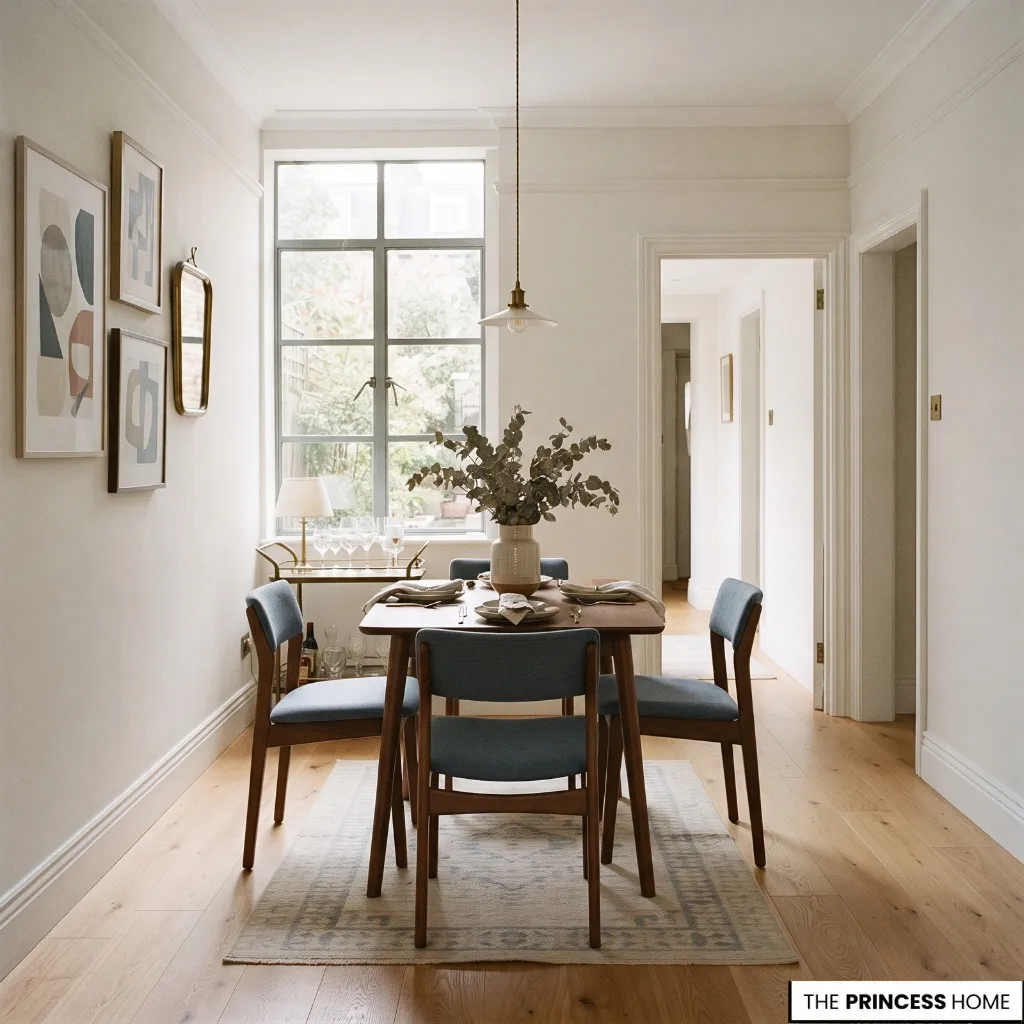
A small dining area requires careful decisions about both furniture size and movement. The objective is to provide comfortable seating without allowing the table to dominate the available floor space.
Start by considering the room’s shape. A round table may work well in a compact square area, while a narrow rectangular table may fit better along the length of an elongated room. Compare the complete footprints before deciding, including chairs and the space needed to pull them out.
Drop-leaf and extendable tables can provide flexibility when the number of diners varies. A compact everyday arrangement may leave more room for movement, while an extension can accommodate additional guests when needed. Confirm that the larger configuration remains practical.
Armless chairs and benches may also help. A bench against a wall can reduce the clearance needed on one side. However, people should still be able to sit down and leave comfortably.
Built-in banquette seating can work well in some layouts. Plan its dimensions around the table to ensure a comfortable fit.
Where necessary, consider placing one side of a table near a wall. This can work for everyday dining when the arrangement suits the household, although it may reduce access to some seats. Avoid pushing a table into a corner simply to make it fit if doing so prevents people from sitting down comfortably.
If the room feels crowded, reconsider surrounding furniture before sacrificing essential clearance. A smaller sideboard, fewer decorative objects, or a more compact table may solve the problem more effectively than trying to fit a large dining set into a restricted area.
For more ideas: Small Dining Room Ideas: Make the Most of Limited Space
Set Your Budget
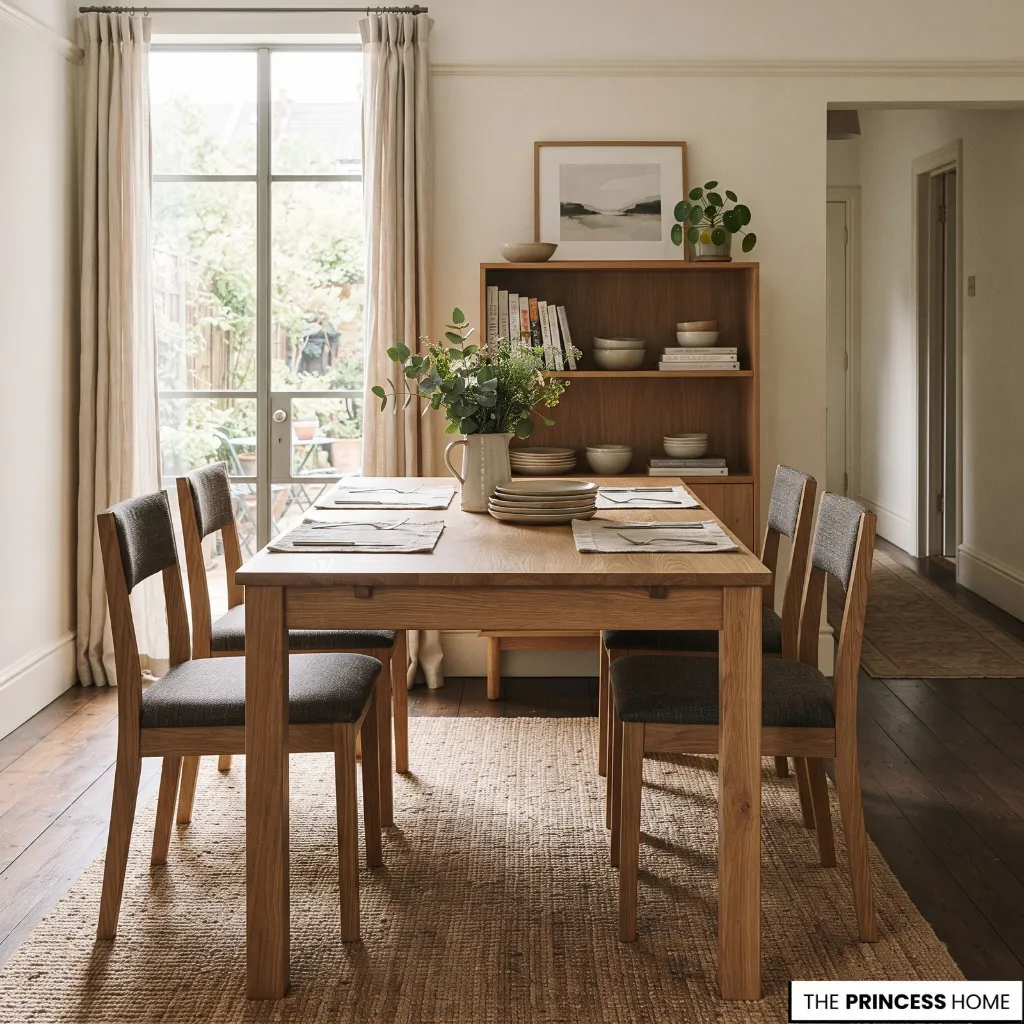
A sensible budget begins with the features that affect everyday use. Correct dimensions, stable construction, comfortable seating, and a suitable surface matter more than decorative details that do not improve the table’s function.
Solid wood, veneer, laminate, glass, stone, and other surfaces come in a range of price points. Compare the actual construction, care requirements, and expected use rather than assuming that a particular material automatically represents better value.
Consider whether you need an extension mechanism, a specialized finish, or a particularly durable surface. These features may justify additional spending when they solve a genuine household need.
If you rarely entertain, a fixed table may be a more practical use of your budget than paying for extension features you seldom use.
Reusing an existing table can also be worthwhile if its dimensions, construction, and condition remain suitable. Replacing the chairs, updating an appropriate finish, or changing the surrounding lighting and rug may improve the dining area without requiring a complete replacement.
Second-hand furniture can offer another option, provided you inspect its stability, joints, surface condition, and repair needs before buying. Refinishing should be considered only when the material and existing finish make it appropriate.
Prioritize the table’s fit and function first, then its construction and maintenance requirements, followed by its finish and optional features. This approach helps preserve the intended design while keeping spending focused on decisions that matter.
For more ideas: Dining Room Lighting Ideas: How to Choose the Right Fixture
Avoid Common Mistakes
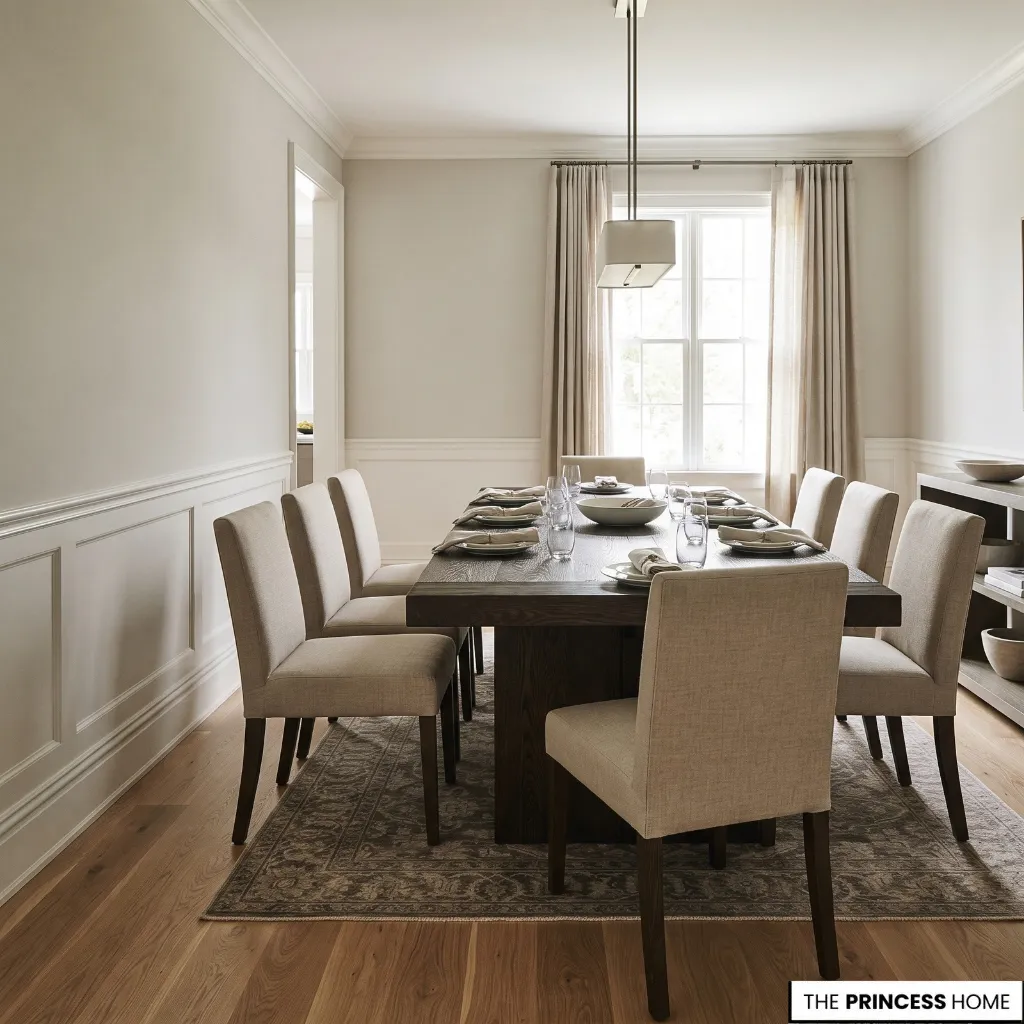
Several common buying mistakes can make a dining table less useful even when it looks attractive.
Choosing before measuring can leave too little space for chairs or movement. Measure the available footprint, mark the proposed layout, and test the clearance before purchasing.
Buying for occasional gatherings alone can leave the dining room crowded throughout the week. If larger groups visit only occasionally, consider an extendable table that suits everyday needs in its compact configuration.
Relying only on advertised seating capacity can lead to uncomfortable arrangements. Check the usable table-edge space, the width of the chairs, and the placement of the legs rather than assuming every advertised seat will be equally comfortable.
Ignoring the base can create problems with legroom and chair placement. Check the support arrangement alongside the tabletop dimensions and intended seating positions.
Choosing a material by appearance alone may lead to unnecessary maintenance or damage. Review the manufacturer’s care instructions and verify claims about heat, stain, and scratch resistance.
Matching every piece too closely can make the room feel overly uniform. Instead, coordinate a few elements, such as material, proportion, or color, while allowing the table and chairs to retain their own character.
Forgetting the delivery route can turn a suitable table into a difficult purchase. Check the dimensions of the packaged or assembled furniture against doorways, corridors, and staircases.
Overlooking the extended footprint can leave too little room for movement when extra guests arrive. Measure the table in both configurations and ensure that the chairs and walkways still fit.
The final check is to consider the table as a complete arrangement rather than an isolated purchase. Confirm the tabletop dimensions, chair positions, base clearance, circulation space, and care requirements together.
A table that fits these practical needs will be easier to live with than one chosen for appearance or advertised capacity alone.
Conclusion
The right dining table balances room dimensions, comfortable seating, practical materials, and the needs of everyday life. Before buying, confirm the measurements, test the chair arrangement, check the table base and care requirements, and make sure the layout remains comfortable when extra guests arrive.
A well-chosen table does not need to be the largest, most expensive, or most decorative option. It needs to fit the room, support the household’s needs, and work naturally with the surrounding interior.