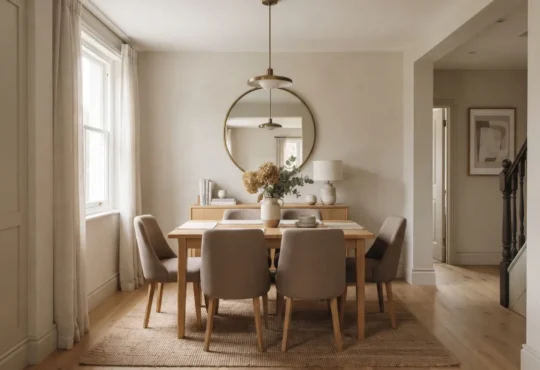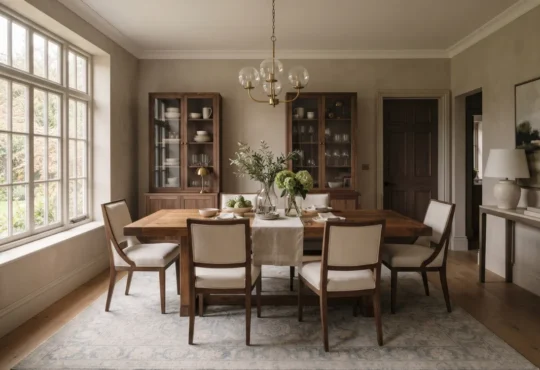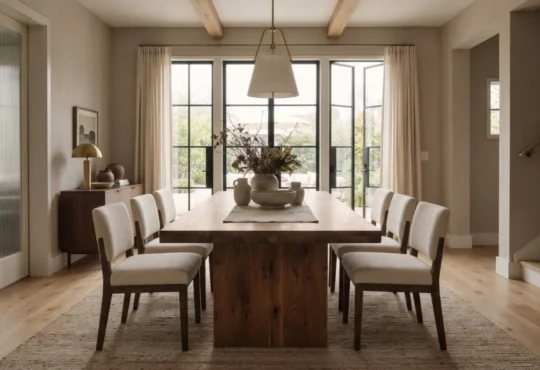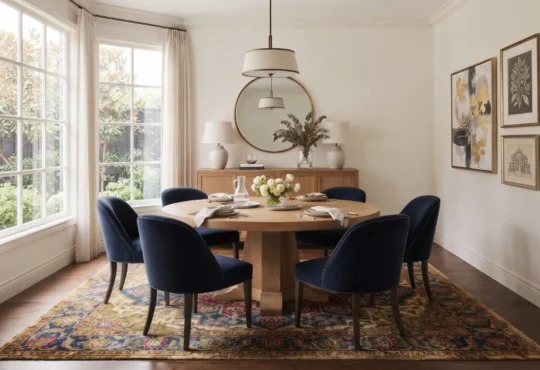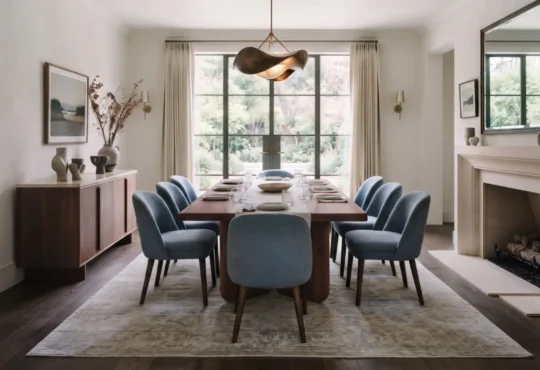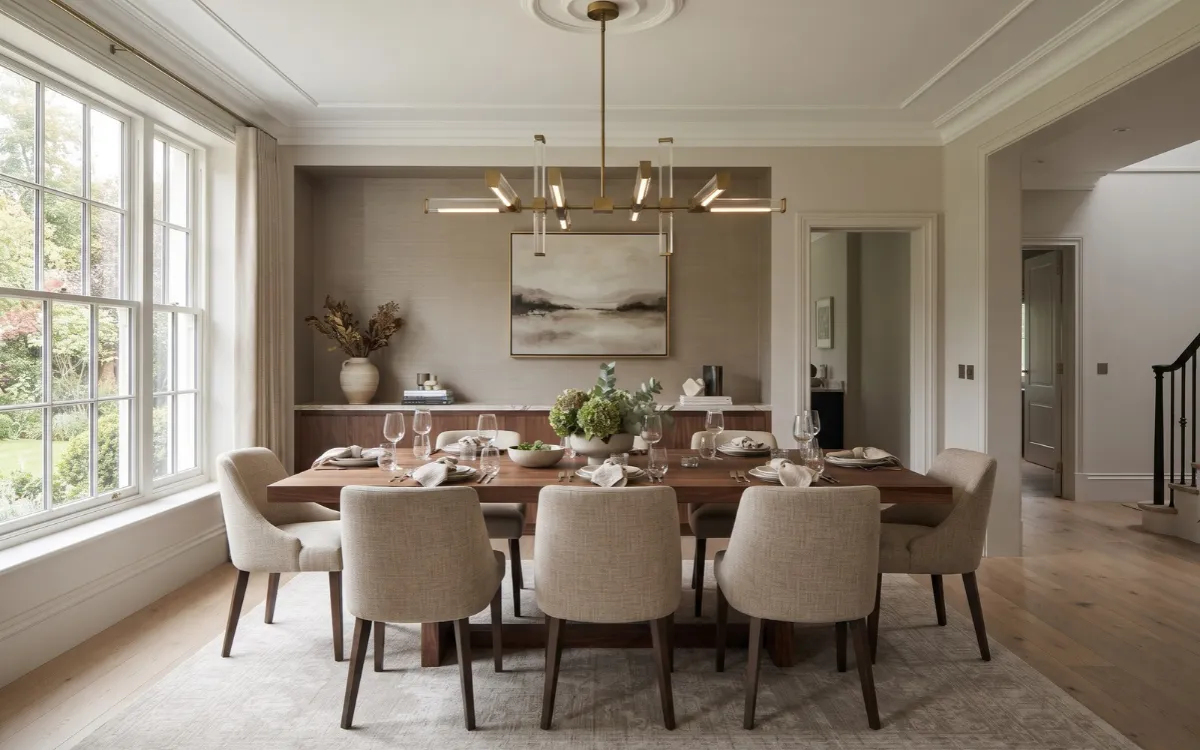
Dining room lighting ideas work best when the fixture suits the dining table, ceiling height, and way the room is used. The right choice should provide comfortable light for meals, allow people to see one another clearly, and complement the furniture without overwhelming the space.
By understanding fixture size, hanging height, light quality, and placement, you can choose lighting that looks balanced and works well every day.
Assess Your Space
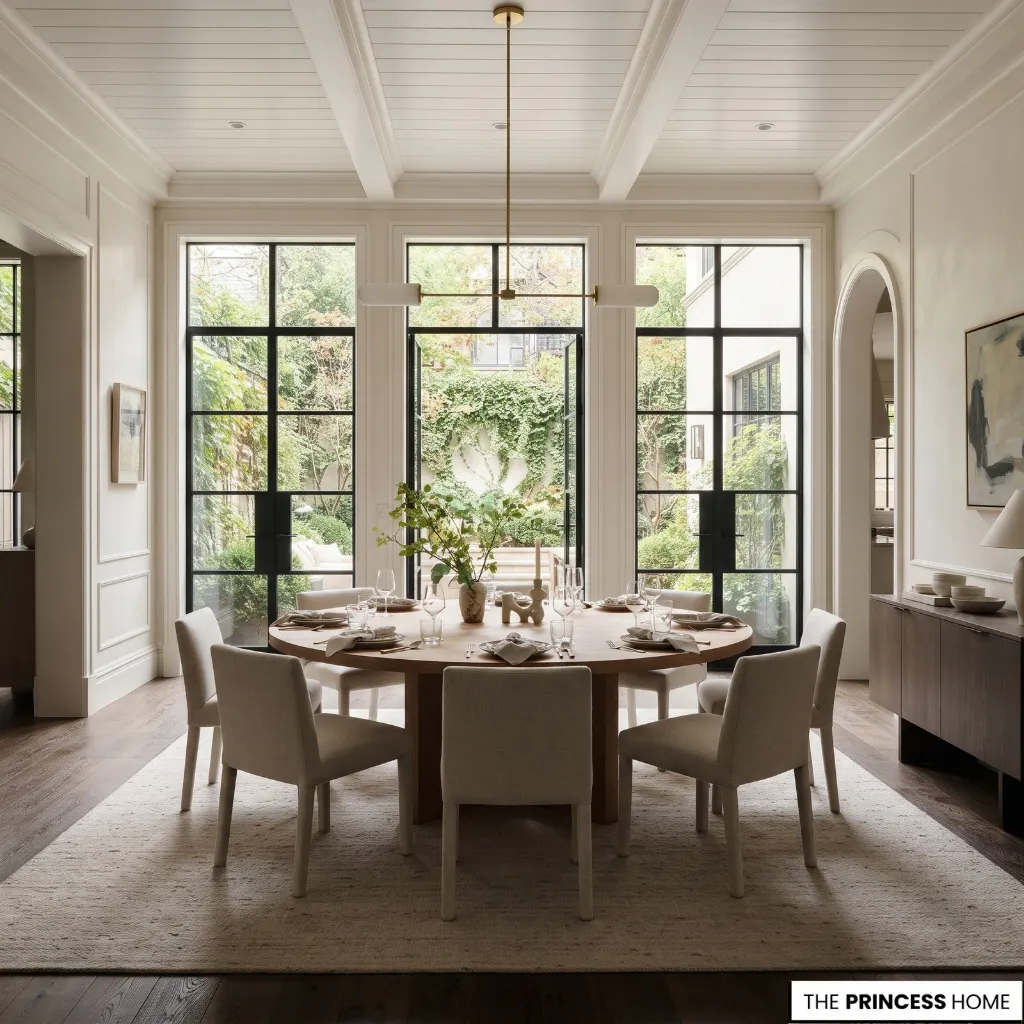
Before choosing a dining room light fixture, consider the room’s dimensions, the dining table’s position, and the activities that take place there. These details help determine whether a chandelier, pendant, linear fixture, or ceiling-mounted light will work best.
Measure the room and table, noting the ceiling height, doorways, windows, and fixed obstacles. Check whether the table sits beneath the ceiling’s central point. In an open-plan room, the dining area may need its own lighting zone even when the table is not centered within the entire space.
Consider how you use the table. A room used mainly for meals may need focused light above the table and softer ambient lighting around it. If the table also serves as a workspace, homework area, or place for hobbies, the lighting should provide sufficient visibility without creating uncomfortable glare.
Natural light matters, too. A dining room with large windows may need less artificial light during the day, but it still requires suitable lighting for evenings. Identify what the existing lights do well and where additional illumination would improve comfort before deciding what to buy.
For more ideas: Dining Room Design Guide: Layout, Furniture, Lighting & Decor
Choose the Right Fixture
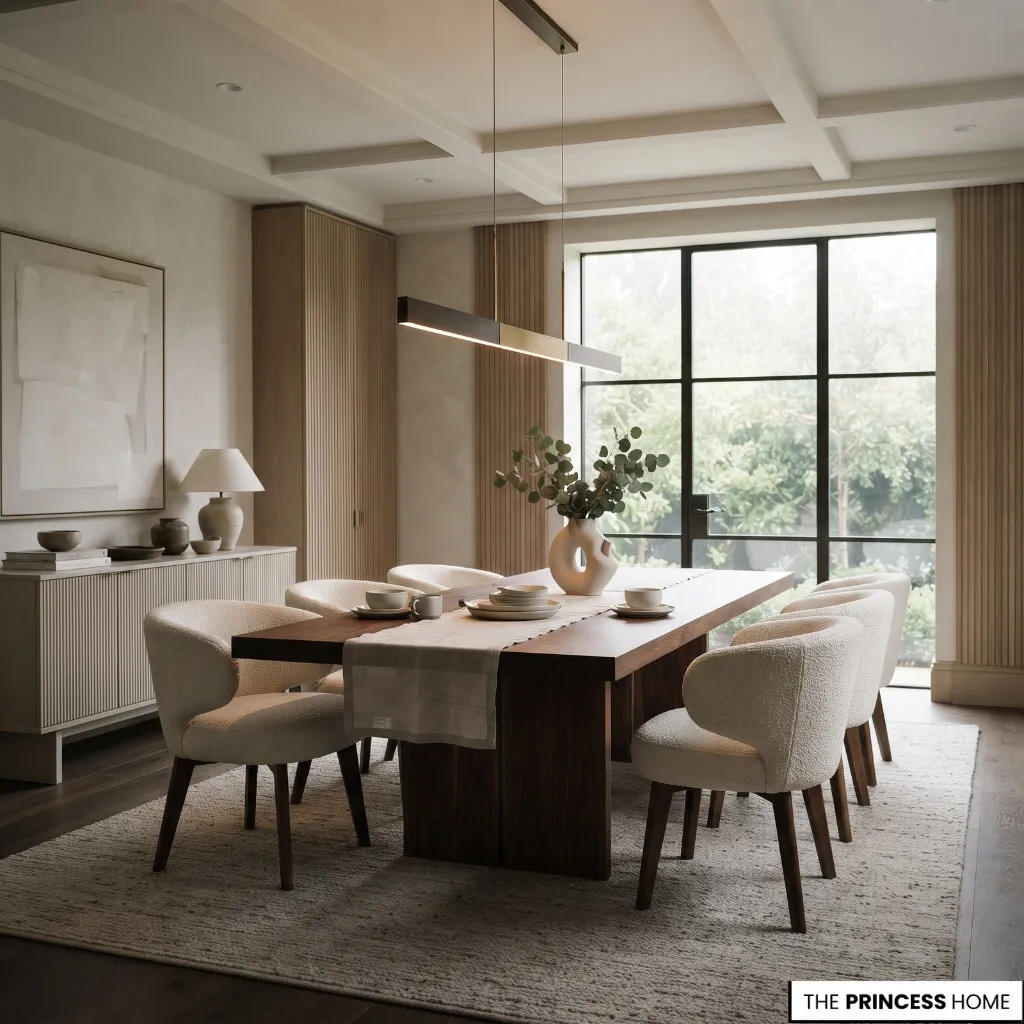
The best dining room lighting fixture depends on the table’s shape, ceiling height, and lighting needs. Each fixture type offers different advantages, so choose according to the room’s requirements rather than appearance alone.
A chandelier works well when the dining table needs a defined focal point. Choose a design whose overall scale suits the table and surrounding furniture. A large, elaborate chandelier can dominate a compact room, while a very small fixture may look disconnected from a long dining table.
A pendant light provides focused illumination and often suits a small or round dining table. For a longer table, two or more pendants may distribute light more evenly, provided their combined size and spacing suit the arrangement.
Multiple pendants need enough separation to read as a coordinated group rather than a collection of unrelated fixtures.
A linear fixture follows the length of a rectangular table and can provide a coherent arrangement. Check its dimensions and light distribution so that the ends of the table receive adequate illumination without the fixture extending awkwardly beyond the table.
Flush and semi-flush mounts are useful where a hanging light would interfere with clearance or feel too imposing. Flush mounts sit close to the ceiling, while semi-flush designs allow a little more space between the fixture and ceiling. Both can provide practical illumination without a long suspension.
Wall sconces provide supplementary light around the dining area, particularly near a sideboard, artwork, or architectural feature. They can soften darker areas and make the lighting more flexible, but they may not provide enough focused illumination to replace a suitable fixture over the table.
Match the fixture to the room’s function first. Once the lighting arrangement provides adequate coverage and comfort, choose a design that complements the furniture and interior finishes.
Get the Scale Right
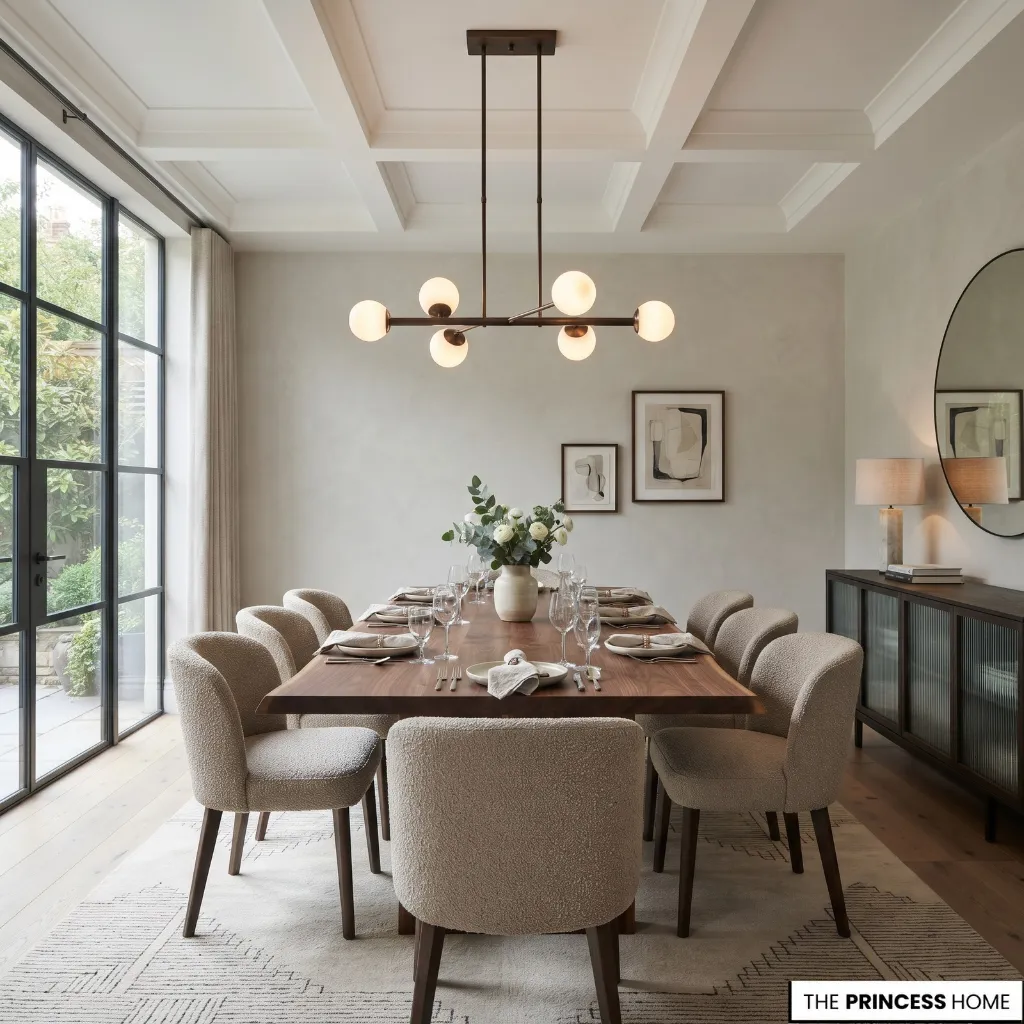
The size of a dining room light fixture should relate to the table beneath it and the surrounding space. A fixture can look attractive on its own yet feel too small, too heavy, or poorly proportioned once installed.
Start with the table’s dimensions rather than the room alone. A long rectangular table usually benefits from an elongated fixture or a balanced group of pendants. A round table often works well with a single centered chandelier or pendant because its shape creates a natural focal point.
As a practical starting point, a fixture width around one-half to two-thirds of the table’s width can help establish balanced proportions. This is a guideline, not a strict rule. The fixture’s visual weight, shade shape, and light distribution may justify a different proportion.
A narrow linear light, for example, can work over a broad table because its length provides presence without excessive width.
For example, if your dining table is 100 cm wide, a fixture approximately 50–67 cm wide provides a useful starting range. Compare the actual fixture dimensions with the table before buying, then consider its shape and visual weight.
A broad chandelier with a solid silhouette may feel larger than a lighter design with the same measurements, so the numerical range should guide your choice rather than determine it automatically.
Consider the entire arrangement. A visually substantial fixture may need more open space around it, while a delicate design can appear too small in a large room. If you choose several pendants, assess their combined dimensions and spacing instead of treating each light as an independent object.
For an extendable table, assess the full length when the table is open. The fixture should relate to the seating arrangement and provide useful light across the expanded surface. Before purchasing, you can use a paper template or temporary outline to judge the proposed dimensions against the table.
For more ideas: Dining Room Table Ideas: How to Choose the Right Table
Set the Hanging Height
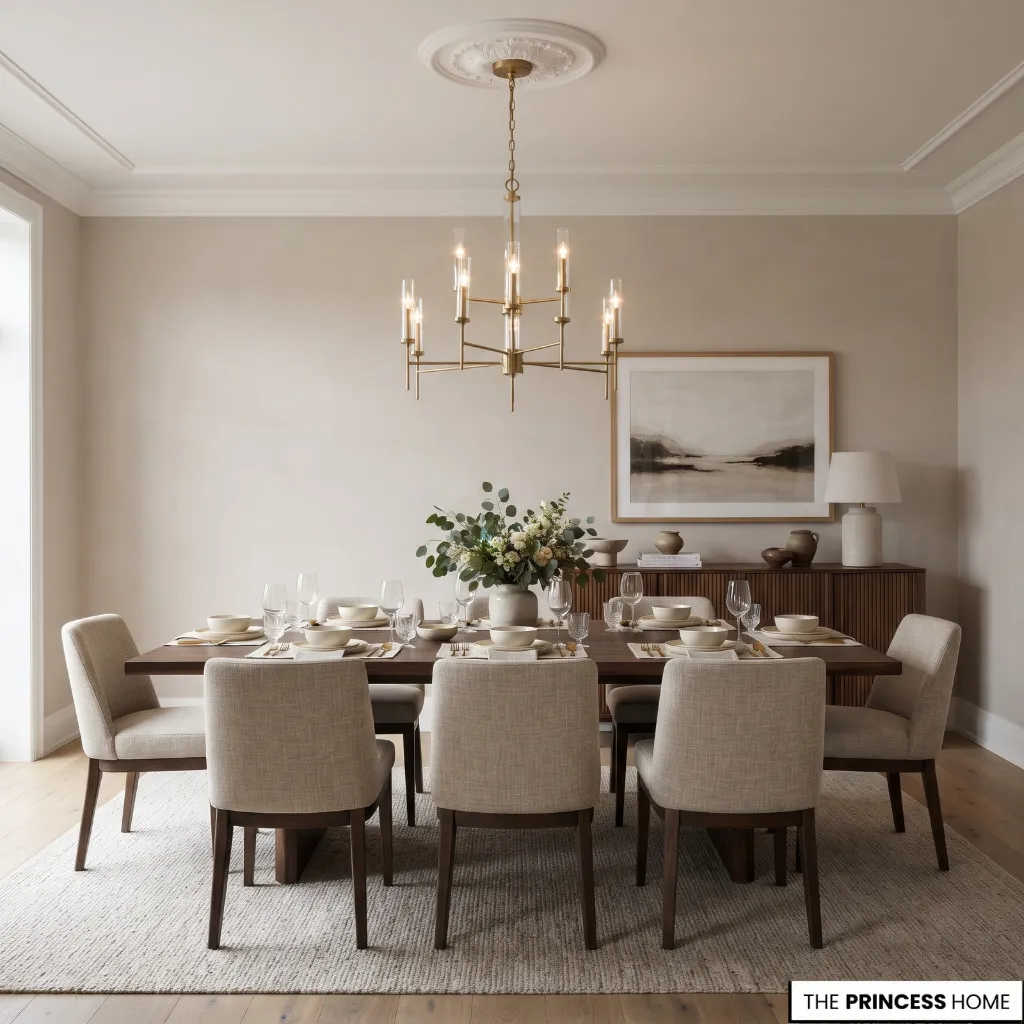
The hanging height affects both the appearance of a dining room and the comfort of the people using it. A light positioned too low can obstruct views across the table, while one placed too high may lose its connection to the dining area or distribute light less effectively.
A useful starting point for a pendant or chandelier above a typical dining table is approximately 76–91 cm (30–36 inches) between the tabletop and the bottom of the fixture. This range is not universal. Ceiling height, fixture size, shade design, brightness, and sightlines may call for adjustments.
Begin with the recommended range, then consider the actual fixture. A large chandelier with a deep lower section may need a different position from a compact pendant. The light should feel connected to the table without hanging into the normal line of sight between seated diners.
In a room with a high ceiling, a larger table, or a substantial fixture, test the proportions before final installation.
Raising a fixture may improve visibility, but placing it too high can weaken its relationship with the table. Aim for a comfortable balance rather than following a measurement without considering the room.
Before fixing the final height, assess the proposed position from the dining chairs. You can temporarily mark the intended bottom edge with a safe, removable reference or have the installer hold the fixture at the proposed level.
Sit in the usual places and look across the table. If the fixture interrupts conversations, feels too close, or loses its connection to the table when raised, adjust the proposed height and reassess it before installation.
Also consider glare from seated positions. Exposed bulbs or poorly shielded light sources can be uncomfortable when people look across the table. Choose shades and diffusers that control direct light, and assess the fixture from the chairs as well as while standing.
Choose Light Quality
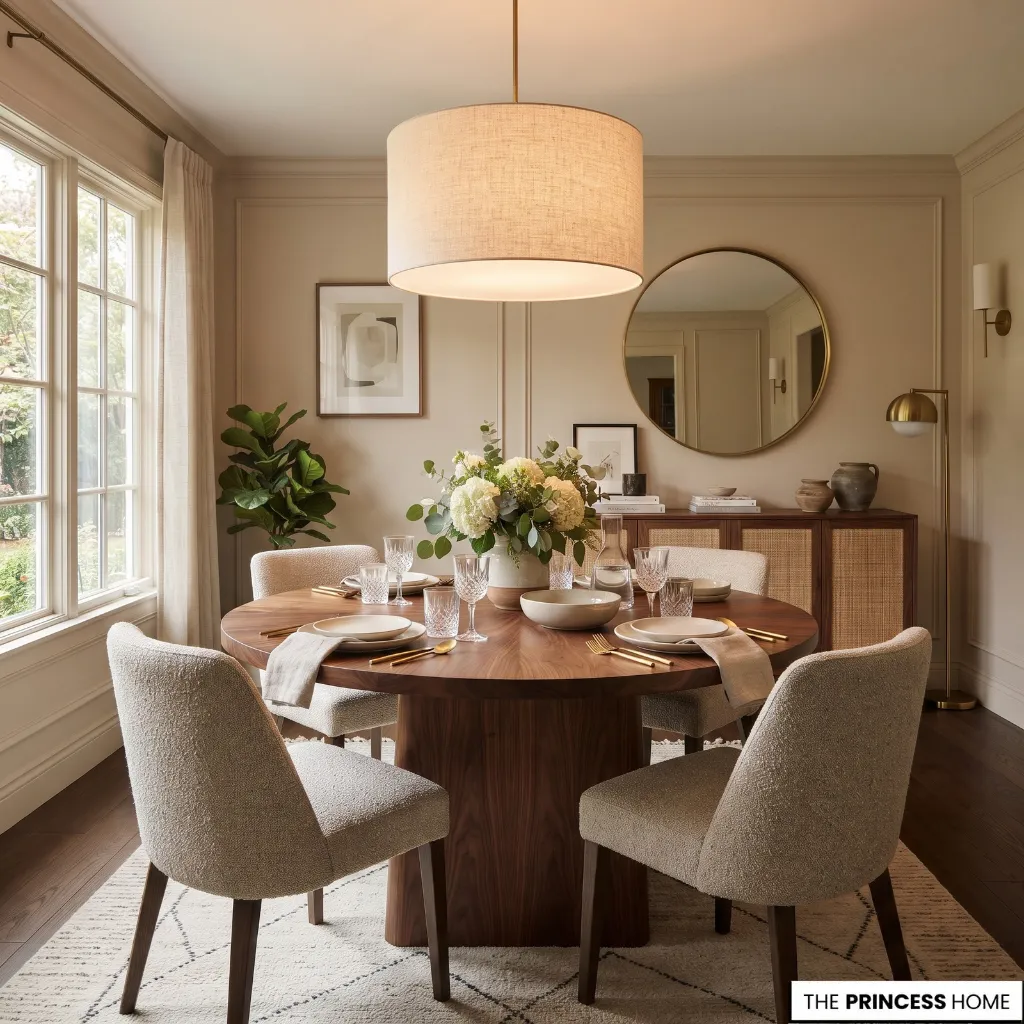
A well-chosen fixture can still produce an uncomfortable dining environment if its light is too harsh, too dim, or poorly distributed. Light quality depends on several factors, including color temperature, brightness, color rendering, and the way the fixture directs light.
Color temperature describes whether light appears warm or cool. Measured in kelvins (K), it is separate from brightness. A range around 2700–3000K is a practical starting point for a warm dining atmosphere.
Cooler light may suit some contemporary interiors or multifunctional spaces, but the choice should work with the room’s finishes and intended use.
Brightness determines how much light is available. The appropriate amount depends on the table’s size, the fixture’s output, surrounding light, and activities such as reading or working.
Check the light output and the manufacturer’s recommendations rather than relying on the bulb’s wattage or the fixture’s appearance alone.
When comparing bulbs, check the color temperature and light output on the packaging, then consider the room’s existing lighting and the fixture’s shade.
If possible, assess a suitable bulb in the actual room before committing to several bulbs, since wall colors, wood finishes, and shade materials can affect how the light appears.
Color rendering affects how accurately surfaces appear under artificial light. A good color-rendering index (CRI) helps food, skin tones, wood, and fabrics retain their natural appearance. This can be particularly important when the dining room includes rich timber, colorful upholstery, or artwork.
Dimmable lighting adds flexibility. Brighter settings can help with cleaning, reading, and other practical tasks, while lower settings may suit relaxed meals.
Before choosing a dimmer, confirm that the bulb, fixture, and control are compatible. Dimming does not automatically correct glare or poor light distribution, so those factors still need attention.
Layer the Lighting
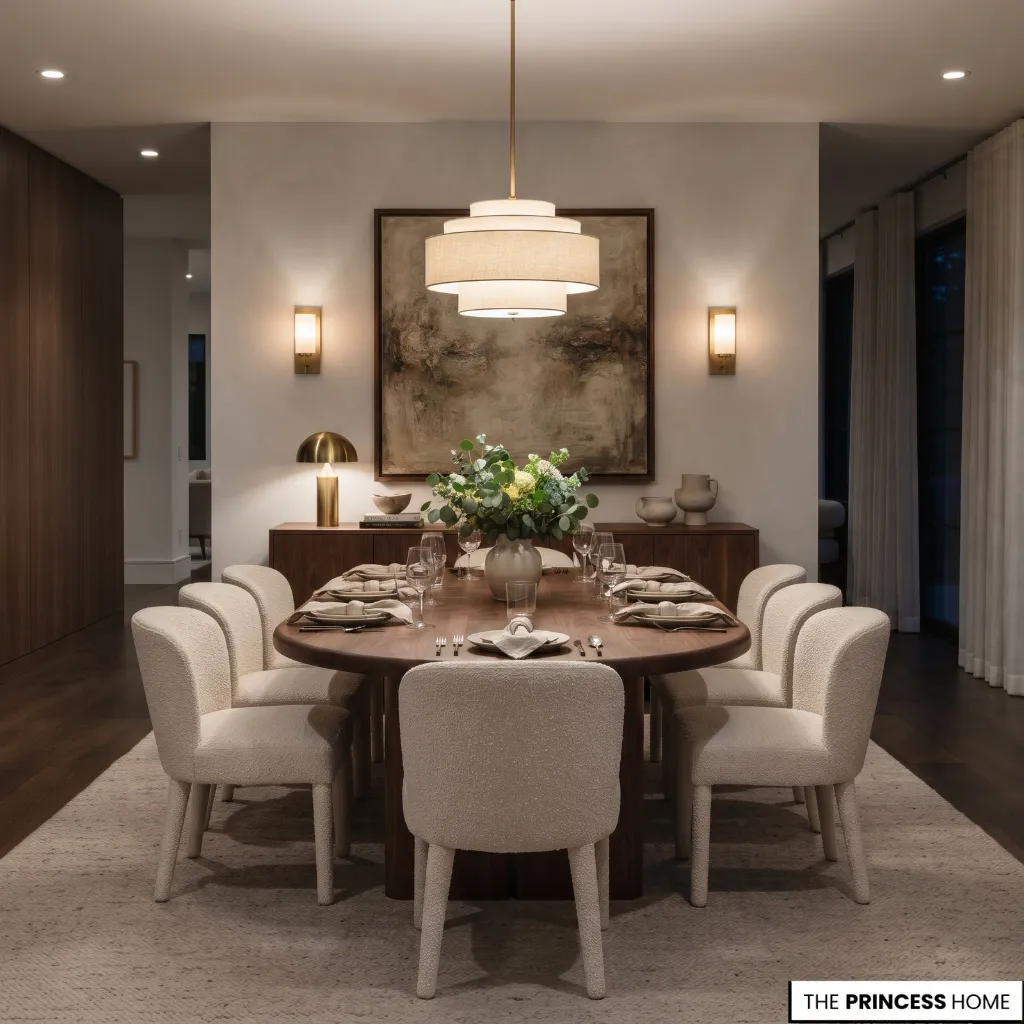
A dining room does not always receive enough useful light from a single ceiling fixture. Layering combines different sources to provide better coverage and lets the room serve more than one purpose.
The main fixture above the table provides focused illumination and helps define the dining area. Ambient lighting fills the surrounding space, reducing the contrast between a brightly lit table and dark walls or corners.
Depending on the room, this may come from recessed ceiling lights, another ceiling fixture, or other well-positioned sources.
If the table is well lit but the corners remain dark, adding more brightness directly above the table may not solve the problem. Instead, assess the surrounding areas and consider whether ambient lighting can distribute light more evenly.
The aim is to reduce the contrast between the table and the rest of the room, not to make every corner equally bright.
Wall sconces can add light around the perimeter, particularly when the dining area includes artwork, a sideboard, or architectural features. A table lamp on a suitable sideboard may provide a softer secondary source, provided it does not obstruct serving space or create distracting reflections.
In an open-plan room, consider how the dining lighting relates to the kitchen and living area. The fixtures do not need to match exactly, but their brightness and color temperature should work comfortably together.
Separate controls make it easier to light the dining table without illuminating every connected space to the same level.
More fixtures do not automatically create better lighting. Begin with the main source, identify where shadows or dark areas remain, and add supplementary lighting only where it solves a real problem. This approach can avoid unnecessary expense and keep a small dining room from feeling visually cluttered.
For more ideas: Small Dining Room Ideas: Make the Most of Limited Space
Match Your Interior
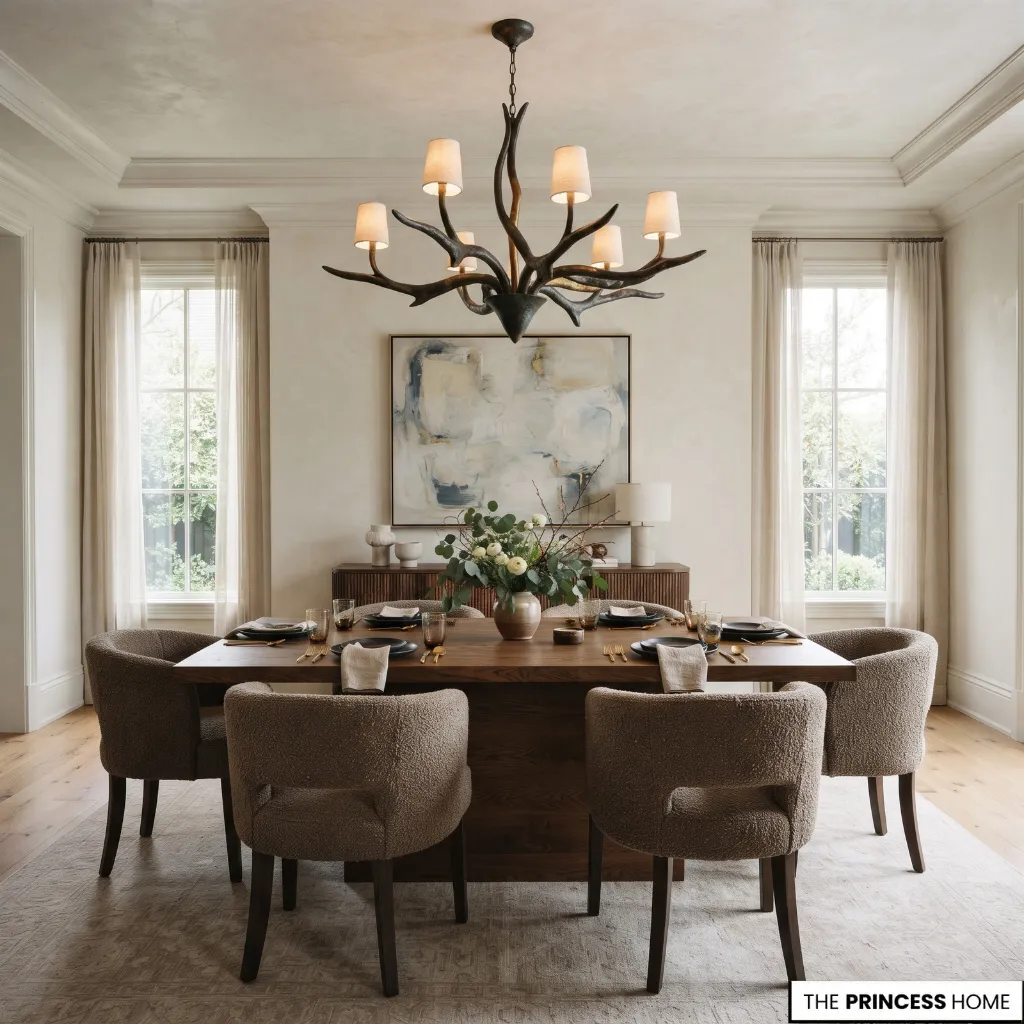
The dining room light should relate to the table, chairs, finishes, and overall character of the room. It does not need to match every piece of furniture, but its shape, material, and visual weight should make sense within the existing arrangement.
Consider the table first. A substantial wooden table can support a sculptural metal chandelier, a glass pendant, or a fixture with a natural-material shade.
A delicate table may benefit from a lighter design that does not overwhelm its proportions. Contrast can work well when the pieces remain balanced in scale and visual weight.
Coordinate materials thoughtfully. Brass, bronze, black metal, glass, ceramic, and wood each contribute different qualities. A brass fixture may complement warm wood, while black metal can add definition against pale walls.
Glass can preserve a sense of openness, particularly in a smaller room. These are starting points rather than fixed rules; the existing finishes and the fixture’s shape matter just as much as its material.
Balance contrast and repetition. Repeating a finish already found in cabinet hardware, a sideboard, or chair details can connect the room visually.
Alternatively, a contrasting finish can give the dining area a clear focal point. Different metal finishes can coexist without matching exactly when their shapes, proportions, or other elements create a clear relationship.
Choose the right visual weight. A large, sculptural chandelier may suit a spacious room with simple furniture. In a room with patterned upholstery, detailed cabinetry, and decorative wall finishes, a quieter fixture may create a more balanced result.
The lighting should contribute to the design without competing with every other element.
Color matters as well. A colored-glass pendant, a dark sculptural fixture, or a natural woven shade can introduce character without requiring the rest of the room to follow a new palette.
Choose the fixture according to the room’s existing colors and materials rather than assuming that a refined dining room must rely on neutral finishes.
For more ideas: Dining Room Chair Ideas: Comfort, Style & Proportion
Adapt to Your Room
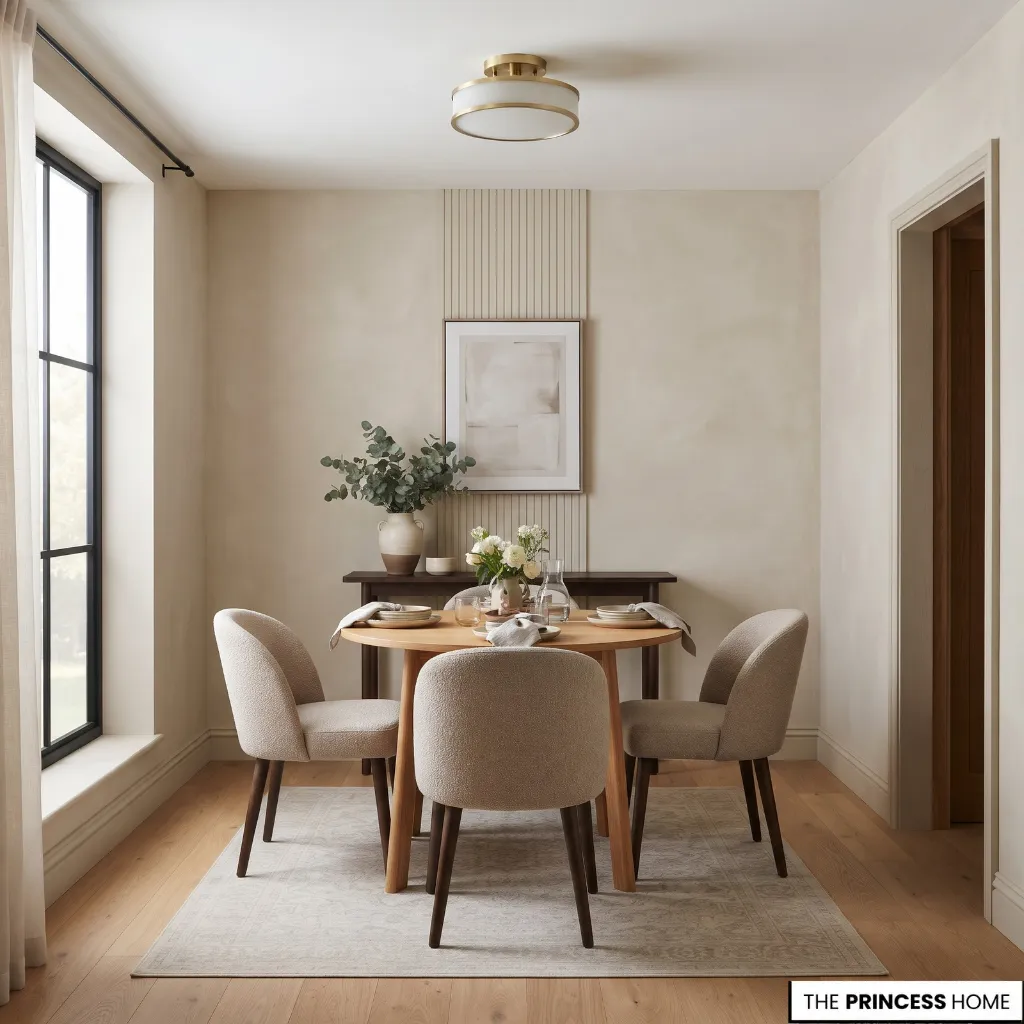
The best dining room lighting solution depends on the constraints of the space. A compact dining nook, a low ceiling, and a long table each require different adjustments.
Small dining rooms: Choose a fixture that defines the table without making the room feel crowded. A compact pendant or proportionate chandelier may work well over a small table.
Transparent glass, open frames, and restrained silhouettes can help preserve visual openness, although the fixture must still provide suitable light. If the table sits against a wall, consider whether a wall-mounted source or adjustable lighting can supplement the main fixture.
Low ceilings: Flush and semi-flush mounts reduce the space occupied by a hanging fixture. If you prefer a pendant, consider a compact design with a shallow profile and check the available clearance carefully. Avoid choosing a bulky fixture simply because it looks attractive in a product photograph.
Long dining tables: An elongated fixture or a carefully spaced group of pendants can distribute light along the table. Check that the light reaches the ends as well as the center.
If the middle of the table is bright but the ends are noticeably dimmer, review the fixture’s length, light distribution, and position before increasing the overall brightness. For extendable tables, assess the arrangement at both lengths so the lighting remains useful when additional seating is added.
Open-plan rooms: Use the dining table to establish the position of its main fixture, rather than automatically centering the light in the entire open space.
The dining area may sit beside a kitchen island or living room, so consider the visual relationship between the fixtures and the different lighting zones. Separate controls can help each area serve its own purpose.
Limited budgets: Prioritize the fixture’s proportions, light quality, and suitability for the space before paying more for elaborate finishes or complex detailing. A simple, well-proportioned fixture can perform better than an expensive design that is too large or poorly positioned.
If the existing ceiling light provides adequate general illumination, adding a suitable secondary source may be more useful than replacing every fixture.
Rental homes: When ceiling wiring cannot easily be changed, compatible plug-in or wall-mounted lighting may offer an alternative. Check the electrical requirements, installation limitations, and suitability of the fittings before choosing a solution.
For more ideas: Dining Room Layout Ideas: Space, Clearance & Flow
Avoid Common Mistakes
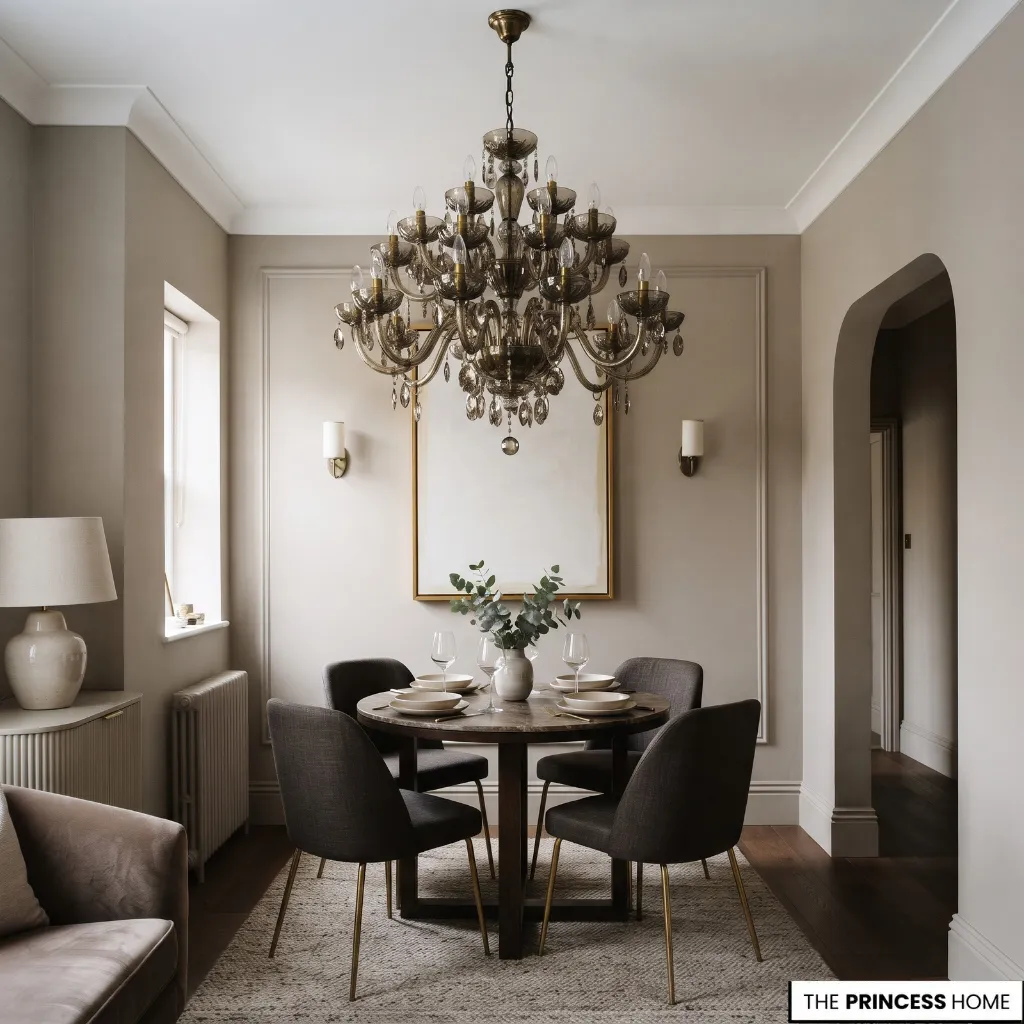
A few recurring mistakes can undermine otherwise good dining room lighting ideas. Most are easier to prevent when the fixture is selected with the room’s practical needs in mind.
Choosing by appearance alone: A beautiful fixture may provide insufficient light or expose bulbs directly to seated diners. Check its light output, shade design, and compatibility with suitable bulbs before buying.
Ignoring the table’s position: Centering a fixture in the room rather than above the dining table can leave the eating area visually disconnected from its lighting. Establish the table’s position first, then determine where the fixture should hang.
Getting the scale wrong: A small pendant over a long table may leave the arrangement looking unbalanced, while an oversized chandelier can dominate a compact room. Assess the fixture’s width, length, and visual weight in relation to the furniture.
Hanging the fixture too low or too high: An unsuitable height can obstruct views or reduce the light’s effectiveness. Use recommended measurements as a starting point, then assess sightlines, ceiling height, and the fixture’s dimensions before final installation.
Relying on one harsh light source: A bright central light can still leave corners dark or produce uncomfortable glare. Improve light distribution with suitable ambient or supplementary lighting rather than simply increasing brightness.
If glare remains uncomfortable when seated, check whether the bulb is directly visible and whether the shade or diffuser controls the light adequately.
Overlooking controls and compatibility: A dimmable fixture may require a compatible bulb and dimmer. Confirm these details before installation, and have electrical work carried out by a qualified professional where required.
Adding too many decorative elements: Multiple pendants, wall lights, and elaborate finishes can compete for attention. Each source should serve a lighting purpose or contribute meaningfully to the room’s composition. If an additional fixture does not improve the coverage or comfort, a simpler arrangement may work better.
Conclusion
The most successful dining room lighting ideas begin with the needs of the room, not the appearance of the fixture alone. Choose a design that suits the table’s proportions, position it at a comfortable height, and ensure the light supports everyday activities.
When the fixture, light quality, and surrounding sources work together, the dining room becomes more comfortable and visually balanced without unnecessary complexity.