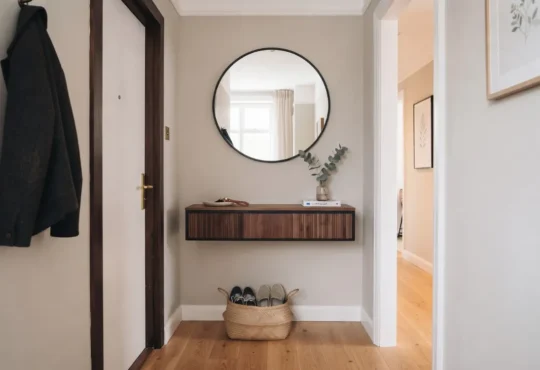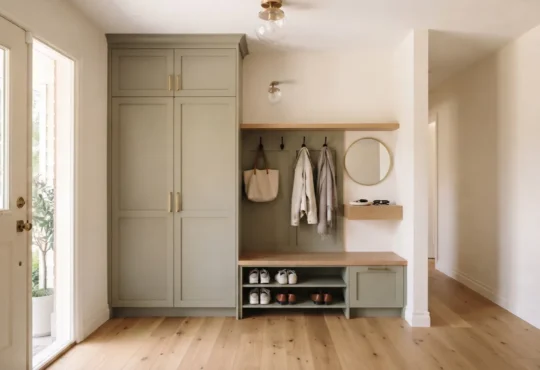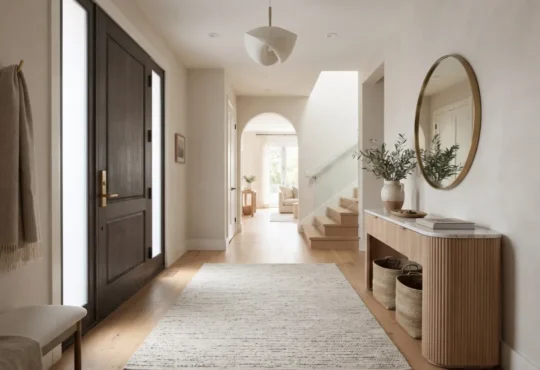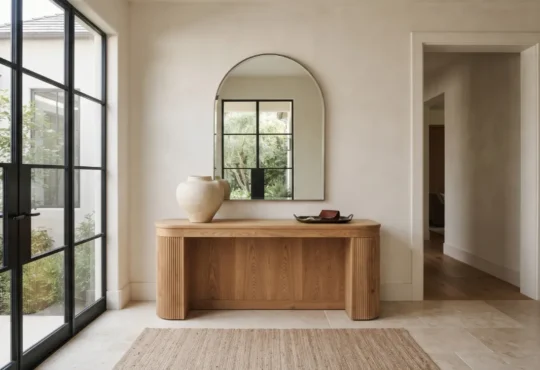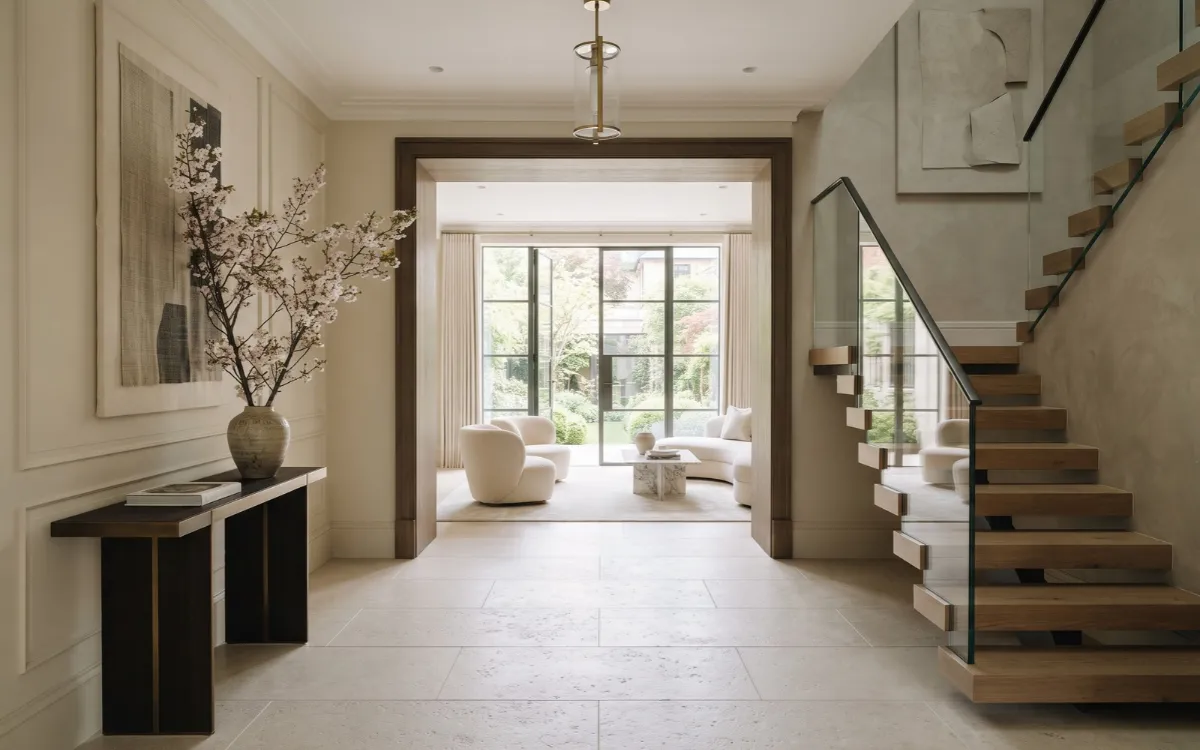
Entryway decor ideas can turn an entrance into a welcoming part of the home that reflects the character of the rooms beyond it. The challenge is choosing furniture, colors, lighting, artwork, and accessories that work together without overcrowding the available space.
These 23 ideas explain how to decorate with purpose, whether you have a spacious foyer, a narrow hallway, or a compact apartment entrance.
Establish a Focal Point
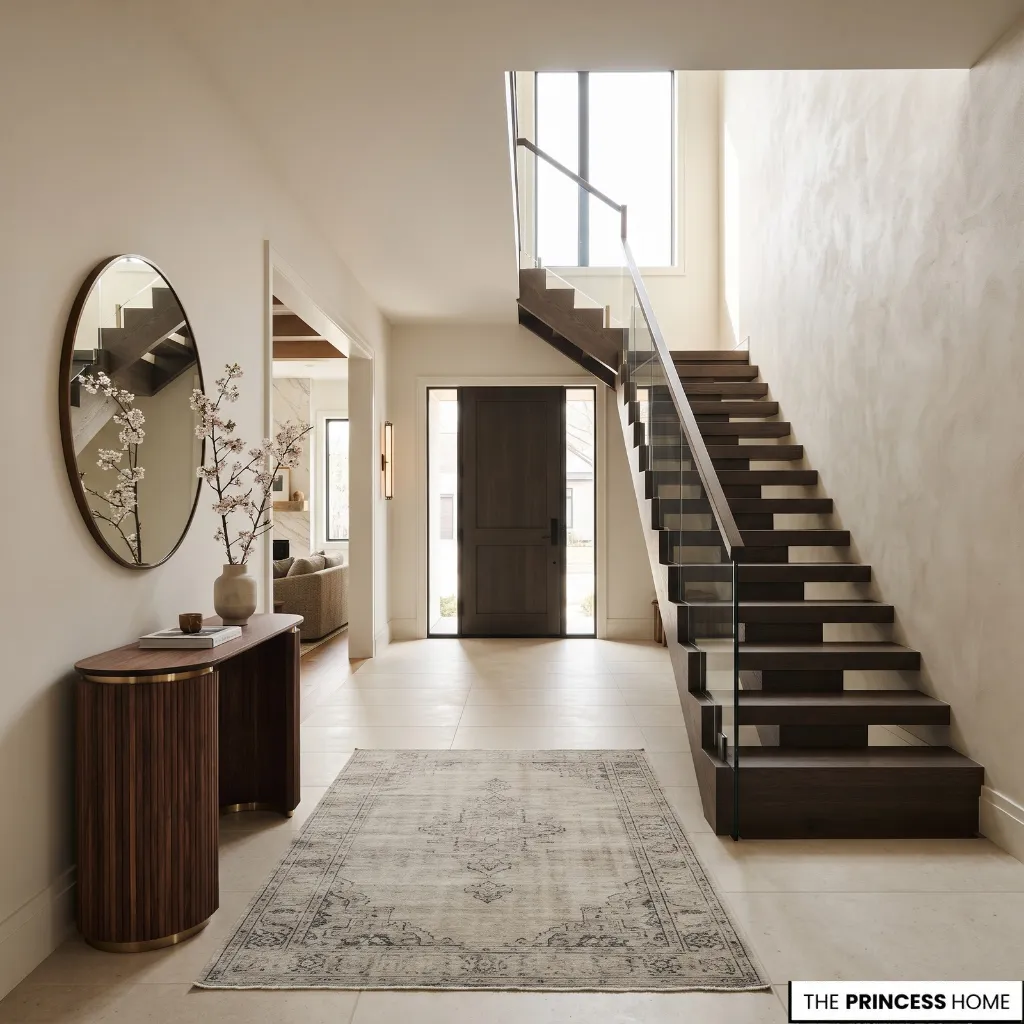
Choose one feature to anchor the entrance visually. A distinctive mirror, a large artwork, an elegant console, or an architectural detail can establish the main point of interest. Decide which feature deserves the most attention before adding other decorative elements.
For example, a sculptural console beneath a simple framed artwork can create a clear composition. If the entrance already has an attractive staircase or distinctive doorway, let that feature take priority instead of introducing another prominent element. The focal point should guide the decorating choices that follow.
Consider the proportions of the wall, furniture, and available floor space when making your selection. Several small accessories may look scattered on a large console, while an oversized mirror can overwhelm a narrow wall.
Assess the arrangement as a whole so the main feature feels intentional and the surrounding elements remain in proportion.
Connect Adjacent Rooms
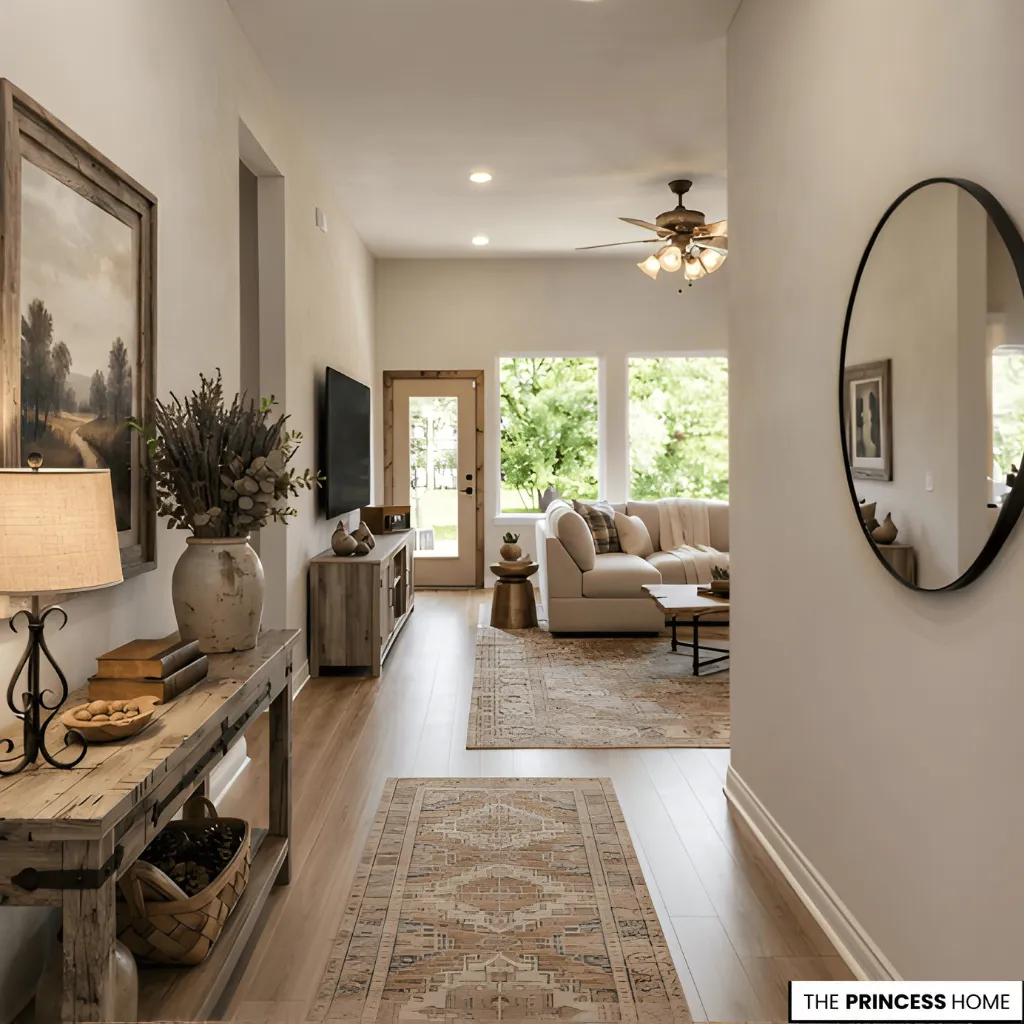
Use colors, materials, or finishes from neighboring rooms to create a natural transition between spaces. An entrance with warm wood flooring, for instance, can connect to a living room through a related wood tone, a color repeated in nearby textiles, or complementary artwork.
The elements do not need to match exactly. Repeating one or two visual details is often enough to establish continuity while allowing the entrance to have its own character. Consider the view from both sides of the doorway so the entrance feels connected to the home rather than decorated in isolation.
Pay attention to fixed finishes, including flooring, door frames, and wall treatments. These elements often provide the most useful starting points for selecting new colors and materials.
When the entrance opens directly into a living or dining area, a related finish or repeated color can create a smooth transition without making the two spaces look identical.
Highlight Existing Features
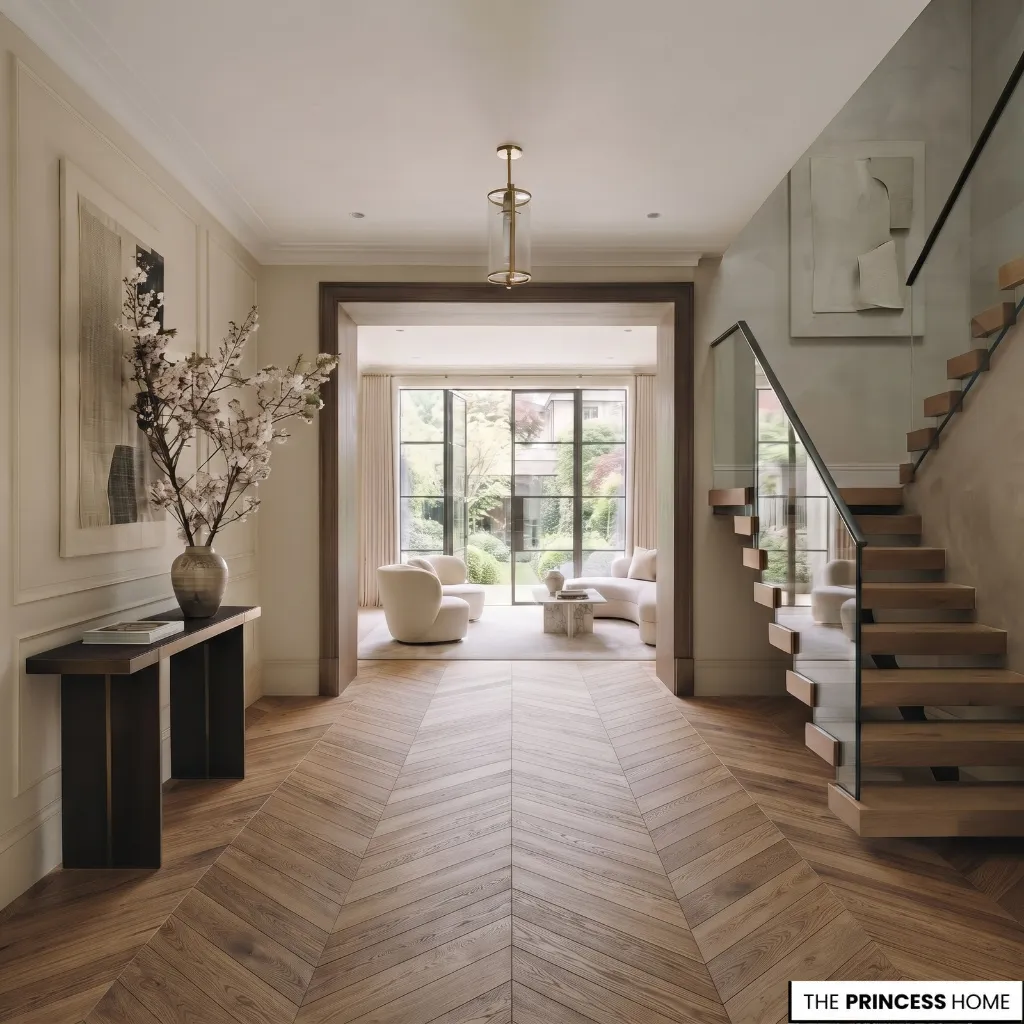
Before introducing new decoration, examine the entrance for features worth emphasizing. Wood floors, original molding, a staircase, recessed niches, decorative doors, and distinctive wall finishes can provide much of the visual interest the space needs.
Choose decoration that draws attention to these features without competing with them. A hallway with detailed wall paneling, for example, may need only a restrained console or one carefully selected artwork. If the flooring has a distinctive pattern, simpler furnishings can help it stand out.
Consider the direction of natural light and the main views through the entrance. A textured wall may become more noticeable when light falls across its surface, while an attractive staircase can provide a natural focal point from the doorway.
Use these existing qualities to guide furniture placement and lighting choices. Making use of architectural details can also reduce the need for additional purchases. Rather than covering every empty wall or filling each corner, identify the features that already contribute to the design and allow them to remain visible.
Introduce a Statement Console
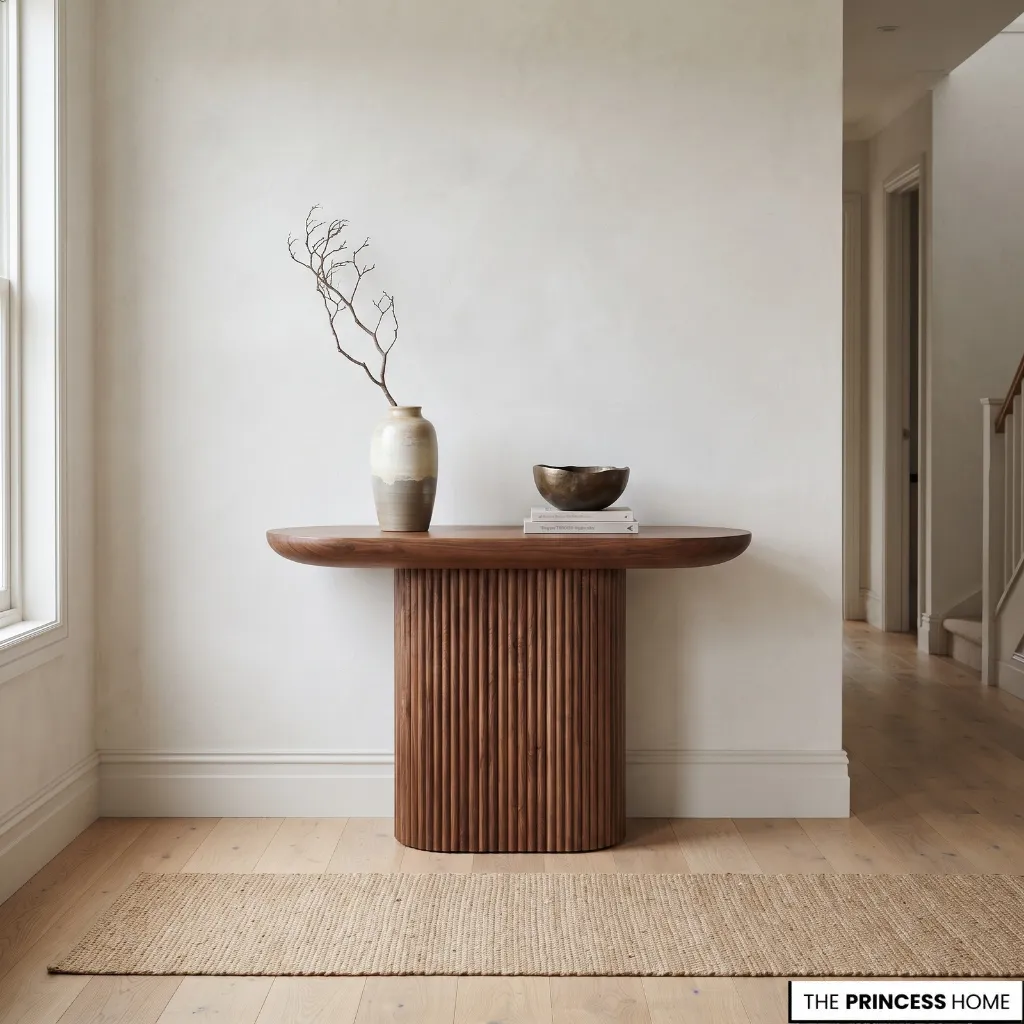
A console table can provide a strong decorative anchor without occupying as much floor space as a larger cabinet. Choose a design with a distinctive silhouette, interesting wood grain, a stone top, or a carefully finished metal base.
Relate its width and visual weight to the wall behind it. A narrow console suits many smaller entrances, while a more substantial design can hold its own in a spacious foyer. Check the depth of the table against the available passage so it does not interfere with the doorway or everyday movement.
Style the top with a few complementary objects, leaving enough clear surface to keep the arrangement practical. A table lamp, a ceramic vessel, or a framed photograph can contribute different shapes and materials without requiring a crowded display.
The console should contribute to the entrance’s overall character rather than become a collection point for unrelated accessories. If the table has a distinctive finish or sculptural form, keep the surrounding decoration relatively restrained so its design remains visible.
Repurpose a Vintage Piece
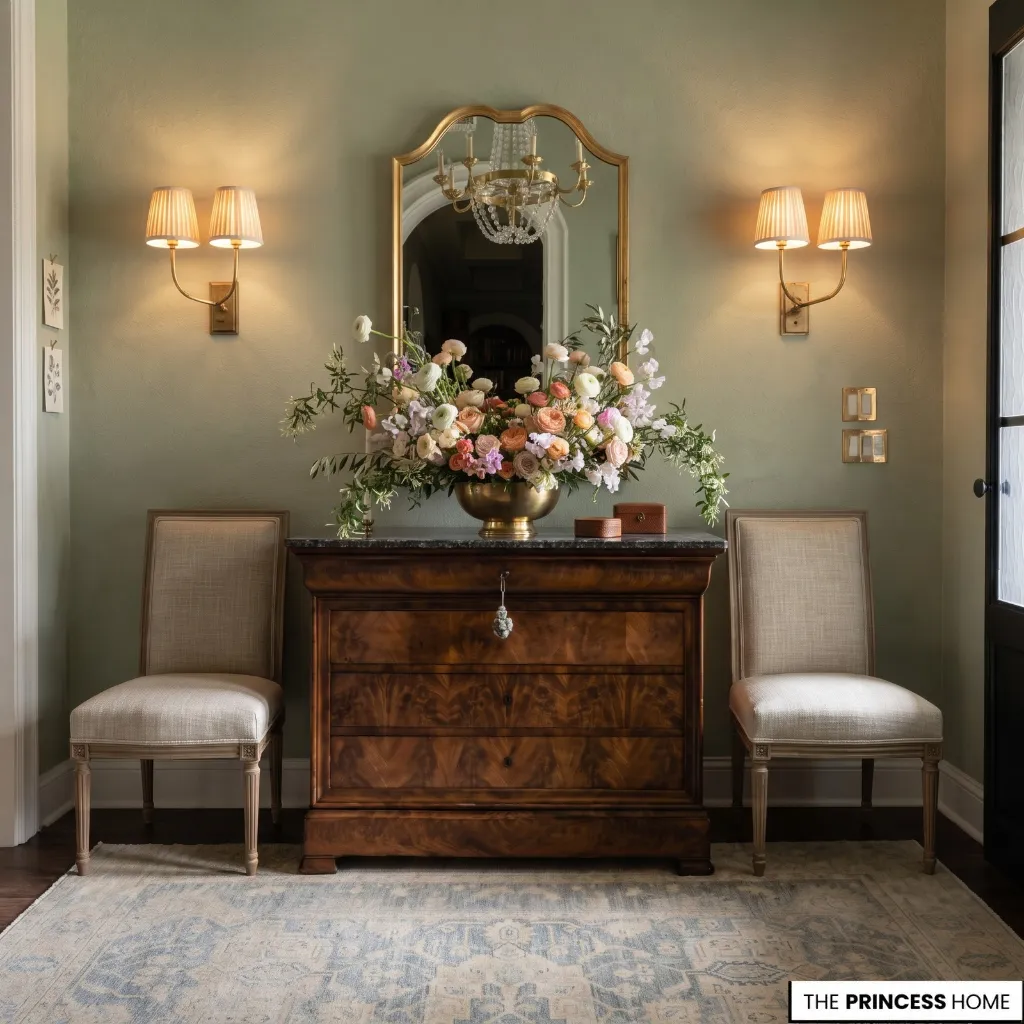
An existing antique table, small chest, or vintage cabinet can give an entrance individual character. Its worn wood, aged finish, or distinctive craftsmanship can create contrast against simpler contemporary furnishings.
Check the piece’s stability and condition before placing it in a high-traffic area. If its finish differs from the rest of the interior, connect it through a related color, material, or decorative object. For example, a dark vintage table can sit comfortably beside a contemporary mirror if the overall arrangement feels balanced.
Consider the piece’s proportions as well as its appearance. A substantial antique chest may suit a broad foyer, while a smaller vintage table can introduce character without overwhelming a narrow entrance. Leave enough room for doors to open fully and for people to pass comfortably.
The goal is to preserve the character of the older piece rather than make every furnishing look as though it belongs to the same period. A thoughtful contrast between old and new can make the entrance feel more personal and less predictable.
Use a Floating Display Shelf
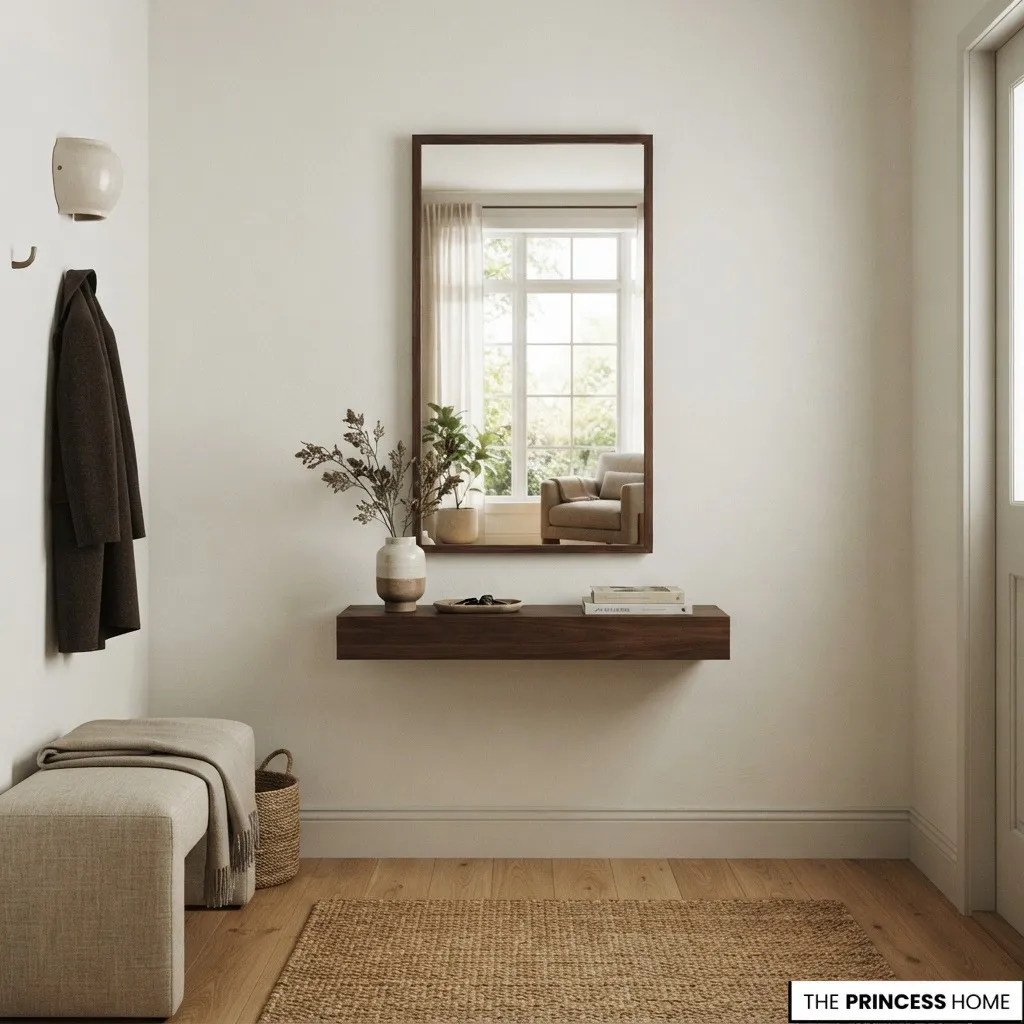
A floating shelf offers a decorative alternative when a conventional console would take up too much floor space. It works particularly well on an uninterrupted wall in a small entrance or narrow hallway.
Choose a depth that accommodates the intended objects without projecting unnecessarily into the passage. A small ceramic vessel, a framed photograph, or a compact sculpture can provide enough visual interest.
Consider the shelf’s finish in relation to the wall and nearby doors; a contrasting finish can make it stand out, while a similar color can help it blend into the architecture.
Think about the shelf’s position in relation to the door, switches, and surrounding furniture. A carefully placed shelf can use otherwise empty wall space, but it should remain accessible without obstructing movement.
If the entrance is particularly narrow, a shallow design may be more practical than a deeper display ledge.
Secure the shelf appropriately to the wall structure and follow the manufacturer’s load limits. Keep the display selective so the shelf remains a deliberate decorative feature rather than an overcrowded surface.
Hang an Oversized Mirror
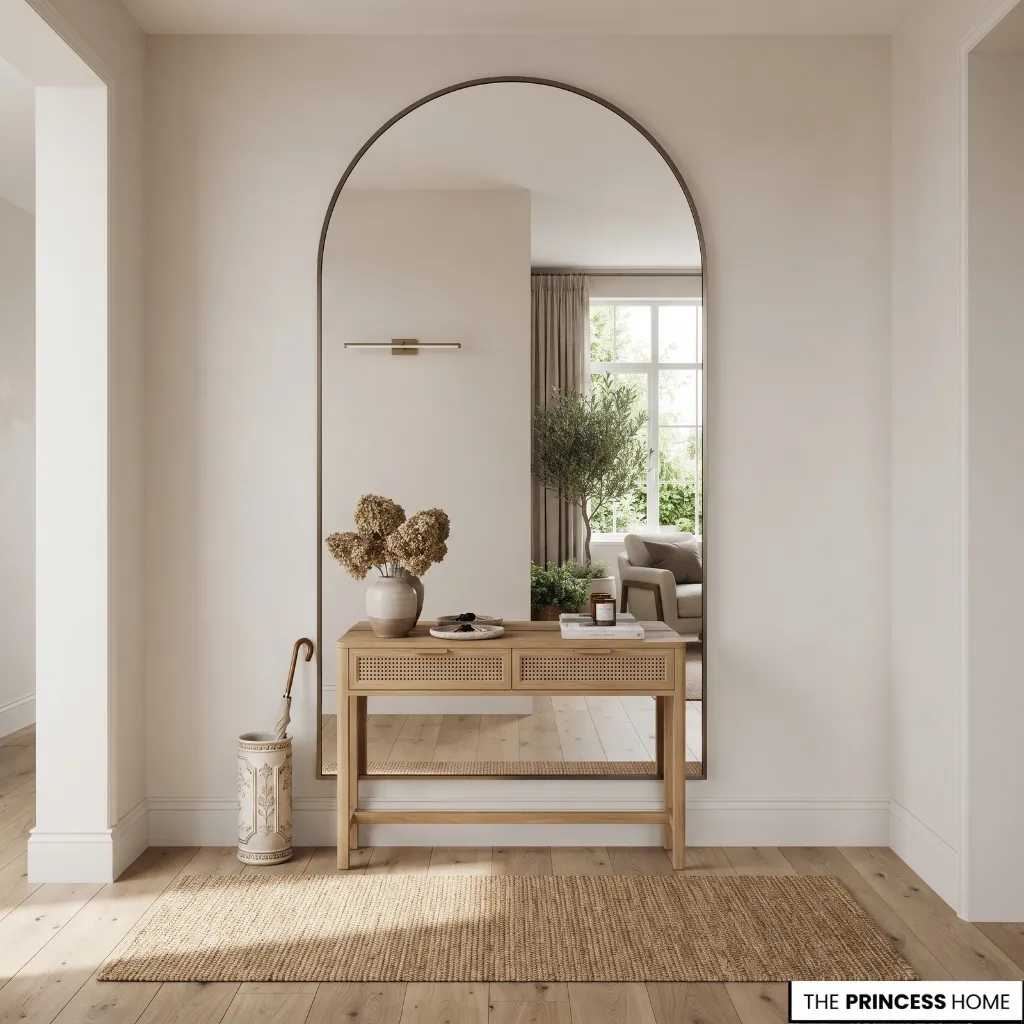
A large mirror can become the main feature of an entrance while reflecting light and parts of the adjoining interior. Select a shape and frame that relate to the architecture: a round mirror can soften a composition of straight lines, while a rectangular design may reinforce a more structured arrangement.
Consider what the mirror will reflect before deciding where to hang it. A view of a window, an attractive light fixture, or an appealing part of the room can enhance the effect. A mirror facing a cluttered area may simply draw attention to it.
The frame is a design element in its own right. A carved frame can add detail to a plain wall, while a slim frame may suit an entrance with more elaborate finishes. Relate its size to the furniture beneath it, if any, so the mirror does not appear disconnected from the rest of the arrangement.
In a compact entrance, a well-positioned mirror can contribute to a greater sense of openness without taking up floor space. Choose its location according to the available light, the surrounding views, and the practical needs of the entrance.
Display One Large Artwork
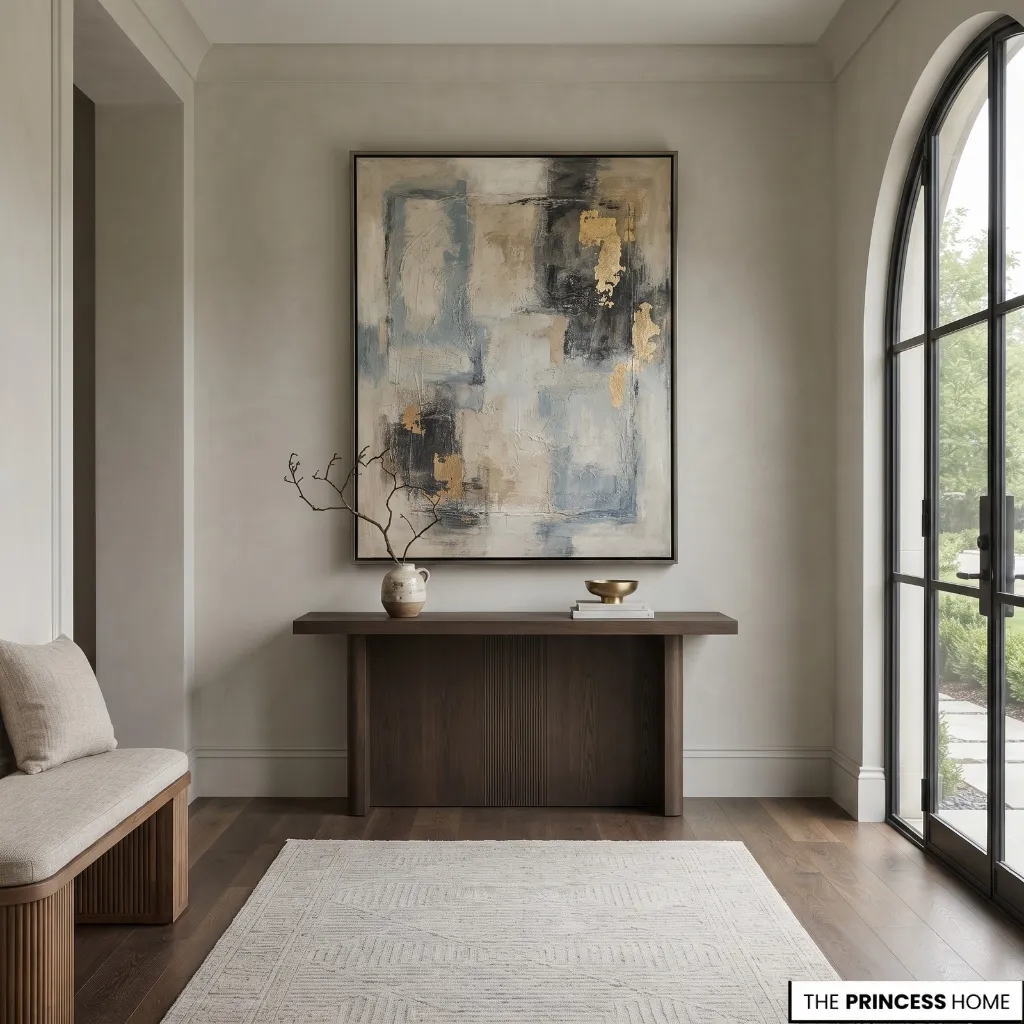
One substantial artwork can establish a clear visual statement without requiring a collection of smaller pieces. Choose a painting, print, or photograph whose scale suits the wall and whose colors relate to the surrounding finishes.
When hanging artwork above a console, consider the table and artwork as one composition. Leave an appropriate visual gap between them, and avoid positioning the frame so high that it feels disconnected from the furniture.
The artwork should have enough surrounding space to be appreciated rather than compete with nearby objects.
Consider the artwork’s subject and visual weight. A strong composition or expressive color palette can bring character to a plain entrance, while a quieter image may suit a space that already contains detailed flooring, patterned wallpaper, or elaborate architectural features.
If the entrance already contains several strong features, a simpler artwork may be the better choice. Where the wall is plain, a more expressive subject, color palette, or frame can provide the character the space lacks.
Create a Gallery Wall
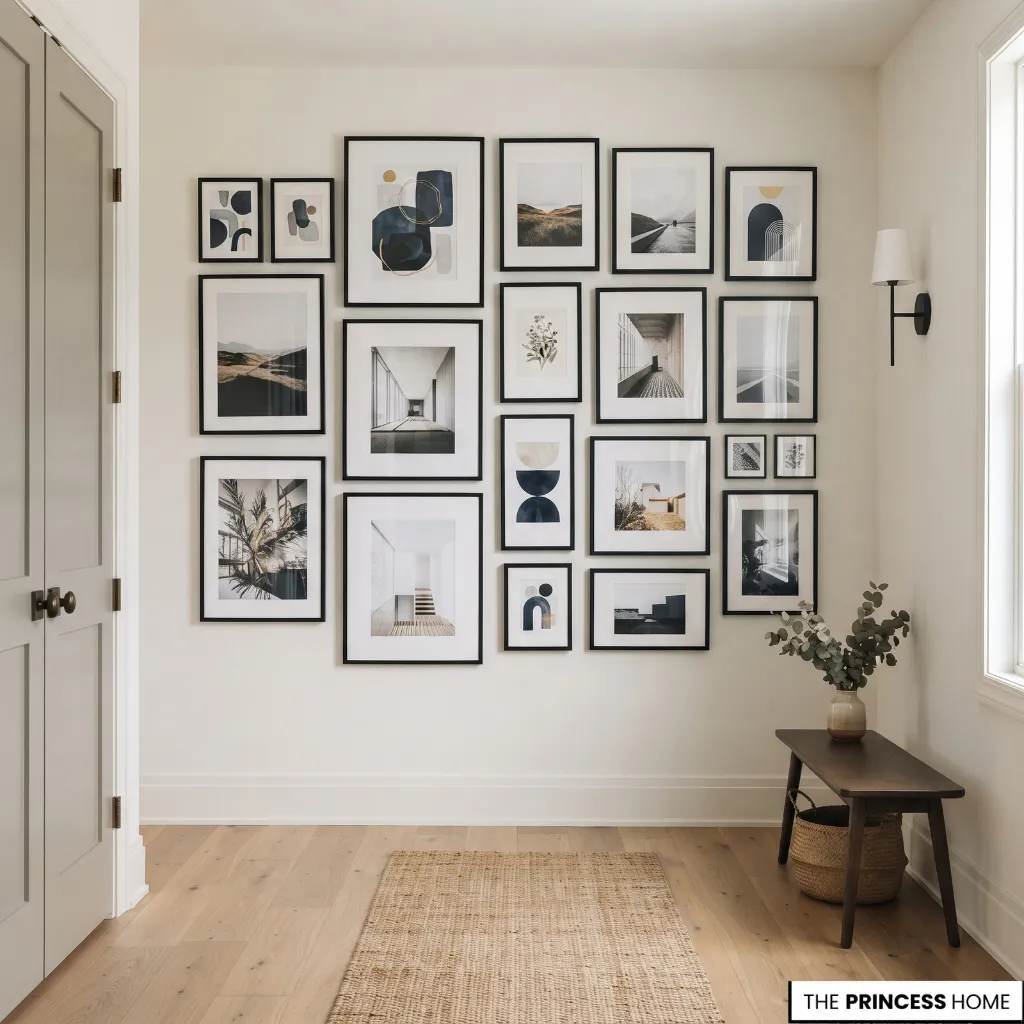
A gallery wall can bring together several images, subjects, or artistic styles in one organized arrangement. To maintain cohesion, use a consistent frame finish, a related color palette, or a clear alignment between the pieces.
Lay out the arrangement before hanging anything. Arrange the frames on the floor or use paper templates on the wall to test their positions.
Even spacing and a considered outer shape can help different frame sizes work together. For a narrow hallway, a horizontal sequence may suit the available wall better than a dense arrangement.
The arrangement does not need to be perfectly symmetrical. A larger frame can anchor one side while smaller pieces balance the other, provided the overall composition feels deliberate. Consider the visual weight of each frame, including its color, size, and subject, rather than relying on identical dimensions alone.
The individual images can vary in subject and style, but give the collection a recognizable connection. A shared frame color or repeated tone can unite family photographs, illustrations, and prints without making them look identical.
Leave enough space around the gallery wall to keep it distinct from nearby doors, light switches, and other decorative features. Planning the arrangement as a whole will help the collection feel connected rather than like a group of unrelated pictures.
Choose Statement Lighting
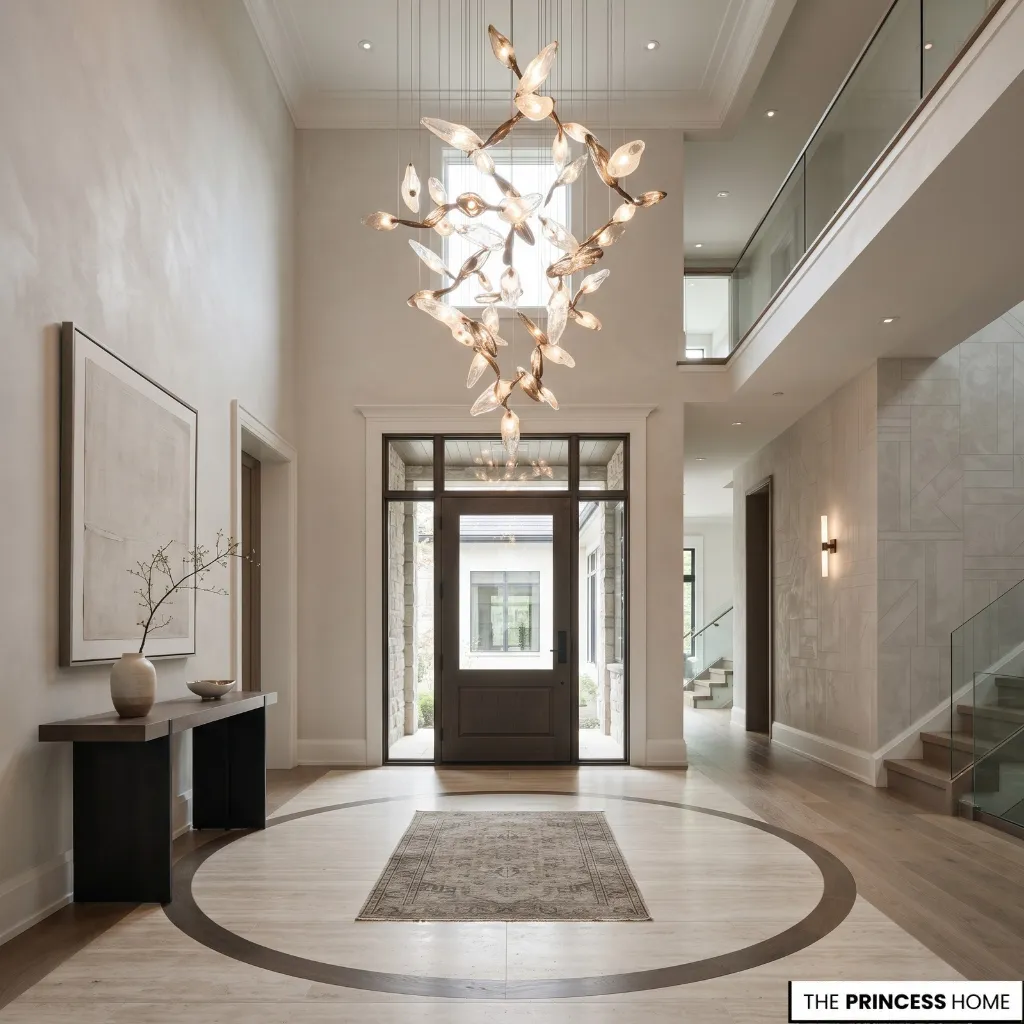
A pendant or chandelier can establish the character of a foyer, particularly when the ceiling height and floor area allow the fixture to be seen clearly. Consider its shape, material, and overall scale in relation to the architecture and surrounding furnishings.
A sculptural pendant may suit a simple entrance, while a more traditional chandelier can complement detailed molding or classic furniture. A distinctive fixture can also provide a focal point in an entrance that has limited wall space for artwork.
Check ceiling height, door operation, head clearance, and the fixture’s light output before choosing it. A visually impressive fitting should still provide suitable illumination for the entrance. In a low-ceilinged hallway, a flush or semi-flush fixture may achieve a similar decorative effect without creating an obstruction.
Consider how the fixture relates to the other finishes in the space. Metal details may connect with door hardware or a console base, while glass or fabric elements can introduce a different surface quality.
The fixture should contribute to the overall composition without competing unnecessarily with an existing focal point.
Install Decorative Sconces
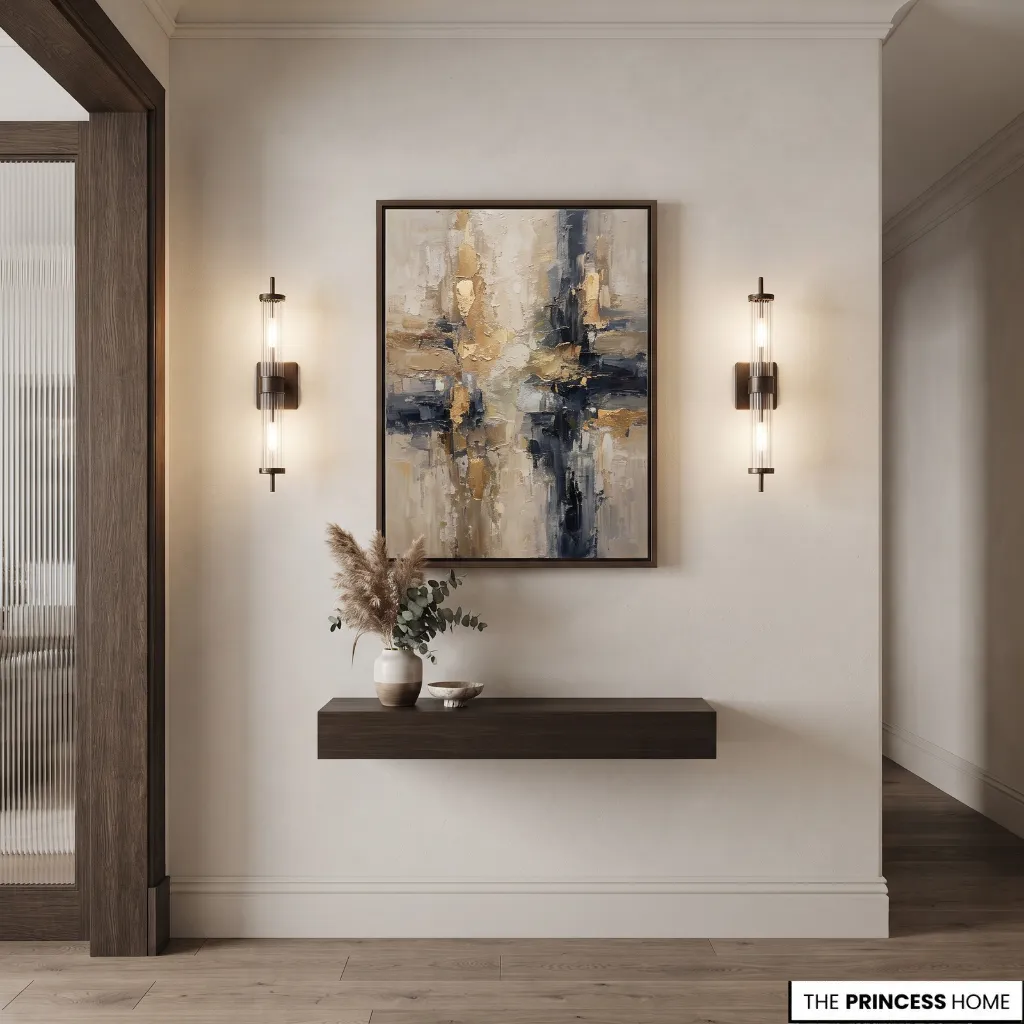
Wall sconces can frame artwork, emphasize a feature wall, or provide a secondary light source in an entrance without a large ceiling fixture. A pair positioned on either side of a mirror or artwork can create symmetry, while a single sconce may suit an asymmetrical arrangement.
Choose fittings that relate to the existing hardware and finishes. A simple metal design may complement contemporary furniture, while a fabric shade or sculpted form can suit a more traditional setting. Pay attention to glare, the position of nearby doors, and the lighting effect on the wall.
Sconces can also help reveal the texture of paneling, masonry, or other architectural surfaces. The effect depends on the direction and spread of the light, so consider how the wall will look both during the day and after dark. A restrained arrangement often works better than placing lights on every available wall.
Where wiring is difficult, suitable plug-in or rechargeable options may be worth considering, provided they meet the practical needs of the location. For hardwired fittings, use a qualified professional where appropriate.
Introduce a Confident Accent Color
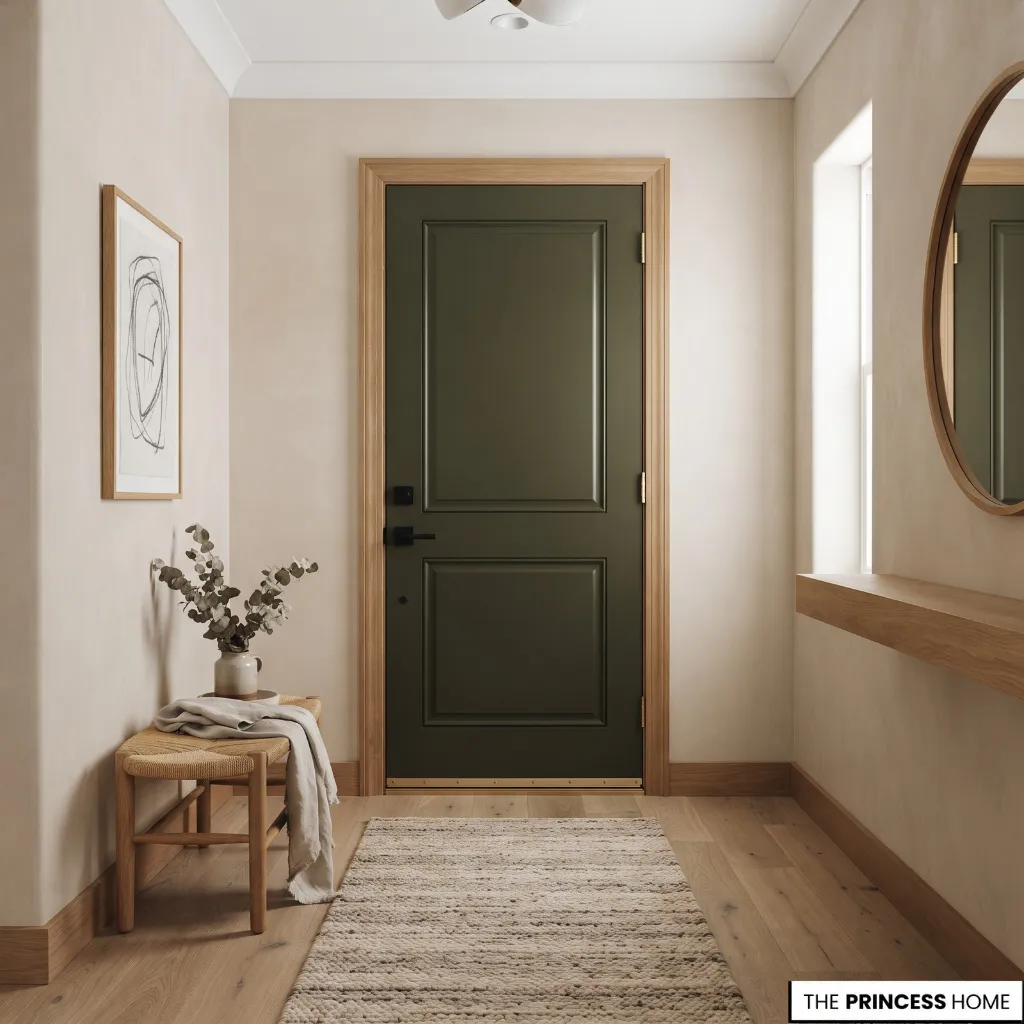
A deliberate accent color can give an entrance personality while connecting it to the rest of the home. Deep olive, muted blue, terracotta, or another considered shade may work through a painted wall, an interior door, an artwork, or a single decorative object.
Choose the color in relation to existing flooring, nearby rooms, natural light, and fixed finishes. An accent does not have to be bright to stand out. A deeper or more saturated shade can create contrast within a restrained palette when used in the right proportion.
Decide where the color will have the greatest effect before applying it. Painting one wall or the inside face of a door may be enough to define the entrance, while a smaller accent can introduce color without changing the room’s overall finish.
Consider how the accent will appear from adjoining rooms as well as from the entrance itself. A color repeated in nearby artwork, upholstery, or decorative objects can create continuity without requiring every surface to share the same shade.
If you prefer to keep the walls neutral, a distinctive vessel, framed print, or other carefully chosen object can provide a similar point of contrast. The aim is to give the entrance a recognizable character while keeping the overall palette connected.
Apply Statement Wallpaper
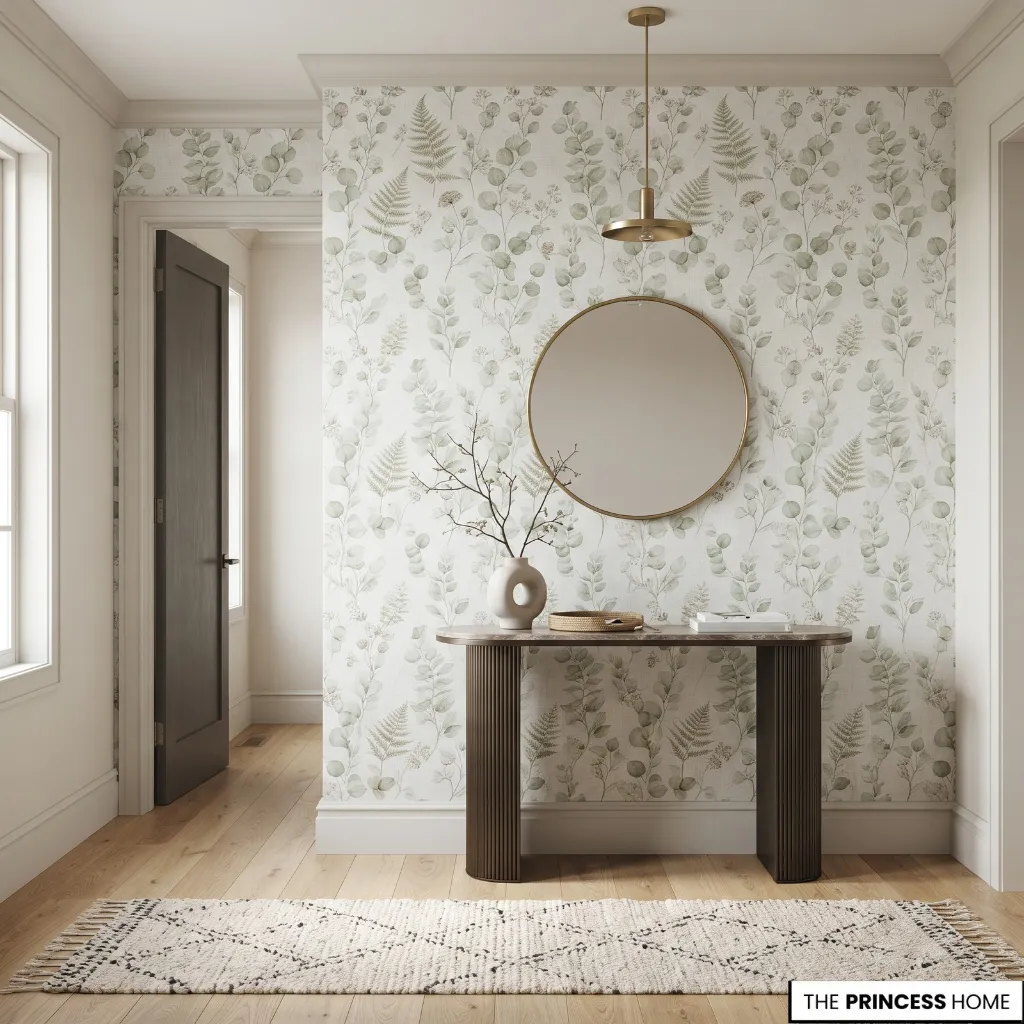
Wallpaper can introduce pattern, color, or texture to an otherwise plain entrance. Botanical designs, geometric repeats, subtle stripes, and textured patterns create different effects, so select a design that suits the scale of the space and the surrounding interior.
Large patterns can make a strong statement on an uninterrupted wall, while smaller or less contrasting patterns may be easier to combine with detailed flooring or furniture.
Look at the full repeat before committing to a design; a motif that looks appealing in a small sample may appear very different across a complete wall.
Consider lighting conditions, adjoining walls, and the condition of the surface before installation. In a rental, removable wallpaper may be an option if the wall surface and product are suitable.
The surrounding furniture and finishes should support the pattern rather than compete with it. If the wallpaper has strong colors or an elaborate design, a restrained console and limited accessories can help maintain balance.
A quieter pattern, by contrast, may provide texture and depth without dominating the entrance.
Add Decorative Wall Paneling
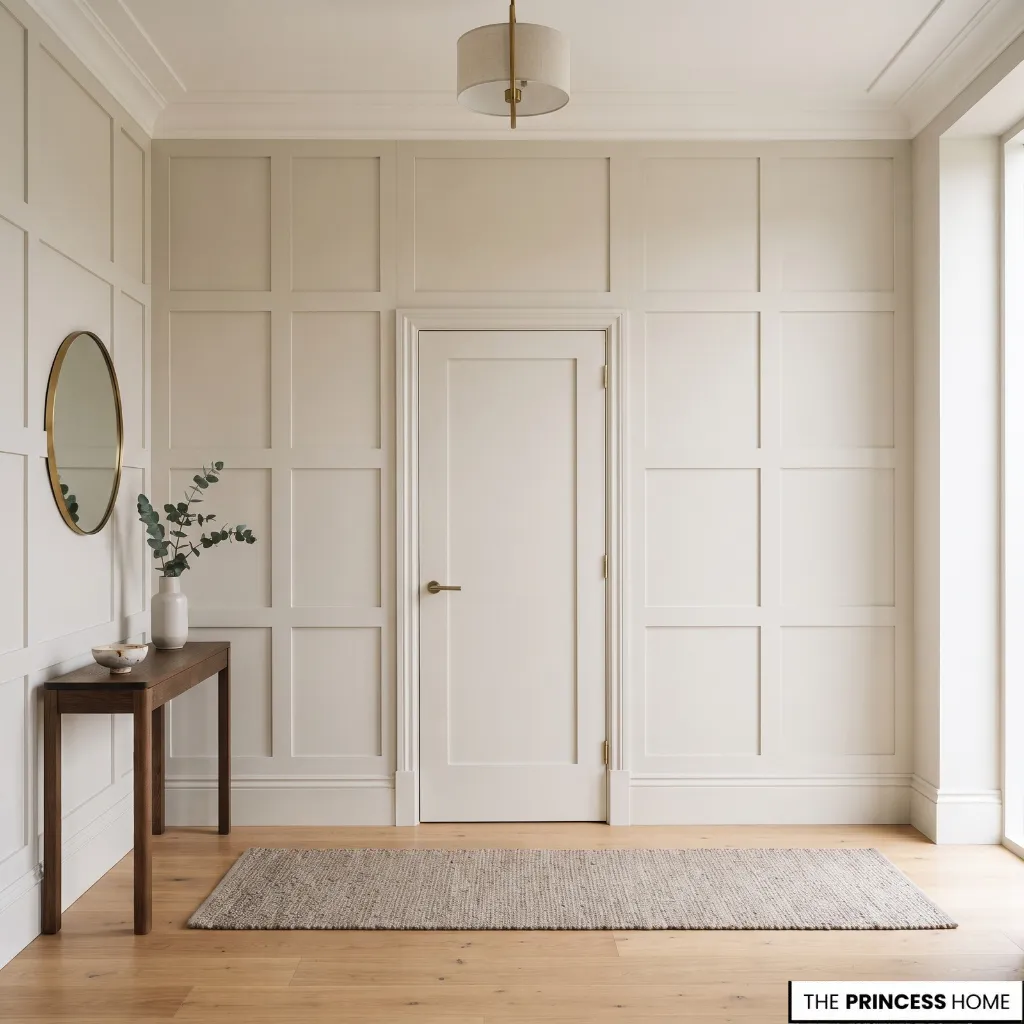
Wall paneling or applied molding can give a plain entrance greater architectural definition. Simple rectangular panels suit many traditional and transitional interiors, while restrained vertical detailing can complement a contemporary setting.
Relate the dimensions of the panels to the wall height and width. Dense detailing may feel excessive in a narrow hallway, whereas larger, simpler panels can establish a more measured rhythm. Consider the placement of switches, door frames, and existing trim so the panel layout appears intentional.
Paint the paneling to match the wall for a unified appearance, or use a contrasting finish when the architectural detail deserves greater emphasis. In a smaller entrance, matching the colors can add depth and structure without creating too many competing lines.
Paneling can also provide a useful background for artwork or a mirror. If the wall already has substantial architectural detail, choose decoration that respects its proportions. A simple console or a single framed piece may be sufficient to complete the arrangement.
Try a Tonal Color Scheme
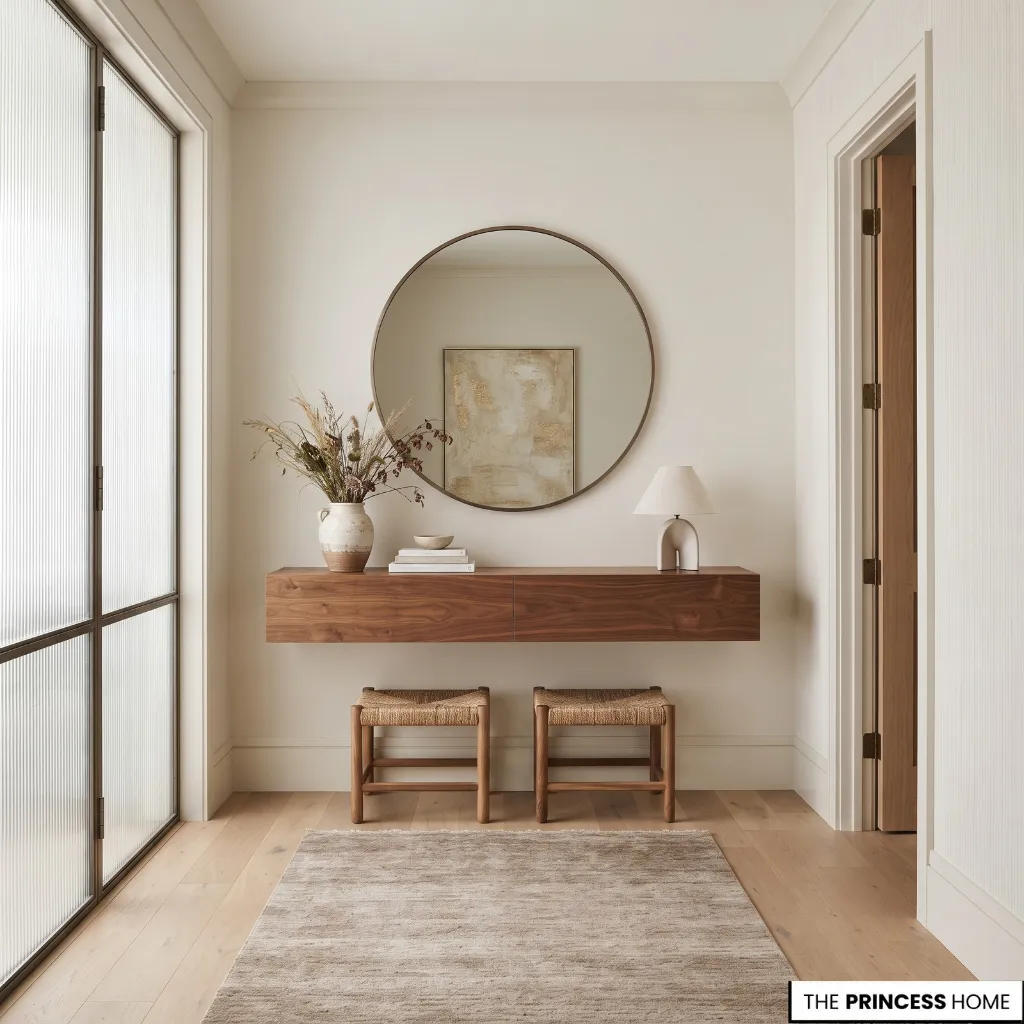
A tonal scheme uses related shades across walls, trim, and selected furnishings. Several variations of green, warm white, or muted brown, for example, can create a connected appearance without relying on strong color contrasts.
The key is to vary the surfaces rather than repeat one finish everywhere. Painted walls, natural wood, textured upholstery, and ceramic objects can each contribute a different quality even when their colors are closely related. Differences in lightness and depth also help the individual elements remain distinguishable.
Test paint samples under the entrance’s actual lighting before selecting the final combination. A color may look warmer or cooler at different times of day, especially in a hallway with little natural light.
Consider the colors visible in adjoining rooms and the finishes that cannot easily be changed, such as flooring and door frames. Use these as a starting point for the palette, then introduce subtle variations through furniture, artwork, and accessories.
The finished scheme should feel connected while allowing the architecture and furnishings to remain visible. Differences in texture and surface finish can provide enough contrast to keep a tonal entrance from appearing flat.
Introduce a Patterned Runner
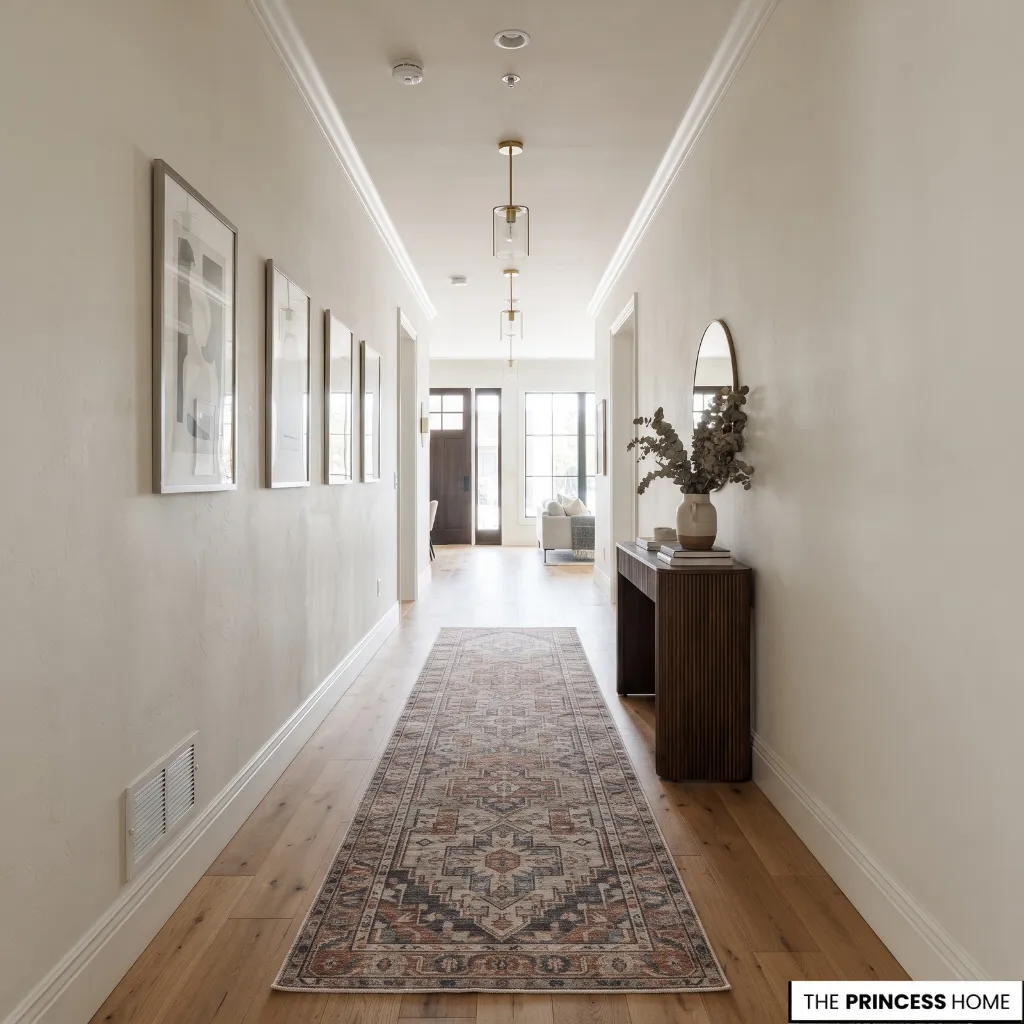
A runner can add color, pattern, and direction to a hallway while defining the route through the entrance. Choose a design that relates to the wall color, wood tones, or artwork without requiring every element to match.
Measure the passage and check the relationship between the runner, door clearance, and exposed floor at the sides. The runner should fit the length and width of the hallway rather than look like a small mat placed in the middle of a larger space.
A stripe can emphasize the direction of a long corridor, while a more intricate motif can introduce detail to a plain interior. Consider how the runner interacts with the rest of the flooring. If the floor already has a strong decorative pattern, a quieter rug may create a better balance.
On a plain wood or stone floor, a more expressive design can provide the color and texture the space needs. Select a construction suited to the level of foot traffic and the cleaning requirements of the household.
A nonslip backing or suitable rug pad can help reduce movement, and the edges should lie flat to limit tripping hazards.
Make the Floor a Feature
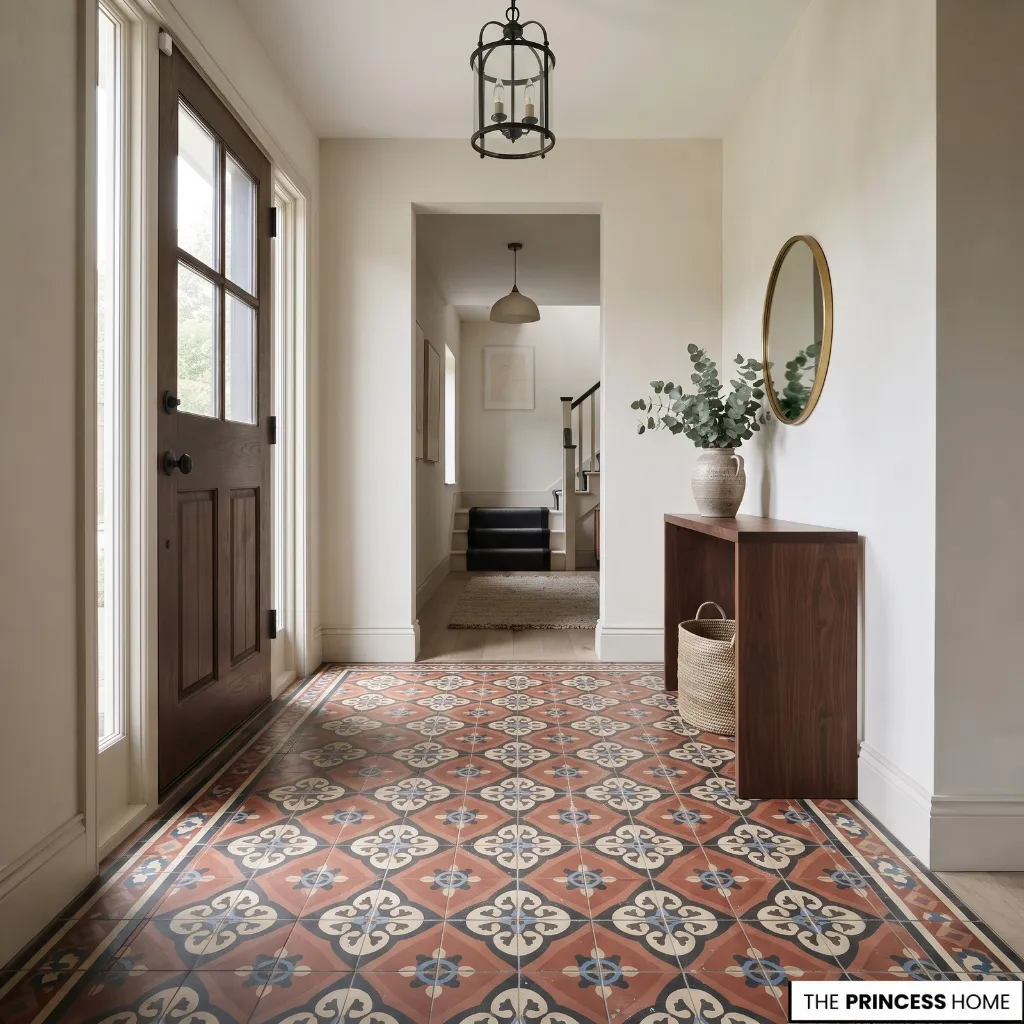
An attractive floor can provide much of the decoration an entrance needs. Wood grain, patterned tile, natural stone, or an existing decorative floor finish can become the main visual element when the surrounding furnishings are relatively restrained.
If the flooring has a strong pattern, keep nearby surfaces quieter so the design remains easy to appreciate. Simple walls, a restrained console, and limited accessories can allow decorative tile to take priority. A subtle wood floor, by contrast, can accommodate more expressive artwork, wallpaper, or textiles.
Consider how the flooring connects to adjacent rooms. A change in material or pattern can help define the entrance, but the transition should still feel appropriate to the home’s overall design. Related colors or complementary finishes can create continuity without requiring the same flooring throughout.
If you are considering a floor change, evaluate it alongside the fixed finishes and adjoining rooms. Choose a finish that suits the entrance’s use and maintenance needs as well as its appearance. A decorative floor should contribute to the overall design without making the transition between rooms feel disconnected.
Add a Statement Plant
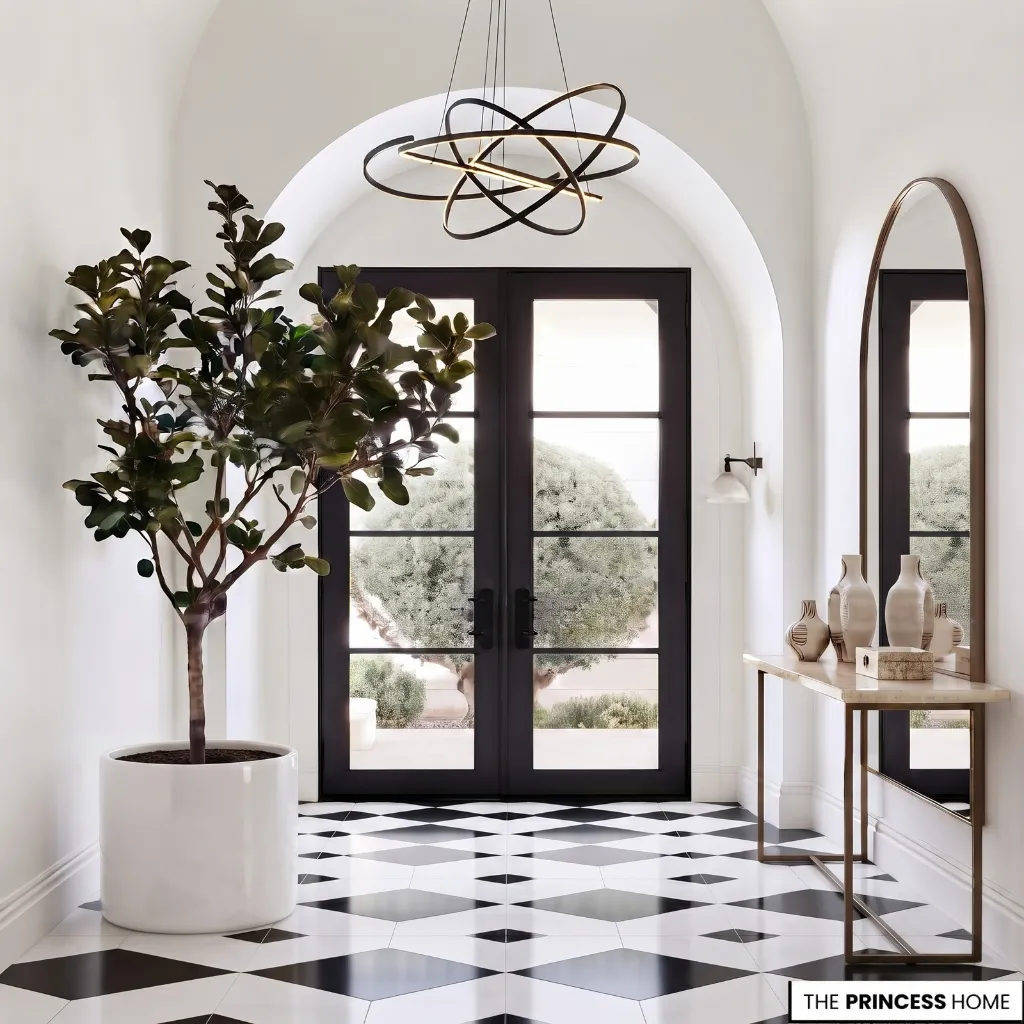
A plant can introduce organic shape and a living element into an entrance. Choose its mature height, leaf form, and planter according to the available floor space and the light conditions.
A tall plant may complement a broad corner or a high ceiling, while a smaller plant on a console can work in a compact foyer. Consider the outline of the foliage as part of the composition: upright leaves can complement a structured interior, while a more spreading form can soften straight lines.
The planter also contributes to the design. A simple ceramic container can suit a restrained entrance, while a more textured or sculptural pot can become part of the focal arrangement. Relate its size and finish to the surrounding furniture so the plant feels integrated into the space.
Check the plant’s actual light and watering requirements rather than choosing by appearance alone. Keep foliage clear of the doorway and ensure that the planter is stable and appropriate for the floor surface.
If the entrance receives little natural light, choose a plant suited to those conditions or consider another natural decorative element.
Display Seasonal Branches
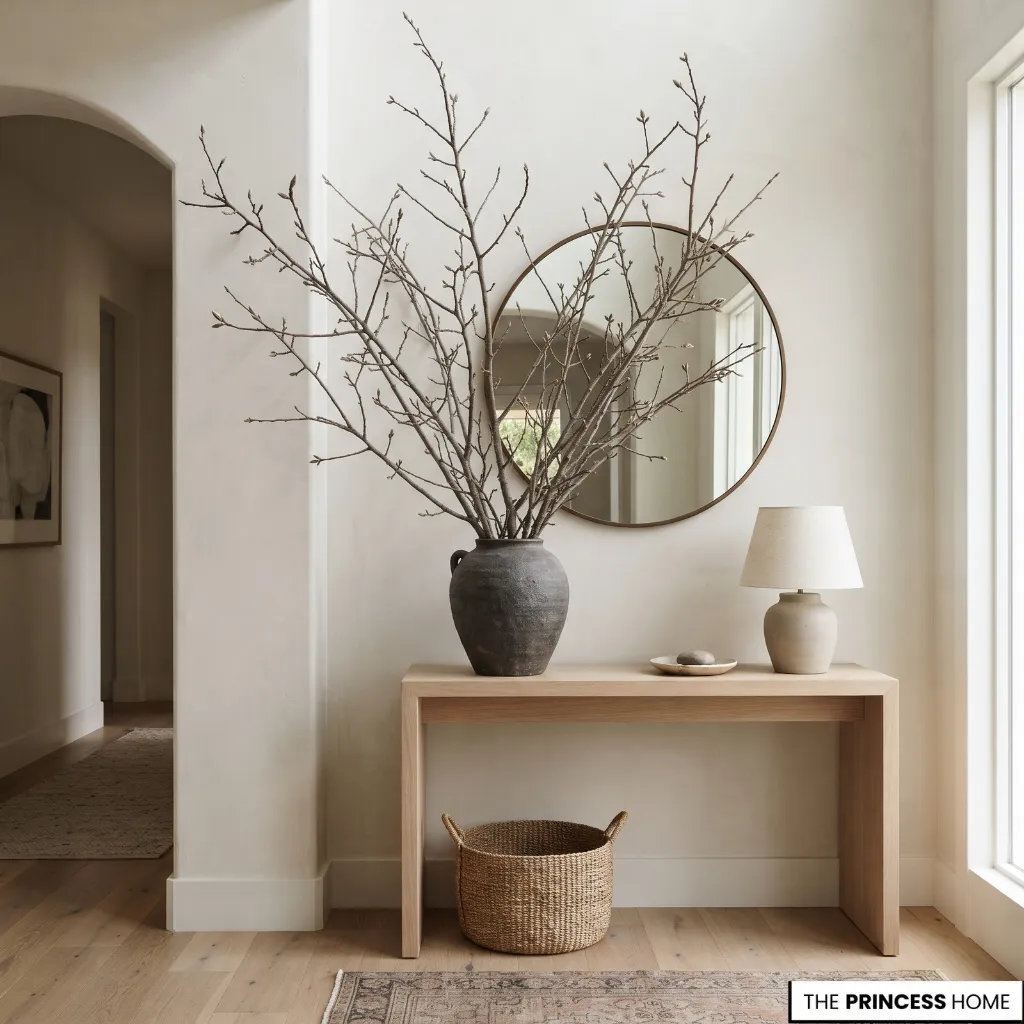
Branches or seasonal foliage can create a distinctive silhouette without requiring an elaborate floral arrangement. Place them in a stable vase on a console or another suitable surface, allowing their natural shape to provide the main visual interest.
Consider the height and spread of the branches in relation to the wall, mirror, and nearby lighting. A tall arrangement may suit an open foyer, while a lower one may be more appropriate beneath artwork or in a narrow passage. Choose a vessel with enough weight and a suitable opening to support the stems securely.
The relationship between the branches and the vessel is important. A simple vase can allow an unusual branching form to stand out, while a distinctive container may call for a more restrained arrangement. Consider the outline of the entire composition rather than focusing only on the individual stems.
Seasonal branches can also change the appearance of the entrance throughout the year without requiring a new decorative scheme. Change the arrangement as the foliage dries or sheds, and keep it clear of candles and other heat sources.
Display Organic Sculptures
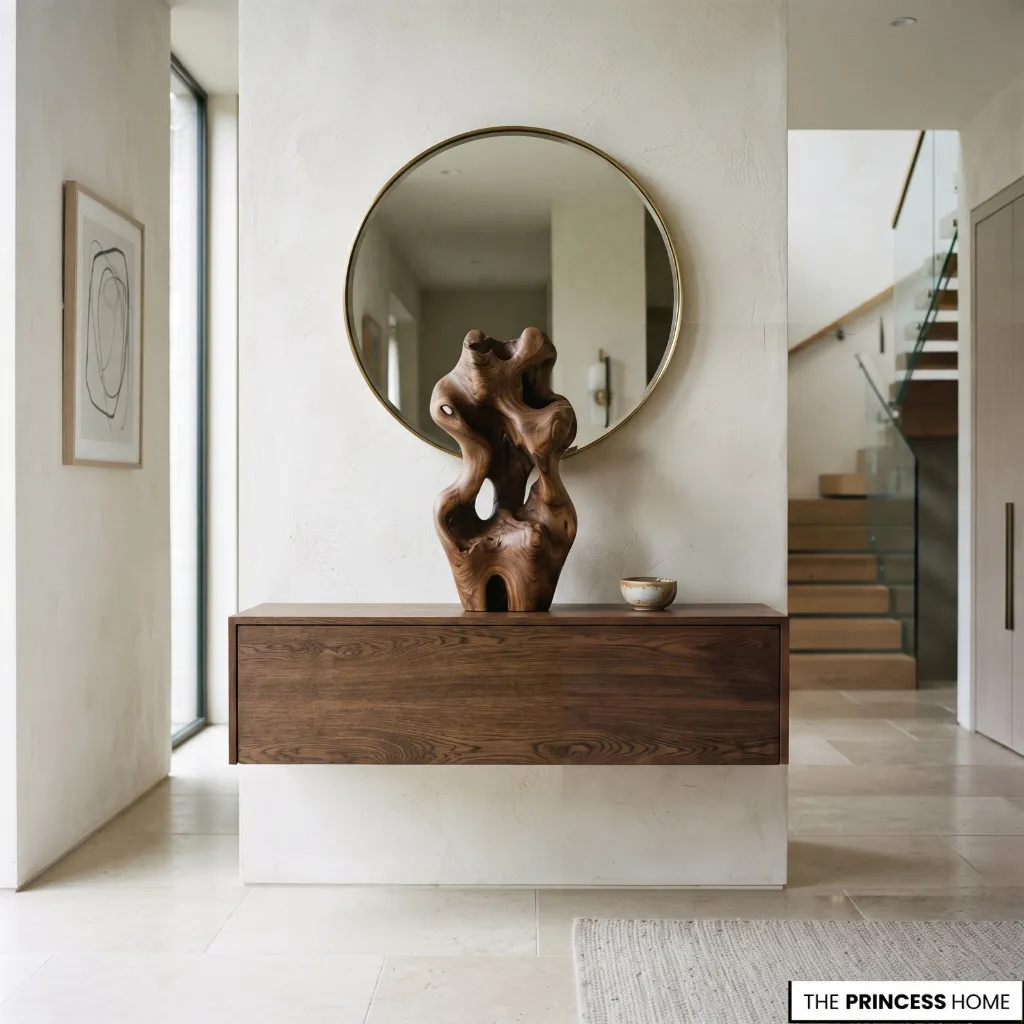
A naturally shaped stone, carved wood form, or other sculptural object can act as a small piece of art. Its irregular outline or distinctive surface may provide more interest than several smaller accessories.
Choose an object with a suitable weight and footprint for the surface on which it will sit. Consider the way its outline contrasts with nearby furniture: an organic shape can soften the straight edges of a console, while a rough stone surface can add depth to a more polished setting.
Material choice can also help connect the object to the rest of the entrance. A carved wooden form may relate to a timber console, while a stone sculpture can introduce contrast against a smooth tabletop or painted wall.
The aim is to establish a considered relationship between the materials rather than collect unrelated objects. Place the sculpture where its shape can be appreciated without obstructing everyday use.
In a restrained entrance, one strong organic form may be enough to establish a contrast with straight-edged furniture and architectural lines.
Create a Layered Vignette
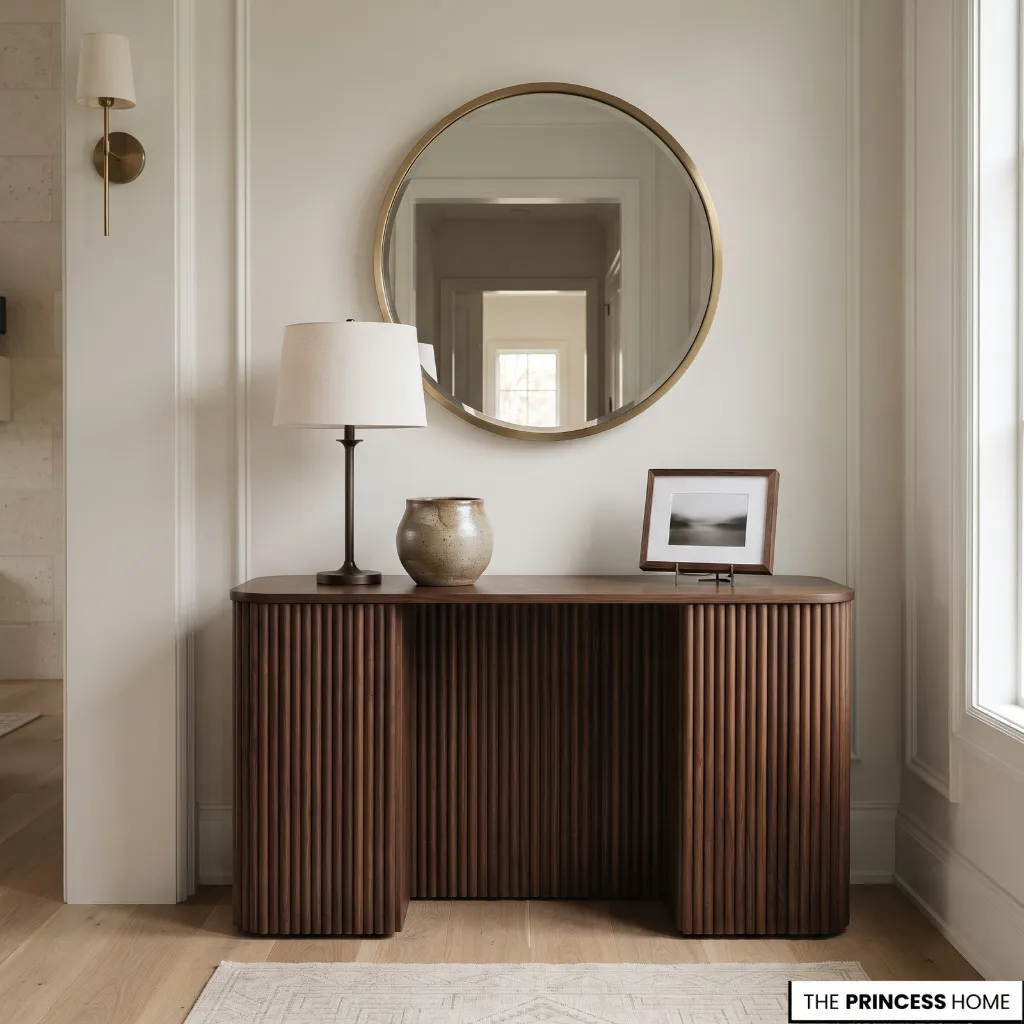
A vignette is a small, deliberate arrangement of objects on a console, shelf, or another suitable surface. Combine a few elements with different heights, such as a lamp, a ceramic vessel, and a small framed image, while keeping their relationship clear.
Start with the largest object and arrange the smaller pieces around it. Consider the balance of shapes and the amount of empty space between them. Vary the heights without allowing one object to hide another, and assess the arrangement from the main viewpoint of the entrance.
Materials and surface finishes can help the objects feel connected. A smooth ceramic vessel beside a textured wooden object, for example, introduces contrast without requiring a strong color difference. A repeated color or related shape can provide continuity between pieces that serve different purposes.
A useful vignette does not require many accessories; each object should contribute a distinct form, material, or practical role. If the arrangement feels crowded, remove an item before adding anything else. The remaining pieces should work together as a complete composition rather than compete for attention.
Display Personal Collections
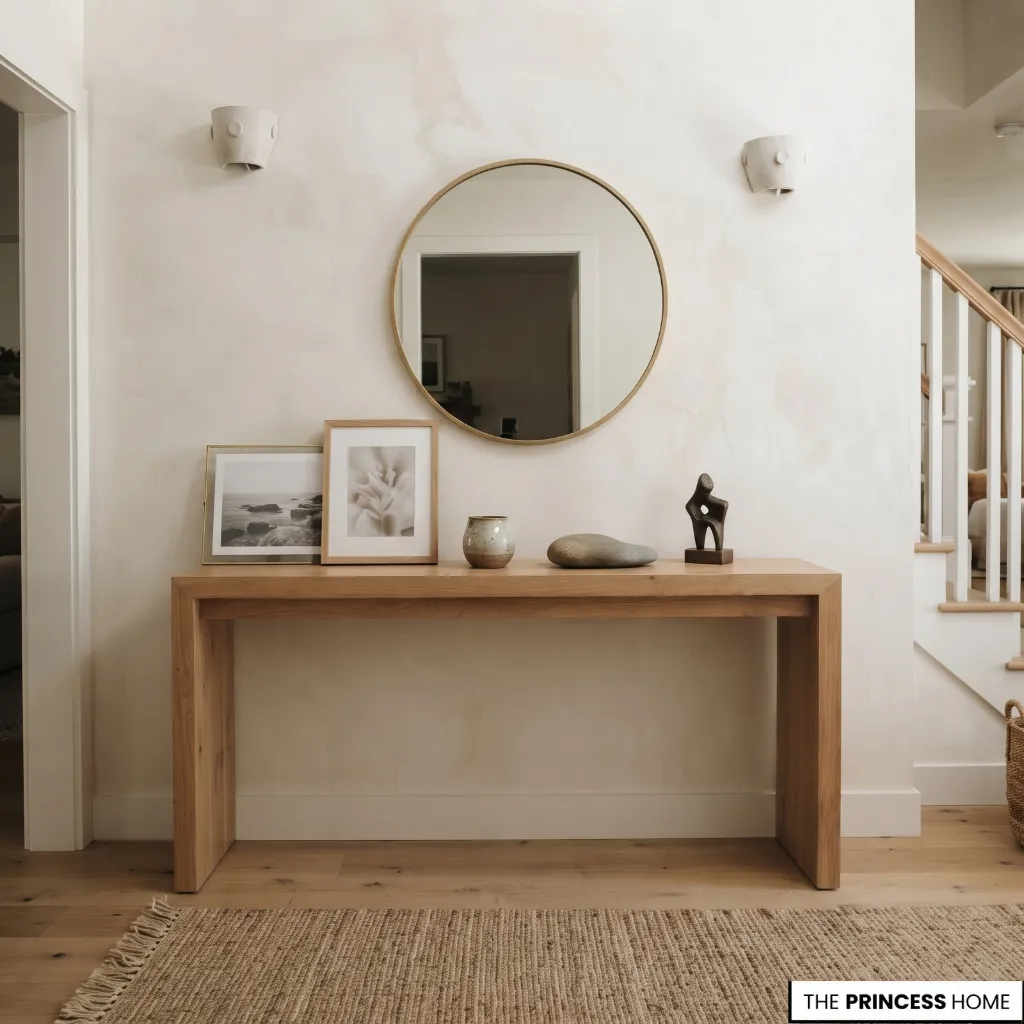
Personal photographs, travel finds, inherited objects, and collected artwork can make an entrance feel connected to the people who live there. Select pieces that matter to you and give them enough space to be noticed.
A framed photograph may sit beside a sculptural object, while a small collection of travel souvenirs may work best when grouped by material, color, or origin. The aim is to show something meaningful about the household rather than fill every available surface.
Consider how the objects relate to the furniture and the surrounding finishes. A simple background can help a varied collection stand out, while a shared frame color or repeated material can bring several different pieces together. The collection does not need to look uniform to feel deliberate.
Avoid displaying every item at once. Rotating a few pieces periodically allows the entrance to retain its character without accumulating unnecessary clutter. Give especially meaningful objects enough room to be appreciated, and keep the display proportionate to the size of the surface.
Mix Old and New
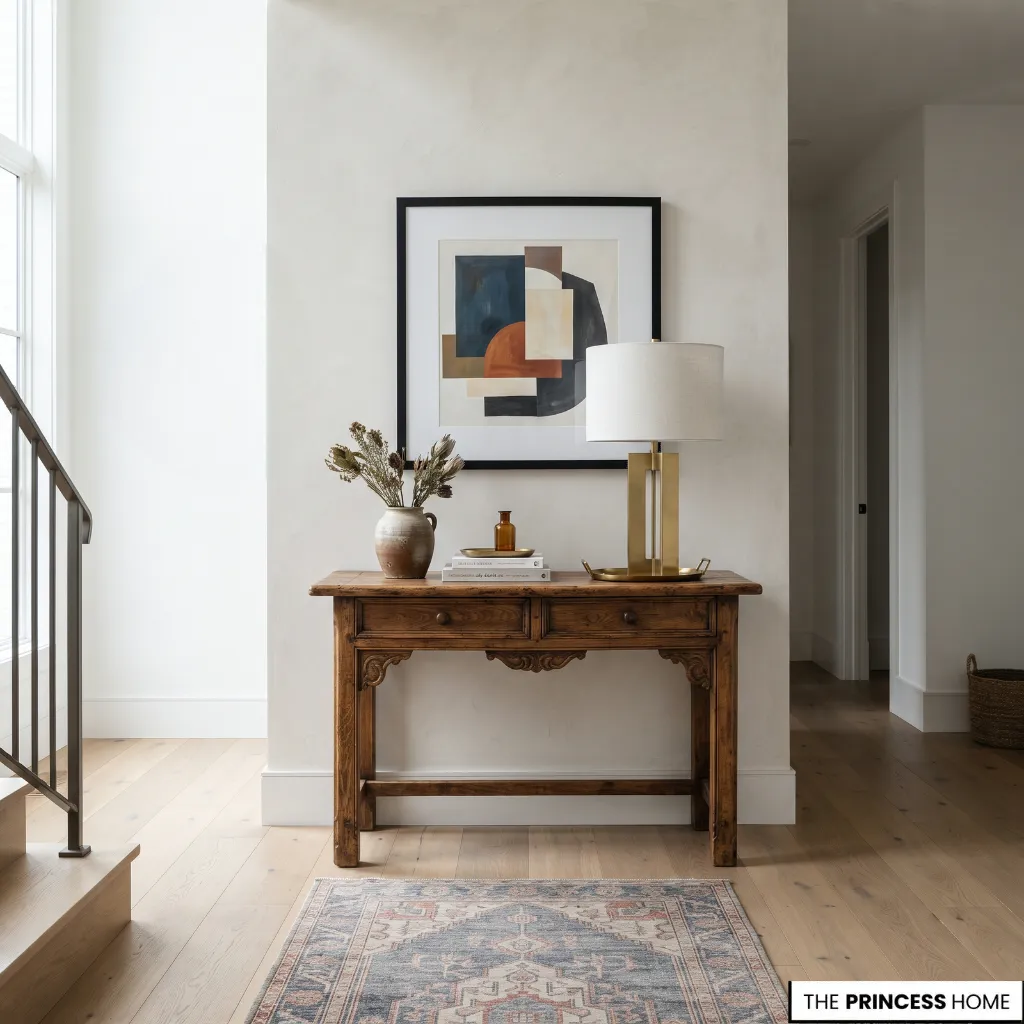
Combining traditional and contemporary elements can give an entrance a collected appearance. A vintage wooden table, for example, can work with modern artwork and a simple contemporary lamp when their proportions, materials, or colors relate to one another.
Choose one piece to provide contrast and allow the other elements to establish continuity. A traditional frame can complement a modern console, while an antique vessel may bring character to a pared-back setting.
You can also connect different periods through a shared material, such as wood, or a repeated color that appears in both the older and newer pieces.
Pay attention to visual weight and scale. A substantial antique piece may need simpler surroundings, while a smaller vintage object can introduce character without dominating the arrangement. Leave enough space around distinctive items so their individual qualities remain visible.
The goal is not to reproduce a particular period but to make different pieces feel deliberately connected. Give the more distinctive object enough space to stand out, and avoid adding unrelated accessories simply to make the arrangement feel complete.
Conclusion
A well-designed entryway brings together color, lighting, furniture, and personal details in a way that feels natural and uncluttered. Choose the ideas that suit your space, preserve clear pathways, and let a few thoughtful elements make the strongest impression.