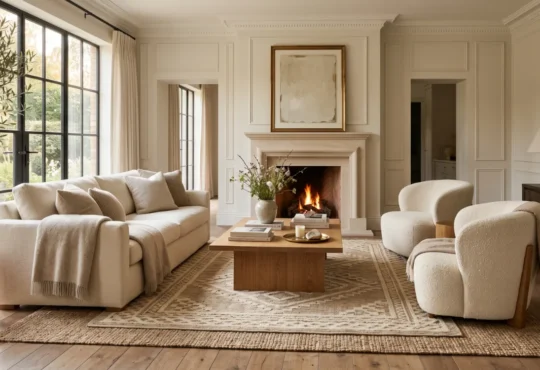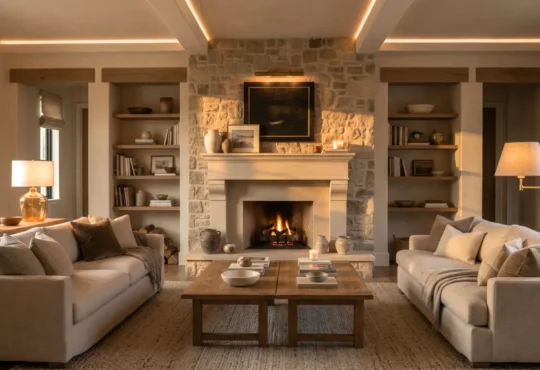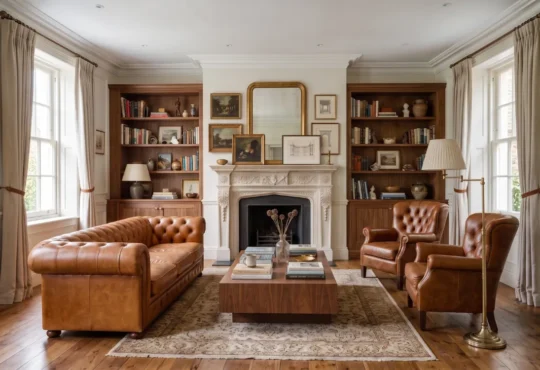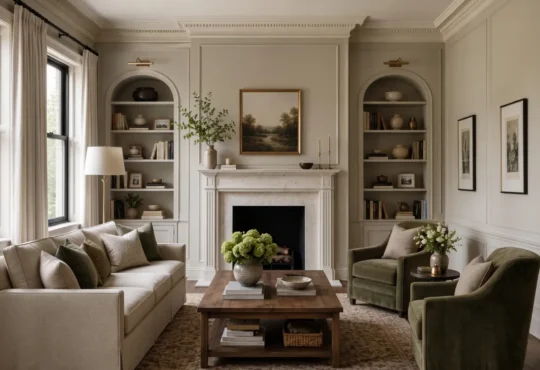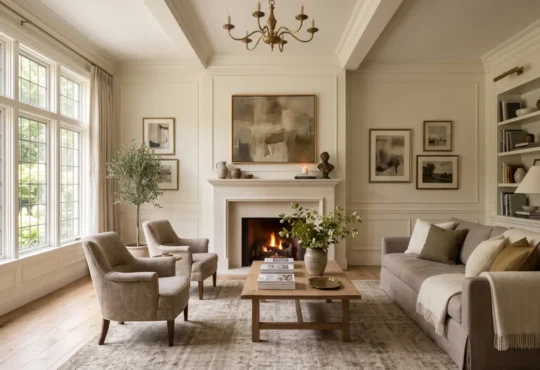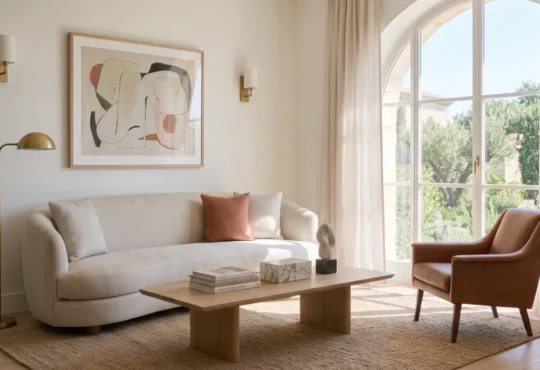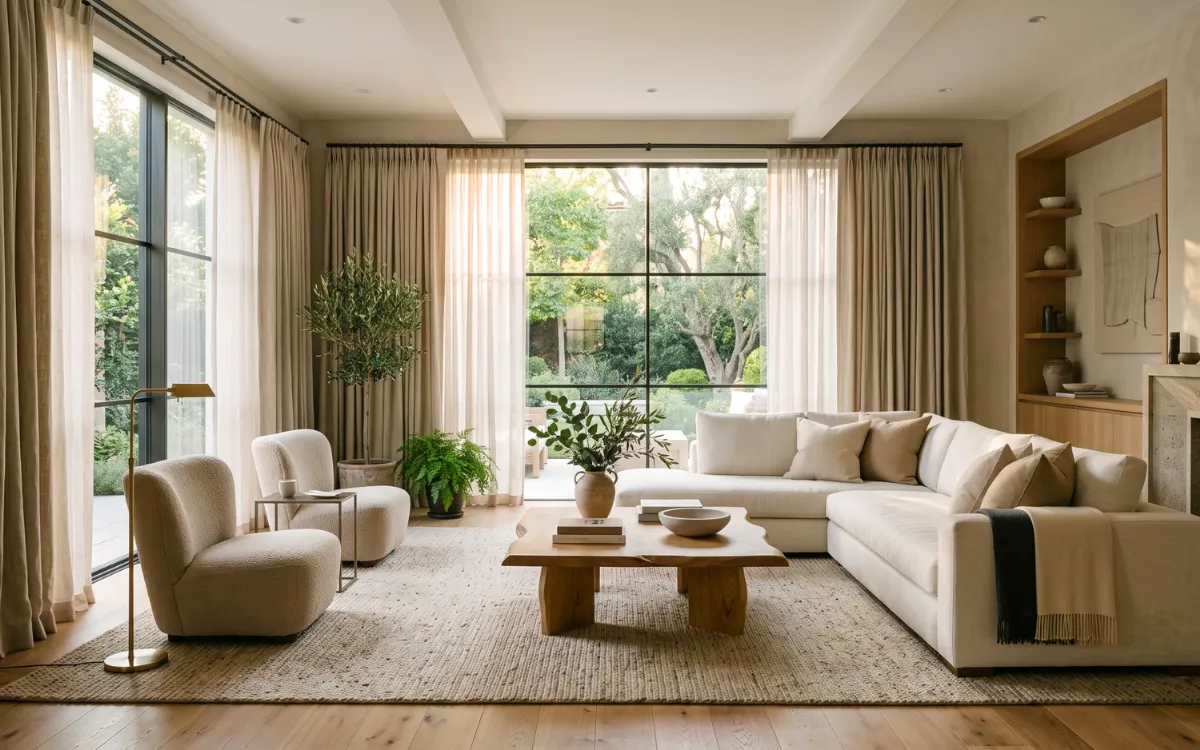
Morning light has a way of revealing every layer of a living room. It slips gently across the floor, catches the texture of woven fabric, and softens the edges of furniture before settling beside the windows. In that quiet moment, curtains become far more than a finishing touch.
They shape the way daylight enters, frame the architecture, and influence how spacious, warm, or intimate a room feels. More than simply covering a window, living room curtains define how a space receives light, establishes proportion, and expresses its character.
The right curtains rarely demand attention for themselves; instead, they allow the entire room to feel more balanced, graceful, and complete.
Living Room Curtain Proportions
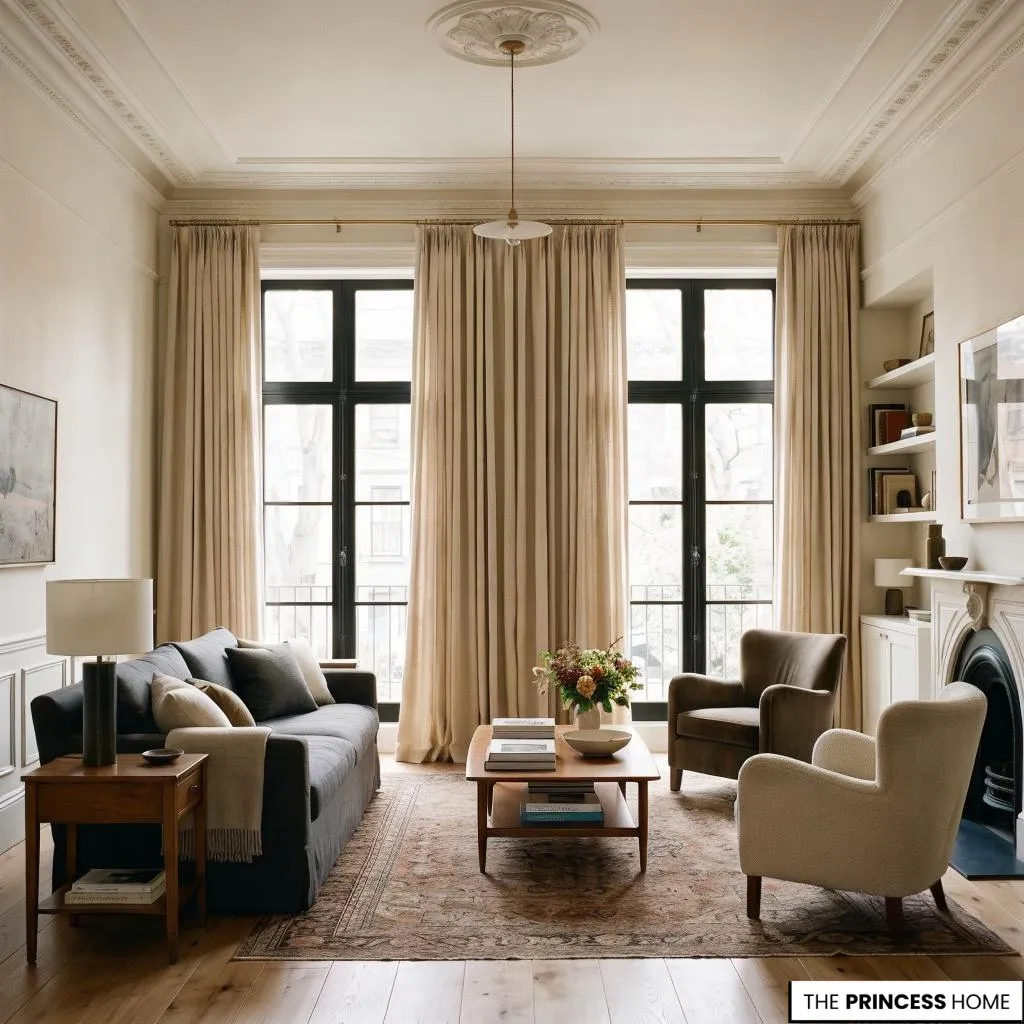
Beautiful interiors often feel effortless because every element appears to belong exactly where it is. Curtains contribute to that feeling by extending the visual rhythm of the room rather than interrupting it.
They soften the transition between walls and windows while adding movement that changes gently throughout the day. Rather than functioning as isolated pieces of fabric, living room curtains become architectural layers.
Their height influences how tall a ceiling appears, while their width changes the perceived scale of a window. Even the way the panels gather when opened can make a narrow window feel broader or help a wide opening appear elegantly framed.
Fuller panels introduce generous folds that create visual richness, while more restrained fullness produces a cleaner, contemporary expression.
Whether in a compact apartment, a modern family home, or a traditional residence with generous windows, thoughtfully scaled curtains become part of the architecture instead of simply decorating it.
Choosing Curtain Fabrics
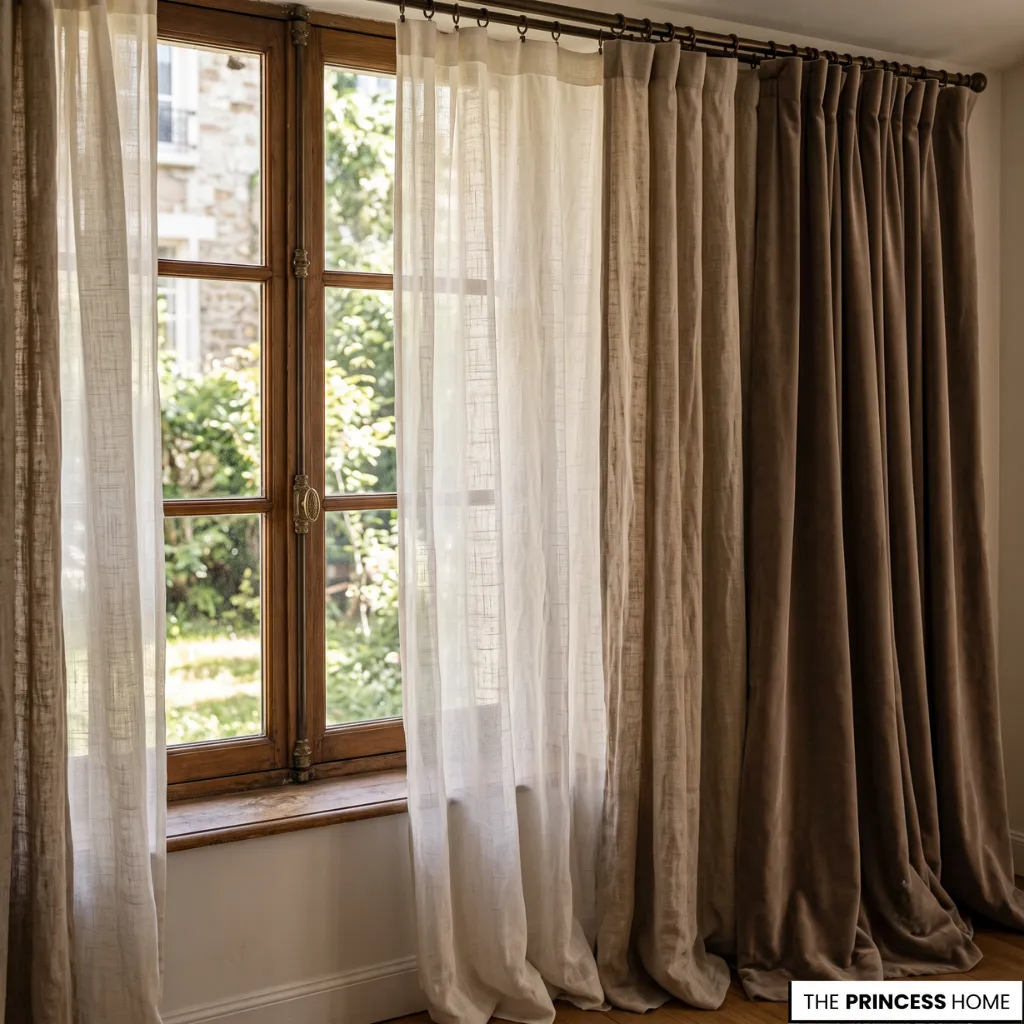
Every fabric carries light differently, and the material quietly determines how a living room feels from one hour to the next.Linen welcomes daylight with an airy softness, allowing the room to remain bright while introducing gentle texture that becomes more beautiful as the sun shifts across its surface.
Cotton offers a relaxed familiarity that feels equally at home in casual family spaces and refined interiors. Velvet responds in an entirely different way. Rich folds absorb light instead of reflecting it, creating depth and warmth that naturally suits rooms designed for evening gatherings or quieter moments.
Heavier fabrics introduce a greater sense of enclosure, while lighter textiles preserve an open, breezy atmosphere that feels especially comfortable in smaller rooms. Sheer fabrics seem almost weightless. They diffuse harsh sunlight into a delicate glow, preserving privacy without closing the room to the outdoors.
Blackout drapery, by contrast, creates a more sheltered mood while offering greater control over brightness throughout the day. Together, these materials demonstrate how fabric quietly shapes both atmosphere and everyday comfort.
💡 EXPLORE MORE:
Looking to complement your curtain fabric with the perfect wall tone? Read our complete guide to Living Room Paint Colors.
Choosing the Right Curtain Size
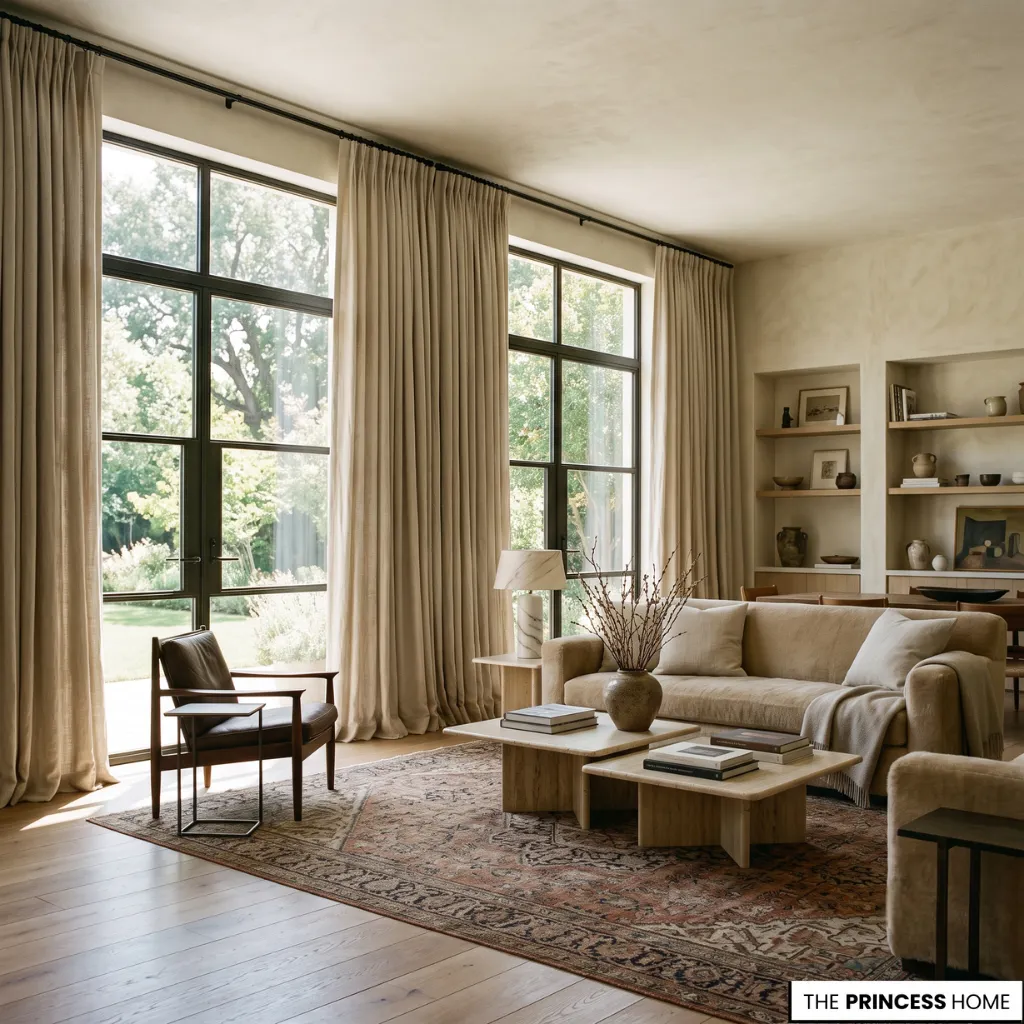
The most harmonious living rooms rarely rely on dramatic decoration. Their sense of luxury often comes from proportion. Curtains that extend beyond the edges of a window visually widen the opening, allowing glass to remain fully visible when the panels are drawn back.
As a natural design rule, extending the rod 6 to 10 inches beyond each side of the window frame ensures the curtains elegantly frame the view rather than covering it.
Hanging the hardware closer to the ceiling naturally encourages the eye upward—positioning the rod 4 to 6 inches above the window frame gives the architecture a lighter, more expansive presence while allowing the fabric to fall with uninterrupted elegance.
Whether framing a tall picture window or a more compact opening, these proportions help the room feel naturally composed. The folds themselves contribute to this impression.
To achieve a tailored appearance and softer, more deliberate movement, choosing a fabric volume that is roughly twice the width of the window creates a generous fullness. The visual weight of the drapery often determines whether a room feels relaxed, formal, or somewhere beautifully in between.
Scale is never simply about measurements. It becomes part of the room’s visual balance, helping furniture, rugs, upholstery, and architectural details feel connected within a single composition.
Natural Light and Curtain Texture
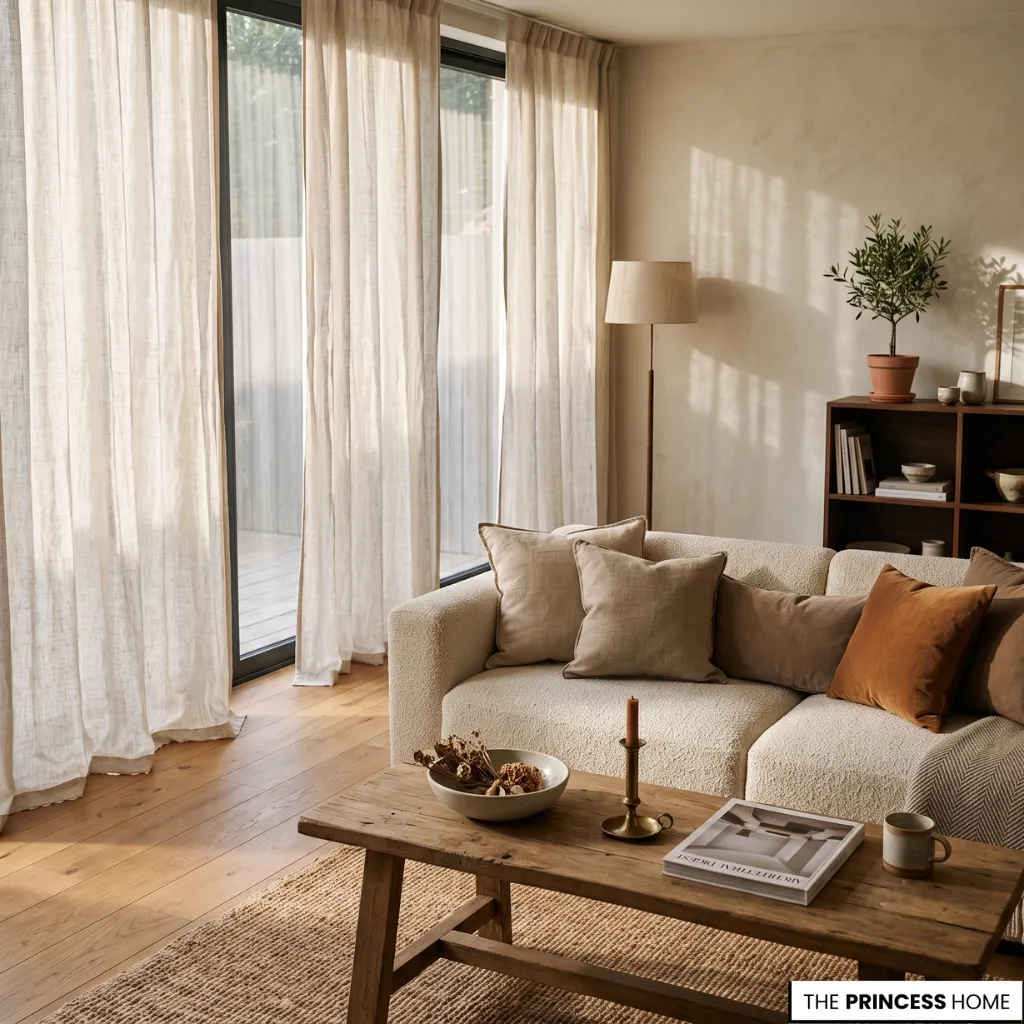
Curtains never appear exactly the same twice. Morning light reveals crisp textures and subtle weaving. Midday emphasizes color and shadow. As evening approaches, the fabric begins to interact with lamps, fireplaces, and reflected illumination from surrounding surfaces.
A warm neutral curtain may appear almost luminous beside natural oak floors, while the same fabric can feel deeper and more enveloping against charcoal accents or painted walls. This constant conversation between fabric and light gives living room curtains a dynamic quality that static furnishings rarely achieve.
Because of this, choosing curtains is as much about understanding atmosphere as selecting color or material. The interaction between daylight, texture, and surrounding finishes allows the room to evolve naturally throughout the day.
🔍 READ NEXT:
Discover how artificial light interacts with window textures and wall tones in our guide to Layered Living Room Lighting.
Layered Living Room Curtains
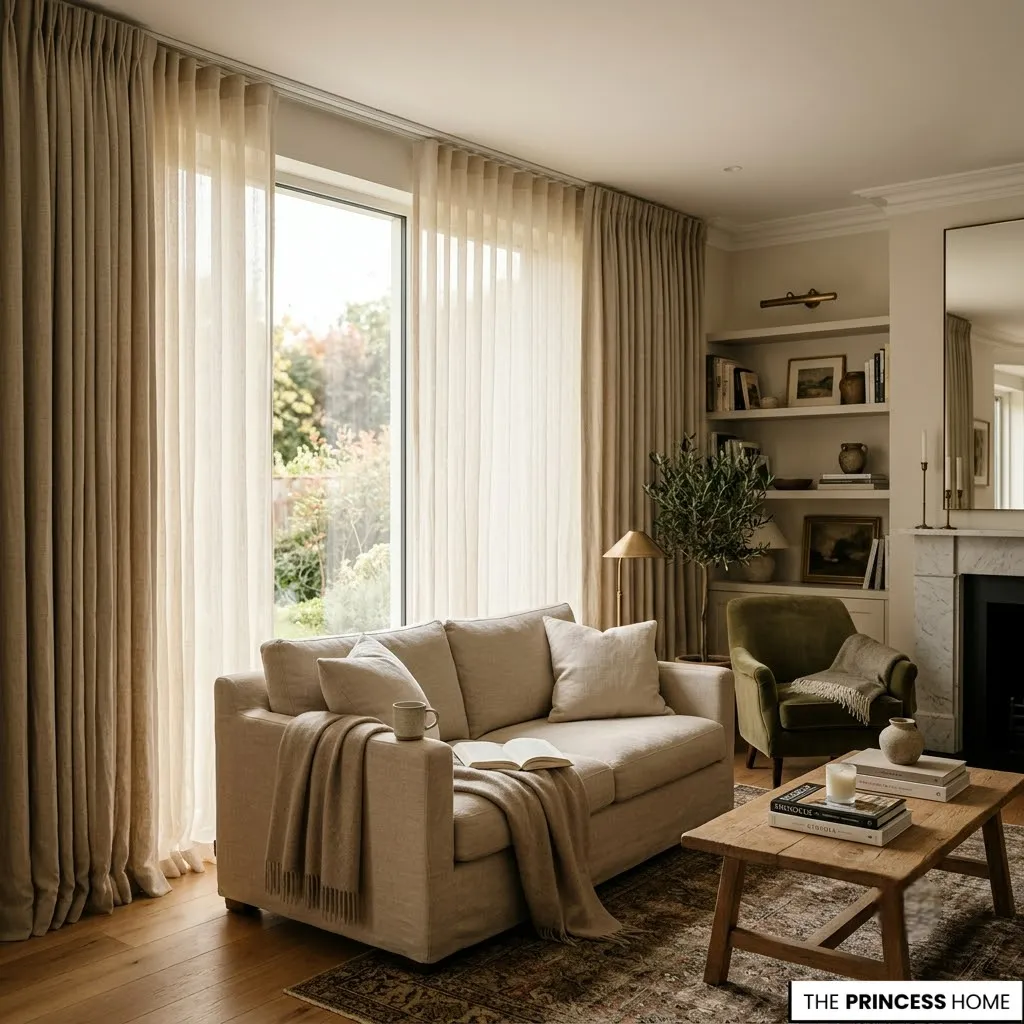
Some of the most inviting living rooms reveal more than one layer around the window. A translucent sheer catches the changing daylight throughout the afternoon, while a heavier drapery introduces softness after sunset.
Additional layers may include textured linen, tailored pleats, or discreet blackout panels hidden behind decorative fabrics, allowing the appearance of the room to shift naturally as lighting changes.
This layered composition feels especially natural in open-plan homes, compact apartments, and larger living spaces where daylight varies throughout the day. Rather than adding complexity, the combination creates flexibility while maintaining a calm, cohesive appearance.
Discreet curtain rods, ceiling tracks, and carefully chosen hardware quietly support the composition without drawing attention away from the fabric itself, allowing every layer to feel intentional.
Living Room Curtain Styles
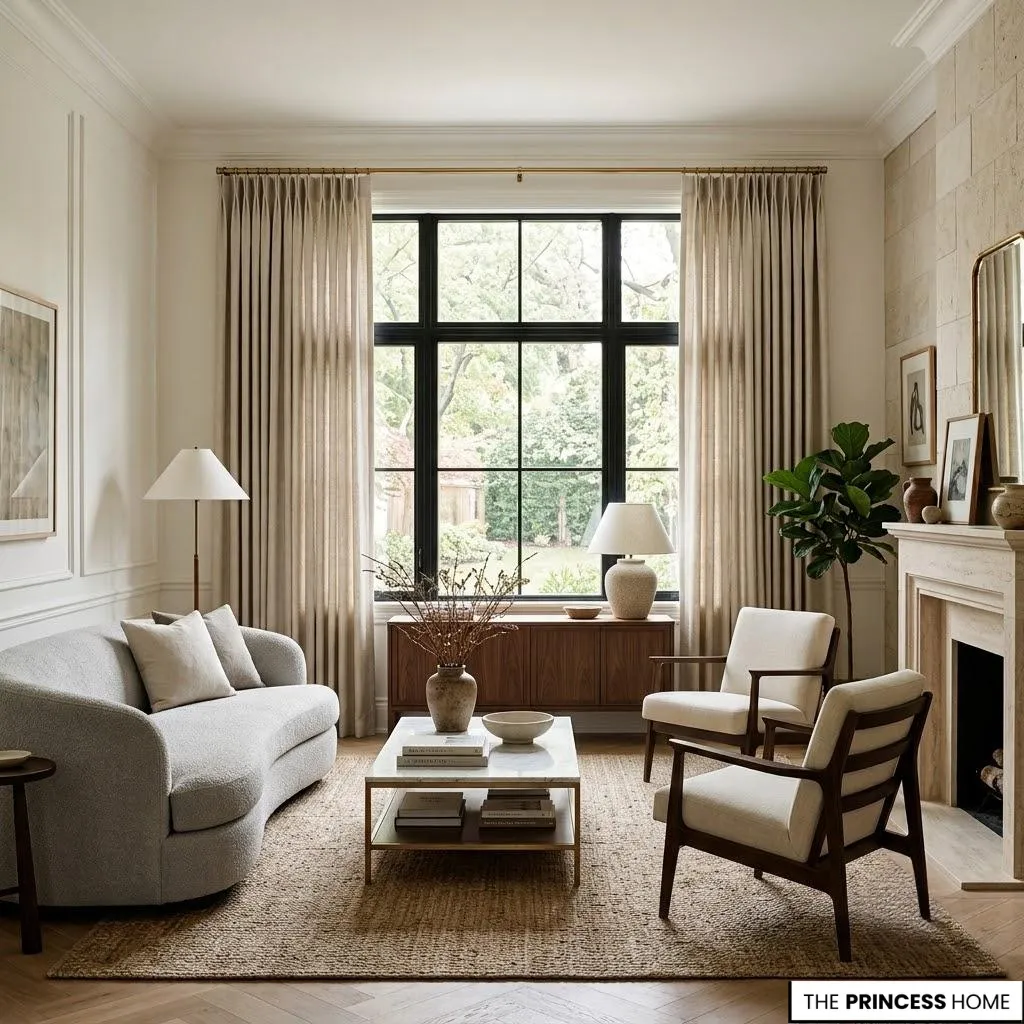
Every interior carries its own rhythm, and curtain styles naturally follow that character. Relaxed linen panels complement organic spaces where wood, stone, and woven textures create an effortless atmosphere.
Tailored pinch pleats introduce refined symmetry suited to classic rooms with elegant detailing. Ripple-fold curtains emphasize clean lines, allowing contemporary interiors to maintain their quiet simplicity without sacrificing softness.
Traditional homes often welcome fuller drapery that echoes decorative moldings and timeless furniture, while minimalist interiors benefit from restrained silhouettes that allow architecture to remain the focal point.
Modern homes frequently balance these approaches by combining simple tailoring with richly textured fabrics. None of these styles competes with the room itself. Instead, each supports a different expression of comfort and refinement while reinforcing the overall design language.
Living Room Curtain Colors
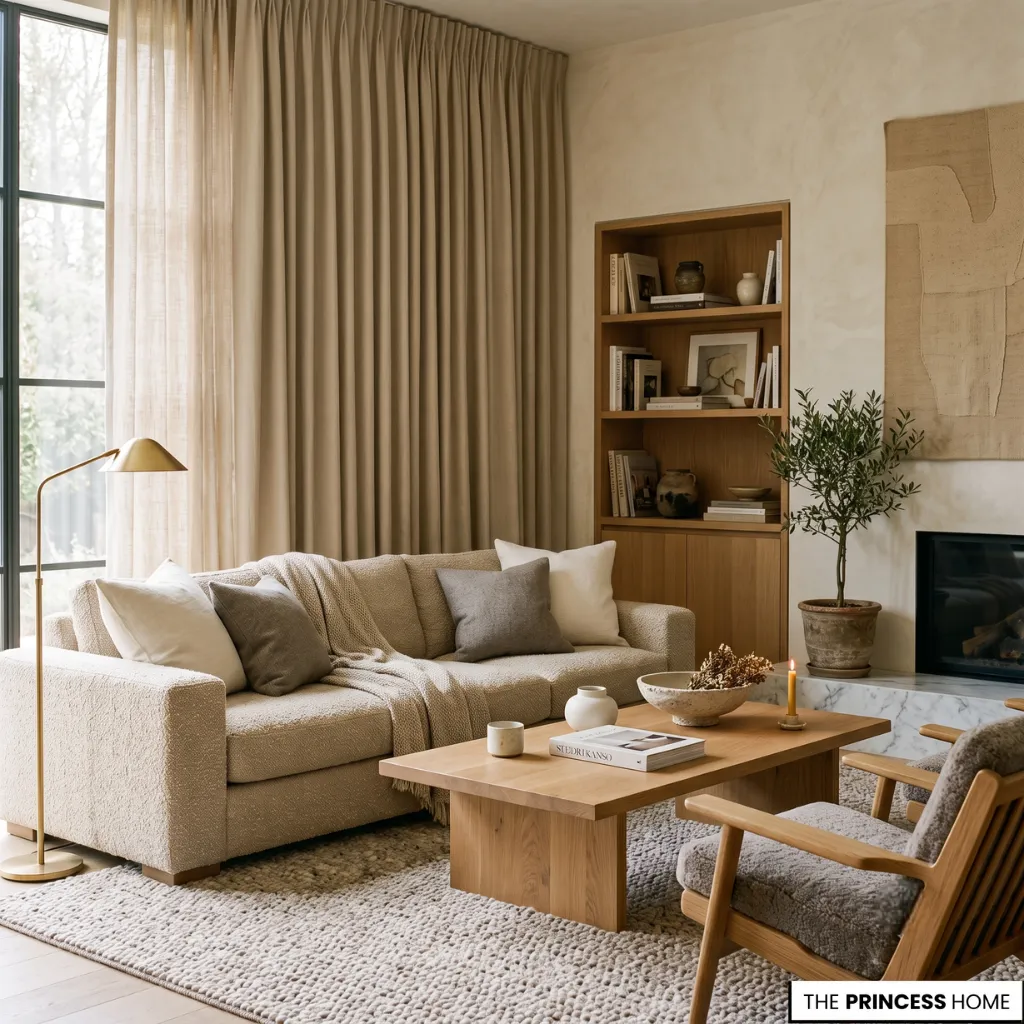
The most enduring curtain colors rarely dominate a living room. They become part of its broader palette, connecting walls, furnishings, flooring, and natural light into one continuous composition. Soft ivory reflects changing daylight with ease.
Sand and oat tones echo natural fibers, creating continuity between upholstery, rugs, and wood finishes. Warm gray introduces subtle contrast without disrupting calm interiors, while deeper shades provide gentle definition in rooms with generous natural light.
Occasionally, muted greens, earthy browns, or quiet blues bring additional richness, particularly when they repeat tones already found elsewhere in the room. The result is a palette that feels collected rather than coordinated.
As daylight changes, these colors continue to evolve, allowing the atmosphere to remain layered instead of static.
Creating a Finished Living Room
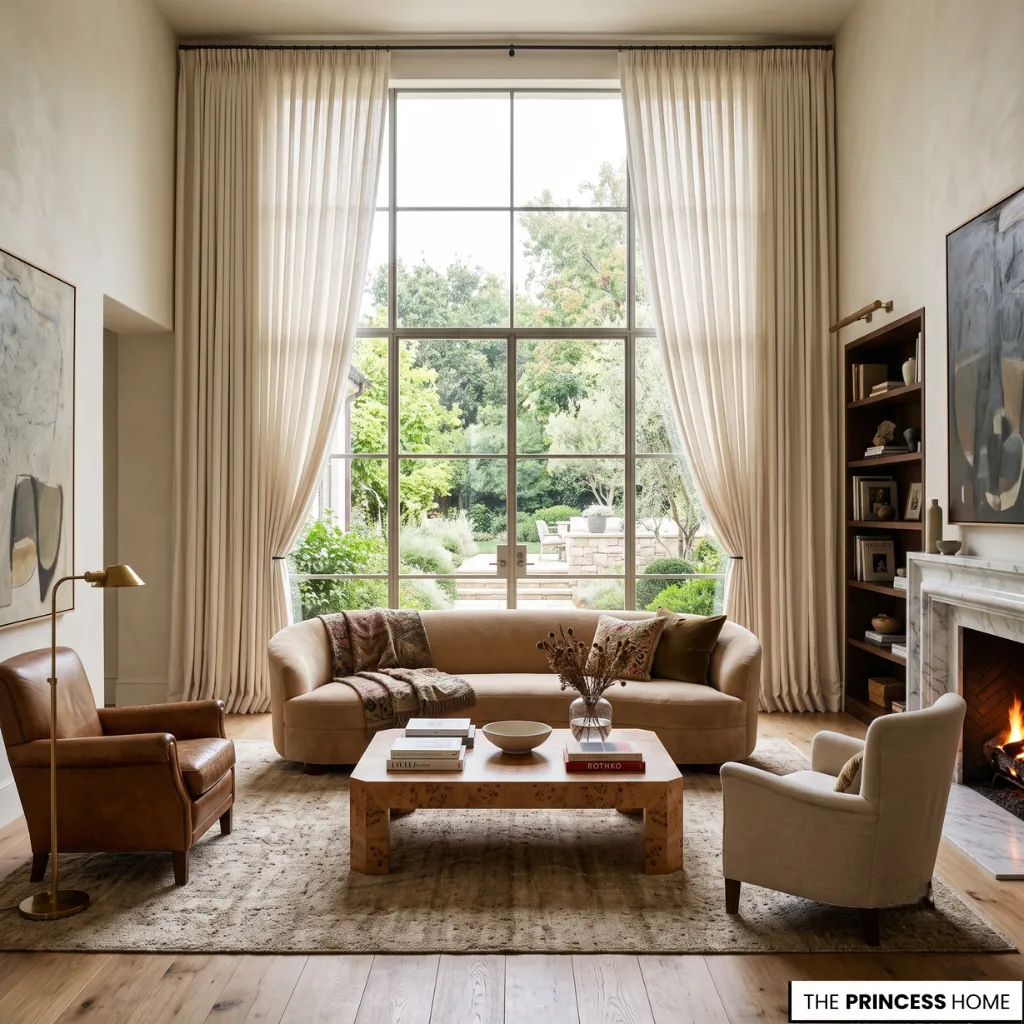
The final impression of a living room often comes from details that are almost invisible at first glance. Curtains soften hard architectural lines, absorb echoes of light, and introduce movement that changes with every breeze.
They frame conversations, quiet afternoon reading, family gatherings, and evenings when the room becomes warmer under gentle lighting.
Whether surrounding expansive windows in a luxury home or framing smaller openings in a city apartment, thoughtfully chosen living room curtains help every element feel connected.
They quietly balance the proportions of the room, complement surrounding furnishings, and complete the dialogue between architecture, light, and comfort. The result is an interior that feels welcoming, balanced, timeless, and naturally lived in.
💡 EXPLORE MORE:
To bring all these architectural layers together seamlessly, explore our guide to Living Room Paint Colors to match your window schemes with the perfect wall finish.
FAQ
What are the best living room curtains for a timeless look?
Linen, cotton, and tailored drapery in soft neutral tones create a timeless appearance that complements both classic and contemporary living rooms.
How do I choose the right living room curtains?
Choose curtains that suit your window proportions, natural light, and overall décor while balancing fabric, color, length, and fullness with the room’s scale.
Which curtain colors work best in a living room?
Ivory, sand, oat, warm gray, and muted earth tones blend naturally with most interiors and create a calm, layered atmosphere throughout the day.
Can living room curtains make a small room look bigger?
Yes. Hanging curtains closer to the ceiling and extending them beyond the window frame helps create the impression of taller ceilings and wider windows.
What curtain fabric is best for a living room?
Linen offers an airy feel, velvet adds warmth and depth, cotton provides versatility, and sheer fabrics softly filter daylight while maintaining privacy.
Is layering living room curtains worth it?
Yes. Combining sheer panels with heavier drapery adds depth, improves light control, and creates a more refined and adaptable living room.
Why are curtain proportions important in living room design?
Well-proportioned curtains visually balance windows, furniture, and architectural details, helping the entire room feel more cohesive and elegantly finished.
Final Thoughts
Living room curtains do more than frame a window—they shape the atmosphere of the entire space. When proportion, fabric, color, and light work together, curtains become a quiet architectural element that brings balance, comfort, and timeless character to every living room.