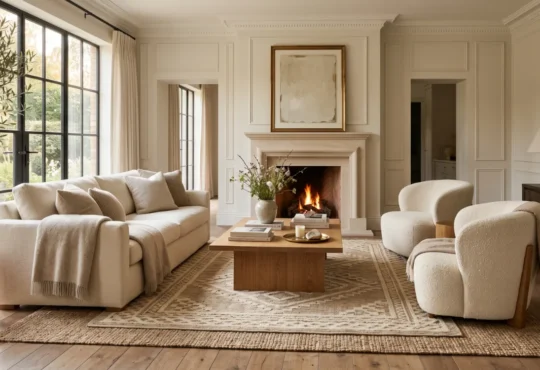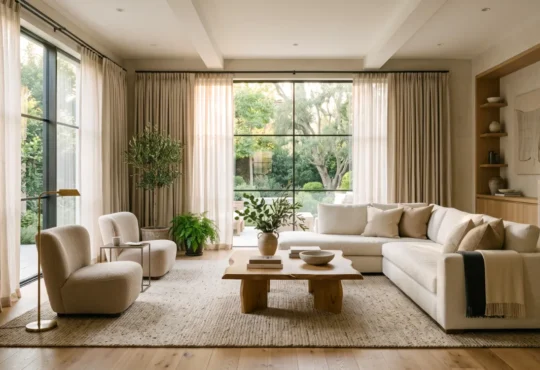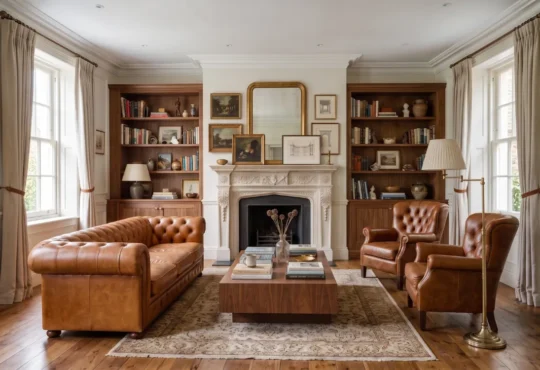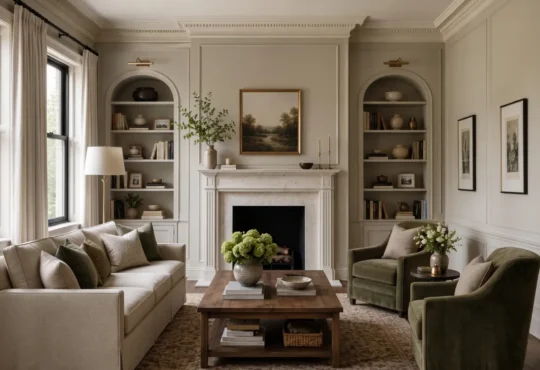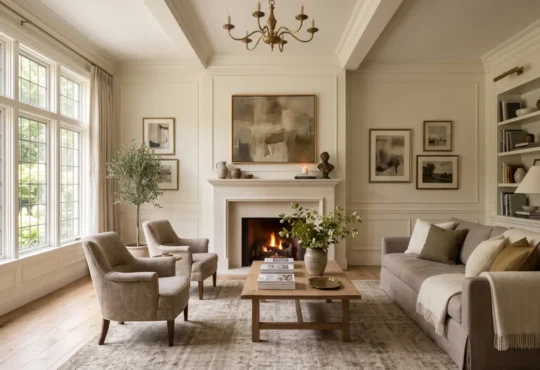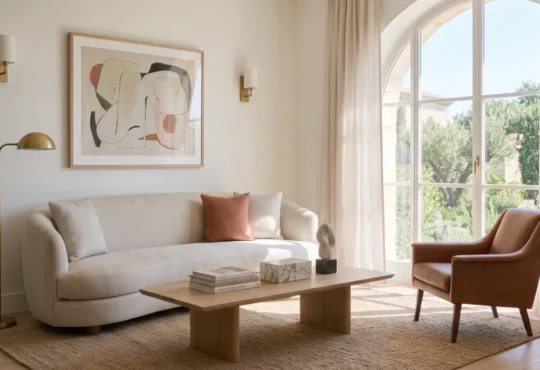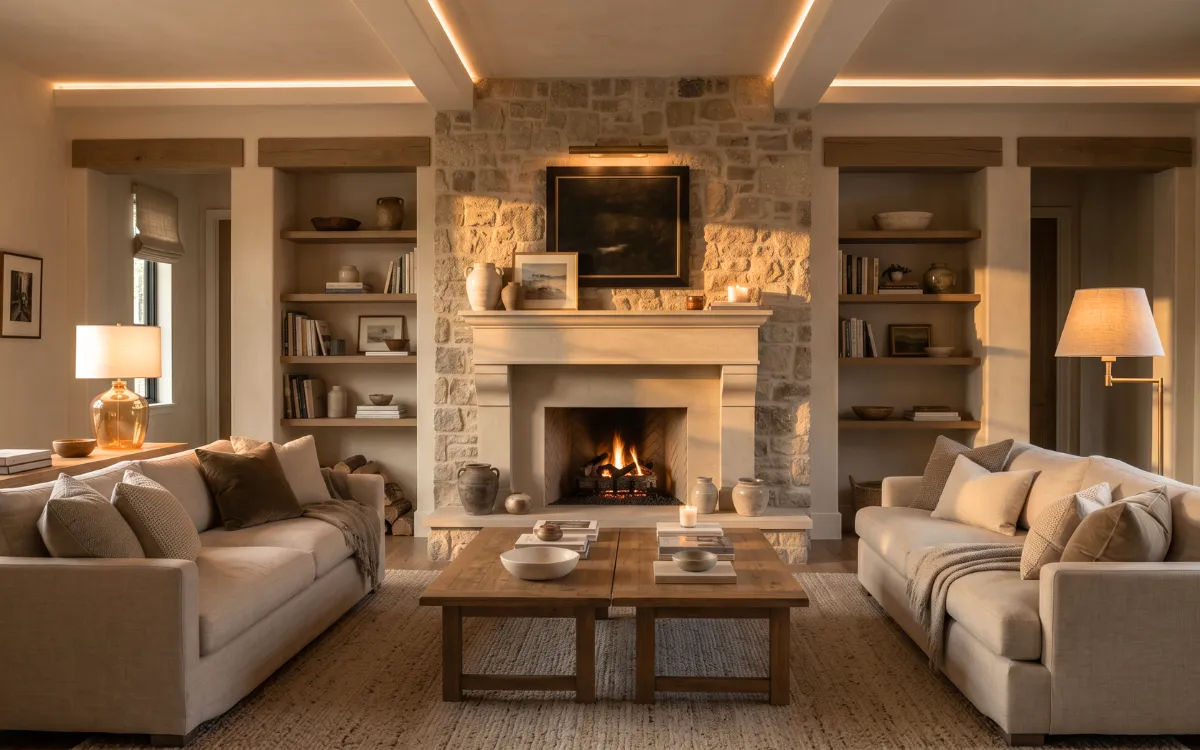
Late afternoon settles quietly across the room. Sunlight fades from the windows, reflections soften across wood, fabric, and stone, and familiar corners begin to change character. It is often at this hour that a living room reveals its true atmosphere—not through furniture alone, but through the way light lingers across every surface.
Thoughtfully layered living room lighting is less about flooding a space with brightness than creating visual rhythm. By combining ambient, task, and accent lighting, a layered design creates a balanced, comfortable living room that adapts naturally from bright mornings to relaxed evenings without ever feeling overlit.
Rather than relying on a single overhead fixture, the most successful interiors distribute light across multiple layers. A ceiling light establishes the foundation, recessed lighting softens the architecture, and carefully placed lamps introduce warmth, depth, and visual balance that furniture alone cannot achieve.
Shadows soften architectural lines, textures become more pronounced, and familiar finishes gain new richness as evening approaches, creating a harmonious composition that feels calm, inviting, and naturally lived in.
Layered Lighting
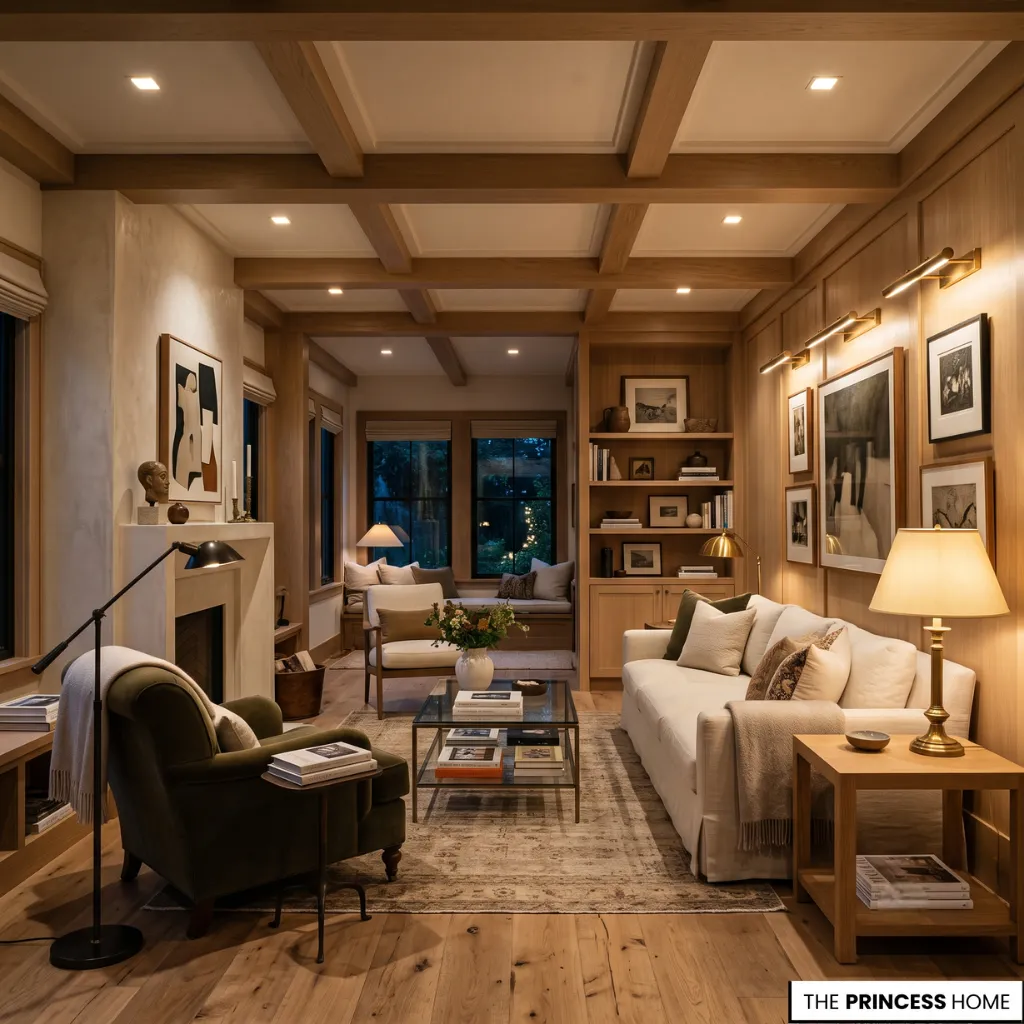
Every beautifully lit room carries an invisible balance sustained by three distinct intentional layers. Ambient lighting forms the gentle, overarching backdrop, filling the space with an even sense of comfort. Yet, relying solely on overhead fixtures can flatten a room’s dimensions and create clinical, downward shadows.
True warmth only emerges when this foundational layer is paired with targeted illumination that gathers more closely around everyday human rituals—a novel opened after dinner, a quiet workspace tucked beside a window, or hands wrapped around a warm cup of tea.
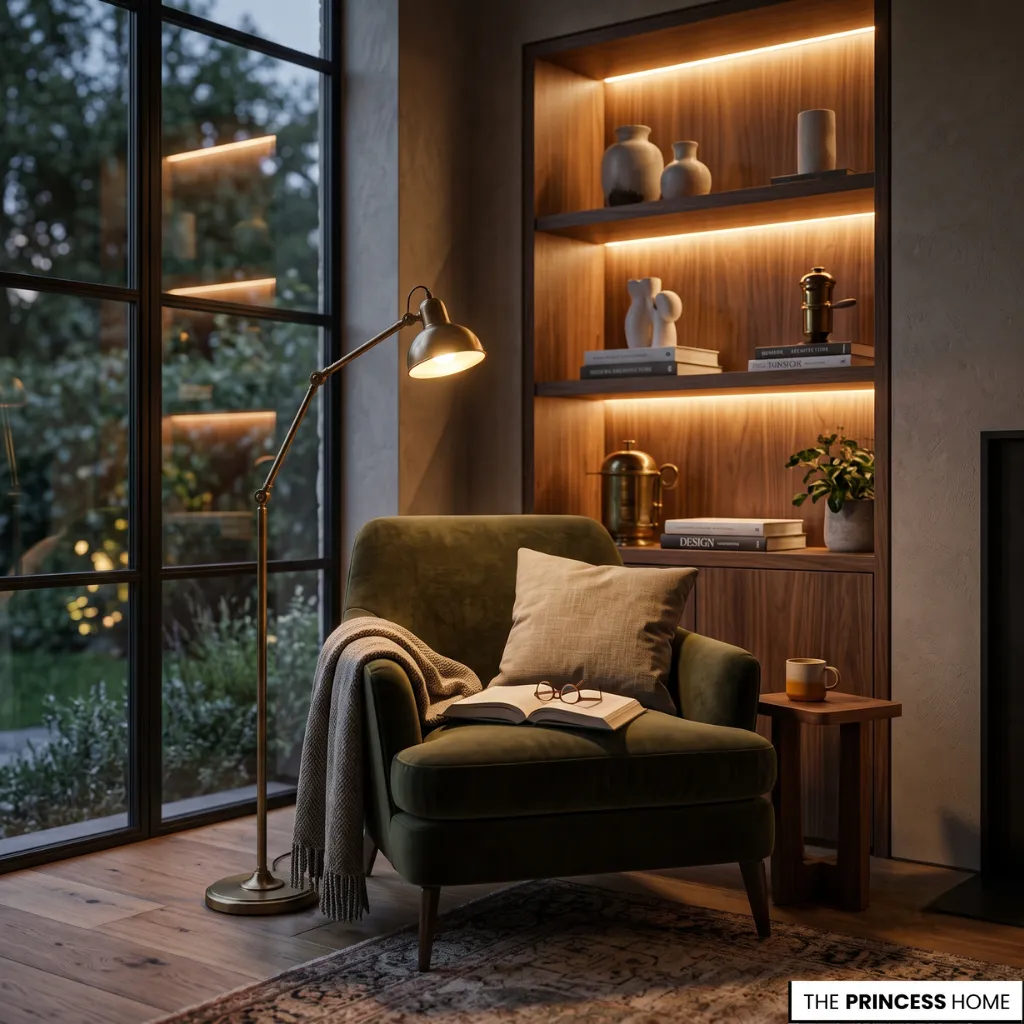
This is the purpose of task lighting, where an adjustable floor lamp settled beside a favorite reading chair or an elegant table lamp placed on a low side table provides the necessary clarity precisely where needed, without disrupting the surrounding softness.
Beyond function lies the purely emotional and architectural layer of accent lighting. It lingers thoughtfully over artwork via dedicated picture lights, traces the grain of a timber console, or brings quiet focus to a built-in alcove with concealed LED cove lighting.
When decorative lighting fixtures become part of the room’s visual language, they complement rather than overpower the surrounding architecture.
None of these elements feels complete alone, but by integrating independent dimmer switches across all layers, the interior layout acquires total flexibility, allowing these subtle lighting zones to evolve naturally with the changing hours.
Lighting Placement
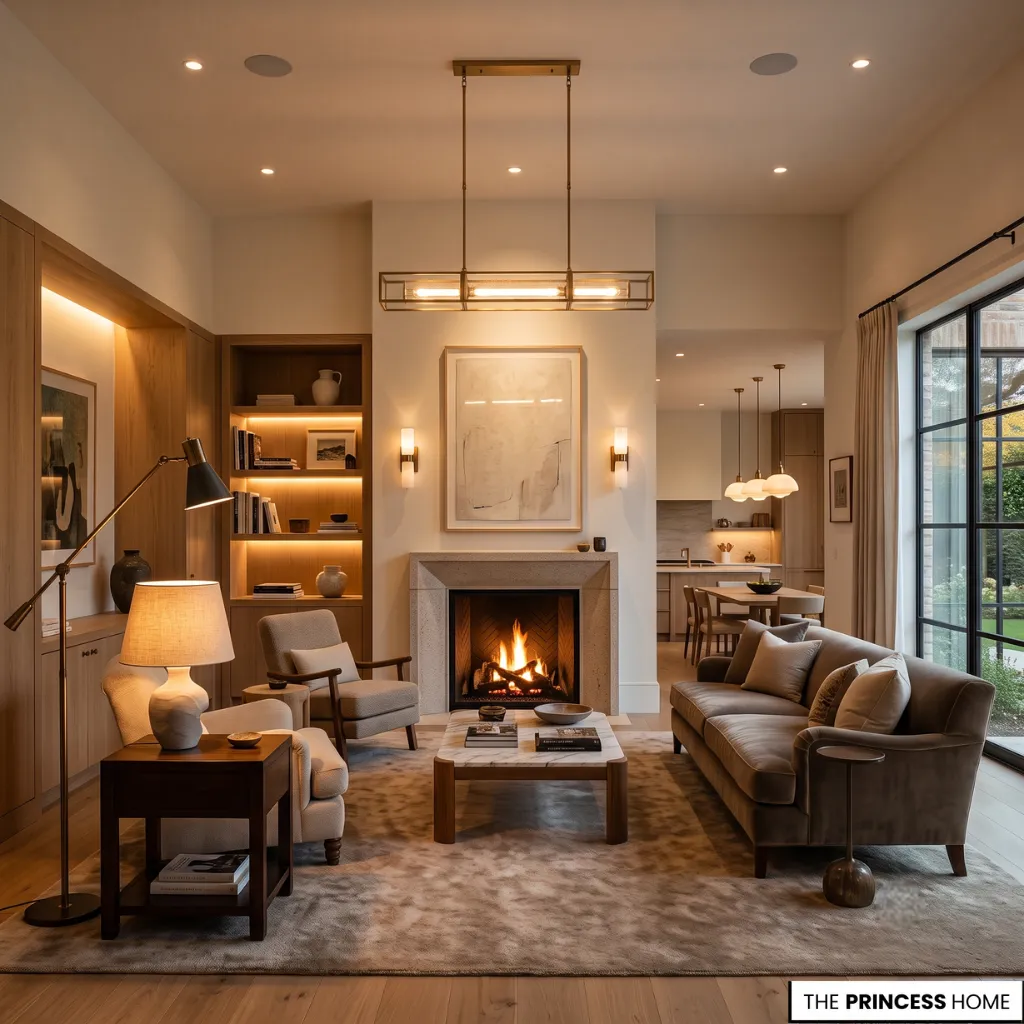
Transforming a room’s environment does not require complex rewiring; it requires a structured approach to placement and visual height.
The design process begins with the ambient layer, laying down a soft foundation through architectural recessed lighting or a statement central pendant light to distribute an even glow across the entire floor plan.
Once the room carries a comfortable foundation, task lighting is introduced specifically near active seating arrangements.
Placing adjustable floor lamps next to reading chairs or elegant table lamps on side tables provides focused clarity for everyday rituals, introducing functional illumination precisely where human activity occurs.
Finally, accent lighting introduces visual hierarchy and depth. By utilizing directional spotlights, picture lights, or hidden LED strip lighting, you can trace built-in shelves, artwork, or fireplaces.
Incorporating these fixtures at multiple heights—mixing elevated flush mounts, eye-level wall sconces, and low table lamps—guides the eye dynamically through the space, allowing the room to reveal itself gradually.
💡 EXPLORE MORE:
Lighting and wall finishes work hand-in-hand to define room ambience. Learn how to choose undertones and sheens in our guide to Living Room Paint Colors.
Light Hierarchy
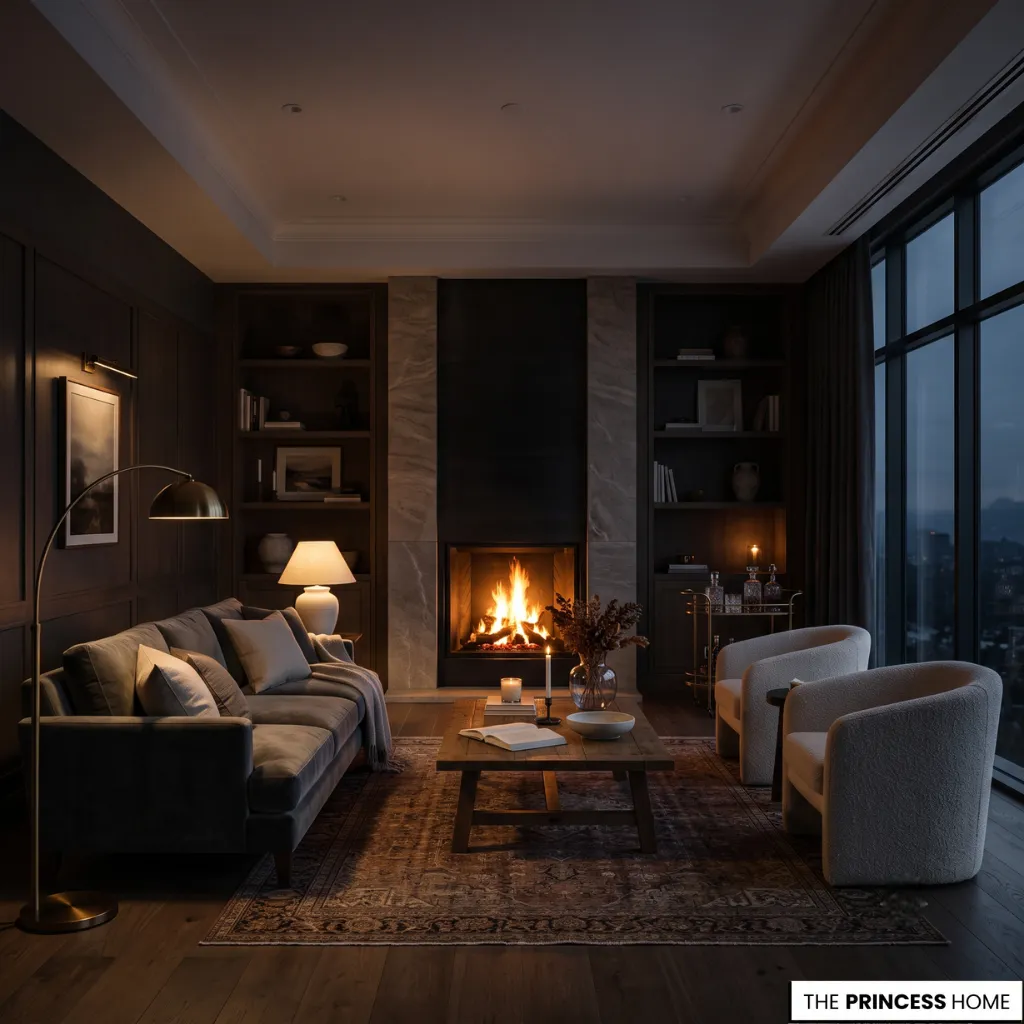
Interior designers rarely distribute brightness evenly across a room. Instead, they intentionally establish a sophisticated light hierarchy, allowing one or two focal areas to appear slightly brighter than their surroundings.
This intentional contrast prevents the flat, over-illuminated appearance created by uniform lighting, giving the mind a natural place to rest.
To master this balance, a central feature like a stone fireplace or a primary conversation zone can be highlighted as the brightest point using dedicated accent layers. Surrounding corners and secondary seating areas are then left intentionally softer, allowed to fade into gentle shadows.
This interplay between light and dark creates “islands of light” that establish natural boundaries within modern open-plan spaces, making even large rooms with high ceilings feel intimate and responsive.
Warm Lighting
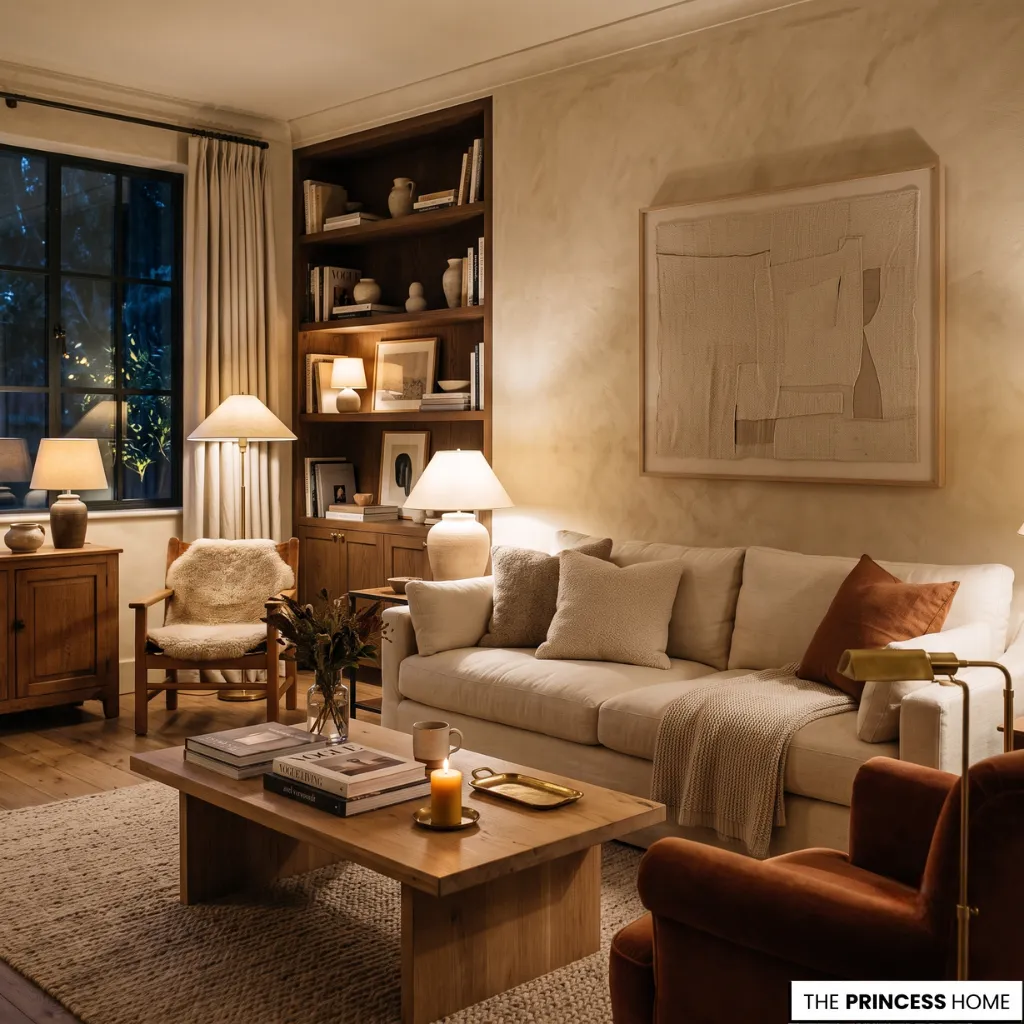
Color has its own language, but light gives it voice. The secret to a cozy evening living room lies in understanding color temperature, measured in Kelvin. While cooler lighting enhances clarity during the morning, evening illumination demands a much softer, protective palette to signal the brain to slow down.
For a welcoming, velvety atmosphere, interior designers aim for a warm white range between 2700K and 3000K, where artificial light beautifully mimics the comforting glow of candlelight.
At this temperature, warm illumination wraps neutral walls in comfort, deepens earthy tones, and reveals the subtle variations hidden within textured fabrics.
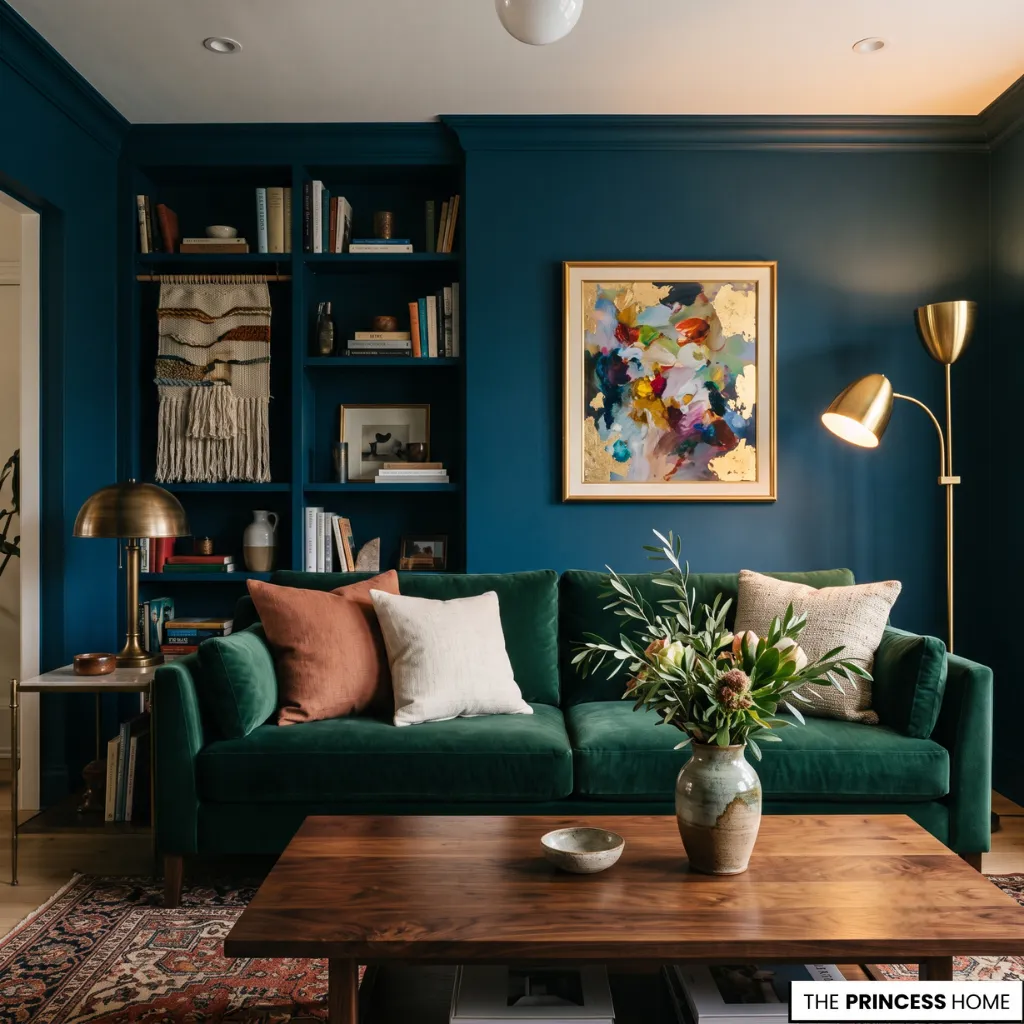
However, temperature is only half the equation when striving for a truly luxurious finish. To unlock the authentic depth of an interior palette, one must pay close attention to the Color Rendering Index, or CRI.
Selecting light bulbs with a CRI of 90 or higher ensures that artificial light accurately renders the true, rich pigments of your natural wood furniture, linen textiles, fine artwork, and surrounding paint finishes, preventing them from appearing dull, flat, or gray after dark.
When balanced with the right output of lumens, this refined technical combination ensures that painted walls appear multi-dimensional rather than flat, strengthening the relationship between furniture and the surrounding space.
Light & Materials
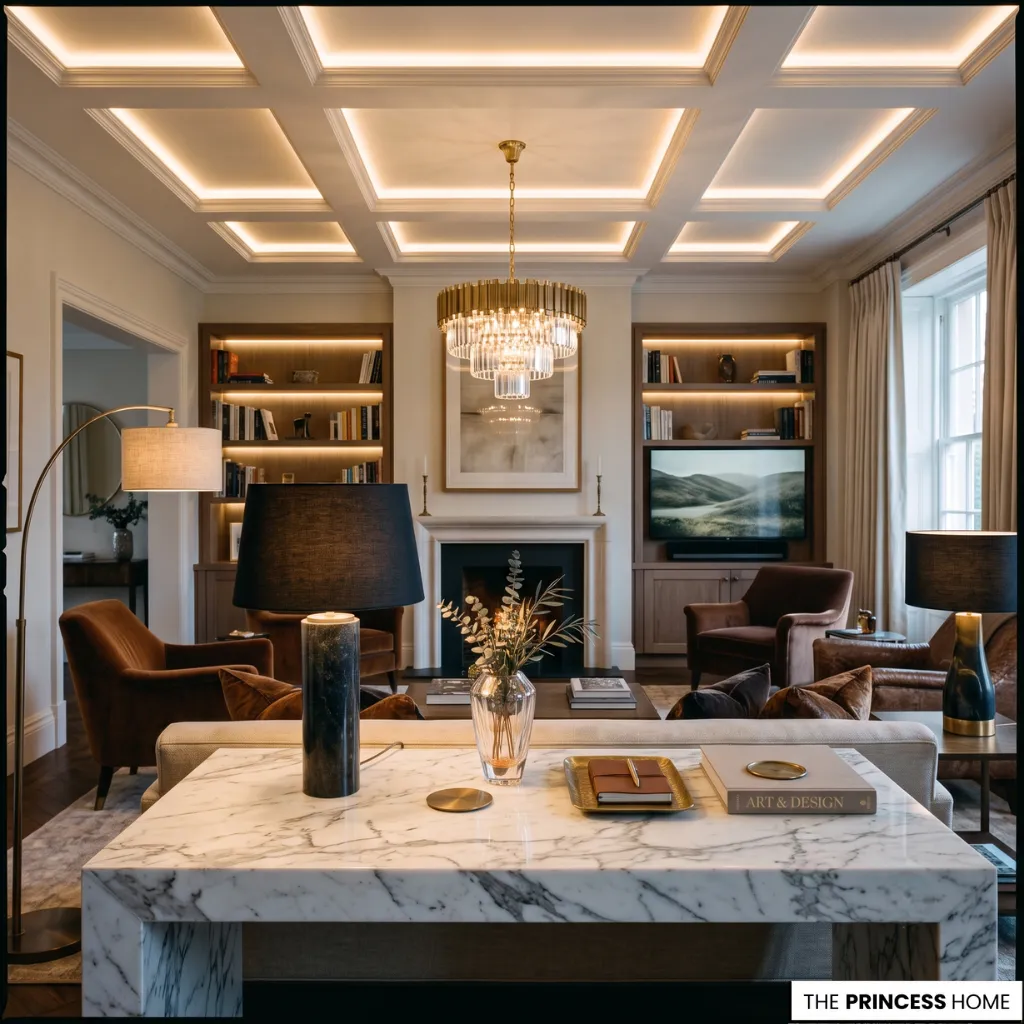
The relationship between light and surfaces is dictated by how materials absorb or bounce illumination, a concept known in design as Light Reflectance Value (LRV).
Darker surfaces and matte finishes absorb more light, requiring a more strategic placement of accent layers, while lighter, polished surfaces multiply reflections without effort.
Certain authentic materials seem almost designed specifically for evening light. Linen catches a soft glow that beautifully reveals its woven texture, while walnut and oak develop a deeper, golden warmth under warm Kelvin sources.
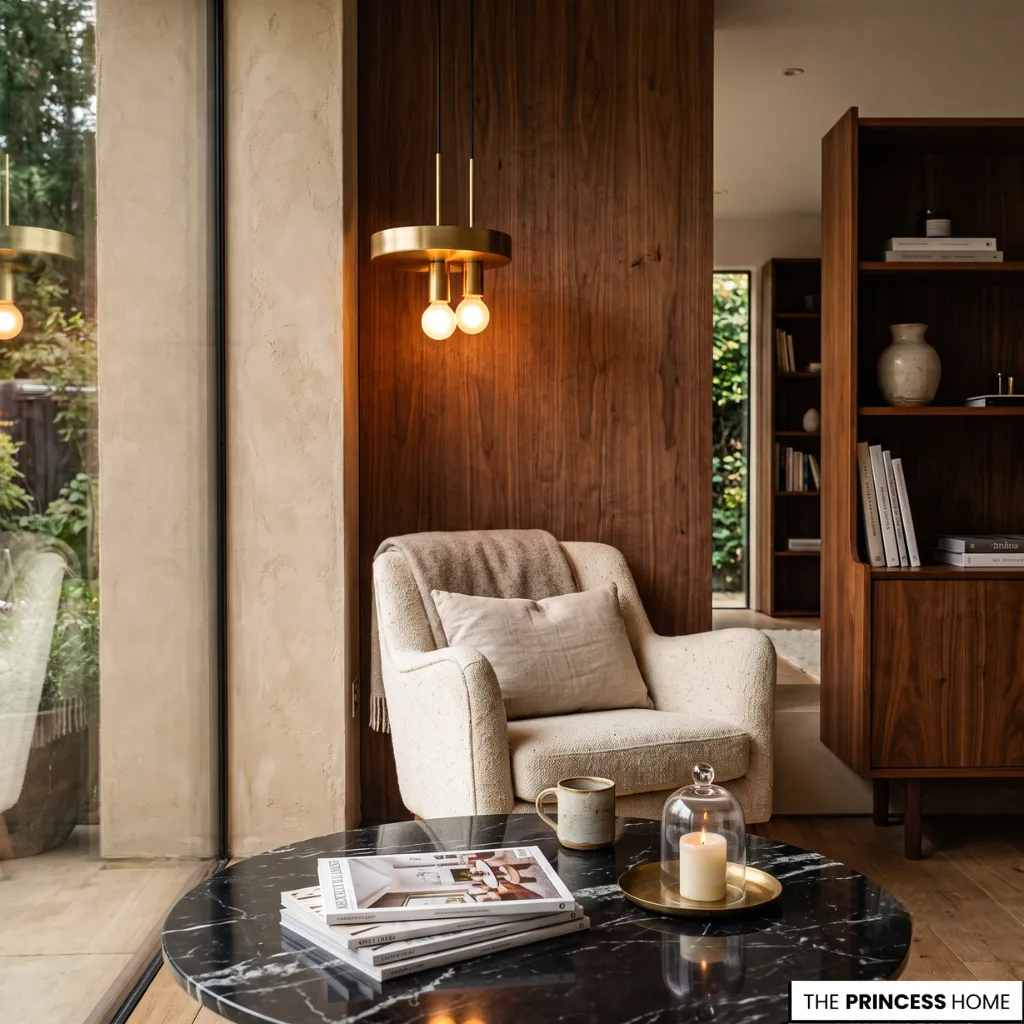
Similarly, marble and polished stone reflect delicate highlights without creating harsh glare, while brushed metals like brass and bronze shimmer quietly, diffusing light instead of bouncing it sharply into the eyes.
Glass introduces another layer altogether, multiplying reflections without welcoming visual clutter, while even matte plaster finishes absorb light in ways that create subtle dimension rather than stark contrast.
As these diverse surfaces respond to changing light, the room acquires a quiet sense of movement that continues long after the sun has set, anchoring the living room as the emotional center of the home.
Lighting Mistakes
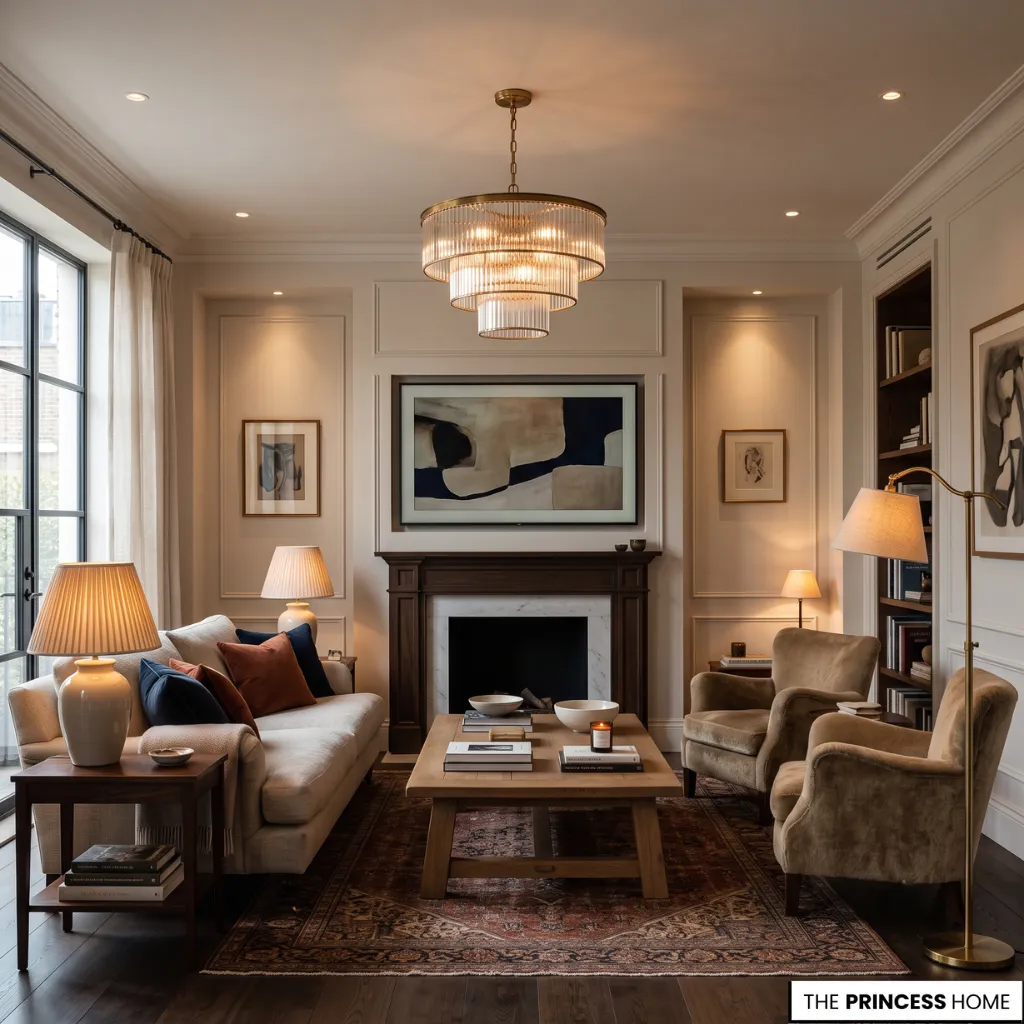
Luxury interiors often feel remarkably calm because they resist uniformity and avoid the common pitfalls that disrupt visual harmony. The most frequent mistake is relying exclusively on a single overhead ceiling fixture, which flattens architectural lines and creates harsh shadows.
Similarly, choosing cool white bulbs suppresses natural relaxation and shifts rich timber finishes into an uninviting gray tone.
Placement is equally critical; directing spotlights directly opposite a television screen causes severe glare and eye fatigue, whereas positioning lamps to the sides of a seating area creates a much more comfortable viewing environment.
Scale and coverage must also balance perfectly. Hanging a tiny chandelier in a large room throws off the visual weight of the design scheme, just as leaving dark corners unlit can visually shrink the perceived square footage of a small living room.
Incorporating a small, low-wattage accent table lamp in an empty corner instantly expands the space. A cohesive mood requires that all primary layers remain unified in color temperature, as mixing a cool 4000K bulb with a warm 2700K bulb in the same visual plane creates jarring discordance.
Furthermore, a common misconception is that recessed lights are sufficient on their own. While they provide excellent ambient coverage, designers should always pair them with lower-level task and accent fixtures to create warmth and prevent a harsh, clinical environment.
💡 DESIGN TIP:
Soften evening lighting even further with tailored window treatments that diffuse exterior light. Read our complete guide to Living Room Curtains.
FAQ
What is layered living room lighting?
Layered living room lighting combines ambient, task, and accent lighting to create a balanced space that feels comfortable, functional, and visually inviting throughout the day.
How do you layer living room lighting effectively?
Start with ambient lighting for overall illumination, add task lighting where activities take place, then introduce accent lighting to highlight architectural features, artwork, and textures.
Which color temperature is best for living room lighting?
Warm white bulbs between 2700K and 3000K create the most welcoming atmosphere, enhancing natural materials while supporting relaxation during the evening.
Can layered living room lighting work in small spaces?
Yes. Combining multiple light sources at different heights creates depth, reduces dark corners, and often makes a small living room feel larger and more open.
Why isn’t one ceiling light enough for a living room?
A single ceiling fixture provides general illumination but lacks the depth, flexibility, and visual comfort created by layered lighting with task and accent fixtures.
Is recessed lighting enough for a living room?
No. Recessed lighting provides an excellent ambient foundation, but a well-designed living room also includes floor lamps, table lamps, or wall sconces to create warmth and visual balance.
What makes living room lighting feel luxurious?
A luxurious lighting design balances warm color temperatures, high-CRI bulbs, layered illumination, and carefully placed fixtures that create subtle contrast rather than uniform brightness.
Final Thoughts
Exceptional living room lighting is never defined by a single fixture but by the thoughtful relationship between ambient, task, and accent lighting. When balanced with warm color temperatures, high-CRI bulbs, and carefully placed fixtures at multiple heights, layered lighting transforms an ordinary living room into a timeless space that feels welcoming, comfortable, and beautifully responsive from morning through evening.