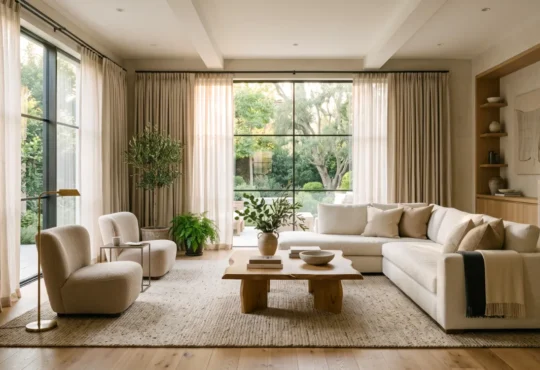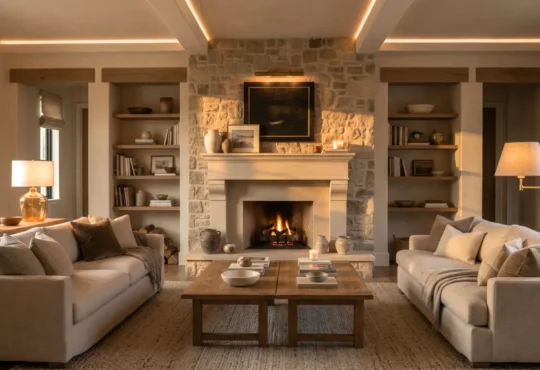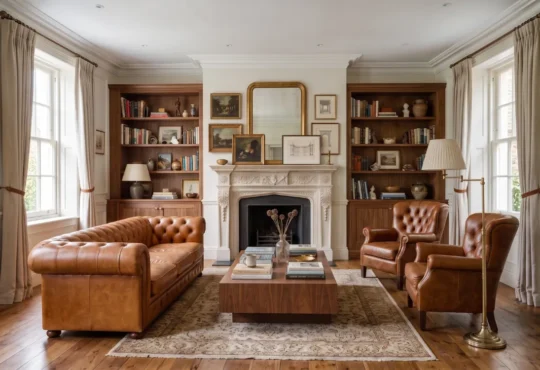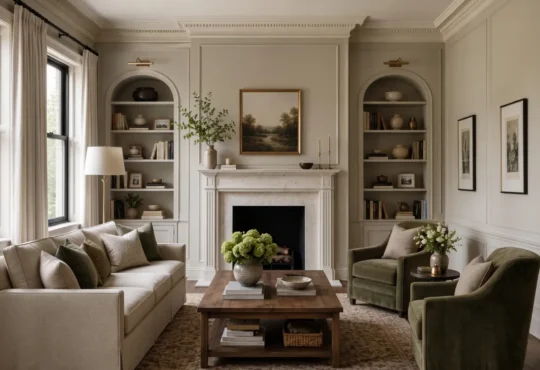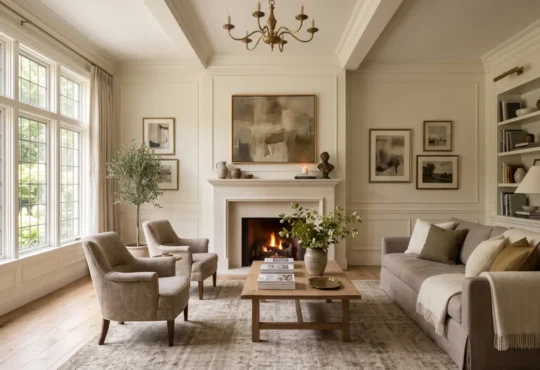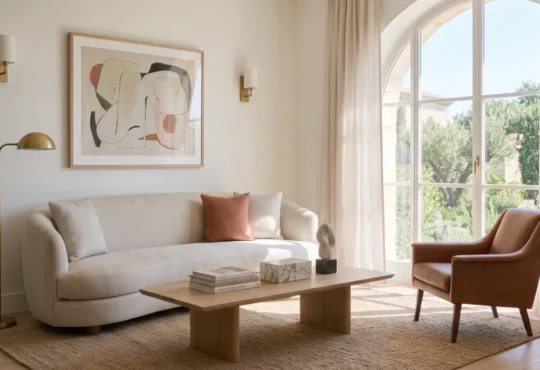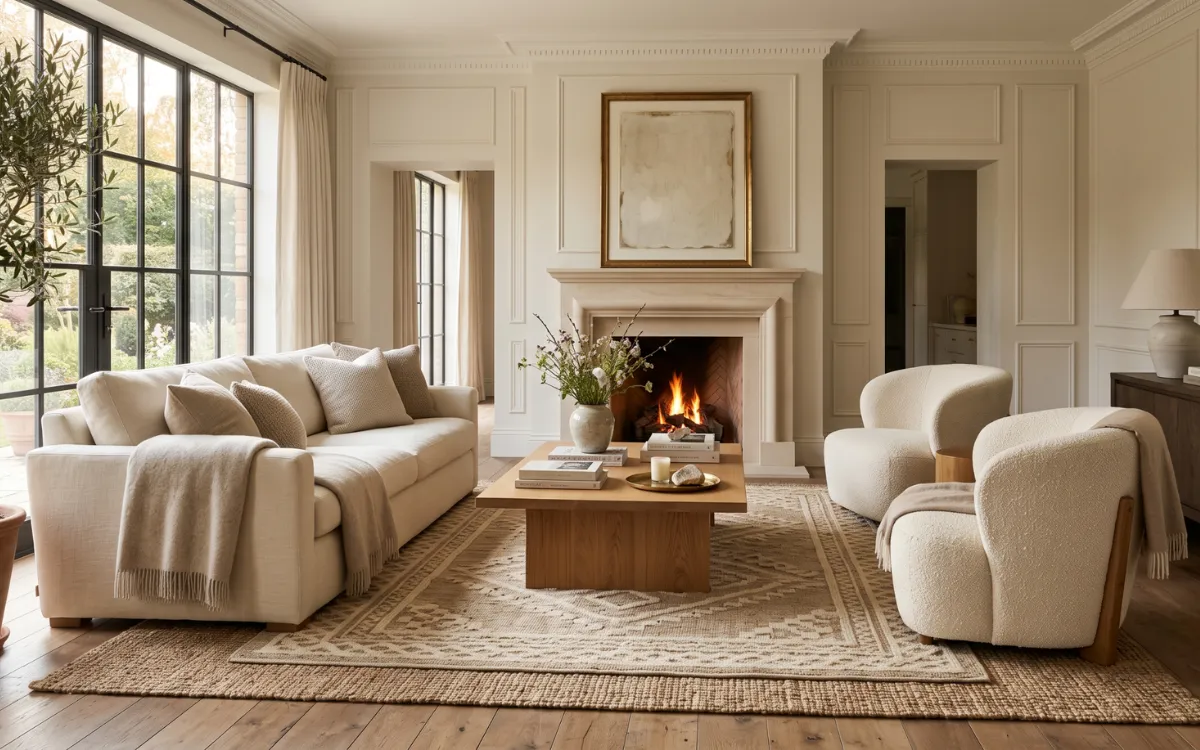
Late morning light stretches quietly across the floor, tracing the grain of wood before softening into fabric beneath the coffee table. Long before a room is appreciated for its furniture or color palette, the floor begins shaping the experience of the space.
A living room rug does more than occupy the center of the room—it gathers furniture into conversation, softens movement, introduces warmth, and creates visual balance that can be seen as much as it can be felt. More than a decorative layer, it helps define seating areas and anchor furniture placement.
It also establishes a sense of proportion throughout the room. Whether inside a compact apartment, a contemporary home, or an expansive family residence, the right rug quietly becomes the element that allows everything else to belong.
Living Room Placement
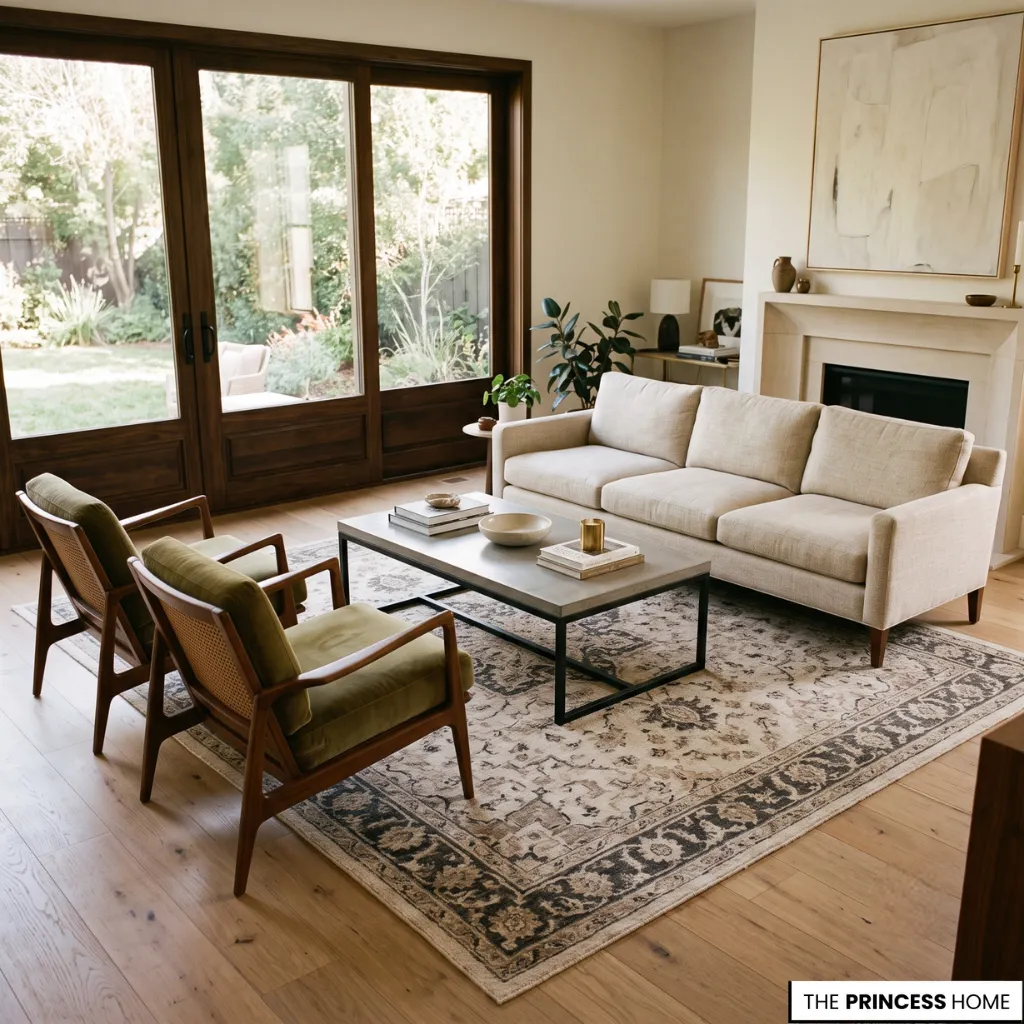
Some interiors immediately feel composed, even before individual pieces attract attention. Often, that quiet sense of balance begins beneath them. A rug establishes an invisible boundary that encourages furniture to relate naturally to one another.
Sofas, armchairs, and tables no longer appear scattered across an open floor but become part of a shared landscape. Whether every furniture leg rests on the rug or only the front legs do, the arrangement influences how connected the room appears without drawing attention to itself.
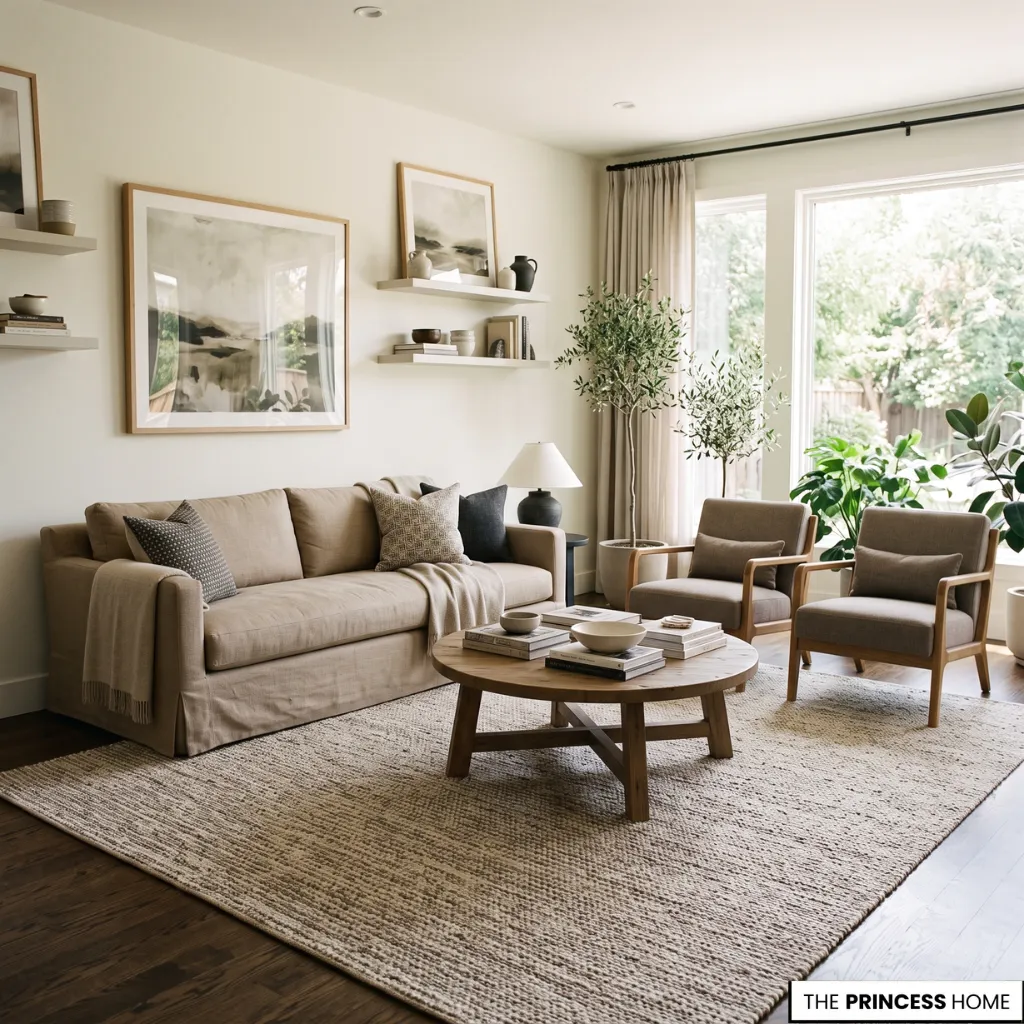
The rug becomes the visual foundation of the seating area, helping the room feel organized and intentional. This subtle foundation changes the way space is perceived.
Large living rooms gain intimacy without sacrificing openness, while smaller layouts appear calmer because every element seems connected instead of competing for attention. The effect is gentle rather than dramatic, yet it influences nearly every visual impression that follows.
Choosing Rug Size
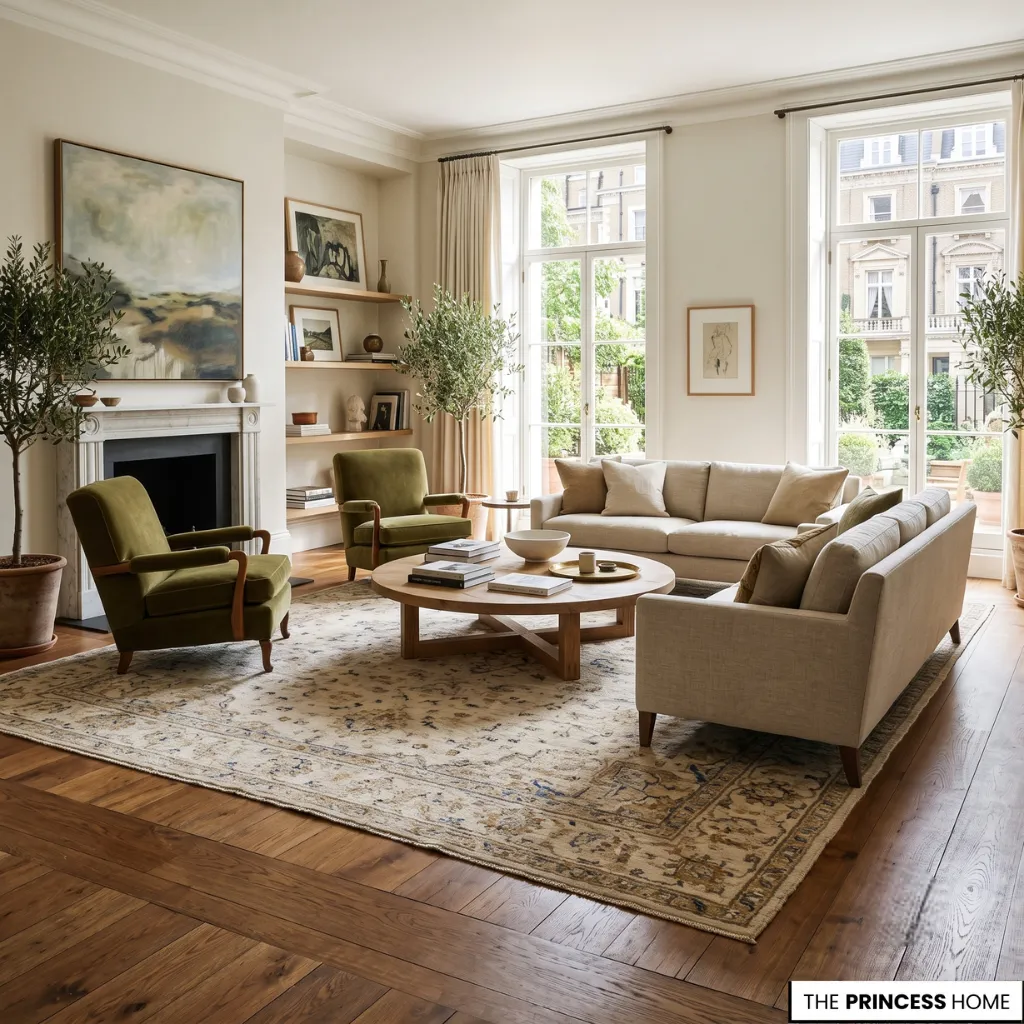
Color may catch the eye first, but proportion quietly determines whether a room feels harmonious. A rug that extends comfortably beneath the main seating arrangement allows furniture to settle naturally into the architecture instead of floating independently across the floor.
The relationship between visible flooring and textile also influences how spacious a room feels. Generous borders reveal more of the floor, while larger rugs create a continuous visual field that encourages the seating area to feel unified.
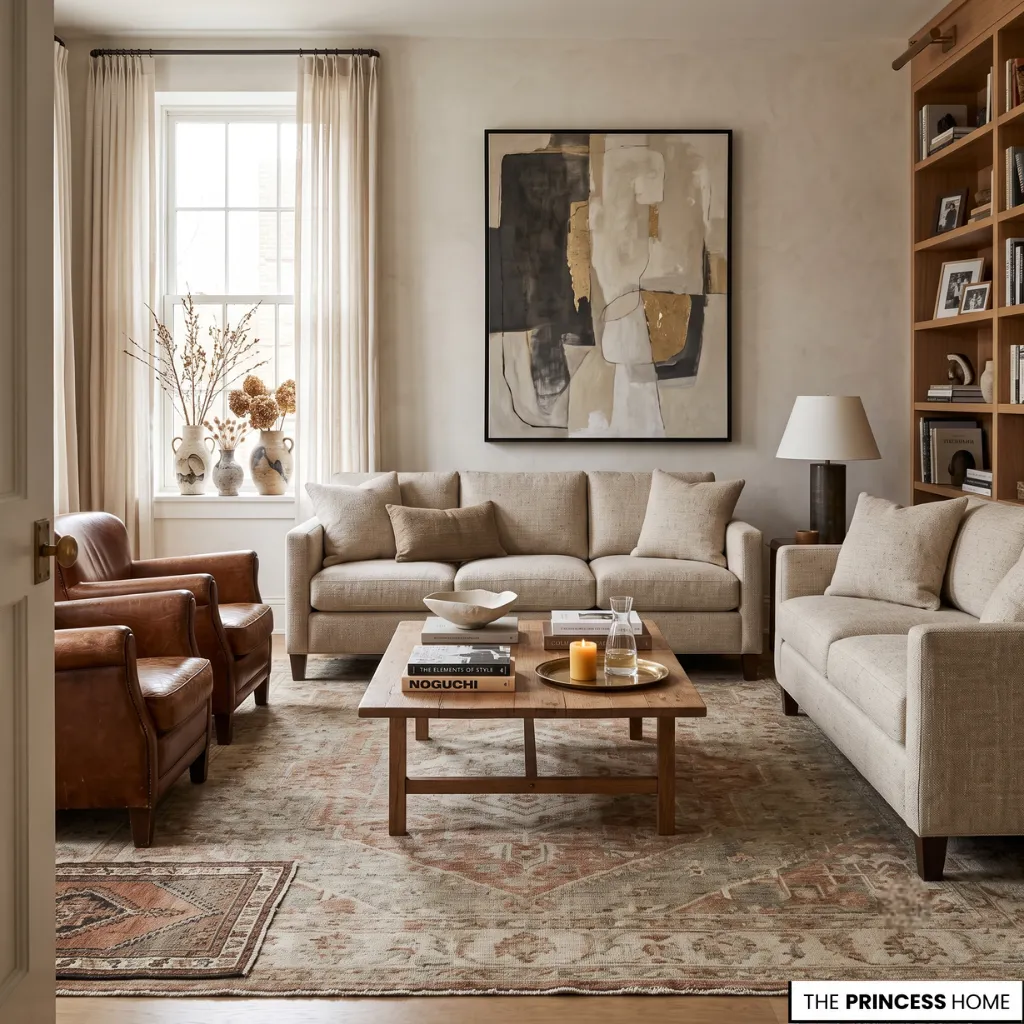
In a small apartment, carefully scaled dimensions can make the room feel more expansive and connected. In larger homes, a generously sized rug introduces structure and warmth across broader floor plans without diminishing openness.
From compact layouts to generously proportioned living rooms, scale quietly shapes comfort long before decorative details become noticeable.
💡 EXPLORE MORE:
Looking to frame your living room’s newly balanced layout with tailored drapery? Read our complete guide to Living Room Curtains.
Living Room Rug Materials
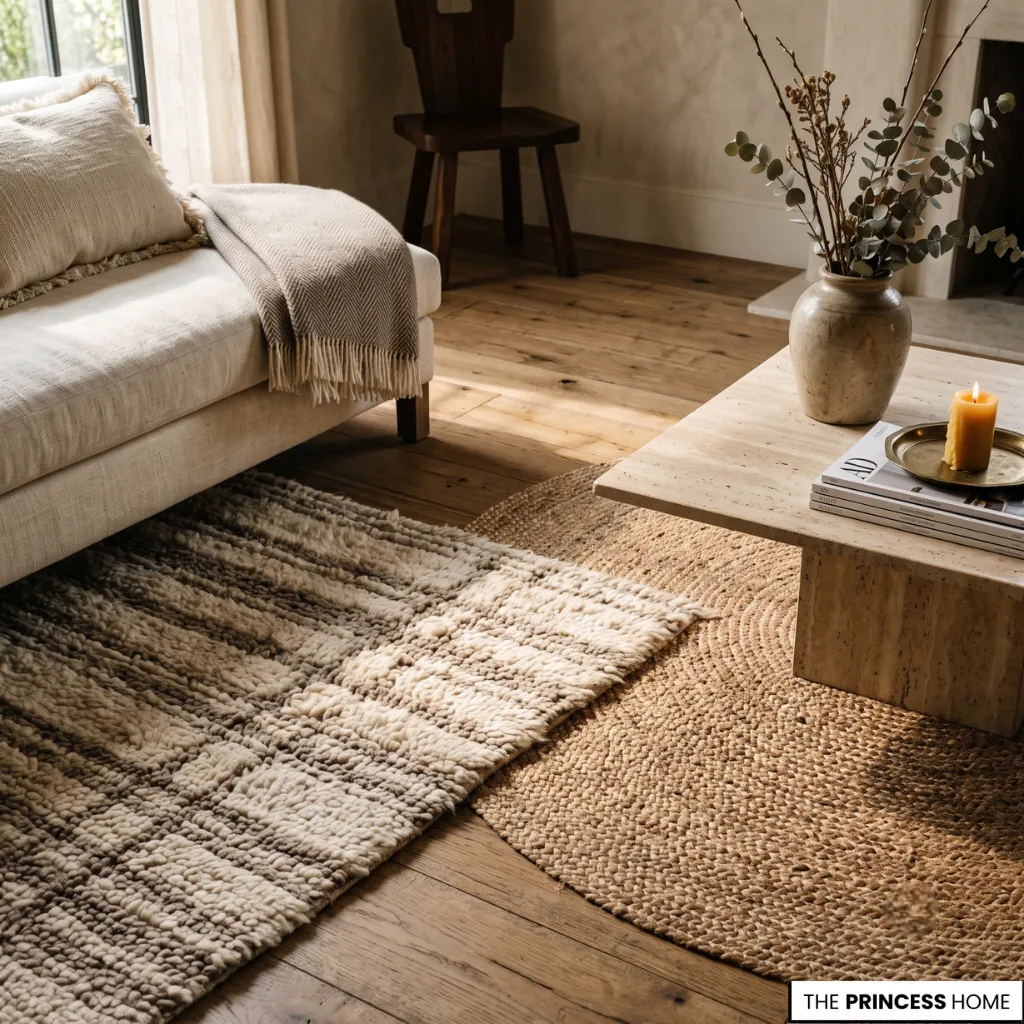
Walk barefoot across a woven wool rug and the experience differs entirely from stepping onto smooth cotton, durable synthetic fibers, or flat natural weaves. Texture introduces another layer of design—one that is experienced through movement as much as appearance.
Soft, high-pile rugs absorb light and invite quiet relaxation, creating an atmosphere suited to evenings spent reading or gathering with family.
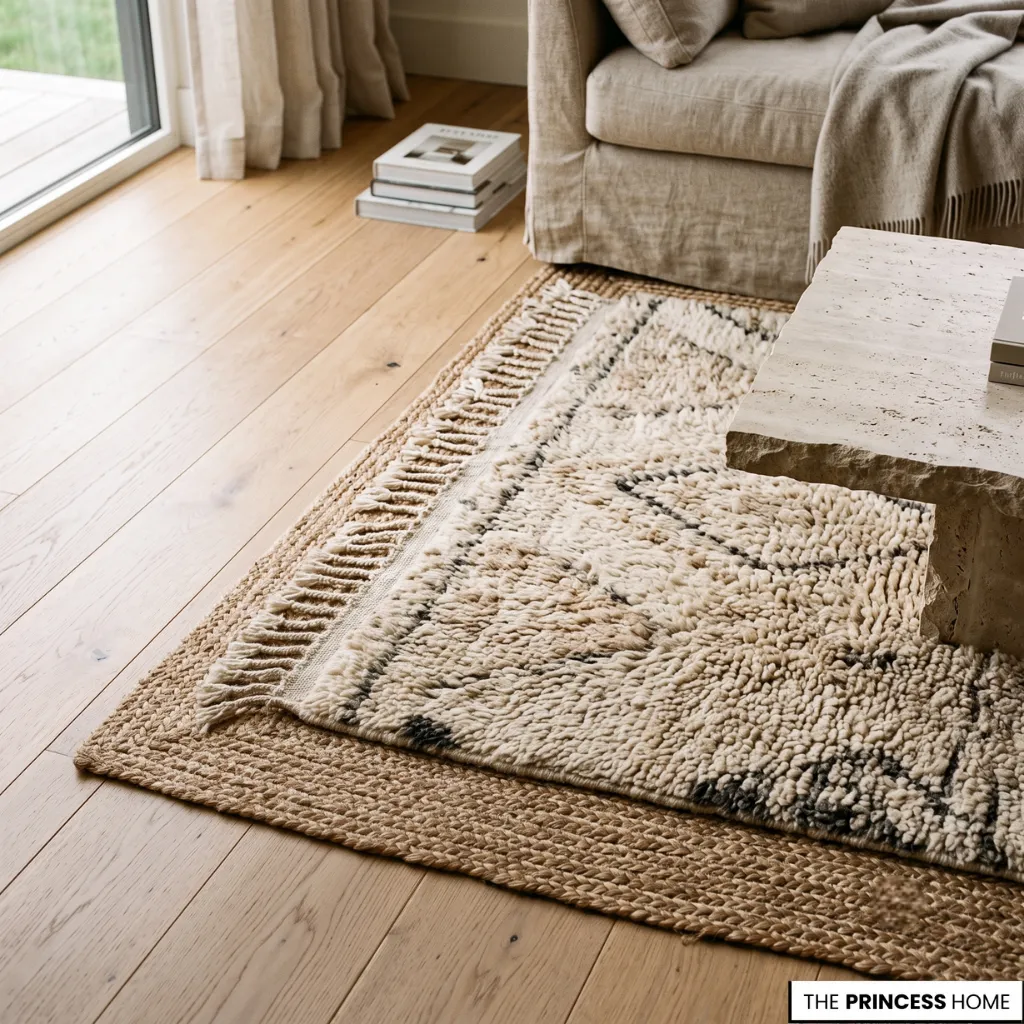
Lower-pile constructions reveal cleaner lines that naturally complement contemporary interiors, while jute and sisal bring an organic character that pairs beautifully with wood, linen, and stone.
Performance fibers, increasingly common in busy households, offer a practical alternative without sacrificing visual softness or visual refinement.
Each material contributes differently to the character of a living room, influencing not only comfort underfoot but also the way light, texture, and furniture interact throughout the space. Rather than competing with furniture, texture allows surfaces throughout the room to speak the same visual language.
Rug Colors Patterns
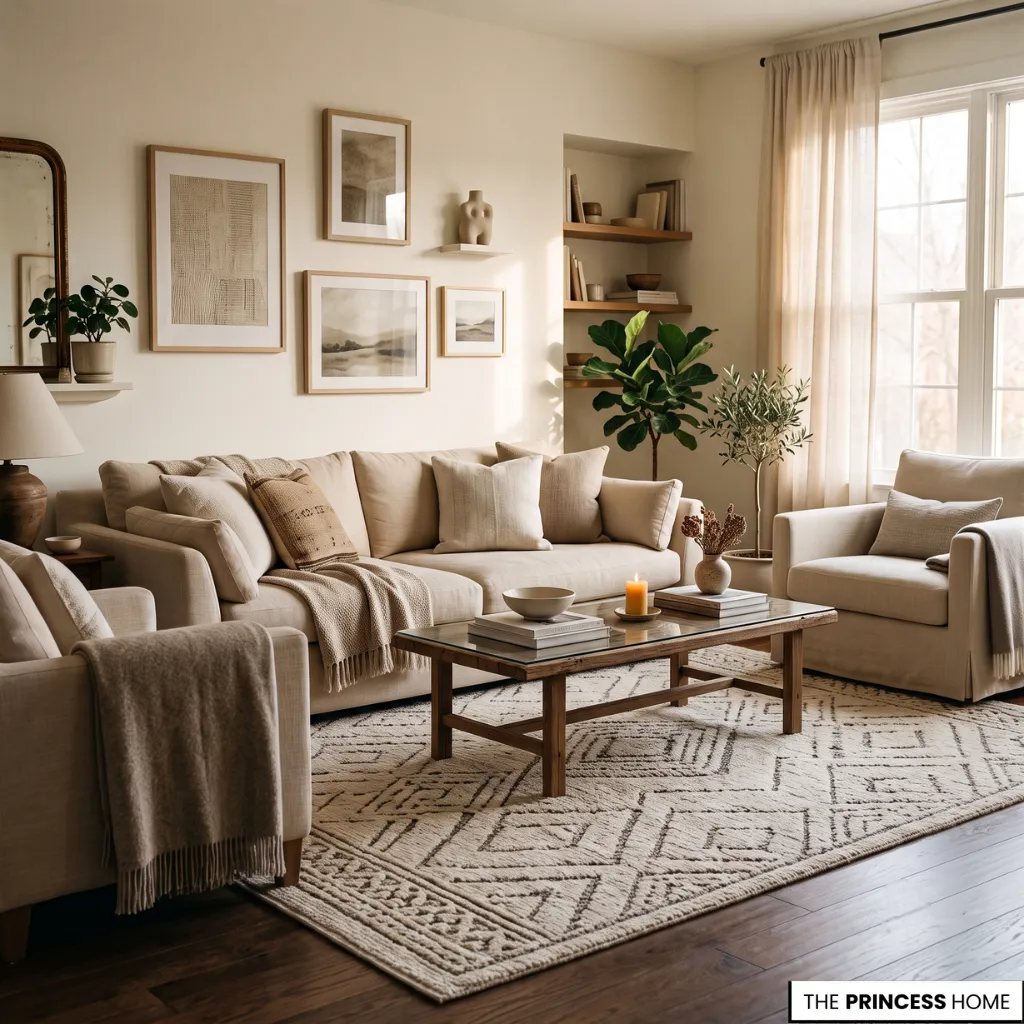
A rug is rarely experienced under one consistent condition. Morning sunlight reveals one personality, afternoon shadows another, and evening lighting transforms it yet again. Neutral tones respond gently to changing light.
They allow architecture, artwork, and upholstery to remain the focus while still contributing quiet depth. Richer colors introduce visual gravity, anchoring larger seating areas with confidence and helping define the visual center of the room.
Pattern also changes the perception of scale. Fine, understated motifs create calm continuity, while larger geometric, Moroccan, vintage, or traditional designs naturally become stronger visual anchors.
As daylight shifts across the room, these choices continue evolving without demanding attention. The relationship between color, pattern, and surrounding materials often determines whether a room feels quietly layered or boldly expressive.
💡 EXPLORE MORE:
Learn how natural daylight and wall sheens interact with your rug’s tones in our guide to Living Room Paint Colors.
Coordinating With Furniture
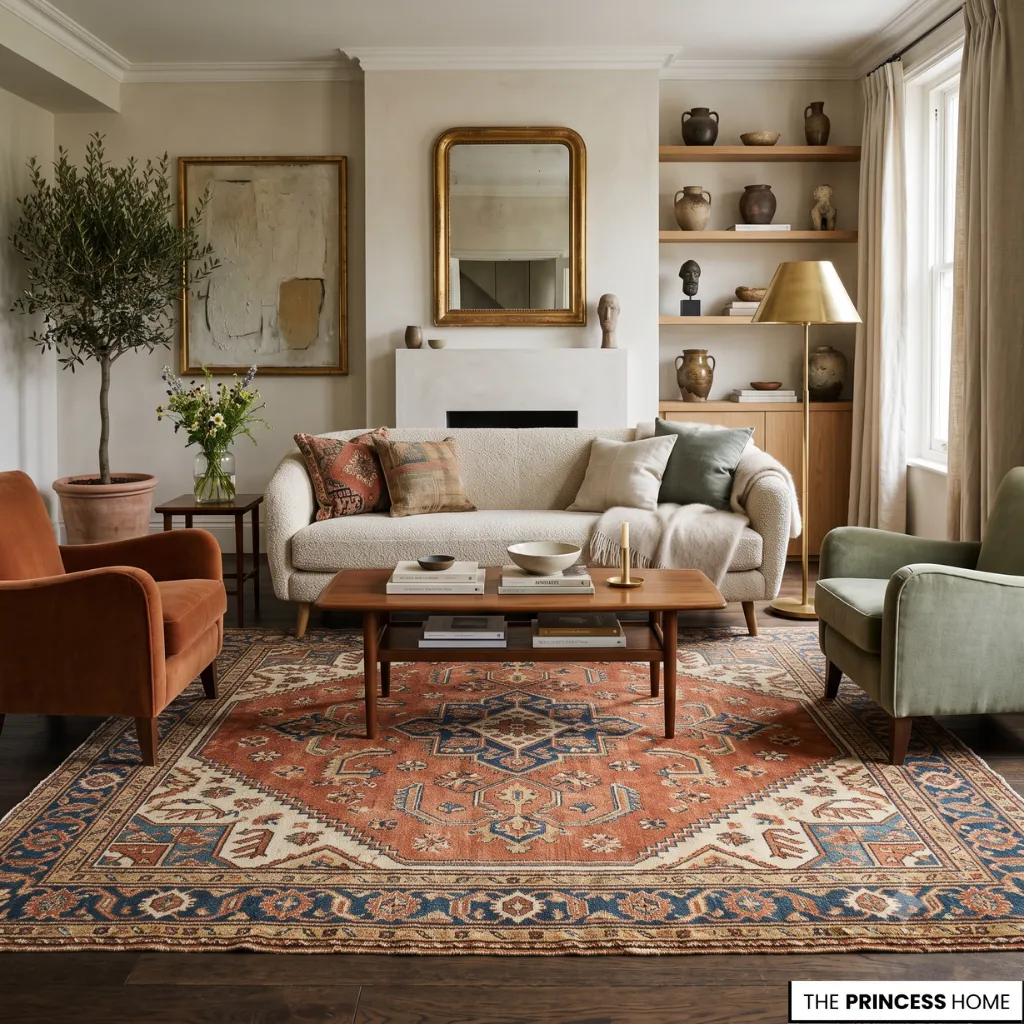
Beautiful interiors often feel less like collections of objects and more like conversations between materials. The upholstery of a sofa, the finish of a wooden table, brushed metal lighting, woven baskets, and window textiles all gain subtle continuity when connected by a carefully chosen rug.
Instead of acting as another decorative feature, the rug becomes the visual bridge linking contrasting materials together.
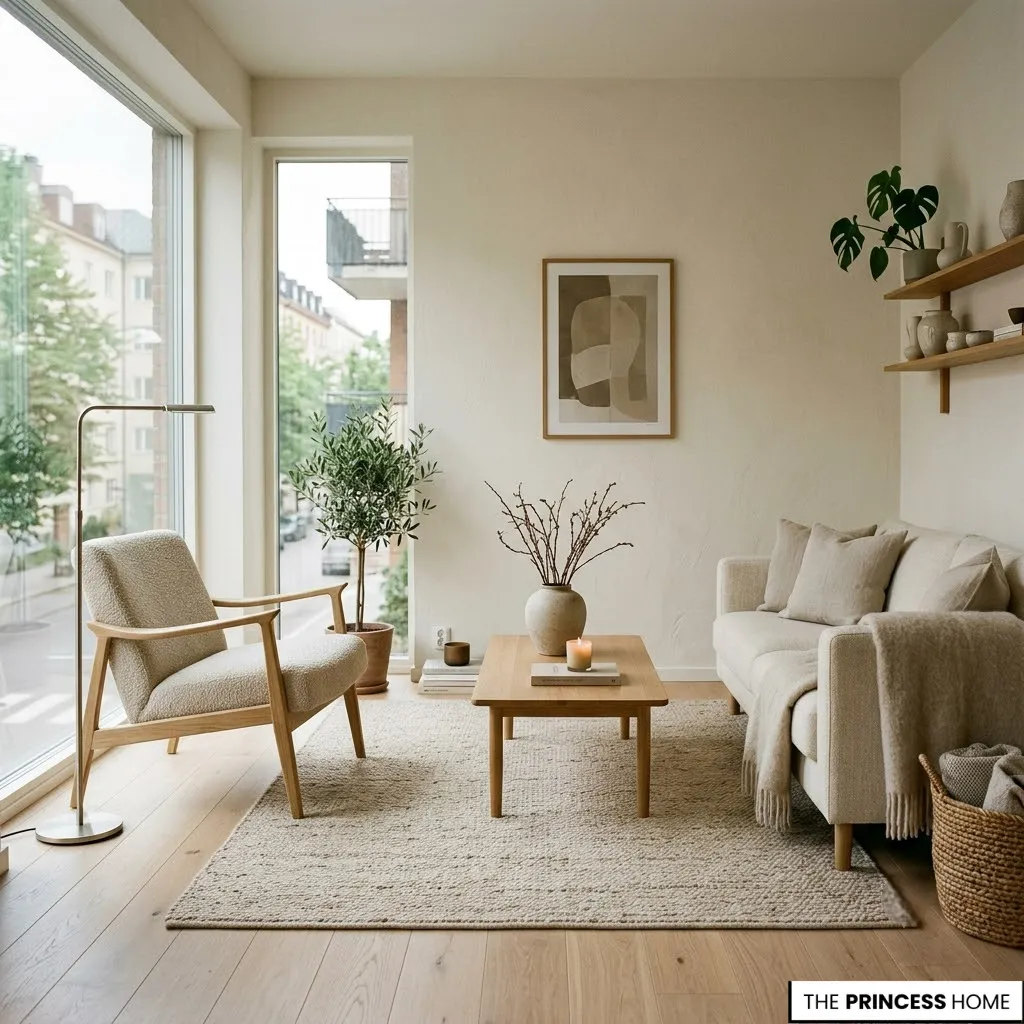
Whether the room leans toward Scandinavian simplicity, timeless traditional interiors, contemporary minimalism, farmhouse warmth, transitional balance, or layered modern design, the rug quietly helps different materials coexist. It does so with remarkable ease.
The result feels collected rather than coordinated—a distinction often found in homes that evolve naturally over time.
Living Room Rug Shapes
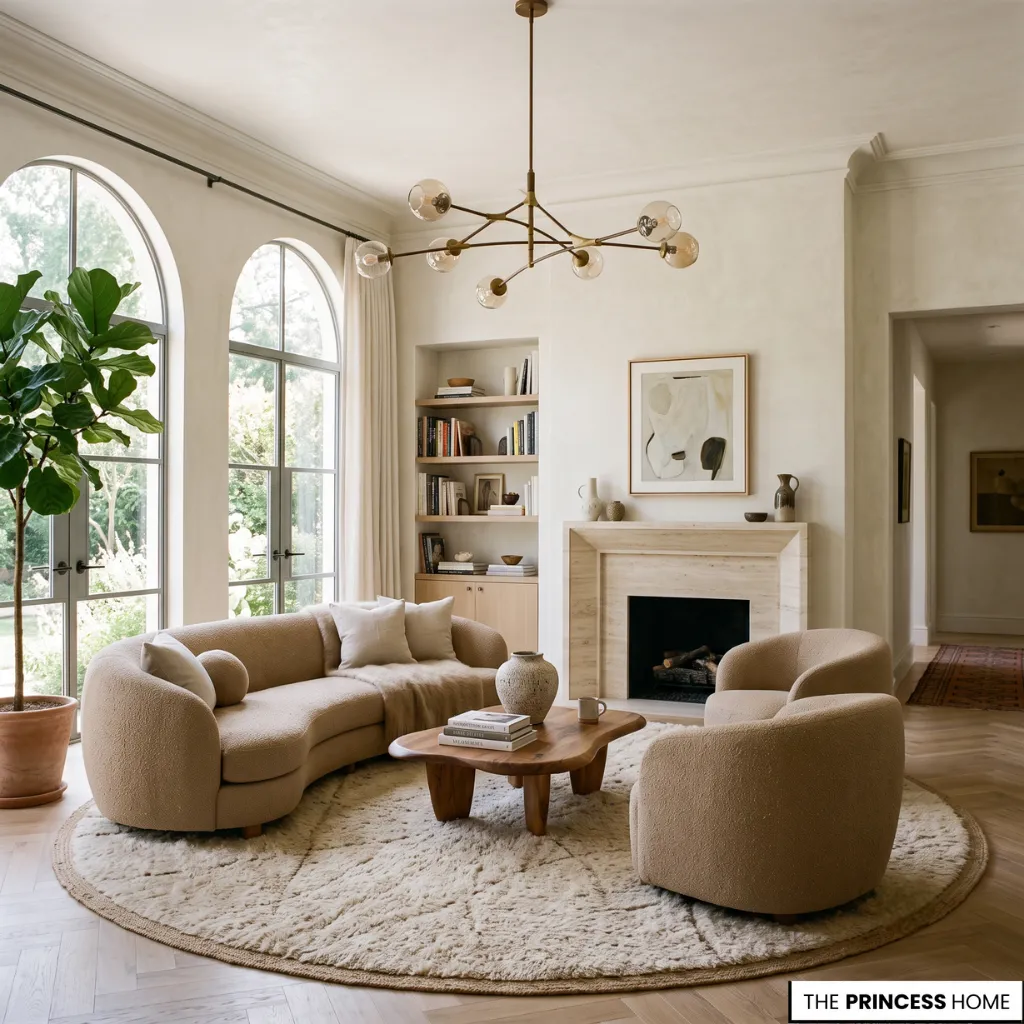
Most living rooms naturally welcome rectangular rugs, mirroring the architecture surrounding them. Yet shape quietly affects how people experience movement through the room.
Round rugs soften angular furniture arrangements and introduce a sense of flow in compact layouts, while square proportions create calm symmetry beneath balanced seating groups.
Runners extend visual rhythm through adjoining spaces, and organically shaped rugs introduce a relaxed character that complements curved furniture and sculptural lighting.
Different shapes create different relationships between furniture and floor space, subtly influencing how open, intimate, or structured a room feels. Without changing a single piece of furniture, shape alone can influence the emotional rhythm of the room.
💡 EXPLORE MORE:
Highlight the texture and shape of your rug after dark with warm lamps and directional accent lights. Discover more in our guide to Layered Living Room Lighting.
Layering Living Rugs
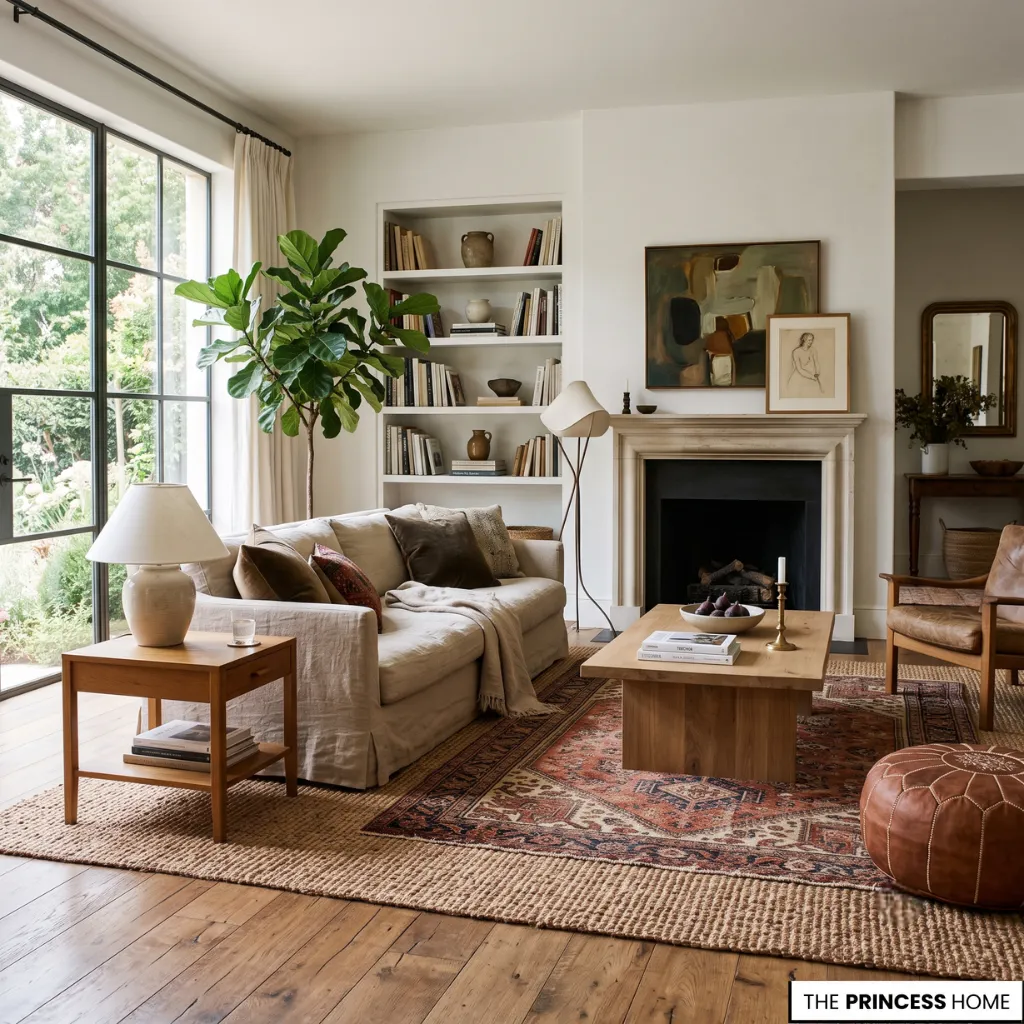
Layering rugs has gradually become less about decoration and more about creating visual depth. A generous natural-fiber foundation paired with a smaller patterned rug introduces subtle variation while preserving openness.
In larger living rooms, layering can define separate conversation areas, while smaller homes often use it to introduce texture without increasing visual weight.
Slight differences in weave, color, and texture create dimension that reveals itself slowly as light moves throughout the day. The room gains richness while maintaining an effortless appearance.
Different Living Spaces
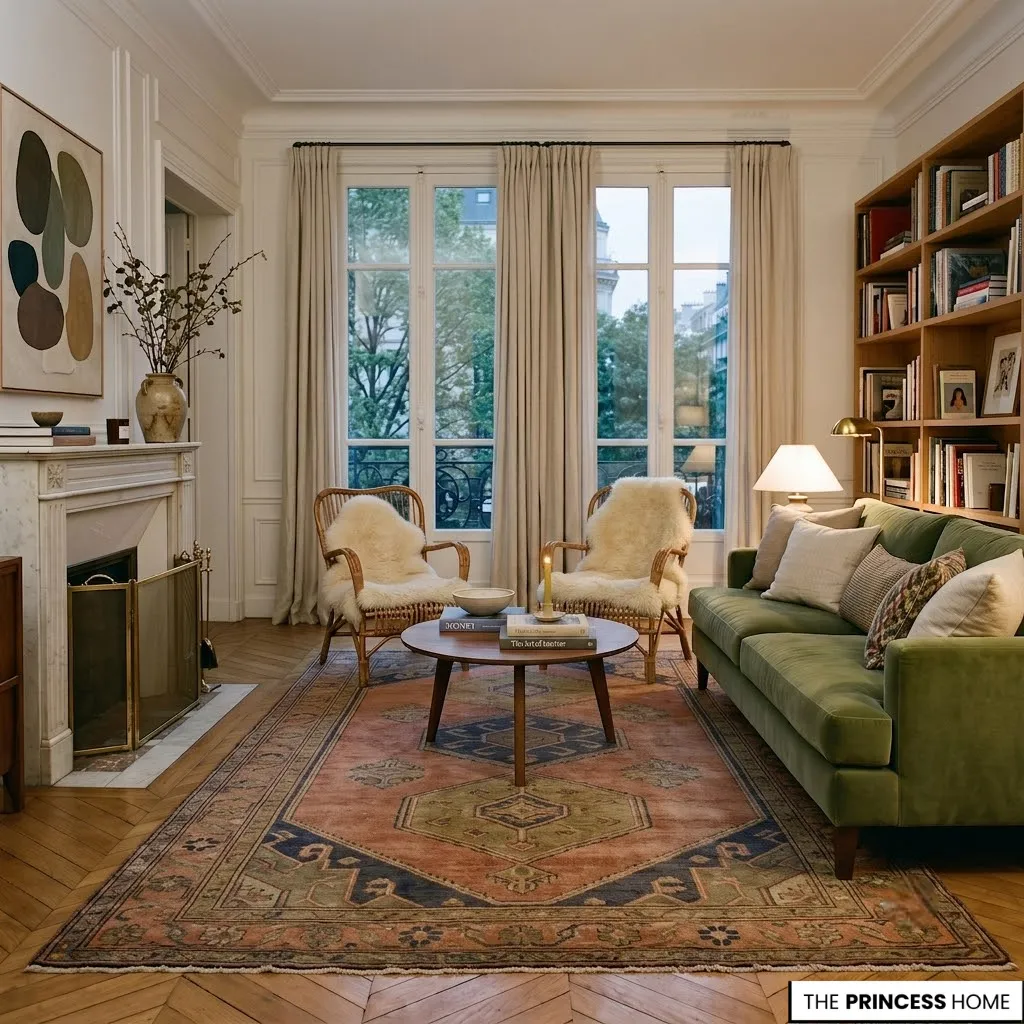
Every living room carries its own rhythm. Some are lively gathering places where children and guests constantly pass through, while others remain peaceful retreats designed for slower afternoons and quiet evenings. The most successful rug rarely transforms the character of these spaces.
Instead, it adapts to them. In an urban apartment, it introduces softness within a compact footprint. In an open-plan home, it quietly defines conversation areas without interrupting the architecture.
In classic interiors, it reinforces tradition, while contemporary spaces often rely on it to soften clean lines and polished surfaces. Within expansive luxury homes, it helps large rooms feel welcoming, grounded, and visually connected.
Its role remains remarkably consistent despite changing surroundings: creating connection where empty floor once separated people, furniture, and light.
Balanced Living Room
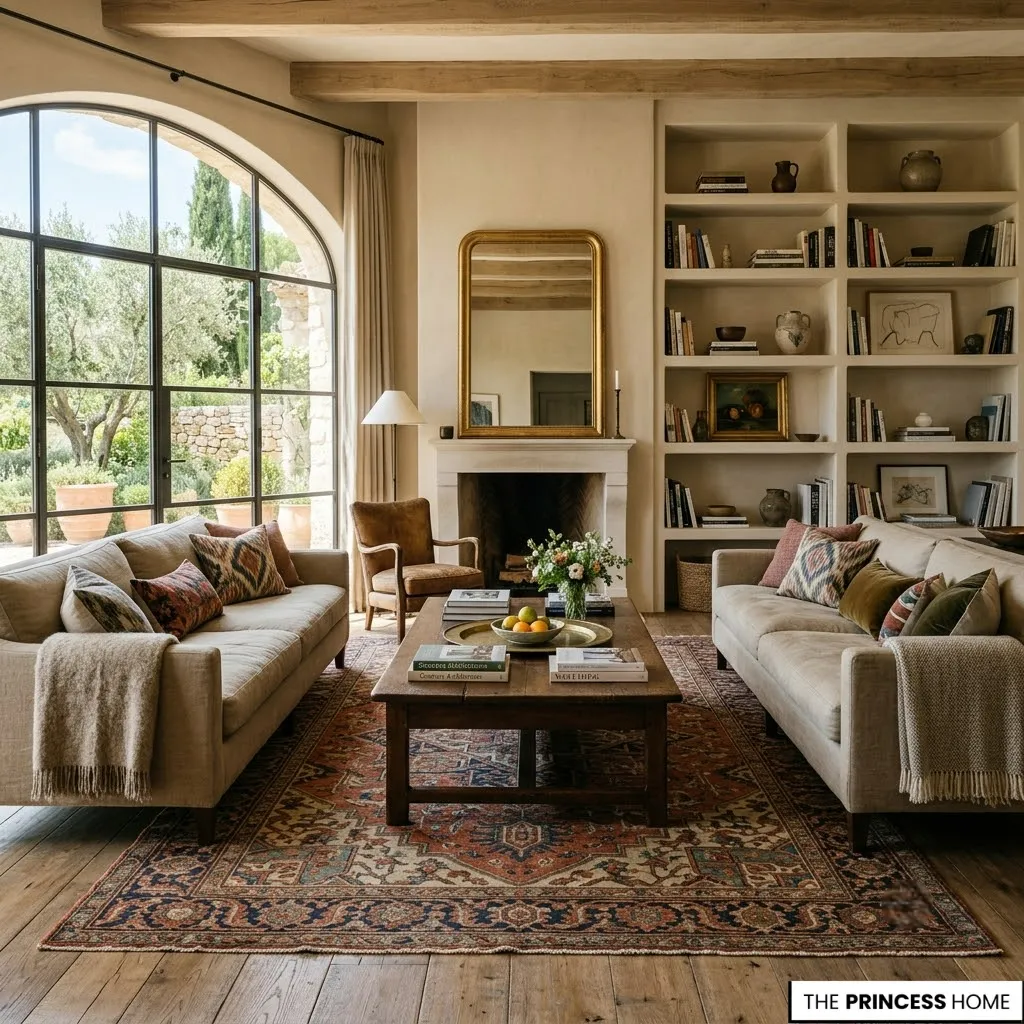
Some finishing touches demand attention. Others simply allow a room to settle into itself. A thoughtfully chosen living room rug belongs to the second category. It receives shifting daylight, cushions familiar footsteps, and quietly gathers every material around it into a single visual story.
Through its size, placement, material, color, and texture, it helps shape how a room functions as well as how it feels.Over time, it becomes less noticeable precisely because it feels as though it has always belonged there.
That quiet confidence is perhaps the finest quality any interior can achieve—not perfection, but a sense that every element has found its natural place.
💡 EXPLORE MORE:
Complete your architectural sanctuary by combining proper rug scale with optimal window treatments and wall finishes. Read our master guide to Living Room Curtains for a fully cohesive interior.
FAQ
What is the best living room rug size?
The best living room rug is large enough to anchor the seating area, with at least the front legs of sofas and chairs resting on the rug for a balanced look.
How do you choose a living room rug?
Choose a living room rug by considering room size, furniture layout, material, color, and texture so the rug complements both the space and your lifestyle.
Can a living room rug make a small room look bigger?
Yes. A properly sized rug with balanced proportions and a cohesive color palette can make a small living room feel more open and visually connected.
Which rug materials work best for a living room?
Wool offers comfort and durability, jute adds natural texture, cotton feels lightweight, and performance fibers are ideal for high-traffic family spaces.
What colors work best for a living room rug?
Neutral rugs create timeless versatility, while deeper colors and patterned designs add contrast, define seating areas, and introduce visual depth.
Is layering living room rugs still popular?
Yes. Layering rugs remains a popular design approach. It adds texture, dimension, and warmth while helping define different zones within a living room.
How do you style a living room rug with furniture?
Position the rug beneath the main seating arrangement so it visually connects sofas, chairs, and tables. This creates a cohesive and well-proportioned layout.
Final Thoughts
A thoughtfully chosen living room rug is more than a decorative accent. It is the foundation that brings furniture, color, texture, and proportion into harmony. Whether your home is a compact apartment, a contemporary residence, or a spacious family living room, selecting the right size, material, and placement creates a space that feels balanced, welcoming, and effortlessly timeless.