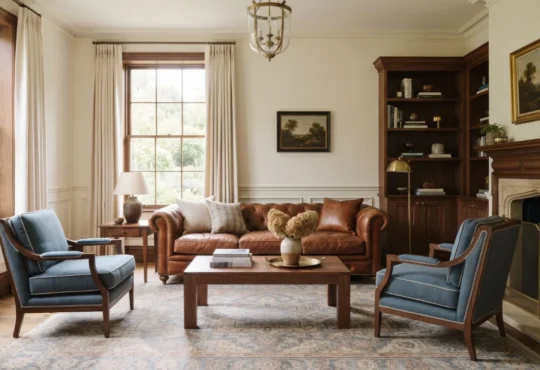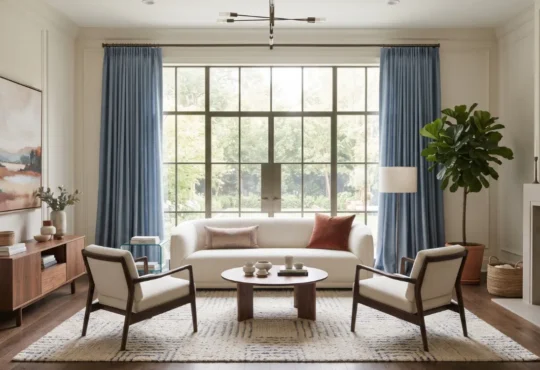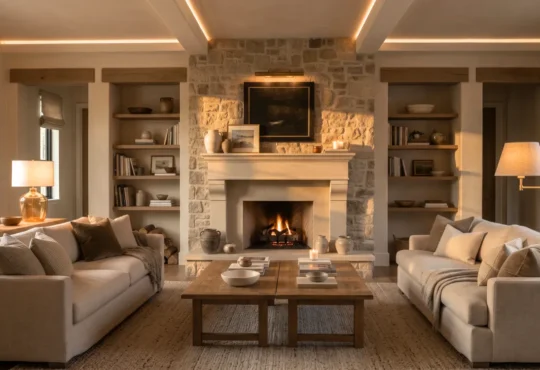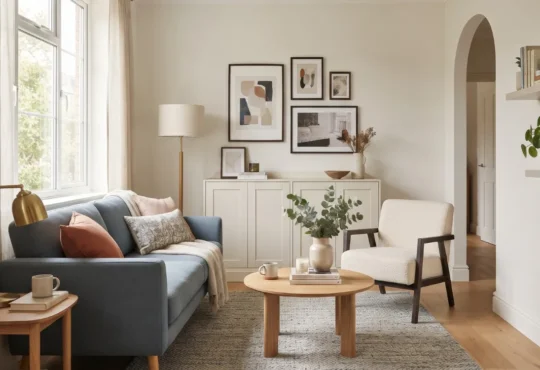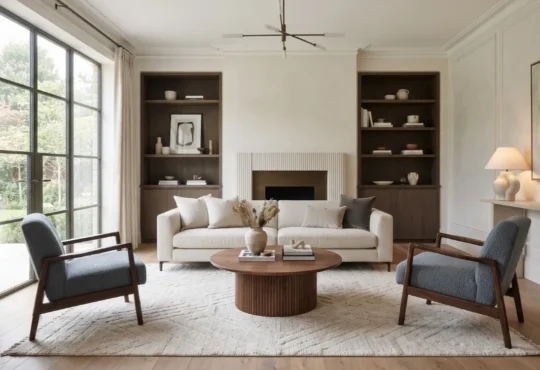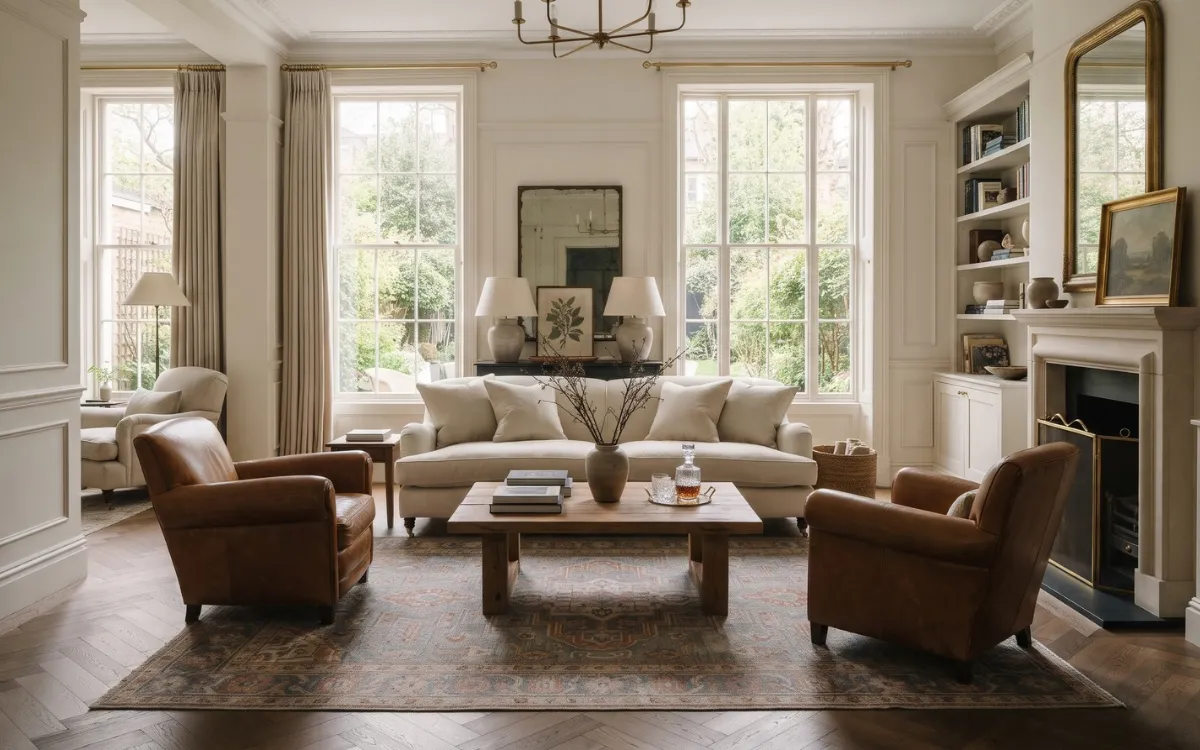
Choosing the right living room rug involves more than selecting a color or pattern. The rug needs to fit the seating arrangement, suit the room’s proportions, and withstand everyday use.
This living room rug guide explains how to choose the right size, position it correctly, compare materials, and coordinate its appearance with your existing furniture and flooring.
Assess Your Space
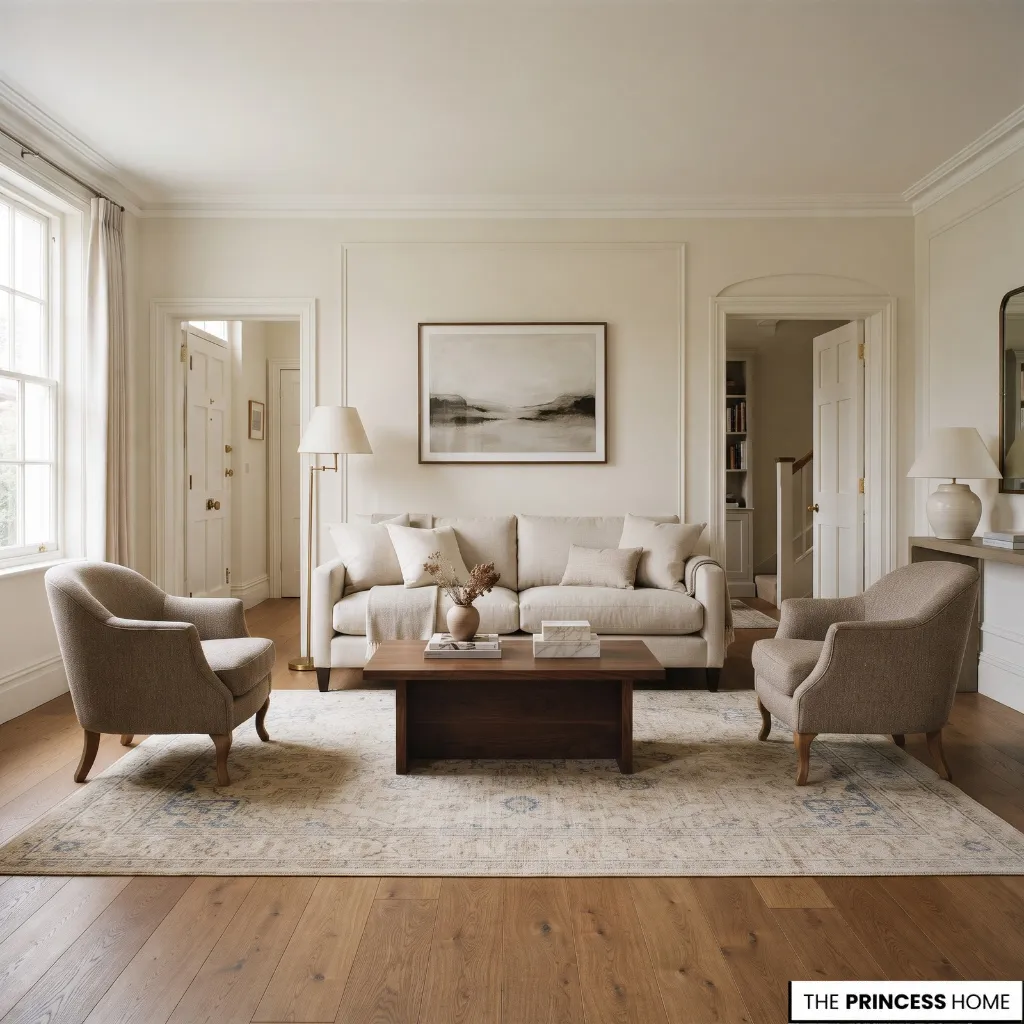
Before shopping for a living room rug, assess the room’s dimensions, furniture arrangement, flooring, and everyday needs. These factors determine which sizes, materials, and styles will work best.
Measure the seating area, including the sofa, sectional, armchairs, and coffee table. Note the position of doors, walkways, fireplaces, and other fixed features that may affect the rug’s placement.
A rug should connect the main seating pieces without obstructing movement or creating awkward gaps around the furniture.
Consider the flooring as well. A rug placed over pale timber, dark wood, stone, or patterned flooring will create a different visual effect depending on its color, texture, and coverage. Decide how much of the existing floor you want to show before choosing the dimensions.
Your household’s needs also matter. A living room used frequently by children, pets, or guests may benefit from a durable, easy-to-clean rug with a practical pile height. A quieter sitting room may accommodate more delicate materials or a thicker, softer surface.
Finally, identify which furniture will remain. If you are keeping your current sofa and chairs, select the rug around their actual dimensions rather than choosing a size first and attempting to adapt the layout afterward.
Choose the Right Size
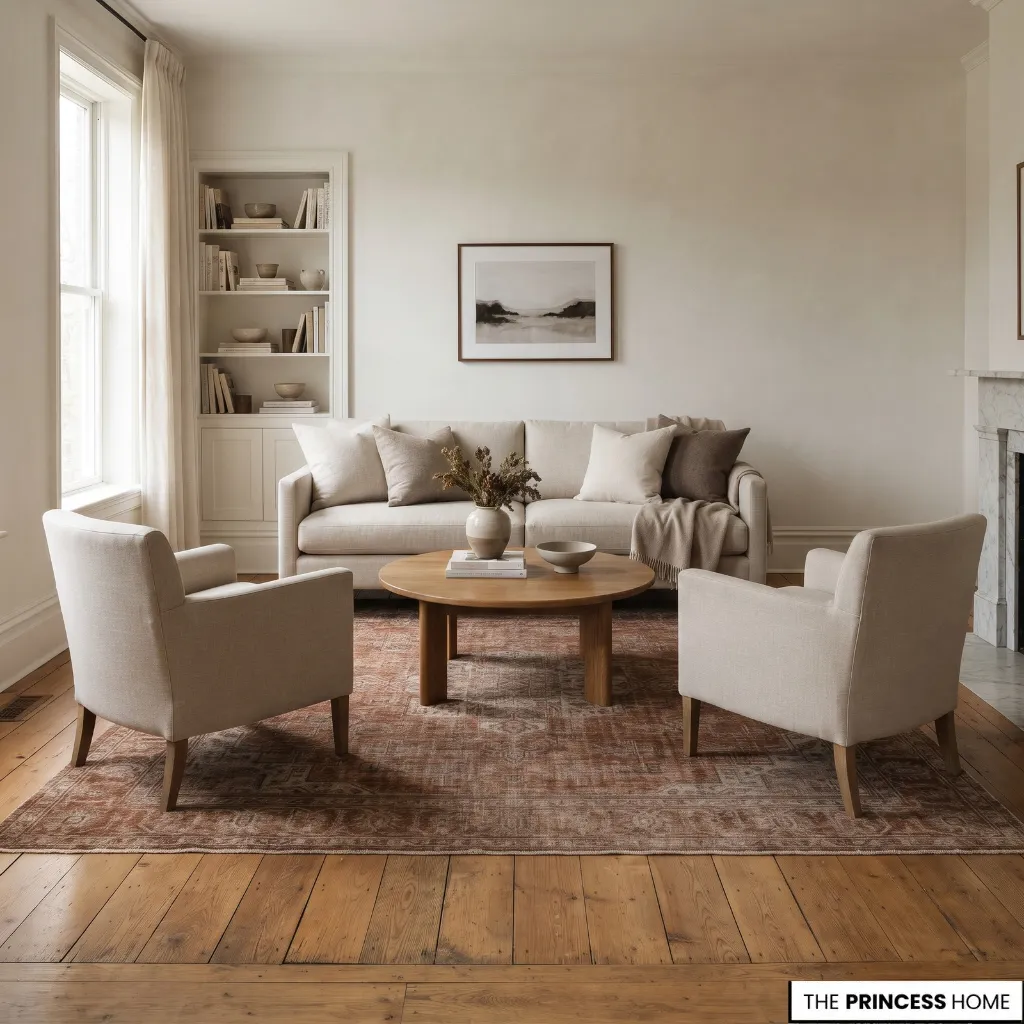
The correct living room rug size depends on the seating arrangement, the room’s proportions, and how much floor space should remain visible. A rug that is too small can make the furniture appear disconnected, while an oversized rug may cover more of the floor than the layout requires.
Common rug sizes include 5 × 8 feet (approximately 152 × 244 cm), 6 × 9 feet (183 × 274 cm), 8 × 10 feet (244 × 305 cm), and 9 × 12 feet (274 × 366 cm). These are useful starting points, but the right choice depends on the dimensions of your furniture and the available floor area.
For many medium-sized living rooms, an 8 × 10-foot rug can accommodate a sofa, a coffee table, and one or two chairs. Larger seating arrangements may need a 9 × 12-foot rug or more, while compact rooms may work with a smaller size if it connects the main furniture effectively.
To narrow down the right size, measure the full width and depth of the seating group, including any armchairs or the extended section of a sectional sofa. Compare these measurements with the available floor space, leaving enough room for doors to open and people to move comfortably around the furniture.
If you want all the main seating legs on the rug, check that its dimensions accommodate the entire furniture footprint. If you prefer the front-legs-on arrangement, make sure the rug extends far enough beneath each sofa and chair to connect the seating visually.
For example, an 8 × 10-foot rug may work well with a sofa and two chairs when the furniture fits comfortably within its edges. If the chairs sit far apart or the sofa has a chaise, a larger rug may provide a better fit.
In a compact room, a smaller rug can still work if it connects the main seating pieces without leaving the coffee table isolated from the arrangement.
Consider the seating group as a whole. Measure the distance across the sofa and chairs, then determine how far the rug should extend beyond them. The rug should generally provide enough space for the furniture to feel connected rather than leaving the front legs close to its edges.
Before buying, mark the proposed dimensions on the floor with painter’s tape. Place the coffee table and imagine the position of each sofa and chair leg. Check the outline from the main entrance and from the seating area.
If the rug looks disconnected from the furniture, blocks a walkway, or leaves too little space around doors, adjust the dimensions or placement before purchasing. This simple test helps you identify whether the rug will fit the furniture, preserve walking routes, and leave the right amount of visible flooring.
Plan Rug Placement
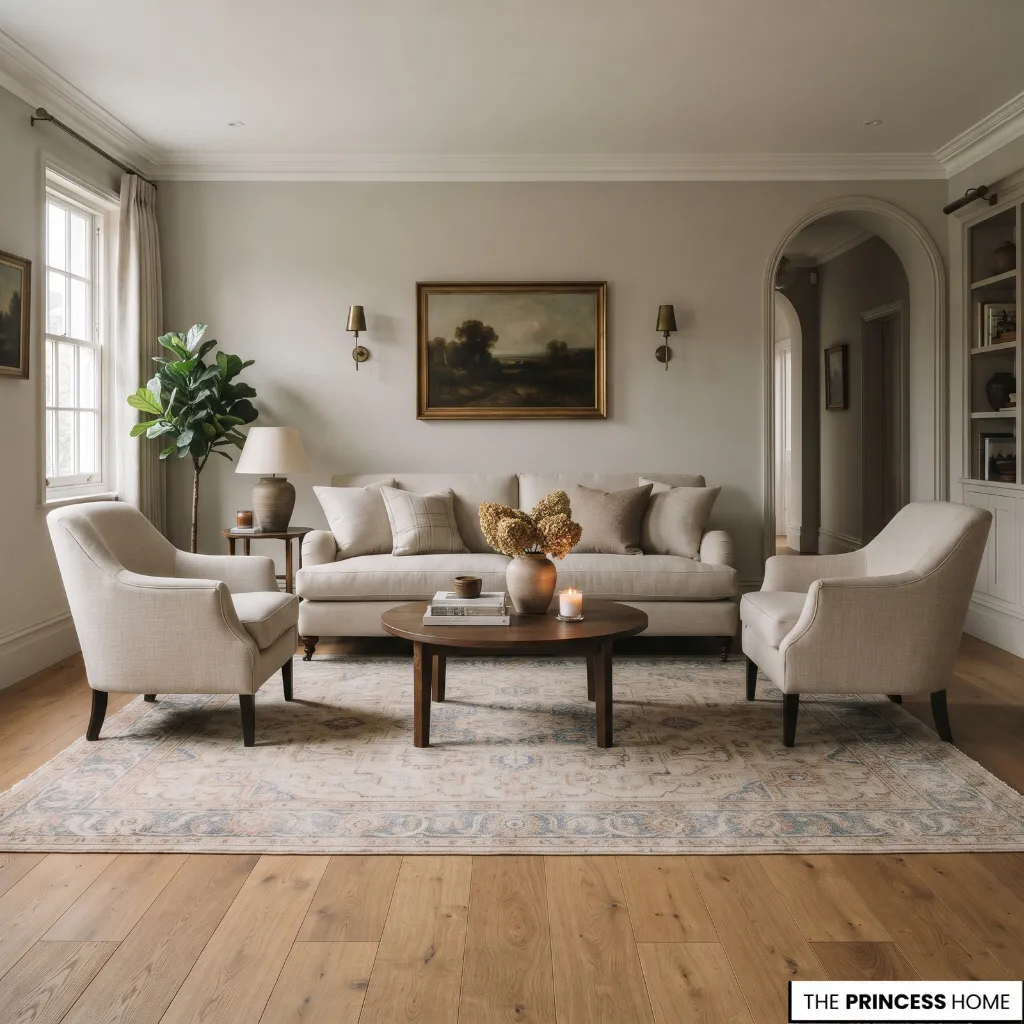
Rug placement determines how the seating arrangement relates to the rest of the living room. Three common approaches work for different spaces, and each creates a distinct relationship between the furniture and the floor.
All furniture legs on the rug. Place the sofa, armchairs, and other main seating pieces entirely on the rug. This arrangement works particularly well in larger living rooms, where a generous rug can define the complete seating area.
Make sure the rug is large enough to accommodate the furniture without leaving the rear legs uncomfortably close to its edges.
Front legs on the rug. Place the front legs of the sofa and chairs on the rug, leaving the rear legs on the floor. This approach connects the seating pieces without requiring a rug beneath every leg.
Keep the front legs aligned where possible. Make sure each main seating piece relates to the rug rather than sitting just beyond its edge.
Furniture around the rug. Arrange the seating around a smaller rug, keeping the furniture legs off its surface. This can work in compact rooms or layouts with specific space limitations, but the rug must still relate clearly to the seating arrangement.
Place it close enough to the sofa and chairs to connect the group, and ensure the coffee table fits comfortably on its surface. If it sits too far from the furniture, it may look like a separate decorative feature rather than part of the room.
Whichever arrangement you choose, position the rug in relation to the main seating group rather than automatically centering it in the entire room. In a living room with a fireplace, the seating and rug may align with that focal point.
In an open-plan interior, the rug may instead define the living area within the larger space.
Always check the furniture’s stability, door clearance, and walking routes before finalizing the position. If the rug is too small to accommodate your preferred arrangement, consider a different placement before moving to a larger size, provided the alternative still connects the furniture effectively.
Compare Rug Materials
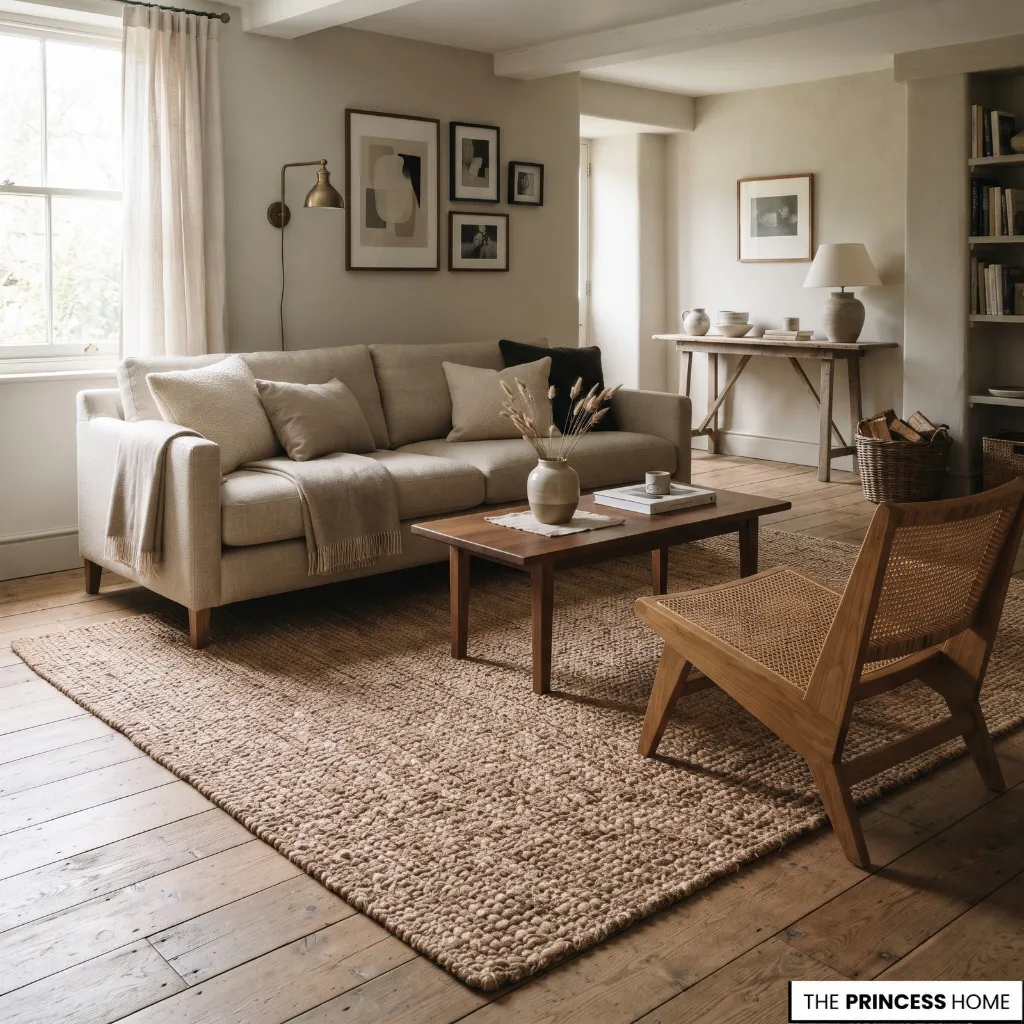
Rug materials influence comfort, durability, appearance, and maintenance. The right choice depends on how the living room is used, the surface you prefer, and the amount of care you can reasonably provide.
Wool is a popular option for living rooms because it offers natural softness, warmth, and resilience. It can suit frequently used seating areas, although some wool rugs shed initially and may require more investment than other options. Care requirements vary by construction and finish.
Cotton offers a relatively lightweight, versatile option. Depending on its construction, a cotton rug may be easy to move or clean, making it useful in informal living spaces. However, thinner cotton rugs may shift more readily, and their durability varies considerably.
Jute and sisal provide a natural, woven texture that works well with timber furniture, linen upholstery, and other natural finishes. Their relatively firm surfaces suit rooms where texture is important, but they may be less practical in areas exposed to frequent spills or moisture.
Care requirements differ between the two fibers and between individual products.
Synthetic fibers, including polypropylene and polyester, are available in many colors, patterns, and price ranges. Some options are practical for busy households because they are relatively easy to maintain.
However, stain resistance, durability, and cleaning suitability depend on the specific fiber, backing, and construction.
Viscose and silk-like fibers can provide a smooth surface and subtle sheen. They may suit living rooms where appearance takes priority over demanding everyday use, but some are sensitive to moisture, friction, and incorrect cleaning methods.
Check the care instructions before choosing them for a frequently used seating area.
When comparing materials, begin with the demands of your household. If spills and frequent cleaning are likely, prioritize a rug whose care instructions suit your routine. If comfort underfoot is more important, compare the softness and resilience of the available options.
For natural texture, consider wool, jute, or sisal. Choose based on your needs for softness and moisture resistance. If the rug will see little use, a more delicate fiber may also work. Make sure you can meet its care requirements before buying.
Compare the material with your household’s priorities rather than assuming one fiber is universally superior. A practical synthetic rug may suit a busy family room, while a wool rug may be appropriate when softness, resilience, and natural fiber are priorities.
Remember that fiber alone does not determine quality. Weave, pile density, backing, manufacturing, and maintenance also influence how a rug performs over time.
Understand Rug Construction
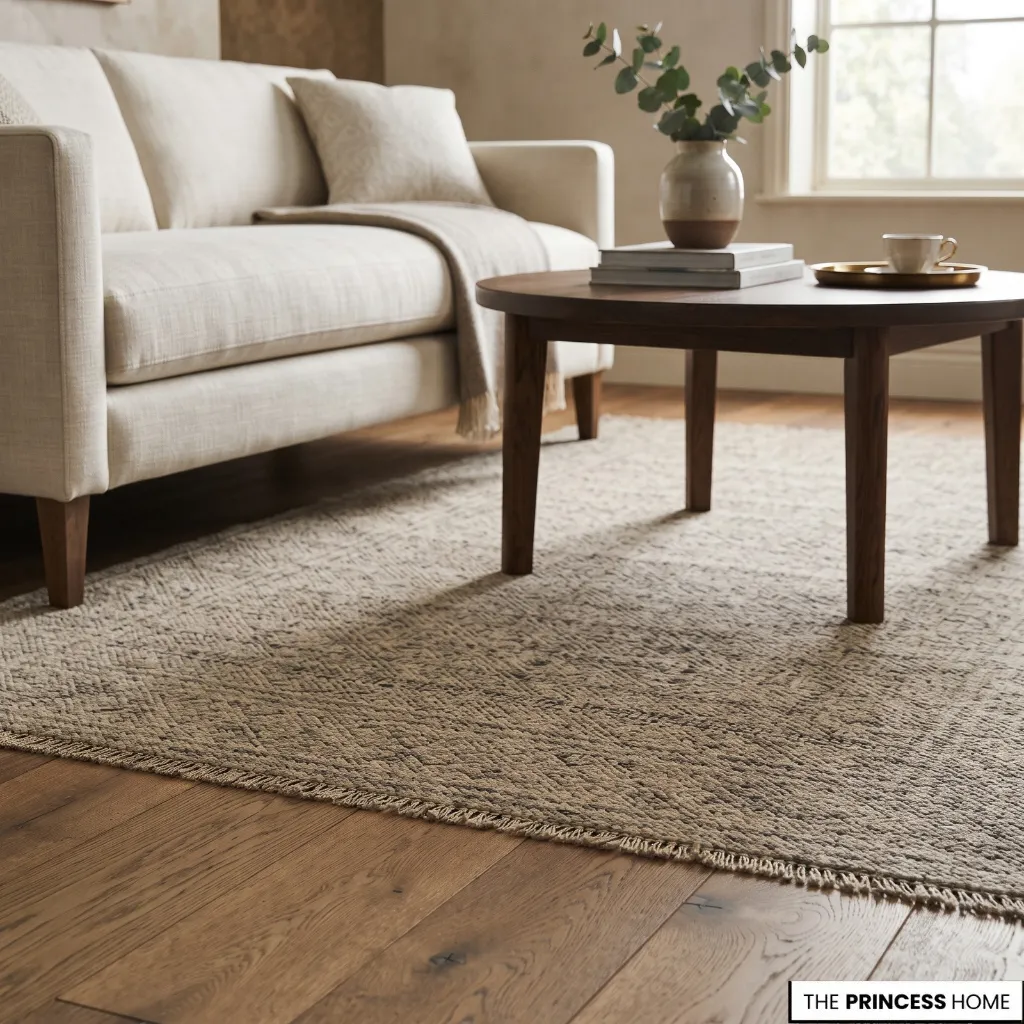
Two rugs made from the same fiber can feel and perform differently because of their construction. Understanding pile height, weave, and manufacturing method helps you select a surface suited to your furniture and daily activities.
Flatweave rugs have a relatively flat surface with little or no raised pile. They are often useful beneath coffee tables and seating arrangements because chairs and other pieces can move across them more easily. Their texture and firmness depend on the weave and fiber.
Low-pile rugs have short fibers that create a relatively smooth surface. They are generally easier to vacuum than many thick-pile rugs and can work well in frequently used living rooms. They may also make furniture placement easier because the legs sit on a more stable surface.
Medium-pile rugs offer a balance between softness and everyday practicality. They provide more cushioning than many low-pile options while remaining manageable for routine care, depending on the material and density.
High-pile rugs have longer fibers that create a thicker, softer surface. They can be comfortable in a relaxed sitting area, but dirt may be harder to remove, and furniture legs may sit less steadily on a thick pile. Consider the weight and design of the furniture before choosing this type.
Manufacturing methods also matter. Hand-knotted rugs, hand-tufted rugs, and machine-made rugs can differ in price, surface texture, construction, and repairability. However, the method alone does not establish quality or lifespan; the actual materials and workmanship must also be considered.
For a busy living room, a flatweave or low-pile rug may be a practical choice. If softness is a priority, a thicker pile may suit the room, provided you are comfortable with its cleaning requirements.
When comparing two rugs with similar fibers, consider how the pile feels, whether furniture sits securely on it, and how easily you can vacuum the surface. These practical differences may matter more to everyday use than the fiber name alone.
Coordinate Color and Pattern
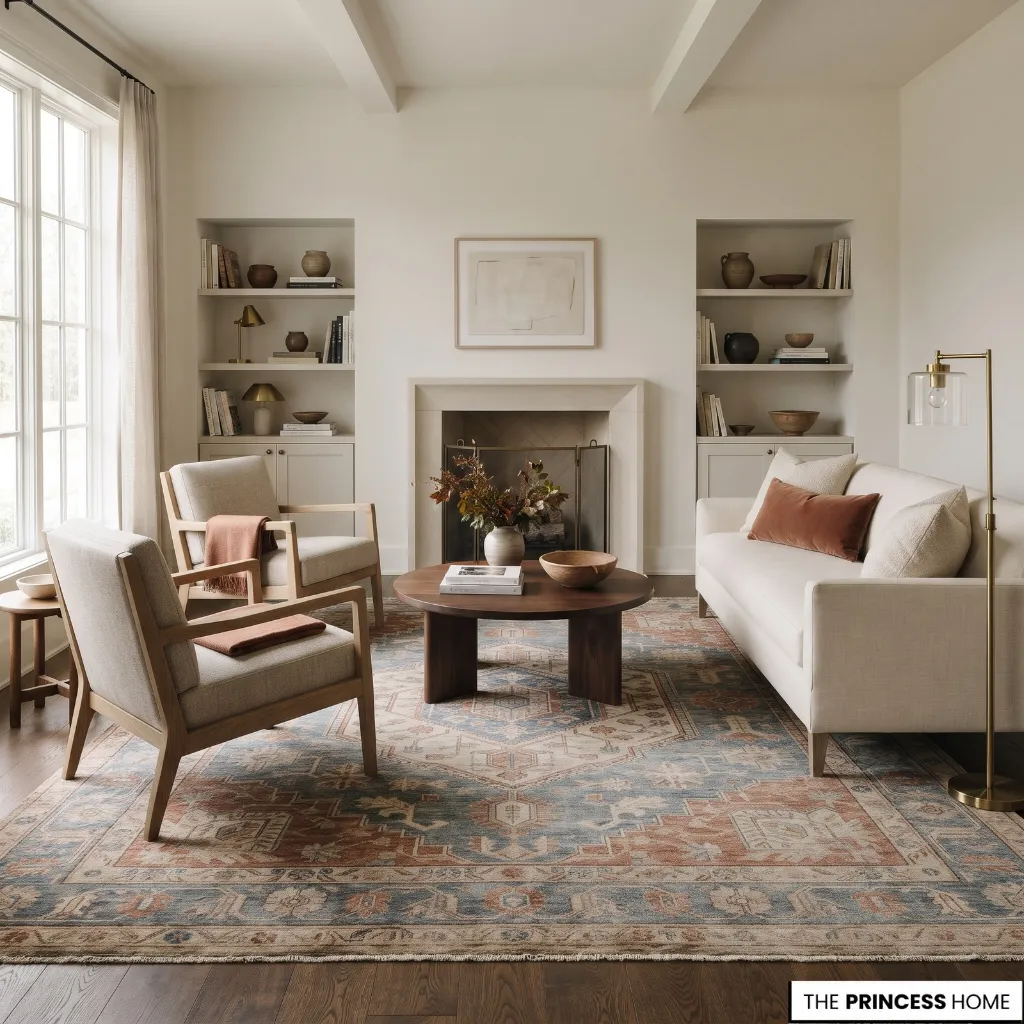
The rug should relate to the living room’s existing colors and finishes. Rather than choosing a shade in isolation, consider how it will work with the sofa, flooring, curtains, walls, and artwork.
A rug can reinforce an existing color scheme or introduce a new accent. For example, a muted blue rug can complement neutral upholstery while adding color, whereas a rust or terracotta pattern can introduce warmth to a room with natural wood and cream fabrics.
These are options rather than fixed rules; the surrounding finishes determine which combinations work.
Pattern is equally important. A plain rug can provide a visual rest in a room with patterned curtains or prominent artwork. Conversely, a patterned rug can introduce interest when the sofa, walls, and other large surfaces are relatively simple.
Consider the scale of the pattern in relation to the rug’s dimensions and the furniture. Large motifs need enough visible surface to remain legible, while small repeating patterns can create a more detailed effect.
A pattern that looks balanced in a product photograph may appear crowded once much of the rug is covered by a sofa and coffee table.
Texture also affects the result. A flatwoven rug, a subtly ribbed surface, and a thick wool pile can create different visual effects even when their colors are similar.
Decide what role the rug should play: reinforcing the existing palette, introducing a contrasting color, or providing the main pattern in the room. Once that role is clear, selecting the appropriate color and design becomes easier.
Select the Right Shape
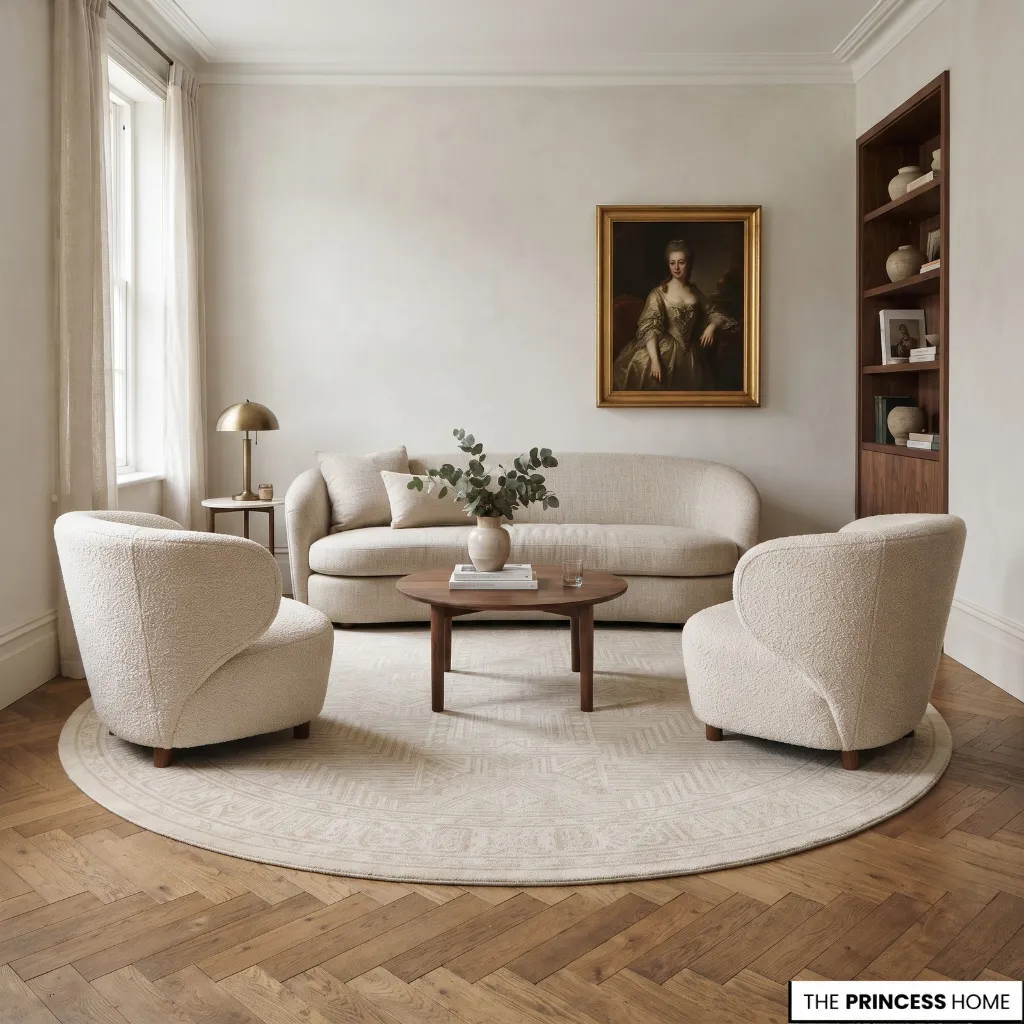
Rectangular rugs suit many living rooms because sofas and seating arrangements often follow straight lines. They can extend beneath a sofa and chairs while maintaining a clear relationship with the coffee table and the overall furniture layout.
Square rugs may suit rooms with balanced proportions or seating arranged around a central table. Their suitability depends on the actual footprint of the furniture; a square rug should not be selected simply because the room itself is square.
Round rugs can work well beneath a small conversation area, alongside curved furniture, or where a softer outline helps distinguish a seating zone. However, a round rug may not accommodate a long sofa and several chairs as efficiently as a rectangular one.
Irregular or organic shapes can introduce a different visual character, but they require careful planning. Check that the rug provides enough usable surface beneath the seating and does not create awkward edges along important walking routes.
Before deciding on a shape, outline its approximate dimensions on the floor. Check how it relates to the sofa, coffee table, and chairs. The right shape is the one that supports the furniture arrangement and preserves practical circulation.
Adapt to Your Layout
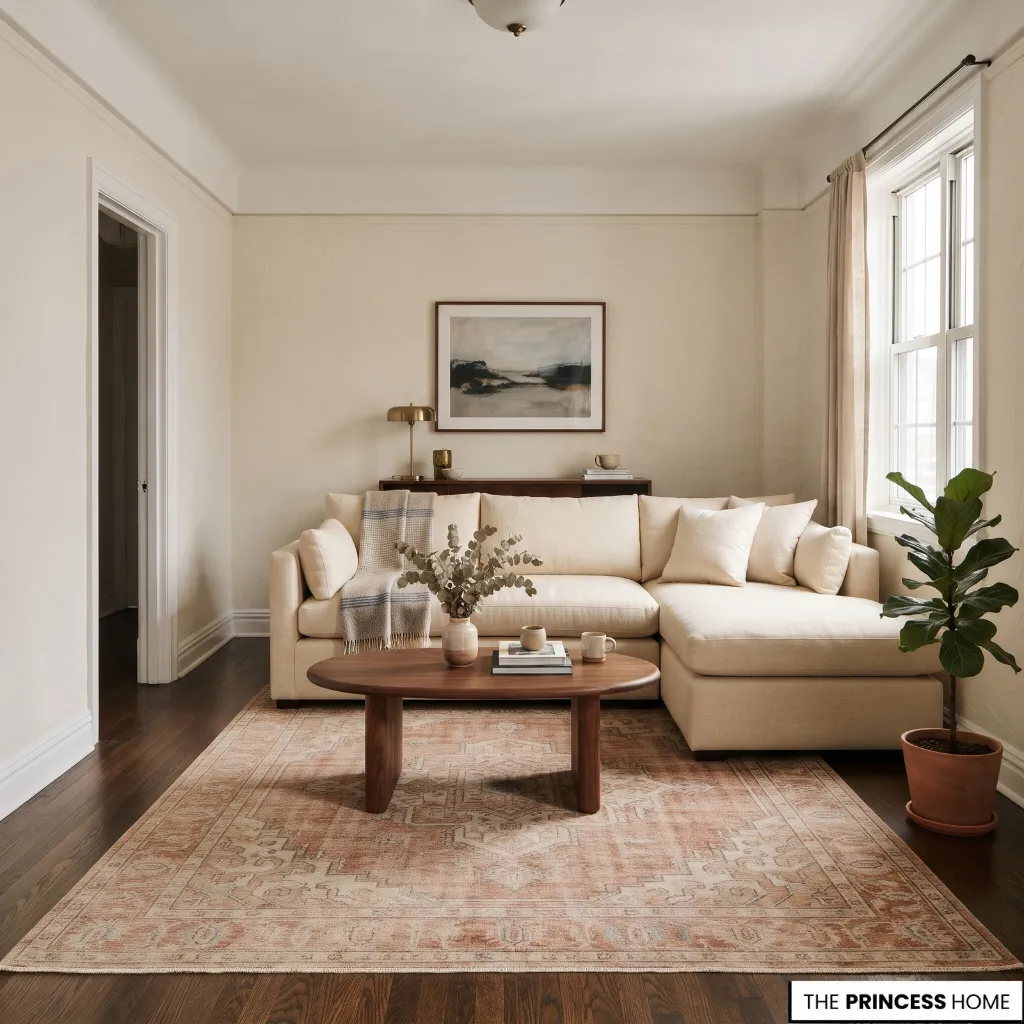
Different living rooms require different rug solutions. Adapt the dimensions, placement, and construction to the actual layout rather than following a single rule for every room.
Small living rooms. Avoid assuming that a small room always needs the smallest rug available. A rug that connects the main seating pieces may make the arrangement feel more unified, provided it does not obstruct doors or leave furniture unstable.
A simple pattern and suitable pile height can also help keep the arrangement practical.
Large living rooms. A small rug can leave a large seating arrangement looking scattered. Choose dimensions that relate to the entire conversation area, and consider placing all the main furniture legs on the rug when the space permits. If the room has several distinct functions, separate rugs may help define each area.
Open-plan spaces. Use the rug to establish the boundaries of the living area without creating unnecessary barriers between adjoining zones. Align its edges with the seating arrangement and consider how it relates to the dining area, kitchen, and main circulation routes.
A rug can visually distinguish the living room while allowing the wider space to remain connected.
Sectional sofas. Measure the full sectional, including the chaise or extended corner. A rug that is too narrow may sit awkwardly beneath the main section while leaving the rest of the seating disconnected. Test the rug’s dimensions against the entire furniture footprint before buying.
Floating Furniture: When the sofa sits away from the walls, use the rug to anchor the seating group in the center of the room. Align it with the furniture rather than the nearest wall. Leave enough space around the arrangement for easy movement.
Existing flooring. If the floor has a strong grain, prominent pattern, or distinctive color, consider how much of it should remain visible. A quieter rug may work well over visually active flooring, while a more patterned rug may provide contrast on a relatively simple surface.
In every layout, preserve a suitable rug footprint, stable furniture, clear circulation, and a design that works with the existing room.
Plan Your Budget
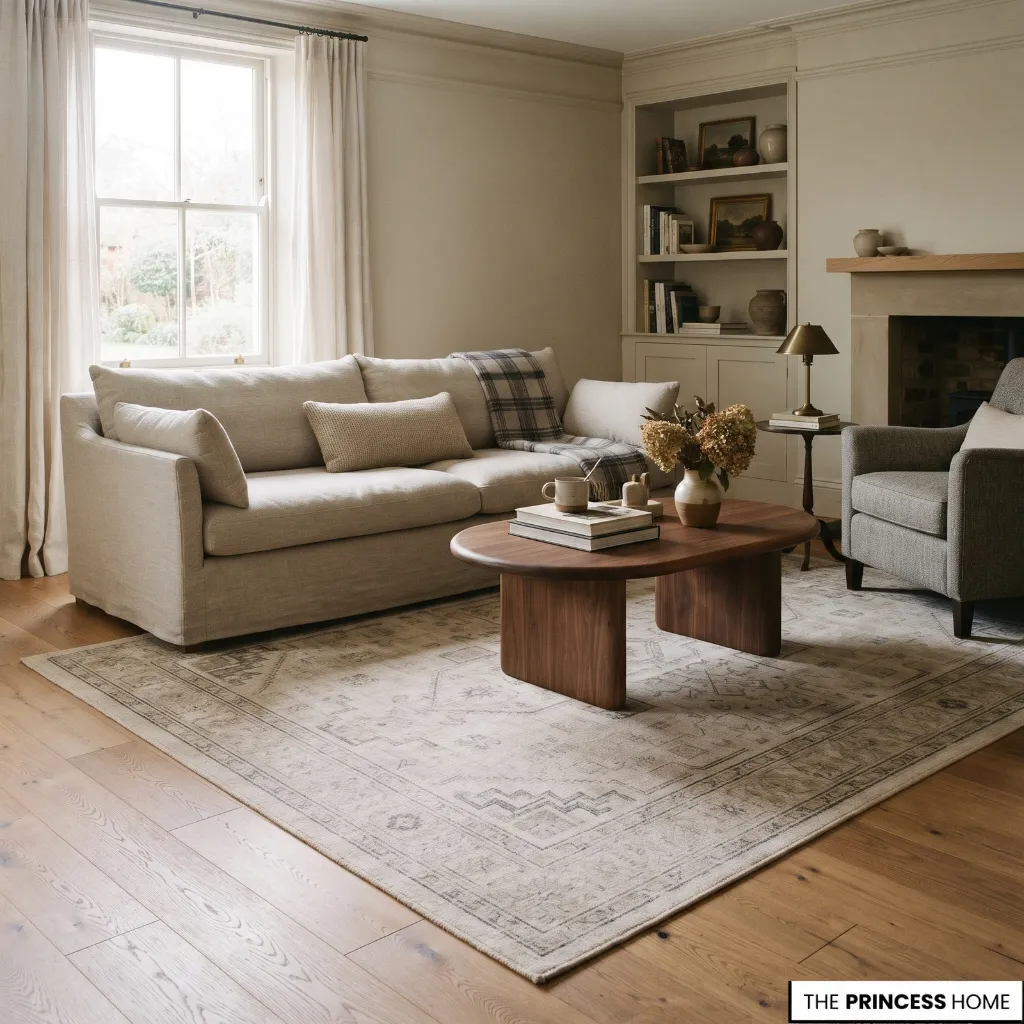
A suitable living room rug does not have to be the most expensive option. The priority is to find a rug that fits the seating arrangement, performs well under everyday conditions, and supports the intended design.
Start by establishing the dimensions you need. A lower-priced rug that is too small may not solve the layout problem, while a simpler rug in the correct size may create a more coherent seating area.
Next, compare materials and construction. Synthetic fibers, cotton, and selected wool rugs offer different combinations of cost, comfort, appearance, and maintenance. Compare actual products rather than assuming that every rug within a material category has the same price or performance.
If your budget is limited, choose a simple pattern, a standard rug size, or an easy-care material. Reuse existing furniture where possible. You can also match the rug to colors already present in the room. This reduces the need for additional accessories and keeps the design cohesive.
Include the rug pad, delivery, cleaning, and likely replacement costs when comparing options. A rug that requires specialized care may cost more to maintain than its purchase price suggests.
Spend first on the dimensions and practical qualities that affect daily use. More expensive fibers or specialized craftsmanship may be worthwhile when they provide benefits that matter to your household, but they should not take priority over a suitable fit.
Maintain Your Rug
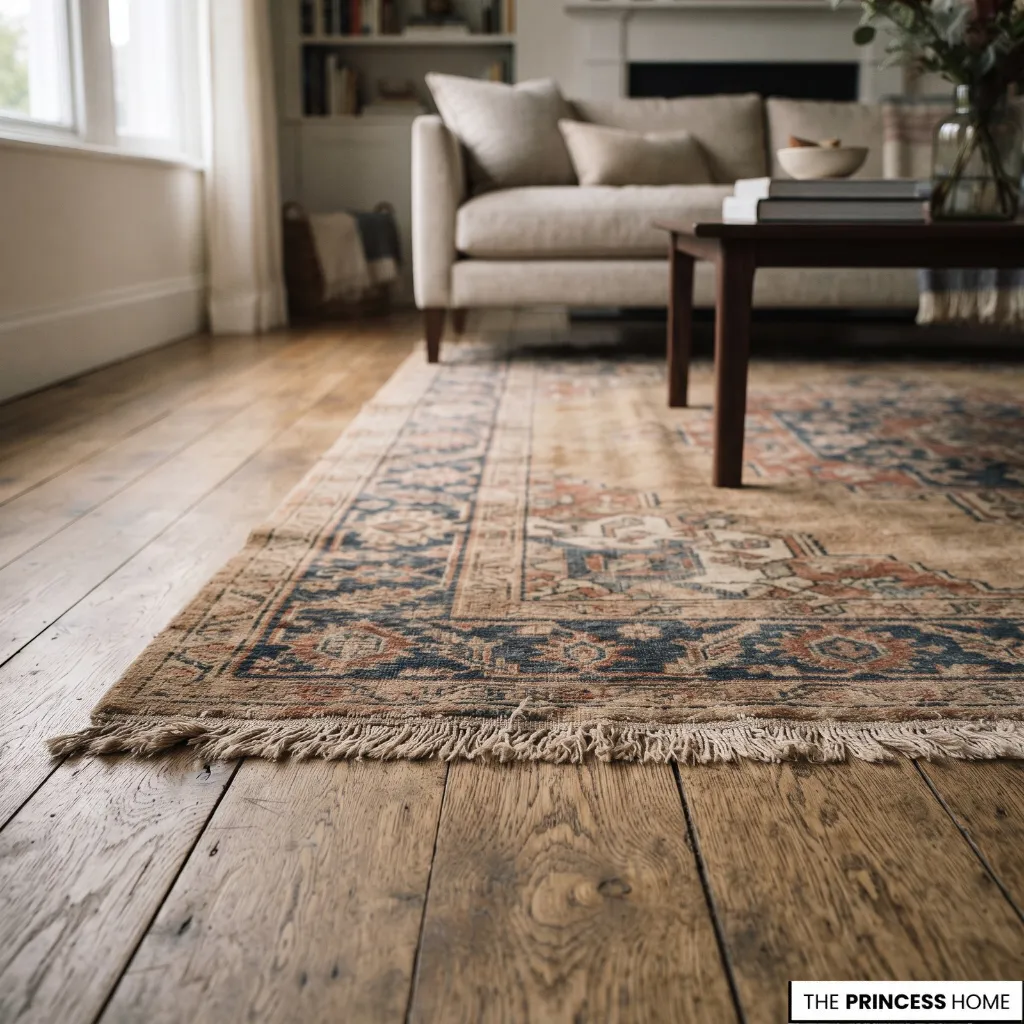
Routine care helps preserve a rug’s appearance and condition, but the appropriate method depends on its fiber, construction, and backing.
Vacuum regularly according to the manufacturer’s recommendations. Low-pile and flatweave rugs are often straightforward to maintain, while thicker piles or delicate fibers may require more careful handling. Use the appropriate vacuum setting and attachments for the rug.
When spills occur, blot them promptly with a clean, absorbent cloth rather than rubbing the affected area. Follow the manufacturer’s guidance for stain treatment, and test any permitted cleaning product on an inconspicuous area first.
Avoid assuming that water or a household cleaning solution is safe for every material.
Check the rug periodically for movement, curling edges, or wear in high-traffic areas. A compatible rug pad can help reduce slipping and movement, but confirm that it is suitable for both the rug backing and the floor finish.
Rotating the rug when appropriate can distribute foot traffic and sunlight exposure more evenly. The recommended interval depends on the room’s use and the rug’s condition rather than a universal schedule.
Some rugs can be washed using specific methods, while others require professional cleaning. Follow the care instructions for the individual product, especially for natural fibers and moisture-sensitive materials.
Prevent Common Mistakes
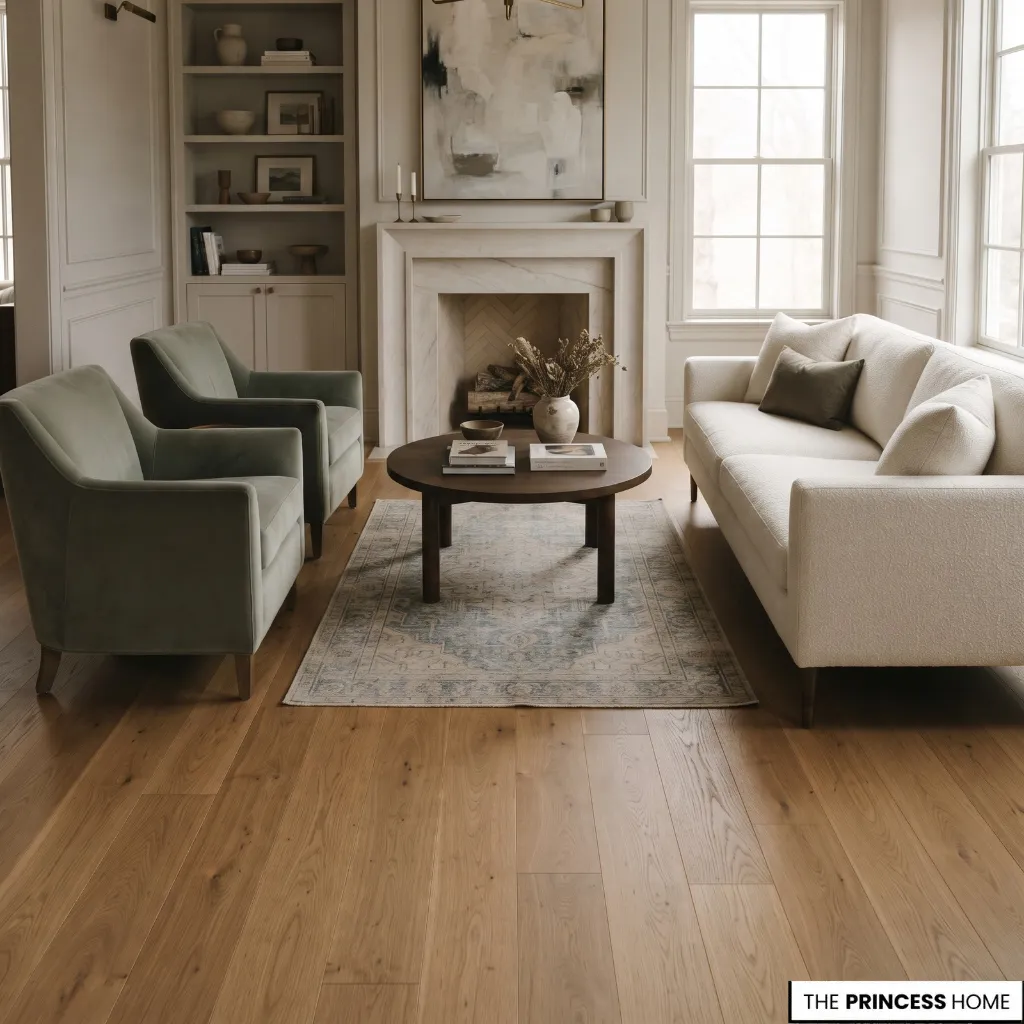
Many rug-selection problems arise because the rug is chosen as an independent decorative item rather than as part of the furniture arrangement.
Choosing a rug that is too small. A small rug can leave the sofa and chairs visually disconnected. Measure the complete seating footprint and test a larger option before purchasing.
Measuring only the room. Room dimensions do not reveal how much space the furniture occupies. Measure the sofa, chairs, and coffee table arrangement as well, then select a rug that accommodates the intended layout.
Centering the rug incorrectly. A rug centered in the room may not align with the seating group or focal point. Position it according to the furniture arrangement and the way the space is used.
Ignoring material and maintenance. A delicate or difficult-to-clean rug may become impractical in a busy household. Check the care requirements against your everyday needs before buying.
Combining competing patterns. A patterned rug can work with patterned upholstery, but their scale and colors need to be considered together. If both patterns compete for attention, simplify one of them or choose a design with a more restrained contrast.
Overlooking slipping and curled edges. A rug that moves underfoot or develops raised edges can create a tripping hazard. Select a compatible rug pad, check the backing and floor requirements, and address curling or movement promptly.
Buying without testing the dimensions. Product photographs rarely show how a rug will fit your particular furniture. Use painter’s tape to outline the dimensions and verify the arrangement before committing to a purchase.
These checks help you evaluate the rug as part of the complete room rather than relying on its appearance alone.
Conclusion
The right living room rug combines suitable dimensions, thoughtful placement, and practical materials. Its design should complement the existing interior. Measure the seating area and test the rug size before buying. Then, choose a color and construction that suit your daily needs.
These decisions help bring the furniture together and make the room more comfortable.