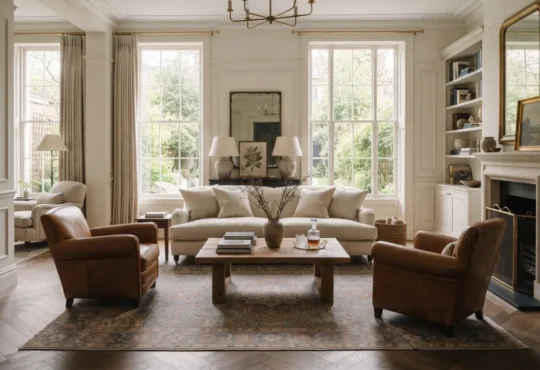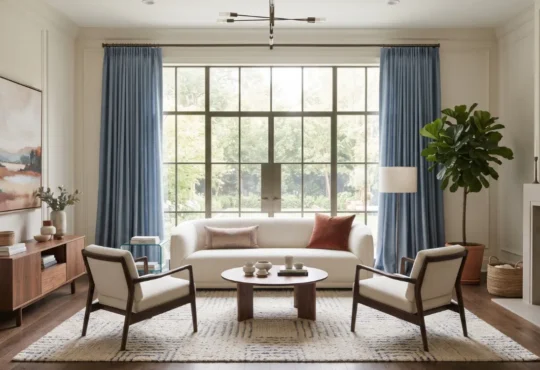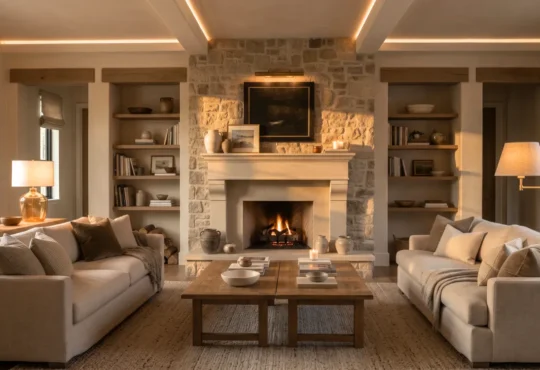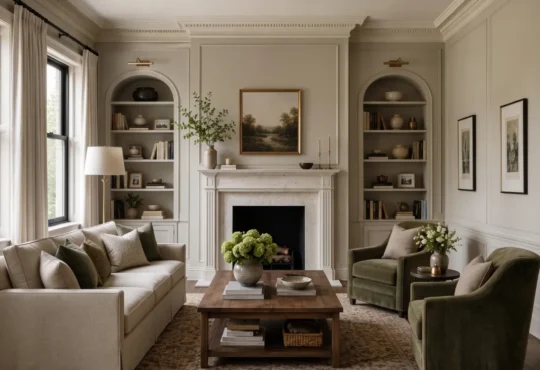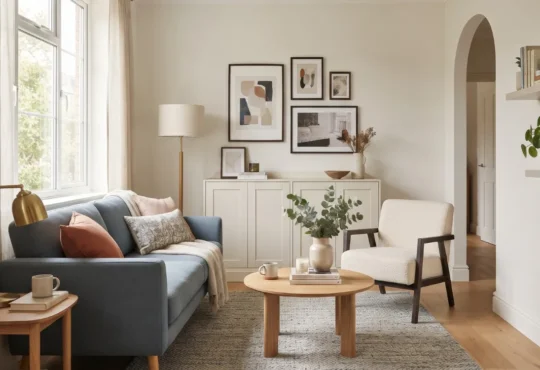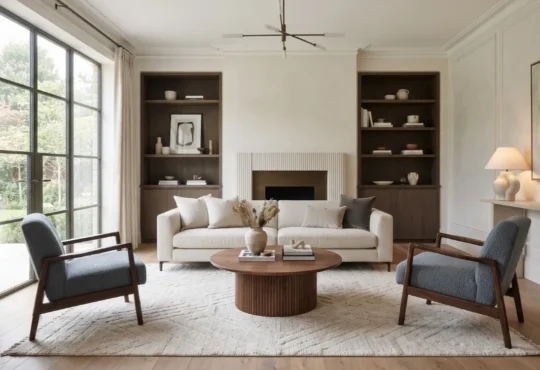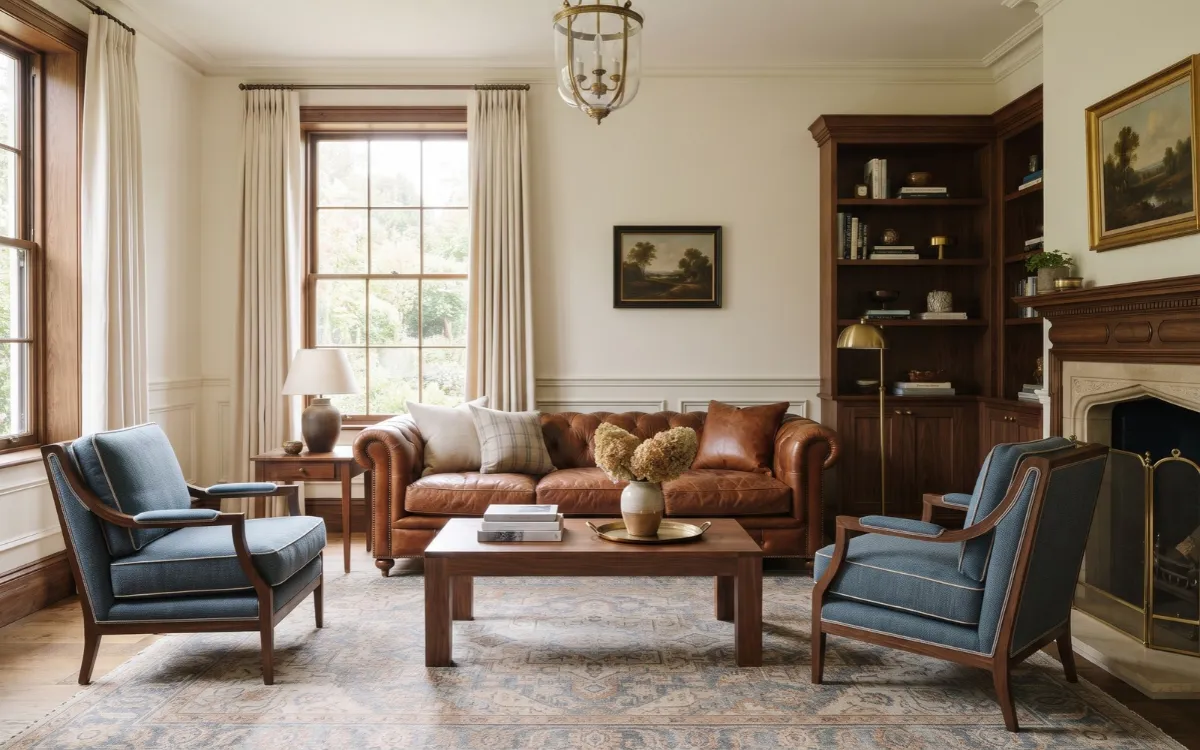
A classic living room built around leather and warm wood combines enduring furniture shapes with natural materials and thoughtful proportions. The challenge is coordinating these substantial elements without making the room feel too dark, crowded, or overly matched.
These classic living room ideas explain how to choose furniture, combine colors and textures, plan lighting, and adapt the look to different room sizes and budgets.
Assess Your Space
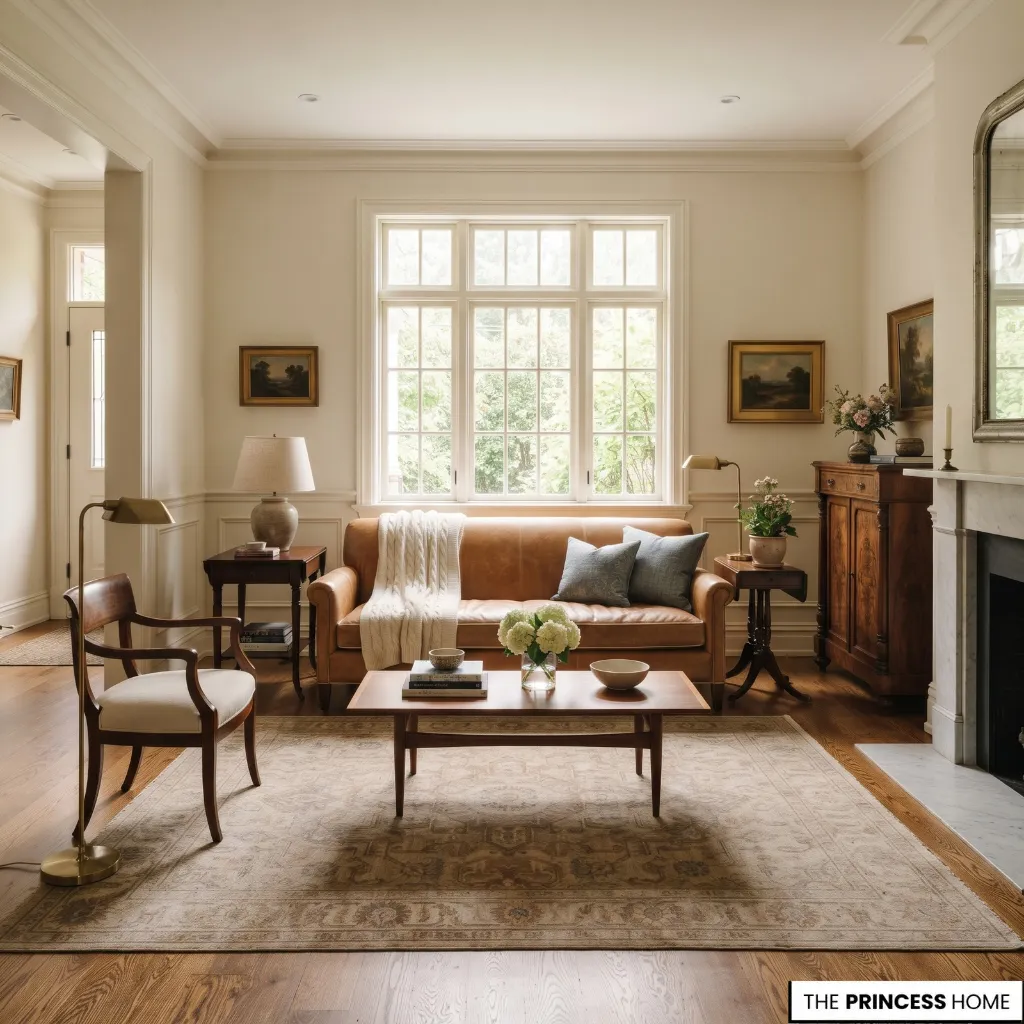
Start by assessing the room’s dimensions, natural light, architectural features, and everyday needs before choosing furniture or finishes. These factors determine how much visual weight the space can accommodate and which materials will work best.
Measure the room and note the position of windows, doors, fireplaces, radiators, and electrical outlets. Identify the main walking routes and decide how the living room will be used, whether for conversation, reading, watching television, or a combination of activities.
A large room may accommodate a substantial leather sofa and a solid wood coffee table, while a smaller room may need a more compact sofa and a lighter side table.
Natural light also affects the appearance of leather and wood. A dark brown sofa and walnut furniture may look balanced in a bright room but feel heavy in a space with limited daylight. In that case, lighter walls, a reflective surface, or a rug in a softer color can help offset the darker finishes.
Consider existing furniture before buying new pieces. A wooden cabinet, inherited table, or leather armchair may already suit the intended style. Building around useful pieces can save money and give the room a more personal, collected appearance.
Choose Leather Furniture
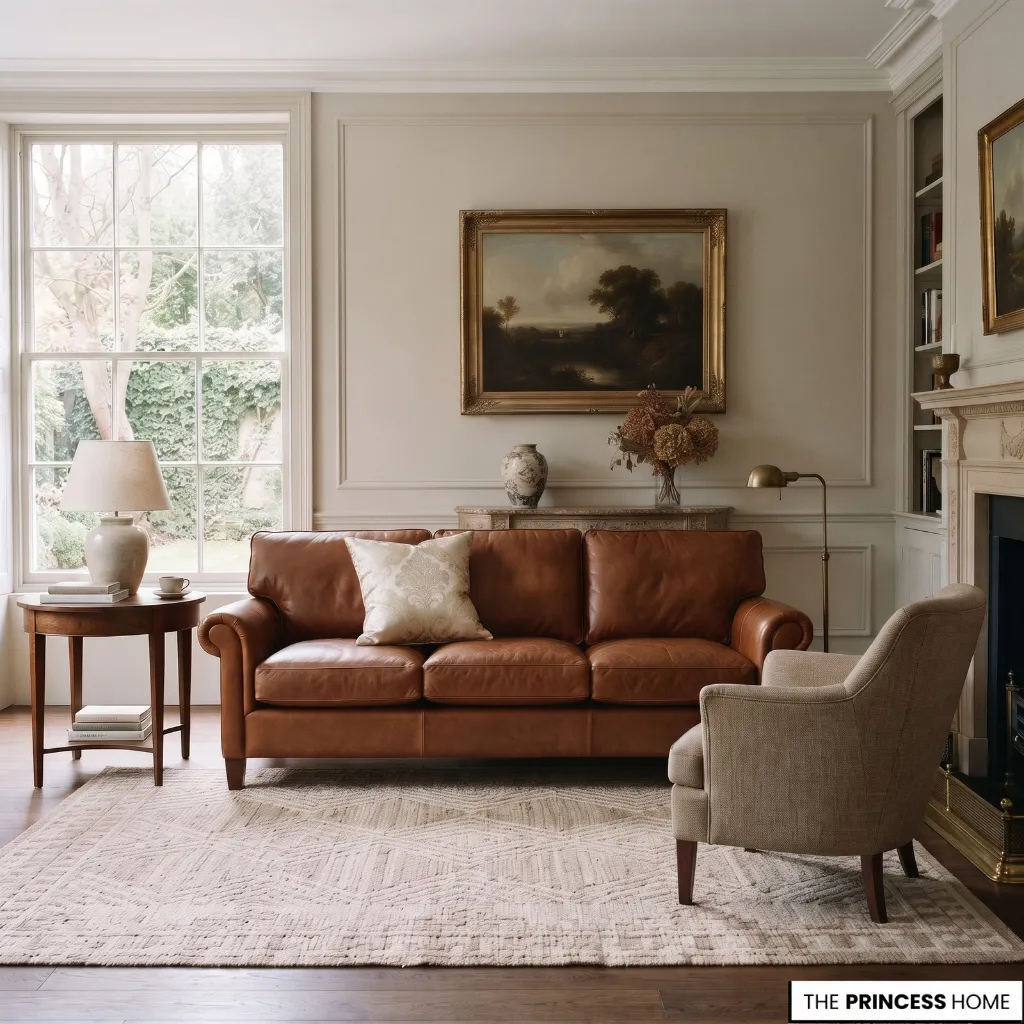
Choose leather furniture according to its shape, size, color, and intended use rather than color alone. A classic leather sofa can anchor the room, while an armchair or ottoman provides a smaller way to introduce the material.
Traditional options include rolled-arm sofas, club chairs, button-tufted upholstery, and tailored designs with simple lines. These shapes can suit a range of interiors, from traditional rooms with detailed woodwork to more restrained spaces with contemporary accents.
The best choice depends on the room’s architecture and the other furniture around it.
Color changes the visual weight of leather. Cognac and tan bring a lighter brown tone, while dark brown and black create a stronger contrast with walls and textiles. Cream or other light upholstery offers an alternative when the room needs a softer focal point.
For a classic combination, a cognac leather sofa can sit comfortably alongside walnut furniture, cream walls, and a muted blue accent.
Check the leather type, surface finish, and care requirements before purchasing. Different leathers vary in texture, appearance, and resistance to wear, so the label and manufacturer’s care instructions matter more than a general assumption about durability.
If the sofa will receive frequent use, consider how easily the finish can be cleaned and how it may change with age.
Select Warm Wood
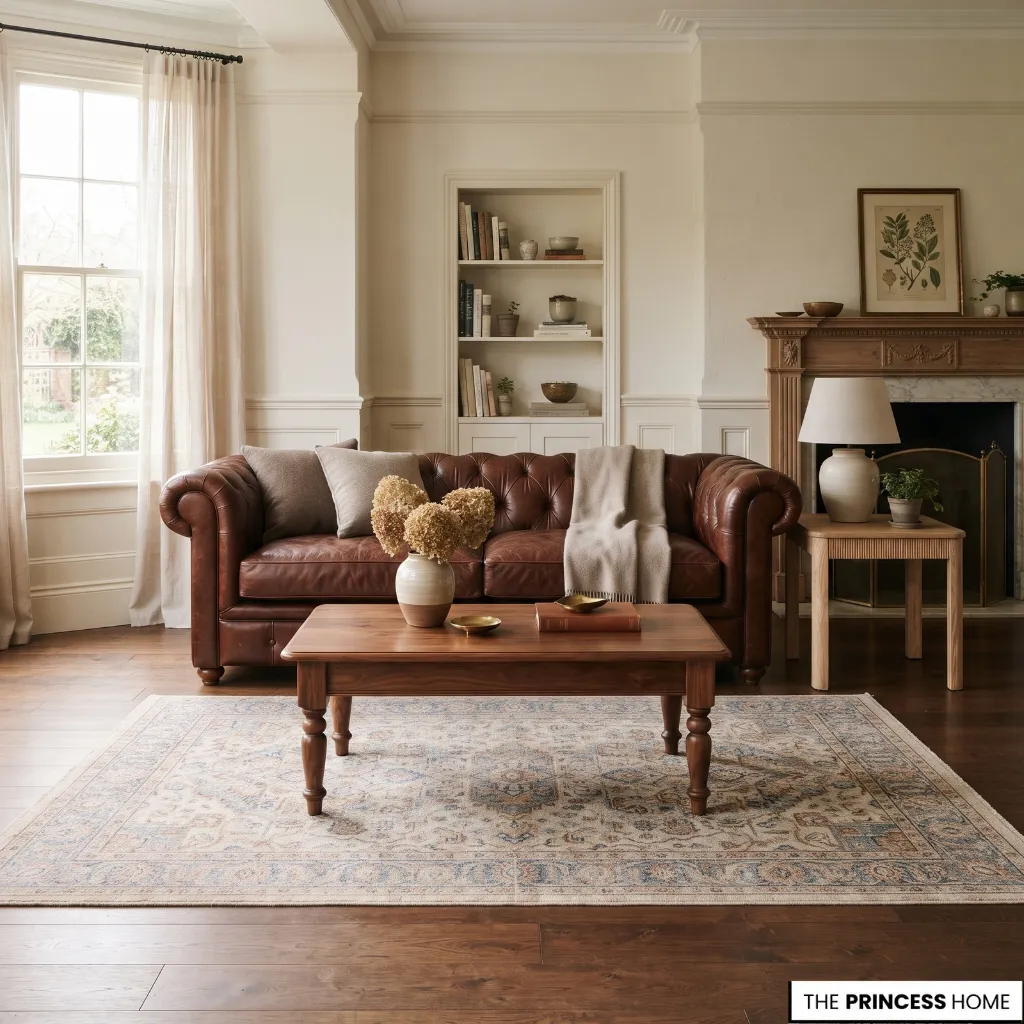
Choose wood furniture with attention to its color, grain, finish, and visual weight. Oak, walnut, cherry, and mahogany can all work in a classic living room, but they create different effects and should be selected in relation to the leather and the room’s existing finishes.
Walnut often pairs well with cognac or dark brown leather because the colors share warm undertones. Oak can provide a lighter contrast, while cherry and mahogany may introduce deeper reddish tones.
These are starting points rather than fixed combinations; the actual result depends on the wood’s finish, the leather color, the lighting, and the surrounding palette.
Avoid trying to match every wooden item exactly. A room can combine a coffee table, side tables, shelving, and a cabinet in different wood tones when they share a compatible warmth or finish.
Repeating one or two tones helps the furniture feel connected, while differences in grain, shape, and finish prevent the room from looking like a matching set.
Scale matters as much as color. A large, dark wood table can compete with a substantial leather sofa, particularly in a small room. If both pieces have considerable visual weight, balance them with lighter upholstery elsewhere, a less bulky side table, or open space around the main furniture.
Balance Room Proportions
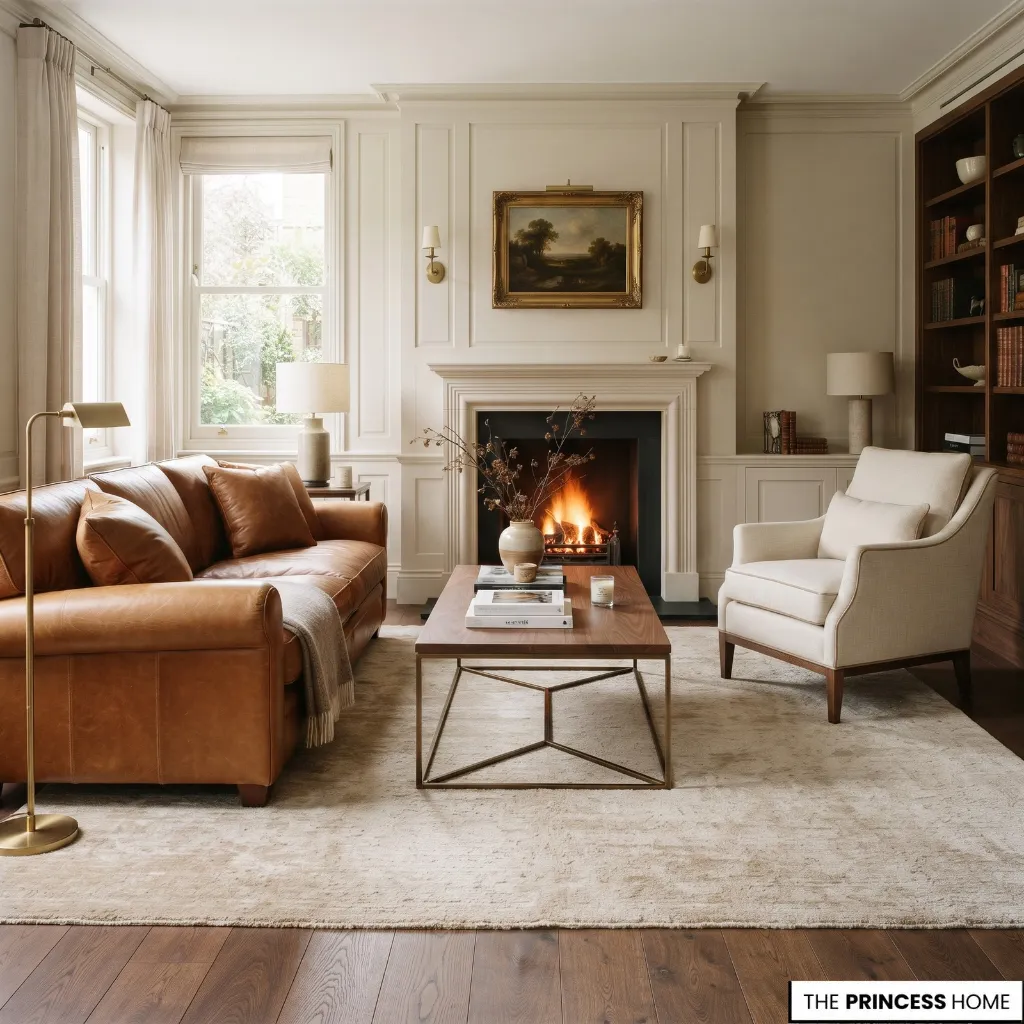
Choose furniture that fits the room and leaves enough space for people to move comfortably around it. A classic living room can contain substantial pieces without feeling crowded when their sizes, spacing, and positions work together.
Begin with the main seating arrangement. Position the sofa in relation to the room’s focal point, such as a fireplace, a window, or a television, while keeping the main walking routes clear. Place armchairs close enough to support conversation without blocking doorways or making it difficult to reach the seating.
Consider visual weight as well as measurements. A low, broad leather sofa can dominate a room even when it fits within the floor plan. Pairing it with a coffee table that has a lighter base, open shelving, or chairs with less bulky frames can make the arrangement feel more balanced.
Symmetry can help create a traditional layout, such as placing matching side tables or lamps on either side of a sofa. It is not essential, however. A sofa balanced by one armchair and a floor lamp can work just as well when the pieces have a similar overall presence.
Leave some open space between furniture groups rather than filling every corner. The aim is to provide enough seating and useful surfaces while keeping circulation easy and allowing the room’s architectural features to remain visible.
Coordinate Colors
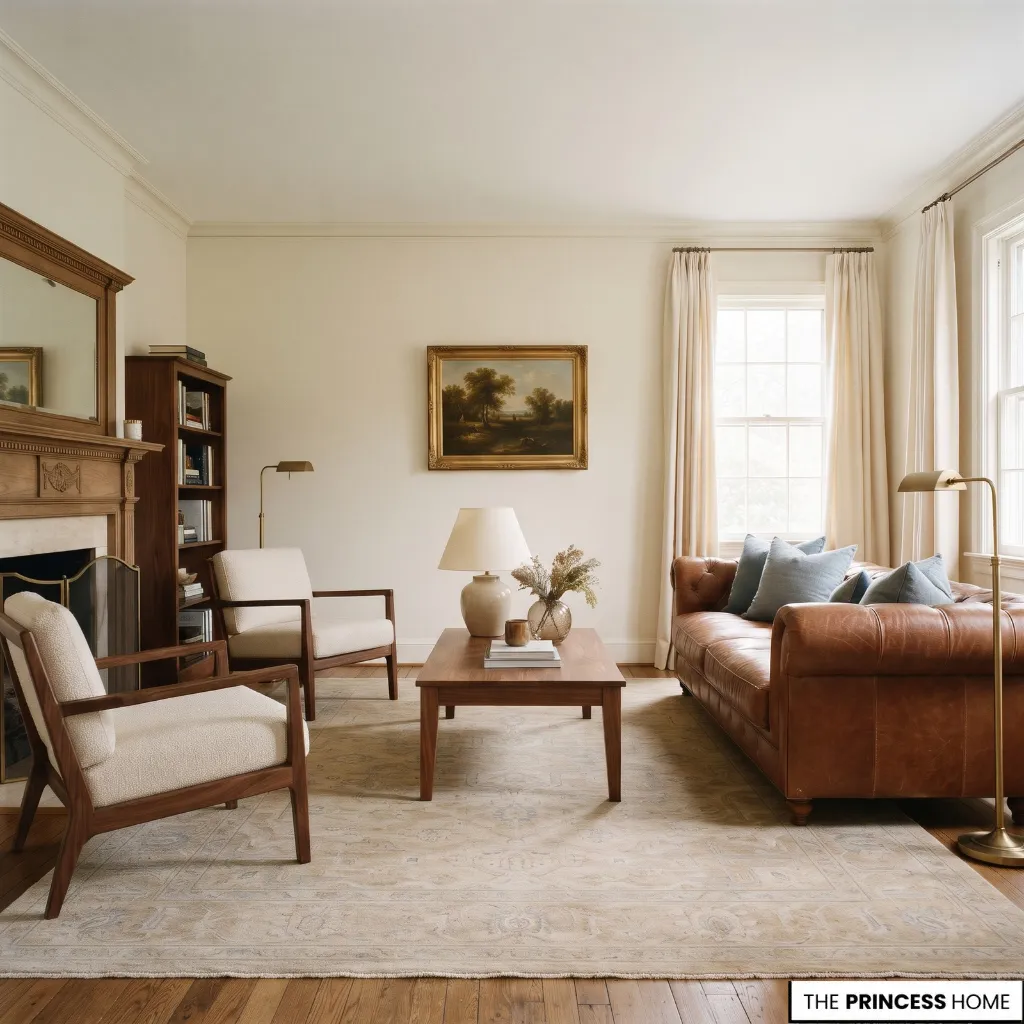
Build the color scheme around the leather and wood finishes, then introduce supporting colors through walls, rugs, curtains, and smaller accessories. A coordinated palette connects the materials without requiring every item to match.
Cream, ivory, and warm off-white can soften the darker tones of brown leather and wood. Olive, muted blue, terracotta, ochre, and burgundy offer additional options when the room needs more color. The right choice depends on the amount of daylight, the existing finishes, and the atmosphere you want to create.
For example, combine a cognac sofa with walnut furniture, cream walls, and muted blue cushions for a balanced mix of warm and cool tones. For a deeper traditional scheme, pair dark brown leather with mahogany or walnut and introduce burgundy or olive in smaller amounts.
If the room already contains several dark finishes, lighter curtains or a pale rug can prevent the palette from becoming too heavy.
Test paint, fabric, and finish samples in the actual room before making final decisions. Colors can appear different under daylight and artificial lighting, while wood and leather finishes may look warmer, cooler, or darker beside other materials. Evaluate the samples together rather than choosing each one in isolation.
Layer Complementary Materials
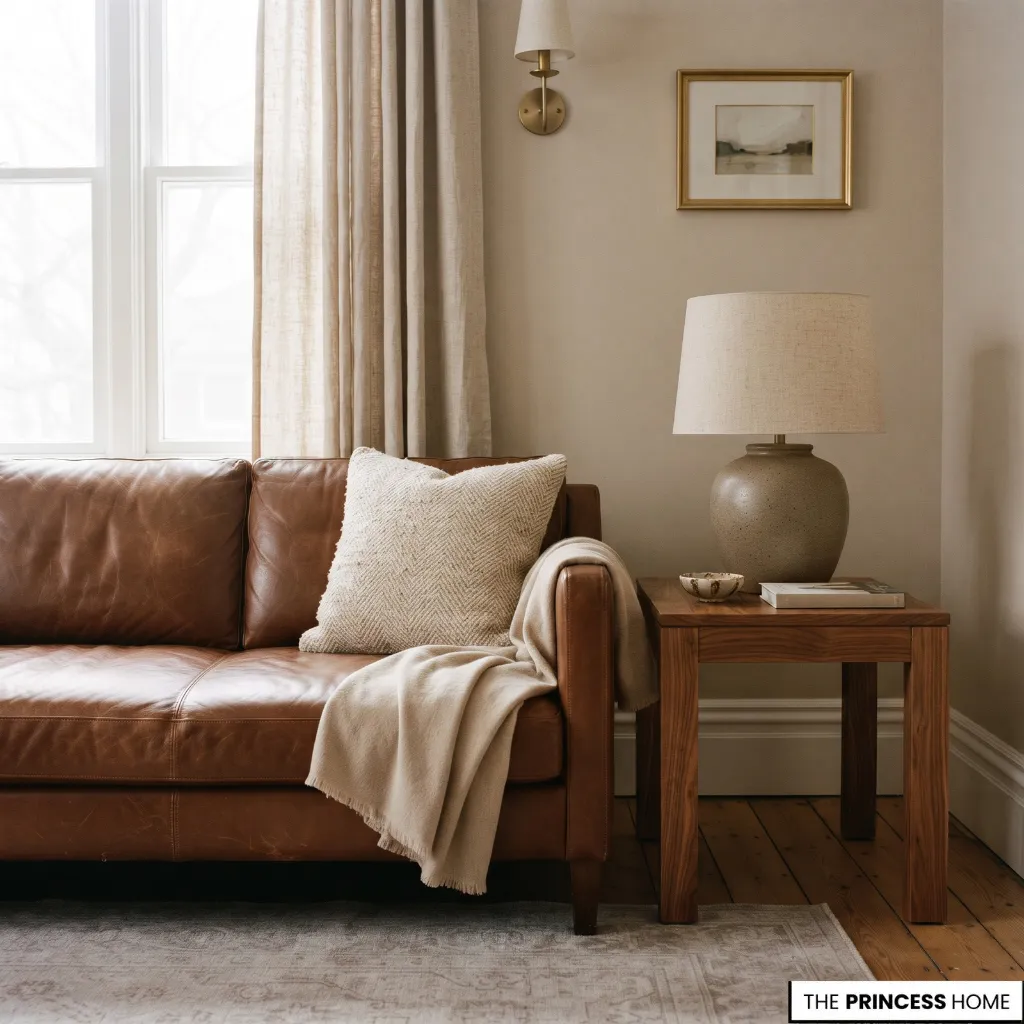
Combine leather and wood with softer textiles and a few contrasting materials to keep the room from feeling hard or visually heavy. Wool, linen, cotton, velvet, stone, ceramic, glass, and metal can each provide a different texture or function.
Use textiles where they improve comfort and soften the larger furniture pieces. Wool or cotton cushions can contrast with smooth leather, while linen curtains add a lighter surface beside dark wood.
A velvet cushion can introduce a richer texture, but it works best when its color and finish relate to the wider scheme.
Hard materials can provide useful contrast. A stone-topped side table, ceramic lamp, glass accessory, or metal detail can break up the repetition of wood and upholstery. Choose these elements according to their purpose and scale instead of adding every material at once.
For a restrained combination, start with leather, wood, and one soft textile, then introduce one or two contrasting finishes. If the room already contains strong grain, visible leather texture, and patterned upholstery, keep additional surfaces simpler.
This lets each material contribute without competing for attention.
Choose the Right Rug
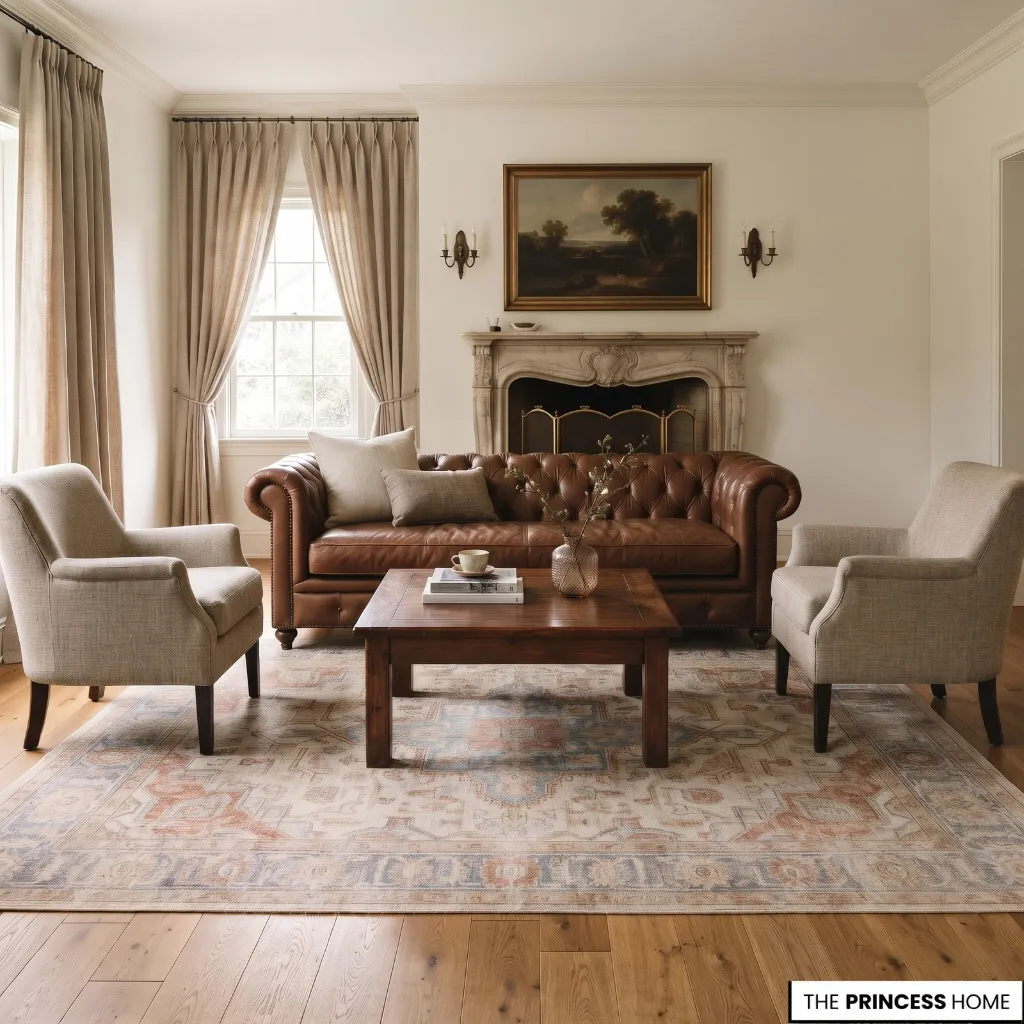
Choose a rug that connects the seating arrangement and suits the scale of the room. A rug that is too small can make a sofa and chairs appear disconnected, even when their positions are otherwise well planned.
A practical starting point is to place the front legs of the sofa and chairs on the rug while allowing the rear legs to remain on the floor. This often connects the seating pieces without requiring a rug large enough to sit beneath every leg.
Align the furniture consistently where possible, and check that the main seats relate to the rug rather than sitting just beyond its edge.
Color and texture should support the leather and wood rather than compete with them. A light wool rug can soften a dark leather sofa and walnut table, while a restrained traditional pattern can add detail to a room with plain upholstery and simple curtains.
If the furniture already includes strong colors or pronounced grain, a quieter rug may be the better choice.
Consider how the rug will be used and maintained. A busy family room may benefit from a material and pattern that suit frequent use, while a less heavily used sitting room may allow more delicate options. Check the rug’s care requirements and use an appropriate rug pad where needed to help keep it in place.
Layer the Lighting
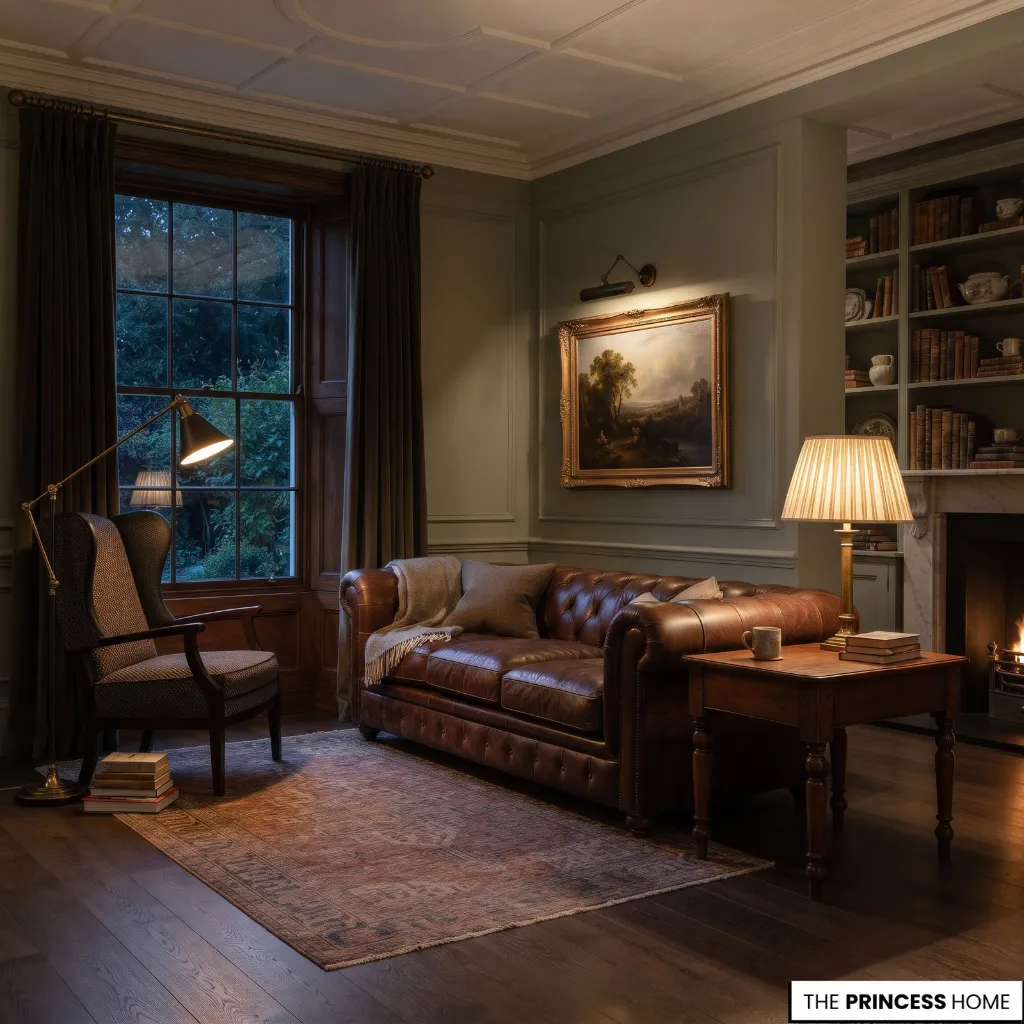
Use several light sources at different heights to make the living room practical throughout the day and evening. A single ceiling light may illuminate the room, but it rarely provides the best conditions for reading, conversation, and highlighting architectural features.
Begin with the room’s existing natural light and general lighting. Add table lamps near seating for reading or softer evening illumination, and use floor lamps where a side table is not practical. Wall lights can highlight artwork, shelving, or architectural details when their position and brightness suit the space.
Direct light toward specific tasks or features rather than relying on every fixture to serve the same purpose. A reading lamp should provide useful light at the chair, while accent lighting can draw attention to a painting or woodwork.
Use suitable controls or separate switches where possible so the lighting can change with the activity.
Consider how the light affects leather, wood, and wall colors. Warm-toned lighting can complement many traditional palettes, but there is no single color temperature that suits every room.
Choose bulbs according to the finishes, the natural light, and the way the room is used, and follow care guidance for leather and wood when placing furniture near strong sunlight or heat sources.
Add Classic Details
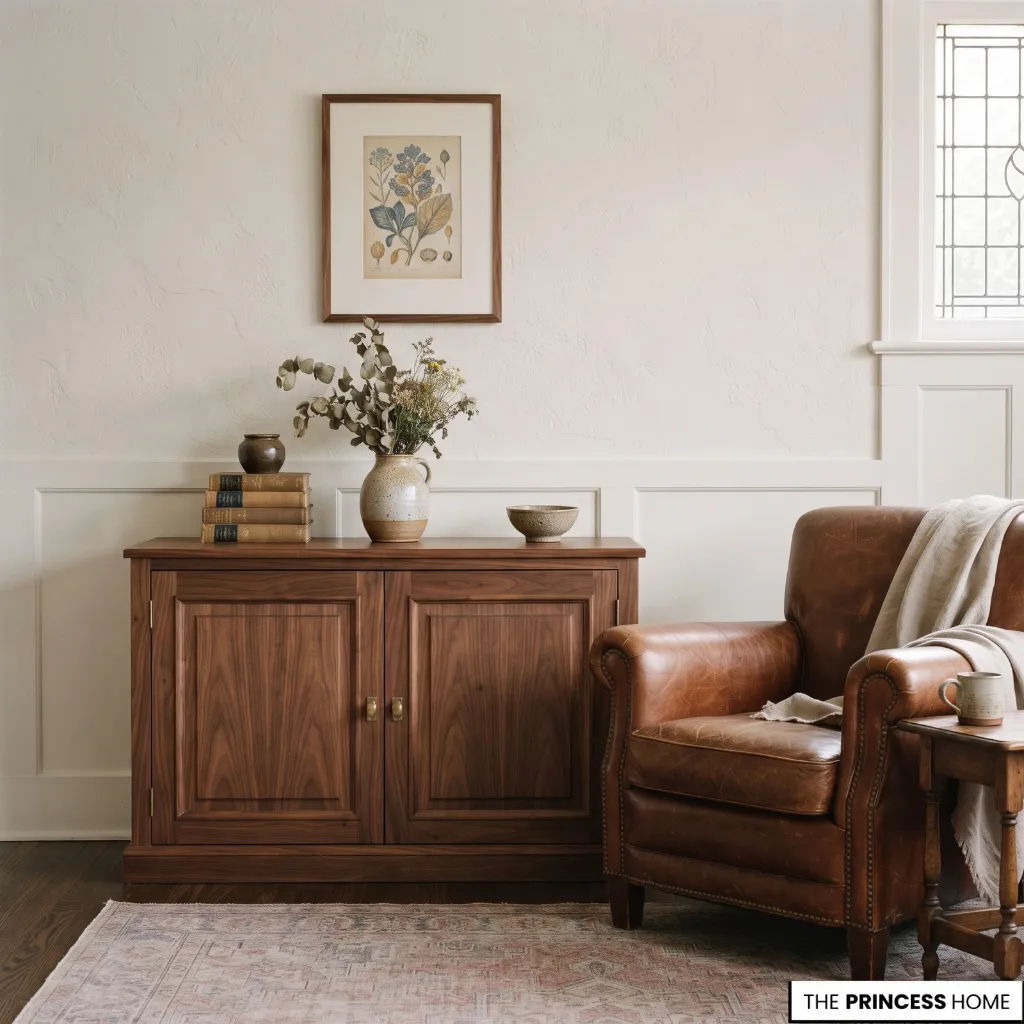
Choose a small number of details that reinforce the room’s character and reflect how you live. Artwork, books, mirrors, ceramics, and meaningful objects can complement leather and wood without making the room feel staged.
Artwork can connect the furniture colors to the walls and textiles. A painting with muted blue, ochre, or burgundy may bring together a neutral rug and a brown leather sofa.
Choose its size and position in relation to the wall and nearby furniture; a small frame can disappear above a large sofa, while an oversized piece may overwhelm a narrow wall.
Books, inherited objects, and collected ceramics can add personal character when arranged with enough space around them.
On a wood cabinet, vary the height of a few objects and leave some of the surface visible rather than covering it completely. Display pieces that matter to you instead of filling every shelf with accessories.
Curtains and cushions can connect the room’s colors and soften the harder finishes. A patterned cushion or curtain can introduce detail, while plain textiles allow furniture grain and leather texture to remain prominent.
A mix of classic and contemporary objects can also work well; the pieces need a shared relationship through color, scale, material, or shape, not identical styles.
Adapt to Small Rooms
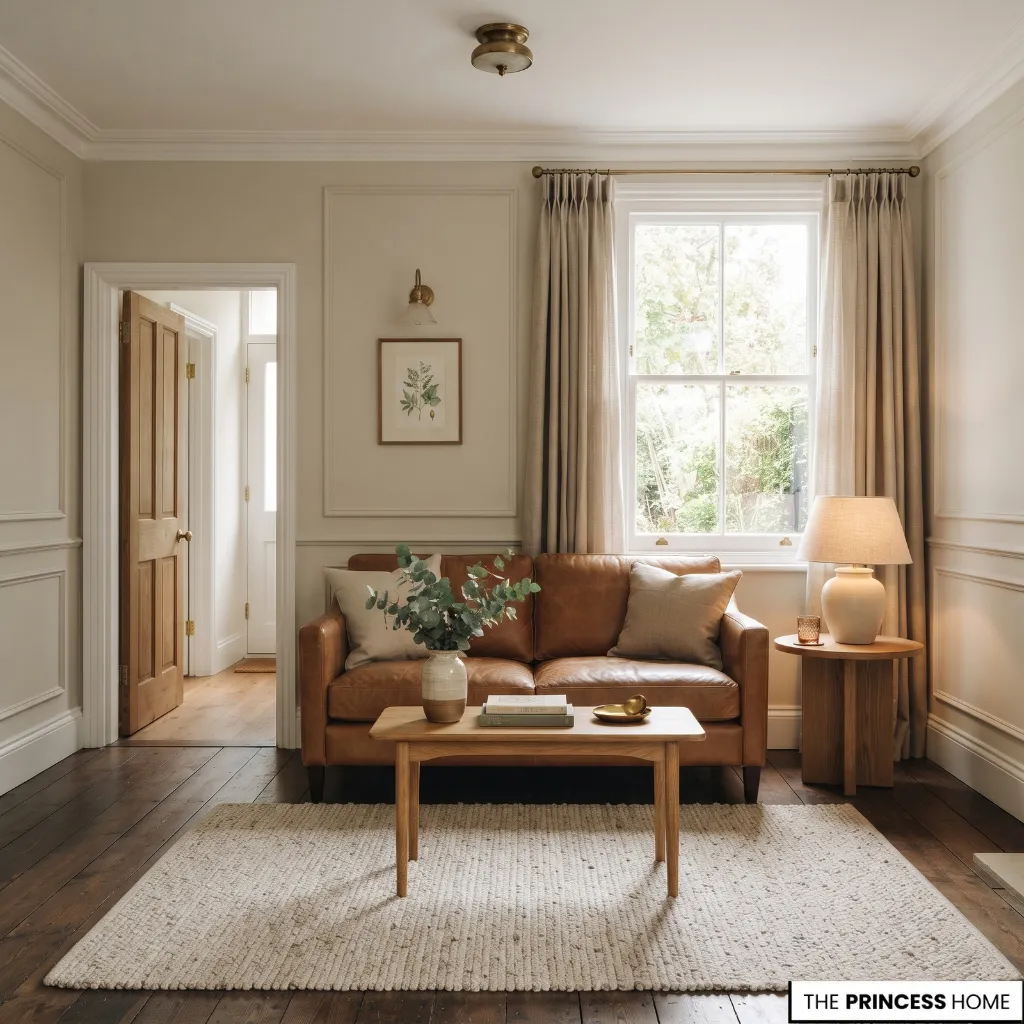
In a small living room, prioritize comfortable seating, clear circulation, and a few well-proportioned pieces rather than filling the space with smaller versions of every traditional item. Leather and warm wood can still work in a compact room when their visual weight is managed carefully.
Choose a sofa that leaves enough room to move around it and allows access to doors, windows, and storage. A compact leather sofa with a slim frame may be more suitable than a deep, rolled-arm design. Use a coffee table that fits the available space, or consider nesting tables that can be moved when extra room is needed.
Balance darker furniture with lighter or more reflective surfaces. Cream walls, a pale rug, light curtains, or a glass-topped table can help offset dark leather and wood.
This does not mean avoiding deep colors entirely; one dark sofa or wood cabinet can provide a clear anchor when the remaining elements are chosen with care.
Limit the number of large furniture pieces and use the walls thoughtfully. A wall-mounted light can free a side table, while shelving can provide storage without introducing another bulky cabinet.
Keep frequently used items accessible and avoid placing decorative objects where they obstruct movement or usable surfaces.
Plan Your Budget
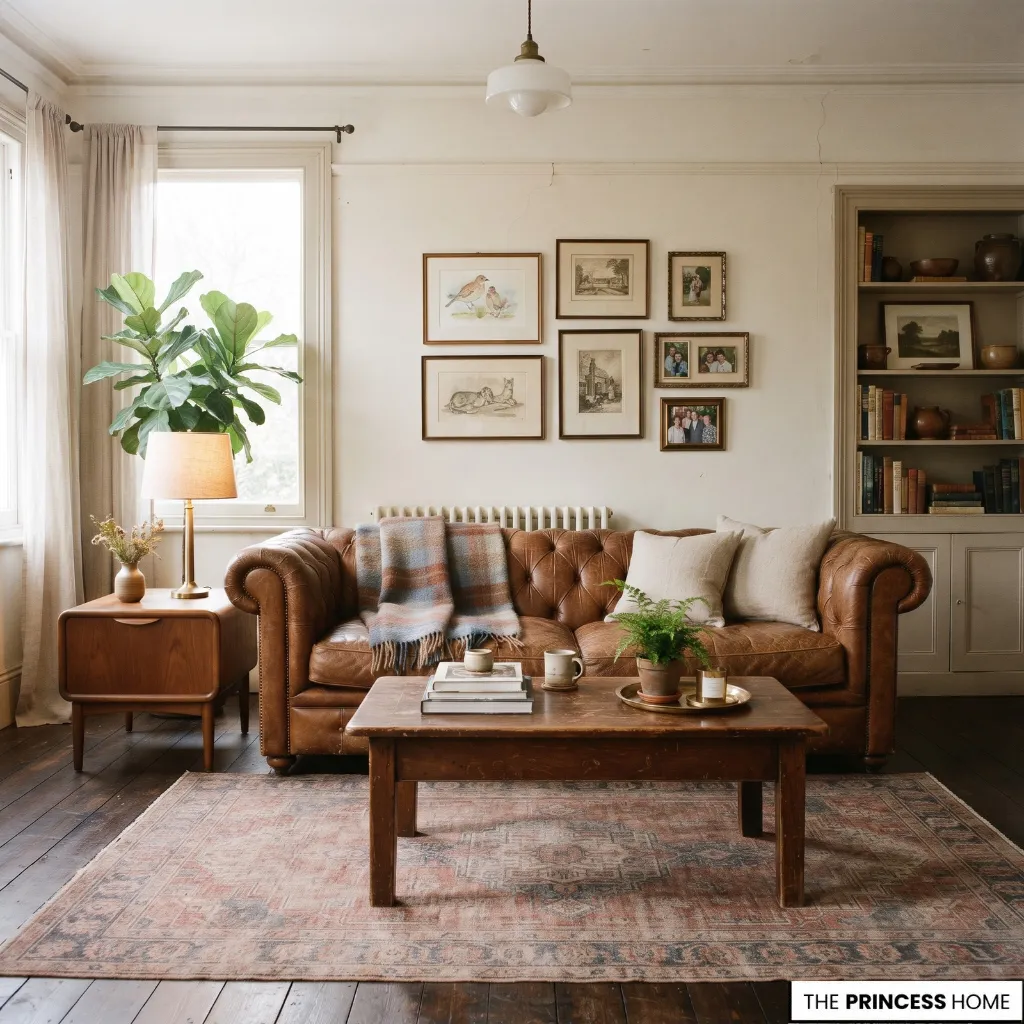
Allocate the budget according to the pieces that have the greatest effect on comfort, function, and the overall room. A considered plan can produce a coherent classic living room without requiring every item to be new or expensive.
Prioritize the main seating first because its size, comfort, and color influence many later decisions. Next, assess the principal wood furniture and rug, which help establish the room’s scale and connect the seating arrangement.
Plan the lighting after identifying the activities and areas that need illumination, then use curtains, cushions, artwork, and smaller accessories to complete the scheme.
This sequence can change when useful furniture is already available. If you own a sound wood table or a suitable leather armchair, keep it and direct the budget toward a more pressing need, such as comfortable seating or adequate lighting.
Reusing a good piece is often more effective than replacing it solely to create a matching set.
Secondhand and vintage furniture can offer character and value, but inspect it carefully. Check the stability of tables and chairs, the condition of joints and drawers, and any signs of damage or difficult repairs. For leather furniture, examine seams, cushions, and the surface condition, and establish whether the care or restoration costs are reasonable before buying.
Complete the room gradually if necessary. A well-chosen sofa, useful lighting, and a rug that fits the seating arrangement matter more than a large number of accessories purchased at once.
Avoid Common Mistakes
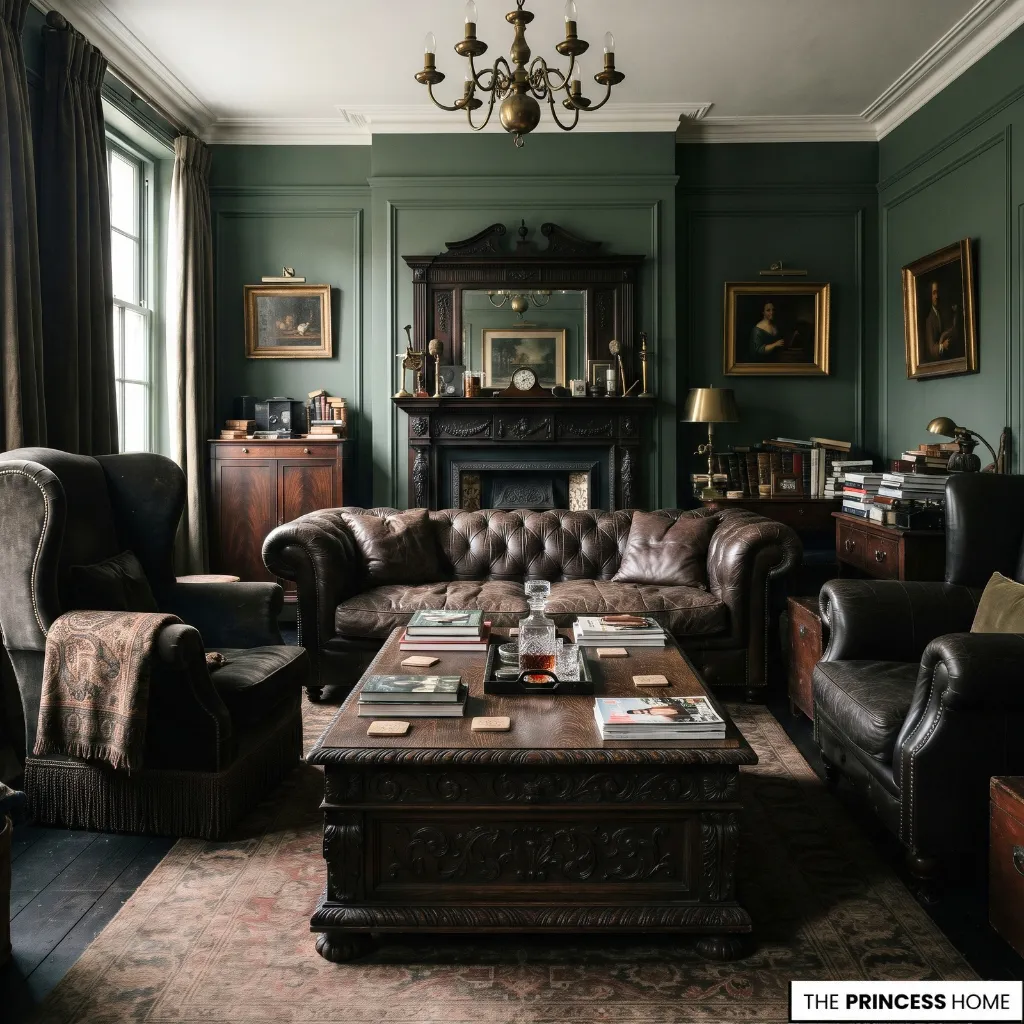
The most common problems arise when the leather, wood, and furniture sizes are chosen separately rather than as parts of one room. Review their relationships before adding more decoration or replacing existing pieces.
Too many dark, bulky items can make a living room feel crowded. If the sofa and wood furniture dominate the space, introduce lighter textiles, reduce the number of large pieces, or choose tables with more open bases.
The solution is to adjust the overall weight of the arrangement, not necessarily to remove every dark finish.
Matching every wood tone and upholstery color can also make the room feel overly uniform. Keep a shared color direction while allowing some variation in grain, finish, and texture.
On the other hand, introducing too many unrelated wood tones, patterns, and metal finishes can make the room feel disjointed. Repeat a few finishes and colors to connect the different pieces.
A rug that is too small can separate the seating instead of bringing it together. Check its size against the full arrangement before buying, and make sure the main furniture relates to its edges.
Similarly, furniture that blocks walking routes or sits too close together can make even a spacious room difficult to use. Recheck circulation after placing the major pieces.
Finally, avoid filling every surface with accessories or choosing materials without considering their care requirements. Leave some open space on tables and shelves, and check how leather, wood, textiles, and rugs should be cleaned and maintained.
A classic living room works best when its materials suit everyday life as well as the intended appearance.
Conclusion
A classic living room with leather and warm wood depends on the relationship between furniture, color, texture, lighting, and available space. Choose the main pieces first, then build around them with complementary materials and personal details.
The result should feel connected without being overly matched, comfortable to use, and suited to the home rather than to a fixed decorating formula.