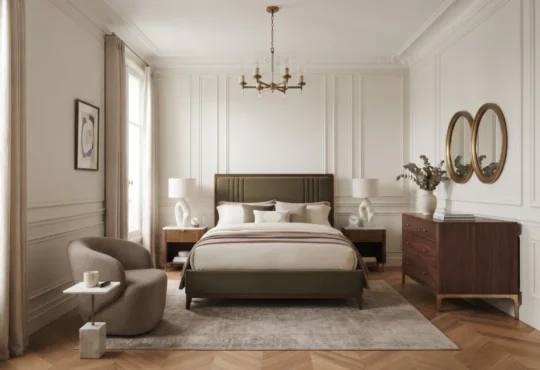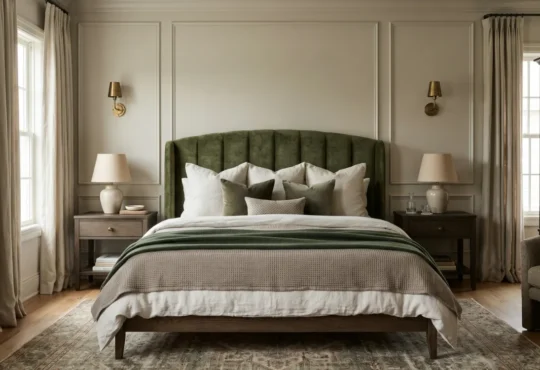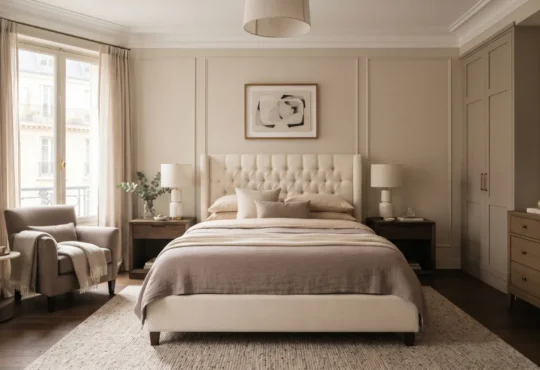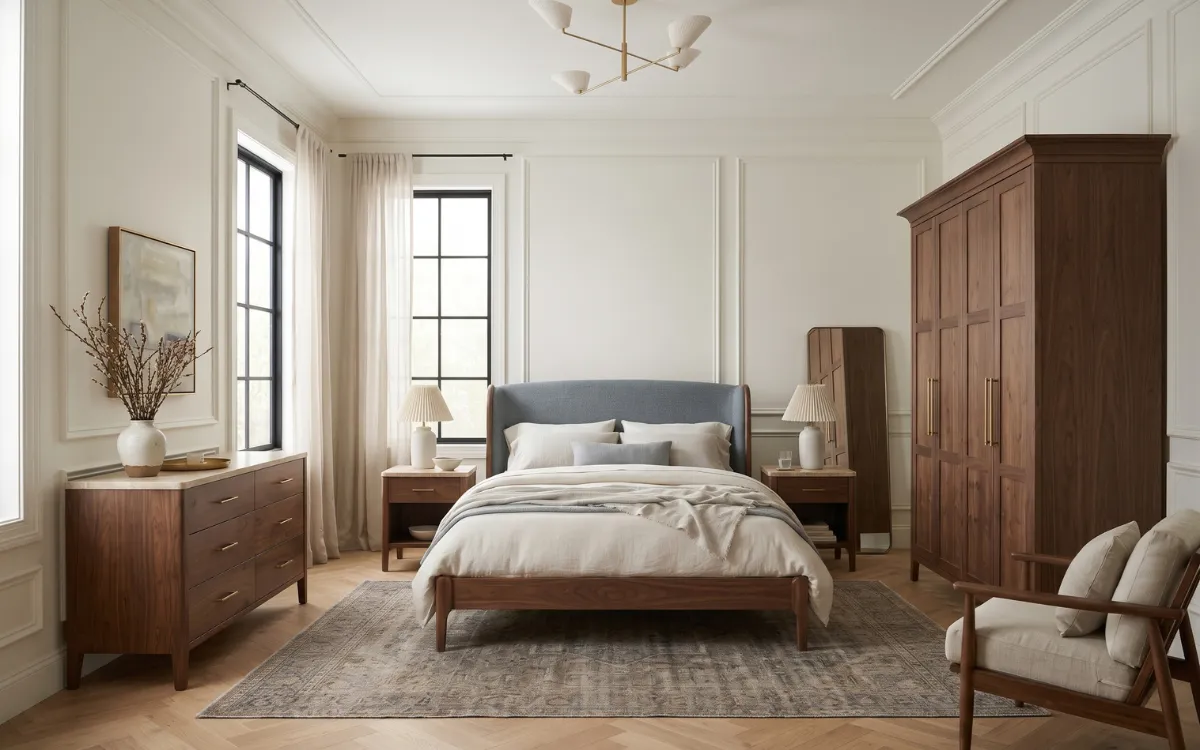
Choosing bedroom furniture involves more than selecting attractive pieces. Each item should serve a practical purpose, fit the available space, and work comfortably with the other furniture.
From the bed and bedside tables to wardrobes, dressers, and seating, the right choices help create a bedroom that supports everyday routines without feeling crowded. Understanding what to prioritize, which dimensions to consider, and how to coordinate different pieces makes the selection process easier.
Assess Your Bedroom
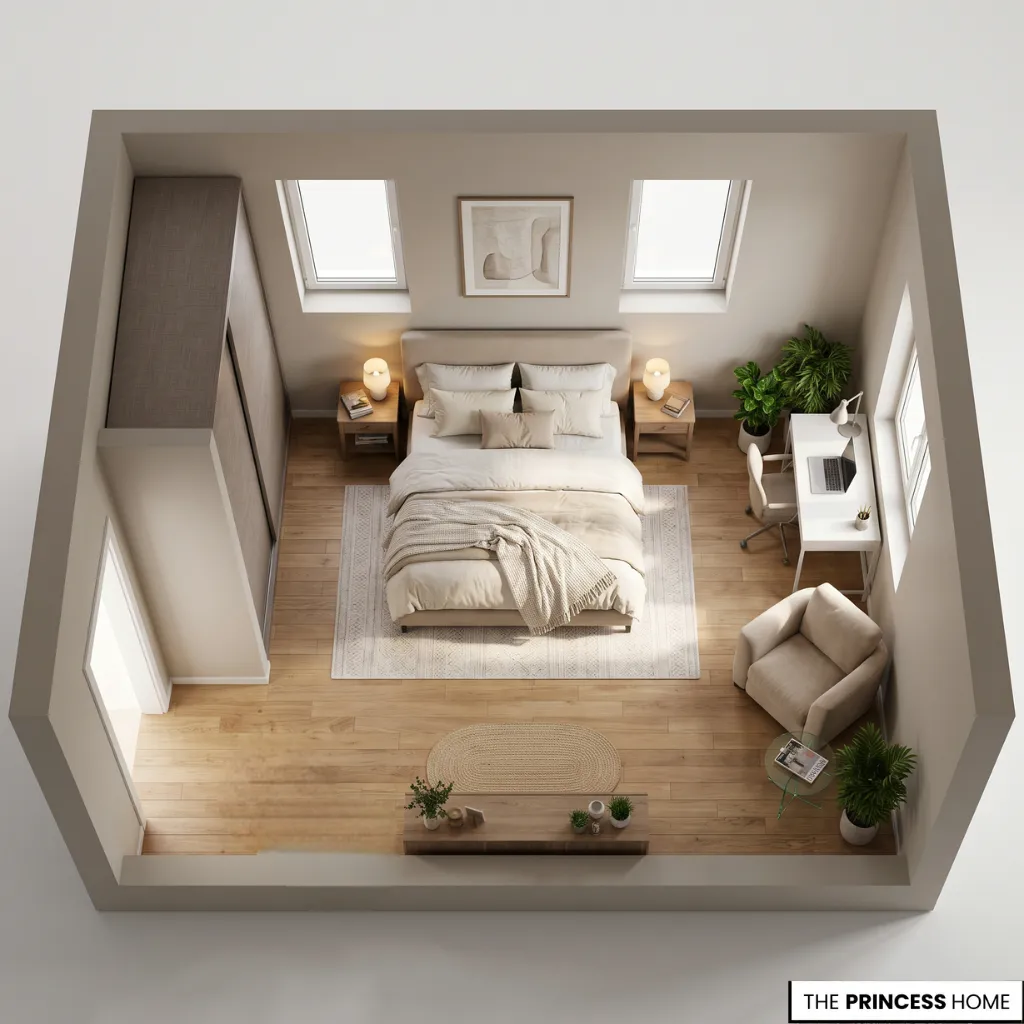
Before choosing bedroom furniture, evaluate the room’s dimensions, existing features, storage needs, and daily routines. This helps establish which pieces are essential and how much space they can occupy.
Start by measuring the room, including its length, width, and ceiling height. Note the positions of windows, doors, radiators, electrical outlets, and built-in features.
These details influence which furniture dimensions and configurations will work. Also measure doorways, staircases, and access routes if you are buying large pieces that need to be delivered.
Once you have the measurements, create a simple floor plan showing the room’s boundaries and fixed features. You can also mark the approximate dimensions of potential furniture pieces on the floor using masking tape. This makes it easier to see how much space each item will occupy before purchasing it.
Compare the complete furniture footprints with the usable floor area, rather than assuming that a piece will fit simply because its width is smaller than the available wall.
Consider the furniture you already own. A functional wardrobe or dresser may provide enough storage without requiring replacement. Likewise, an existing desk might serve as a dressing table if it offers sufficient surface space and can accommodate a mirror.
Next, identify your daily requirements. A bedroom used primarily for sleeping may need a bed, bedside tables, and clothing storage. Someone who regularly gets ready in the bedroom may also benefit from a dressing table, while a reading corner may justify an occasional chair.
Separate essential furniture from optional additions. This prevents unnecessary purchases and helps you allocate available space to the pieces that matter most.
Finally, consider the complete dimensions of each item rather than relying only on its advertised width. Bed frames, headboards, handles, open drawers, and wardrobe doors all affect the space required. The furniture must also leave enough room for comfortable movement and access to everyday belongings.
Before making a purchase, compare the dimensions of each piece with your floor plan and consider how you will use it.
Check whether drawers can extend, doors can open, and chairs can be pulled out without obstructing other furniture. This gives you a more realistic picture of how the bedroom will function once everything is in place.
For more ideas: Bedroom Design Planning a Beautiful and Comfortable Room
Choose the Bed
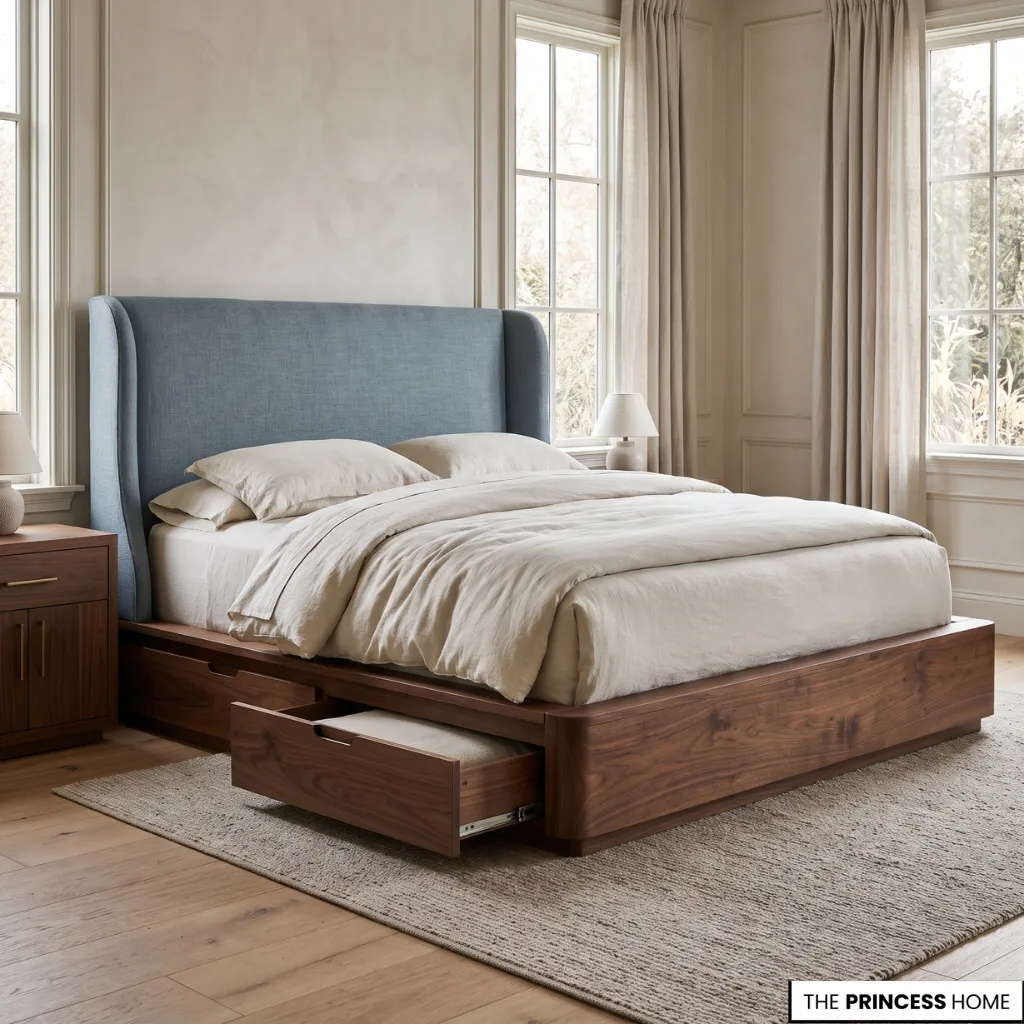
The bed is usually the largest and most important furniture purchase in a bedroom. Its size, frame, height, and construction influence the space available for other pieces, so choose it according to sleeping requirements and room proportions.
Start with the mattress size. Common options include single, double, queen, and king beds, although their exact dimensions vary between countries and manufacturers. Check the measurements in centimetres or inches rather than relying on the size name alone.
Remember that the complete bed frame is usually larger than the mattress. Headboards, footboards, side rails, and decorative details can increase its footprint. Measure the entire frame before deciding whether it will fit comfortably.
Before choosing a size, compare the complete bed dimensions with the space available on your floor plan. Account for the bedside tables and other essential furniture you intend to keep.
If the bed fits only when you remove a necessary storage piece or restrict access to one side, consider a different frame size or design. This helps you assess the bed as part of the complete furniture selection rather than as an isolated purchase.
The frame style also affects the bedroom’s appearance and practical requirements. Platform beds offer a relatively simple structure and may provide a low-profile design. Upholstered beds introduce a padded headboard that can offer comfortable back support when sitting up.
Wooden frames provide a range of finishes and constructions, from simple contemporary designs to more traditional forms. Four-poster beds require additional attention to ceiling height and surrounding space.
Consider the headboard carefully. A tall upholstered headboard can become a prominent feature, while a simple wooden or low-profile design may suit a smaller room. Its width should relate comfortably to the bed and surrounding furniture rather than appearing disproportionately large.
Bed height is another practical consideration. A higher frame may provide useful under-bed storage, while a lower design can create a more streamlined appearance.
Choose a height that allows you to get in and out comfortably. The mattress thickness also affects the final sleeping height, so evaluate the complete combination.
Storage beds can be useful when additional space is needed for bedding, seasonal clothing, or other belongings. Options include integrated drawers and lift-up platforms. However, check that the storage mechanism is easy to operate and that drawers can open without obstruction.
When comparing storage beds, consider what you intend to store and how frequently you will need to access it.
Measure the space required for drawers to extend fully, or check whether a lift-up mechanism can operate without interference from nearby furniture. A storage feature is most useful when its capacity and access suit your actual needs.
Finally, assess the frame’s construction. Look at the joints, support system, slats, central supports where required, and overall stability. A suitable bed should accommodate the mattress according to the manufacturer’s support requirements and withstand regular use.
When comparing different frames, check the manufacturer’s information about materials, weight limits, mattress compatibility, assembly, and maintenance. Examine the joints and support components where possible, and pay attention to the stability of the frame rather than judging quality by its finish alone.
A well-chosen bed should meet your comfort requirements while providing reliable support for regular use.
For more ideas: Headboard Design Guide Heights, Styles & Bedroom Proportions
Select Bedside Tables
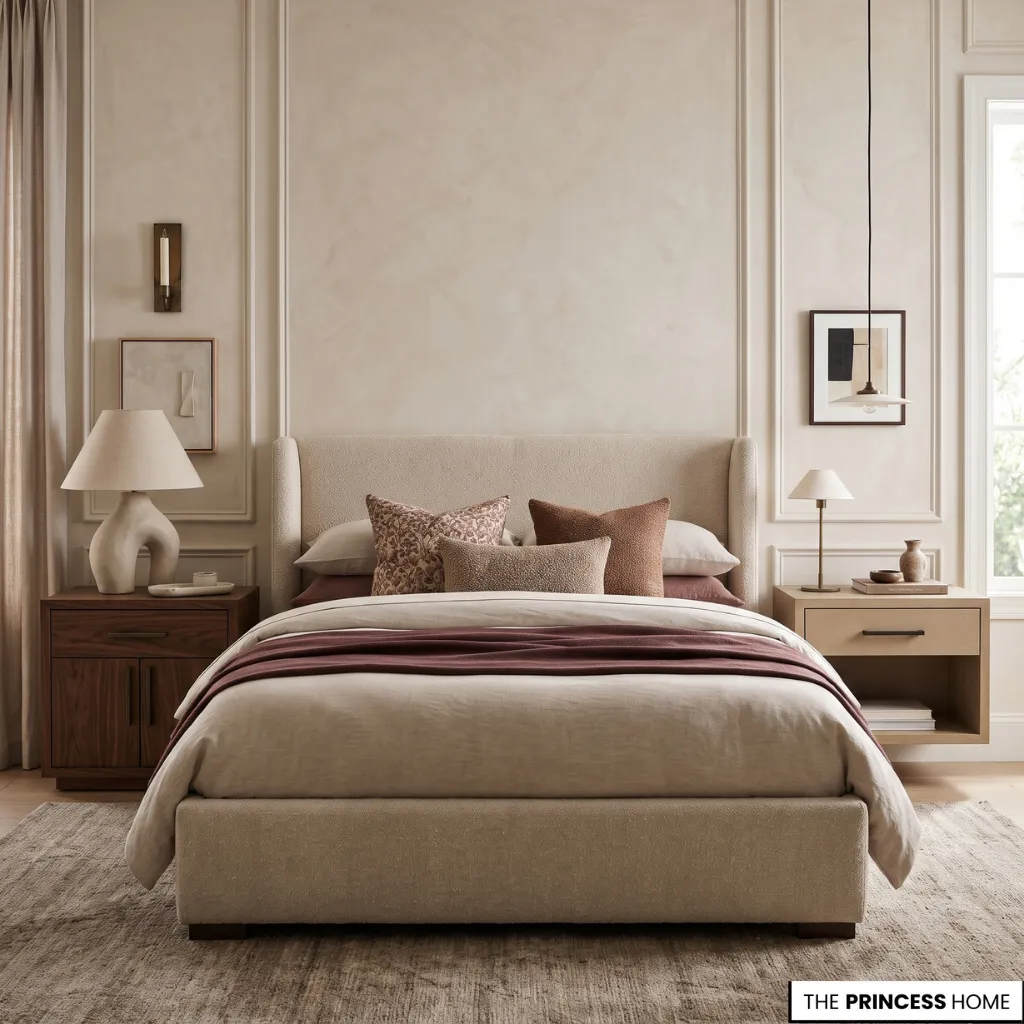
Bedside tables provide convenient access to items used regularly, such as reading glasses, books, lamps, and personal belongings. Their dimensions and configuration should complement the bed while supporting everyday use.
Begin with the height. A useful starting point is to choose a tabletop close to mattress level or slightly below it. This makes it easier to reach items without stretching or leaning too far. The ideal height depends on the bed frame, mattress thickness, and the user’s comfort.
For example, if the top of the mattress sits relatively high, a very low bedside table may make everyday items difficult to reach. A table close to mattress height can offer more convenient access. Compare the tabletop with the finished mattress height, rather than measuring from the floor to the bed frame alone.
Width and depth should also relate to the available space. A wide bedside table may offer generous storage, but it can overwhelm a narrow bedroom or leave little room beside the bed. Compact designs, floating shelves, and narrow cabinets can provide practical surfaces where floor space is limited.
Consider how much storage you need. Tables with drawers are useful for keeping smaller belongings out of sight, while open shelves provide easy access to books and frequently used items. A simple tabletop may be sufficient if you prefer a minimal arrangement.
You do not have to choose identical bedside tables. Matching pairs create a symmetrical arrangement, particularly when the bed is positioned centrally.
However, different tables can also work well when their heights, visual weight, finishes, or materials maintain a comfortable relationship. For example, a compact wooden table on one side can be paired with a floating shelf on the other.
One bedside table may be sufficient in a small bedroom or when the bed is positioned against a wall. In a larger room, two tables may provide better access and a more balanced arrangement.
Before purchasing, consider the tabletop’s usable area. It should accommodate the items you regularly need without becoming crowded. Also check drawer opening space and the dimensions of any lamp you intend to place on it.
When comparing two bedside tables, consider their practical features as well as their appearance. Check the usable drawer space, the depth of the tabletop, and whether the table can accommodate your lamp, phone, or other everyday items.
A smaller table that holds everything you need may be more suitable than a larger one with unused storage.
For more ideas: Bedroom Layout Ideas: How to Arrange Furniture for Better Space
Choose a Wardrobe
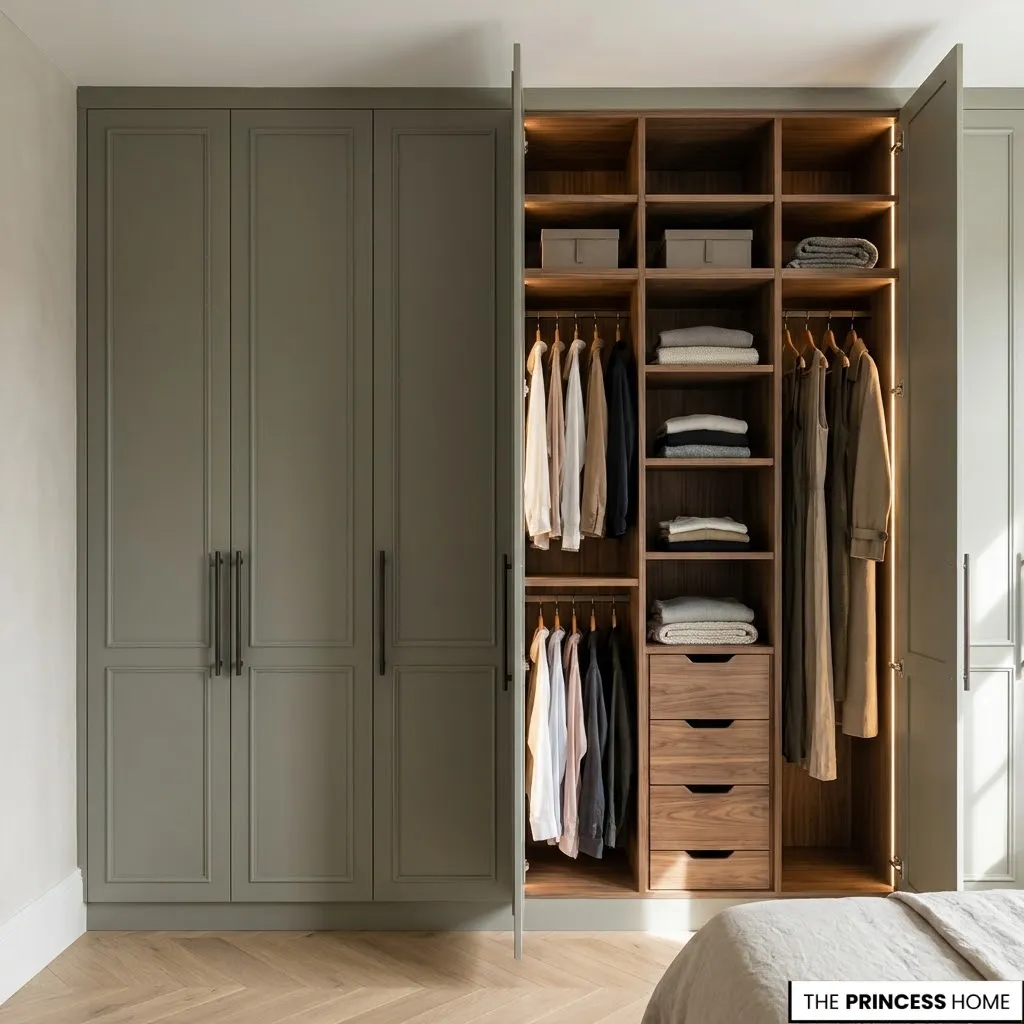
A wardrobe should provide enough storage for clothing and accessories while fitting the available wall space. Its external appearance matters, but the internal configuration is equally important because it determines how effectively you can organize your belongings.
Freestanding wardrobes offer flexibility because they can be moved or replaced without modifying the room. They are available in different widths, heights, depths, and configurations.
Built-in wardrobes, on the other hand, can make better use of alcoves, recesses, and full-height wall areas. They can also accommodate awkward architectural spaces that standard furniture may not fit.
Door configuration is another important decision. Hinged doors provide access to the full interior when opened, but they require sufficient clearance in front of the wardrobe.
Sliding doors can be more practical in narrow bedrooms because they do not swing outward. However, the sliding mechanism and overlapping panels may affect access to individual compartments.
Look inside the wardrobe before choosing it. Hanging rails are useful for shirts, jackets, dresses, and other garments that need to remain on hangers.
Shelves accommodate folded clothing, while drawers help organize smaller items. A combination of these features generally offers greater flexibility than a wardrobe designed around only one type of storage.
Consider the length of the clothes you own. Long dresses and coats need adequate hanging height, while shorter garments can be stored on two levels when the internal configuration allows it. Adjustable shelves and additional rails can also make the wardrobe more adaptable as storage needs change.
To evaluate the internal layout, consider the clothing you actually own and how you prefer to store it. A wardrobe used mainly for dresses and coats needs more full-length hanging space than one used for folded clothing and shorter garments.
If you regularly store accessories, smaller compartments or drawers may be more useful than additional open shelves. This comparison helps you choose an interior that matches your belongings instead of paying for storage features you may not use.
Depth is particularly important. A wardrobe may look spacious from the outside but provide limited usable hanging space if its internal depth is insufficient. Check the manufacturer’s internal measurements rather than judging capacity from external dimensions alone.
Material and construction should also influence your decision. Examine the stability of the frame, door hinges, drawer mechanisms, shelving supports, and finish. Wardrobes used daily benefit from reliable hardware and a construction that can withstand repeated opening and closing.
When comparing wardrobes, inspect the quality of the hinges, sliding tracks, handles, and drawer runners. Check whether shelves are adequately supported and whether the doors move smoothly.
Also review the manufacturer’s information about materials, assembly, weight limits, and care requirements. These details help you compare the long-term practicality of different models, not just their appearance.
For a small bedroom, consider a taller or narrower wardrobe when the room’s proportions allow it. Sliding doors may help where opening space is restricted. If a built-in wardrobe is unsuitable or too expensive, a well-proportioned freestanding unit can provide a practical alternative.
Select Drawer Storage
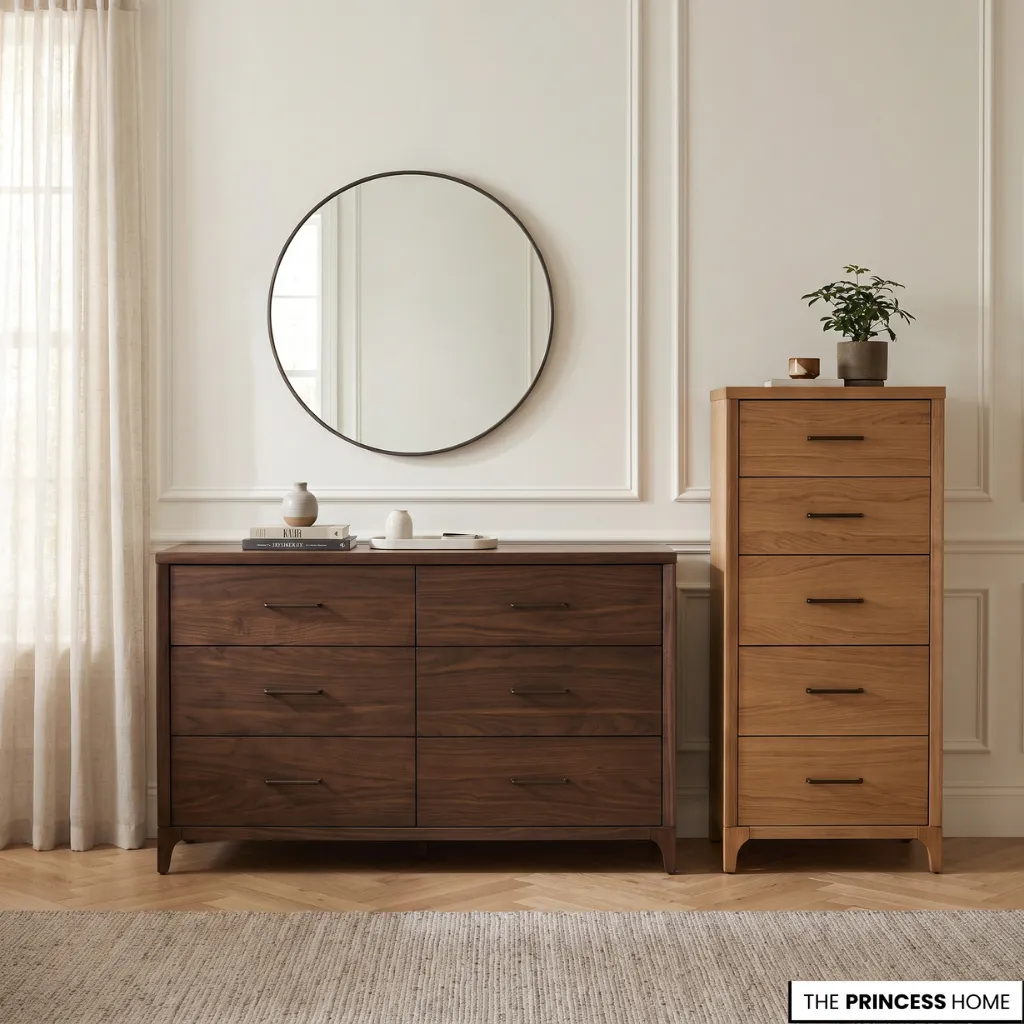
Dressers and chests of drawers provide additional storage for folded clothing, accessories, and everyday belongings. Although their functions overlap, their different shapes make them suitable for different bedroom requirements.
A dresser generally has a wider, lower configuration with several drawers and a horizontal surface. This surface can accommodate a mirror, a small lamp, or frequently used personal items. Some dressers are designed with an integrated mirror, making them useful when a separate dressing table is unnecessary.
A chest of drawers usually has a taller, narrower structure. Its vertical configuration can provide substantial storage while occupying less wall width. This makes it useful in bedrooms where a wide dresser would take up too much space.
Choose between them according to your storage needs and available dimensions. A wide dresser may suit someone who wants both drawer storage and a usable surface. A tall chest may be more appropriate when additional storage is needed but horizontal wall space is limited.
Pay attention to drawer dimensions rather than counting the drawers alone. Deep drawers can accommodate bulky clothing, while shallow compartments are useful for accessories and smaller belongings. Check that drawers extend comfortably and operate smoothly.
Think about the items each drawer will hold before comparing storage units. Folded sweaters and bulky clothing need more depth than small accessories, while frequently used belongings benefit from drawers that are easy to reach.
Comparing the internal drawer dimensions and usable capacity can help you determine whether a dresser or chest will meet your needs.
The relationship with the wardrobe is also important. If your wardrobe already contains sufficient shelves and drawers, an additional storage unit may be unnecessary. If it mainly provides hanging space, a dresser or chest can fill the gap.
Finally, consider the furniture’s height and finish. A low dresser can work well beneath a mirror or artwork, while a tall chest may provide storage in a narrow area. Choose a design that complements the bed and other furniture without making the room feel excessively furnished.
Choose a Dressing Table
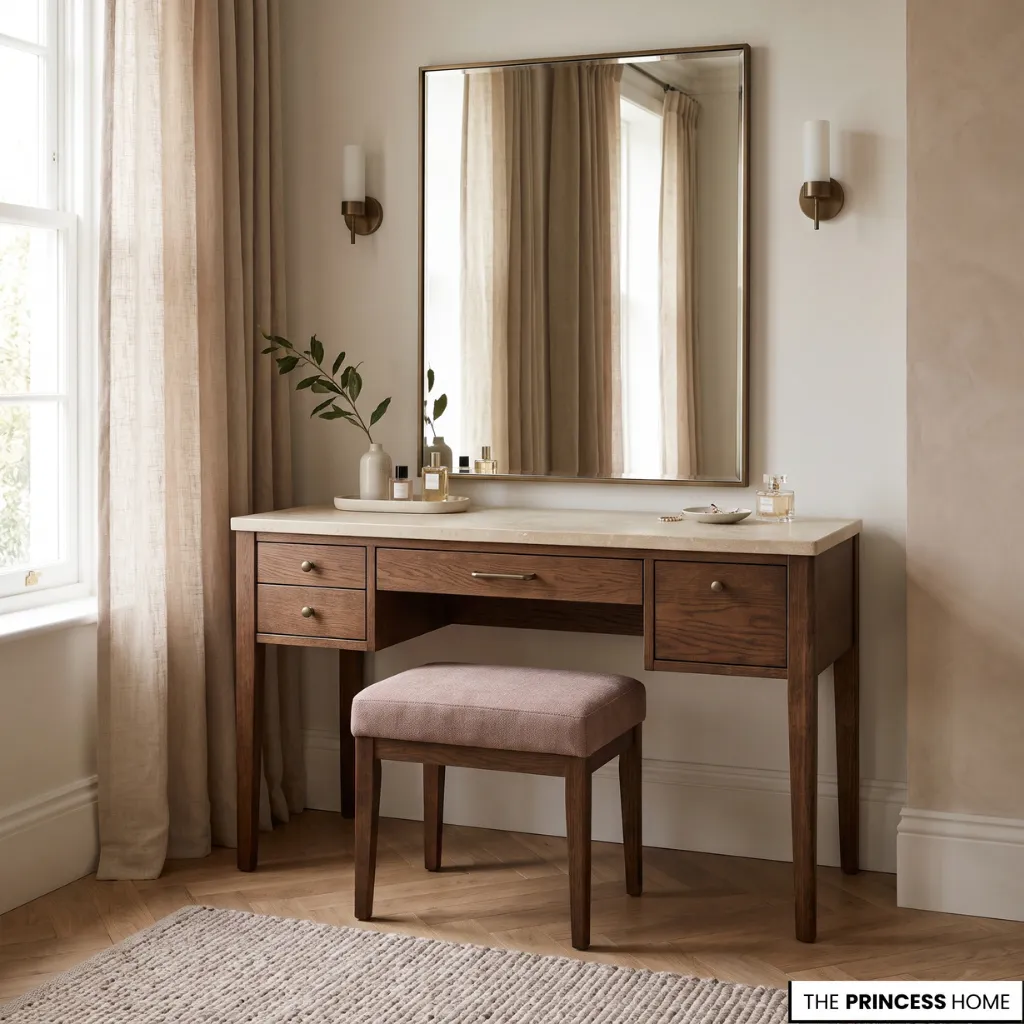
A dressing table provides a dedicated surface for personal preparation, grooming, and organizing everyday accessories. Whether you need a full vanity or a compact alternative depends on your routine and the available space.
A traditional dressing table usually combines a tabletop, storage drawers, and a mirror. Some designs include an integrated mirror, while others allow you to select a separate wall-mounted or tabletop version. Choose the configuration according to the space available and how you prefer to use it.
The tabletop should accommodate the items you regularly need. Someone who uses only a few personal products may need little more than a compact surface and mirror. A person who uses several grooming or styling tools may benefit from additional drawers, a larger work surface, and convenient electrical access.
Seating must also fit the table. A stool can slide underneath when not in use, while an upholstered chair may provide greater comfort during longer preparation routines. Check the seat height, knee clearance, and available space beneath the tabletop before purchasing the two pieces together.
Before selecting a table and seat, check their dimensions as a complete combination. The seat should fit comfortably beneath the tabletop when not in use, and there should be enough room for your legs while sitting.
A table that offers generous storage but leaves insufficient knee clearance may prove uncomfortable for everyday preparation.
Lighting and mirror placement deserve attention. The mirror should provide a useful view without being obstructed by furniture or surrounding objects. Where possible, position the dressing table where natural light is available, while also considering suitable artificial lighting for use in the evening.
If electrical styling appliances are part of your routine, ensure that outlets are conveniently accessible and that cables can be managed safely.
A dedicated dressing table is not essential for every bedroom. A small desk with a suitable mirror can serve the same purpose when it offers adequate surface space and comfortable seating.
This is a practical alternative for compact rooms or bedrooms where a separate vanity would take up space needed for essential furniture.
Consider Bedroom Seating
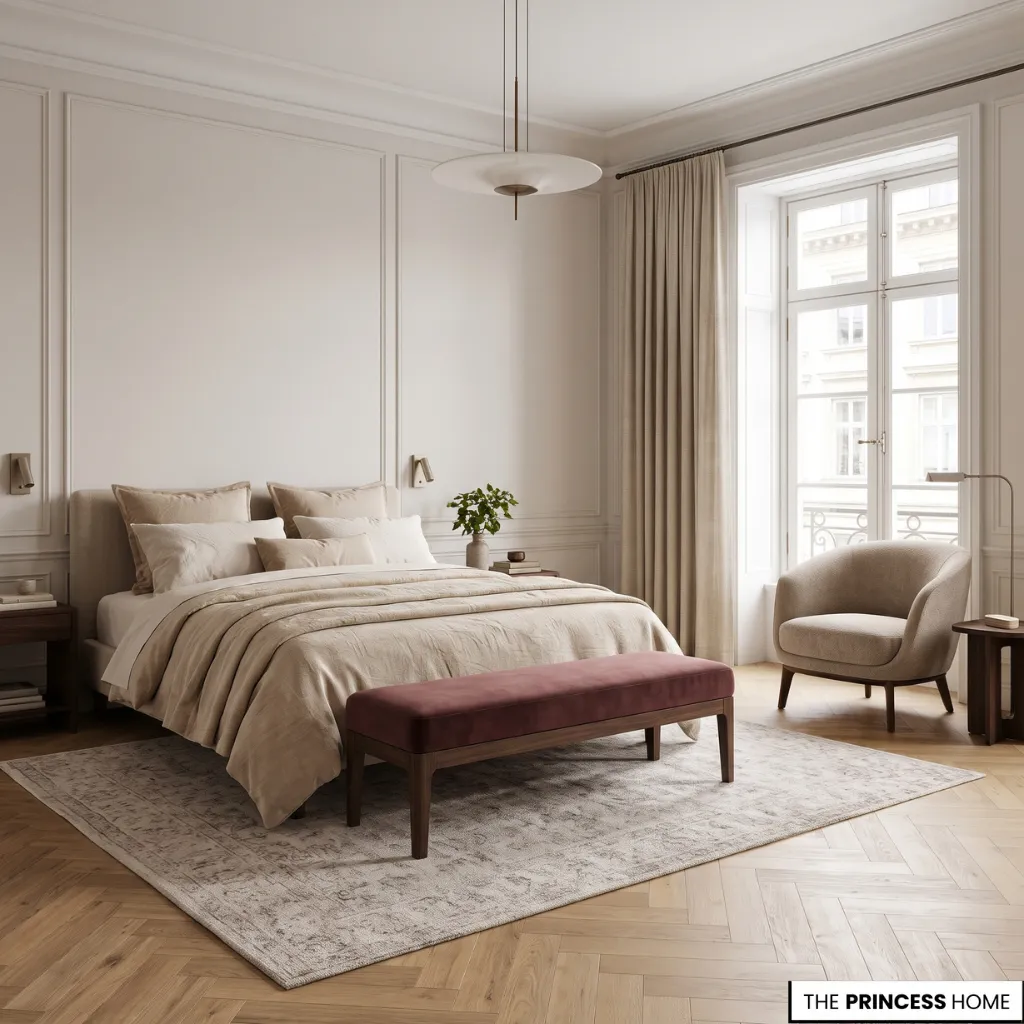
Additional seating can make a bedroom more useful, but it should serve a clear purpose. A chair, bench, or ottoman may support reading, dressing, or temporary storage, depending on the room’s needs.
An accent chair is suitable when the bedroom has enough space for a small seating area. Choose a comfortable design with dimensions that allow it to fit without obstructing access to other furniture.
Upholstered chairs offer a softer seating option, while wooden or metal frames can introduce different materials into the bedroom.
A bedroom bench is often placed at the foot of the bed. It provides a convenient place to sit while dressing or to set down clothing temporarily. Its width should relate to the bed, and its height should allow comfortable use.
An upholstered bench may complement an upholstered headboard, while a wooden design can introduce a different finish.
Storage benches combine seating with a compartment for bedding, blankets, or other belongings. They can be particularly useful when additional storage is needed, although the opening mechanism and available access should be checked before purchasing.
An ottoman is another flexible option. It can provide occasional seating, serve as a footrest, or offer concealed storage. Compact versions can work in smaller bedrooms where a full-size chair or bench would be difficult to accommodate.
Consider the upholstery and construction of any seating piece. Materials should suit the intended use and be practical to maintain. A chair used regularly for reading needs greater comfort than a small decorative stool used occasionally.
If the bedroom is compact, do not add seating simply because there is an empty corner. A useful bedside table or additional storage may be a better choice. Optional furniture should improve the way the room functions rather than reduce the space available for everyday movement.
Coordinate Furniture Styles
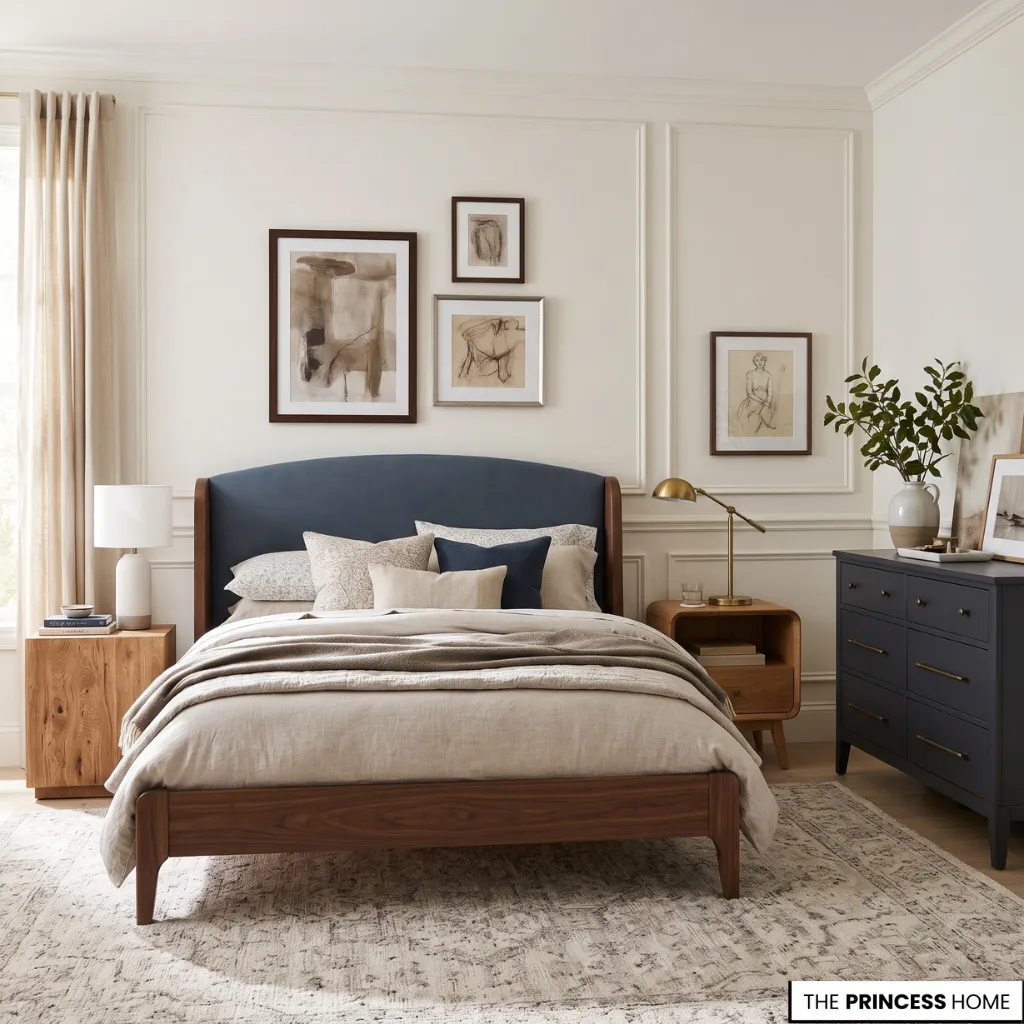
Bedroom furniture does not need to come from one matching collection to create a coherent design. Different pieces can work together when their proportions, materials, finishes, and design details have a clear relationship.
Start by identifying the dominant furniture piece, usually the bed. Its frame, headboard, and finish can help guide the selection of bedside tables, dressers, and other additions. This does not mean every item must repeat the same material or color. Instead, look for details that connect the pieces.
Wood finishes are one example. A natural oak bed can work with darker wooden furniture when the undertones and overall appearance complement each other. Painted bedside tables can also accompany a wooden dresser, provided the combination looks deliberate rather than accidental.
Materials can be mixed to create variation. Wood, upholstered fabric, metal, and glass can all appear in the same bedroom. For example, a wooden bed frame can be paired with upholstered bedside seating and metal hardware. Repeating one or two materials or finishes across different pieces helps establish continuity.
For example, a bedroom could combine a natural wood bed with painted bedside tables and a darker freestanding wardrobe. The pieces do not need identical finishes if they share a compatible color direction or repeat a detail such as dark metal handles.
A consistent wood tone in smaller accessories or a similar furniture leg shape can also help connect the different pieces. This creates a coordinated result while allowing each item to retain its own character.
Pay attention to furniture shapes and details. Rounded edges, tapered legs, simple handles, and similar design features can create connections between otherwise different items. Traditional furniture can also sit comfortably alongside contemporary pieces when their scale, finish, and character are compatible.
Avoid purchasing a complete matching set simply because it is convenient. Identical bed frames, bedside tables, dressers, and wardrobes can produce a uniform appearance, but they are not the only way to achieve coordination.
Independently selected pieces may offer greater flexibility and allow you to retain furniture you already own.
However, mixing styles does require some restraint. Too many unrelated finishes, shapes, and decorative details can make the furniture appear disconnected. Establish a clear direction, then introduce variation through a limited selection of complementary materials and forms.
For more ideas: How to Choose the Right Bedroom Style for Your Home
Balance Furniture Proportions
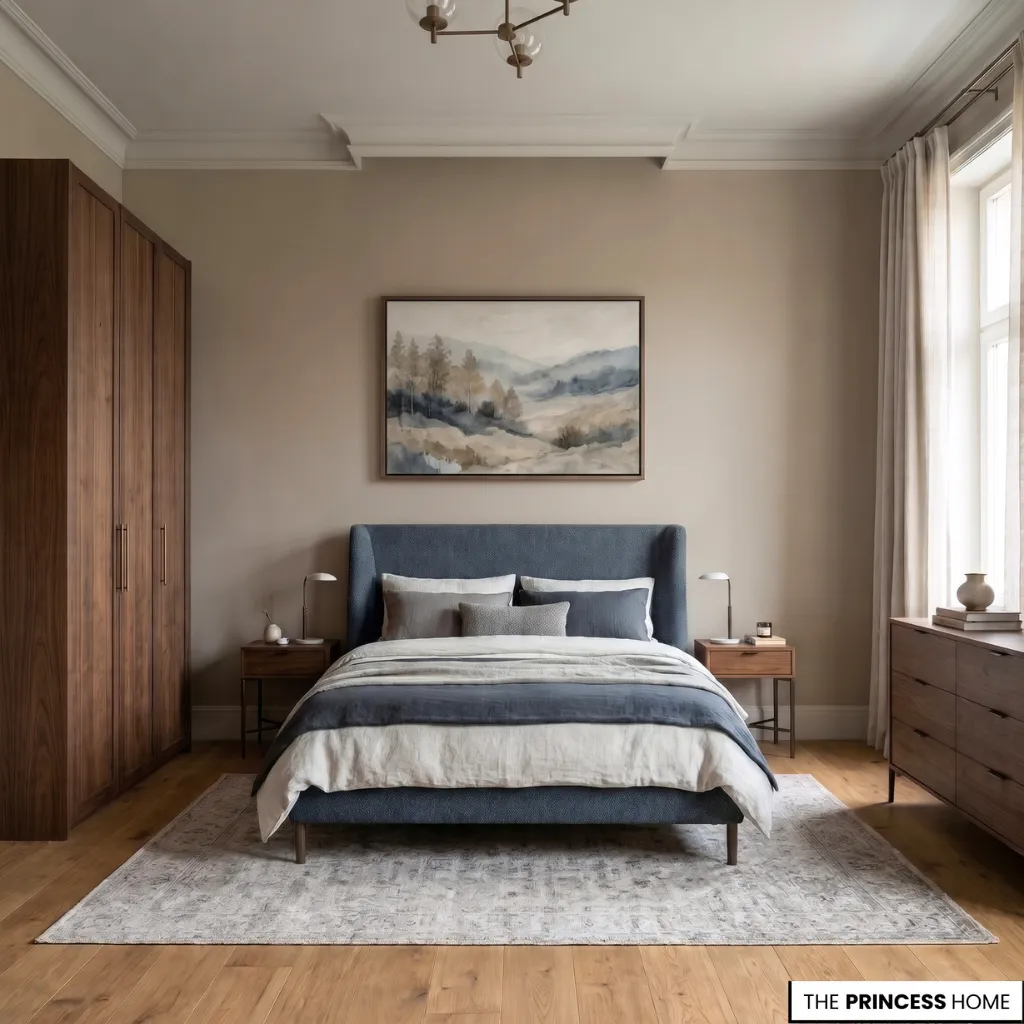
Even well-designed furniture can look unsuitable when its dimensions do not relate to the bedroom or the surrounding pieces. Proportion is therefore an important part of selecting furniture, not simply arranging it after purchase.
Begin with the relationship between the bed and the room. A large bed may provide generous sleeping space, but it can leave insufficient room for storage or comfortable movement in a smaller bedroom. A more compact frame may allow you to include essential furniture without overcrowding the available floor area.
Compare bedside tables with the bed’s width and height. Very small tables can appear insignificant beside a substantial upholstered headboard, while oversized tables may dominate the arrangement. The goal is to select pieces that look appropriately scaled and remain comfortable to use.
Consider vertical proportions as well. A tall wardrobe can use available wall height efficiently, but its appearance may become overwhelming when combined with a high headboard and other substantial furniture. Lower storage pieces can help vary the overall composition.
Visual weight matters alongside physical dimensions. A solid dark wooden dresser may appear heavier than a similarly sized piece with slender legs and a lighter finish. Upholstered furniture can also have considerable visual presence depending on its shape and fabric.
When choosing furniture, compare the complete pieces rather than evaluating each item separately. A substantial bed may work better with simpler bedside tables, while a visually light bed frame may accommodate more decorative supporting furniture.
Finally, consider the space required to use each item. Wardrobe doors must open, drawers must extend, and chairs must be pulled out comfortably. A furniture arrangement that looks proportionate on paper may still be impractical if these movements are restricted.
Avoid Common Mistakes
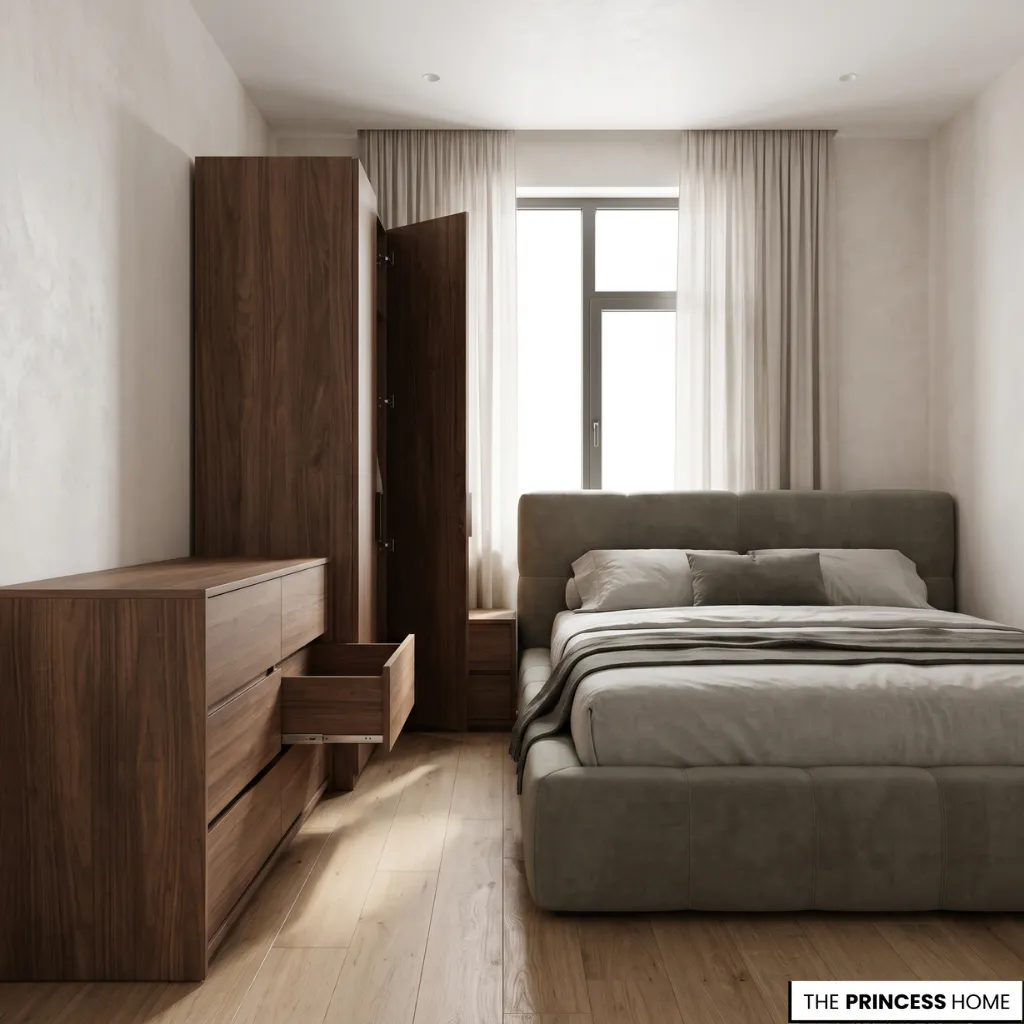
Several purchasing mistakes can make a bedroom less functional, even when the individual furniture pieces appear attractive. Recognizing these problems before buying helps prevent unnecessary expense and unsuitable choices.
Buying before measuring: Choosing furniture based on appearance or approximate dimensions can result in pieces that do not fit. Measure the room, doorways, furniture footprints, and access requirements before ordering.
Choosing an oversized bed: A large bed may reduce the space available for wardrobes, bedside tables, and movement. Select the mattress size according to sleeping needs while considering the complete frame dimensions.
Ignoring door and drawer clearance: A wardrobe or dresser may fit against a wall but become difficult to use when its doors or drawers are opened. Check the operating space required by each piece.
Choosing storage without assessing needs: A large wardrobe does not necessarily provide useful storage if its interior configuration does not suit the clothes being stored. Evaluate hanging space, shelving, drawers, and compartment sizes before purchasing.
Buying unnecessary matching sets: A complete furniture set may include pieces that the bedroom does not need. Select individual items according to their purpose and coordinate them through compatible finishes, proportions, and design details.
Adding too much furniture: Extra chairs, benches, dressers, and tables can make the bedroom difficult to use. Prioritize essential pieces and introduce optional furniture only when it serves a practical purpose.
Prioritizing appearance over construction: Attractive finishes cannot compensate for unstable frames, weak joints, or unreliable drawer mechanisms. Check the materials, hardware, support systems, and manufacturer’s specifications before making a purchase.
Conclusion
The right bedroom furniture begins with understanding the room and the way you use it. Choose essential pieces according to their function, select dimensions that suit the available space, and coordinate materials and finishes without relying on identical sets.
When every item has a clear purpose and relates comfortably to the others, the bedroom becomes more practical, balanced, and suited to everyday living.