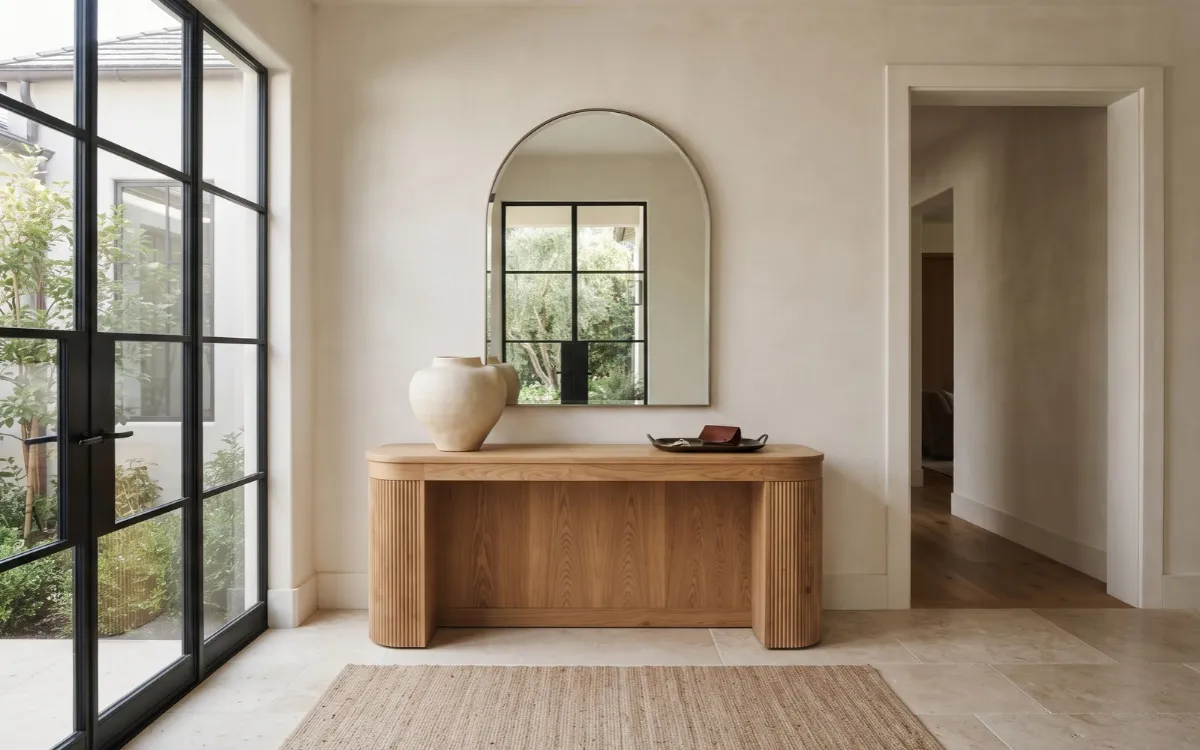
Simple entryway ideas can help you create a welcoming, organized entrance that feels connected to the rest of your home. The challenge is balancing attractive decor with everyday needs, especially when space is limited or shoes, coats, bags, and keys quickly accumulate.
With well-proportioned furniture, coordinated materials, thoughtful lighting, and practical storage, you can create an elegant entryway without filling it with unnecessary decoration.
Assess Your Entryway
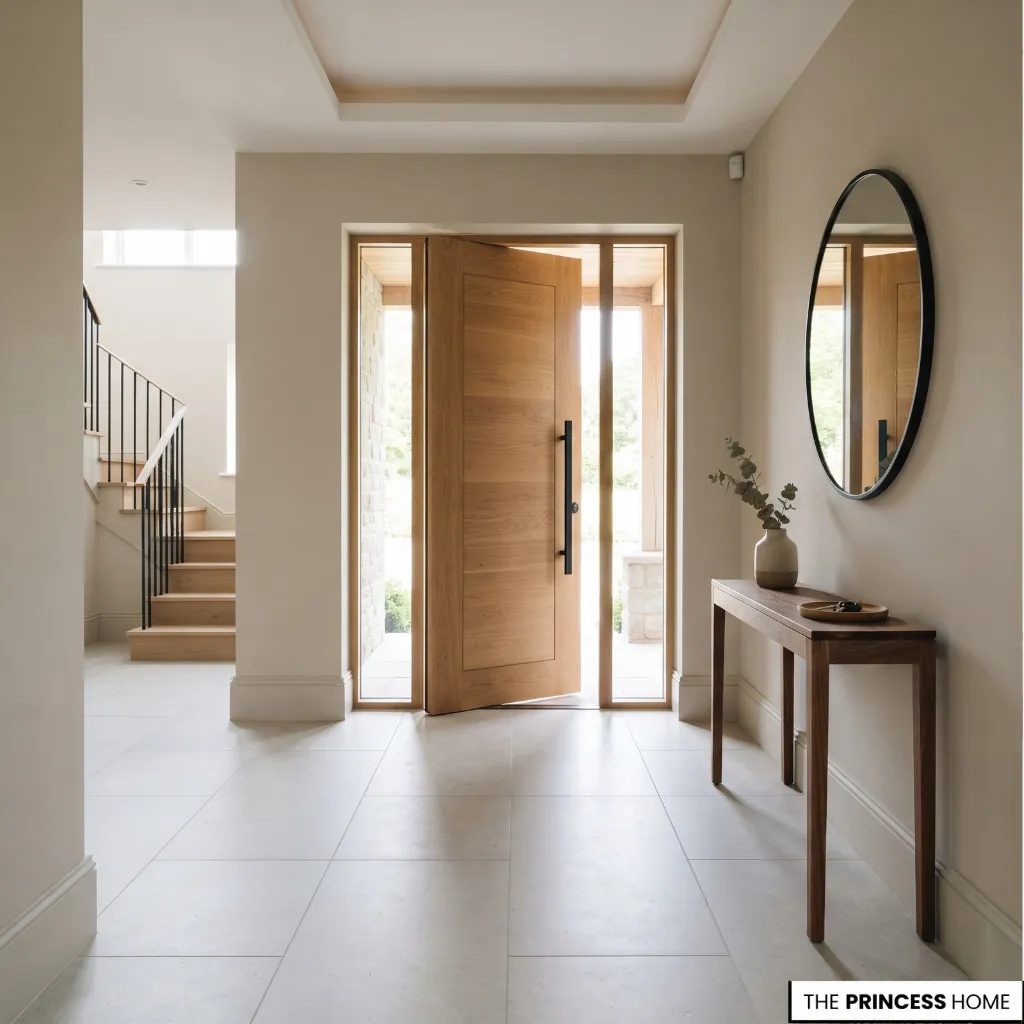
Start by examining how your entryway works. Consider the available floor space, the direction in which the door opens, the location of nearby rooms, and the amount of natural light. These details determine what you can add without obstructing movement.
Identify your main priorities. A household that needs space for shoes and coats may benefit from closed storage and wall hooks. An entrance used mainly for greeting guests may need only a console table, a mirror, and a convenient place for keys.
Consider the existing finishes before making changes. Flooring, wall color, door frames, and adjoining furniture can guide your choices. Keep the elements that already work and identify what needs improvement.
Begin with the most noticeable problem. If the entrance feels crowded, remove unnecessary objects before buying anything. If it looks unfinished, consider whether it needs a focal point, better lighting, or a more suitable piece of furniture.
For more ideas: Entryway Design Guide Decor, Layout, Lighting & Organization
Choose Entryway Furniture
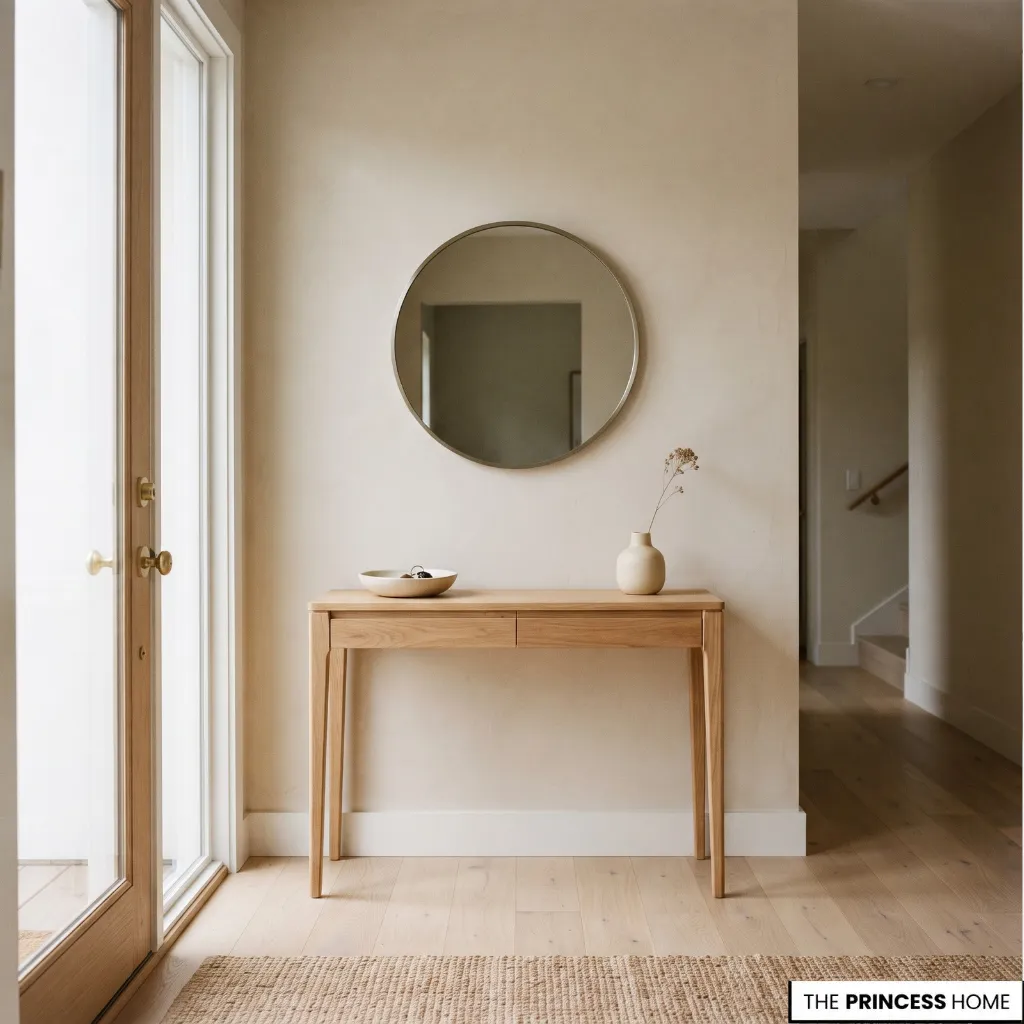
Choose entryway furniture according to the available space and your daily routine. A console table, slim cabinet, compact bench, or wall-mounted shelf can provide a useful foundation, but you rarely need all four.
A console table offers a surface for keys, a lamp, or a small decorative arrangement. Choose its width and depth according to the wall and the walking space in front of it. A narrow console is often more practical than a deep cabinet in a tight entrance.
A closed cabinet provides storage for shoes, bags, and other everyday items. If you regularly put on shoes near the door, a compact bench can make the entrance more convenient. A bench with hidden storage can serve both purposes without requiring another piece of furniture.
Consider the proportions before purchasing anything. A very small table may look lost against a wide wall, while an oversized cabinet can overwhelm a narrow hallway. The furniture should relate to the surrounding architecture without dominating the entrance.
To judge the right size, consider the depth of the furniture in relation to the remaining walkway, the height of nearby features, and the width of the wall it occupies. A piece may fit within the floor area yet still feel too large if it makes the entrance difficult to move through.
Avoid adding pieces simply because they appear in attractive entryway photographs. Start with the essential function, then introduce another item only when the available space and your routine justify it. Always account for the door swing and the space needed to walk past the furniture comfortably.
Coordinate Colors & Materials
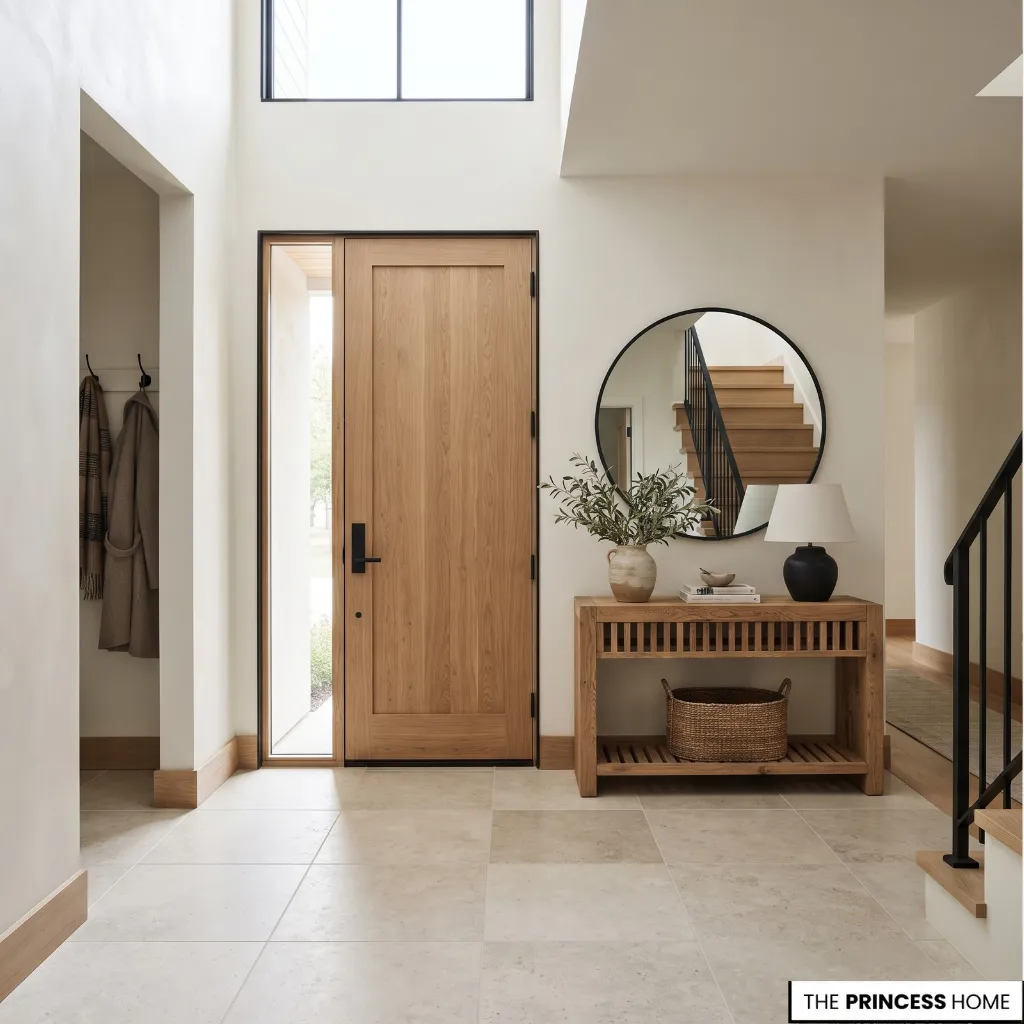
A coordinated palette helps the entryway connect naturally with the rest of the home. Begin with the existing floor, walls, door, and adjoining rooms. Choose finishes that complement these elements rather than treating the entrance as an entirely separate decorating project.
Warm white, beige, soft gray, and muted earth tones provide versatile backgrounds for different furniture styles. For more contrast, consider a deeper wall color, a dark wood console, or black metal details. The right combination depends on the available light, architecture, and finishes already present.
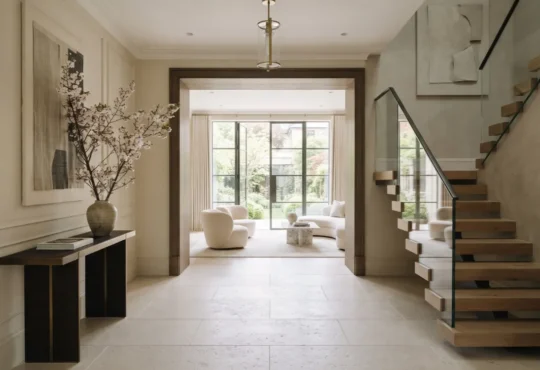
Materials also influence how the entrance comes together. Natural wood can soften a predominantly white space, while stone, ceramic, glass, and metal introduce different textures. You do not need to use every material. A few compatible finishes can establish a clear direction without making the design feel busy.
Pay attention to undertones when combining finishes. Wood with a strong orange cast may look disconnected beside cool gray flooring, while related wood tones can create continuity. Contrasting finishes can work equally well when the relationship is deliberate.
For a simple, elegant result, repeat one or two finishes across the entrance. A wood console paired with a matching frame or another wood detail can link separate elements without making everything identical.
Add Mirrors & Artwork
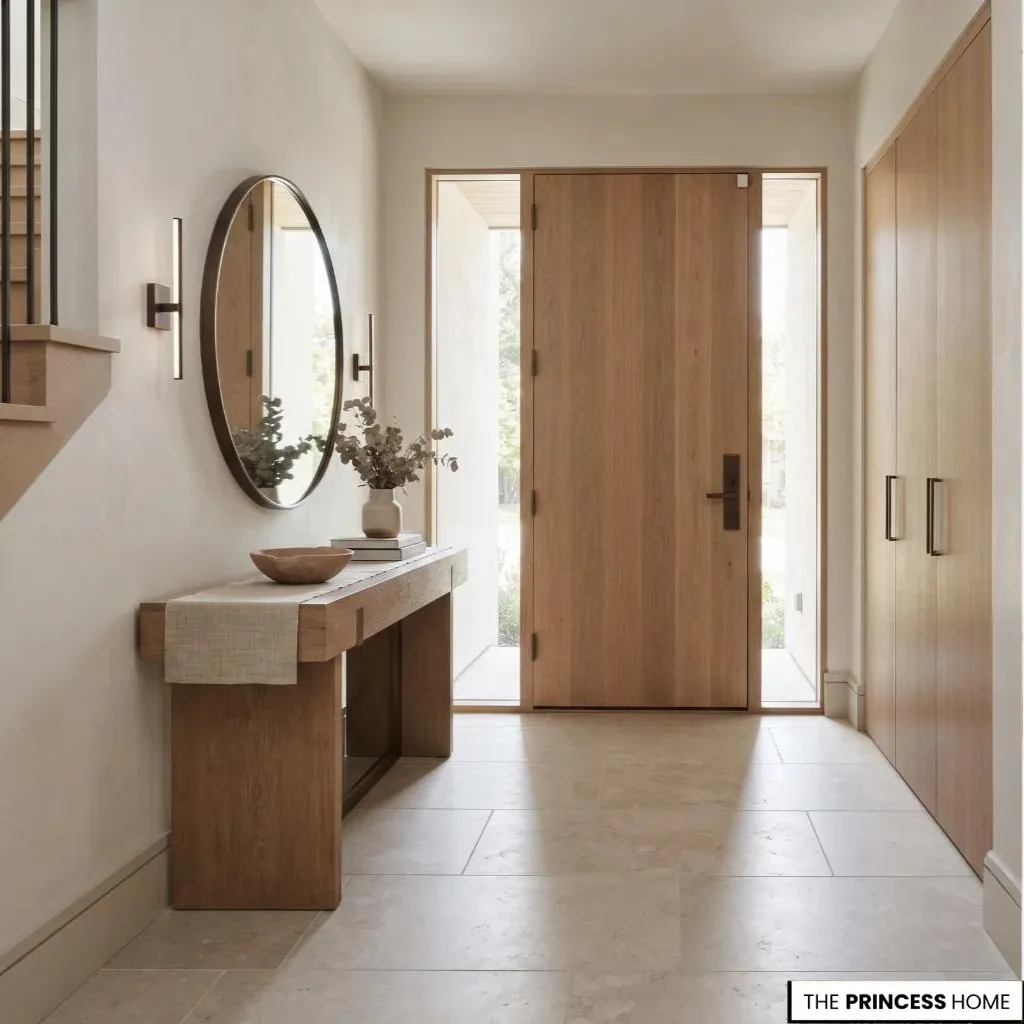
A mirror or piece of artwork can establish a focal point above an entryway console. Choose according to the wall’s proportions, the available light, and the function you want the entrance to serve.
Mirrors are particularly useful in small entrances because they reflect light and provide a convenient place for a final appearance check before leaving home. A round or oval mirror can soften a space dominated by straight lines, while a rectangular mirror suits a more structured arrangement.
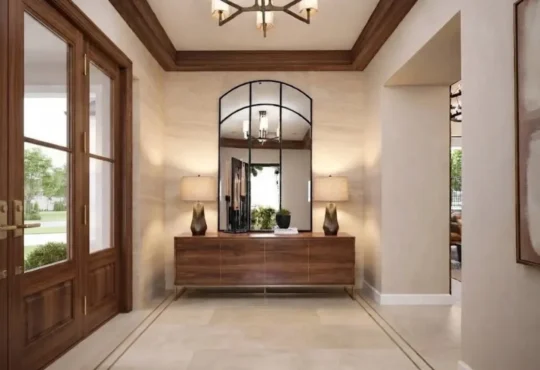
An arched mirror introduces another shape without requiring additional decoration. Relate the mirror’s size to the console beneath it. A very small mirror may look disconnected from a wide table, while an oversized piece can dominate a narrow wall.
Centering the mirror above the console is a reliable starting point, although an off-center arrangement can work when balanced by a lamp or another substantial object. As a practical guide, consider the mirror and console as one arrangement rather than two separate pieces.
Their combined width, height, and visual weight should suit the wall, leaving enough space around them for the arrangement to feel intentional. Artwork offers an alternative when a mirror is unnecessary or you want to introduce color and personality.
One appropriately scaled painting or print can provide enough visual interest without requiring a gallery wall. Before hanging anything, consider the viewing distance, surrounding wall space, and position of nearby doors.
The focal point should feel connected to the furniture and architecture rather than added as an afterthought.
For more ideas: 23 Essential Entryway Decor Ideas to Transform Your Entrance
Improve Entryway Lighting
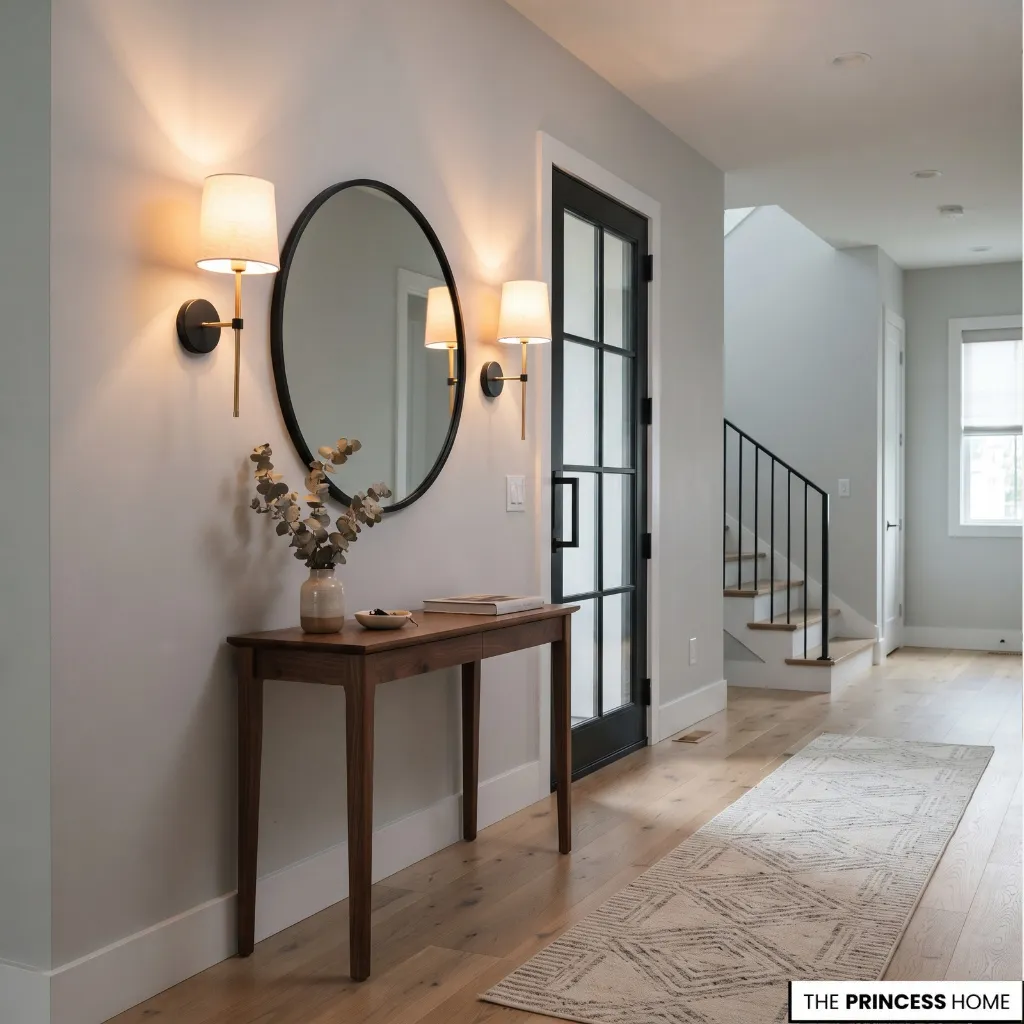
Good entryway lighting supports safe movement and makes the space easier to use in the evening. Choose fixtures according to the ceiling height, the size of the entrance, and the light already available from adjoining rooms.
A ceiling fixture can provide general illumination, particularly where natural light is limited. A pendant or chandelier may suit a foyer with sufficient vertical clearance, while a flush-mount fixture is often more practical in a low-ceilinged hallway.
Wall sconces can illuminate a mirror or artwork without occupying floor space. A table lamp can provide supplementary light when the console is wide enough to accommodate it safely. In a very narrow entrance, wall-mounted lighting may be the better option.
Consider the light’s color as well as its brightness. Warm residential lighting can complement wood, cream, beige, and other natural finishes. The appropriate color temperature depends on the existing lighting and the effect you prefer, so avoid treating one specification as suitable for every home.
Place switches where they are convenient to use, and ensure the entrance receives enough illumination for everyday tasks. Before purchasing a new fixture, check its dimensions, light output, and installation requirements.
Organize Everyday Essentials
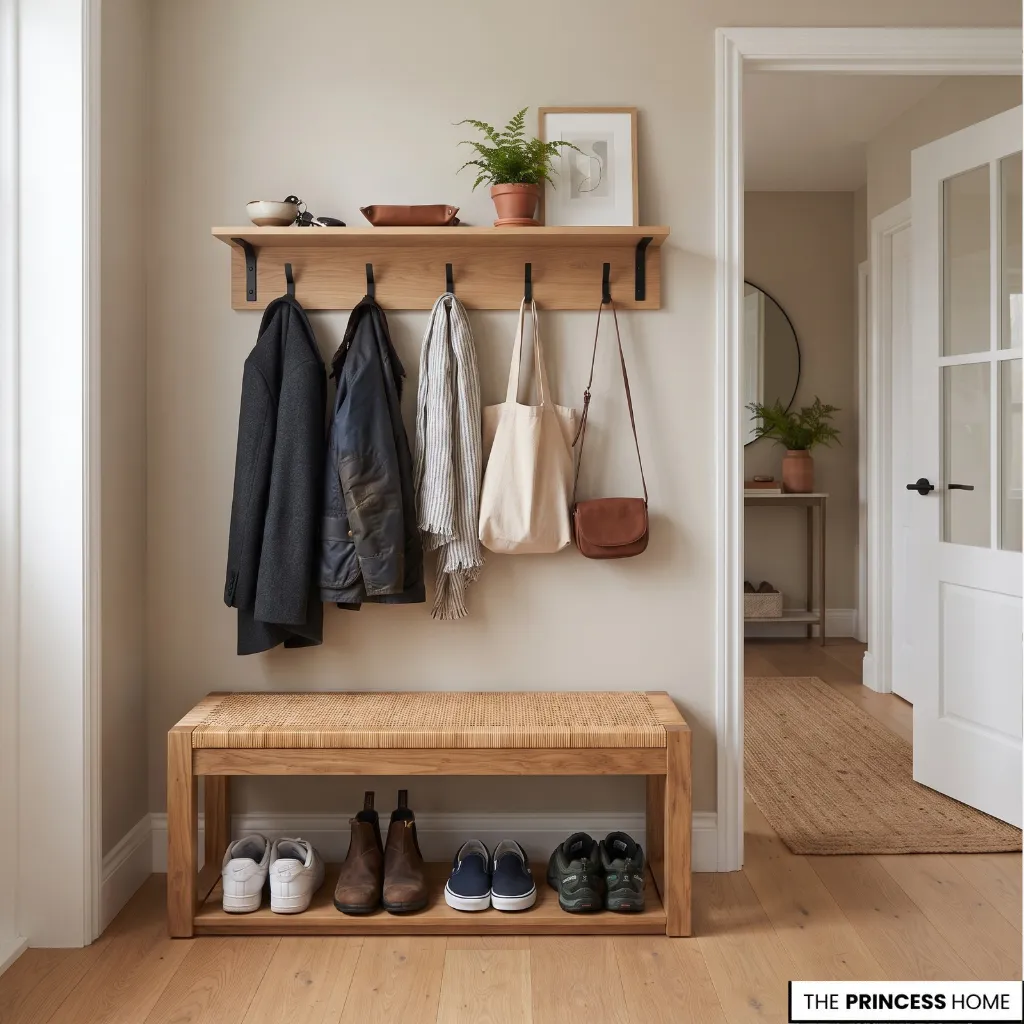
An elegant entryway must work well on ordinary days, not only when guests are expected. Shoes, coats, bags, umbrellas, keys, and mail need convenient places so they do not accumulate on the floor or console.
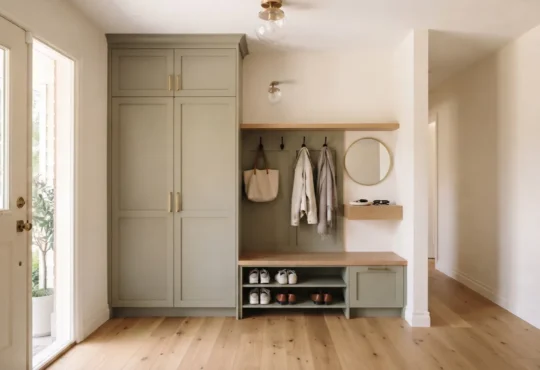
Choose storage according to your household’s habits. A shoe cabinet keeps footwear out of sight, while a basket can hold slippers or a small collection of frequently used items. Wall hooks provide a practical option for coats and bags when there is insufficient room for a freestanding rack.
A shallow drawer or small tray can keep keys and other essentials together. If mail tends to collect near the entrance, designate one place for it rather than spreading papers across the console.
Closed storage generally provides a more orderly appearance when several different items need to be kept near the door. Open shelves and baskets offer easy access, but work best when their contents are limited and arranged intentionally.
If children or several household members share the entrance, position frequently used hooks and storage within comfortable reach. The easier the system is to use, the more likely everyone is to maintain it.
Keep the walking route clear and avoid placing storage where it interferes with the door. A successful organization system should reduce everyday effort rather than introduce another routine that is difficult to maintain.
For more ideas: Smart Entryway Storage Solutions: Organize with Style
Style the Finishing Details
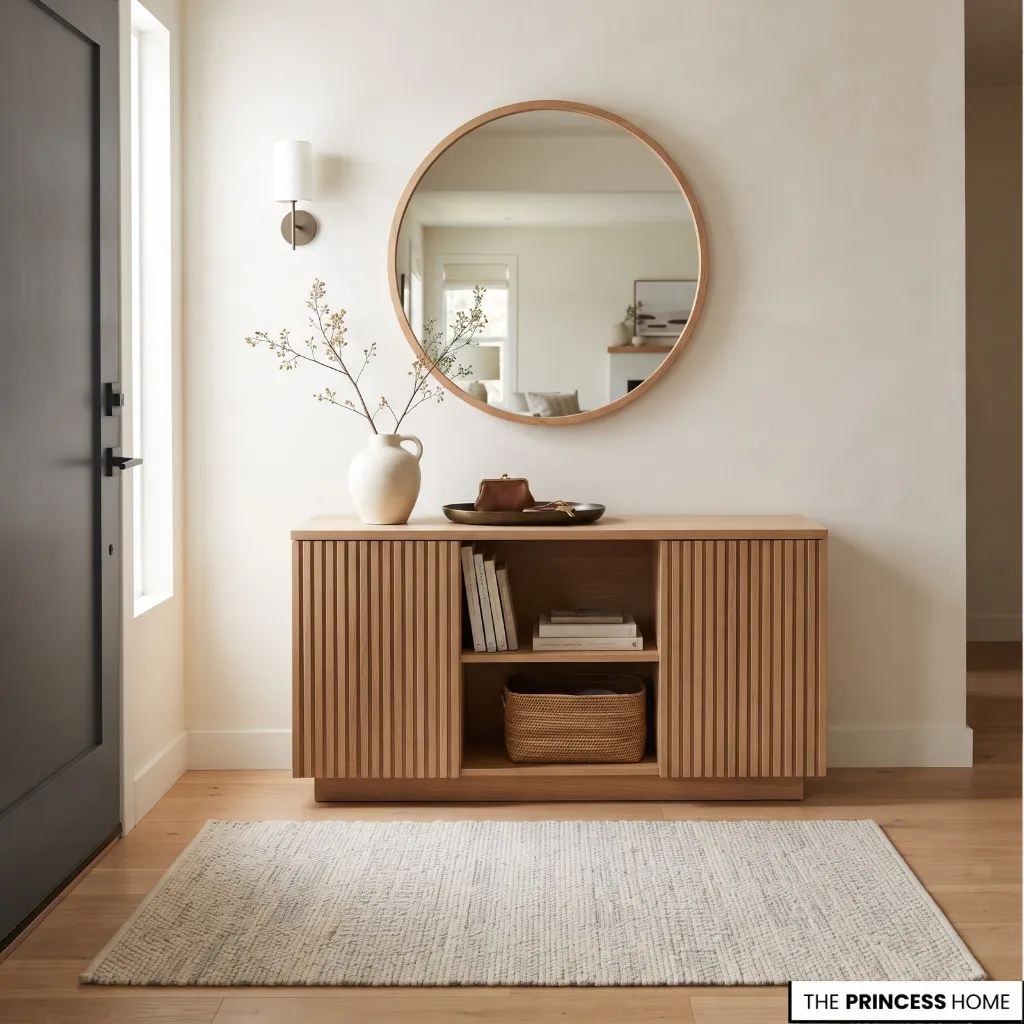
Once the essential furniture, lighting, and storage are in place, add a few decorative elements that complement the design. The goal is to give the entrance character without sacrificing useful surface space.
A small ceramic vase, a simple branch, a decorative bowl, or a carefully selected sculpture can work well on a console. Vary the heights and shapes of the objects, but leave enough empty surface for everyday use. A tray can group smaller accessories and keep them from spreading across the table.
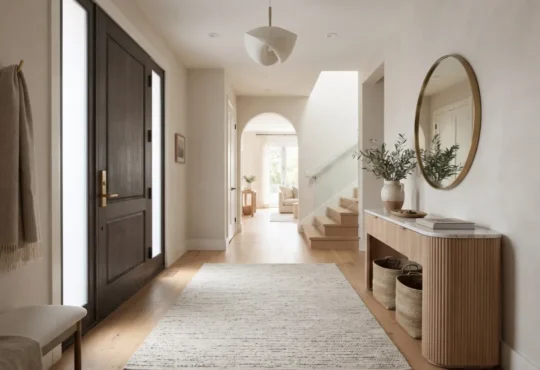
Plants can introduce natural color and texture when the available light and maintenance conditions suit them. Choose a plant that fits the space rather than placing a large arrangement on a narrow console. A rug or runner can help define the entrance, especially in an open-plan home.
Select a size that suits the floor area and allows doors to open freely. Durable, easy-to-clean materials are practical for entrances that receive frequent foot traffic. A suitable nonslip backing or underlay helps keep the rug in place.
The rug should also relate to the width of the entrance and the path people naturally take when entering. A runner that is too narrow may look disconnected from the space, while one that extends into a door’s path can interfere with movement.
Choose a material that suits the amount of dirt and moisture brought in from outdoors, and check that the edges lie flat. Avoid covering every surface with accessories. If the console already holds a lamp and a substantial vase, additional ornaments may not improve the arrangement.
Step back and consider how the objects relate to the mirror or artwork, the furniture, and the surrounding wall. The best finishing details support the overall design while remaining easy to clean, move, or replace when needed.
For more ideas: Elegant Entryway Ideas for a Timeless and Refined Home
Adapt Small Entryways
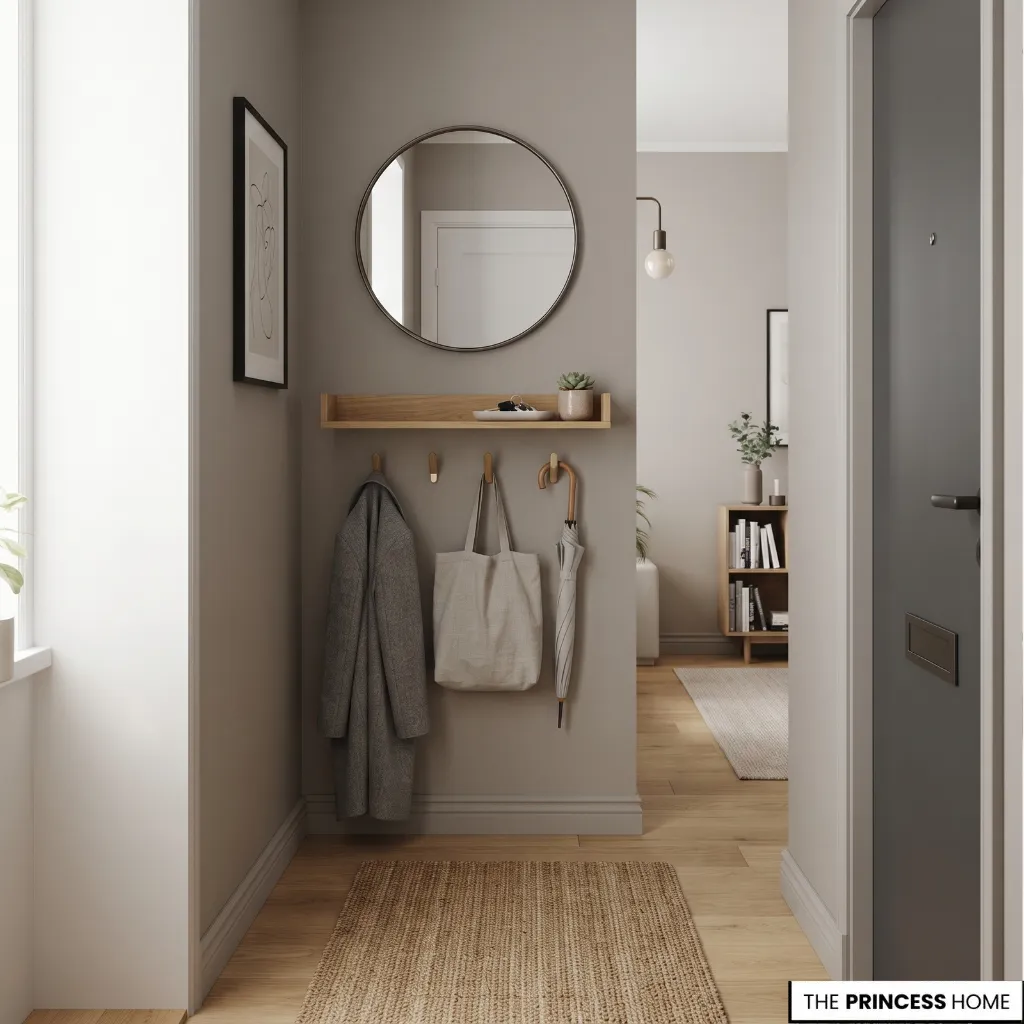
Small entryways require careful choices because every piece of furniture occupies valuable space. Rather than reproducing a large foyer on a smaller scale, focus on the functions you need most.
A shallow console or wall-mounted shelf can provide a place for keys and other essentials without using as much floor space as a deep cabinet. If shoe storage is necessary, choose a compact unit that accommodates the footwear your household regularly uses.
Make use of vertical space. Wall hooks, a narrow shelf, or a mirror can provide practical value without requiring several separate furniture pieces. However, avoid filling every section of the wall with storage and decoration. Keeping some areas clear helps the entrance remain visually organized.
Mirrors can reflect available light, particularly when positioned near a suitable light source. Consider what the mirror will reflect before hanging it, as its placement affects the result.
In an apartment without a separate foyer, a small rug, a shallow console, or a defined wall arrangement can mark the entrance within an open-plan room. Choose elements that relate to the living area’s furniture and finishes so the transition feels natural.
You can also use the rug to indicate where the entrance begins, while a small console or a few well-placed hooks establish a practical landing area. Keep these elements visually connected to the adjoining room so the entrance feels defined without needing a physical partition.
If the entrance is too narrow for a bench, use a nearby seating area when possible rather than forcing one into the walkway. Likewise, if a conventional console obstructs movement, a wall-mounted shelf may be a better solution.
The priority is to preserve clear circulation while providing the most useful functions. A small entrance can look complete with only a few well-chosen elements.
For more ideas: Small Entryway Decor Ideas for a Stylish, Spacious Look
Refresh on a Budget
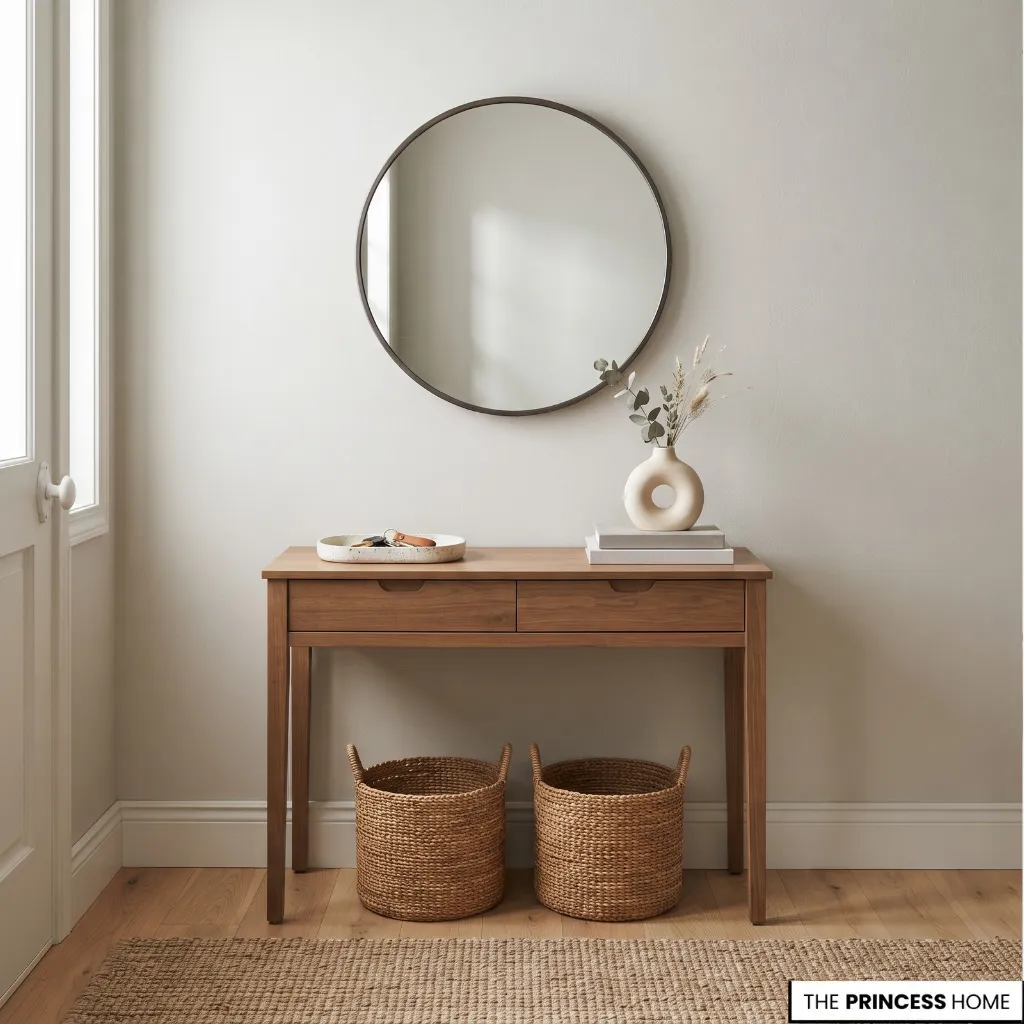
You do not need to replace all your entryway furniture to improve its appearance. Begin by identifying what is not working and deciding which change would make the greatest difference.
Decluttering is often the most useful first step. Remove unnecessary objects, relocate items that belong elsewhere, and clear the console surface. Rearranging existing furniture may also reveal a better layout without requiring new purchases.
If the furniture is functional but looks tired, consider updating its hardware, repairing its finish, or repainting it when the material and condition allow. An existing mirror can become more effective when repositioned or paired with a more suitable console.
When purchasing something new, prioritize the element that addresses the main problem. If the entrance lacks storage, a suitable cabinet may be more valuable than decorative accessories. If storage already works but the wall looks empty, a well-proportioned mirror or artwork may be the better investment.
You can also achieve the same practical purpose without buying a direct replacement for every item. A simple wall shelf may replace a console in a narrow space, while an existing chair placed nearby can provide occasional seating when a dedicated bench is unnecessary.
Spend according to use and durability. Furniture and storage that receive daily use should meet your practical needs, while smaller decorative pieces can be added gradually. A restrained arrangement of existing objects can look more considered than a collection of new purchases that do not work together.
Avoid Common Mistakes
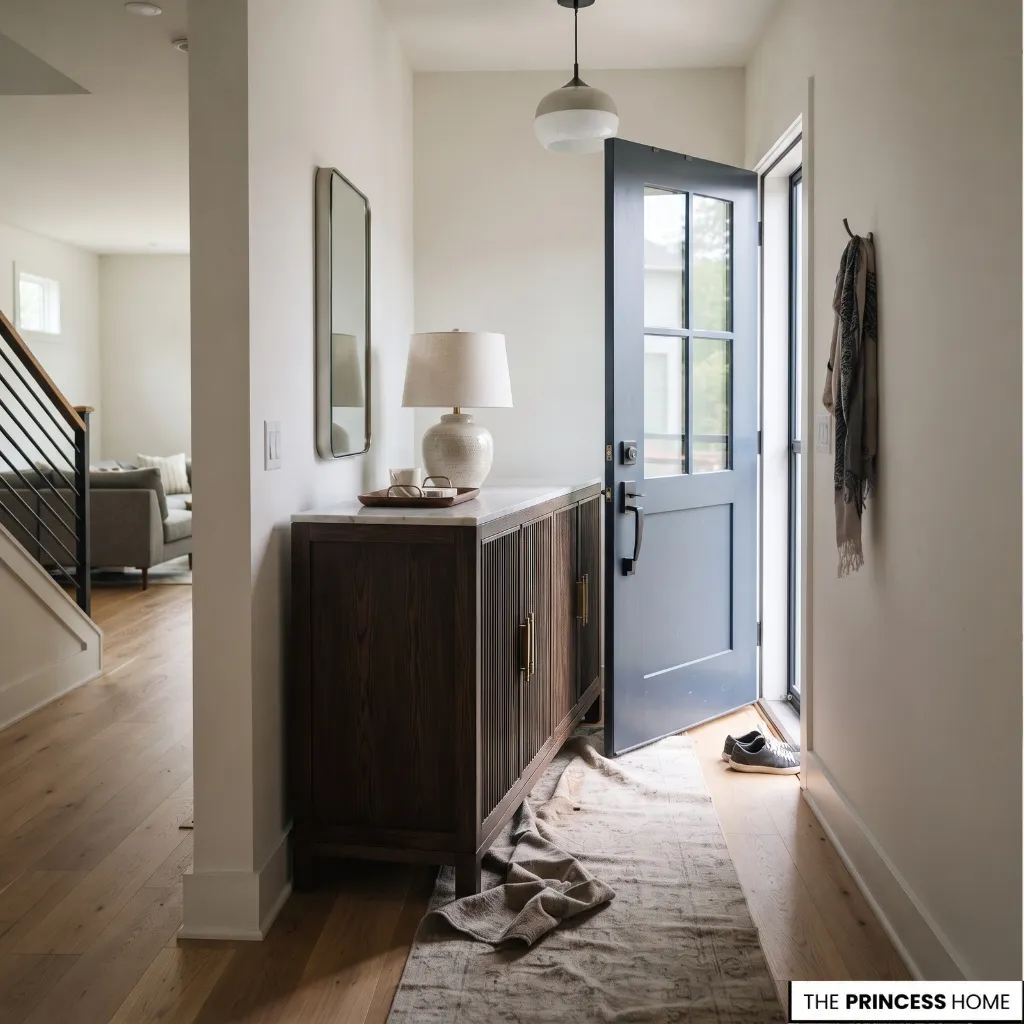
Choosing furniture before measuring the entrance is a common mistake. A console that looks appropriate in a photograph may obstruct a doorway or leave too little room to pass. Measure the available area, account for door movement, and check the furniture’s depth before committing to a purchase.
An undersized mirror or artwork can look disconnected from the wall and furniture beneath it. Consider the console’s width and the surrounding wall when selecting a piece, then check its position before fixing it in place.
Too many accessories can make an entrance feel crowded. Multiple vases, bowls, framed pictures, and decorative objects compete for attention and reduce the space available for everyday essentials. Remove pieces that do not serve a purpose or contribute meaningfully to the arrangement.
Poor lighting is another problem, particularly in entrances without natural light. A decorative ceiling fixture may look attractive but still leave the space difficult to use. Check the actual illumination and add suitable supplementary lighting if necessary.
Storage can fail when it does not reflect daily habits. An attractive open shelf will not solve clutter if shoes and bags have nowhere convenient to go. Choose storage according to the objects that accumulate and make sure everyone in the household can use it easily.
Finally, do not choose a rug solely for its appearance. A runner that is too long, too thick, or poorly secured can interfere with door movement and create a tripping hazard. Check its dimensions, material, and backing before placing it.
When an arrangement feels unsuccessful, identify the specific problem before buying something else. Correcting scale, placement, lighting, or clutter is often more effective than adding another decorative item.
Conclusion
A stylish entryway begins with a clear understanding of how the space needs to function. Choose furniture that fits, coordinate compatible finishes, provide practical storage, and use lighting and decorative details with care.
Start with the changes that matter most to your daily routine. Once those are working well, introduce the mirror, artwork, rug, or accessories that complete the design. The best simple entryway ideas make every element useful and keep the entrance comfortable to use.