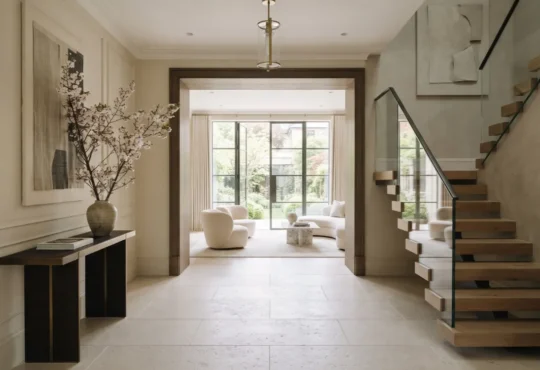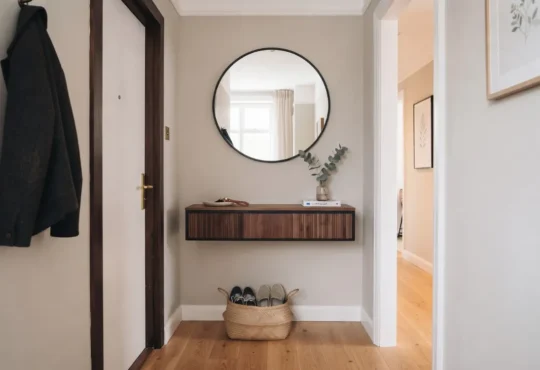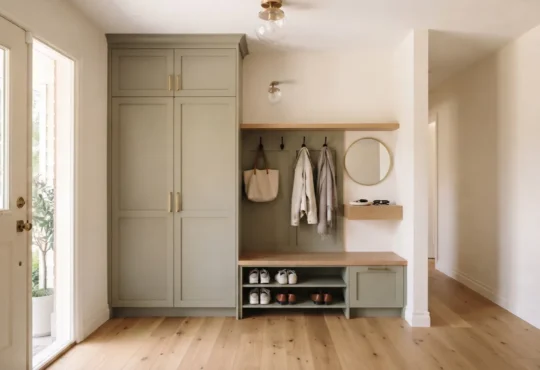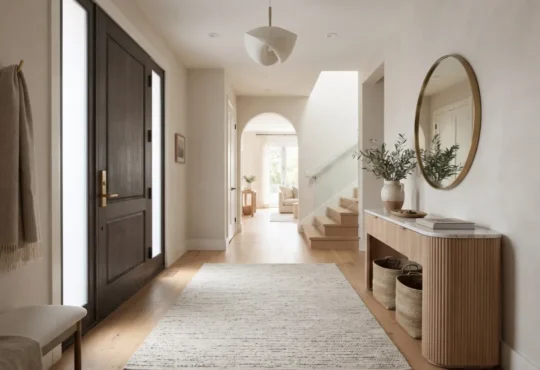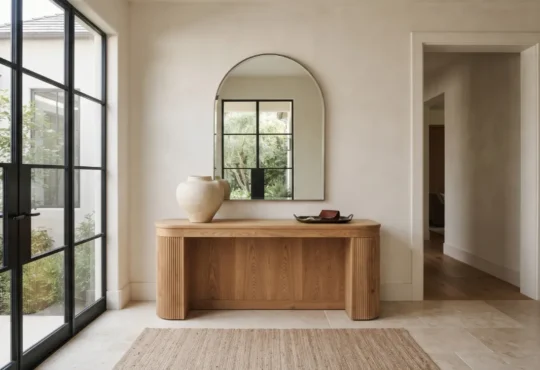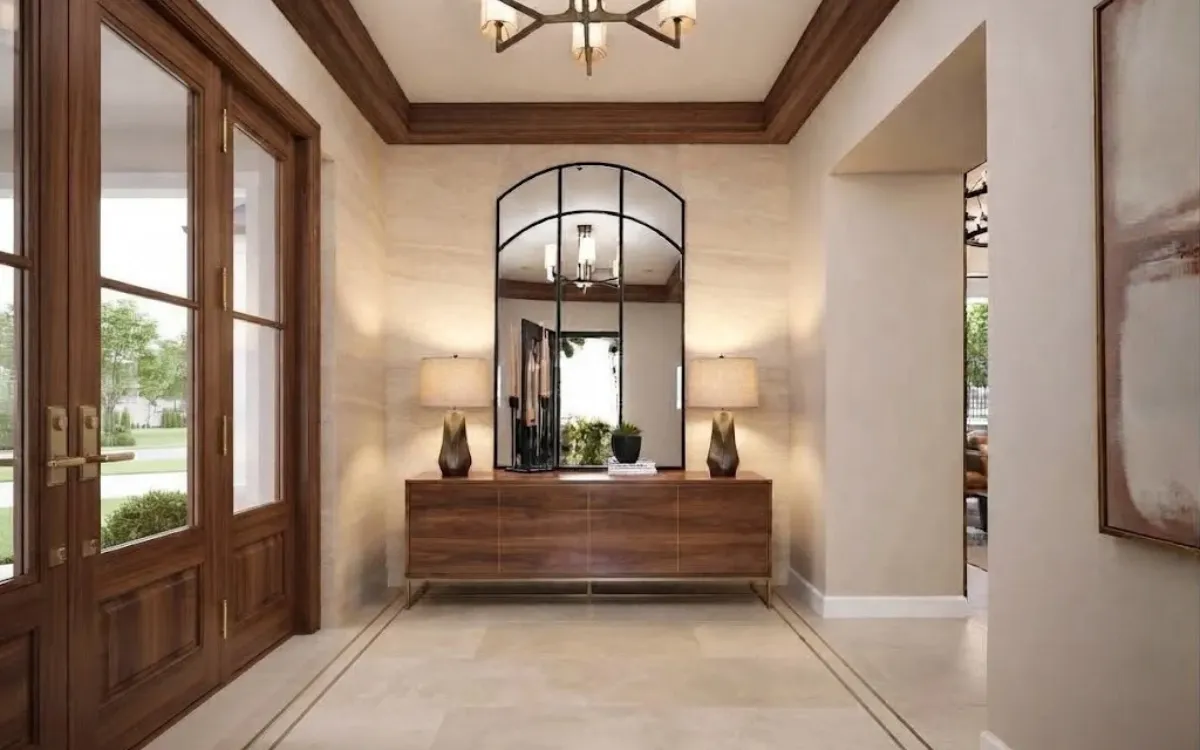
Elegant entryway ideas can help you create an entrance that feels refined, welcoming, and connected to the rest of your home. The challenge is combining beautiful materials, well-proportioned furniture, and thoughtful decoration without making the space feel crowded or overly formal.
From natural stone and warm wood to carefully selected lighting and understated accessories, these ideas explain how to create a timeless entryway through practical design decisions that suit different homes and budgets.
Establish a Timeless Foundation
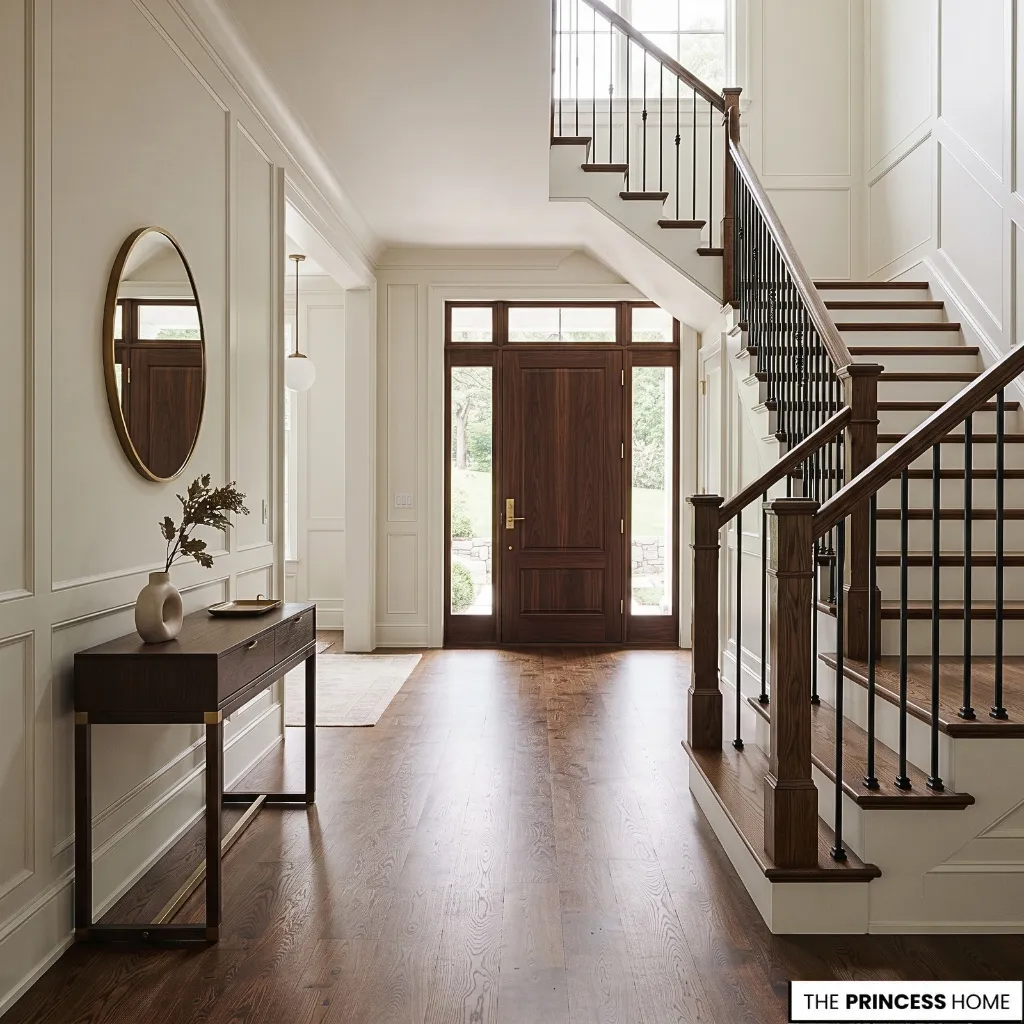
Begin by assessing the elements that already define your entrance. Flooring, doors, wall finishes, architectural moldings, and the transition into adjoining rooms all influence which decorating choices will work best.
A refined design should complement these existing features rather than treat every element as an independent decision.
If your home has attractive hardwood flooring, a distinctive staircase, or well-proportioned door frames, allow these features to contribute to the design. In a more contemporary home with simple architecture, furniture, materials, and lighting can provide the character instead.
Consider how the entryway relates to nearby rooms. Repeating a wood finish, carrying a similar wall color through connected spaces, or using complementary metal finishes can establish continuity without making every room identical.
Before purchasing anything new, identify what should remain, what needs improvement, and which single change would make the greatest difference.
For example, if the entryway opens directly into a living room with warm wood furniture and cream-colored walls, a console in a compatible wood tone can create a natural connection between the spaces. You do not need to match every finish exactly.
A related wood tone or a complementary metal detail can provide continuity while allowing the entrance to retain its own character.
For more ideas: Entryway Design Guide Decor, Layout, Lighting & Organization
Choose a Refined Color
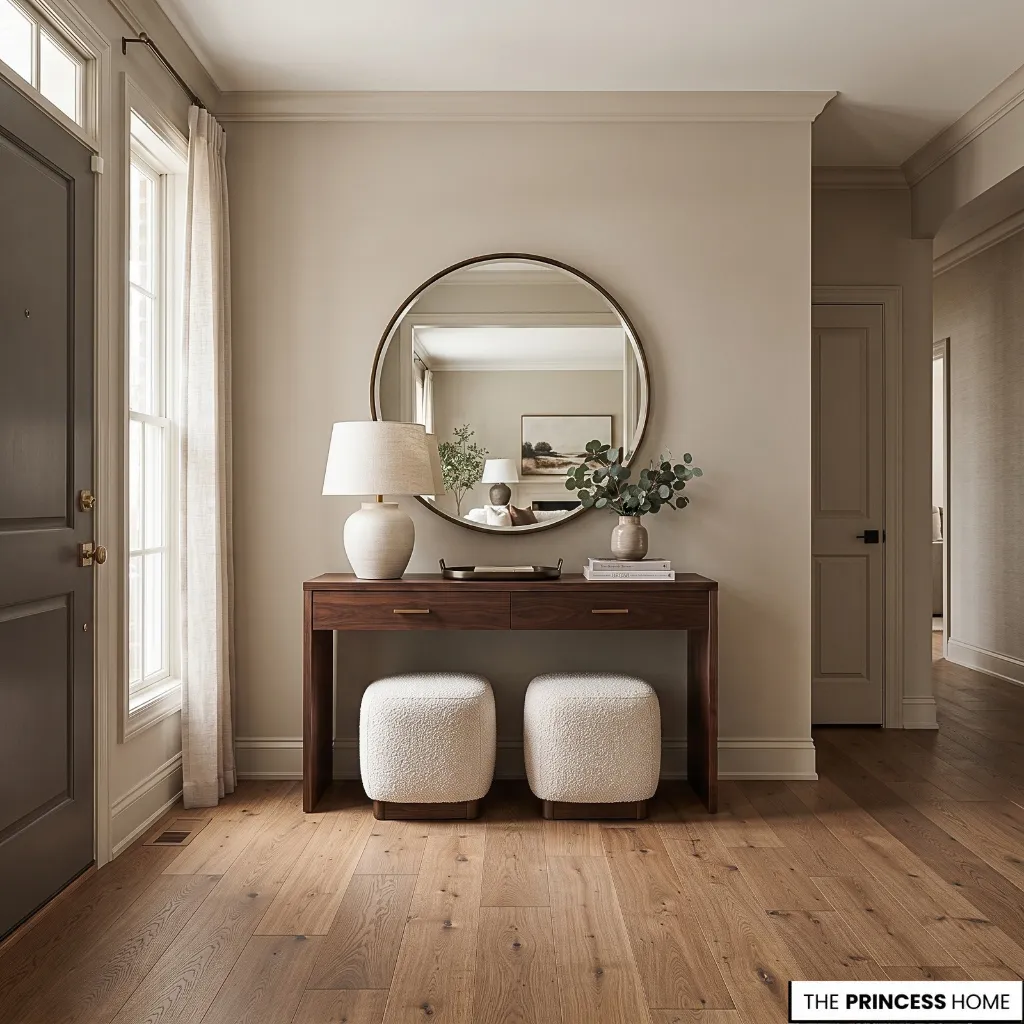
A considered color palette helps the entryway feel connected to the rest of the home. Warm whites, soft taupes, muted browns, gentle grays, and selected deeper shades can all support a timeless interior, provided they suit the existing materials and natural light.
Start with the largest visible surfaces. Examine the undertones of the flooring, door, and nearby furniture before choosing a wall color. A warm white may complement honey-toned oak, while a cooler gray-white may work better with cooler stone and contemporary finishes.
Testing paint samples in the actual space is more reliable than judging them under showroom lighting.
A practical way to compare colors is to place several paint samples against the wall near the floor and door, then observe them at different times of day. If the flooring has a distinctly warm golden tone, a warm neutral may create a more natural connection.
If the entrance features cool gray stone and dark metal details, a neutral with a cooler undertone may feel more consistent. The surrounding materials should guide the decision rather than the paint color’s appearance on its own.
Introduce contrast selectively. Dark wood against pale walls, a black metal frame against a light-colored wall, or a deep olive accent among warmer neutrals can give the composition definition. The aim is not to eliminate color but to control its relationship with the surrounding elements.
For continuity, borrow one or two colors from the adjoining rooms. This makes the entrance feel like part of the home’s overall design rather than an isolated decorating project.
Layer Natural Materials
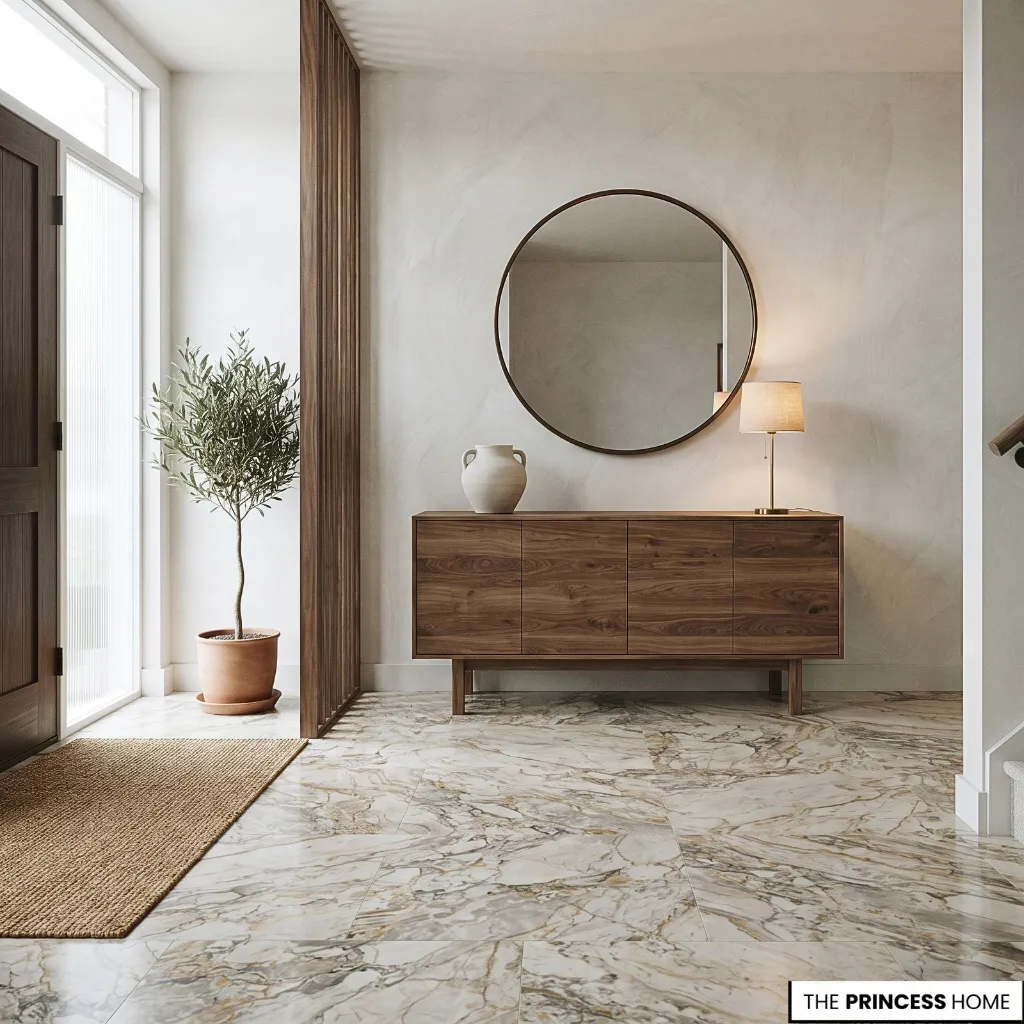
Natural materials can give an entryway depth and character without requiring elaborate decoration. Wood introduces visible grain and warmth, marble and other stone provide distinctive patterns, and metal offers a contrasting finish that can emphasize furniture details or lighting.
Choose materials according to their role in the composition. A wooden console may soften a space dominated by stone flooring, while a stone-topped table can introduce a more solid visual element among painted walls and upholstered seating.
Brushed metal hardware or a simple metal lamp can provide a smaller contrast without competing with the principal materials.
Balance matters more than the number of materials used. Combining several highly patterned stones, prominent wood grains, and reflective finishes can make a small entrance feel visually busy. Instead, select one or two dominant materials and use the others as supporting details.
For example, an entryway with patterned stone flooring could benefit from a console with a relatively simple wooden finish, a restrained metal lamp, and a plain ceramic vase. The furniture introduces warmth, while the simpler accessories allow the floor’s pattern to remain visible.
If the flooring and console both have strong patterns or pronounced grain, reducing the number of additional finishes can help restore balance.
Consider maintenance as well as appearance. Marble and other natural stones may require suitable cleaning products or sealing, depending on the stone and finish.
Wood finishes vary in their resistance to moisture and wear, while metals differ in how they age and show fingerprints. Choose materials that suit the entrance’s exposure to outdoor dirt, moisture, and everyday use.
If natural stone is outside your budget, a suitable ceramic surface or another well-made alternative may achieve a related visual effect. Select it for its actual appearance, finish, and performance rather than assuming that every substitute will look or behave exactly like natural stone.
For more ideas: Elegant Entryway Ideas for a Timeless and Refined Home
Select Elegant Furniture
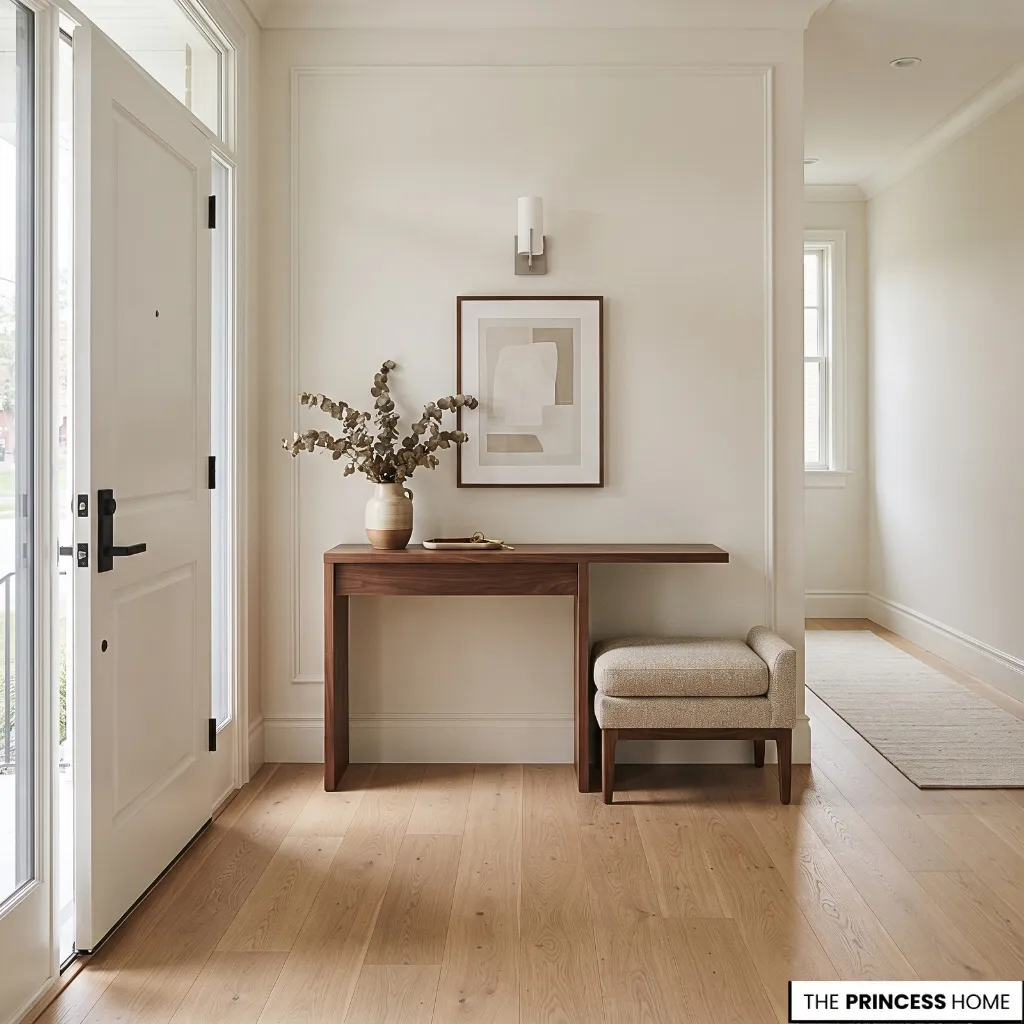
Furniture should provide a clear purpose while fitting the proportions of the entrance. A console table offers a surface for keys and a small decorative arrangement; a bench provides a place to sit when removing shoes; and a cabinet can conceal everyday belongings.
You do not need all three if the space cannot accommodate them comfortably.
Begin with measurements. Check the available width and depth, the movement of doors, and the route people take through the entrance. A slim console may suit a narrow hallway better than a deep cabinet, while a spacious foyer may accommodate a substantial table with room for a bench or occasional chair.
Before buying a piece, mark its approximate width and depth on the floor with removable tape. Open the door fully and walk through the entrance as you normally would. This simple test helps reveal whether the furniture would interfere with movement or make the space feel cramped.
In a narrow hallway, a shallow console may provide the required surface while leaving more room for circulation; in a larger foyer, a deeper table may feel better proportioned against the available wall.
Pay attention to the furniture’s shape and finish. A console with clean lines can support a minimalist interior, while a traditional wooden table can introduce character into a contemporary home. A vintage piece can also work well when its proportions, color, and material relate to the surrounding furniture.
Avoid choosing furniture solely because it resembles an expensive designer piece. Quality construction, suitable dimensions, a well-maintained finish, and a coherent relationship with the rest of the interior matter more than a luxury label.
Keep the number of major pieces proportionate to the room. One well-chosen console may establish a more convincing arrangement than several smaller pieces competing for space.
For more ideas: Small Entryway Decor Ideas for a Stylish, Spacious Look
Create Layered Lighting
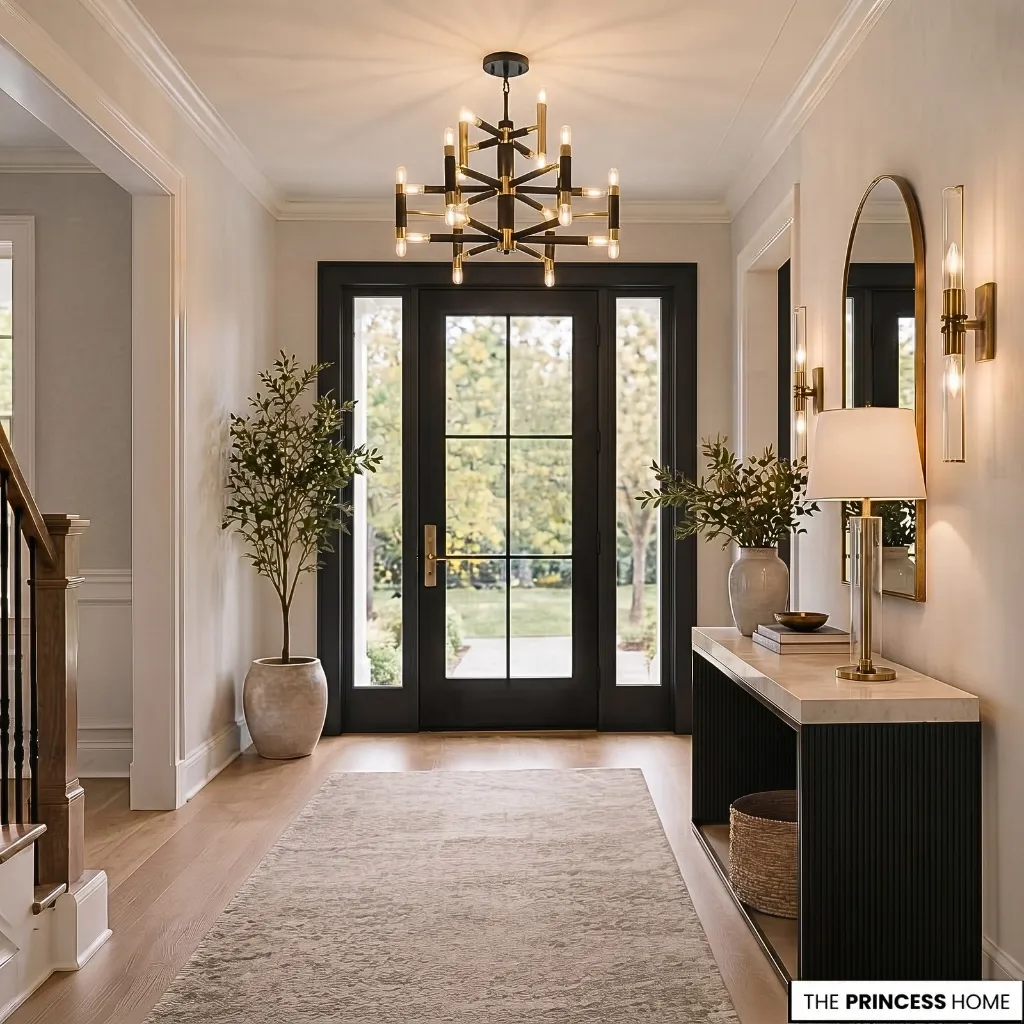
Good entryway lighting must support everyday use while contributing to the design. A ceiling fixture can provide general illumination, while wall sconces or a table lamp may introduce a more localized source of light. Accent lighting can highlight artwork or architectural details when the layout allows.
Choose fixtures that suit the scale of the entrance. A pendant or chandelier can become a focal point in a high-ceilinged foyer, but an oversized fitting may dominate a compact hallway. Wall sconces can be useful when floor and table space are limited, provided they are positioned appropriately for the wall and circulation route.
Consider the relationship between natural and artificial light. A dark entrance may benefit from improved general illumination and carefully placed secondary lighting. A naturally bright entrance may need less decorative lighting during the day but still require suitable illumination after sunset.
The color appearance of the light also affects the materials around it. Warm-white lighting often complements wood and warmer neutral finishes, while other light settings may suit different palettes. Test the effect with the actual wall colors and finishes rather than relying on a universal lighting temperature.
To decide which lighting to add, consider what the existing fixture fails to provide. When the entire entrance feels dim, improve the general illumination before adding decorative accent lights.
For a console that looks flat in the evening, a table lamp or suitable wall light may add a more localized glow. Artwork or an architectural detail can benefit from accent lighting, provided it does not create distracting glare.
Avoid selecting a fixture for appearance alone. It should provide suitable illumination, avoid uncomfortable glare, and work with the ceiling height, electrical layout, and intended use of the space.
Define a Focal Point
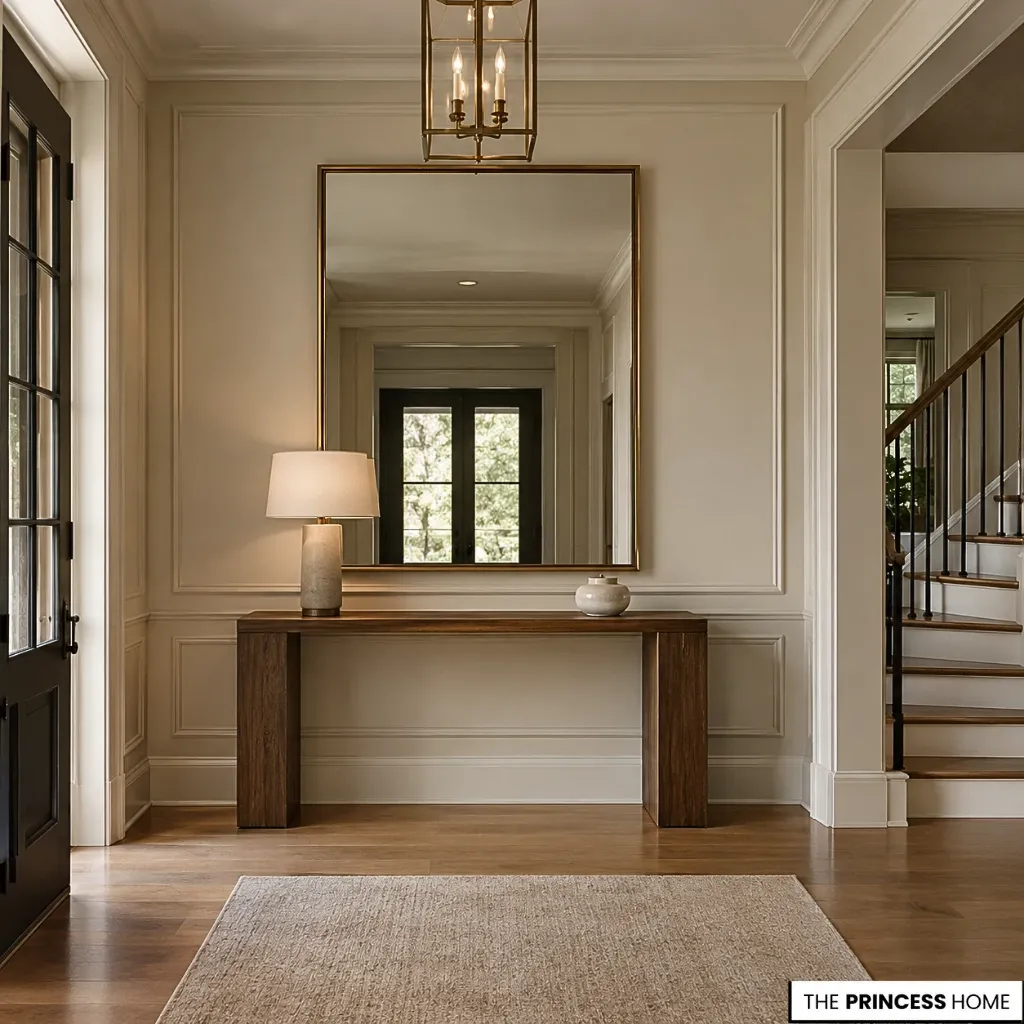
A focal point gives the entrance a clear visual center. It might be a distinctive mirror, a piece of artwork, an elegant console, or an existing architectural feature such as a staircase or decorative doorway.
Choose the principal element according to the room. A large mirror can work well above a console when its dimensions relate to the table and the surrounding wall.
Artwork may be more appropriate when the wall needs color or character without additional reflective surfaces. If the architecture already has a strong presence, further decoration may be unnecessary.
For example, a narrow entrance with a console and limited natural light may benefit from a mirror that relates to the table’s width and reflects a pleasant view of the interior. A wall with strong architectural details or an attractive staircase may need less additional decoration.
If the entryway already contains a distinctive vintage console, a simple piece of artwork or a restrained lamp may be enough to complete the arrangement without introducing another dominant feature.
Once the focal point is established, arrange supporting elements around it. A lamp and a small ceramic object can complement a console, for example, without competing with a distinctive mirror. Keep enough clear space around the principal feature for its shape and proportions to remain visible.
A focal point does not have to be expensive or elaborate. An existing vintage table, a carefully framed print, or a distinctive architectural detail can provide character when the surrounding arrangement supports it.
Avoid creating several equally prominent displays within a small entrance. If the mirror, table, artwork, lighting, and accessories all demand attention, the overall composition can lose clarity. Give one element the leading role and allow the others to support it.
Balance Proportions & Space
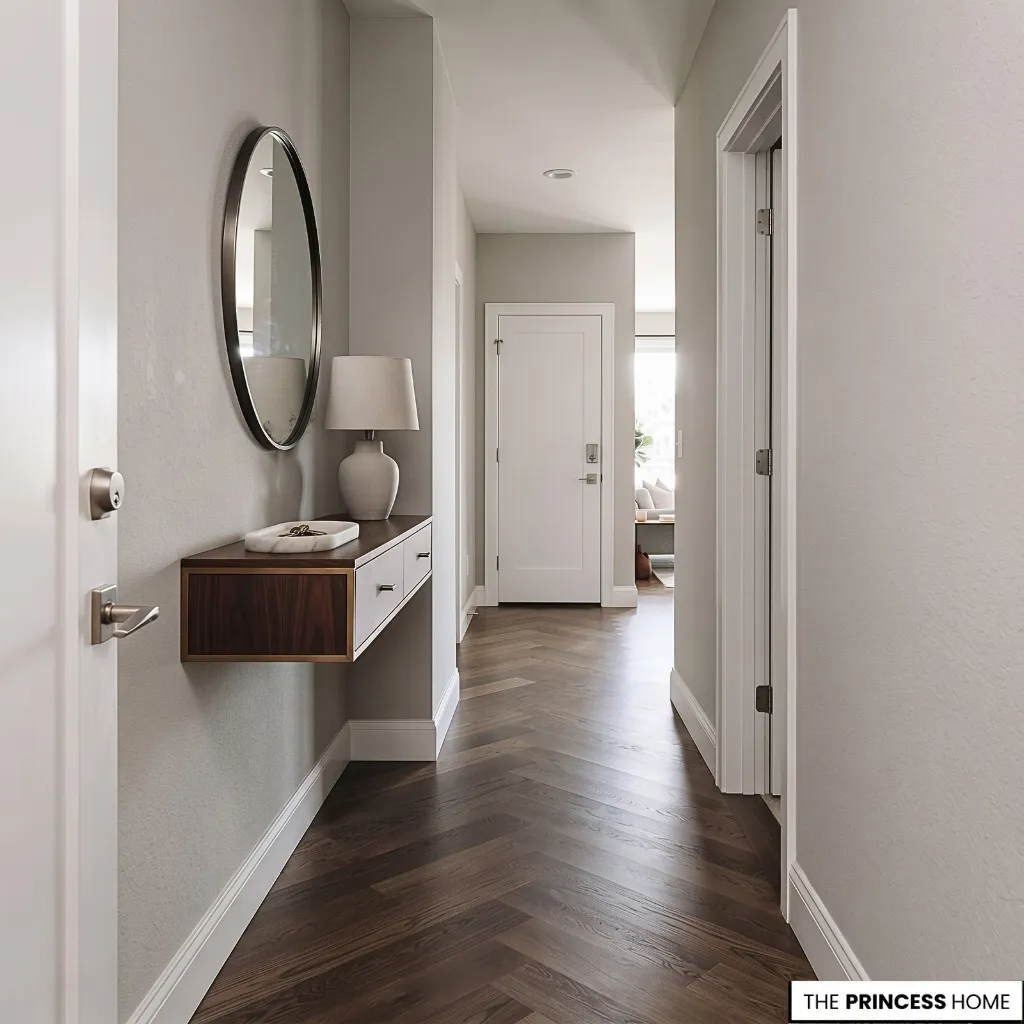
An elegant entryway depends on how its elements fit together. Furniture that is too large can obstruct movement, while objects that are too small for a generous wall may appear disconnected from the architecture.
Consider the room’s dimensions, ceiling height, door openings, and circulation before deciding where each piece belongs.
In a narrow hallway, a shallow console or wall-mounted shelf may provide a useful surface without projecting too far into the walking route. A mirror or vertically arranged artwork can use the available wall height without requiring additional floor space.
Keep the entrance clear enough for people to move comfortably, including when doors are open. In a spacious foyer, the challenge may be the opposite: avoiding furniture that appears isolated within a large area.
A substantial console, a properly scaled rug, or a bench can help establish relationships between the furniture and the architecture. Each addition should have a purpose rather than being used simply to fill empty space.
A useful way to assess proportion is to consider the furniture in relation to the wall and the route through the entrance, rather than judging the piece on its own. A small console placed against a broad, uninterrupted wall may appear lost even if it is attractive.
A larger piece could establish a stronger relationship with the architecture, provided it does not obstruct movement. In a narrow passage, however, preserving a comfortable route is more important than filling the wall.
Pay attention to visual weight as well as physical size. A dark, solid cabinet may appear heavier than a similarly sized table with slender legs. Balance a visually substantial piece with lighter elements, or give it sufficient surrounding space so the arrangement does not feel compressed.
Negative space is part of the design. Leaving some areas of a wall or tabletop unoccupied allows the principal materials, furniture, and artwork to remain distinct. The goal is not to fill every available surface but to create an arrangement that feels intentional and comfortable to use.
For more ideas: Smart Entryway Storage Solutions: Organize with Style
Refine the Finishing Details
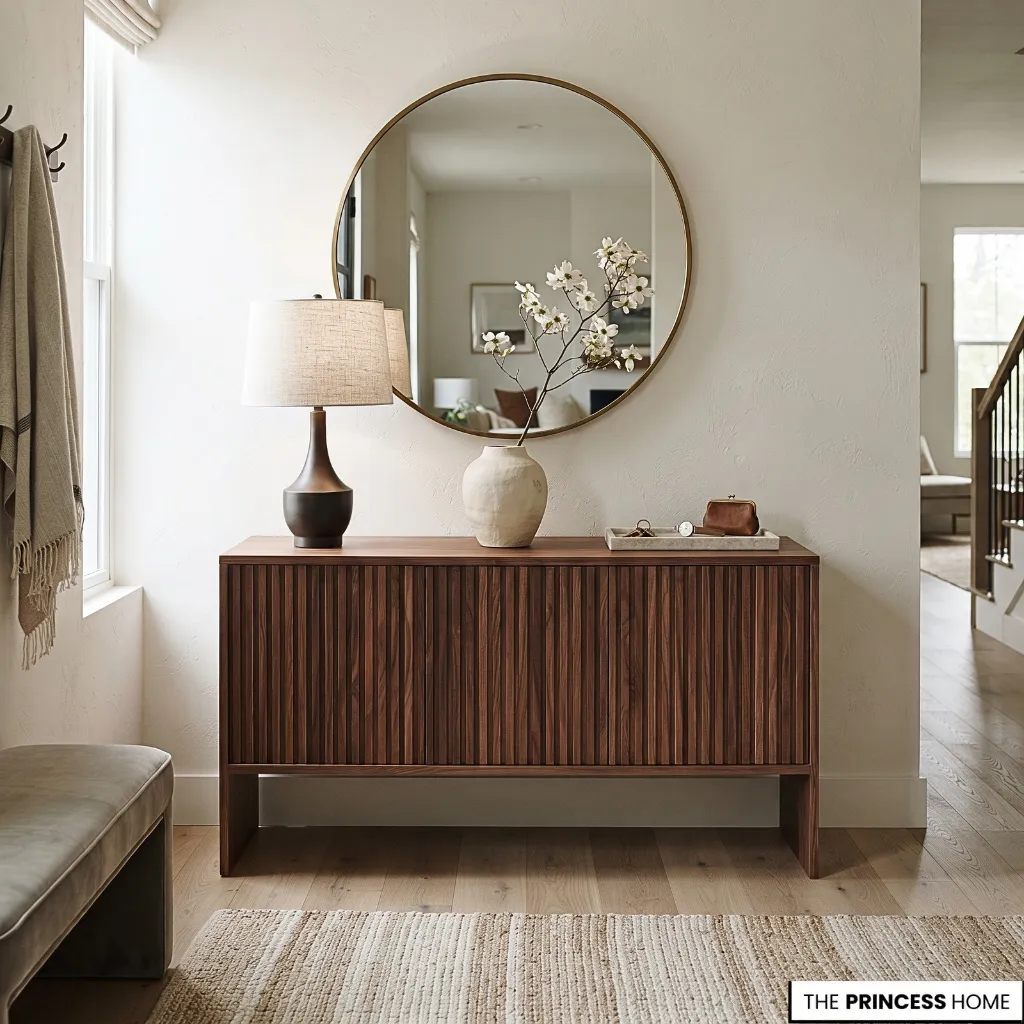
Accessories complete the design when they reinforce its main colors, materials, and proportions. A ceramic vase, a small tray, a sculptural object, a restrained floral arrangement, or a well-chosen rug may provide the finishing detail an entrance needs.
Begin with the main furniture piece and add only what serves a clear purpose. On a console, a lamp may provide useful light, a tray may organize keys, and a vase may introduce height or texture. These objects can coexist when their sizes and positions are balanced, but several unrelated accessories may make the surface feel crowded.
For instance, a console could hold a table lamp at one end, a modest vase toward the other, and a small tray for everyday essentials. The lamp provides light, the vase introduces height, and the tray keeps practical items organized.
If the console is narrow, reducing the arrangement to two well-chosen objects may create a more comfortable balance than trying to include all three.
Vary heights and shapes without creating unnecessary complexity. A tall vase beside a lower bowl, for instance, provides contrast, while a combination of similar objects can create a quieter, more uniform arrangement.
Relate their colors and finishes to the wider interior rather than introducing a new material or accent color with every accessory.
Textiles also deserve consideration. A rug or runner can define the entrance and soften hard flooring, provided its size suits the space and it lies securely underfoot. Choose a practical material for the amount of traffic and exposure to dirt.
In a compact entrance, a smaller, well-proportioned arrangement may be more effective than layering several rugs and decorative objects.
Greenery can introduce a natural element where light and maintenance conditions permit. Choose a plant appropriate to the available light, or use another decorative element if a living plant would struggle in the location.
Before considering the arrangement complete, remove anything that does not contribute to its function or appearance. Restraint does not mean leaving every surface empty; it means choosing details deliberately.
For more ideas: 23 Essential Entryway Decor Ideas to Transform Your Entrance
Achieve Elegance on Budget
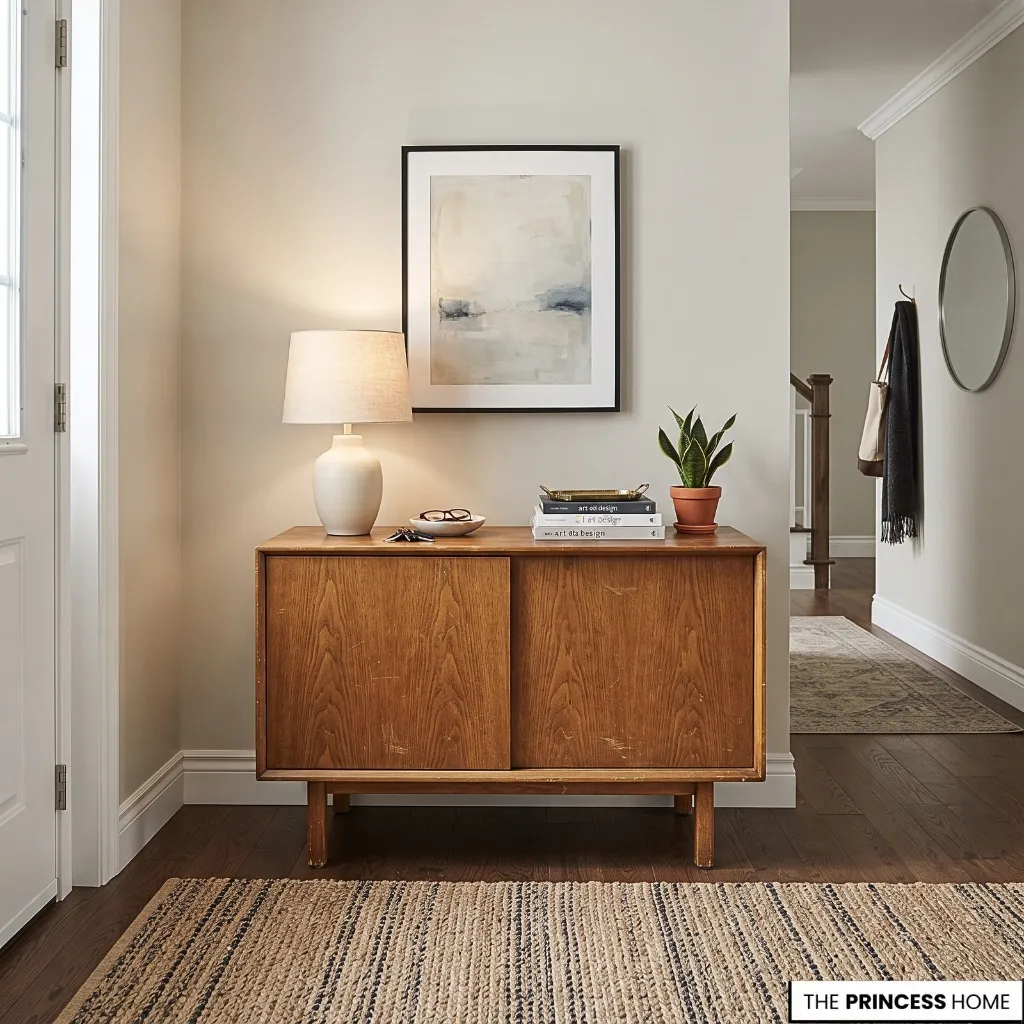
A refined entryway does not require replacing every piece of furniture or investing in expensive stone and designer lighting. A more practical approach is to identify which existing elements work, determine what needs improvement, and spend selectively on changes that address the most important problems.
Start with the foundation. If the walls are worn or the finishes clash, repainting may have more impact than purchasing new accessories. If the main furniture is suitable but visually tired, repairing its finish, changing the hardware, or updating its styling may be enough.
Consider where spending matters most. A well-made console that will remain useful for years may justify a larger investment than a collection of temporary decorative objects.
Appropriate lighting can improve both function and appearance, while a carefully selected mirror or artwork can establish a focal point without requiring a full renovation.
Reuse existing pieces when their dimensions and condition are suitable. A vintage wooden table, for example, may work beautifully with a contemporary lamp and restrained artwork. Its character can become an asset rather than something that needs to be concealed.
When a preferred material is too costly, look for alternatives that preserve the intended design purpose. A well-chosen ceramic surface may provide the color and pattern needed for the composition, while a quality wood veneer may suit a project better than a poorly made solid-wood imitation.
Evaluate construction, finish, durability, and maintenance rather than price alone.
Finally, make changes in a sensible order. Establish the main palette and furniture arrangement before buying accessories. This reduces the likelihood of purchasing decorative objects that later conflict with the finished design.
For example, if the entrance feels unfinished but the existing floor and furniture are in good condition, begin by identifying whether the main problem is the wall color, insufficient lighting, or a lack of visual focus. Repainting and adding a suitable lamp may solve the problem without replacing the console.
If the furniture itself is poorly proportioned or restricts movement, redirecting the budget toward a better-fitting piece may be more useful than spending on decorative accessories.
Avoid Common Design Mistakes
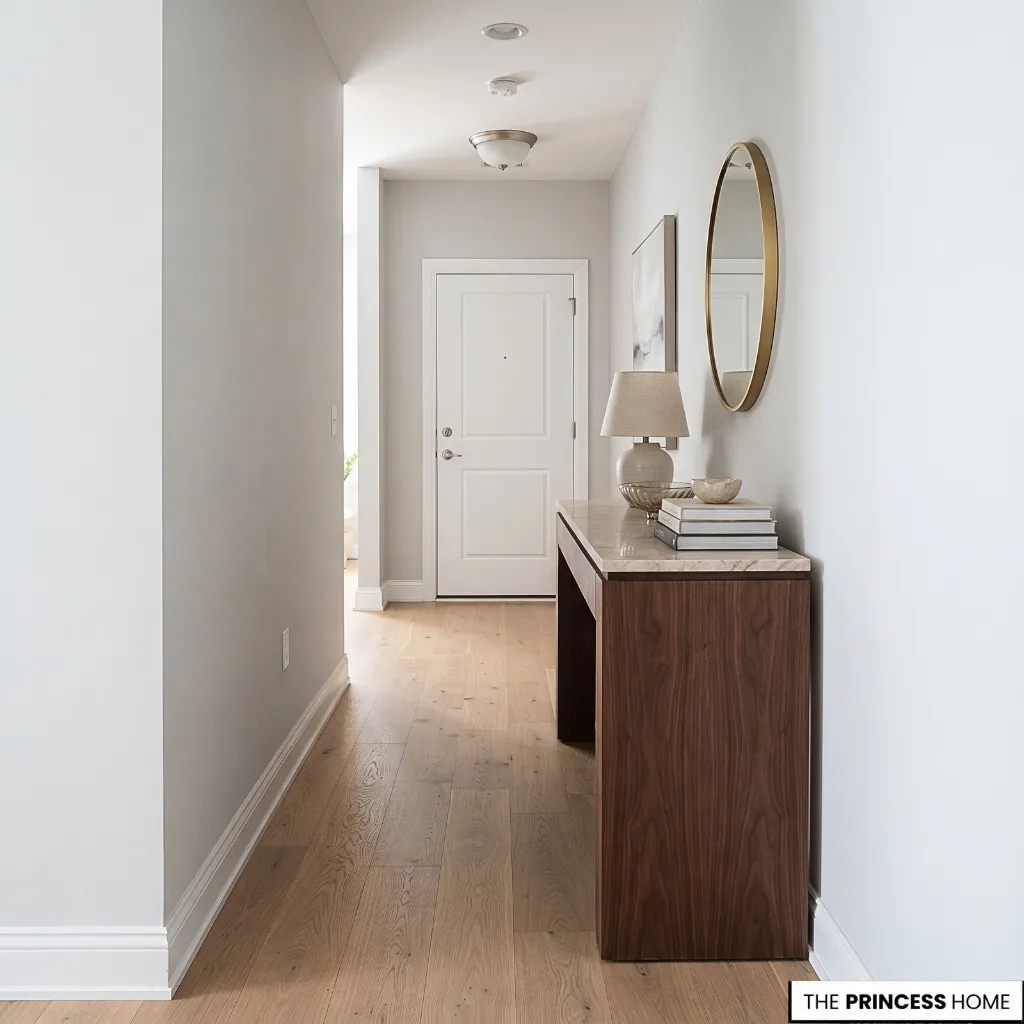
Several common mistakes can weaken an otherwise thoughtful entryway. Recognizing them early helps preserve both the appearance and the everyday function of the space.
Choosing oversized furniture: A large console or cabinet may overwhelm a narrow entrance and restrict movement. Measure the available area, account for door movement, and choose a piece that leaves a comfortable route through the space.
Adding too many accessories: Multiple vases, trays, lamps, and decorative objects can compete for attention. Remove items that duplicate the same purpose or introduce unrelated colors and finishes. Keep the most useful or distinctive pieces.
Mixing materials without a plan: Wood, stone, metal, and glass can work together, but too many competing patterns or finishes may make the arrangement feel disconnected. Establish a dominant material and palette, then introduce supporting finishes selectively.
Ignoring lighting quality: An attractive pendant cannot compensate for inadequate illumination throughout the entrance. Assess the general light level, shadows, and glare before adding decorative fixtures.
Following trends too literally: A popular color, furniture shape, or finish may not suit the architecture or the rest of the home. Use changeable accessories for personal expression while keeping major furniture and finishes adaptable.
Prioritizing appearance over function: A beautiful entrance is less successful if there is nowhere to place keys, nowhere to sit when needed, or insufficient room to move. Include the practical elements that genuinely support your household, even when they are not decorative.
Filling every empty area: An unoccupied wall or a clear tabletop does not necessarily need another object. Assess the composition as a whole and preserve the space needed for the existing features to stand out.
The most effective correction is usually the one that addresses the underlying problem. Rearranging furniture, improving a light source, or removing unnecessary accessories may accomplish more than buying another decorative piece.
Conclusion
A timeless entryway comes together through consistent decisions rather than the number or price of its decorative elements. Choose materials that work well together, furniture that fits the space, lighting that serves its purpose, and accessories that contribute to the overall composition.