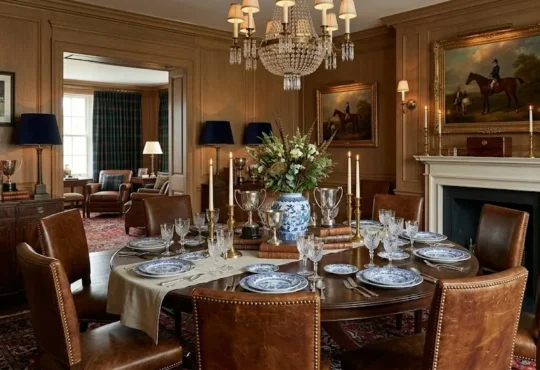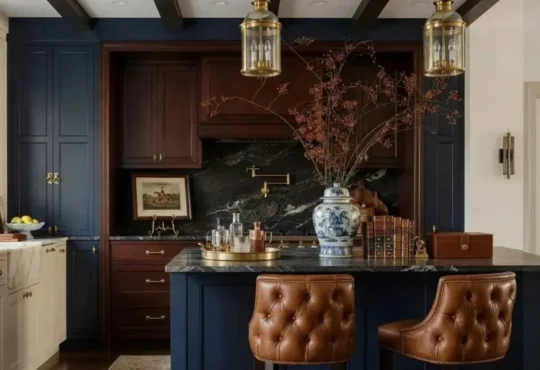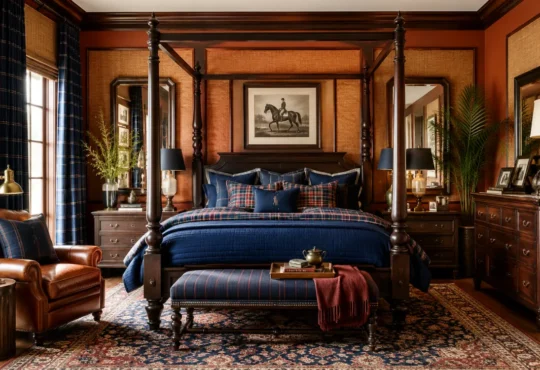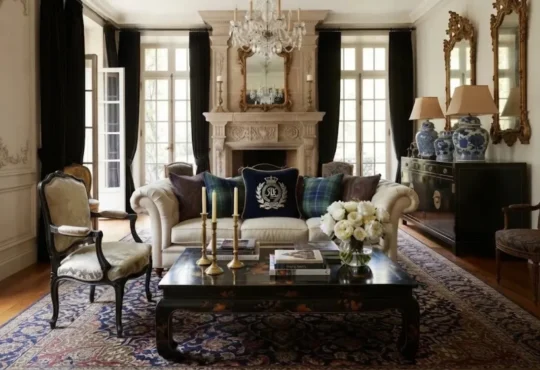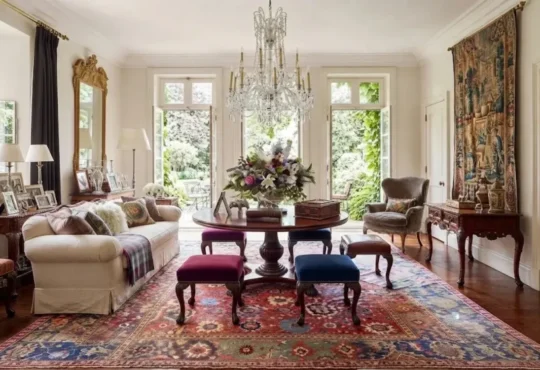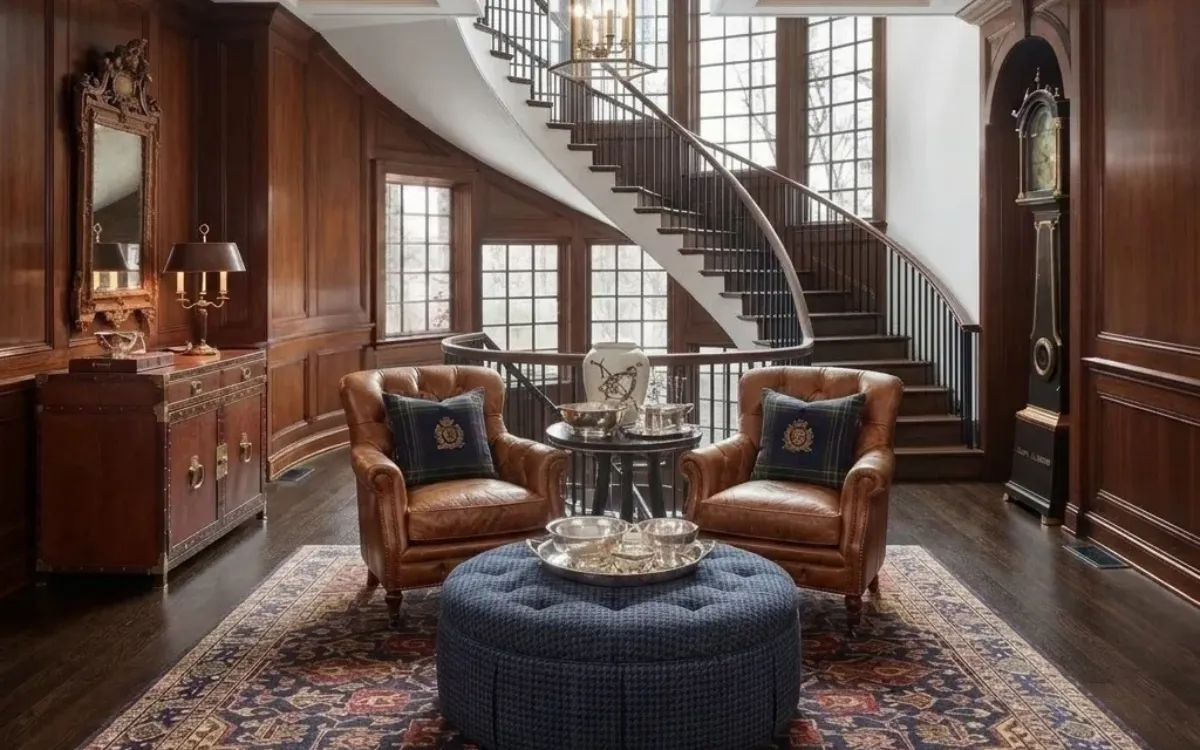
Ralph Lauren entryway decor combines tailored furniture, natural materials, controlled color, layered lighting, and personal objects to create a classic first impression. The challenge is bringing these elements together without making the entrance feel themed, overly dark, or staged.
The best approach is to establish the architecture and proportions first, then build the space through furniture, materials, color, lighting, storage, and collected details.
Ralph Lauren Style
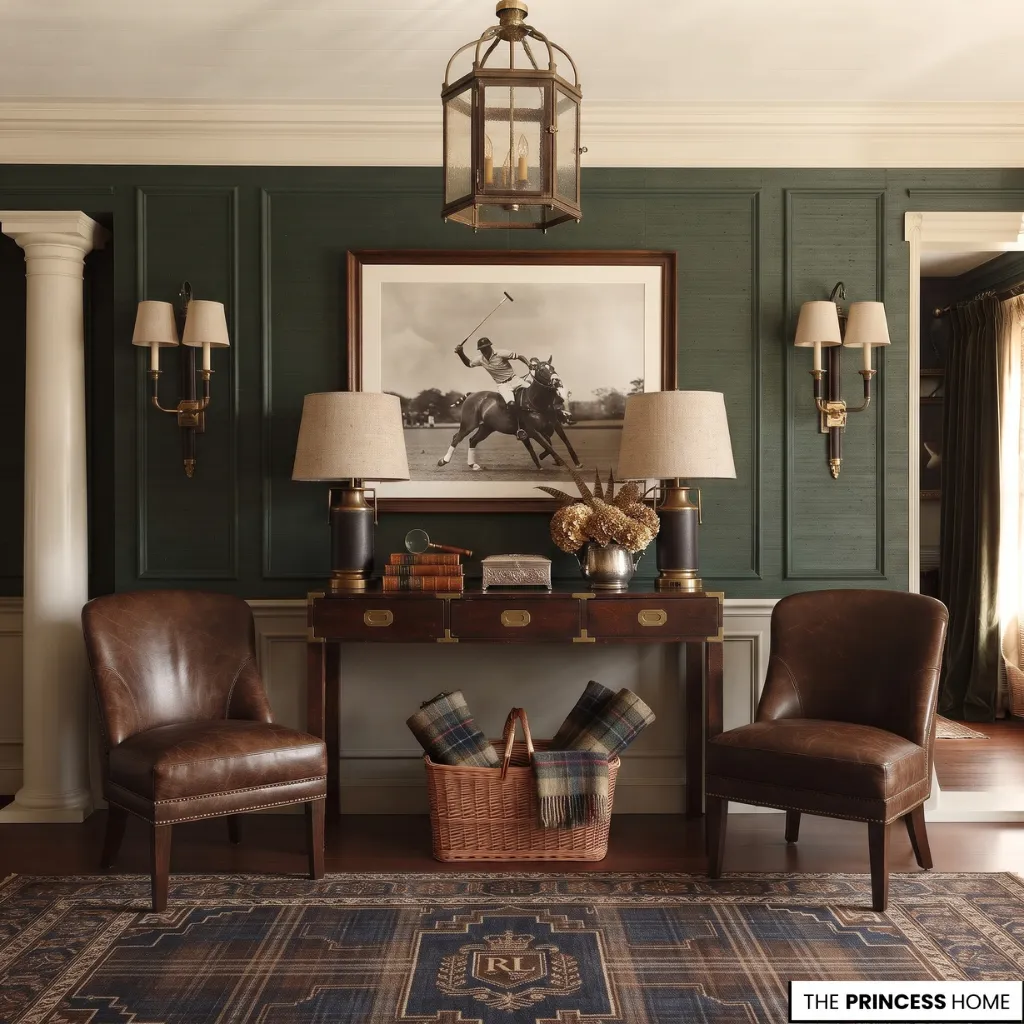
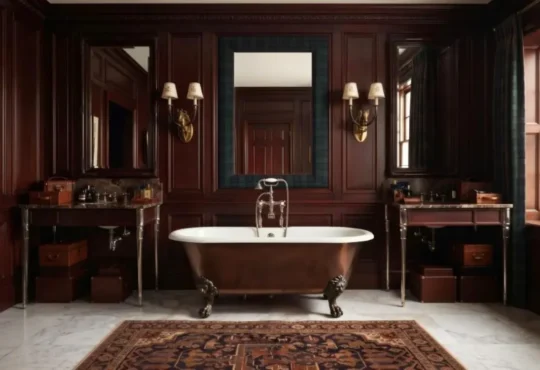
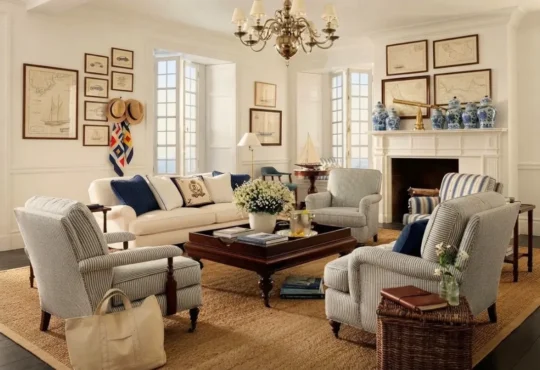
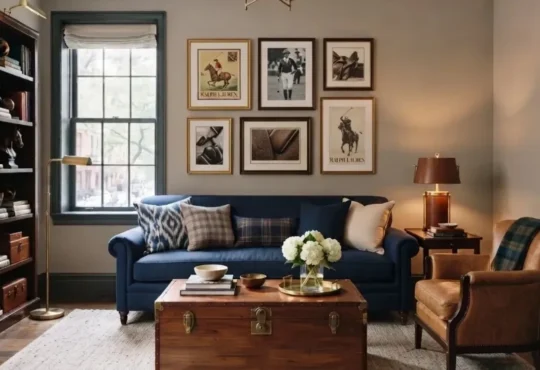
Ralph Lauren Home launched in 1983 with four distinct lifestyle worlds: Thoroughbred, New England, Jamaica, and Log Cabin. Each reflected a different source of inspiration, from English craftsmanship and Northeastern heritage to Caribbean settings and traditional American country living.
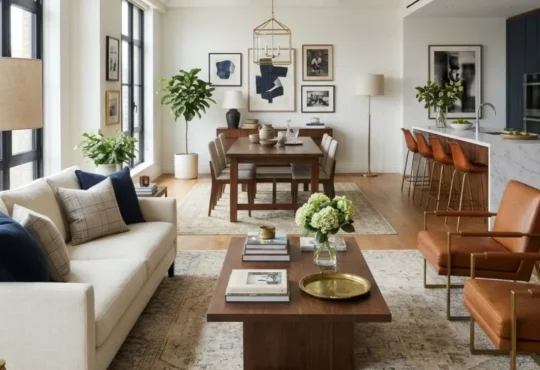
These original worlds established a broad design approach rather than a single decorating formula. Other Ralph Lauren-inspired expressions, including Estate, Island, Western, and Penthouse settings, demonstrate how the aesthetic can respond to different environments and ways of living.
They are best understood as distinct design directions rather than a documented chronological evolution of the original four worlds.
For an entryway, the style should come from the relationship between the elements rather than from recognizable Ralph Lauren products.
Tailored furniture, wood, leather, linen, wool, classic patterns, warm metals, artwork, books, and useful objects can establish the design language when they are selected with restraint.
You can take the entryway in a richer Estate direction with darker wood, leather, and heritage patterns, or keep it lighter with natural fibers, crisp textiles, and woven materials. A more urban interpretation can use cleaner lines and stronger proportions.
Choose the expression that works with the architecture of your home rather than trying to combine every Ralph Lauren reference in one room. The goal is an entrance that feels established and personal, not a showroom arranged around a theme.
Assess Your Entryway
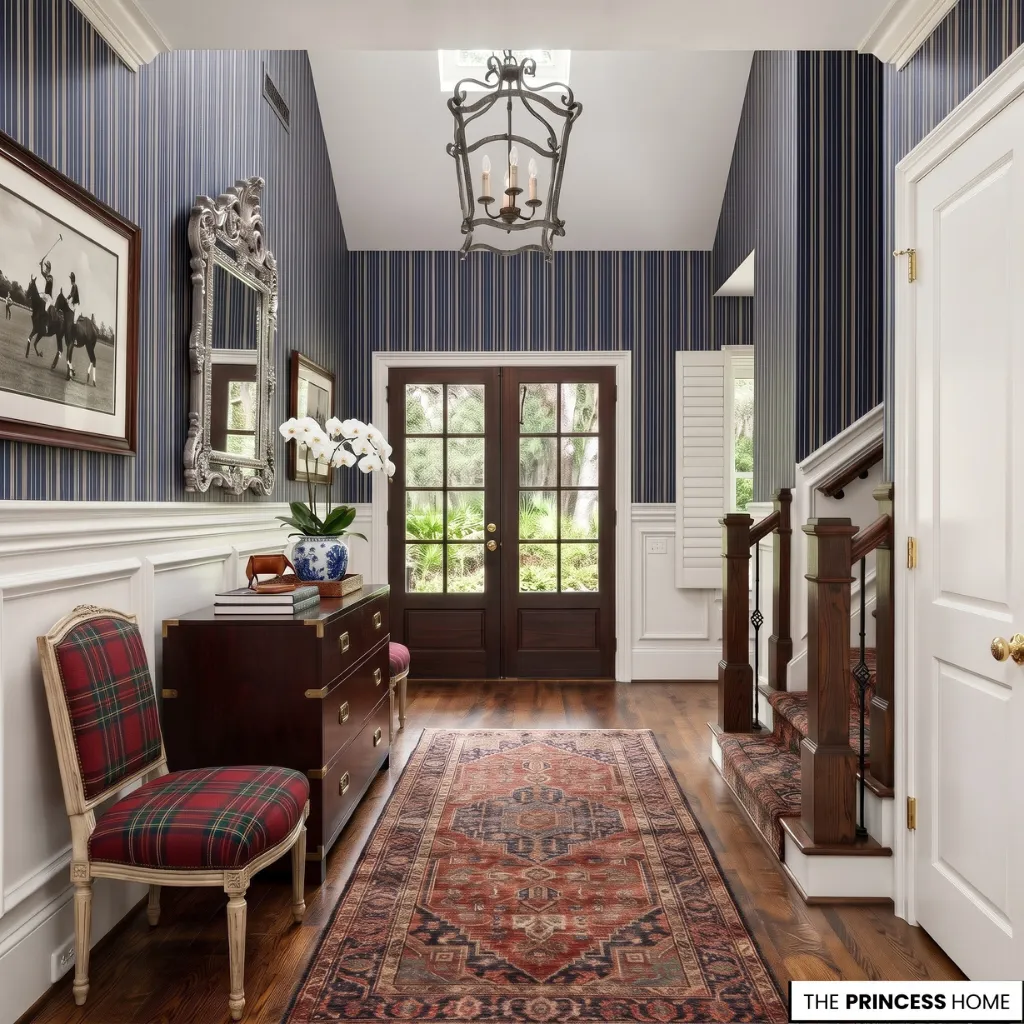
Start with the space you already have before choosing furniture or accessories. Look at the entryway’s size, ceiling height, natural light, flooring, trim, doors, available wall space, and the path people need to use when entering the home.
Consider what the entrance actually needs to do. A large foyer may accommodate a console, bench, artwork, and substantial lighting, while a narrow hallway may need only one shallow piece of furniture and wall-mounted storage.
If the entrance opens directly into another room, its colors and materials should also relate to that adjoining space. Identify what is worth keeping. Existing wood floors, traditional trim, paneling, attractive doors, or architectural details can provide much of the character you need.
A Ralph Lauren-inspired entryway does not require replacing everything. Then decide what is missing. You may need a functional landing surface for keys, better lighting, concealed storage, a mirror, or one strong piece of furniture rather than a complete decorative makeover.
Before choosing furniture, measure the usable floor area and the narrowest walking route through the entrance. Check how far the front door and any nearby interior doors open, and account for the space needed to pass comfortably when someone is using the entrance.
Measure the intended furniture depth as well as its width, since a shallow console may be a better choice than a deeper chest in a narrow hallway. These checks help you judge whether a piece will work in everyday use, not simply whether it fits against the wall.
A useful way to begin is to make the decisions in the same order the room is built. Establish the foundation first, then choose the main functional furniture.
Next, solve the lighting, add the rug or textiles, and finish with artwork, mirrors, and personal objects. This keeps decorative choices from driving decisions about scale, circulation, or function.
Build the Foundation
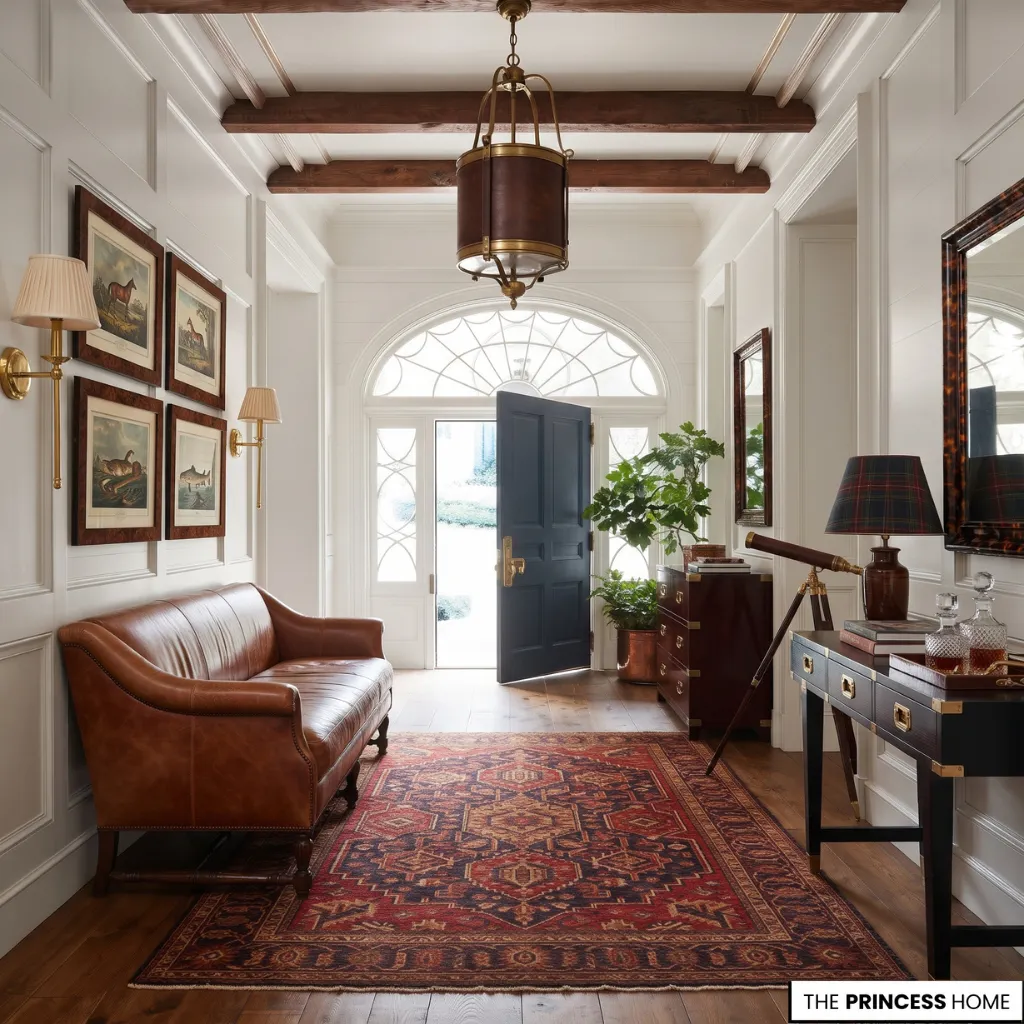
Build the foundation from the elements that remain visible behind everything you add: walls, doors, trim, flooring, paneling, wallpaper, and other architectural details. Work with these features rather than trying to disguise them.
In a traditional home, existing woodwork, molding, or flooring can support the classic character naturally.
In a modern home, there is no need to manufacture historic details simply to make the entrance look more Ralph Lauren. Furniture, materials, color, pattern, and lighting can carry the design language instead.
Choose wall color according to the amount of natural light and the colors already present in the home. Warm white, cream, taupe, muted green, navy, brown, and charcoal can all work, depending on the architecture and the level of formality you want.
Avoid assuming that Ralph Lauren decor must always be dark. Some expressions are richer and more traditional, while others are lighter and more relaxed. The entryway should support the character of the home rather than follow a fixed dark-wood-and-navy formula.
Choose Entry Furniture
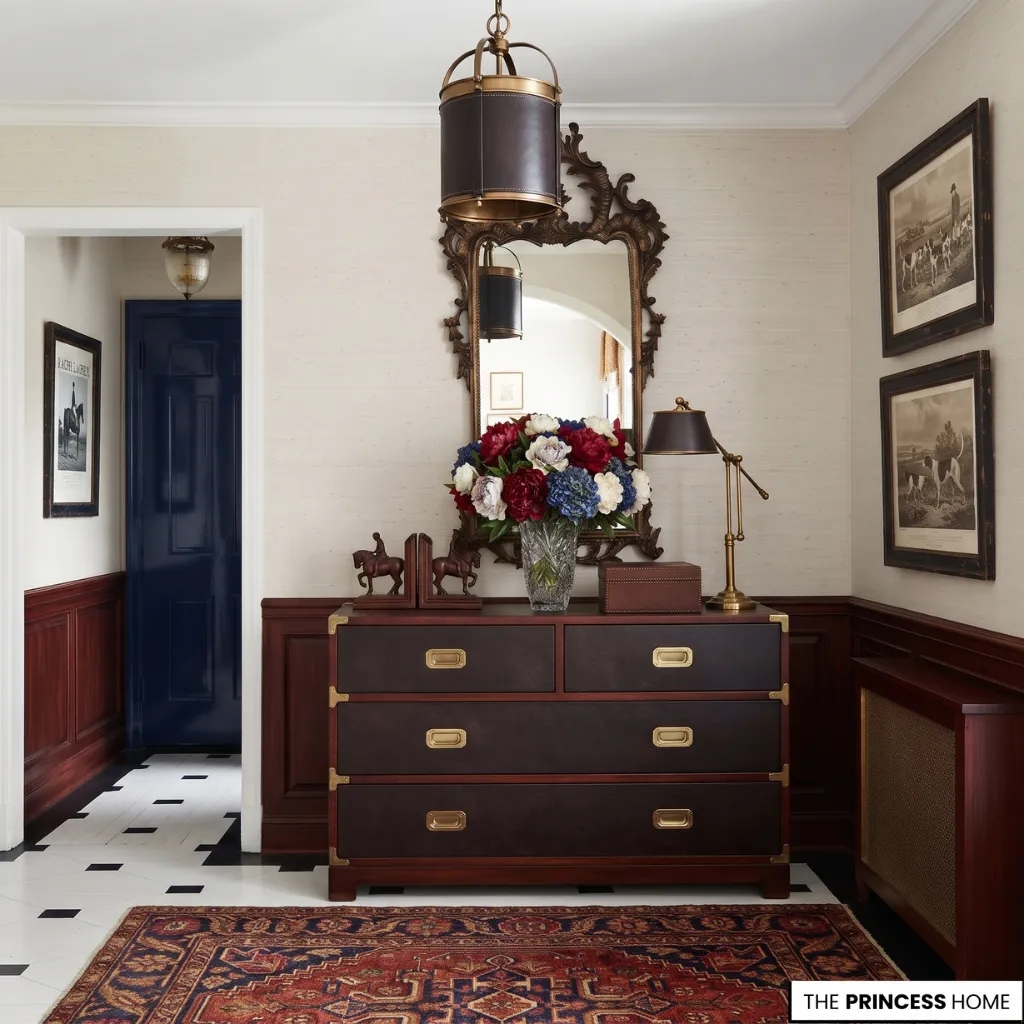
Choose the main furniture according to the size and function of the entrance. A console table, narrow chest, cabinet, bench, or occasional chair can become the functional anchor when its scale allows people to move comfortably around it.
Choose the furniture type according to the task it needs to perform. A console is suitable when a clear landing surface is the main priority. A chest or cabinet is more useful when everyday belongings need to be concealed, while a bench makes sense when seating or removing shoes is part of the household’s routine.
If floor depth is limited, a floating shelf can provide a practical surface without introducing another piece of floor-standing furniture. The right choice is the one that meets the actual need while preserving comfortable movement.
A wooden console is useful when you need a surface for keys, a lamp, artwork, or a small arrangement of objects. Drawers or a cabinet can also provide discreet storage. A bench works when the entrance has enough floor space and seating is genuinely useful.
A small chest can combine storage with the substantial character associated with traditional furniture. Look for classic or tailored forms rather than furniture that is heavily ornate. Medium-toned or aged wood, walnut, leather, and upholstered pieces can all work within the Ralph Lauren design language.
Proportion matters more than simply choosing an impressive piece. A substantial console can suit a large foyer, while the same furniture can overwhelm a narrow entrance. In a small space, a shallow console, floating shelf, or compact chest can provide the same functional role without blocking circulation.
If a traditional console does not fit, do not replace it with an unrelated modern object simply because it is smaller or cheaper. Reduce the scale or choose a simpler piece that still shares the same material and visual character.
When the budget is limited, the main functional anchor deserves priority because it establishes both the scale and visual character of the entrance.
Reusing a suitable console, chest, bench, or chair can make more sense than replacing it simply to create a new look. This leaves more of the budget for lighting, a rug or textile, and one meaningful artwork or mirror.
Layer Natural Materials
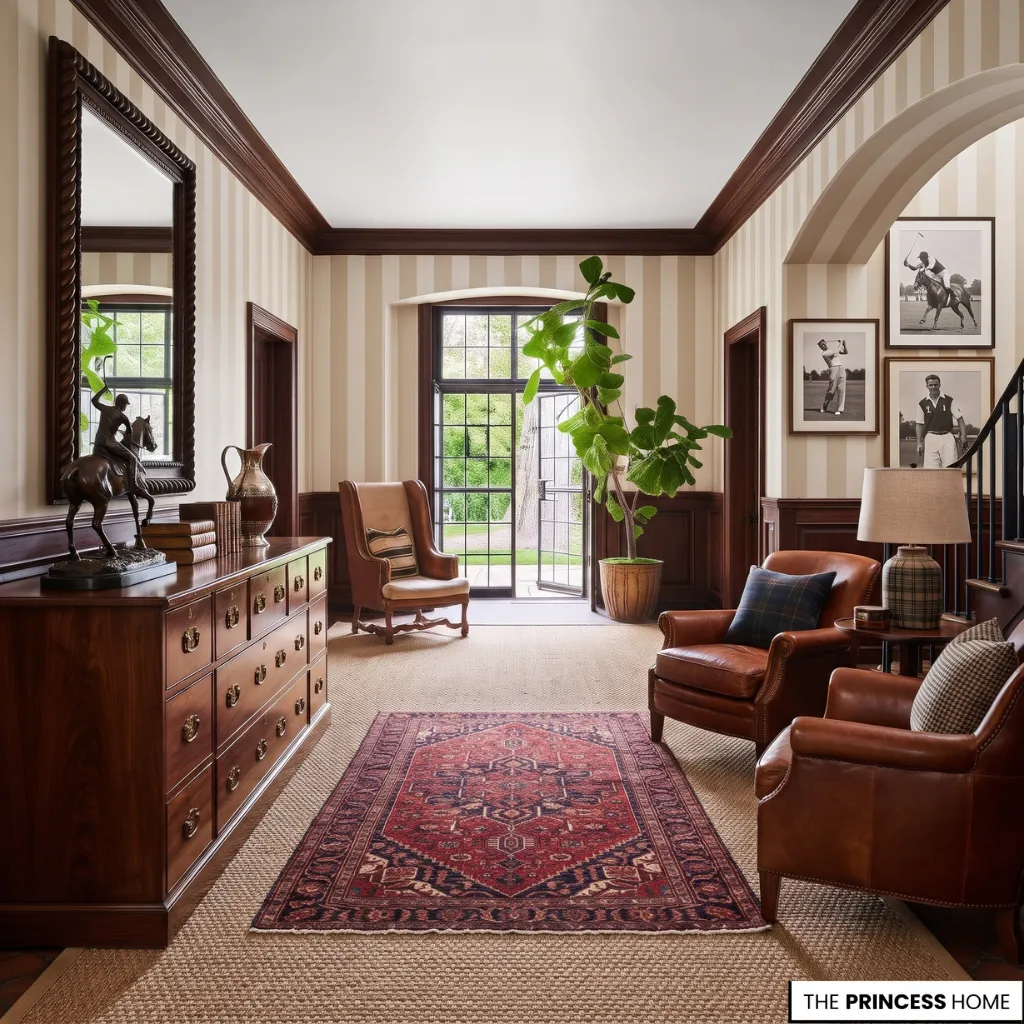
Use a small group of natural materials to give the entryway tactile variety. Wood can provide the main anchor, while leather, linen, cotton, wool, stone, woven fibers, and warm metal can introduce different textures. The contrast between the materials matters more than using all of them.
A walnut or aged-wood console paired with a wool rug and leather chair may already provide enough variation. A linen lampshade, woven basket, or aged brass detail can then be added where it serves a practical or visual purpose.
Natural materials also keep the entrance from feeling overly coordinated. Slight differences in texture, age, and finish allow compatible pieces to sit together without appearing to have been purchased as one matching set.
Choose materials according to the level of formality you want. Richer wood and leather can support a more traditional interpretation, while woven fibers, lighter woods, and relaxed textiles can create a less formal expression.
Avoid using distressed finishes or artificial aging simply to make new furniture appear historic. The collected quality should come from the combination of materials and objects, not from making every surface look old.
Balance Color Patterns
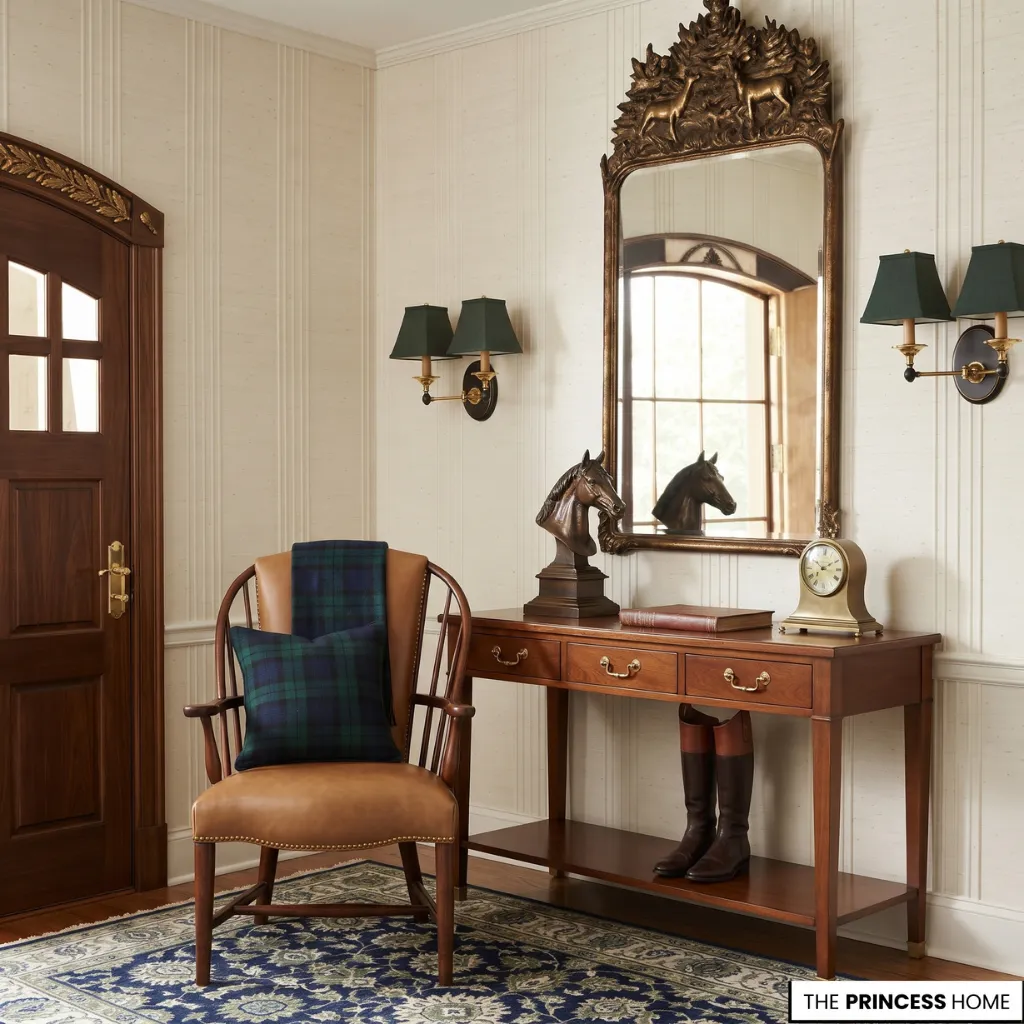
Build the palette around a controlled group of colors rather than trying to display every Ralph Lauren reference at once. Warm white, cream, camel, tan, brown, navy, muted green, burgundy, and charcoal can provide a useful starting point, with natural wood tones adding another layer.
Begin with the largest surfaces and furniture pieces, then introduce stronger colors through a rug, artwork, upholstery, or smaller textile. Patterns should also have a clear purpose.
Checks, stripes, plaids, tartans, and restrained botanicals can work well because they relate to the traditional and heritage character associated with Ralph Lauren interiors. One patterned rug or upholstered piece may be enough to establish that reference.
Avoid turning the entrance into a collection of competing patterns. If the rug is strongly patterned, the artwork and textiles can be quieter. If a chair has a prominent stripe or plaid, the surrounding pieces do not need to repeat it.
Also avoid using red, white, and blue simply because they suggest an American theme. Ralph Lauren’s design language is broader than Americana. The entryway will usually feel more considered when heritage references are balanced with natural materials and personal pieces.
Layer Entryway Lighting
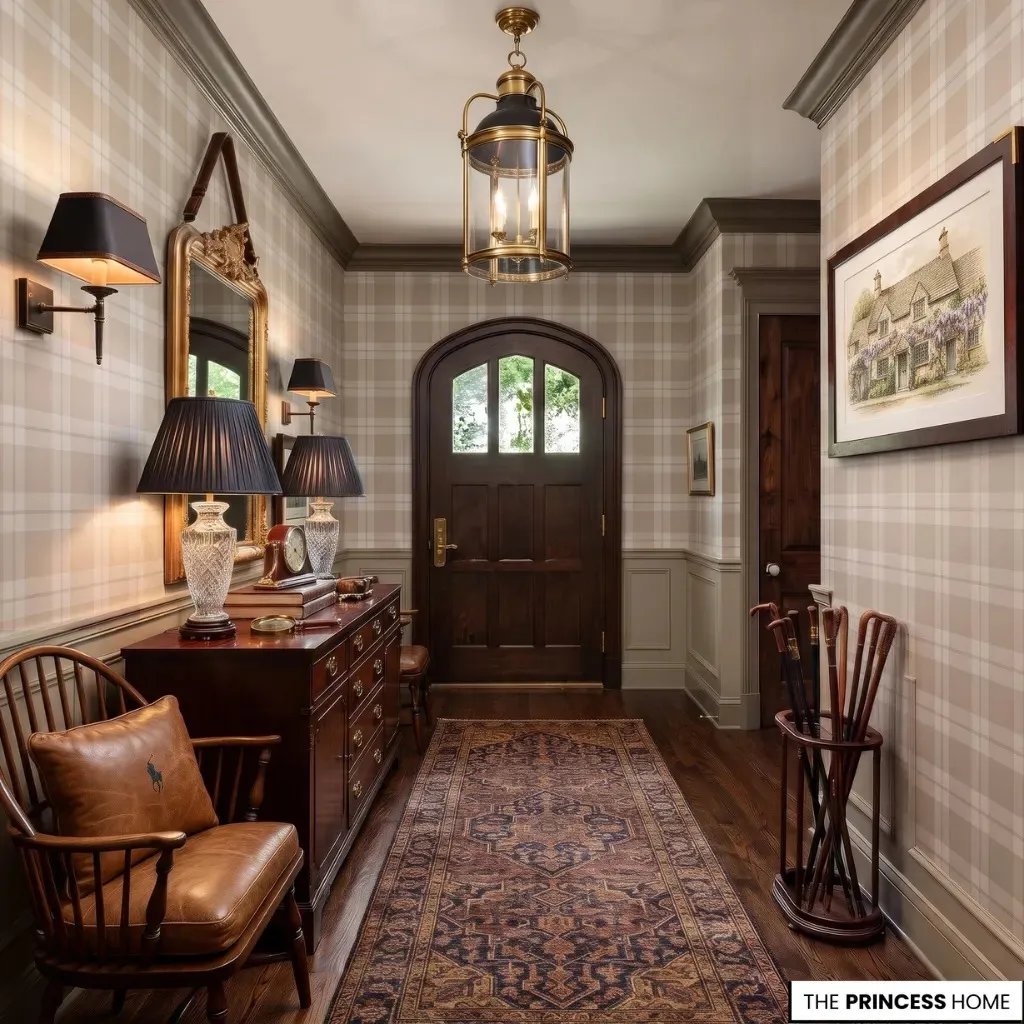
Choose lighting according to both the practical needs of the entrance and the scale of the architecture. A ceiling fixture can provide the main illumination, while a table lamp or wall sconces can add another layer where the space allows.
A console lamp is useful when there is enough surface space. It provides a softer source of light in the evening and highlights the furniture and objects arranged around it. Wall sconces can work well in narrower entrances where a table lamp would consume valuable surface space.
If you use a suspended fixture, its size should relate to the ceiling height and the dimensions of the foyer.
Ralph Lauren’s own lighting guide recommends a minimum of seven feet between the bottom of a suspended entryway fixture and the floor, together with four feet of horizontal clearance from surrounding walls and doors.
Treat these as the manufacturer’s recommendations for entryways, hallways, and foyers rather than universal building-code requirements. Always check the fixture’s installation instructions and applicable local requirements before installation.
Use warm residential lighting so that wood, leather, textiles, and artwork remain comfortable to view at night. The exact bulb specification should depend on the fixture and the room rather than being treated as a universal Ralph Lauren rule.
Avoid relying on one harsh overhead fixture. The entrance needs enough light for everyday movement, but layering the sources makes it possible to illuminate the room without making every surface equally bright.
Style Collected Details
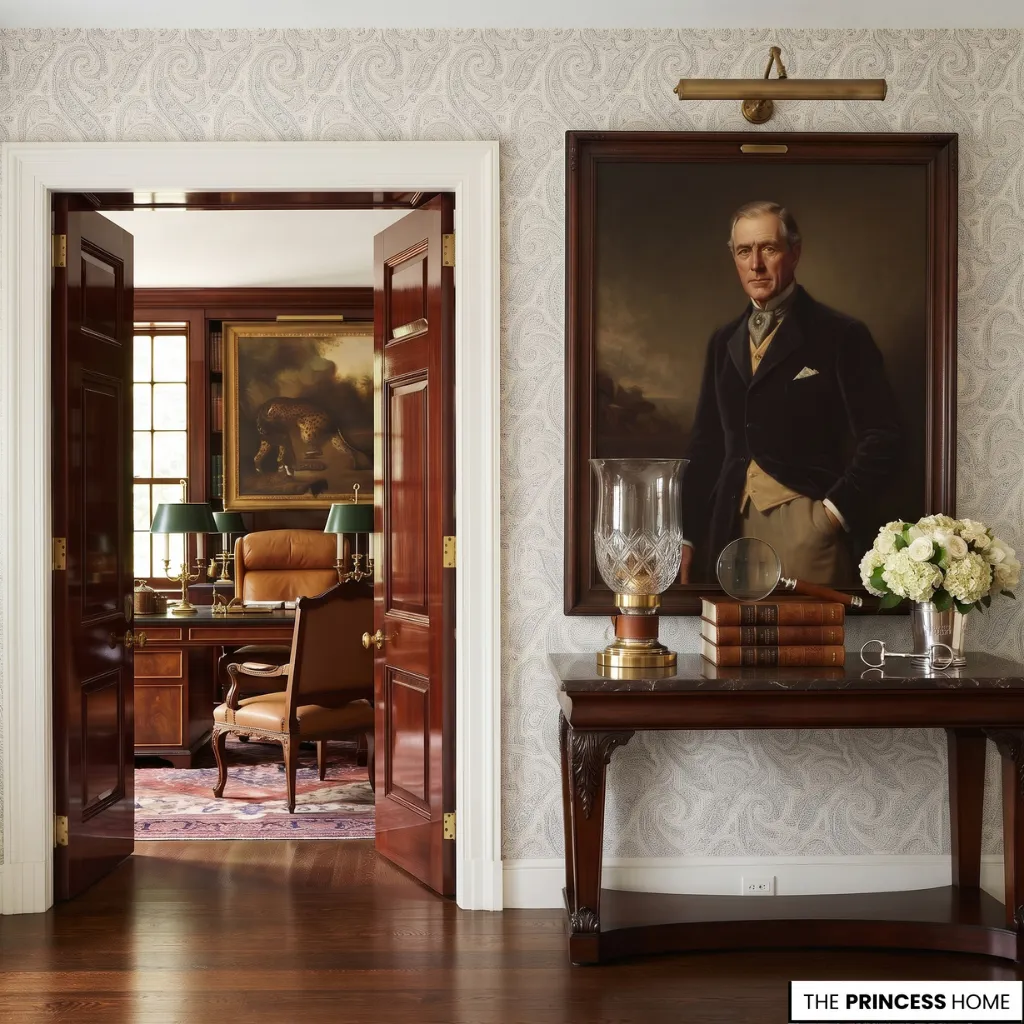
Once the foundation, furniture, materials, color, and lighting are established, add the objects that make the entryway belong to the household. A framed painting, mirror, family photograph, books, travel object, inherited piece, small ceramic, tray, or simple branch arrangement can work.
Choose objects that have a reason to be there rather than filling every available surface. A mirror is useful when you need to check your appearance before leaving, and it can occupy the wall above a console when the proportions suit the arrangement.
Artwork can provide a stronger focal point when the architecture already offers enough reflective surfaces. On a console, begin with one dominant element such as a mirror or artwork, then add lighting and a small number of useful or meaningful objects.
A tray can collect keys, while a box can conceal small everyday items. For example, a console can carry a lamp and tray while a mirror or artwork provides the main vertical focus above it, with a small personal object completing the arrangement. A rug can define the entrance below.
The surrounding wood, textile, and lighting choices can then connect the composition to the rest of the home. The point is not to use every possible element, but to give each selected piece a clear role. The collected quality comes from variation and personal meaning, not clutter.
Ralph Lauren’s approach to home design emphasizes surrounding yourself with things you love and allowing a home’s story to develop through personal possessions and experiences.
Avoid buying decorative objects simply because they look expensive or traditional. A few pieces with genuine character will usually communicate more than a crowded arrangement of unrelated accessories.
Solve Entryway Storage
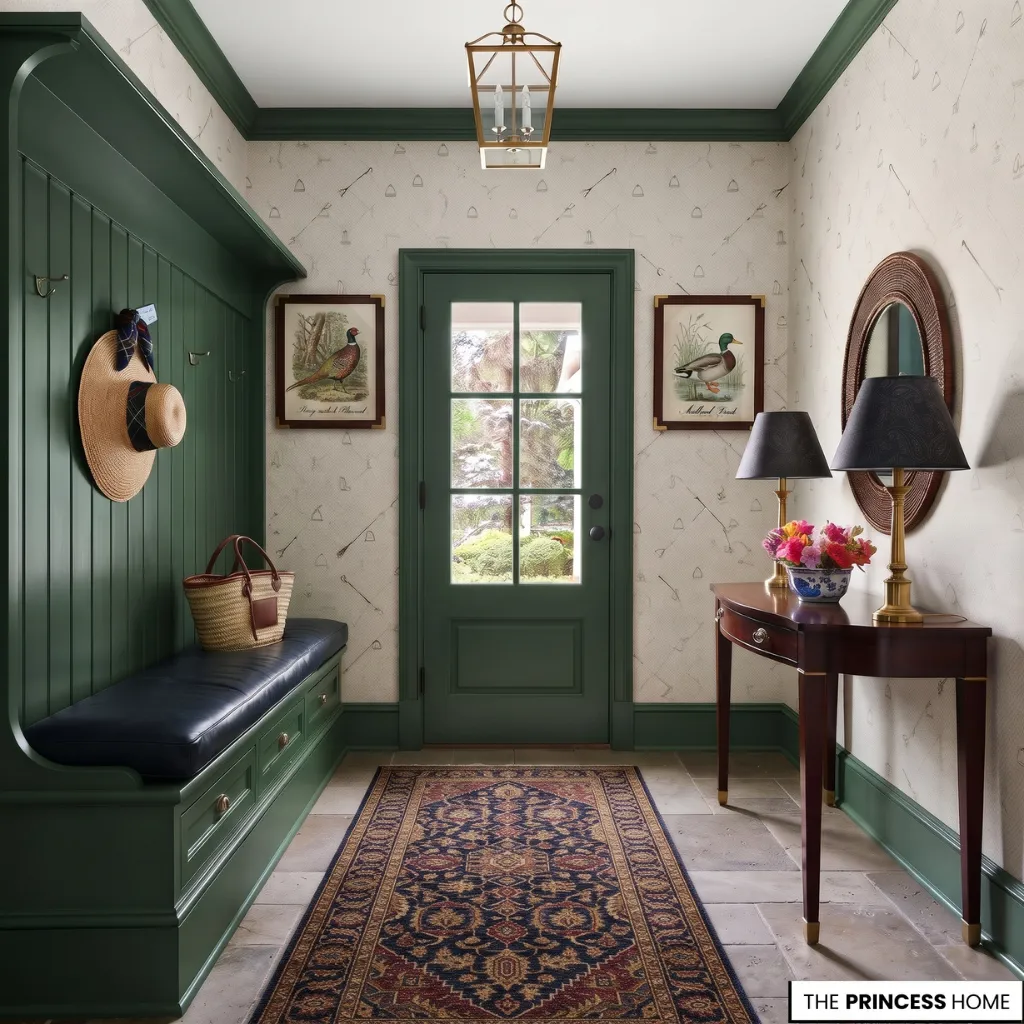
Plan storage around what actually accumulates at the entrance. Keys, shoes, coats, bags, mail, and umbrellas need practical places to go, or they will quickly become part of the visible decoration. A console with drawers can handle small everyday items.
A closed cabinet can conceal larger belongings, while a storage bench can combine seating with space for shoes. Baskets and discreet wall hooks can also work when they suit the architecture and household’s needs. Choose storage that belongs to the furniture language of the room.
A traditional wooden cabinet, tailored bench, or built-in cupboard will generally suit Ralph Lauren-inspired decor better than unrelated organizers. Keep everyday clutter concealed where possible. Reserve visible surfaces for objects that contribute to the room.
This approach keeps the entrance practical without turning it into a utility area. If the home has a separate mudroom or coat-storage area, the entryway does not need to provide every storage function. Choose a solution that reflects how the household actually uses the space.
Adapt Small Entryways
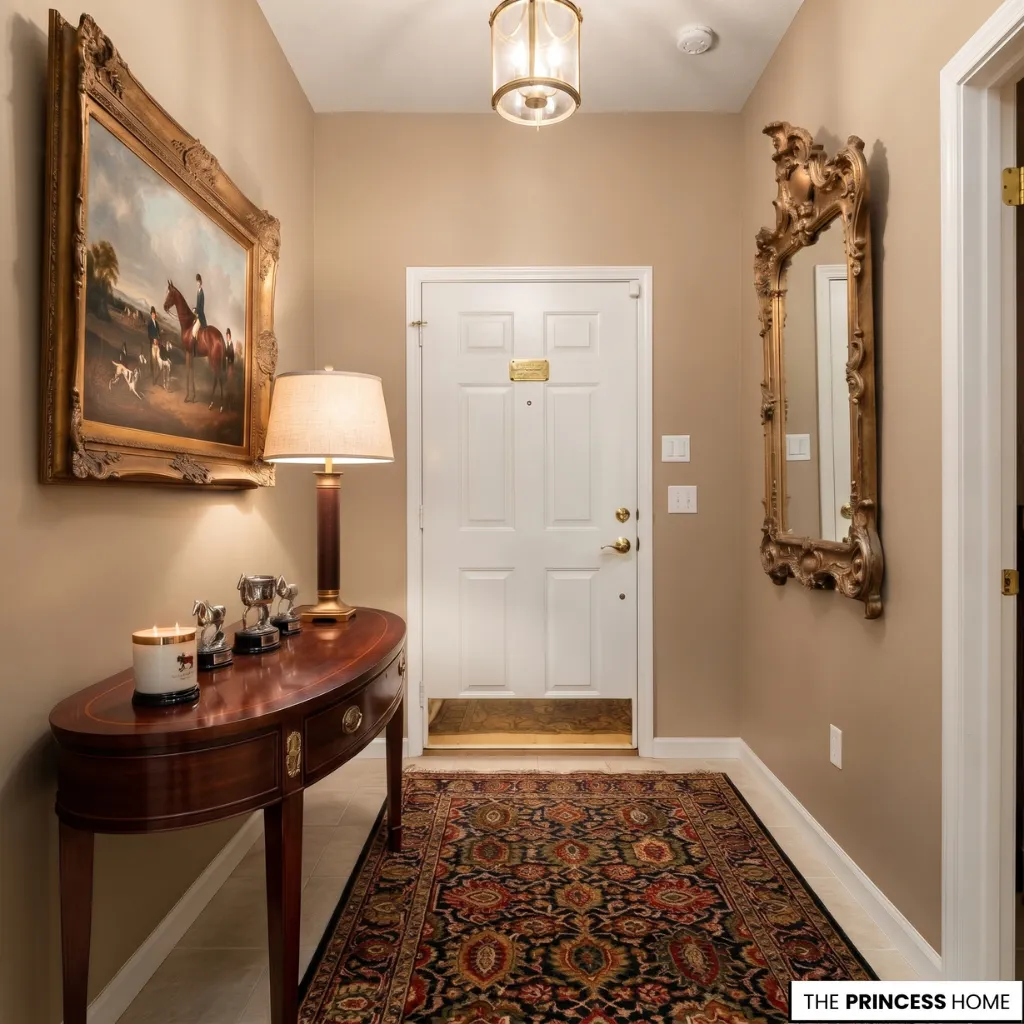
A small entryway does not need miniature versions of every element found in a large foyer. Start with one strong functional anchor and allow the architecture, materials, and lighting to carry more of the design. A shallow console can provide a landing surface without narrowing the passage.
If floor space is limited, a floating shelf can serve a similar purpose. A wall-mounted cabinet adds storage while keeping the floor clear. A compact chair can replace a bench when seating is needed. Choose a mirror only when it serves a practical purpose and suits the wall proportions.
A rug can define the entrance. A well-placed light fixture can also establish its character without adding furniture. The key is to reduce rather than substitute.
Remove pieces that serve no clear purpose. Do not fill the entrance with unrelated minimalist furniture simply because it is compact. You can still preserve the Ralph Lauren character through wood, leather, classic hardware, warm lighting, restrained patterns, artwork, and personal objects.
A Cohesive Entryway
A Ralph Lauren-inspired entryway works best when it feels like a natural part of the home rather than a decorated stage at the front door. Start with the architecture and proportions.
Choose useful furniture and natural materials, then add controlled color, layered lighting, and objects with personal meaning. The result should communicate the character of the home before the visitor reaches the next room.
Watch this inspiring video from The Princess Home for more ideas and a closer look at how this aesthetic can come to life in your home.
Further Reading
Explore these related guides for more design inspiration and practical ideas for creating timeless interiors.
- Timeless Ralph Lauren-Inspired Living Room Design
- Creating a Bedroom with Heritage Luxury
- Elegant Kitchen Design Inspired by Ralph Lauren
- A Dining Room That Combines Classic Style and Timeless Luxury
- How to Achieve Ralph Lauren Style on a Budget
- Modern Heritage Interiors for Apartment Living
- Elegant Summer Living with Ralph Lauren Style
- Timeless Luxury Bathroom Design Ideas
- Creating a Luxurious Ralph Lauren-Inspired Home Office
- Timeless Outdoor Spaces with Ralph Lauren-Inspired Details