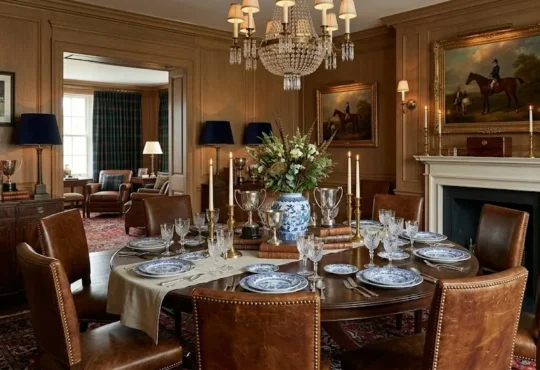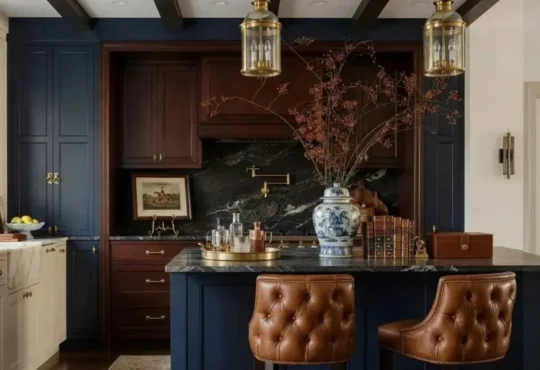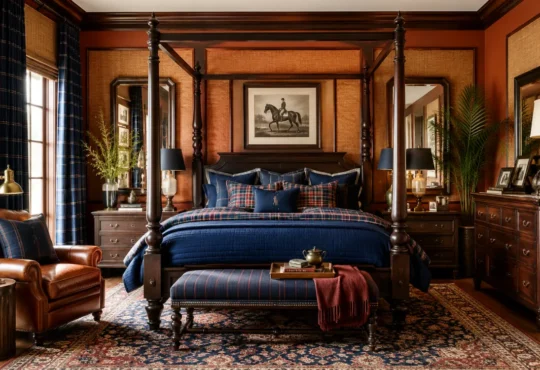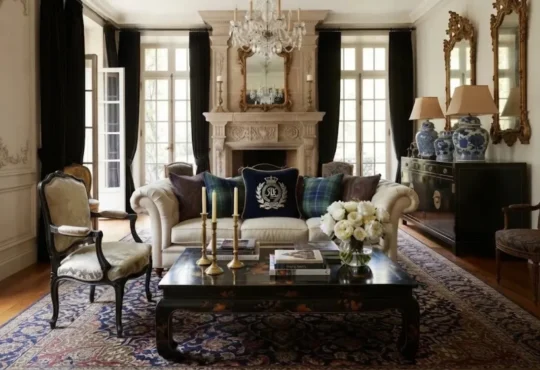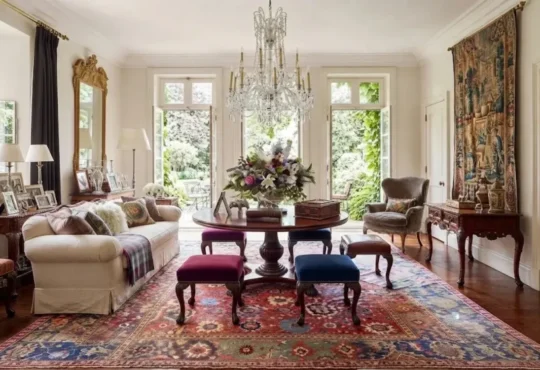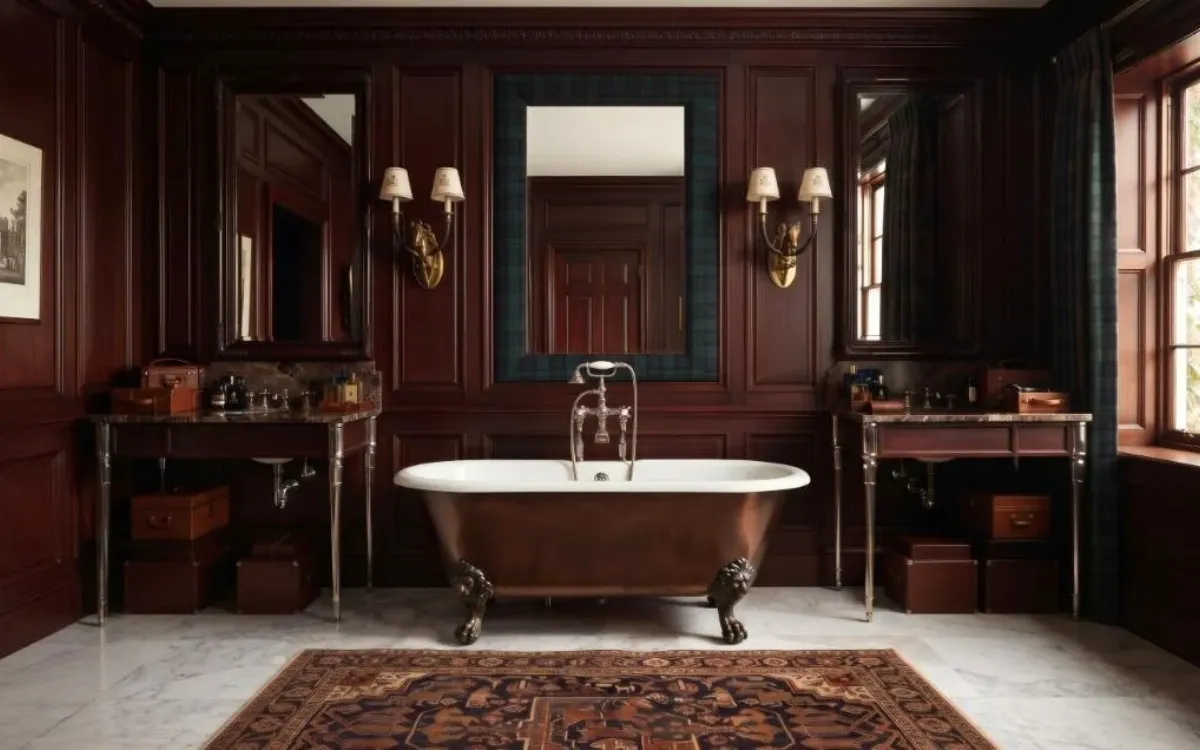
Ralph Lauren bathroom design brings heritage-inspired character, tailored forms, substantial materials, controlled color, and collected details into a functional space.
The challenge is translating that design language without making the bathroom feel themed, overly traditional, or dependent on recognizable brand products. The best approach is to establish the foundation first, then coordinate materials, fixtures, color, lighting, pattern, and accessories so they work together.
Ralph Lauren Bathroom Design
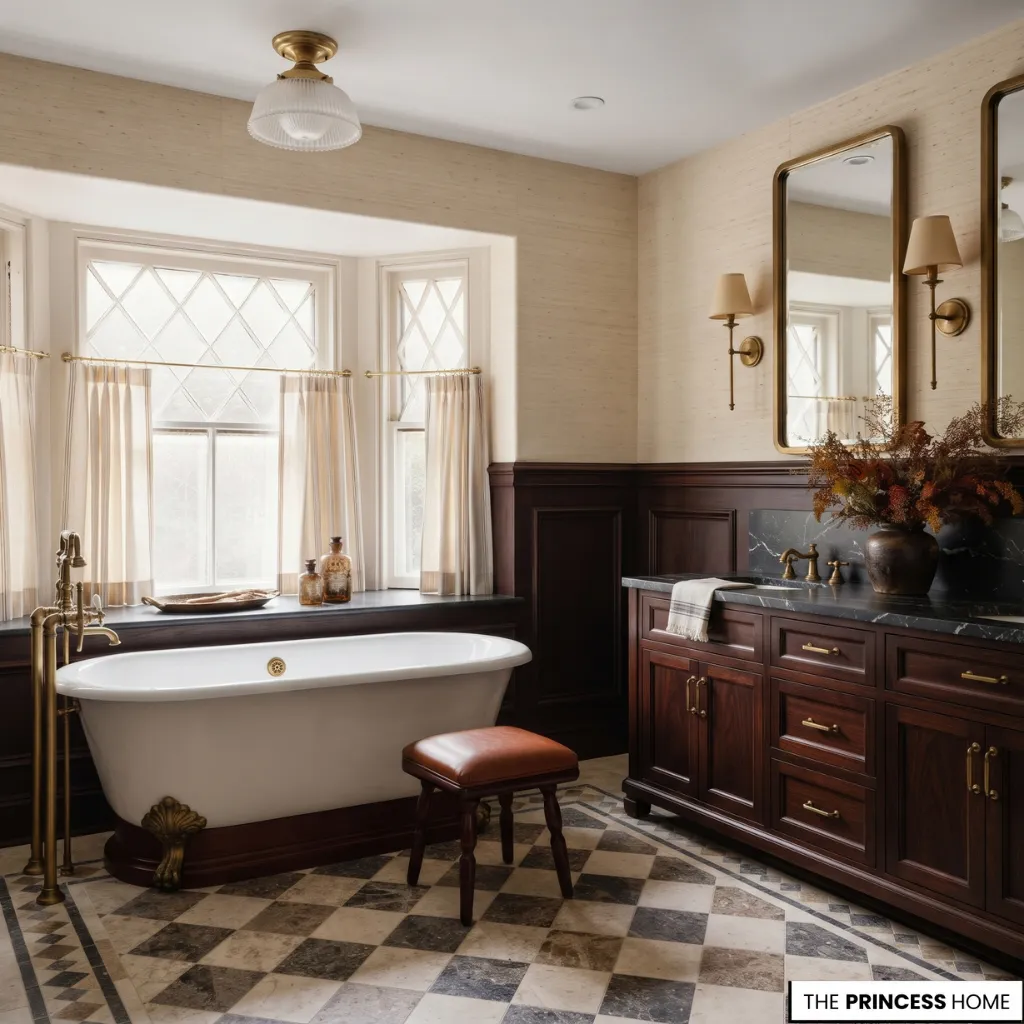
Ralph Lauren bathroom design brings heritage-inspired character, tailored forms, substantial materials, and collected details into a functional space.
Learn how to combine cabinetry, fixtures, color, lighting, pattern, and natural materials to create a bathroom that reflects the style without feeling themed, overly traditional, or dependent on recognizable brand products.
Ralph Lauren Bathroom Style
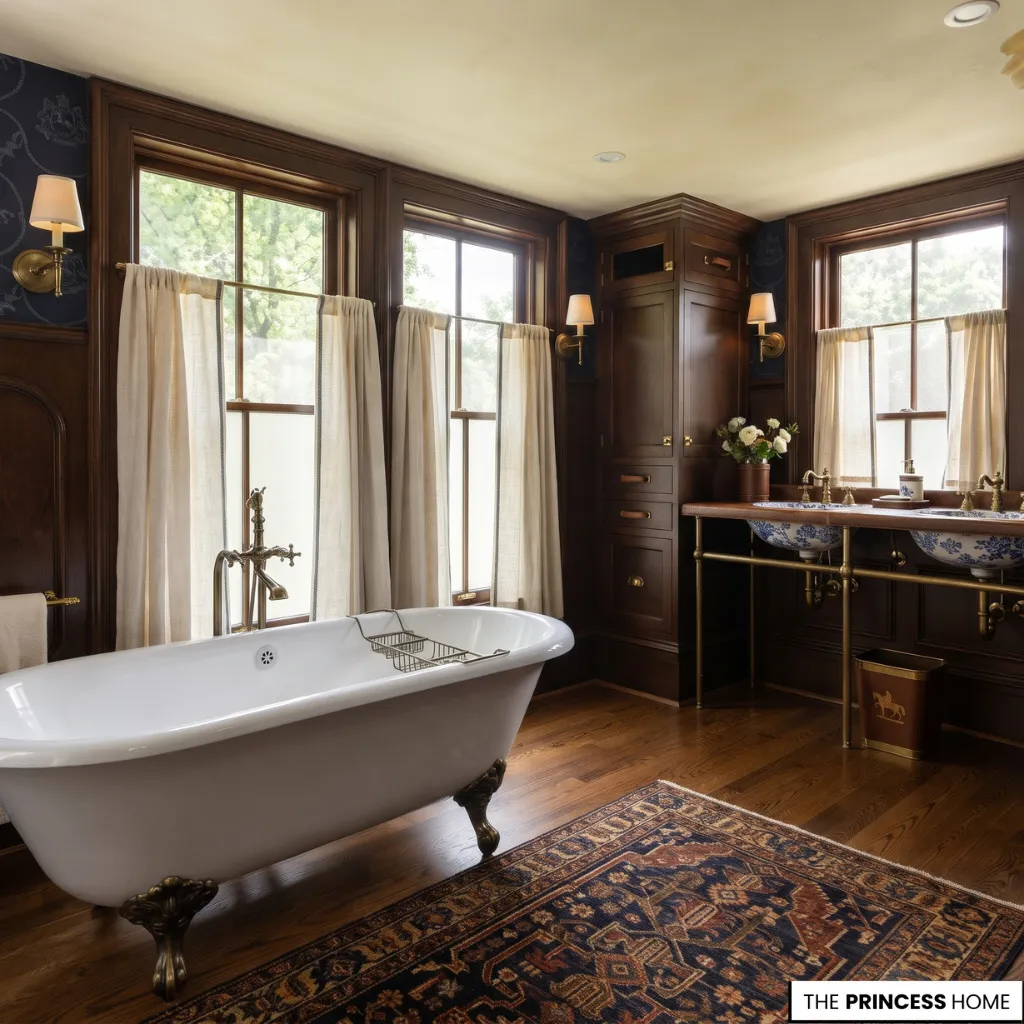
Ralph Lauren style is rooted in heritage, craftsmanship, quality, comfort, and a sense of personal history.
The Ralph Lauren Home collection began in 1983 with four original lifestyle worlds—Thoroughbred, New England, Jamaica, and Log Cabin—and later developed additional environments around different places and lifestyles.
For a bathroom, this does not mean copying one specific Ralph Lauren room. It means translating the broader design language into decisions that suit the space.
Tailored cabinetry can provide furniture character, substantial materials can establish the foundation, and controlled colors and patterns can introduce personality.
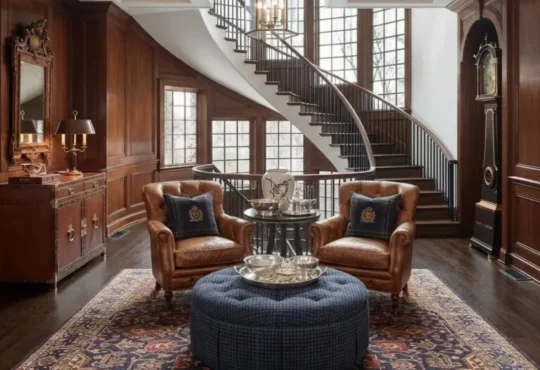
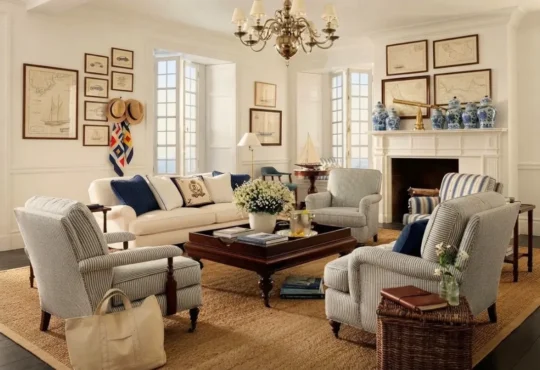
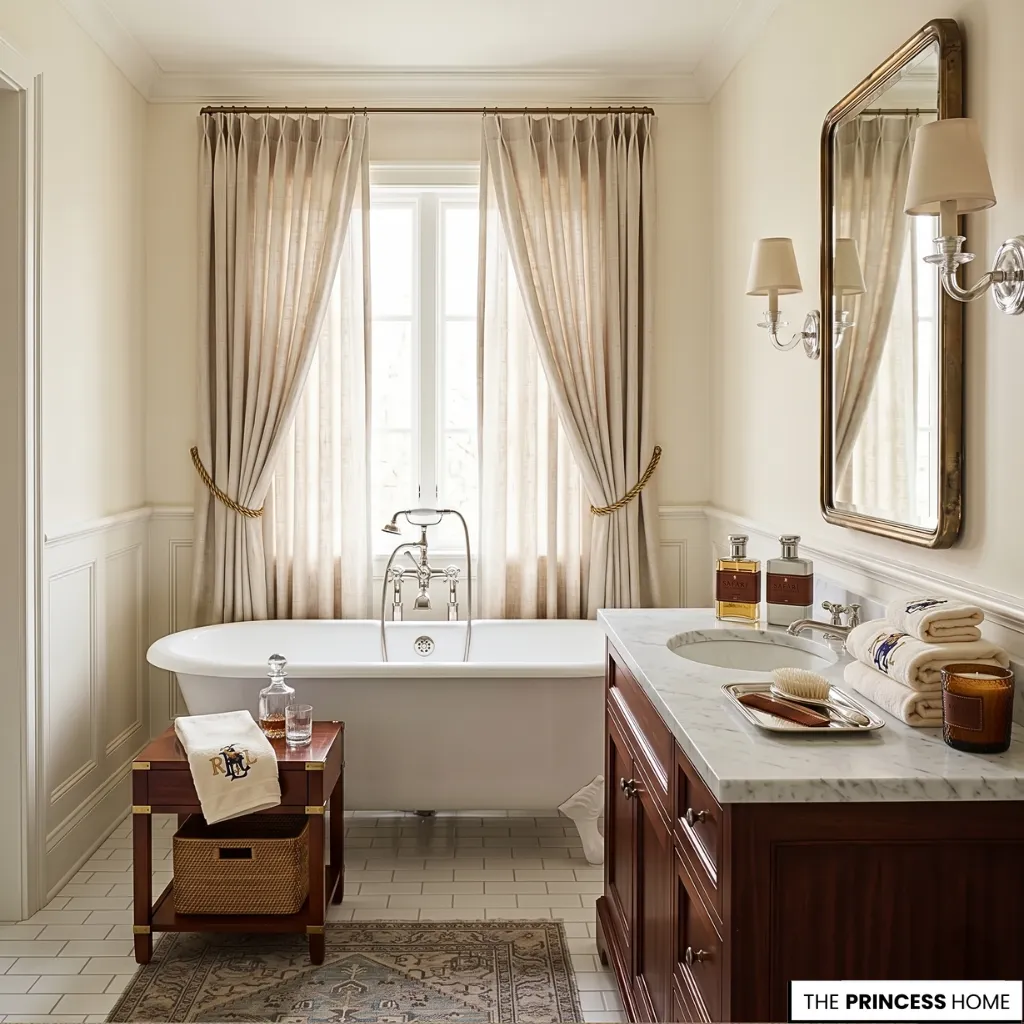
The style also allows different expressions. A New England-inspired direction may use painted cabinetry, navy, cream, and classic stripes.
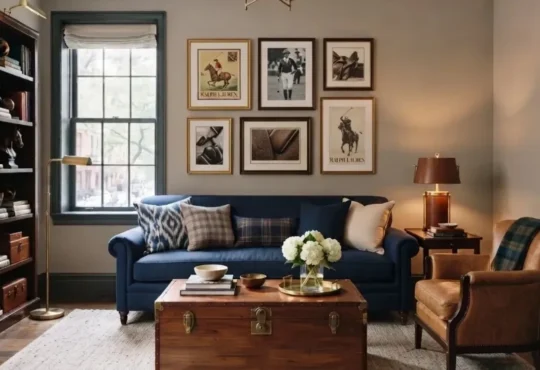
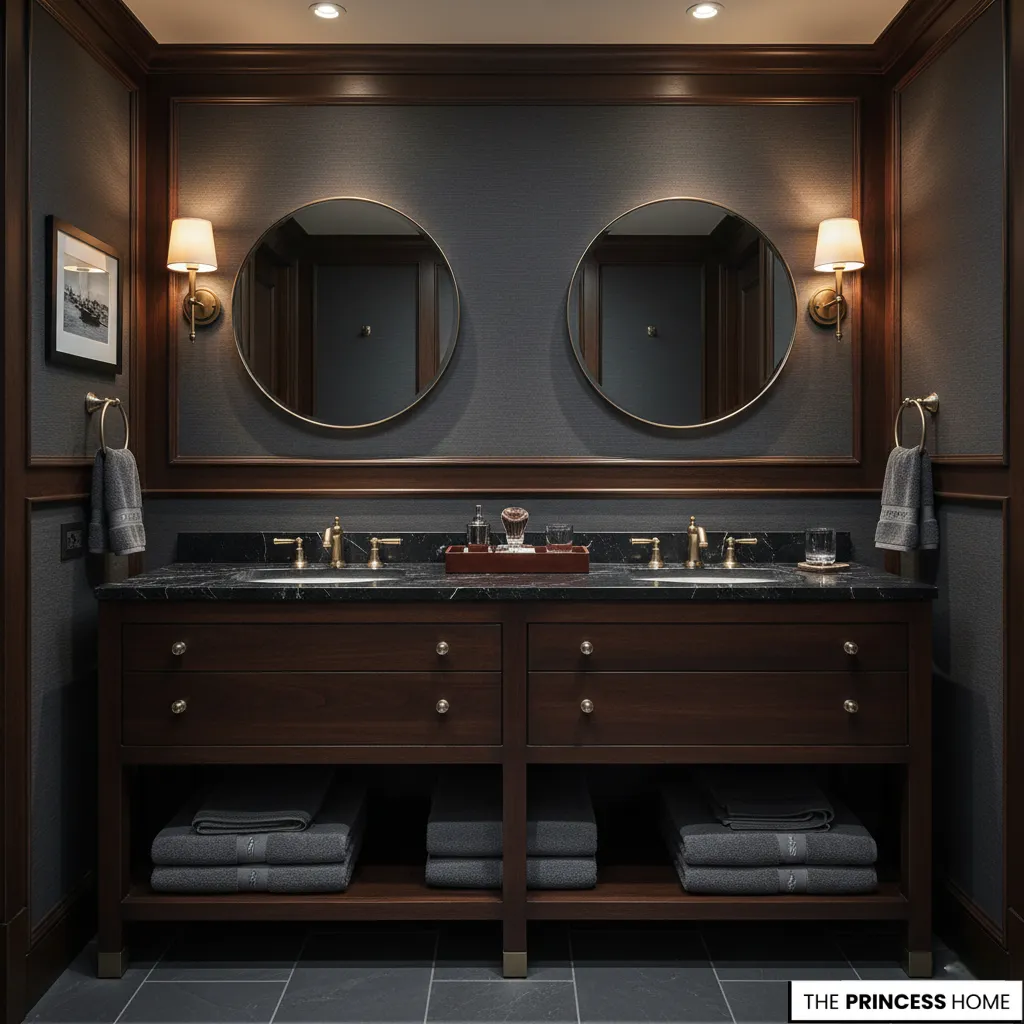
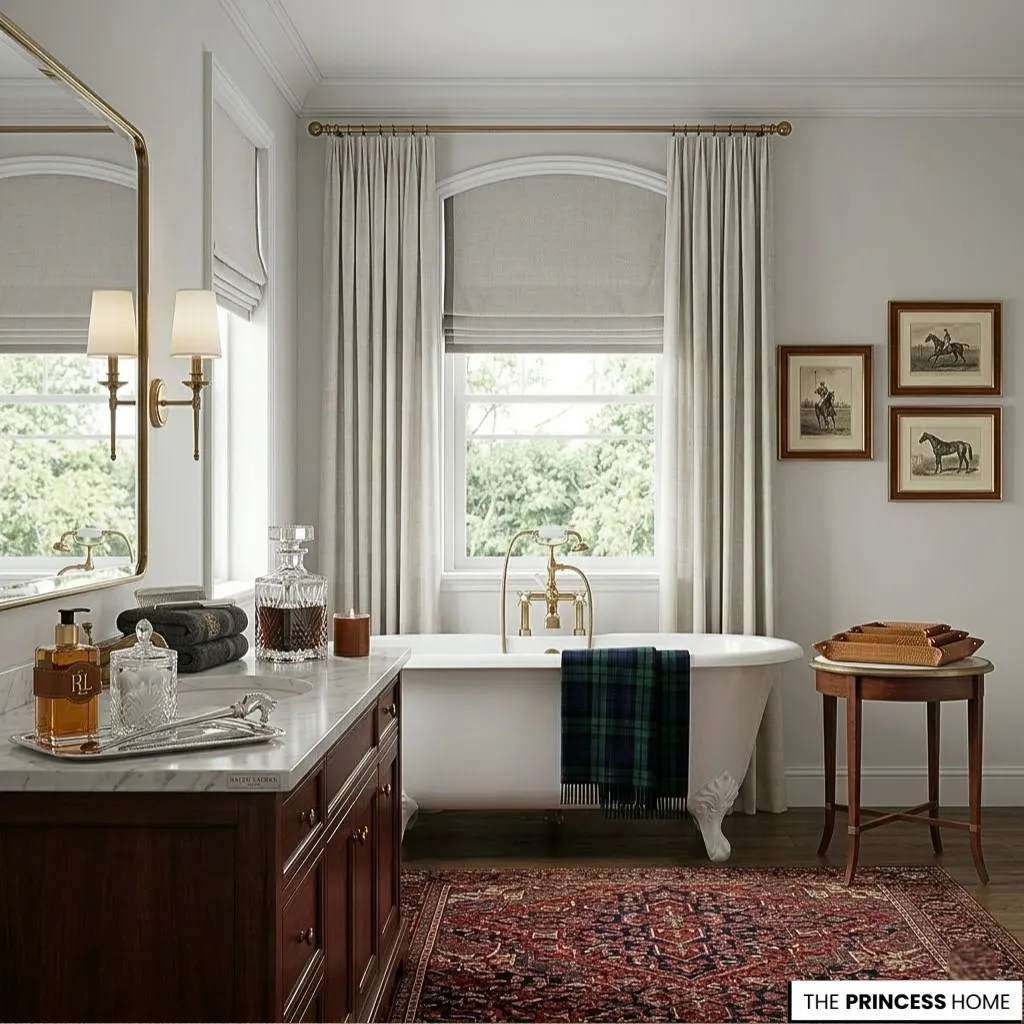
A more equestrian or country-influenced bathroom may use darker wood, deeper colors, and traditional detailing. A lighter coastal interpretation can use blue, white, natural textures, and simpler wood tones without becoming generic beach décor.
The common thread is the relationship between the elements. The bathroom should feel considered and collected rather than built around a single recognizable theme.
This is also what separates the look from a purely traditional, country, or coastal bathroom: those influences can appear within the room, but the Ralph Lauren character comes from combining color, materials, furniture, pattern, and comfort into one coherent interior rather than choosing a single decorative category.
Establish the Foundation
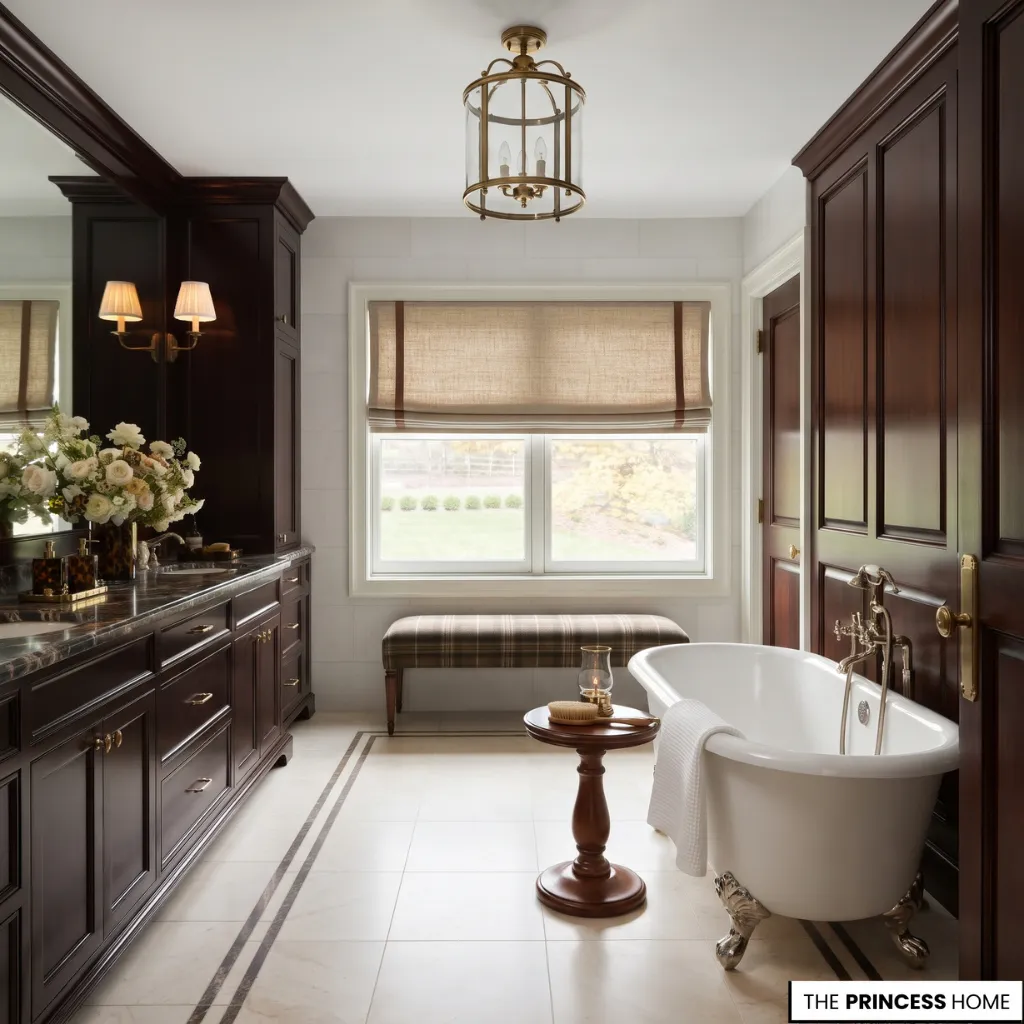
The foundation determines how much character the bathroom can carry before decorative details are introduced. Start with the layout, major surfaces, vanity location, shower or tub arrangement, flooring, walls, ceiling, and architectural details.
Traditional features can support the style when they fit the existing home. Paneling, substantial trim, classic tile arrangements, framed openings, and well-proportioned cabinetry can establish stronger character than decorative accessories added later.
The major surfaces should also relate to one another. If the floor has a strong pattern, keep the walls quieter. If the vanity has prominent wood grain or detailed cabinetry, use a calmer countertop and backsplash.
Prioritize bathroom function. Plan clearances, fixture placement, ventilation, lighting, moisture resistance, storage, and accessibility where required before choosing decorative elements. Never let a beautiful material or traditional detail obstruct safe movement or interfere with everyday use.
Material selection should also account for the conditions of each bathroom zone. Floors exposed to water need finishes with suitable slip resistance, while shower walls and other frequently wet surfaces require products and installation systems designed for that exposure.
Ventilation is equally important because persistent moisture can affect finishes, cabinetry, and indoor comfort over time. Check manufacturer specifications and local requirements before choosing materials or installation methods.
Establish a room that already has the right visual structure before adding the finishing layers.
Layer Rich Materials
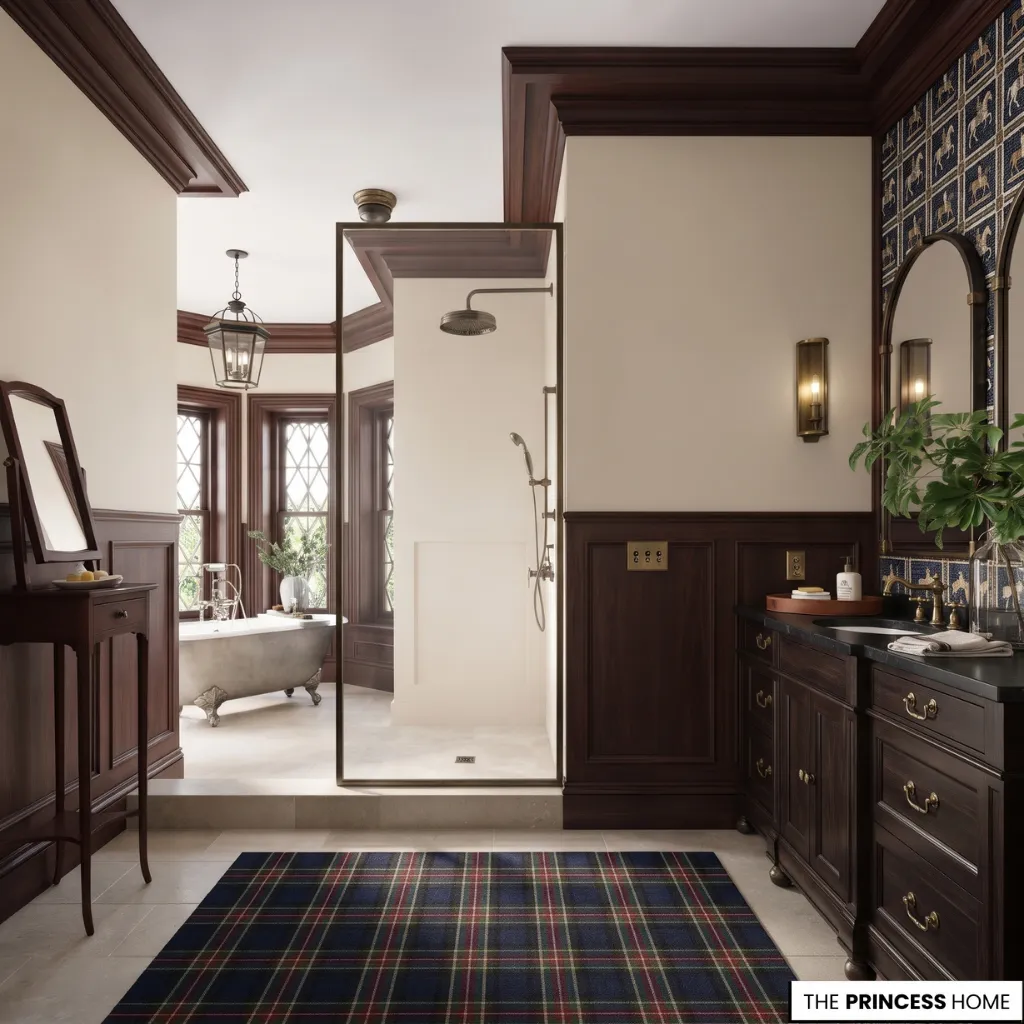
Materials give a bathroom much of its visual weight. Ralph Lauren-inspired interiors work particularly well when hard architectural surfaces are balanced with warmer, tactile elements.
Marble, natural stone, stone-look surfaces, ceramic or porcelain tile, painted cabinetry, wood, glass, and metal can all contribute to the design. The important decision is not simply which expensive material to choose, but how the materials relate.
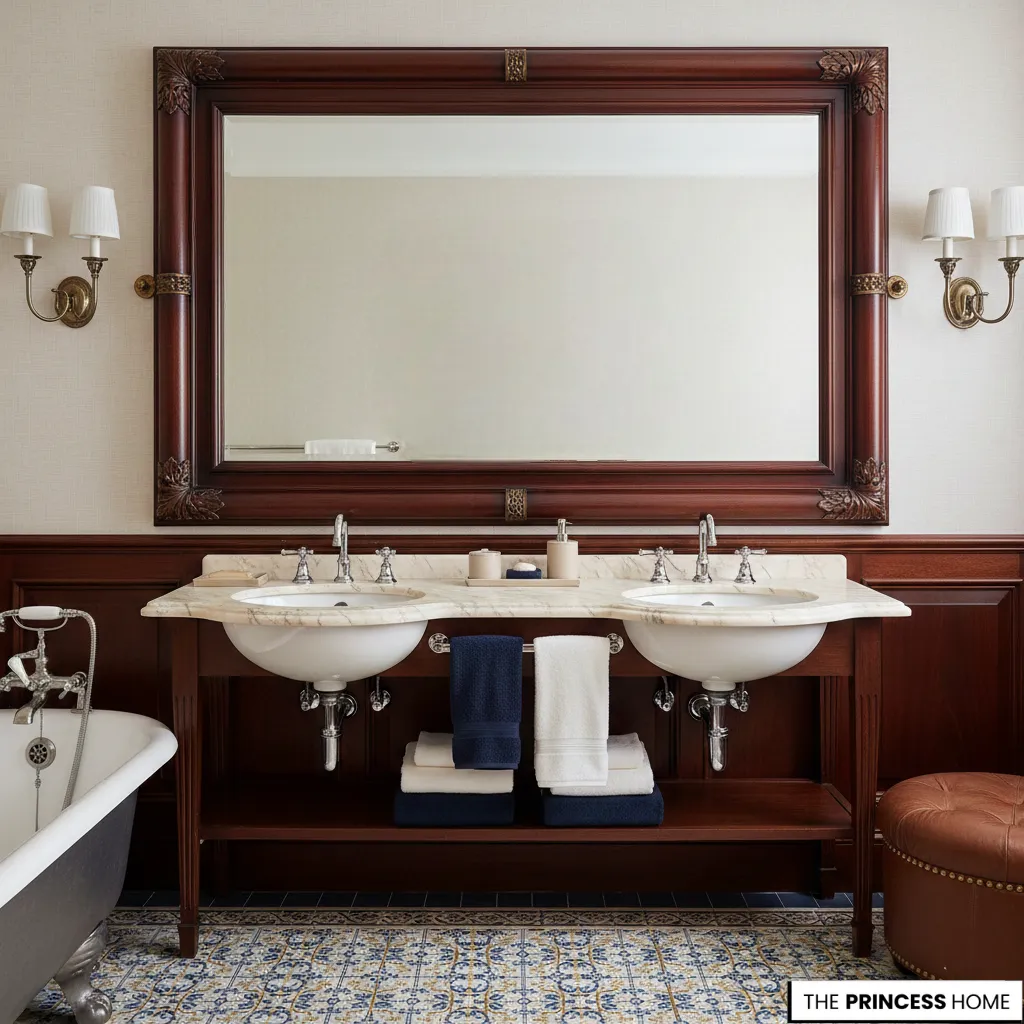
A marble or stone countertop can be paired with a furniture-like wood vanity. A patterned floor can sit beneath quieter wall surfaces.
Painted cabinetry can be combined with a substantial stone top and refined metal hardware. These combinations create variation without requiring every surface to compete for attention.
Natural stone is not automatically the best choice for every bathroom. Maintenance, moisture exposure, installation, and budget matter. Where natural stone is impractical, a well-selected stone-look surface can preserve the visual role of the material without forcing the project around its cost or maintenance.
When comparing bathroom flooring, consider surface texture and maintenance alongside appearance. A polished stone or tile finish may look refined, but it is not automatically the best choice for a frequently wet floor.
Check the product’s slip-resistance information for its intended application, and consider how grout lines, surface texture, cleaning, and long-term maintenance will affect everyday use. The right material is the one that supports the room’s design while performing reliably in its actual location.
The same principle applies to wood. A wood vanity can bring warmth and furniture character, but the material and finish need to be appropriate for bathroom conditions. For flooring and tile, choose the pattern according to the visual weight already established by the room.
A simple stone or porcelain floor can provide a quiet foundation when the vanity, walls, or countertop carry stronger character, while a restrained checkerboard, geometric pattern, or classic border can become a focal element when the surrounding surfaces are calmer.
Scale matters as well: smaller bathrooms generally benefit from patterns that remain proportionate to the available floor area rather than overly busy layouts. Build a material hierarchy: one or two major materials establish the room, while supporting materials reinforce them.
Choose Tailored Fixtures
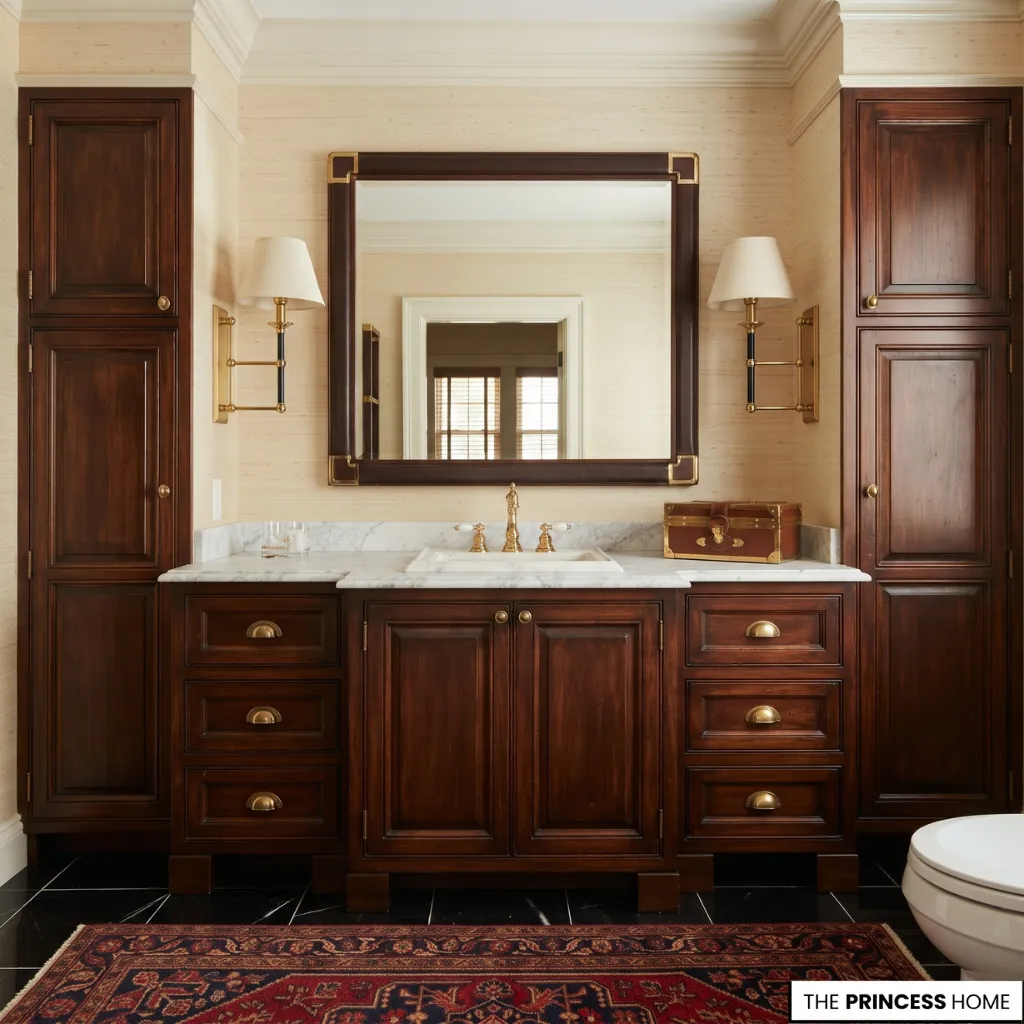
Bathroom fixtures should support the tailored character of the room rather than appear as isolated luxury objects.
Start with the vanity because it occupies a large visual area and often functions as the bathroom’s main piece of furniture. Look for substantial proportions, appropriate detailing, and hardware that feels refined without becoming excessively ornate.
The sink, faucet, shower hardware, tub, mirror, and cabinet hardware should then relate to that choice. Traditional silhouettes can work well, but they do not need to be historically exact. A simpler contemporary fixture can also work when its proportions and finish fit the rest of the room.
Treat the mirror as part of the furniture and material composition, not as an afterthought. A framed rectangular mirror can reinforce tailored architecture, while a gently arched or traditionally detailed frame can add character when the rest of the room supports that style.
The size should relate to the vanity and available wall space, with enough visual presence to balance the cabinetry without overwhelming it. Its frame and finish should also connect with the lighting, hardware, and other materials.
Treat metal as part of the overall material composition. Polished, brushed, and aged finishes can all work. Choose one that complements the vanity, lighting, mirror, and other metal details instead of following a fixed rule.
Fixture selection also involves checking suitability for the installation location. Faucets, mirrors, lighting, and electrical fittings have different performance and safety requirements depending on their proximity to water.
Confirm the manufacturer’s specifications and applicable local electrical and installation requirements rather than choosing fixtures by appearance alone.
If a furniture-style vanity is unavailable, you can sometimes adapt an existing cabinet through appropriate hardware, countertop selection, mirror framing, and lighting. The goal is to preserve the visual role of substantial, tailored cabinetry rather than replace it with an unrelated piece.
Use Ralph Lauren Colors
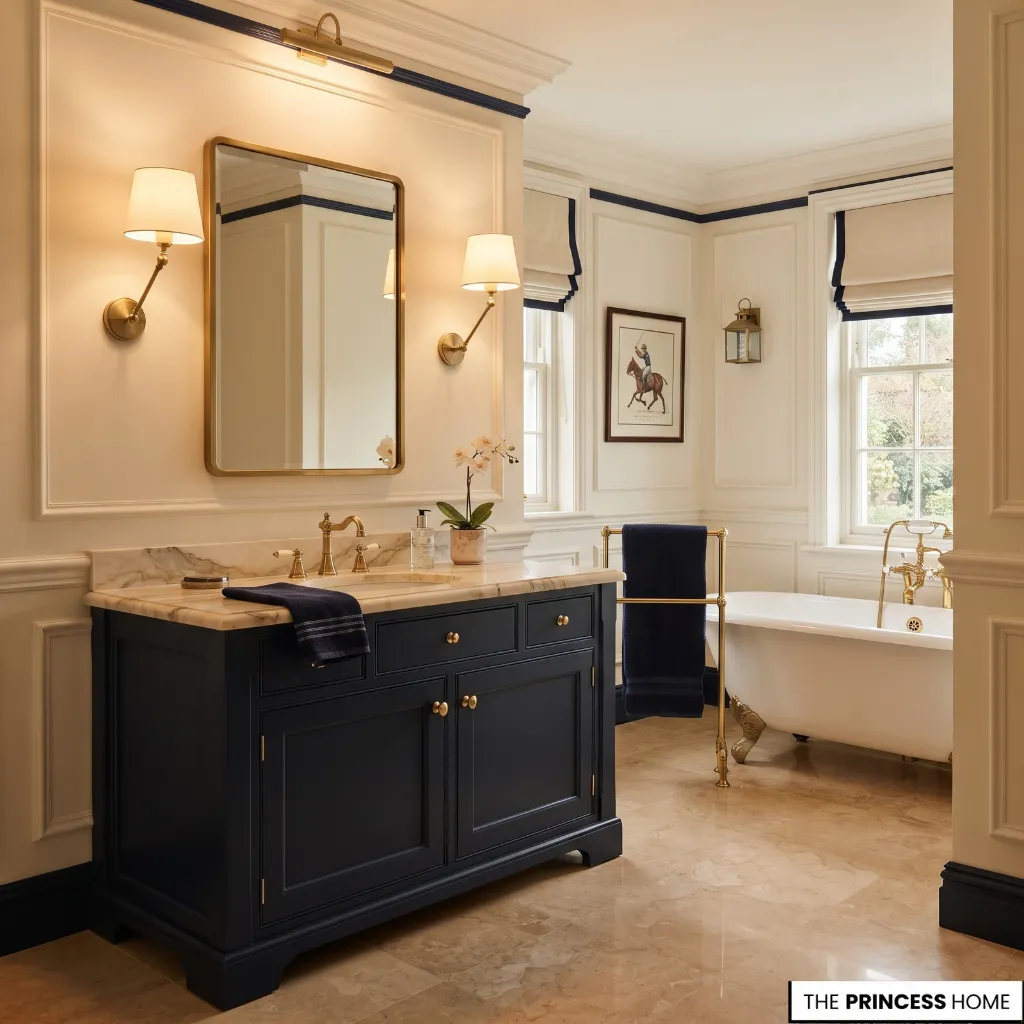
Color is one of the easiest ways to connect a bathroom with the broader Ralph Lauren design language, but there is no single official Ralph Lauren bathroom palette.
Warm white, cream, navy, muted blue, camel, brown, warm gray, deep green, burgundy, and controlled black accents can support different interpretations of the style. The right combination depends on the architecture, natural light, materials, and desired expression.
A useful approach is to establish a foundation color, introduce a secondary color, and then use a smaller accent. Cream with navy and aged metal can produce a classic direction. Warm white with dark wood and deep green can feel more grounded.
Soft gray with muted blue can create a lighter interpretation, while cream, brown, and a restrained burgundy accent can support a richer traditional room.
The key is proportion. A dark color does not need to cover every wall to have an impact. A navy vanity, dark mirror frame, or painted lower cabinetry may be enough to establish the color story.
In a small bathroom, stronger colors can still work. Consider the amount of color together with surface reflectivity, pattern scale, and lighting rather than assuming that a small room must be white.
Layer Warm Lighting
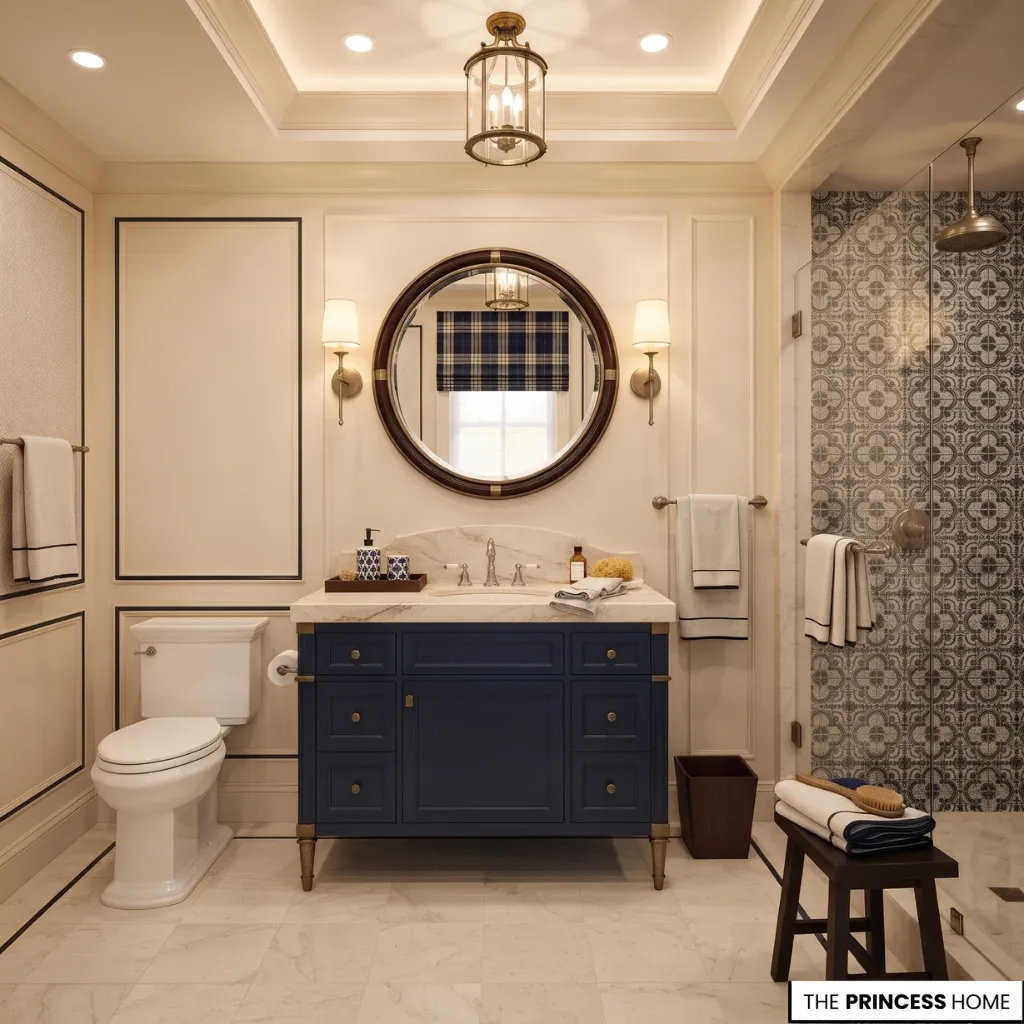
Lighting needs to provide practical illumination while supporting the residential character of the room. Begin with useful ambient light, then provide clear vanity lighting for grooming. Where appropriate, add decorative or accent lighting to highlight architectural details, artwork, materials, or a focal wall.
Vanity lighting deserves particular attention because poorly positioned light can create strong shadows on the face. Where practical, vertical fixtures on both sides of the mirror can distribute light more evenly.
A well-positioned fixture above the mirror can also work when its light reaches the face without producing harsh shadows. Consider brightness, color rendering, and color temperature together rather than selecting a fixture by appearance alone.
Decorative fixtures can introduce tailored character through their shape and material, but bathroom suitability and electrical requirements come before appearance. A beautiful fixture is not useful if it is inappropriate for its location.
For a warm residential atmosphere, around 2700K can be a useful starting point for ambient and decorative lighting.
The final choice should account for the room’s natural light, task requirements, finishes, and the color appearance of the selected fixtures. Several well-positioned light sources usually provide a more useful result than relying on one very bright source.
Add Pattern and Texture
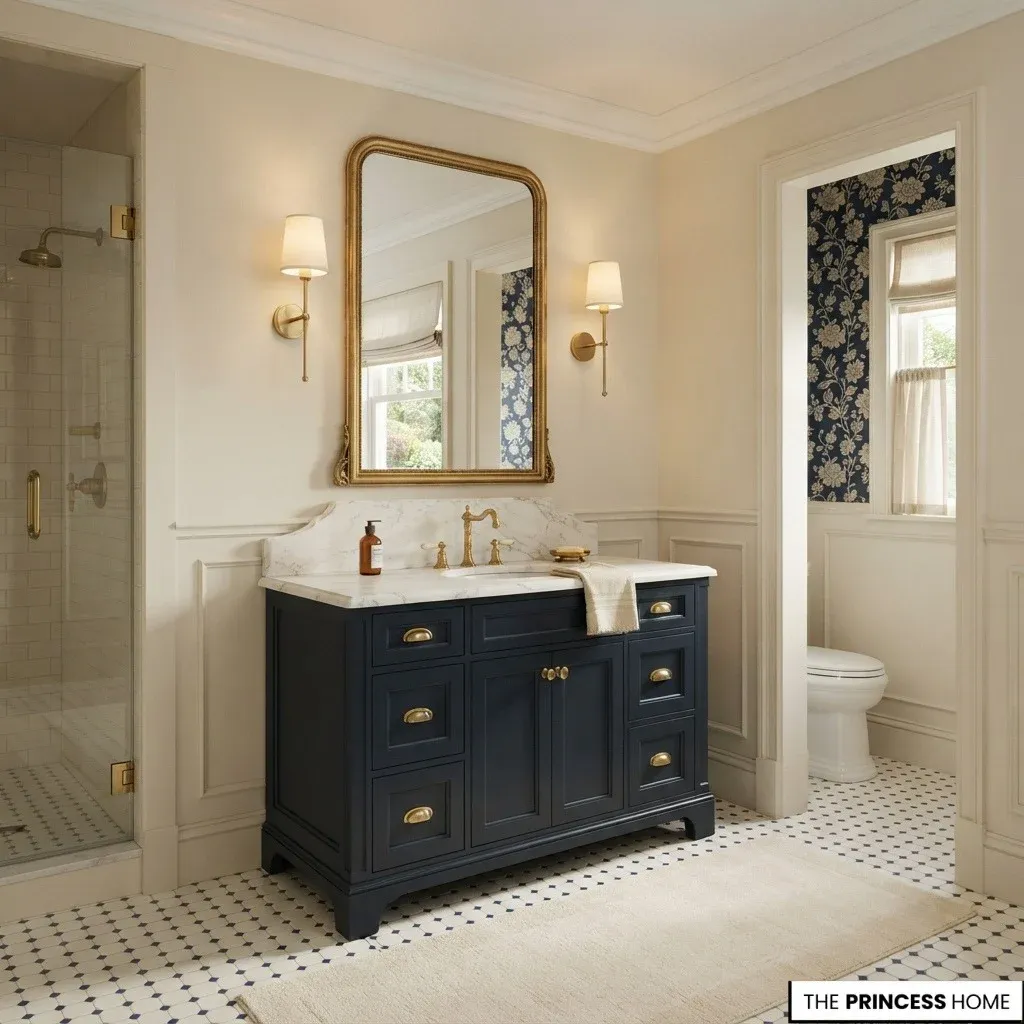
Pattern gives a Ralph Lauren bathroom much of its personality, particularly when it is used with restraint. Classic stripes, checks, restrained florals, borders, woven textiles, and carefully selected wallpaper can introduce the collected character associated with the wider Ralph Lauren design language.
Ralph Lauren Home’s bath offerings also demonstrate the use of stripes, florals, borders, varied colors, towels, mats, and robes.
Give each pattern a clear role. Let one design lead while surrounding surfaces provide quieter texture. For example, pair a striped textile with plain stone and painted cabinetry. Balance a patterned floor with simpler walls and towels.
Wallpaper can work especially well in a powder room, where a small space can accommodate a stronger decorative choice. In bathrooms exposed to greater moisture, check that the wallpaper suits the conditions and follow the manufacturer’s guidance for installation and ventilation.
Texture can also come from materials rather than printed patterns. Woven towels, natural stone, wood grain, brushed metal, and glass can provide enough variation when the room already contains a strong architectural feature.
The goal is collected character, not a themed bathroom filled with competing references.
Style Every Detail
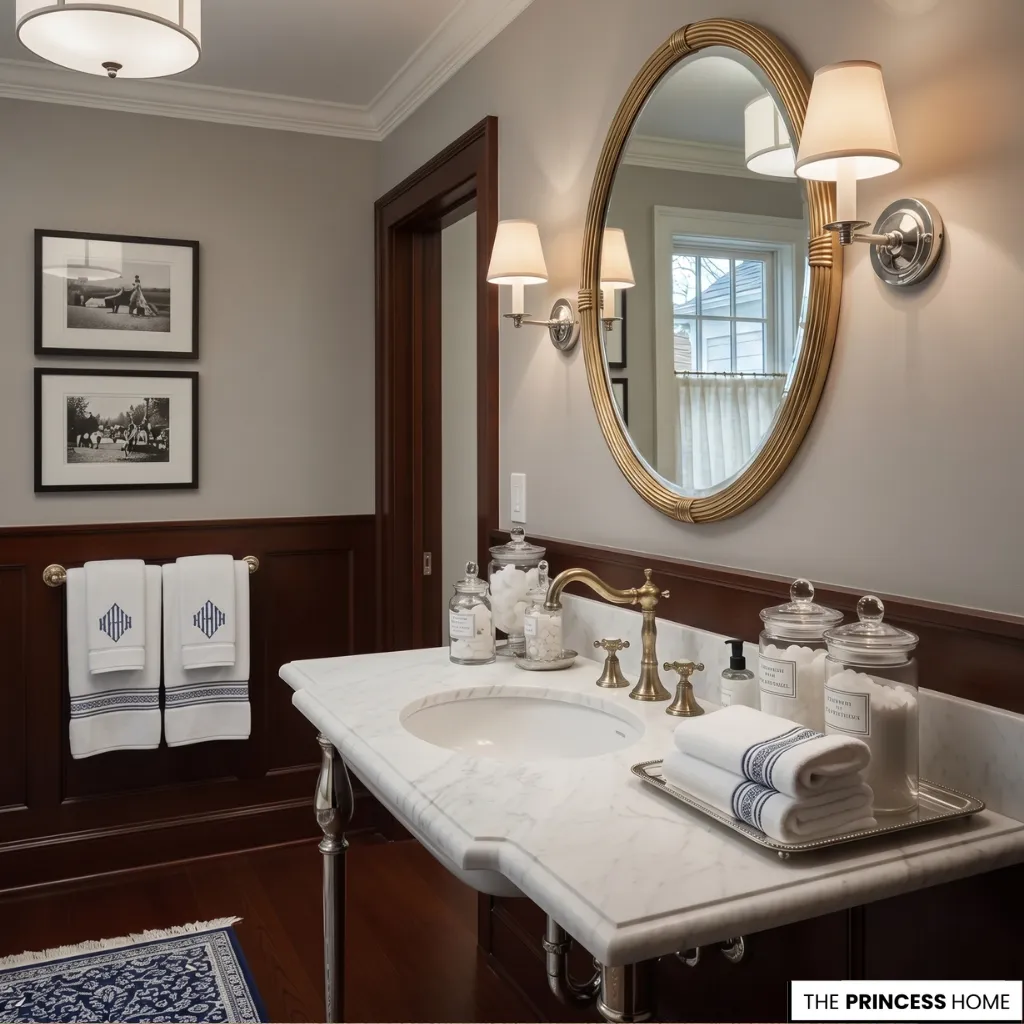
The final layer should make the bathroom feel personal and considered rather than staged. Start with useful decorative elements: substantial towels, a well-chosen bath mat, a framed mirror, appropriate storage containers, trays, and carefully selected hardware.
These details can reinforce the color and material story established by the room. Distribute accessories instead of filling every available surface. A tray can organize everyday items, while a small piece of artwork or a simple arrangement can provide a focal point without competing with the vanity or mirror.
If the room already contains strong stone, cabinetry, and patterned textiles, it may need fewer decorative objects. If the architecture is simple, textiles, mirrors, hardware, and one or two carefully selected objects can provide more character.
This is where a collected approach becomes useful: each detail should belong to the interior rather than being added simply to make the bathroom look more decorated.
Adapt the Style
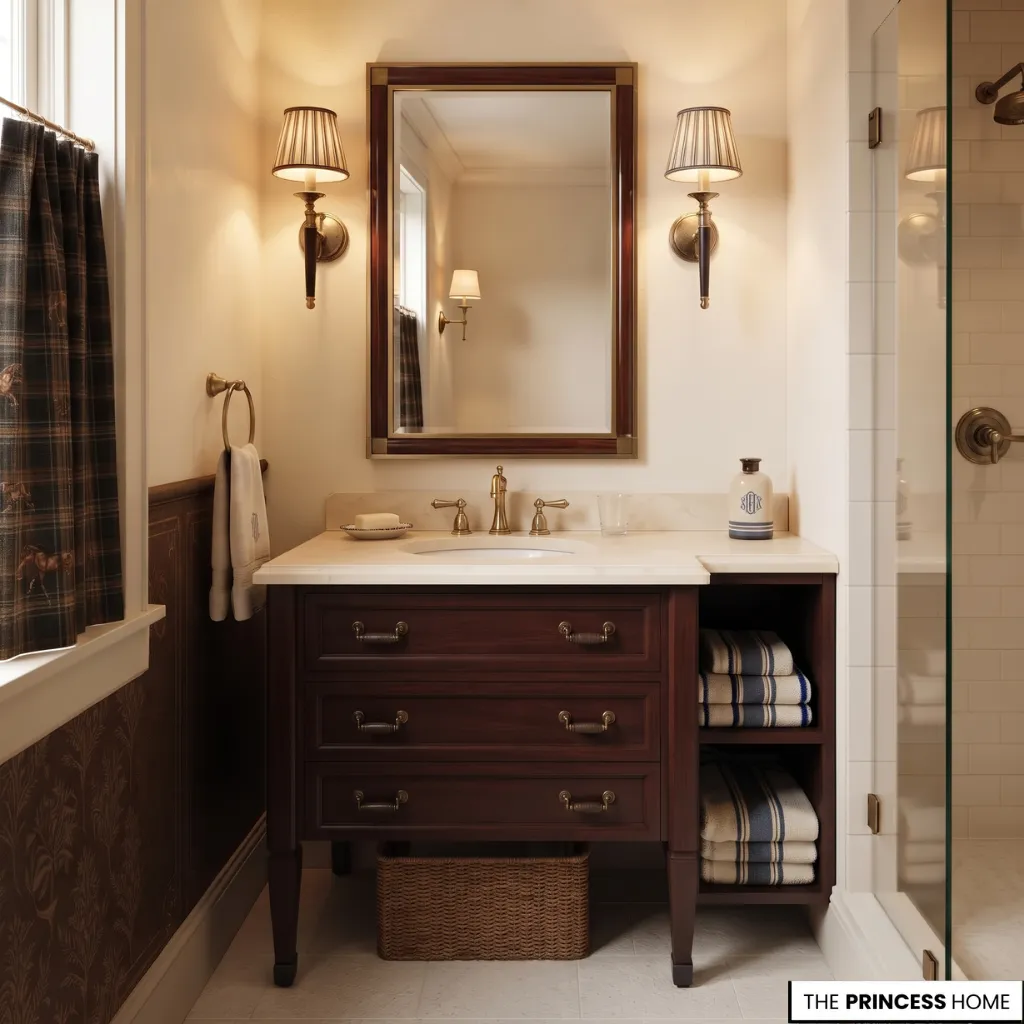
A Ralph Lauren-inspired bathroom does not need to be large or expensive. The design language can be adapted by changing the scale and priority of the decisions. In a small bathroom, begin with the vanity and mirror wall because they occupy a significant part of the visual field.
Choose furniture that fits the available circulation, control the number of competing materials, and use lighting to keep the room clear and functional.
A powder room allows more freedom. A darker color, stronger wallpaper, decorative mirror, or expressive light fixture can become the central design decision because the room has fewer functional demands than a primary bathroom.
A larger bathroom provides room for a stronger material hierarchy. A substantial vanity, separate tub and shower zones, larger stone or tile fields, layered lighting, and additional storage can create a richer composition without forcing every element to compete.
Plan storage as part of the design rather than treating it as an afterthought. Use a furniture-style vanity with drawers or cabinets to conceal everyday products, and reserve open shelving for towels and a few intentional decorative objects.
In compact bathrooms, vertical storage and mirrored cabinets can provide additional capacity without occupying unnecessary floor space or making the room feel crowded.
Budget should be approached through priorities rather than by replacing every expensive element with a cheaper version. Solve the layout and functional requirements first, then prioritize major surfaces, the vanity, mirror, lighting, hardware, textiles, and accessories.
When a natural stone, custom vanity, or specialized architectural feature is outside the budget, choose an alternative that performs a similar visual function.
A convincing stone-look surface can replace natural stone where appropriate, or an existing cabinet can be improved through a new countertop, hardware, mirror, and lighting.
The replacement should remain compatible with the room’s proportions and design language. The aim is not to reproduce every expensive detail. It is to preserve the hierarchy that makes the room feel intentional.
Conclusion
A Ralph Lauren bathroom works best when it feels tailored, comfortable, and collected rather than themed. Build that character through the foundation first, then use materials, color, lighting, textiles, and carefully chosen details to reinforce it.
The result can work in a grand primary bathroom, a compact guest bath, or a small powder room while keeping the same underlying design logic.
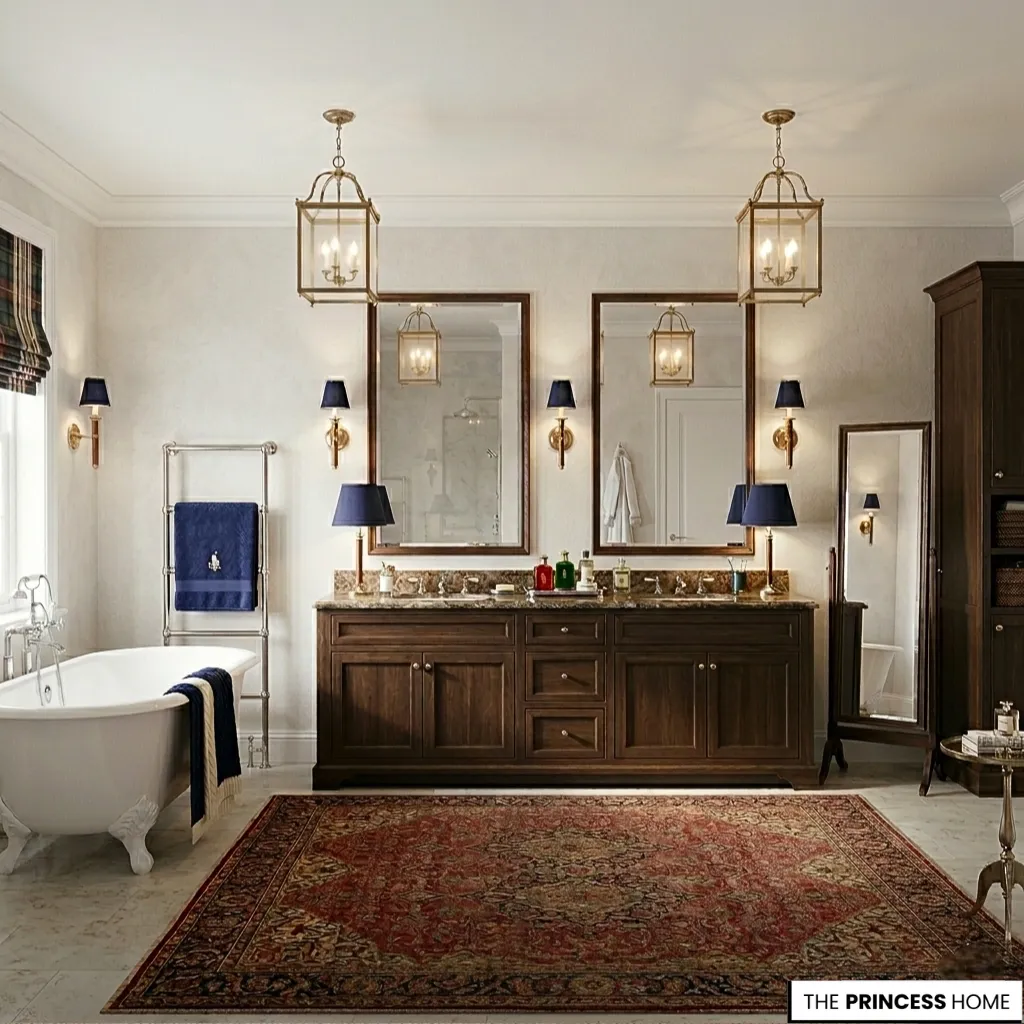
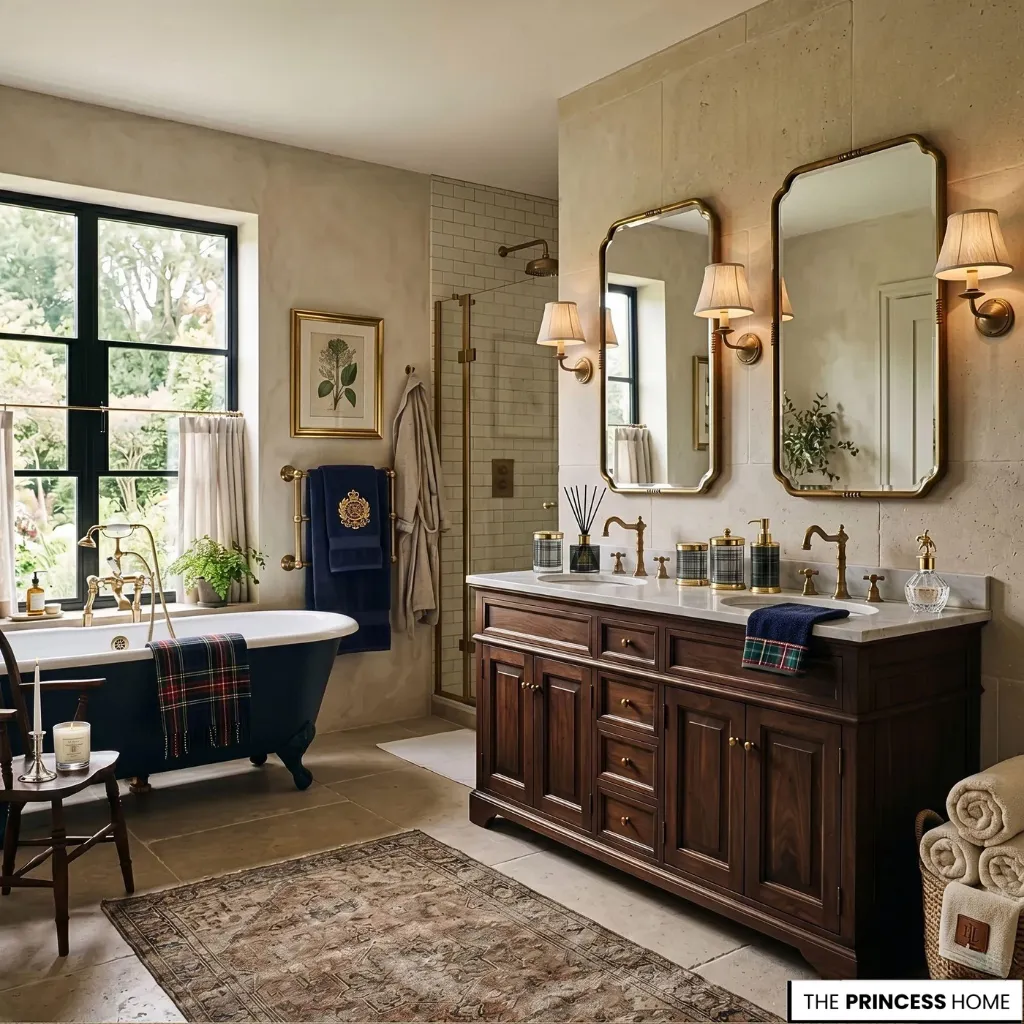
Explore the visual gallery below for inspiring ideas that bring this aesthetic to life in your home.
Further Reading
Explore these related guides for more design inspiration and practical ideas for creating timeless interiors.
- Timeless Ralph Lauren-Inspired Living Room Design
- Creating a Bedroom with Heritage Luxury
- Elegant Kitchen Design Inspired by Ralph Lauren
- A Dining Room That Combines Classic Style and Timeless Luxury
- How to Achieve Ralph Lauren Style on a Budget
- Modern Heritage Interiors for Apartment Living
- Elegant Summer Living with Ralph Lauren Style
- Timeless Luxury Bathroom Design Ideas
- Creating a Luxurious Ralph Lauren-Inspired Home Office
- Timeless Outdoor Spaces with Ralph Lauren-Inspired Details