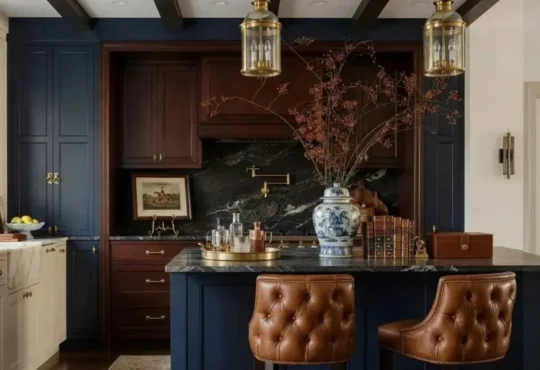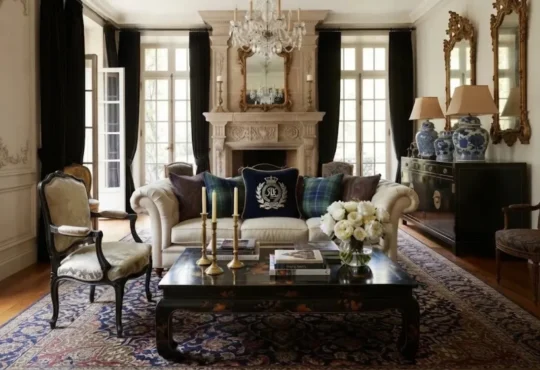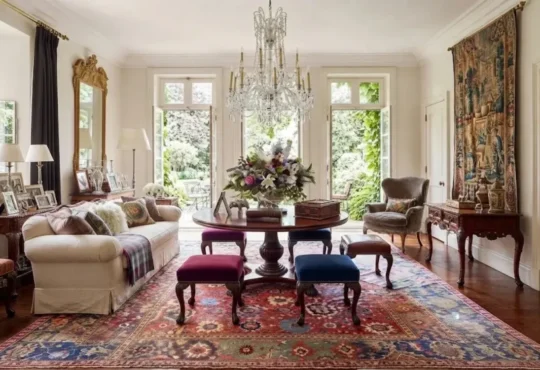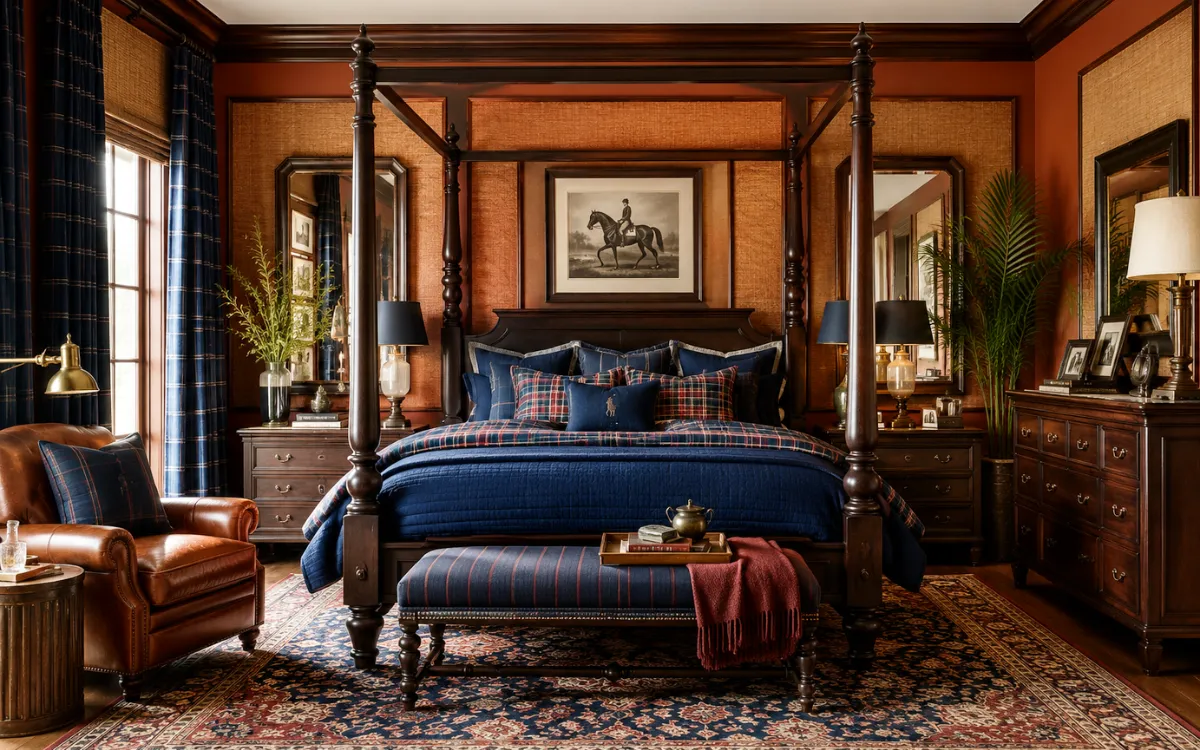
A Ralph Lauren bedroom combines tailored furniture, heritage materials, layered textiles, and personal objects without relying on a single color or decorating formula. The challenge is using these elements with enough restraint that the room feels established rather than themed or staged.
Start with one strong anchor, then build the bed, palette, materials, patterns, lighting, and personal details around it.
Ralph Lauren Bedroom Style
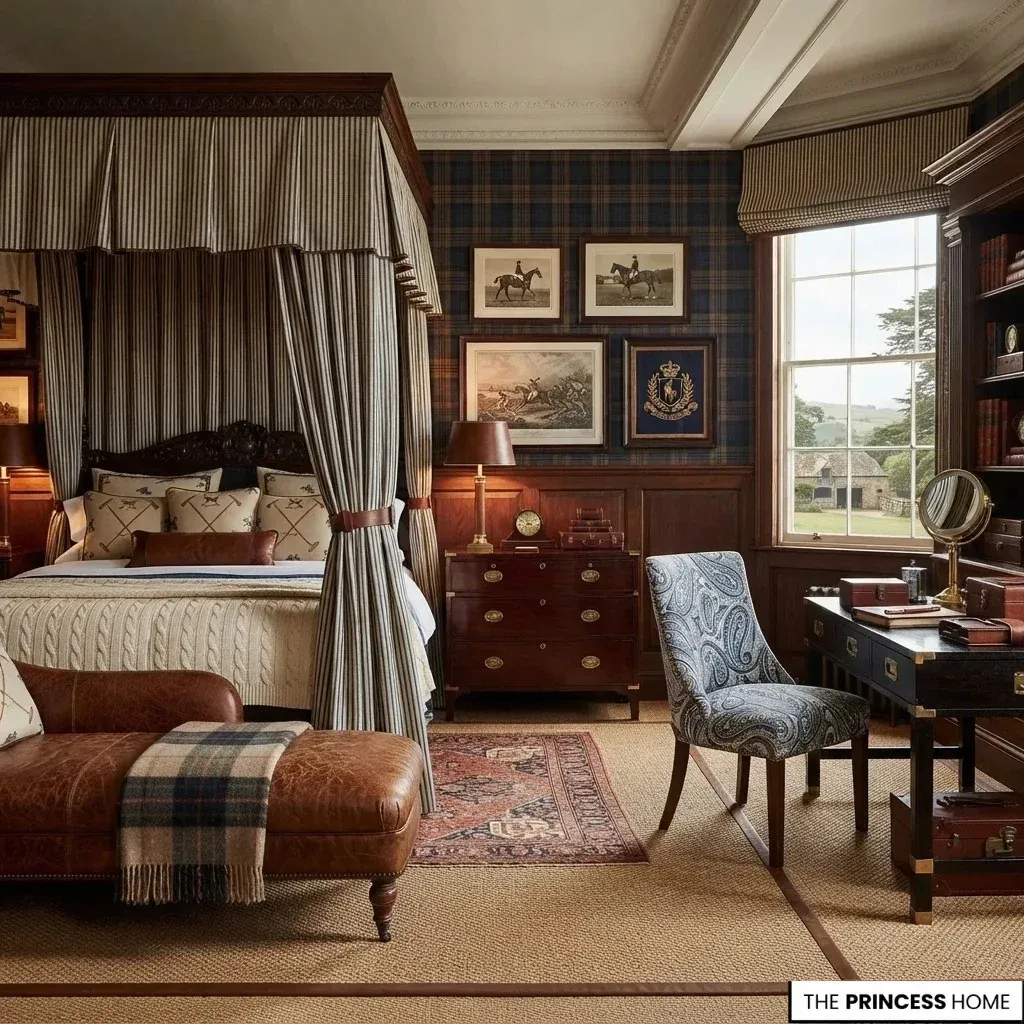
A Ralph Lauren bedroom typically combines classic American and English references with tailored comfort. Substantial furniture, traditional details, layered bedding, heritage patterns, warm materials, and carefully chosen personal objects are recurring parts of the design.
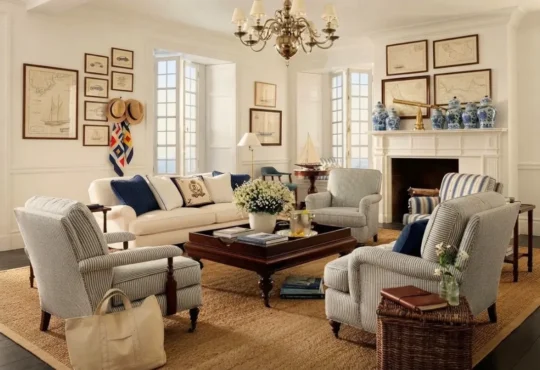
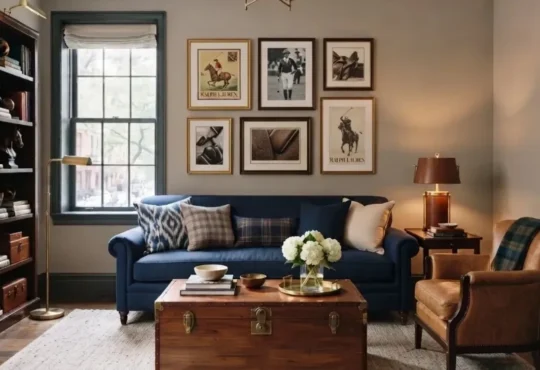
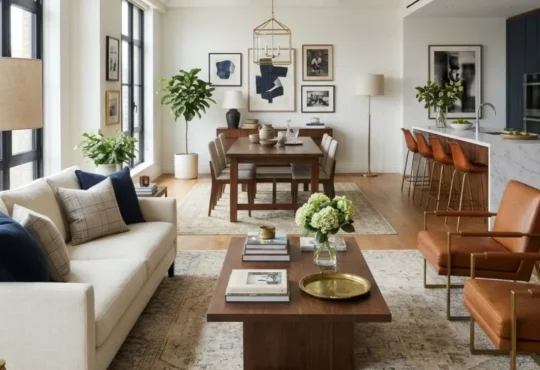
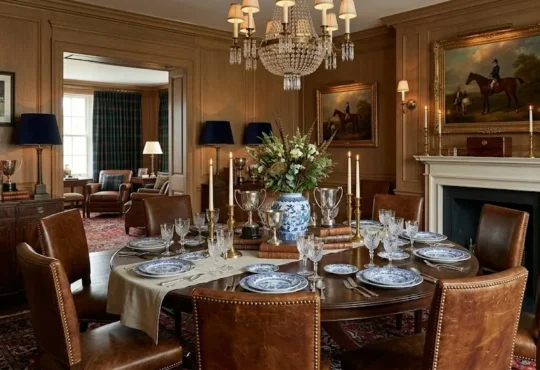
There is no single Ralph Lauren bedroom formula. Ralph Lauren Home currently presents several distinct lifestyle expressions, including Estate, Island, Western, and Penthouse.
Each represents a different interpretation of the brand’s approach to interiors, from heritage-inspired elegance and natural textures to rustic furnishings and more contemporary sophistication.
A bedroom can therefore be traditional and country-inspired, relaxed and coastal, rustic, or more polished while still drawing from the broader Ralph Lauren design approach.
What connects these expressions is the way the elements are edited. Furniture has presence without filling every part of the room. Patterns are layered rather than scattered. Wood, leather, cotton, linen, wool, and metal provide variation without requiring a large number of colors.
This is why navy, plaid, dark wood, or brass alone do not make a bedroom Ralph Lauren. They are individual ingredients. The style comes from their proportions and relationships to the rest of the room.
Avoid treating the style as a theme. Repeating obvious Americana, equestrian, or heritage motifs throughout the room can make it feel staged. Use those references selectively and allow the bedroom to develop its own identity.
Start With an Anchor
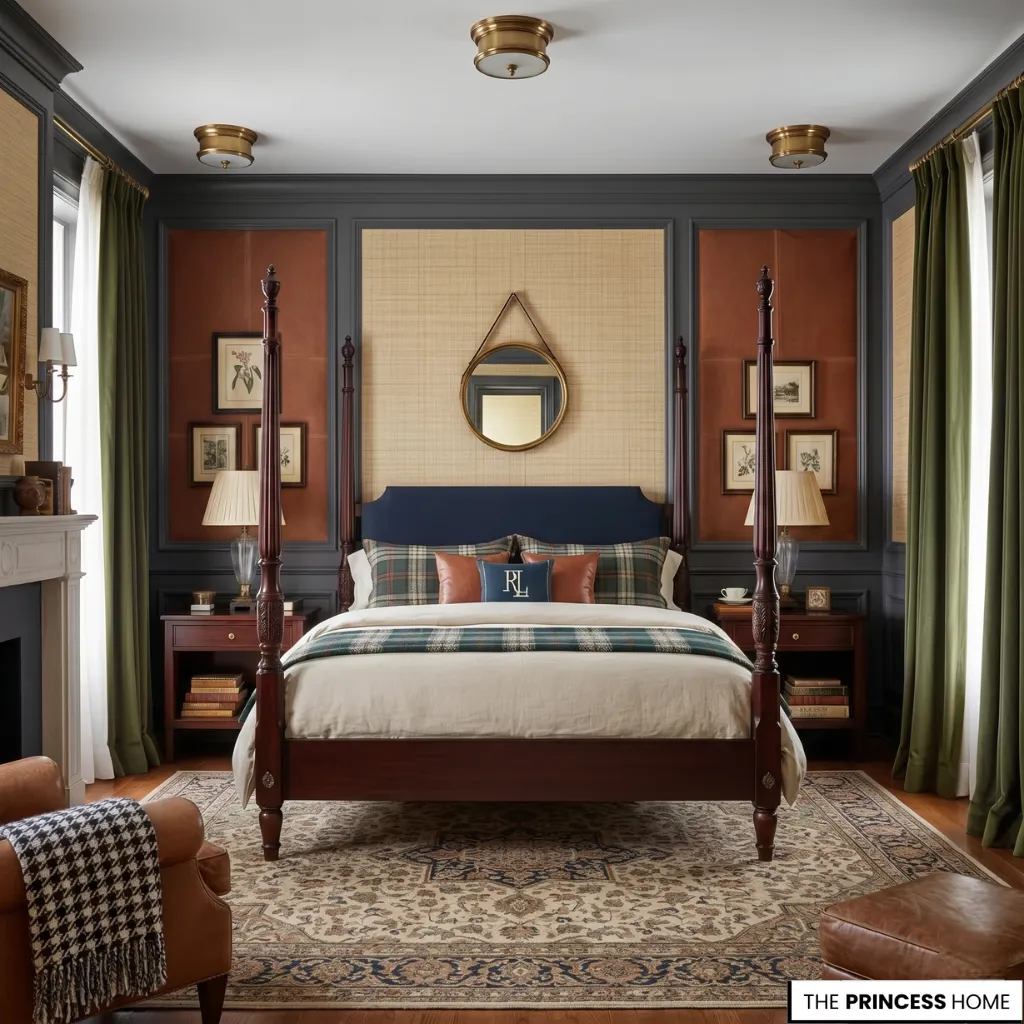
Choose one strong element to establish the bedroom’s direction before adding smaller details. It might be the bed, a patterned rug, an existing piece of wood furniture, meaningful artwork, or a distinctive textile.
The anchor helps determine the room’s dominant colors, material character, and visual weight. For example, a rug combining faded red, navy, cream, and brown can guide the bedding and accessories without requiring every item to repeat all four colors.
Consider the rug’s relationship to the bed and bedside furniture. In a larger bedroom, a rug that extends beyond the bed can connect the main furniture visually.
In a smaller room, a more modest rug can provide a focal point without covering most of the floor. Check how much of the rug will remain visible after the bed and other furniture are positioned.
The bed or a substantial wooden dresser can serve the same purpose when either has enough presence to guide the design. Use an existing piece if its proportions and character suit the room.
Once you have chosen the anchor, identify two or three qualities to carry into the remaining furnishings. These might be a particular color, a wood finish, or a pattern characteristic. This creates a clear direction without making every element compete for attention.
Choose the Bed
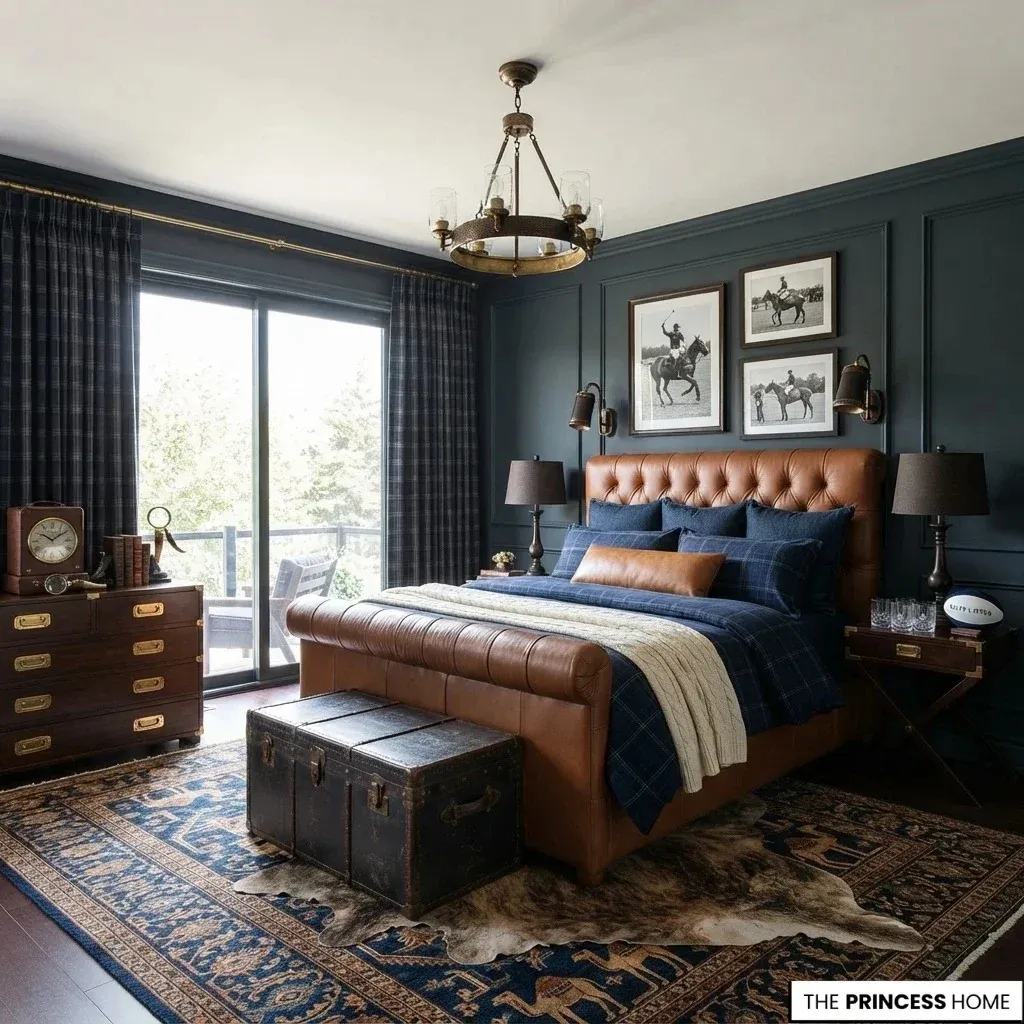
Choose a bed with enough visual presence to anchor the bedroom. Ralph Lauren-inspired interiors can accommodate substantial wooden or leather beds, upholstered headboards, and simpler contemporary forms. The right choice depends on the room’s proportions and the character of its other furnishings.
A wooden bed can strengthen a traditional direction. Look for considered proportions, substantial construction, and crafted details rather than excessive ornament. An upholstered bed offers a softer alternative, with tufting, leather, or structured fabric providing different levels of formality.
Assess the bed in relation to the room as a whole. A delicate frame may feel undersized beside substantial furniture and heavy textiles, while an oversized ornate headboard can overwhelm a modest bedroom.
Consider function alongside appearance. Check the overall bed height, including the mattress, so getting in and out remains comfortable. If storage is important, compare built-in drawers with under-bed clearance and consider whether either option suits the room’s layout.
Also check the bed’s actual external dimensions rather than relying only on its mattress size, particularly when space around the bed is limited.
The headboard and frame should complement the other furnishings without requiring an exact match. A substantial wooden dresser can work with a simpler upholstered bed, for example, when their proportions and finishes relate naturally.
In a smaller room, retain a bed that feels substantial enough for the space and reduce competing furniture around it. Clear walking routes and fewer well-chosen pieces usually produce a more balanced result than filling the room with miniature versions of traditional furniture.
Layer the Bedding
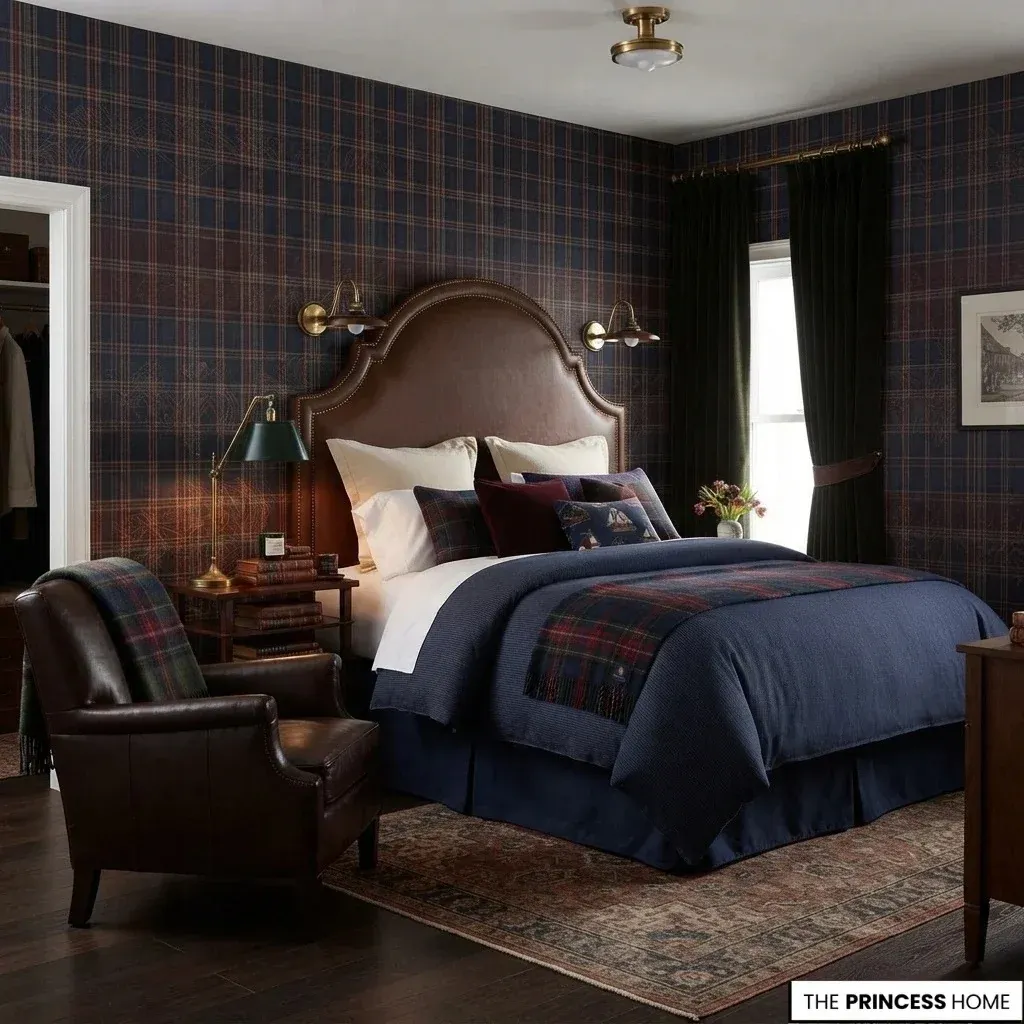
Build the bed around practical layers rather than relying on a single decorative comforter. Start with sheets, add a duvet or comforter, and introduce a quilt or coverlet when extra texture or warmth is useful. Shams, a blanket, and a limited number of decorative pillows can complete the arrangement.
Adjust the combination to the season, room temperature, and amount of pattern elsewhere in the bedroom. Ralph Lauren Home bedding collections offer examples of how sheets, quilts, coverlets, blankets, and patterned shams can work together, but reproducing a complete collection is unnecessary.
Consider the weight and care requirements of each layer as well as its appearance. Lightweight cotton and linen can suit warmer conditions, while heavier blankets and quilts may provide additional warmth when needed. Choose fabrics that feel comfortable against the skin and are practical to wash and maintain.
Texture can provide interest without adding more colors. Linen, cotton, quilted fabric, wool, and woven materials create variation even within a restrained palette.
If you choose a prominent plaid coverlet, keep the sheets and most pillows quieter. Alternatively, a striped sham can introduce pattern when the main bedding is plain. Different patterns can coexist when they share a color family and vary in scale.
Give each layer a clear purpose: practical bedding, warmth, texture or pattern, and a few finishing details. Remove anything that makes the bed uncomfortable or difficult to use.
Build the Palette
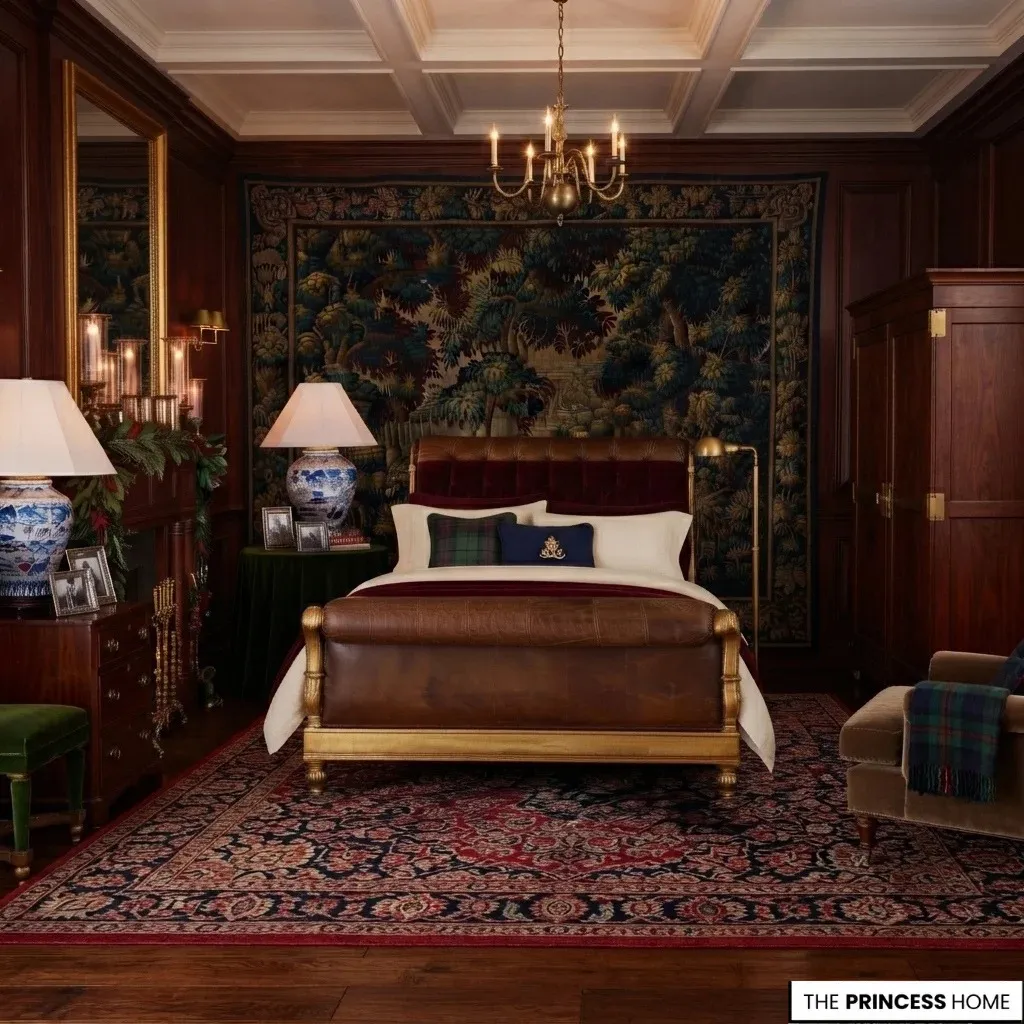
Choose a limited palette rather than trying to include every color associated with traditional American interiors. Navy, indigo, cream, ivory, brown, cognac, muted green, burgundy, dusty blue, and warm neutrals are useful starting points, not fixed rules for Ralph Lauren bedrooms.
Begin with the strongest existing color or finish in the room. This might be a wood floor, a patterned rug, an upholstered headboard, or an artwork you intend to keep. Add supporting colors that relate to this element rather than choosing every color independently.
A cream-and-navy bedroom, for example, can incorporate brown wood and a small amount of faded red through a rug or artwork. A brown-and-cream scheme can introduce dusty blue in the bedding.
Navy and dark walls are optional. Forest green, warm neutrals, natural tones, and lighter coastal colors can also establish the room’s direction. When the furniture and textiles are already visually substantial, lighter walls or bedding can provide balance.
The dominant color does not always need to cover the largest wall or surface. A strong rug or piece of artwork can establish the palette while the walls remain relatively quiet. Consider where the eye naturally settles and which existing elements should remain prominent.
Judge colors in the room’s actual lighting and alongside the materials they will touch. Wood undertones, fabric textures, and the amount of natural light can change how a color appears.
The aim is to establish a clear hierarchy: a dominant color or visual anchor, supporting colors that connect the furnishings, and a small number of accents. When every color competes equally, the room loses cohesion.
Mix Rich Materials
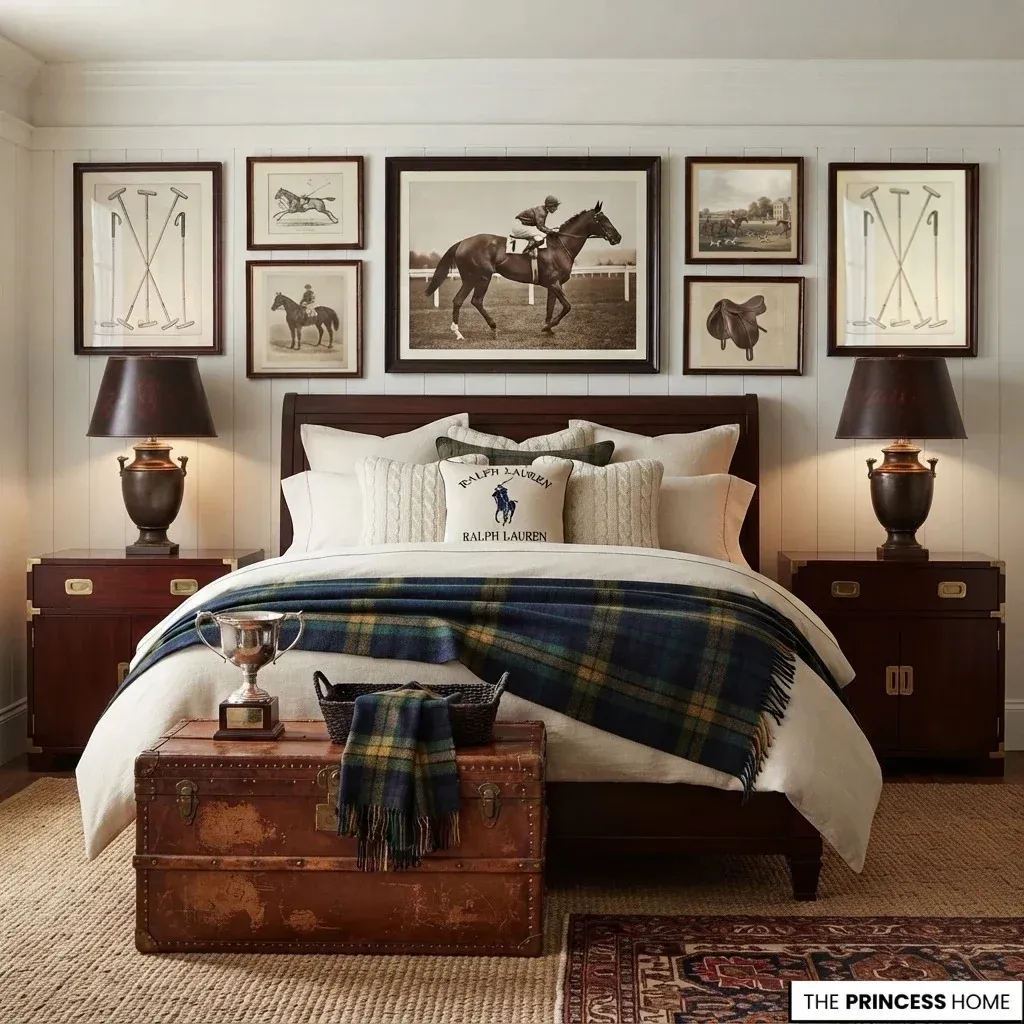
Use differences in texture and finish to give the bedroom depth. Wood provides visual weight, leather adds structure, linen and cotton soften harder surfaces, and wool or woven textiles introduce tactile variation.
A practical combination might include a substantial wooden dresser, an upholstered bed, cotton bedding, a wool rug, and one leather or woven accent. The materials do not need to match exactly; they should relate through their colors, proportions, and overall character.
Consider both the visual and physical qualities of each material. Smooth leather, for example, contrasts with woven linen, while polished wood creates a different effect from a weathered or matte finish. These differences help individual pieces remain distinct without making the room feel disconnected.
Warm metals can appear in functional details such as lamp bases, handles, or picture lights. Use them selectively rather than repeating the same finish on every surface.
Pay attention to how much visual weight the materials contribute together. Dark wood, leather, heavy plaid, ornate metal, and strongly patterned fabrics can make a room feel dense when all are used prominently. In that situation, simplify the textiles or introduce smoother, lighter surfaces.
You do not need to replace every piece to achieve this balance. One substantial wooden item may provide enough grounding when the rest of the furniture is simpler. Focus on how the materials work together rather than collecting every material associated with the style.
Use Heritage Patterns
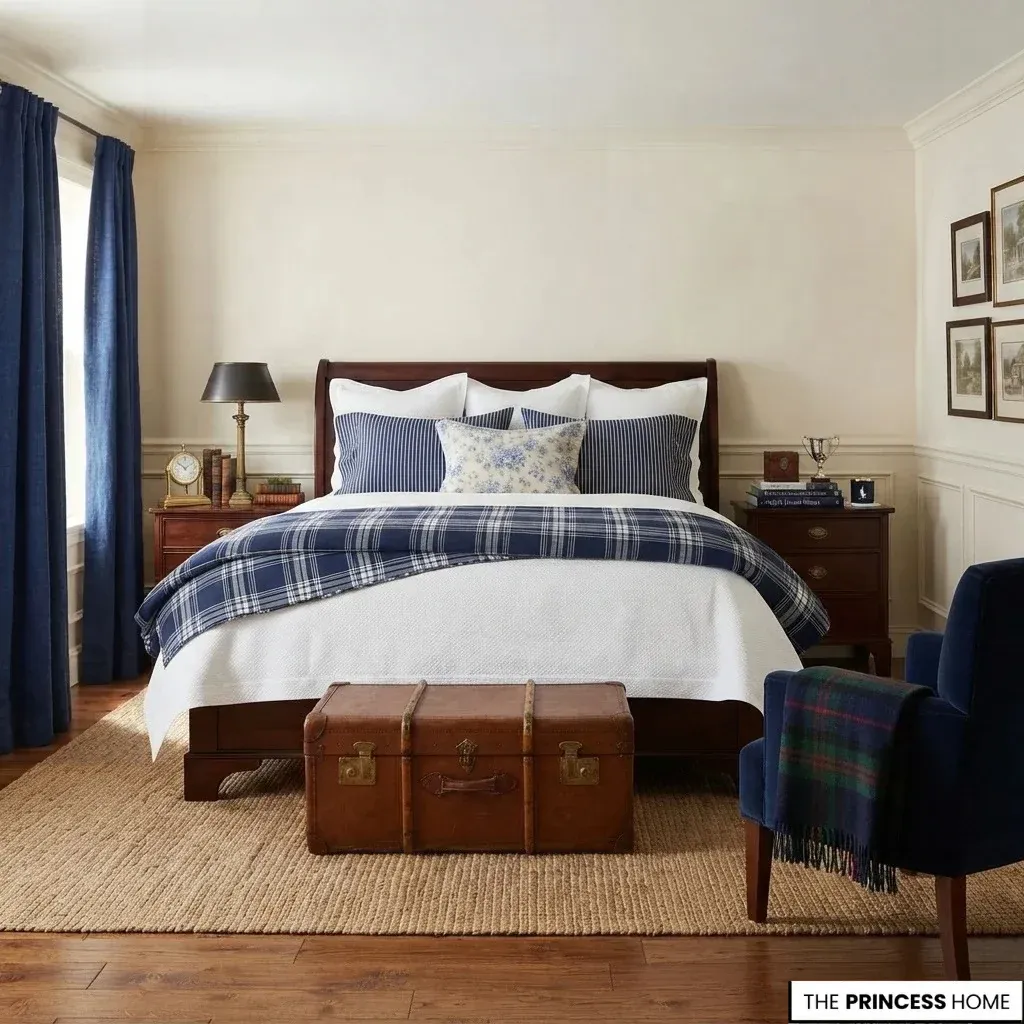
Choose patterns according to the bedroom’s direction and give each one a clear role. Plaid, checks, stripes, tattersall, florals, botanical motifs, and shirting-inspired designs can support different interpretations of Ralph Lauren’s broader design approach.
A restrained stripe can reinforce a tailored look, while plaid or tattersall can suggest a country or estate influence. Botanical patterns may soften the arrangement, and indigo designs can create a more relaxed effect.
Start with one dominant pattern, such as a large plaid coverlet. Add a smaller stripe or a quiet texture only if the combination needs it. Repeating one color across different patterns helps connect them; navy stripes and faded blue florals, for example, can work together when the surrounding fabrics remain relatively calm.
Consider the scale and placement of each pattern. Strong designs at similar scales across the bedding, curtains, rug, and upholstery can compete for attention. Leave some surfaces plain or subtly textured so the main pattern remains easy to read.
Also consider the distance from which a pattern will be seen. A detailed small-scale design may be more effective on a cushion or sham than across a large surface, while a larger plaid can remain legible across a coverlet.
The goal is a layered arrangement in which the patterns complement one another without making every textile look like part of a matching set.
Shape Warm Lighting
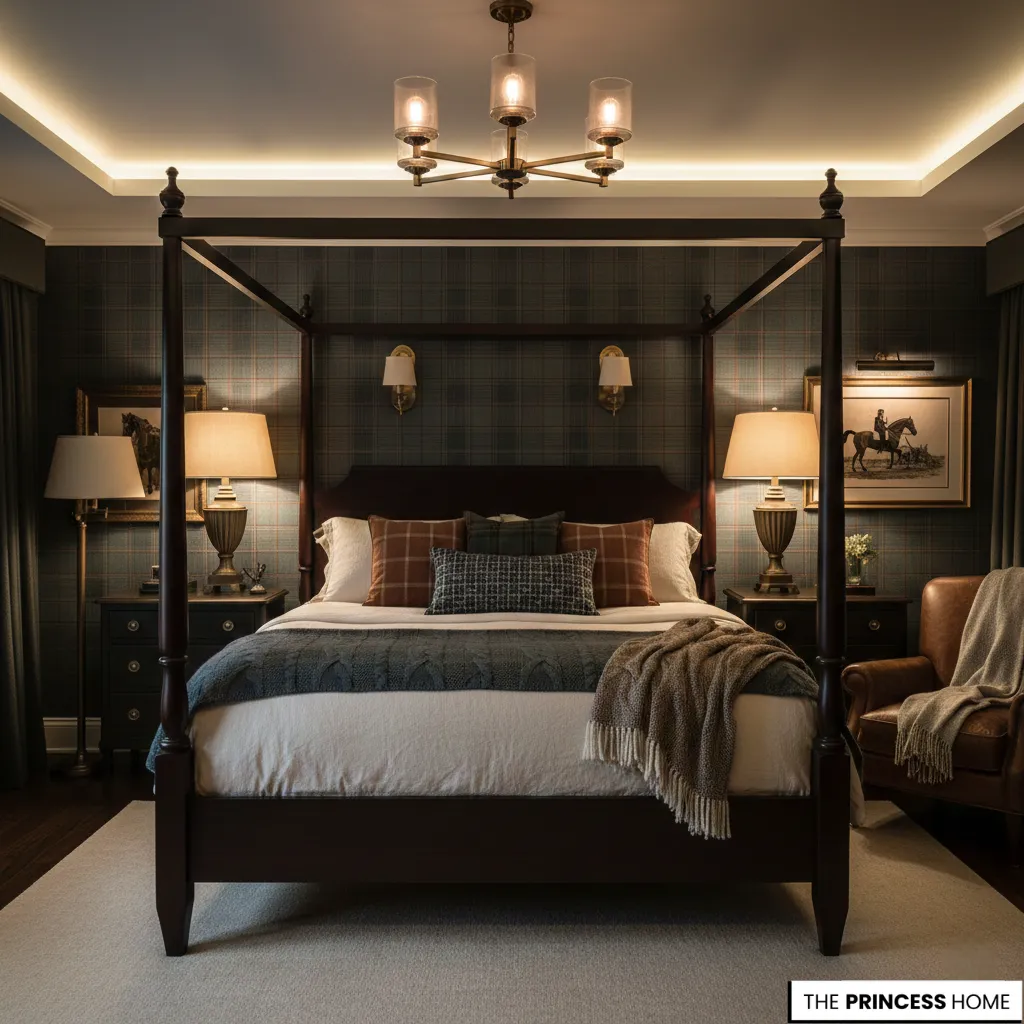
Plan lighting around the activities that take place in the bedroom. Bedside lamps provide reading light and can create symmetry when the layout supports it.
Wall sconces can preserve space on small nightstands, while a ceiling fixture provides general illumination. Picture lights or other focused sources can highlight selected artwork.
Choose fixtures that relate to the furniture and materials already in the room. Brass, ceramic, or wood lamp bases with linen or pleated shades are possible starting points, rather than requirements for the style.
For evening comfort, around 2700K is a practical starting point for warm residential lighting, not an official Ralph Lauren specification. Also consider brightness and whether the light is comfortable for reading and winding down.
Pay attention to the position of bedside lights. A lamp should provide useful illumination without shining directly into the eyes when someone is sitting or lying in bed.
Check that switches are accessible from the bed and that the fixture does not take up more nightstand space than the surface can comfortably accommodate.
Avoid depending on a single bright overhead fixture. Combine general lighting with bedside task lighting and focused illumination where it serves a purpose. This gives you better control over the room’s function and atmosphere.
Add Collected Details
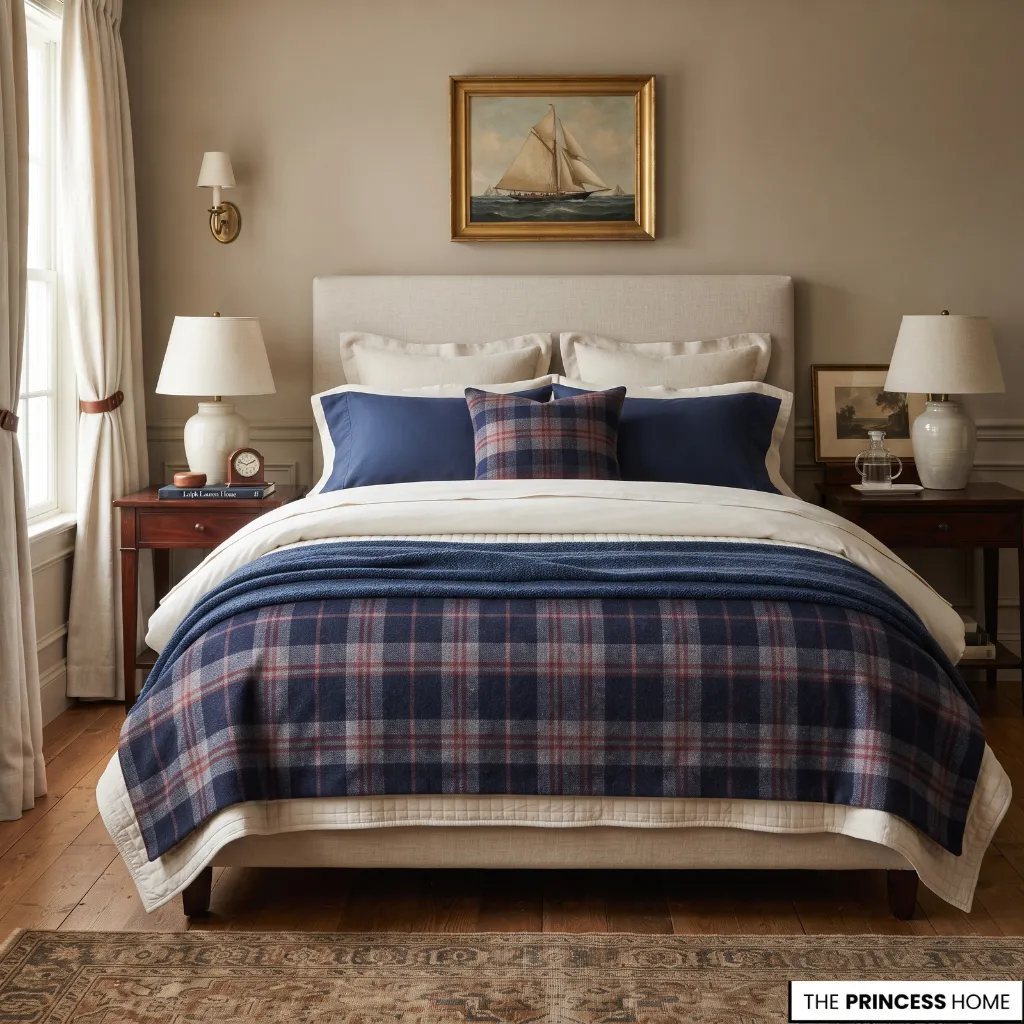
Give the bedroom a personal identity through objects that have meaning or a genuine place in daily life. Books, framed photographs, artwork, inherited pieces, travel finds, and vintage objects can add character without requiring a large collection.
A single equestrian artwork, an old wooden box, or a framed map may provide a heritage reference more effectively than filling every surface with themed accessories. The same principle applies to books and photographs: choose pieces that belong in the room rather than adding them simply to complete a look.
These details also help balance the formality of tailored furniture. Combining traditional references with personal belongings makes the bedroom feel individual rather than arranged as a showroom display.
Keep the selection edited. Repeated polo imagery, horses, flags, or other obvious Americana motifs can make the theme too literal. A few meaningful objects, arranged with enough space around them, will usually have greater impact.
Consider where each object will be used or displayed. A bedside table needs enough clear space for everyday items, while a dresser can accommodate a more deliberate arrangement. Leave room for the objects to be seen without allowing accessories to interfere with the furniture’s practical function.
Adapt the Style
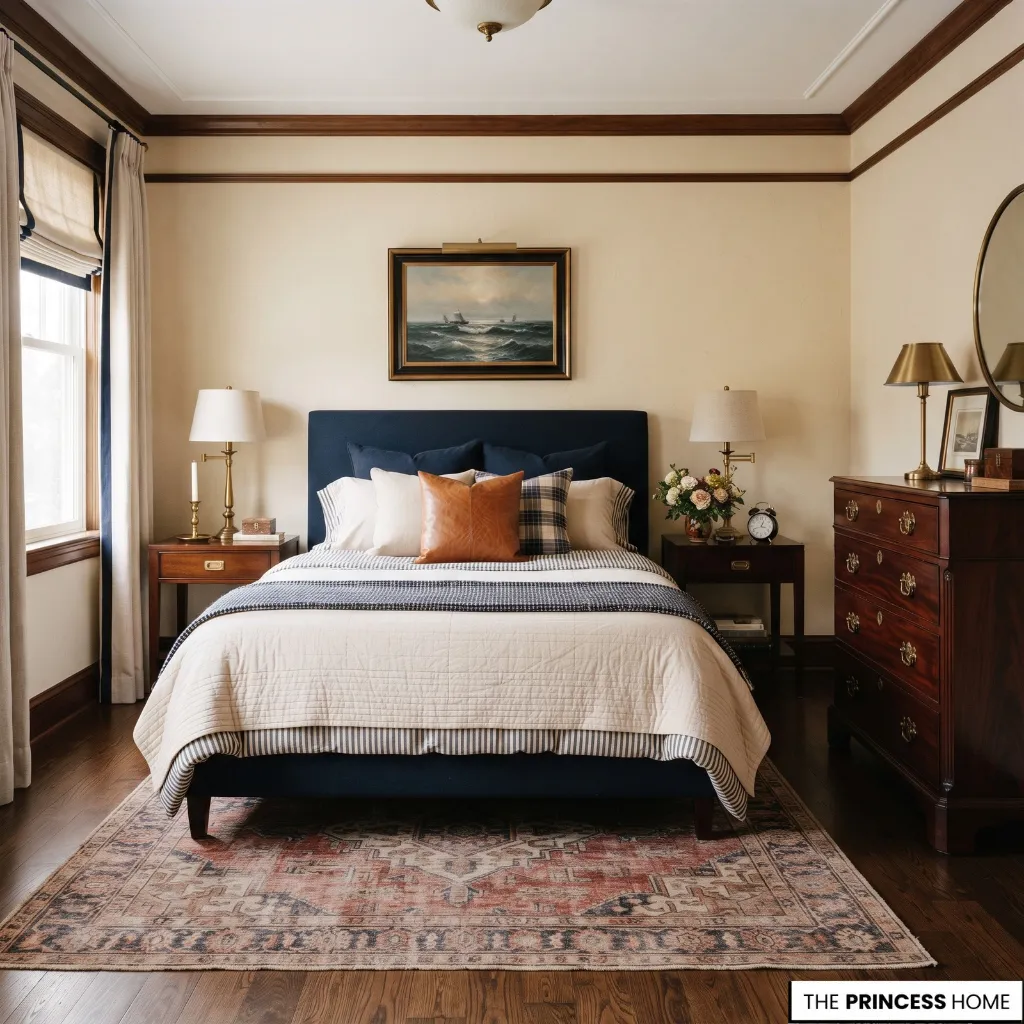
A Ralph Lauren-inspired bedroom does not require a large room or a complete branded collection. In a smaller bedroom, prioritize a well-proportioned bed, one substantial material such as wood, a meaningful textile, and useful layered lighting. Reduce unnecessary furniture and leave clear routes around the bed.
A limited budget calls for the same selectivity. Prioritize the main furniture, then consider the rug or another grounding element, lighting, textiles, and decorative details. The exact order can change if you already own a strong bed, rug, or dresser that establishes the room’s direction.
Use existing furniture where its proportions and condition work well. A wooden dresser can provide traditional character, while a tailored headboard or a well-chosen quilt can introduce structure and pattern without replacing the entire bedroom.
When a particular element is unavailable or unsuitable, preserve its design function. Bedding or artwork can introduce color and pattern when wallpaper is not practical. An existing piece with strong proportions can provide visual weight when an antique purchase is out of reach.
Choose alternatives that support the room’s overall character, rather than buying inexpensive pieces that do not work with the furniture you already have. A few well-considered elements are more effective than a crowded collection of loosely related accessories.
Before completing the room, consider whether its furniture, colors, materials, and patterns would still feel cohesive without recognizable heritage references. If the design depends entirely on themed accessories, reconsider the balance of its main elements.
This final check helps distinguish a thoughtfully interpreted style from a room that simply reproduces its most familiar motifs.
Conclusion
A Ralph Lauren-inspired bedroom depends on considered proportions, layered materials, restrained patterns, comfortable lighting, and personal details. Start with a strong anchor, choose a bed that suits the room, and let the remaining elements support a coherent design.
The goal is to translate a heritage-inspired approach into a bedroom that feels comfortable, collected, and distinctly your own.
Further Reading
Explore these related guides for more design inspiration and practical ideas for creating timeless interiors.
- Timeless Ralph Lauren-Inspired Living Room Design
- Creating a Bedroom with Heritage Luxury
- Elegant Kitchen Design Inspired by Ralph Lauren
- A Dining Room That Combines Classic Style and Timeless Luxury
- How to Achieve Ralph Lauren Style on a Budget
- Modern Heritage Interiors for Apartment Living
- Elegant Summer Living with Ralph Lauren Style
- Welcoming Entryways with Classic Elegance
- Timeless Luxury Bathroom Design Ideas
- Creating a Luxurious Ralph Lauren-Inspired Home Office
- Timeless Outdoor Spaces with Ralph Lauren-Inspired Details