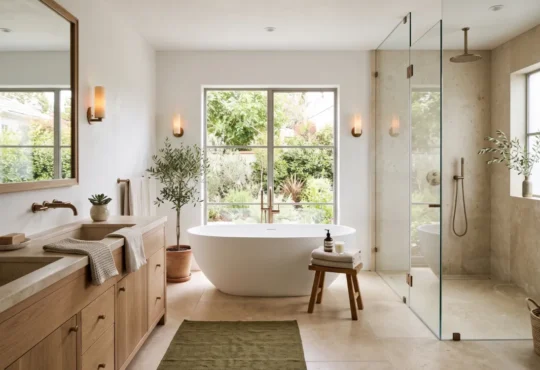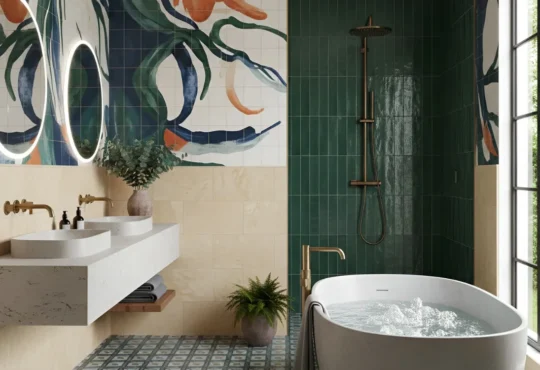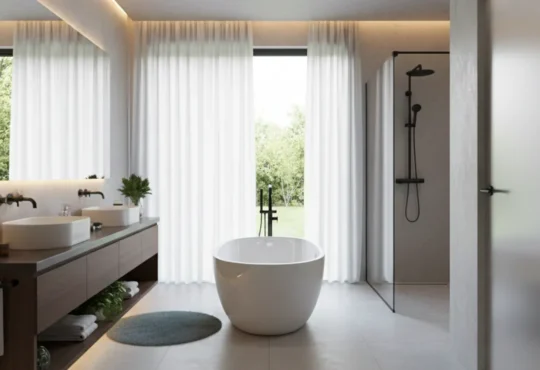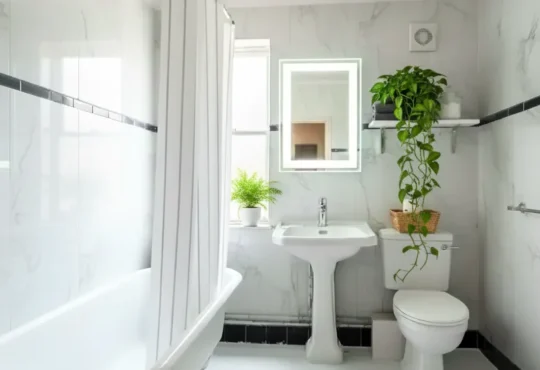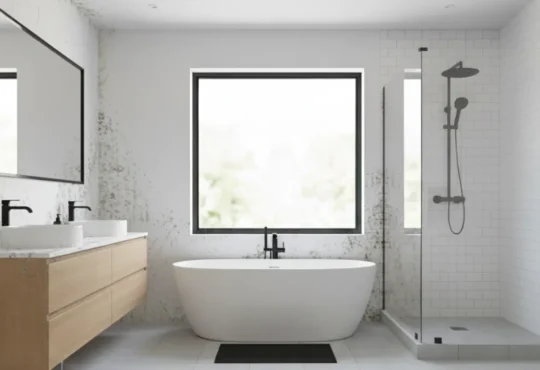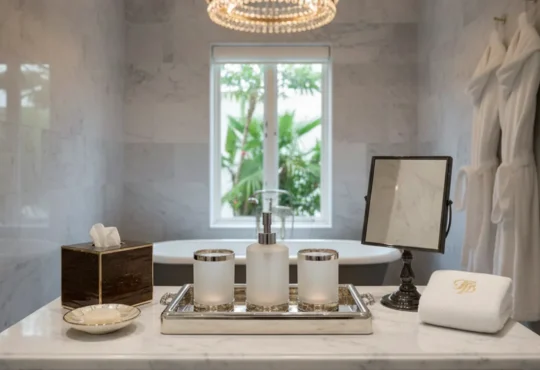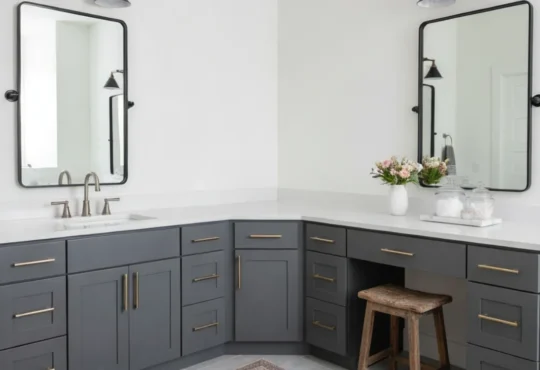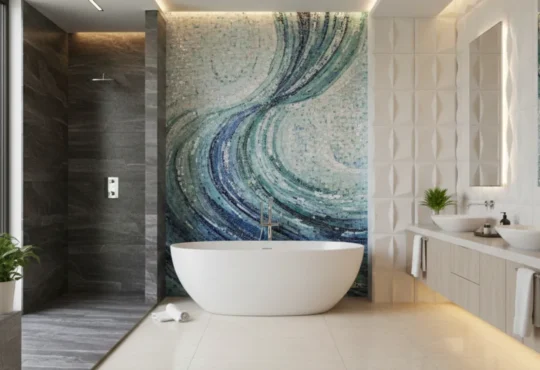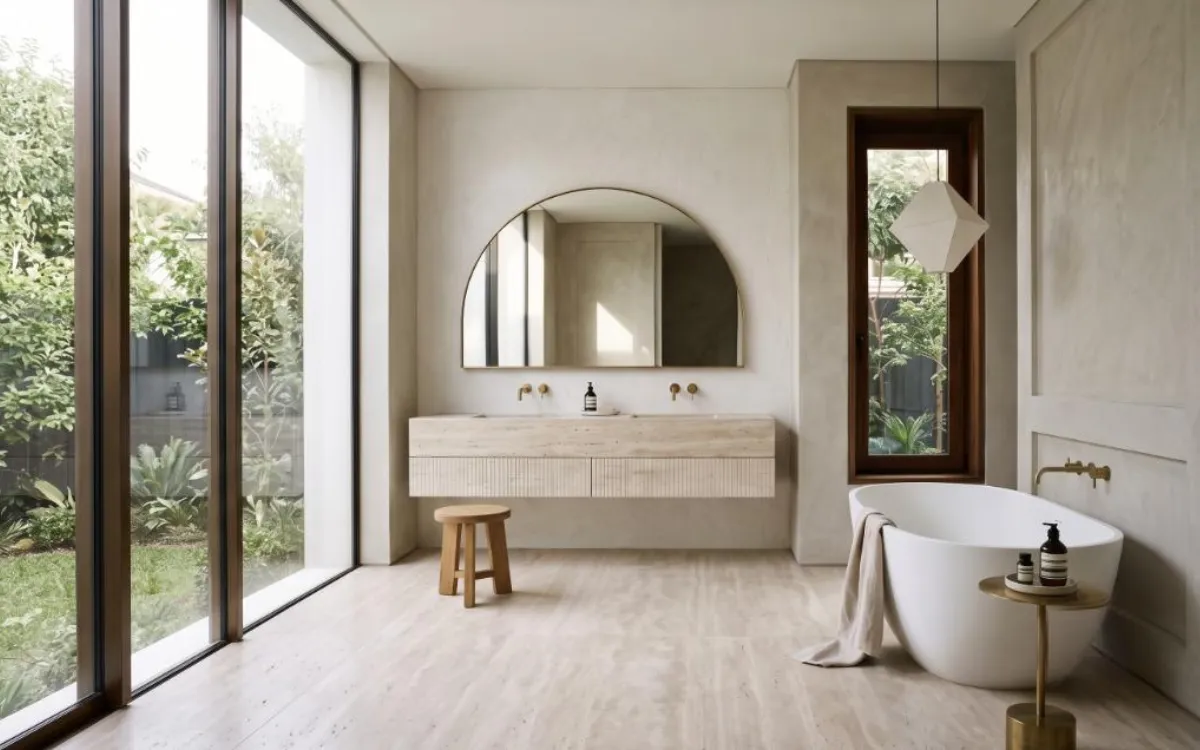
Morning light settles gently across a softly veined stone vanity before catching the quiet glow of brushed brass and textured ceramic. Nothing competes for attention, yet every detail feels intentional. The room does not announce itself through extravagance. Instead, it offers a sense of balance that becomes more noticeable with every passing moment.
That quiet transformation captures the spirit of bathroom trend in 2027. Rather than celebrating dramatic statements or short-lived fashions, today’s bathrooms are evolving into deeply personal environments where architecture, natural materials, thoughtful craftsmanship, and everyday rituals exist in complete harmony.
Beauty is no longer measured by ornament alone. It is found in the way light moves across stone, how warm timber softens contemporary lines, and how carefully chosen finishes create spaces that feel restorative from morning until night.
Across modern apartments, renovated family homes, elegant guest suites, and expansive luxury residences, the direction remains remarkably consistent. Comfort, longevity, and authenticity now define beautiful bathrooms far more than visual excess ever could.
Quiet Luxury Bathroom Design
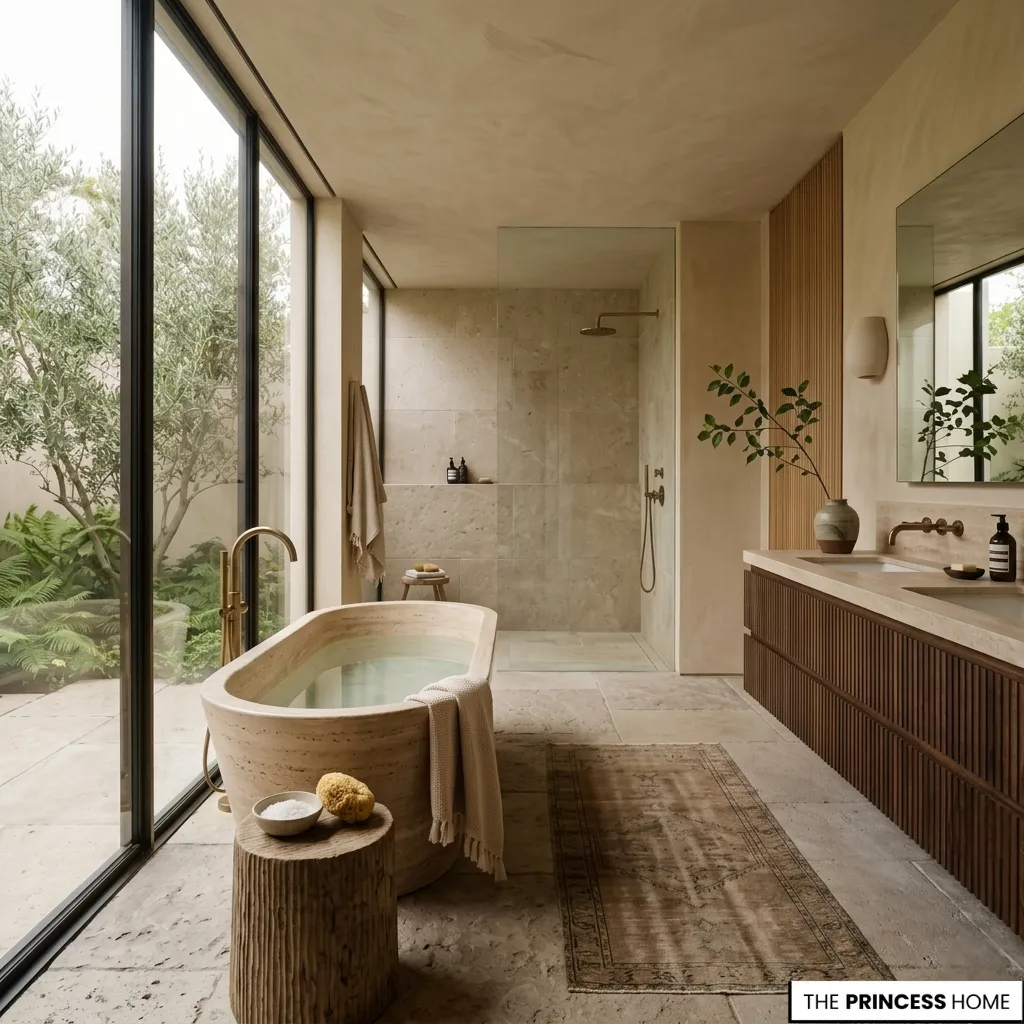
Quiet luxury continues to shape nearly every aspect of contemporary bathroom design. Rather than relying on expensive materials simply to signal prestige, this approach celebrates restraint, craftsmanship, and proportion. Every element feels carefully considered, allowing the room to reveal its character gradually instead of making an immediate impression.
Natural limestone, lightly textured plaster, warm oak, and softly brushed metals establish an atmosphere that feels inviting rather than formal. Even the smallest decorative decisions contribute to an environment where elegance appears effortless.
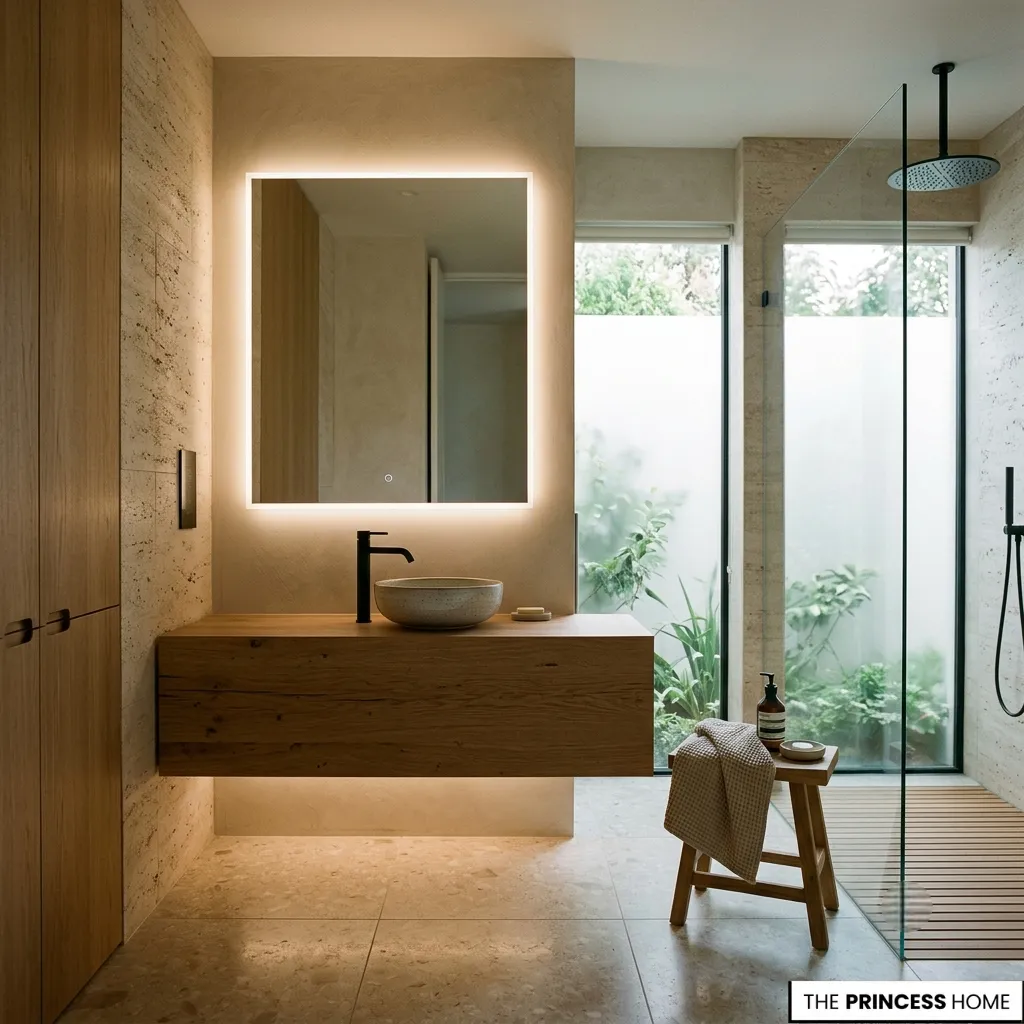
This philosophy adapts comfortably to almost any home. A compact apartment bathroom benefits from the same balanced palette that defines a generous primary suite, while guest bathrooms and powder rooms increasingly embrace thoughtful material choices instead of decorative excess. The result is an interior that feels timeless regardless of its size.
Rather than following a single style, quiet luxury allows modern architecture, classic detailing, and handcrafted finishes to coexist naturally. The atmosphere remains calm because every material supports the same visual language.
Natural Bathroom Materials
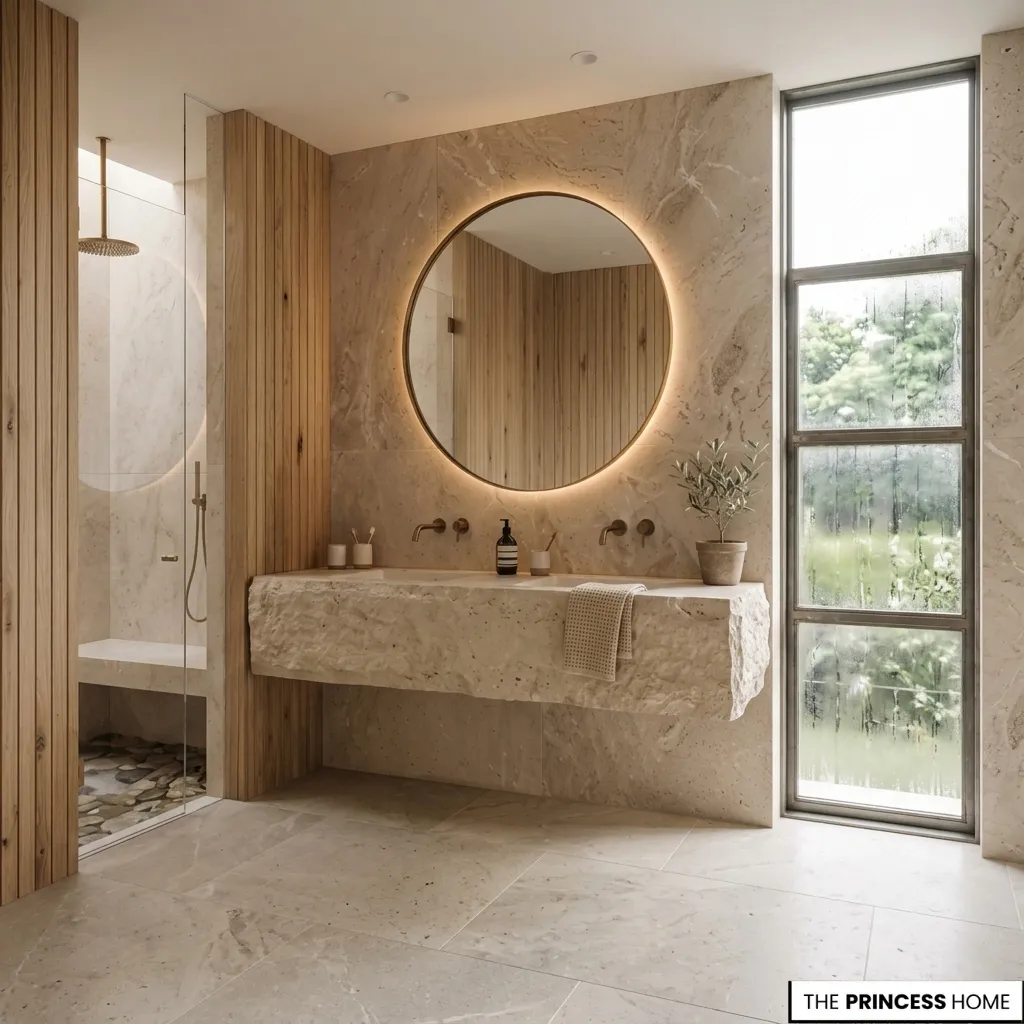
Nature continues to provide the strongest influence behind bathroom trend 2027. Materials appear increasingly authentic, celebrating texture instead of hiding it beneath perfectly uniform finishes.
Stone retains subtle movement within its surface, allowing gentle variations in color and veining to become part of the room’s identity. Timber reveals its grain rather than concealing it beneath heavy stains. Handmade ceramics introduce slight irregularities that add warmth and individuality without disturbing the overall composition.
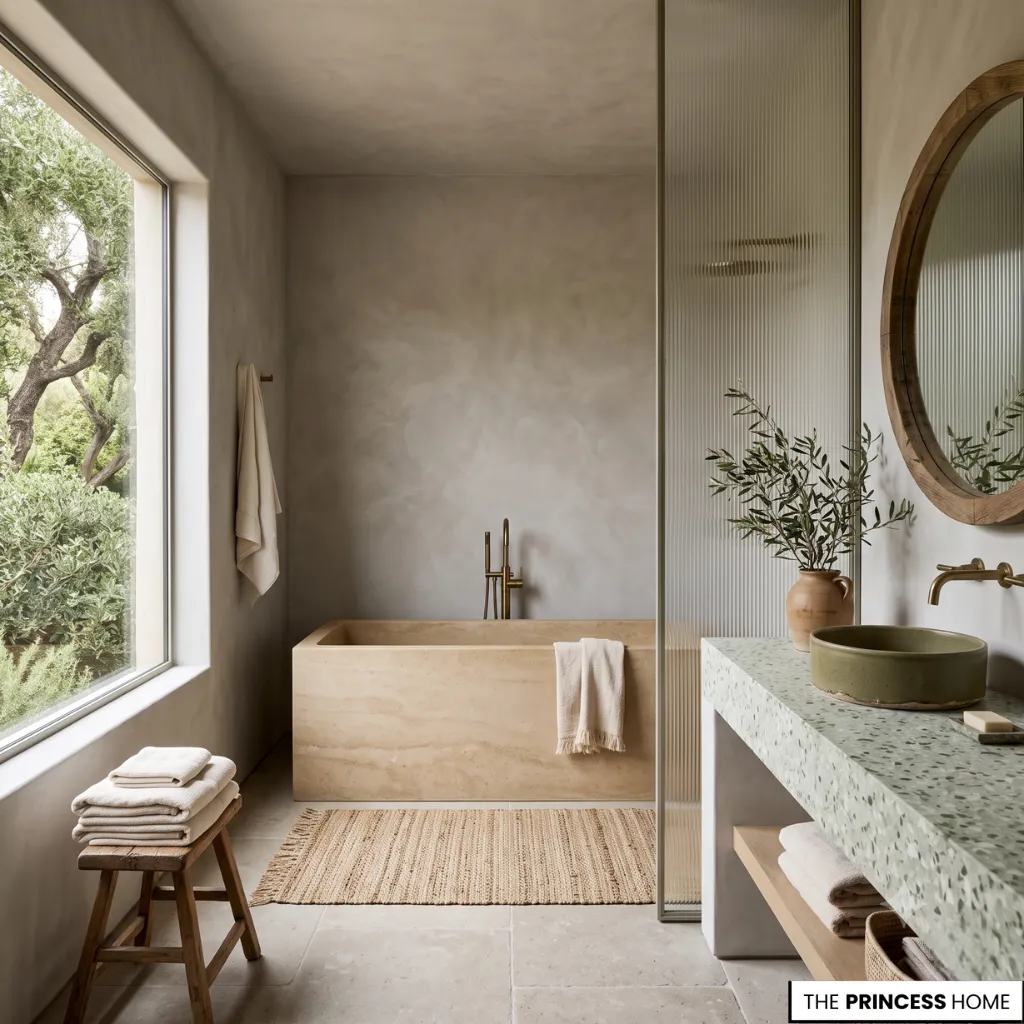
These materials work together to create bathrooms that feel connected to their surroundings instead of isolated from them. Warm whites soften incoming daylight, while clay, sand, olive, mushroom, and mineral-inspired neutrals replace colder palettes that once dominated contemporary interiors.
Texture has become equally important. Honed stone absorbs light differently from polished marble. Limewash walls provide quiet depth without overwhelming nearby surfaces. Ribbed glass, woven natural fibers, and tactile plaster introduce layers that make even restrained color palettes feel rich and engaging.
The growing preference for sustainable materials strengthens this direction even further. Responsibly sourced timber, recycled stone composites, water-conscious fixtures, and durable natural finishes reflect a broader movement toward interiors designed to last for decades rather than changing with every passing season.
The Power of Stone
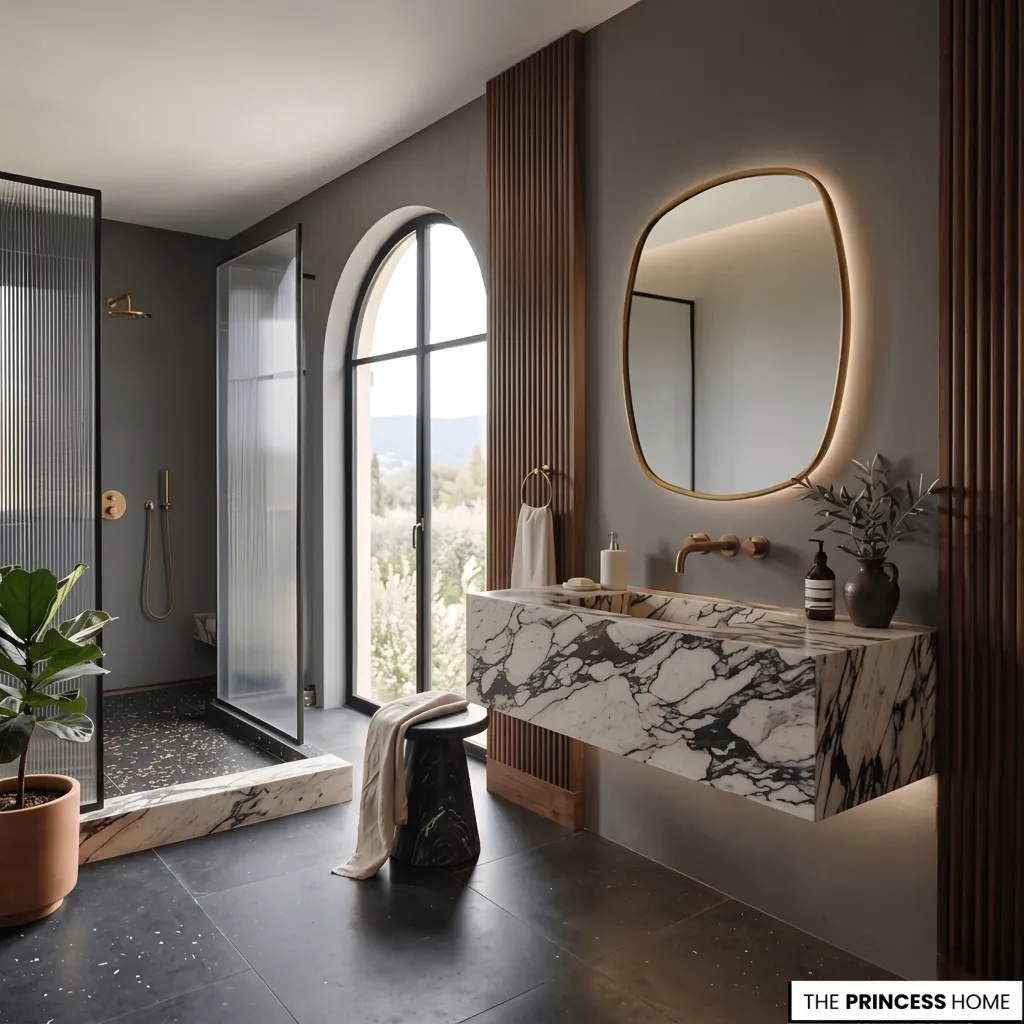
While muted earth tones create the foundation of the room, statement stones introduce moments of controlled drama. Calacatta Viola remains one of the defining marbles of 2027, celebrated for its sweeping burgundy veining that transforms a vanity into a sculptural centerpiece. Grand Antiquity offers a sharper architectural expression through its striking black-and-white mineral pattern, while Belvedere introduces layers of charcoal, bronze, and warm gold that enrich minimalist interiors without overwhelming them.
Richer color palettes continue through materials such as Rosso Lepanto and Saint Laurent, whose deep crimson and black crystalline surfaces create gallery-like focal points. For homeowners seeking a stronger connection to nature, Guatemala Green provides dramatic botanical character, while Picasso Grey softens the composition with layered grey and amber movement.
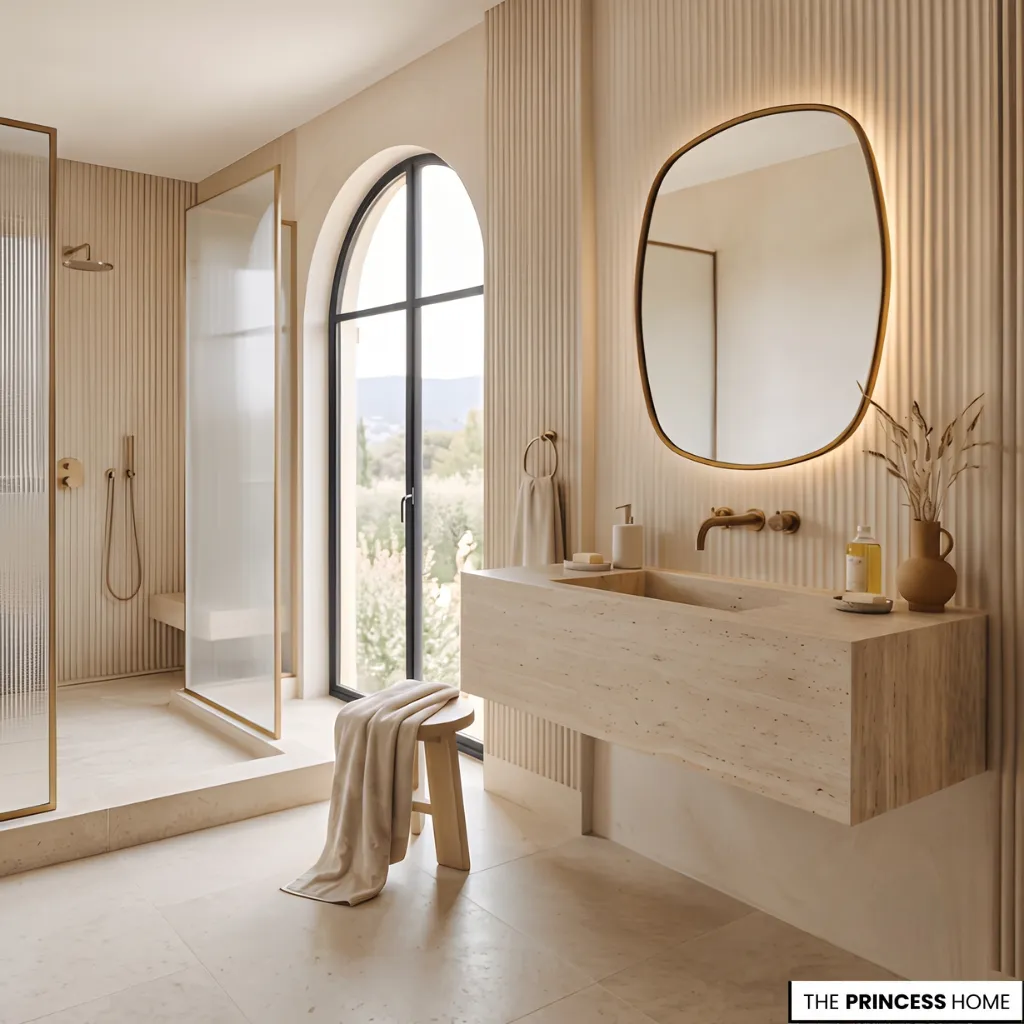
Beneath these expressive accents, warmer foundation stones maintain visual balance. Travertine remains essential for walls and flooring, supported by quiet neutrals such as Dior Grigio, Crema Marfil, and Emperador Light, all of which reinforce the calm, tactile atmosphere defining contemporary luxury bathrooms.
Softer white marbles still have an important role, although they are now used more selectively. Calacatta Gold adds warmth through bold golden veining, Volakas introduces gentle movement, and Thassos White is reserved for moments that require exceptional brightness and visual clarity.
Bathroom Tile Trends
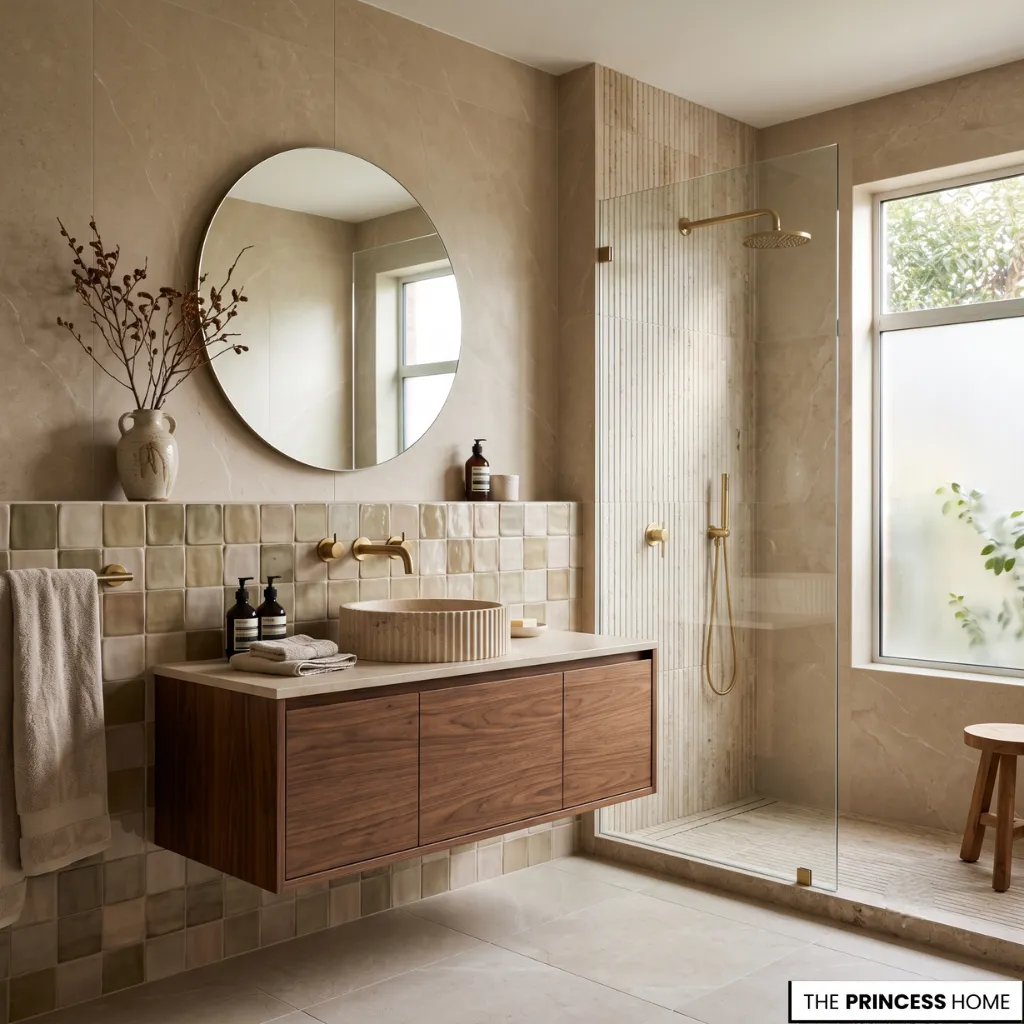
Tile has evolved from a practical surface into one of the defining design elements within modern bathrooms. Rather than serving as a simple backdrop, it now establishes rhythm, texture, and visual depth throughout the entire space.
Large-format porcelain slabs create uninterrupted surfaces that emphasize calm simplicity while minimizing visible grout lines. At the same time, handcrafted ceramic tiles continue to gain popularity for their subtle imperfections, soft edges, and beautifully varied glazes that introduce movement across walls and shower enclosures.
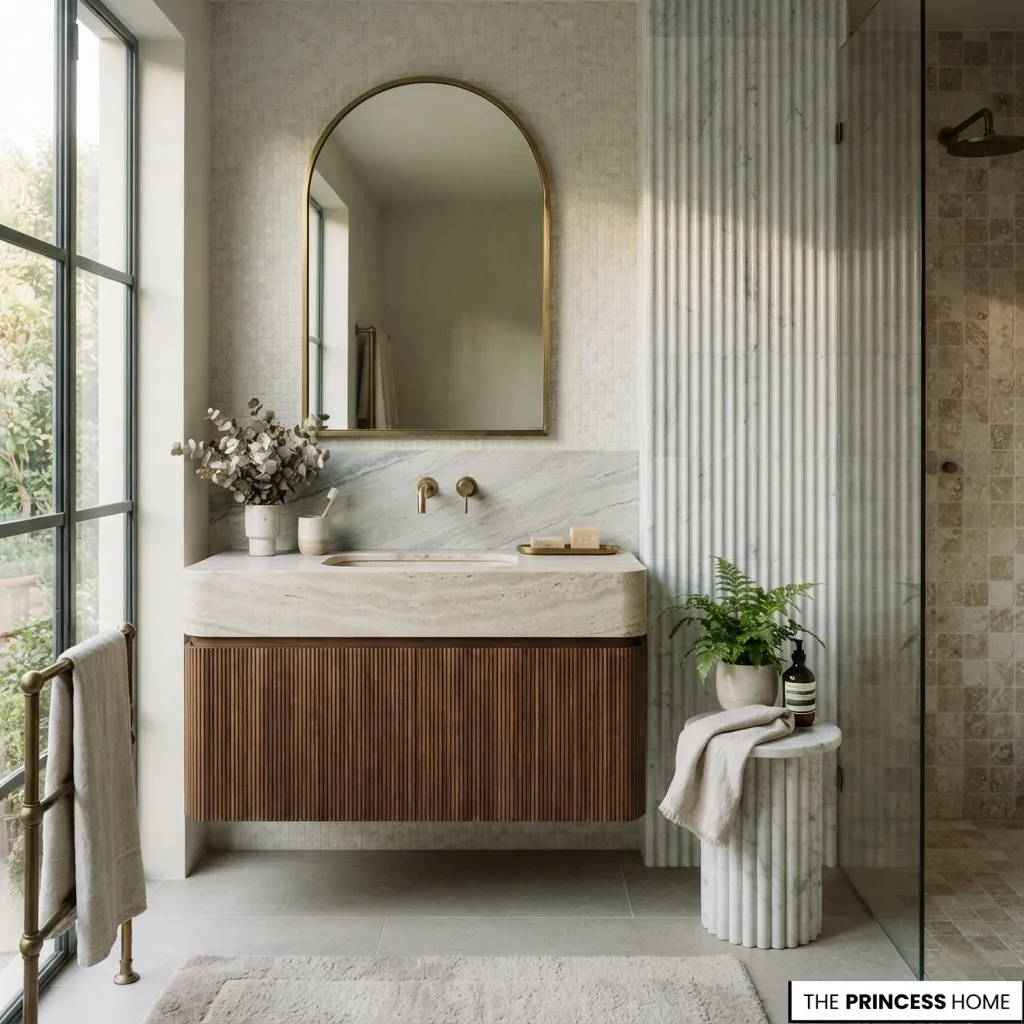
Natural stone mosaics, fluted tile profiles, and gently textured surfaces offer another layer of refinement. These finishes catch changing light throughout the day, allowing bathrooms to feel dynamic without relying on bold colors or elaborate decoration.
Pattern is becoming quieter as well. Instead of highly contrasting geometric arrangements, designers increasingly favor tonal compositions where texture provides visual interest more effectively than color alone.
In smaller bathrooms, continuous tile selections help rooms feel larger by reducing visual interruptions. Within expansive luxury spaces, combining complementary stone finishes creates subtle architectural zoning without disrupting the overall sense of harmony.
Vanity Design Trends
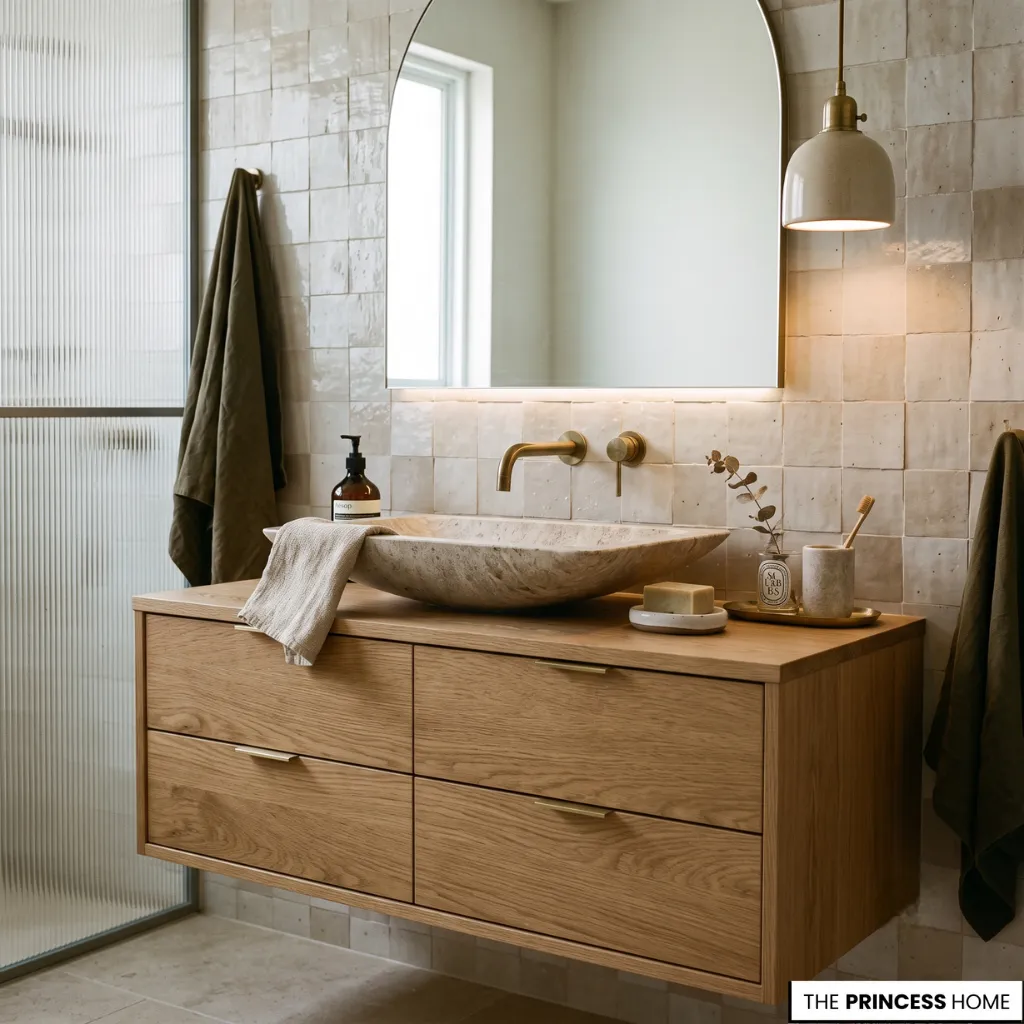
The vanity has become far more than a functional cabinet. It increasingly serves as the visual centerpiece around which the entire bathroom is composed.
Floating vanities remain especially popular because they create a greater sense of openness while allowing natural flooring materials to extend uninterrupted beneath them. Their clean proportions work equally well in compact urban bathrooms and spacious contemporary homes.
Freestanding furniture-inspired vanities introduce a different character. Rich timber, natural stone countertops, and softly rounded profiles bring warmth that feels collected rather than manufactured.
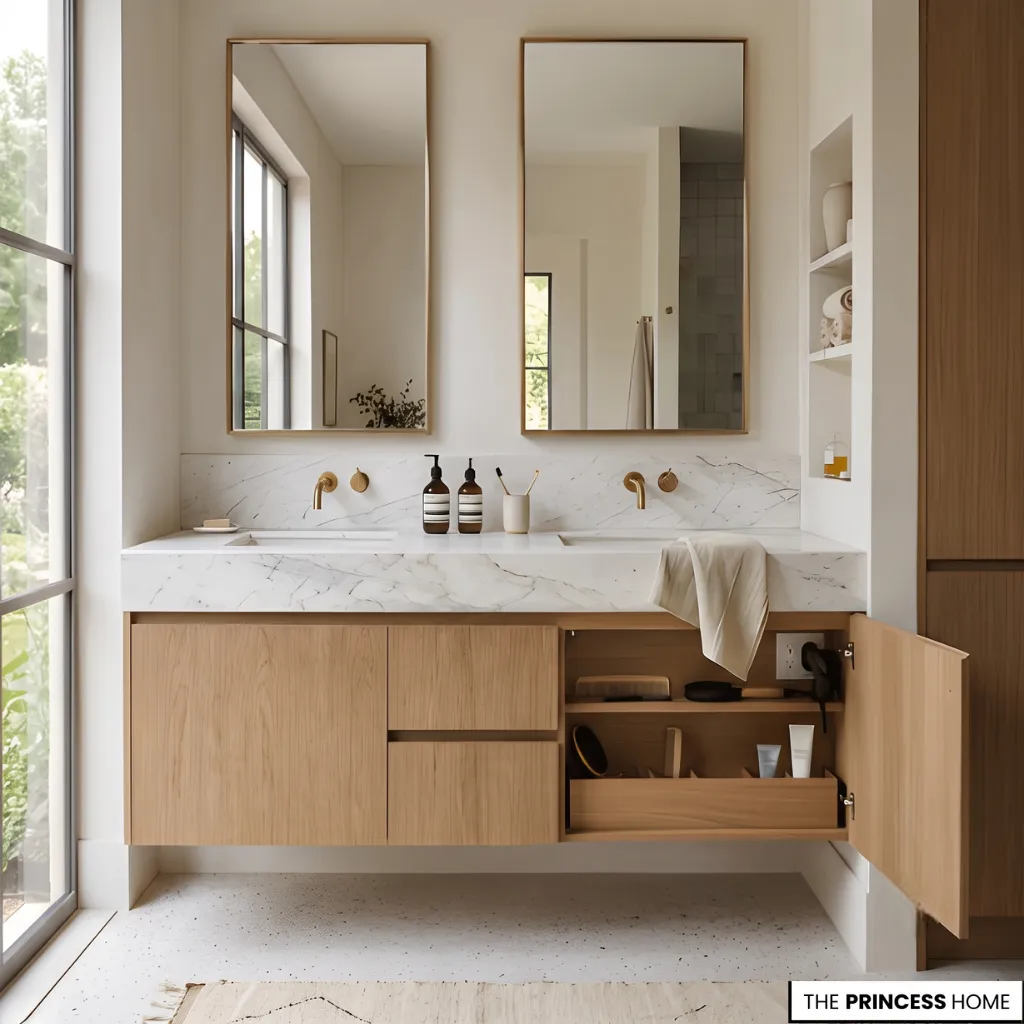
Storage has become almost invisible. Deep integrated drawers, concealed organizers, and seamless cabinetry preserve clean architectural lines while keeping everyday essentials close at hand.
Open shelving appears more selectively, often displaying carefully chosen ceramics, folded linens, or sculptural accessories rather than functioning as primary storage.
Materials remain intentionally restrained. Oak, walnut, limestone, travertine, and honed marble continue to dominate because they age gracefully while complementing a wide variety of architectural styles.
Bathroom Fixtures & Finishes
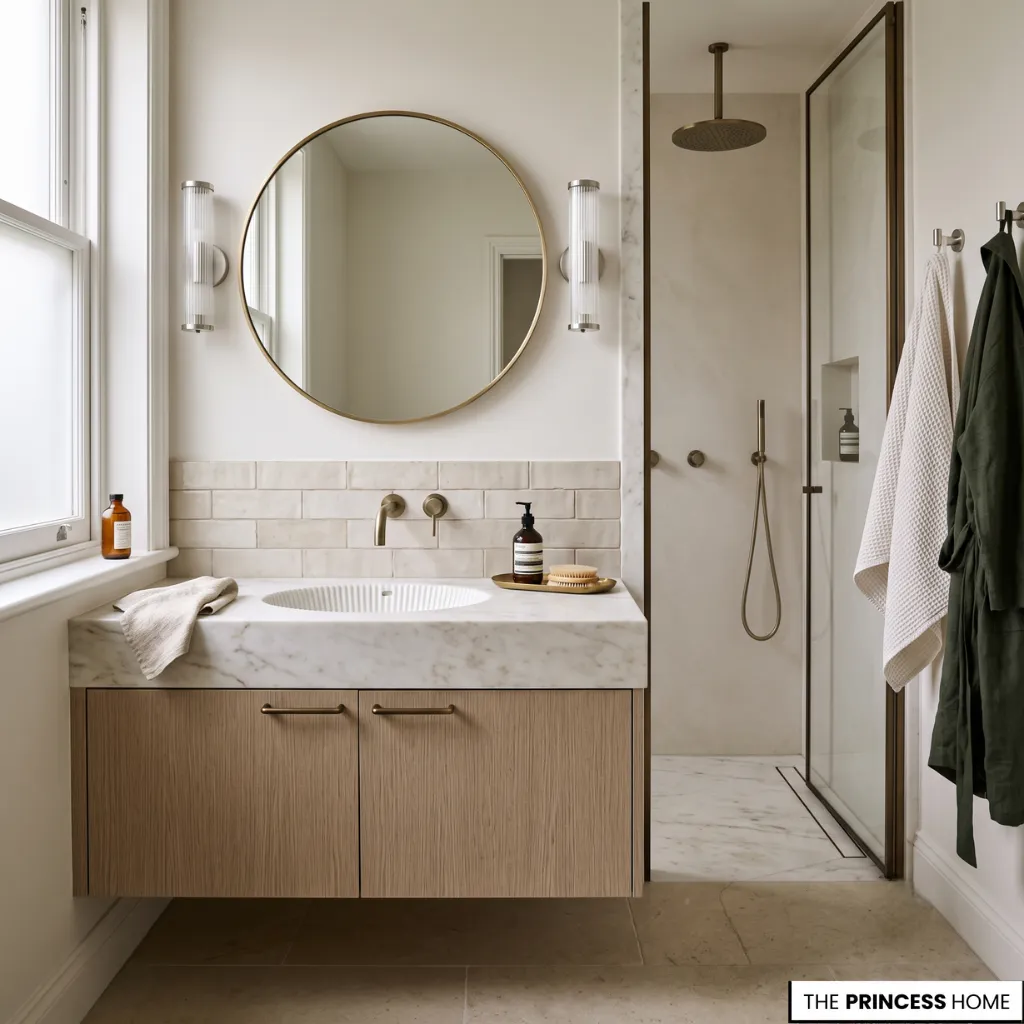
Fixtures are becoming quieter in appearance while playing a far greater role in defining the overall character of the room. Instead of acting as isolated accents, faucets, shower fittings, and hardware are selected as part of a complete material story.
Brushed brass continues to offer warmth without excessive shine, while satin chrome provides a softer interpretation of contemporary metal finishes. Aged bronze introduces depth that feels established rather than newly installed, and matte black appears more selectively, used to emphasize architectural details instead of dominating the space.
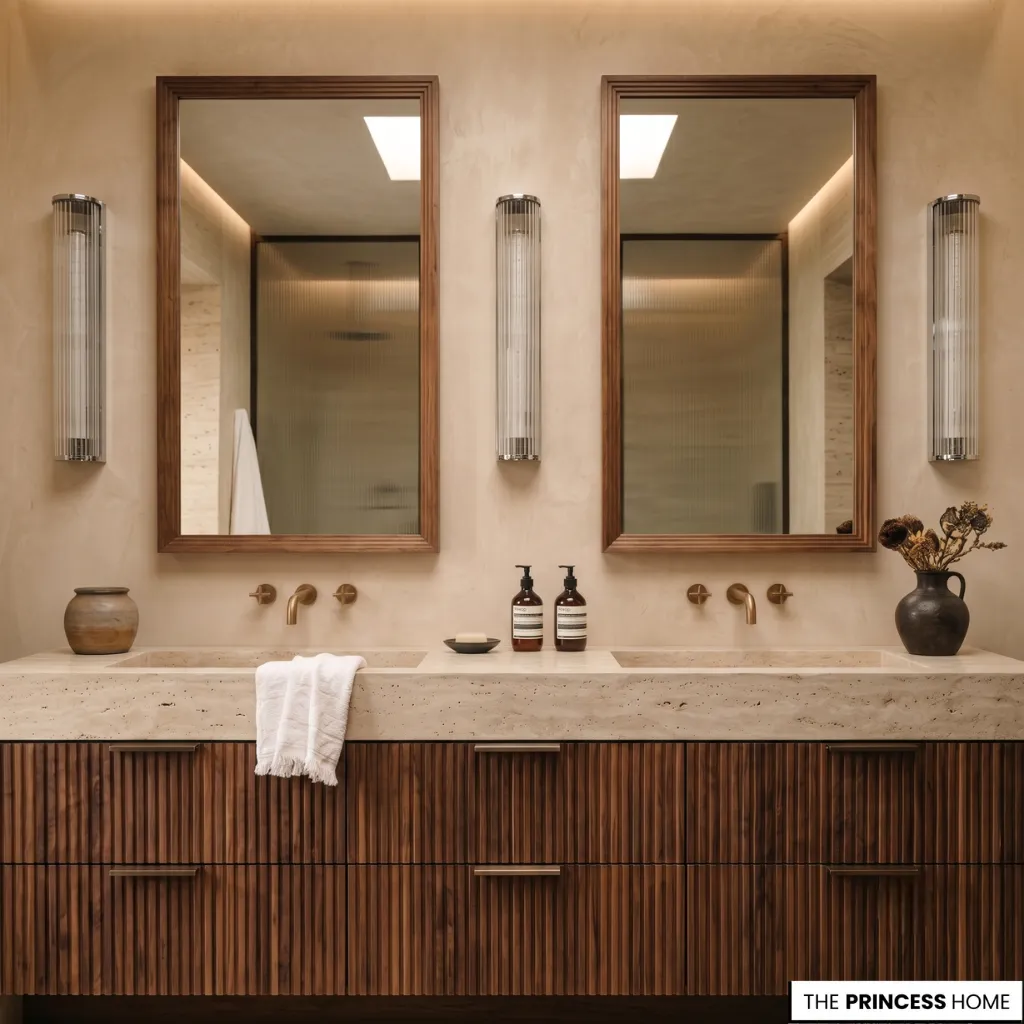
Mixed-metal combinations are becoming increasingly refined. Rather than matching every finish perfectly, designers layer complementary metals that create subtle contrast without disrupting visual harmony. A brushed brass faucet may sit comfortably beside satin chrome lighting or bronze cabinet hardware when unified through a restrained color palette.
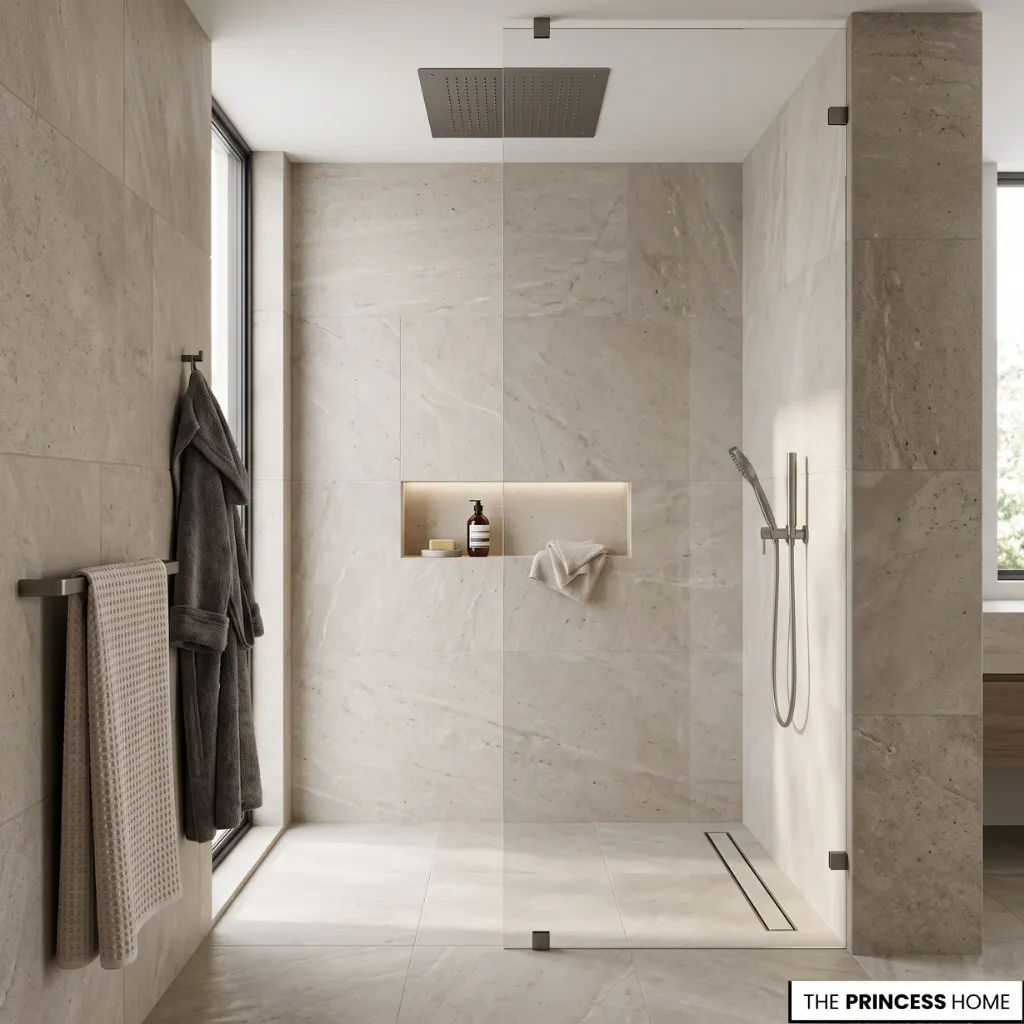
Shower systems are equally considered. Ceiling-mounted rainfall showers, elegant hand showers, integrated niches, and minimal glass enclosures create uninterrupted sightlines that allow surrounding materials to remain the focus. Hardware feels almost architectural, blending into the room instead of competing with it.
Even smaller details contribute to this sense of cohesion. Coordinated towel rails, discreet hooks, flush-mounted drains, and carefully proportioned handles reinforce an atmosphere where every element feels intentionally connected.
Wellness Bathroom Design
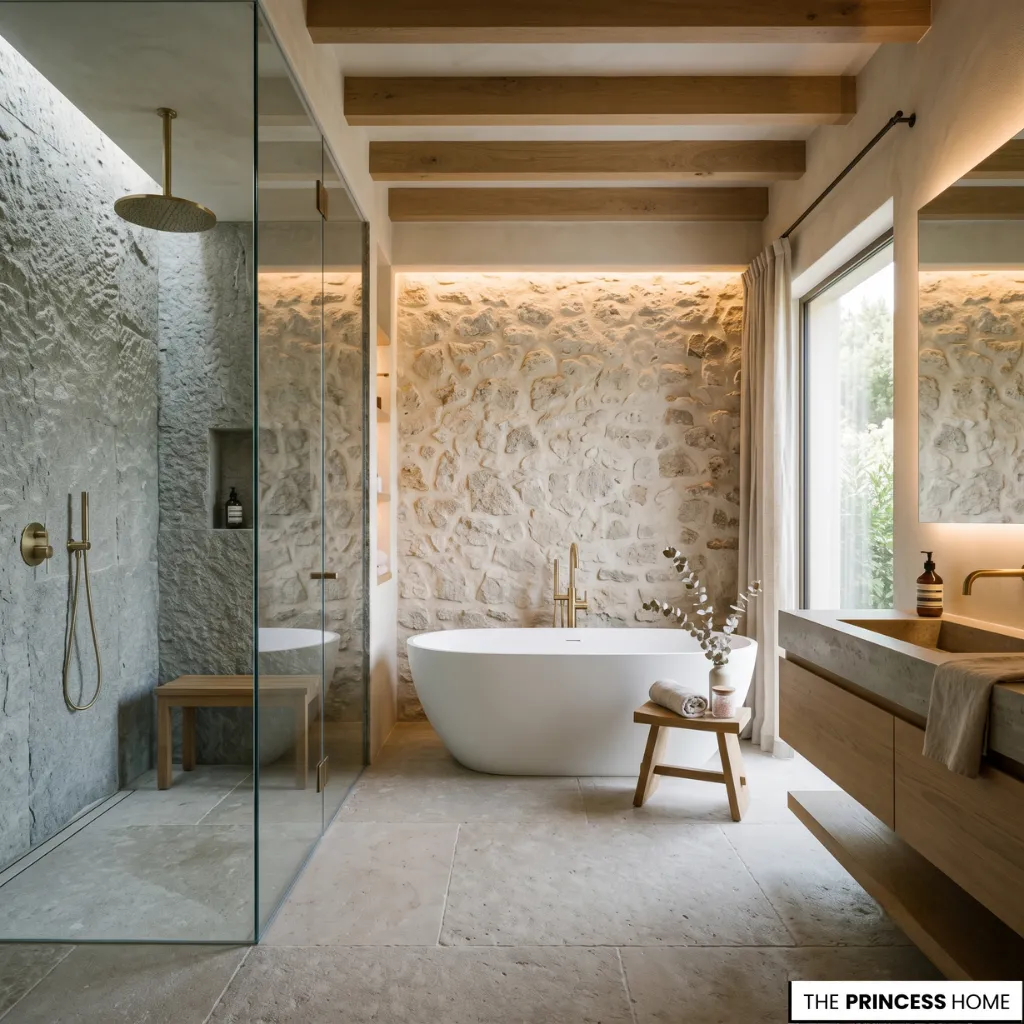
Perhaps the most influential direction shaping bathroom trend 2027 is the growing emphasis on everyday wellbeing. Bathrooms are no longer viewed simply as functional rooms but as restorative environments designed to support daily routines with greater comfort and calm.
Wellness begins long before a freestanding bathtub or rainfall shower enters the picture. It starts with thoughtful planning that allows movement through the room to feel effortless. Clear layouts, uncluttered surfaces, and balanced proportions immediately create a quieter experience.
Natural light remains one of the most valuable design elements whenever architecture allows. Large windows, skylights, and carefully positioned openings soften the room throughout the day while strengthening the connection between interior and landscape.
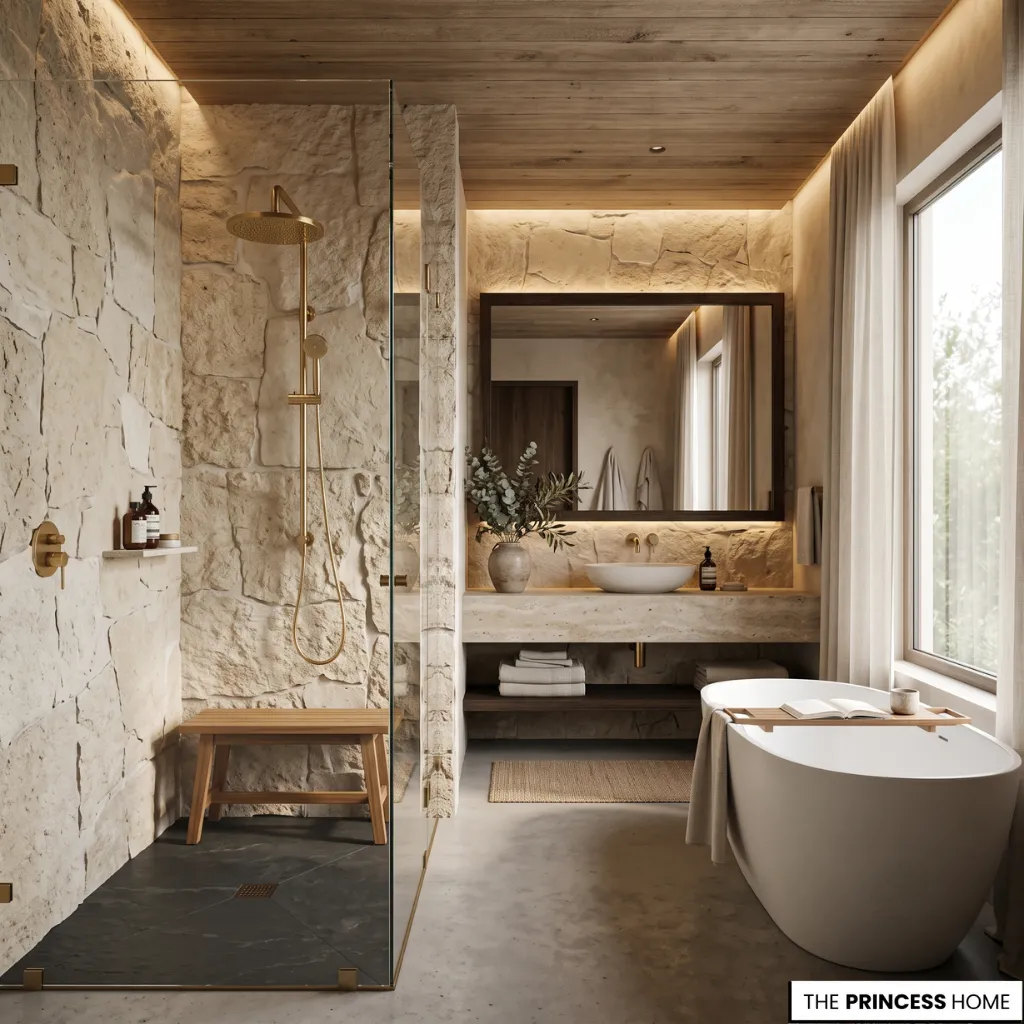
Artificial lighting follows the same philosophy. Soft ambient illumination establishes atmosphere, task lighting improves everyday functionality, and subtle accent lighting highlights texture without overwhelming the eye. The result is a room that changes naturally from morning brightness to evening relaxation.
Comfort is further enhanced through radiant heated floors, quiet ventilation systems, integrated seating within showers, and carefully controlled water experiences that transform ordinary routines into moments of restoration. The overall effect is understated rather than theatrical. Wellness is experienced through balance, not excess.
Bathroom Color Trends
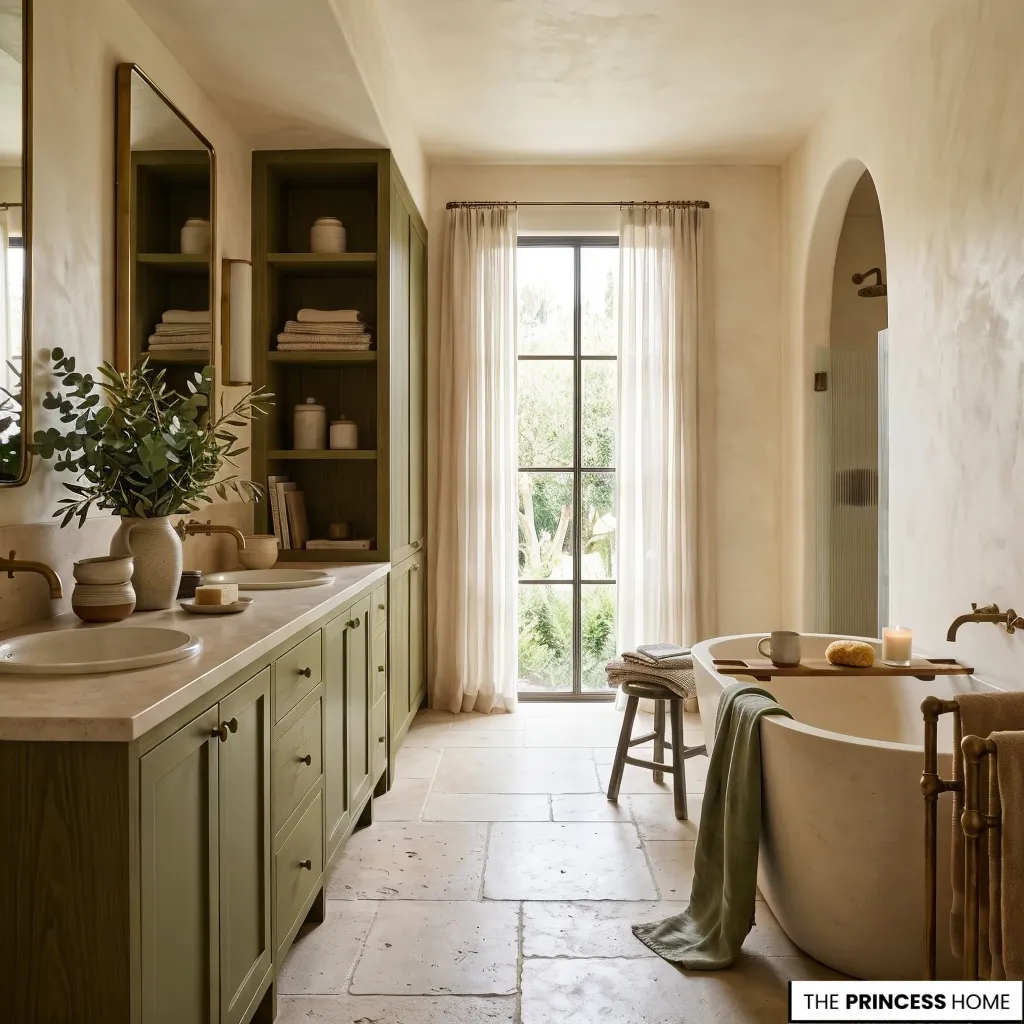
Color is becoming increasingly sophisticated through restraint rather than bold contrast. Instead of chasing dramatic seasonal palettes, bathrooms now embrace shades that remain beautiful across changing styles and changing light. Warm ivory replaces crisp white, introducing softness without sacrificing brightness.
Sand, limestone, mushroom, and pale taupe establish calm foundations that complement almost every natural material.Greens continue to evolve, shifting toward moss, sage, eucalyptus, and muted olive. These shades echo surrounding landscapes while reinforcing the growing relationship between interiors and nature.
Earth-inspired terracotta introduces warmth without overwhelming smaller rooms, while charcoal appears sparingly to anchor lighter compositions through carefully placed architectural details. Layering has become more important than contrast.
Stone, wood, plaster, ceramic, and textiles each contribute subtle tonal variation, allowing color to emerge gradually through materials themselves rather than relying solely on painted surfaces. This restrained palette adapts comfortably to both contemporary apartments and traditional homes because it emphasizes atmosphere over fashion.
Modern Bathroom Architecture
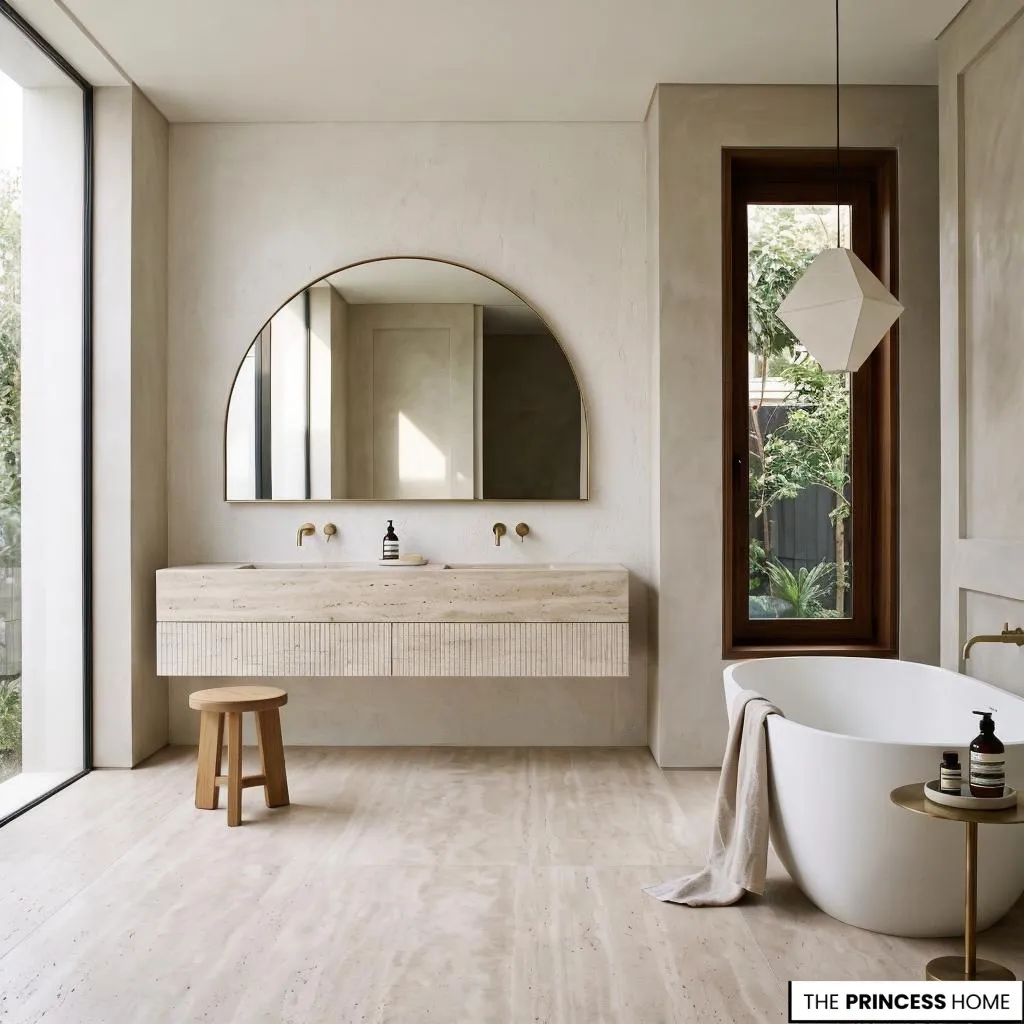
Architecture increasingly defines the visual identity of today’s bathrooms. Decoration plays a supporting role while proportion, geometry, and material transitions shape the overall experience. Straight lines continue to establish contemporary clarity, yet they are softened by rounded forms that introduce comfort and movement throughout the room.
Curved mirrors reflect light more gently than sharp rectangular frames. Freestanding bathtubs adopt sculptural silhouettes that appear carved from a single material. Arched shower entrances and softly rounded vanity edges reduce visual rigidity while maintaining clean architectural discipline.
Spatial planning has also become more intentional. Rather than filling every available corner, designers increasingly prioritize openness, allowing circulation, daylight, and sightlines to contribute as much to the room as furniture itself.
Compact bathrooms benefit from floating fixtures, uninterrupted flooring, and carefully aligned storage that maximize perceived space without creating visual clutter. Larger luxury bathrooms embrace generous spacing, allowing each element to breathe while maintaining a strong sense of cohesion.
Despite the difference in scale, both approaches pursue the same goal: creating rooms that feel calm, balanced, and enduring.
Smart Bathroom Technology
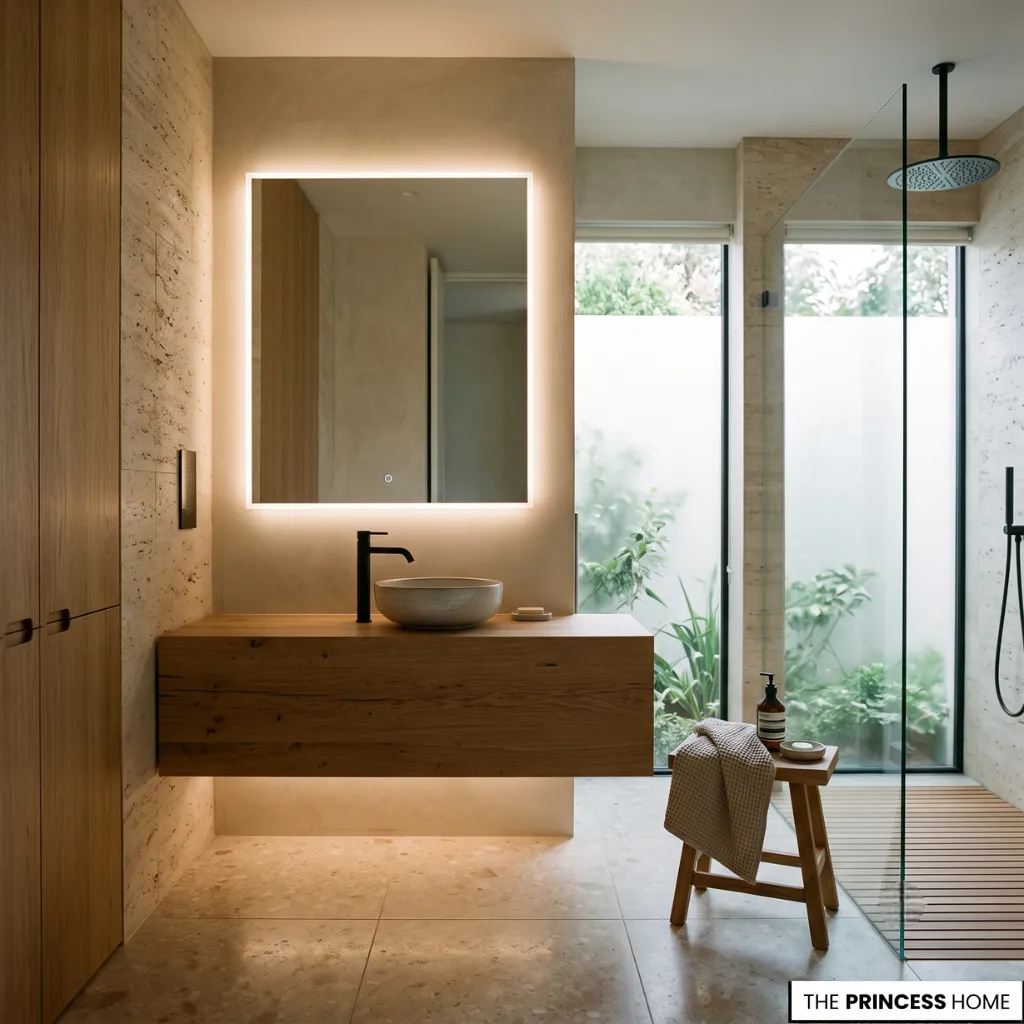
Technology has become increasingly sophisticated precisely because it attracts less attention. Rather than dominating the room with visible controls or oversized displays, smart systems integrate quietly into the architectural language of the space.
Mirrors provide adjustable lighting that responds naturally to different times of day. Heated floors improve comfort without altering the visual composition. Digital shower controls remain almost invisible, while integrated ventilation preserves air quality without interrupting the room’s clean lines.
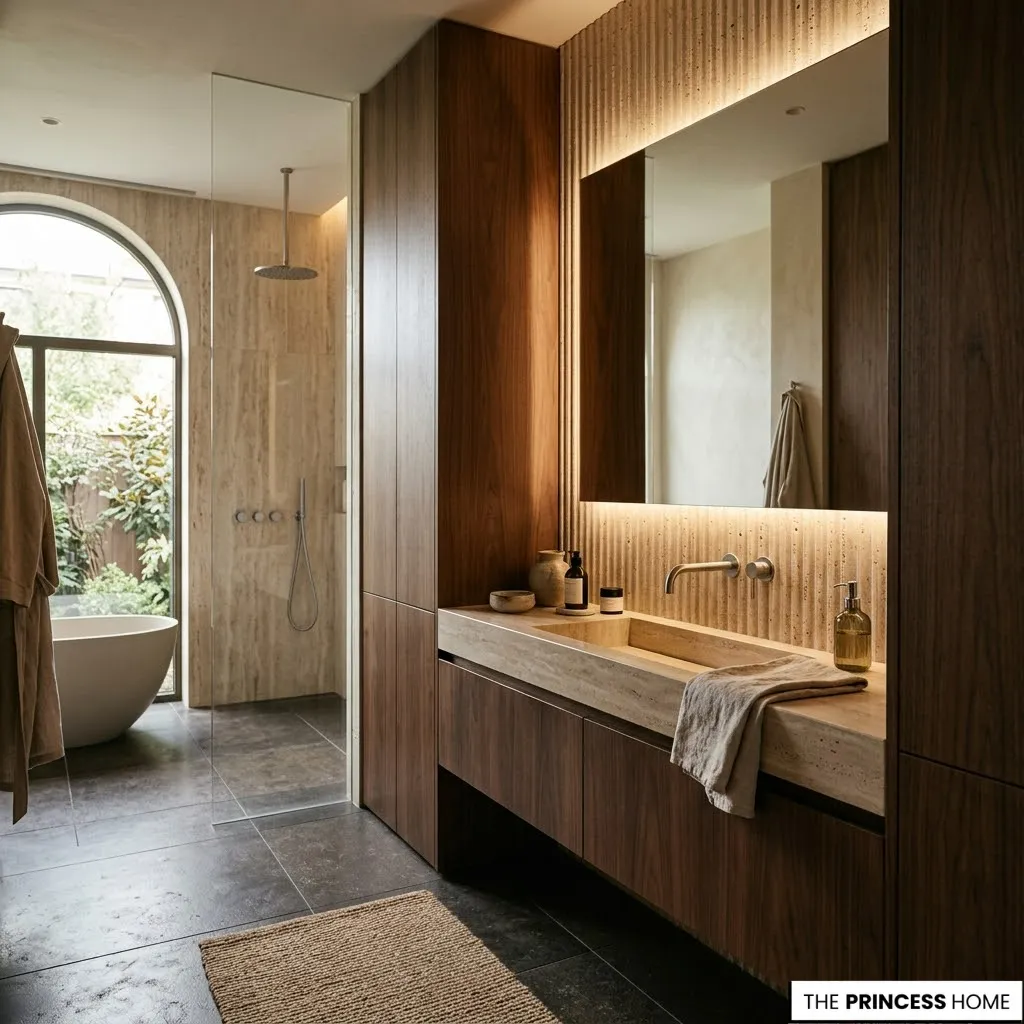
Water efficiency has also become an essential part of contemporary bathroom design. Modern fixtures deliver comfortable performance while reducing unnecessary consumption, reflecting a broader commitment to sustainable living without compromising luxury.
Even storage benefits from discreet innovation. Integrated charging stations, illuminated drawers, hidden electrical outlets, and sensor-controlled lighting support daily routines while preserving uncluttered surfaces. Technology succeeds because it enhances the experience without becoming the experience itself.
Personalized Bathroom Style
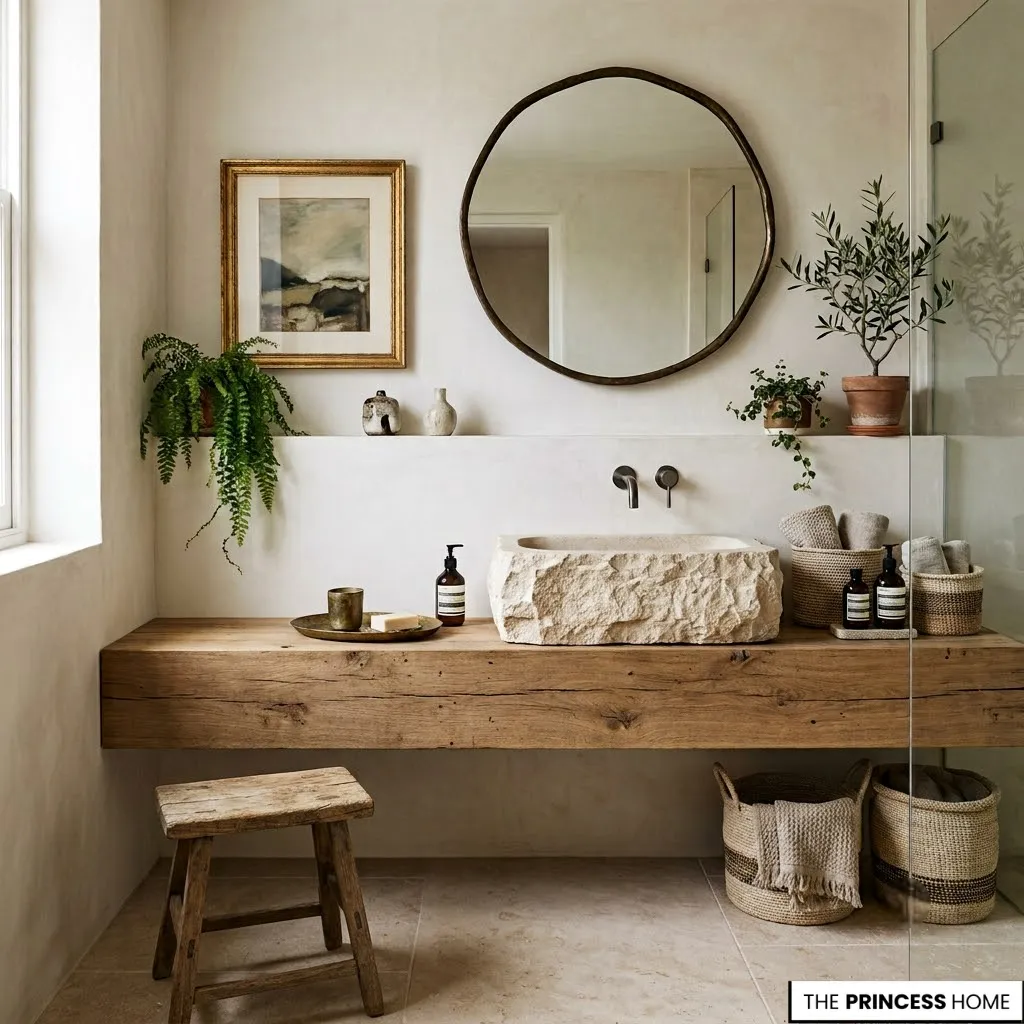
One of the most defining characteristics of bathroom trend 2027 is the growing appreciation for individuality. Beautiful bathrooms are becoming less predictable, moving beyond showroom perfection to reflect the people who live with them every day.
Personal expression appears through carefully layered details rather than dramatic decoration. A vintage wooden stool may sit beside a sculptural stone basin. Handmade pottery introduces quiet variation against refined architectural surfaces. Framed artwork, collected objects, woven baskets, and living greenery soften contemporary compositions without disrupting their sense of order.
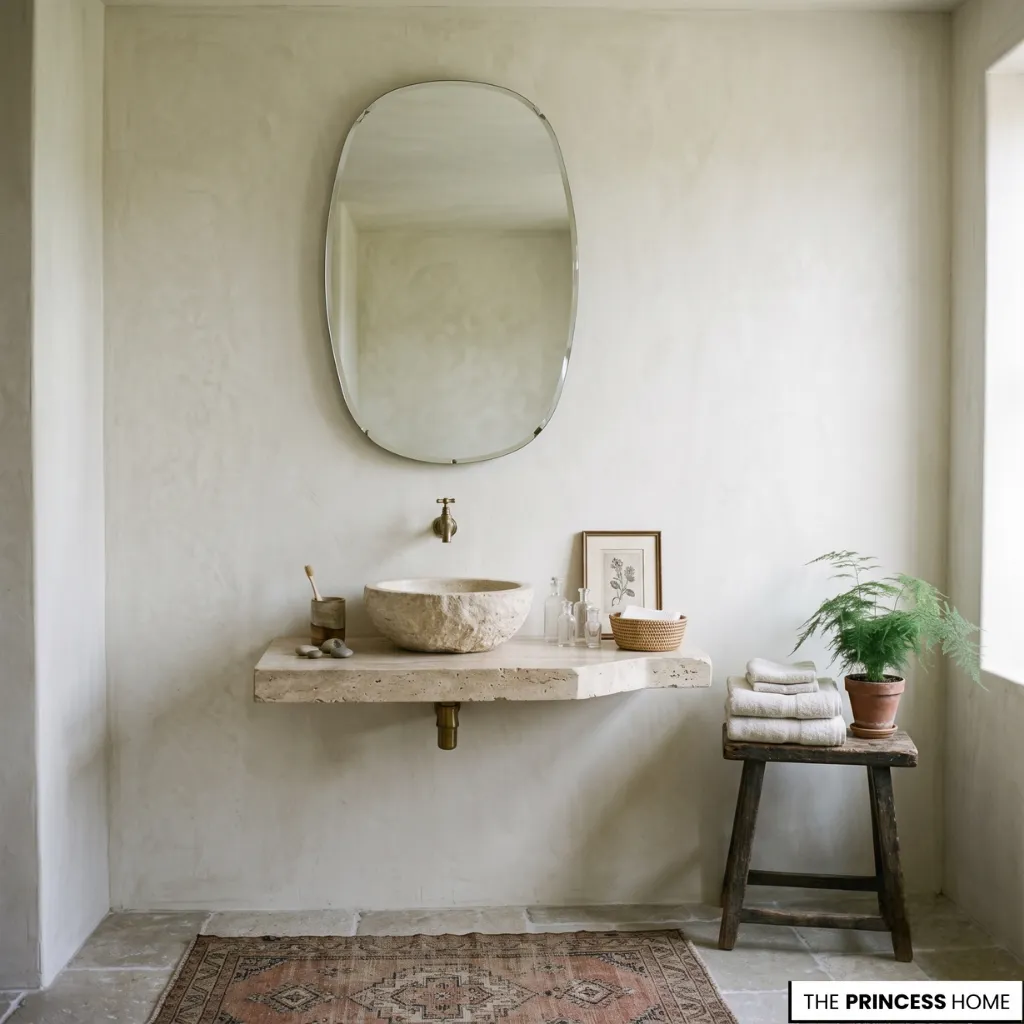
The result feels curated instead of styled. Every object appears to have earned its place naturally over time, creating interiors that remain deeply personal while preserving a calm visual rhythm.
This flexibility allows bathrooms to adapt gracefully across different architectural styles. A modern apartment may introduce artisanal ceramics to warm minimalist lines, while a traditional home can embrace contemporary fixtures without losing its established character. Rather than following rigid design rules, bathrooms increasingly celebrate thoughtful combinations that feel authentic to each space.
Layered Bathroom Lighting
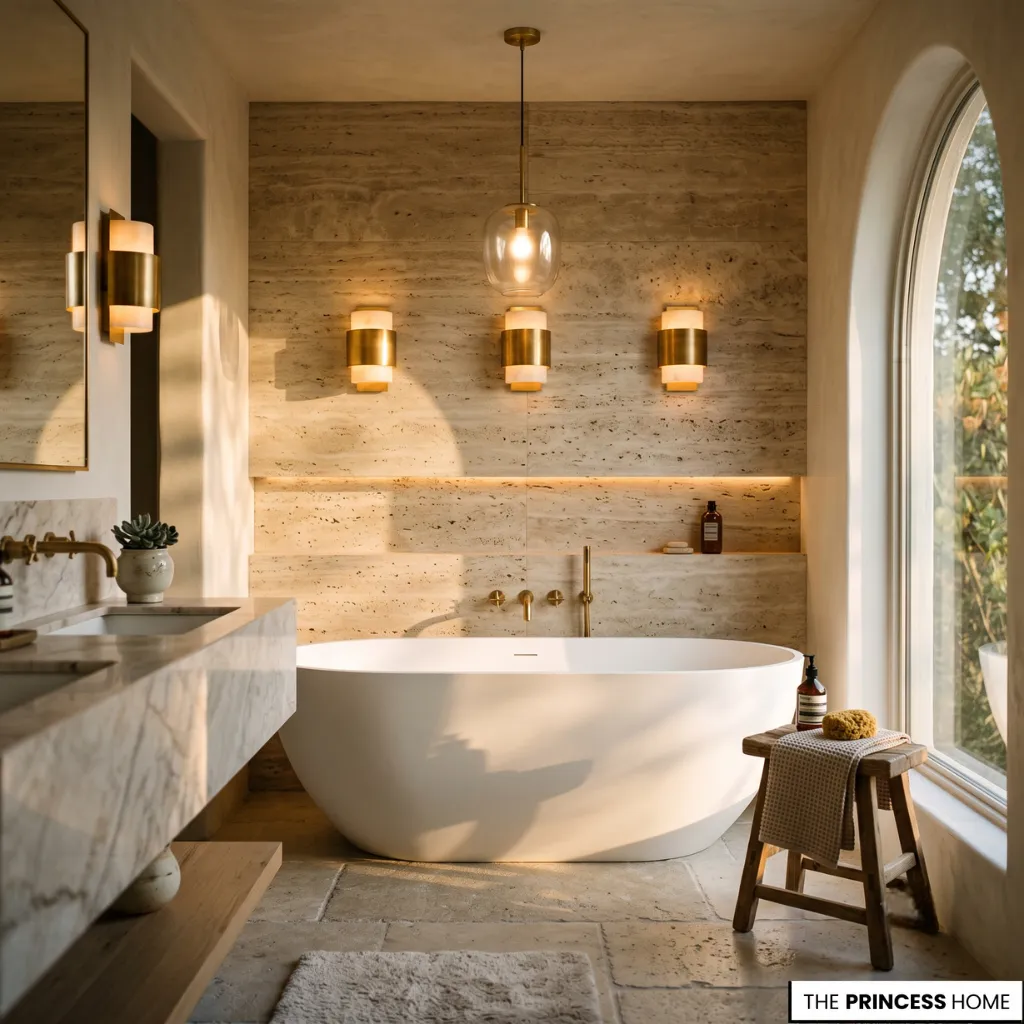
Few design elements influence atmosphere as profoundly as light. In bathroom trend 2027, lighting is no longer treated as a finishing detail but as an essential architectural material that shapes how every surface is experienced.
Natural daylight remains the ideal foundation whenever possible. Expansive windows, skylights, or carefully positioned openings invite changing daylight to animate stone, wood, and textured finishes throughout the day. As the light shifts, the room reveals new layers of depth, creating an environment that never feels static.
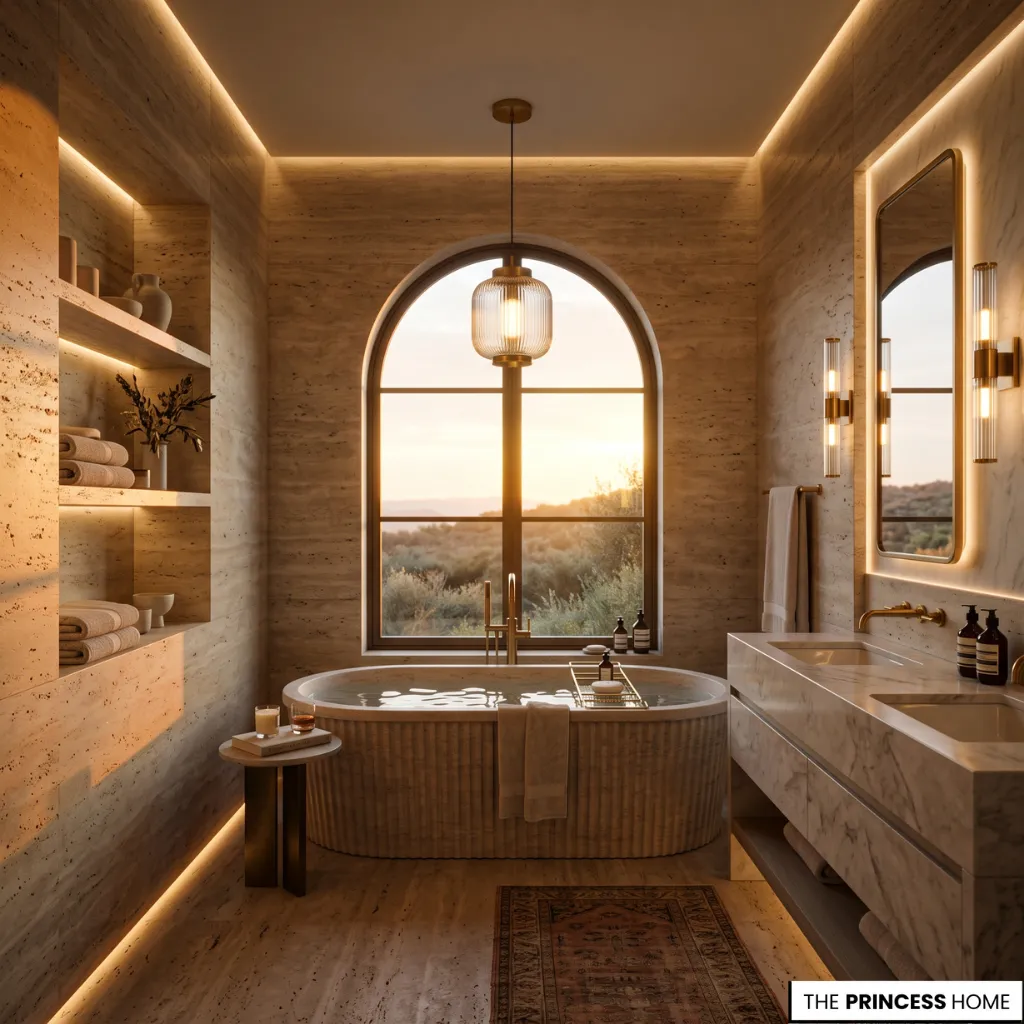
Artificial lighting follows the same philosophy. Soft ambient illumination establishes a gentle foundation, while task lighting around mirrors improves clarity without harsh shadows. Accent lighting highlights niches, textured walls, floating vanities, and architectural details with remarkable subtlety.
Decorative fixtures also evolve into sculptural elements. Pendant lights above freestanding bathtubs, elegant wall sconces, and concealed LED details create visual hierarchy without overwhelming the surrounding materials.
Whether designed for a compact powder room or an expansive primary suite, layered lighting transforms an ordinary bathroom into a space that feels warm, intimate, and quietly luxurious from morning until late evening.
Timeless Bathroom Design
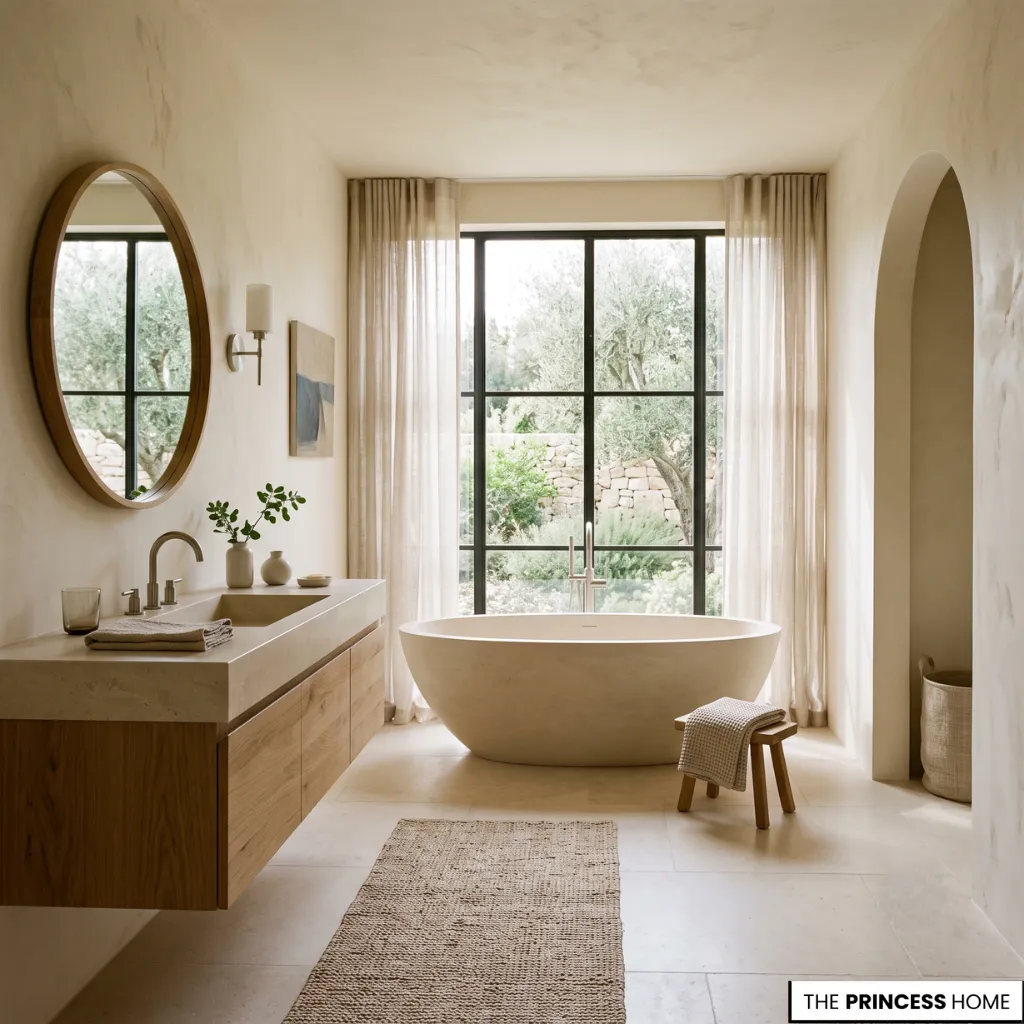
The most memorable bathrooms of 2027 are not defined by trends alone. They succeed because they combine enduring principles with contemporary interpretation, creating interiors that remain beautiful long after seasonal fashions have disappeared.
Natural materials continue to age gracefully. Thoughtful layouts improve everyday comfort without unnecessary complexity. Balanced proportions allow every fixture, vanity, and architectural detail to contribute to a unified whole rather than competing for attention.
The distinction between modern and timeless design becomes increasingly subtle. Contemporary bathrooms introduce clean geometry, integrated technology, and minimalist detailing, while timeless interiors rely on craftsmanship, authentic materials, and enduring proportions. Increasingly, the most successful spaces blend both approaches, creating rooms that feel current today while remaining relevant for years to come.
This philosophy extends across every scale of home. A compact apartment bathroom can achieve the same sense of serenity through restrained materials, intelligent storage, and carefully layered lighting. A guest bathroom benefits from the same attention to texture and proportion, while larger luxury suites simply expand these ideas through greater openness and architectural presence rather than unnecessary ornament.
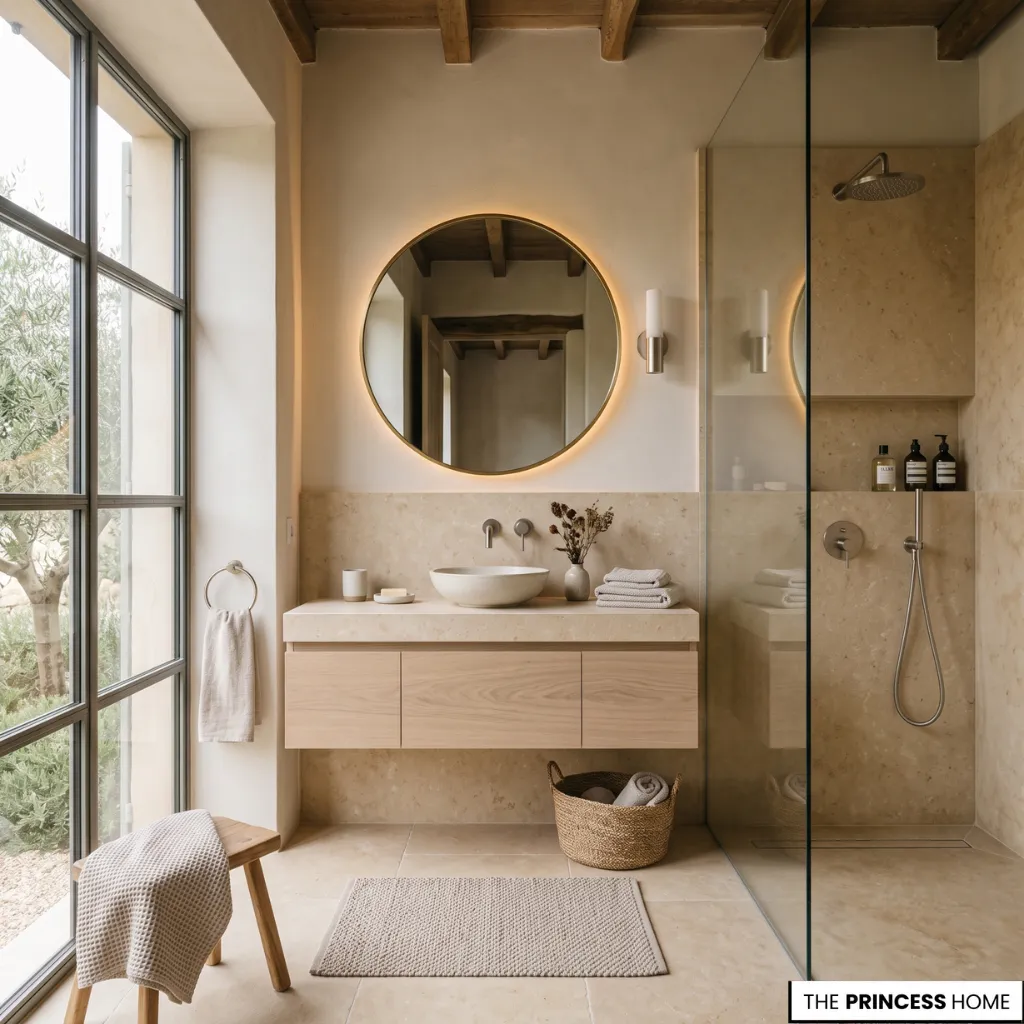
Ultimately, bathroom trend 2027 reflects a broader shift in the way people experience their homes. Bathrooms are no longer designed merely to serve practical needs or display fashionable finishes. They have become spaces that encourage slower routines, quieter moments, and a deeper appreciation for craftsmanship, light, and lasting materials.
The most enduring interiors are those that balance innovation with authenticity, elegance with comfort, and beauty with everyday function. Whether inspired by modern minimalism, organic warmth, or timeless architectural character, the finest bathrooms share one defining quality: they feel as welcoming years from now as they do the day they are completed.
FAQ
What is the biggest bathroom trend for 2027?
The biggest bathroom trend is creating calm, wellness-focused spaces with natural materials, layered lighting, timeless colors, and understated luxury that feels both modern and enduring.
How can I create a bathroom trend look at home?
Start with warm neutral colors, authentic materials, soft lighting, simple fixtures, and uncluttered storage to build a space that feels balanced, comfortable, and elegant.
Which colors work best for bathroom trend 2027?
Warm ivory, sand, taupe, muted olive, clay, moss green, and soft charcoal create a timeless palette that complements natural stone, wood, and textured finishes.
Can bathroom trend ideas work in small spaces?
Yes. Compact bathrooms benefit from floating vanities, walk-in showers, layered lighting, and light natural finishes that maximize both openness and visual warmth.
What materials define modern bathroom design?
Natural stone, wood, handcrafted tile, textured plaster, brushed brass, satin chrome, and matte finishes define today’s modern bathroom with lasting character and depth.
Is quiet luxury still popular in bathroom design?
Yes. Quiet luxury remains one of the strongest design directions, emphasizing craftsmanship, quality materials, restrained color palettes, and timeless details over decoration.
Why are natural materials important in bathroom trend 2027?
Natural materials add warmth, texture, and authenticity while creating a calming atmosphere that supports everyday comfort and a timeless interior aesthetic.
Final Thoughts
Bathroom trend 2027 moves beyond short-lived styles to embrace interiors that feel calm, personal, and enduring. By combining natural materials, thoughtful lighting, timeless colors, and refined craftsmanship, today’s bathrooms become restorative spaces that adapt beautifully to modern apartments, family homes, and luxurious retreats alike.