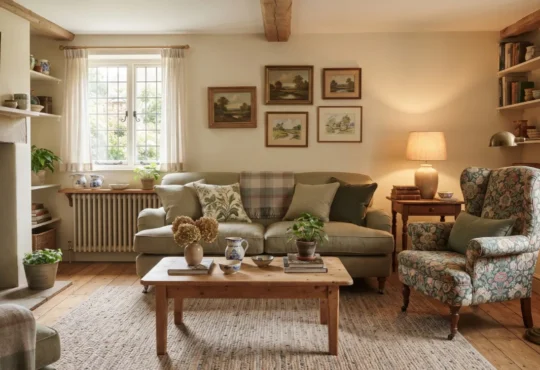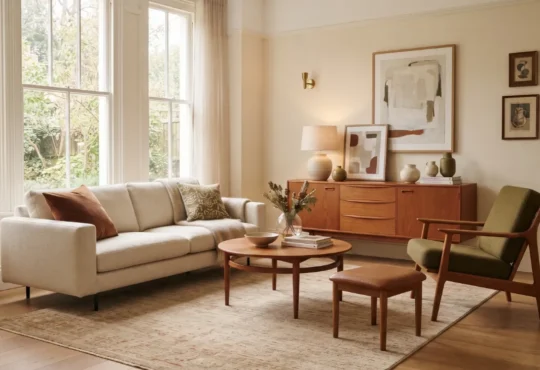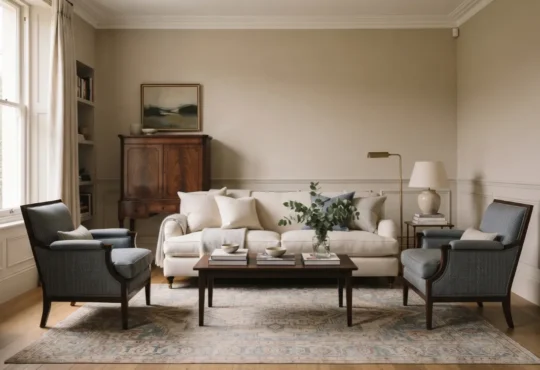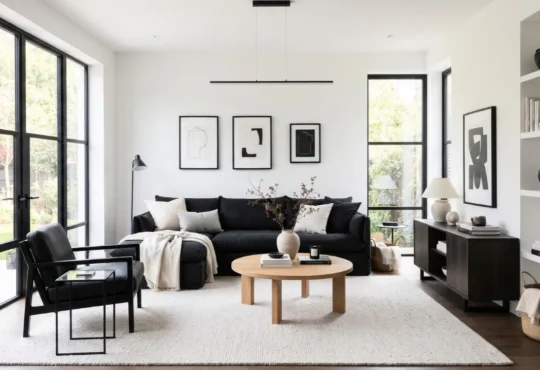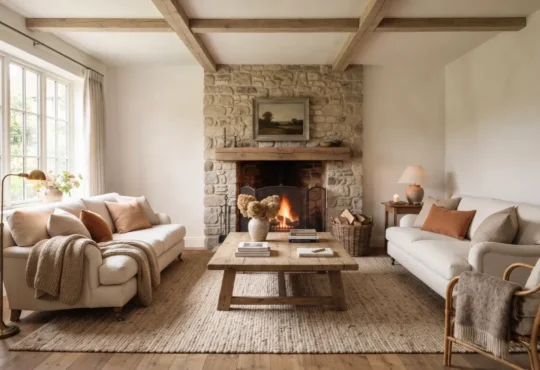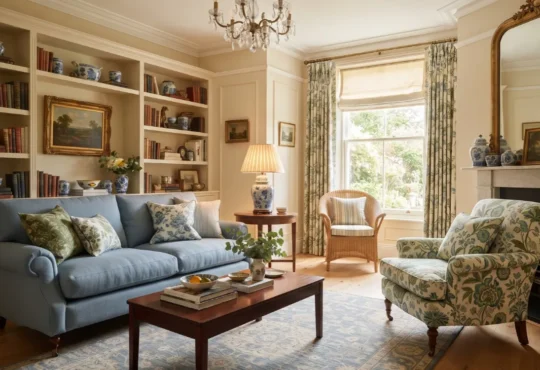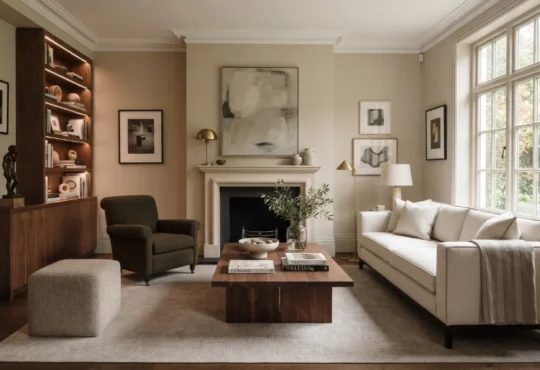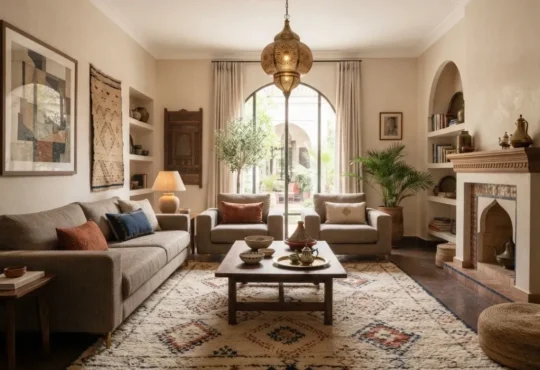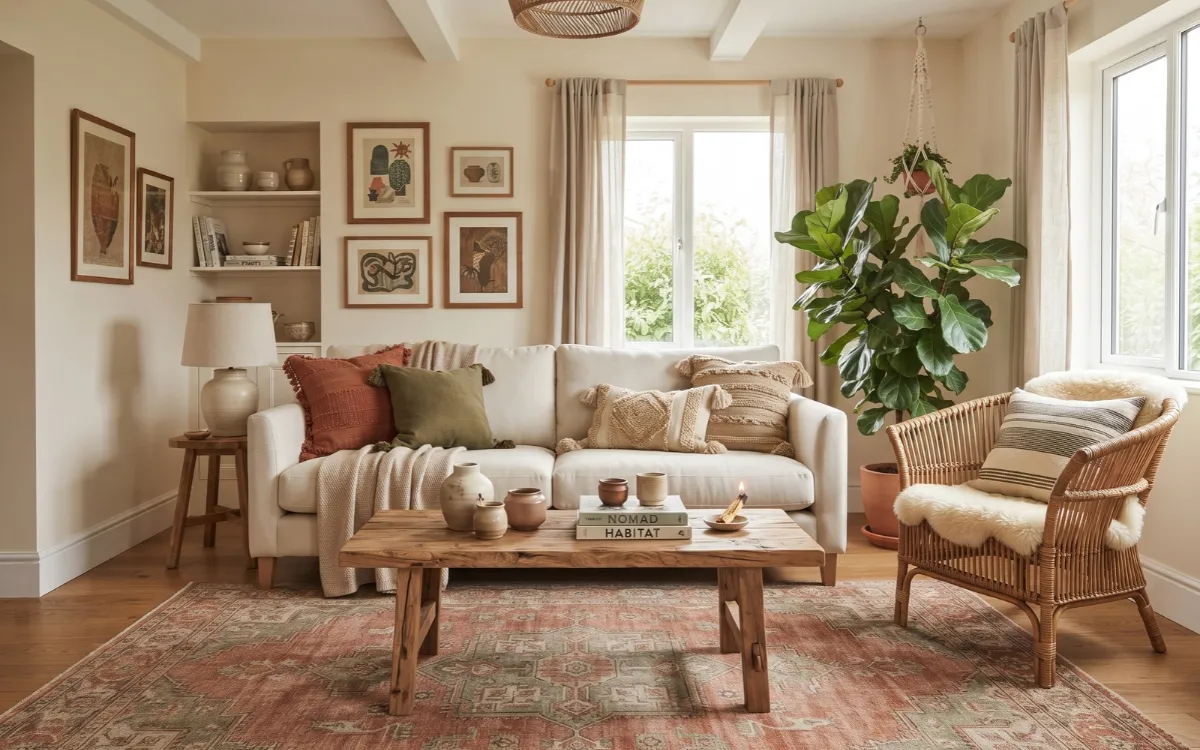
Boho decorating creates relaxed, personal interiors by combining natural materials, layered textiles, varied patterns, collected pieces, and greenery. The challenge is bringing these elements together without making the room feel random or overcrowded.
This guide explains how boho decorating works and how to choose colors, materials, furniture, patterns, lighting, and personal pieces while keeping the room comfortable and cohesive.
Understand Boho Style
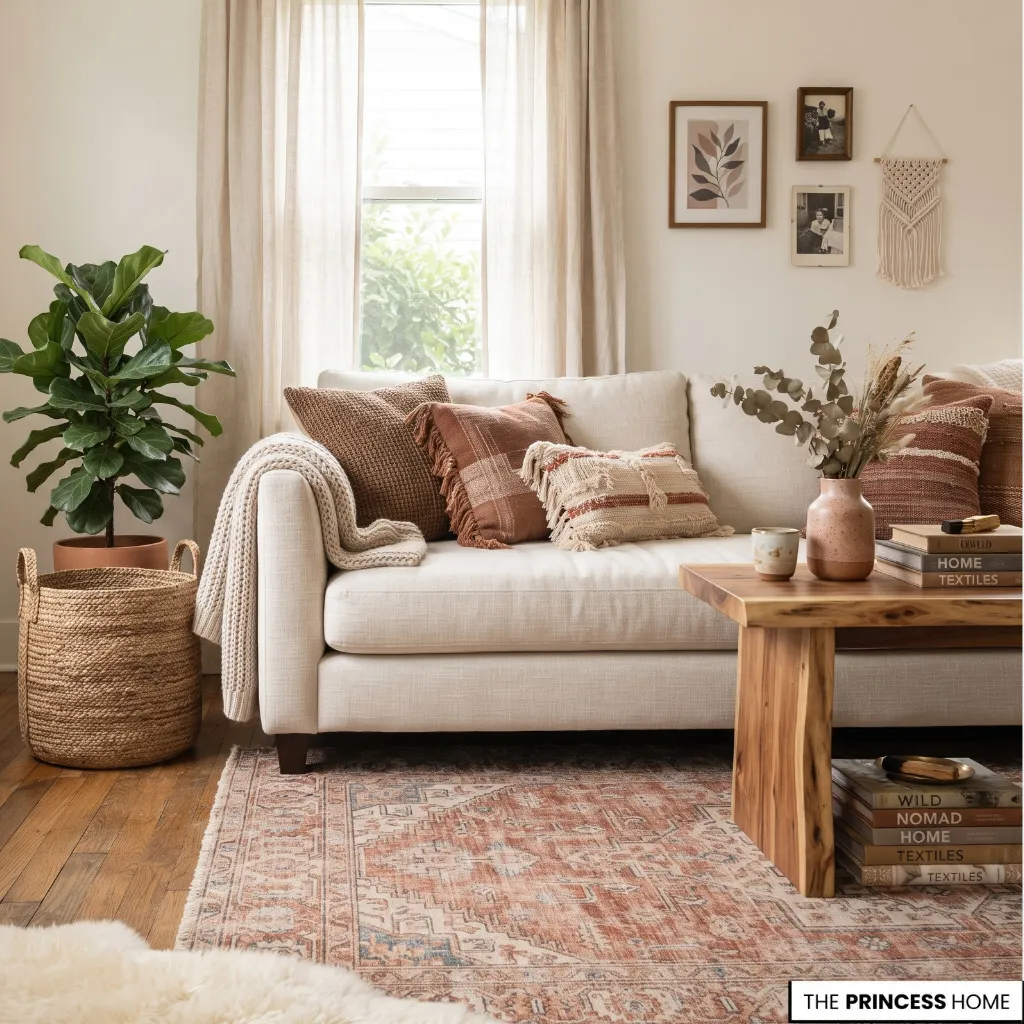
Boho decorating is a relaxed, eclectic approach that values individuality over matching furniture and perfectly coordinated accessories. It often combines natural materials, varied textiles, vintage or collected pieces, plants, patterns, and objects that reflect personal interests.
The idea of the bohemian lifestyle became associated with artists, writers, and other people living outside conventional social expectations, particularly in 19th-century Paris. Modern boho decorating, however, is a design style rather than a direct reproduction of that historical lifestyle.
Its defining quality is the way different elements are combined. A room might place contemporary furniture beside a vintage rug, woven baskets beside smooth ceramics, or patterned textiles alongside a quiet neutral sofa.
This makes boho different from simply filling a room with accessories. The goal is layered variety with enough visual connection to make the room feel intentional.
There is no single official boho palette or furniture formula. Some rooms are colorful and expressive, while others use warm neutrals and rely more heavily on texture. The amount of pattern, color, and collected detail can change according to the room, architecture, and personal taste.
Boho can suit a home well when you enjoy relaxed spaces, natural materials, collected objects, and some variation between pieces. It may be less suitable if you prefer highly uniform furniture, minimal decoration, or a very controlled and symmetrical look. The style can also be adapted to feel quieter or more restrained when you want its warmth without a highly layered appearance.
For more ideas: Interior Design Styles Choose Your Home’s Personality
Build the Foundation
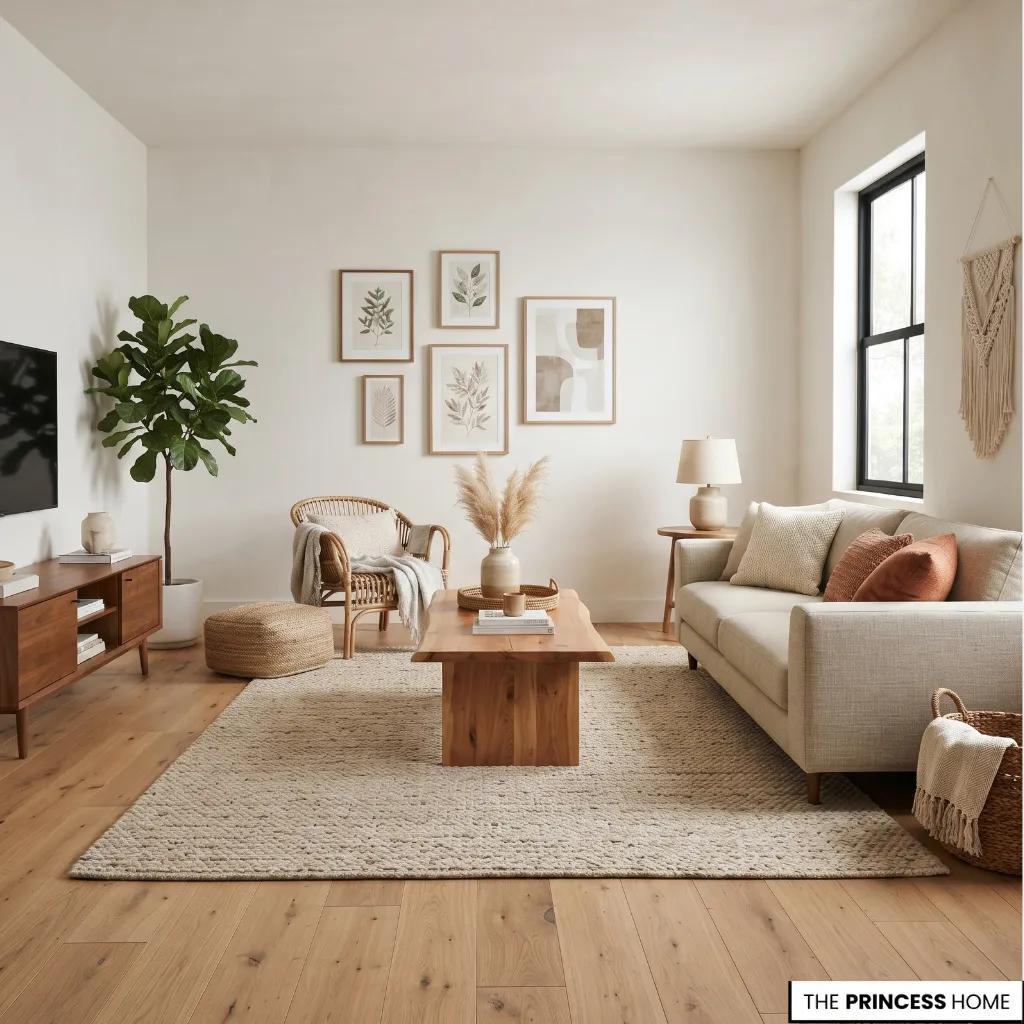
Before adding layers, assess the room you already have. Look at the architecture, floor, windows, existing furniture, natural light, and pieces worth keeping. Start with the practical layout.
Seating should suit the way the room is used, circulation should remain comfortable, and larger furniture should be appropriately scaled to the space. Then identify the colors and materials that will form the base of the room.
A neutral sofa, natural wood floor, simple walls, or existing wooden furniture can provide a quiet foundation for more expressive layers. Think of the process as layout → major furniture → base colors → texture → smaller details.
This order matters because decorative pieces cannot compensate for furniture that is poorly placed or too large for the room. Boho works particularly well when the foundation is simple enough to let the layered elements remain visible.
If existing furniture already works with the room’s proportions and color direction, keep it. Changing textiles, lighting, a rug, or selected accessories can shift the character of a room without requiring a complete replacement.
A useful way to begin a Boho room from scratch is to establish the furniture layout first, choose the main color direction, add one strong textile or rug, and then build texture, pattern, plants, lighting, and personal pieces around it.
This gives each layer a clear starting point and makes it easier to stop when the room already feels balanced.
For more ideas: Farmhouse Style: A Complete Guide to Creating Warm &Inviting
Choose Boho Colors
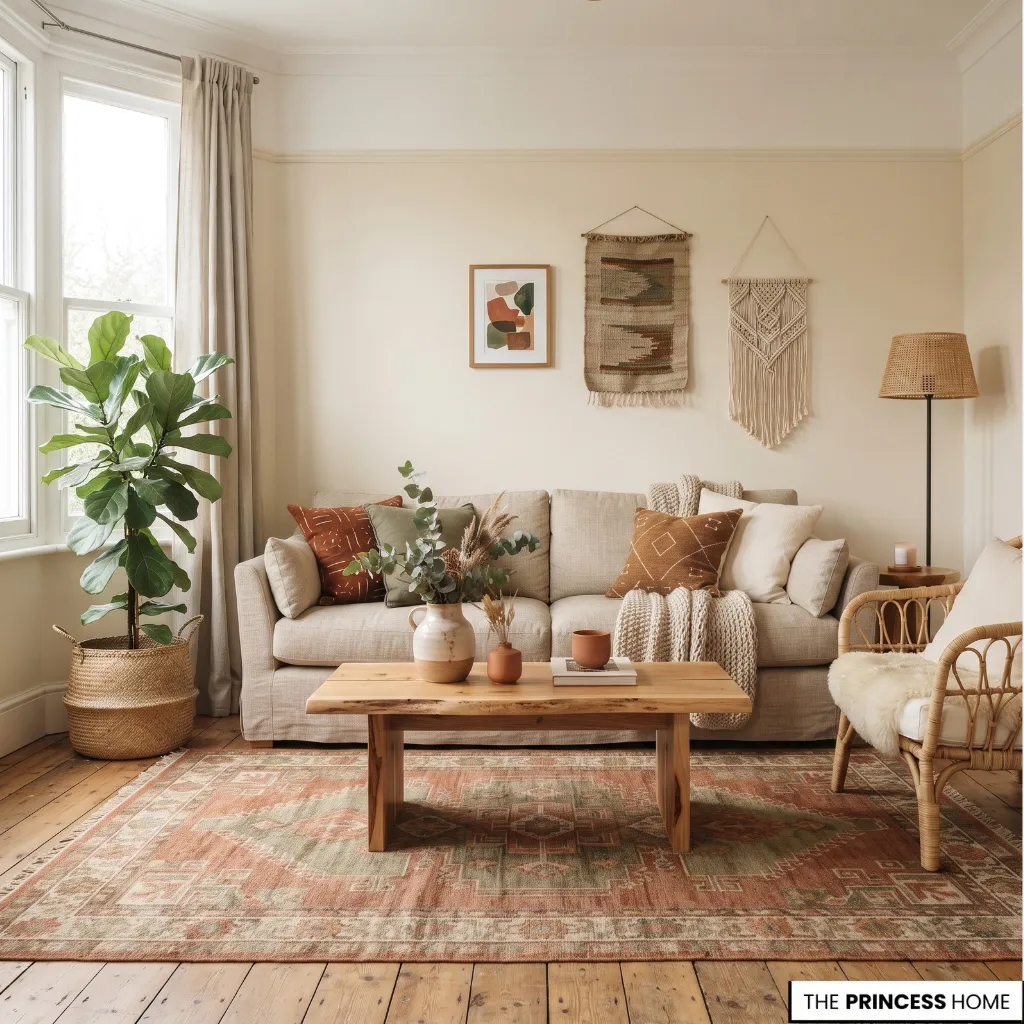
Boho decorating does not require a bright or heavily colored room. A warm neutral foundation can work just as well as a richer palette.
Common choices include cream, sand, beige, warm brown, terracotta, rust, ochre, muted green, and deeper earthy shades. Some interiors also introduce stronger jewel tones or saturated accents.
A practical way to build the palette is to choose a base color, a secondary color, and a smaller accent range. Repeat these colors in different materials rather than giving every object a completely different color.
For example, terracotta might appear in a cushion, ceramic vase, artwork, and small textile detail. The objects do not need to match. The repeated color simply gives them a visual connection.
A quieter palette can still look distinctly boho when texture, pattern, plants, and collected objects provide variety. Conversely, a colorful room needs enough neutral areas to prevent every element from competing for attention.
Avoid treating earthy colors as a requirement to use only brown and beige. The more important principle is that the colors relate to one another. Boho also does not require a particular set of signature colors or materials.
Rattan, macramé, terracotta, and earthy tones are common choices, but they are options rather than requirements. The style can remain recognizable through its relaxed layering, natural texture, pattern, and personal character even when some of these familiar elements are absent.
For more ideas: Black and White Modern Home Decor Timeless Design Ideas
Layer Natural Materials
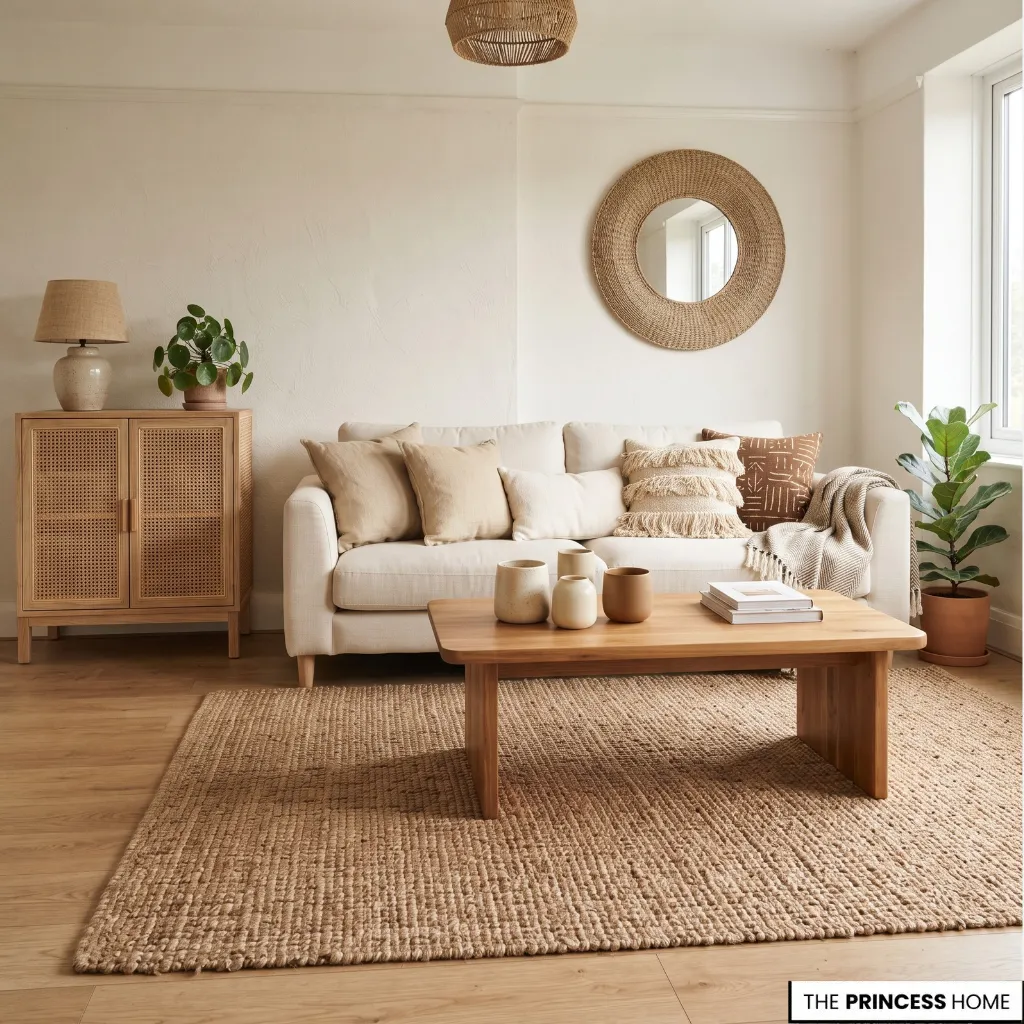
Natural materials are an important part of boho decorating because they introduce variation without relying entirely on color. Rattan, cane, wicker, natural wood, jute, linen, cotton, wool, aged leather, woven fibers, and ceramics can all contribute useful differences in texture.
The key is not to use every natural material available. Instead, combine a few materials that contrast with one another. A woven rug might sit beneath a smooth wooden table. Linen cushions can soften a leather chair, while a cane cabinet introduces an open woven texture.
A ceramic lamp can provide a harder, smoother surface. Think in terms of roughness, weave, grain, softness, and finish. This approach is particularly useful in rooms with restrained color. When the palette is mostly cream, beige, and brown, material differences prevent the room from becoming visually flat.
Natural materials also work well with contemporary furniture. A simple modern sofa can become more relaxed when paired with a textured rug, woven basket, natural wood table, and handmade-looking ceramics.
Select Boho Furniture
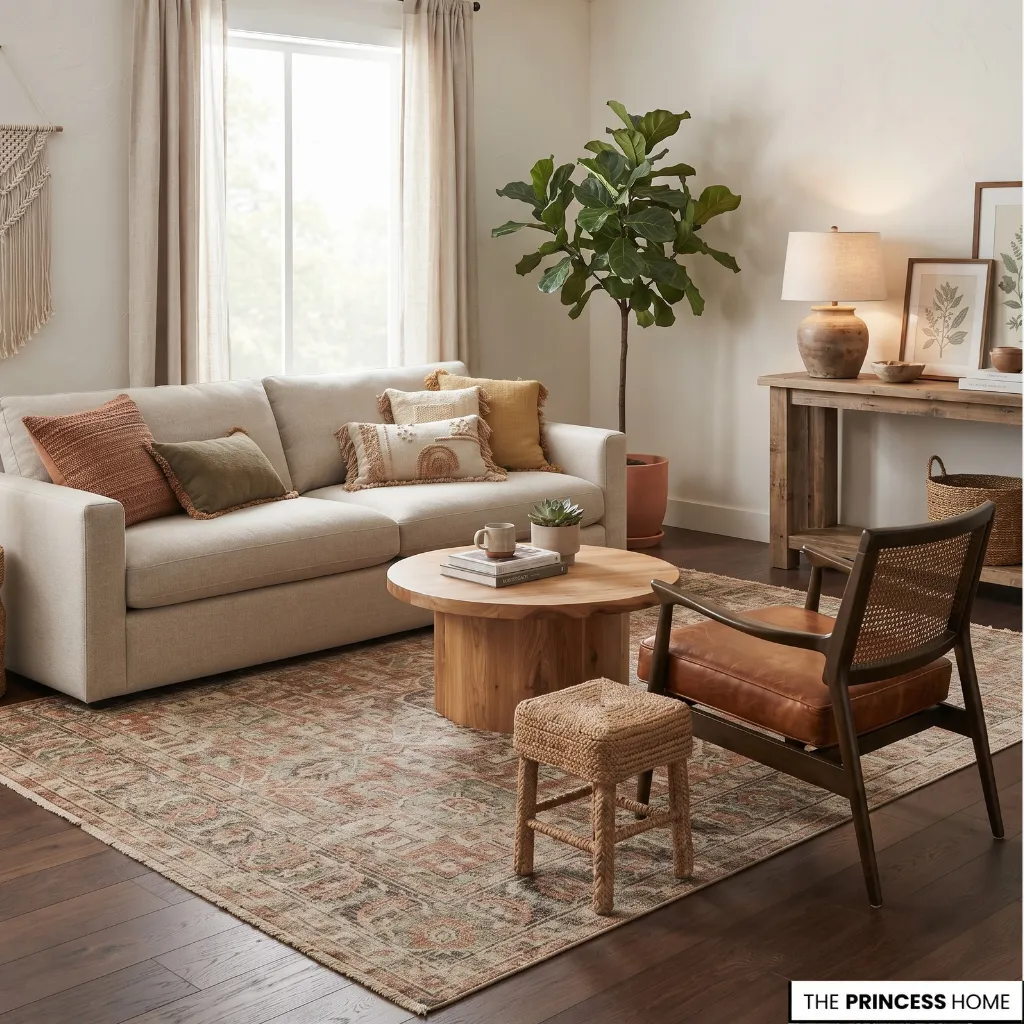
Furniture provides the structure beneath the decorative layers, so choose it before filling the room with accessories. Boho furniture often favors comfort and relaxed forms. Upholstered seating, natural wood, rattan or cane pieces, vintage furniture, stools, poufs, and casual lounge pieces can all work within the style.
The furniture does not need to come from the same collection. Variation can help create the collected character associated with boho interiors. Proportion still matters. A room with a large sofa, oversized rug, and several substantial chairs may not have enough space for additional bulky pieces
In a smaller room, fewer well-scaled pieces will usually work better than trying to reproduce a highly layered large interior. Existing furniture can also become part of the design. A simple neutral sofa can support patterned cushions and a vintage-style rug.
A contemporary wood table can sit comfortably beside a more traditional chair. The purpose is to connect the pieces through color, material, or shape rather than make them identical.
When the budget is limited, prioritize the major furniture pieces that determine comfort and layout. Then use textiles, lighting, and selected character pieces to build the boho identity around them.
For more ideas: Grand Millennials Style A Return to Warm Traditional Interiors
Mix Patterns Carefully
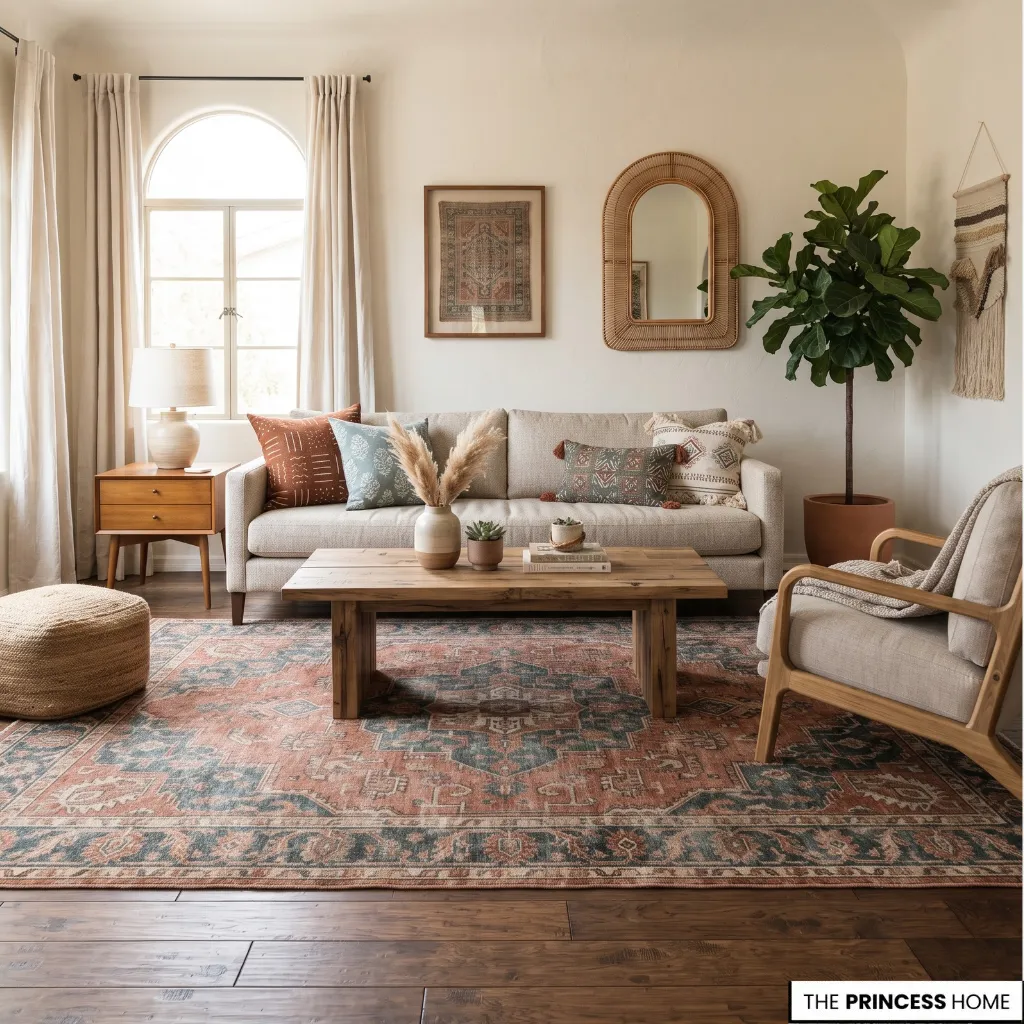
Pattern is one of the easiest ways to make a boho room expressive, but successful pattern mixing depends on relationships between the patterns. Start with color. Patterns that share one or two colors are easier to combine even when their motifs are different.
Then consider scale. A large pattern can work with a medium pattern and a quieter small-scale design. This creates variation without giving every surface the same visual weight.
Boho interiors can incorporate geometric designs, botanical motifs, stripes, block prints, kilim-inspired patterns, and other textile patterns. They do not need to come from the same design family.
For example, a patterned rug can become the strongest pattern in the room, while cushions use smaller or simpler motifs that repeat some of its colors. Artwork can then introduce another pattern or shape without competing with the rug.
Avoid placing a strong pattern on every major surface. If the rug, curtains, sofa, cushions, and artwork all demand equal attention, the room loses hierarchy. The goal is pattern variety with a visual connection, not pattern everywhere.
For more ideas: Moroccan Decor Transform Your Space with Exotic Elegance
Add Plants Naturally
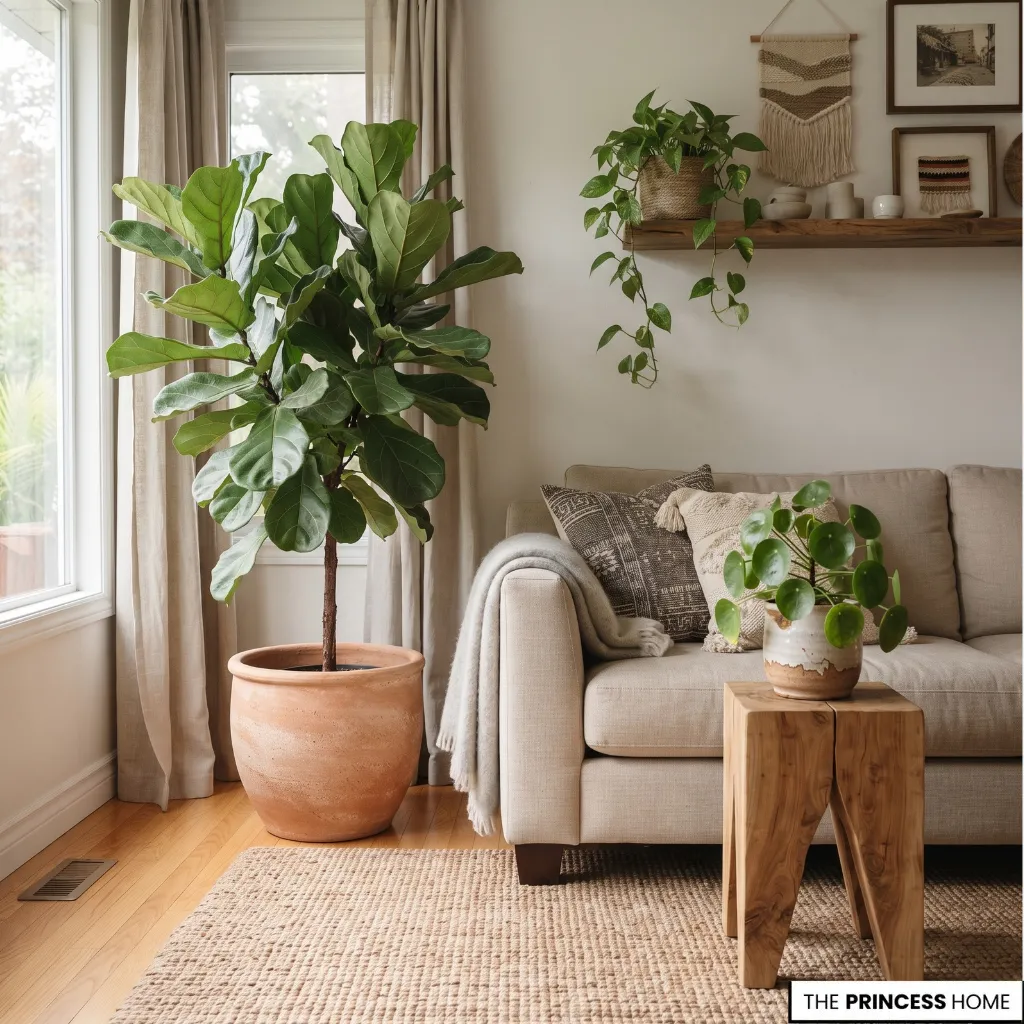
Plants work naturally with boho decorating because they introduce organic shapes, color, and variation in height. Use plants according to the room rather than treating them as mandatory accessories. A large plant can occupy an empty corner, while smaller plants can sit on a shelf, table, or windowsill.
Varying plant heights can help connect the floor, furniture, and vertical space. Different leaf shapes can also introduce variety without adding another pattern.
The containers matter as well. Woven baskets, terracotta, ceramic, and simple natural-finish planters can reinforce materials already used elsewhere in the room.
Avoid turning every available surface into a plant display. The strongest arrangement usually gives individual plants enough space to be noticed. Plants should support the overall composition rather than become a separate decorating theme.
Layer Lighting
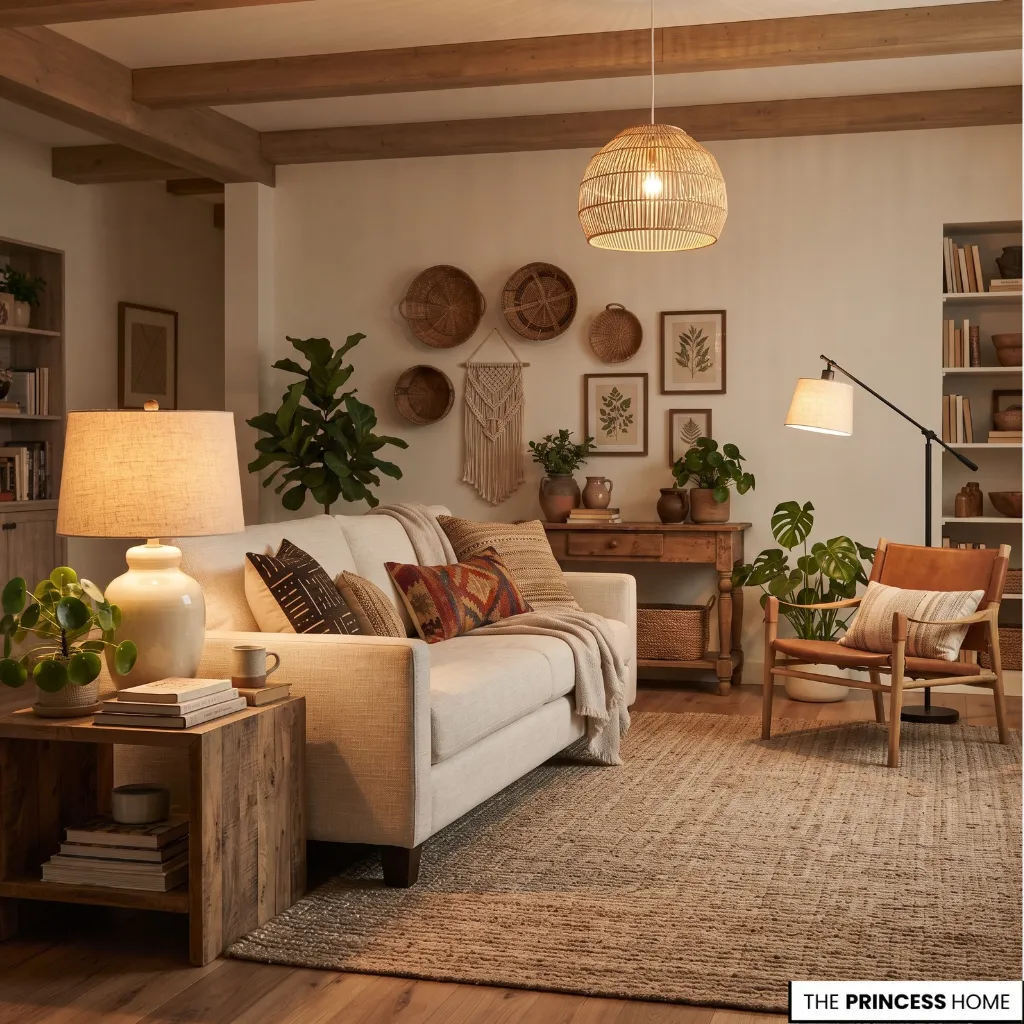
Lighting is another layer that should be considered alongside furniture and textiles rather than added at the end. Start with the room’s general lighting, then add task or accent lighting where it serves a practical purpose. Table lamps, floor lamps, wall lights, and decorative fixtures can provide different levels of illumination.
Boho interiors often work well with warm residential light because it complements wood, woven materials, textiles, and earthy colors. Around 2700K can be used as a warm starting point, although the best choice depends on the room, finishes, daylight, and the atmosphere you want in the evening.
The fixture itself can also contribute to the style. Woven shades, natural materials, aged finishes, ceramic bases, and simple sculptural forms can all work when they relate to the rest of the room.
Use lighting to balance the composition. A tall floor lamp can occupy an empty vertical area, while a table lamp can introduce a smaller material or color connection.
Style Collected Pieces
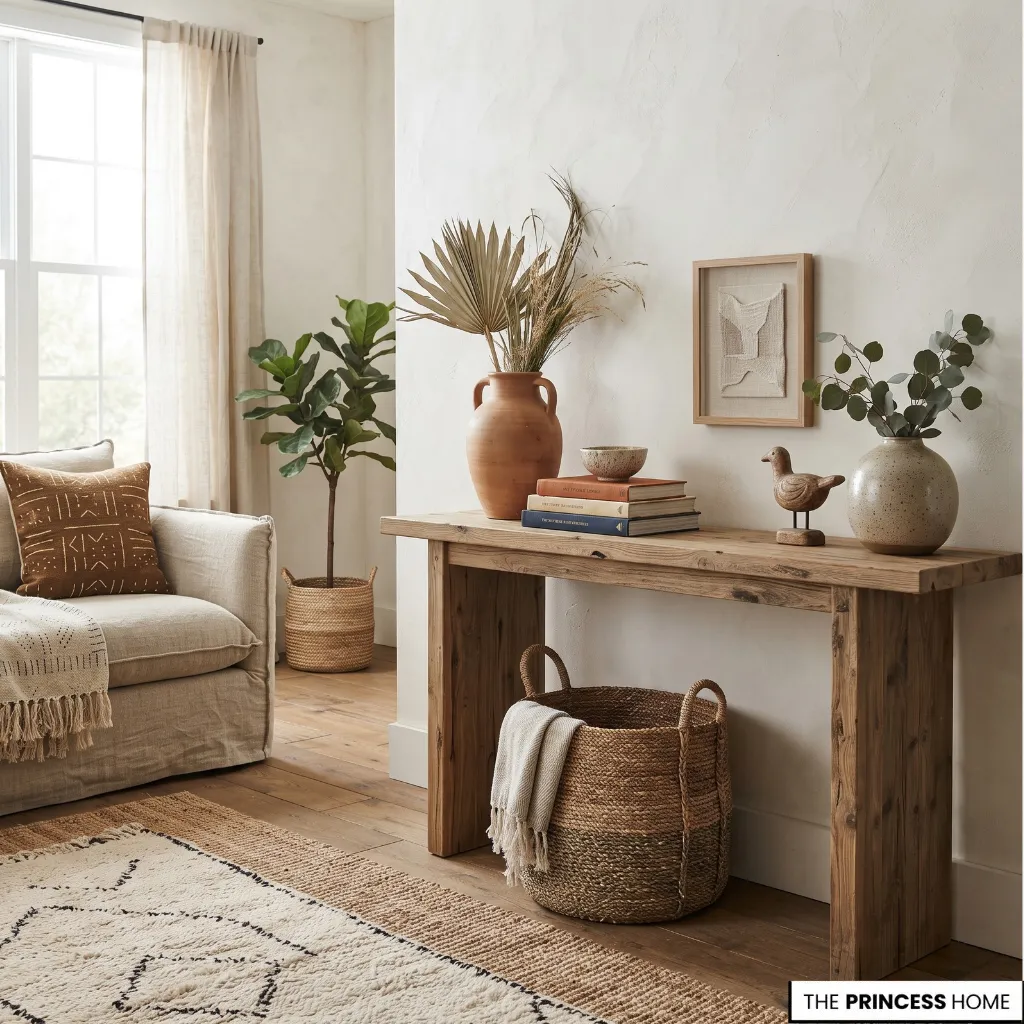
Personal and collected objects give boho decorating much of its character. Useful pieces can include vintage finds, handmade-looking ceramics, baskets, books, framed art, textiles, sculptural objects, and items connected to personal memories or interests.
Collected does not mean cluttered. A room feels more personal when objects have different histories, materials, or forms, but those differences still need some relationship to the overall palette and arrangement.Think about what each object contributes.
It might repeat a color, introduce a useful texture, fill a visual gap, provide a personal reference, or serve a practical function. This is also where contemporary and older pieces can work together.
A modern lamp does not prevent a room from feeling boho when it is combined with a vintage rug, natural wood, woven materials, and personal objects. The aim is for the room to feel assembled over time rather than purchased as one matching collection.
For more ideas: Understanding Vintage Style in Interior Design: A Detailed Guide
Explore Boho Variations
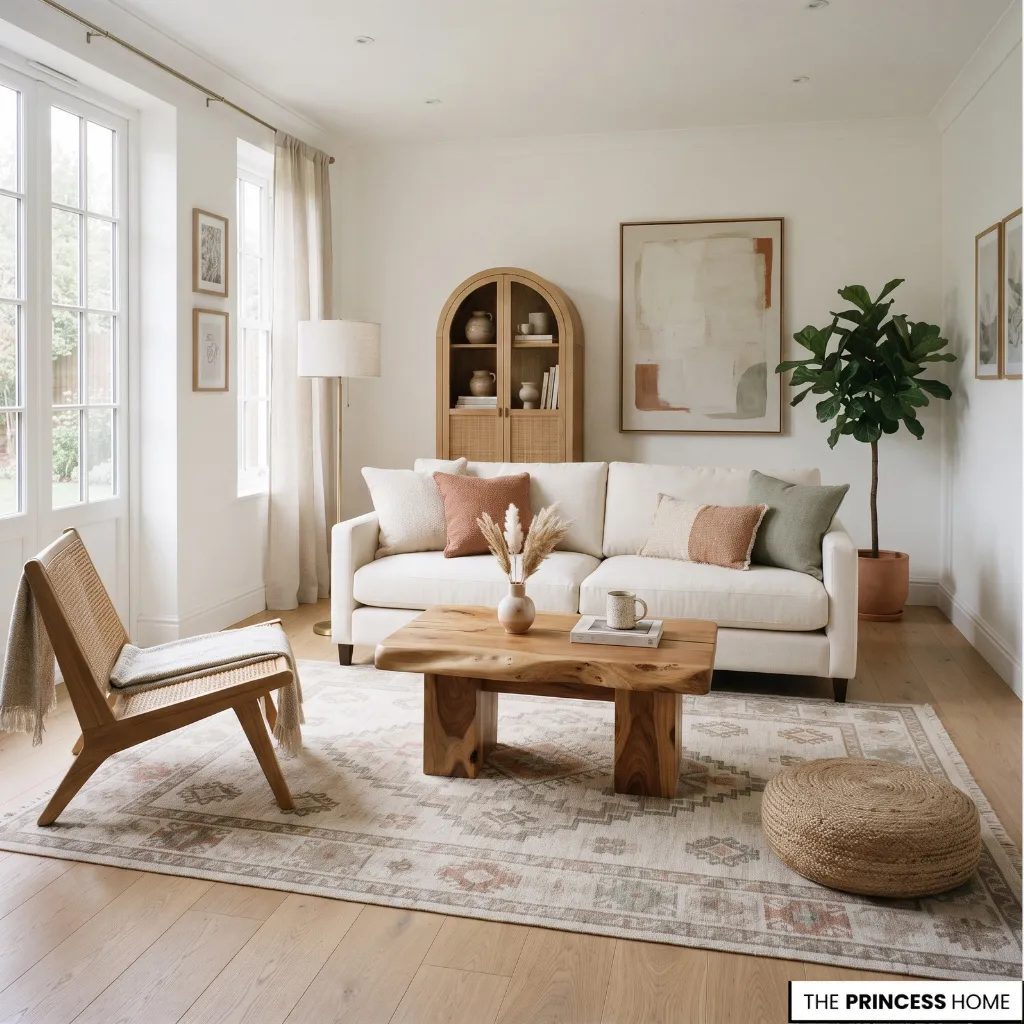
Boho decorating can take several directions without losing its basic character.
Modern boho usually uses cleaner furniture, a more restrained palette, and more controlled layering. It keeps the relaxed and natural qualities of boho while reducing visual density.
Coastal boho combines bohemian layering with lighter colors and relaxed coastal materials. Natural textures remain important, while the palette may move toward creams, soft blues, sandy neutrals, and other lighter tones.
70s-inspired boho can use warmer colors, vintage furniture, expressive textiles, and recognizable retro influences. It tends to feel richer and more visually expressive.
European boho can combine relaxed bohemian elements with older architectural details, vintage furniture, and a more collected character.
These are interpretations rather than rigid categories. The important question is what changes when you move between them: the palette, furniture, materials, pattern strength, and overall amount of layering.
For more ideas: English Cottage Decor Ideas: Cozy and Charming Home Inspiration
Adapt Boho Spaces
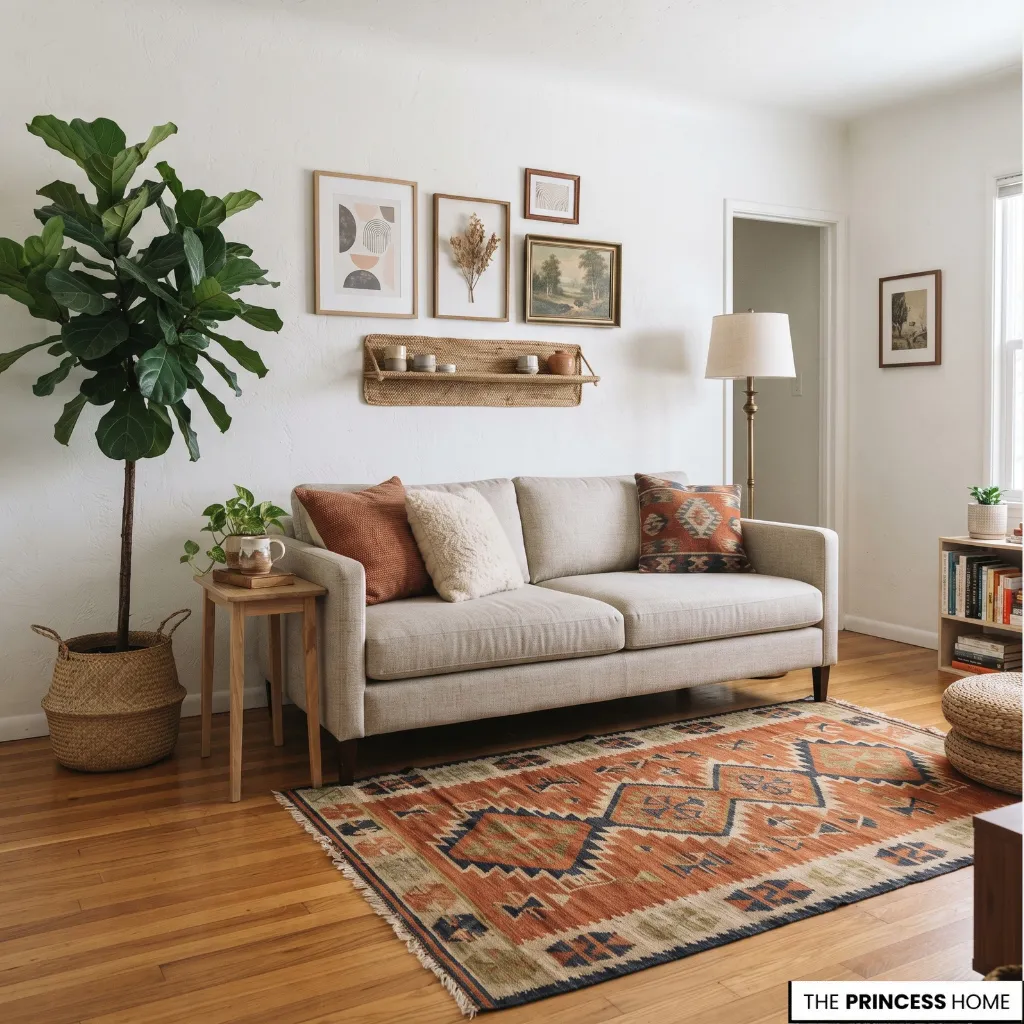
Boho decorating can be adapted to different rooms, budgets, and existing interiors. The key is to preserve the design principles rather than copy a particular photograph. In a small room, use edited layering.
Choose furniture that leaves enough circulation space, then build character through one strong rug or textile anchor, a few varied textures, selected artwork, and carefully placed plants. Vertical space can also help.
Shelves, wall art, tall plants, and floor lamps can introduce layers without filling the floor with furniture and accessories. If you already own modern furniture, you do not need to replace it simply because it is not traditionally boho.
A neutral sofa can work with a patterned rug, woven accessories, textured cushions, natural wood, and personal objects. Existing wood furniture may need little more than a new textile or lighting layer around it. For a limited budget, prioritize the elements that have the greatest influence on the room.
A strong rug or textile anchor can establish color and pattern. Lighting can change the way the room looks and functions after dark. One distinctive vintage, handmade-looking, or sculptural piece can provide more character than many inexpensive accessories.
The best alternative is often not a cheaper imitation of every boho element. It is a different way of achieving the same design purpose with what you already have.
Avoid Boho Clutter
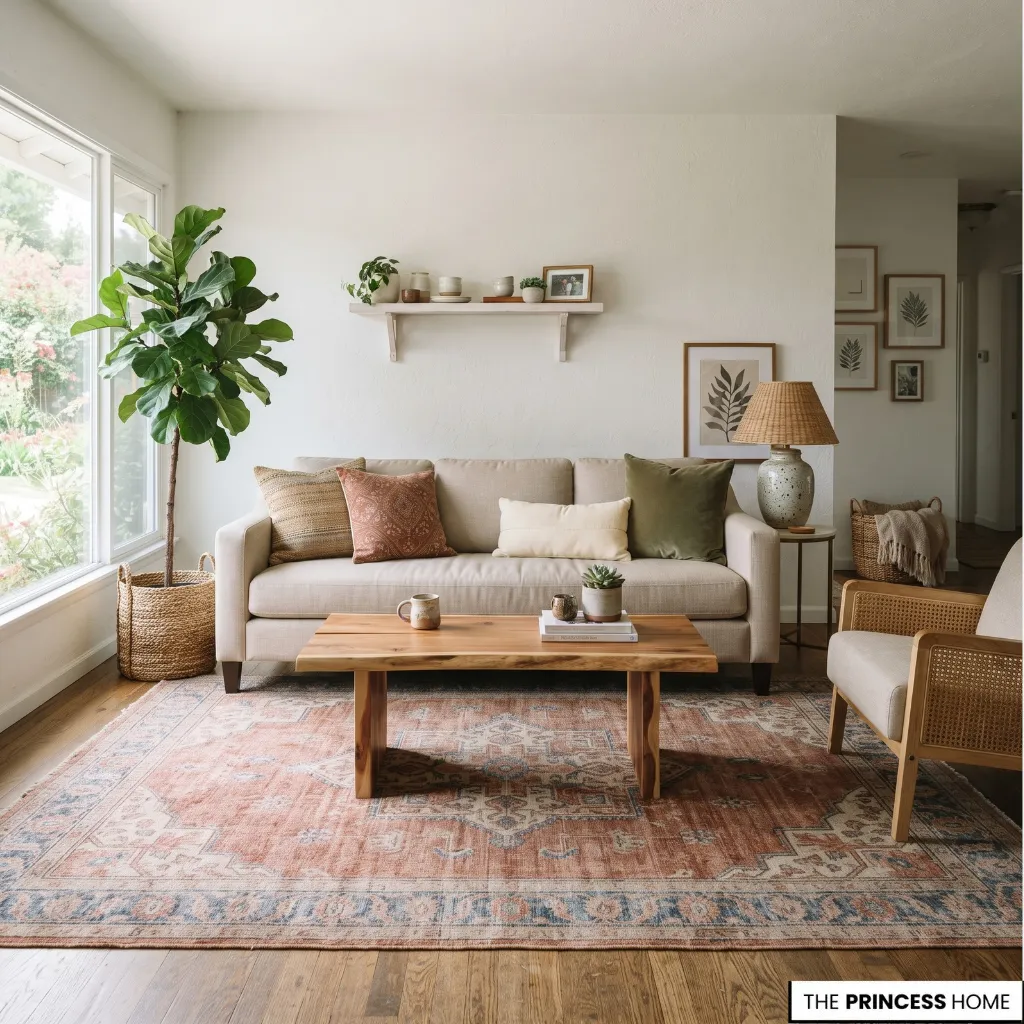
The line between layered and overloaded is important in boho decorating. One common mistake is adding too many decorative layers simply because the style is eclectic. When every surface is occupied, individual objects lose their importance.
Remove weaker pieces and keep the elements that contribute the strongest color, texture, function, or personal meaning. Too many patterns can create the same problem. If several large patterns compete, reduce the number of strong motifs and allow smaller patterns or solid textiles to provide quieter areas.
Matching everything can also weaken the collected character. Instead of buying a complete matching set, repeat colors and materials across different pieces.
Another problem is relying on accessories while neglecting the furniture foundation. A room cannot become successful boho simply by adding baskets, cushions, plants, and artwork if the furniture is poorly scaled or the layout does not work.
Finally, decoration should never interfere with everyday use. Keep walkways clear, make seating comfortable, and leave enough open space for the room to function.
Boho decorating works best when the room feels layered but still edited. The strongest pieces should remain visible, and every additional layer should have a reason to be there.
Conclusion
Boho decorating is about balancing functional furniture, connected colors, natural materials, textiles, patterns, plants, and collected objects. Embrace variety, but remove anything that creates clutter. The bohemian spirit lies in mixing freely, while good design knows when to stop.