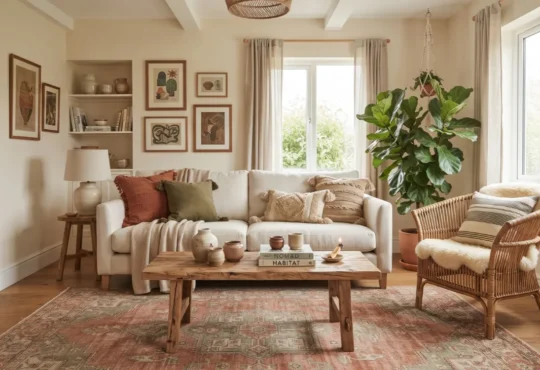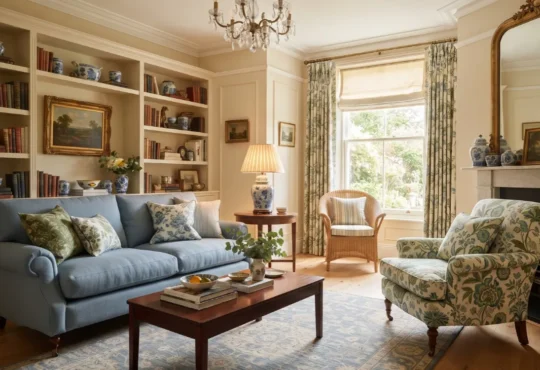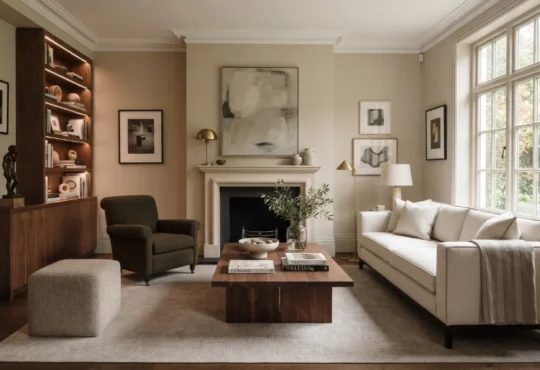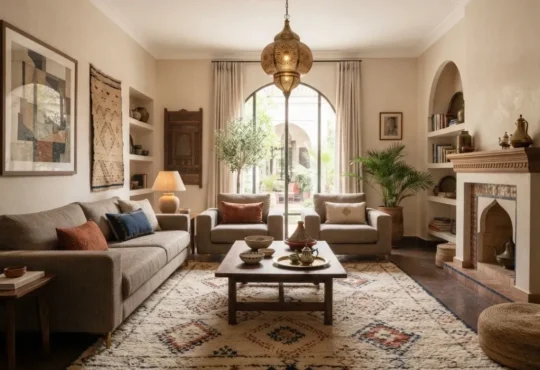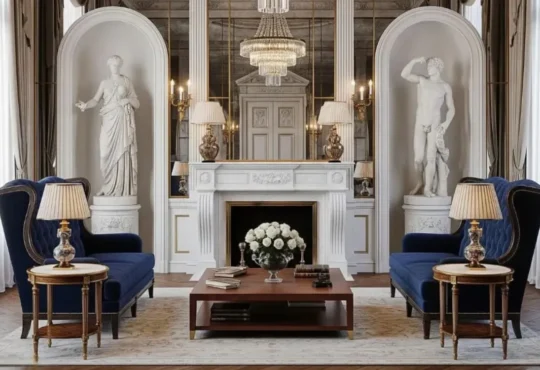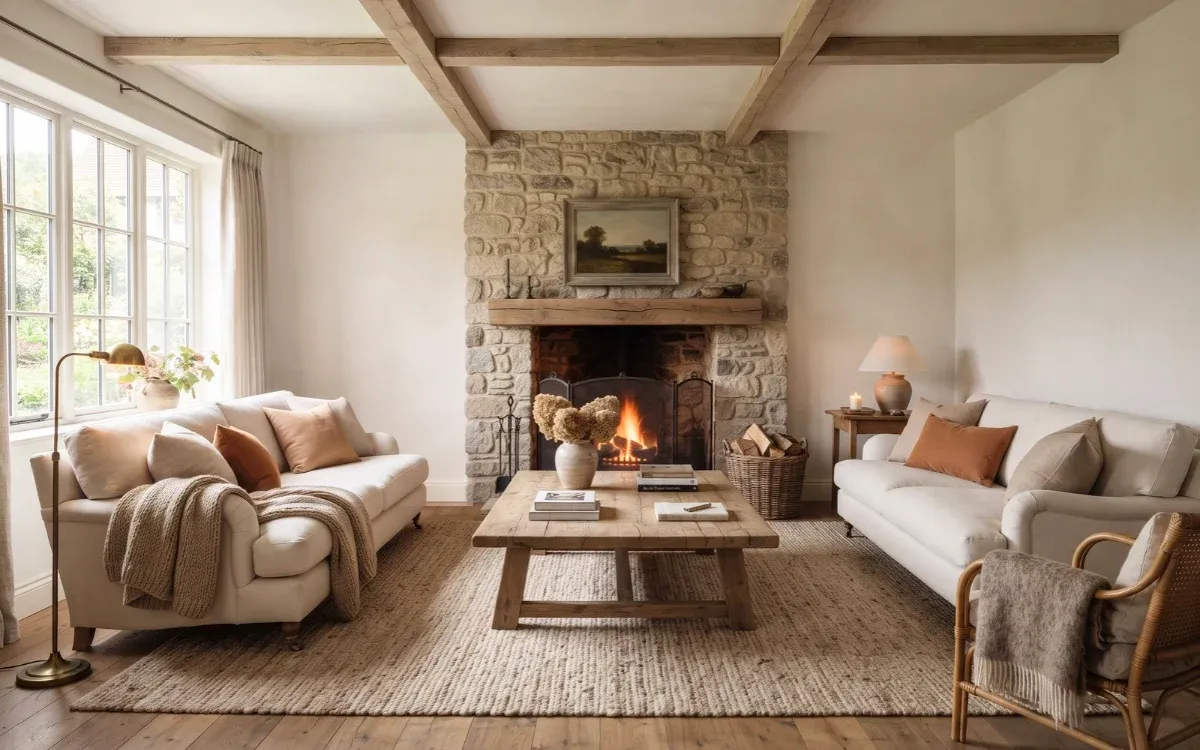
Farmhouse style combines practical furnishings, natural materials, and comfortable spaces to create a welcoming home. The challenge is balancing rustic character with modern comfort without making rooms feel cluttered, overly themed, or outdated.
This guide explains how to choose farmhouse colors, furniture, materials, lighting, and decorative details, with practical ways to adapt the style to different rooms, spaces, and budgets.
What Is Farmhouse Style?
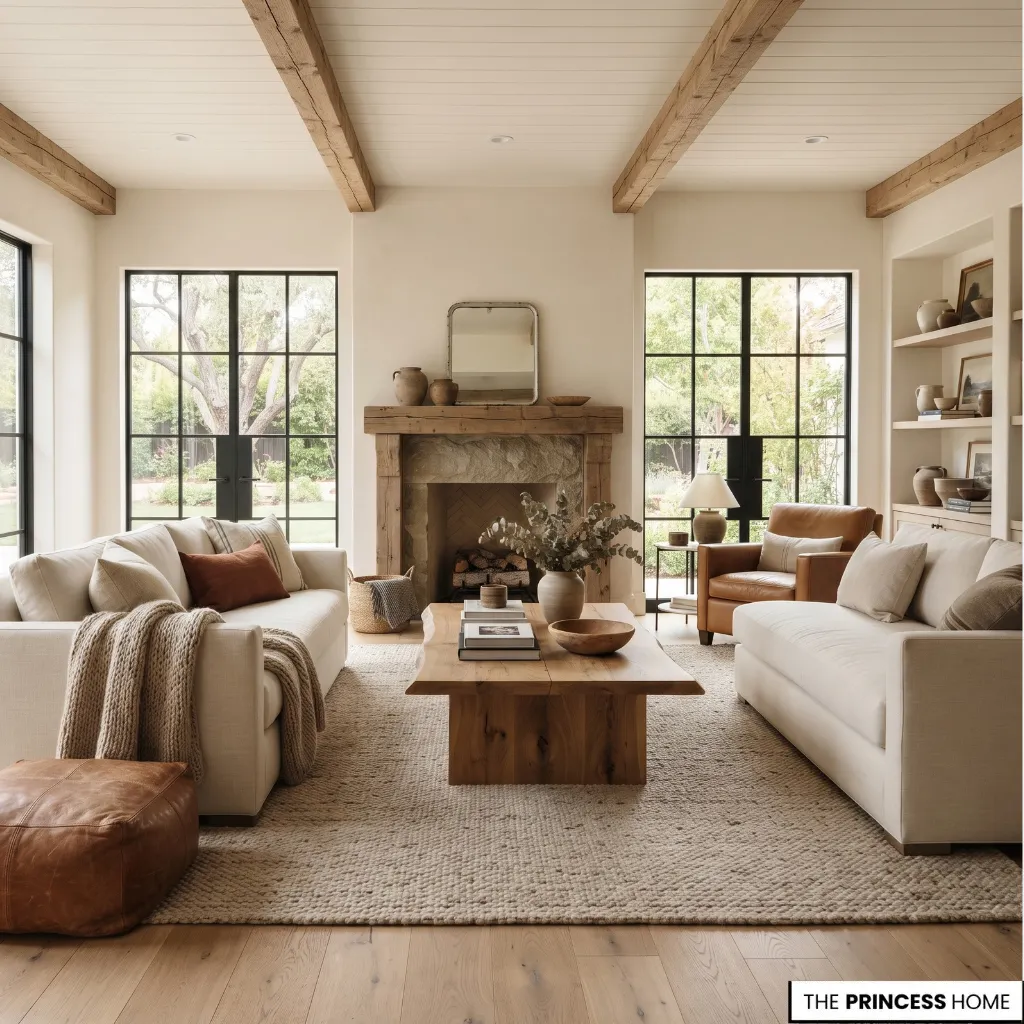
Farmhouse style draws inspiration from traditional rural homes, where everyday needs shaped the architecture, furnishings, and choice of materials. Wood, sturdy furniture, simple forms, and useful objects became defining features of these interiors.
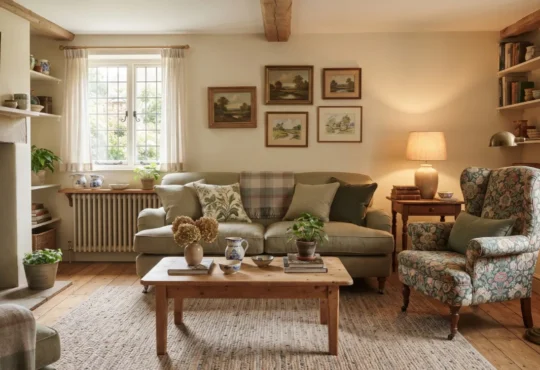
Today, farmhouse interior design interprets these principles in different ways. Traditional farmhouse interiors often feature substantial wooden furniture, vintage pieces, familiar patterns, and visibly aged finishes.
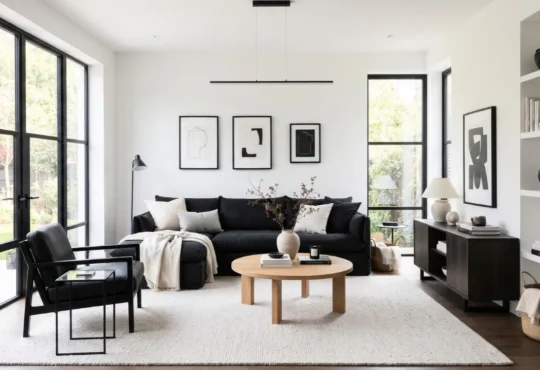
Modern farmhouse interiors combine natural materials with cleaner lines, contemporary comfort, and more restrained decoration.
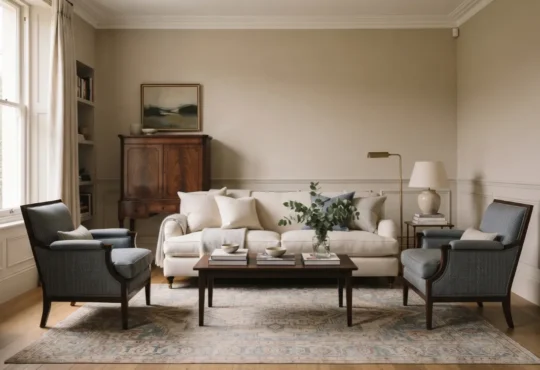
Other interpretations include French country farmhouse, with its softer traditional furnishings and aged finishes, and coastal farmhouse, which combines natural materials with lighter colors and an airier arrangement.
These variations offer different ways to express farmhouse character without changing its underlying emphasis on function and comfort. Farmhouse and rustic styles share a preference for natural materials, visible texture, and practical furnishings, but they are not identical.
Farmhouse interiors focus on creating a comfortable, functional home inspired by rural living, while rustic interiors place greater emphasis on the raw appearance of natural materials, rough surfaces, and rugged forms.
The two styles can overlap, but farmhouse design can also feel clean and contemporary without relying on heavily distressed finishes or rough textures. You do not need to reproduce a historic farmhouse to achieve the look.
Start by identifying the qualities you want in your home, such as natural wood, comfortable furniture, muted colors, or collected decorative pieces. Combine them in a way that suits your architecture and daily routine rather than copying a complete room from a photograph.
For more ideas: Interior Design Styles Choose Your Home’s Personality
Choose Farmhouse Colors
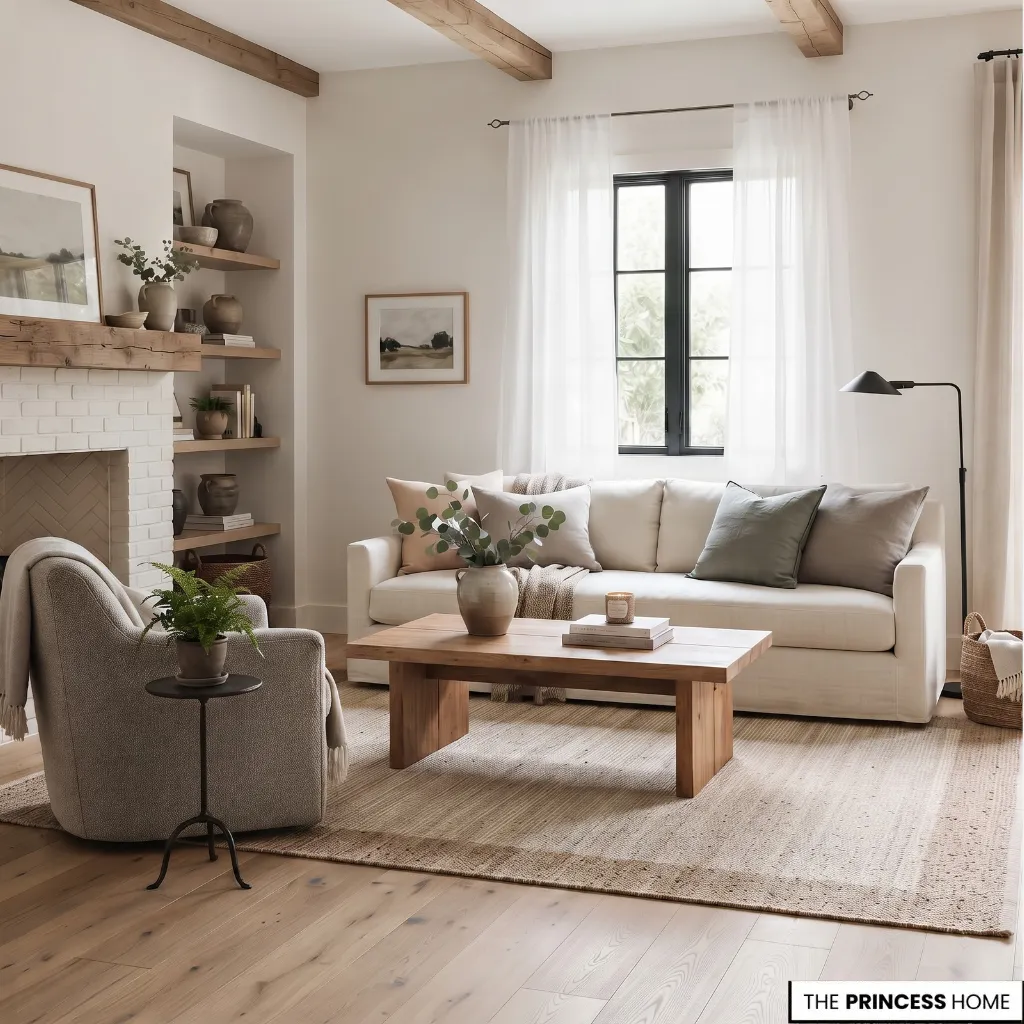
A farmhouse color palette often begins with warm white, cream, beige, or soft greige. These shades provide a flexible background for natural materials and furnishings, but the best combination depends on your existing finishes and preferred interpretation of the style.
Warm whites and cream work well with traditional and contemporary farmhouse interiors. Beige and greige introduce subtle variation, while muted greens and blues provide color without overwhelming the room. Brown, charcoal, and black can add contrast when used selectively.
Traditional interiors can also accommodate deeper greens, earthy reds, and familiar patterns. Start with the largest surfaces: walls, flooring, and major upholstered furniture. Choose a base color, then select supporting tones that connect these elements.
Consider wood finishes as part of the palette rather than treating them as separate decisions. Honey oak, weathered timber, and darker wood create different effects against the same wall color, so check how they work together before introducing additional finishes.
If your flooring has warm undertones, for example, several cool gray finishes may appear disconnected unless another element links them. Repeating a compatible wood tone or using a connecting fabric color can help the room feel more cohesive.
Avoid choosing every surface in the same shade of white or gray simply to achieve a modern farmhouse look. A restrained palette still needs variation in tone and texture. Natural wood, textured upholstery, or a carefully selected accent color can prevent the room from appearing flat.
For more ideas: Black and White Modern Home Decor Timeless Design Ideas
Layer Natural Materials
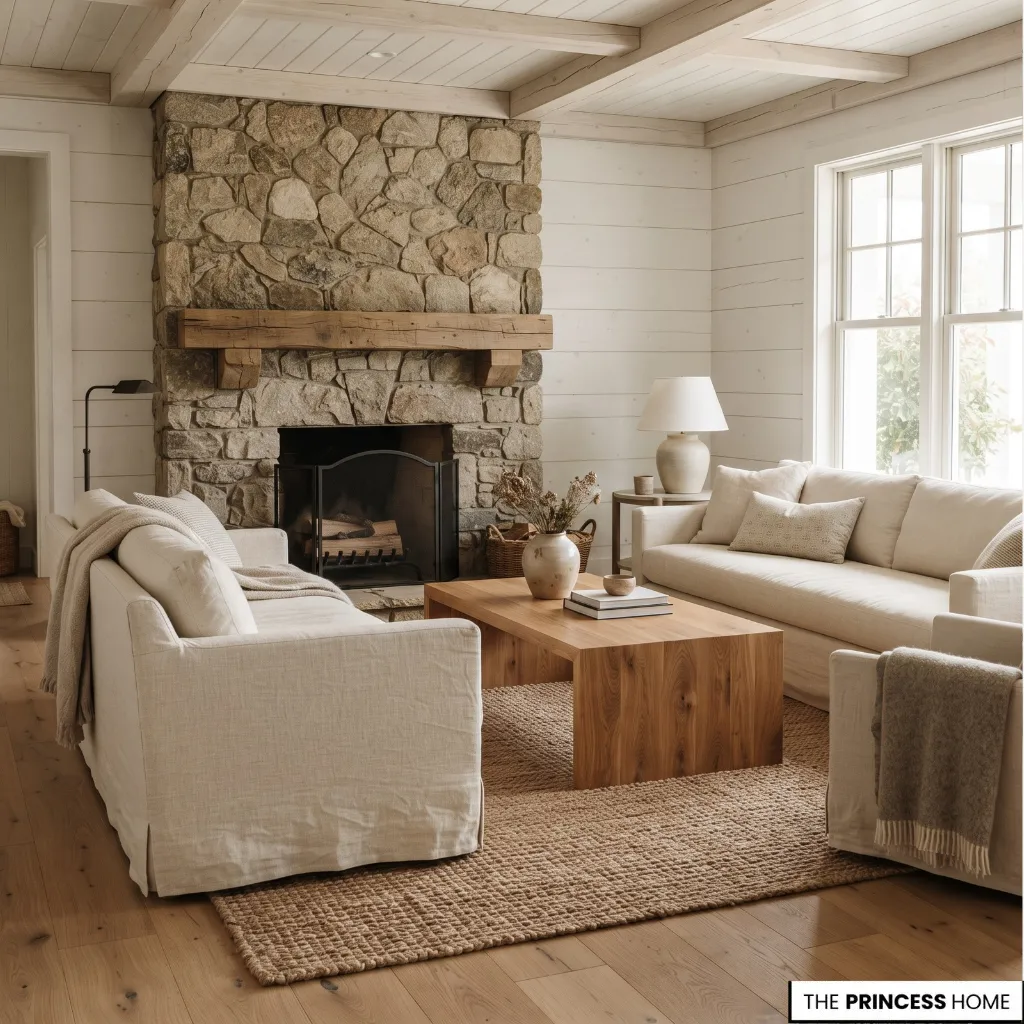
Wood, stone, brick, ceramic, linen, cotton, and woven fibers help establish the natural character associated with farmhouse interiors. Choose materials according to their appearance, practical performance, and relationship with the finishes already present.
Wood can appear in flooring, dining tables, shelving, cabinetry, and smaller furnishings. Its grain and color contribute to the room’s character, so repeat compatible finishes where possible while allowing some variation to keep the space from looking like a matching set.
When combining different wood tones, look for a shared quality, such as similar warm or cool undertones, a compatible finish, or a color that repeats elsewhere in the room. The tones do not need to match exactly, but a clear relationship helps the furnishings feel connected.
For farmhouse flooring, wood is a natural option when its color and finish suit the room’s palette and maintenance needs. Stone and ceramic or porcelain tile can also work well, particularly in kitchens, bathrooms, and entryways where easy cleaning and moisture resistance matter.
Choose the material according to the room’s use, the condition of the existing floor, and the amount of maintenance you are prepared to manage. Stone and brick provide more substantial surface texture, particularly around fireplaces, kitchen areas, and existing architectural features.
However, neither is essential. Ceramic accessories, textured plaster, natural-fiber rugs, and wooden furniture can introduce material interest without major renovation. Balance rough and smooth surfaces.
A wooden dining table with visible grain, for example, can work well with simple upholstered chairs and smooth ceramic accessories.
If every surface is heavily textured or distressed, the room may lose definition. A few contrasting finishes allow each material to remain noticeable.
Maintenance matters as much as appearance. Kitchen work surfaces must withstand regular use and cleaning, upholstery should suit the household’s needs, and bathroom materials must be appropriate for moisture.
A beautiful finish is not a good choice if it creates unnecessary upkeep or performs poorly in its intended location. If your home already has attractive flooring, brickwork, or timber details, make those features part of the design. You do not need reclaimed wood or exposed brick in every room.
The aim is to create a connected material palette, not to add rustic finishes wherever space allows.
For more ideas: Moroccan Decor Transform Your Space with Exotic Elegance
Choose Farmhouse Furniture
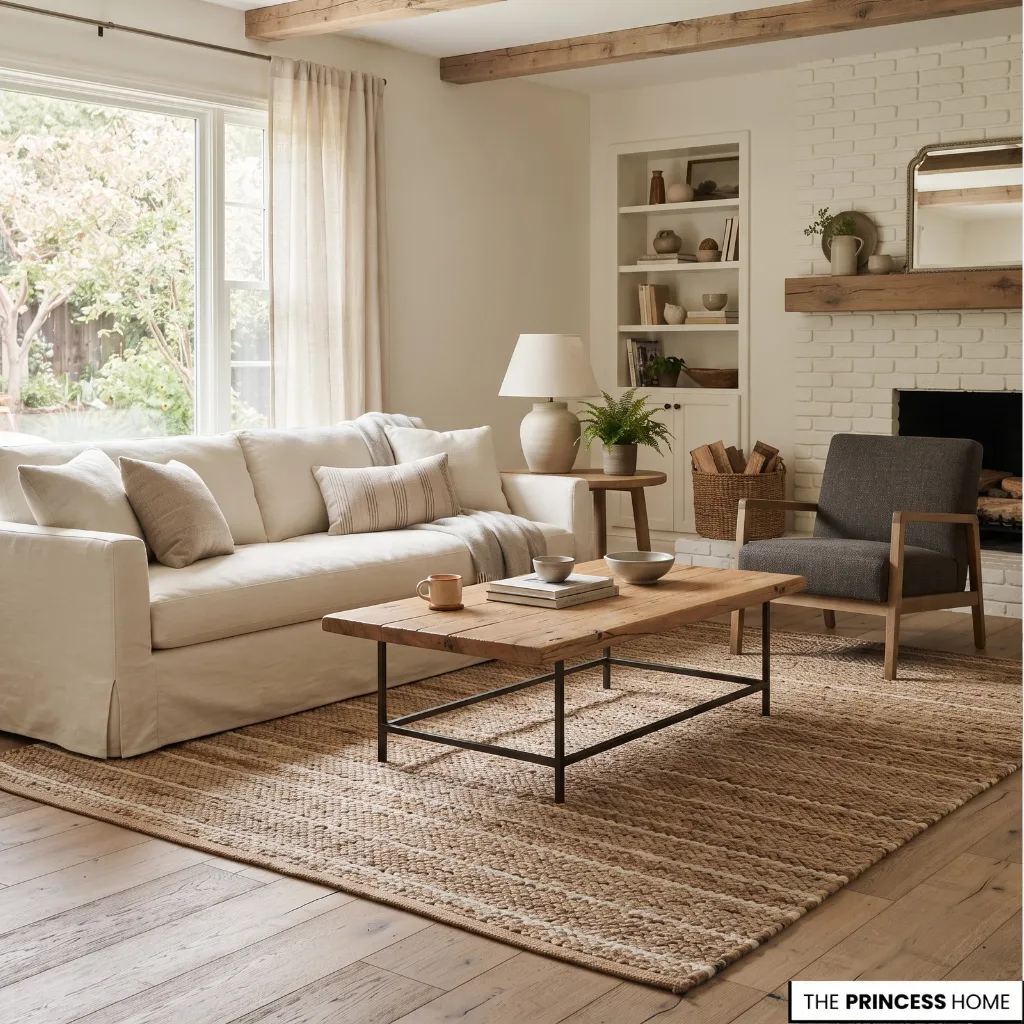
Farmhouse furniture should be comfortable, functional, and proportionate to the room. Sturdy wooden tables, practical storage, relaxed upholstered seating, and simple furniture shapes are common choices, but the right combination depends on the space and how it is used.
Start with the furniture the room needs to function well. In a living room, arrange seating for conversation and provide useful surfaces for everyday items. In a dining room, choose a table and chairs that accommodate the household without obstructing circulation.
Traditional farmhouse interiors can accommodate substantial wooden pieces, vintage cabinets, and furniture with visible age. Modern farmhouse rooms often suit cleaner lines, simpler profiles, and a more restrained mix of finishes. In either case, select pieces that relate to the room’s palette and architectural character.
Upholstery should suit both the style and your daily routine. Linen and cotton offer a relaxed appearance, while durable performance fabrics may be more practical for busy households. Choose colors that connect with the surrounding materials instead of treating each furniture purchase as an isolated decision.
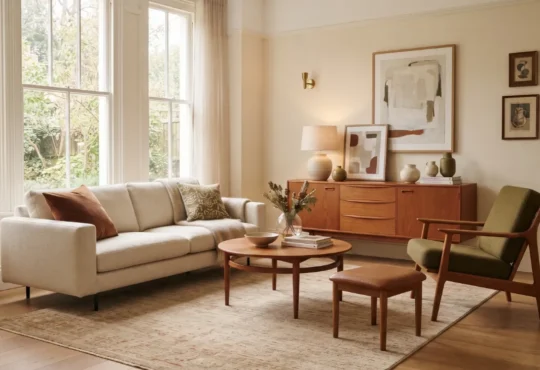
Mixing old and new furniture is often more effective than buying a matching set. A contemporary sofa can sit comfortably alongside a vintage wooden coffee table when their proportions, colors, and visual weight work together. Similarly, a simple dining table can gain character from older chairs without requiring every piece to look antique.
Check furniture dimensions before buying. Large pieces can overwhelm a small room, even when their style is appropriate. Measure the available area, consider doorways and walking routes, and leave enough space to use drawers, chairs, and cabinets comfortably.
If authentic antique furniture is expensive or difficult to find, choose contemporary pieces with compatible proportions and natural finishes. Reusing an existing wooden table or cabinet can also preserve the intended character without unnecessary spending.
Avoid choosing furniture solely because it has a rustic finish. A well-proportioned, useful piece with a simple design is often more successful than an oversized item selected only to make the room look like a farmhouse.
For more ideas: Grand Millennials Style A Return to Warm Traditional Interiors
Plan Farmhouse Lighting
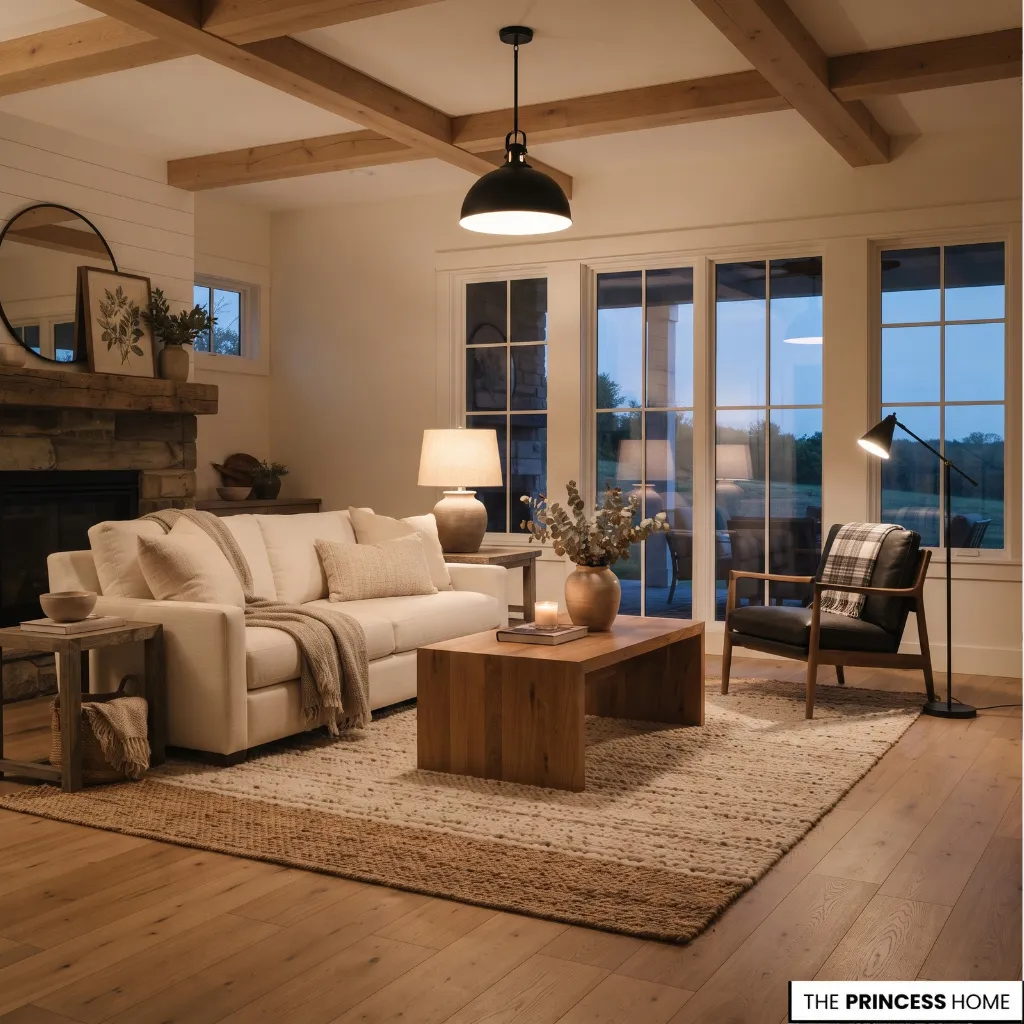
Farmhouse lighting should support everyday activities while complementing the room’s furniture and materials. Combine general, task, and accent lighting according to how each area is used instead of relying on one ceiling fixture for every need.
General lighting illuminates the room as a whole. Task lighting provides clearer visibility where people read, prepare food, or work. Table lamps, floor lamps, and wall lights can add illumination where it is useful.
Choose fixtures that relate to your preferred interpretation of farmhouse style. Metal pendants, glass shades, ceramic lamps, and simple traditional forms can all work. Their suitability depends on the surrounding finishes, furniture shapes, and architectural details.
In a dining room, a pendant can provide focused light over the table. For reading and relaxation in the living room, table and floor lamps reduce the need to keep the overhead light on. Kitchen task lighting, meanwhile, should illuminate work surfaces clearly and prevent shadows.
Consider light color as well as placement. Warm-white lighting is often a useful starting point for residential rooms because it works well with wood and warm neutral finishes. The appropriate choice still depends on the activity, daylight, and colors of the materials.
If replacing fixtures is impractical, retain functional existing lighting and introduce compatible portable lamps. This can improve the lighting arrangement without requiring electrical alterations.
Avoid choosing every fixture from the same rustic collection. Different fixture types can work together when their finishes, scale, and overall character relate to one another.
Add Textiles and Patterns
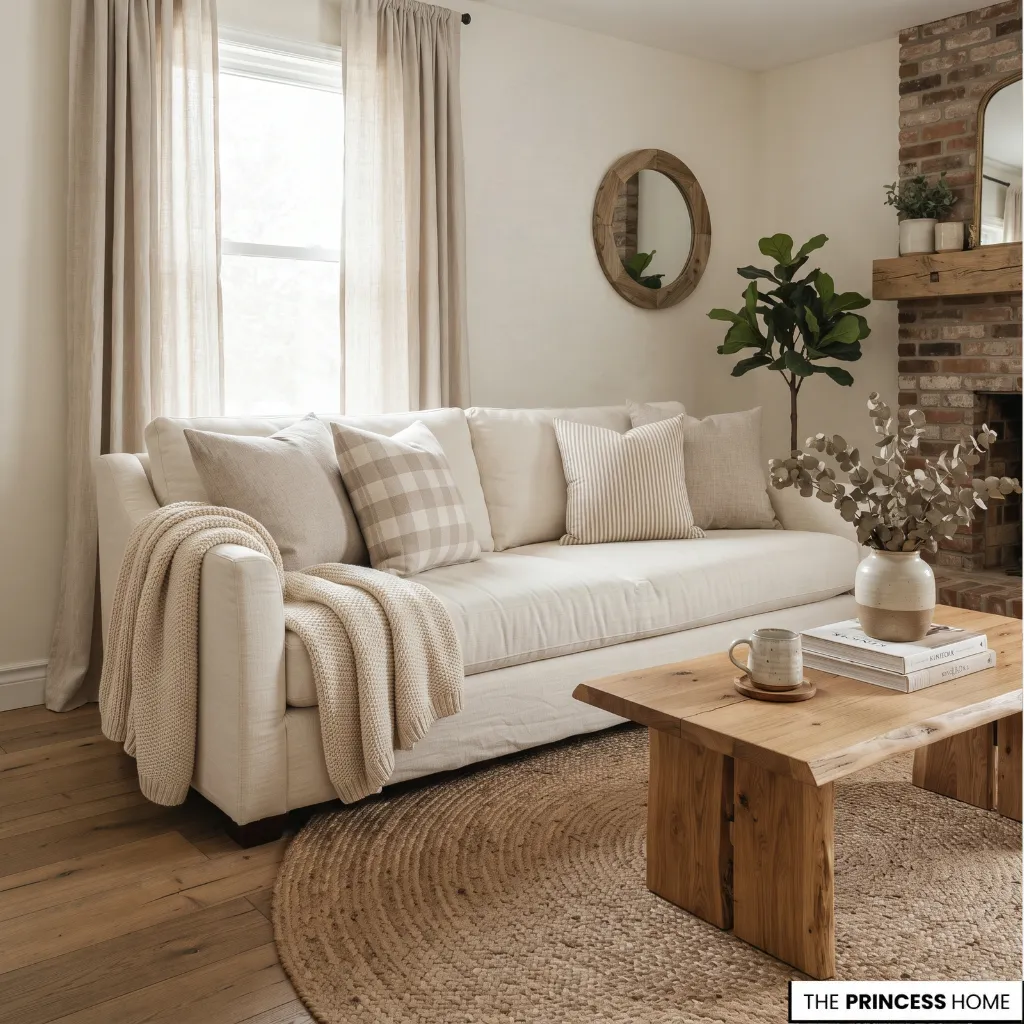
Textiles soften wood, stone, and other harder surfaces while connecting the room’s colors and furnishings. Linen curtains, cotton cushions, textured bedding, woven rugs, and comfortable upholstery are useful choices for farmhouse interiors.
Start with the largest textile surfaces. A rug can connect a seating arrangement, curtains can complement the wall color, and bedding can establish the palette in a bedroom. Smaller textiles can then introduce additional texture or pattern.
Traditional farmhouse interiors may use checks, plaids, stripes, and floral prints. These patterns can work together when they share a color direction or differ in scale. A larger plaid, for example, can be balanced by a smaller pattern and several plain fabrics.
Modern farmhouse interiors often rely more on texture than prominent prints. Linen, cotton, wool, and woven fibers can provide variety without introducing several competing patterns.
Consider practical needs when choosing fabrics. Washable covers and durable rugs may be useful in family spaces, while bedroom textiles can prioritize comfort and softness. Curtains should also suit the room’s requirements for privacy and light control.
Avoid adding patterned cushions, throws, curtains, and rugs without considering how they relate. If the room already contains prominent wood grain, detailed architectural features, or patterned upholstery, simpler textiles can maintain clarity.
The goal is not to eliminate pattern but to give it a clear role. Coordinated prints can reinforce traditional farmhouse character, while restrained fabrics support a more contemporary look.
For more ideas: English Cottage Decor Ideas: Cozy and Charming Home Inspiration
Style with Purpose
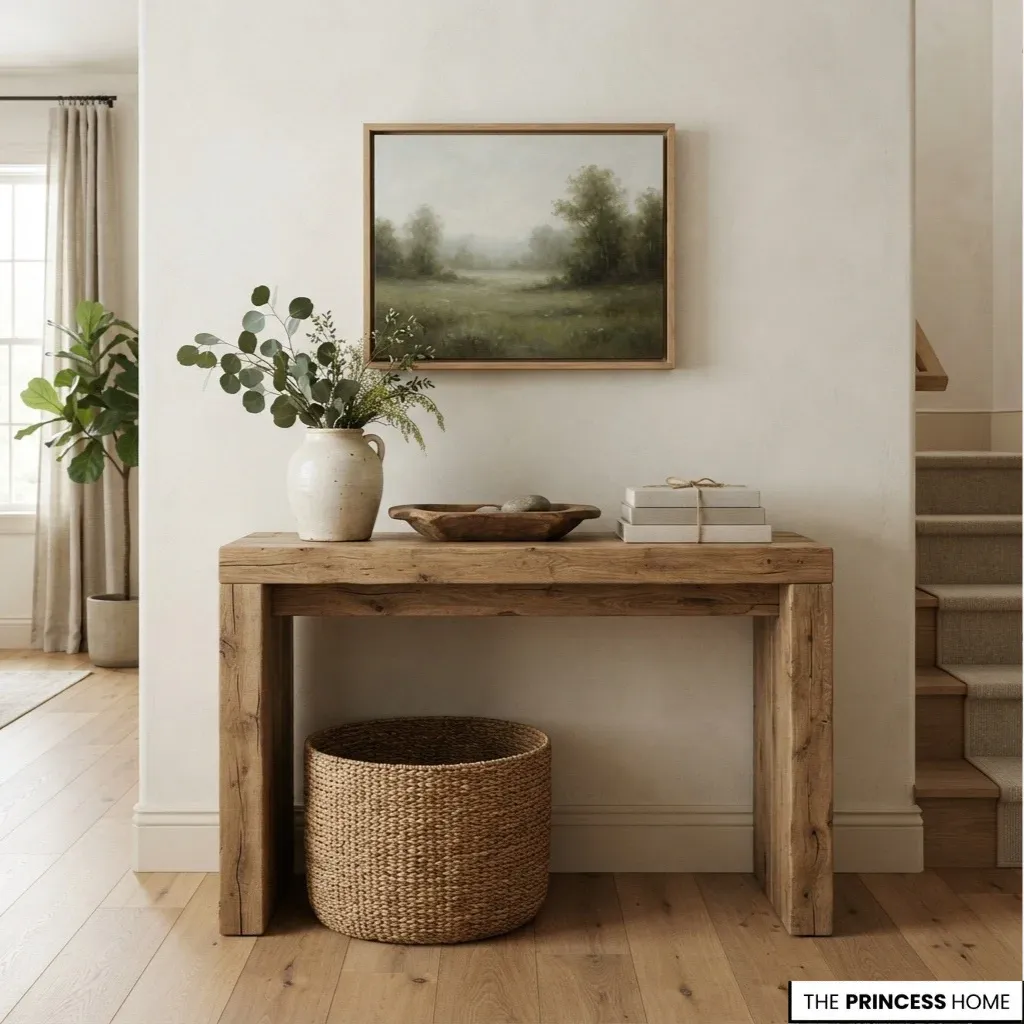
Farmhouse accessories should contribute character without making the room feel like a themed display. Ceramics, baskets, books, greenery, artwork, and selected vintage objects can all work when they relate to the room’s materials and serve a clear decorative or practical purpose.
Start with surfaces that need to remain functional. Coffee tables, dining tables, kitchen counters, and bedside tables should still support everyday activities. Select objects that contribute color, texture, or personal meaning instead of filling every available space.
Vary the height and visual weight of grouped objects. A ceramic vessel beside a stack of books, for example, creates a more considered arrangement than several objects of identical size. Leave enough open space around the grouping so individual pieces remain visible.
Baskets can store blankets, magazines, or other household items. Ceramics introduce texture, while books and artwork make the room feel personal rather than copied from a showroom. Greenery can provide another natural element when suitable light and maintenance conditions allow.
Vintage pieces are useful when they have genuine character or relate to the home’s existing furnishings. However, not every object needs to look aged. Contemporary accessories can provide contrast and prevent the room from feeling overly rustic.
Be selective with decorative farmhouse signs, artificial distressing, and accessories that repeat the same theme. A few distinctive objects can establish the direction, while too many similar pieces make the design feel predictable.
Personal character can also come from inherited furniture, meaningful artwork, collected ceramics, or books that reflect the household’s interests. These pieces do not need to match perfectly. Connect them through compatible colors, materials, or proportions rather than arranging everything as a coordinated set.
Before buying anything new, review what is already in the room. Removing unnecessary objects and rearranging existing pieces may improve the result more than adding more decor.
For more ideas: Understanding Vintage Style in Interior Design: A Detailed Guide
Apply Farmhouse Room by Room
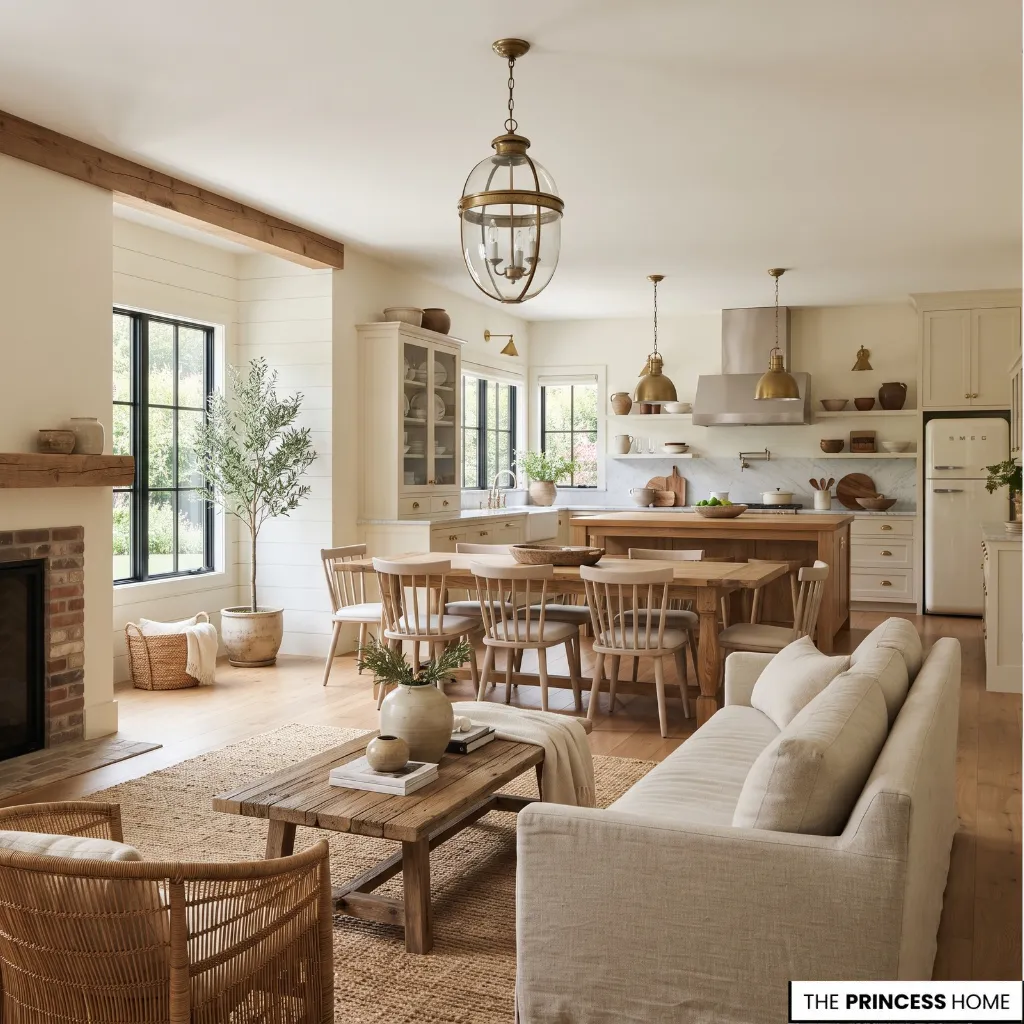
Farmhouse principles remain consistent throughout the home, but their application should respond to each room’s purpose. A living room prioritizes comfort and conversation, while a kitchen requires efficient work areas, practical storage, and durable finishes.
Living room: Begin with comfortable seating and a layout that supports conversation. A simple sofa can work with a wooden coffee table, a textured rug, and selected natural accents. Add lamps where people read or relax, and preserve clear routes around the furniture.
An existing fireplace or exposed beam can contribute character, but neither is necessary. Furniture, wood finishes, textiles, and artwork can establish the style without artificial architectural details. Kitchen: Balance practical work areas with natural materials and a coherent finish palette.
Wood cabinetry, ceramic details, simple hardware, and durable countertops can support the look. Open shelving can display frequently used dishes, while closed storage may suit households that need to keep counters clear.
An apron-front sink is recognizable but optional; a conventional sink and contemporary appliances can also work. Prioritize work-surface lighting, accessible storage, ventilation, and easy cleaning before decorative details. Dining room: Choose a table that fits the room and accommodates the household.
A substantial wooden table can suit traditional farmhouse interiors, while a simpler design may complement a modern interpretation. Combine it with comfortable chairs and suitable lighting. Use a rug only when chairs can move easily and the material suits the room’s maintenance needs.
Different chairs can work together when their scale, finishes, or shapes create a clear relationship. Bedroom: Prioritize rest, storage, and comfortable bedding. Place the bed to allow practical access, then choose bedside furniture and lighting that suit the available space.
Layer cotton or linen bedding with a textured cover and a few coordinated cushions. Wood furniture can introduce natural materials without requiring a collection of rustic pieces. Warm beige, muted green, soft blue, and natural wood are all suitable palette options when they work together.
Bathroom: Choose finishes that withstand moisture and remain easy to maintain. Ceramic accessories, suitable wood-look materials, simple hardware, and natural textures can introduce farmhouse character.
A vintage-inspired mirror or vanity can support a traditional interpretation, while clean cabinetry and restrained finishes suit a contemporary one.
Prioritize ventilation, practical storage, and appropriate lighting around the mirror. Existing tiles and plumbing fixtures can remain when they work with the overall palette.
Adapt to Space and Budget
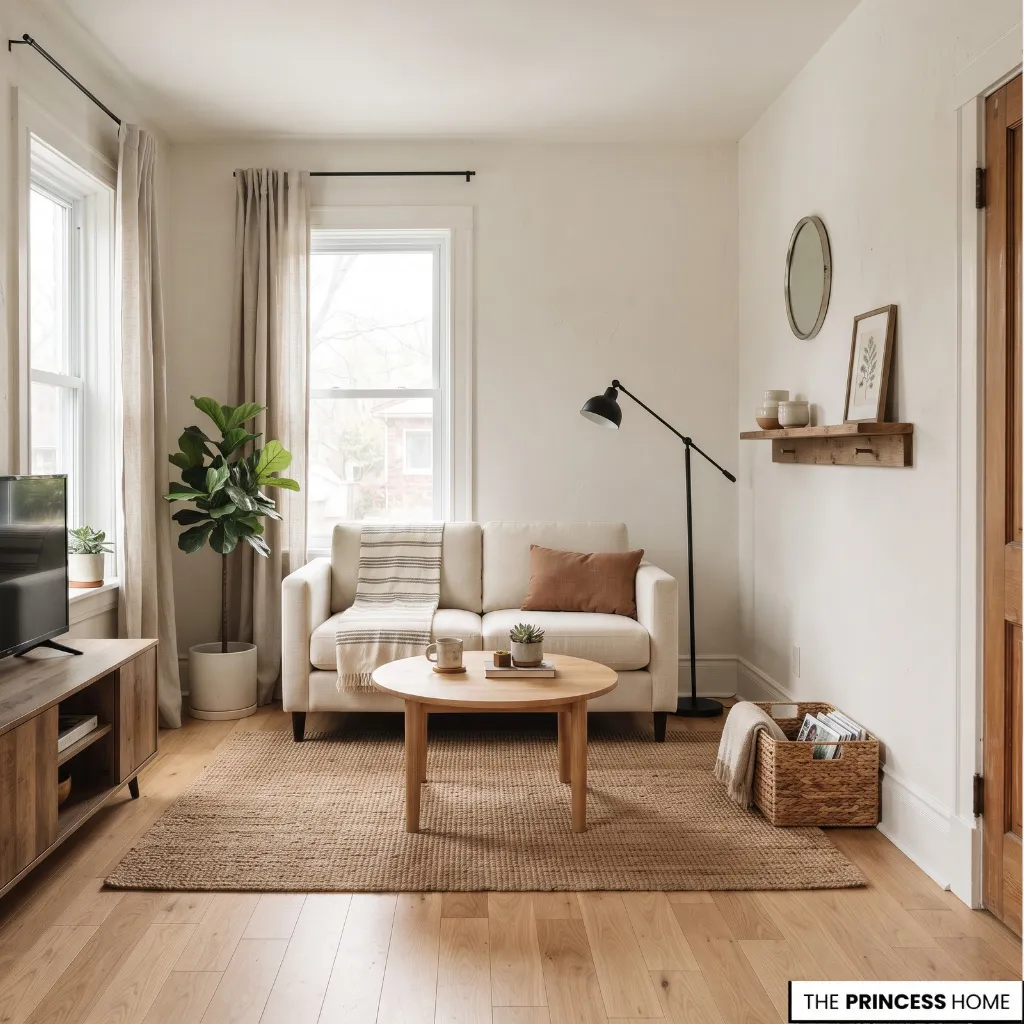
Farmhouse style can work in a small apartment, a rental, or a home with a limited decorating budget. Focus on the elements that establish the style rather than trying to reproduce every feature of a large country house. In small rooms, choose furniture that fits the available space and preserves clear walking routes.
A restrained palette connects the main surfaces, while selected natural materials provide character without overwhelming the room. Consider the visual weight of each piece as well as its physical dimensions.
One substantial wooden table may provide more impact than several smaller rustic accessories, provided the table fits the room. Use storage that serves a real purpose and avoid filling every corner.
Textured curtains, a wooden side table, a woven rug, or ceramic accessories can introduce farmhouse character without requiring major changes. Open space around furniture is useful because it preserves circulation and allows the main pieces to remain noticeable.
For a limited budget, prioritize spending in this order: functional furniture and layout, foundational finishes where necessary, lighting, textiles, and selected accessories. This is a practical starting point rather than a fixed formula; existing conditions and the scope of the project may change the order.
Reuse suitable furniture before replacing it. If a sofa is comfortable and well-proportioned, changing its cushions, rug, or surrounding furnishings may be more effective than buying a new one. Spend where durability and daily use justify the cost, and save on accessories that can be changed easily.
Avoid replacing functional flooring, cabinetry, or fixtures simply to match a reference image. For rentals, focus on reversible changes such as portable lighting, textiles, artwork, freestanding storage, and movable furniture.
These elements introduce farmhouse colors and materials without requiring permanent alterations. If your home lacks exposed beams, brickwork, or other traditional architectural details, do not feel obliged to install imitations.
Furniture with compatible proportions, natural finishes, and carefully selected accessories can establish the style without creating artificial architecture. When a preferred material is unavailable or too expensive, choose an alternative that serves the same visual or practical purpose.
A well-finished contemporary wooden table can replace an expensive reclaimed piece, while a durable woven-look textile can provide texture without requiring a specialized material. The best alternative preserves the intended character, performs well in daily use, and suits the room.
For more ideas: Neo-Classical Design How to Create Timeless Interiors
Avoid Common Mistakes
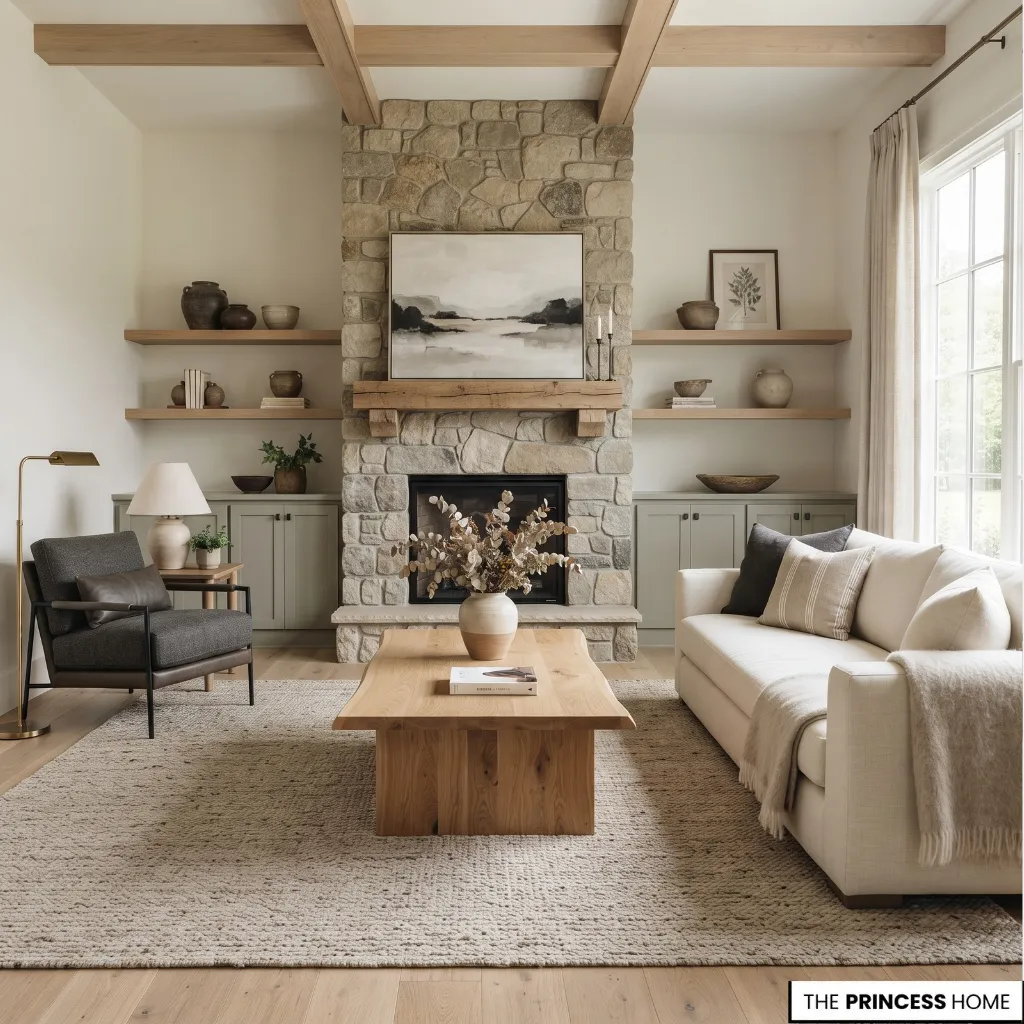
Too many rustic features can make farmhouse interiors feel themed rather than welcoming. Distressed furniture, barn-style doors, reclaimed wood, decorative signs, and industrial fixtures can compete when used together in large quantities.
Keep a few defining elements and balance them with simpler furnishings and finishes. An all-white or gray palette can also appear flat when there is little variation in material or tone. Introduce natural wood, warmer neutrals, textured fabrics, or a carefully selected accent color.
The aim is not to add more colors indiscriminately but to give the existing palette enough variation to work. Distressing every surface creates another problem. Visible wear can contribute character, but applying it to every piece may make the room look artificially aged.
Let some finishes remain clean and simple so the more distinctive pieces stand out. Furniture that is too large can restrict movement and overwhelm a room. Check dimensions before buying, preserve comfortable circulation, and reduce the number of pieces when necessary.
In smaller rooms, appropriate scale and open space matter more than having every recognizable farmhouse feature. Too many materials and patterns can weaken the overall design. Repeat selected colors, coordinate wood finishes, and use simpler surfaces to balance stronger prints or textures.
Different pieces do not need to match, but they should have a clear relationship. Decorative objects can also become a source of clutter. Retain accessories that provide useful storage, personal meaning, or a clear visual contribution. If surfaces are crowded, remove unnecessary items before purchasing more.
Finally, avoid copying a farmhouse reference without considering your own home. A feature that works in a large rural property may be unsuitable for an apartment or a contemporary building. Adapt the underlying principles to the architecture, room dimensions, budget, and household needs.
When a room does not feel right, identify the main problem before making changes. It may need better furniture proportions, a more connected palette, fewer accessories, or more appropriate lighting. Correcting that imbalance is often more effective than replacing everything.
Conclusion
Farmhouse style works best when practical furniture, natural materials, and personal details support the way you live. Establish a coherent palette, choose pieces that fit the room, and add character selectively. The result should feel welcoming and connected to your home, not dependent on a rigid formula or a collection of rustic accessories.