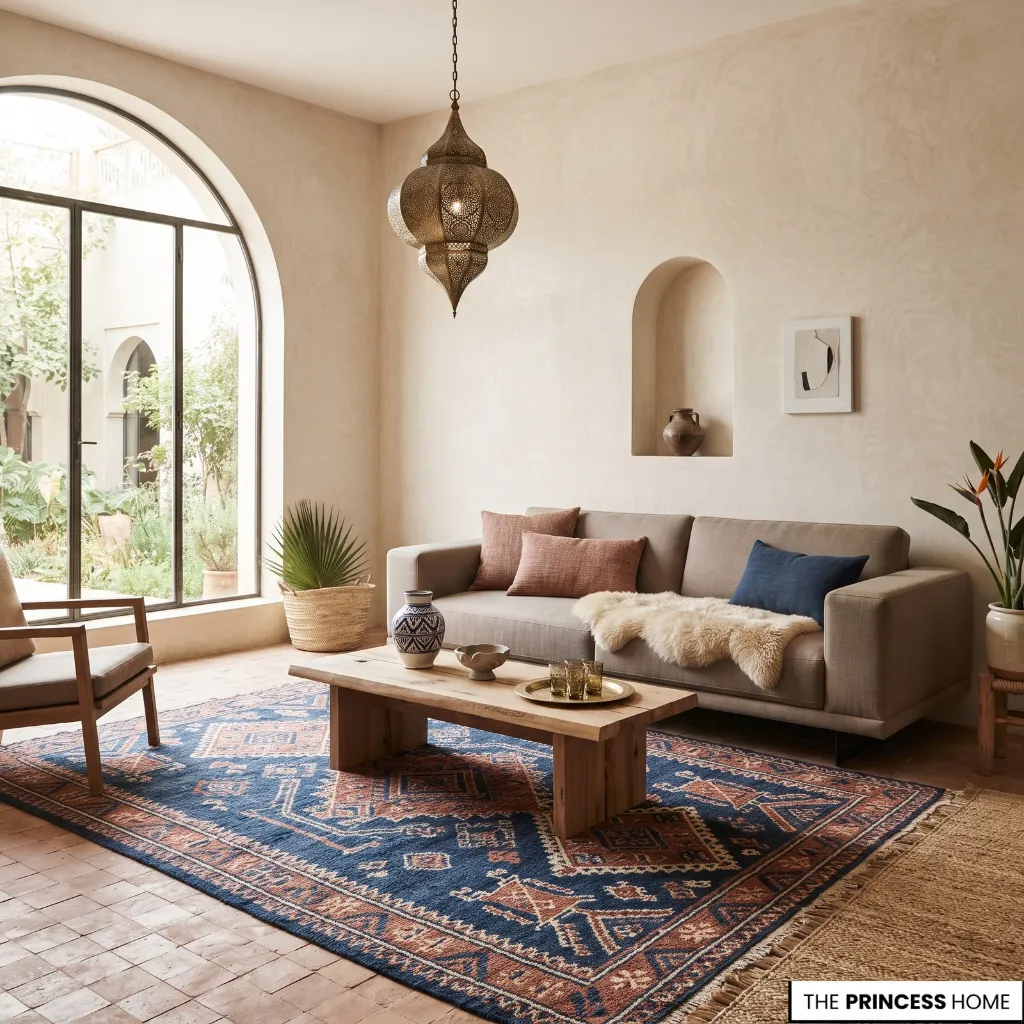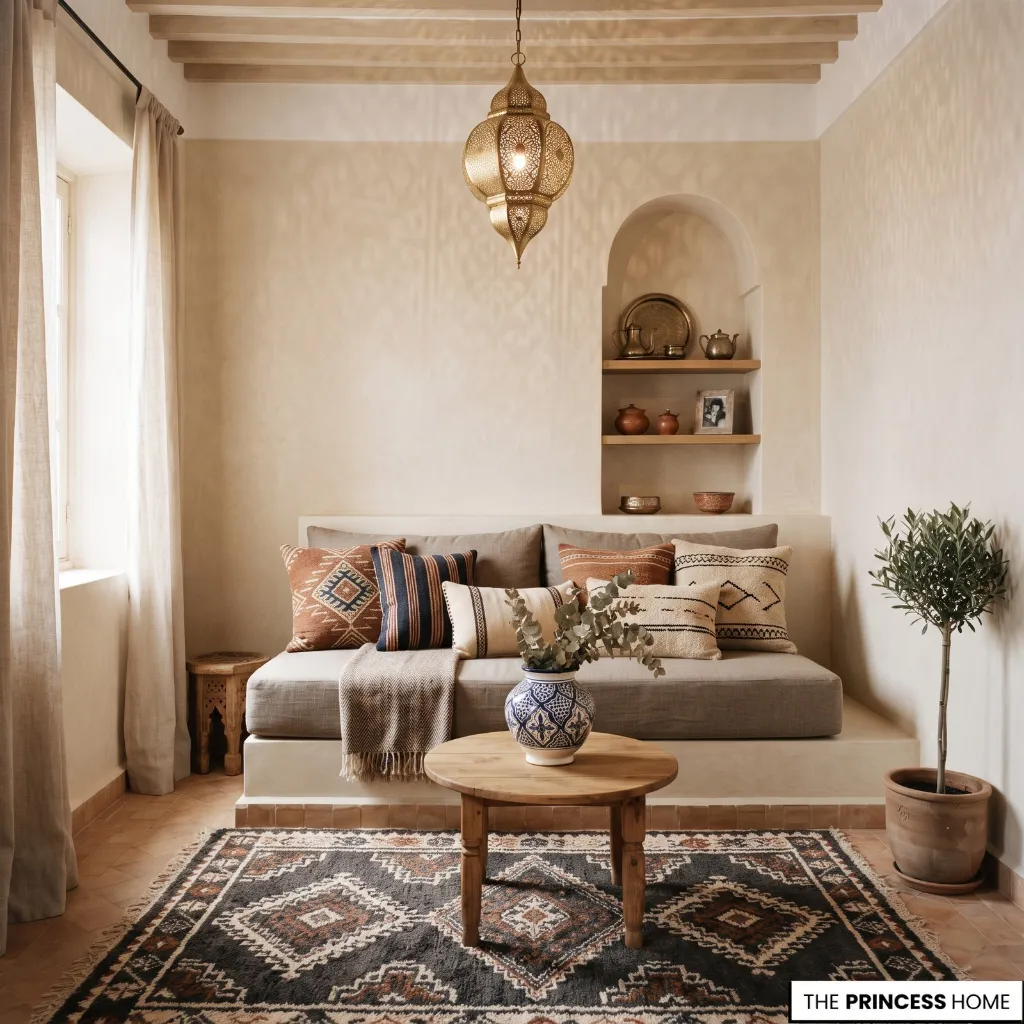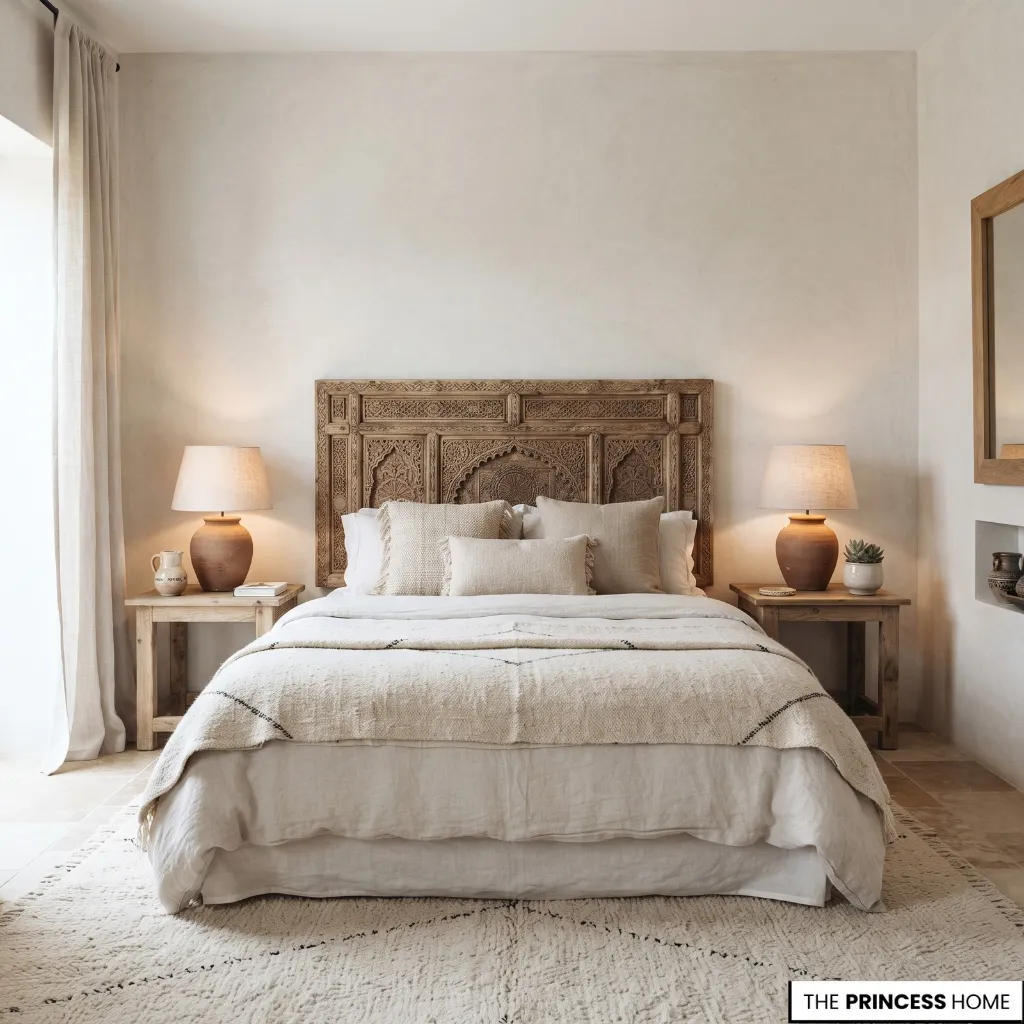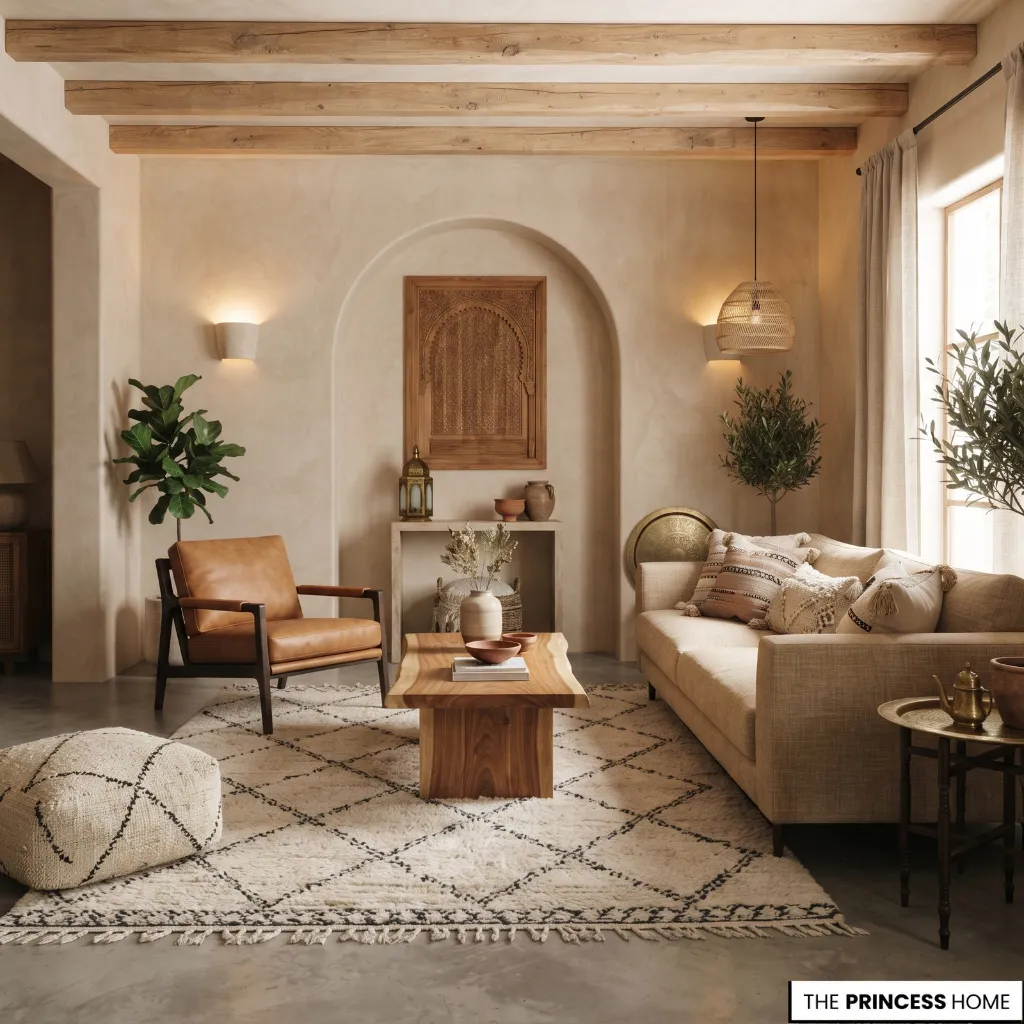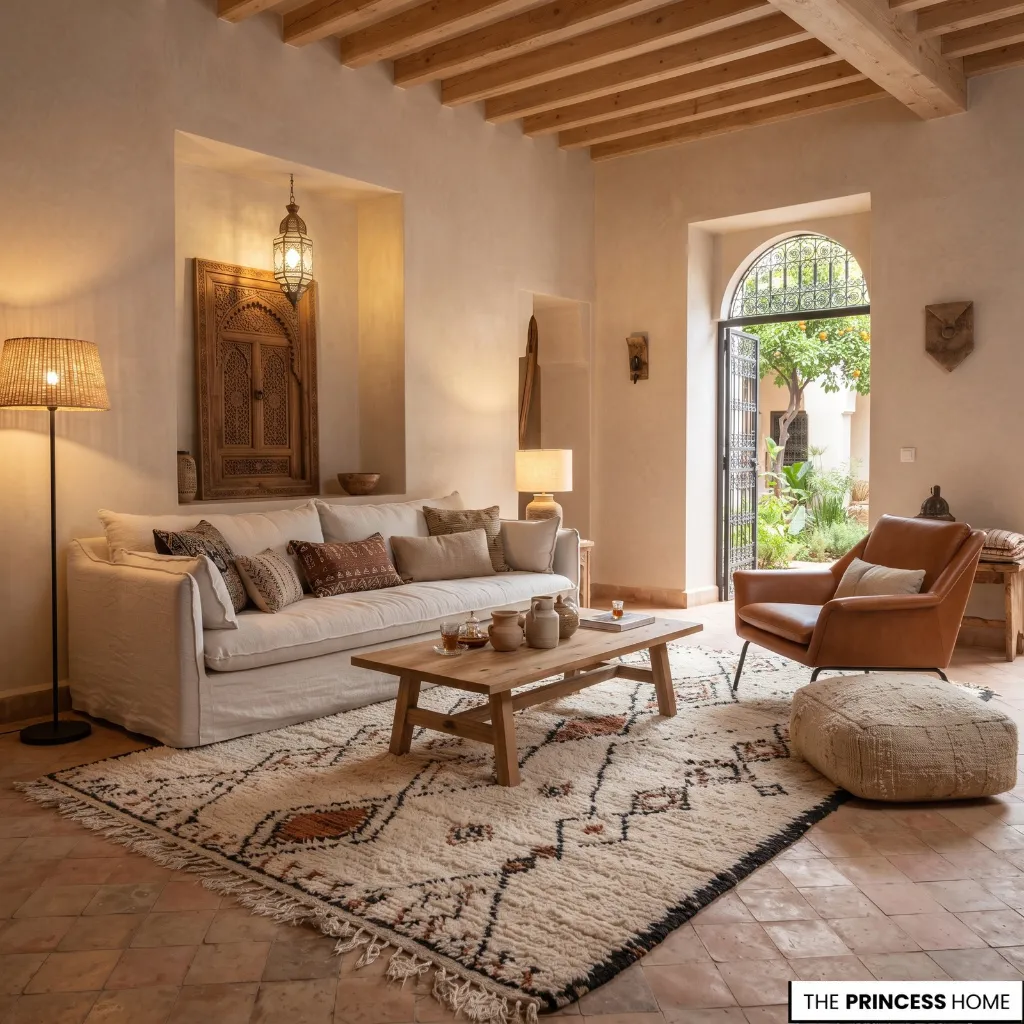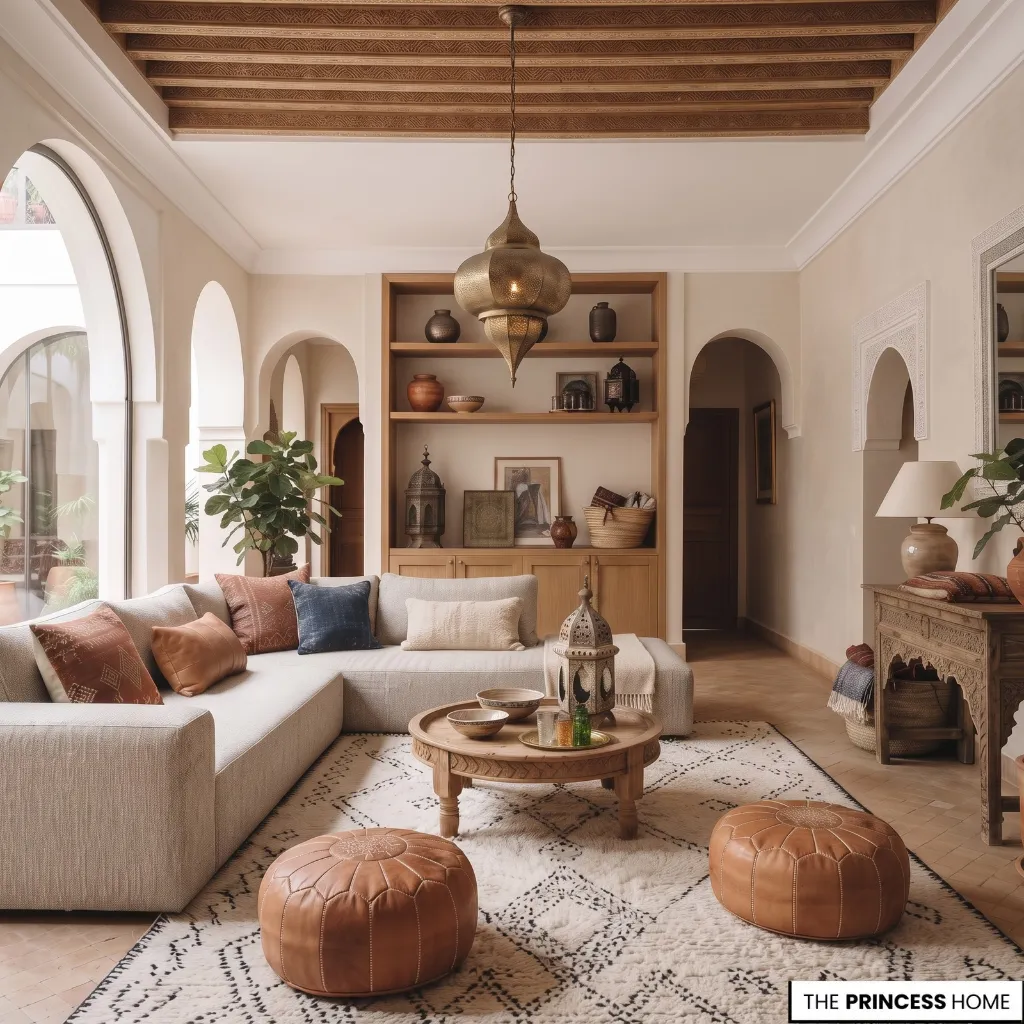
Moroccan decor combines craftsmanship, geometric patterns, rich textures, natural materials, comfortable furniture, layered textiles, and distinctive lighting. Its appeal comes from how these elements work together rather than from any single feature.
The style can range from richly detailed and colorful to restrained and contemporary. The challenge is creating a Moroccan-inspired home that feels intentional rather than themed or crowded.
This guide explains how to balance Moroccan colors, materials, furniture, rugs, patterns, lighting, and decorative details for a cohesive, livable result.
Moroccan Style
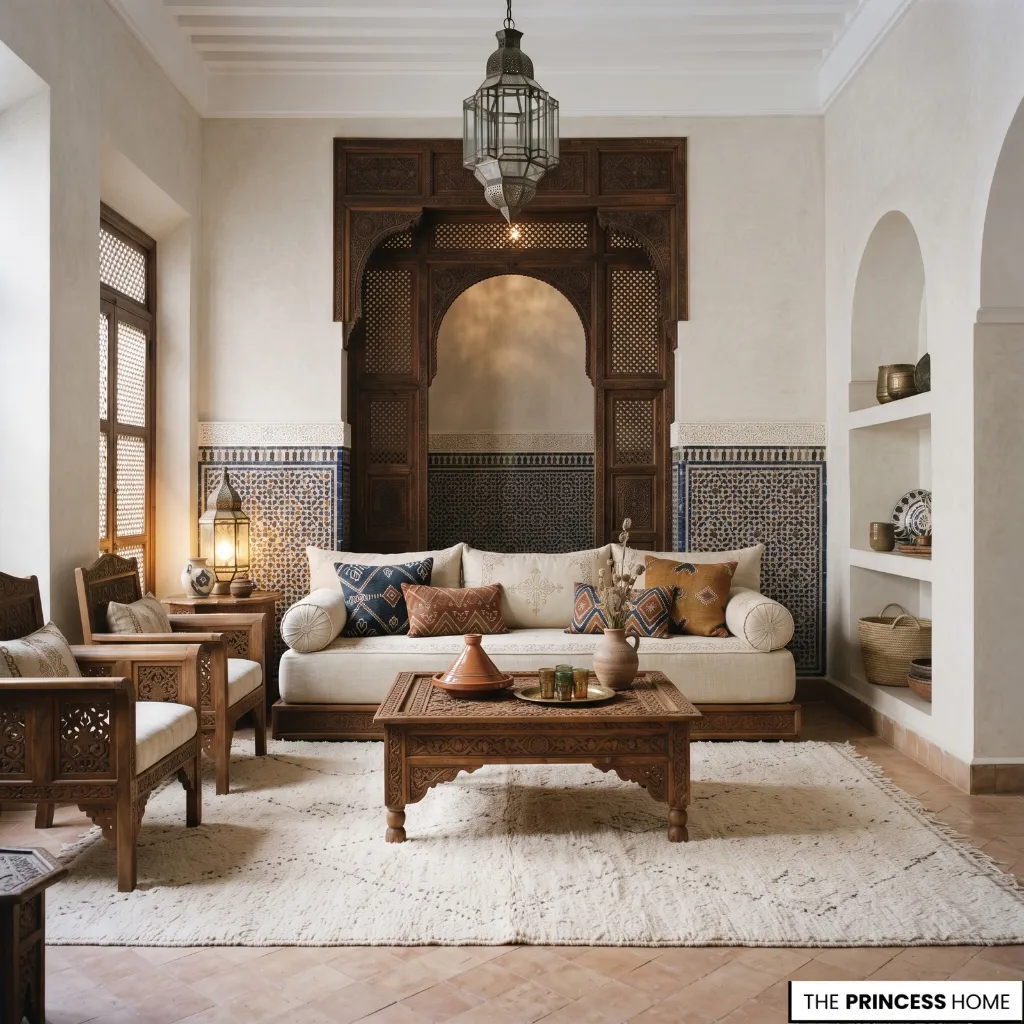
Moroccan interior design is closely associated with craftsmanship, geometric decoration, layered materials, and a strong relationship between architecture and light.
Traditional Moroccan interiors can bring together zellige tilework, carved plaster, carved wood, textiles, ceramics, metalwork, and other handcrafted elements. Geometric repetition is particularly important in Moroccan decorative arts, especially in tilework and architectural ornament.
This gives Moroccan decor a broader design language than simply using lanterns, colorful cushions, or a patterned rug. Those pieces can suggest the style, but the strongest interiors establish a relationship between surfaces, furniture, texture, pattern, and light.
Traditional Moroccan architecture also offers useful lessons for contemporary interiors. Courtyards, shaded spaces, patterned surfaces, and carefully framed openings show how material and light can work together rather than being treated as separate decorative decisions.
You do not need to reproduce a traditional riad to use these principles. A contemporary home can express Moroccan character through a restrained combination of textured surfaces, geometric patterns, natural materials, comfortable furniture, and warm lighting.
Moroccan decor can therefore be colorful and richly patterned, but it does not have to be ornate or saturated. The style can remain neutral and contemporary when craftsmanship, geometry, texture, materials, and lighting carry more of the visual character.
Build the Foundation
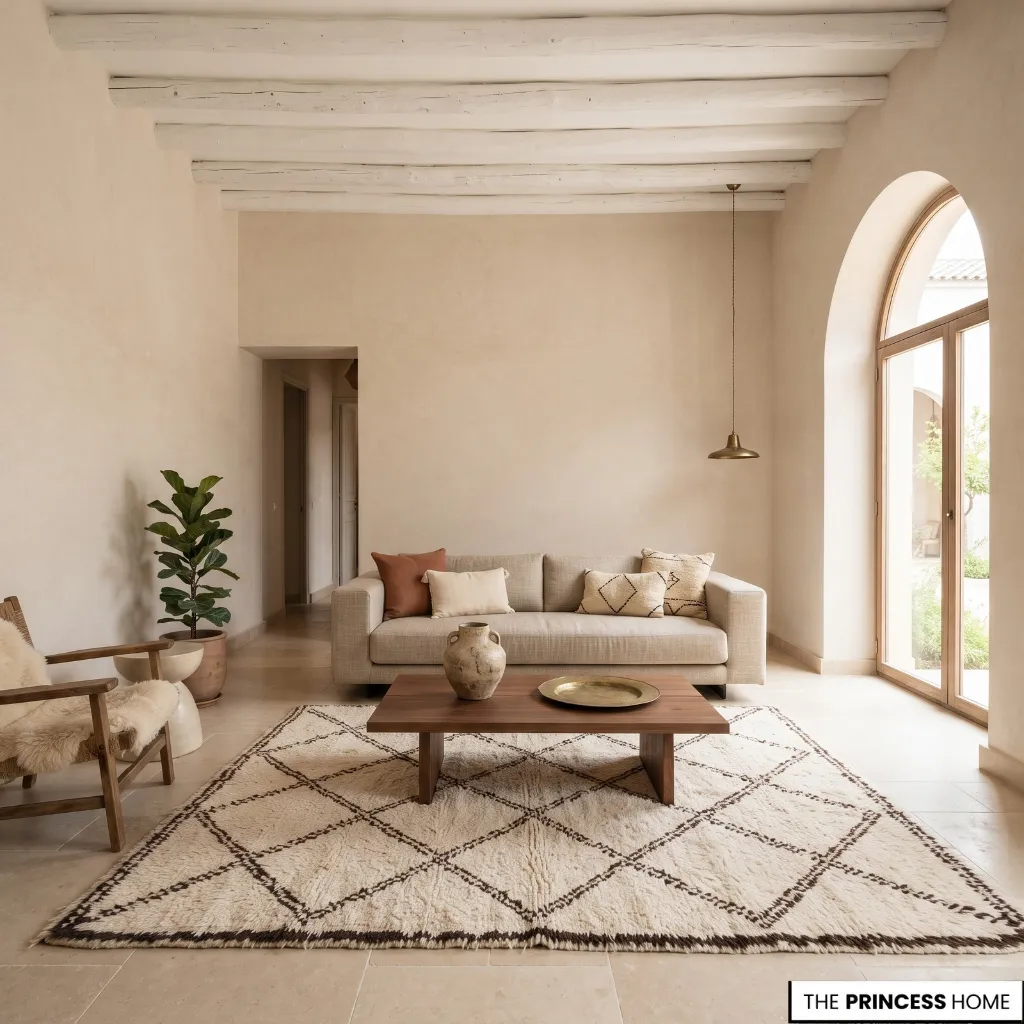
Start with the room itself before choosing Moroccan accessories. Look at the floor, walls, ceiling, doors, windows, natural light, existing furniture, and strongest architectural feature. These elements determine how much visual detail the room can comfortably support.
A plain contemporary room gives you more freedom to introduce Moroccan pattern and texture. A room that already has patterned flooring, ornate woodwork, strong architectural details, or decorative tile needs fewer additional elements.
Decide what will carry the design. This might be a Moroccan-inspired rug, a tiled fireplace surround, a textured wall, a distinctive pendant, or a substantial piece of wood furniture. Once one or two major elements are established, smaller details can support them rather than compete with them.
This approach is especially useful when adapting Moroccan decor to a home without traditional Moroccan architecture. Instead of trying to add artificial arches or reproduce an entire riad, use materials, geometry, texture, and lighting to establish the design language.
Choose Colors
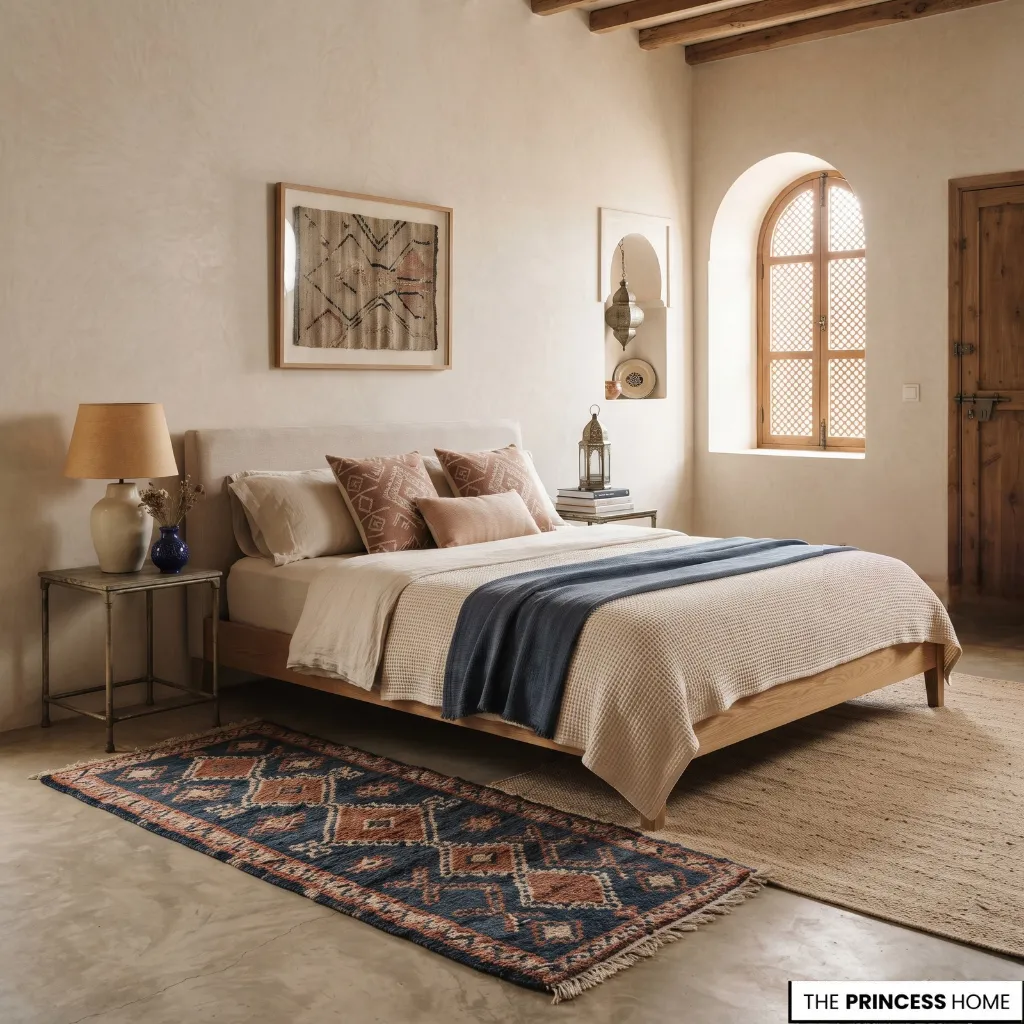
Moroccan decor does not depend on one fixed palette. Traditional and contemporary interpretations can range from quiet whites and earth tones to deep blues, greens, terracotta, ochre, and stronger accent colors.
A practical approach is to establish three levels of color: a dominant background, a secondary color or material, and one or two controlled accents. Warm white, ivory, sand, beige, or another quiet neutral can provide a calm foundation for stronger Moroccan colors.
Terracotta, clay, ochre, muted red, deep blue, green, and saffron-like tones can appear through rugs, tile, cushions, ceramics, artwork, or smaller furniture pieces. Natural wood and aged metal can support these colors without introducing another competing hue.
For a contemporary interpretation, allow the architecture and larger surfaces to remain relatively quiet and introduce stronger color through removable elements. This makes the room easier to adjust and prevents a saturated palette from becoming overwhelming.
Moroccan character does not require intense color everywhere. Geometry, craftsmanship, texture, and material contrast can communicate the style even when the palette is neutral.
Layer Materials
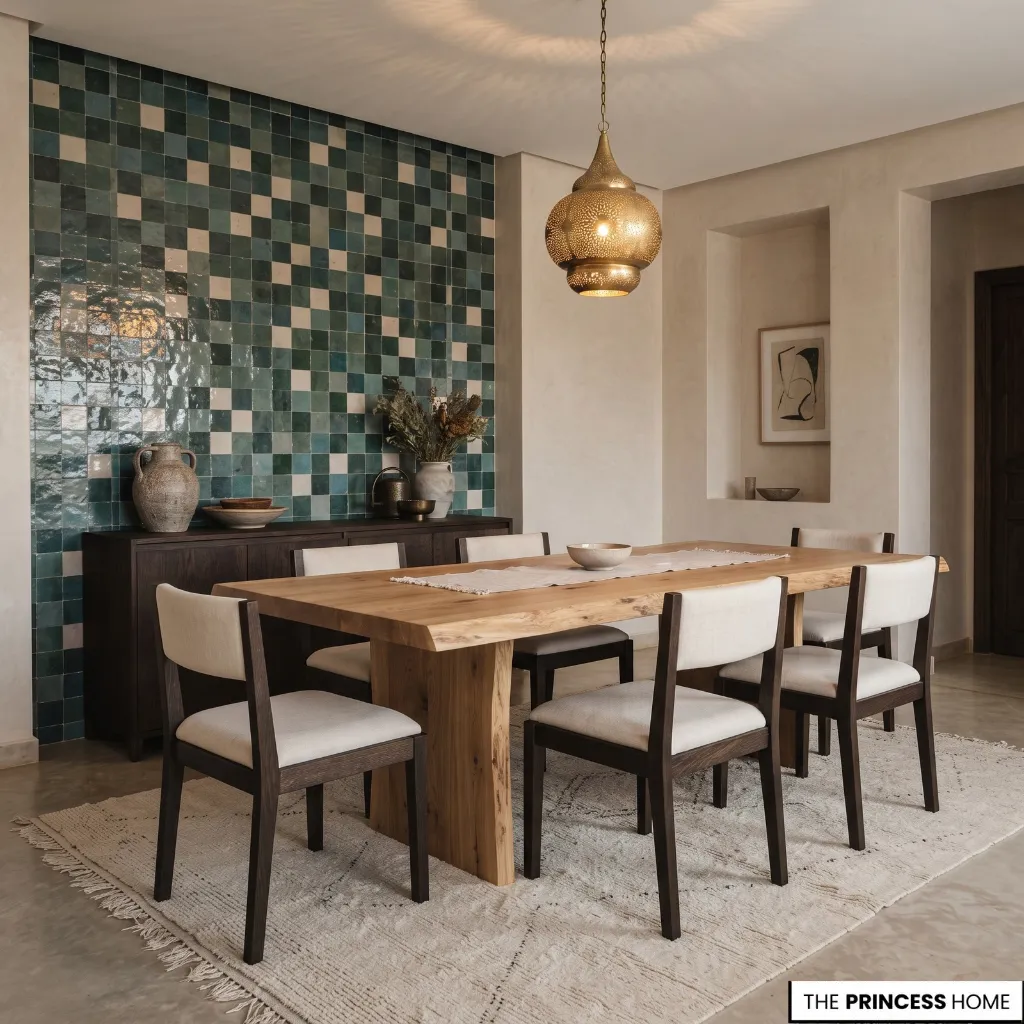
Material richness is one of the most effective ways to establish Moroccan character. Traditional Moroccan architecture is known for the combination of materials such as zellige, plaster, carved wood, ceramics, metalwork, and textiles.
Zellige, or Moroccan geometric tilework, is especially useful when you want a strong architectural reference. Its handmade character and tonal variation can give a surface a distinctive quality. In a contemporary home, however, it does not need to cover every available wall.
A backsplash, niche, fireplace surround, or bathroom zone can provide enough visual emphasis. Tadelakt is another important Moroccan material reference. This polished lime-plaster finish is traditionally associated with Moroccan architecture and is particularly suited to continuous mineral surfaces.
When traditional tadelakt is impractical, a suitable textured or mineral plaster finish can provide a related visual function without pretending to be the same material. Balance hard surfaces with tactile materials. Combine tile with wood, smooth plaster with wool, ceramic with metal, or carved details with quieter walls.
This contrast gives the room variety without requiring a large number of decorative objects. Avoid using every Moroccan material in the same room simply because each one belongs to the style. Choose a few materials that work together and allow their differences to remain visible.
Select Furniture
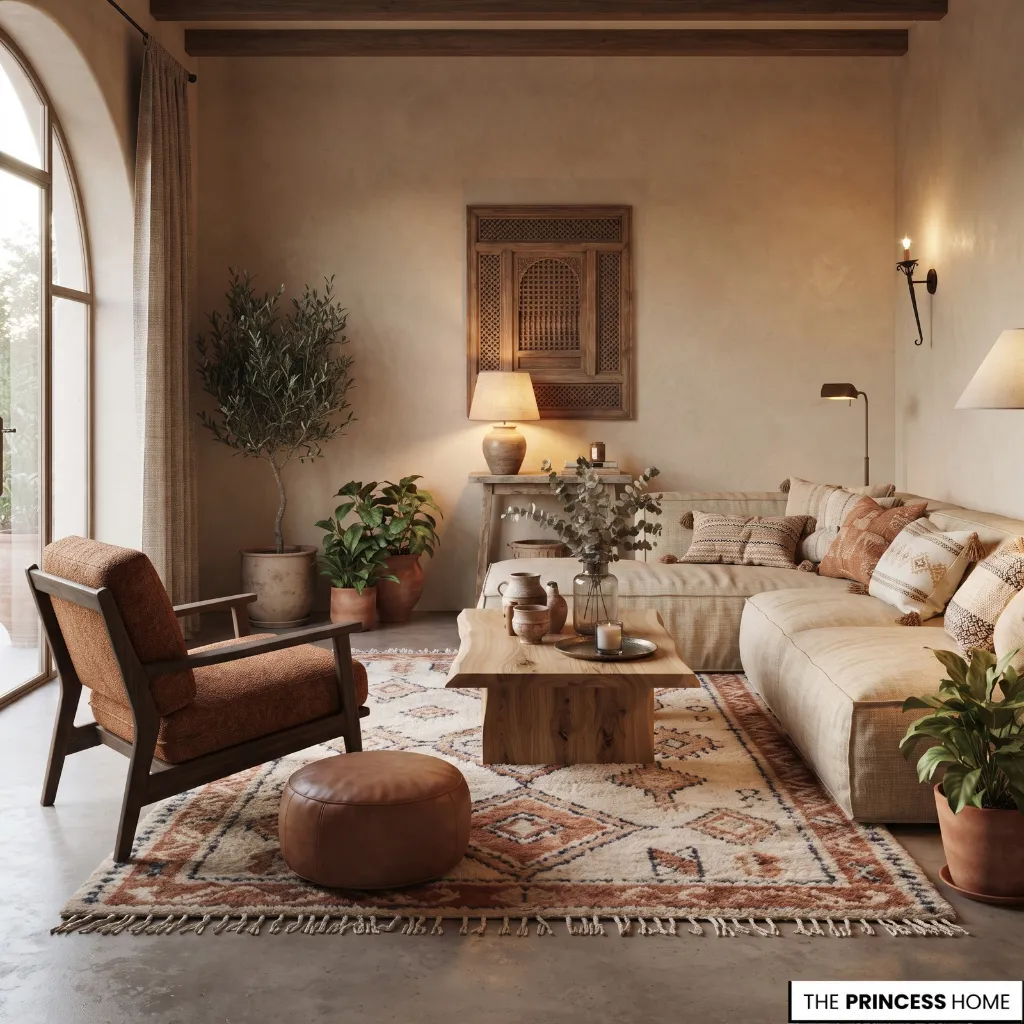
Moroccan furniture should support comfort, gathering, natural materials, and relaxed proportions. Low-profile sofas, upholstered seating, lounge chairs, poufs, low tables, benches, and wood furniture can all work within a Moroccan-inspired room. The important principle is not that every piece must be traditionally Moroccan.
A contemporary sofa can work well when its proportions, surrounding textiles, rug, lighting, and materials establish the intended design language. Arrange seating around conversation rather than pushing every piece against the walls.
A generous rug can connect the main furniture group, while a low table can reinforce the relaxed character of the arrangement. Carved wood can introduce craftsmanship, while simpler upholstered furniture can provide visual relief. This combination is often more effective than filling the room with ornate furniture.
You also do not need to replace existing furniture. If the major pieces have suitable proportions, retain them and change the surrounding layers with a Moroccan rug, textured cushions, warm lighting, ceramics, or one handcrafted focal piece.
Add Rugs
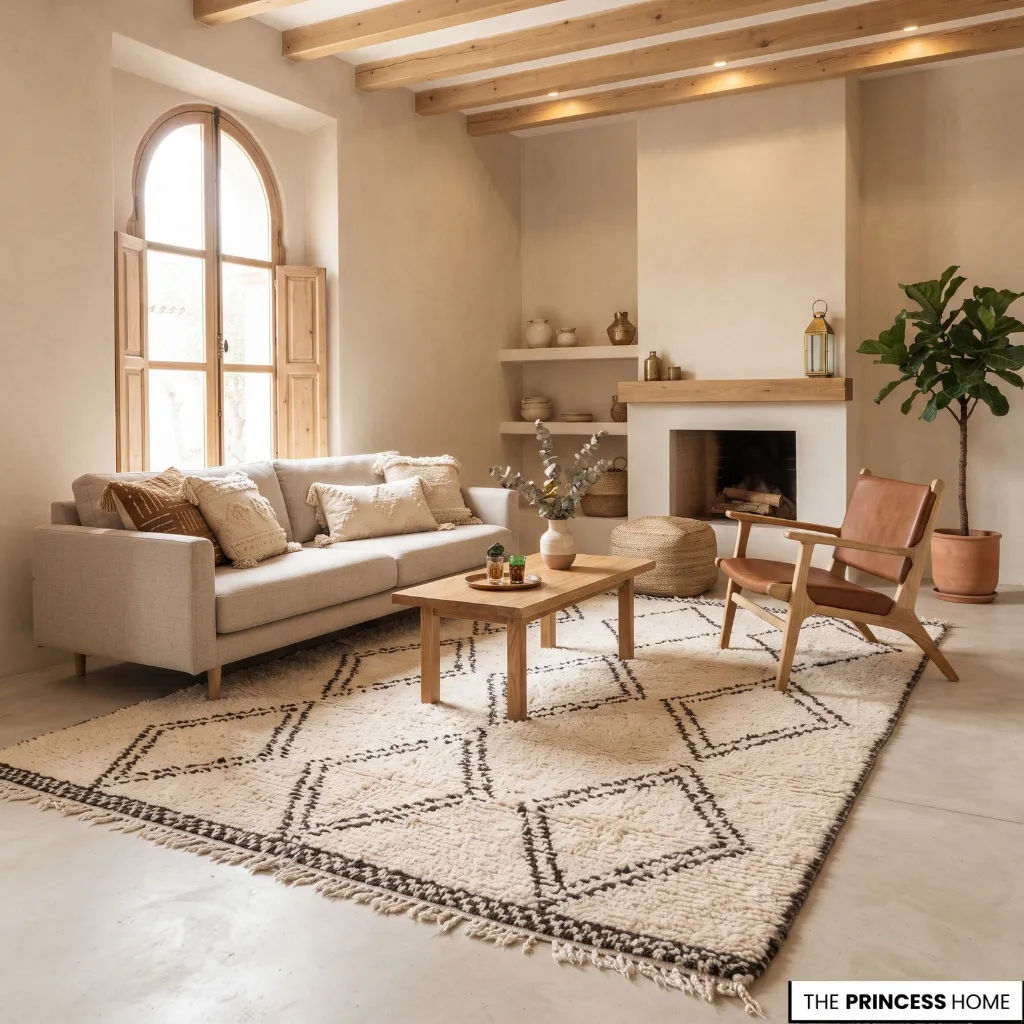
Rugs are particularly useful in Moroccan decor because they can introduce texture, pattern, color, and visual zoning at the same time. Moroccan rugs are not one uniform category. Different regions and communities have produced rugs with different materials, patterns, techniques, and palettes.
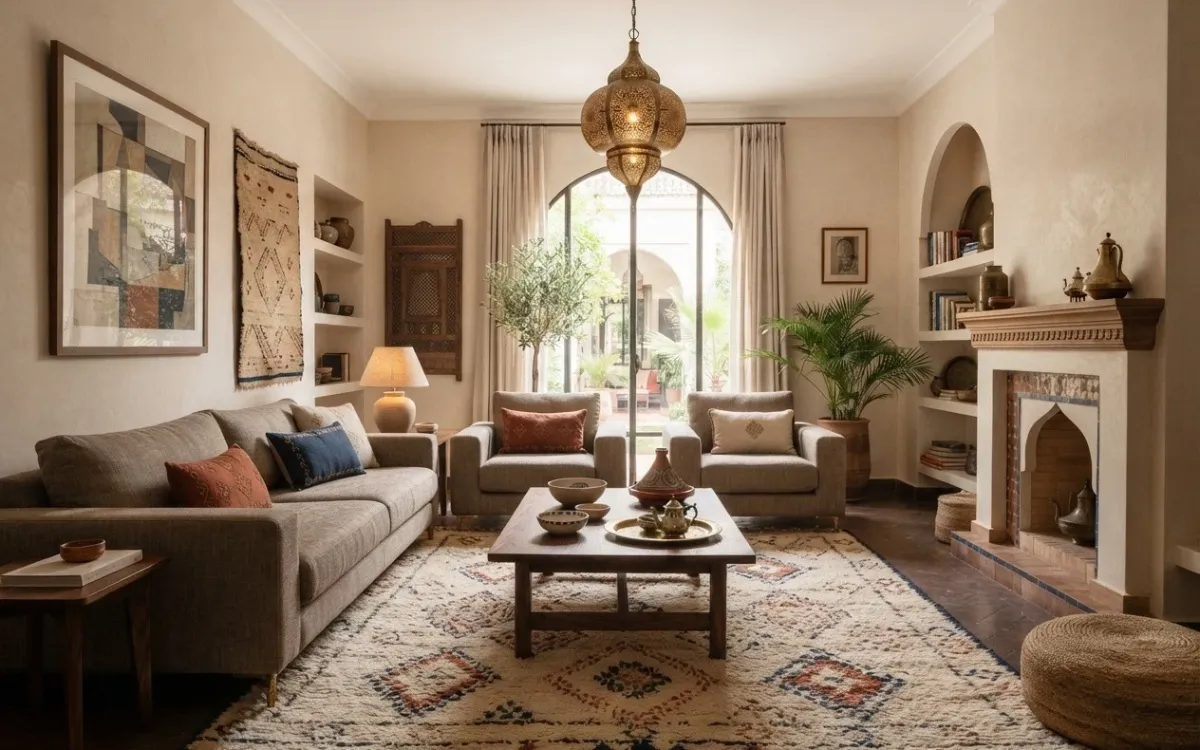
This gives you considerable freedom when choosing one for your interior. A geometric wool rug can provide a strong focal point in a relatively quiet room. A simpler neutral rug can work better when the room already contains patterned tile, textiles, or decorative furniture.
Scale matters as much as pattern. In a living room, the rug should relate to the main seating arrangement rather than functioning as a small island beneath a coffee table. In a bedroom, it can frame the bed or provide a substantial textile layer around it.
If the rug is highly patterned, keep some surrounding surfaces quieter. If the rug is restrained, you can introduce more pattern through cushions, ceramics, artwork, or tile.
Use Patterns
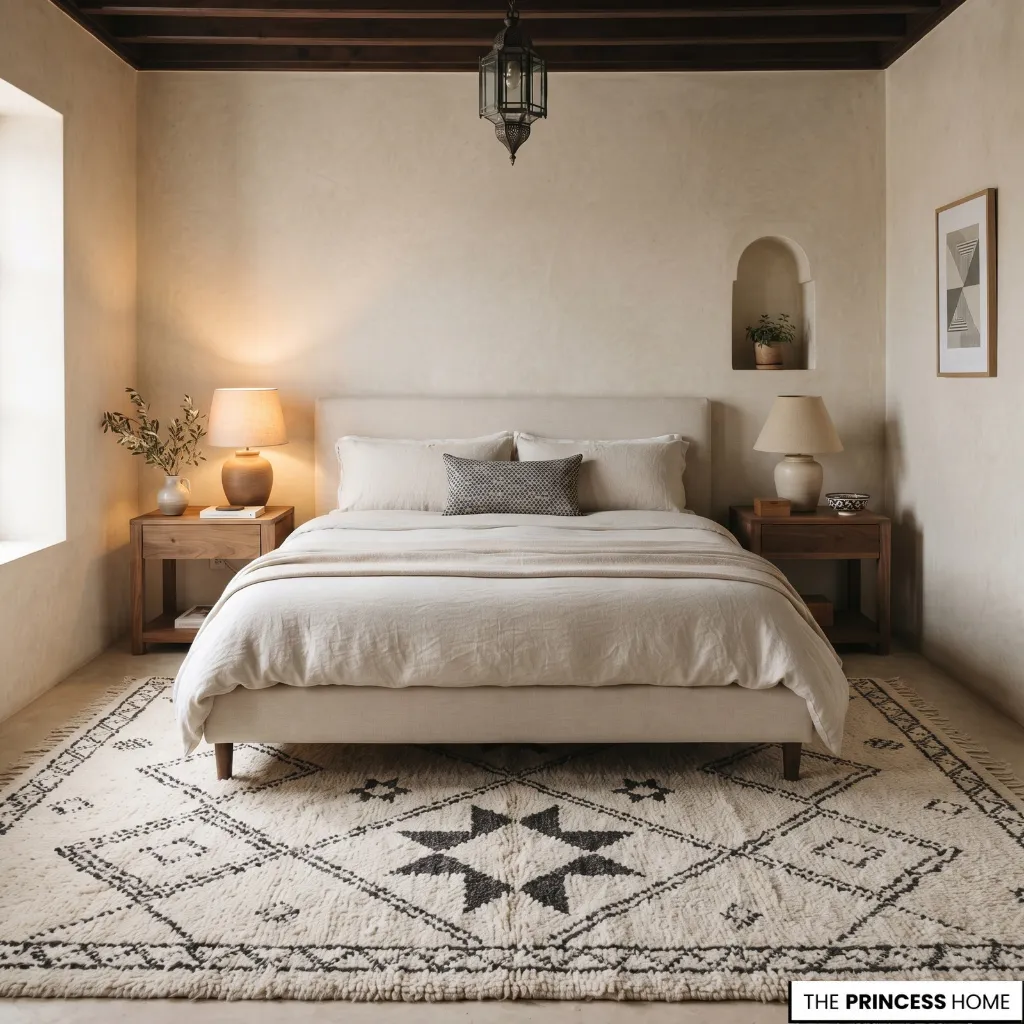
Geometry is one of the clearest visual references in Moroccan design. Zellige and other decorative traditions use repeated stars, polygons, interlacing forms, diamonds, and other geometric structures to create rhythm. Use this vocabulary selectively.
A geometric rug can establish the pattern language for a living room, while a related motif can appear in a cushion, ceramic, screen, or artwork. The repetition should feel intentional rather than identical. Choose one dominant pattern and support it with smaller-scale or quieter patterns.
For example, a strong geometric rug can be paired with solid cushions and textured upholstery. Alternatively, a quiet rug can provide space for patterned cushions and decorative tile.
Avoid giving every surface its own strong pattern. Moroccan design can be richly detailed, but visual richness still requires areas where the eye can rest.
Layer Lighting
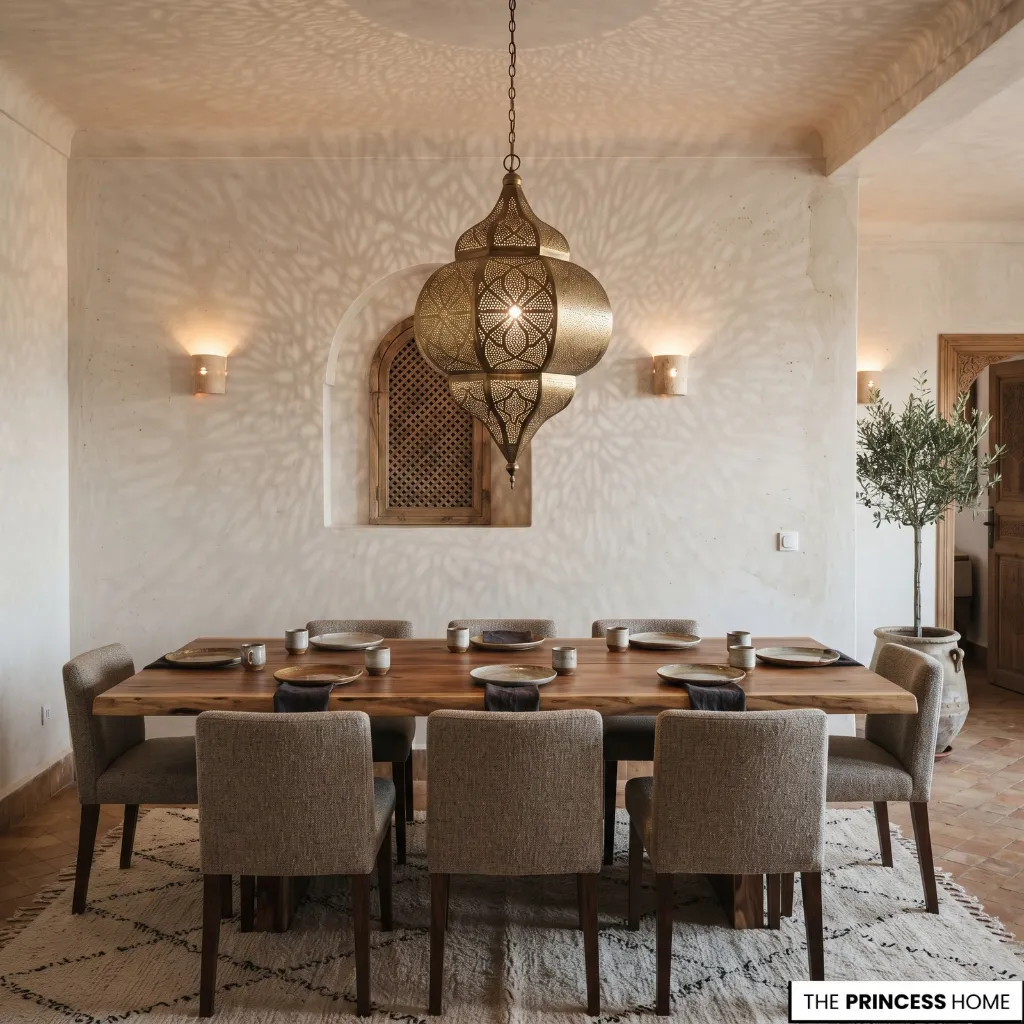
Lighting plays an important role in Moroccan interiors because it can reveal texture, emphasize decorative surfaces, and introduce patterned shadows.
Pierced-metal pendants and lanterns are recognizable Moroccan references, but they work best when treated as functional lighting as well as decorative objects. A single substantial pendant over a dining table or seating area can have more impact than several competing lanterns.
Layer the lighting rather than depending on one ceiling fixture. Combine ambient illumination with table lamps, wall lighting, and selected accent sources according to the room’s function.
Warm residential lighting is a useful starting point for emphasizing the natural and handcrafted materials associated with Moroccan interiors. The final choice should still respond to the room’s finishes, natural light, and daily use.
Patterned fixtures are especially effective when the surrounding surfaces allow their shadows to remain visible. If the room already has substantial tile or patterned textiles, choose a simpler lighting form so the elements do not compete.
Style Each Room
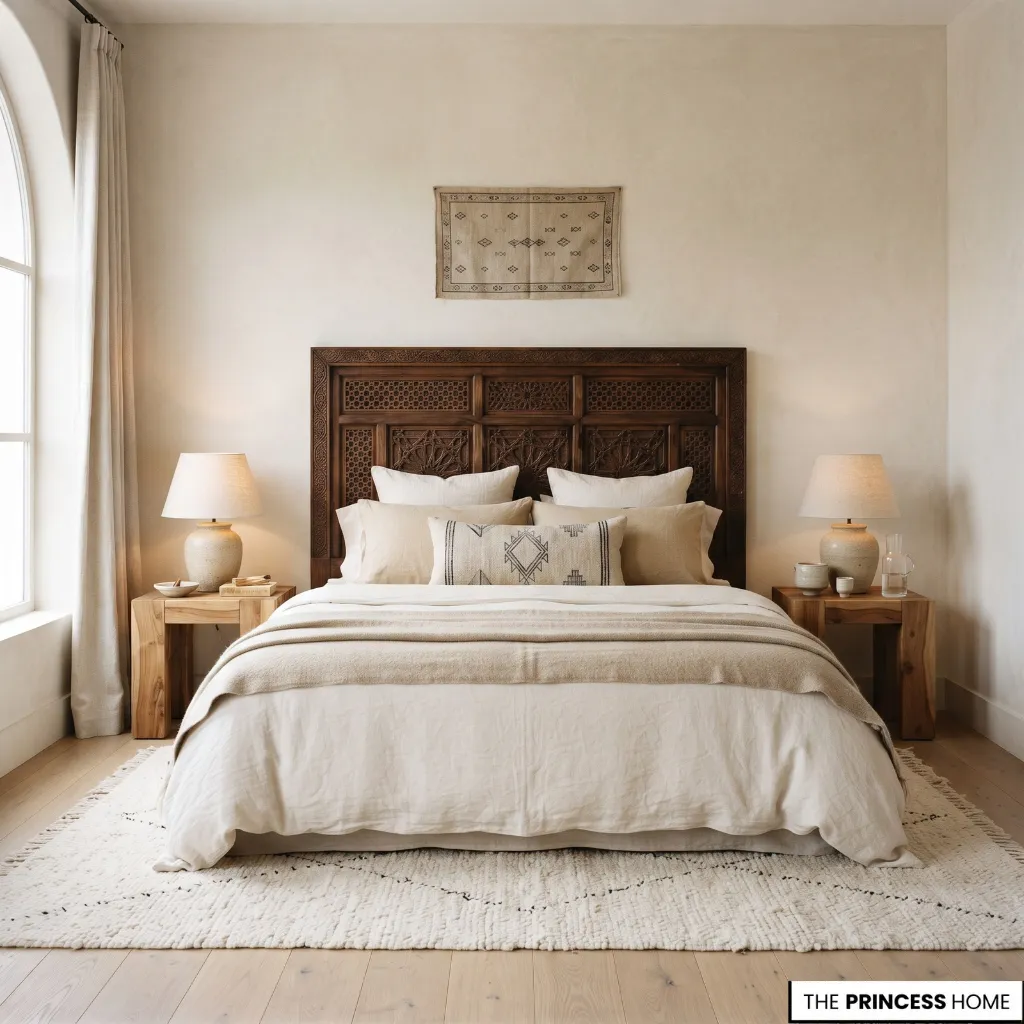
Moroccan decor should change according to the function and proportions of each room. The same design language can be expressed differently in a living room, bedroom, dining room, or entryway.
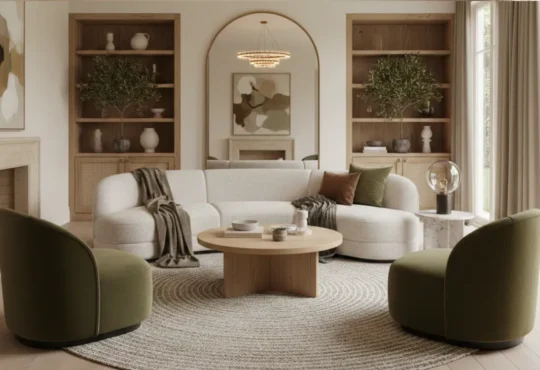
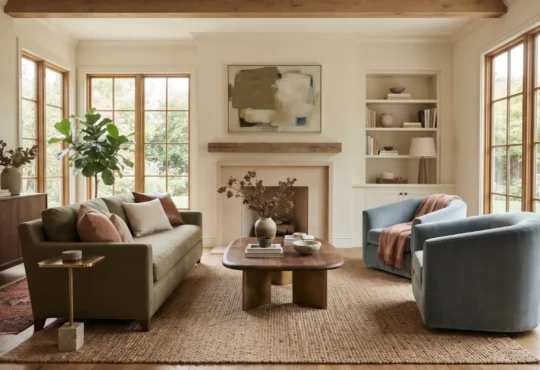
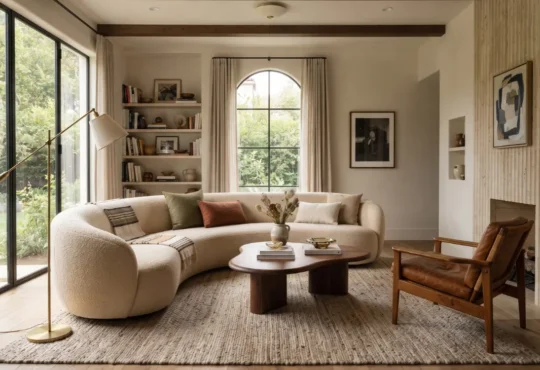
In a living room, focus on comfortable gathering. Start with the seating arrangement and rug, then add textured textiles, a low table, warm lighting, and one or two handcrafted elements. If the rug provides strong geometry, keep the larger upholstered pieces relatively quiet.
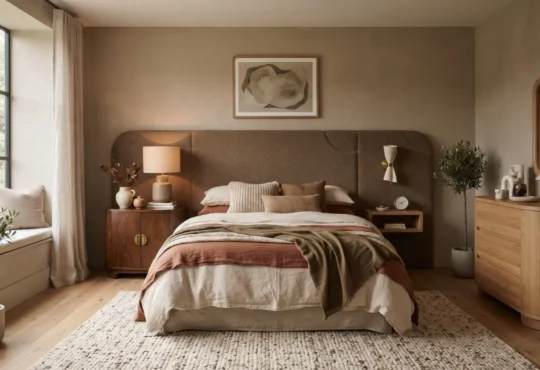
In a bedroom, use Moroccan character more selectively. Layer wool, cotton, linen, or other tactile textiles with a calm palette and controlled pattern. A carved or upholstered headboard can provide a focal point, while warm bedside lighting and one distinctive rug or textile reinforce the style without making the room visually busy.
In a dining room, let the table and lighting establish the structure. A substantial wood table can provide a natural foundation, while a Moroccan-inspired pendant or chandelier becomes the focal point above it. Handmade ceramics and controlled textile or rug accents can introduce additional character.
In an entryway, keep the composition focused. One strong Moroccan element can be enough: a patterned rug, geometric mirror, ceramic piece, distinctive light, or crafted console. If the architecture already has a strong door or arch, let that feature lead rather than filling the space with accessories.
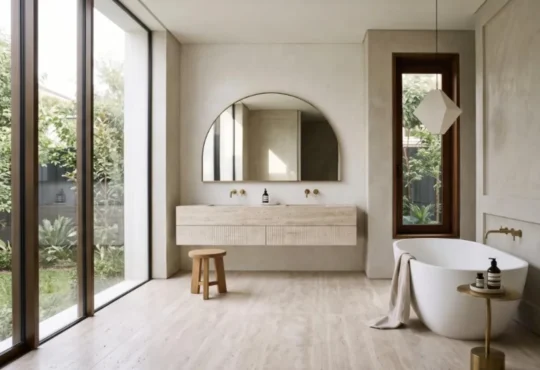
In a bathroom, Moroccan materials can be particularly effective. Zellige, mineral plaster or tadelakt-inspired finishes, warm metal, handmade ceramics, and carefully selected lighting can establish the style through surfaces rather than decoration.
Adapt Moroccan Style
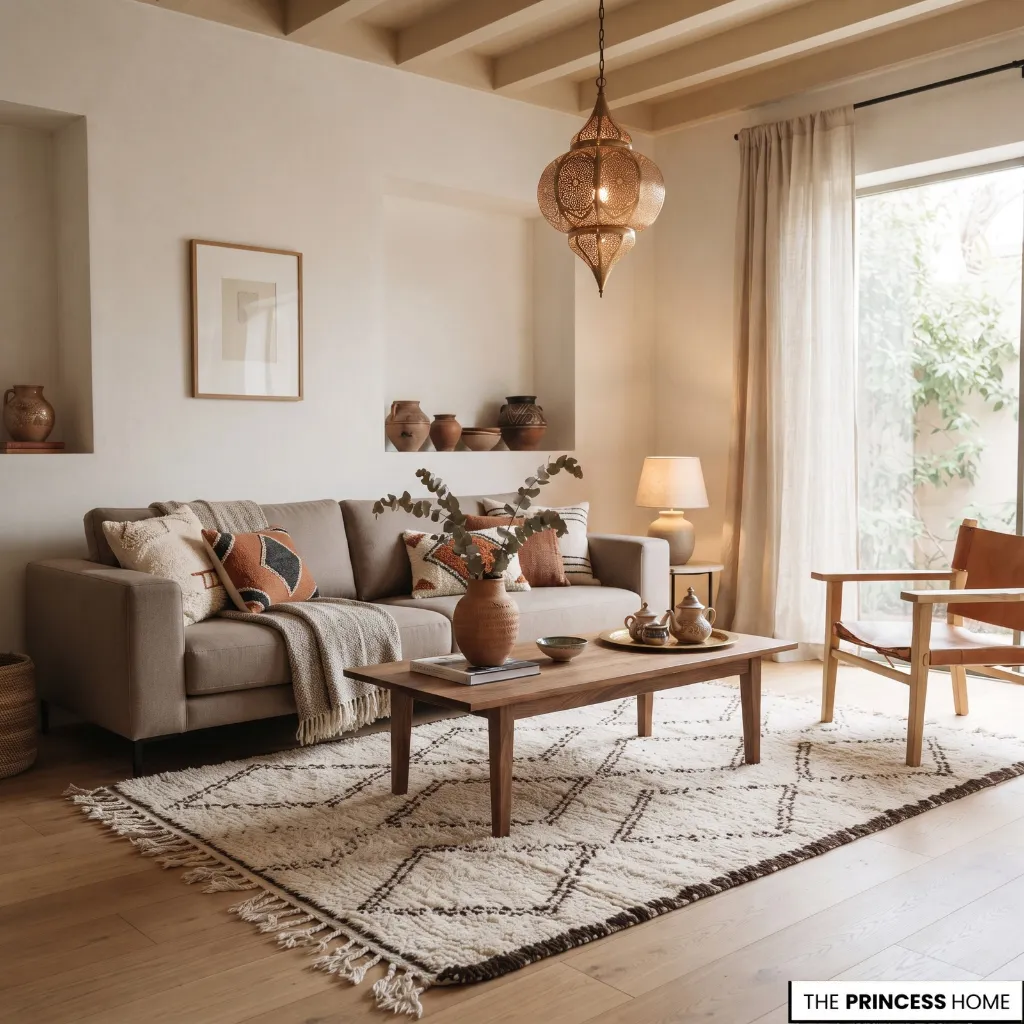
Most homes do not have traditional Moroccan courtyards, carved plaster, or handcrafted architectural details. That does not prevent you from using Moroccan design successfully.
The better approach is to translate the underlying principles. Use geometric patterns where they have a clear purpose, introduce natural and tactile materials, select handcrafted elements, and use lighting to emphasize the room’s surfaces.
Do not add an architectural arch simply because arches are associated with Moroccan interiors. If your home has straight openings, retain them and use furniture, tile, plaster, textiles, or lighting to establish the design language.
A modern Moroccan room can also use cleaner furniture and a more restrained palette. White walls, simple upholstery, natural wood, one geometric rug, handmade ceramics, and a distinctive pendant can create Moroccan character without reproducing a traditional interior.
This is adaptation rather than imitation. Preserve the qualities that make the style recognizable while allowing the architecture and function of your own home to remain appropriate.
If you want to update an existing room without renovating it, keep sound furniture and architecture in place and change the elements that carry the strongest visual signals. A rug, lighting fixture, textiles, ceramics, or selected handcrafted piece can shift the room toward Moroccan style without requiring structural changes.
Work With Small Spaces
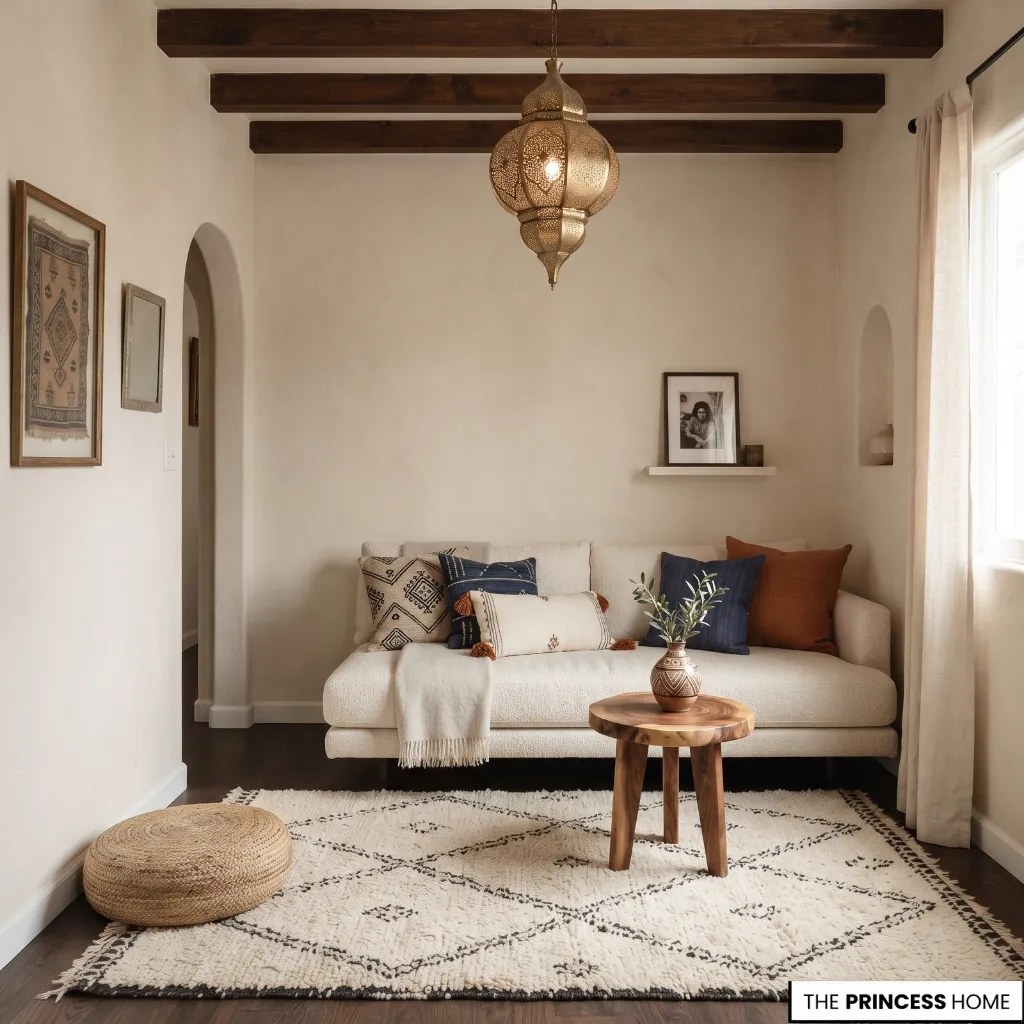
Small rooms can support Moroccan decor, but they need stronger visual control. Because the style can involve pattern, texture, color, and decorative craftsmanship, adding too many elements quickly makes a compact room feel crowded.
Choose fewer elements with greater impact. A patterned rug, one distinctive light, textured cushions, and a single handcrafted focal piece may be enough.
Keep the largest surfaces relatively calm when the room is small. If the rug carries a strong geometric pattern, avoid covering nearby surfaces with several competing patterns.
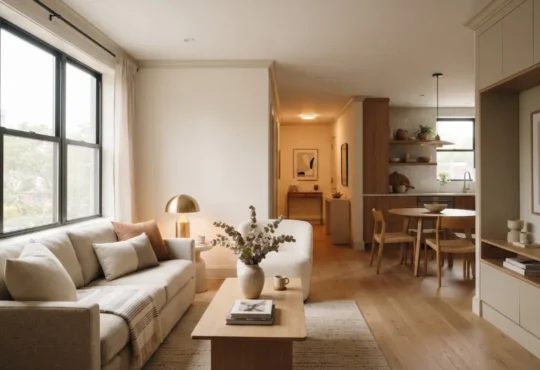
Furniture should remain appropriately scaled and leave comfortable circulation space. A smaller sofa, compact table, or streamlined chair can preserve the relaxed Moroccan character without consuming the room’s usable floor area.
The goal is not to remove Moroccan character from a small room. It is to concentrate that character into a few well-chosen decisions.
Decorate on Budget
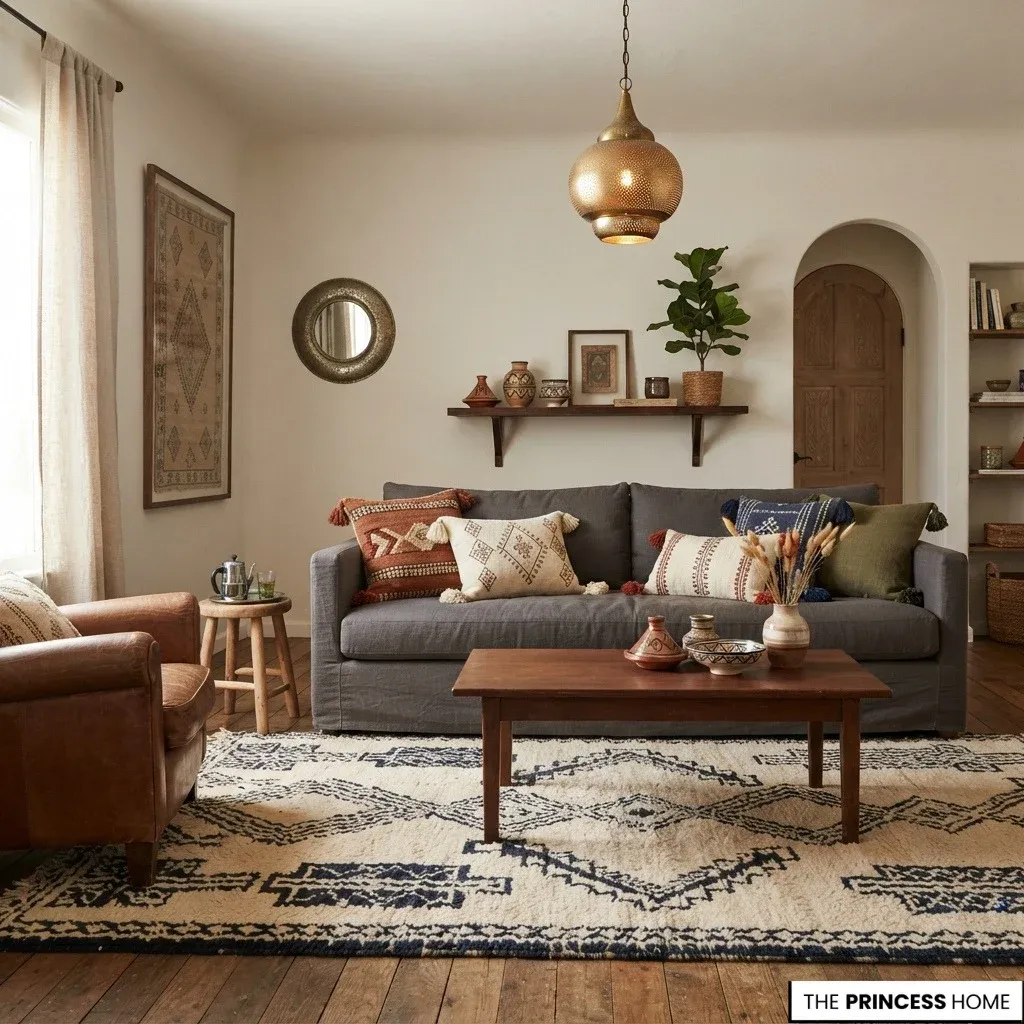
Moroccan decor does not require a complete renovation. The greatest impact usually comes from establishing a few strong layers rather than buying many inexpensive accessories.
Start with the elements that define the room visually. A good rug, appropriate lighting, a wall color or finish, and a small number of textiles can change the character of an existing space significantly.
If traditional zellige is beyond the budget, use it selectively rather than replacing it with an unrelated decorative material. A small backsplash, niche, fireplace surround, or bathroom feature can provide the geometric and handcrafted quality without requiring a full installation.
The same principle applies to furniture. Keep sound existing pieces and introduce Moroccan character through textiles, lighting, rugs, ceramics, or selected wood details.
Spend more carefully on elements that occupy significant visual space or influence the room’s structure. Save on smaller accessories that can be changed later. The priority is to establish the foundation first, then the main furniture and rug or wood anchor, followed by lighting, textiles, and decorative details.
Avoid Common Mistakes
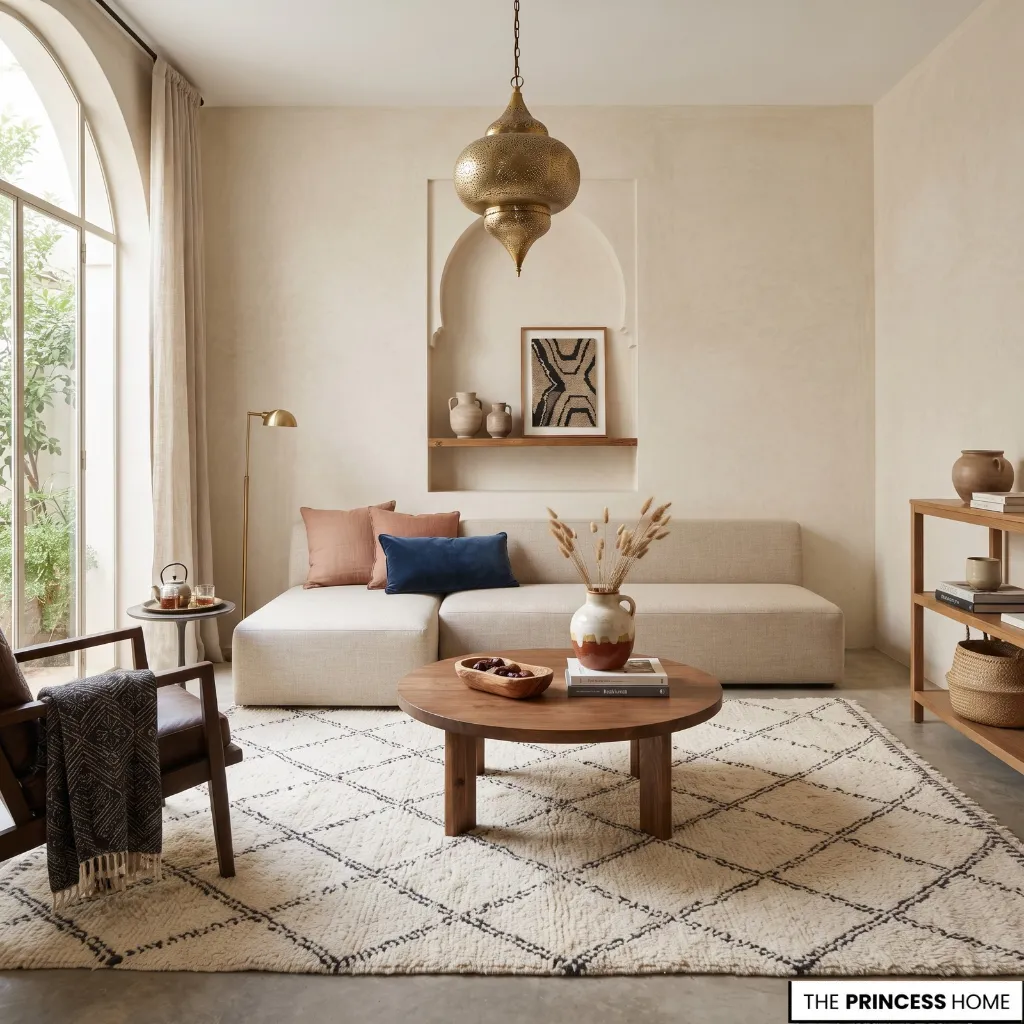
A room filled with lanterns, poufs, ceramics, cushions, rugs, and decorative screens can quickly become themed rather than designed. Choose a few recognizable elements and give them enough space to remain effective.
Strong tile, rugs, textiles, and artwork can also compete when each carries a different pattern. Establish one dominant pattern and use quieter materials around it.
Moroccan design is more than terracotta walls or jewel-toned cushions. Craftsmanship, geometry, texture, materials, and light are equally important. A neutral room can still have a strong Moroccan identity when those elements are handled well.
Traditional architectural features should not be reproduced without considering the home’s structure. If an arch, courtyard, or carved architectural element does not belong naturally in the space, use material, furniture, pattern, and lighting to achieve a related design result.
Decorative objects cannot solve unresolved proportions, furniture placement, or an unclear palette. Establish the room’s foundation first, then add accessories that support it.
Finally, avoid mixing unrelated “exotic” objects simply because they appear decorative. Choose a clear Moroccan direction and repeat a small number of compatible materials, colors, and geometric ideas so the room remains coherent.
Conclusion
Moroccan decor works best when its recognizable details are supported by a clear design structure. Start with the room’s proportions and foundation, then build through materials, comfortable furniture, rugs, controlled patterns, and purposeful lighting.
You do not need to reproduce a traditional Moroccan interior. Translate its craftsmanship, geometry, texture, and relationship with light into the architecture you already have, and the result can feel distinctly Moroccan while remaining personal, functional, and contemporary.
Explore the visual gallery below for inspiring ideas that bring this aesthetic to life in your home.