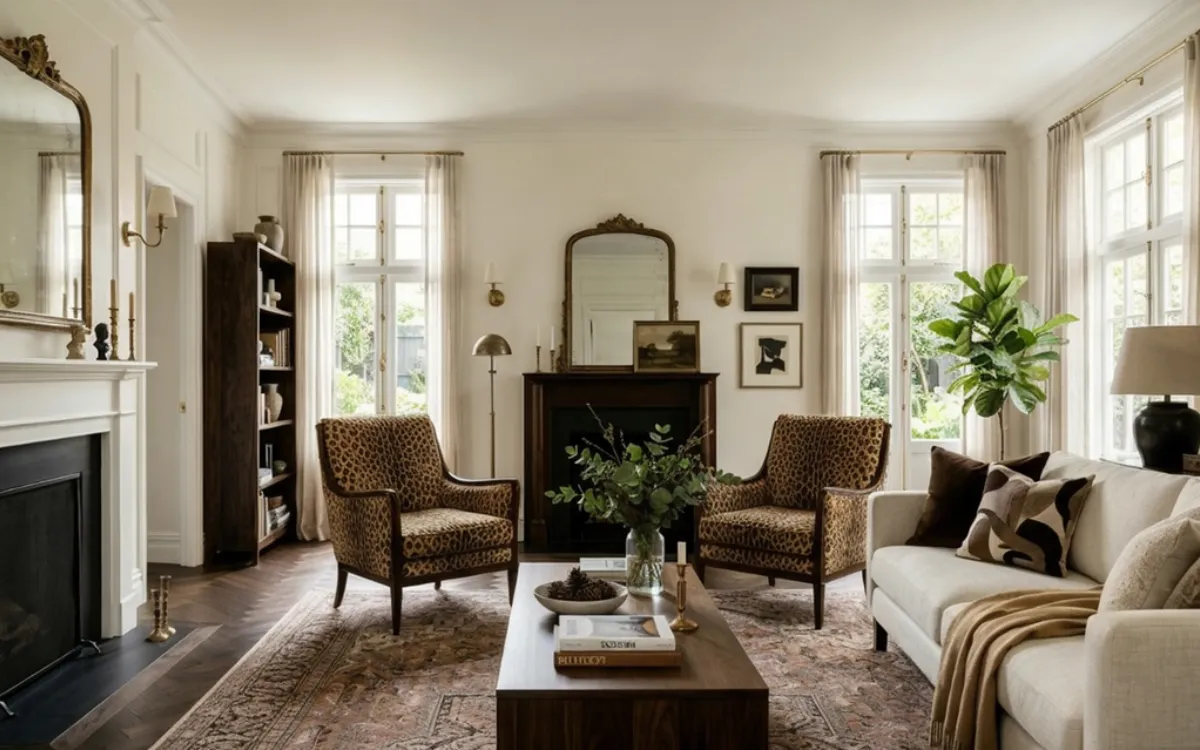
Leopard print can add pattern, character, and contrast to an interior, but its strong visual presence requires thoughtful placement. From upholstered furniture and area rugs to cushions and decorative accessories, there are several ways to introduce this distinctive pattern without overwhelming a room.
The key to successful Leopard Print Decor is to consider scale, color, materials, and the existing decor before choosing where to use it. This guide explains how to incorporate leopard print into different rooms, combine it with other patterns, and create interiors that feel balanced and personal.
Understand Leopard Print
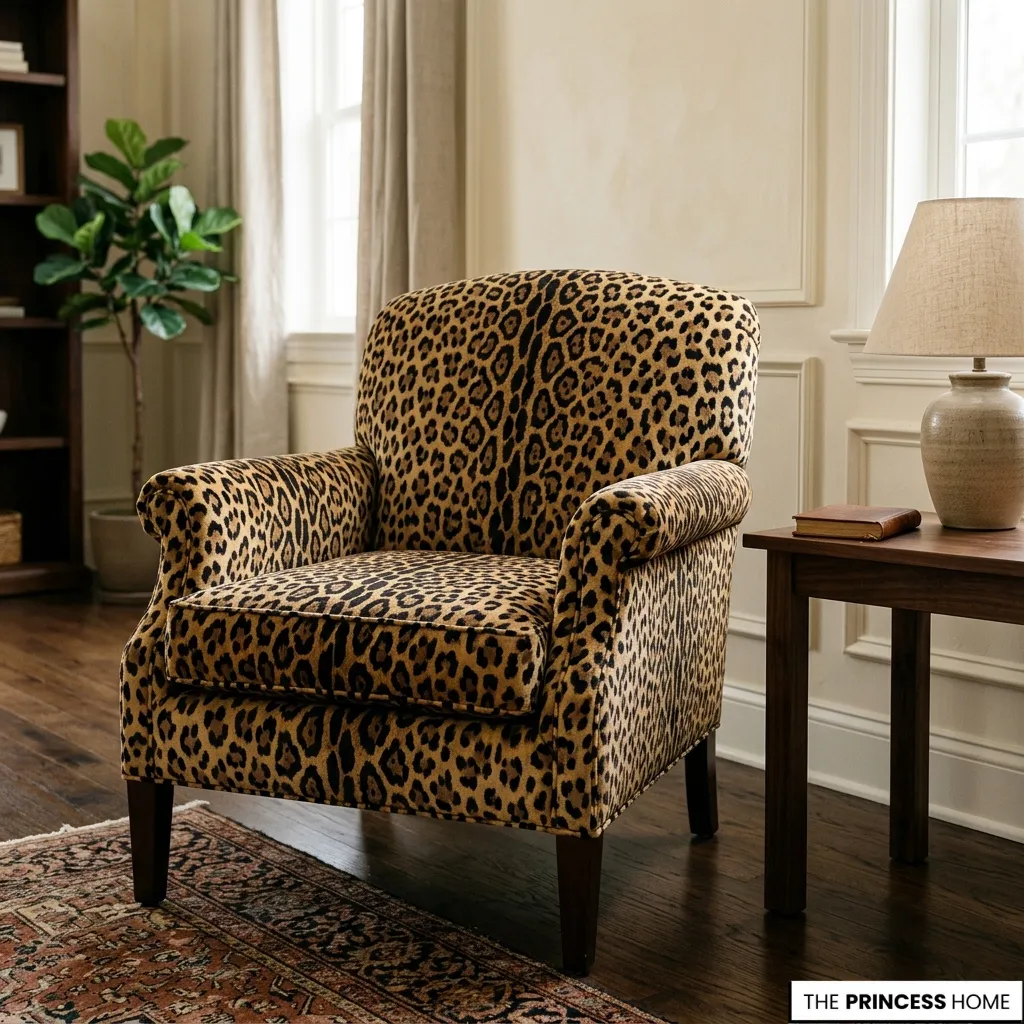
Leopard print is recognized by its irregular dark spots and rosette-like markings, usually arranged across a warm tan, golden, or cream background. Traditional versions combine dark brown and black markings, while contemporary interpretations may use gray, ivory, muted colors, or more unexpected combinations.
Unlike a plain fabric, leopard print contains several contrasting tones and shapes. This makes it visually prominent, even when used on a relatively small object. Its effect also depends on the size of the markings, the contrast between the background and spots, and the surface carrying the pattern.
When selecting a print, consider the scale of its markings in relation to the item. Larger, more noticeable markings can work on substantial surfaces such as accent chairs, rugs, and upholstered benches, where the pattern has enough room to remain visible.
Smaller or more closely spaced markings can be easier to incorporate into cushions, lampshades, and compact accessories.
The level of contrast matters too: a print with strong black markings against a golden background makes a bolder statement than one with softer brown markings against a muted cream background. These details help you select Leopard Print Decor that suits the size and character of your room.
Before choosing a piece, consider the existing character of the room. A neutral interior can accommodate a more noticeable leopard-print feature, while a room with several established patterns may benefit from a smaller accent.
Understanding this relationship helps determine how much pattern the space can comfortably support.
Choose a Placement
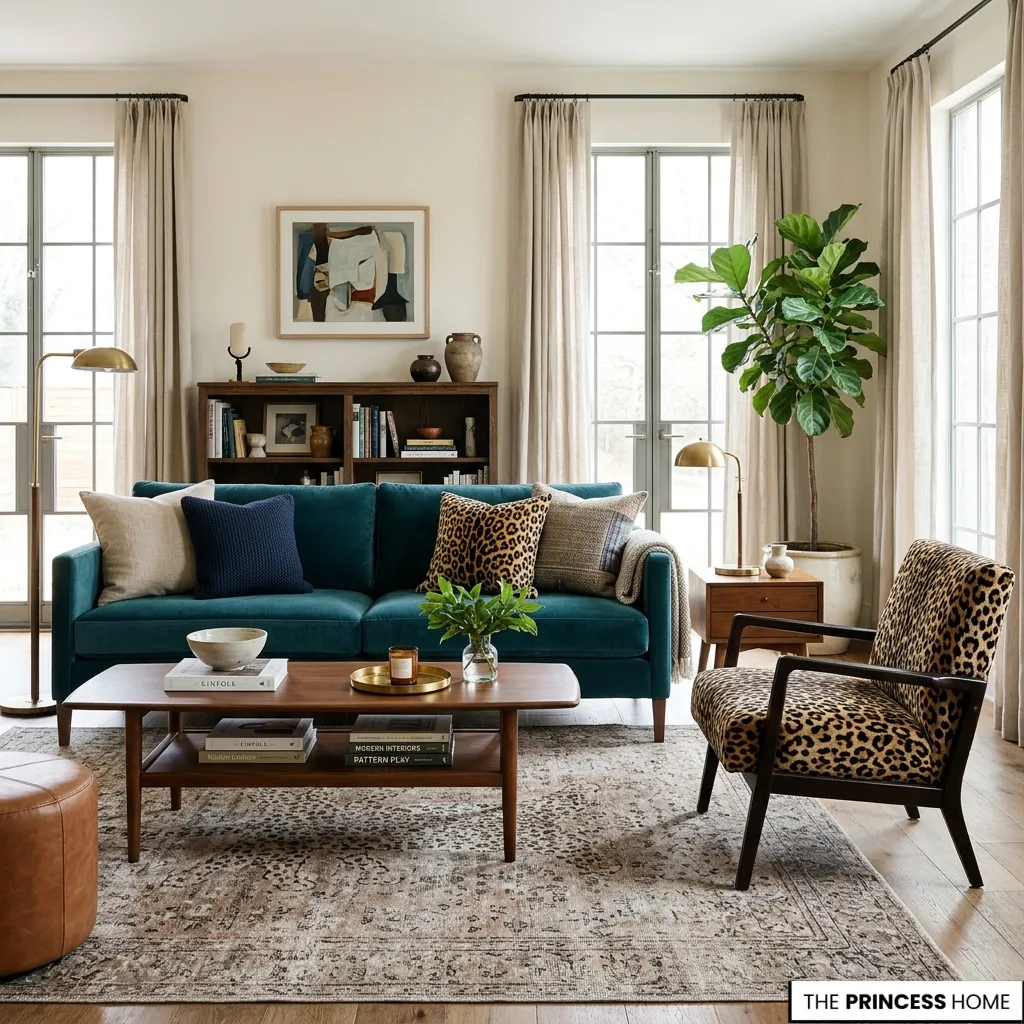
Start by deciding how prominent leopard print should be and where it will have the greatest effect. You can introduce it through a small accessory, a functional furniture piece, or a larger surface such as a rug or wallpaper.
Small decorative accents, including cushions, throws, lampshades, decorative boxes, and framed artwork, offer an easy way to experiment with the pattern. They work particularly well when you want to introduce leopard print without making a permanent change.
Upholstered furniture creates a stronger statement. An accent chair, ottoman, footstool, or bench can become the main patterned feature in a room. Choose a piece whose proportions suit the available space, and allow simpler furniture and surrounding surfaces to support it.
Rugs provide another option. A leopard-print rug can anchor a seating arrangement or introduce pattern into an otherwise understated room. Consider its dimensions, pattern scale, and relationship with the surrounding furniture before selecting one.
For a more substantial application, consider leopard-print wallpaper, curtains, or fabric panels. These surfaces make the pattern a defining part of the interior, so assess the wall area, natural light, and existing finishes before committing to a large installation.
When deciding how much leopard print to use, choose whether it will be the room’s main patterned feature or a supporting accent. If an upholstered chair or rug carries the main pattern, keep other large surfaces relatively simple and repeat the print in only a few smaller details if needed.
If the room already contains prominent floral wallpaper, patterned curtains, or a decorative rug, a pair of leopard-print cushions or a small footstool may provide enough contrast without introducing another dominant feature.
This approach keeps Leopard Print Decor connected to the room rather than making it compete with the existing furnishings.
Smaller accessories are easier to change, making them a practical starting point. Larger applications are worth considering when you enjoy the pattern enough to give it a more permanent place in your interior.
Balance Color Choices
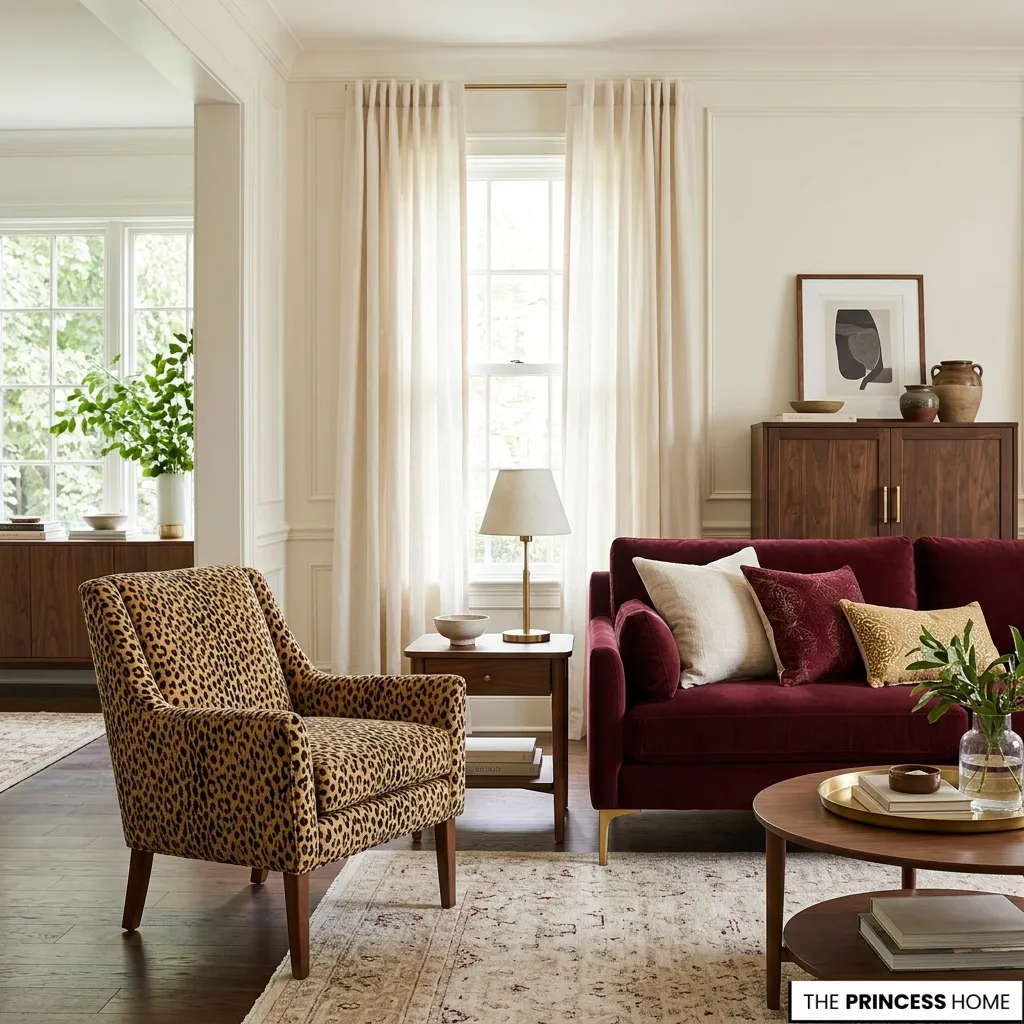
The colors surrounding leopard print influence how bold or understated the finished room will appear. Traditional tan, brown, and black patterns complement warm neutrals, but they can also work with richer colors when the proportions are carefully considered.
Cream, ivory, camel, beige, and warm brown create a coordinated foundation. These shades connect with the traditional colors of leopard print and help it sit comfortably among existing furniture and finishes.
Deep colors such as burgundy, forest green, dark teal, and chocolate brown can give the pattern a richer setting. Use them in upholstery, wall finishes, curtains, or selected accessories, depending on how prominent you want the overall scheme to be.
For a softer interpretation, consider blush, dusty rose, muted sage, or soft gray. These colors can complement leopard print, particularly when the pattern has a compatible background rather than several unrelated contrasting tones.
Black, white, and gray versions offer another option for contemporary interiors. They work particularly well when the room already has a restrained palette or monochromatic furnishings.
A practical approach is to identify one or two colors within the leopard print and repeat them elsewhere in the room. For example, a patterned chair with golden-tan markings can sit comfortably beside camel upholstery, warm wood, or cream curtains.
This creates a connection between the patterned piece and its surroundings without requiring everything to match.
For a more specific color combination, pair a traditional tan-and-black leopard print with an ivory sofa, dark wood furniture, and camel-colored cushions. For a richer arrangement, combine it with burgundy upholstery and warm metallic details, keeping the larger surfaces controlled.
A softer combination could use a muted leopard print alongside sage green, blush accents, and light natural wood. In each case, repeating a color from the print in another part of the room helps connect the elements and makes the combination feel intentional.
Mix Patterns Carefully
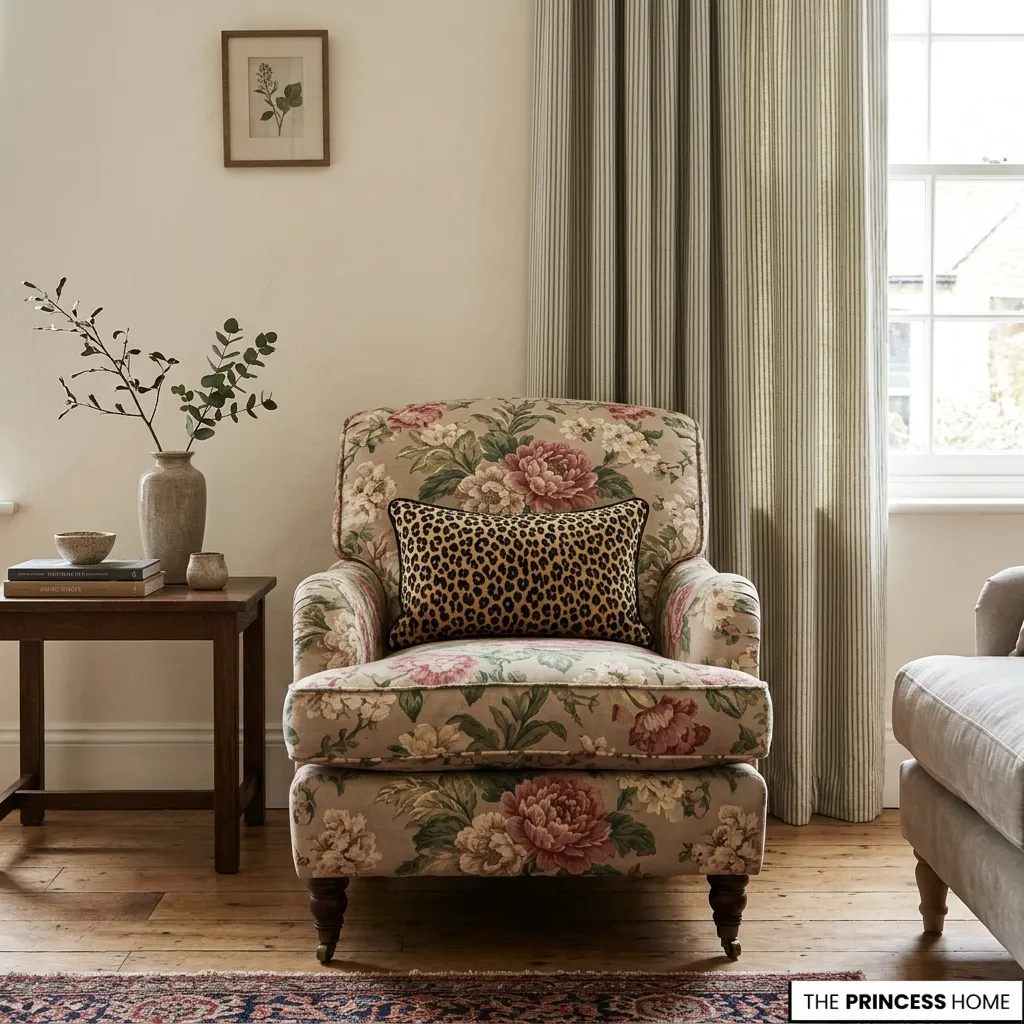
Leopard print can complement florals, stripes, geometric designs, and traditional decorative fabrics when the combination has a clear relationship. For successful Leopard Print Decor, consider how the different patterns relate in scale, color, and visual prominence.
Pattern scale is one of the most useful considerations. Pair a prominent leopard print with a smaller, quieter pattern, or use leopard print as the smaller accent beside a larger floral or geometric design. Differences in scale help individual patterns remain recognizable rather than competing for attention.
Color provides another way to connect different patterns. Leopard-print cushions can work with a floral armchair when both share a warm background or a related accent color. Similarly, a patterned rug can sit beneath furniture with a different print when their colors and pattern sizes are coordinated.
When combining two prominent patterns, decide which one should lead. For example, a floral armchair with large flowers can remain the main feature while smaller leopard-print cushions provide contrast. Alternatively, a leopard-print chair can take the lead beside curtains with a subtle stripe.
The secondary pattern should support the main one through its scale, color, or lower contrast rather than compete for the same attention.
Allow some surfaces to remain relatively simple. A solid-colored sofa, plain curtains, or an understated wall finish gives the eye a place to rest between patterns.
You can also combine different leopard-print designs, but consider their relationship before placing them together. Similar prints with nearly identical markings may compete when they cover several large surfaces. A difference in scale, background color, or contrast can make the combination feel more deliberate.
Select Suitable Materials
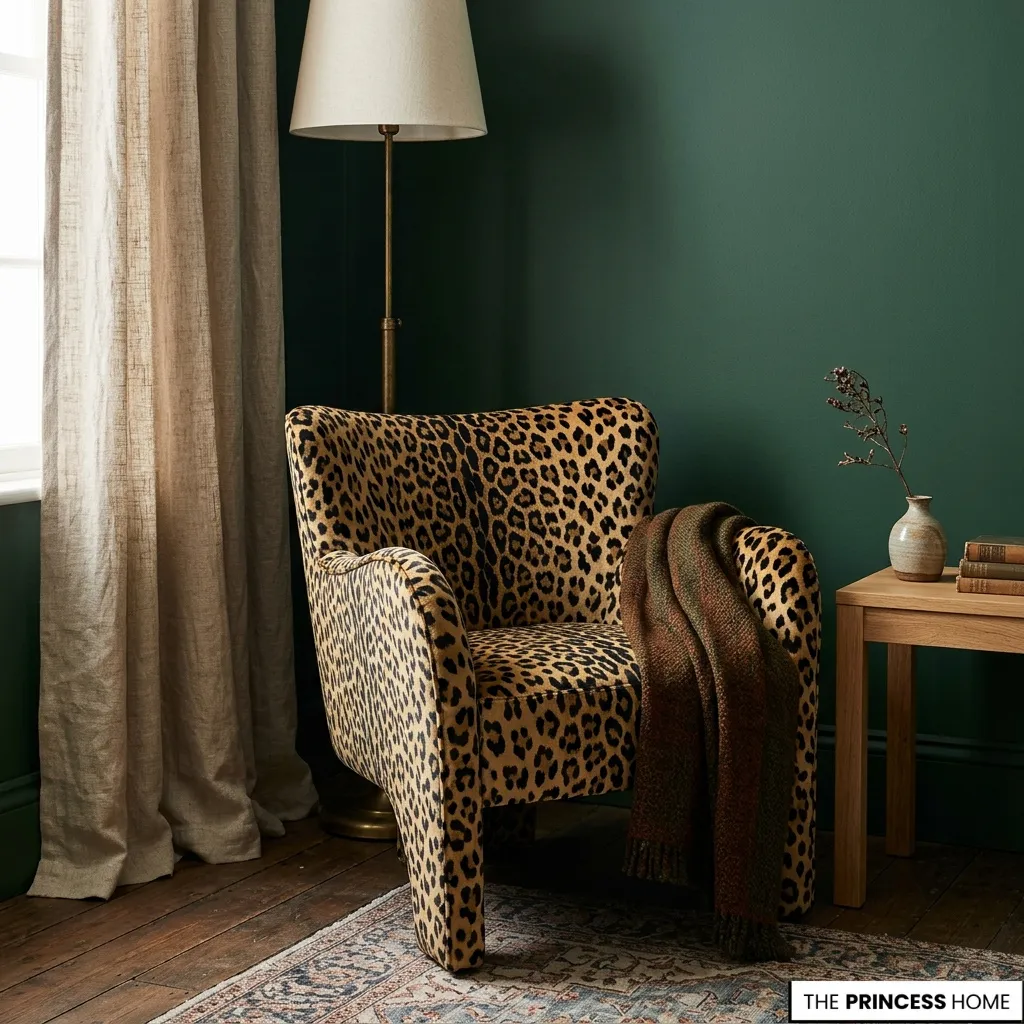
The material carrying leopard print influences its appearance and suitability for everyday use. The same pattern can look relaxed on linen, rich on velvet, or more structured on a tightly woven upholstery fabric.
Choosing the right material is an important part of making Leopard Print Decor both attractive and practical. Linen and cotton offer a relatively relaxed way to introduce leopard print through cushions, curtains, throws, and removable covers.
They suit casual living rooms, bedrooms, and interiors that combine different patterns and textures. Check the fabric’s cleaning requirements, especially when choosing it for frequently used pieces.
Velvet gives leopard-print upholstery a fuller appearance and works well on accent chairs, ottomans, and cushions. Its soft surface can complement deeper colors, polished wood, and other textured furnishings.
Because velvet requires particular care, check the manufacturer’s cleaning instructions before selecting it for a high-use area.
Woven upholstery fabrics are worth considering for chairs, benches, and footstools that receive regular use. Look for fabric specifically suitable for the intended furniture and ask about its durability and cleaning requirements.
Wallpaper provides a more permanent application. Consider the pattern’s scale in relation to the wall, the room’s natural light, and the surrounding finishes. A large, high-contrast design may dominate a small room, while a more restrained print can work across a wider surface.
Choose materials according to the function of each piece, not only its appearance. A decorative cushion has different performance requirements from a dining chair or frequently used ottoman. Matching the material to its intended use helps maintain both the appearance and practicality of the interior.
Style Every Room
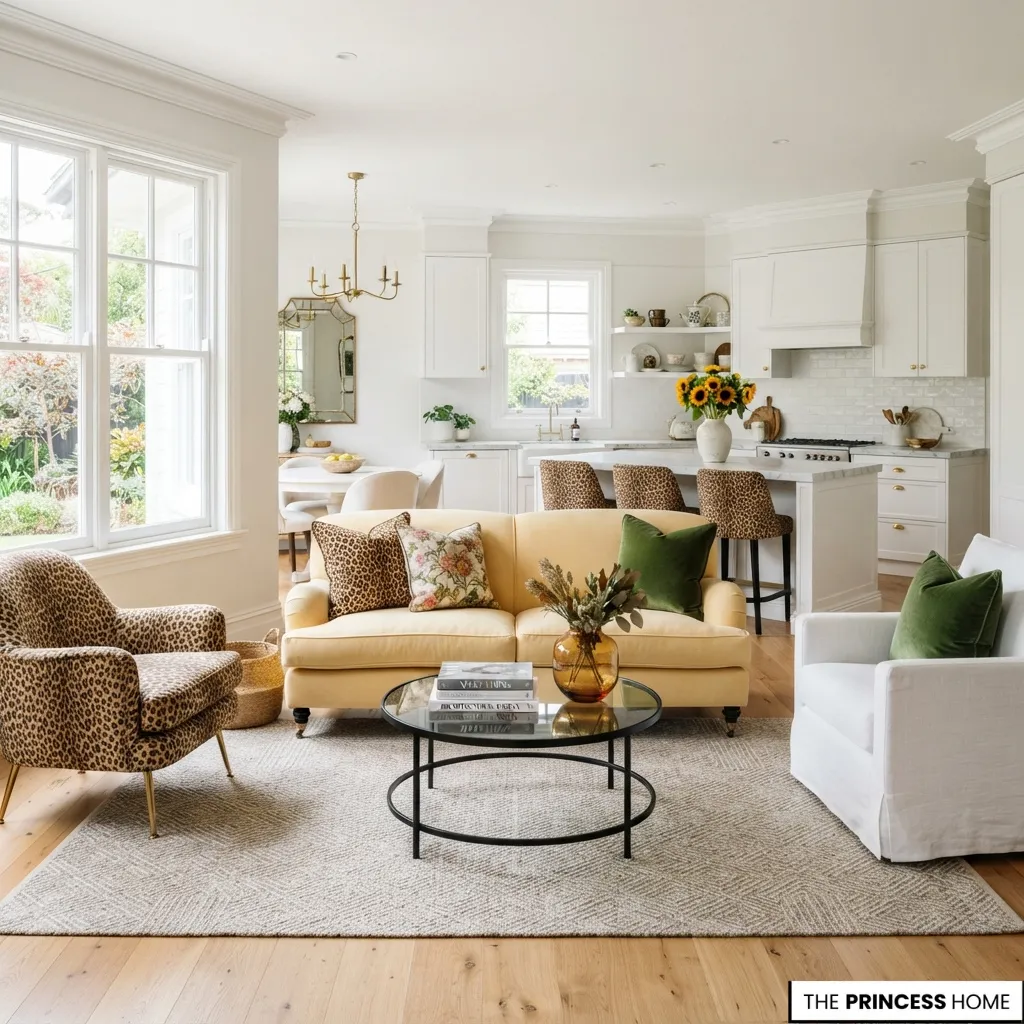
Leopard print can work in different areas of the home, but its application should reflect each room’s function, available space, and existing furnishings. A patterned accent may be enough in a compact room, while a larger space can accommodate a more substantial upholstered feature.
The best Leopard Print Decor choices respond to the way each room is used rather than relying on the same arrangement throughout the home. The surrounding furniture and finishes also influence how the pattern fits the room’s design style.
A classic interior can pair leopard print with tailored upholstery, dark wood furniture, and traditional decorative details.
For a contemporary look, clean-lined furniture, simple surfaces, and a controlled color palette give the pattern a more modern setting. An eclectic interior can accommodate it alongside collected furniture, artwork, and varied textiles when their colors and proportions are considered together.
Living Room
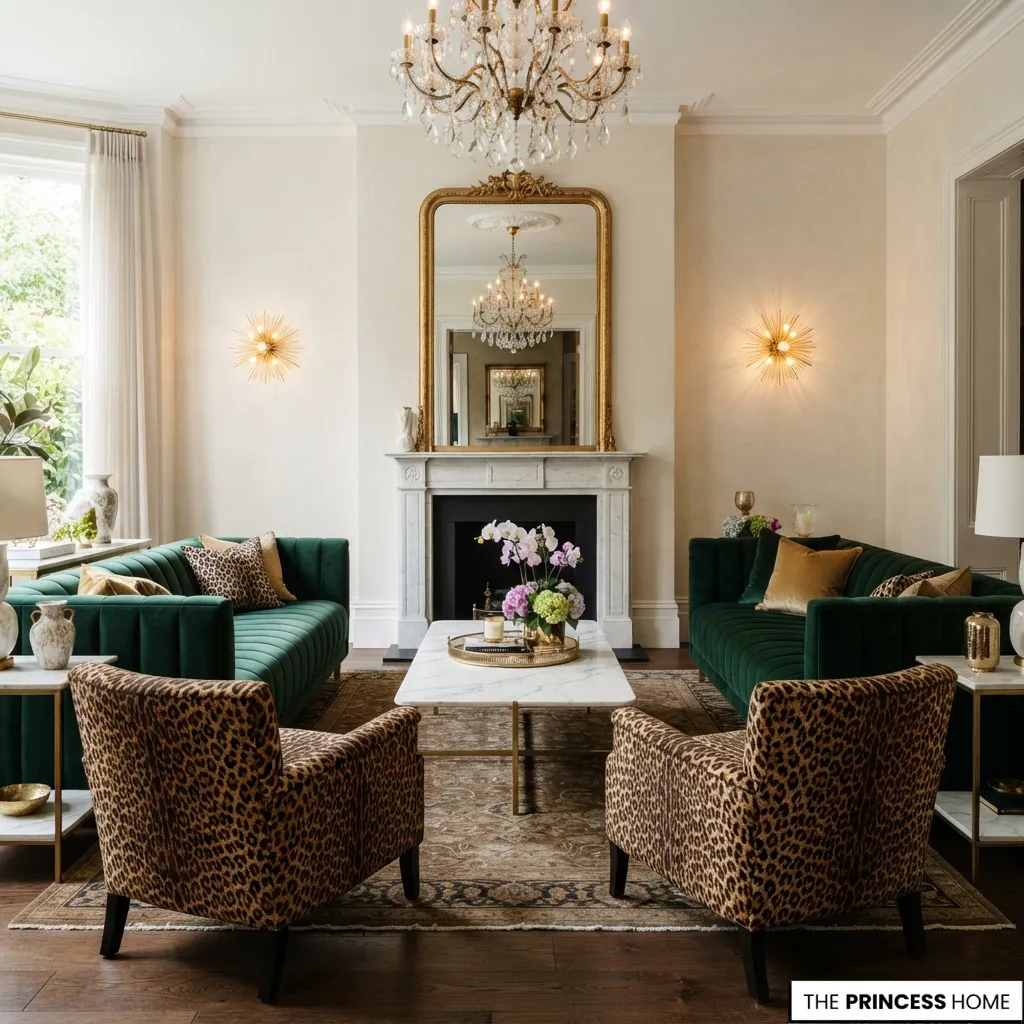
The living room offers several opportunities to introduce leopard print because it usually contains a combination of seating, textiles, and decorative accessories.
An accent chair upholstered in leopard print can become a focal point beside a solid-colored sofa. Choose a chair with proportions suited to the seating arrangement, and position it where the pattern can be appreciated without obstructing movement.
The relationship between the chair and the sofa also matters. An ivory, camel, chocolate brown, or muted burgundy sofa can complement traditional leopard print, depending on the pattern’s background colors.
A wooden coffee table and simple curtains can help connect the furniture without introducing unnecessary competing patterns.
Alternatively, use leopard-print cushions on a plain sofa or introduce a patterned ottoman near the coffee table. These options provide contrast without requiring additional large furniture pieces.
A leopard-print area rug can also anchor a seating arrangement. Check that its dimensions accommodate the main furniture grouping, and avoid allowing the rug’s pattern to compete with several other prominent prints.
For a layered look, combine the patterned piece with natural wood, textured fabrics, and carefully selected metallic details. Keep the surrounding furnishings sufficiently simple to give the leopard print a clear role.
In a smaller living room, a pair of cushions or one compact accent chair may be more suitable than a large patterned rug combined with printed upholstery.
Limit the number of prominent patterned surfaces and leave enough clear floor space around the furniture. This allows the room to retain comfortable movement while still benefiting from the pattern.
Bedroom
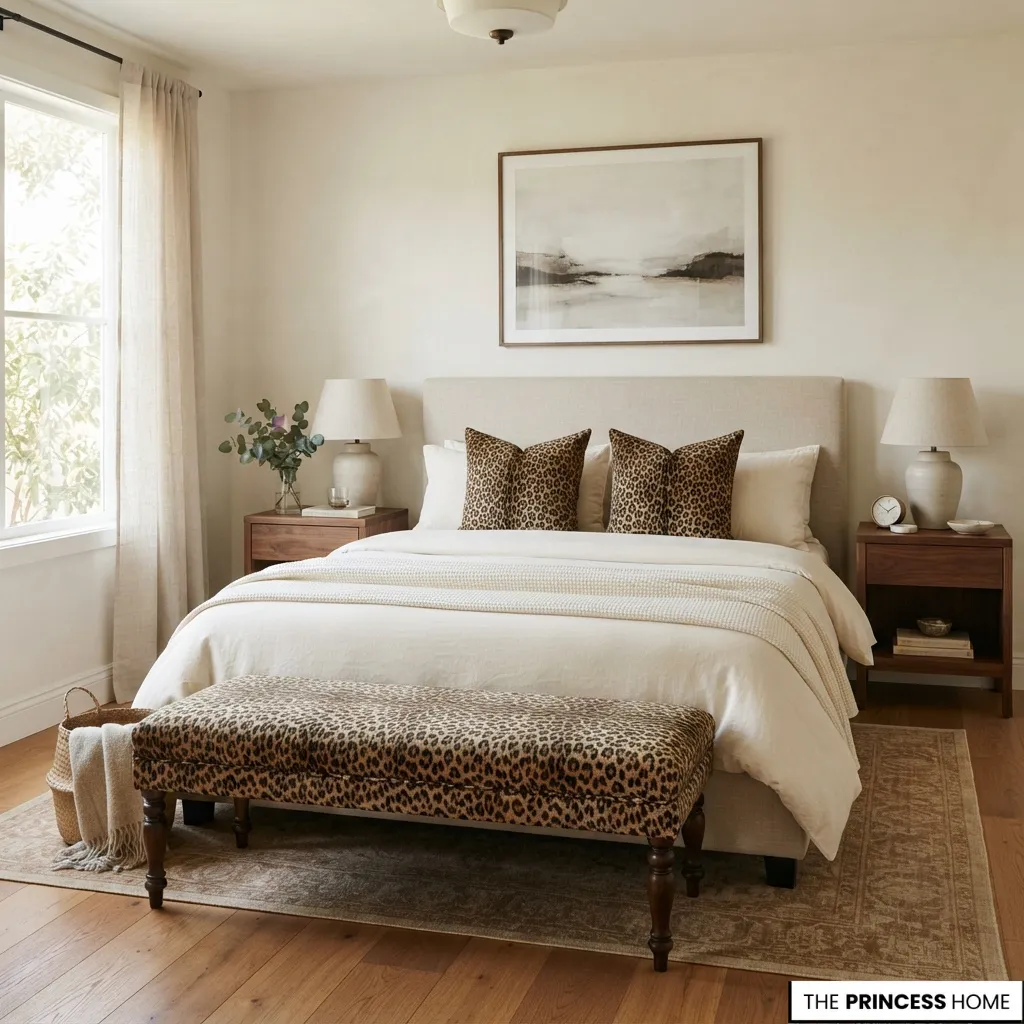
In the bedroom, leopard print can be introduced through bedding, cushions, upholstered furniture, or a small area rug.
For a restrained arrangement, place leopard-print cushions against plain bedding in cream, ivory, brown, or another coordinating color. A patterned throw at the foot of the bed provides another option without covering the entire sleeping area.
An upholstered bedroom bench or accent chair can introduce the pattern through functional furniture. These pieces allow the headboard and main bedding to remain relatively simple while giving the room a distinctive focal point.
Leopard-print wallpaper can also work behind a bed. Consider how the pattern relates to the headboard, bedside tables, and bedding before selecting the wall. When the wallpaper is particularly bold, simpler bedding and window treatments help prevent the arrangement from becoming crowded.
For a more cohesive bedroom palette, repeat a tone from the print in the bedding, curtains, or upholstered furniture.
For example, a warm leopard pattern can work with ivory bedding, camel accents, and dark wood bedside tables. If the pattern appears on the headboard or wallpaper, keep the cushions and bedcover relatively simple so the main feature remains easy to appreciate.
Dining Room
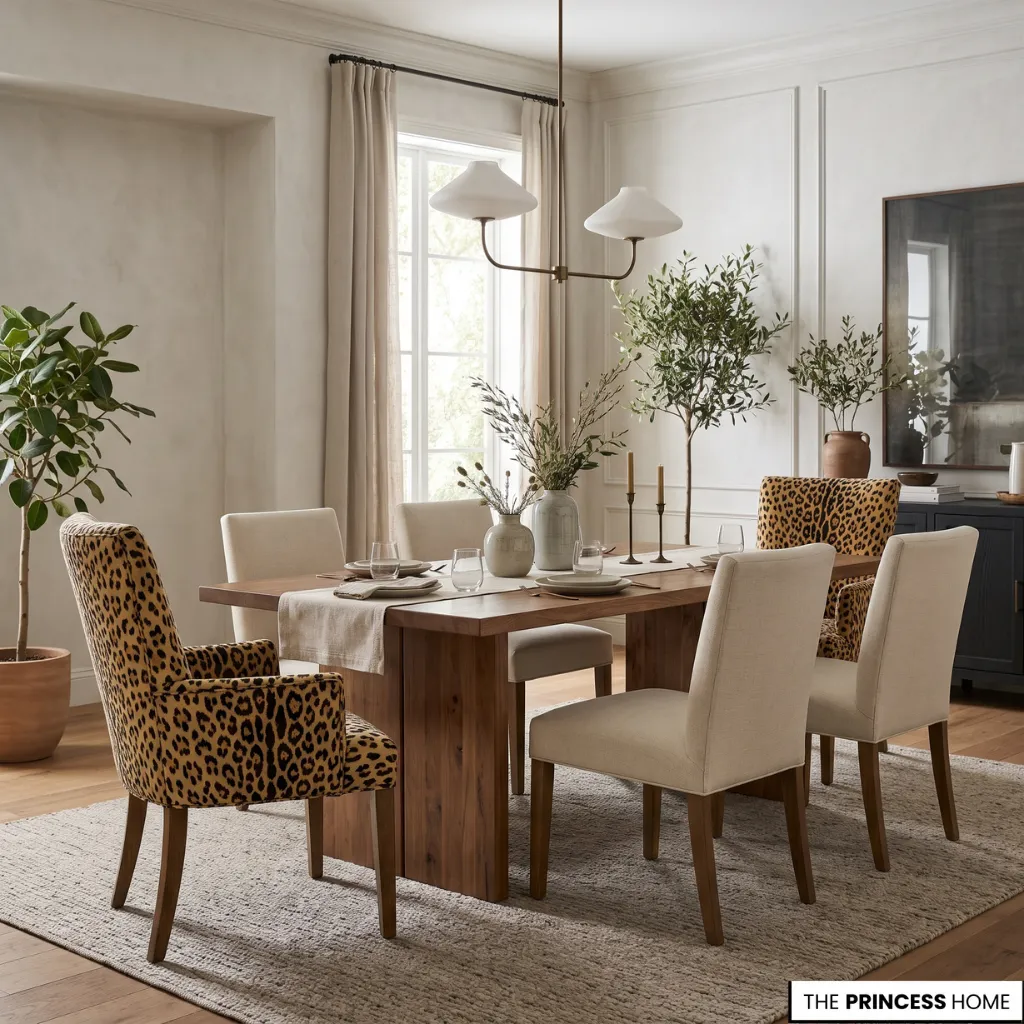
Dining rooms can accommodate leopard print through upholstered dining chairs, seat cushions, table runners, and selected decorative accessories.
Leopard-print upholstery on one or two dining chairs can provide contrast against a plain wooden or painted dining table. This approach introduces the pattern through functional furniture rather than additional decorations.
For a less permanent option, use a leopard-print table runner or fabric placemats. Keep the dinnerware and centerpiece relatively simple so the printed textile remains easy to appreciate.
If the dining room already contains patterned curtains or a decorative rug, choose a smaller leopard-print accent that relates to the existing colors. Also consider the practical demands of dining furniture and select upholstery that can withstand regular use and cleaning.
Entryway
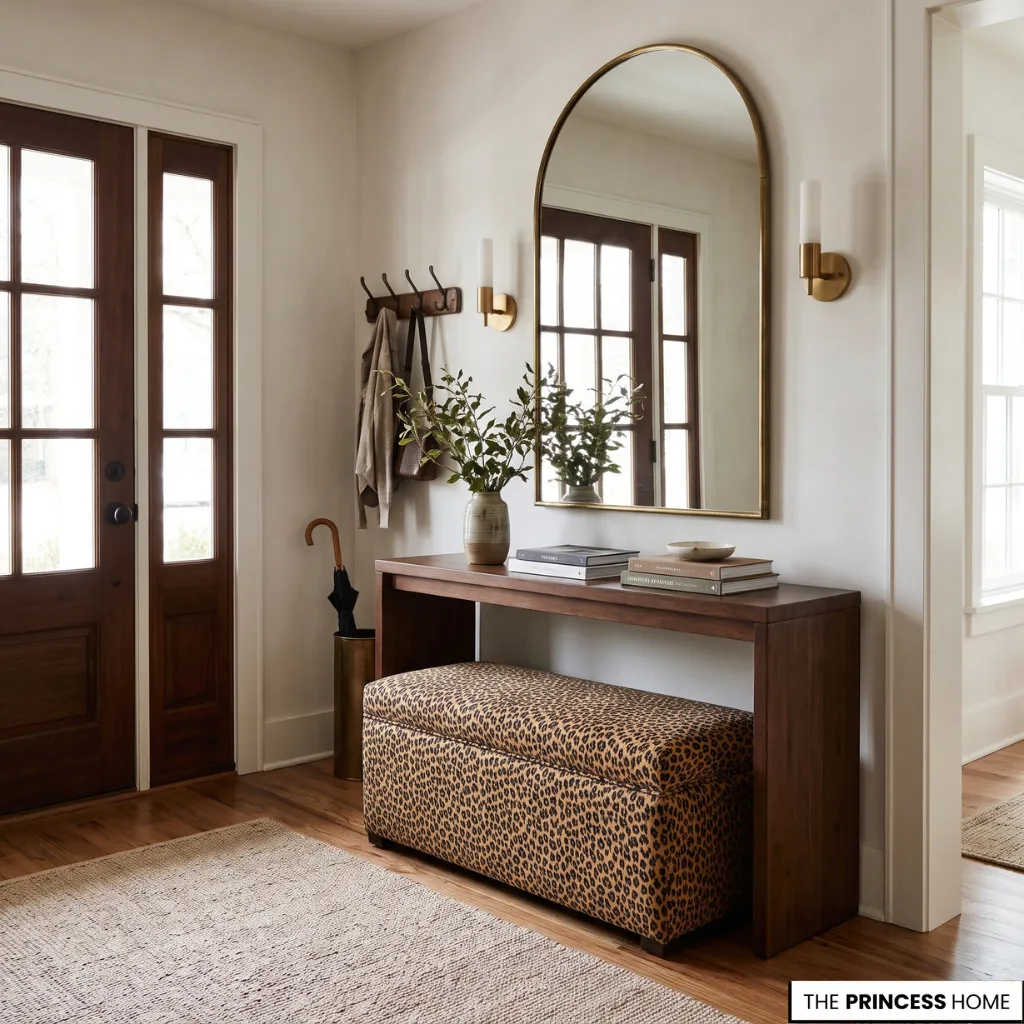
An entryway provides a natural place for a distinctive accent because it usually contains only a few essential pieces of furniture.
A leopard-print upholstered bench can introduce the pattern while providing a practical place to sit. Another option is a small footstool beneath a console table or a patterned runner that leads into the home.
In a compact entrance, consider a cushion, framed print, or small decorative accessory rather than a large patterned furniture piece. Preserve enough clear floor space for opening doors, walking comfortably, and using the entrance without obstruction.
Kitchen
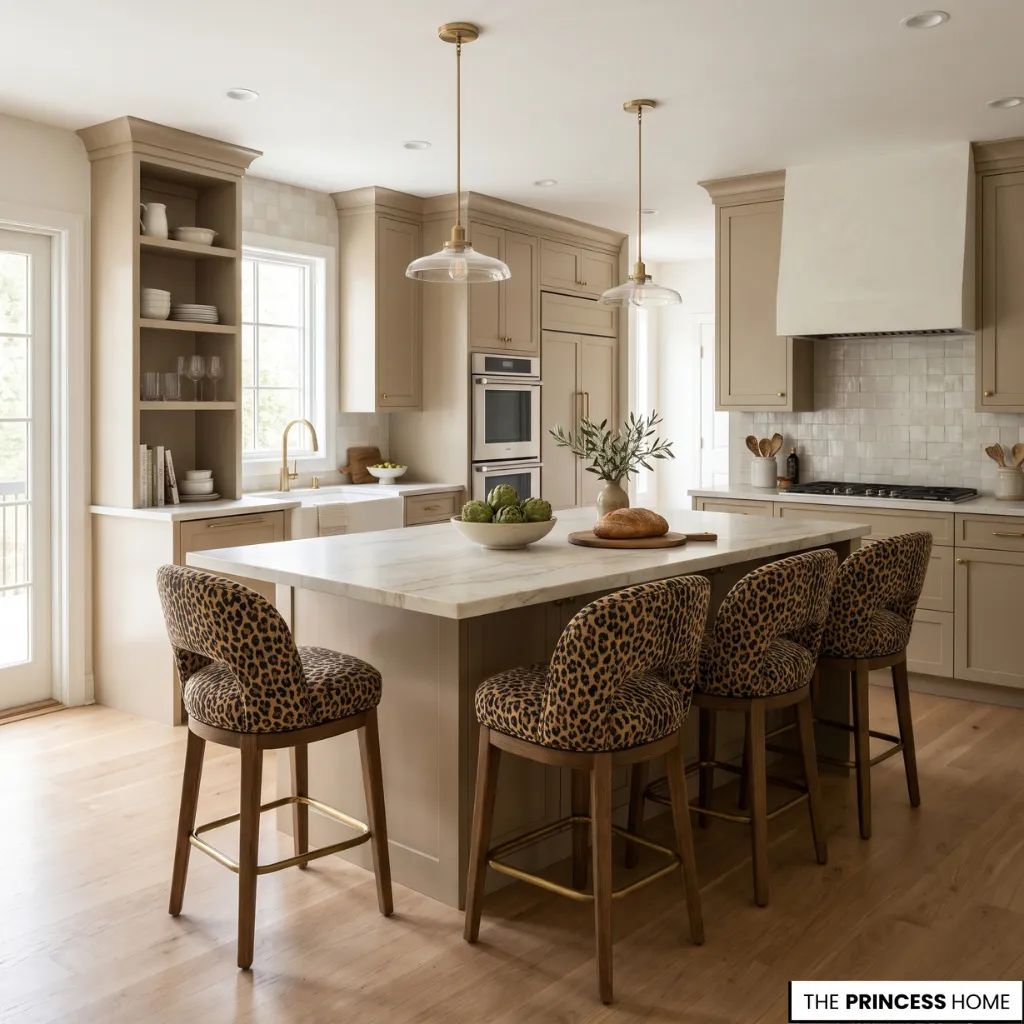
In the kitchen, leopard print works best when introduced through accessories and selected furniture details. Consider upholstered breakfast-bar stools, washable seat cushions, a small runner, or decorative artwork.
These applications introduce the pattern without interfering with preparation surfaces or everyday kitchen activities. For open-plan kitchens, connect the patterned element with colors already present in the adjoining dining or living area.
This helps the different spaces feel related without requiring identical furnishings. Choose materials that can withstand the kitchen environment and are easy to clean, particularly for textiles placed near food preparation areas.
Keep patterned accessories away from heat sources and areas where they could interfere with cooking or cleaning.
Bathroom
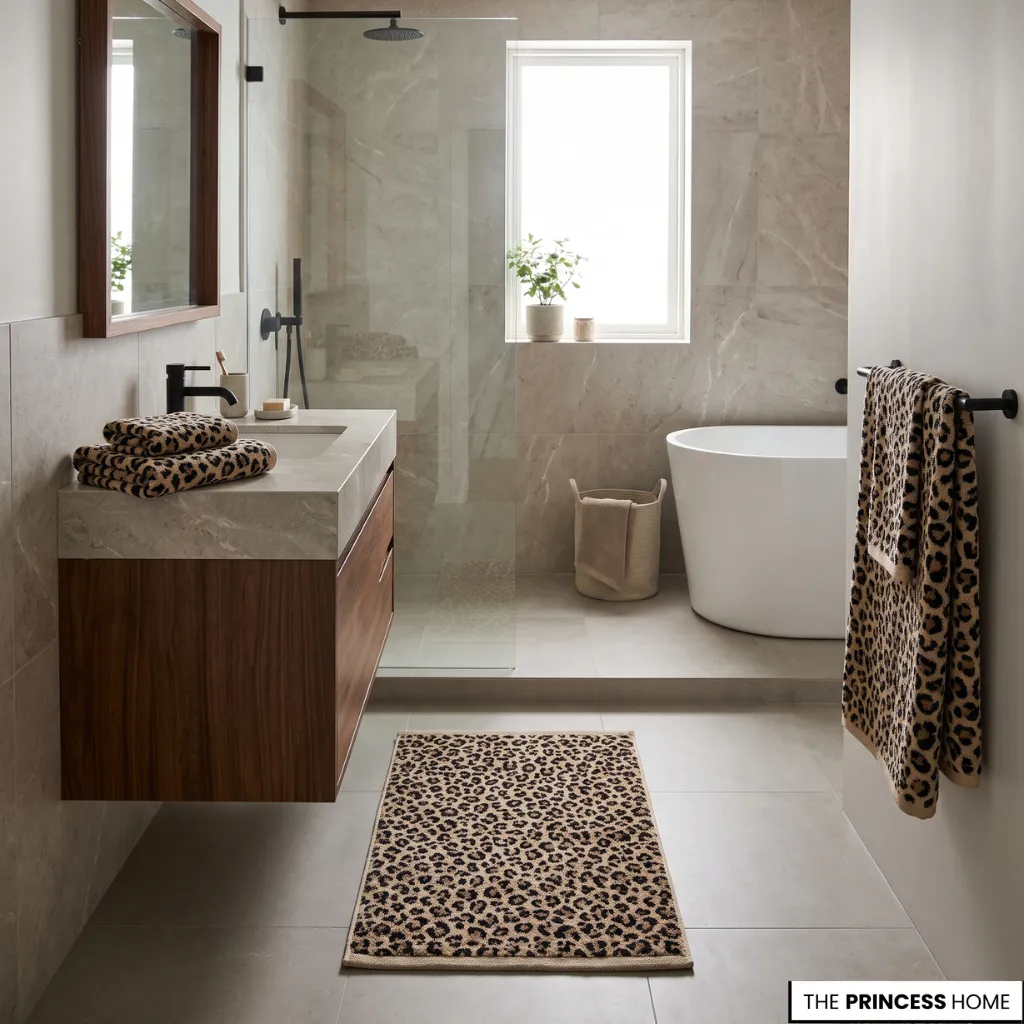
A bathroom usually benefits from a more restrained approach because its surfaces must remain practical and easy to maintain. Leopard-print towels, a suitable bath mat, a shower curtain, or framed artwork can introduce the pattern without requiring permanent changes.
In a bathroom with white, cream, or dark-colored finishes, the traditional leopard palette can provide contrast. For a softer result, consider a muted or monochromatic version.
Pay attention to moisture resistance and cleaning requirements when selecting textiles and accessories. Choose a bath mat with a suitable non-slip backing, and make sure any fabric used in the bathroom can dry properly.
Home Office
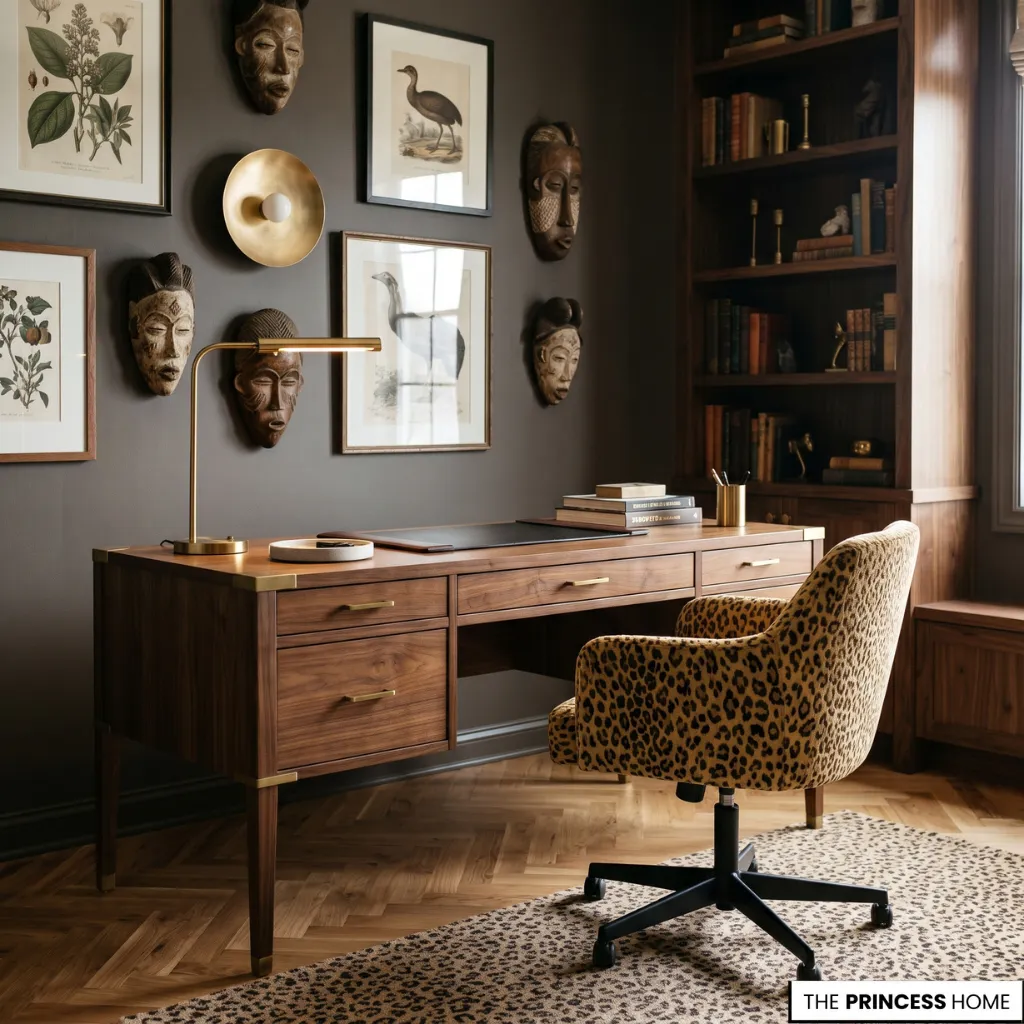
A home office can incorporate leopard print through an upholstered desk chair, a small rug, cushions on a reading chair, or framed artwork.
An accent chair is particularly useful when the rest of the workspace consists of a desk, shelving, and simple storage furniture. It introduces a patterned feature without requiring additional decoration across the working area.
For a more subtle arrangement, choose a leopard-print desk accessory or a small upholstered seat. Connect its colors with the existing furniture or wall finishes to keep the room organized.
When choosing a patterned desk chair, consider comfort, adjustability, and upholstery durability alongside its appearance. The pattern should complement a workspace that remains suitable for concentration and everyday tasks.
Balance the Pattern
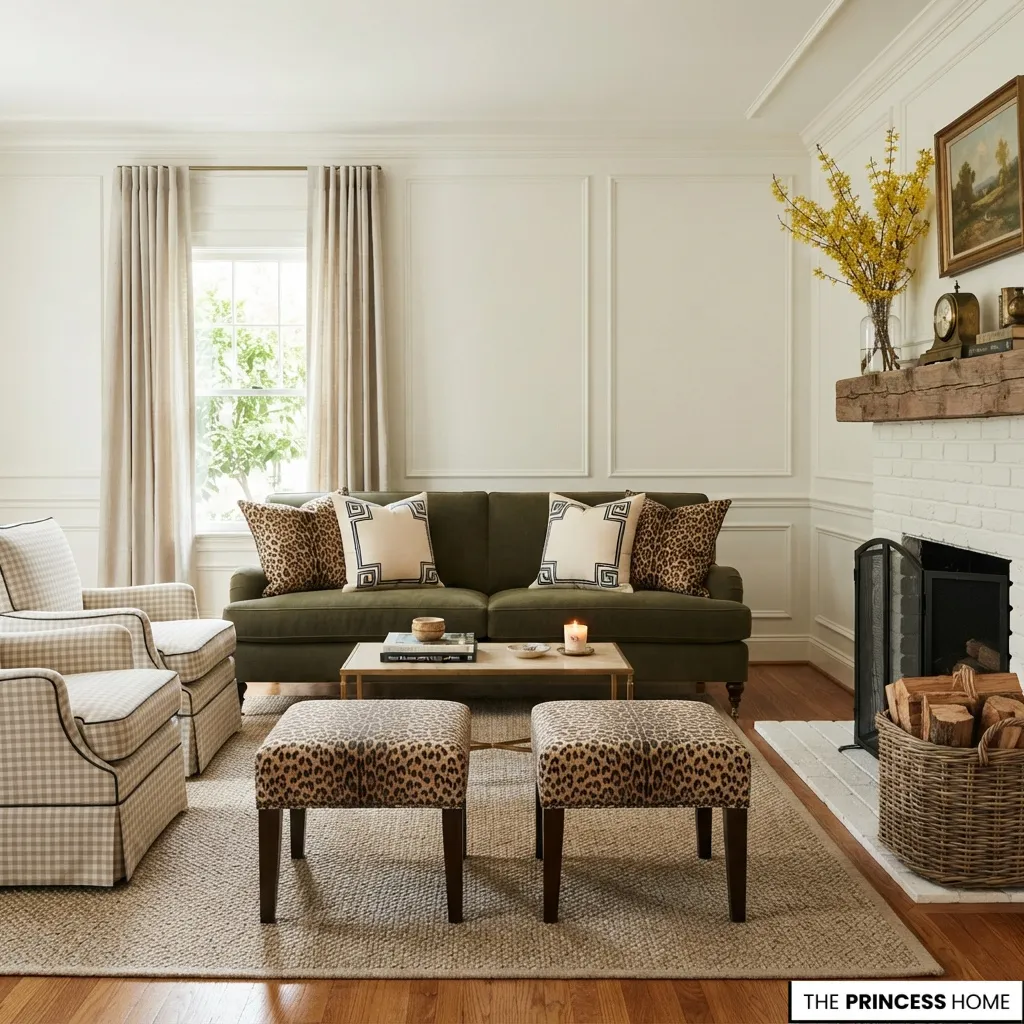
Successful Leopard Print Decor depends on choosing the right application for each room rather than using the pattern everywhere in equal amounts. A patterned chair, carefully selected rug, or a few well-placed accessories can introduce character while allowing the rest of the interior to retain its identity.
Consider the room’s colors, materials, proportions, and everyday needs before making your choice. With thoughtful placement and suitable combinations, leopard print can become a distinctive part of a comfortable, well-balanced home.
Avoid Common Mistakes
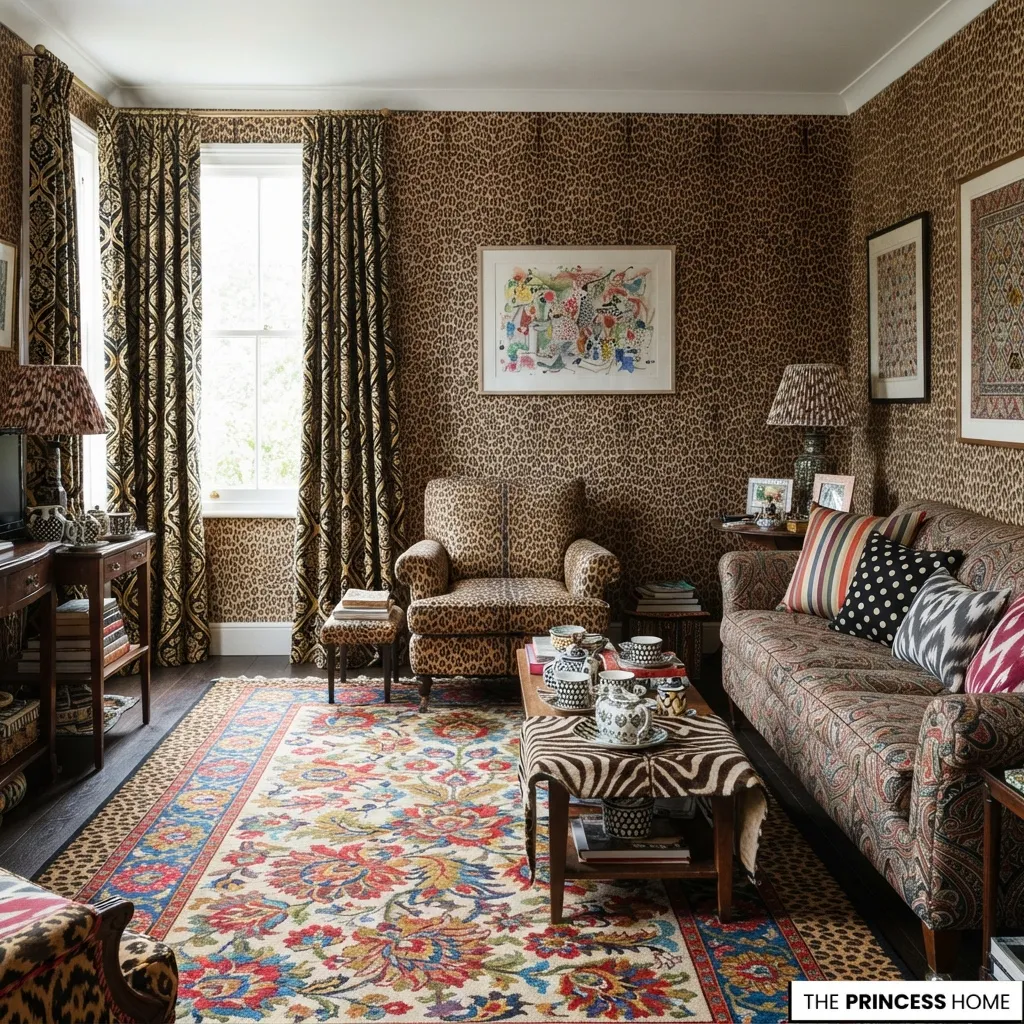
Leopard print can become visually overwhelming when its scale, placement, or color is disconnected from the rest of the room. A few practical checks can help prevent this.
Using too much pattern
Covering several large surfaces with competing leopard prints can make a room feel visually crowded. Start with one main application, then decide whether smaller accents would add anything meaningful.
Ignoring proportions
A large, high-contrast print may dominate a small piece of furniture or compete with an already prominent feature. Match the pattern’s scale to the size of the item and its position in the room.
Combining unrelated colors
A leopard-print piece does not automatically coordinate with every color in the space. Look for shared tones between the print, upholstery, flooring, and accessories before introducing additional colors.
Mixing similar patterns
Several prints with nearly identical markings and colors can compete rather than create a deliberate layered arrangement. Introduce differences in scale, contrast, or pattern type to make each design easier to distinguish.
Overlooking practical use
A delicate fabric may not be suitable for frequently used seating, while an unsuitable rug can become difficult to maintain. Check material durability, cleaning requirements, and intended use before making your selection.
Conclusion
Ultimately, the secret to successfully using leopard print lies in striking a clever balance between boldness and simplicity. By treating this pattern as a “vibrant neutral”—rather than merely a fleeting decorative accent—you can infuse any space with a sense of luxury and warmth, without visually overwhelming it.