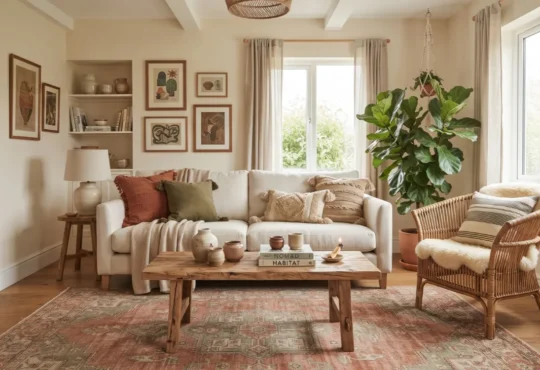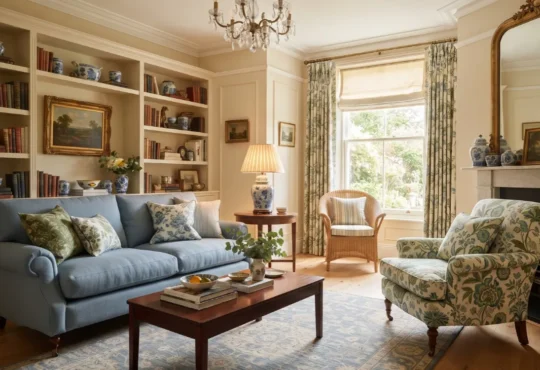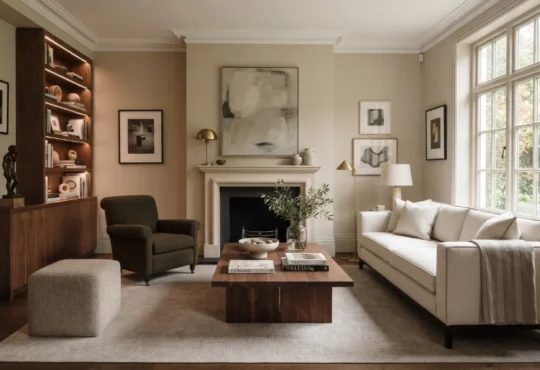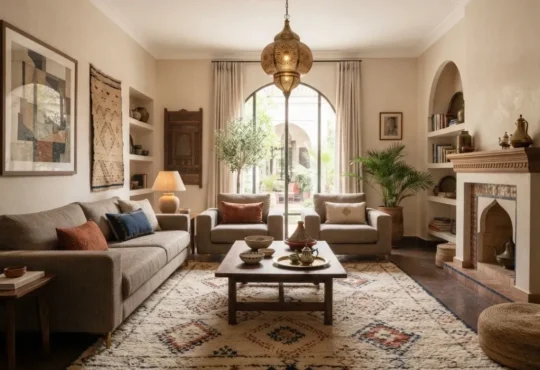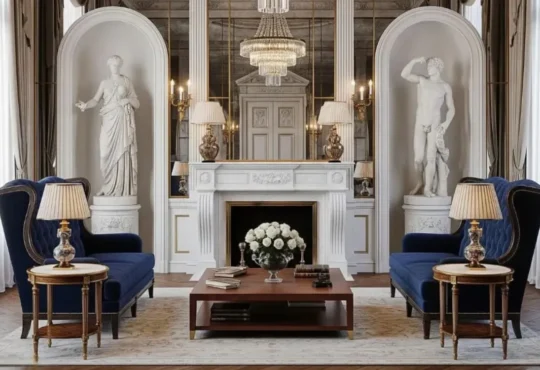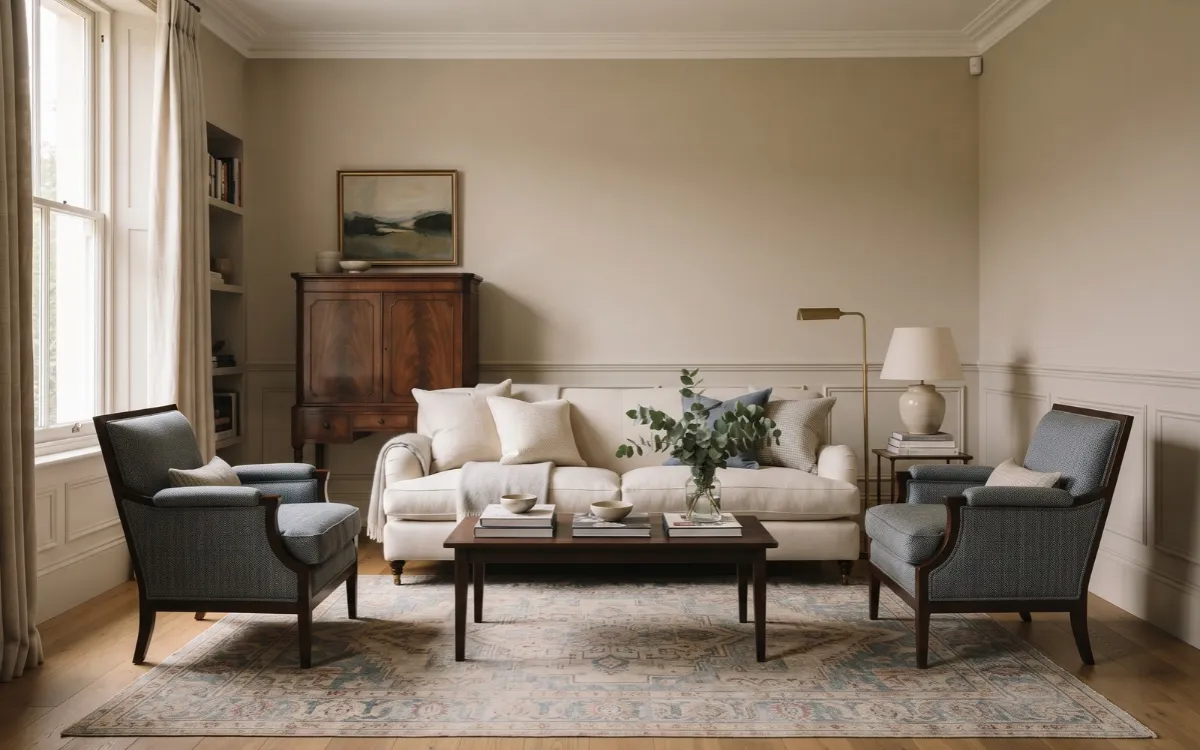
Classic style is an enduring approach to interior design built around balanced proportions, considered furniture, quality materials, and architectural detail. The challenge is bringing these elements together without making a home feel outdated, overly formal, or crowded with decoration.
The key is understanding how classic design works and adapting its principles to your space, lifestyle, and budget.
What Is Classic Style?
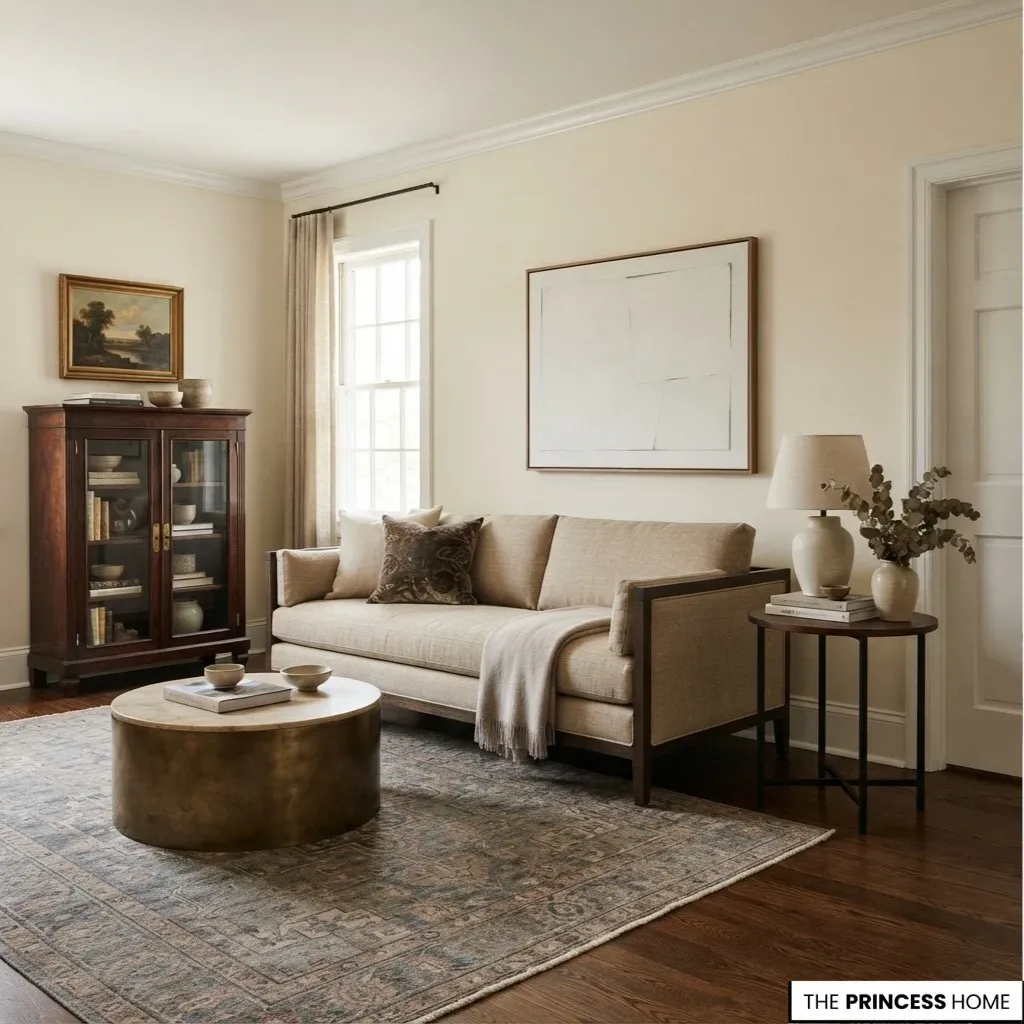
Classic style in interior design draws on traditional design principles, including symmetry, proportion, architectural character, and carefully selected furnishings. It combines recognizable furniture forms, considered materials, and decorative details to create rooms that feel organized and comfortable.
Unlike a strictly historical interior, classic style does not require reproducing a particular period. A room can include traditional wood furniture, tailored upholstery, and architectural moldings while still accommodating contemporary lighting and simpler accessories.
Several principles help define the style. Furniture relates to the dimensions of the room, colors work together across different surfaces, and decorative objects support the overall arrangement. Each element has a purpose rather than competing for attention. Classic interiors can take different forms.
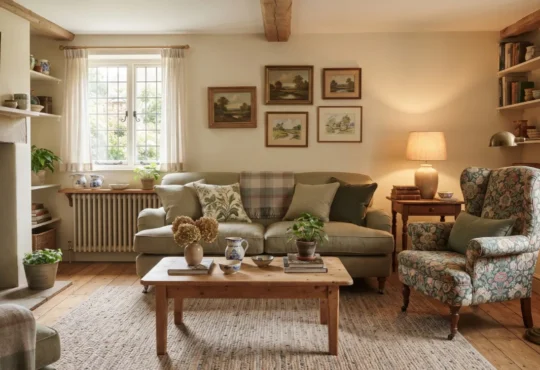
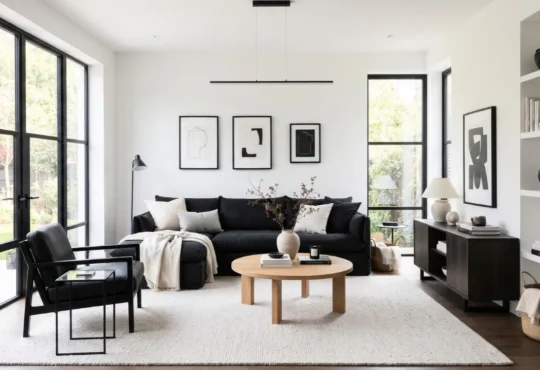
Traditional classic rooms often include more ornament, patterned textiles, and substantial furniture. Modern classic interiors retain balanced proportions and traditional references while using simpler shapes and fewer decorative details.
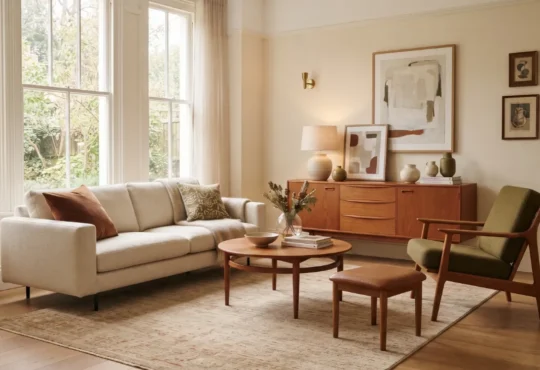
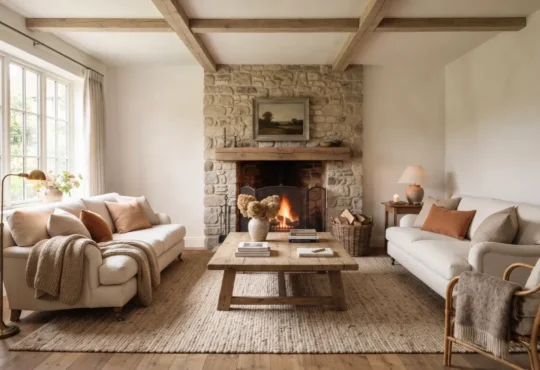
Neoclassical interiors draw more directly on classical architecture, while transitional interiors combine traditional and contemporary features. These terms can overlap in everyday design usage, so their distinctions are useful guides rather than rigid categories.
Understanding these differences helps you choose the interpretation that suits your home. You do not need to reproduce a historical interior to achieve a convincing classic look. You need to understand the principles that hold the room together.
Before choosing furniture or finishes, consider whether the style suits your home’s existing architecture, available space, and everyday needs. Look at the features worth preserving, such as wooden floors, original moldings, a fireplace, or a well-made piece of furniture.
Even a contemporary apartment can support classic design through proportion, materials, and carefully selected furnishings. The aim is to adapt the style to the home you have rather than recreate a room that belongs to another building.
For more ideas: Interior Design Styles Choose Your Home’s Personality
Classic Design Elements
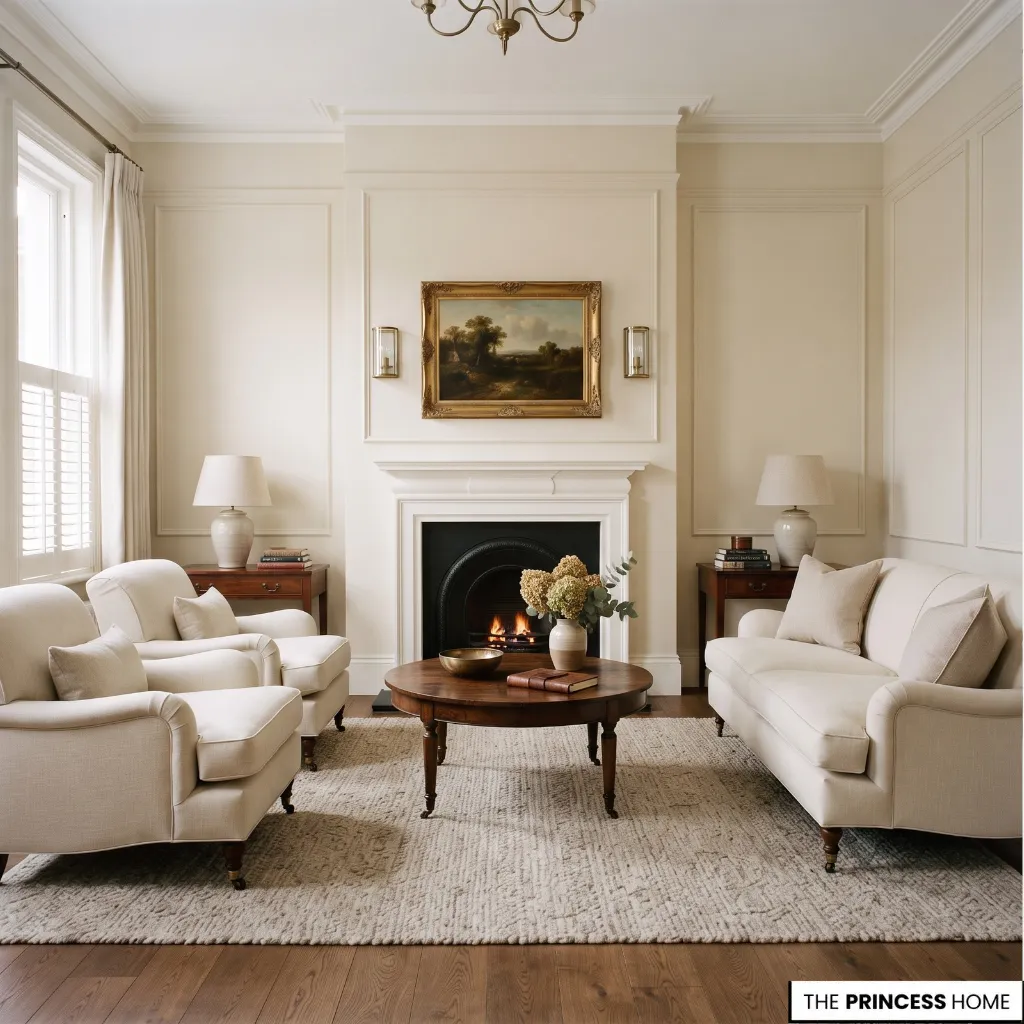
Classic interiors rely on the relationship between architecture, furniture, materials, and decoration. The most successful rooms use these elements selectively, allowing a few defining features to establish the character of the space. Symmetry and visual balance are common starting points.
A fireplace with matching lamps or a console with balanced accessories creates a clear arrangement. However, symmetry is not essential in every room. An asymmetrical arrangement can work equally well when the furniture and objects have comparable visual weight.
Architectural details provide another important foundation. Crown molding, wall paneling, decorative trim, framed doorways, and fireplaces can reinforce the style.
Their scale and complexity should suit the building. Elaborate molding may complement a room with high ceilings, while simple trim is often more appropriate for a contemporary apartment.
Furniture silhouettes help establish the classic character. Upholstered armchairs, tailored sofas, wooden cabinets, and tables with curved or turned legs are recognizable examples. Their forms can be traditional without requiring every piece to match.
Material quality also matters. Wood, stone, natural textiles, ceramic, and metal offer different textures and finishes that can work together. Repeating a few compatible materials across furniture, lighting, and accessories helps connect the room.
Start with what your home already offers. An existing fireplace, a well-made wooden cabinet, or a distinctive doorway may provide enough character to guide the rest of the design. Add new details only when they contribute to the overall composition.
For more ideas: Neo-Classical Design How to Create Timeless Interiors
Choose Classic Colors
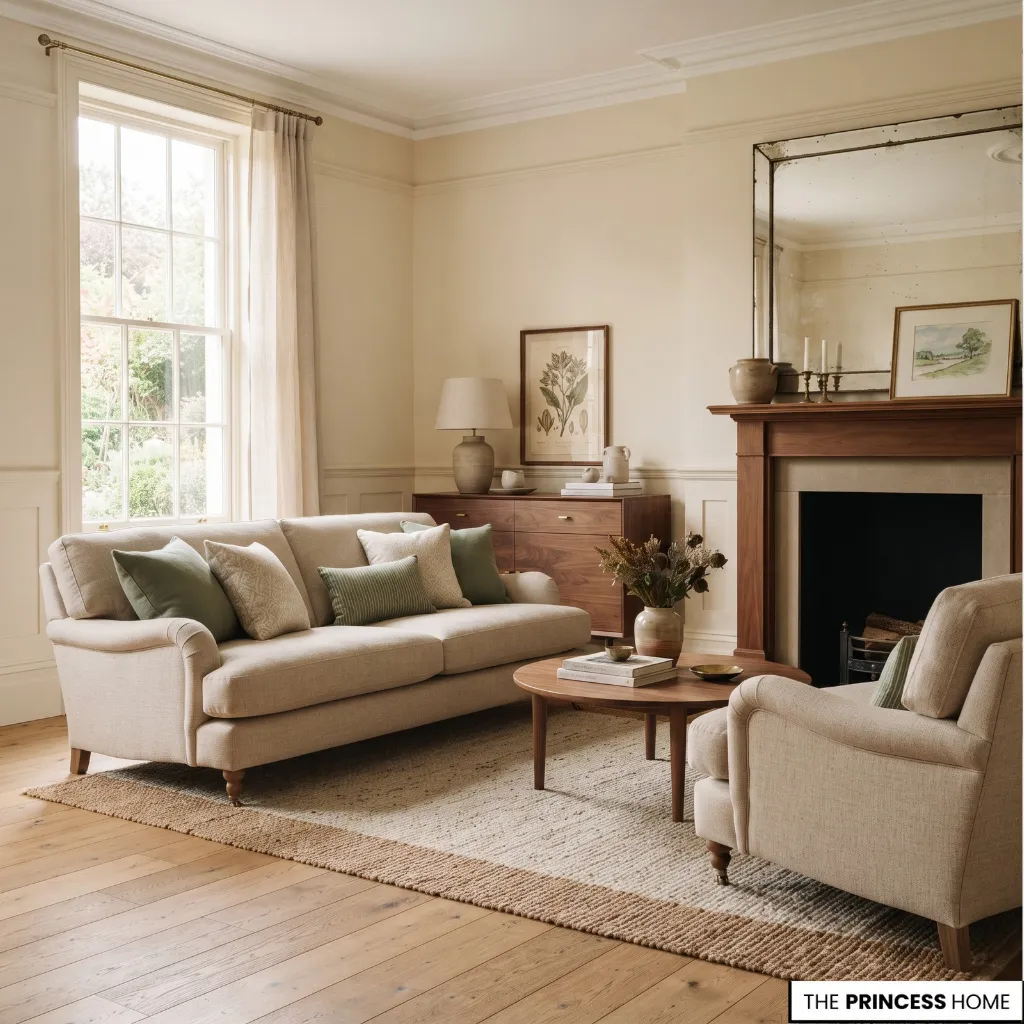
Classic color schemes often use warm neutrals, natural wood tones, and carefully chosen accent colors. Cream, ivory, beige, taupe, muted green, navy, and burgundy are useful options, but no single palette defines the style.
Begin with the largest surfaces. Wall color, flooring, and major upholstery establish the foundation for the room. Choose colors that work together under the available natural and artificial light, then introduce smaller accents through cushions, curtains, artwork, and accessories.
Warm neutrals provide a flexible starting point. Cream walls can complement walnut furniture and linen upholstery, while beige and taupe can connect different wood finishes. If the room needs stronger contrast, navy or muted green can provide a deeper accent without requiring every surface to become colorful.
Consider how the colors relate to existing materials. A reddish wood floor may influence which whites and beiges work best, while a cool stone surface may call for a different balance. Test paint samples in the actual room because daylight, window direction, and evening lighting can change how a color appears.
For a smaller or darker room, lighter wall colors may help reflect available light. This does not mean that every small room must be pale. A deeper color can work on selected walls or in a well-lit space when the surrounding finishes and lighting support it.
The goal is a coordinated palette rather than a fixed number of colors. Repeat selected tones in different parts of the room so that the furniture, textiles, and architectural details feel connected.
For more ideas: Black and White Modern Home Decor Timeless Design Ideas
Select Classic Furniture
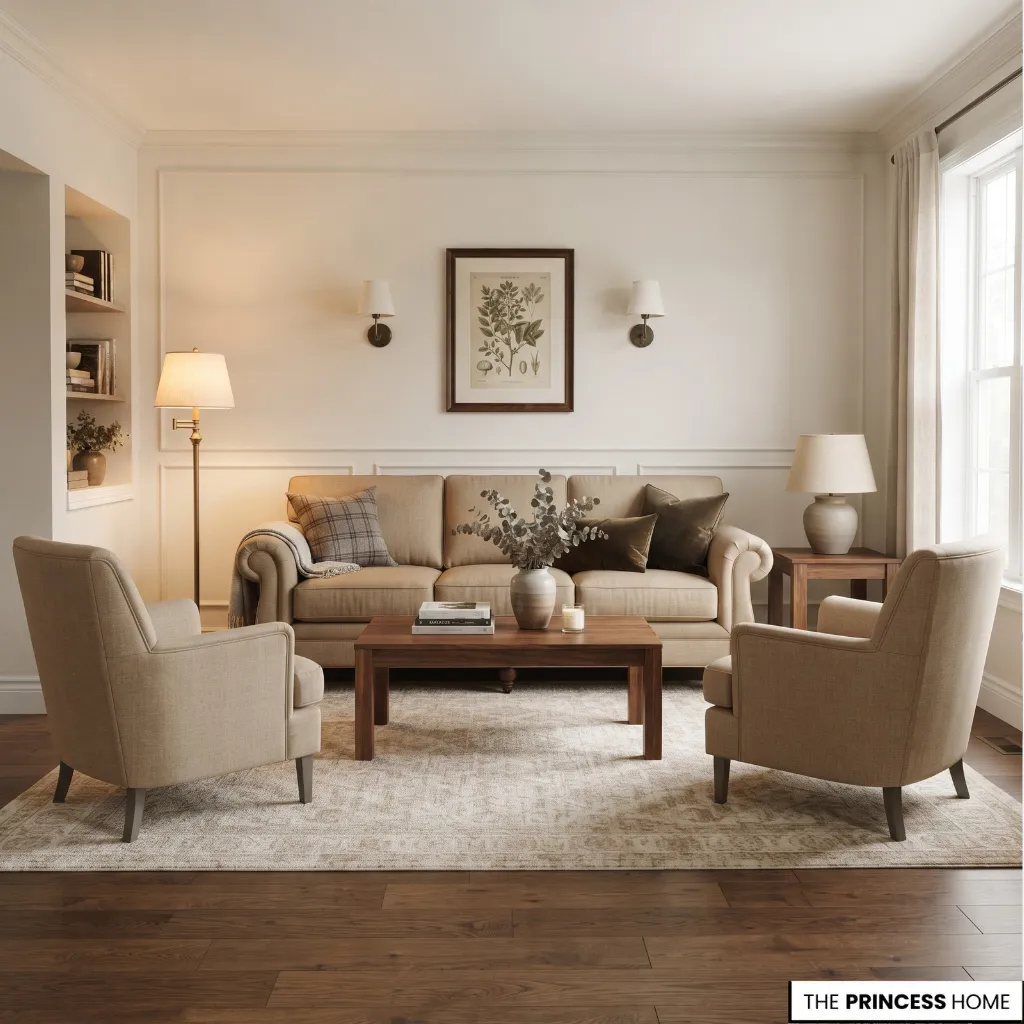
Furniture establishes much of a classic room’s structure. The right pieces combine suitable proportions, comfortable construction, and recognizable forms without overwhelming the space.
Start by identifying the room’s main function. A living room needs comfortable seating and practical circulation, while a dining room requires a table and chairs that accommodate everyday use. Measure the room before selecting furniture, taking doorways, windows, and walking routes into account.
Traditional furniture often features curved legs, shaped arms, carved details, or substantial wooden frames. Tailored sofas, upholstered armchairs, and well-proportioned wood tables are also suitable choices. You can combine these forms with simpler contemporary pieces when their scale, finishes, and lines work together.
Avoid buying a complete matching furniture suite simply because the pieces belong to the same collection. A room can feel more considered when different pieces share compatible proportions and materials without repeating the same design everywhere. Placement is just as important as selection.
Arrange the main seating around a fireplace, a view, or another natural focal point. Keep clear routes between furniture and ensure that tables are easy to reach from the seats they serve. The arrangement should support conversation and daily activities rather than merely resemble a showroom display.
Rugs can help define a seating area and connect its furniture. Choose a size that relates to the arrangement rather than selecting one solely by color or pattern.
In many living rooms, placing the front legs of the main seating on the rug helps establish a unified group, although the best placement depends on the room’s dimensions. A limited budget does not prevent a convincing result.
Keep a well-made existing cabinet, update a worn chair with suitable upholstery, or invest in one important furniture piece before replacing everything else. A simpler item with compatible proportions is often a better choice than an inexpensive piece whose shape conflicts with the rest of the room.
When putting a room together, begin with the largest functional pieces and build the arrangement around them. In a living room, establish the sofa and main seating positions first, then choose a rug that connects them and tables that remain easy to reach.
Next, consider the colors and materials already present, followed by lighting and textiles that improve comfort and balance. Decorative objects come later, once the room’s practical needs are met. This sequence helps you see what the space actually needs before spending money on details that may not fit.
For more ideas: Grand Millennials Style A Return to Warm Traditional Interiors
Layer Timeless Materials
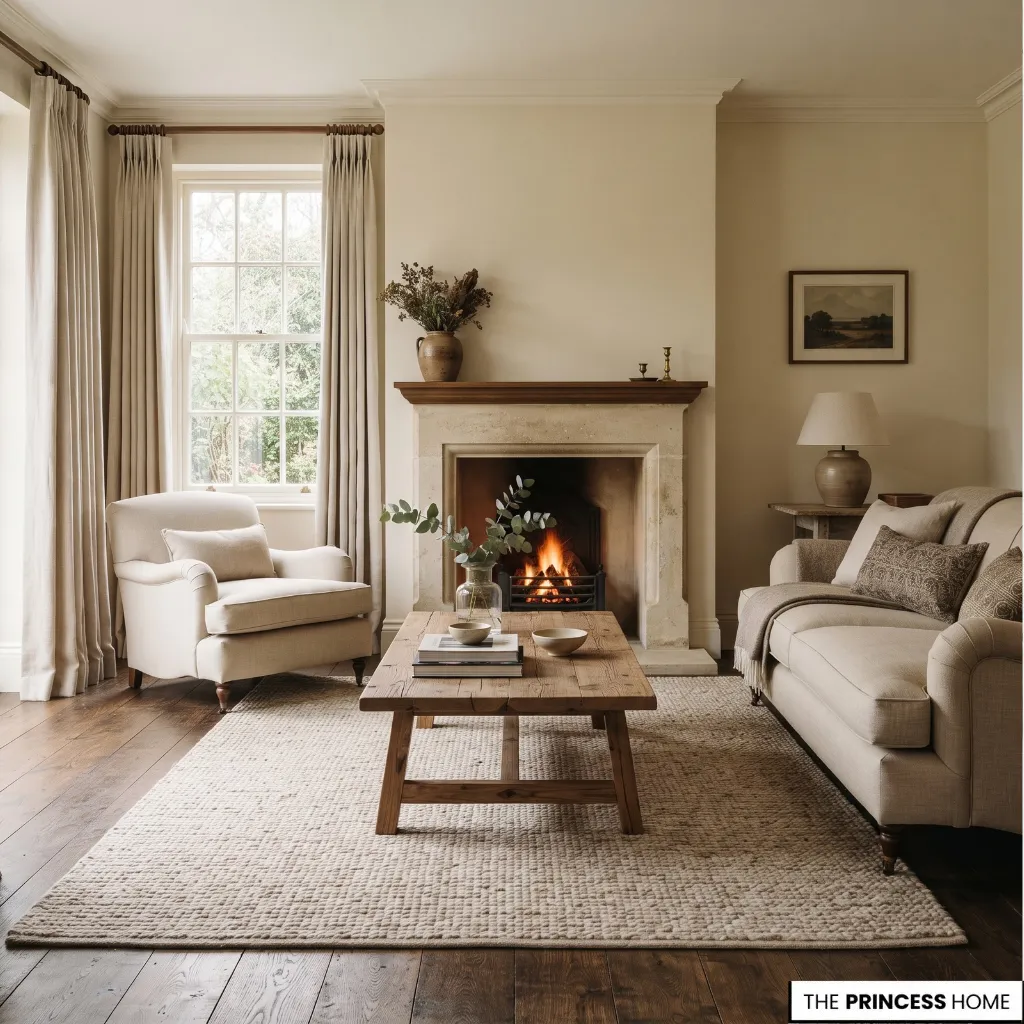
Classic interiors benefit from a thoughtful combination of materials rather than an accumulation of expensive finishes. Wood, stone, wool, linen, cotton, velvet, ceramic, glass, and metal each contribute different textures and practical qualities.
Begin with one or two materials that already dominate the room. Flooring, a dining table, a fireplace surround, or a substantial cabinet can establish the direction for the remaining finishes. Select complementary materials that support these existing features instead of introducing a different finish for every object.
Wood is particularly useful in classic interiors because it appears in furniture, flooring, cabinetry, and smaller accessories. Different wood tones can coexist, but they should have a deliberate relationship. Compare their undertones, grain, and finish before adding another major wooden piece.
Textiles provide contrast to harder surfaces. Linen and cotton offer relatively simple textures, while velvet introduces a more pronounced pile and a different visual character. Wool rugs can provide a durable surface underfoot, while stone and ceramic can introduce variation through color, grain, and finish.
The balance between materials matters more than the number used. A wooden table, upholstered chairs, and a textured rug may provide sufficient variety without additional decorative finishes. Repeating a metal finish in the lighting and a few accessories can also help connect separate elements.
When natural materials are too expensive or unsuitable, consider alternatives according to their actual performance. A suitable wood veneer can provide a wood surface without the cost of solid timber, while porcelain with a stone appearance may work where natural stone is impractical.
Check durability, maintenance, and finish quality rather than assuming that a visual substitute performs exactly like the original. The objective is to select materials that work together visually and meet the demands of everyday use.
For more ideas: Farmhouse Style: A Complete Guide to Creating Warm &Inviting
Balance Patterns & Textiles
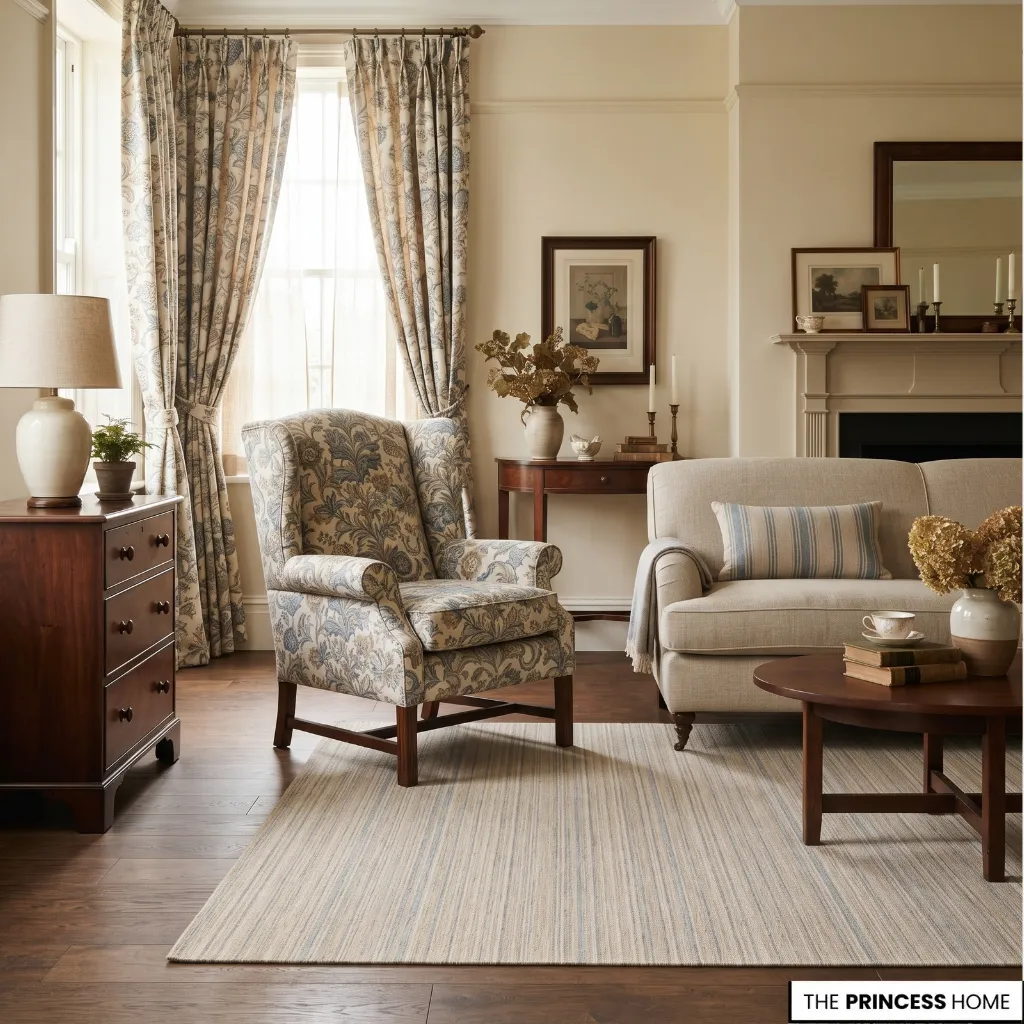
Patterns and textiles give classic interiors much of their recognizable character. Floral prints, stripes, checks, and damask-inspired designs can introduce traditional references, while plain upholstery and textured fabrics provide visual relief.
Start by choosing the pattern that will have the greatest influence on the room. This might be a rug, curtains, or the upholstery on a major chair. Use its colors to guide the remaining textiles, but avoid repeating the same pattern across every surface.
Scale is an important consideration. A large floral pattern may work well on curtains or an accent chair, while a narrow stripe or small-scale print can support it elsewhere. Two patterns do not need to match, but they should have a clear relationship through color, scale, or style.
Plain fabrics also play an essential role. If the rug and curtains both contain strong patterns, simpler upholstery can prevent the room from becoming visually busy. Conversely, a room dominated by solid colors may benefit from one patterned textile that introduces contrast.
Curtains should relate to the windows, wall color, and furniture. Consider their length, fullness, fabric weight, and how they operate. A heavy, ornate treatment may suit a formal room, while simpler panels can preserve the classic character of a contemporary interior without making the windows feel crowded.
Cushions, throws, and table linens should serve the room rather than fill every available surface. If the patterns compete, remove or simplify one element before purchasing replacements. If the room feels too plain, introduce a textile with a different texture or a carefully selected print.
For more ideas: Moroccan Decor Transform Your Space with Exotic Elegance
Layer Classic Lighting
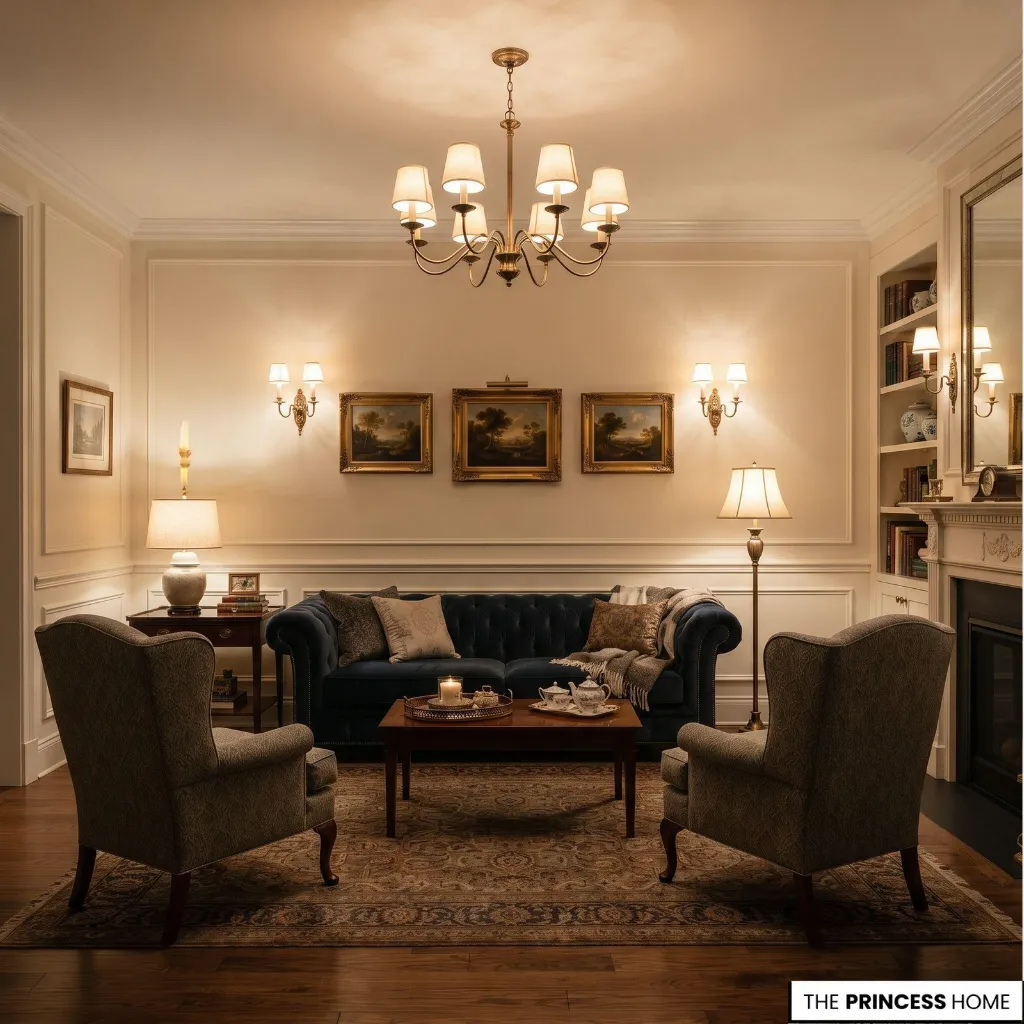
Classic interiors require lighting that supports everyday activities as well as the room’s overall composition. A decorative chandelier alone cannot provide every type of light a room needs.
Begin with the activities that take place in each area. General lighting illuminates the room, task lighting supports specific activities such as reading or preparing food, and accent lighting draws attention to selected architectural features or artwork.
Choose fixtures that suit the scale of the room and the furniture beneath them. A pendant over a dining table should relate to the table’s dimensions and provide useful light without obstructing the view across it. In a living room, table and floor lamps can support reading and conversation without requiring the overhead light to remain on.
Wall sconces can complement architectural details or provide light beside a mirror, artwork, or fireplace. Their position should respond to the feature they illuminate and the needs of the room. Matching pairs can reinforce symmetry, but balanced placement is more important than adding a fixture simply to create a pair.
Metal finishes also deserve consideration. Brass, bronze, black, and other finishes can work in classic interiors, provided they relate to the room’s existing materials and furniture. You do not need to use the same metal everywhere, but unrelated finishes should not compete for attention.
Light color affects how finishes appear. Warm-white lighting around 2700K is a useful starting point for many residential living areas, although the appropriate color temperature depends on the activity, existing daylight, and desired appearance. Kitchens and work areas may require different lighting choices.
When a traditional chandelier is unsuitable, a simpler contemporary fixture can still complement classic furniture. Focus on scale, light distribution, finish, and overall compatibility rather than choosing a fixture solely because it carries a traditional label.
Style Every Room
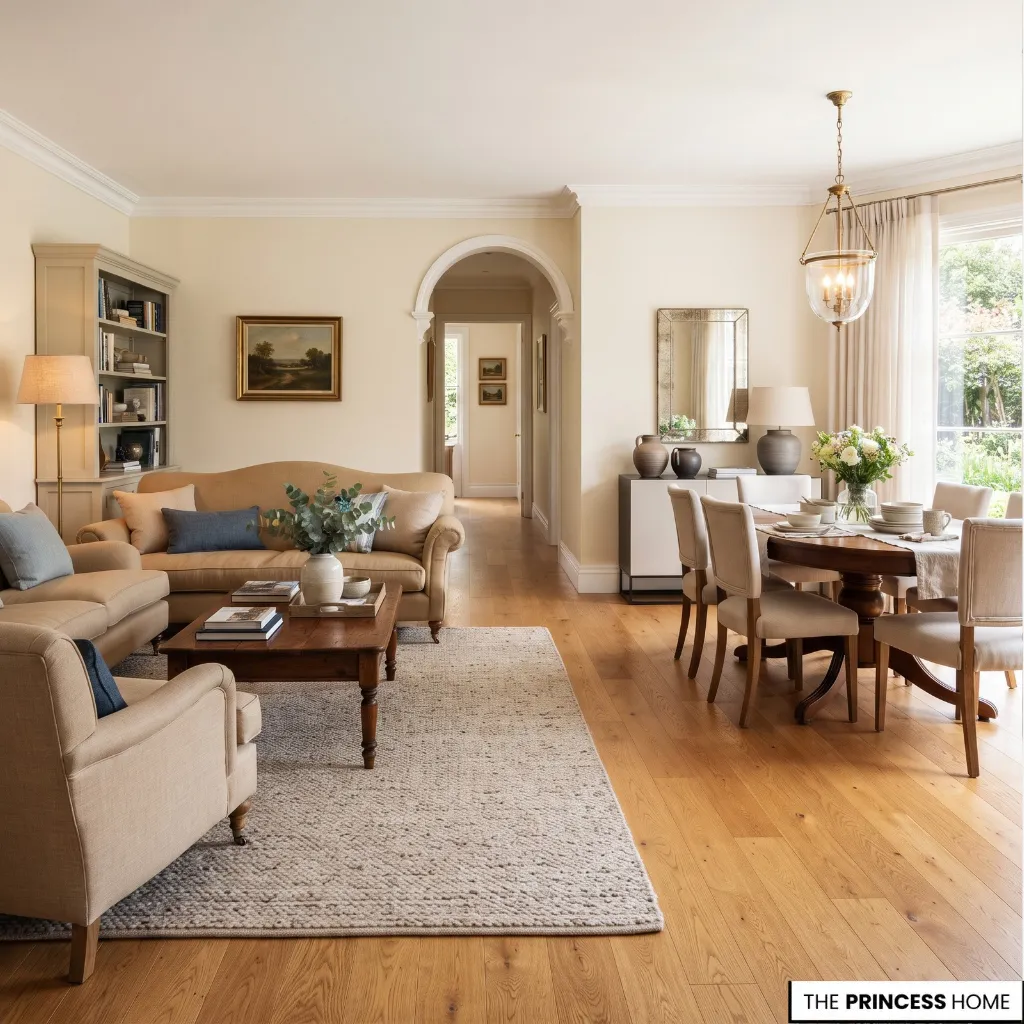
Classic design principles remain useful across different rooms, but their application should reflect the purpose of each space. The same furniture arrangement or decorative approach will not work equally well in a bedroom, dining room, and home office.
In the living room, establish a comfortable seating arrangement around a fireplace, a view, or another focal point. Choose a sofa and armchairs that suit the available space, then connect them with a rug, practical tables, and layered lighting.
Traditional furniture can provide character without requiring every piece to be ornate. In the bedroom, begin with the bed and its position. A substantial headboard, coordinated bedside tables, and appropriately placed lamps can establish order.
Layer bedding through a combination of complementary fabrics rather than relying on excessive cushions or elaborate bed coverings. Leave enough space for comfortable movement and access to storage. In the dining room, the table is usually the principal element.
Choose its size according to the number of people who need to use it and the space required to move around the chairs. A pendant can define the dining area, while a sideboard provides practical storage and a place for a restrained display.
In the study or home office, prioritize a suitable desk, supportive seating, and task lighting. A wood desk or traditional cabinet can establish a classic character, while a simpler chair or contemporary lamp can make the space more practical for modern work.
Storage should remain accessible, and decorative objects should not interfere with the working surface. Across all four rooms, repeat selected colors, materials, or furniture details to create continuity.
This does not require every room to look identical. A shared design approach is enough to connect different spaces while allowing each one to serve its own purpose.
For more ideas: English Cottage Decor Ideas: Cozy and Charming Home Inspiration
Adapt Classic Style
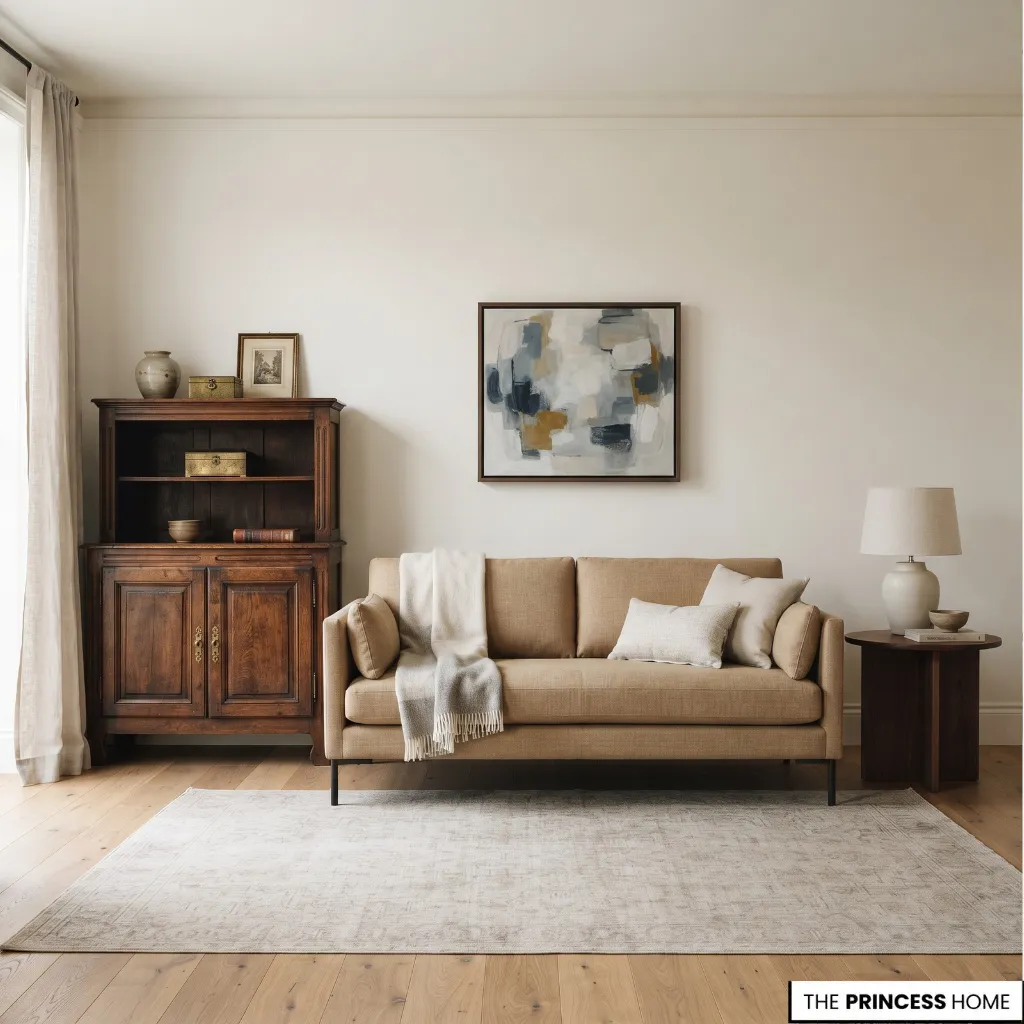
Classic style can work in contemporary homes, apartments, and projects with limited budgets. The important task is to preserve the principles that define the style while adapting the details to the actual space. In smaller spaces, begin with accurate measurements and a clear furniture plan.
Choose pieces that provide the necessary function without blocking circulation. A compact upholstered sofa, a well-proportioned wood table, and a few carefully selected accessories may communicate the style more effectively than several oversized traditional pieces.
Use wall color, lighting, and reflective surfaces according to the room’s conditions. Lighter finishes may help a dark space, but contrast and deeper colors can also work when their placement is deliberate. Avoid adding architectural details that make the room feel crowded or disproportionate.
In contemporary architecture, existing windows, clean wall surfaces, and simple layouts can provide a useful foundation. Introduce classic character through furniture silhouettes, a wood cabinet, traditional artwork, or a suitable rug. If the home lacks moldings or a fireplace, these features are not mandatory.
Furniture, materials, and balanced arrangements can establish the style without imitating an older building. On a limited budget, prioritize the pieces that have the greatest influence on function and composition. Begin with the furniture arrangement and any essential seating or dining pieces.
Consider the rug and lighting next, followed by curtains, cushions, and decorative objects according to what the room needs. Existing furniture may already provide much of the desired character. Refinish a suitable wooden piece, replace worn upholstery, or update a lamp before buying something new.
When shopping for secondhand furniture, assess its condition, proportions, and usefulness rather than choosing it simply because it appears old or traditional. Modern classic interiors can also provide a practical route to the style.
Simpler furniture, restrained decoration, and fewer patterns reduce the need to purchase many coordinated objects. The result can retain classic proportions and materials without requiring a formal historical appearance. The guiding principle is to preserve the design purpose of each choice.
A substitute should suit the room, perform its intended function, and remain compatible with the surrounding elements. Spending more is not automatically necessary; thoughtful selection and appropriate proportions matter more than the number of items purchased.
A classic interior can also feel personal when traditional pieces are balanced with contemporary furniture and objects that reflect the people who live there.
A carved wooden cabinet might sit comfortably beside a simple sofa, while family photographs, collected artwork, or a meaningful inherited piece can add character without disrupting the overall design.
The key is to give distinctive objects enough space to be appreciated and connect them through a considered palette, compatible materials, or balanced placement. This approach keeps the room from feeling like a showroom while allowing its classic foundation to remain clear.
For more ideas: Understanding Vintage Style in Interior Design: A Detailed Guide
Avoid Common Mistakes
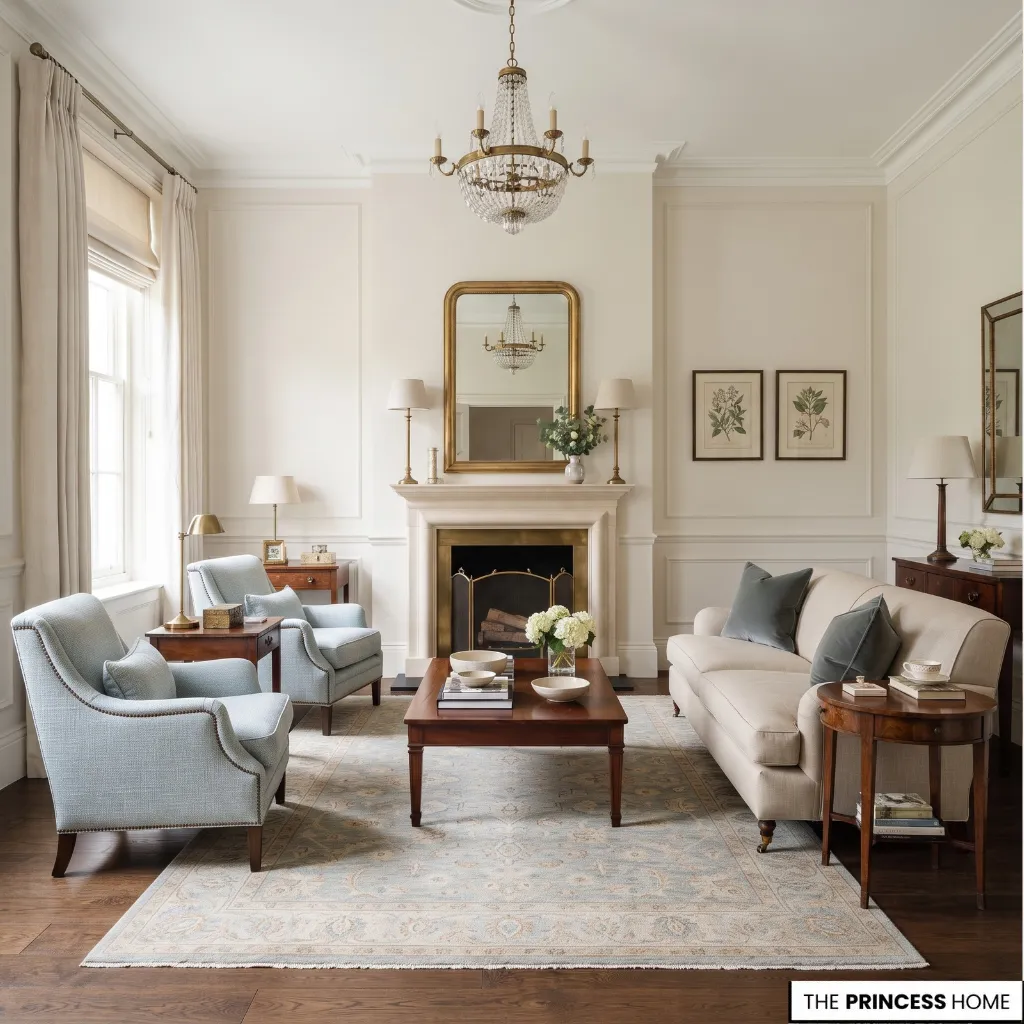
Classic interiors can lose their appeal when individual elements are selected without considering their relationship to the room. Correcting these problems often requires adjusting the arrangement rather than replacing the furniture. Forcing symmetry is one common mistake.
Matching furniture on both sides of a focal point can create order, but it may feel unnatural when the room’s architecture or circulation does not support it. Use balanced visual weight instead, combining different objects when they provide a comparable sense of proportion.
Choosing oversized furniture can restrict movement and make a room feel crowded. Measure the available space and consider the full dimensions of each piece, including how drawers, doors, and reclining mechanisms operate. If the arrangement feels cramped, remove or reposition a piece before adding more accessories.
Using too much ornament can make a classic interior feel dated or overly formal. Elaborate furniture, detailed wall treatments, patterned curtains, and decorative accessories may compete when used together. Select the most important features and simplify the supporting elements.
Mixing incompatible finishes can weaken the overall composition. Different wood tones and metal finishes can work together, but they need a clear relationship. Repeat selected finishes or introduce a connecting color or texture rather than adding unrelated materials throughout the room.
Overloading patterns creates a similar problem. If the rug, curtains, cushions, and upholstery all compete, simplify one or two of the strongest patterns. Retain enough texture and variation to prevent the room from becoming flat.
Relying on decorative lighting alone can leave important areas poorly illuminated. Review how the room is used, then add task or accent lighting where needed. A beautiful fixture should support the room’s function rather than replace it.
Finally, avoid prioritizing appearance over comfort. Seating should be usable, tables should be accessible, and circulation should remain clear. A classic interior works best when its visual order supports the way people actually live.
For more ideas: Boho Decorating Embracing the Bohemian Spirit A Guide
Conclusion
Classic style depends on considered choices rather than a fixed collection of traditional furniture and decorative objects. Proportion, balanced arrangements, compatible materials, and practical lighting provide a foundation that can adapt to different homes and budgets.
Begin with the architecture and furniture you already have. Identify what works, establish a coherent palette, and make changes according to the needs of each room. When every addition has a clear purpose, classic design can remain relevant without becoming formal, crowded, or tied to a single period.