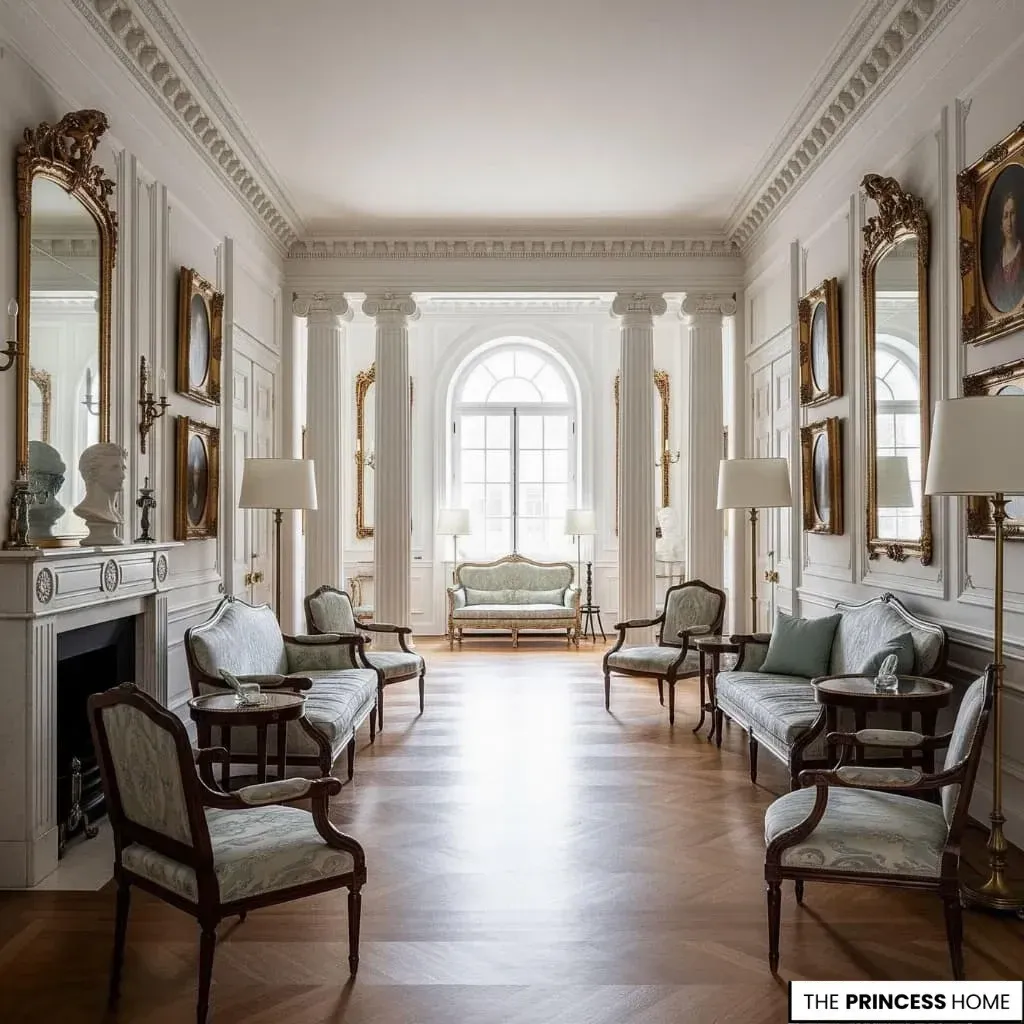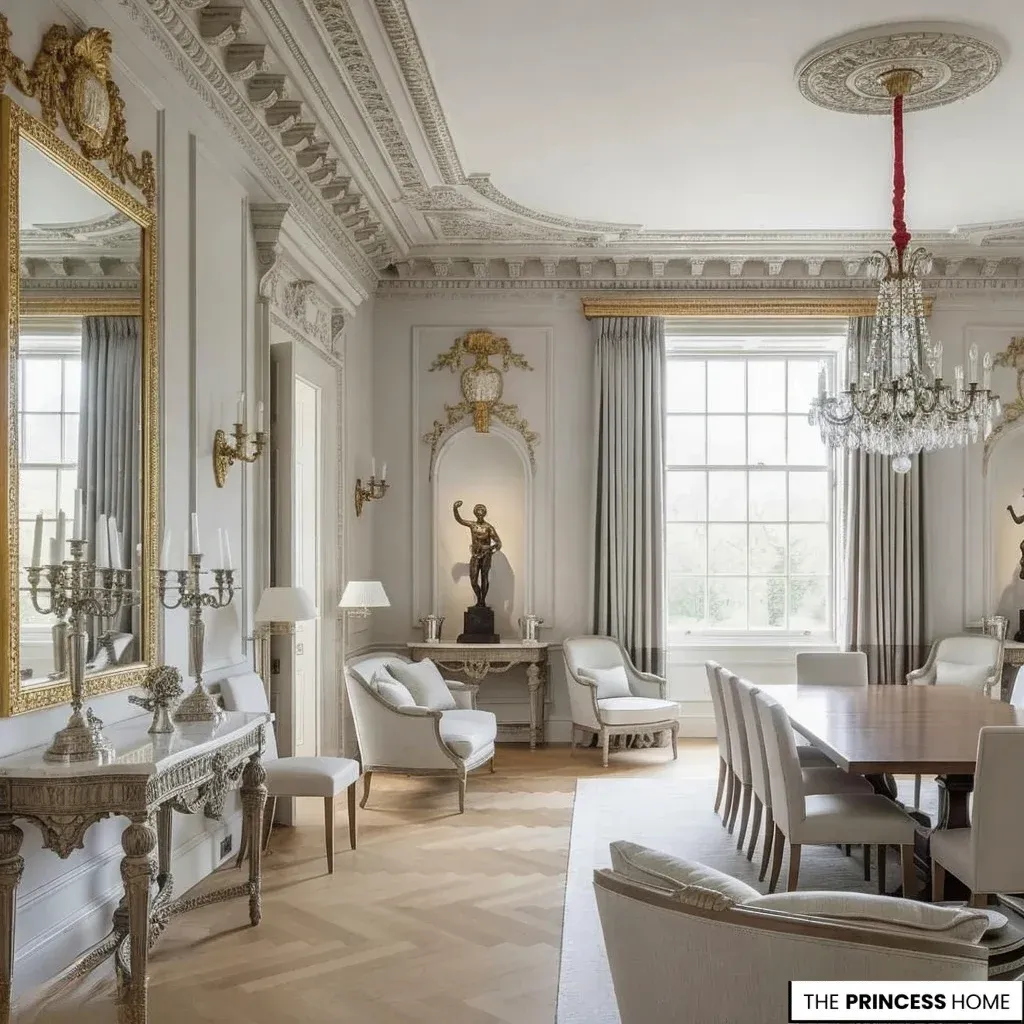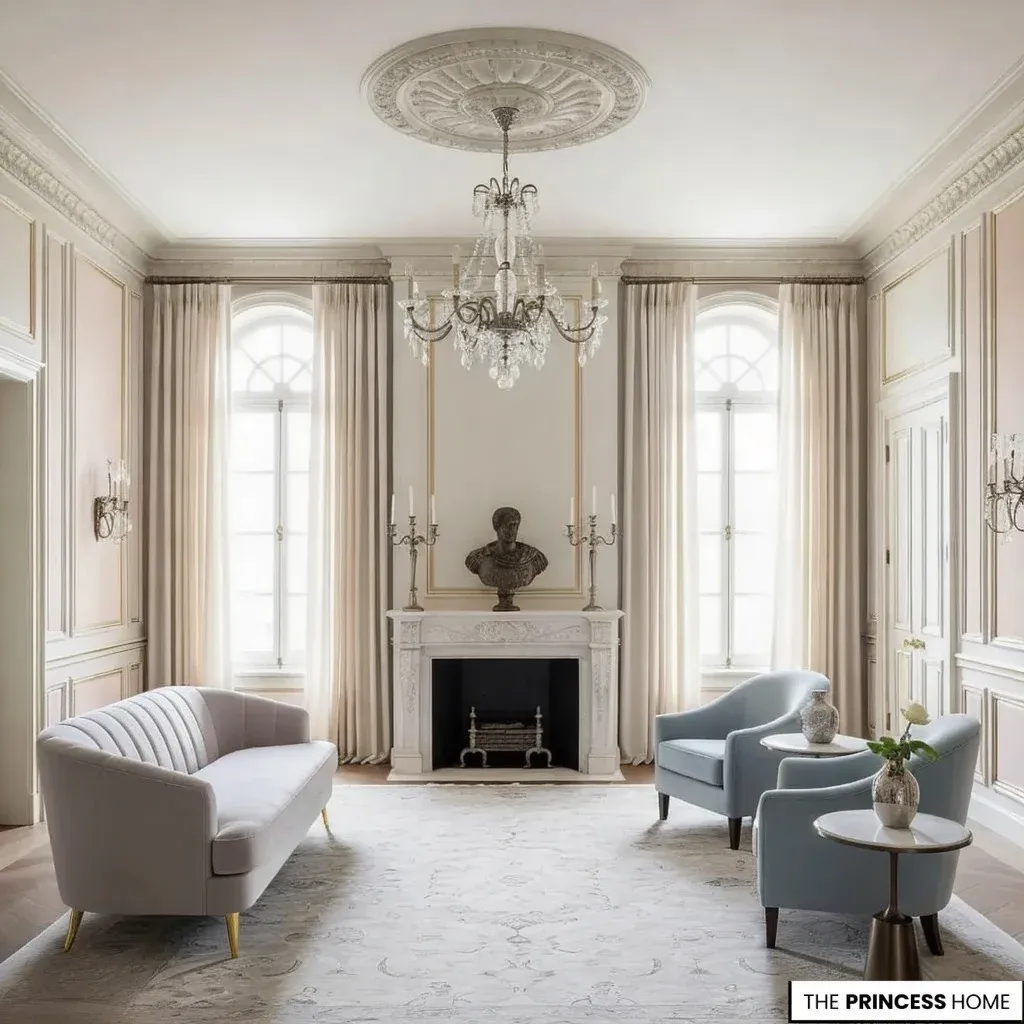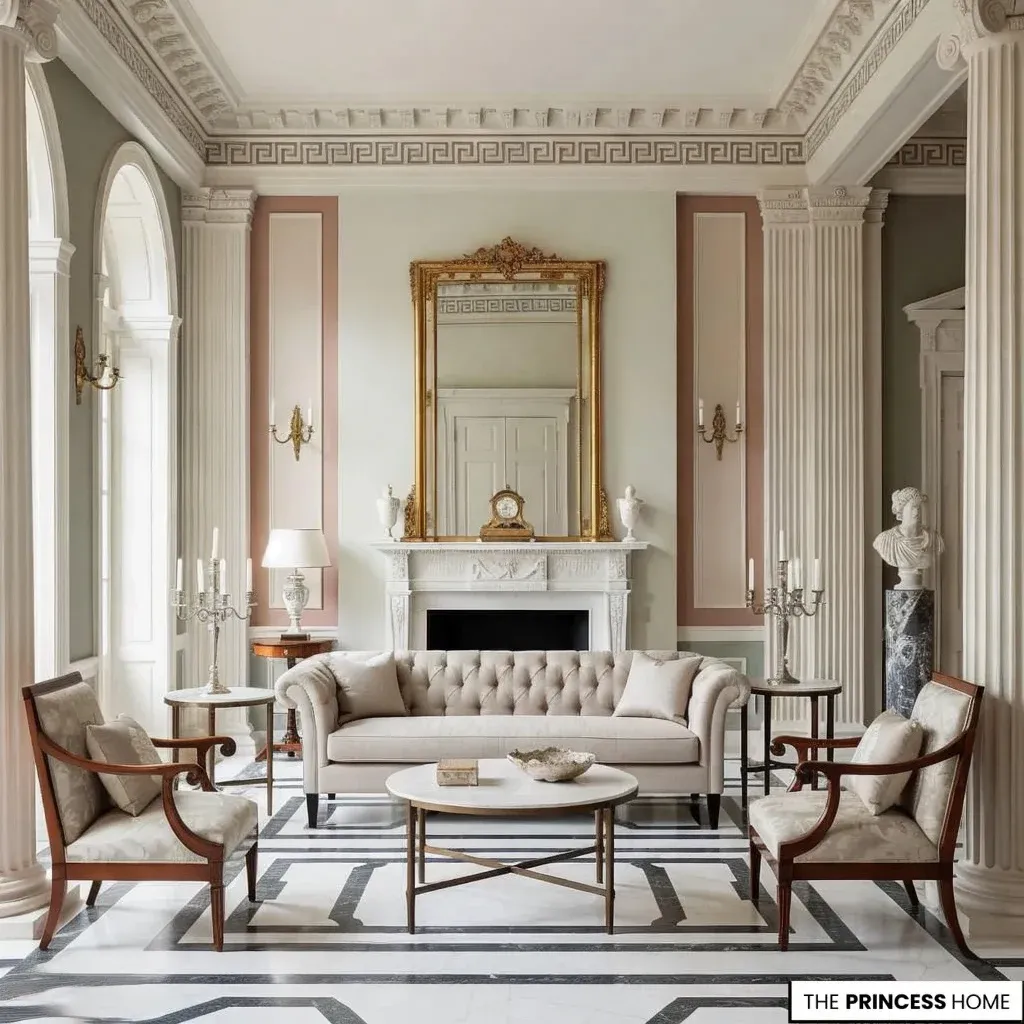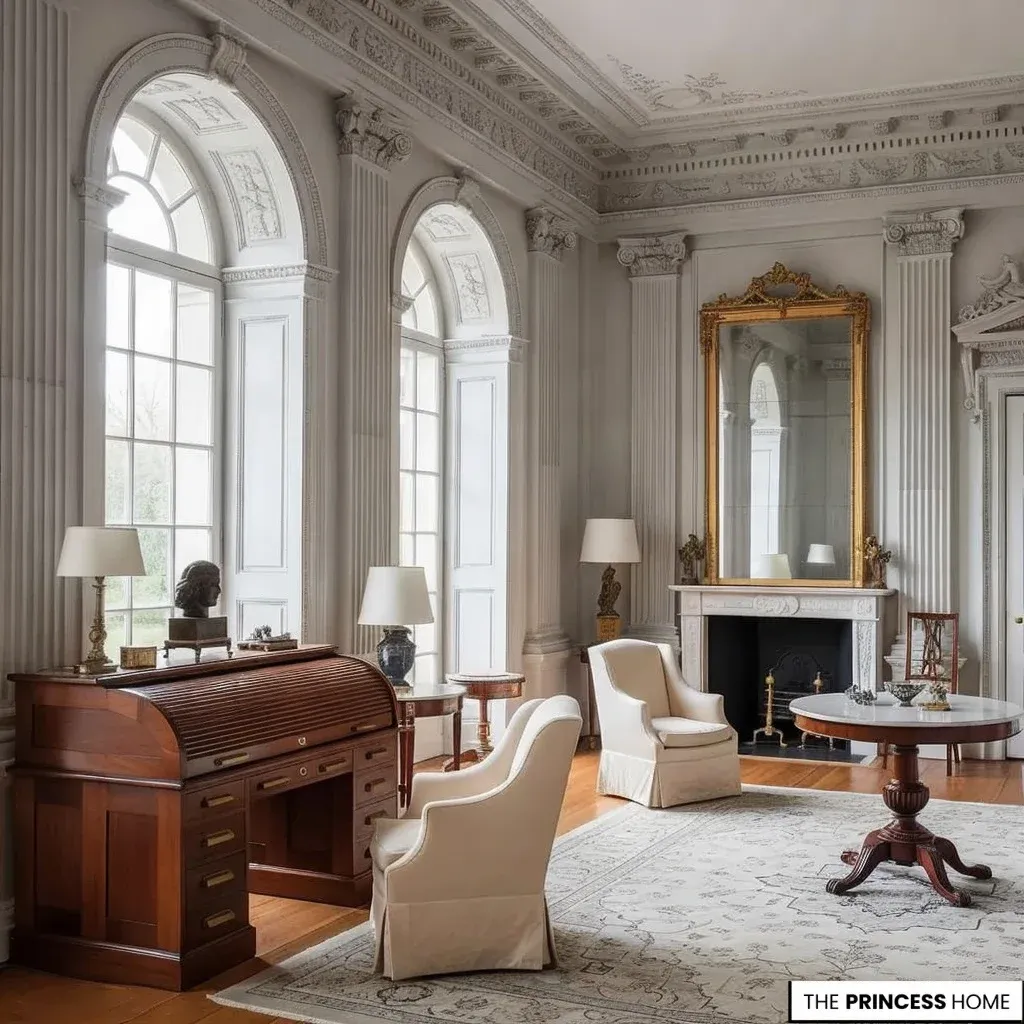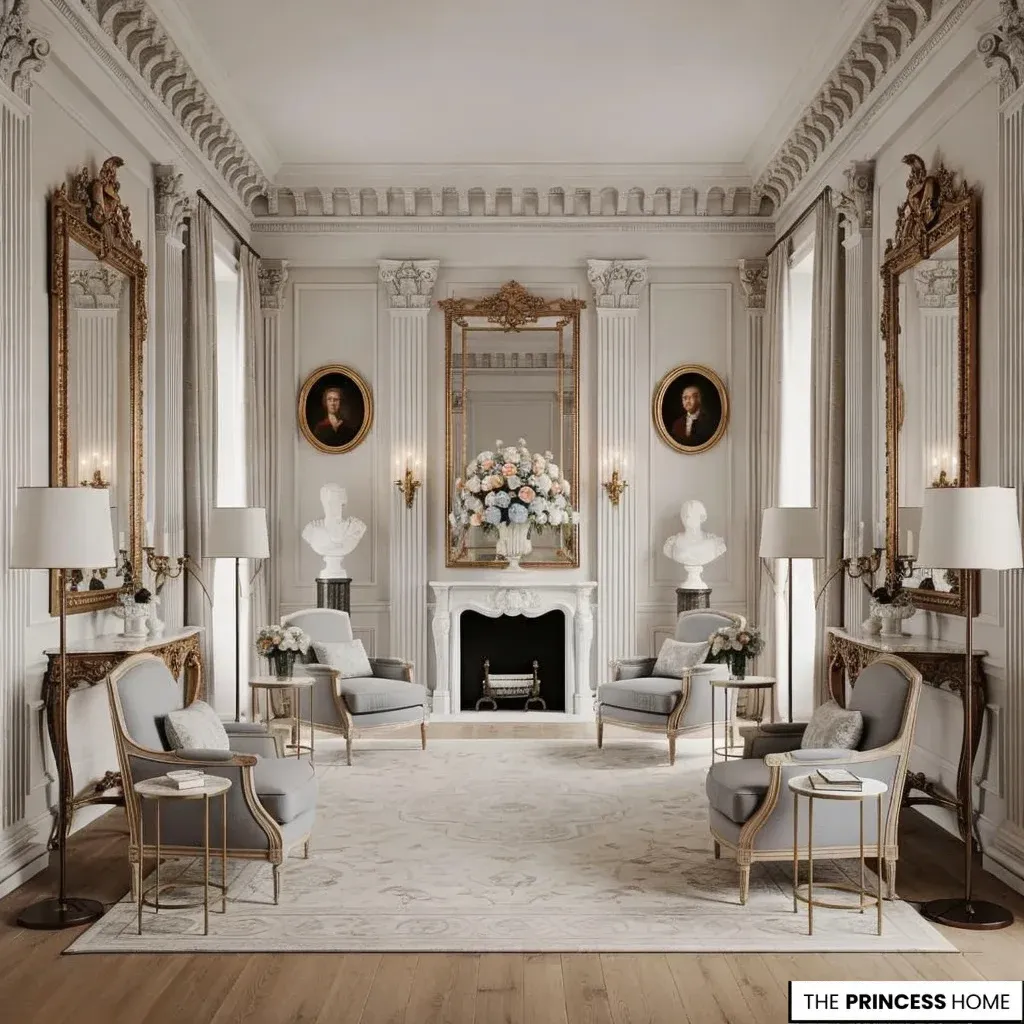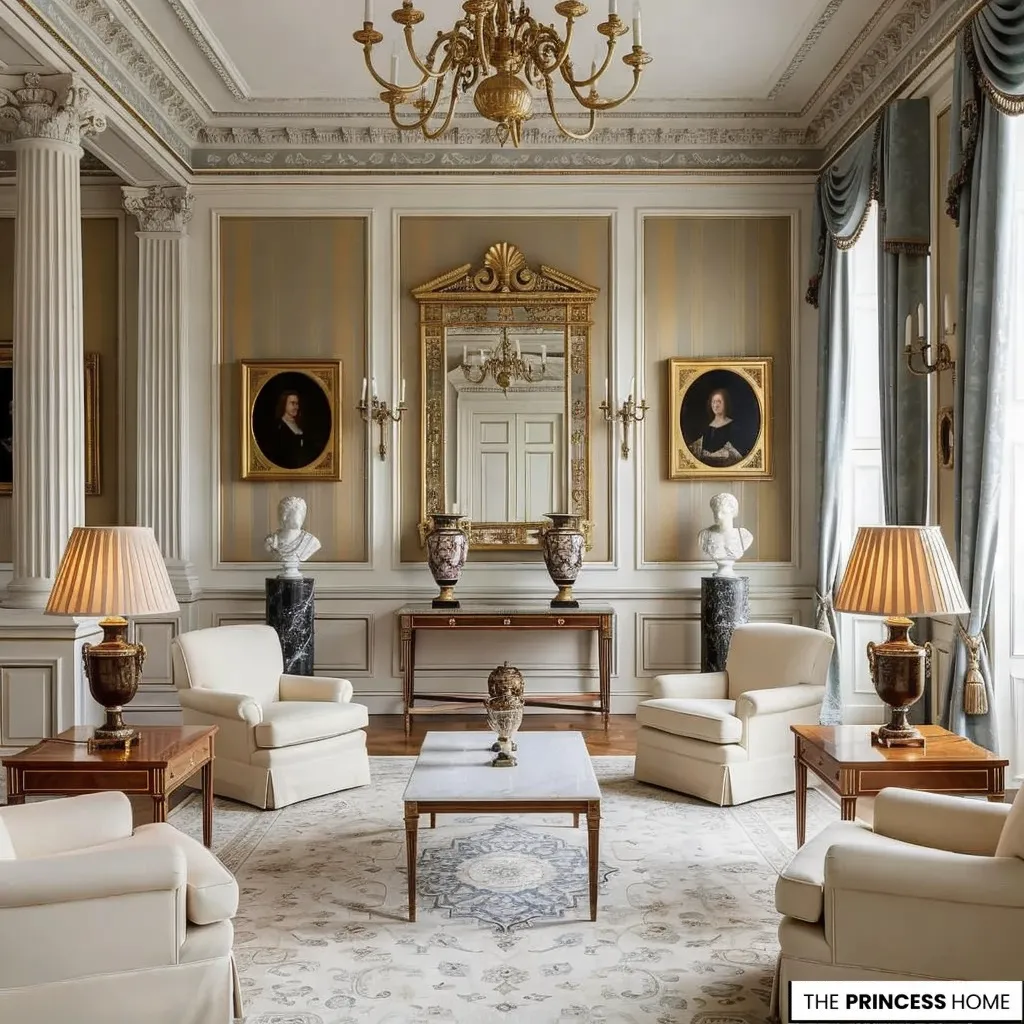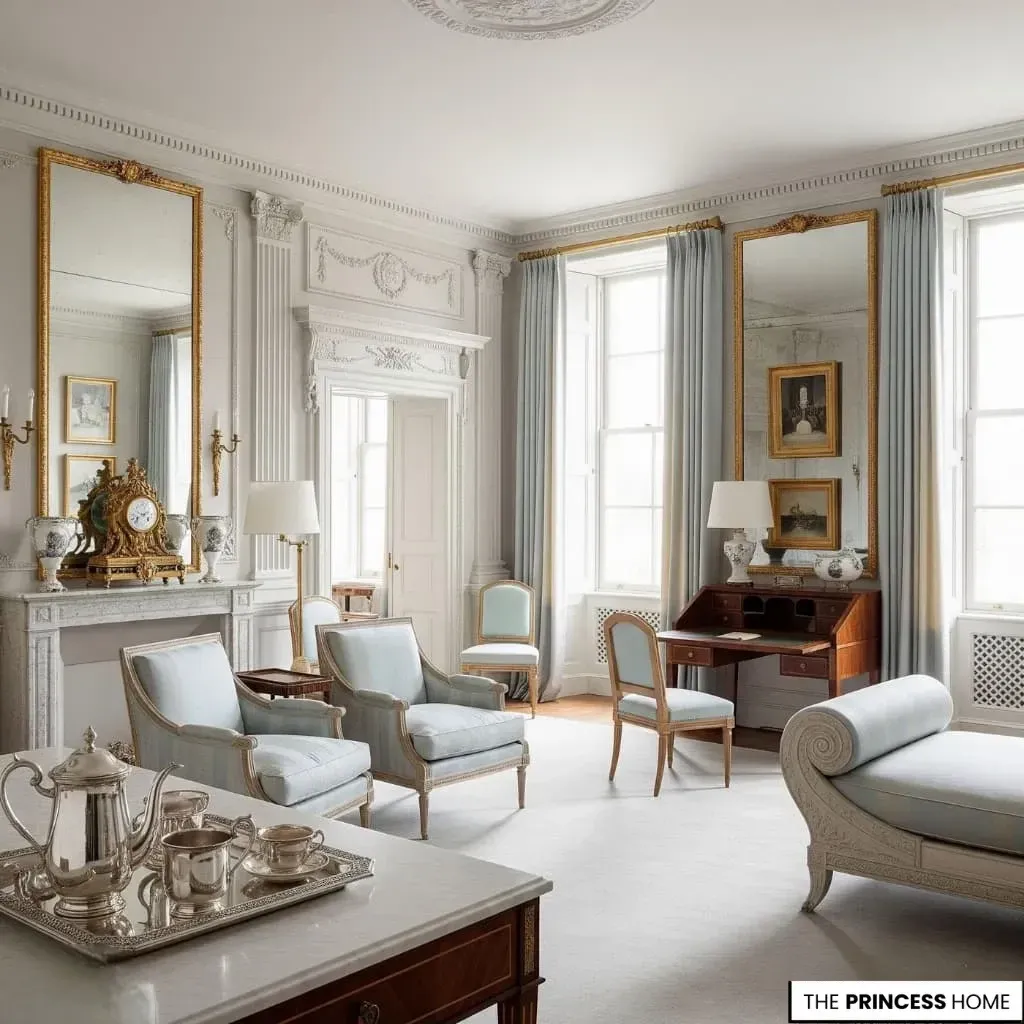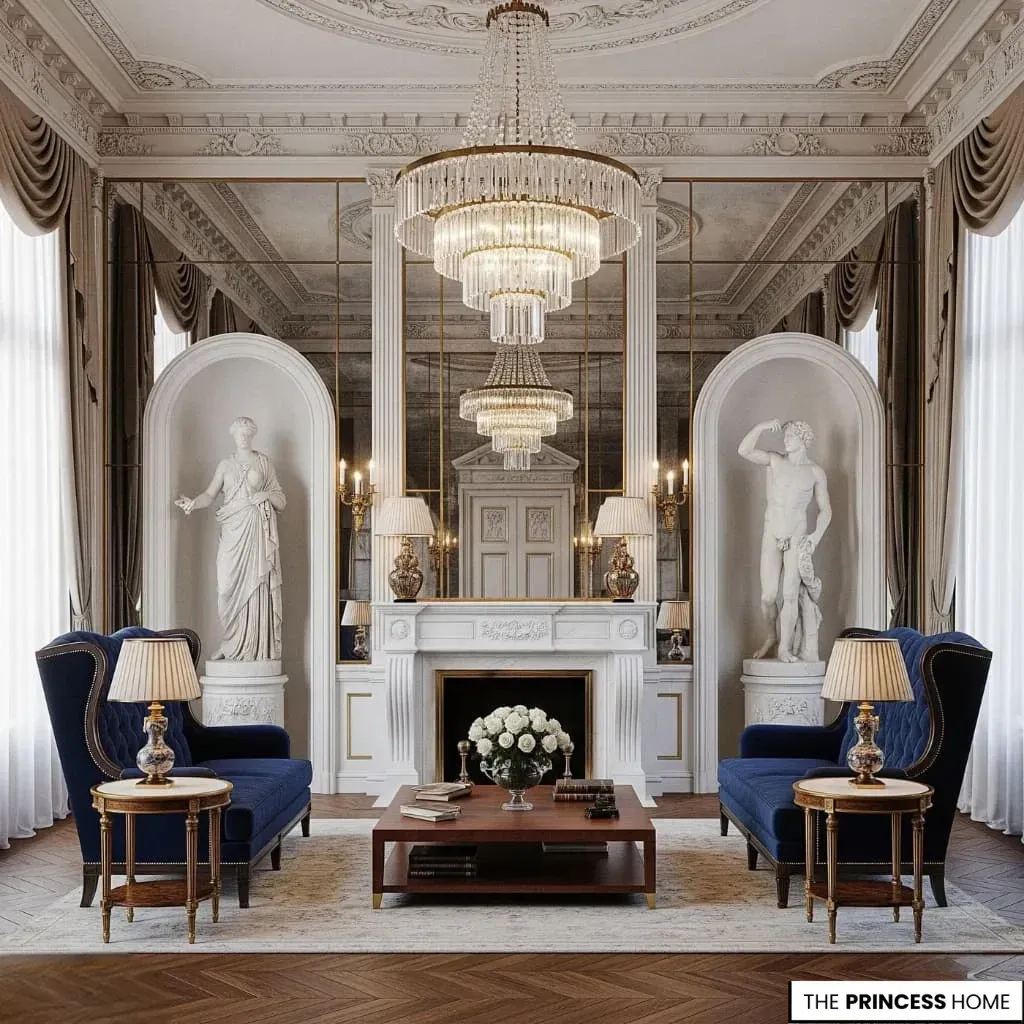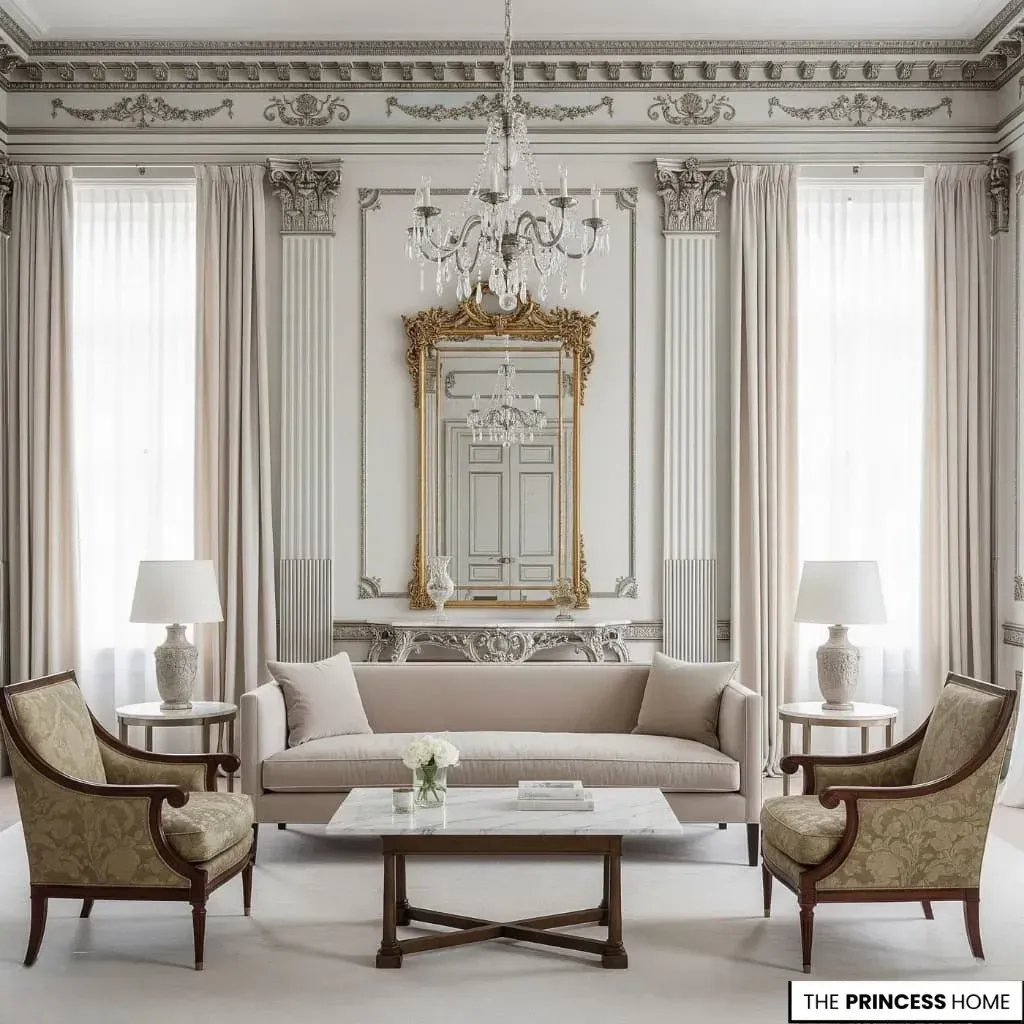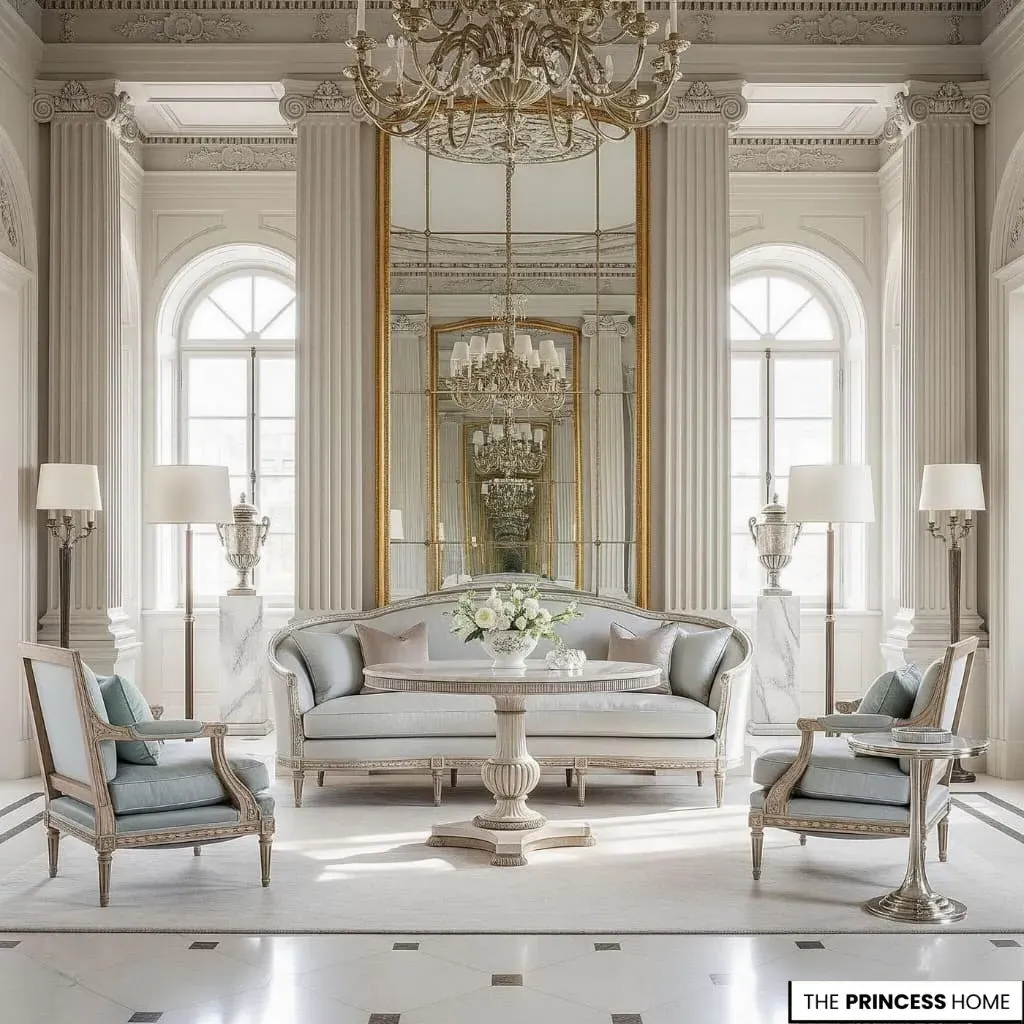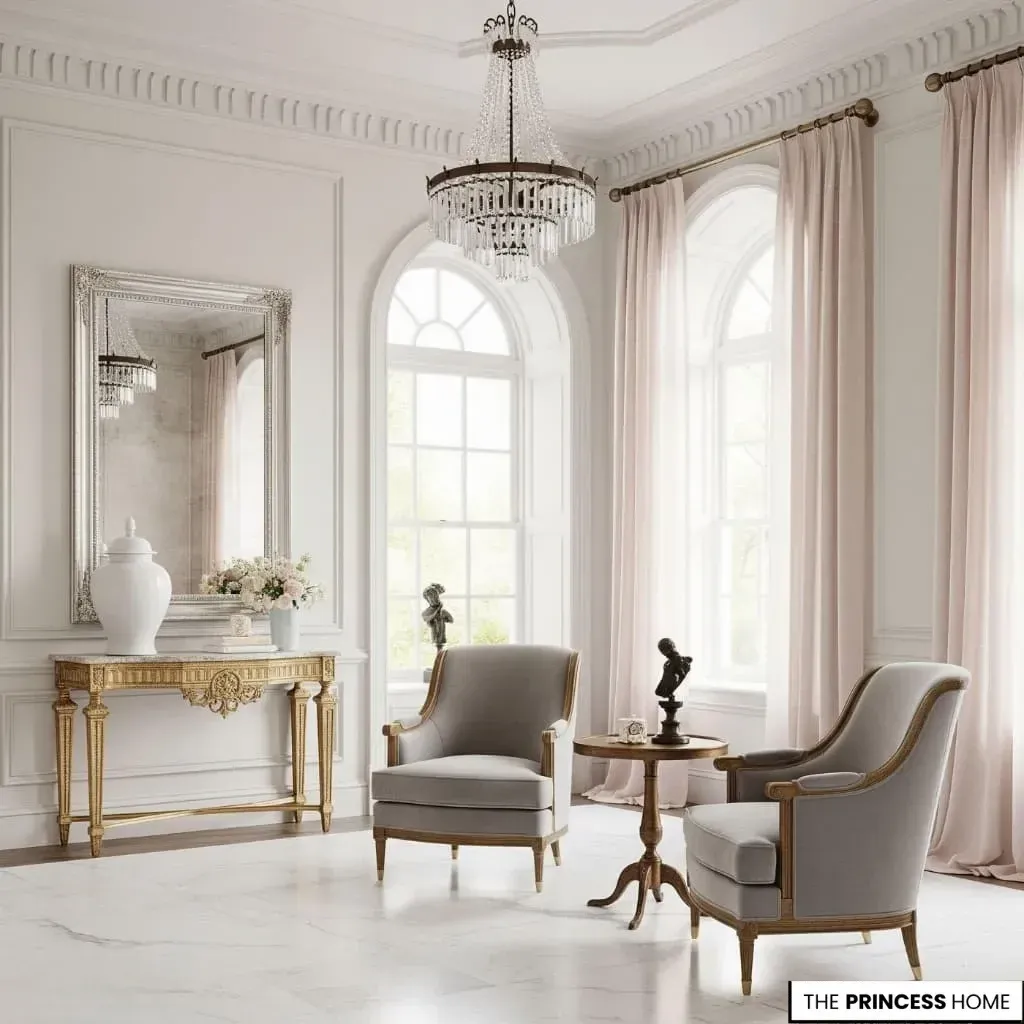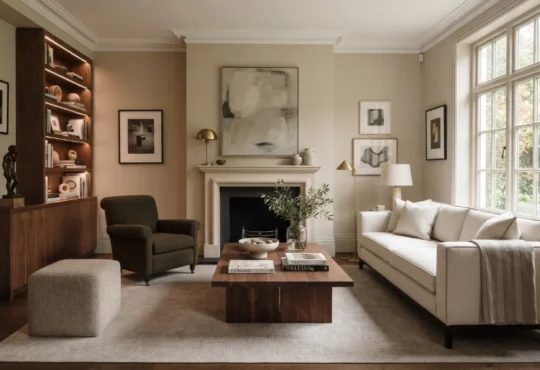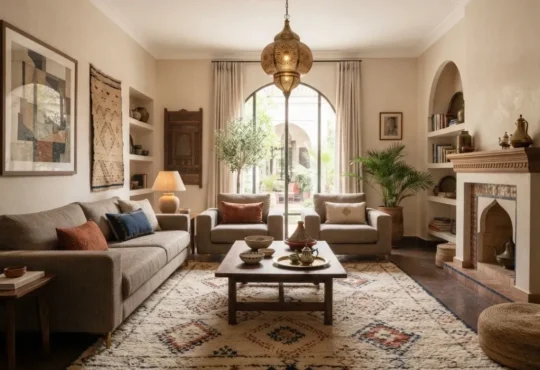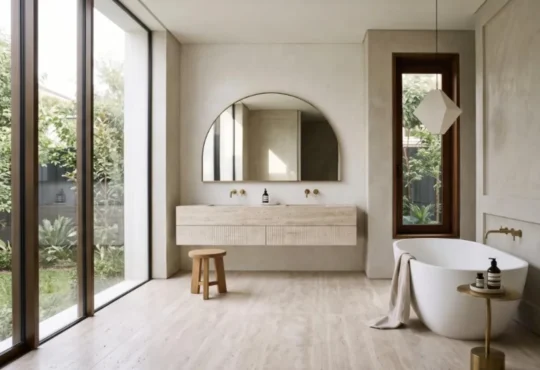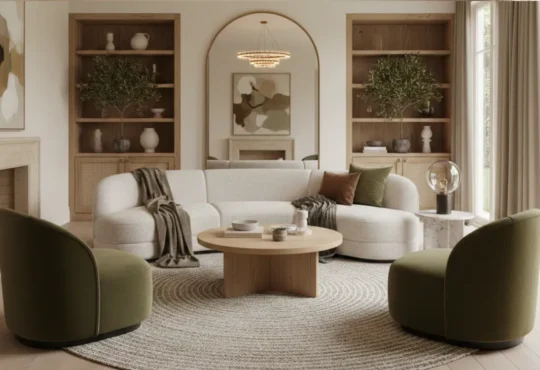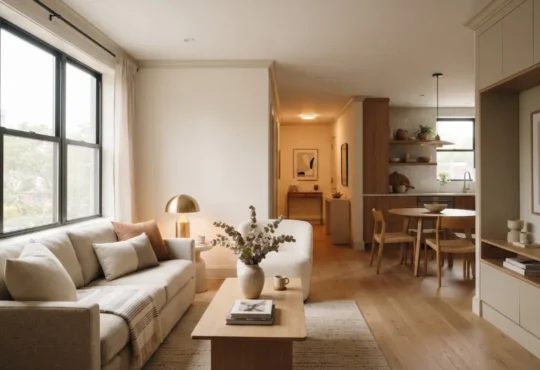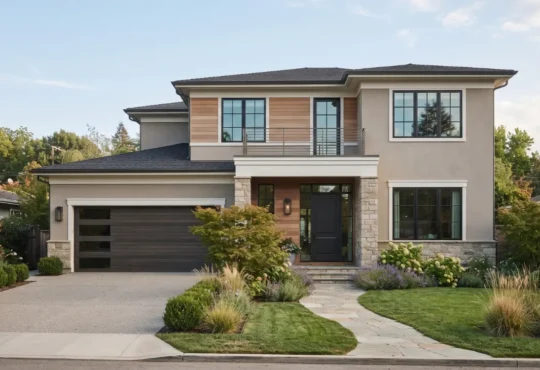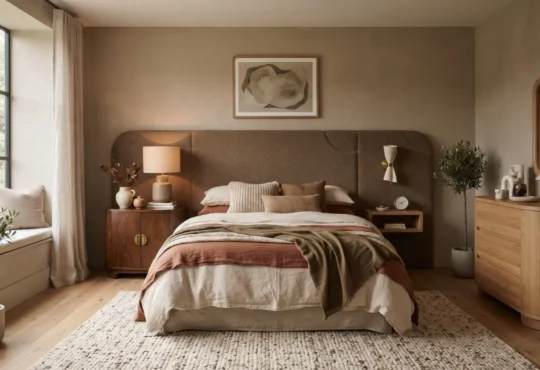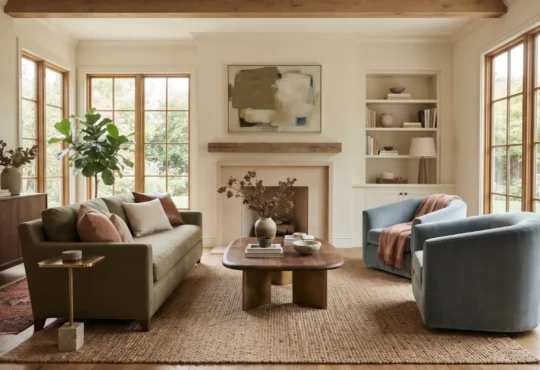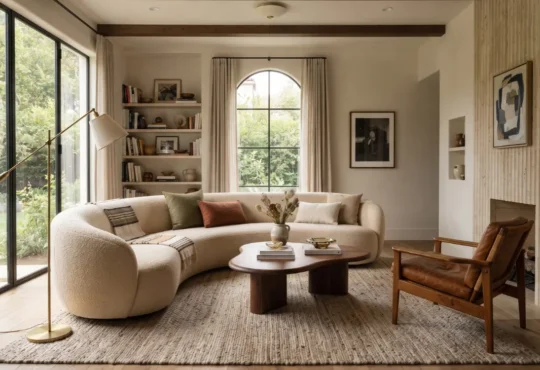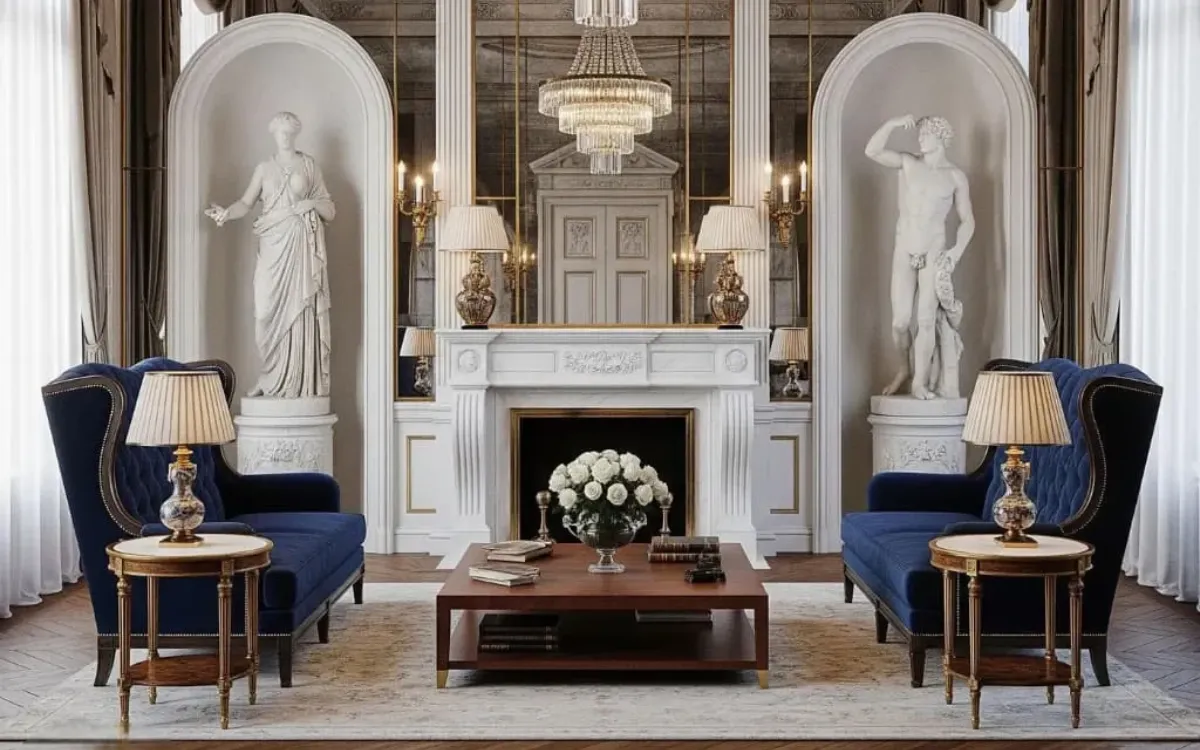
Neo-Classical design combines classical proportion and symmetry with a restrained approach to decoration. Its appeal comes from the relationship between architecture, furniture, materials, and carefully controlled ornament rather than from any single decorative feature.
The challenge is knowing how to create that character without making a room feel like a historical reproduction. This guide explains the principles behind Neo-Classical interiors and how to apply them in a contemporary home.
Neo-Classical Style
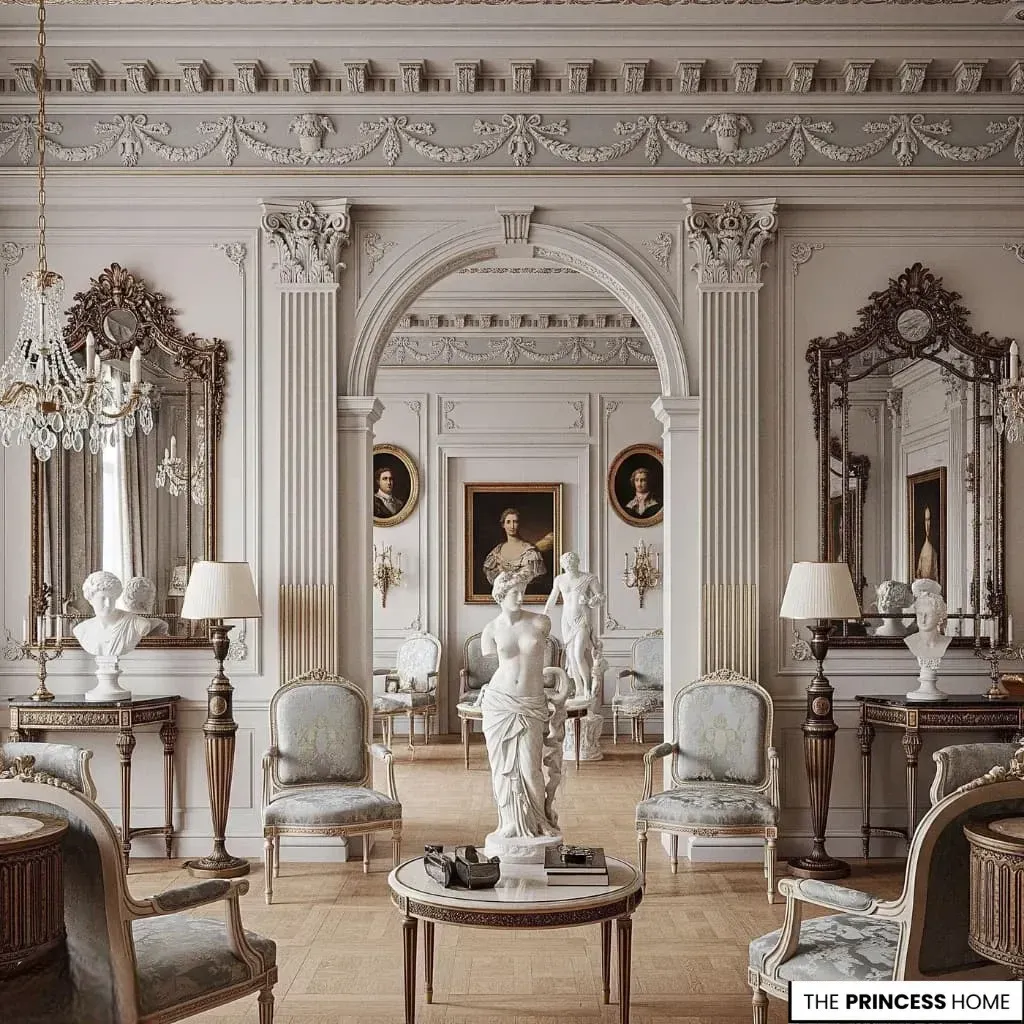
Neo-Classical design developed in 18th-century Europe through renewed interest in ancient Greek and Roman art and architecture. Compared with the elaborate curves and ornament of the preceding Rococo period, Neo-Classical design favored clearer geometry, proportion, and disciplined classical references.
The style developed differently across regions. British designer Robert Adam created highly coordinated interiors in which walls, ceilings, furniture, and ornament worked together as one composition.
French Louis XVI interiors offered another expression, while American Federal design adapted Neo-Classical ideas to a different architectural and cultural setting. These variations show why there is no single Neo-Classical checklist. A room does not need columns, marble, gold, or antique furniture to express the style.
The more important question is whether its elements share a coherent visual logic. Neo-Classical can also be distinguished from broader Traditional or Transitional interiors by the way it gives classical proportion, symmetry, and architectural order a more deliberate role.
Traditional rooms may combine historical influences more freely, while Transitional interiors often soften the contrast between traditional and contemporary forms. Neo-Classical interiors are more specifically organized around classical geometry and proportion, even when the furniture and finishes are contemporary.
Start with proportion and balance. Use classical geometry to organize the room, then introduce materials, furniture, lighting, and ornament that support that structure. In a contemporary home, the same principles can remain while the individual pieces become simpler and more practical.
Balance Room Proportions
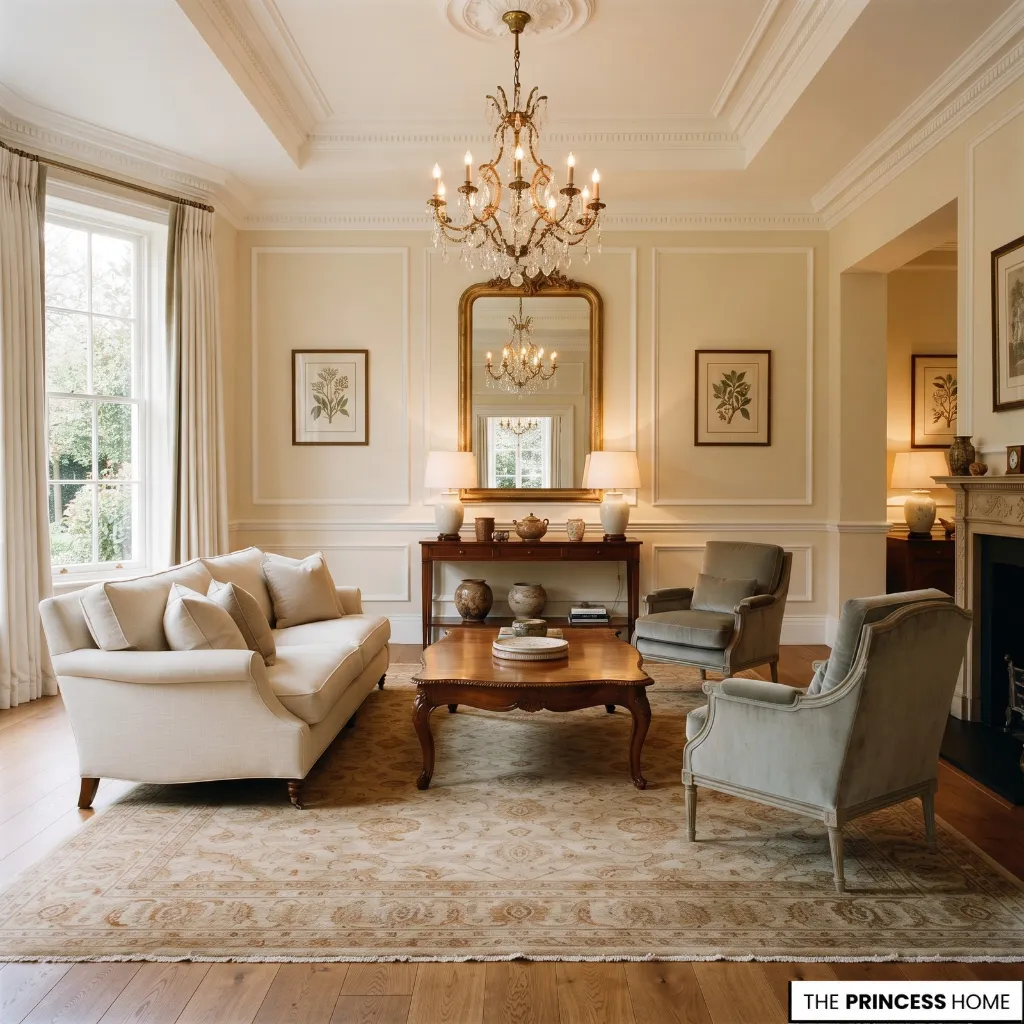
Proportion is one of the most important foundations of Neo-Classical interiors. It describes how the size and visual weight of one element relate to another, from the room itself to the furniture and architectural details within it. Begin with the ceiling height, wall area, windows, doors, and major architectural features.
A large room with tall ceilings can support stronger moulding, larger furniture, and more substantial focal pieces. A smaller room usually benefits from lighter furniture, simpler detailing, and more open space between elements. Furniture should also relate to the room rather than being selected independently.
A large sofa can overwhelm a narrow room, while undersized furniture may leave a generous room feeling disconnected. The same principle applies to rugs, chandeliers, mirrors, artwork, and architectural moulding. Space around furniture is part of proportion too.
Neo-Classical interiors need enough room for their geometry to remain clear. Filling every wall or surface weakens the ordered quality that makes the style recognizable. Before choosing specific pieces, assess whether the existing room can support the style’s visual structure.
A home does not need original columns, elaborate moulding, or a historic façade to work with Neo-Classical design. A contemporary room with clear proportions, usable wall space, and enough room for balanced furniture can support the style through simplified architectural framing and carefully chosen classical forms.
When the architecture is very low, cramped, or visually irregular, use fewer classical details and let furniture, symmetry, materials, and lighting carry more of the design.
Evaluate the largest elements first. Once the room, furniture, and main architectural features are appropriately scaled, decorative details can be added without having to compensate for poor proportions.
Use Classical Architecture
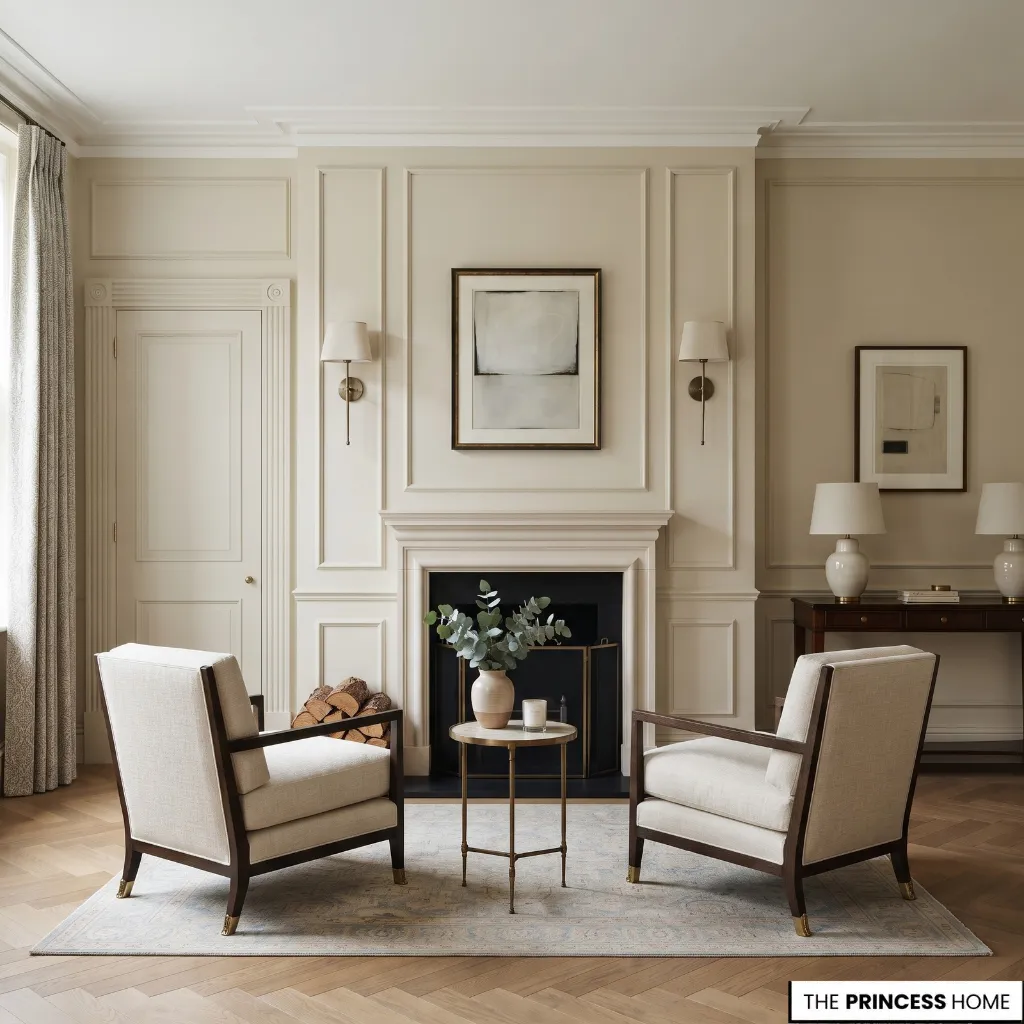
Architecture provides one of the clearest ways to establish Neo-Classical character. Wall moulding, panelled surfaces, cornices, pilasters, columns, classical door surrounds, fireplaces, and framed wall compositions can all reference the architectural language of the style.
Their purpose is more important than their presence. Moulding can divide a large wall into organized fields, frame an opening, emphasize a focal point, or connect the scale of the walls with the furniture below them. A classical feature becomes more convincing when it has a structural relationship with the rest of the room.
Choose architectural details according to the scale and character of the existing space. A large room may support deeper profiles and stronger architectural statements. In a smaller room, simpler panels or restrained trim can establish the same sense of order without overwhelming the walls.
Avoid adding classical moulding simply because it is associated with the style. A decorative treatment that ignores the room’s proportions can look applied rather than architectural.
If the home has no original classical features, use simpler wall framing, panel moulding, a restrained fireplace surround, or well-proportioned classical furniture to introduce the same visual structure. The goal is to reproduce the design function of classical architecture, not to imitate a historic building feature by feature.
Choose Classical Furniture
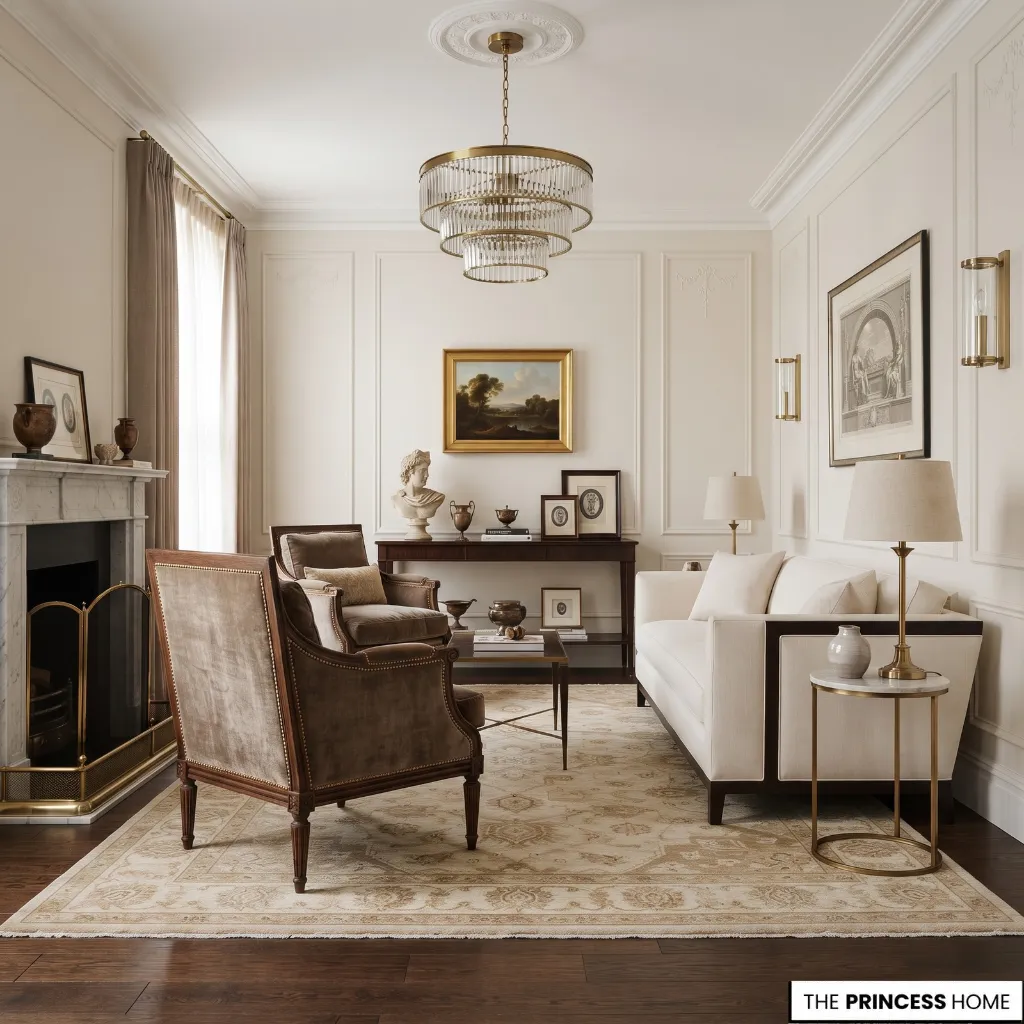
Neo-Classical furniture is defined more by its form and proportion than by its age. Historical examples often use clear silhouettes, tapered or fluted legs, balanced geometry, classical motifs, and refined materials. Contemporary furniture can work equally well when it supports these characteristics.
Choose pieces with enough structure to relate to the architecture. A sofa with a clean silhouette, a chair with tapered legs, a restrained console, or a table with controlled classical detailing can establish the vocabulary without making every piece look antique.
Avoid filling the room with heavily carved furniture simply to make the style obvious. When several large pieces compete through elaborate ornament, the room loses the clarity associated with Neo-Classical design.
Matching historical-looking furniture sets can have the same problem because they remove variation and make the room feel staged. Apply the style selectively. One stronger classical furniture piece can provide a reference point while quieter contemporary pieces support it.
The result should feel coordinated rather than decorated according to a period catalogue. If you are furnishing a room from scratch, establish the main furniture arrangement before buying smaller decorative pieces.
Start with the pieces that determine scale and function, then choose the rug or other major material anchor, lighting, textiles, and decorative details around them. This keeps the Neo-Classical character connected to the room’s proportions instead of allowing accessories to determine the design.
Layer Timeless Materials
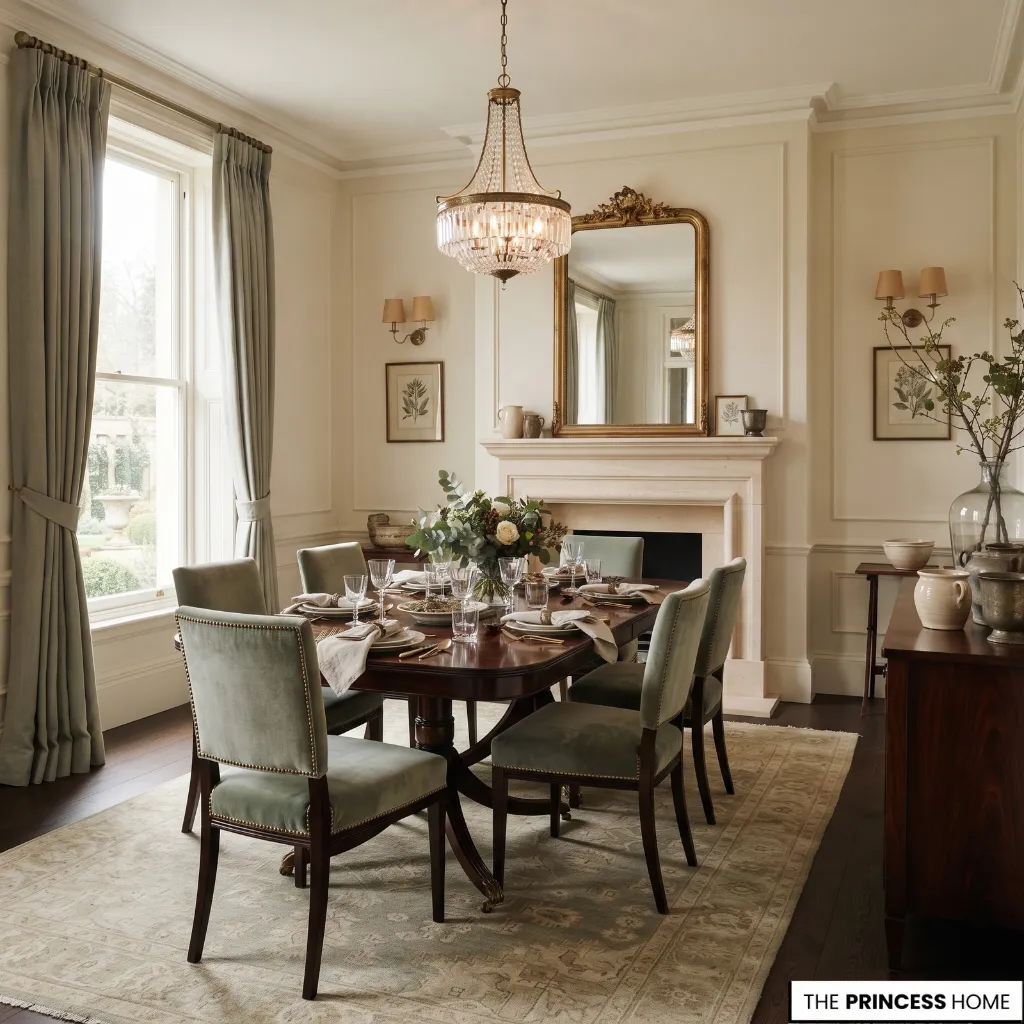
Materials give Neo-Classical interiors much of their visual weight and durability. Stone, marble, wood, plaster, refined upholstery, linen, velvet, glass, ceramics, and metal can all contribute to the palette. The strongest combinations often depend on contrast.
A hard stone surface can be balanced by upholstered furniture. Wood can introduce warmth beside plaster or painted walls. Matte surfaces can sit beside controlled areas of reflection from glass or metal. Natural materials can be especially effective where their texture and variation contribute to the architecture.
Marble may work as a fireplace, tabletop, or bathroom surface, while wood can appear through flooring, furniture, cabinetry, or decorative details. There is no requirement to use marble throughout a Neo-Classical home.
If it is unsuitable or inaccessible, another well-chosen stone or hard surface can provide a similar architectural function. The alternative should have appropriate visual weight and quality rather than simply imitating marble with a weak decorative substitute.
Keep the material palette coordinated. Too many unrelated finishes make the room feel assembled piece by piece rather than designed as a whole.
Build a Refined Palette
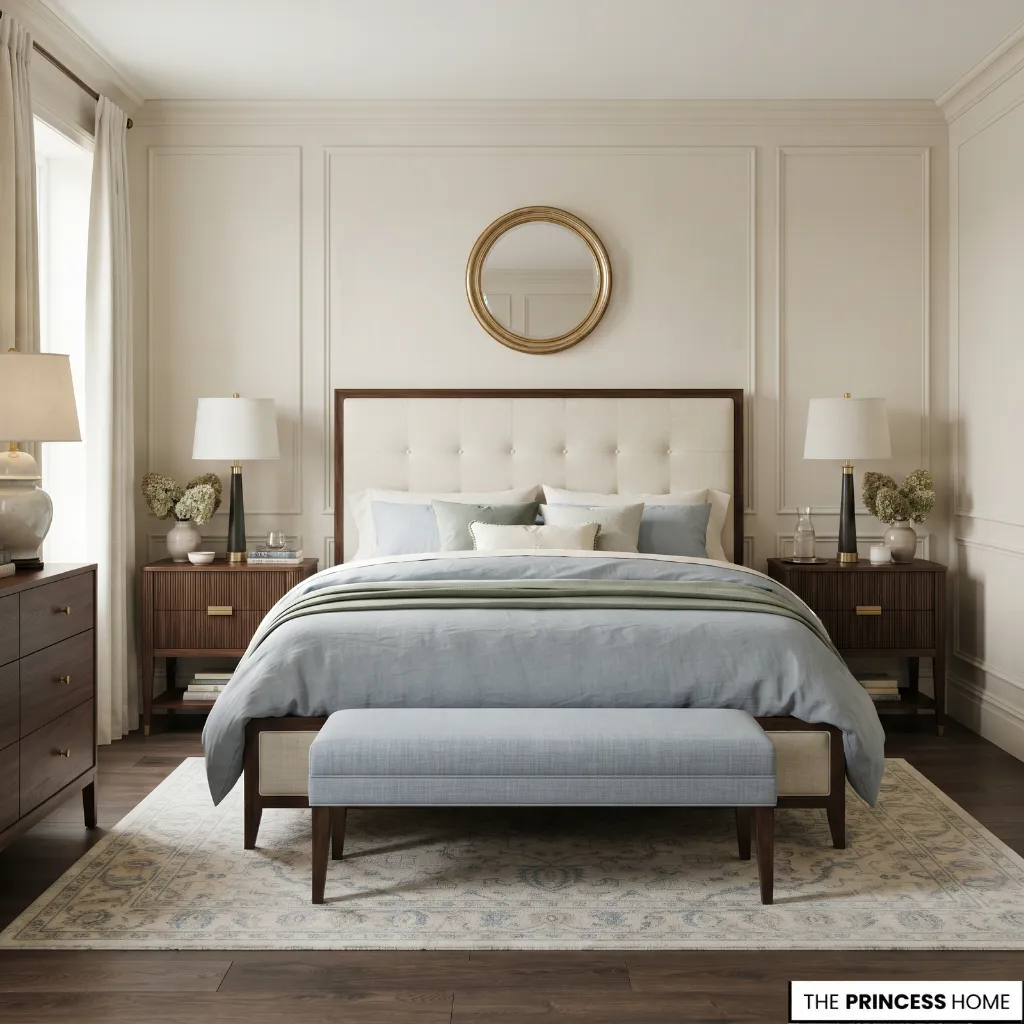
Neo-Classical color is not limited to cream, white, and gold. Historical interiors used a broader range of whites, creams, pale blues, greens, muted tones, deeper accents, dark woods, and controlled metallic details.
Begin with the architectural base. A restrained wall color can allow moulding and furniture silhouettes to remain visible, while a deeper wall tone can create stronger contrast when the architecture and room proportions can support it.
A useful palette can contain one dominant architectural color, a secondary supporting tone, and one or two deeper accents. Wood and metal finishes can then become part of the overall color relationship rather than separate decorative decisions.
Color should also respond to materials. A warm wood floor may call for different supporting tones than a pale stone floor. Upholstery, curtains, rugs, and artwork should connect to the palette without requiring every item to match.
Avoid treating gold as a shortcut to Neo-Classical elegance. A metallic accent can support the style, but proportion, architecture, and material relationships carry much more of the design.
Balance Lighting Layers
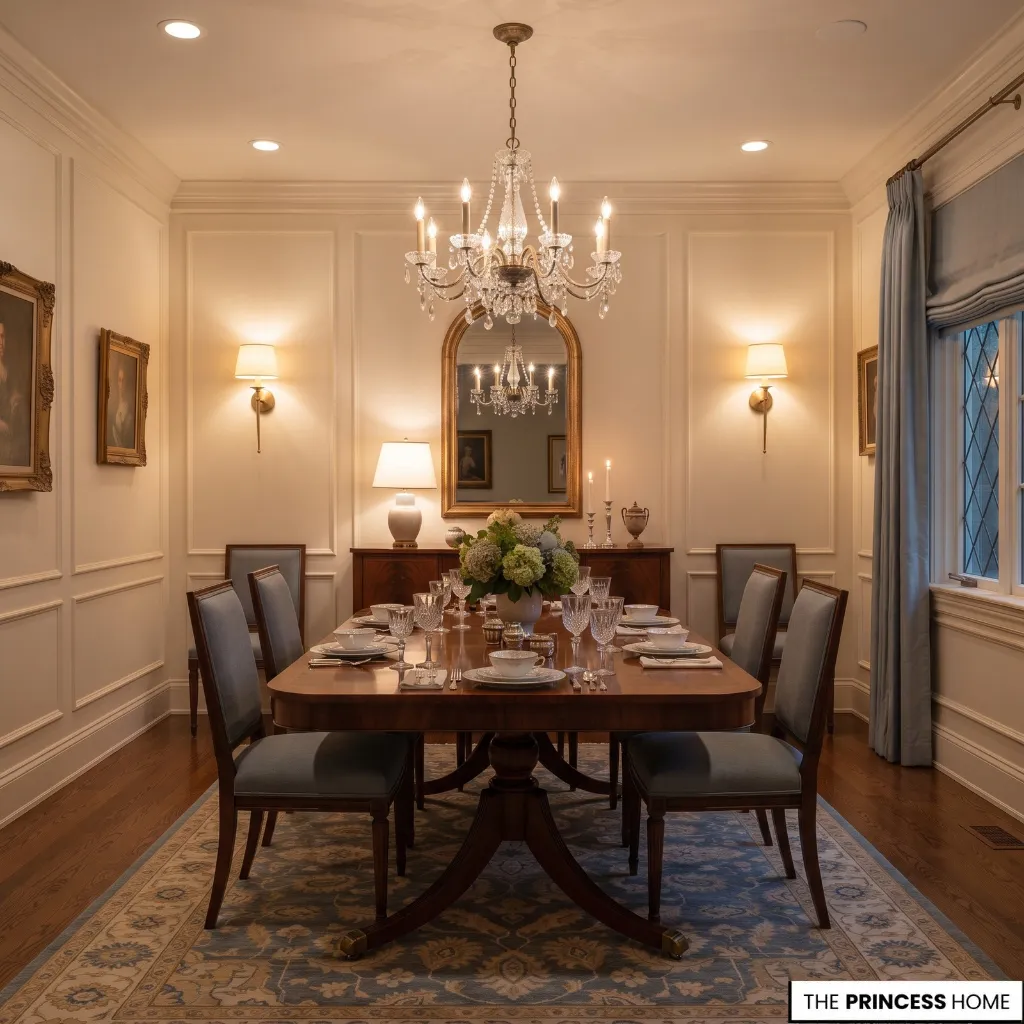
Lighting should support both the architecture and the way the room is used. A Neo-Classical interior benefits from several lighting layers rather than relying on a single decorative fixture. Ambient lighting provides general illumination.
Wall sconces can reinforce symmetry or emphasize architectural areas. A chandelier or pendant can establish a central focal point, while table or task lighting supports everyday activities. Choose fixtures that relate to the room’s geometry.
A central chandelier can reinforce the axis of a dining table or seating arrangement. Paired sconces can emphasize a fireplace, mirror, artwork, or architectural panel. Avoid choosing a dramatic chandelier first and allowing the rest of the lighting to become an afterthought.
A decorative fixture cannot provide every type of illumination a contemporary room requires. The strongest approach combines classical references with practical modern lighting. Decorative fixtures establish character, while additional layers make the room comfortable to use throughout the day.
In a dining room, the chandelier should relate to the dining table and the room’s central axis rather than simply filling the ceiling. Around the bed, paired bedside lamps or sconces can reinforce the balance while providing useful reading light.
For a study or library, task lighting should remain functional while the fixture forms and placement support the room’s classical geometry.
Add Classical Details
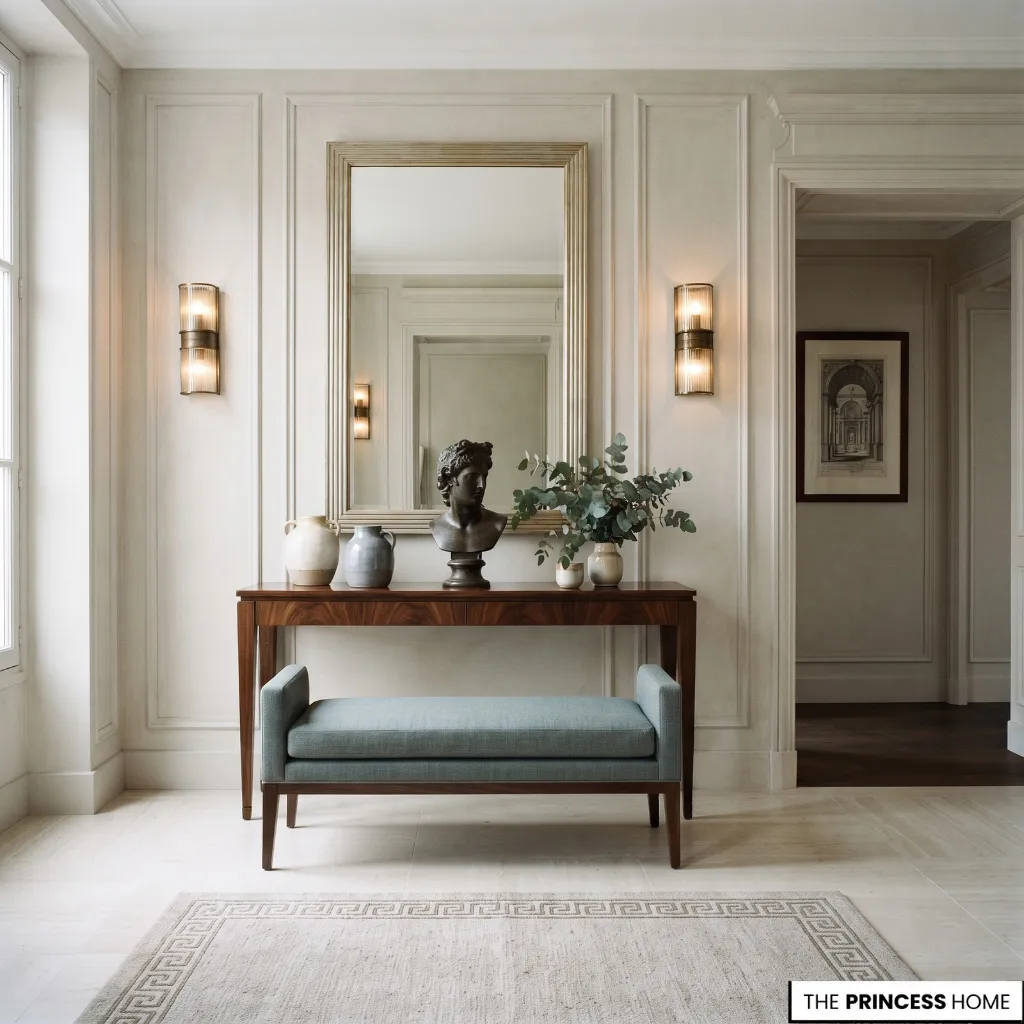
Decorative details should reinforce the architecture and furniture rather than compete with them. Mirrors, urns, restrained botanical motifs, classical artwork, ceramics, sculptural objects, and carefully selected metallic accents can all work within a Neo-Classical composition.
Choose details according to the visual structure already established in the room. A classical mirror may echo the geometry of wall panels. A pair of similar objects can reinforce an architectural axis. A sculptural piece can provide a focal point without requiring a large collection of ornaments.
Repetition can create cohesion without making every object identical. Repeat a shape, material, finish, or proportion instead of placing the same motif on every surface.
Avoid turning classical decoration into a theme. Too many medallions, columns, ornate frames, gilded objects, or repeated motifs can make the room feel theatrical. The style is strongest when ornament is controlled by the architecture.
Mix Modern Elements
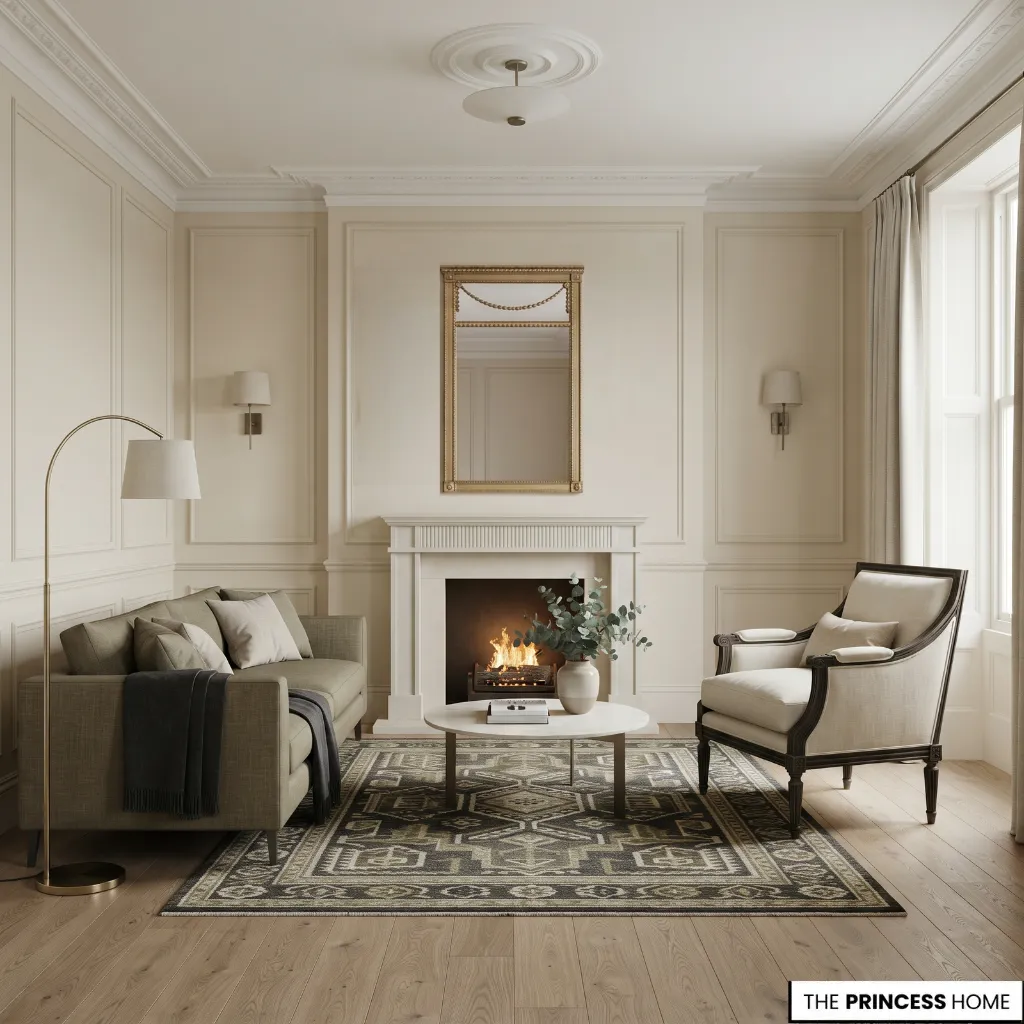
Contemporary Neo-Classical interiors do not need to reproduce an 18th-century room. They can preserve the principles of classical design while adapting the furniture, textiles, lighting, and technology to modern life. A contemporary sofa can sit within a symmetrical arrangement framed by classical wall moulding.
A simplified kitchen can use traditional proportions and refined materials without reproducing historical cabinetry. Modern artwork can provide contrast against classical architecture when its scale and placement are carefully considered. The key is to preserve the design principles while simplifying the expression.
Classical proportion, symmetry, framing, and controlled ornament can remain even when individual pieces are modern. Avoid mixing modern and classical pieces randomly. The two languages need a relationship through scale, geometry, color, material, or placement.
A modern piece works particularly well when it solves a practical need while maintaining the visual discipline of the room. This allows Neo-Classical design to feel timeless rather than preserved in a particular historical period.
Adapt Smaller Rooms
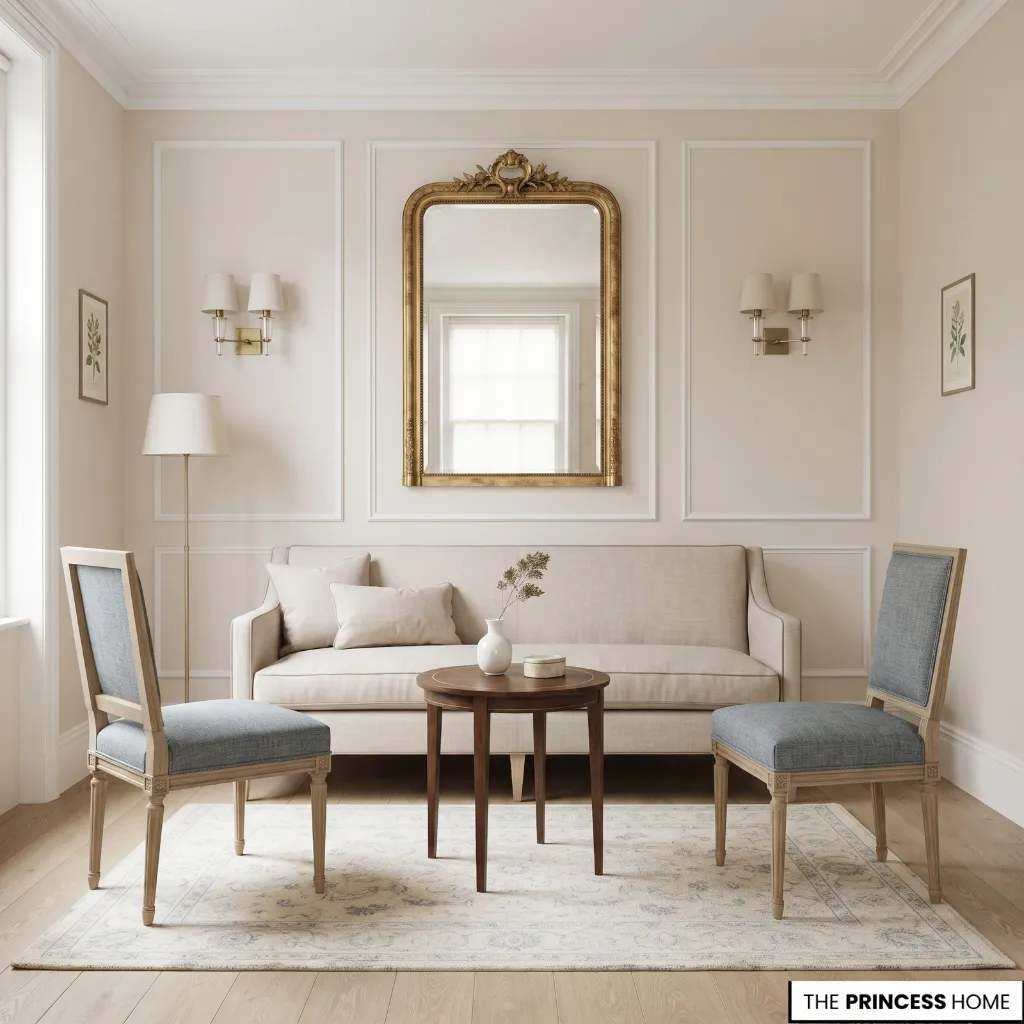
A small room can use Neo-Classical principles without reproducing the heavier architectural treatment found in a large formal interior. Start by reducing visual competition. Use fewer major furniture pieces, maintain clear circulation, and choose furniture with a lighter visual mass.
Symmetry can help organize a compact room, but it does not require identical objects on every side. Simplify architectural detailing as well. A restrained panelled wall, carefully positioned moulding, or one strong architectural focal point may be more effective than covering every surface with elaborate trim.
Mirrors, controlled lighting, and a limited material palette can reinforce the composition without adding physical bulk. The objective is to keep the room’s proportions and visual hierarchy clear.
If full classical architecture would overwhelm the space, emphasize the principles instead: balanced furniture, strong geometry, restrained color, and one or two carefully selected classical references can communicate the style effectively.
The same principle applies to the amount of classical detailing in a room of any size. There is no useful universal percentage of classical and modern elements. Instead, let the strongest architectural or furniture features establish the style, then keep supporting elements quieter.
If several major pieces already carry classical forms, additional ornament may be unnecessary; if the architecture is very plain, furniture, lighting, and a few carefully chosen details can provide the missing reference.
Avoid Common Mistakes
Treating Neo-Classical design as a checklist is one of the most common problems. Adding columns, gold, marble, chandeliers, and ornate furniture does not automatically produce a coherent interior. Establish the room’s proportion and composition first, then select elements that support them.
Overusing symmetry can make a room feel staged. Symmetry is a tool for organizing visual weight, not a requirement that every object have an identical partner. Allow some variation while maintaining a clear overall balance.
Adding too much ornament weakens the clarity of the style. When every surface contains a classical motif, individual details lose their importance. Choose fewer elements and give them enough space to be appreciated.
Using oversized furniture disrupts the relationship between the room and its contents. Check the scale of major pieces against the available floor area, circulation, ceiling height, and architectural features before adding decorative furniture.
Adding moulding without architectural logic creates decoration rather than structure. Use moulding to frame, divide, connect, or emphasize something within the room.
Using gold as a substitute for design produces a decorative effect without the underlying discipline of Neo-Classical interiors. Metallic finishes should support the architecture and material palette rather than carry the entire style.
Creating a period room can make the design feel disconnected from contemporary life. Historical references are useful when they explain the style, but modern furniture, lighting, textiles, and practical requirements should remain part of the room.
Mixing unrelated luxury elements creates another common problem. Expensive marble, elaborate furniture, dramatic lighting, and ornate accessories may each appear impressive independently but still fail to form a coherent Neo-Classical interior. Choose elements that share proportion, geometry, material character, and visual weight.
For a bedroom, the bed wall usually provides the strongest opportunity to establish the style, so proportioned wall framing, balanced bedside elements, refined upholstery, and restrained textiles should work together rather than compete.
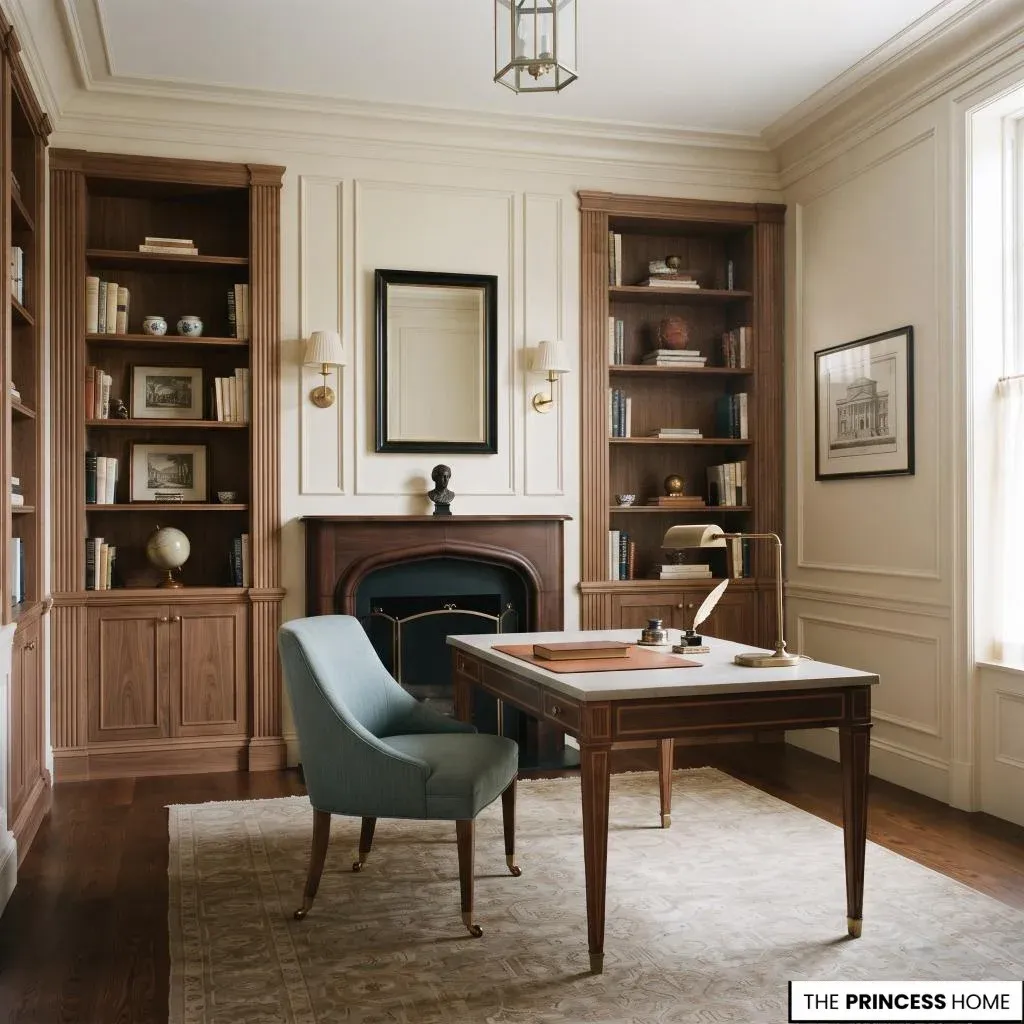
In a dining room, the relationship between the table, chairs, chandelier, and surrounding wall treatment is more important than adding multiple decorative objects. In a study or library, wood, built-ins, classical furniture forms, and practical task lighting can carry the style without requiring heavy ornament.
Conclusion
Neo-Classical design becomes timeless through proportion, symmetry, refined materials, and restraint. Build from the room’s proportions and focal points, then layer architecture, furniture, color, lighting, and details to create a contemporary interior with lasting classical character.
Explore the visual gallery below for inspiring ideas that bring this aesthetic to life in your home.