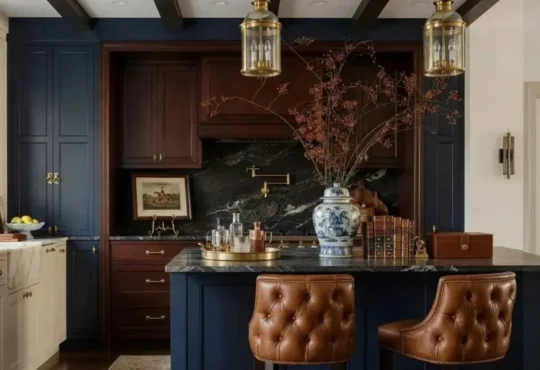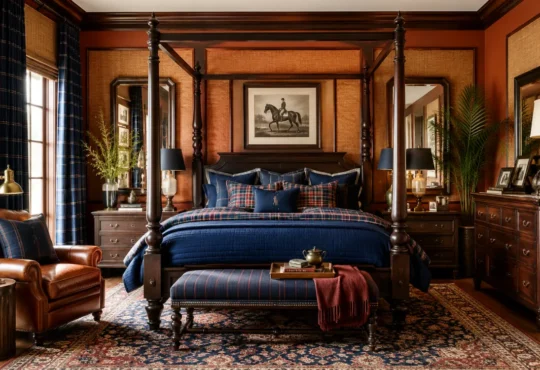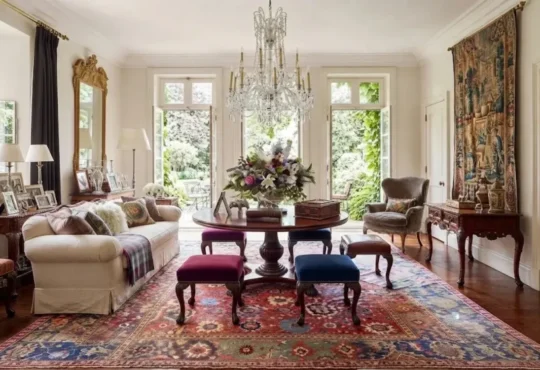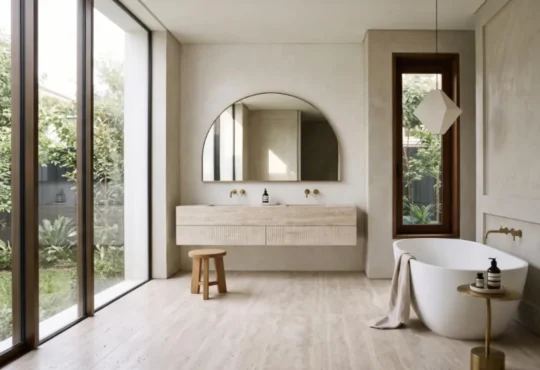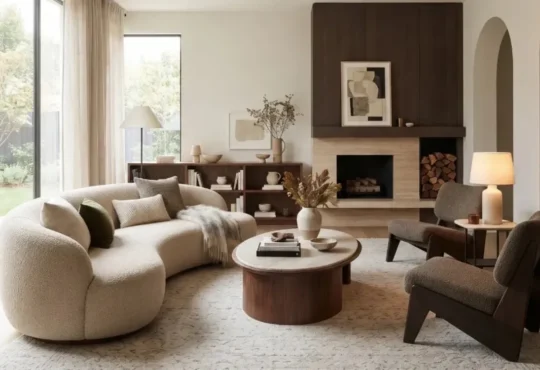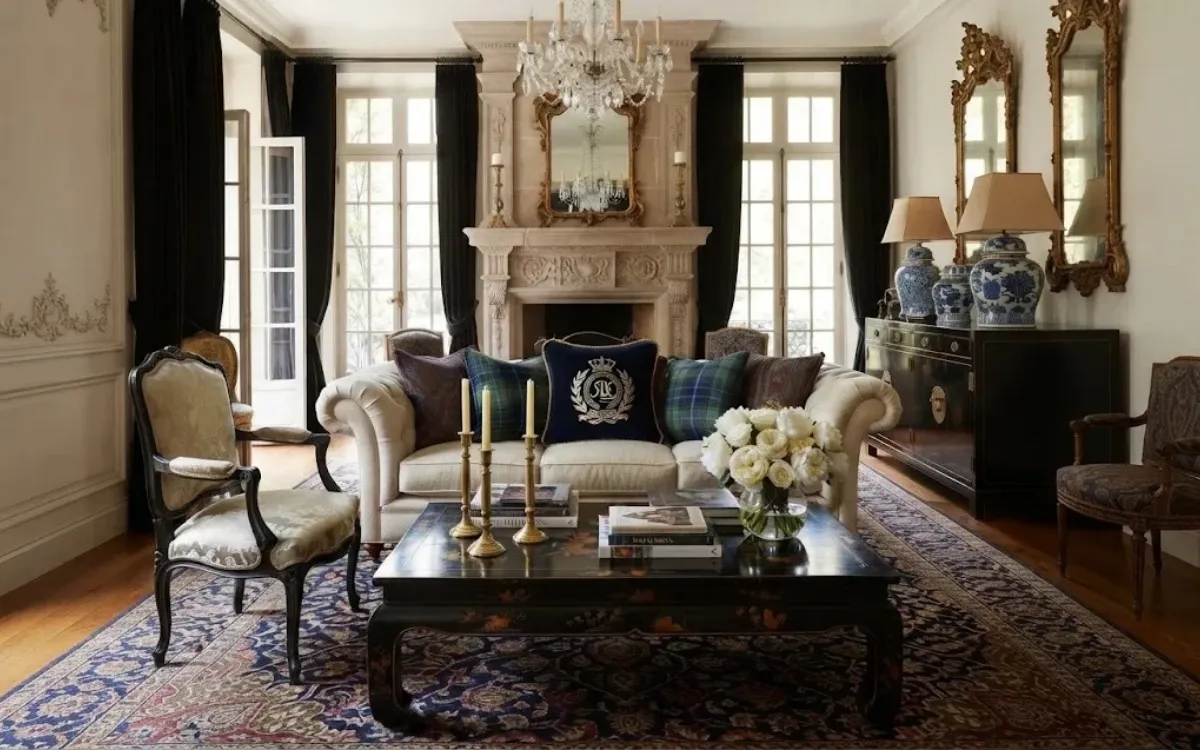
A Ralph Lauren inspired living room combines tailored comfort, substantial furniture, rich materials, controlled color, traditional patterns, and personal character. The challenge is bringing these elements together without making the room feel too dark, heavy, formal, or themed.
Build the room through relationships rather than a checklist of recognizable pieces. Start with the architectural foundation and furniture proportions, then select materials, colors, patterns, lighting, and personal objects that support the same design direction.
Ralph Lauren Style
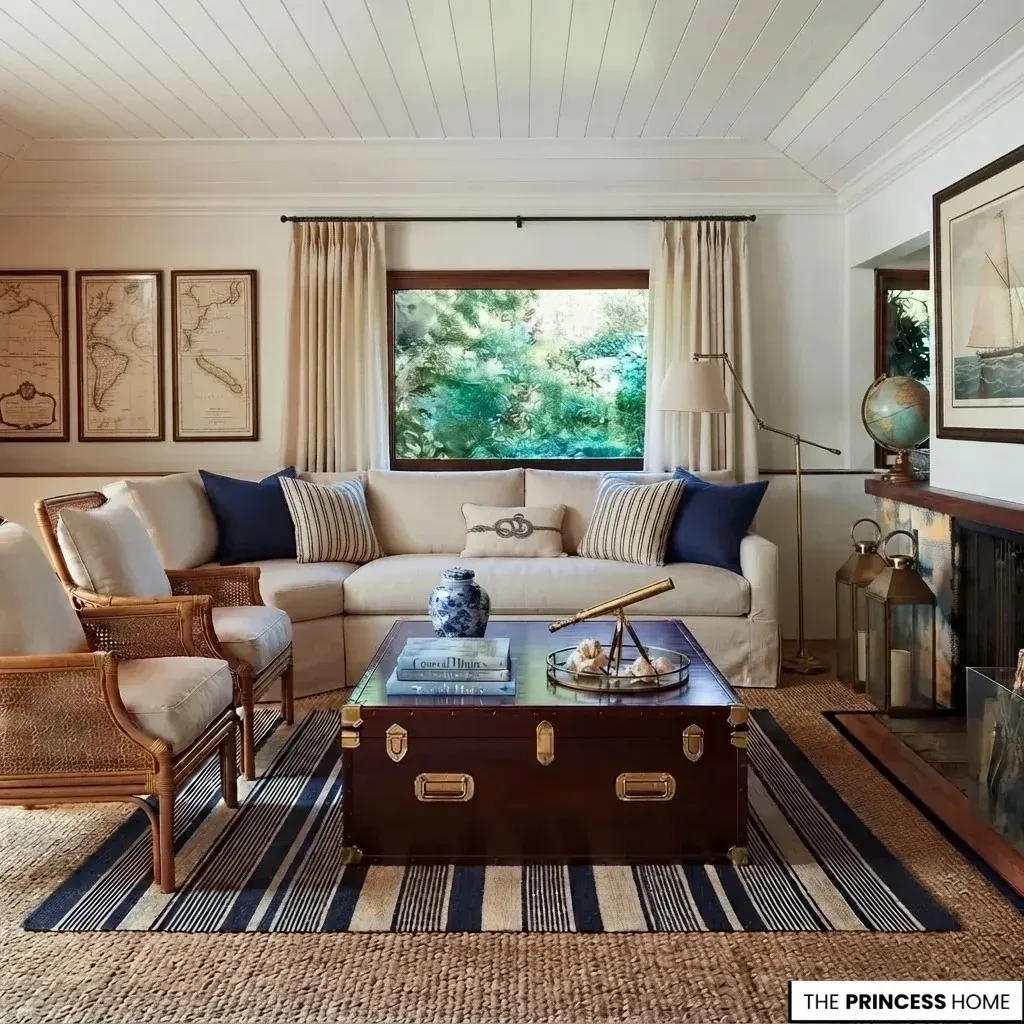
Ralph Lauren’s approach to interiors draws from American heritage, traditional craftsmanship, and English and European references, with different expressions shaped by place and lifestyle. Launched in 1983, Ralph Lauren Home originally introduced four signature lifestyle worlds: Thoroughbred, New England, Jamaica, and Log Cabin.
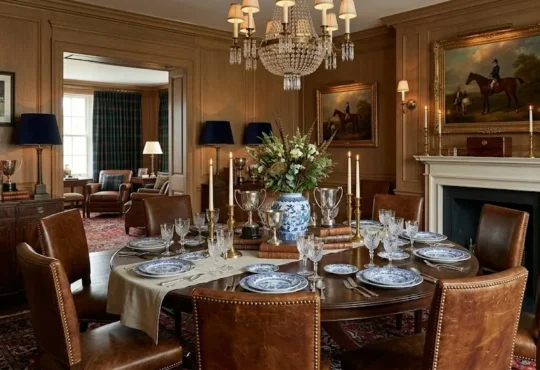
Later Ralph Lauren interiors have explored additional settings, including English country estates, Caribbean retreats, Western ranches, and contemporary penthouses. This variety demonstrates that the style does not depend on one furniture formula or a single color palette.
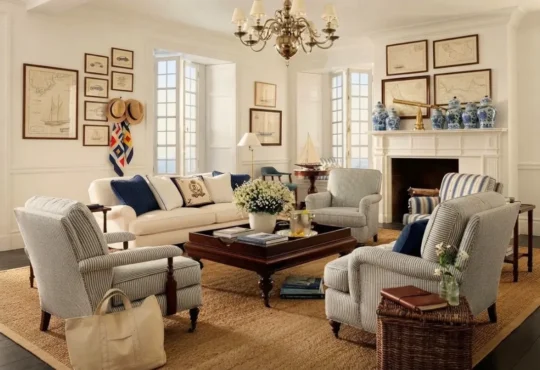
A living room can lean toward an English-estate character with dark wood and leather, a lighter coastal interpretation with natural textures, a rustic American direction, or a more contemporary expression.
What connects these interpretations is the way the room is composed. Furniture feels substantial and tailored rather than delicate or disposable. Materials have visible character, colors are controlled, traditional patterns are used with restraint, and personal objects keep the room from looking staged.
The goal is not to reproduce a Ralph Lauren showroom. It is to understand the design principles well enough to make appropriate decisions for your own living room.
Build the Foundation
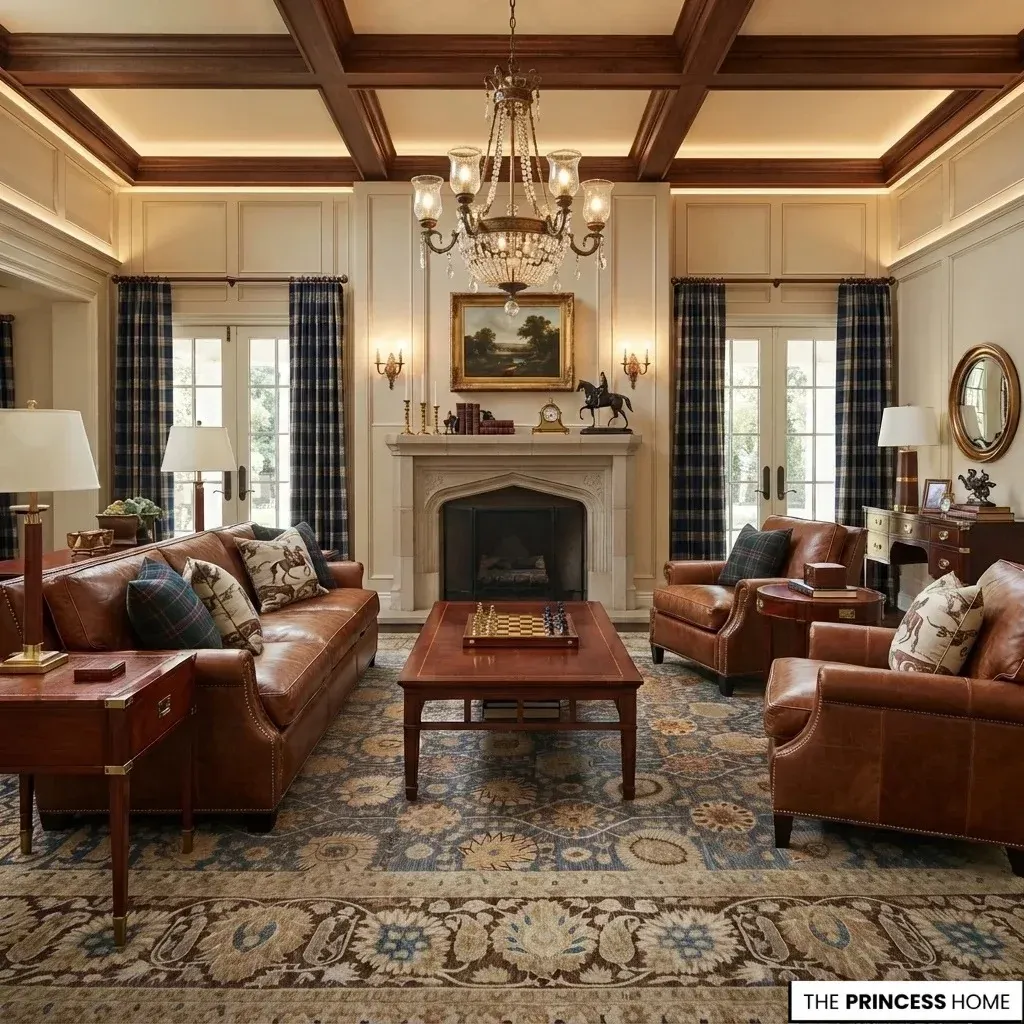
Start with the room itself before choosing decorative details. Identify its strongest architectural feature, establish the main seating arrangement, and plan how people will move through the space. Arrange the primary seating to support conversation and the room’s everyday activities.
Choose a rug large enough to connect the main furniture pieces when the room allows it. In many seating arrangements, placing the front legs of the sofa and armchairs on the rug helps establish a unified group. A rug that sits entirely in front of the furniture may make the arrangement feel disconnected.
Add tables and storage after the main seating group is working. A useful order is architecture → rug → primary seating → secondary seating → tables and storage → textiles → lighting → art and objects.
A substantial room can support deeper furniture, larger rugs, heavier wood, and stronger patterns. A smaller room usually needs fewer major pieces and more visible floor. The goal is to reduce competing elements rather than automatically choosing miniature furniture.
As a practical starting point, allow roughly 30 to 36 inches for a main walkway where the layout permits. Adjust the arrangement to the room’s actual dimensions, doorways, furniture footprints, and everyday movement.
Balance Room Proportions
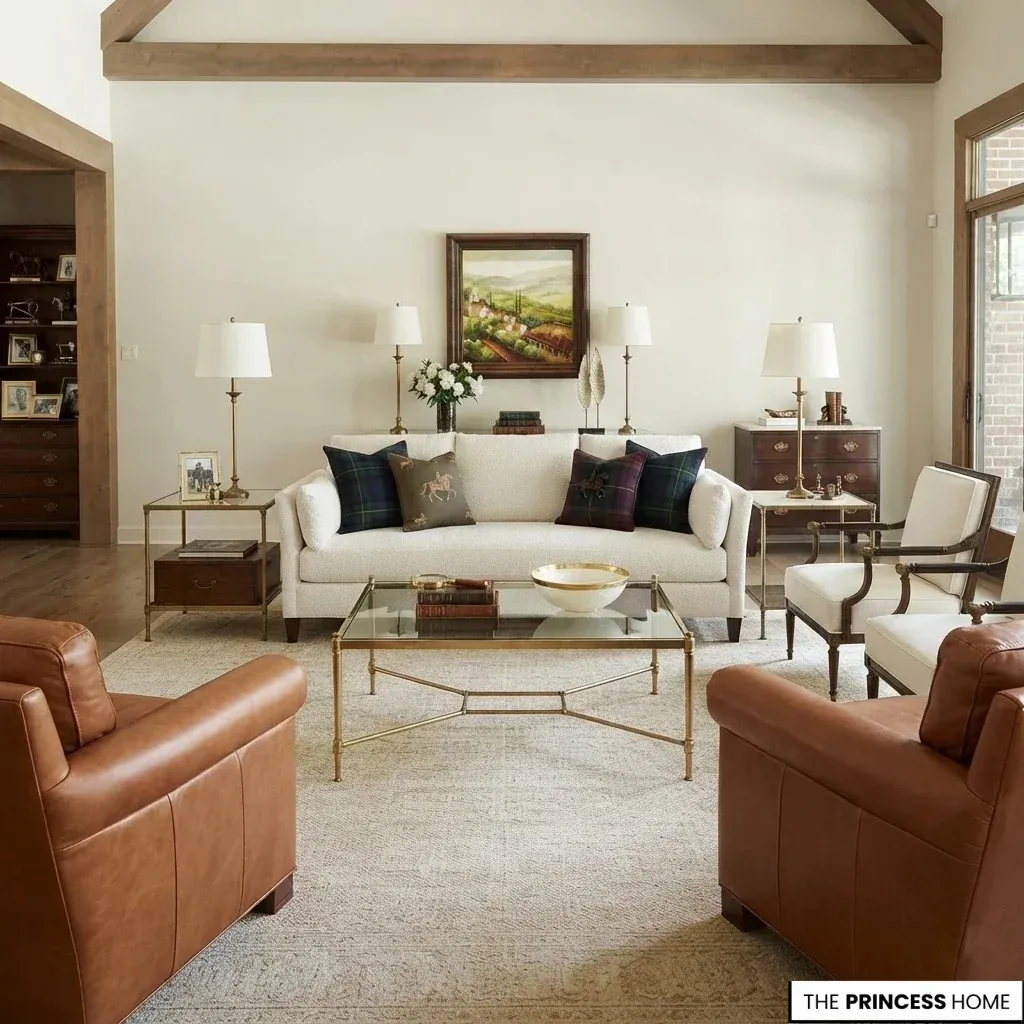
A Ralph Lauren inspired living room can accommodate substantial furniture, but its visual weight needs to be distributed carefully. A dark leather sofa, large wooden table, patterned rug, heavy curtains, and dark cabinetry may each work individually. Together, they can make the room feel compressed.
Balance heavier elements with lighter ones. Pair dark wood with a pale rug or warm ivory textiles, and surround dense patterns with quieter surfaces. Windows, lighter walls, and open floor can also relieve a composition dominated by substantial furniture.
Consider visual weight as well as physical dimensions. Dark colors, solid shapes, dense fabrics, and strong patterns can make an object appear heavier than its actual size suggests. Evaluate how the furniture looks together rather than measuring each piece in isolation.
In a large living room, choose enough furniture to relate to the architecture rather than leaving a small seating group floating in the space. In a small room, keep one or two pieces with enough presence to anchor the arrangement, then protect circulation and leave some floor visible.
Tailored Furniture
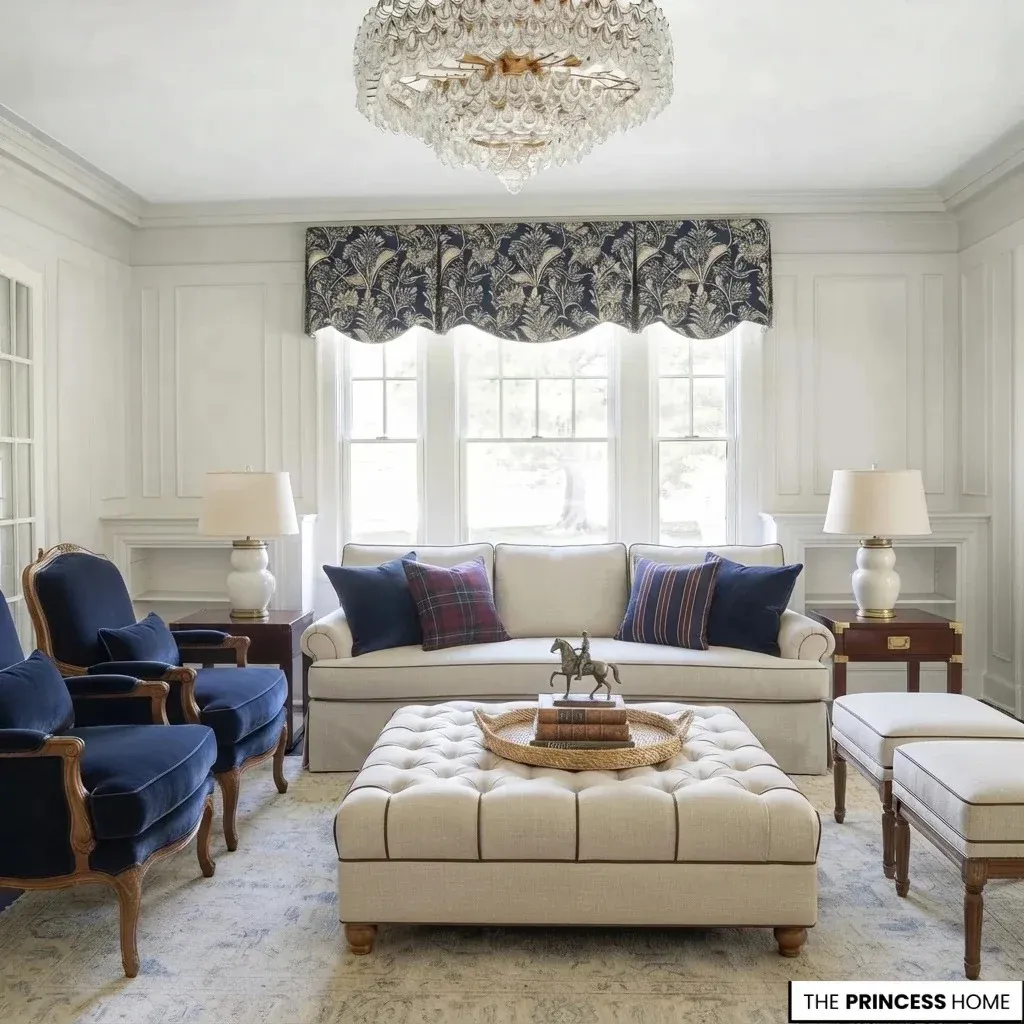
Choose furniture with enough presence to anchor the room without making every piece a statement.
A tailored sofa is often the main starting point. Club-style seating, rolled arms, tufting, structured upholstery, or a simpler classic profile can all work. Prioritize a comfortable shape, suitable dimensions, and a finish that supports the room’s overall character.
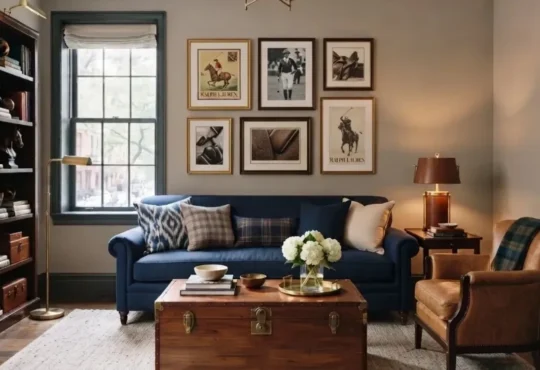
Leather can introduce a stronger heritage or equestrian influence, but it is not essential. Linen, cotton, velvet, and wool upholstery can work equally well when their texture, durability, and scale suit the setting.
Use secondary seating to introduce contrast. A leather sofa can work with a fabric armchair, while a structured sofa can be paired with a more relaxed chair. The pieces should relate through proportion, color, or material without becoming a matching set.
Choose tables for proportion and everyday use. A substantial wood table can anchor the seating, while glass or a lighter material can prevent the arrangement from feeling too dense.
The coffee table should be easy to reach without obstructing movement, and side tables should be accessible without crowding the seating area. Consider the space between each piece as carefully as the furniture itself.
In a smaller living room, a shallower sofa, a chair with visible legs, and fewer occasional tables can preserve the character while improving circulation.
If an expensive statement piece is beyond your budget, prioritize its overall shape and scale, followed by durable construction and compatible materials. Decorative details can come later. A more affordable piece that fits the composition is more useful than one chosen only because it is inexpensive.
Layer Rich Materials
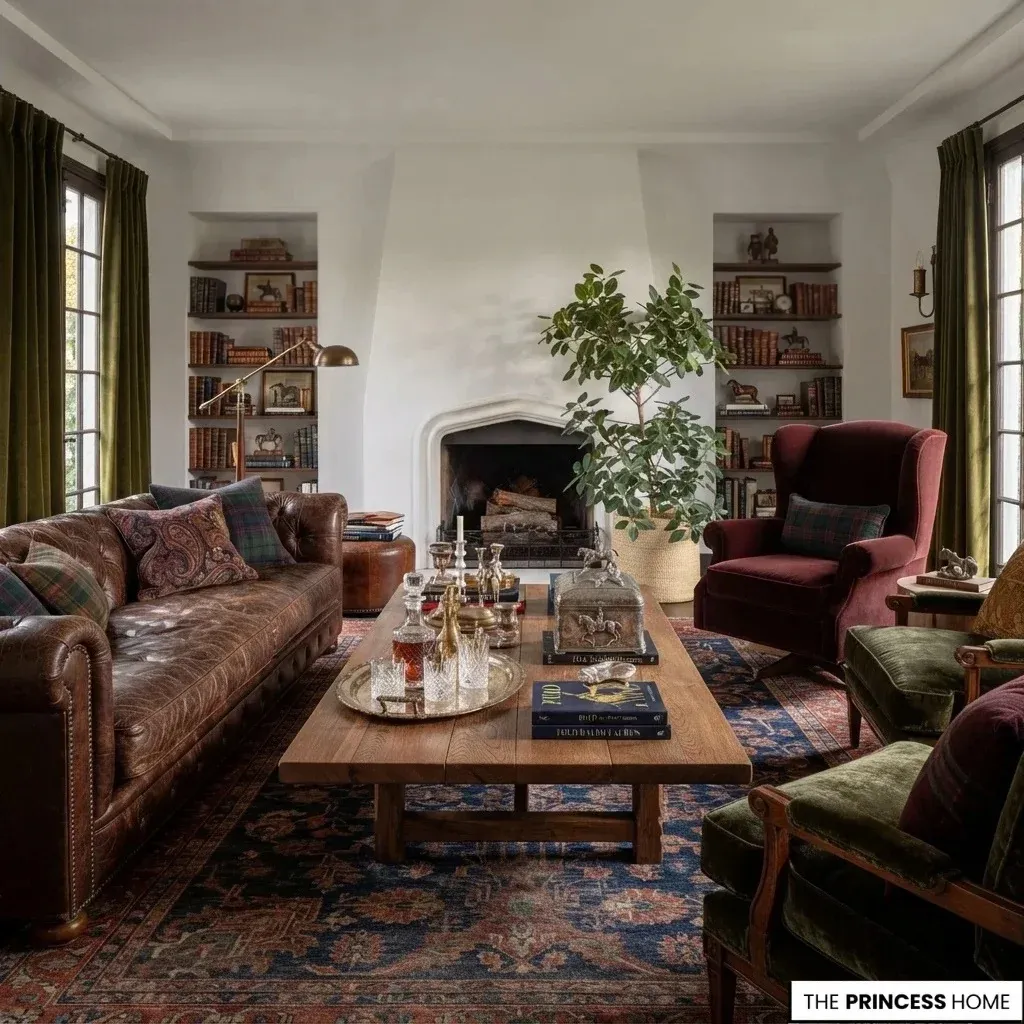
Use materials to create contrast rather than collecting every traditional finish in one room. Leather, rich wood, wool, linen, velvet, brass, bronze, glass, and woven materials can all contribute to a Ralph Lauren inspired interior.
Pair smooth leather with a textured wool rug, soft linen or cotton upholstery with wood, and warm metal with darker furniture. Glass or crystal can introduce reflection when a composition needs a lighter element.
Related materials can recur across the room without identical finishes. Several wood pieces can belong to the same tonal family, while brass might appear on a lamp, picture frame, or hardware without becoming the dominant finish.
Keep some surfaces quiet. If the sofa is dark leather, the rug does not also need to be dark and heavily patterned. When the furniture is substantial, lighter textiles can provide contrast.
The aim is to let each material contribute its own texture and character without competing for attention.
Use Ralph Lauren Colors

Build the palette around a few connected colors rather than trying to reproduce every shade associated with Ralph Lauren interiors.
Deep navy, heritage green, burgundy, camel, cognac, tobacco, chocolate brown, warm ivory, cream, and muted neutrals can all work. Treat them as options rather than a formula that requires every color.
Start with the largest surfaces: walls, sofa upholstery, flooring, and the main rug. Then introduce secondary colors through chairs, curtains, cushions, artwork, and smaller objects.
A useful structure is dominant field → secondary connection → concentrated accent.
For example, warm ivory walls can support a brown leather sofa, muted patterned rug, deep green chair, and small burgundy accents. A room with navy walls may need more warm wood and lighter textiles to maintain balance.
Dark walls are not essential. If the architecture is already light, preserve that quality and introduce character through furniture, textiles, pattern, and lighting.
Repeat colors selectively. Deep green might appear in an armchair, artwork, and one or two cushions rather than across every surface. This creates a visual connection without making the room feel overly coordinated.
Control Pattern and Light
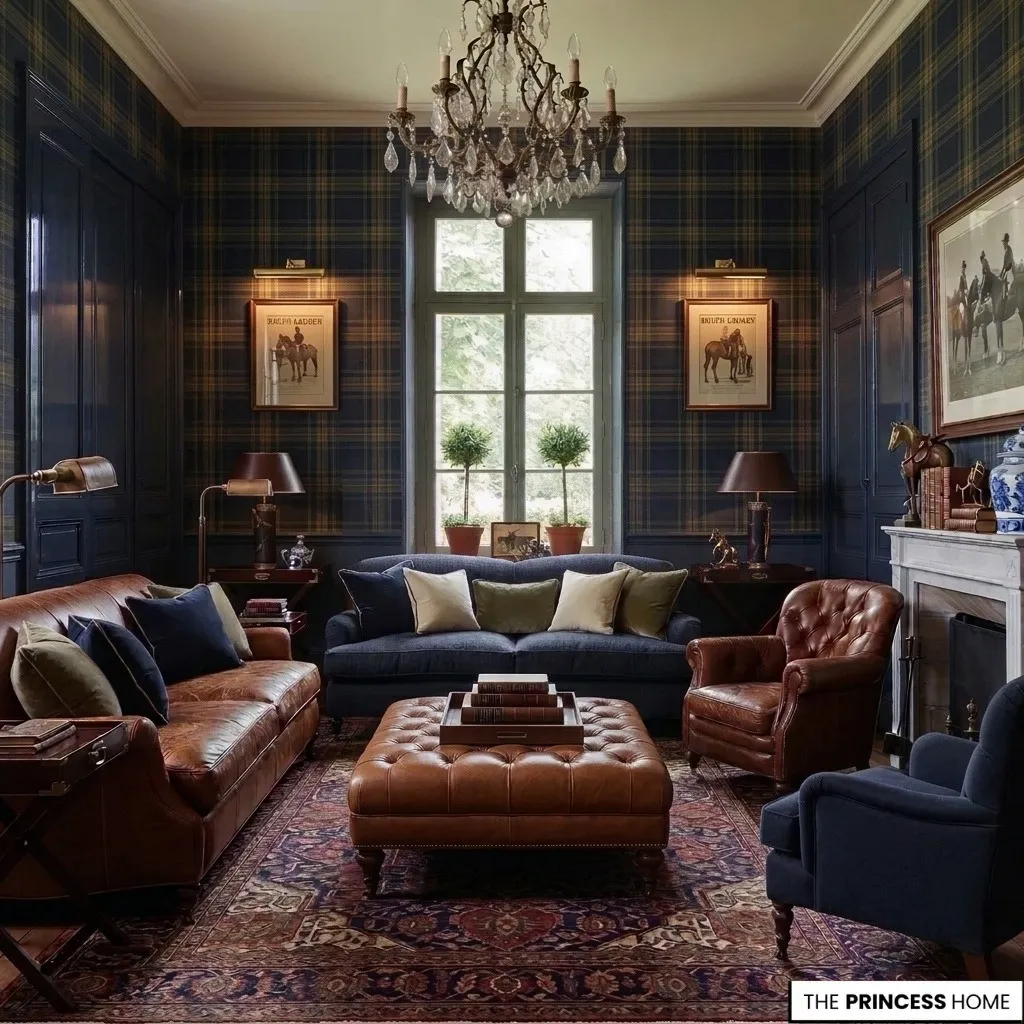
Use pattern with hierarchy. Choose one pattern strong enough to establish character, then support it with quieter motifs and solid surfaces. Plaid, tartan, stripes, checks, florals, and traditional rug patterns can all work when they vary in scale and intensity.
A large patterned rug can lead the composition while cushions remain simpler. Alternatively, a patterned chair can carry the strongest motif while the rug and sofa provide quieter surfaces.
A large check beside a fine stripe is generally easier to manage than several equally strong patterns competing around the room. If multiple patterns are important to the design, vary their scale and distribute them across different surfaces rather than concentrating them in one area.
Lighting needs a similarly considered arrangement. Use ambient lighting for general illumination, task lighting for reading, and accent lighting for artwork or architectural features.
Table lamps, floor lamps, sconces, and picture lights can contribute different layers. Around 2700K is a practical warm starting point for many living rooms, not a Ralph Lauren specification.
Choose fixture materials and shapes that suit the room. Brass, ceramic, wood, or aged finishes can work with linen or pleated shades, while picture lights can highlight artwork without introducing another large decorative object.
Create Collected Rooms
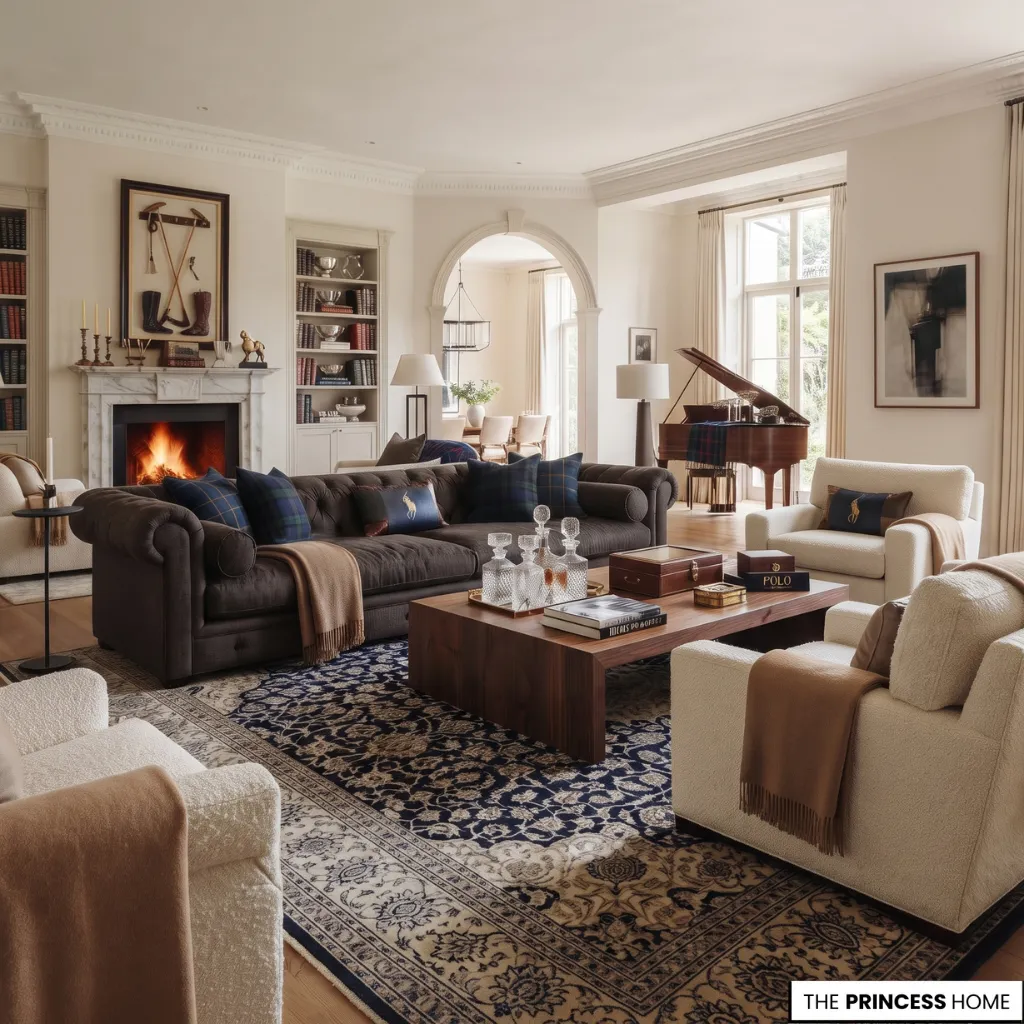
A collected room develops character through objects that have meaning, use, history, or visual value. Books, artwork, inherited pieces, vintage finds, travel objects, and personal collections can keep a Ralph Lauren inspired living room from looking like a themed showroom.
Heritage references should feel selective rather than repeated across every surface. An equestrian artwork, a traditional plaid, or a vintage leather piece can establish a particular influence without requiring additional hunting, nautical, Western, or sporting decorations throughout the room.
New furniture can sit comfortably beside older pieces when their proportions and materials relate. A warm metal finish might recur in a lamp and picture frame, while a wood tone can connect the coffee table to a smaller cabinet without requiring a matching furniture set.
Keep the collection edited. Each object should contribute through function, memory, texture, scale, or visual interest. A room does not gain character simply by filling every available surface with accessories.
Start with the pieces you genuinely want to live with, then allow the room to develop over time instead of buying a complete collection at once.
Adapt the Style
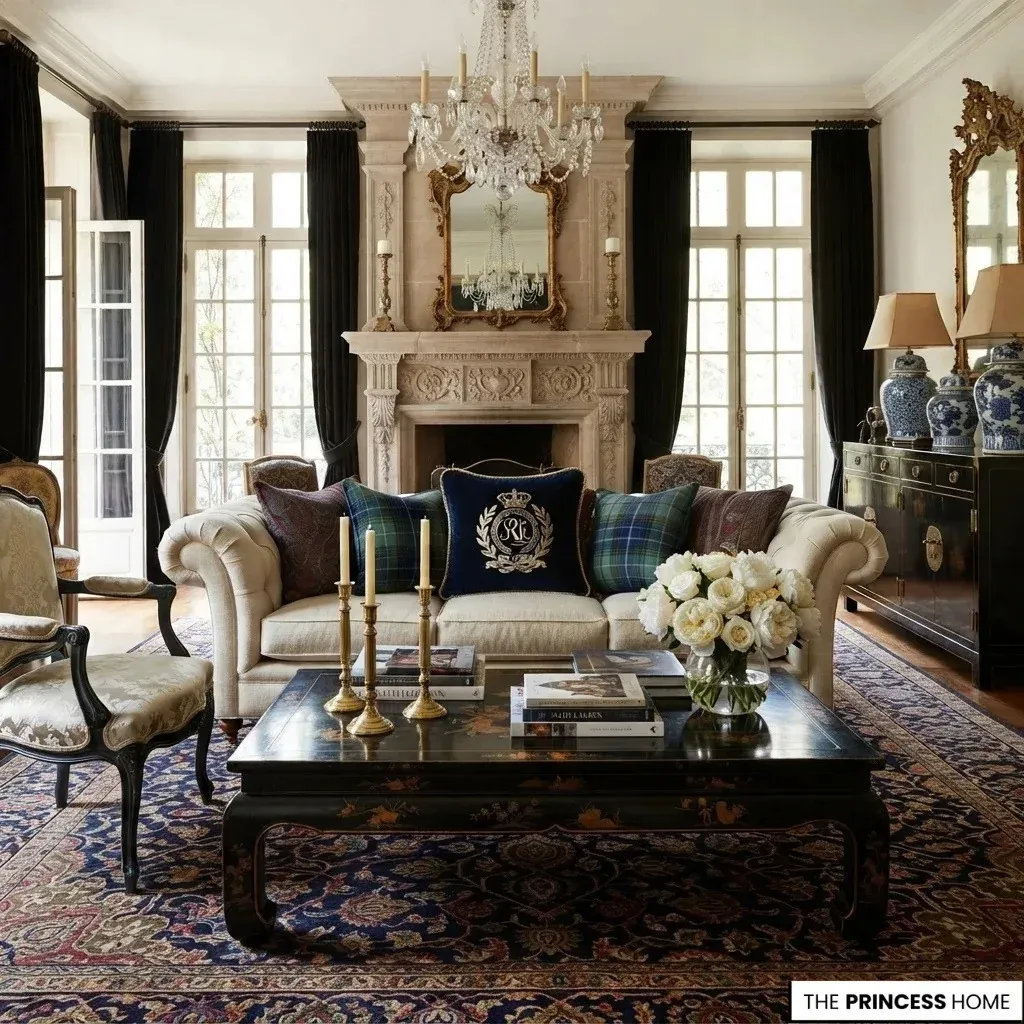
The Ralph Lauren design language can work in different architectural settings because its principles are more adaptable than any single furniture arrangement.
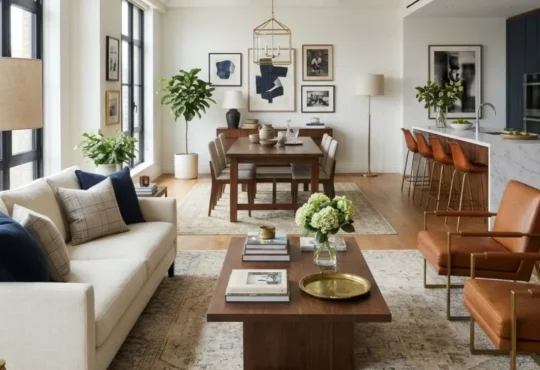
In a traditional living room, let architectural details support richer wood, classic upholstery, and heritage patterns. In a contemporary room, preserve the clean architecture and introduce character through substantial furniture, material contrast, controlled color, artwork, and warm lighting.
In a small living room, reduce the number of major pieces, protect circulation, and leave some floor visible. In a rental, concentrate on reversible elements such as furniture, rugs, lamps, artwork, curtains, and textiles.
When the budget is limited, prioritize spending in this order:
Foundation → Main Seating → Rug and Wood Anchor → Distributed Lighting → Textiles → Personal Objects
This is a practical starting point, not a universal financial rule. The best order may change according to what the room already contains. If the architecture provides a strong focal feature, preserve it rather than spending unnecessarily to create another one.
If a defining architectural feature is unavailable, create a focal relationship through furniture, artwork, lighting, or material contrast rather than introducing unrelated decoration.
One character-rich vintage piece can provide history while simpler, well-chosen pieces handle the rest of the room.
Conclusion
A successful Ralph Lauren inspired living room depends on proportion, tailored comfort, material contrast, controlled pattern, warm lighting, and personal objects—not on a particular sofa or collection of accessories.
Choose the strongest elements first, let them support one another, and leave enough restraint for the room to feel lived in rather than staged. The design language can remain recognizable even when the room contains no Ralph Lauren branded piece.
Further Reading
Explore these related guides for more design inspiration and practical ideas for creating timeless interiors.
- Timeless Ralph Lauren-Inspired Living Room Design
- Creating a Bedroom with Heritage Luxury
- Elegant Kitchen Design Inspired by Ralph Lauren
- A Dining Room That Combines Classic Style and Timeless Luxury
- How to Achieve Ralph Lauren Style on a Budget
- Modern Heritage Interiors for Apartment Living
- Elegant Summer Living with Ralph Lauren Style
- Welcoming Entryways with Classic Elegance
- Timeless Luxury Bathroom Design Ideas
- Creating a Luxurious Ralph Lauren-Inspired Home Office
- Timeless Outdoor Spaces with Ralph Lauren-Inspired Details