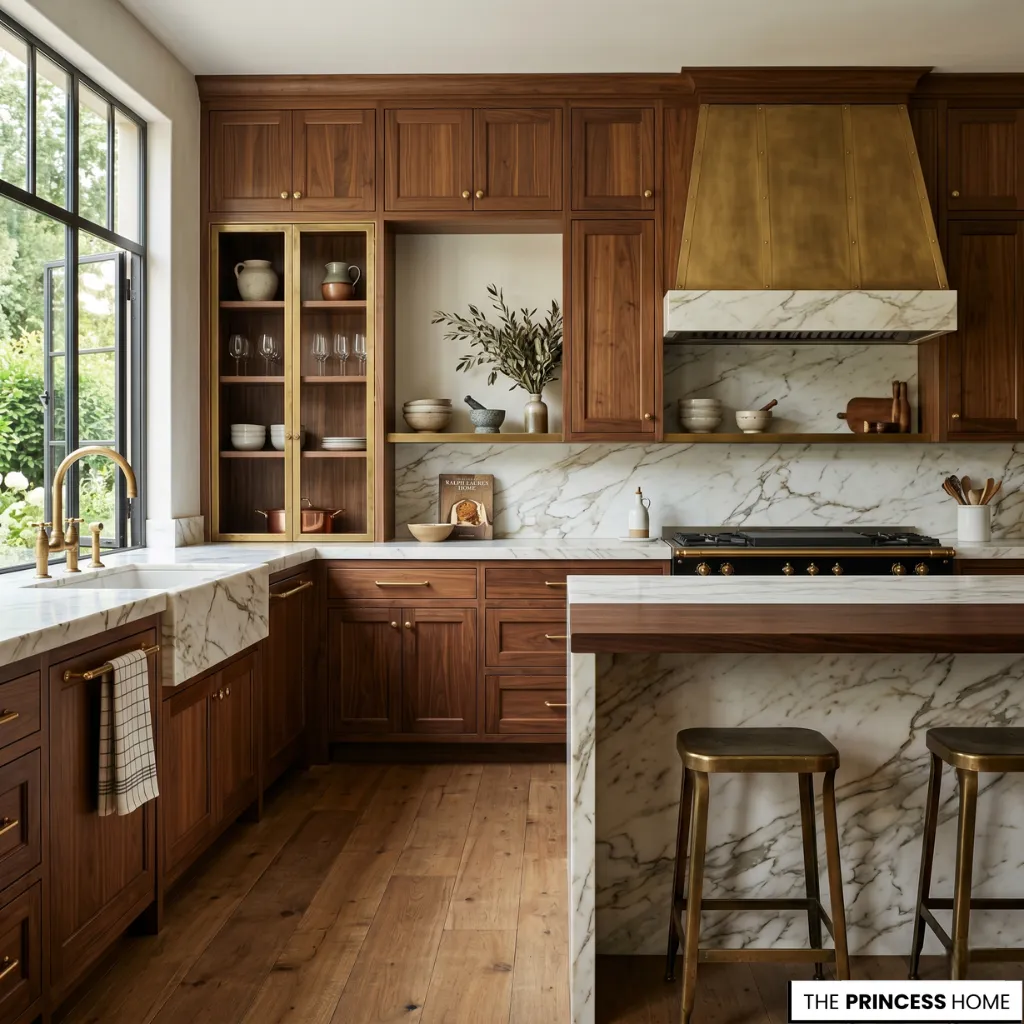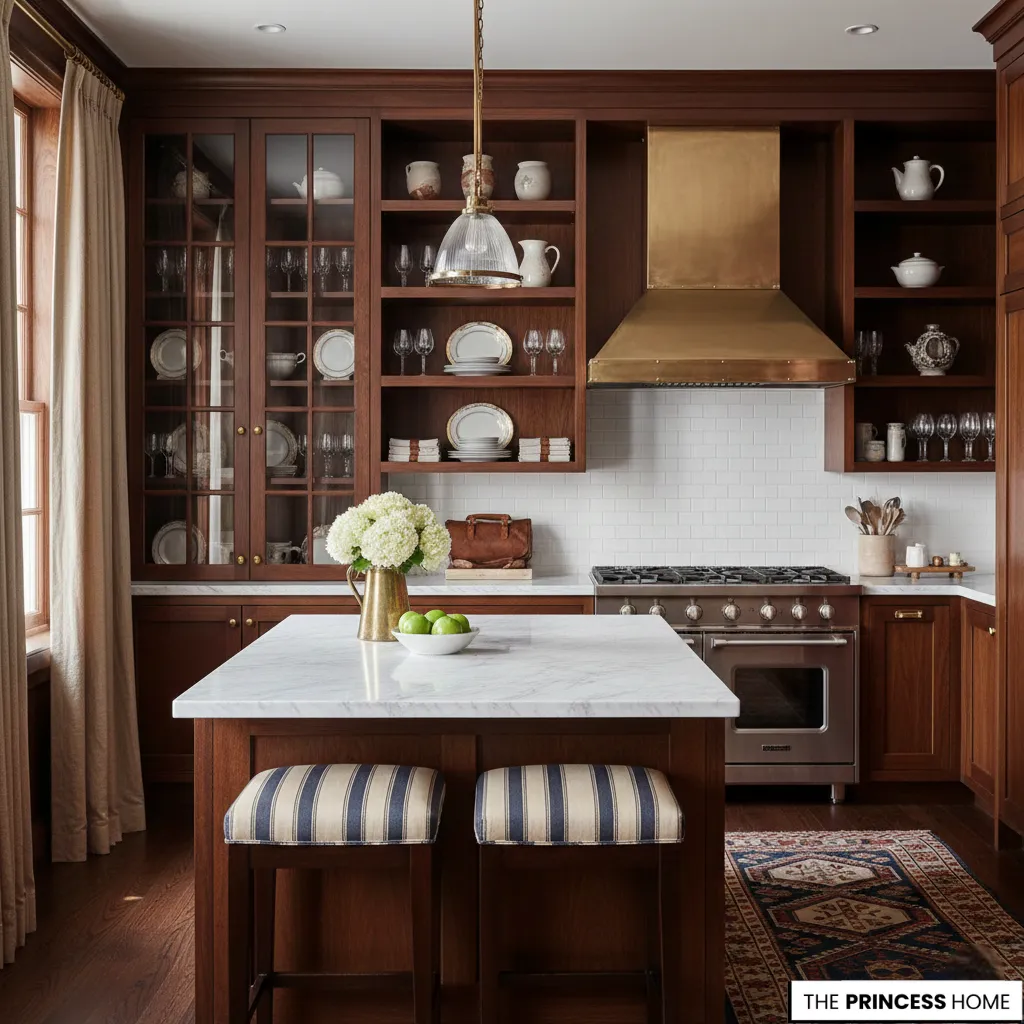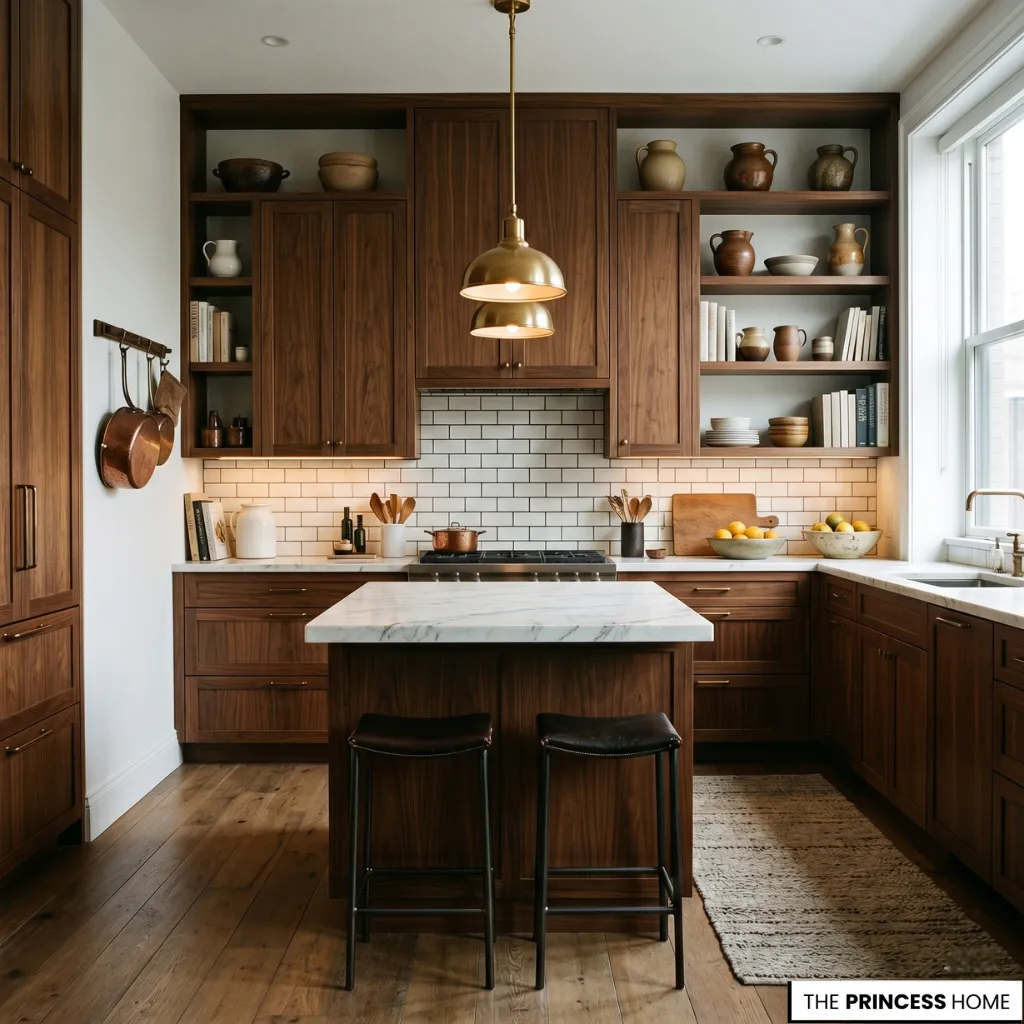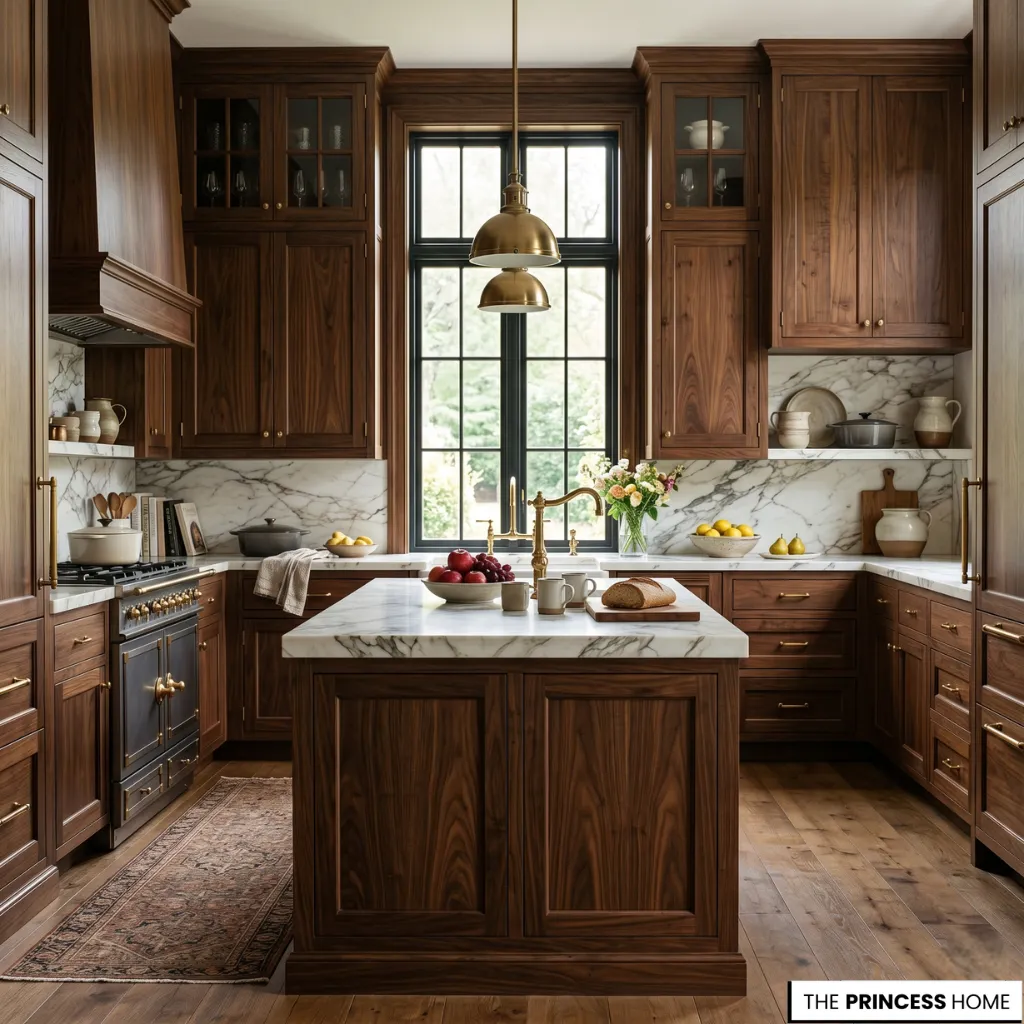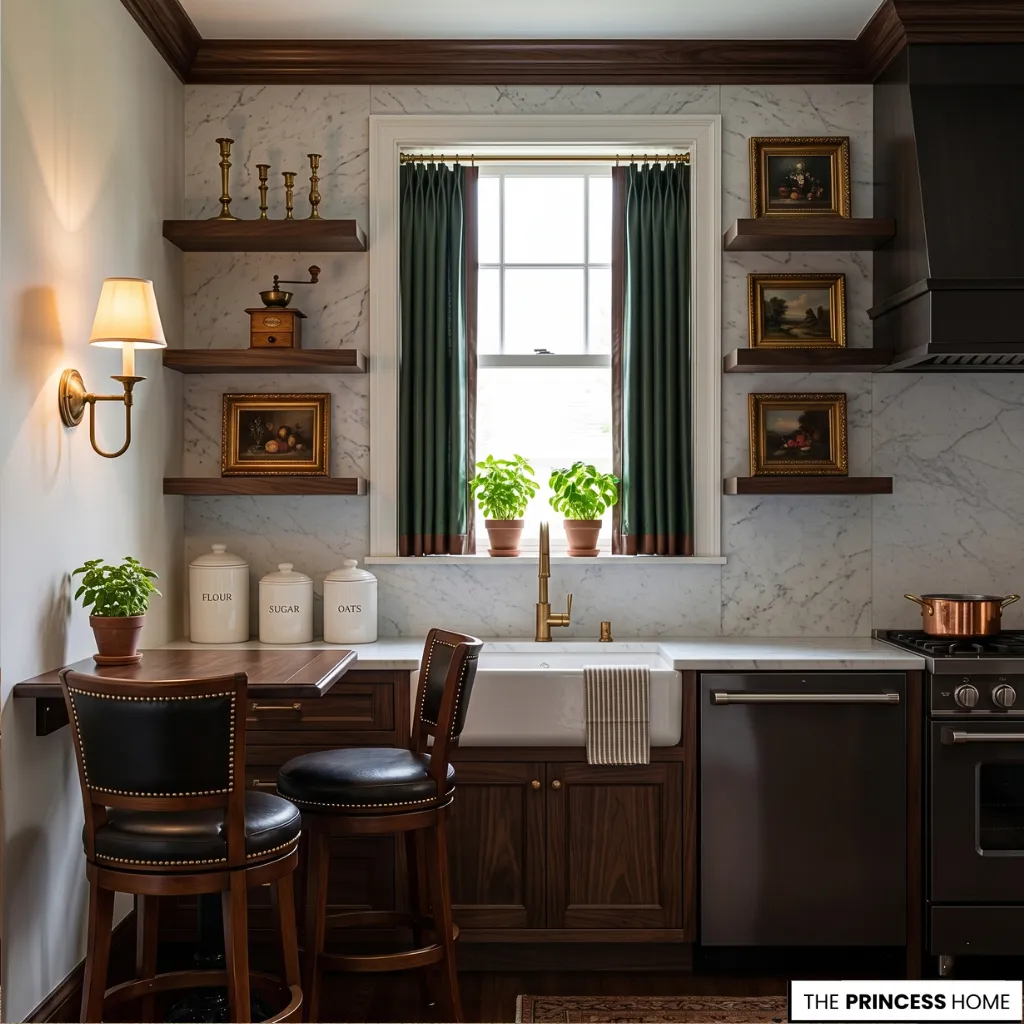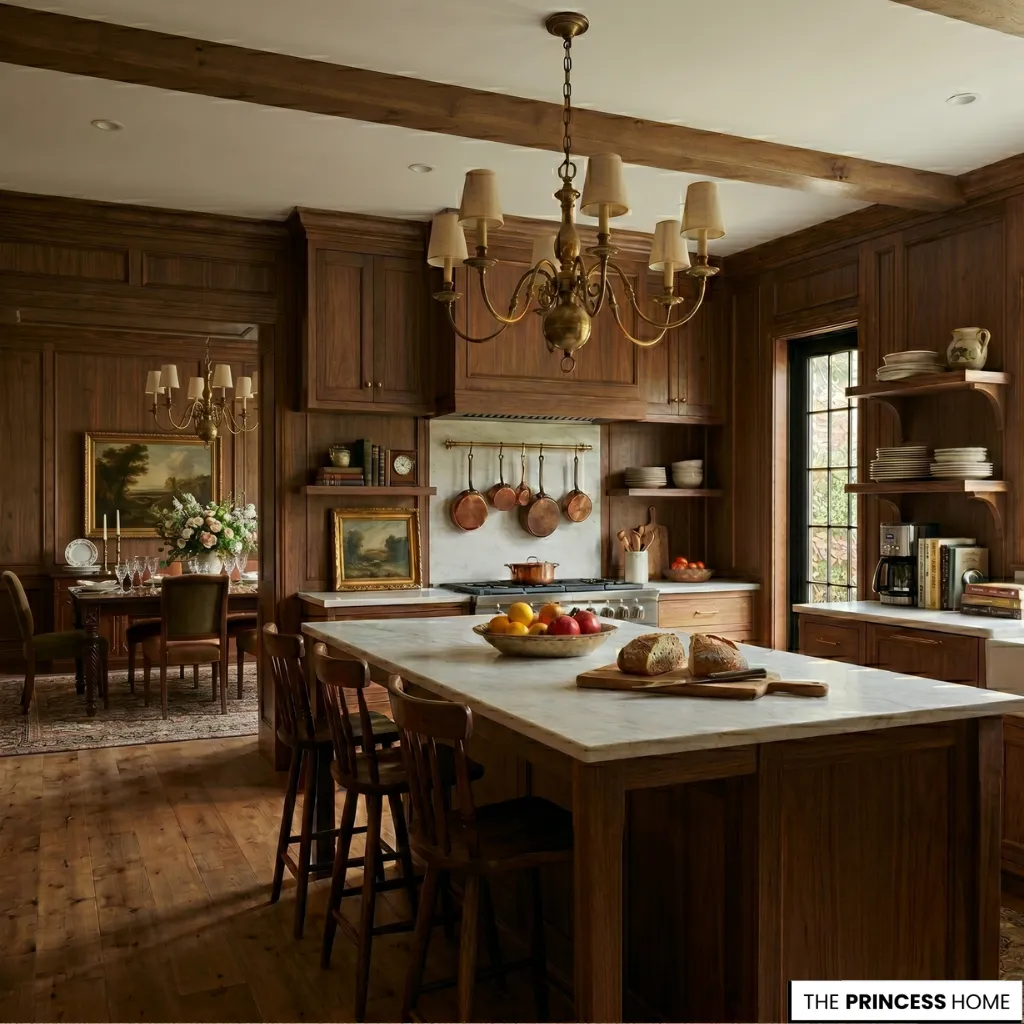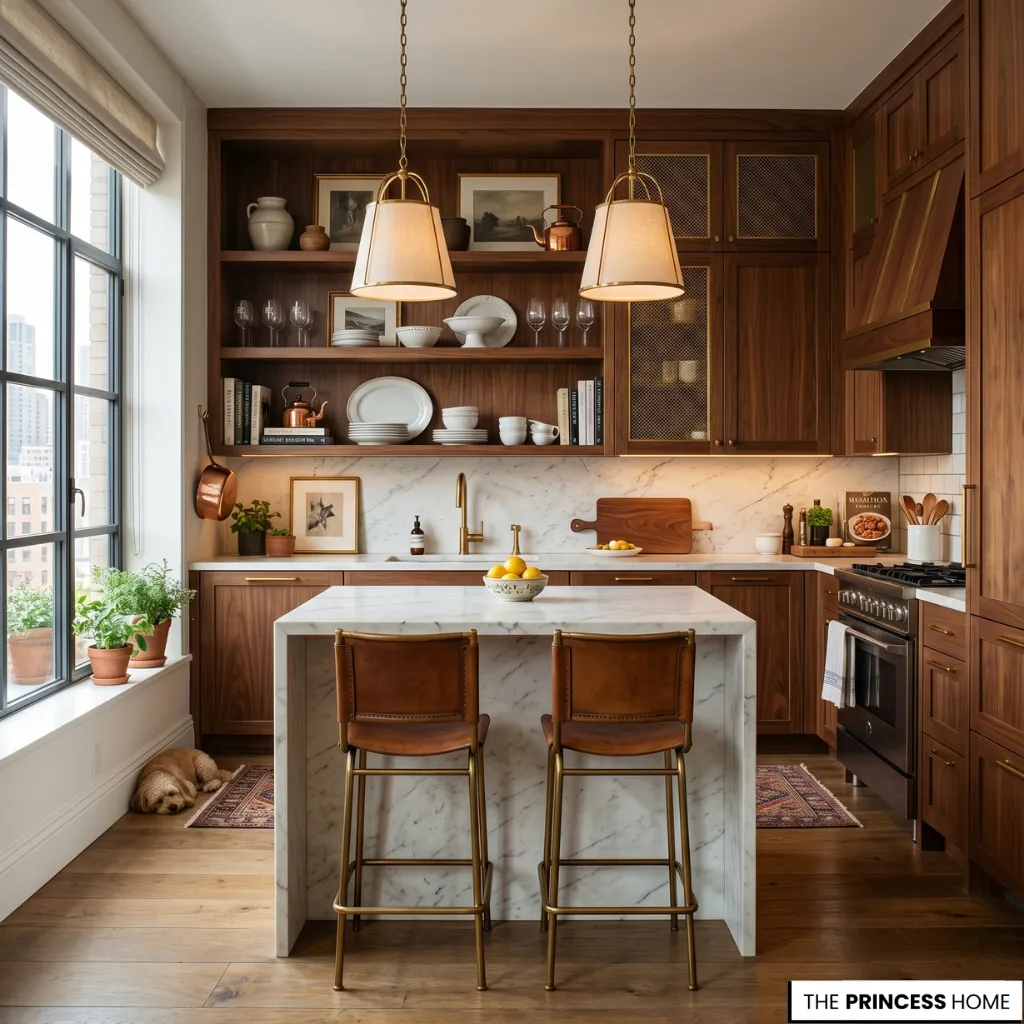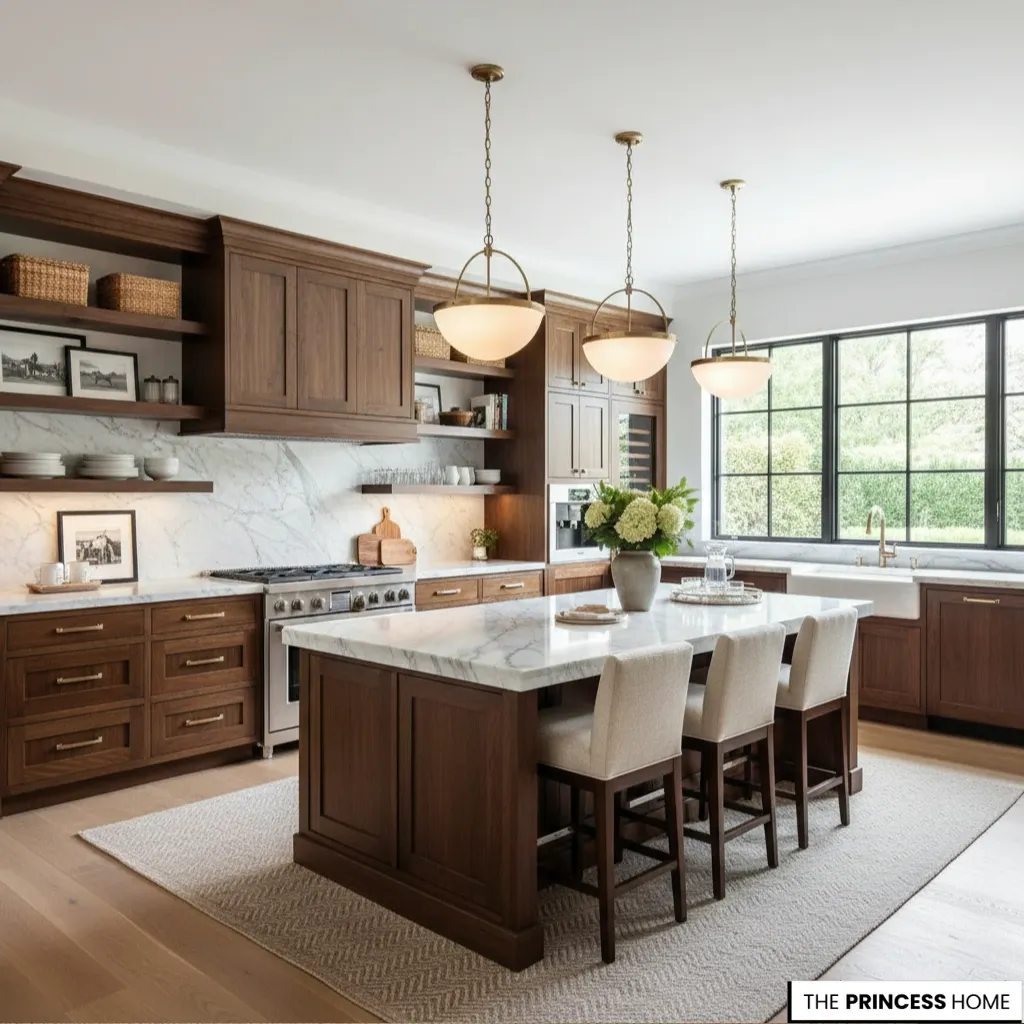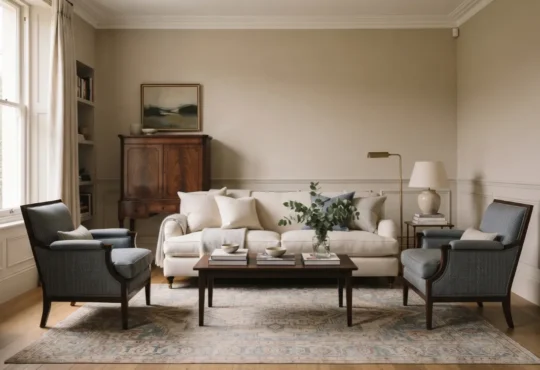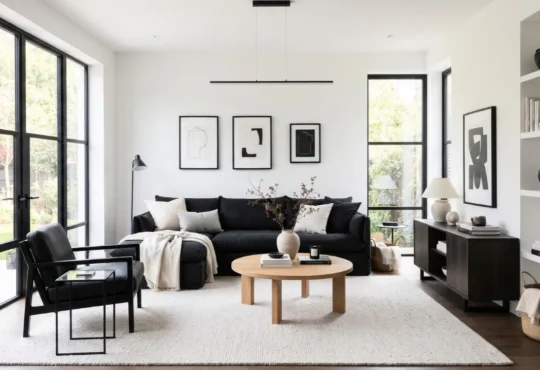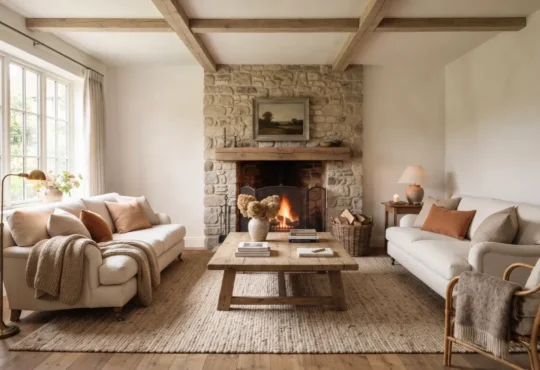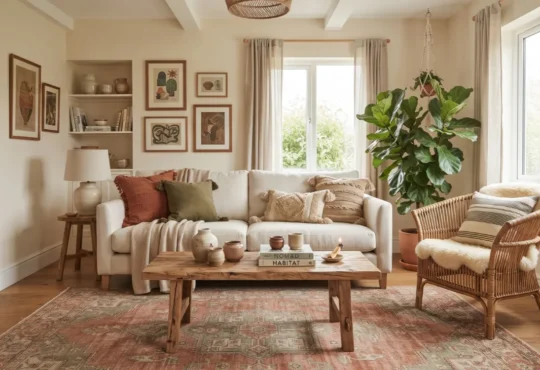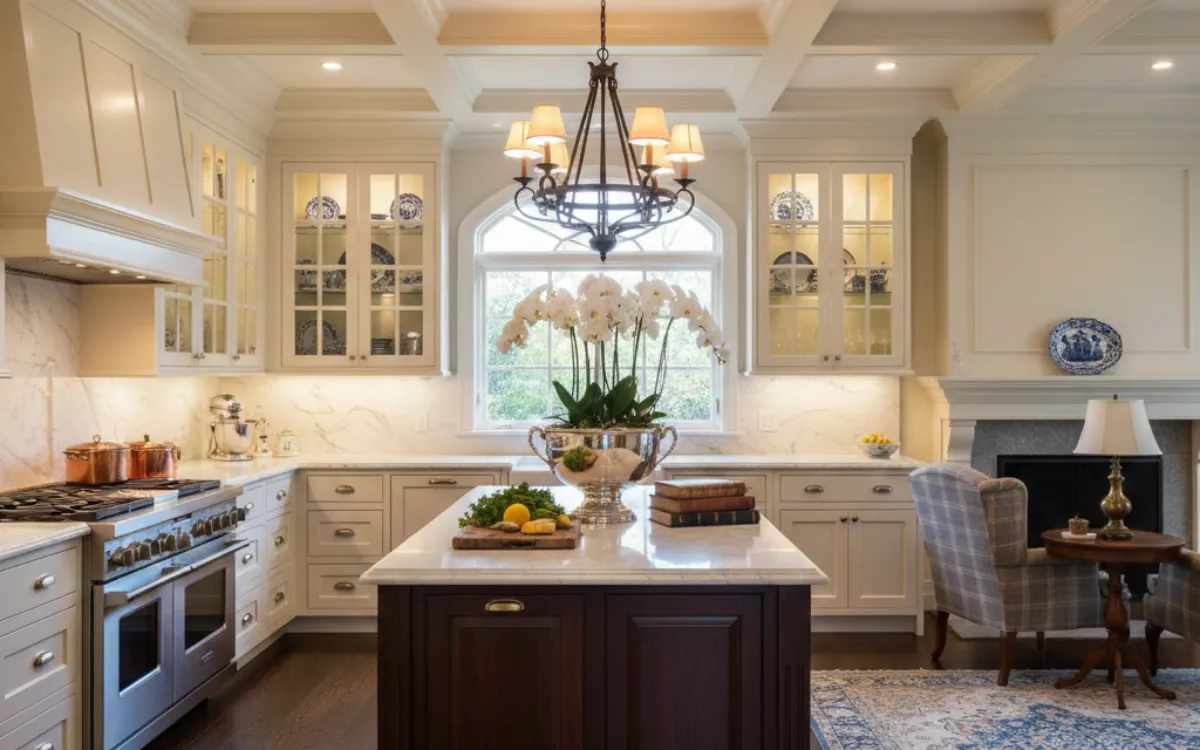
A Ralph Lauren-inspired kitchen combines traditional references, substantial materials, tailored cabinetry, controlled color, warm lighting, and personal character. The challenge is bringing these elements together without making the room feel themed, overly formal, or like a showroom.
Build the kitchen through relationships rather than recognizable symbols. Start with the architecture and cabinetry, then develop the materials, colors, hardware, lighting, patterns, and personal details around them.
Ralph Lauren Kitchen Style
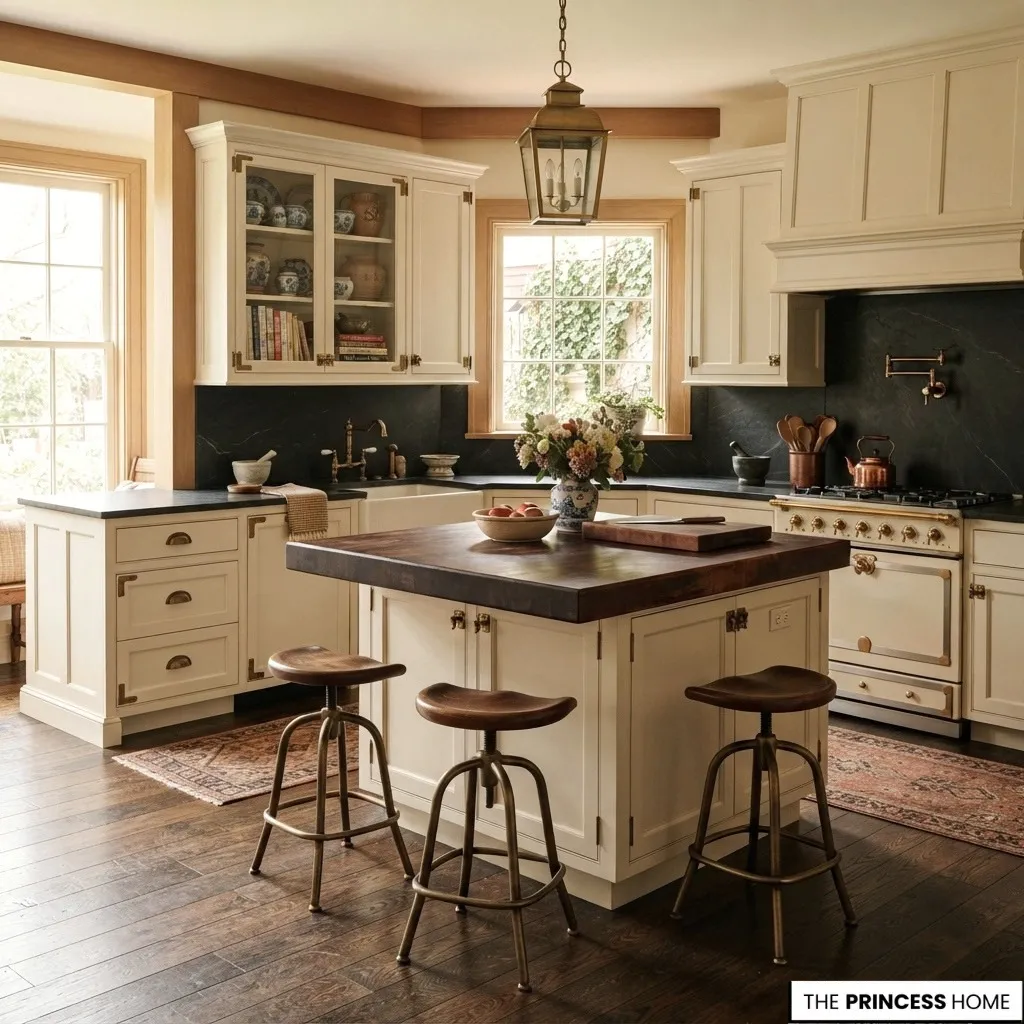
A Ralph Lauren-inspired kitchen draws from American heritage, craftsmanship, comfort, and collected living. Traditional detailing, substantial forms, natural materials, deeper colors, and carefully chosen objects can all contribute to the look.
The style does not depend on one cabinet profile, color, countertop, or decorative motif. Its character comes from how these elements work together.
A kitchen can take this direction through warm wood, cream cabinetry, aged metal, natural stone, tailored lighting, and restrained heritage patterns without relying on obvious Americana symbols.
Another may use darker cabinetry, navy, deep green, or richer wood tones while following the same underlying approach. Think of Ralph Lauren style as a design framework rather than a fixed decorating formula.
For more ideas: Ralph Lauren Home Decor and the Art of Timeless Americana
Establish the Foundation
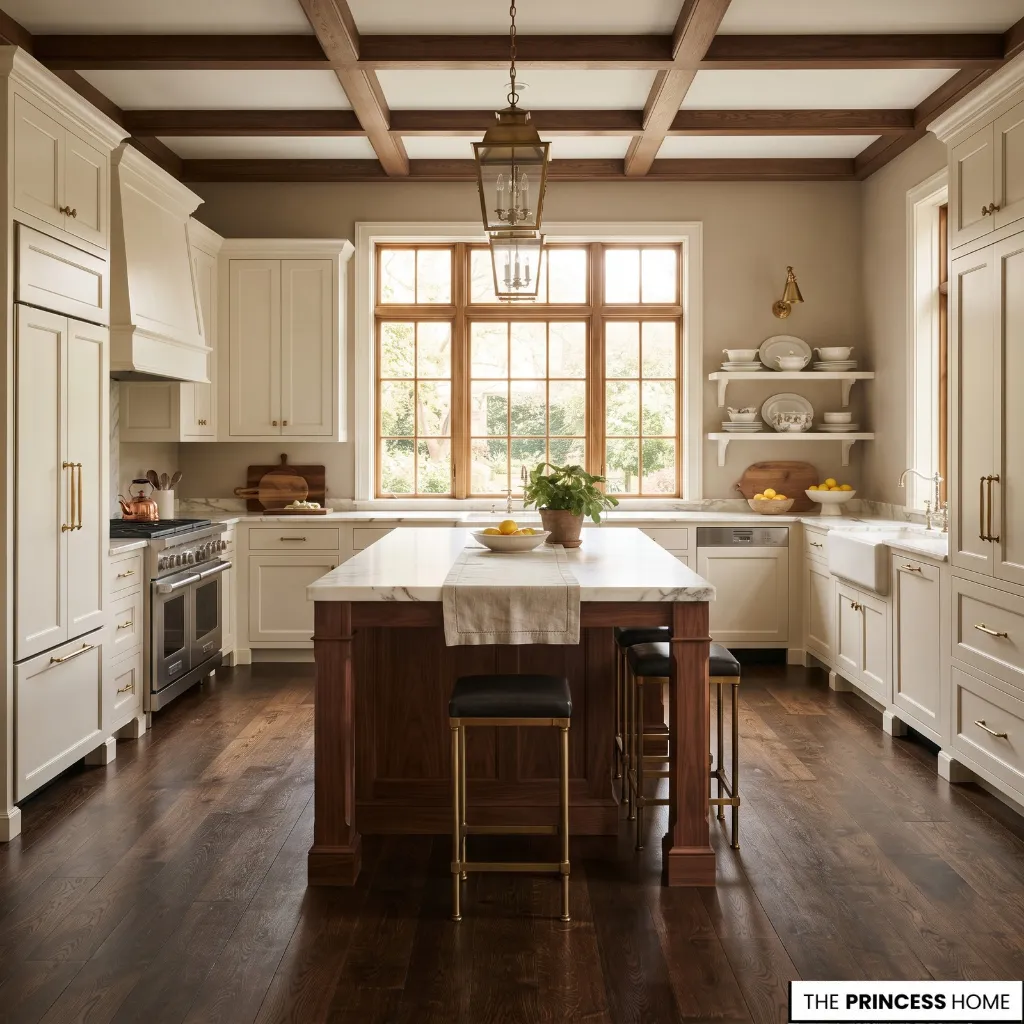
Start with the elements that are hardest to change: the architecture, layout, cabinetry, flooring, windows, ceiling height, and major built-in features. The layout should also support the way the kitchen is actually used.
Whether the room is L-shaped, galley, or open on one side, keep the main preparation, cooking, and cleaning areas connected without forcing the island or furniture into the circulation path. Look at what the kitchen already has before deciding what to replace.
Good woodwork, flooring, stone, or architectural details may provide a stronger starting point than a complete renovation. The island also deserves careful attention because it is often one of the largest visual elements in the room.
Its size, material, and relationship to the surrounding cabinetry should suit the proportions of the kitchen rather than simply fill the available space. If the island includes seating, leave enough room around it for comfortable movement and everyday use.
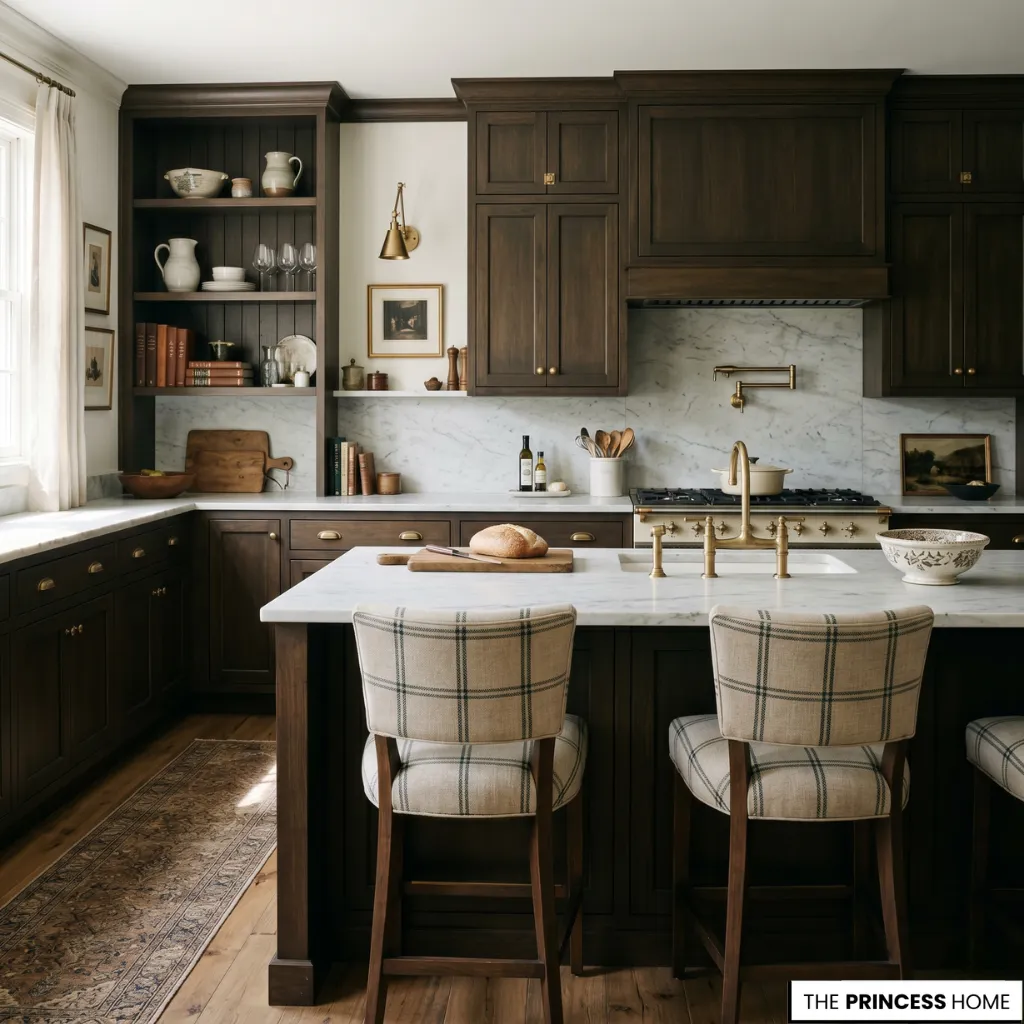
The stools should suit the scale of the island rather than simply fill every available seat, especially in a smaller kitchen. Treat appliances as part of the overall composition from the beginning.
Integrated appliances can keep the cabinetry visually continuous, while exposed appliances can work when their finish and proportions complement the surrounding materials. Choose their placement for everyday convenience first, then consider how visible they will be within the room.
Flooring and windows should also be considered as part of the foundation. Wood, stone, or another durable surface should relate to the cabinetry and adjacent rooms, while window treatments should frame natural light without competing with the kitchen’s main materials.
For an existing kitchen, decide which features should remain, which need refinement, and which work against the intended style. Painting sound cabinetry, changing hardware, improving lighting, or introducing a stronger material can sometimes accomplish more than replacing everything.
Establish the foundation before adding decorative details. Accessories cannot compensate for weak proportions, unsuitable cabinetry, or a poorly planned layout.
For more ideas: Ralph Lauren Inspired Living Room Timeless Design Guide
Choose Kitchen Cabinetry
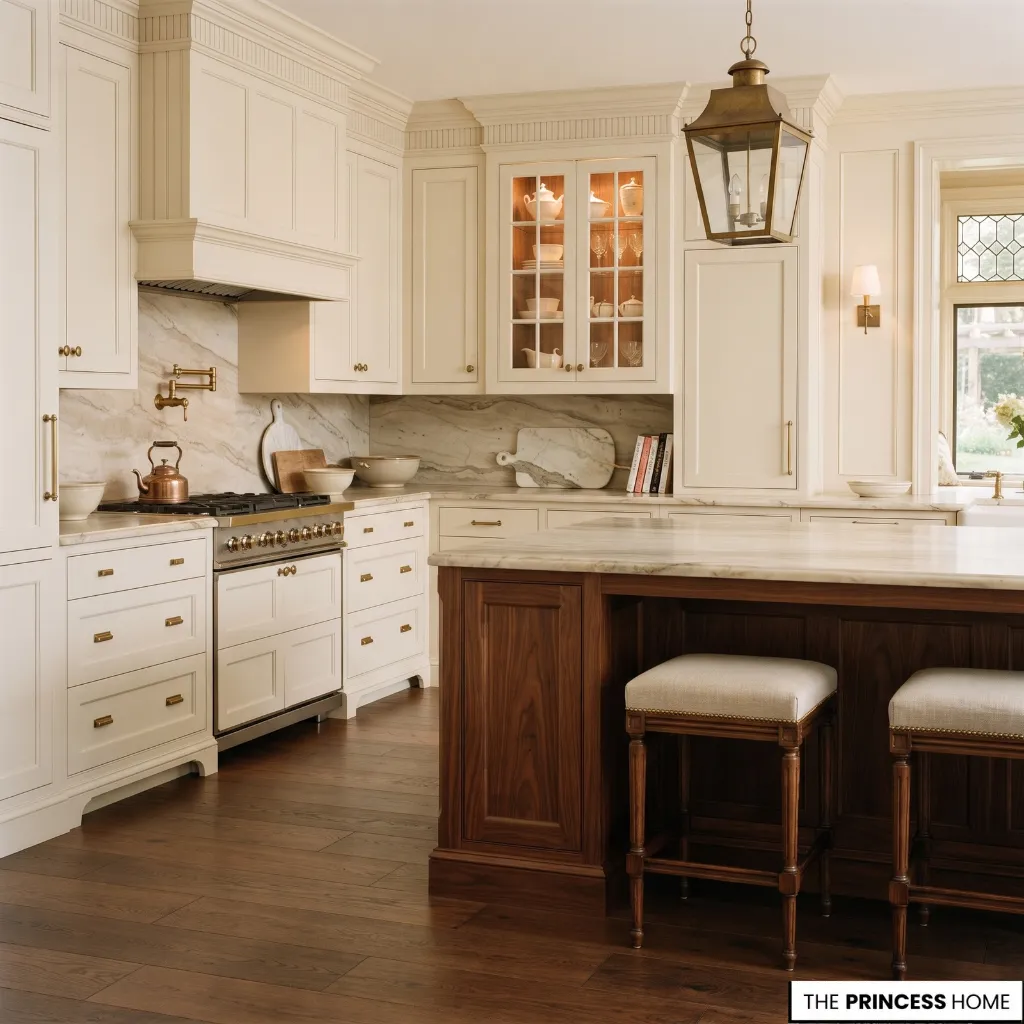
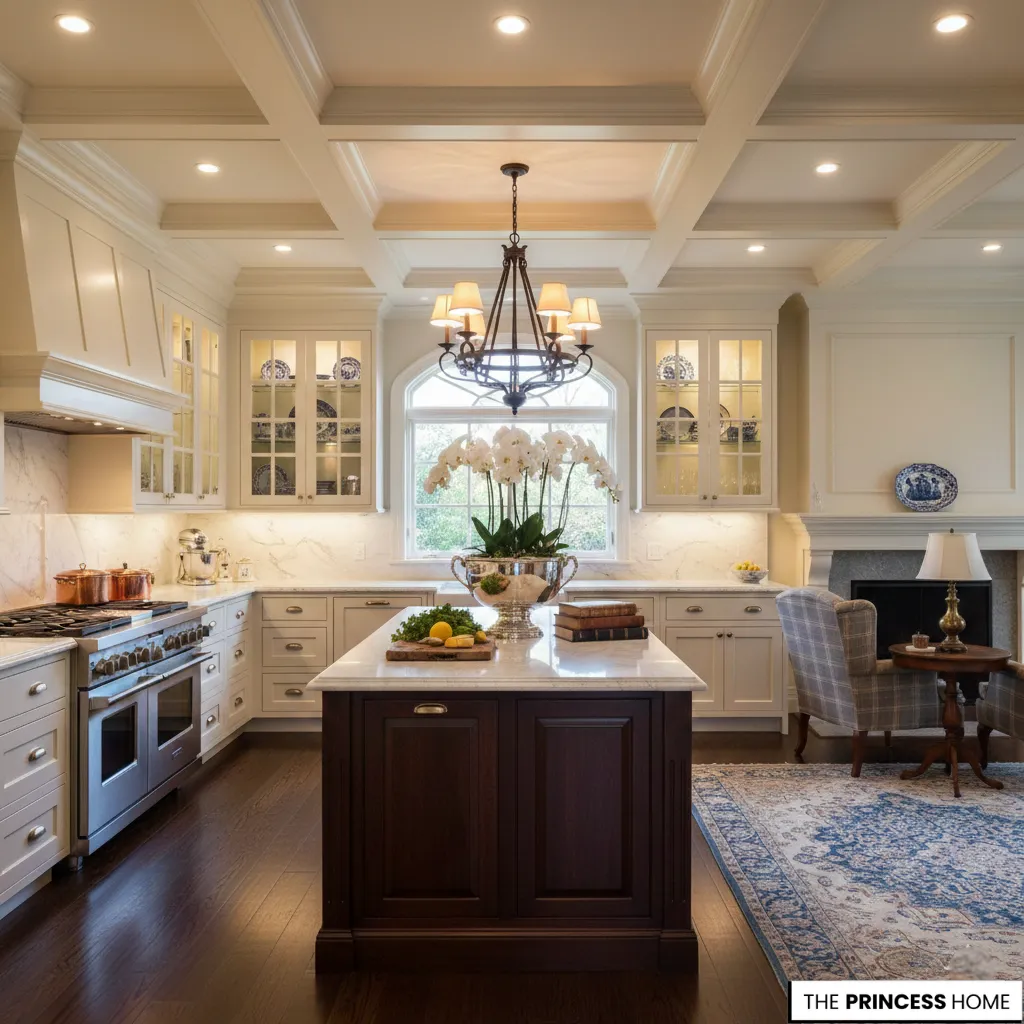
Choose cabinetry with enough visual presence to support a traditional, tailored character. Painted cabinets, warm wood, paneled doors, glass-front sections, and furniture-like detailing can all work when they suit the architecture. Painted cabinetry can keep the kitchen lighter and more classic.
Cream, warm white, muted gray, deep green, and navy offer different ways to develop the style. Wood cabinetry adds more visual weight and can make the room feel warmer and more established. Avoid combining too many cabinet treatments.
Painted perimeter cabinets, a contrasting wood island, several door profiles, open shelving, and multiple decorative finishes can compete with one another. Instead, decide which cabinetry element should carry the most visual weight. If the island is substantial, the surrounding cabinets can be quieter.
If the cabinets have strong traditional detailing, simpler countertops and backsplash materials may provide a better balance. The goal is cabinetry that belongs to the architecture rather than a collection of individually noticeable features.
For more ideas: Modern Ralph Lauren Interiors Design Ideas for Apartments
Layer Rich Materials
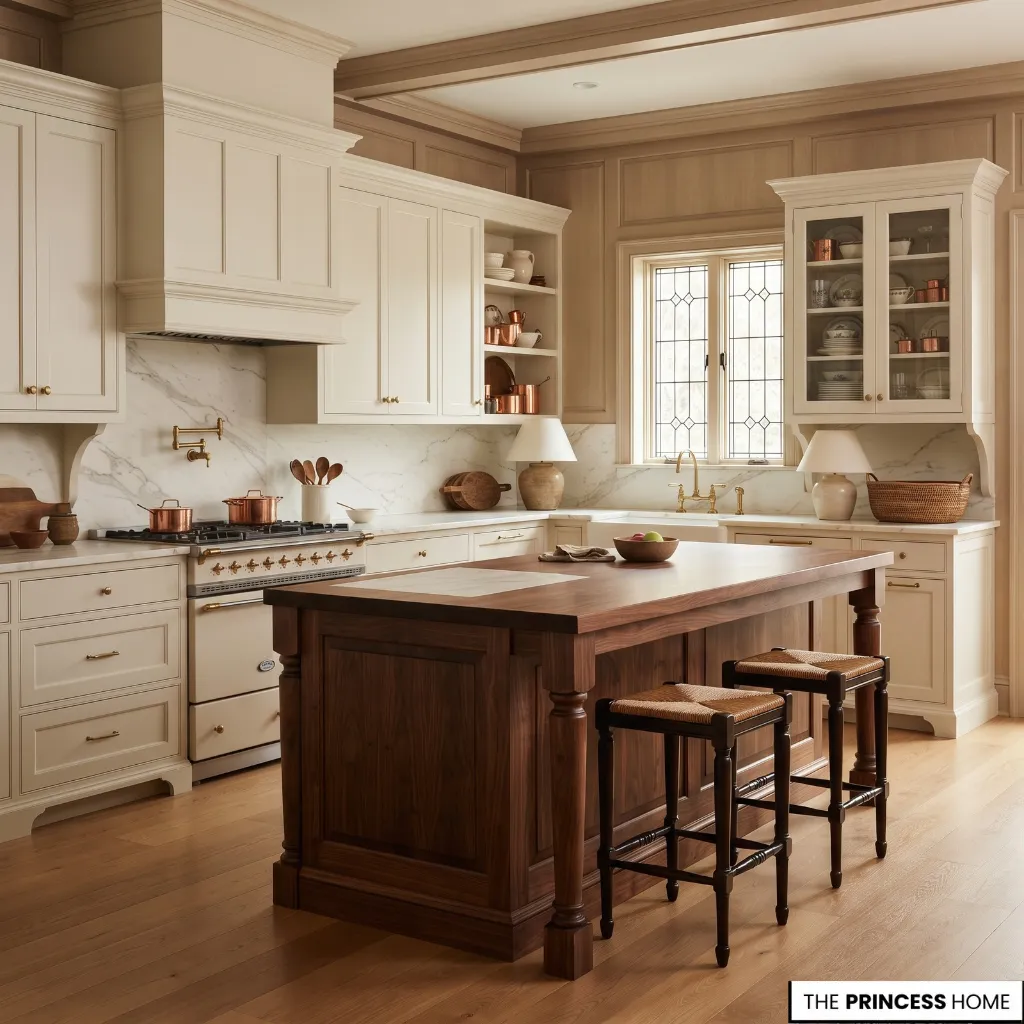
Use a small number of substantial materials and let their differences provide variety. Warm wood, natural stone, metal, tile, and glass can work together when each has a clear role. A warm wood island can sit comfortably with stone countertops and aged metal hardware.
Painted cabinets can provide a quieter background for expressive stone. A smooth countertop can be balanced by a more tactile runner, wooden stool, or everyday accessory. Treat the countertop and backsplash as a pair rather than choosing them independently.
A strong stone countertop can be balanced by a quieter backsplash, while a more restrained countertop allows the backsplash to introduce texture or pattern. The cabinetry should remain part of this relationship rather than competing with both surfaces.
Natural stone can provide a strong visual anchor, whether the choice is marble, soapstone, or another suitable surface. The important decision is not simply which expensive material to use, but where the strongest material should appear and which surfaces should remain quieter.
Avoid making every surface a statement. Highly patterned stone, elaborate tile, detailed cabinetry, several metal finishes, and strong wood grain can compete when all are used at once. Choose one or two dominant material relationships, then let the remaining finishes support them.
For more ideas: Ralph Lauren Bathroom Decor Ideas for Timeless Luxury Interiors
Use Ralph Lauren Colors
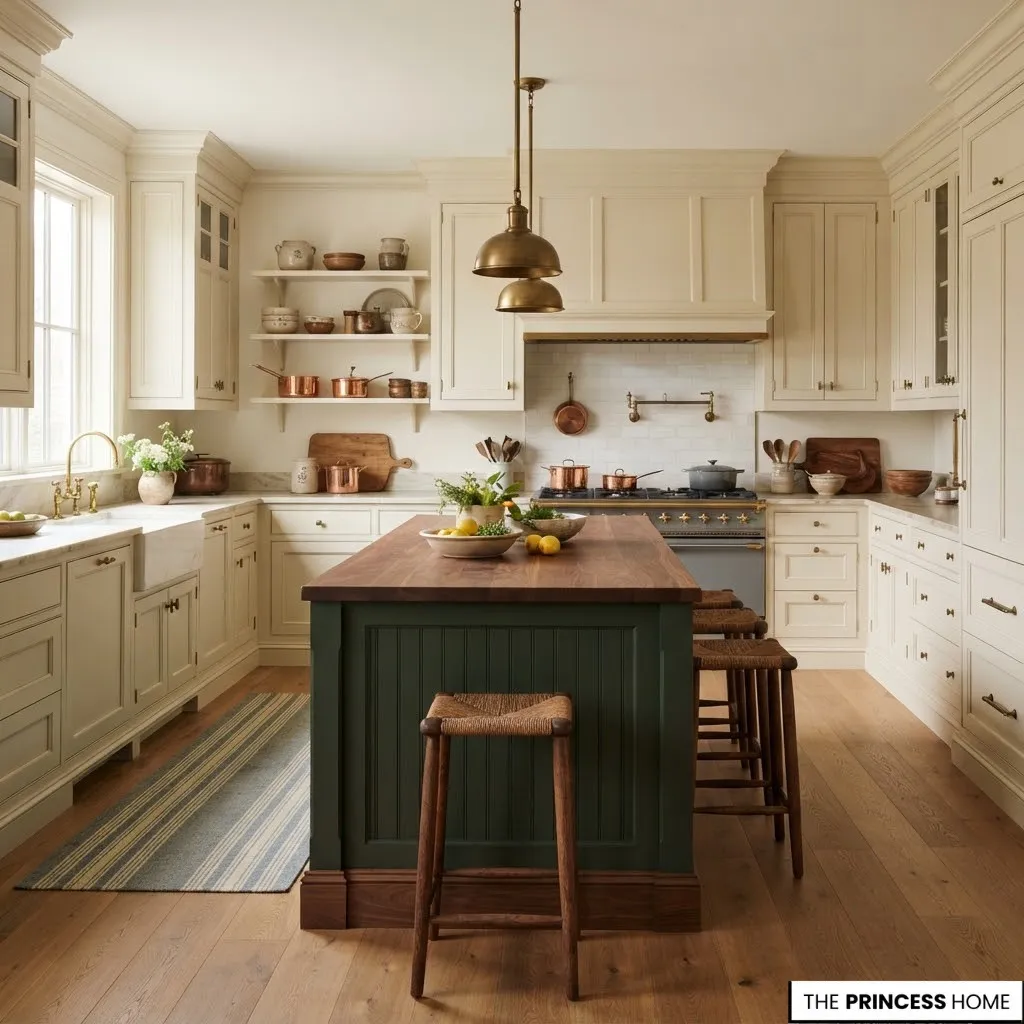
Build the palette from a base color, a supporting tone, and a smaller accent rather than trying to use every color associated with the style. Warm white, cream, ivory, taupe, warm gray, brown, and natural wood provide quieter foundations.
Navy, deep green, burgundy, muted blue, and other deeper tones can introduce stronger character. A dark color does not need to cover the entire kitchen. Navy cabinetry on an island, deep green lower cabinets, dark wood, or a darker painted section can provide contrast while allowing the rest of the room to remain lighter.
If the kitchen already has pale cabinetry, introduce more character through darker hardware, wood, patterned textiles, artwork, or selected accessories rather than repainting everything. Do not treat navy, green, burgundy, or brown as a required Ralph Lauren palette.
The more useful question is whether the colors work with the architecture and fixed elements already in the room. Countertops, flooring, appliances, windows, and adjacent rooms all influence the right color balance. A palette should belong to the whole space rather than exist independently from it.
When appliances remain visible, their finish should also be considered as part of the palette. Stainless steel, black, white, or integrated fronts can each work, but the choice should relate to the cabinetry, hardware, countertops, and other major surfaces rather than appear as an unrelated accent.
For more ideas: Ralph Lauren Summer Style for Elegant Seasonal Living
Add Tailored Hardware
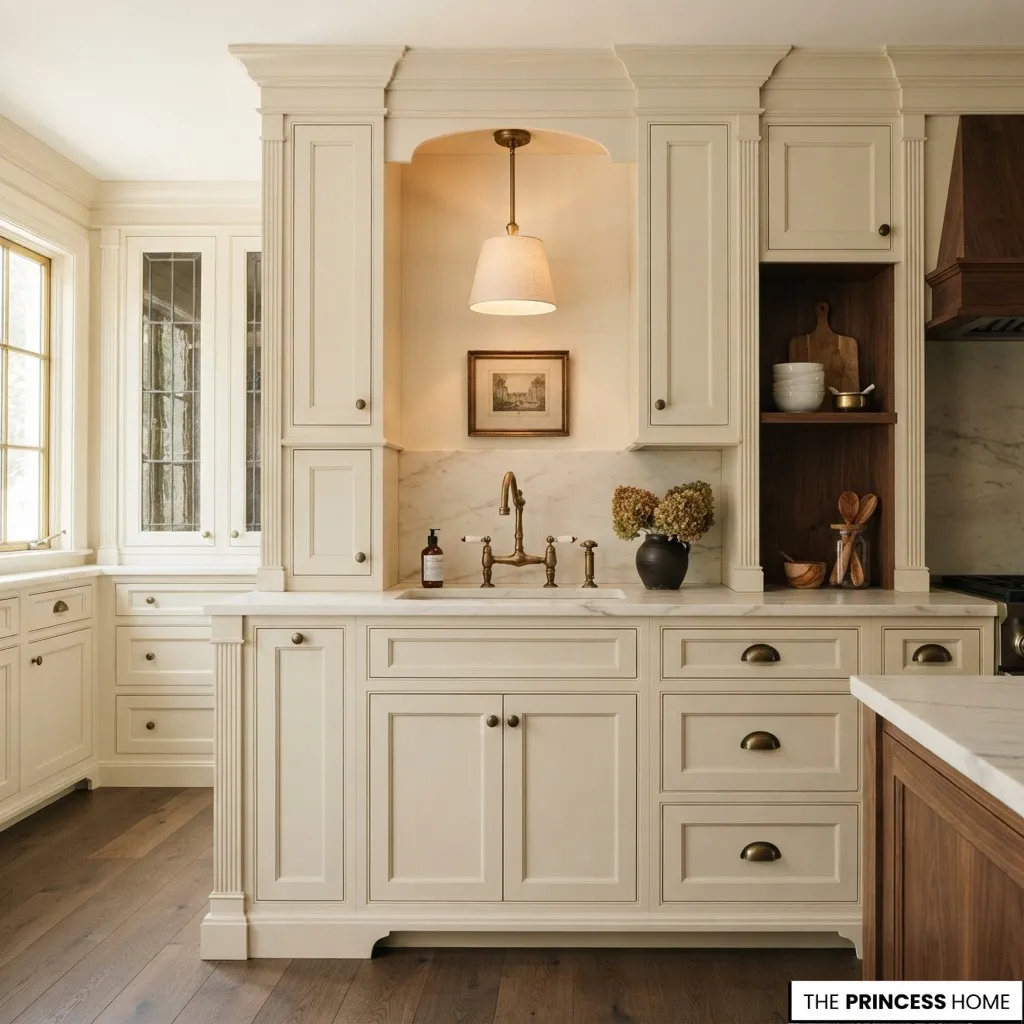
Choose hardware in relation to the cabinetry, countertop, faucet, lighting, and other metal details.Aged brass, unlacquered brass, bronze, and pewter can support a traditional or collected direction, while other finishes can work when they suit the architecture.
The goal is coordination rather than perfect matching. Metal finishes do not always need to be identical, but they should appear intentional together. Avoid selecting brass, bronze, or another finish simply because it is associated with luxury.
A finish that works beautifully in one kitchen may feel disconnected in another because of the cabinet color, wood tone, or surrounding materials. If the cabinetry is visually strong, simpler hardware may be enough. If the cabinets are quieter, hardware can contribute more character.
Shape Warm Lighting
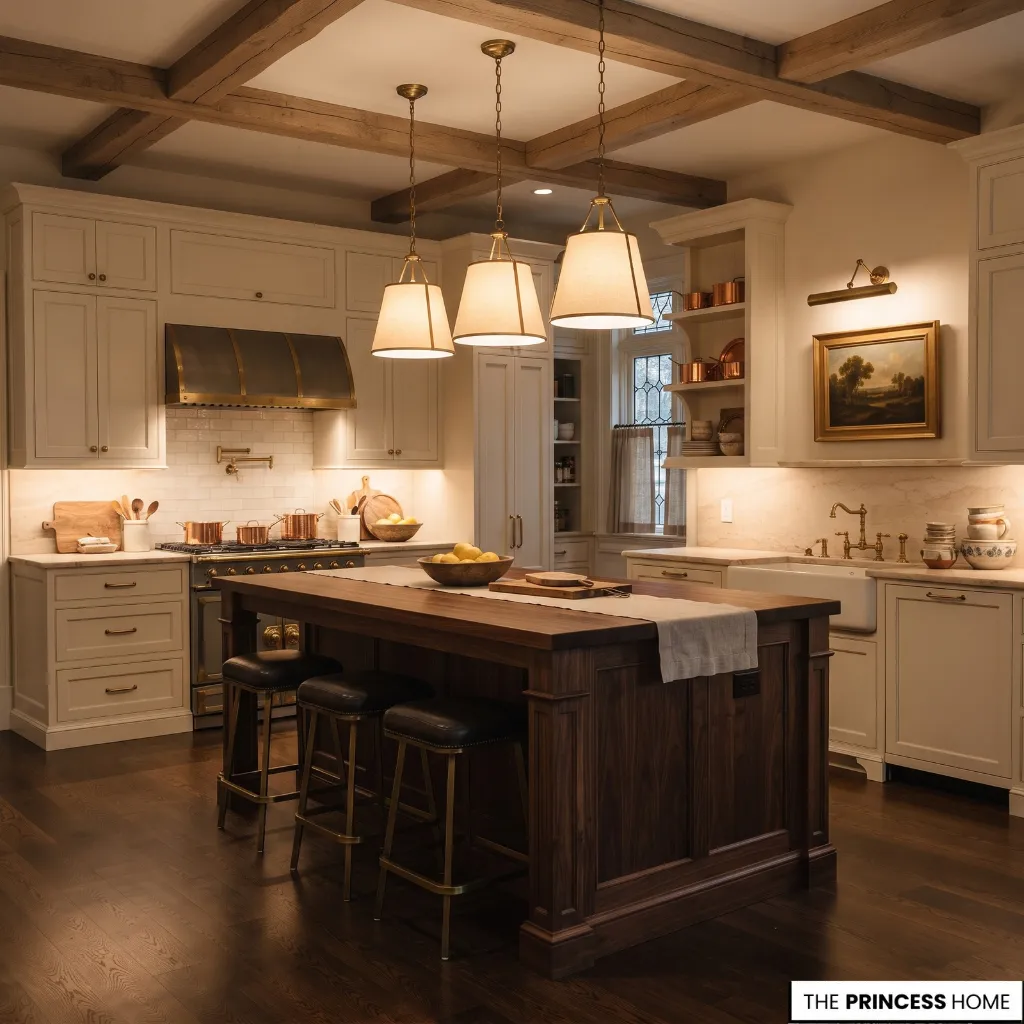
Plan lighting as part of the kitchen rather than as a final decorative layer. A useful lighting plan combines general illumination, task lighting, and decorative or architectural lighting.
Pendants over an island can provide both function and visual structure, while sconces or picture lights can highlight walls, shelves, artwork, or architectural details where appropriate. Warm residential light can help wood, stone, and painted surfaces read naturally.
Around 2700K can serve as a practical starting point, but it is a guideline rather than an official Ralph Lauren specification. The final choice should also consider daylight, bulbs, finishes, and the rest of the home. Use lighting to reveal the materials and details you deliberately selected.
Wood grain, stone, cabinetry, and metal finishes should remain clear without the entire kitchen being illuminated with the same intensity. Avoid relying on one central ceiling fixture to do everything. It can make a carefully detailed kitchen feel flat and overly functional.
Decorative fixtures should also match the scale of the room. Large pendants can suit a substantial island, while oversized fixtures can overwhelm a smaller kitchen.
For more ideas: Ralph Lauren Home Office Decor Create a Luxurious Workspace
Introduce Heritage Patterns
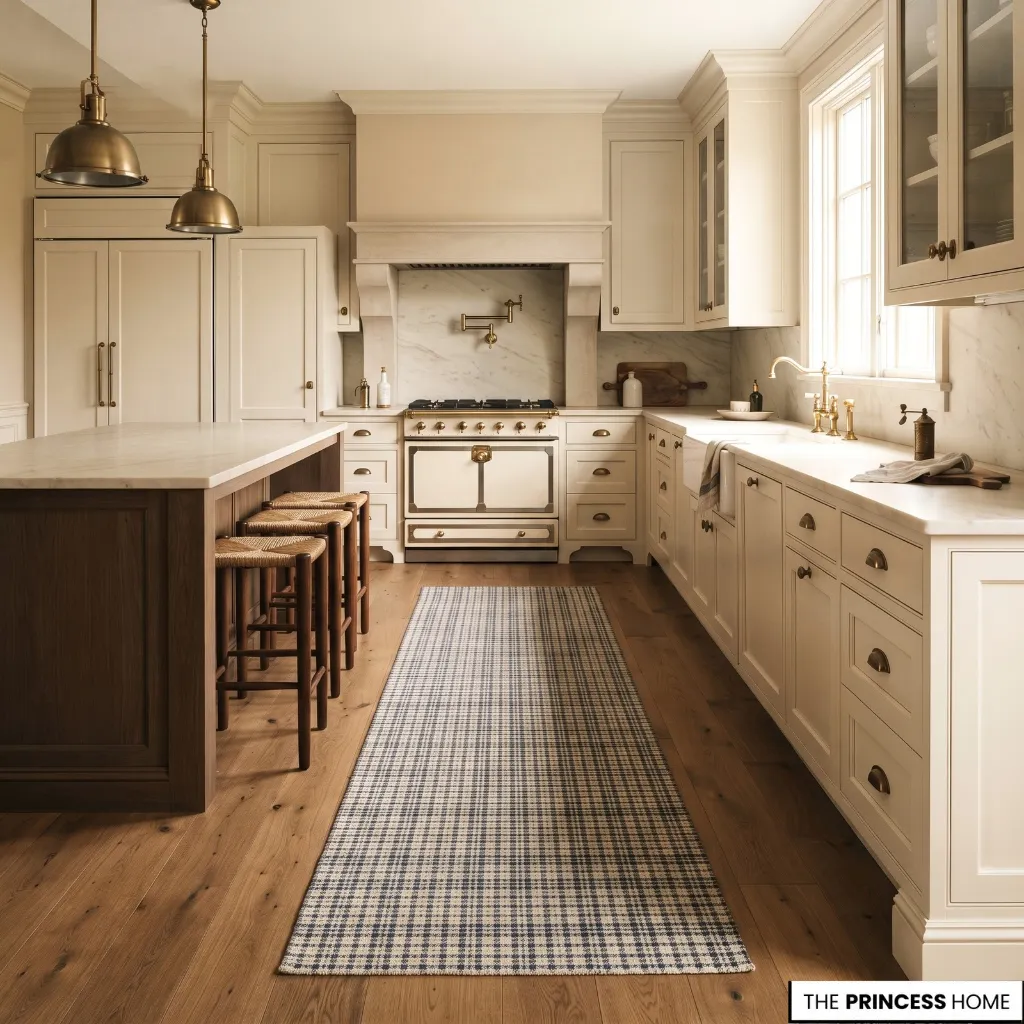
Use patterns selectively to bring heritage character into the kitchen. Plaid, checks, stripes, and traditional textile patterns can appear through counter stools, runners, window treatments, cushions, or other small elements. They are especially useful when the main cabinetry and surfaces are relatively restrained.
Choose one clear pattern direction rather than repeating the same motif throughout the room. A checked runner may be enough when the cabinetry already has strong detailing. Heritage references should support the kitchen rather than become its subject.
Too many Americana, equestrian, or traditional motifs can make the room look deliberately themed. If the kitchen already has patterned stone or detailed cabinetry, keep textiles quieter. If the architecture is simpler, one carefully chosen pattern can carry more of the character.
For more ideas: Ralph Lauren Dining Room Style: How to Achieve Timeless Luxury at Home
Create a Collected Kitchen
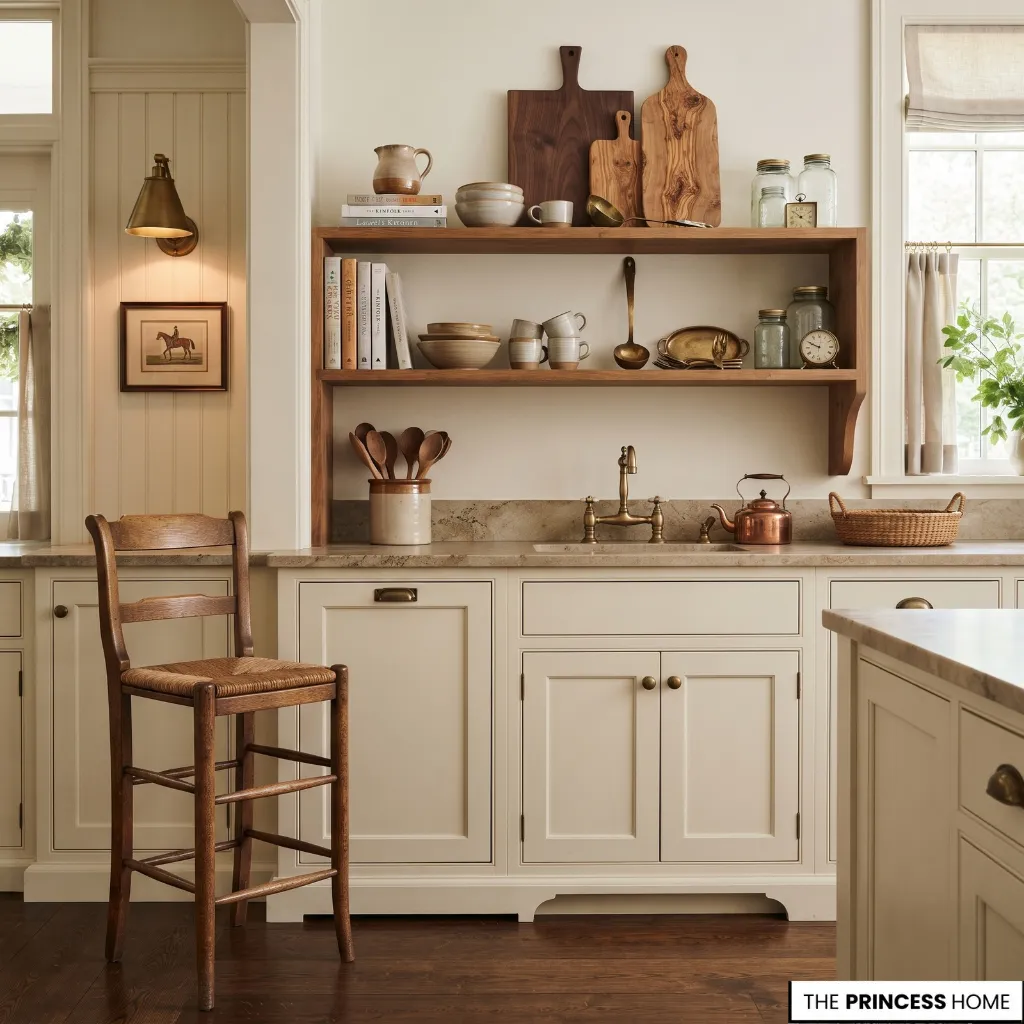
Give the kitchen room for useful and personal objects. Cookbooks, ceramics, wooden cutting boards, serving pieces, artwork, vintage objects, and everyday vessels can make the space feel connected to real life.
Open shelving can display some of these pieces, but it should not become an excuse to fill every available surface. Choose objects because they belong to the way the kitchen is used or because they have personal meaning.
A collection of useful ceramics can feel more convincing than a shelf filled with decorative objects chosen only to create an aesthetic. Keep the arrangement edited. Leave enough open space for individual pieces to remain visible, and avoid giving every object the same decorative importance.
A collected kitchen should look as though it has developed through use and personal choices. Meaningful objects, useful pieces, and a few heritage references should support the room without turning it into a staged recreation.
For more ideas: Ralph Lauren Style on a Budget Timeless Luxury for Less
Adapt the Style
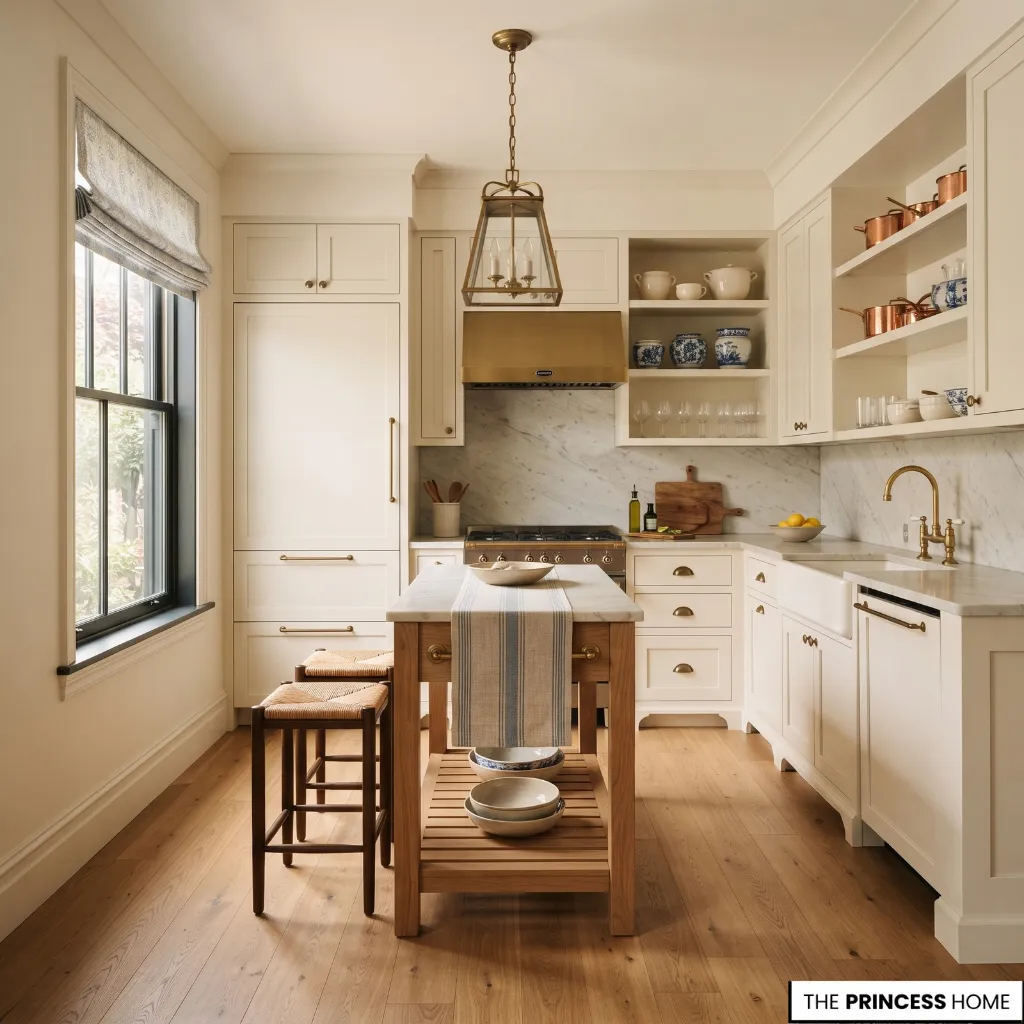
A Ralph Lauren-inspired kitchen can work with different architectural styles, sizes, and budgets. The key is to preserve the design logic rather than reproduce one particular room.
In a modern kitchen, keep clean contemporary architecture when it works and introduce the style through warmer materials, traditional hardware, richer colors, tailored lighting, and selected heritage details. The kitchen does not need to become fully traditional.
In a small kitchen, make fewer and stronger decisions. Choose one clear cabinetry direction, one dominant material relationship, and a controlled color palette. Do not shrink every element simply because the room is small. Instead, limit competing pieces and protect circulation and open space.
For a limited budget, prioritize the decisions that establish the design language. Start with the foundation and cabinetry appearance, then consider the main visual anchor, countertop or existing-surface improvements, lighting, hardware, textiles, and decorative details.
If existing cabinets are sound, repainting them and changing the hardware may be more effective than replacing them with unrelated lower-cost cabinets.
If an original material or architectural feature is unavailable, look for an alternative that performs the same visual or practical role rather than choosing a substitute simply because it is cheaper.
For more ideas: Ralph Lauren Entryway Decor Ideas for Elegant First Impressions
Avoid Common Mistakes
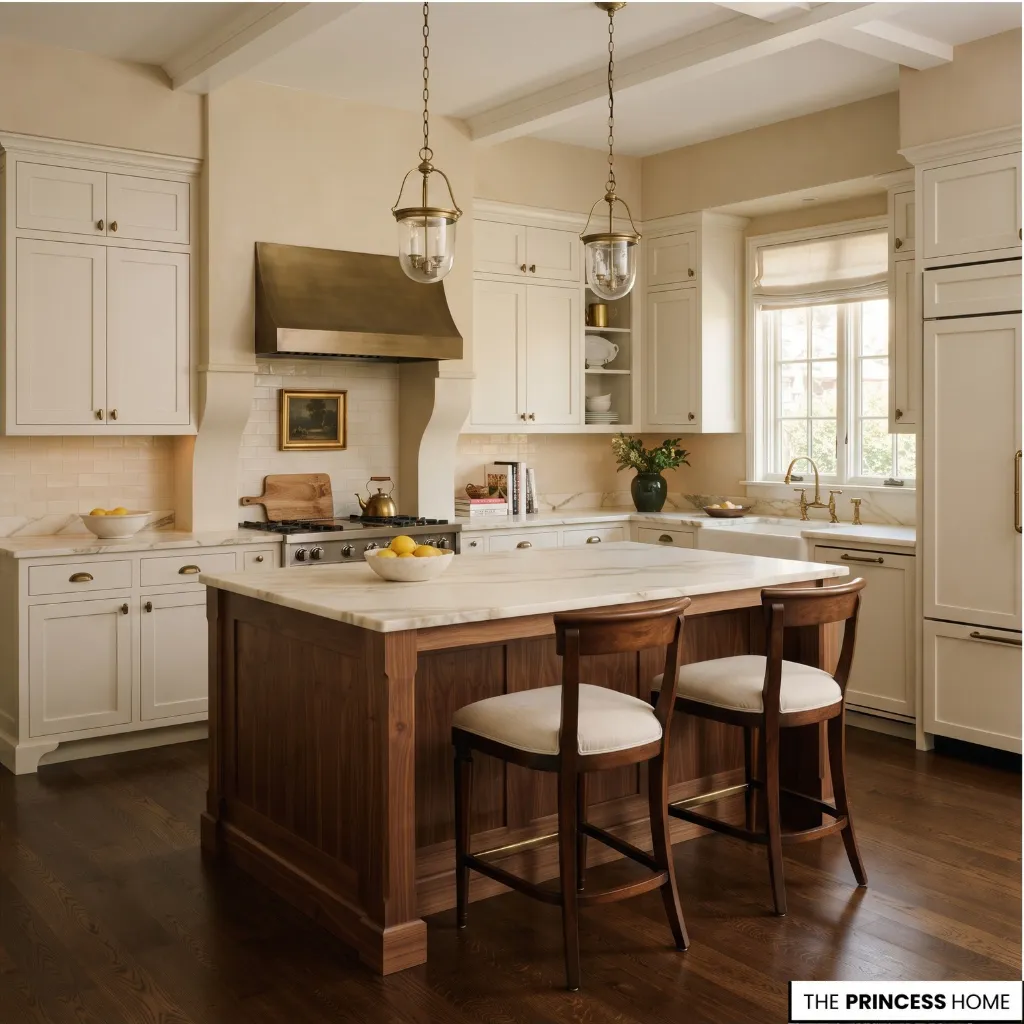
Turning the kitchen into a theme. A few heritage references can establish the direction, but too many Americana or equestrian objects can overwhelm the actual design. Let the architecture, cabinetry, materials, and color carry most of the identity.
Making everything dark. Deep colors and dark wood can work well, but the entire kitchen does not need to be dark. Balance deeper tones with cream, stone, lighter surfaces, or carefully placed contrast.
Using too many statement materials. Several strong surfaces can compete rather than create richness. Decide which materials deserve attention and allow the rest to provide a quieter background.
Making the kitchen too formal. Refinement should not remove comfort. Useful objects, practical surfaces, textiles, and signs of everyday use keep the room connected to real life.
Choosing hardware independently. A beautiful faucet or cabinet pull can still feel wrong if it has no relationship to the lighting, cabinetry, or other metal finishes. Select these details as part of the whole kitchen.
Ignoring circulation around the island. An island that fits physically can still make the kitchen uncomfortable if it restricts movement or leaves too little room for stools and everyday tasks. Treat circulation as part of the island’s design rather than as leftover space.
Decorating before solving the foundation. Accessories cannot correct poor proportions, unsuitable cabinetry, or weak lighting. Establish the architecture, cabinetry, materials, color, and lighting first, then add the personal details that complete the room.
Conclusion
A Ralph Lauren-inspired kitchen works best when no single element has to announce the style on its own. Traditional references, substantial materials, controlled color, tailored details, warm lighting, and personal objects should support one another.
Explore the visual gallery below for inspiring ideas that bring this aesthetic to life in your home.