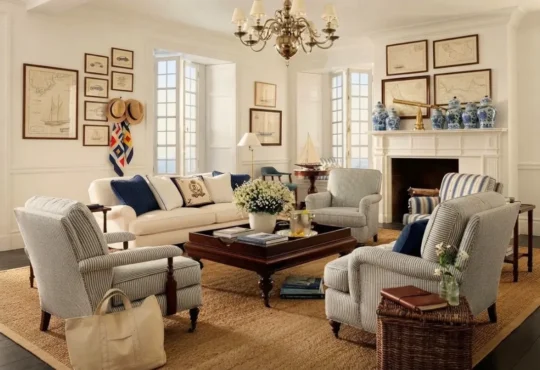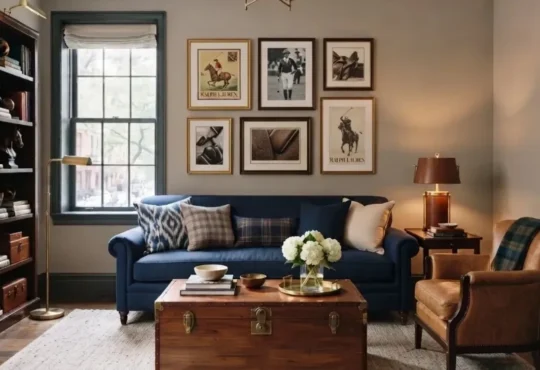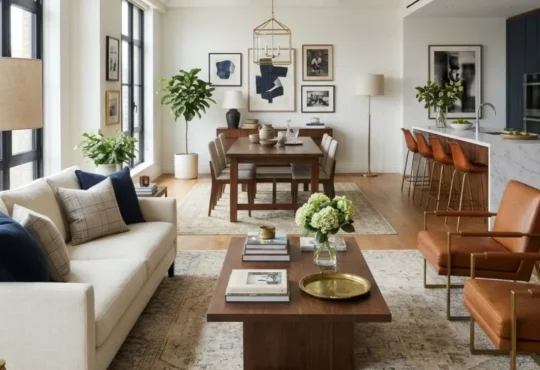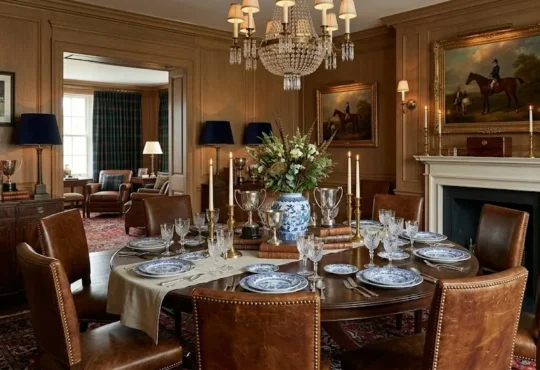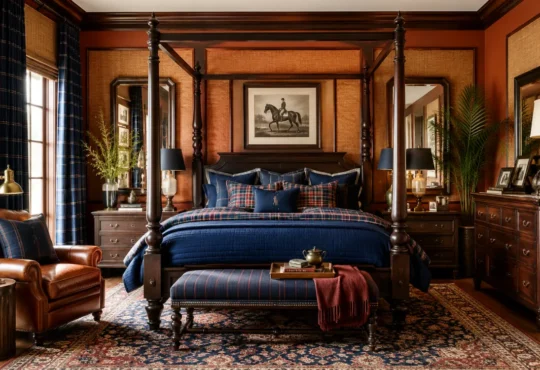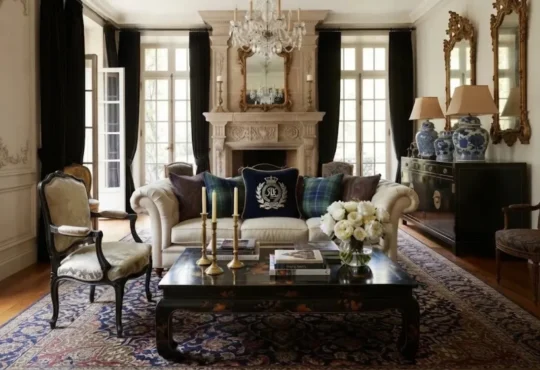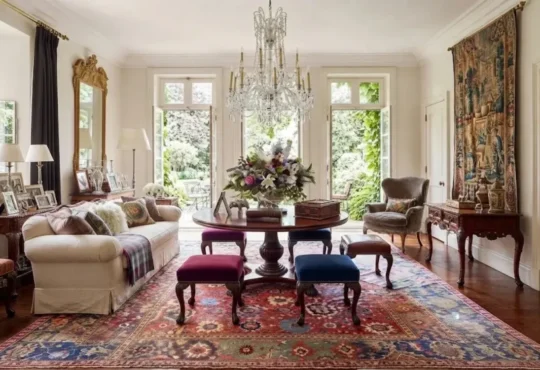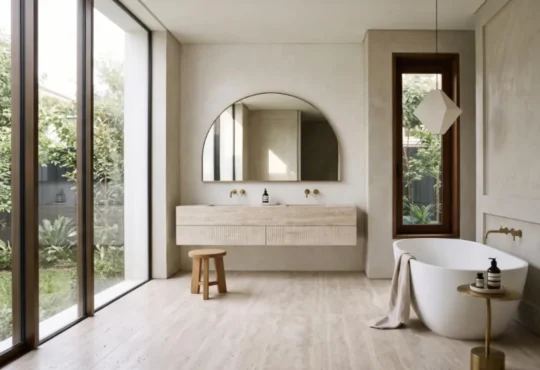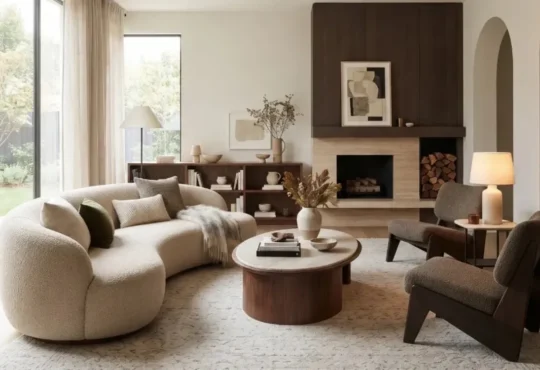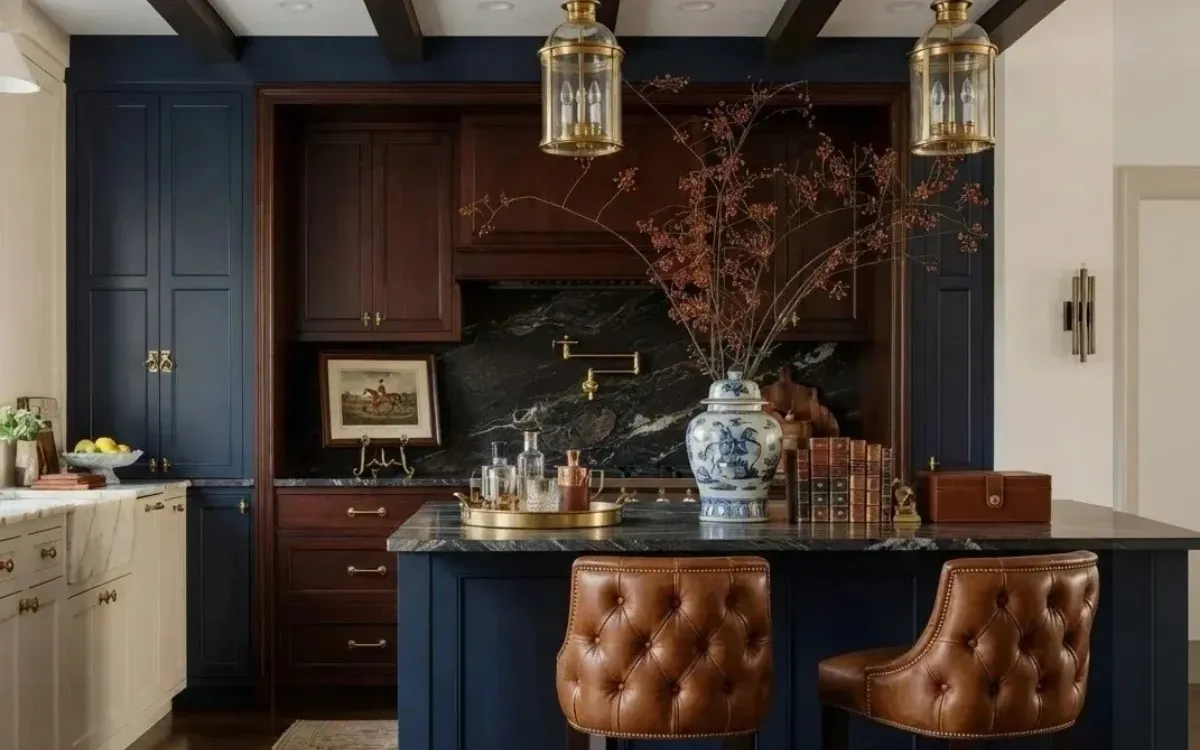
Controlled color, warm lighting, and personal character help define a Ralph Lauren-inspired kitchen. The challenge is bringing these elements together without making the room feel themed, overly formal, or like a showroom.
Build the kitchen through relationships rather than recognizable symbols. Start with the architecture and cabinetry, then develop the materials, colors, hardware, lighting, patterns, and personal details around them.
Ralph Lauren Kitchen Style
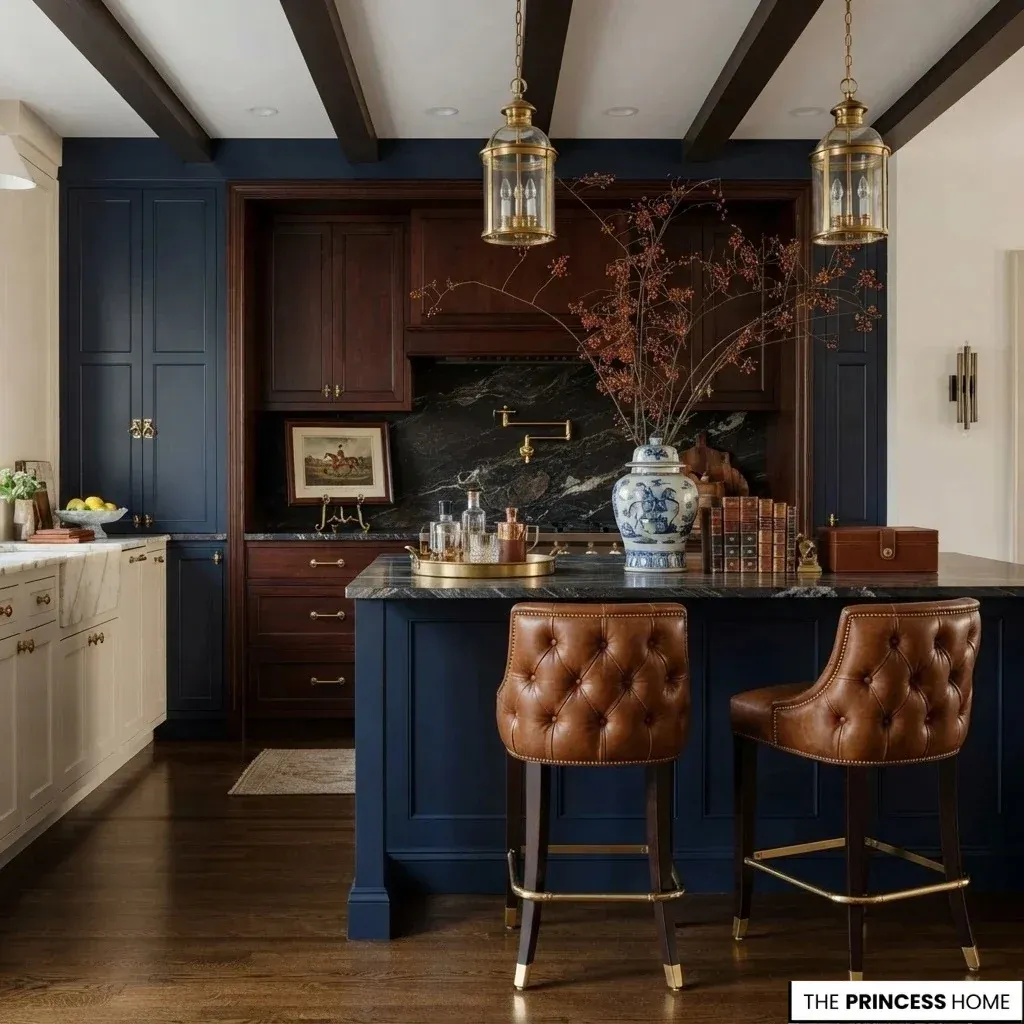
A Ralph Lauren-inspired kitchen draws from American heritage, craftsmanship, comfort, and collected living. Traditional detailing, substantial forms, natural materials, deeper colors, and carefully chosen objects can all contribute to the look.
The style does not depend on one cabinet profile, color, countertop, or decorative motif. Its character comes from how these elements work together.
Warm wood, cream cabinetry, aged metal, natural stone, tailored lighting, and restrained heritage patterns can establish the direction without relying on obvious Americana symbols.
Alternatively, darker cabinetry, navy, deep green, or richer wood tones can create the same character. Think of Ralph Lauren style as a design framework rather than a fixed decorating formula.
Establish the Foundation
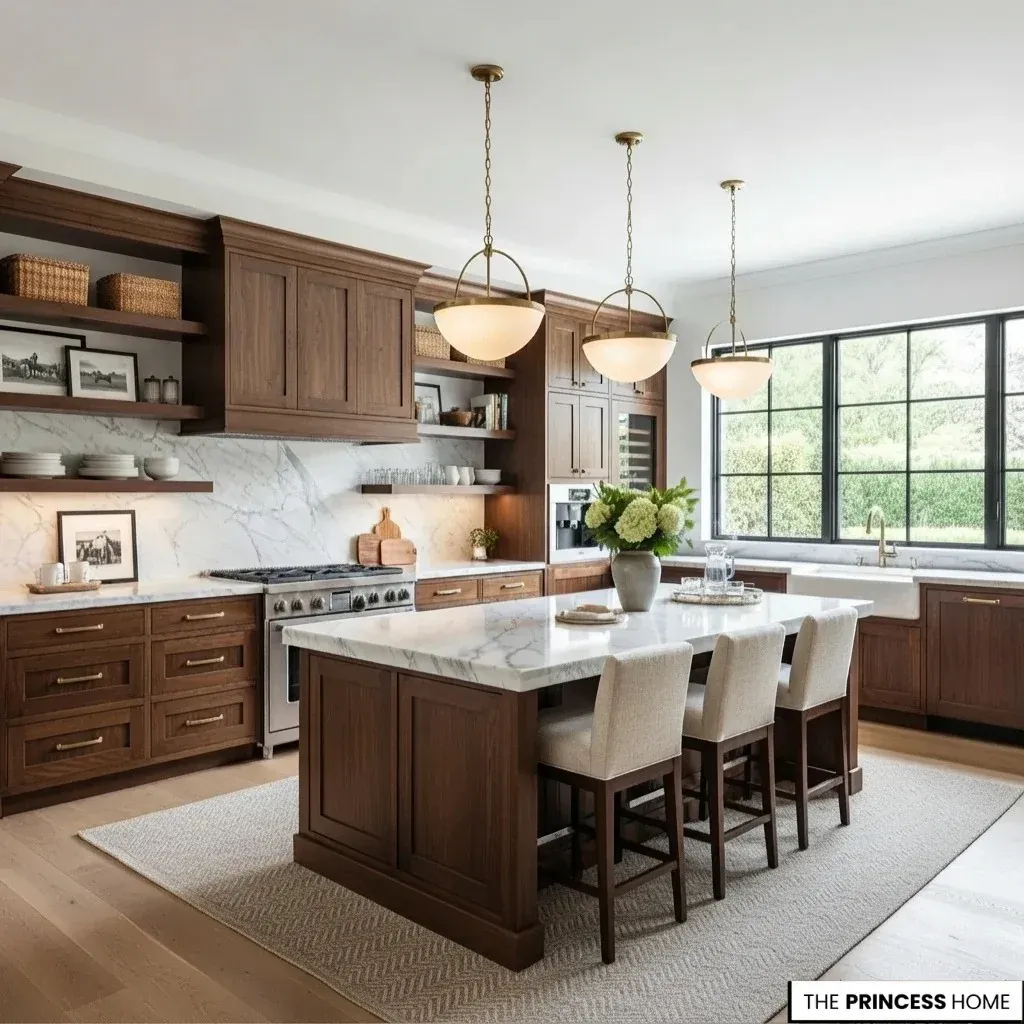
Start with the elements that are hardest to change: the architecture, layout, cabinetry, flooring, windows, ceiling height, and major built-in features. The layout should support the way the kitchen is actually used.
Whether the room is L-shaped, galley, or open on one side, keep the main preparation, cooking, and cleaning areas connected without forcing the island or furniture into the circulation path. Examine the existing features before deciding what to replace.
Good woodwork, flooring, stone, or architectural details may provide a stronger starting point than a complete renovation.
The island also deserves careful attention because it is often one of the largest visual elements in the room. Its size, material, and relationship to the surrounding cabinetry should suit the kitchen’s proportions.
If the island includes seating, leave enough room for comfortable movement and everyday use. Consider the space needed to pull out stools, sit comfortably, and move behind seated people. Choose stools that suit the island’s scale rather than filling every available seat, especially in a smaller kitchen.
Check circulation around more than the island itself. Refrigerator doors, ovens, dishwashers, cabinet drawers, and frequently used cupboards should open without blocking essential walking routes or interfering with other activities.
Treat appliances as part of the overall composition from the beginning. Integrated appliances can keep the cabinetry visually continuous, while exposed appliances can work when their finishes and proportions complement the surrounding materials.
Prioritize convenient placement, then consider how visible the appliances will be.
Flooring and windows also contribute to the foundation. Choose wood, stone, or another durable surface that relates to the cabinetry and adjacent rooms. Window treatments should frame natural light without competing with the kitchen’s main materials.
For an existing kitchen, decide which features should remain, which need refinement, and which work against the intended style. Painting sound cabinetry, changing hardware, improving lighting, or introducing a stronger material can sometimes accomplish more than replacing everything.
Establish the foundation before adding decorative details. Accessories cannot compensate for unsuitable proportions, cabinetry, or layout.
Choose Kitchen Cabinetry
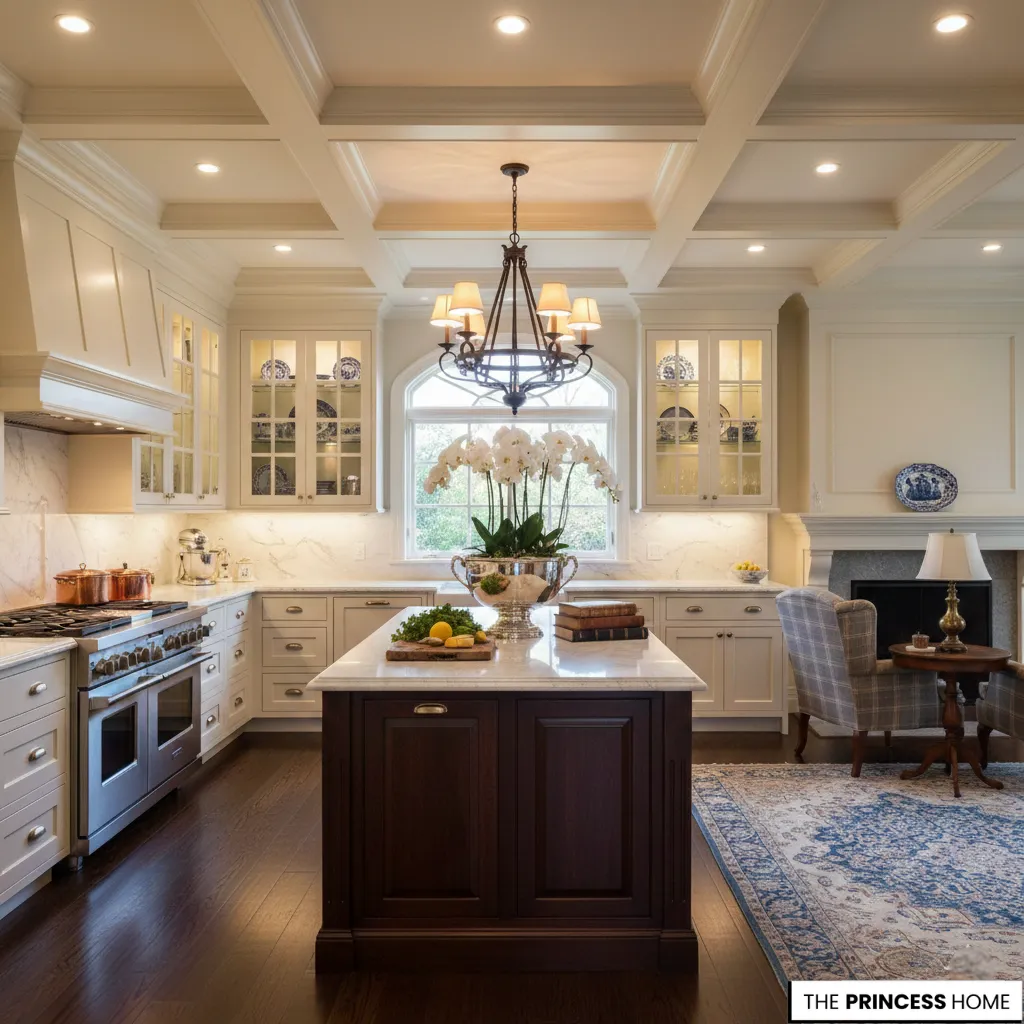
Choose cabinetry with enough visual presence to support a traditional, tailored character. Painted cabinets, warm wood, paneled doors, glass-front sections, and furniture-like detailing can all work when they suit the architecture.
Cream, warm white, muted gray, deep green, and navy offer different ways to develop the style. Painted cabinetry can keep the kitchen lighter, while wood adds visual weight and warmth.
Avoid combining too many cabinet treatments. Painted perimeter cabinets, a contrasting wood island, several door profiles, open shelving, and multiple decorative finishes can compete with one another.
Instead, decide which element should carry the most visual weight. If the island is substantial, the surrounding cabinets can be quieter.
Consider how the cabinetry will perform in everyday use as well as how it looks. Cabinet finishes should suit the amount of cooking, cleaning, moisture, and handling they will experience. A finish that is attractive in a photograph may require more frequent care than a practical household can accommodate.
When cabinetry has strong traditional detailing, simpler countertops and backsplash materials may provide a better balance. The goal is a cohesive arrangement that belongs to the architecture rather than a collection of individually noticeable features.
Layer Rich Materials
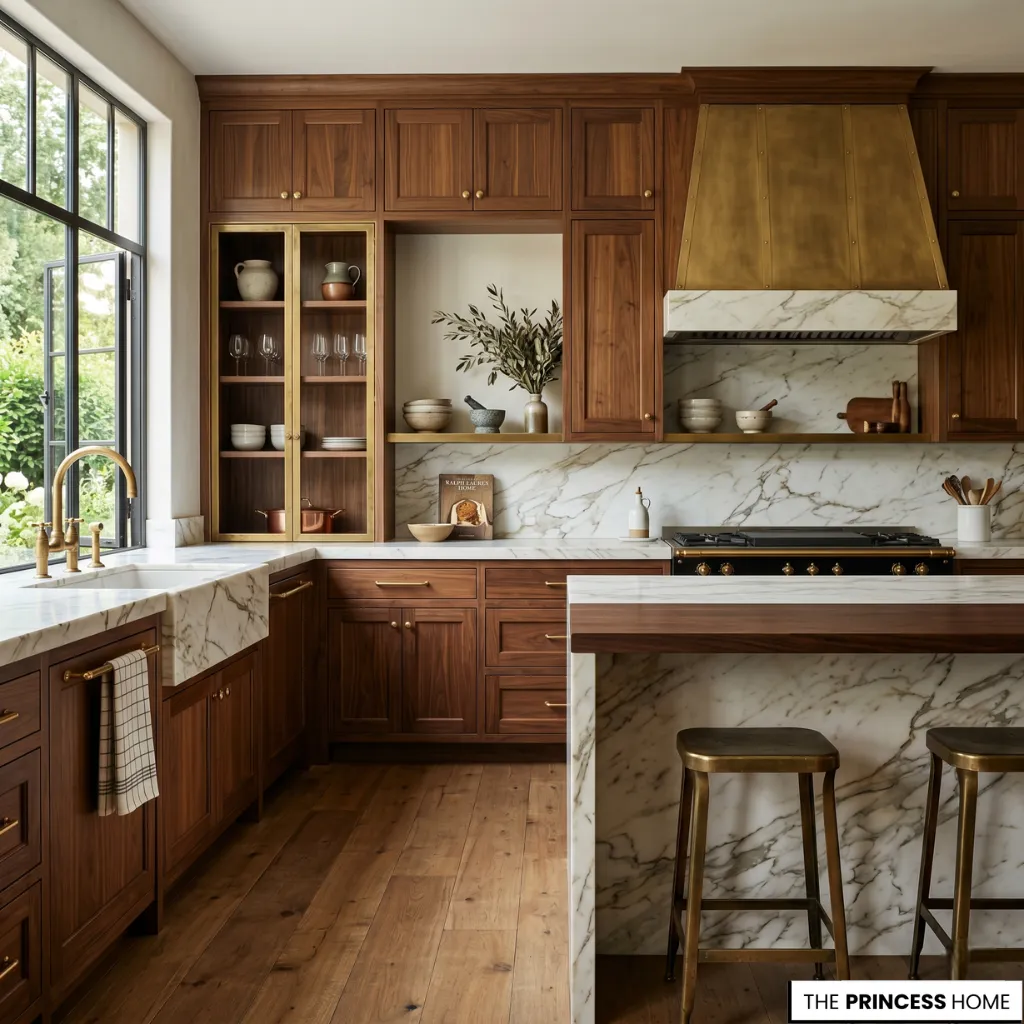
Use a small number of substantial materials and let their differences provide variety. Warm wood, natural stone, metal, tile, and glass can work together when each has a clear role.
A warm wood island can sit comfortably with stone countertops and aged metal hardware, while painted cabinets provide a quieter background for expressive stone.
Balance smooth surfaces with tactile details, such as a runner, wooden stool, or everyday accessory. Treat the countertop and backsplash as a pair rather than choosing them independently.
A strong stone countertop may benefit from a quieter backsplash, while a restrained countertop allows the backsplash to introduce texture or pattern.
Natural stone, including marble and soapstone, can provide a strong visual anchor. The important decision is not simply which expensive material to use, but where the strongest material should appear and which surfaces should remain quieter.
Appearance should not be the only consideration when selecting kitchen materials. Marble and other natural stones can vary in porosity, staining sensitivity, and maintenance requirements.
Some surfaces need periodic sealing or more careful cleaning, while others may show scratches, marks, or changes through regular use. Check the specific stone and its care requirements before choosing it for a heavily used countertop.
The same principle applies to wood, metal, and tile. Consider moisture exposure, heat, cleaning products, surface durability, and the amount of maintenance each finish requires. A beautiful material is a better long-term choice when its practical demands suit the household.
Before committing to several finishes, compare physical samples together. Examine them under the kitchen’s natural and artificial lighting, and consider how their undertones and textures relate. Materials that appear compatible in separate photographs may look quite different when placed beside one another.
Avoid making every surface a statement. Highly patterned stone, elaborate tile, detailed cabinetry, several metal finishes, and strong wood grain can compete when used together. Choose one or two dominant material relationships, then let the remaining finishes support them.
Use Ralph Lauren Colors
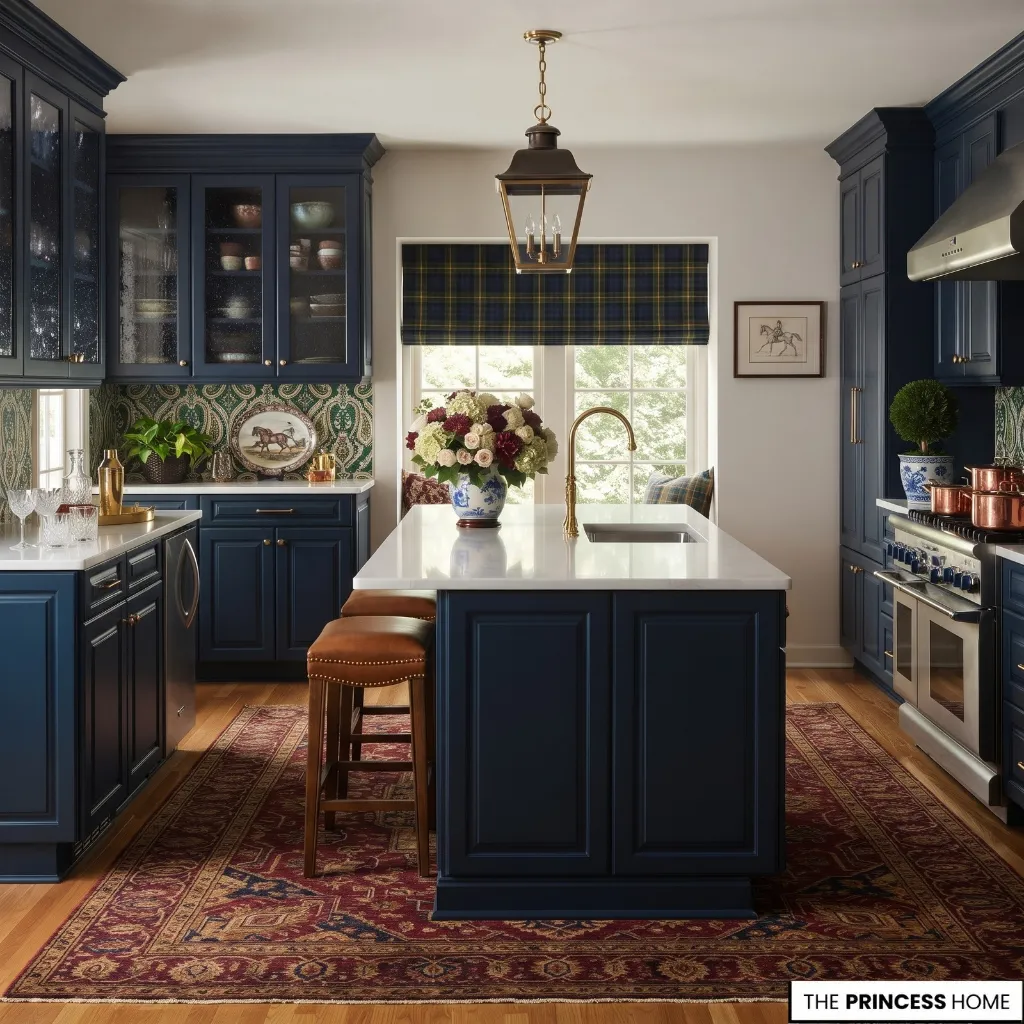
Build the palette from a base color, a supporting tone, and a smaller accent rather than trying to use every color associated with the style. Warm white, cream, ivory, taupe, warm gray, brown, and natural wood provide quieter foundations. Navy, deep green, burgundy, and muted blue can introduce stronger character.
A dark color does not need to cover the entire kitchen. Navy cabinetry on an island, deep green lower cabinets, dark wood, or a darker painted section can provide contrast while allowing the rest of the room to remain lighter.
If the kitchen already has pale cabinetry, introduce more character through darker hardware, wood, patterned textiles, artwork, or selected accessories rather than repainting everything.
These colors are options, not requirements; their suitability depends on the architecture and fixed elements already in the room.
Countertops, flooring, appliances, windows, and adjacent rooms all influence the right color balance. Stainless steel, black, white, and integrated appliance fronts can each work, provided their finishes relate to the cabinetry, hardware, and major surfaces.
Add Tailored Hardware
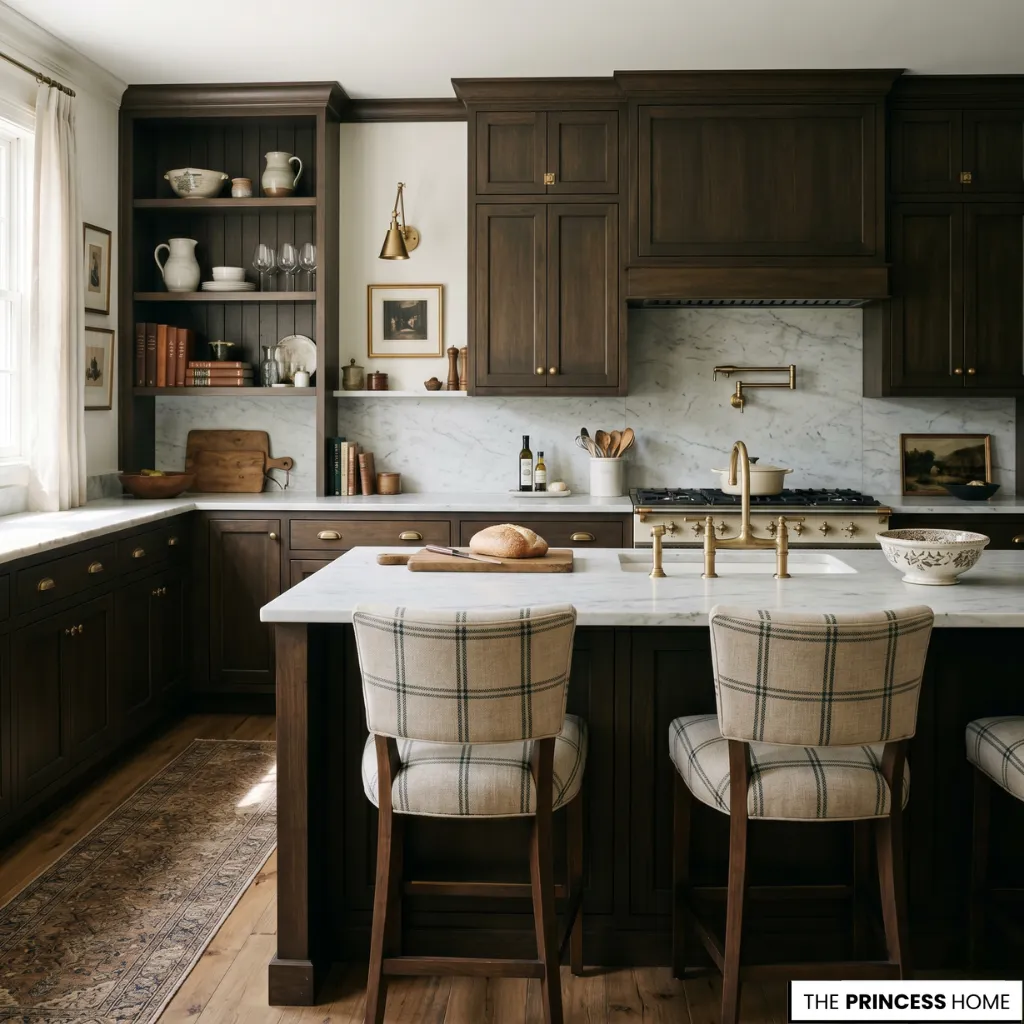
Choose hardware in relation to the cabinetry, countertop, faucet, lighting, and other metal details. Aged brass, unlacquered brass, bronze, and pewter can support a traditional or collected direction, while other finishes can work when they suit the architecture.
The goal is coordination rather than perfect matching. Metal finishes do not always need to be identical, but they should appear intentional together. Avoid selecting a finish simply because it is associated with luxury; its suitability depends on the cabinet color, wood tone, and surrounding materials.
Consider the shape and scale of the hardware as well as its finish. Cabinet pulls and knobs should feel comfortable to use and suit the proportions of the doors and drawers. Check the placement and size before purchasing a complete set, particularly when replacing existing hardware.
If the cabinetry is visually strong, simpler hardware may be enough. Quieter cabinets can accommodate hardware with more character.
Shape Warm Lighting
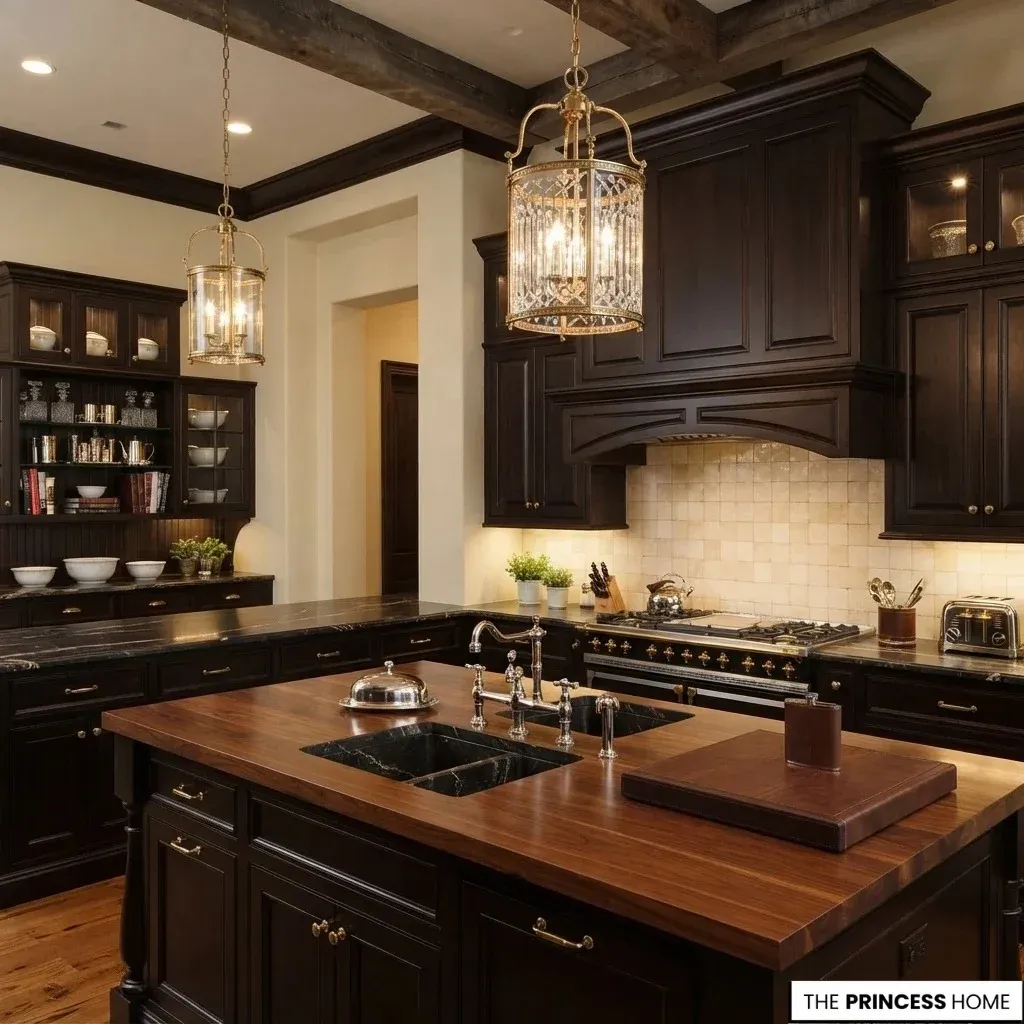
Plan lighting as part of the kitchen rather than as a final decorative layer. A useful lighting plan combines general illumination, task lighting, and decorative or architectural lighting.
General lighting provides overall visibility, while task lighting illuminates work surfaces such as countertops, sinks, and preparation areas. Under-cabinet lighting can reduce shadows on counters, especially where overhead cabinets block ceiling light.
Pendants over an island can provide both function and visual structure, while sconces or picture lights can highlight walls, shelves, artwork, or architectural details where appropriate. Warm residential light can help wood, stone, and painted surfaces read naturally.
Around 2700K can serve as a practical starting point for warm ambient lighting, but it is a guideline rather than an official Ralph Lauren specification.
The final choice should account for daylight, finishes, bulb characteristics, task requirements, and the rest of the home. Different lighting layers do not necessarily need identical settings, but they should work comfortably together.
Use lighting to reveal the materials and details you selected. Wood grain, stone, cabinetry, and metal finishes should remain clear without every part of the kitchen receiving the same intensity of light.
Avoid relying on one central ceiling fixture to do everything, as it can leave a detailed kitchen feeling flat and overly functional. Decorative fixtures should also suit the room’s scale: large pendants can work over a substantial island, while oversized fixtures may overwhelm a smaller kitchen.
Introduce Heritage Patterns
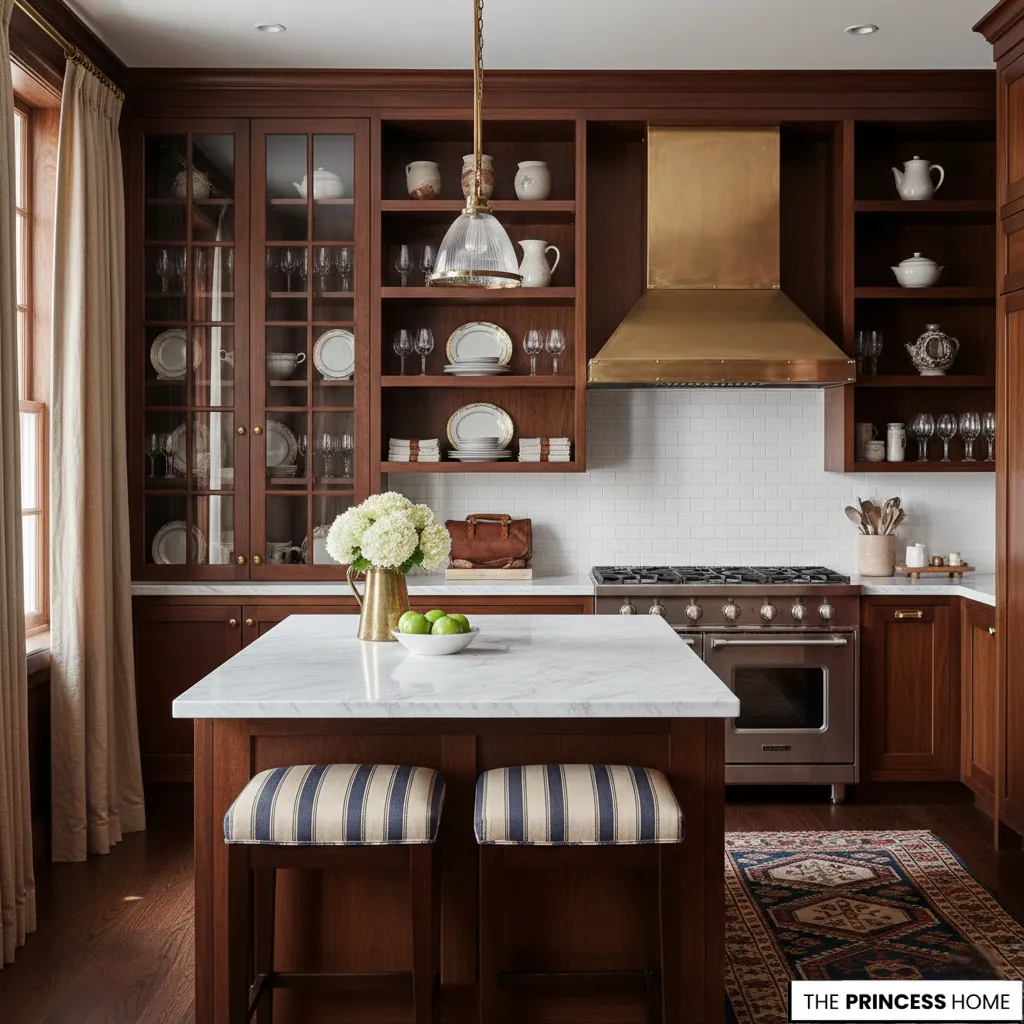
Use patterns selectively to bring heritage character into the kitchen. Plaid, checks, stripes, and traditional textile patterns can appear through counter stools, runners, window treatments, cushions, or other small elements. They are especially useful when the main cabinetry and surfaces are relatively restrained.
Choose one clear pattern direction rather than repeating the same motif throughout the room. A checked runner may be enough when the cabinetry already has strong detailing.
If the kitchen has patterned stone or elaborate cabinetry, keep textiles quieter; simpler architecture can accommodate a more expressive pattern.
Heritage references should support the kitchen rather than become its subject. Too many Americana, equestrian, or traditional motifs can make the room look deliberately themed.
Create a Collected Kitchen
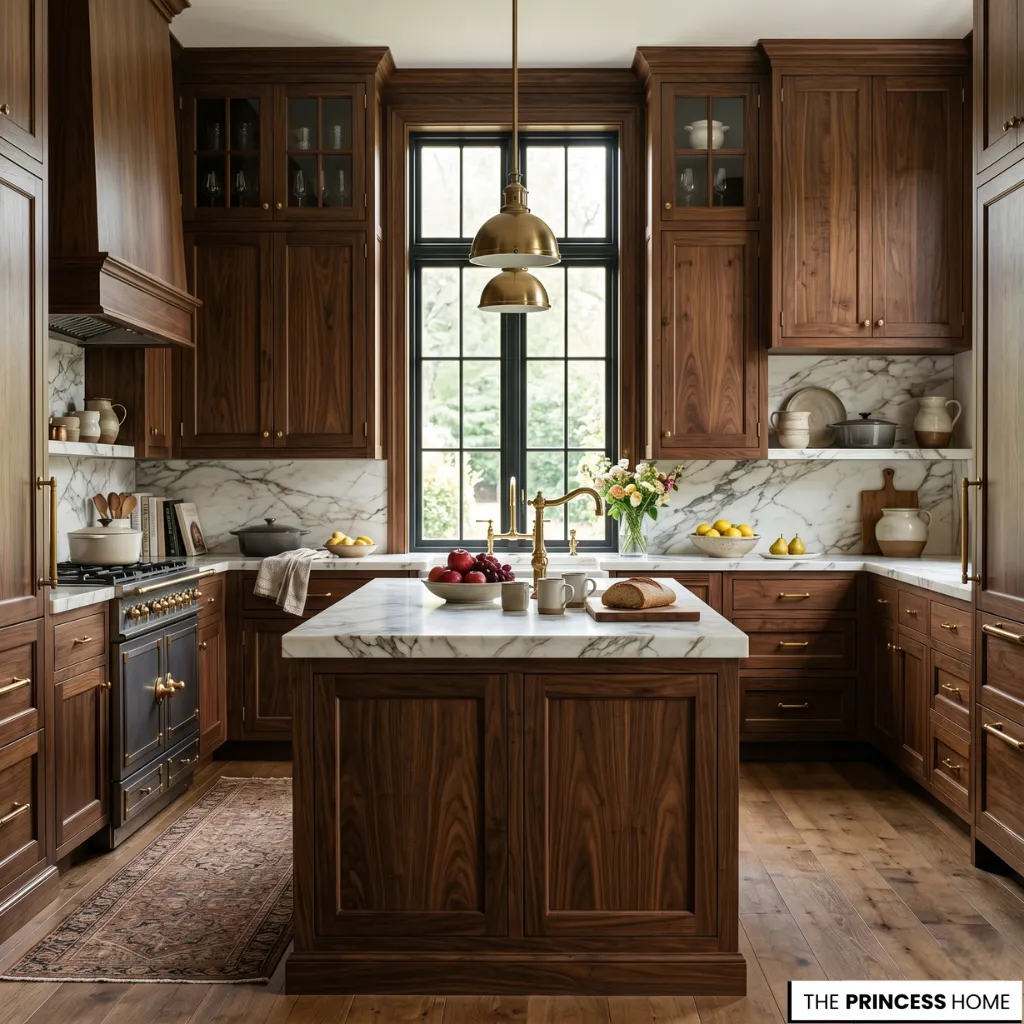
Give the kitchen room for useful and personal objects. Cookbooks, ceramics, wooden cutting boards, serving pieces, artwork, vintage objects, and everyday vessels can make the space feel connected to real life.
Open shelving can display some of these pieces, but it should not become an excuse to fill every available surface. Choose objects because they serve a practical purpose or have personal meaning.
A collection of useful ceramics can feel more convincing than a shelf filled with decorative objects chosen only to create an aesthetic. Leave enough open space for individual pieces to remain visible, and avoid giving every object the same decorative importance.
Consider how frequently displayed objects will need cleaning, especially near cooking areas where grease and dust can accumulate. Keep frequently used items within convenient reach and reserve less accessible shelves for objects that are primarily decorative.
A collected kitchen should look as though it has developed through use and personal choices. Meaningful objects, useful pieces, and a few heritage references can give the room character without turning it into a staged recreation.
Adapt the Style
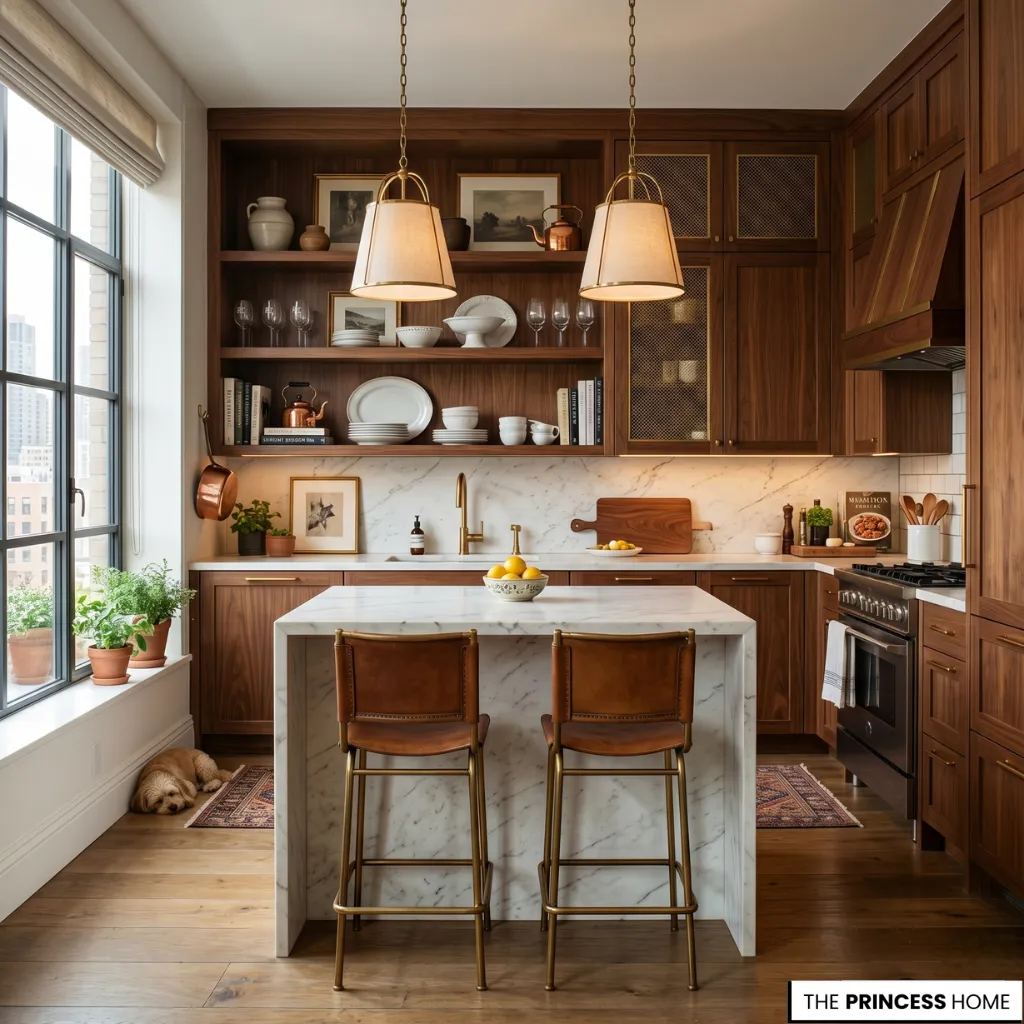
A Ralph Lauren-inspired kitchen can work with different architectural styles, sizes, and budgets. The key is to preserve the design logic rather than reproduce one particular room.
In a modern kitchen, keep clean contemporary architecture when it works and introduce the style through warmer materials, traditional hardware, richer colors, tailored lighting, and selected heritage details. The kitchen does not need to become fully traditional.
In a small kitchen, make fewer and stronger decisions. Choose one clear cabinetry direction, one dominant material relationship, and a controlled color palette. Protect circulation and open space instead of filling the room with too many competing elements.
For a limited budget, prioritize the decisions that establish the design direction. Start with the foundation and cabinetry appearance, then consider the main visual anchor, improvements to existing surfaces, lighting, hardware, textiles, and decorative details.
If existing cabinets are sound, repainting them and changing the hardware may be more effective than replacing them with unrelated lower-cost cabinets. However, assess the condition of the doors, hinges, drawer mechanisms, and cabinet interiors before investing in cosmetic improvements.
When an original material or architectural feature is unavailable, look for an alternative that serves the same visual or practical role rather than choosing a substitute on price alone.
Avoid Common Mistakes
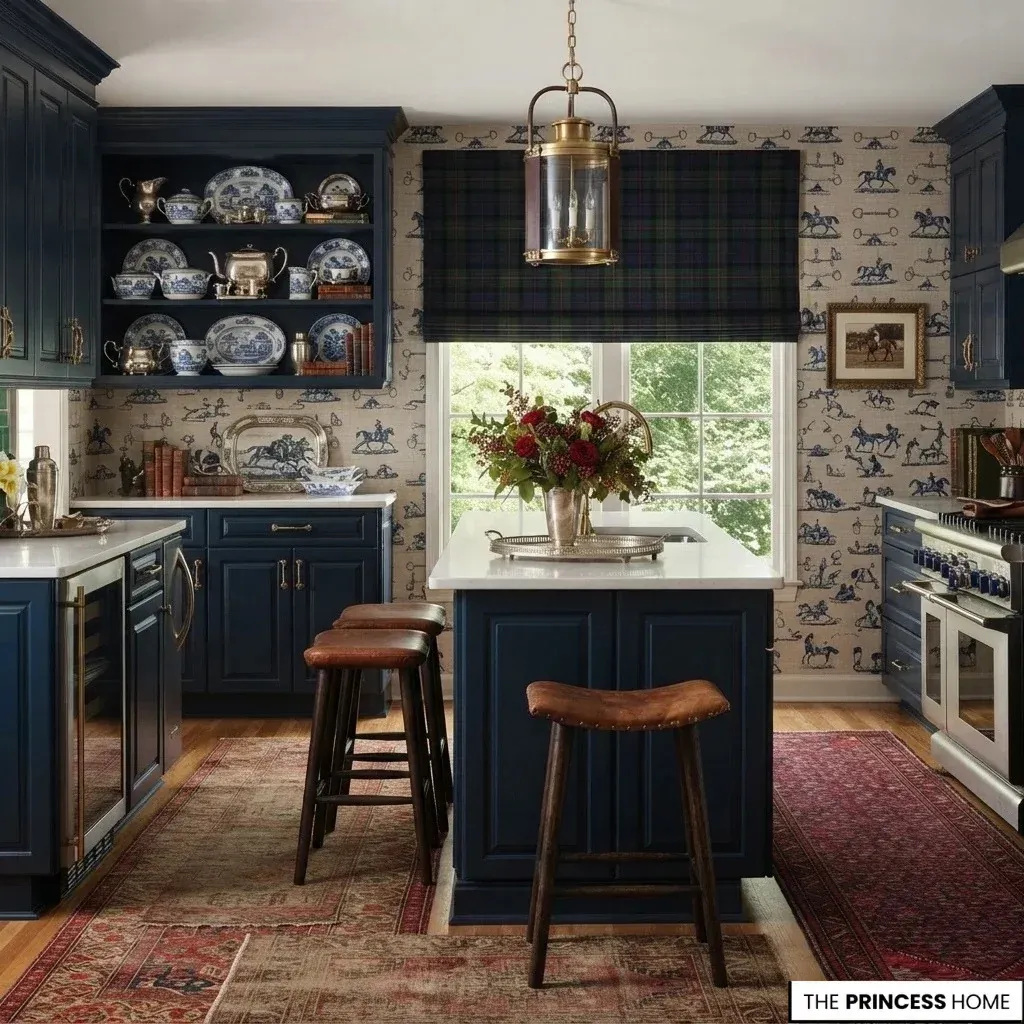
Turning the kitchen into a theme. Too many Americana or equestrian objects can overwhelm the design. Let the architecture, cabinetry, materials, and color carry most of the identity.
Making everything dark. Deep colors and dark wood can work well, but consider the room’s natural light, proportions, and existing finishes. Balance darker surfaces with cream, stone, lighter materials, or carefully placed contrast.
Using too many statement materials. Several strong surfaces can compete rather than create richness. Decide which materials deserve attention, and consider their practical maintenance requirements before combining them.
Making the kitchen too formal. Refinement should not remove comfort. Useful objects, practical surfaces, textiles, and signs of everyday use keep the room connected to real life.
Ignoring functional lighting. Decorative pendants alone may not illuminate preparation and cleaning areas adequately. Combine ambient lighting with task illumination so the kitchen remains comfortable and practical throughout the day.
Ignoring circulation around the island. An island that fits physically can still make the kitchen uncomfortable if doors, drawers, appliances, or seating interfere with movement. Check these relationships before finalizing the island’s dimensions and position.
A successful Ralph Lauren-inspired kitchen does not depend on any single recognizable feature. Its character comes from the relationship between architecture, materials, controlled color, comfortable lighting, thoughtful details, and objects that belong to everyday life.
Further Reading
Explore these related guides for more design inspiration and practical ideas for creating timeless interiors.
- Timeless Ralph Lauren-Inspired Living Room Design
- Creating a Bedroom with Heritage Luxury
- Elegant Kitchen Design Inspired by Ralph Lauren
- A Dining Room That Combines Classic Style and Timeless Luxury
- How to Achieve Ralph Lauren Style on a Budget
- Modern Heritage Interiors for Apartment Living
- Elegant Summer Living with Ralph Lauren Style
- Welcoming Entryways with Classic Elegance
- Timeless Luxury Bathroom Design Ideas
- Creating a Luxurious Ralph Lauren-Inspired Home Office
- Timeless Outdoor Spaces with Ralph Lauren-Inspired Details