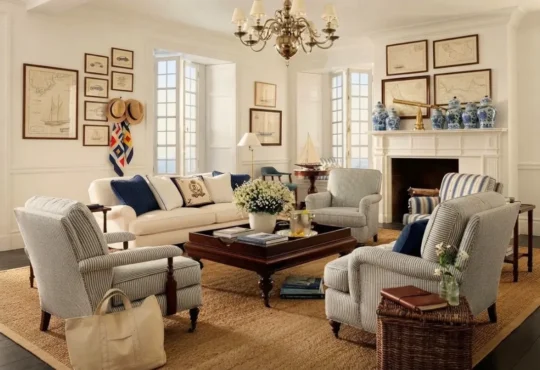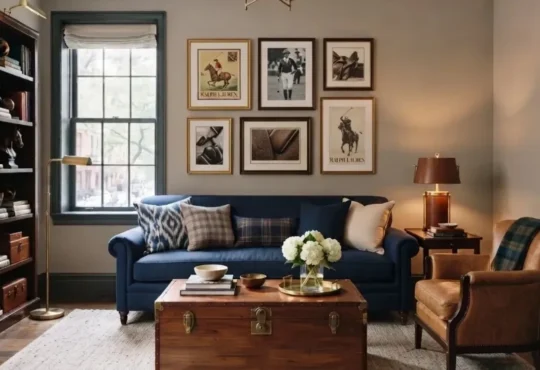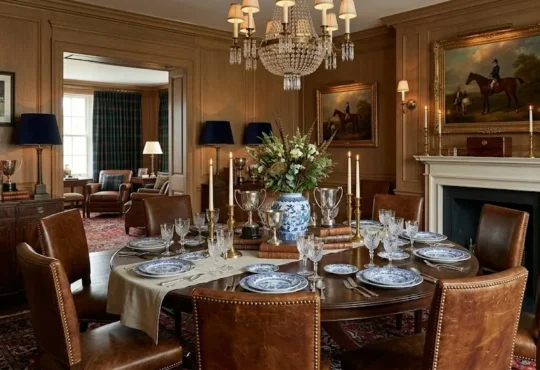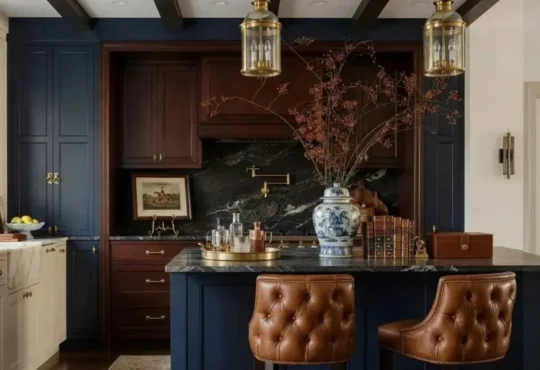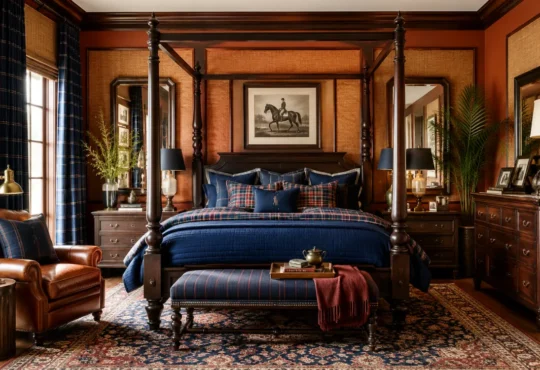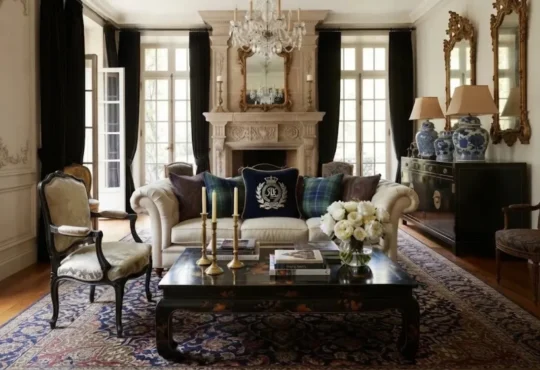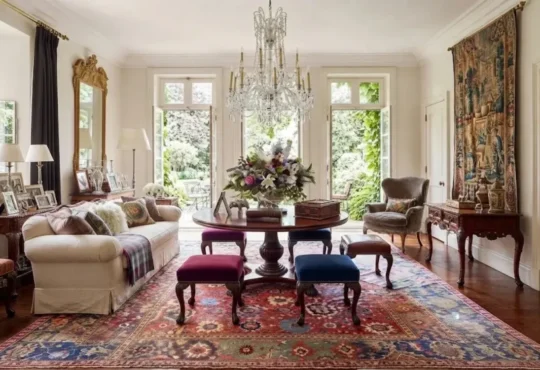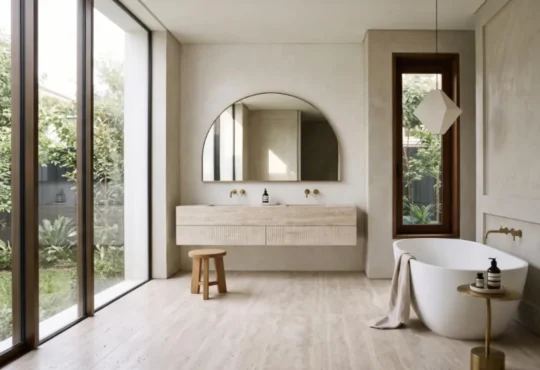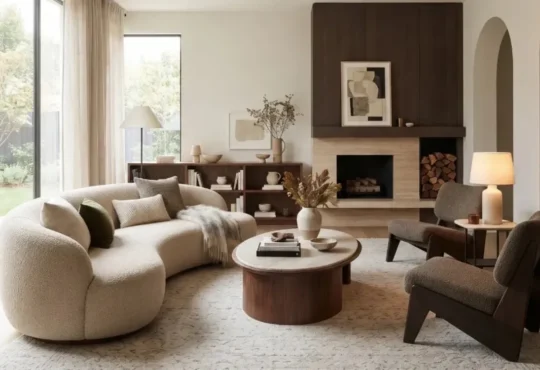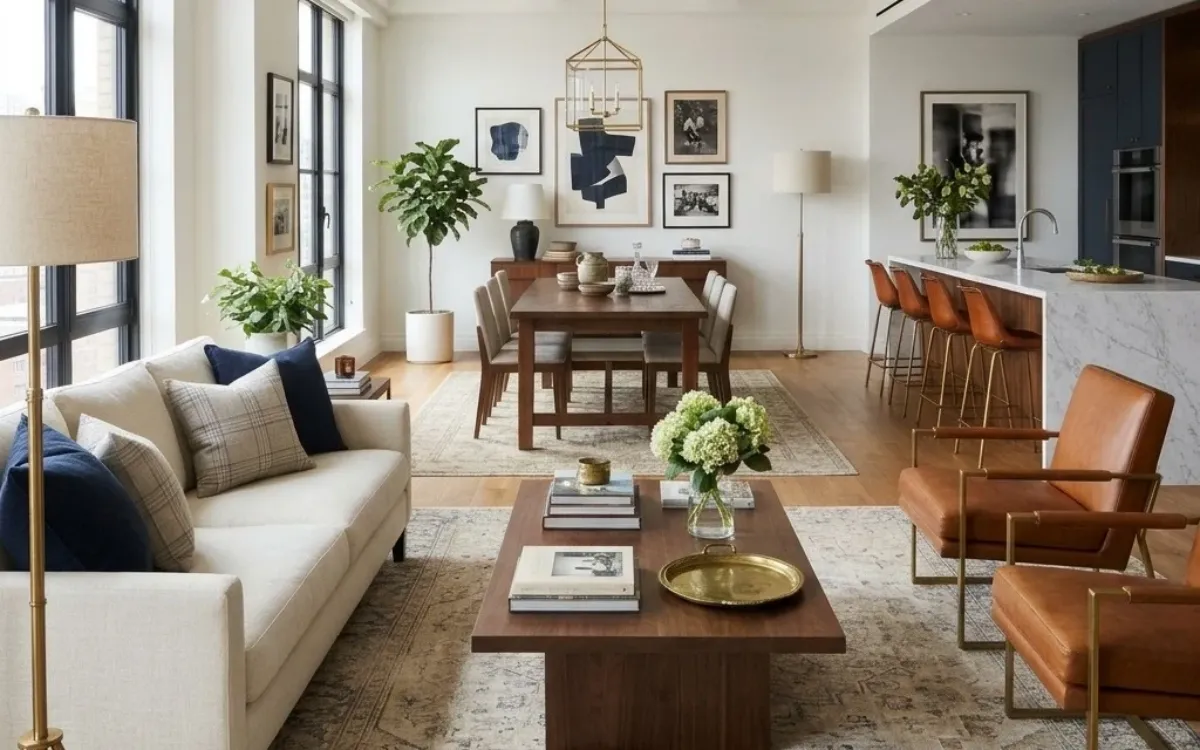
Modern Ralph Lauren interiors combine tailored furniture, rich natural materials, warm lighting, and heritage details. In apartments, these elements need careful editing to prevent the space from feeling too heavy or traditionally themed.
The key is to balance classic character with cleaner forms, controlled color, and open space, creating a modern interior that retains the distinctive Ralph Lauren aesthetic.
Modern Ralph Lauren Style
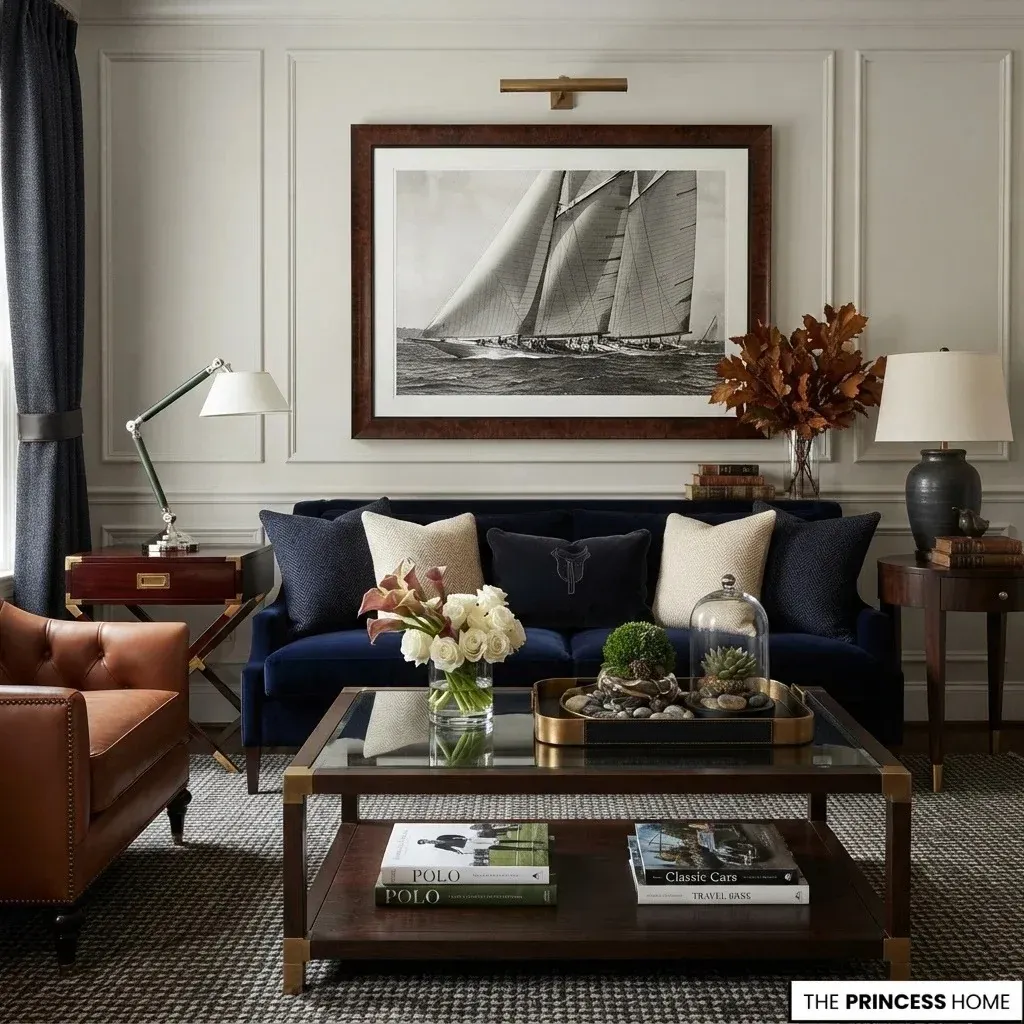
Modern Ralph Lauren style keeps the qualities that give the design its character while using a cleaner, more controlled composition. Tailored furniture, substantial wood, leather, linen, wool, brass, artwork, books, and personal objects can all belong in the room, but they do not need to appear in their most traditional forms.
The modern quality comes from how these elements are edited. A substantial sofa can sit beside a clean-lined coffee table. A traditional wooden cabinet can share the room with contemporary lighting. A classic leather chair can be balanced by lighter upholstery and more open space.
A traditional Ralph Lauren interior generally relies more heavily on historical references, formal furniture relationships, richer layering, and greater visual density.
A modern interpretation keeps some of those references but gives them more space, cleaner contrasts, fewer competing major pieces, and a clearer relationship between traditional and contemporary forms. This difference allows the room to feel modern without losing its Ralph Lauren character.
This is different from creating a traditional American room and simply adding one modern accessory. It is also different from stripping the style down until only neutral colors and expensive-looking furniture remain.
Ralph Lauren Home has explored different expressions of its design language, including the modern and Art Deco influences associated with its Modern Penthouse direction and the more urban, industrial character of its Loft collection.
These examples demonstrate how its broader design identity can adapt to contemporary environments rather than belonging only to traditional interiors.
The style also does not depend on using Ralph Lauren products. Its design language can be expressed through the relationship between tailored furniture, natural materials, controlled color, warm lighting, and collected personal pieces.
What matters is the reasoning behind the choices rather than whether individual objects carry the Ralph Lauren name.
For an apartment, preserve the heritage references, material richness, tailored furniture, and collected character, then reduce visual weight where the space requires it.
Assess the Apartment
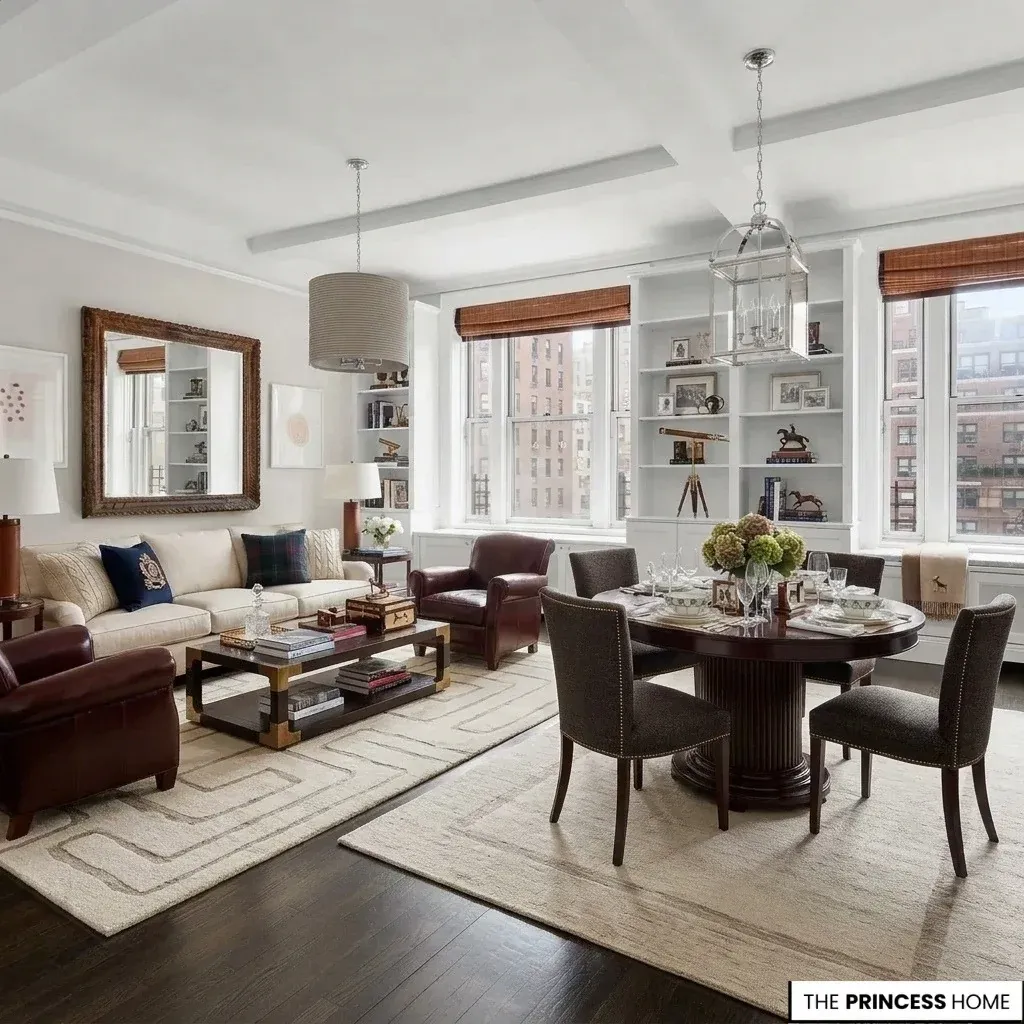
Start with the apartment you actually have before choosing furniture or decorative details. Natural light, ceiling height, flooring, windows, built-ins, room dimensions, and the relationship between connected spaces will determine how much visual weight the room can carry.
Begin by measuring the room and noting the positions of doors, windows, radiators, built-in storage, and other fixed features. Record the main walking routes and identify where furniture can sit without obstructing everyday movement.
This gives you a practical basis for judging furniture proportions rather than relying on how a piece looks in a photograph or showroom.
Look first at what should remain. Existing wood floors, architectural trim, exposed beams, built-in shelving, large windows, or an interesting view can become part of the design rather than something to cover.
Then identify what needs to be balanced. A dark floor, for example, may benefit from lighter upholstery or walls around it.
A small room may need fewer major pieces. An open-plan apartment may need furniture and materials that connect the living, dining, and kitchen areas without making every space identical. Do not try to manufacture traditional architecture where none exists.
If the apartment has simple walls and modern windows, let furniture, lighting, artwork, textiles, and materials provide the character instead. If you are working with a limited budget, establish the foundation before buying decorative pieces.
A practical priority is the existing foundation first, then main seating or furniture, the rug and wood anchor, distributed lighting, textiles, and finally the smaller decorative elements that build the room’s personal story.
This keeps spending connected to the structure of the design rather than spreading it across low-impact accessories. If you already own furniture, do not assume that creating the style requires replacing everything.
First identify the pieces that already have useful proportions, good materials, or a strong relationship to the apartment. Keep the pieces that support the direction, then change the elements that create the biggest conflict before considering a complete replacement.
Edit the Furniture
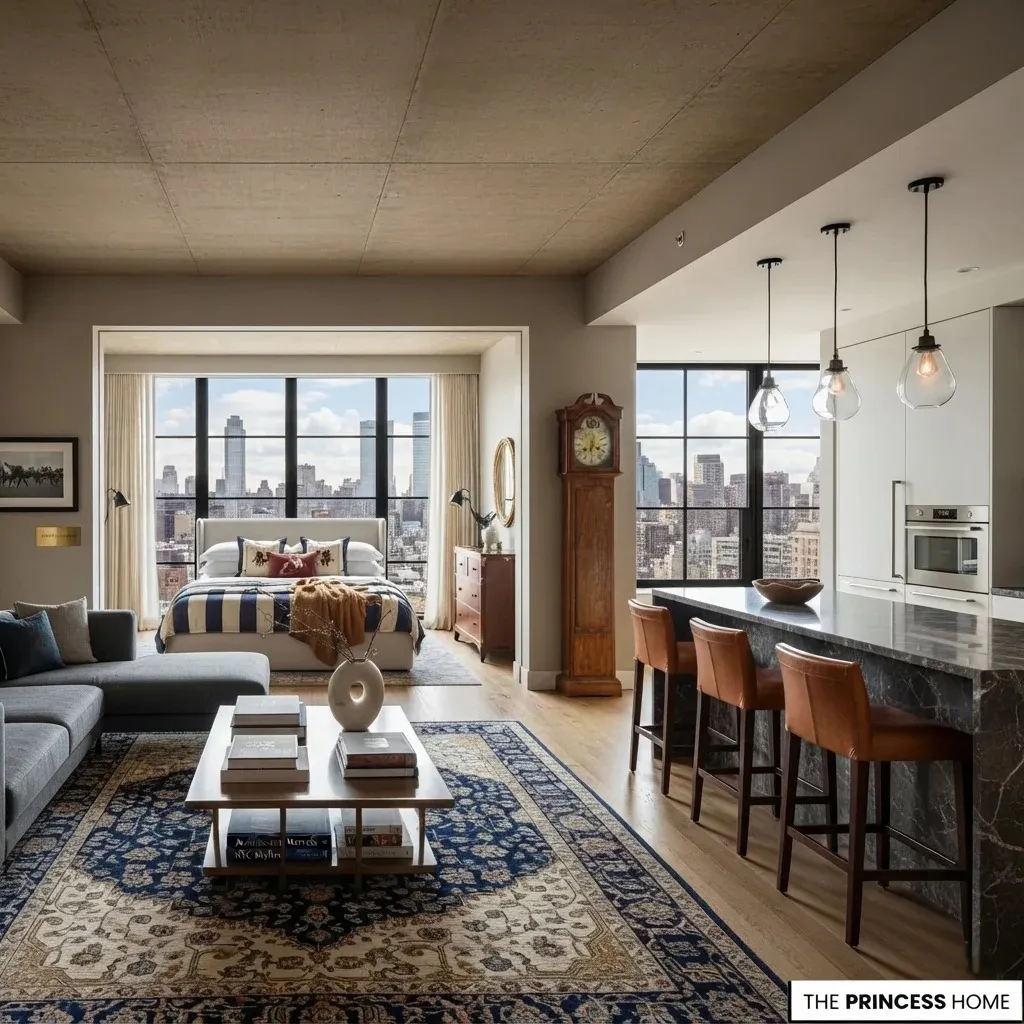
Choose furniture with enough structure and substance to support the Ralph Lauren character, then edit the number of major pieces. A tailored sofa, substantial chair, classic wooden table, useful desk, bookcase, or well-proportioned bed can establish more character than a room filled with smaller decorative furniture.
Look for furniture with clean or restrained forms rather than choosing ornate pieces simply because they look traditional. Leather chairs, upholstered seating, wooden tables, classic cabinets, and tailored beds can all work when their proportions suit the apartment.
Before purchasing a major piece, compare its full dimensions with the available floor area. Consider its depth as well as its width, the space needed to pull out chairs or open storage doors, and the route people will use to move around it.
You can mark the proposed footprint on the floor to understand how much usable space will remain.
Mixing furniture periods is also useful. A traditional sofa does not need a traditional coffee table, matching side tables, and matching chairs. A contemporary table can make a classic upholstered sofa feel more current without removing its character.
For a smaller apartment, reduce the number of major furniture pieces before reducing every piece to miniature scale. A room can still contain substantial furniture if there is enough space for comfortable circulation and the pieces are properly related to one another.
If a large traditional piece overwhelms the apartment, use fewer substantial pieces rather than replacing the design language with unrelated lightweight furniture. The goal is to preserve the function and visual character of the original choice while adjusting its scale or quantity to the room.
A useful test is to look at the room as a whole rather than judging each piece separately. If nearly every major item points toward the same historical period, the room may need a cleaner contemporary piece.
If nearly every piece is contemporary and the traditional references have disappeared, the room may need one or two stronger heritage elements. The balance between the two is what keeps the modern interpretation recognizable.
Layer Rich Materials
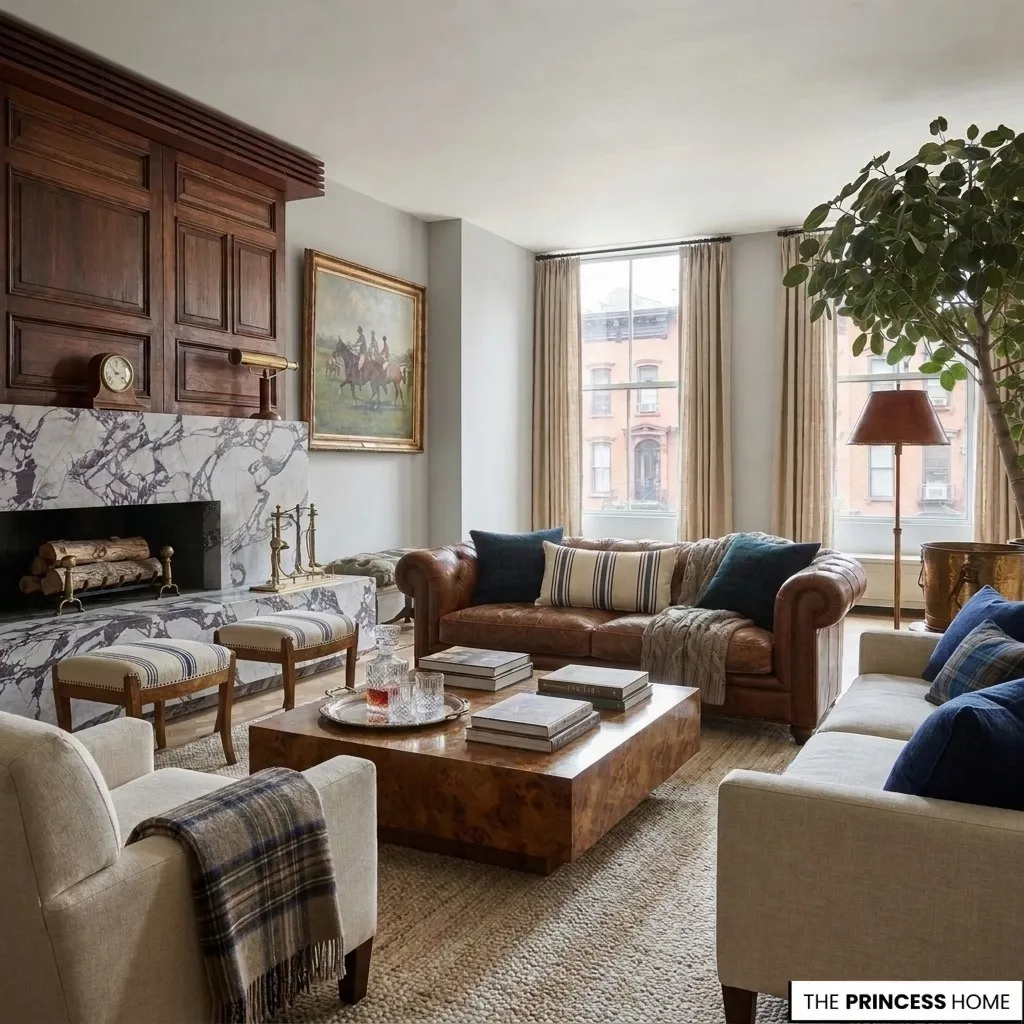
Use wood, leather, linen, wool, cotton, stone, glass, brass, and woven materials to build the tactile character associated with Ralph Lauren interiors. The modern interpretation depends on controlling how many strong materials compete at once.
A medium-toned or darker wood table can be paired with lighter upholstery. Leather can be balanced with linen or cotton rather than repeated across every seating piece. Stone can sit beside warm wood, while glass or a polished metal detail can keep a substantial composition from becoming visually dense.
Think in terms of contrast rather than quantity. You do not need dark wood, leather, brass, and heavy textiles in every room to make the style recognizable.
The same principle applies to finishes. If several major pieces already have strong wood tones, introducing another dominant wood finish may make the apartment feel busy. A lighter textile, glass surface, painted piece, or quieter finish may provide a better transition.
There is also no requirement to use the darkest or heaviest version of every Ralph Lauren-associated material. The purpose is to create a layered, substantial interior while keeping enough open space for the apartment to breathe.
For a limited budget, prioritize the materials attached to the largest visual surfaces first. A good rug, main furniture pieces, and a few well-chosen textiles can establish the material mix more effectively than many small decorative objects.
Control the Colors
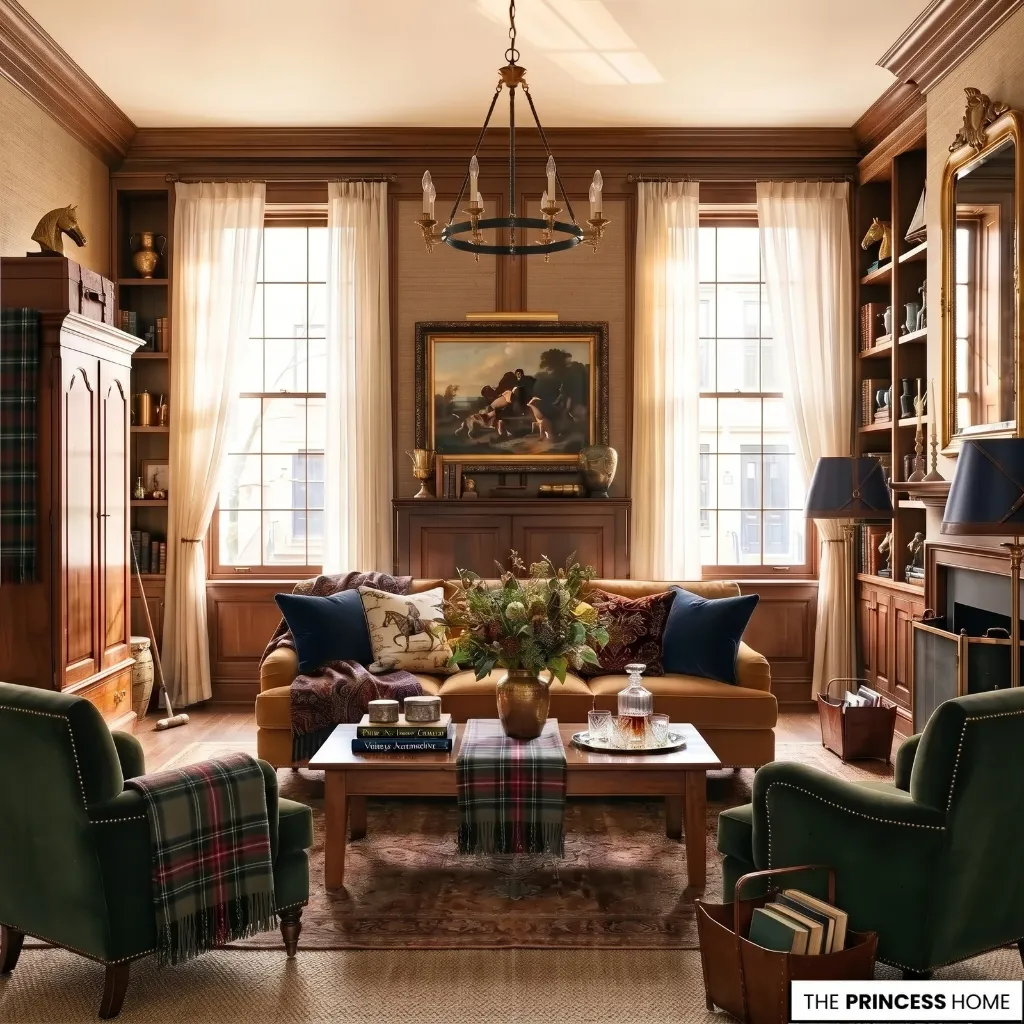
Modern Ralph Lauren interiors can use warm neutrals, cream, ivory, taupe, camel, brown, navy, muted green, charcoal, burgundy, restrained red, and other earthy tones. The modern effect comes less from choosing a particular color formula and more from controlling how the colors are distributed.
Start with the existing architecture and natural light. A darker apartment may benefit from a lighter base with deeper accents, while a bright apartment can support stronger wood tones or richer upholstery.
Use one or two deeper colors as anchors rather than giving every surface an equally strong role. Navy upholstery, for example, can become a focal point against warm neutrals. Muted green can work as a quieter alternative to a stronger traditional color.
Camel, brown, or burgundy can be introduced through leather, textiles, or smaller furniture pieces. Patterns should follow the same hierarchy. If a patterned rug is already prominent, the curtains and upholstery do not need equally strong patterns.
Let some surfaces remain quiet so the stronger colors and patterns have room to work. Modern does not mean abandoning Ralph Lauren’s richer colors. It means giving them enough calm space around them to remain intentional.
Layer Modern Lighting
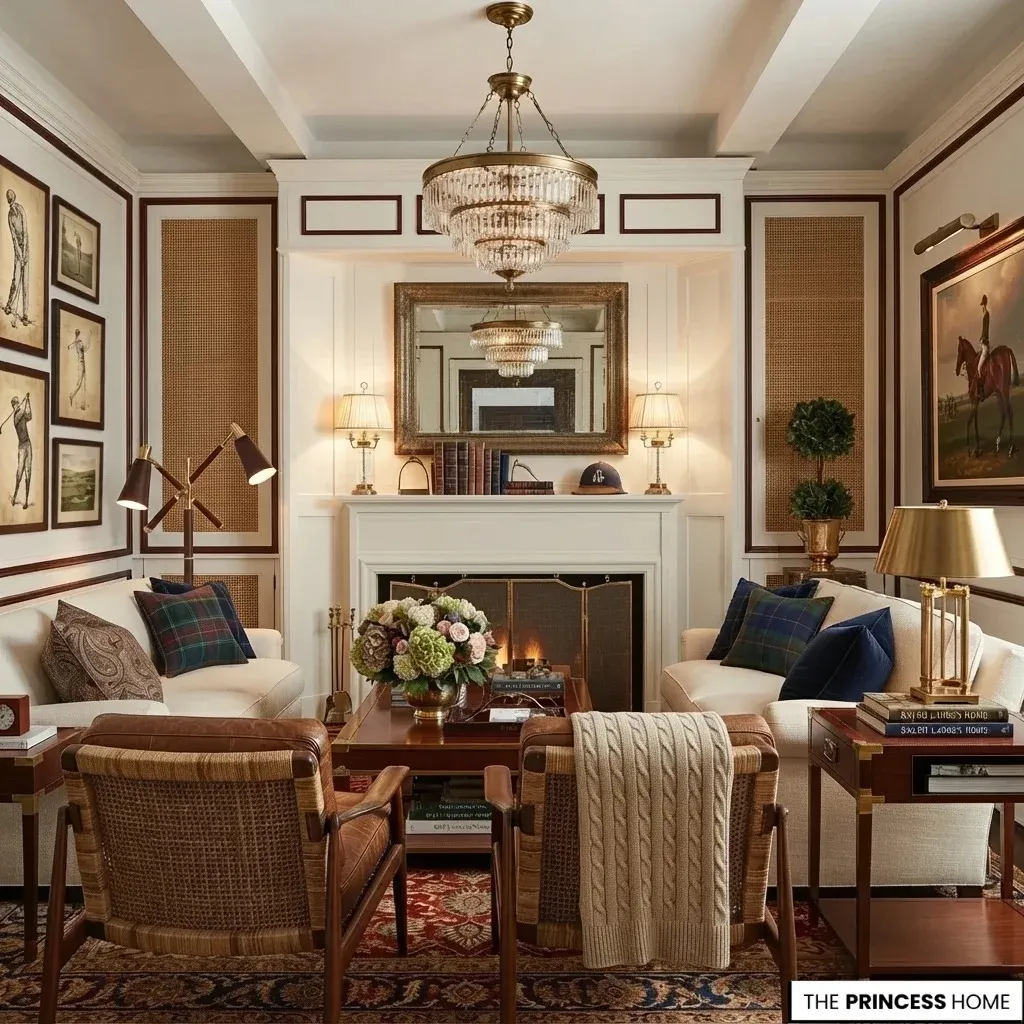
Lighting is especially important when an apartment contains substantial wood, leather, darker colors, or traditional furniture. Use several light sources rather than expecting one ceiling fixture to illuminate the entire room.
Think about lighting in three complementary roles. General lighting provides overall visibility, task lighting supports activities such as reading, working, or cooking, and accent lighting draws attention to artwork, architectural details, or selected objects.
Combine table lamps, floor lamps, wall lights, picture lights, and an appropriate ceiling fixture according to the room’s function. Classic lamp forms can work alongside cleaner contemporary fixtures, creating the old-and-new relationship that helps modernize the style.
Warm residential lighting is useful for wood, leather, textiles, and artwork, but avoid making the entire room equally dim. Task lighting should properly illuminate desks, reading chairs, kitchen areas, and bedside tables, while decorative lighting can provide softer pools of light around the room.
If the furniture feels too formal, softer lamp light can help relax the composition. If the room feels too dark, increase useful illumination rather than simply adding more decorative objects or lighter accessories.
When working with a limited budget, distributed lighting should come before smaller decorative purchases. Several useful light sources can change how the existing furniture and materials are experienced without requiring a complete room replacement.
Mix Old and New
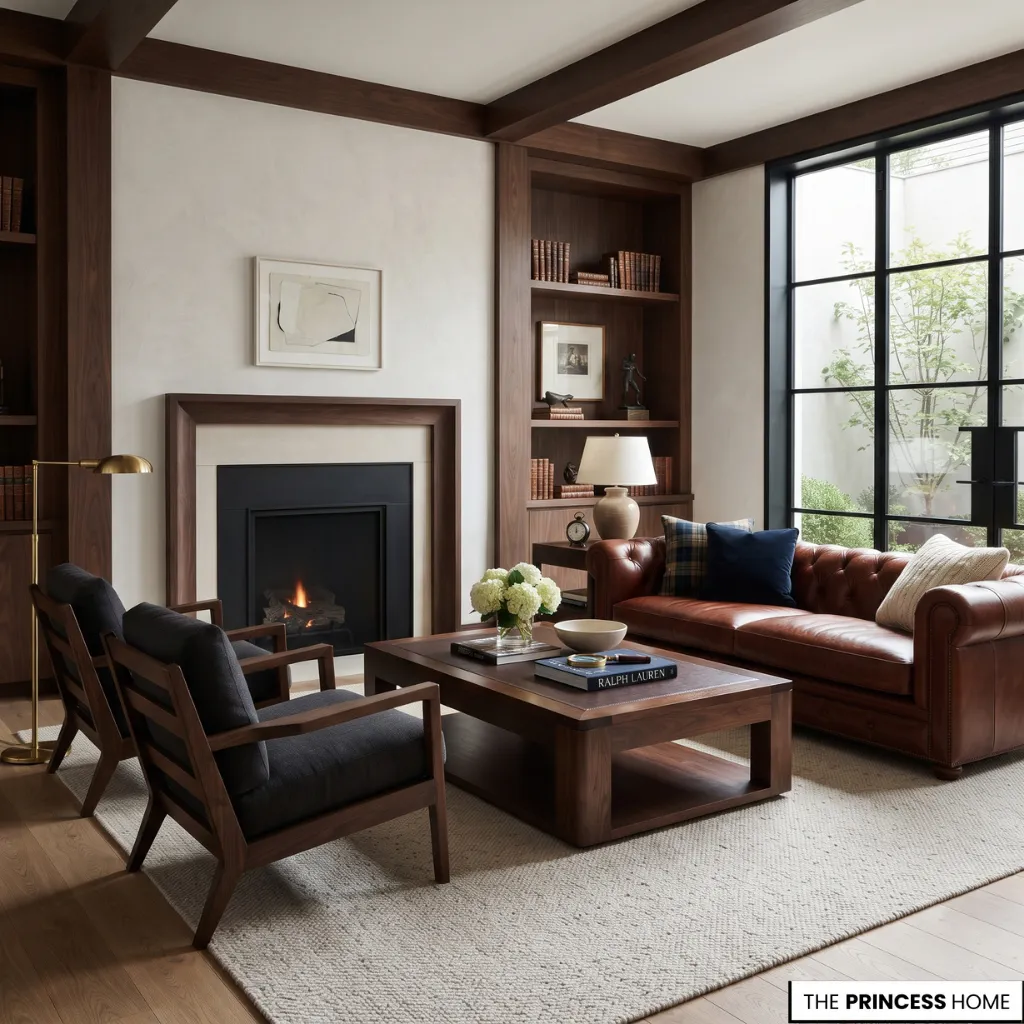
A modern Ralph Lauren apartment should not look as though every piece came from the same period. Mixing old and new is one of the simplest ways to keep the room collected rather than staged. Pair a traditional wooden cabinet with contemporary seating.
Place modern lighting above a classic dining table. Use a vintage-looking chair beside a cleaner-lined sofa. Combine older artwork or personal photographs with simpler contemporary frames.
The important distinction is between collected and themed. A collected room contains objects with different histories, functions, and visual qualities that still relate through color, material, scale, or purpose.
Avoid relying on repeated Americana symbols, equestrian references, flags, or other obvious heritage motifs to communicate the style.
A few meaningful references may contribute character, but repeating them throughout the apartment can turn the interior into a decorative theme rather than a naturally collected home.
Personal objects are important here. Books, artwork, photographs, inherited pieces, travel objects, and useful possessions give the apartment a reason to look lived in. Choose them because they belong to your home rather than because they all communicate the same decorative theme.
If you already own a mixture of furniture, use that as a starting point rather than treating the differences as a problem.
Keep pieces that have good scale, useful function, or materials that support the room, then introduce newer or more contemporary elements where the composition feels too heavy or too uniform.
Avoid trying to make a new apartment look old. The goal is to create a relationship between periods, not to disguise when the apartment was built.
Adapt Each Room
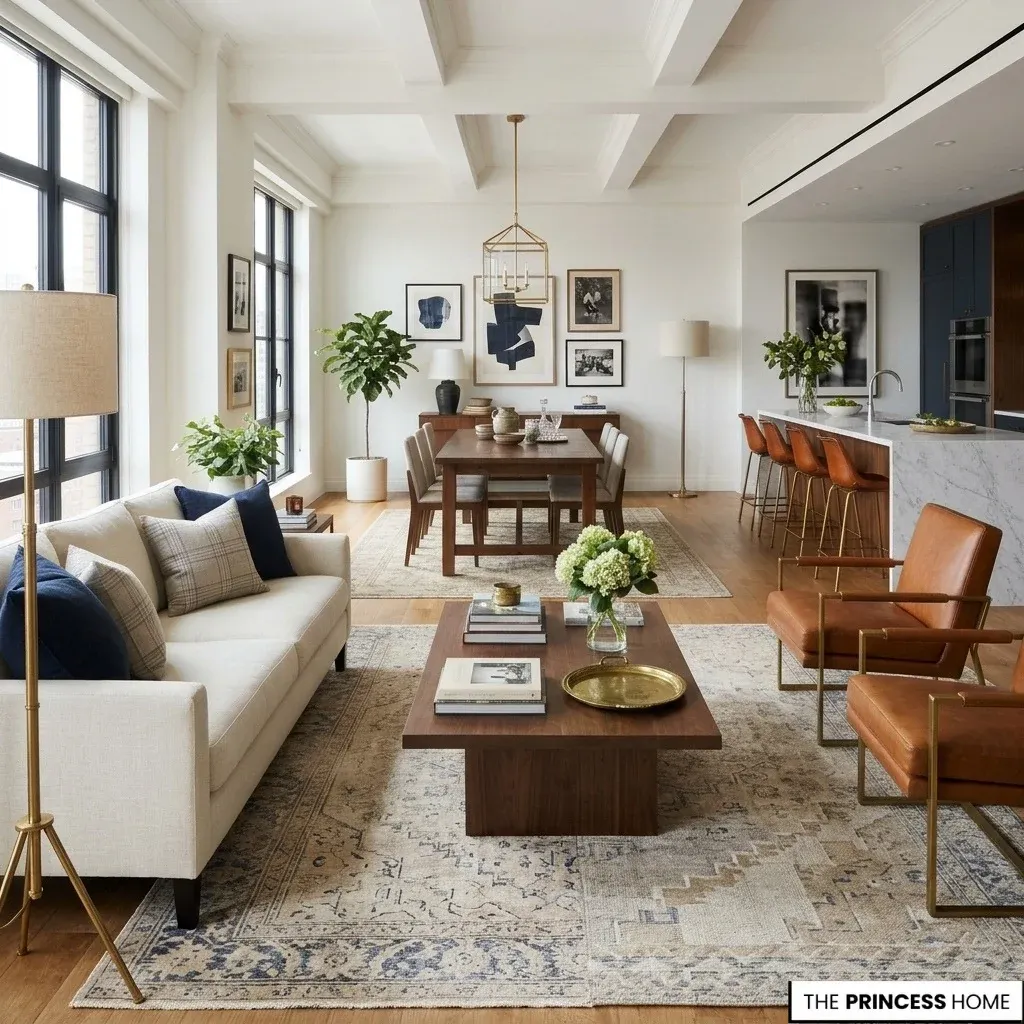
The same design language should change according to the room’s function. A successful apartment does not repeat the exact same furniture, colors, and materials everywhere.
In the living room, start with the seating arrangement and room proportions. A tailored sofa can anchor the room, supported by one or two substantial chairs, a well-sized rug, a useful coffee table, layered lighting, and a controlled selection of artwork or books.
Keep enough open space around the furniture for comfortable movement.
In the bedroom, use a strong but calm bed as the main anchor. Layer linen, cotton, wool, or other natural textiles without making every surface heavily patterned. Wood or upholstered bedside furniture can reinforce the style, while warm bedside lighting keeps the room relaxed rather than formal.
In the dining room or dining area, let the table and lighting establish the visual center. A traditional wooden table can feel more contemporary when surrounded by simpler chairs or paired with a clean-lined fixture.
In an open-plan apartment, repeat one or two materials from the living area rather than matching every piece.
In the study or library, prioritize usefulness. A substantial desk, comfortable chair, bookcase, task lamp, and carefully chosen books can create the collected character naturally. Leather can work well here, but it does not need to dominate the room.
Not every room needs the same degree of richness. One room can carry darker wood or stronger pattern while another uses lighter upholstery and fewer decorative layers. Repeating a few materials or colors is usually enough to connect the apartment.
Adapt to Small Spaces
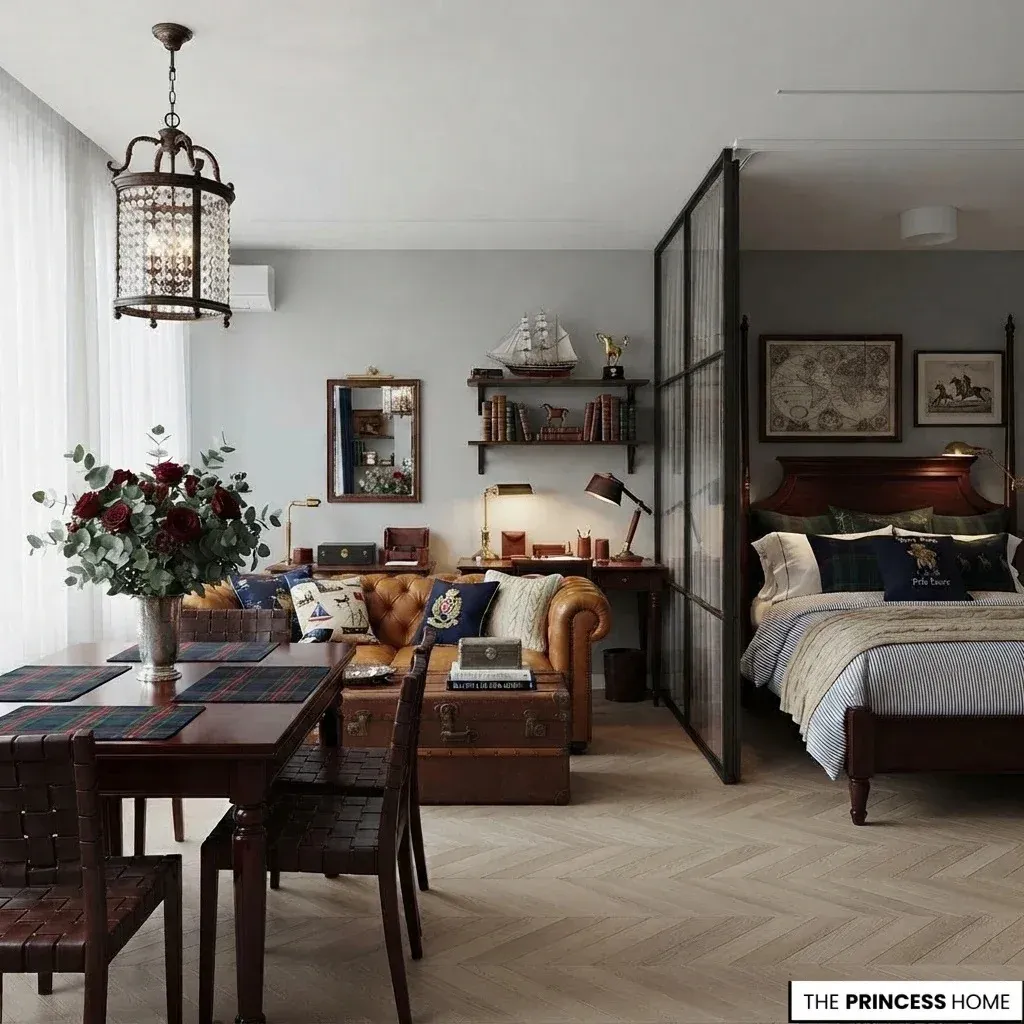
Small apartments require editing, not miniature versions of every traditional room. Start by reducing the number of major furniture pieces while preserving clear walking paths and enough open space around them.
Choose furniture that performs a useful function and has an appropriate scale. A well-sized storage cabinet can provide both function and visual weight. A smaller bookcase can supply the collected character of a library wall without filling an entire room.
If a traditional architectural feature is unavailable, do not try to imitate it with excessive decoration. Use a substantial piece of furniture, artwork, lighting, or carefully selected textiles to provide the visual focus instead.
Keep visual continuity in open-plan apartments. Similar wood tones, related upholstery colors, or repeated metal finishes can connect the spaces without making them identical.
Do not make every element small. One substantial sofa, table, cabinet, or artwork can establish the character of a small apartment more effectively than a collection of tiny pieces.
If storage is limited, favor useful furniture that contributes to the room rather than adding separate decorative objects that take up valuable space.
Consider the apartment’s actual movement patterns before deciding where to place larger pieces. Preserve practical routes between the entrance, seating, dining areas, windows, and storage. A visually impressive arrangement is not successful if everyday activities become difficult.
Conclusion
Modern Ralph Lauren interiors work best in an apartment when the traditional character is edited rather than erased.
Keep the tailored furniture, natural materials, controlled color, warm lighting, and personal pieces, then use cleaner forms, fewer major elements, and more open space to suit the home you actually have.
Further Reading
Explore these related guides for more design inspiration and practical ideas for creating timeless interiors.
- Timeless Ralph Lauren-Inspired Living Room Design
- Creating a Bedroom with Heritage Luxury
- Elegant Kitchen Design Inspired by Ralph Lauren
- A Dining Room That Combines Classic Style and Timeless Luxury
- How to Achieve Ralph Lauren Style on a Budget
- Elegant Summer Living with Ralph Lauren Style
- Welcoming Entryways with Classic Elegance
- Timeless Luxury Bathroom Design Ideas
- Creating a Luxurious Ralph Lauren-Inspired Home Office
- Timeless Outdoor Spaces with Ralph Lauren-Inspired Details