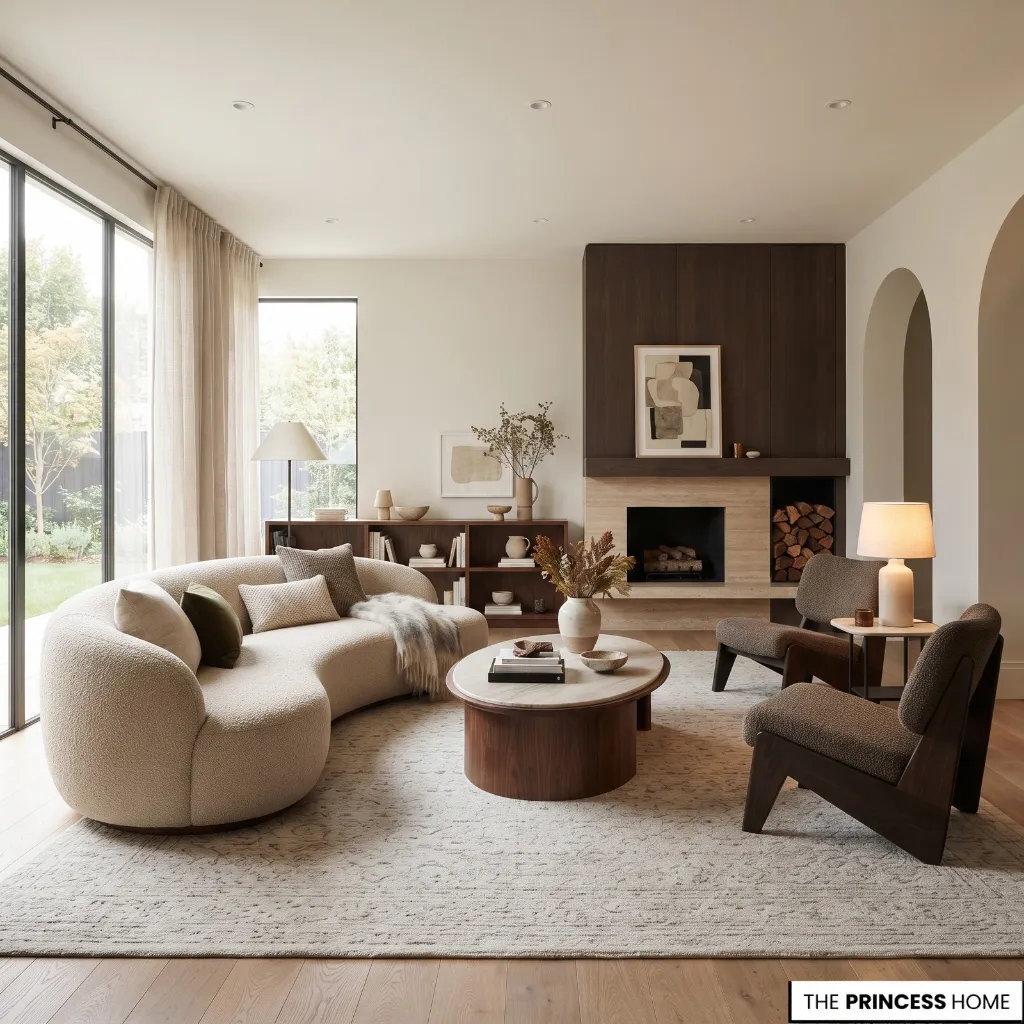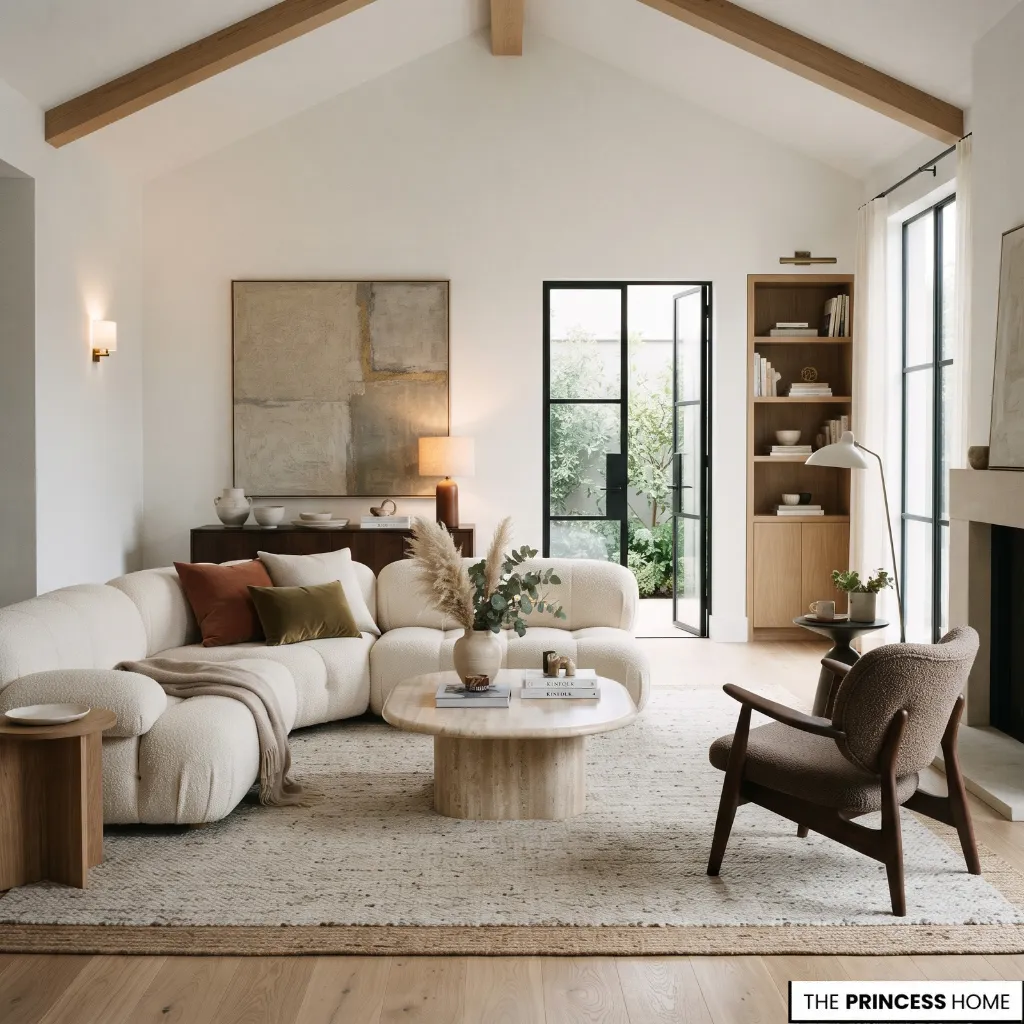
Curved furniture brings softer shapes and sculptural forms into modern living rooms, from rounded sofas and curved sectionals to barrel chairs and oval coffee tables. The challenge is knowing how much curvature the room can support without losing useful space, structure, or comfort.
The best approach is to treat curved furniture as a design tool, choosing its shape, scale, placement, and materials according to how the room needs to function.
Curved Furniture
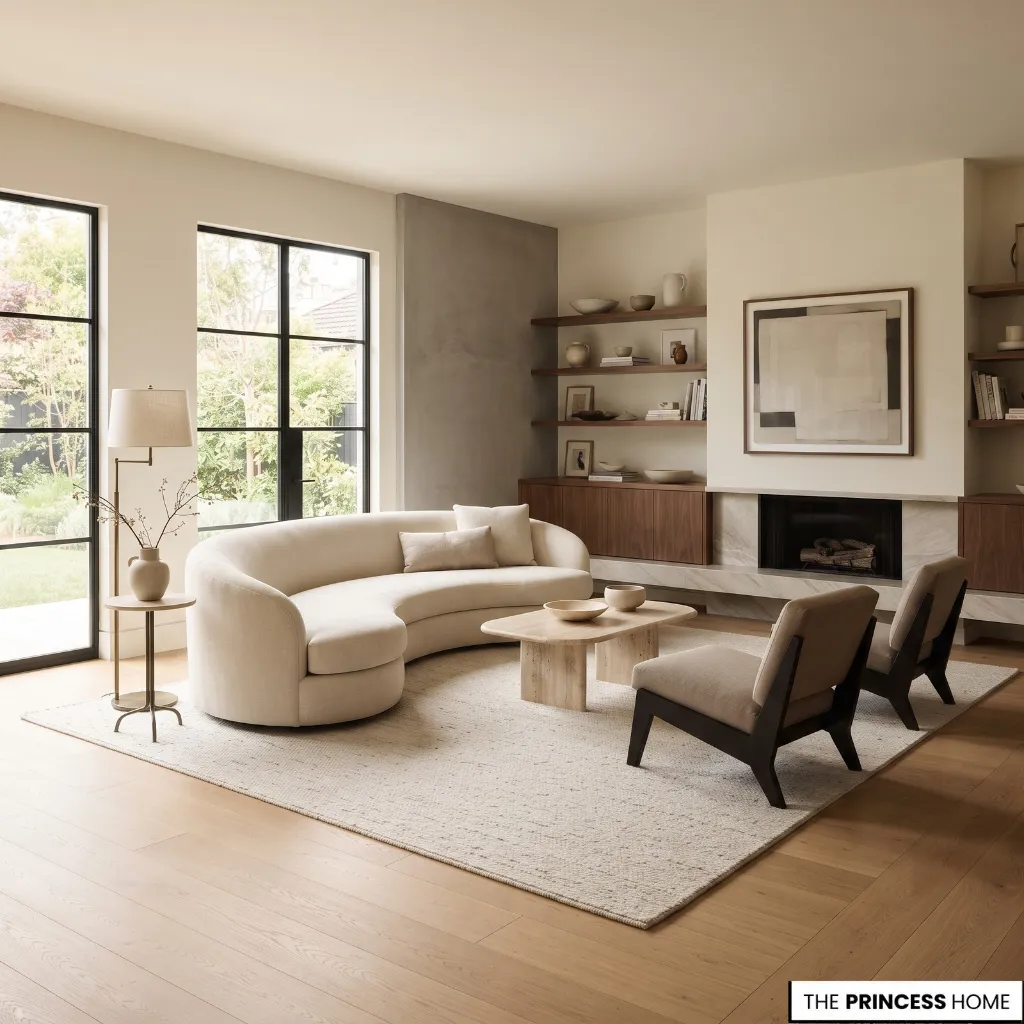
Curved furniture includes pieces with rounded edges, sweeping profiles, arched backs, circular forms, or organic silhouettes. The range extends from fully curved sofas and sectionals to softly rounded chairs, oval tables, and smaller accent pieces.
The distinction between softened curves and strong sculptural curves matters. A sofa with gently rounded corners can soften a modern room without dominating it, while a deeply curved sofa becomes a major element in the furniture arrangement.
Curved furniture is especially useful in contemporary living rooms because it offers an alternative to repeated straight lines of walls, windows, cabinetry, rectangular furniture. It does not need to replace those lines. Strongest rooms usually combine both.
Not every modern living room needs curved furniture. It is usually a good choice when the room benefits from softer visual movement, a more social seating orientation, or a focal piece with a sculptural profile.
If the room already has strong architectural shapes or limited floor space, a smaller curved element may be more effective than making the main seating heavily curved.
Current 2027 direction is best understood as more intentional use of curves rather than simply adding more rounded furniture. Choose a curve because it improves composition, function, or proportions, not only because it looks current.
Curved furniture has long design history; examples include Vladimir Kagan, Jean Royère, Charles/Ray Eames, Eero Saarinen. Today’s interest continues established design language.
For more ideas: Decor Trends 2027 Modern Styles, Colors & Home Inspiration
Choose Your Curve
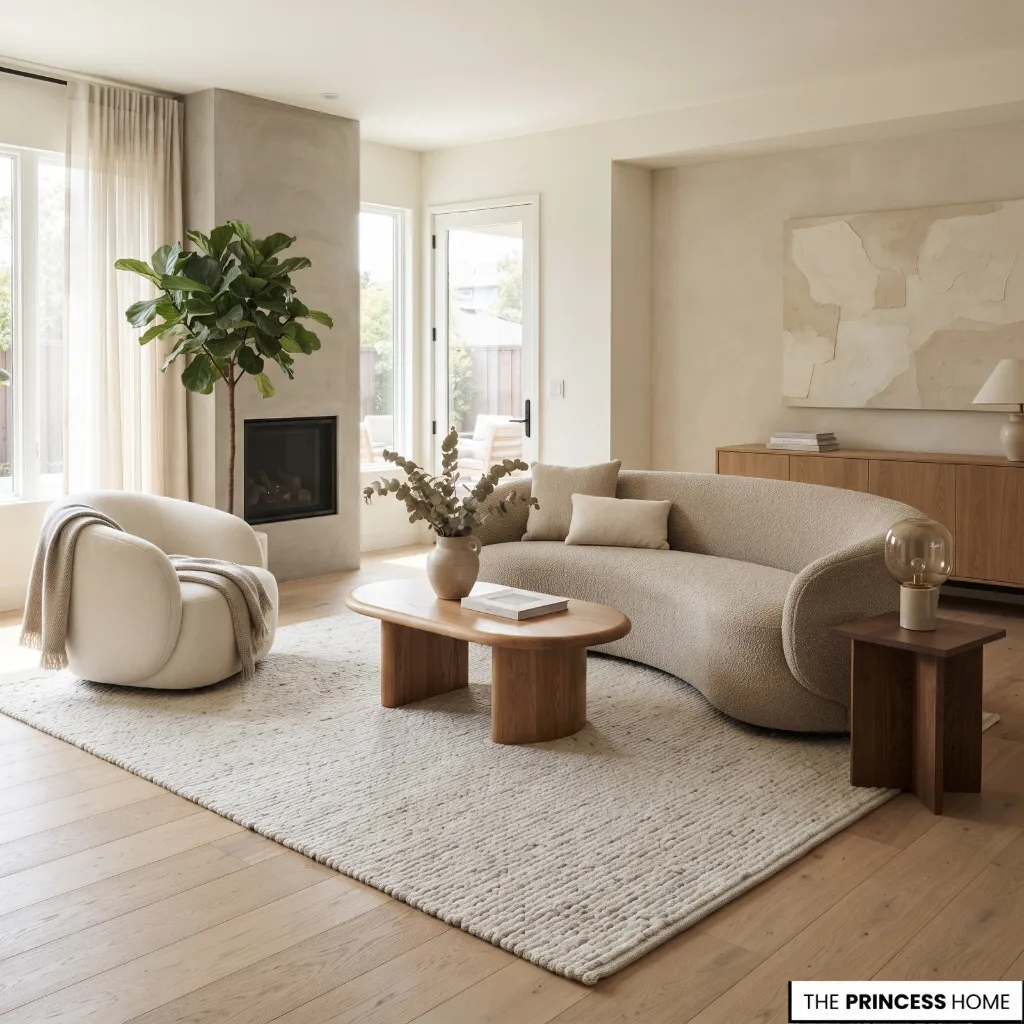
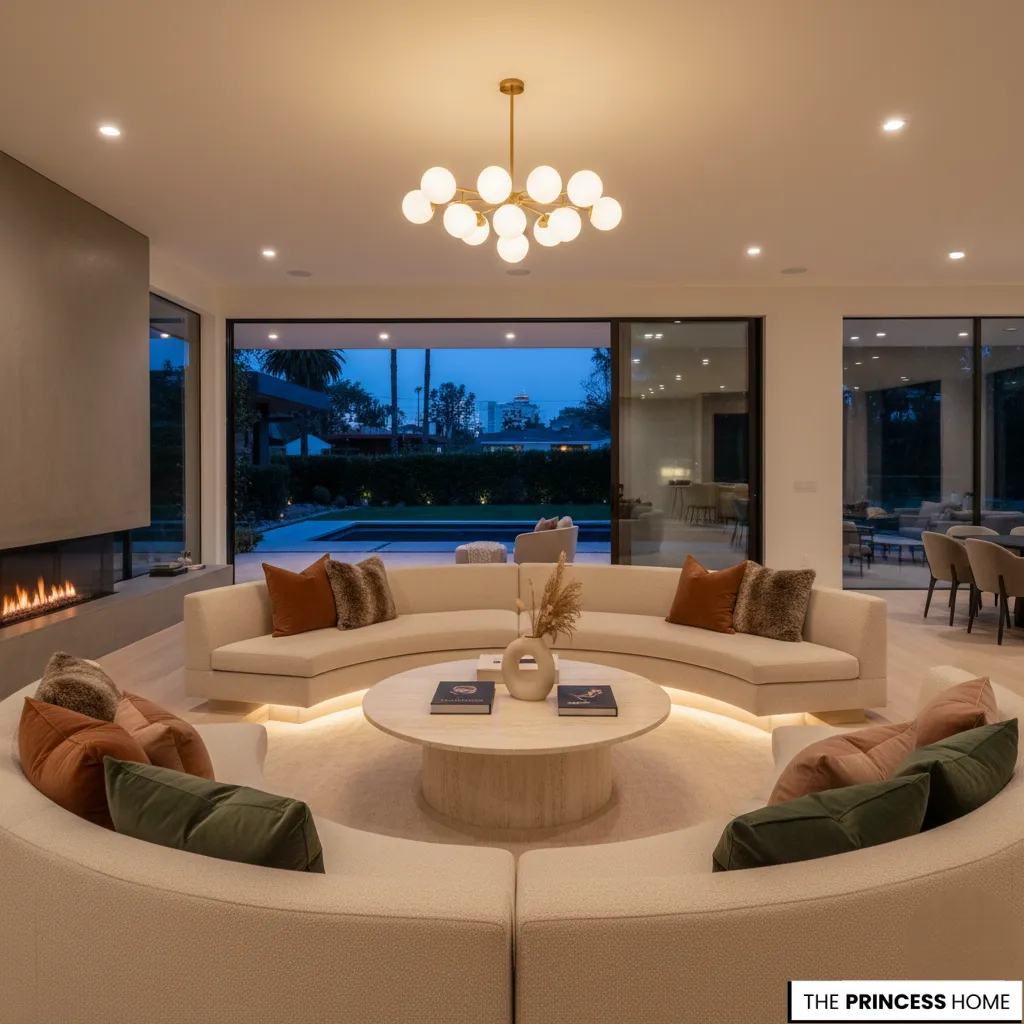
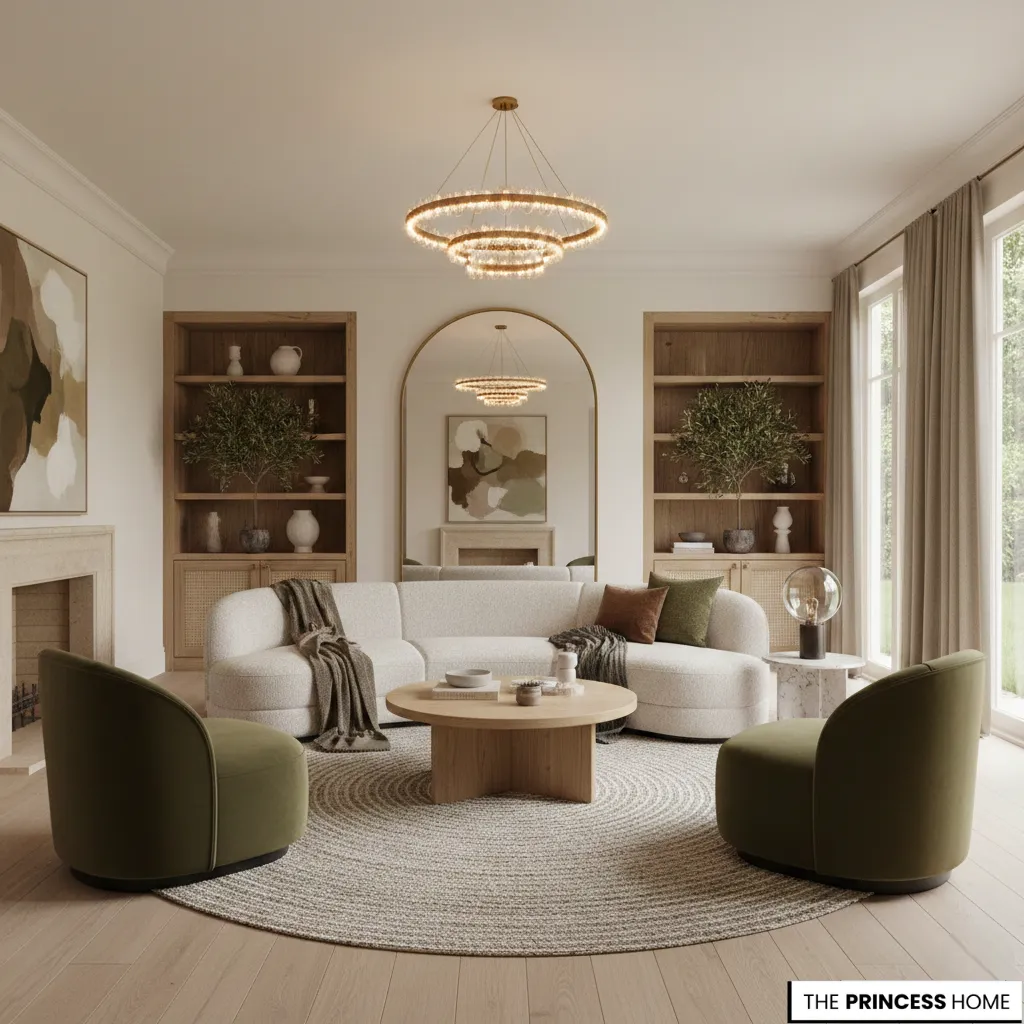
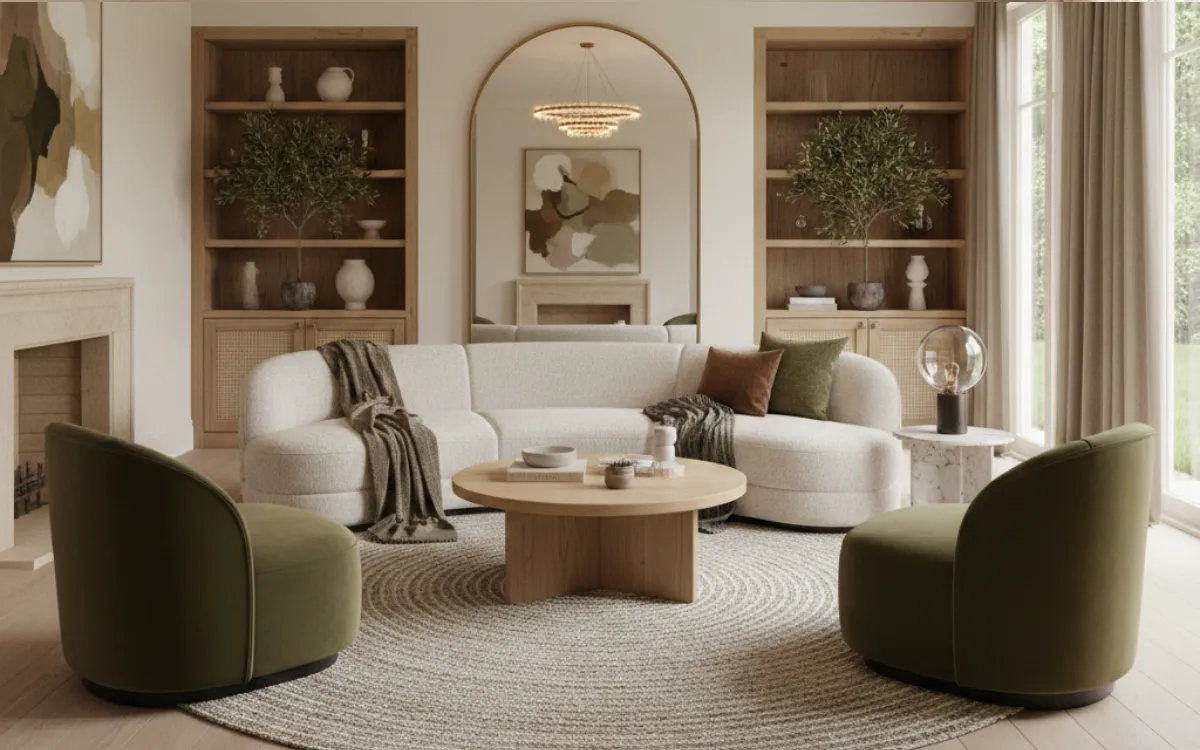
Choose the type according to its role. A curved sofa is strongest when seating forms the main focal point, but its width, depth, and orientation must work with the room. For generous seating, a curved sectional can help define an open-plan area.
A curved armchair offers a smaller commitment, while a barrel or rounded chair. Rounded/oval coffee table easier update. Organic kidney/pebble/softly irregular tables. One strong curved piece can be enough. Curved and organic-shaped furniture overlap, but they are not exactly the same.
Curved furniture is defined mainly by rounded or sweeping lines within the piece, while organic-shaped furniture often uses less predictable, asymmetrical, or nature-inspired outlines. An oval table is clearly curved, while a softly irregular pebble-shaped table is more distinctly organic.
The choice depends on whether the room needs gentle softness or a stronger sculptural gesture. A useful starting point is one dominant curved piece supported by one or two smaller rounded forms. This keeps the shape language visible without making every major object compete for attention.
The right amount remains context dependent because room size, architecture, furniture scale, and circulation all change the result.
For more ideas: Decor Trends 2027 Modern Styles, Colors & Home Inspiration
Balance Room Proportions
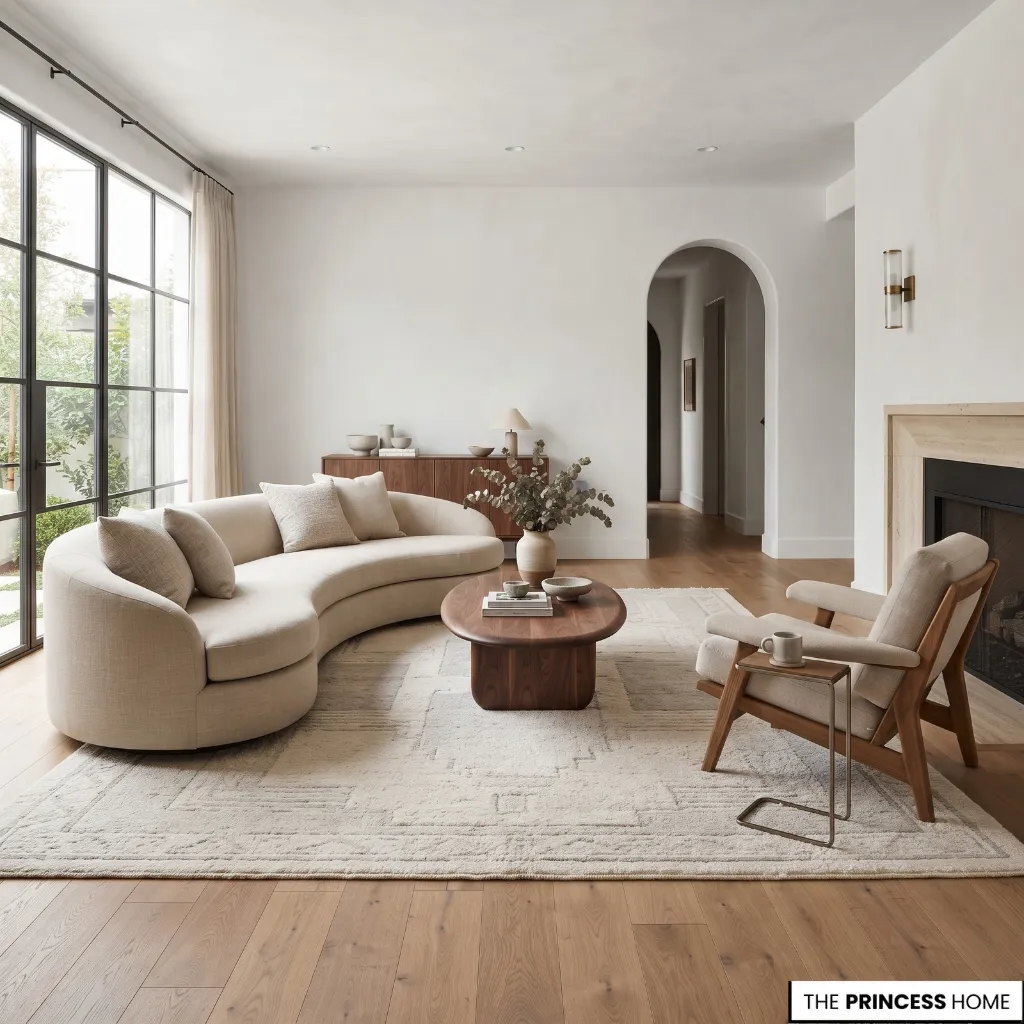
Measure actual footprint. Deeply curved sofa can look visually light but occupy considerable floor space. Measure width/depth vs doors/windows/circulation/surrounding furniture. Generous room can accommodate stronger curve; compact room may need shallower/gentler.
Coffee table relative to seating, chairs need room, rug connects group. Height matters. No universal proportion. Practical starting point: measure room then furniture and plan usable space. The apparent softness of a curved piece should not be mistaken for a smaller footprint.
A large curved sofa can still dominate a compact room, while a smaller curved chair may introduce the same design language with much less commitment. Choose the curve according to the space left for walking, opening doors, using tables, and moving between seating areas.
Mix Curves Lines
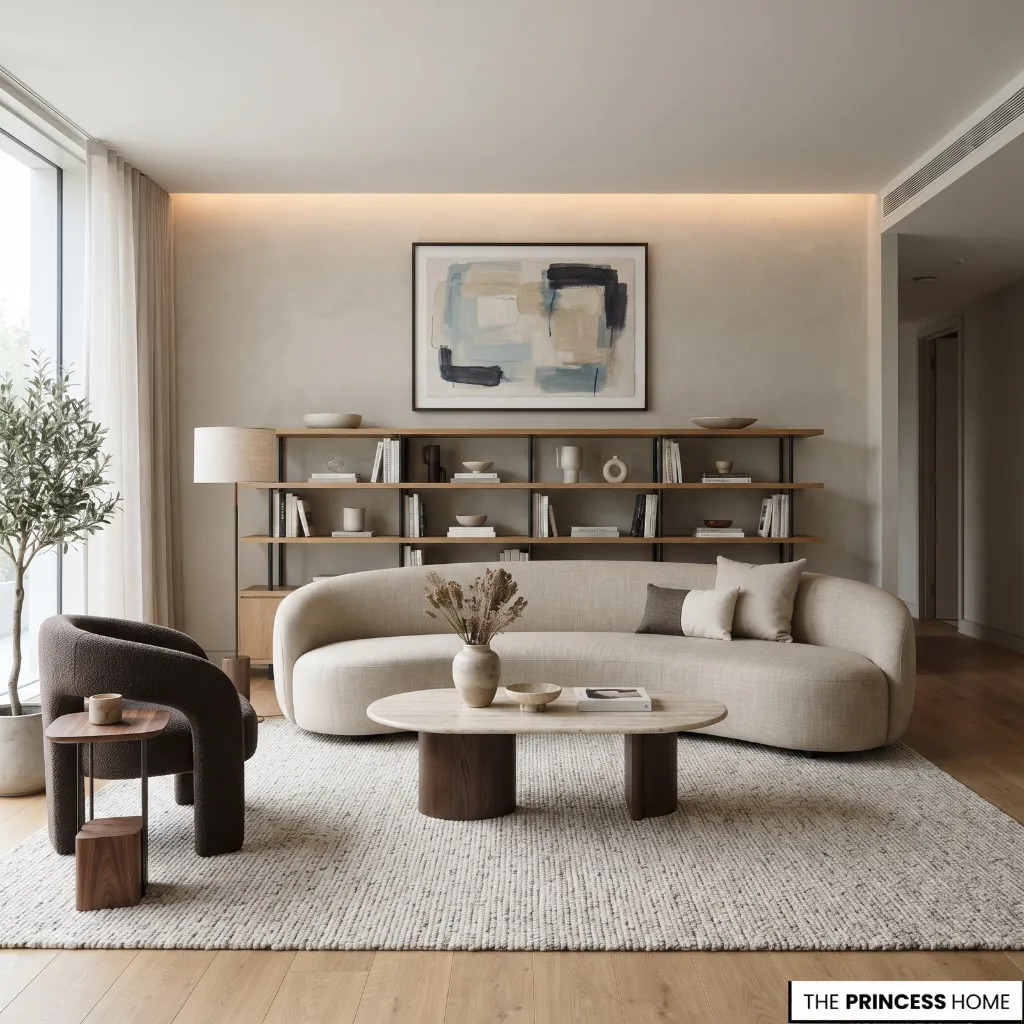
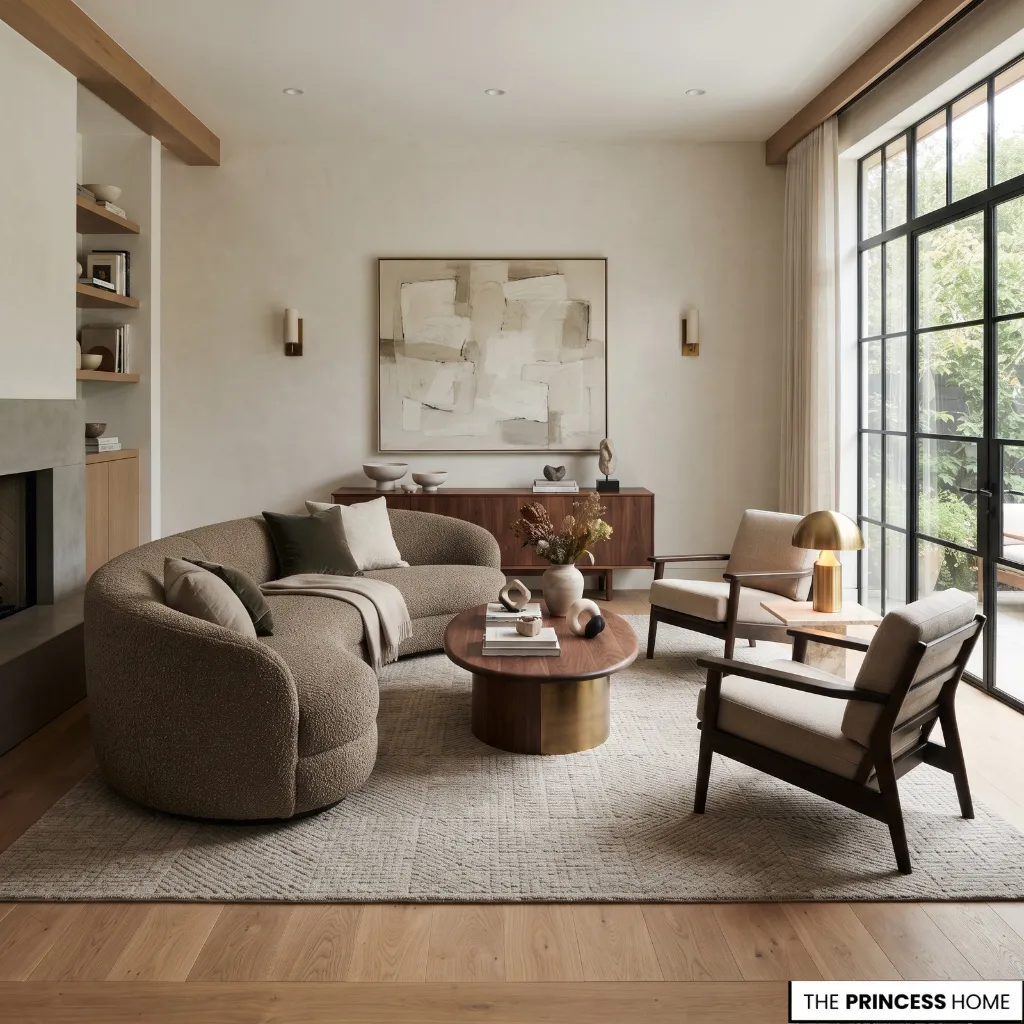
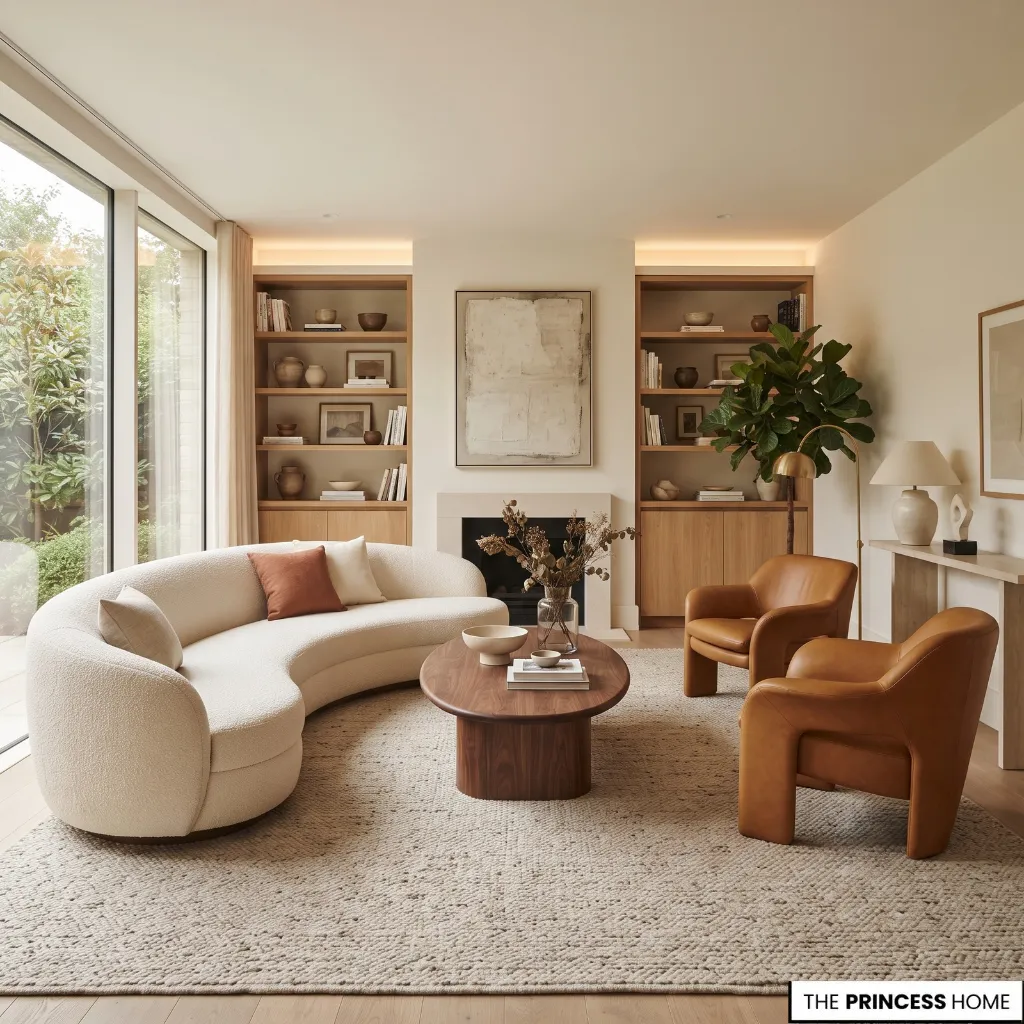
Modern room doesn’t need all rounded. Examples curve sofa + rectangular rug; rounded chair + linear bookcase; oval table + straight fireplace; curved seating + rectangular artwork.
Curves movement/softness, straight lines structure/direction. Repeat curvature selectively. Modern architecture rectilinear; furniture can soften without competing.
Layer Materials
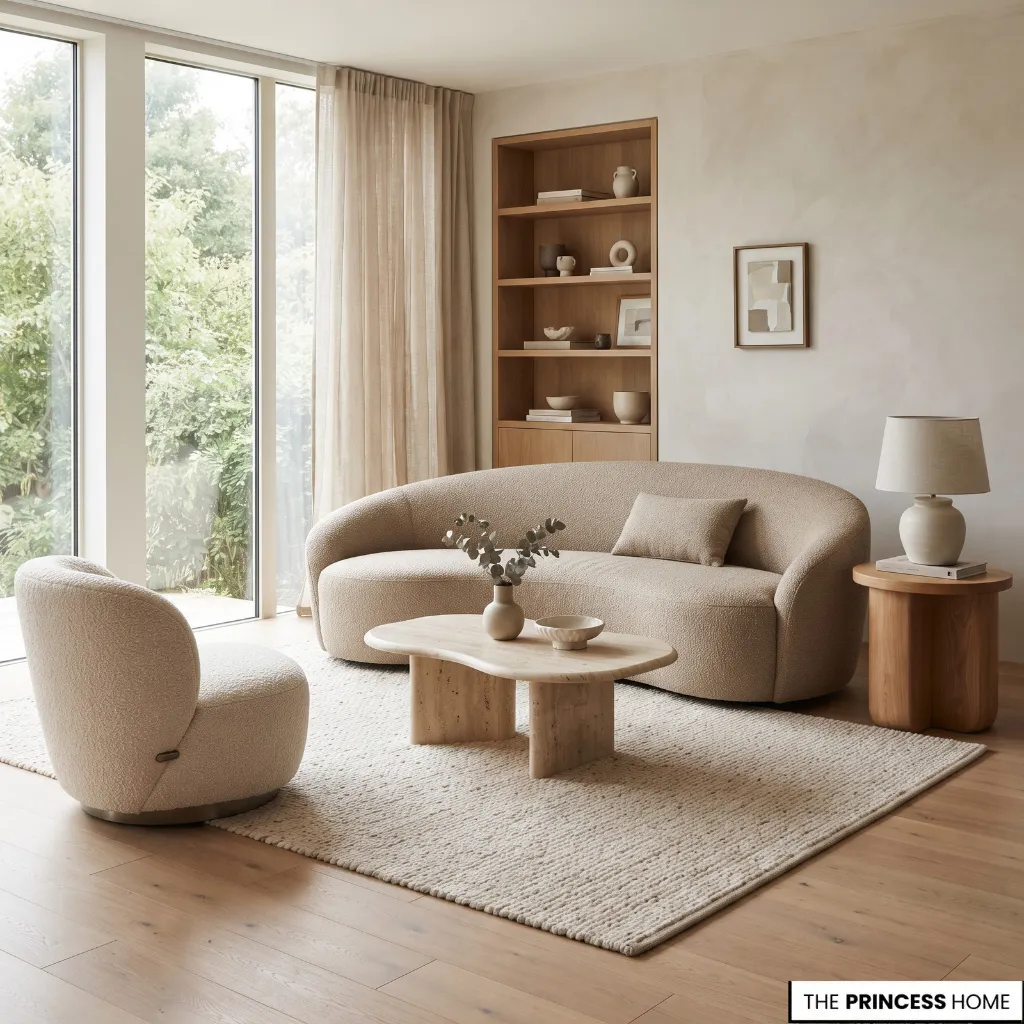
Material changes how curved piece looks/functions. Velvet enveloping; linen/linen blend lighter; leather structured; boucle texture/softness. Wood introduces curves through frames/legs/benches/tables; stone gives rounded table weight; metal sharp contrast.
Material is part of furniture choice. Sculptural sofa/tactile fabric already strong; quieter materials support. Material choice follows use; frequent living room needs upholstery suited to wear/maintenance.
Style The Seating
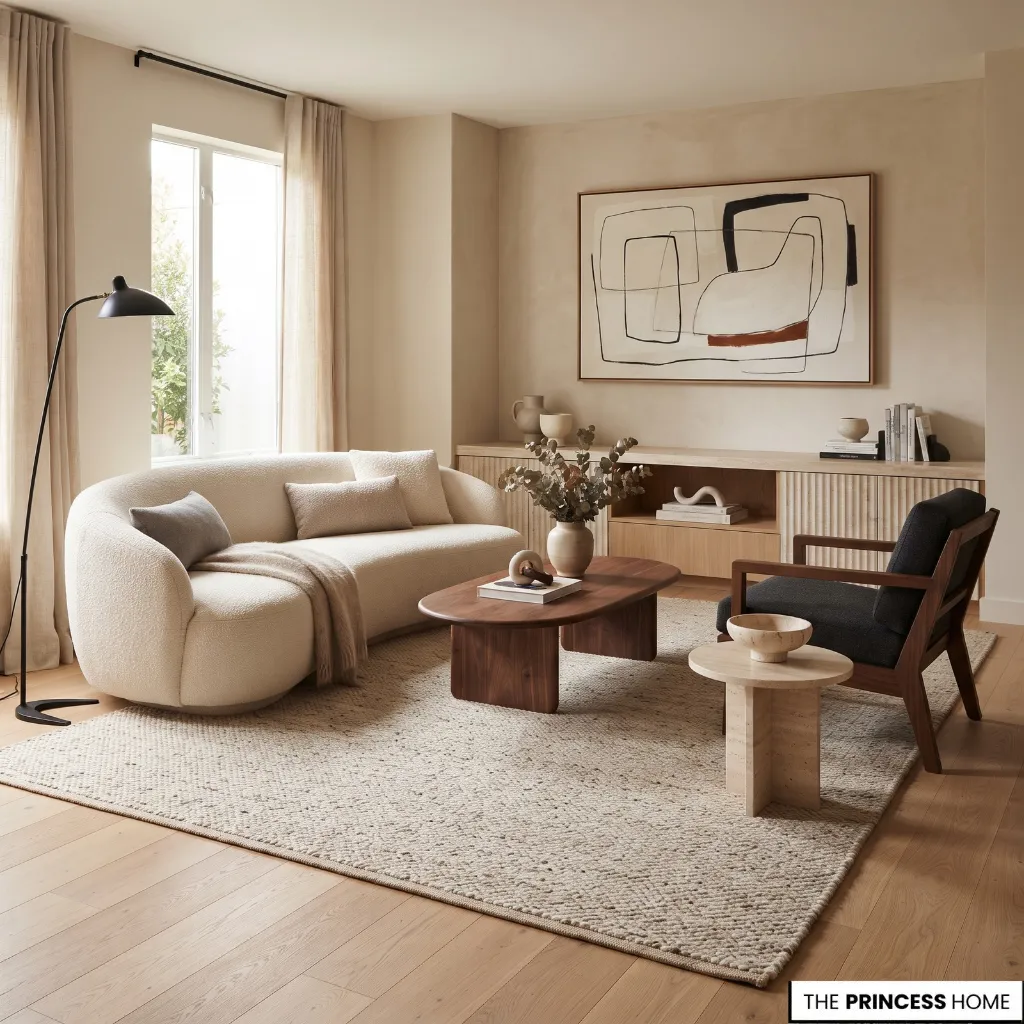
Build seating around main curved piece. Start rug; rectangular can structure curved sofa, rounded/organic can reinforce softer geometry. Coffee table according to seating; oval/rounded echoes without copying, rectangular contrasts. Side tables for function. Secondary seating purpose.
Cushions/throws shouldn’t hide silhouette. Lighting/artwork can be linear. Arrangement should show curve while keeping pieces useful. With a curved sofa, the coffee table should relate to the seating without simply repeating its outline.
An oval or rounded table usually creates an easy visual relationship and supports movement around the seating, while a rectangular table can provide stronger contrast and clearer structure.
The best choice depends on the sofa’s depth, the available circulation, and how much visual softness the room already contains.
Plan Small Rooms
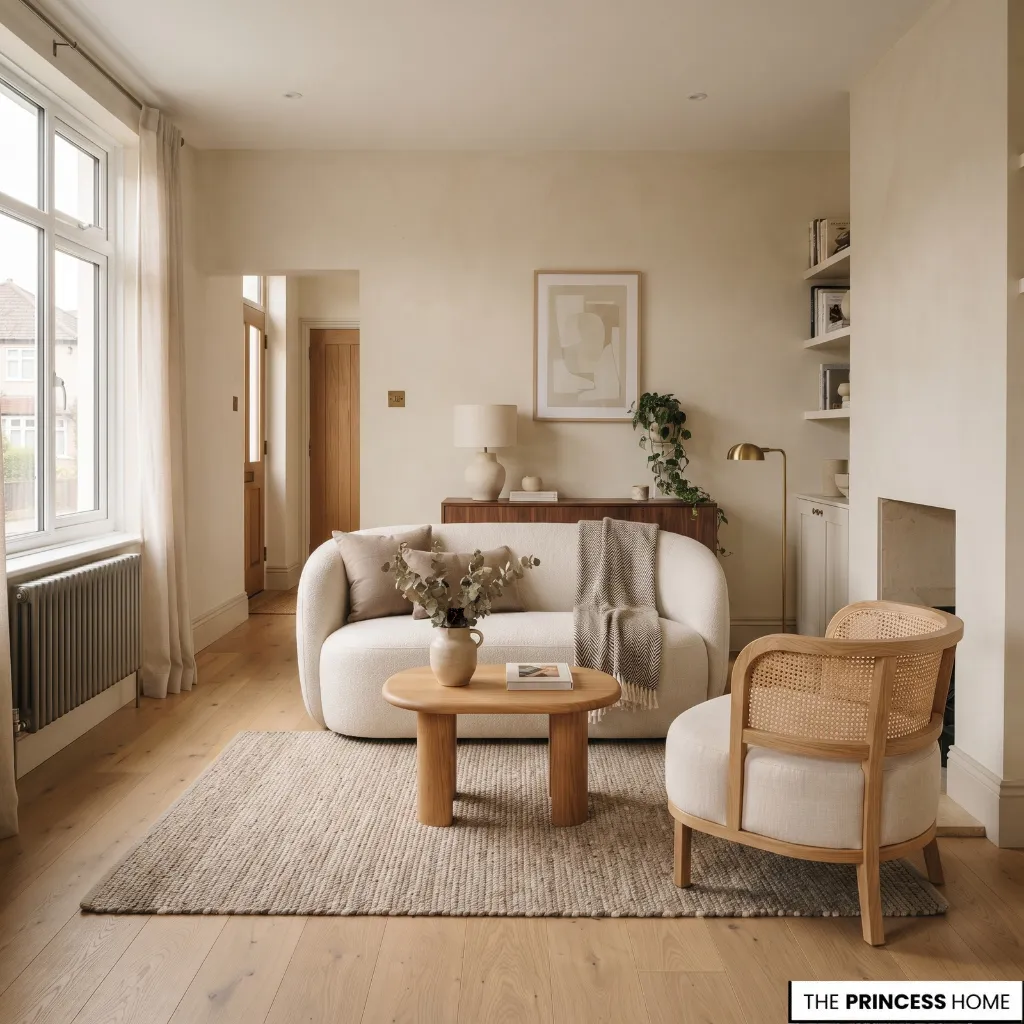
Curves not automatically space-saving. Measure room, doors, windows, radiators, walkways, fixed elements; measure full footprint. Compact curve can work; deep oversized can reduce floor area.
Keep rest controlled. If full sofa too large, use curved armchair, rounded coffee table, compact loveseat with softened corners. Key: comfortable circulation and usable space after installation.
In a small living room, the goal is not to force a curved sofa into the space simply because curved furniture is current. A curved armchair, compact loveseat, or rounded coffee table can introduce the same softer language while preserving more usable floor area.
This is especially useful when the room’s architecture already provides strong visual interest and does not need another large focal form.
For more ideas: Best Paint Colors for Small Apartments in 2027 Modern Ideas
Create Conversation
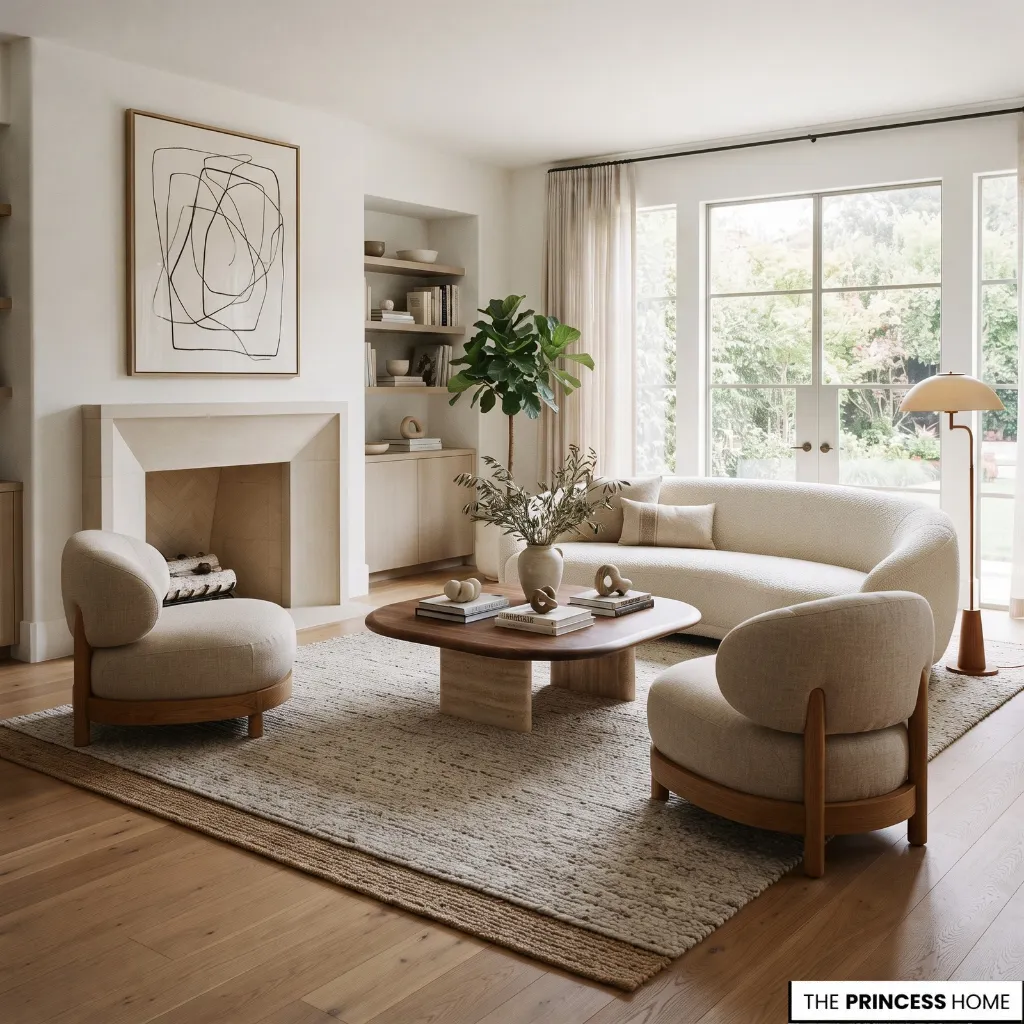
Curved seating useful for conversation. Straight sofa directs along line; curved sofa turns seats toward shared center. Good when TV not only purpose; curved sectional/sofa defines social area, rounded chairs create smaller arrangement.
Curve alone doesn’t guarantee better experience; distance, table, sightlines, circulation matter. Orient toward one another and keep central area usable.
Choose Colors
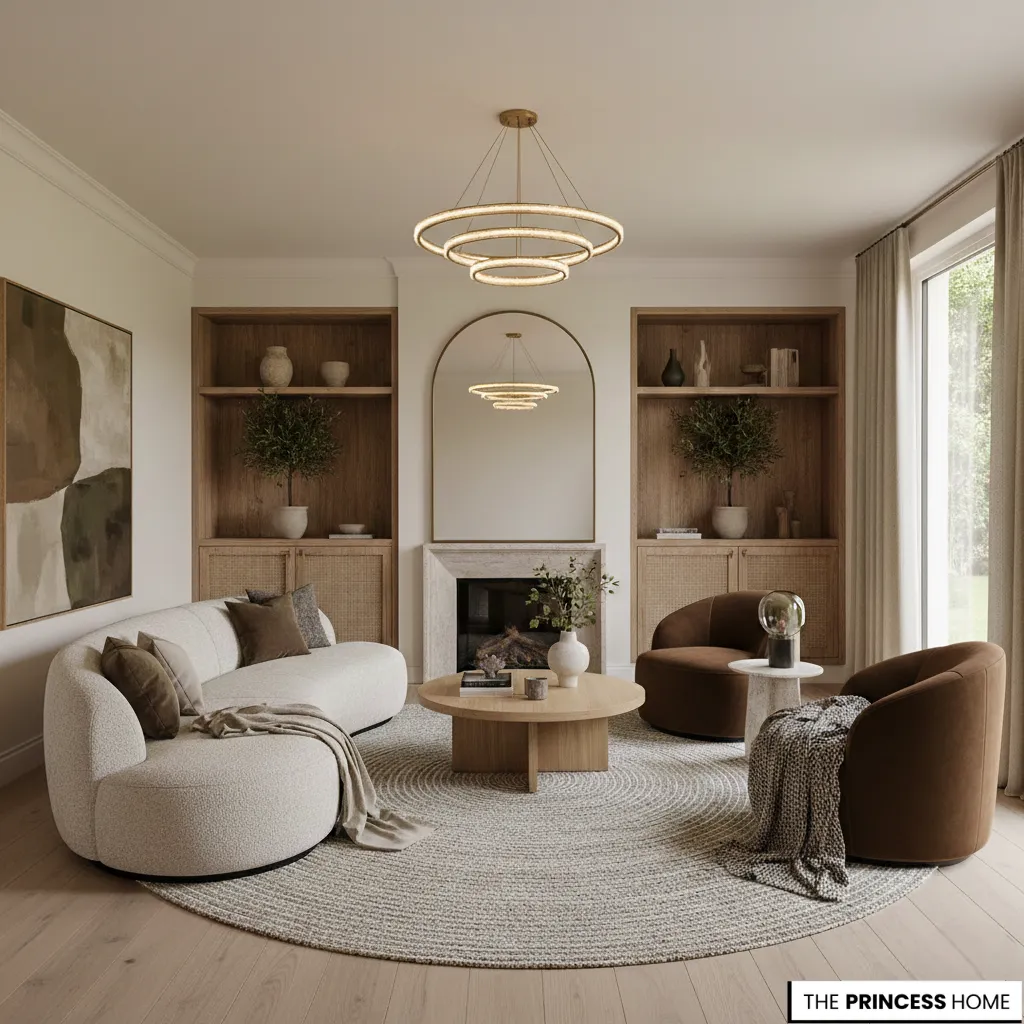
Curved furniture works with quiet neutrals, earthy, deeper, accent colors. Cream/warm white/taupe/muted gray as quiet anchor. Brown/olive/deep blue/charcoal/muted rust more visual weight.
Strong color if focal point, keep surrounding palette controlled. Tonal approach. More sculptural furniture doesn’t need dramatic color.
For more ideas: Color Trends 2027 Renewed Collection Harmonizing Your Home
Avoid Common Mistakes
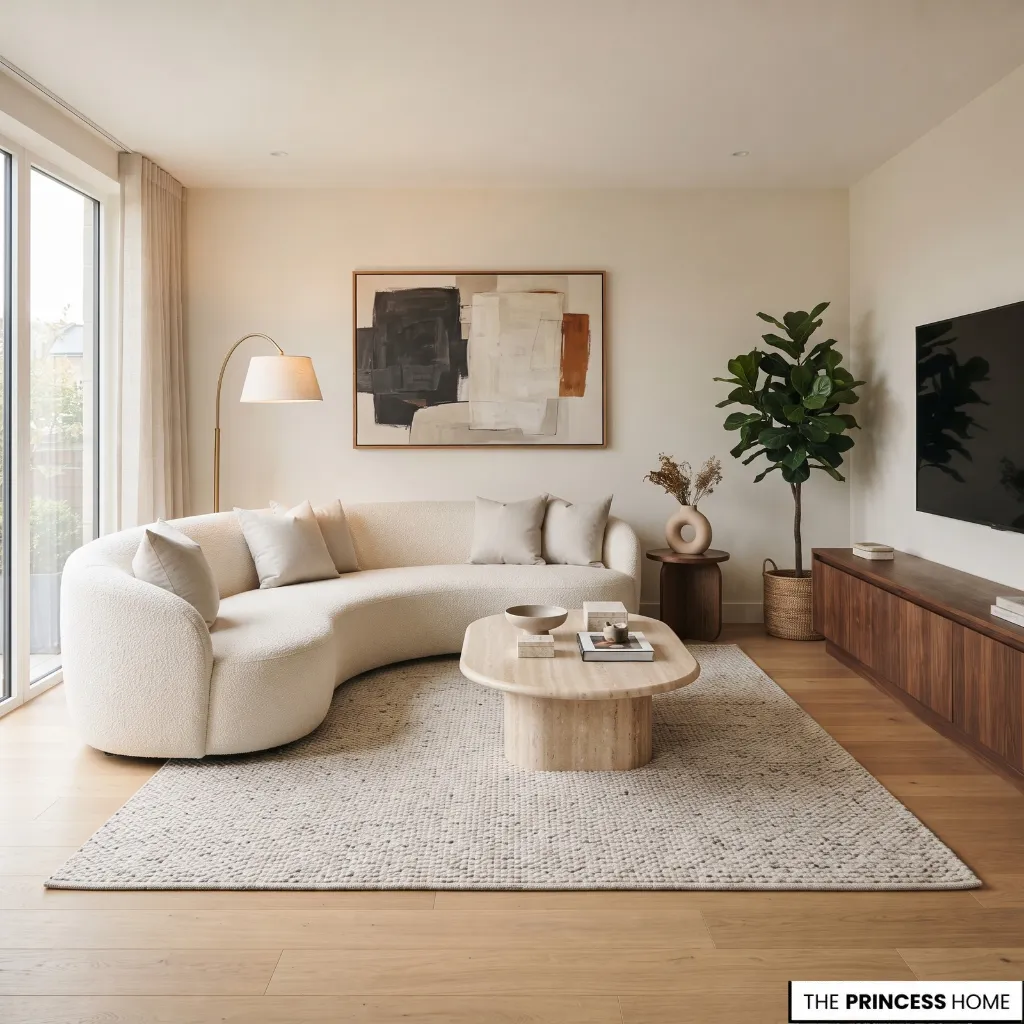
Too many curves; oversized furniture; wrong coffee table; ignoring rug; pushing everything against walls; matching too closely; shape over comfort; trend-only selection. Too many curves can remove the contrast that gives a room structure.
Oversized furniture can consume circulation even when its rounded shape appears visually lighter. A poorly scaled coffee table can make the seating zone difficult to use. Ignoring the rug can leave the curved furniture visually disconnected. Pushing every piece against the walls can weaken the conversation area.
Matching every rounded form too closely can make the room feel deliberately themed. Choosing shape over comfort can make a sculptural piece difficult to live with. Selecting furniture only because it looks current can leave the room dated once the trend changes.
Build The Room
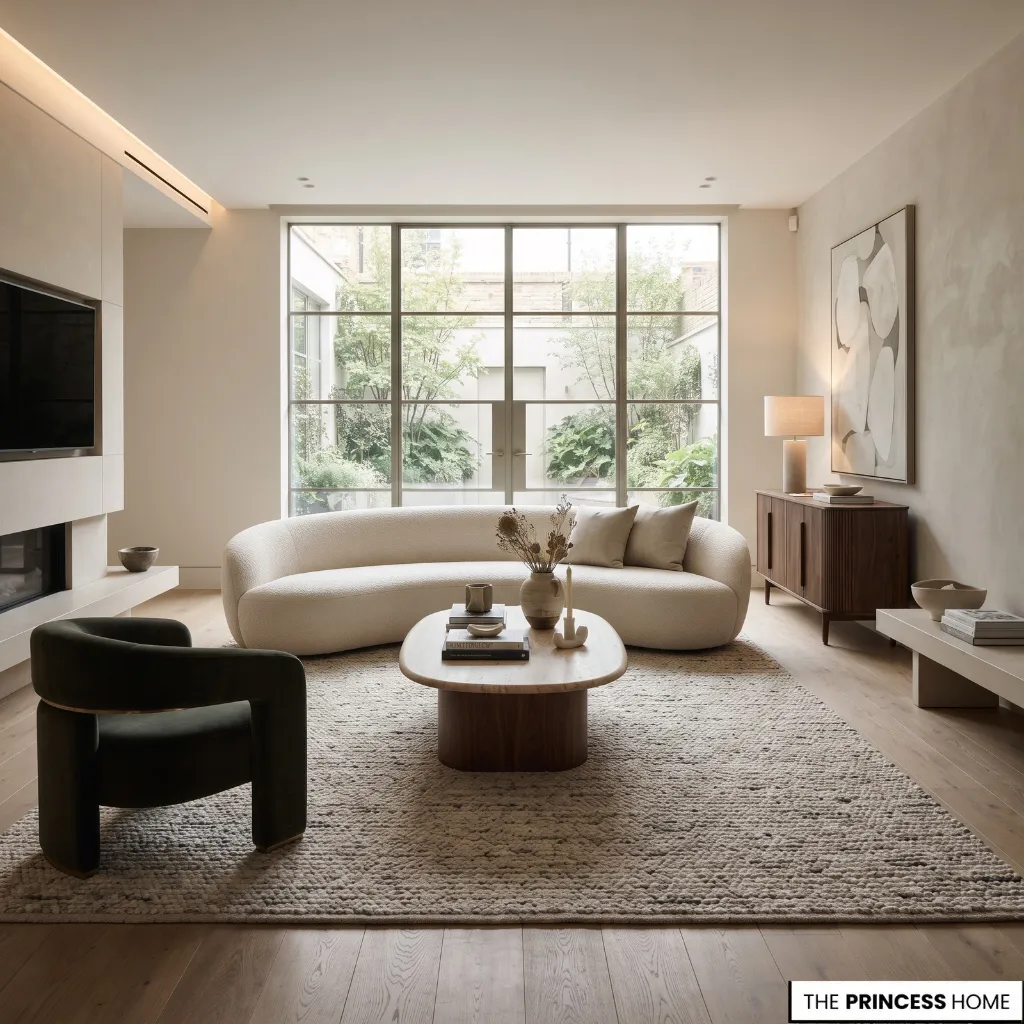
Architecture → primary seating → seating zone/rug → central table → secondary seating → materials/color → lighting/art/cushions/accessories → edit. Strong rooms don’t look trend-built; curve belongs because proportions/placement/materials/lines support use.
The sequence also helps determine how much curved furniture the room actually needs.
Once the architecture, primary seating, and circulation are established, add supporting curves only where they improve the relationship between pieces. A room rarely needs every chair, table, and accessory to repeat the same silhouette.
For more ideas: Decor Trends 2027 Modern Styles, Colors & Home Inspiration
Conclusion
Curved furniture works best when shape has clear purpose. Start with room proportions and function, then use the curve to strengthen composition, comfort, and visual movement. For 2027, the most useful approach is not simply adding more curves, but selecting them more intentionally.
Explore the visual gallery below for inspiring ideas that bring this aesthetic to life in your home.