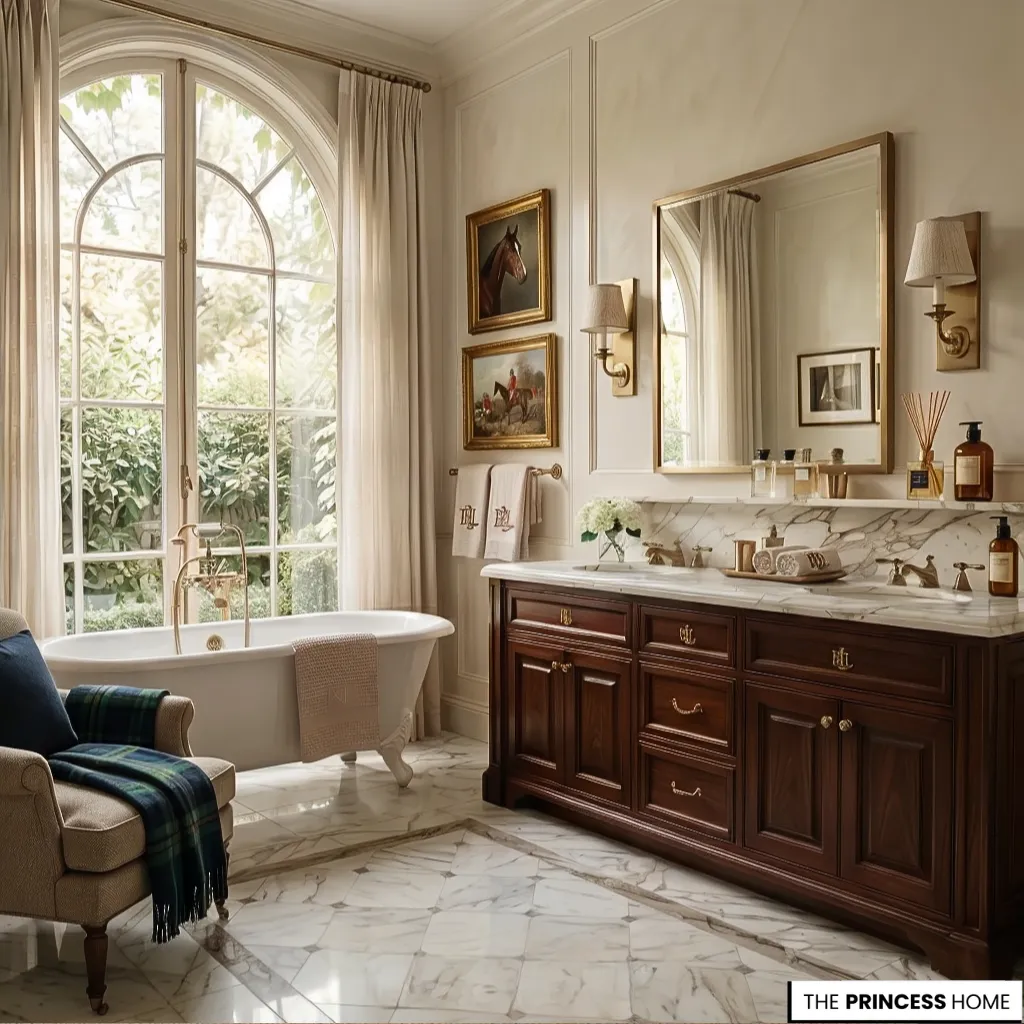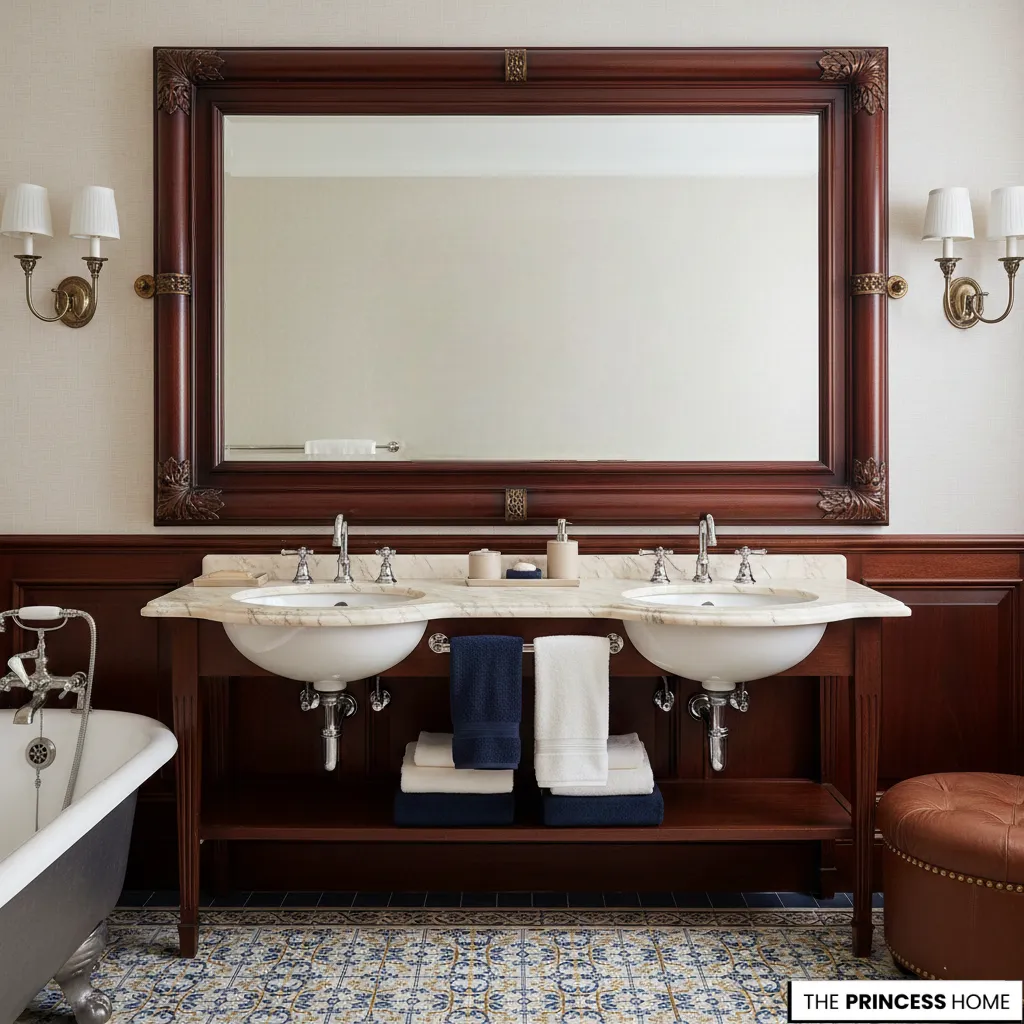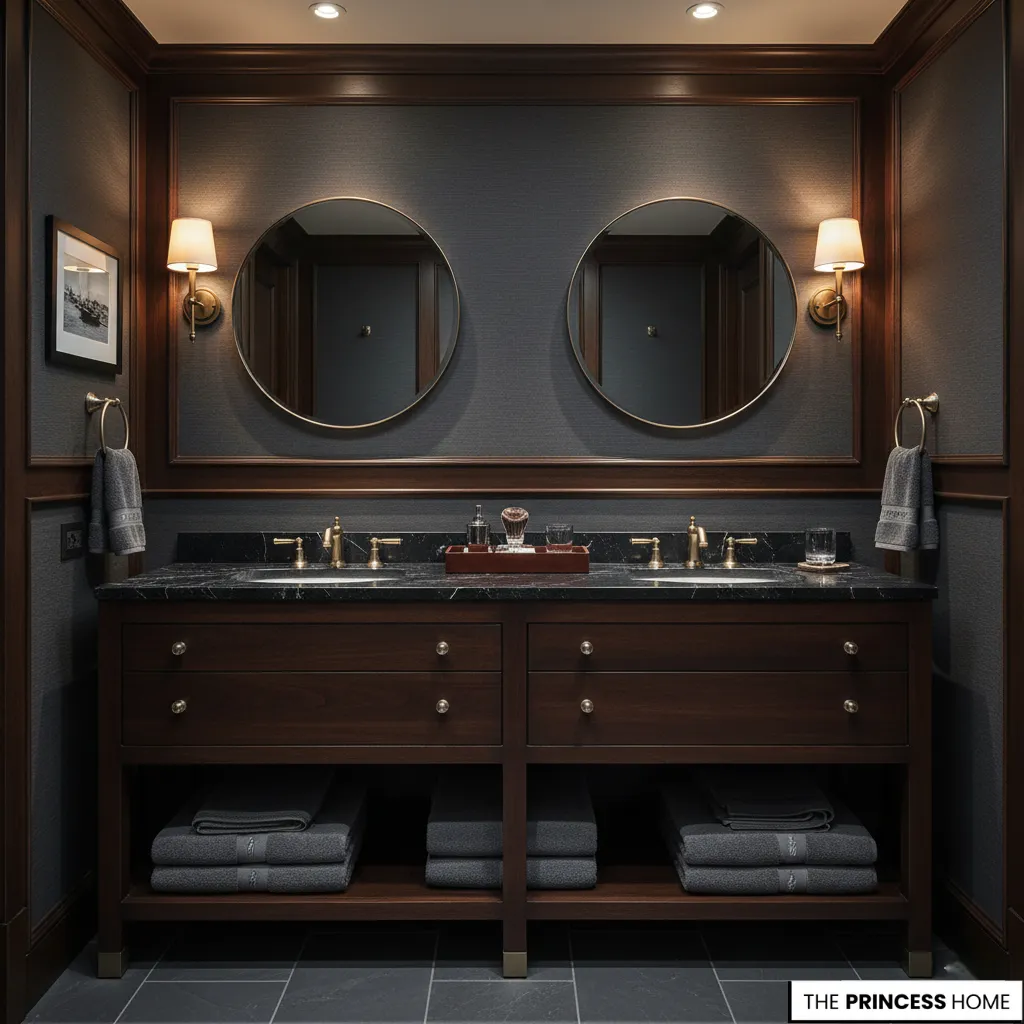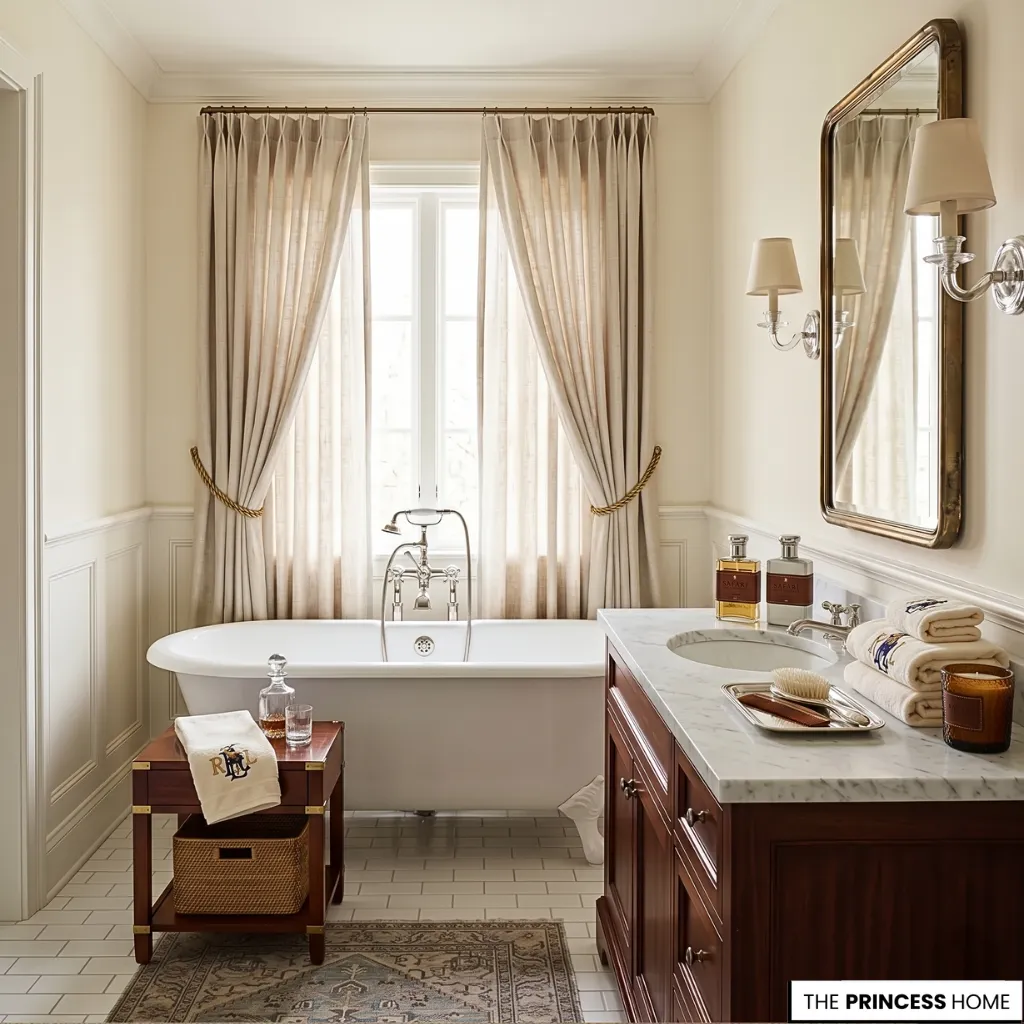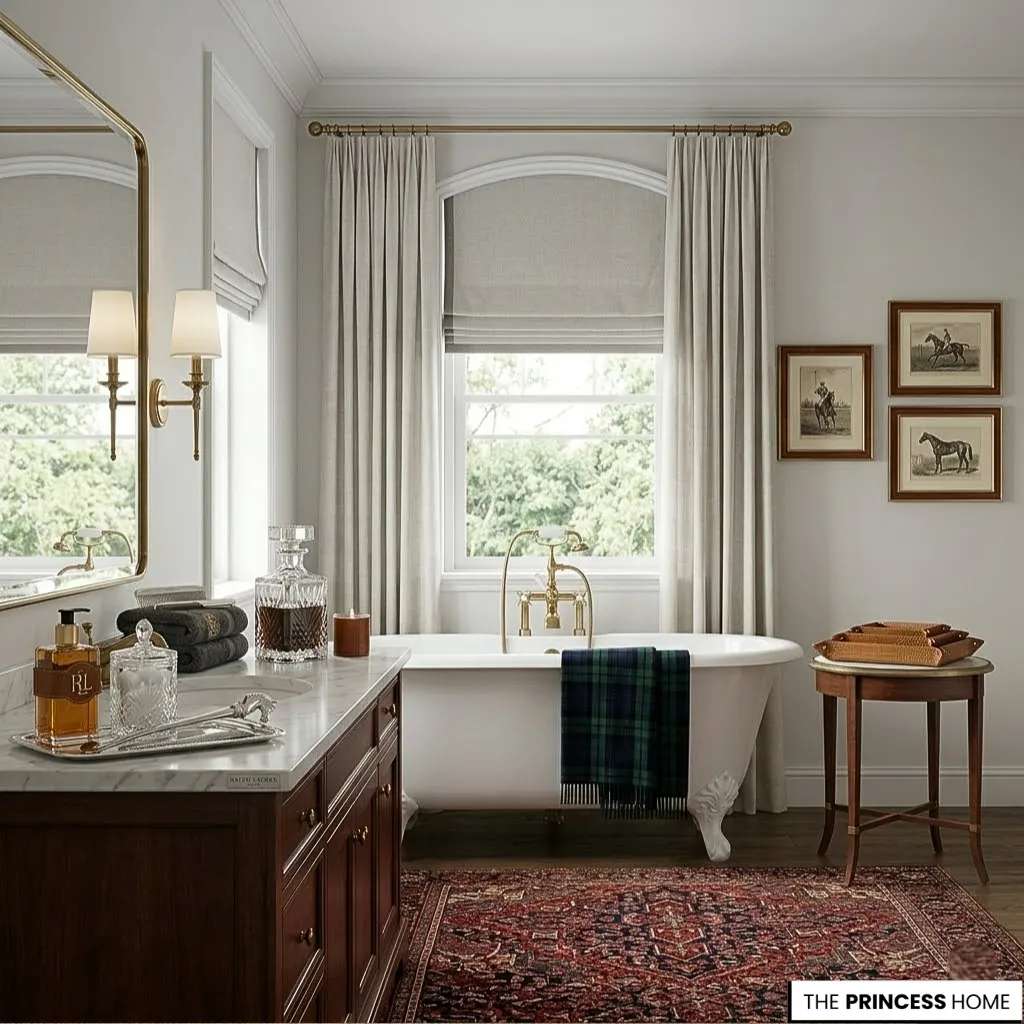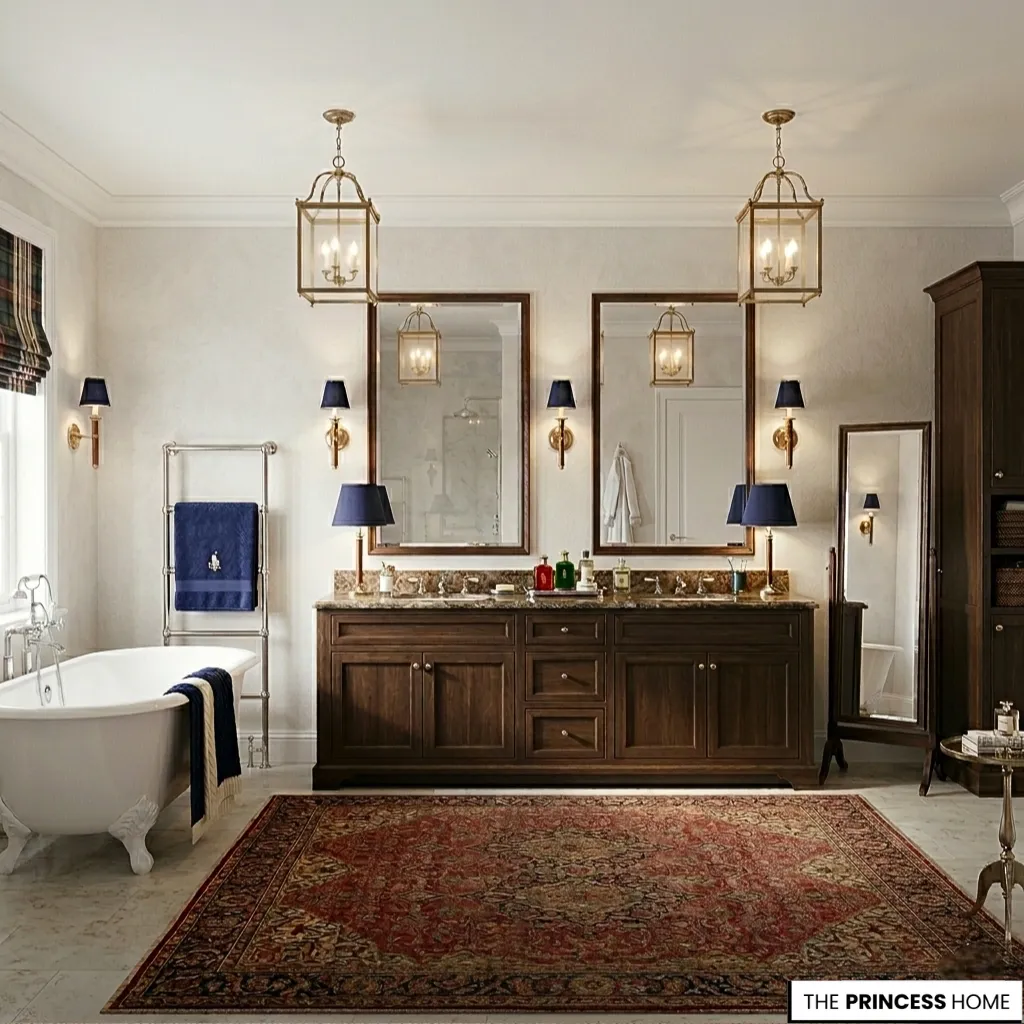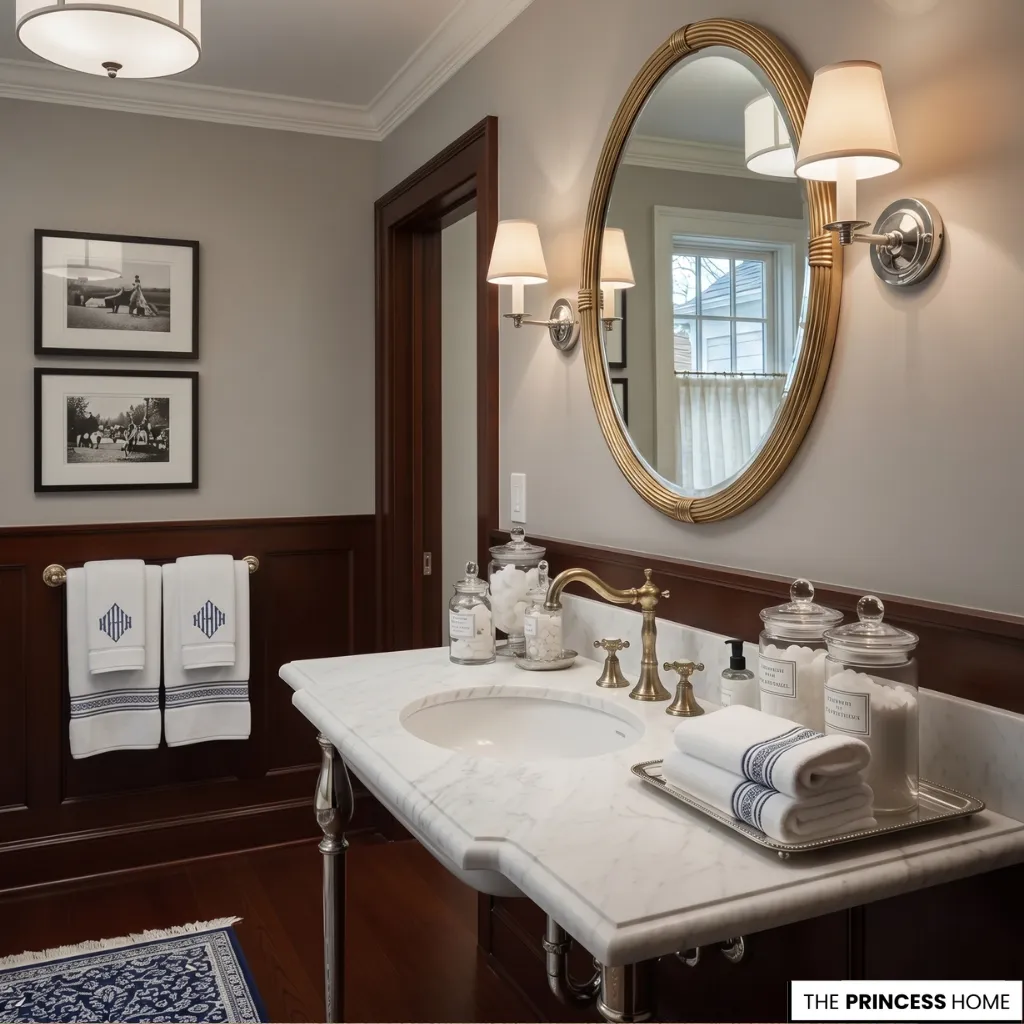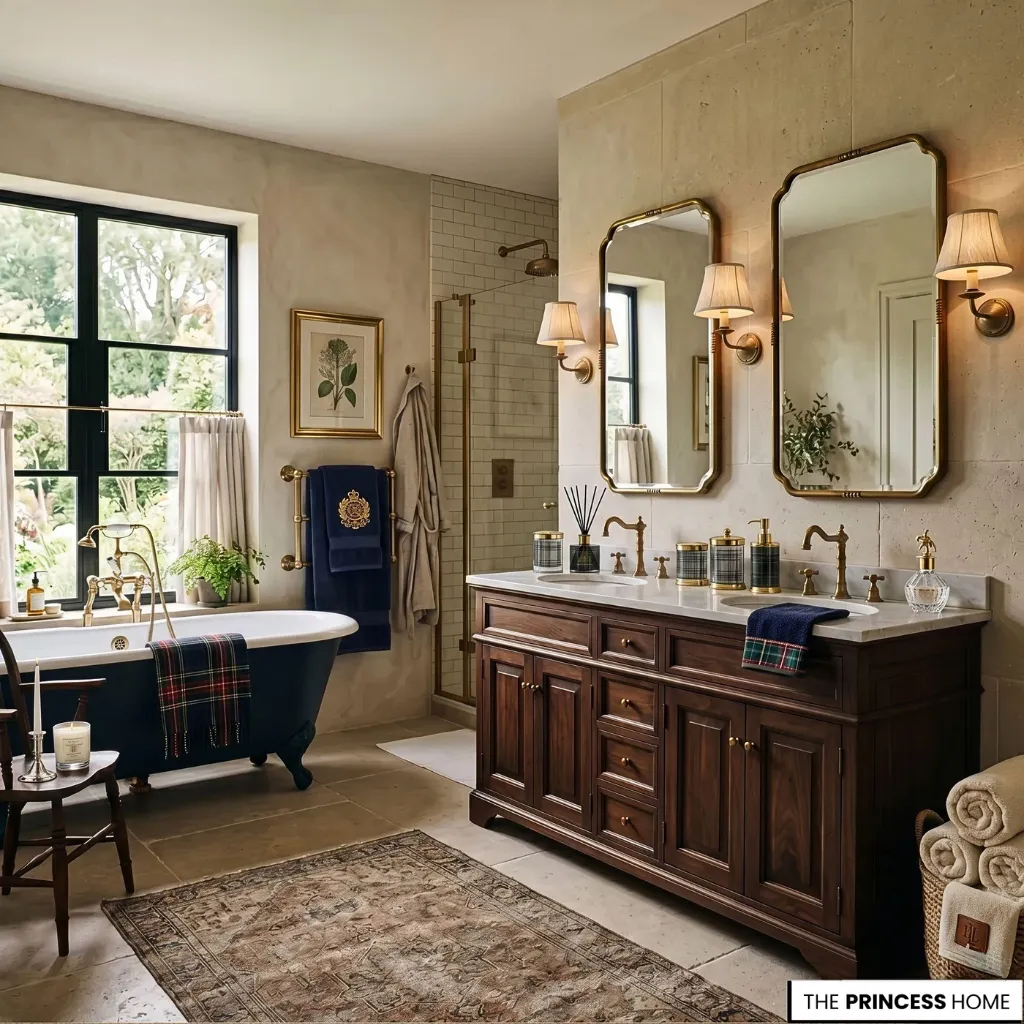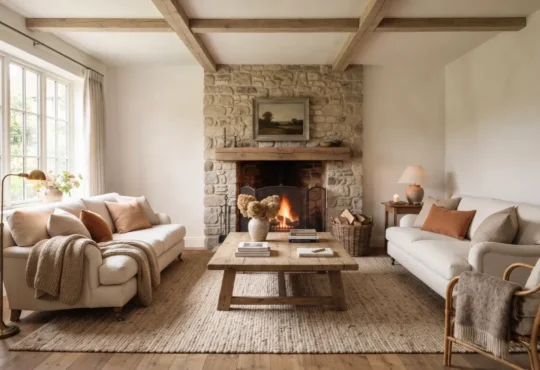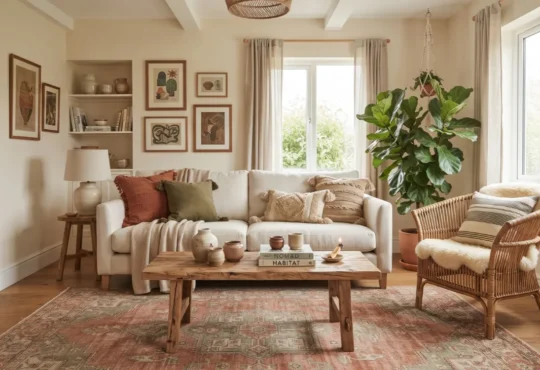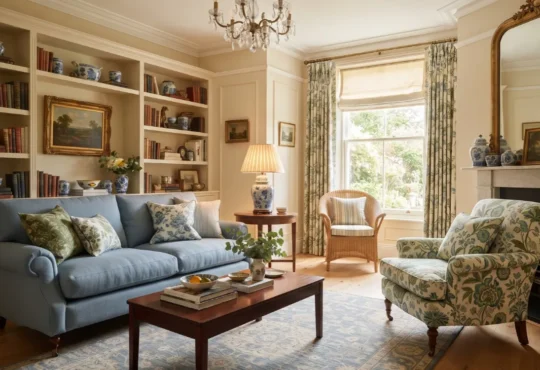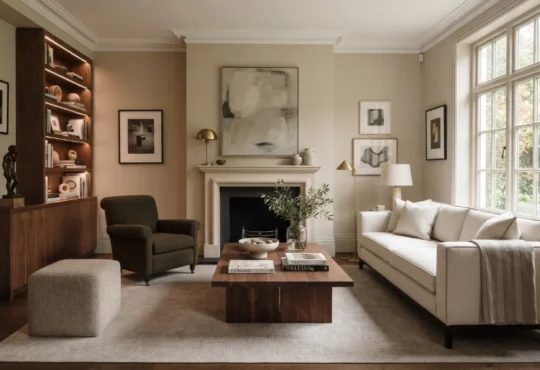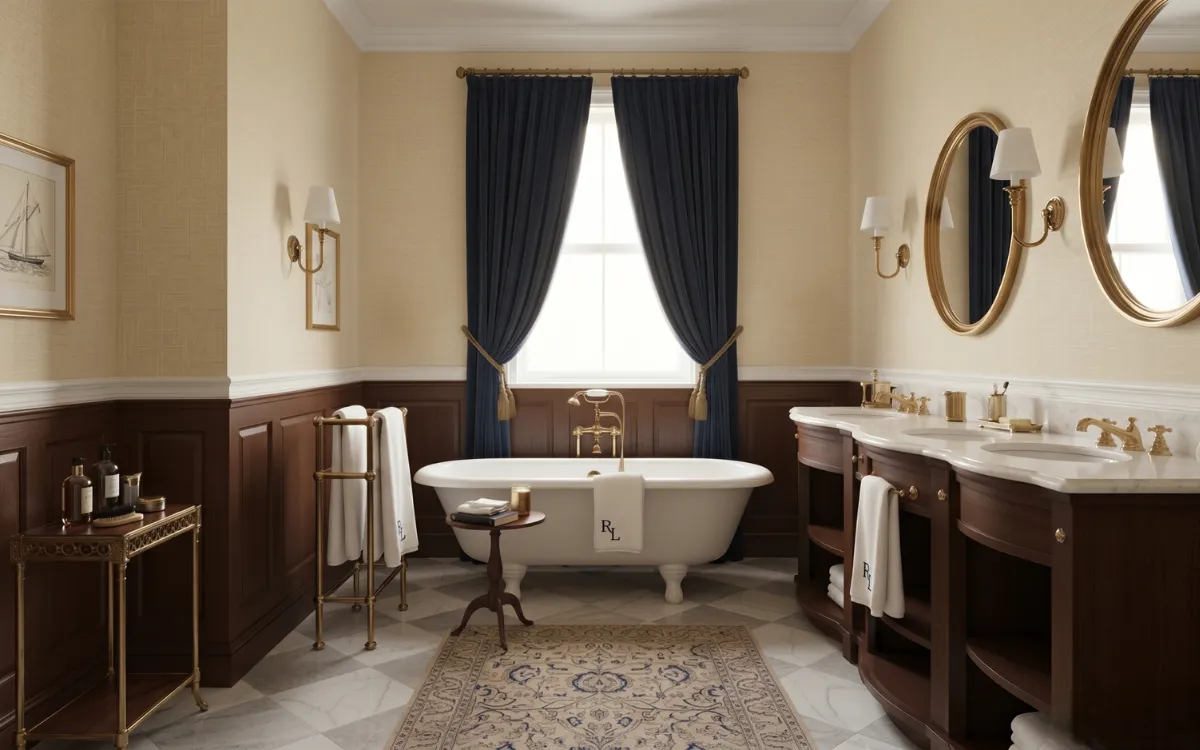
Ralph Lauren bathroom design brings heritage-inspired character, tailored forms, substantial materials, controlled color, and collected details into a functional space.
The challenge is translating that design language without making the bathroom feel themed, overly traditional, or dependent on recognizable brand products. The best approach is to establish the foundation first, then coordinate materials, fixtures, color, lighting, pattern, and accessories so they work together.
Ralph Lauren Bathroom Style
Ralph Lauren style is rooted in heritage, craftsmanship, quality, comfort, and a sense of personal history. The Ralph Lauren Home collection began in 1983 with four original lifestyle worlds—Thoroughbred, New England, Jamaica, and Log Cabin—and later developed additional environments around different places and lifestyles.
For a bathroom, this does not mean copying one specific Ralph Lauren room. It means translating the broader design language into decisions that suit the space.
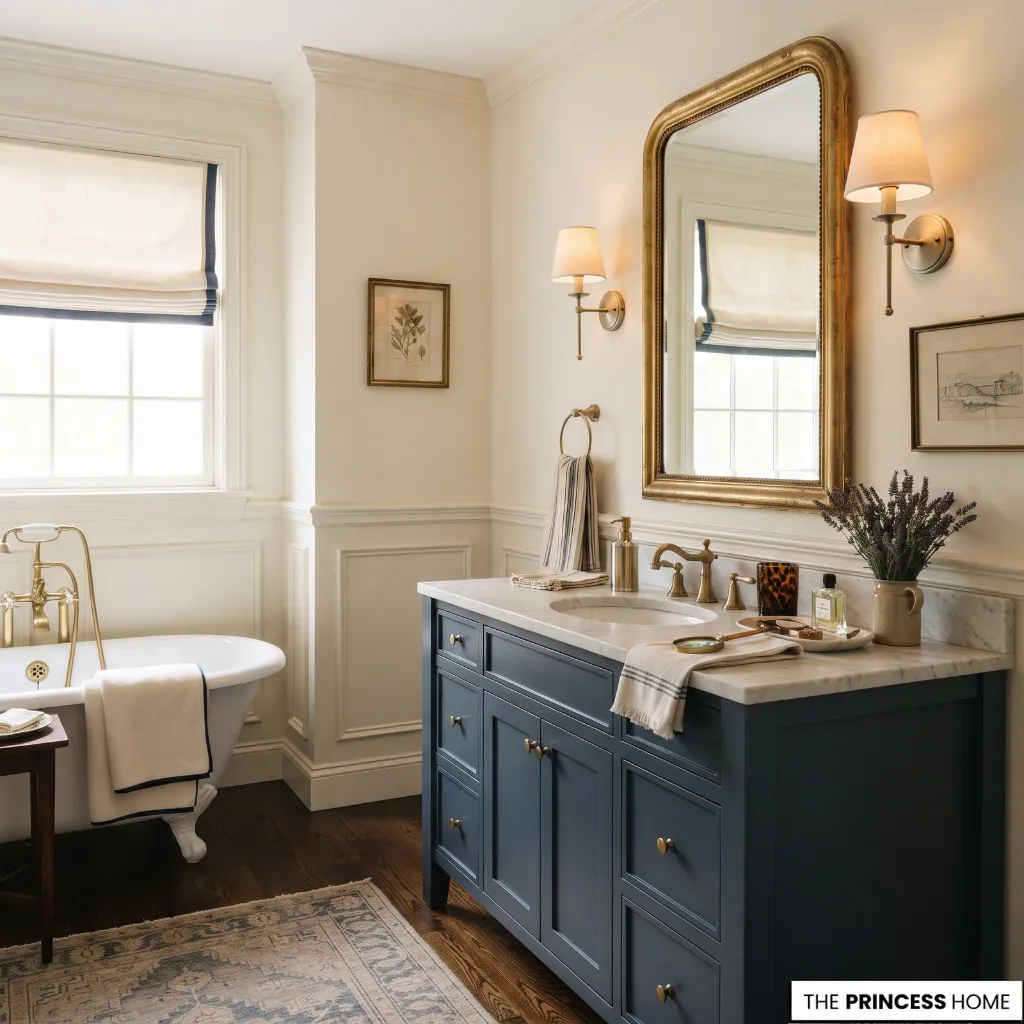
Tailored cabinetry can provide furniture character, substantial materials can establish the foundation, and controlled colors and patterns can introduce personality. The style also allows different expressions. A New England-inspired direction may use painted cabinetry, navy, cream, and classic stripes.
A more equestrian or country-influenced bathroom may use darker wood, deeper colors, and traditional detailing. A lighter coastal interpretation can use blue, white, natural textures, and simpler wood tones without becoming generic beach décor.
The common thread is the relationship between the elements. The bathroom should feel considered and collected rather than built around a single recognizable theme. This is also what separates the look from a purely traditional, country, or coastal bathroom:
those influences can appear within the room, but the Ralph Lauren character comes from combining color, materials, furniture, pattern, and comfort into one coherent interior rather than choosing a single decorative category.
For more ideas: Ralph Lauren Home Decor and the Art of Timeless Americana
Establish the Foundation
The foundation determines how much character the bathroom can carry before decorative details are introduced. Start with the layout, major surfaces, vanity location, shower or tub arrangement, flooring, walls, ceiling, and architectural details.
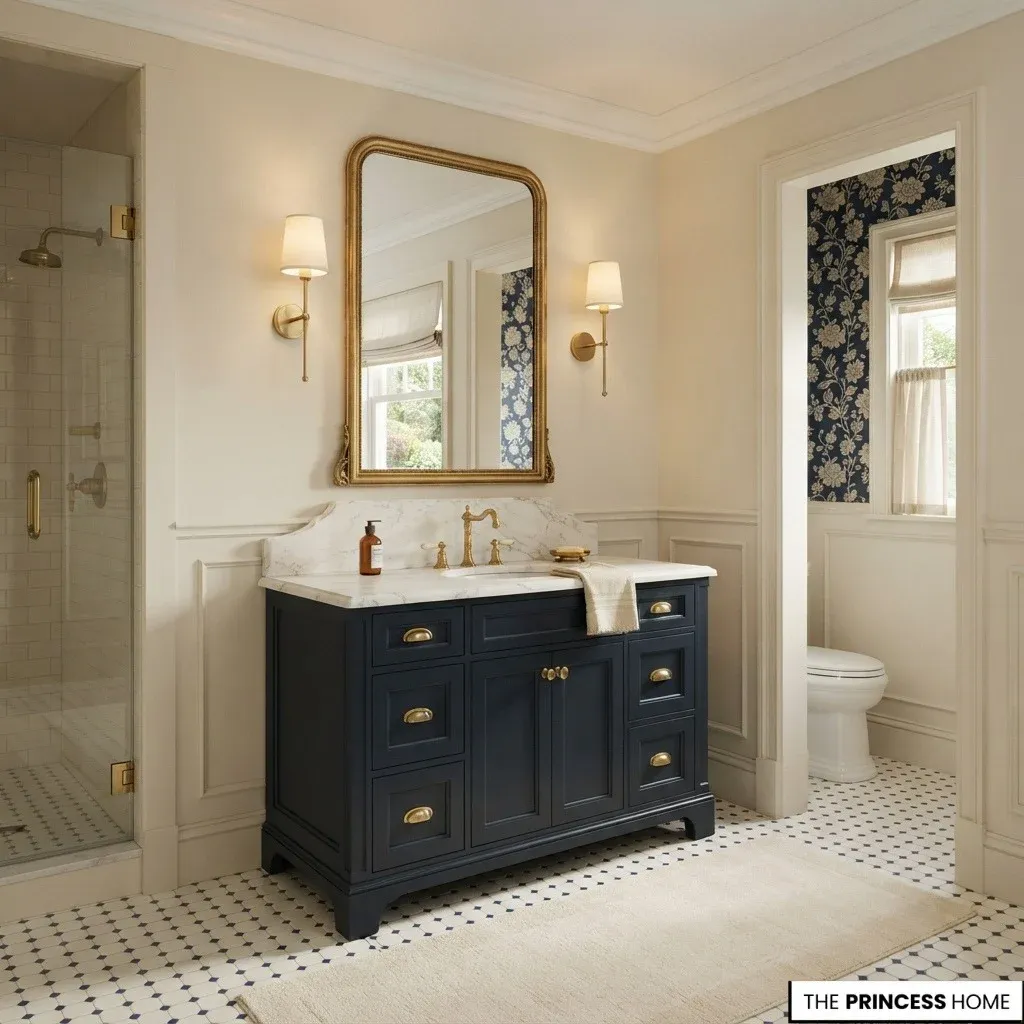
Traditional features can support the style when they fit the existing home. Paneling, substantial trim, classic tile arrangements, framed openings, and well-proportioned cabinetry can establish stronger character than decorative accessories added later.
The major surfaces should also relate to one another. If the floor has a strong pattern, keep the walls quieter. If the vanity has prominent wood grain or detailed cabinetry, use a calmer countertop and backsplash.
Bathroom function comes first. Clearances, fixture placement, ventilation, lighting, moisture resistance, storage, and accessibility where required all influence what can realistically be introduced.
A beautiful material or traditional detail should never interfere with safe circulation or everyday use. Establish a room that already has the right visual structure before adding the finishing layers.
For more ideas: Ralph Lauren Inspired Living Room Timeless Design Guide
Layer Rich Materials
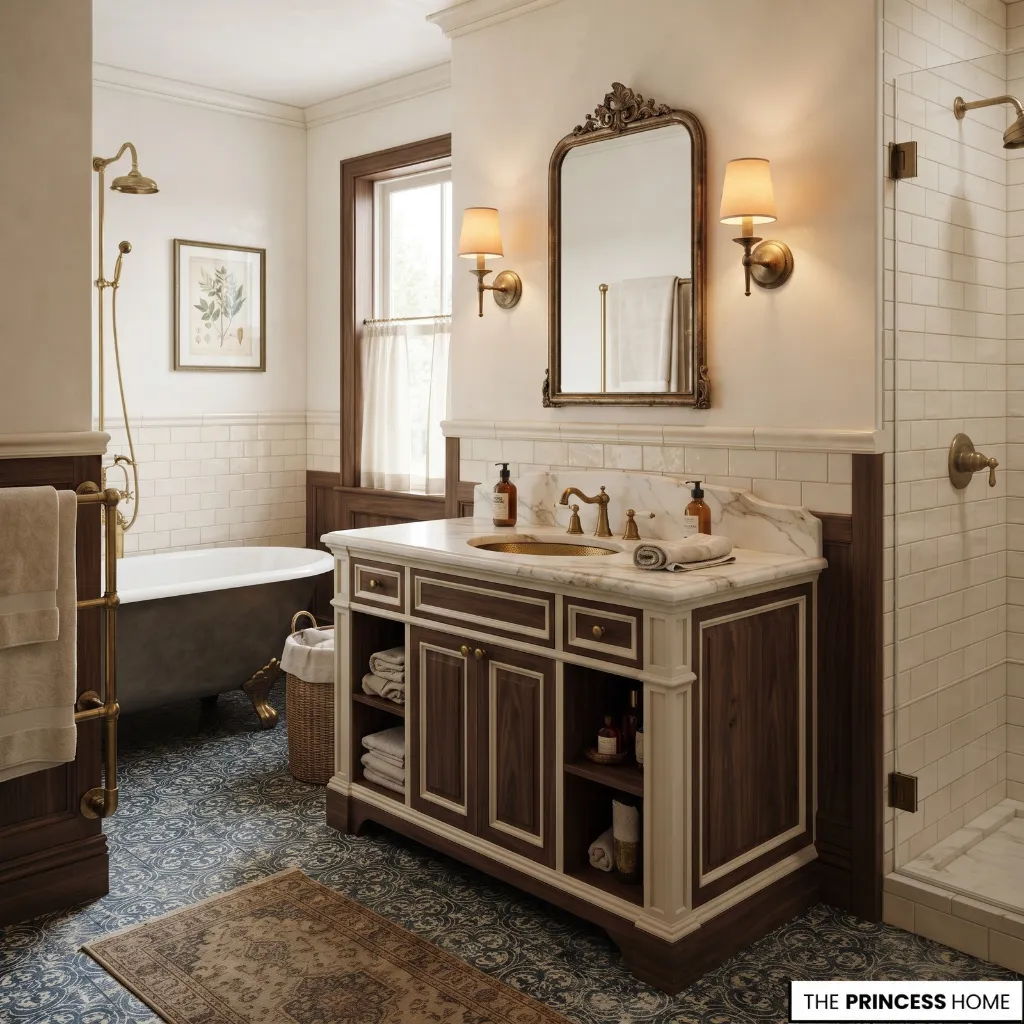
Materials give a bathroom much of its visual weight. Ralph Lauren-inspired interiors work particularly well when hard architectural surfaces are balanced with warmer, tactile elements.
Marble, natural stone, stone-look surfaces, ceramic or porcelain tile, painted cabinetry, wood, glass, and metal can all contribute to the design. The important decision is not simply which expensive material to choose, but how the materials relate.
A marble or stone countertop can be paired with a furniture-like wood vanity. A patterned floor can sit beneath quieter wall surfaces. Painted cabinetry can be combined with a substantial stone top and refined metal hardware. These combinations create variation without requiring every surface to compete for attention.
Natural stone is not automatically the best choice for every bathroom. Maintenance, moisture exposure, installation, and budget matter. Where natural stone is impractical, a well-selected stone-look surface can preserve the visual role of the material without forcing the project around its cost or maintenance.
The same principle applies to wood. A wood vanity can bring warmth and furniture character, but the material and finish need to be appropriate for bathroom conditions. For flooring and tile, choose the pattern according to the visual weight already established by the room.
A simple stone or porcelain floor can provide a quiet foundation when the vanity, walls, or countertop carry stronger character, while a restrained checkerboard, geometric pattern, or classic border can become a focal element when the surrounding surfaces are calmer.
Scale matters as well: smaller bathrooms generally benefit from patterns that remain proportionate to the available floor area rather than overly busy layouts. Build a material hierarchy: one or two major materials establish the room, while supporting materials reinforce them.
For more ideas: Ralph Lauren Inspired Kitchens Elegant Design Ideas
Choose Tailored Fixtures
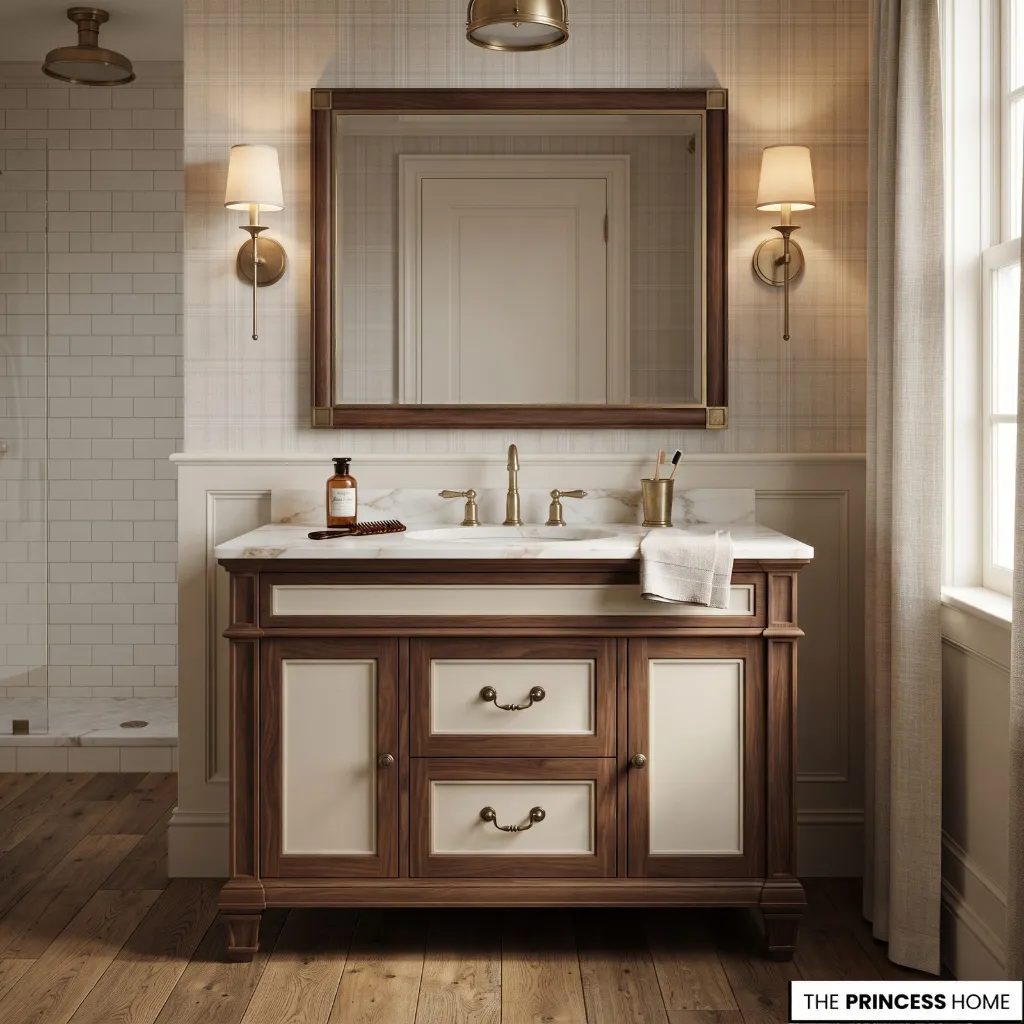
Bathroom fixtures should support the tailored character of the room rather than appear as isolated luxury objects.
Start with the vanity because it occupies a large visual area and often functions as the bathroom’s main piece of furniture. Look for substantial proportions, appropriate detailing, and hardware that feels refined without becoming excessively ornate.
The sink, faucet, shower hardware, tub, mirror, and cabinet hardware should then relate to that choice. Traditional silhouettes can work well, but they do not need to be historically exact. A simpler contemporary fixture can also work when its proportions and finish fit the rest of the room.
The mirror should be treated as part of this furniture and material relationship rather than as an afterthought. A framed rectangular mirror can reinforce tailored architecture, while a gently arched or traditionally detailed frame can add character when the room already supports that language.
The size should relate to the vanity and available wall space, with enough visual presence to balance the cabinetry without overwhelming it. Its frame and finish should also connect with the lighting, hardware, and other materials.
Metal should form part of the overall material composition. Polished, brushed, or aged finishes can each work, so choose according to the vanity, lighting, mirror, and other metal details rather than assuming one finish is required.
If a furniture-style vanity is unavailable, you can sometimes adapt an existing cabinet through appropriate hardware, countertop selection, mirror framing, and lighting. The goal is to preserve the visual role of substantial, tailored cabinetry rather than replace it with an unrelated piece.
For more ideas: Modern Ralph Lauren Interiors Design Ideas for Apartments
Use Ralph Lauren Colors
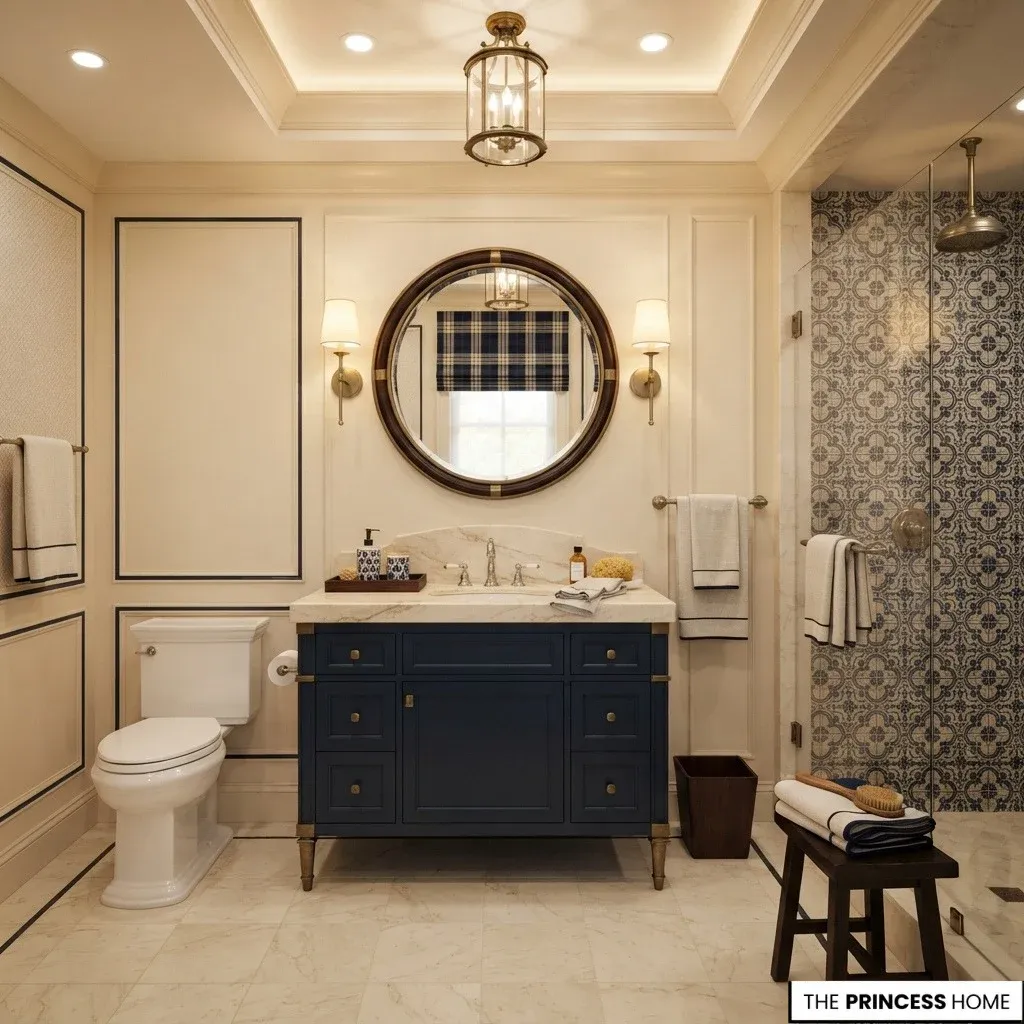
Color is one of the easiest ways to connect a bathroom with the broader Ralph Lauren design language, but there is no single official Ralph Lauren bathroom palette.
Warm white, cream, navy, muted blue, camel, brown, warm gray, deep green, burgundy, and controlled black accents can support different interpretations of the style. The right combination depends on the architecture, natural light, materials, and desired expression.
A useful approach is to establish a foundation color, introduce a secondary color, and then use a smaller accent. Cream with navy and aged metal can produce a classic direction. Warm white with dark wood and deep green can feel more grounded.
Soft gray with muted blue can create a lighter interpretation, while cream, brown, and a restrained burgundy accent can support a richer traditional room. The key is proportion. A dark color does not need to cover every wall to have an impact.
A navy vanity, dark mirror frame, or painted lower cabinetry may be enough to establish the color story. In a small bathroom, stronger colors can still work. Consider the amount of color together with surface reflectivity, pattern scale, and lighting rather than assuming that a small room must be white.
For more ideas: Ralph Lauren Summer Style for Elegant Seasonal Living
Layer Warm Lighting
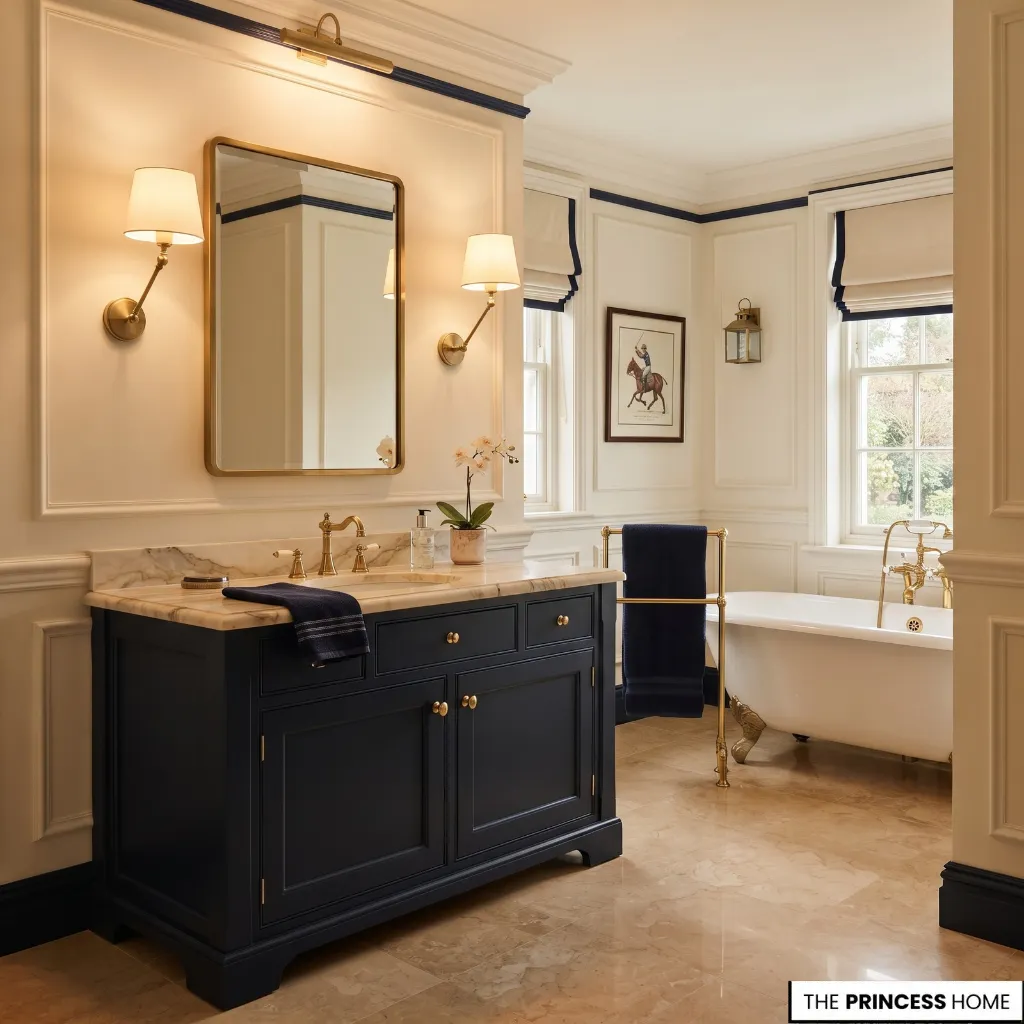
Lighting needs to provide practical illumination while supporting the residential character of the room.Begin with useful ambient light, then provide clear vanity lighting for grooming. Where appropriate, add decorative or accent lighting to highlight architectural details, artwork, materials, or a focal wall.
Vanity lighting deserves particular attention because poorly positioned light can create strong shadows on the face. Lighting placed appropriately around the mirror can provide more useful illumination than relying on a single overhead fixture.
Decorative fixtures can introduce tailored character through their shape and material, but bathroom suitability and electrical requirements come before appearance. A beautiful fixture is not useful if it is inappropriate for its location.
For a warm residential direction, around 2700K can serve as a practical starting point for the overall lighting character.
The final specification should still account for the fixtures, finishes, daylight, and functional requirements of the room. Several controlled light sources usually produce a more useful result than one very bright source.
For more ideas: Ralph Lauren Home Office Decor Create a Luxurious Workspace
Add Pattern and Texture
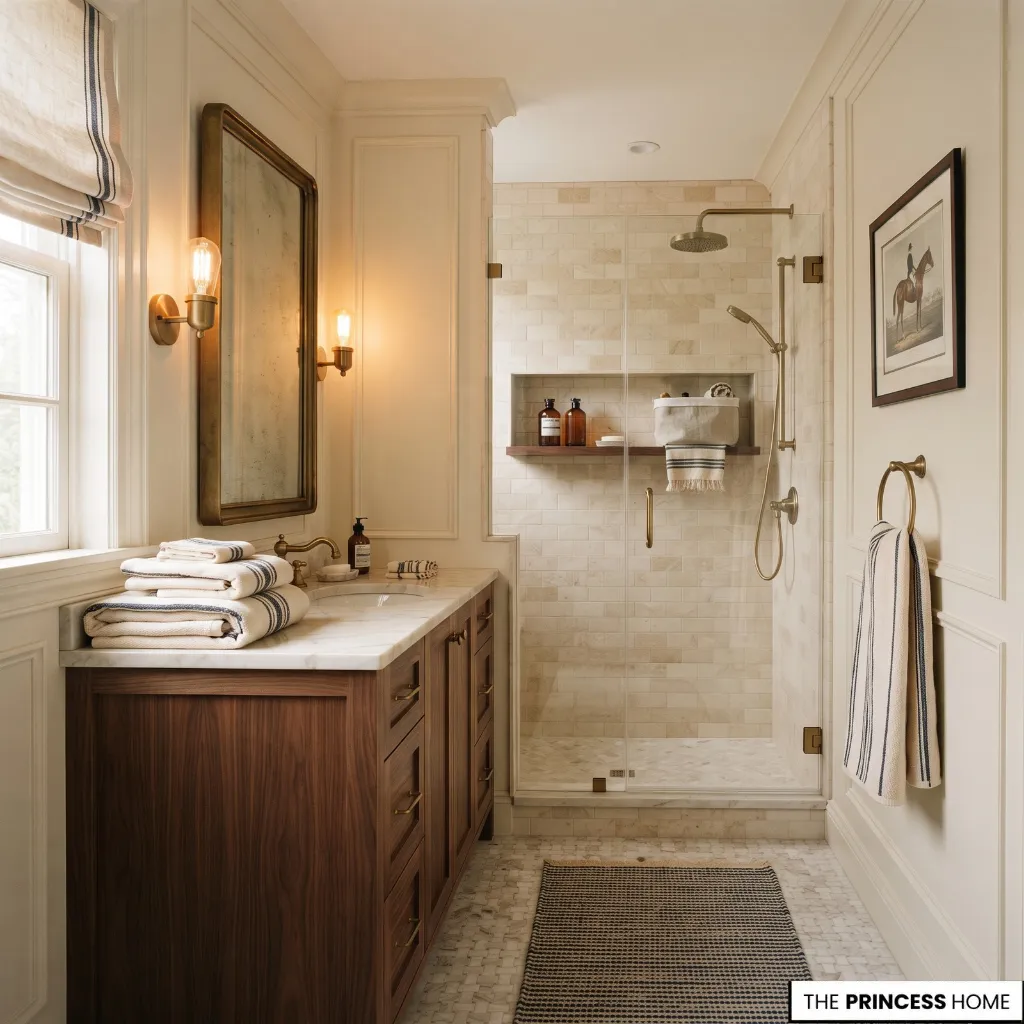
Pattern gives a Ralph Lauren bathroom much of its personality, particularly when it is used with restraint.Classic stripes, checks, restrained florals, borders, woven textiles, and carefully selected wallpaper can introduce the collected character associated with the wider Ralph Lauren design language.
Ralph Lauren Home’s bath offerings also demonstrate the use of stripes, florals, borders, varied colors, towels, mats, and robes.
Pattern should have a hierarchy. Let one pattern lead while surrounding surfaces provide quieter texture. A striped textile, for example, can be supported by plain stone and painted cabinetry. A patterned floor can be balanced with simpler walls and towels.
Wallpaper can be particularly effective in a powder room because a small space can support a concentrated decorative decision. In bathrooms with greater moisture exposure, product suitability, installation, and ventilation need to be considered carefully.
Texture can also come from materials rather than printed patterns. Woven towels, natural stone, wood grain, brushed metal, and glass can provide enough variation when the room already contains a strong architectural feature. The goal is collected character, not a themed bathroom filled with competing references.
For more ideas: Ralph Lauren Dining Room Style: How to Achieve Timeless Luxury at Home
Style Every Detail
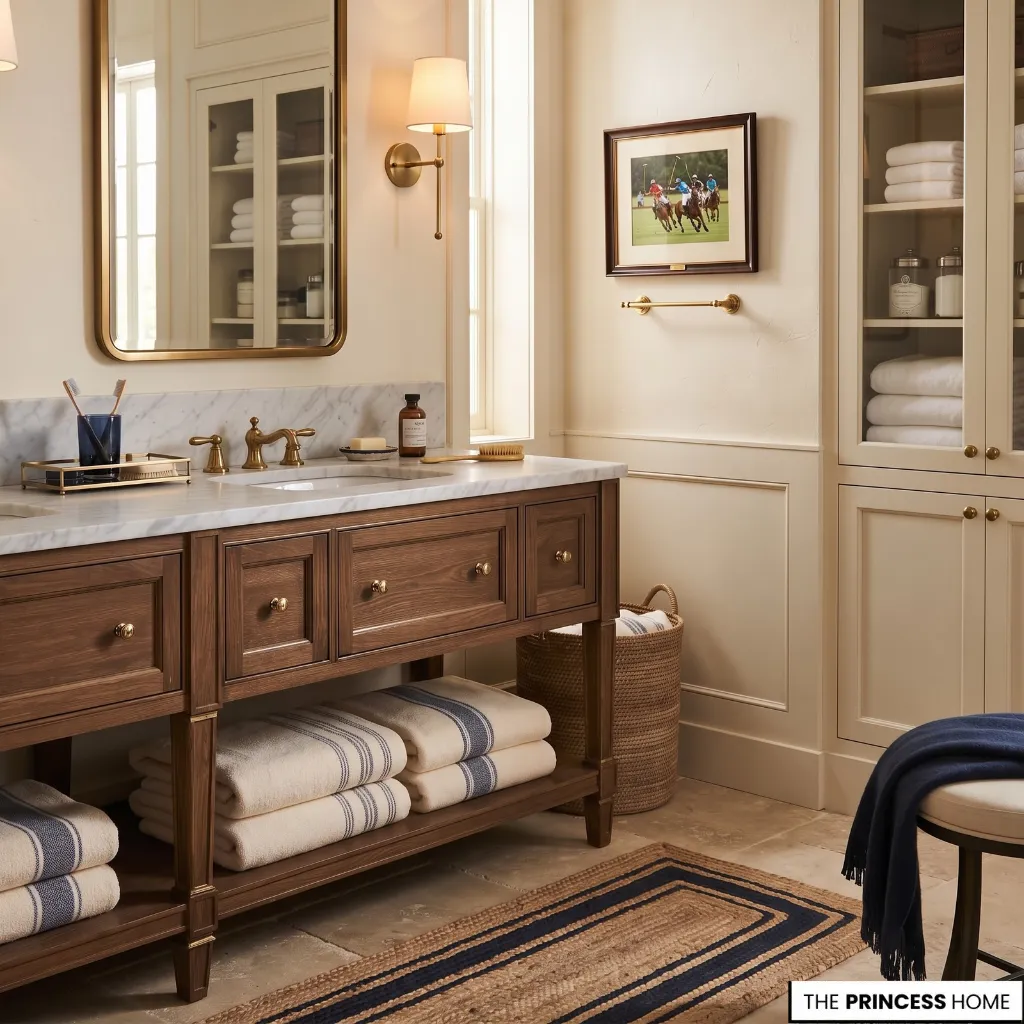
The final layer should make the bathroom feel personal and considered rather than staged. Start with useful decorative elements: substantial towels, a well-chosen bath mat, a framed mirror, appropriate storage containers, trays, and carefully selected hardware.
These details can reinforce the color and material story established by the room. Ralph Lauren’s bath collections provide direct examples of how textiles can carry the broader design language through color, stripes, florals, borders, towels, mats, robes, and monogramming.
Distribute accessories instead of filling every available surface. A tray can organize everyday items, while a small piece of artwork or a simple arrangement can provide a focal point without competing with the vanity or mirror.
If the room already contains strong stone, cabinetry, and patterned textiles, it may need fewer decorative objects. If the architecture is simple, textiles, mirrors, hardware, and one or two carefully selected objects can provide more character.
This is where a collected approach becomes useful: each detail should belong to the interior rather than being added simply to make the bathroom look more decorated.
For more ideas: Ralph Lauren Bedroom Ideas for Timeless Heritage Luxury
Adapt the Style
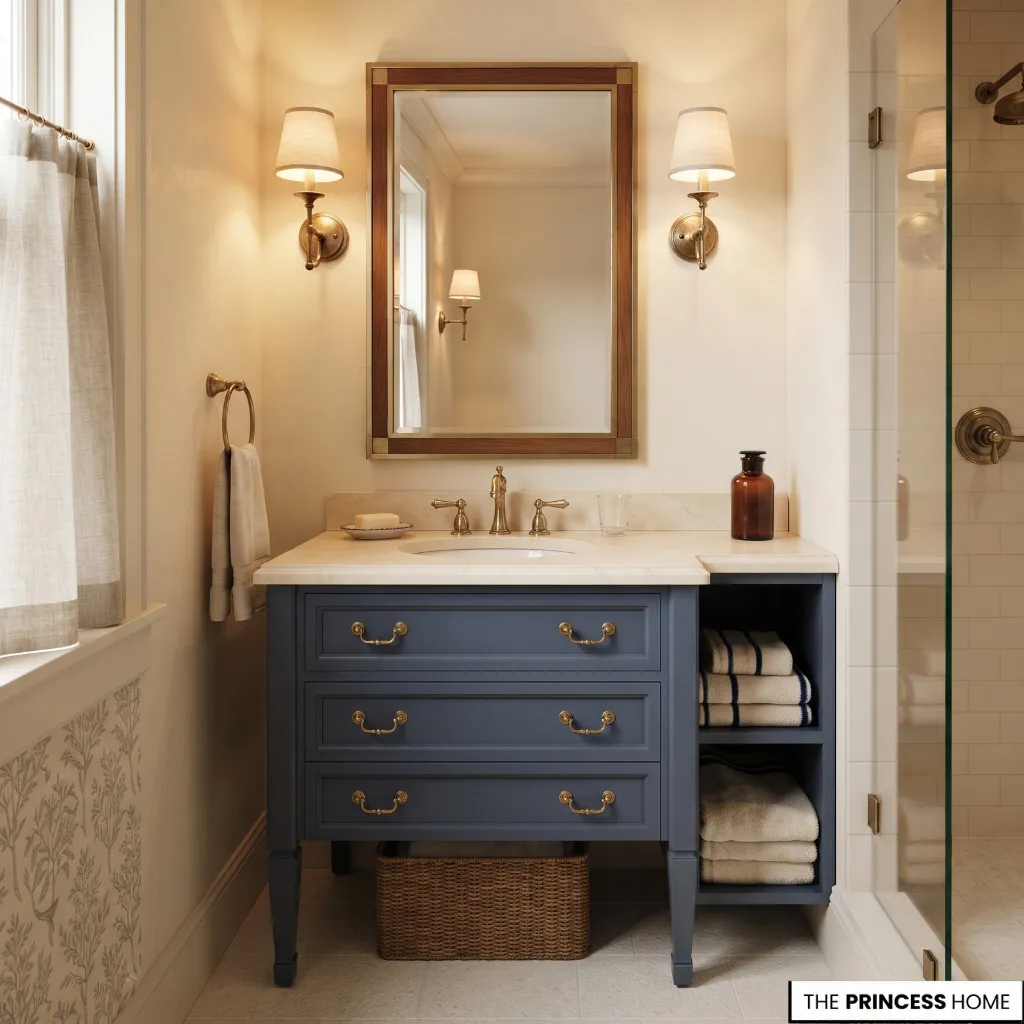
A Ralph Lauren-inspired bathroom does not need to be large or expensive. The design language can be adapted by changing the scale and priority of the decisions. In a small bathroom, begin with the vanity and mirror wall because they occupy a significant part of the visual field.
Choose furniture that fits the available circulation, control the number of competing materials, and use lighting to keep the room clear and functional.
A powder room allows more freedom. A darker color, stronger wallpaper, decorative mirror, or expressive light fixture can become the central design decision because the room has fewer functional demands than a primary bathroom.
A larger bathroom provides room for a stronger material hierarchy. A substantial vanity, separate tub and shower zones, larger stone or tile fields, layered lighting, and additional storage can create a richer composition without forcing every element to compete.
Storage should be planned as part of the design rather than treated as something added afterward. A furniture-style vanity with drawers or cabinets can keep everyday products concealed, while open shelving can be reserved for towels or a small number of intentional decorative items.
In a compact bathroom, using the vertical space around the vanity or incorporating a mirrored cabinet can add useful storage without filling the room with visible objects. The goal is to keep necessary items accessible while preserving the clear, collected appearance of the space.
Budget should be approached through priorities rather than by replacing every expensive element with a cheaper version. Solve the layout and functional requirements first, then prioritize major surfaces, the vanity, mirror, lighting, hardware, textiles, and accessories.
When a natural stone, custom vanity, or specialized architectural feature is outside the budget, choose an alternative that performs a similar visual function.
A convincing stone-look surface can replace natural stone where appropriate, or an existing cabinet can be improved through a new countertop, hardware, mirror, and lighting.
The replacement should remain compatible with the room’s proportions and design language. The aim is not to reproduce every expensive detail. It is to preserve the hierarchy that makes the room feel intentional.
Avoid Common Mistakes
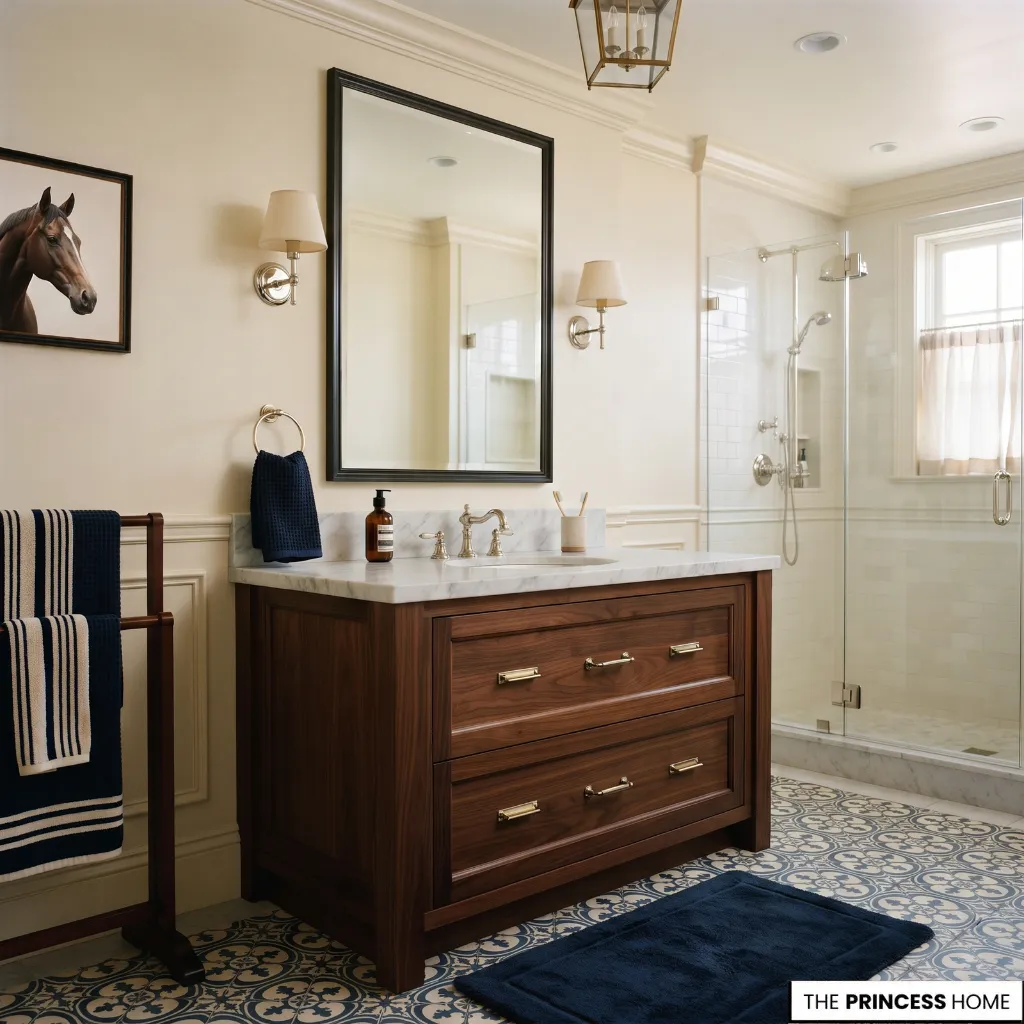
One common mistake is making the bathroom too themed. Adding obvious equestrian, coastal, country, or Americana symbols can make the room feel like a set rather than an interior. Use these references indirectly through color, materials, pattern, furniture shape, and proportion.
Another mistake is using too many dark materials at once. Dark wood, dark tile, dark walls, and dark metal can overwhelm a small or poorly lit bathroom. If one major element is dark, balance it with lighter surfaces, controlled contrast, and sufficient layered lighting.
Expensive materials can also become disconnected when they are selected individually. Marble, brass, stone, and elaborate cabinetry do not automatically create a coherent style. Establish the material hierarchy before choosing individual finishes.
Making every element traditionally styled can create another problem. A bathroom does not need period-accurate fixtures, elaborate ornament, and decorative detailing everywhere. Simpler functional elements can coexist with traditional references and help the room remain usable.
Finally, do not allow decoration to override function. Circulation, fixture clearance, storage, ventilation, lighting, moisture resistance, and accessibility where needed should be resolved before decorative choices are finalized.
The strongest Ralph Lauren bathroom is not the one with the most expensive or recognizable details. It is the one where architecture, materials, fixtures, color, lighting, pattern, and personal details support the same design language.
For more ideas: Ralph Lauren Entryway Decor Ideas for Elegant First Impressions
Conclusion
A Ralph Lauren bathroom works best when it feels tailored, comfortable, and collected rather than themed. Build that character through the foundation first, then use materials, color, lighting, textiles, and carefully chosen details to reinforce it.
The result can work in a grand primary bathroom, a compact guest bath, or a small powder room while keeping the same underlying design logic.
Explore the visual gallery below for inspiring ideas that bring this aesthetic to life in your home.