Bedroom design in 2027 is moving toward warmer color, richer texture, more personal choices, and spaces designed around rest rather than appearance alone. The challenge is knowing which trends are worth adopting and how to adapt them to your room, budget, and daily routine.
The most useful approach is to understand what each trend changes, why it matters, and how much of it your bedroom actually needs.
What Defines 2027 Bedrooms?
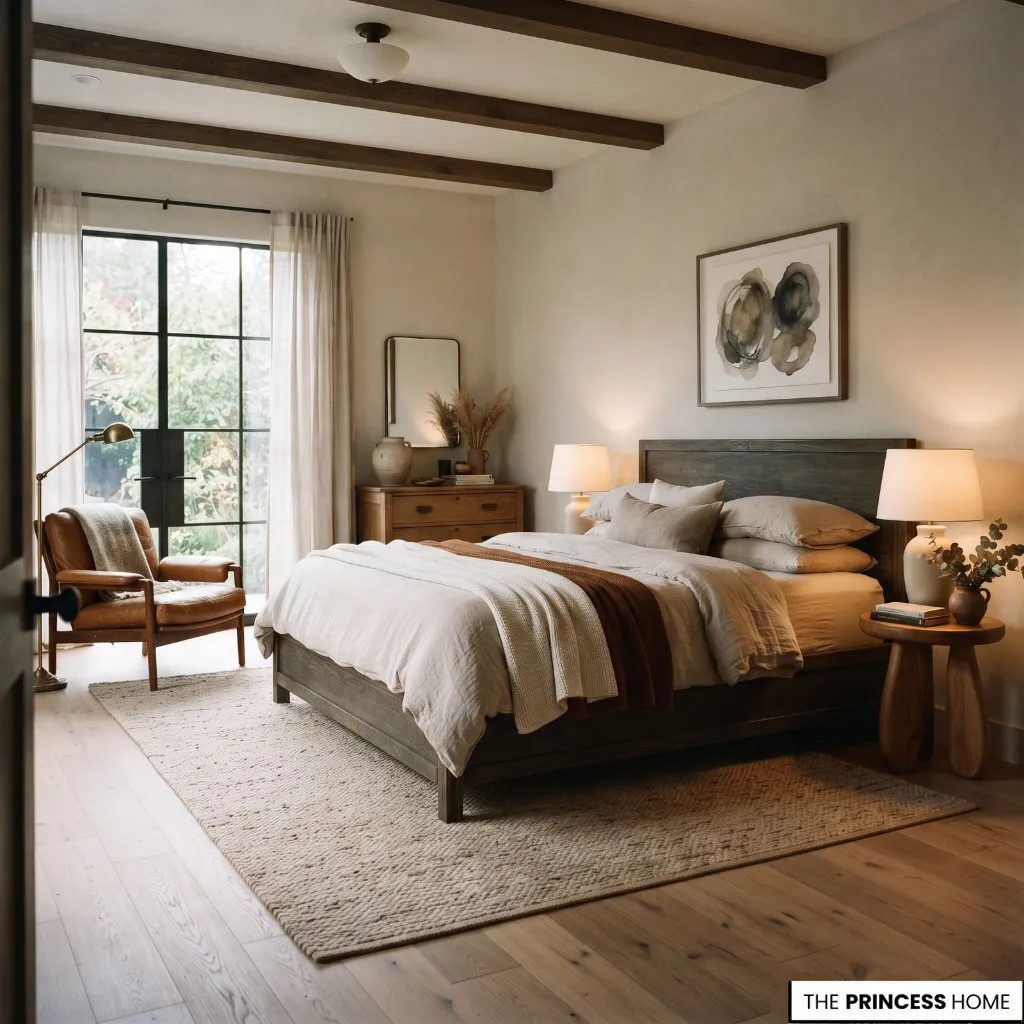
The strongest 2027 bedroom trends are less about one particular look and more about how the bedroom is used. Warmth, tactile materials, personal expression, natural character, and restorative comfort are becoming more important than perfectly coordinated furniture or a room designed simply to look current.
This shift gives homeowners more flexibility. A bedroom can be colorful or neutral, contemporary or traditional, highly edited or richly layered. What matters is whether the choices work together and support the way you use the room.
Look for trends that solve something in your bedroom. A warmer palette can correct a room that feels cold, layered lighting can improve reading and evening routines, and a more substantial headboard can give a large room a stronger focal point. The trend becomes useful when it improves an actual design decision.
It also helps to consider the room you already have before choosing a trend. A dark or north-facing bedroom may need a different color approach from a bright, sun-filled room, while a traditional bedroom may benefit more from mixing one contemporary element with existing furniture than from replacing its entire character.
The most suitable trend is usually the one that works with the room’s light, architecture, proportions, and existing materials rather than forcing a completely new look.
Embrace Warmer Color
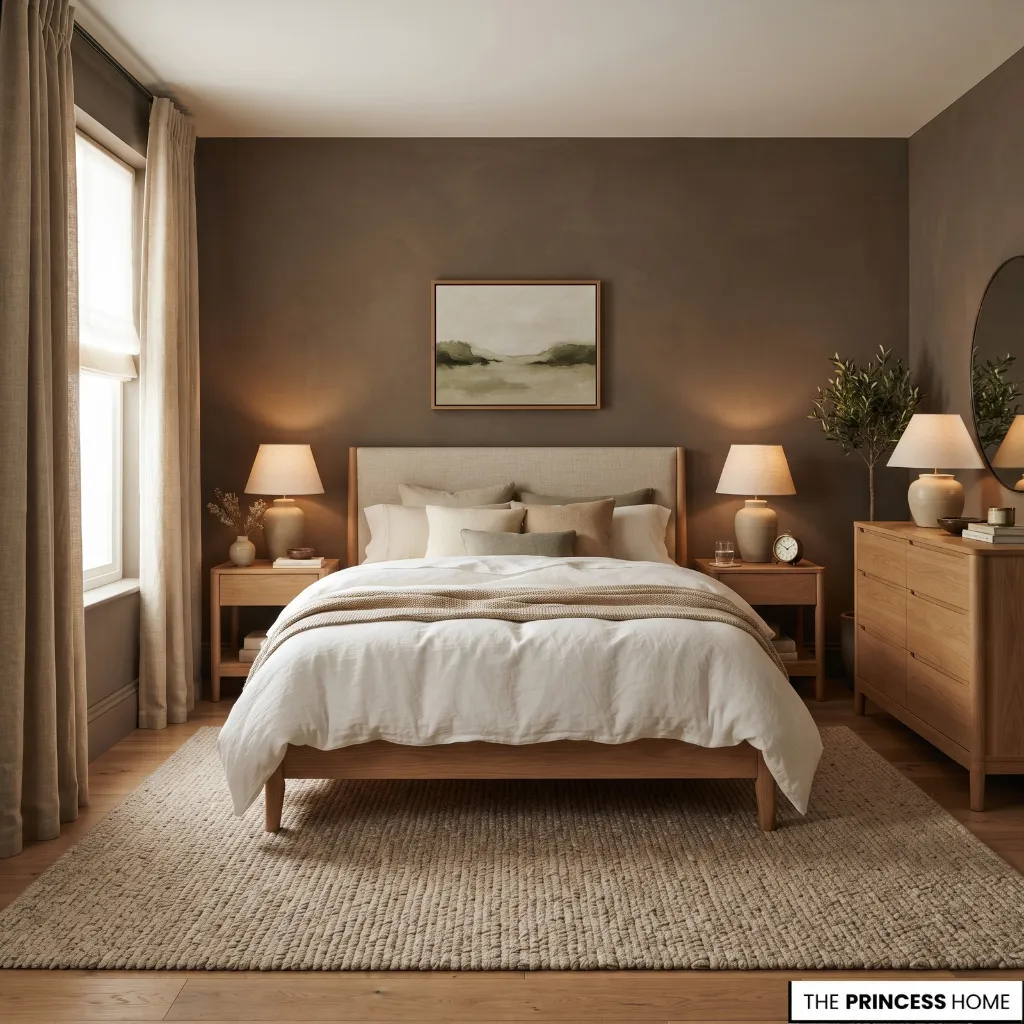
One of the clearest directions for 2027 is a move toward warmer, more grounded color. Rich browns, earthy neutrals, muted greens, soft pinks, blue-grays, warm whites, and soft yellows all fit within this broader direction.
The important change is not that one particular color replaces another. It is the wider move toward colors with more character and visual warmth instead of relying entirely on pale, cool neutrals.
Choose color according to the room rather than the trend. Natural light, flooring, wood tones, existing textiles, and room size can all change how a color appears. A warm brown beside honey-colored oak will behave differently from the same brown beside cool gray flooring.
If your bedroom already contains strong wood flooring or furniture, choose a wall color that relates to its undertone rather than competing with it. In a darker room, a warm mid-tone or warm white may be easier to live with than a very deep color, while a bright bedroom may be able to support stronger earthy shades.
The goal is to select a color that strengthens what is already working in the room.
If you want a stronger color but are uncertain about painting the entire room, introduce it through bedding, curtains, an upholstered chair, artwork, or a headboard. This allows the bedroom to participate in the 2027 color direction without making every surface a permanent commitment.
Always test paint in the actual bedroom before making a final decision. Look at it in morning, afternoon, and evening light because a color that appears soft in a showroom can become considerably stronger or cooler in your own room.
For more ideas: Color Trends 2027 Renewed Collection Harmonizing Your Home
Try Color Drenching
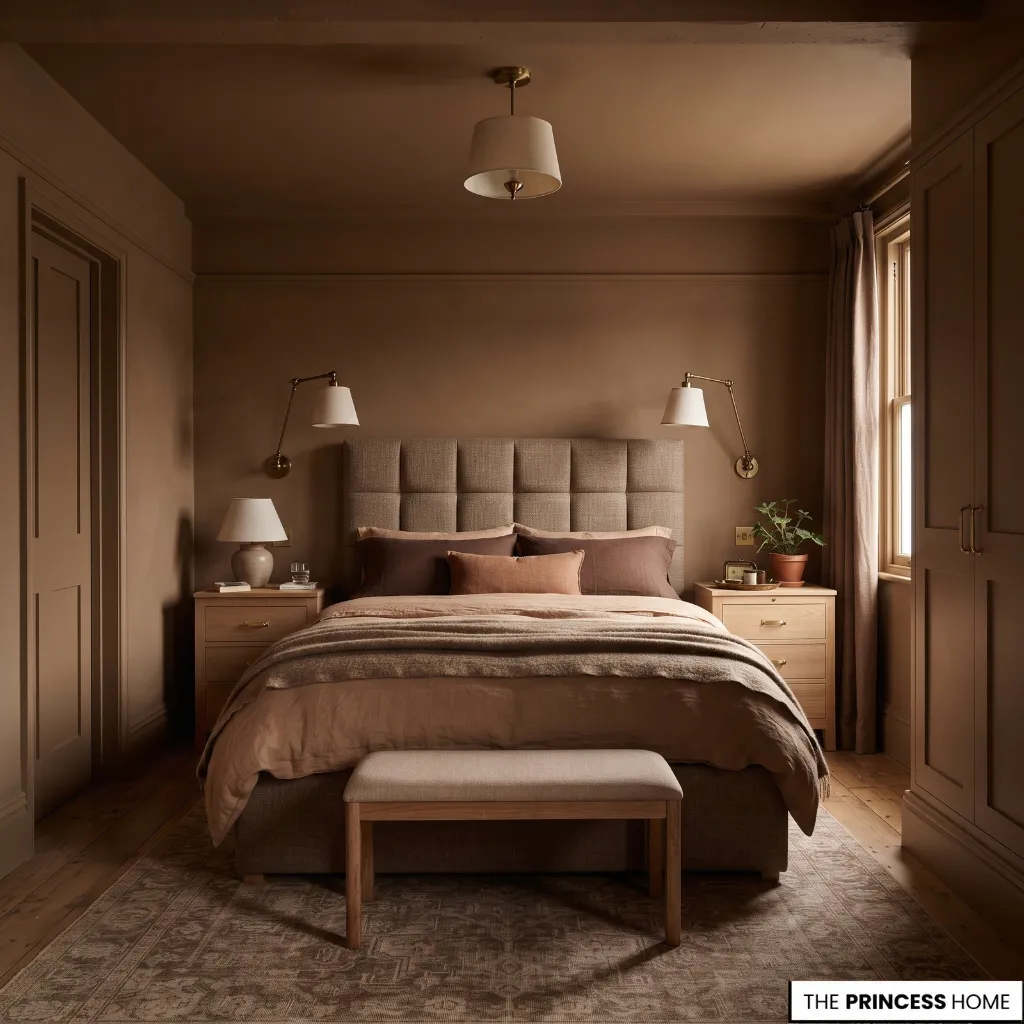
Color drenching takes the move toward stronger color a step further by carrying one color or closely related tones across several surfaces. Walls, trim, doors, built-ins, and sometimes the ceiling can share the same color family.
The appeal is continuity. Instead of dividing the room into separate colored surfaces, the approach creates a more unified envelope. This can be particularly effective when you want a bedroom to feel enclosed and intentional.
The technique works best when the chosen color suits the room’s natural light and architectural proportions. A deep color across walls, trim, and ceiling is a much larger commitment than using that color on one wall.
If full color drenching feels too strong, adapt the idea. You could paint the walls and trim together while keeping the ceiling lighter, or use one wall color and repeat it through the bedding and curtains. The goal is continuity, not maximum color coverage.
Choose Tactile Materials
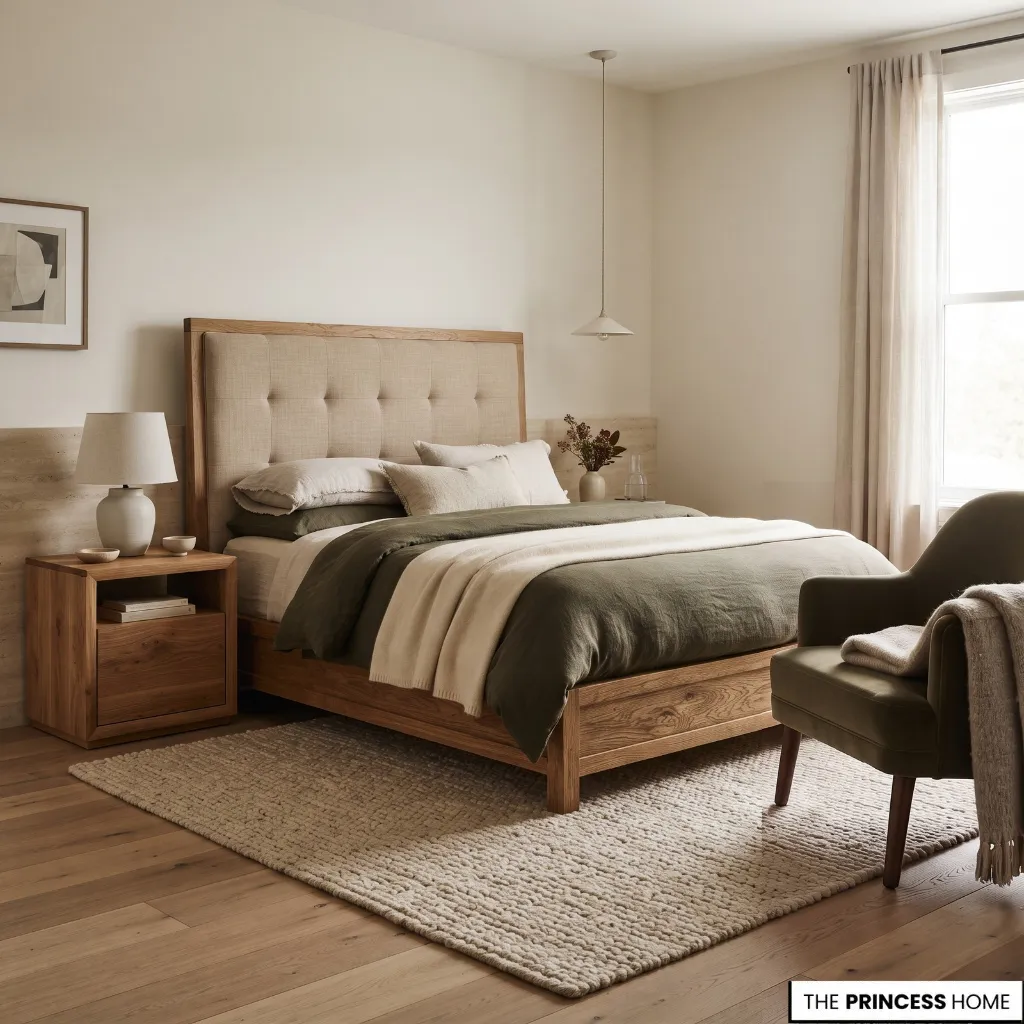
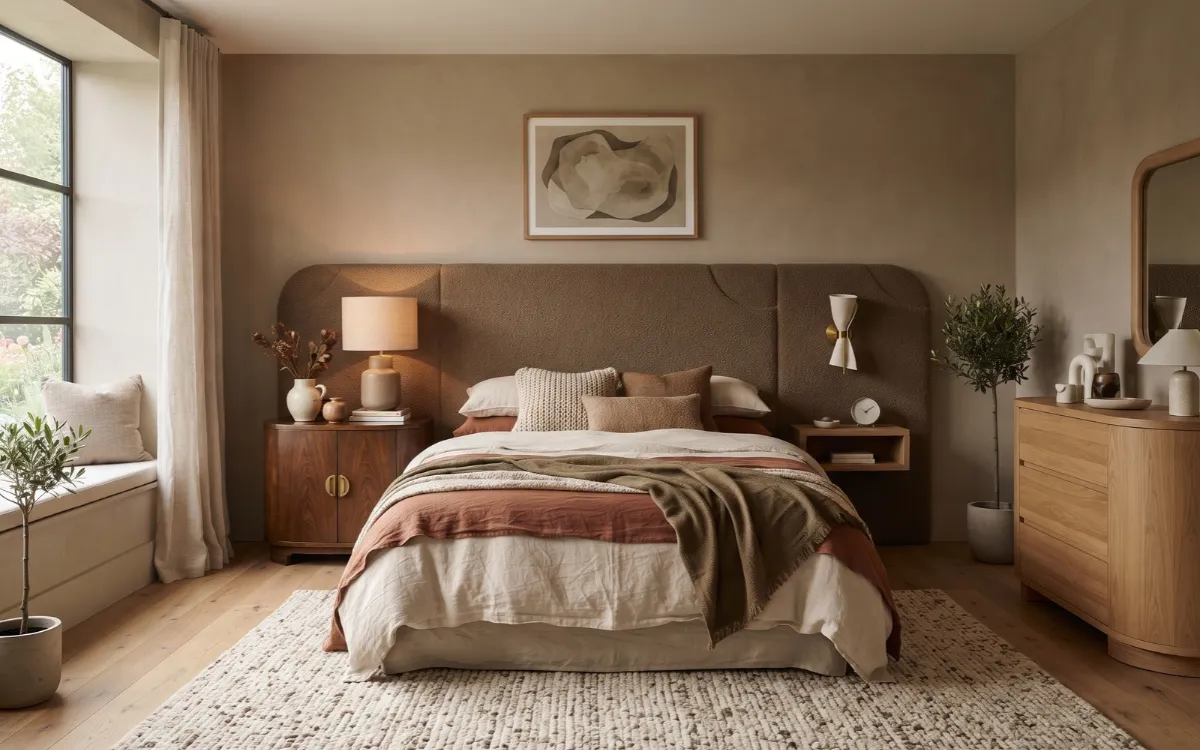
Bedrooms are becoming more interested in how materials look and feel, not only in their color. Natural wood grain, linen, wool, velvet, textured upholstery, stone, and other materials with visible or tactile variation can give a bedroom greater sensory interest.
The key is to combine different surface qualities rather than covering every piece in texture. A wood nightstand can sit beside a linen headboard, a wool rug, and smoother painted walls. The contrast between surfaces is what makes the materials readable.
Natural materials are especially useful when you want a room to feel richer without introducing many additional colors. Wood can provide visual structure, while linen or wool can soften harder architectural surfaces.
Avoid treating “tactile” as a reason to add more objects. A few well-chosen materials usually communicate the idea more effectively than a room filled with textured accessories.
Make the Bed Focal
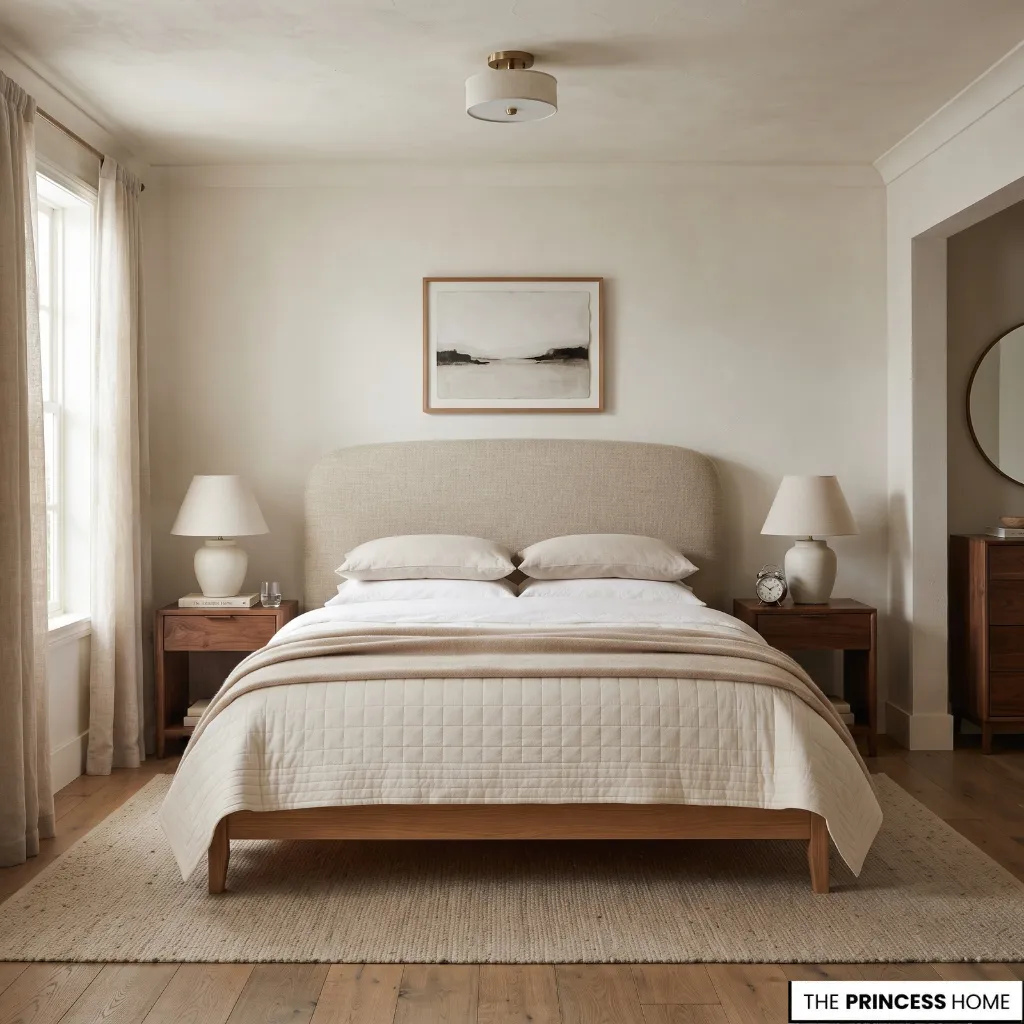
The bed is usually the largest piece of furniture in a bedroom, so giving it greater visual importance can have a larger effect than adding numerous decorative pieces.
In 2027, substantial upholstered headboards, curved forms, canopy structures, and more architectural bed designs are gaining attention. Layered bedding can reinforce the bed as the room’s main focal point without requiring an elaborate frame.
Proportion matters more than simply choosing the largest headboard available. Consider the width of the bed, ceiling height, bedside tables, circulation space, and the view from the bedroom entrance. A very tall headboard can overwhelm a room with a low ceiling, while a small headboard can disappear against a large wall.
In a small bedroom, you can create the same focal effect with a strong headboard rather than a large canopy or oversized bed frame. The principle is to give the bed enough presence while protecting the space needed to move comfortably around it.
For more ideas: Curved Furniture 2027 Best Ideas for Modern Living Rooms
Layer Bedroom Lighting
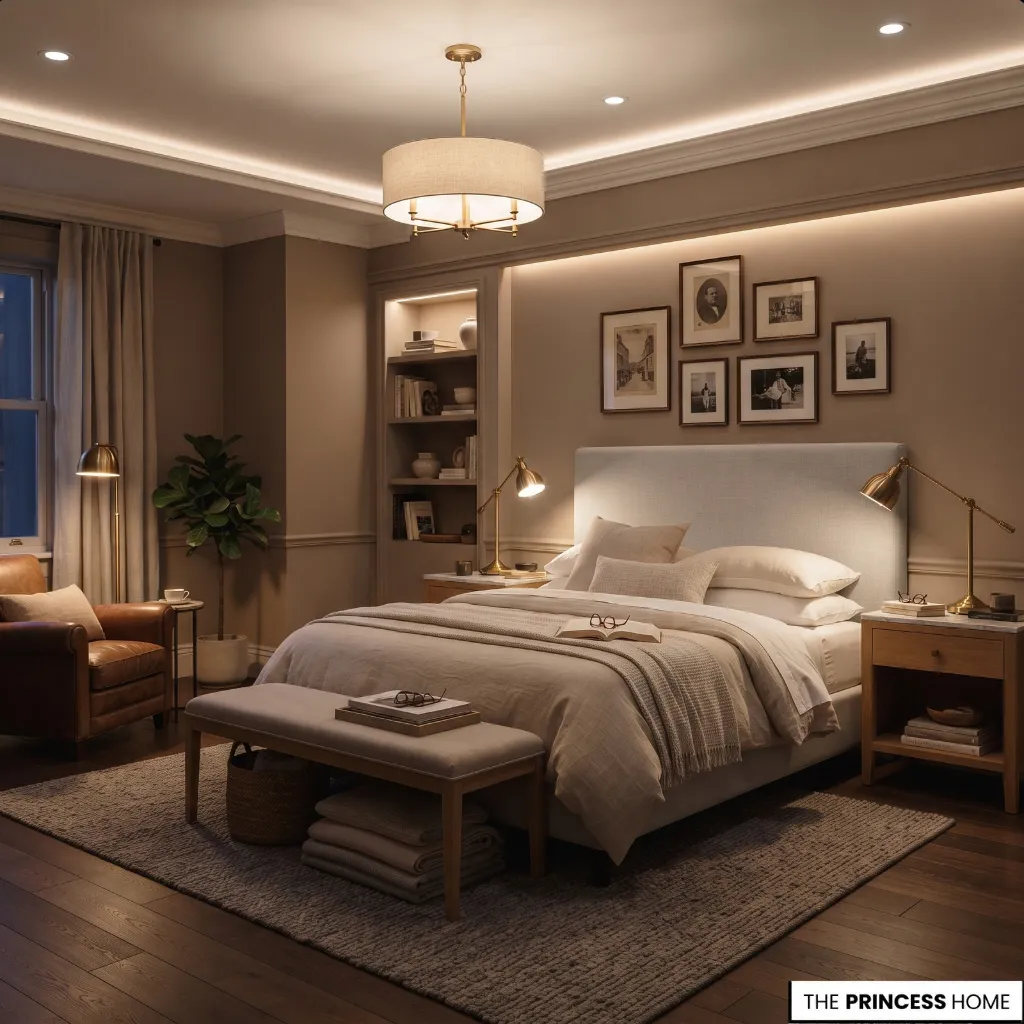
Bedroom lighting is becoming more intentional because different activities require different levels and positions of light. A single ceiling fixture cannot provide comfortable general illumination, useful reading light, and softer evening light equally well.
Think in three broad layers: ambient lighting for general visibility, task lighting for activities such as reading, and accent lighting for selected architectural or decorative features.
Bedside lighting should be chosen according to how you actually use the bed. If you read at night, position the light so it illuminates the reading area without forcing the entire room to remain bright. If the bedroom is also used for dressing, make sure the dressing area has appropriate illumination rather than relying entirely on bedside lamps.
Dimmable lighting can also help the room transition from daytime activity to a quieter evening setting. The aim is not to follow a particular lighting trend for its own sake, but to create a system that supports the different routines taking place in the bedroom.
For more ideas: Decor Trends 2027 Modern Styles, Colors & Home Inspiration
Bring Nature Indoors
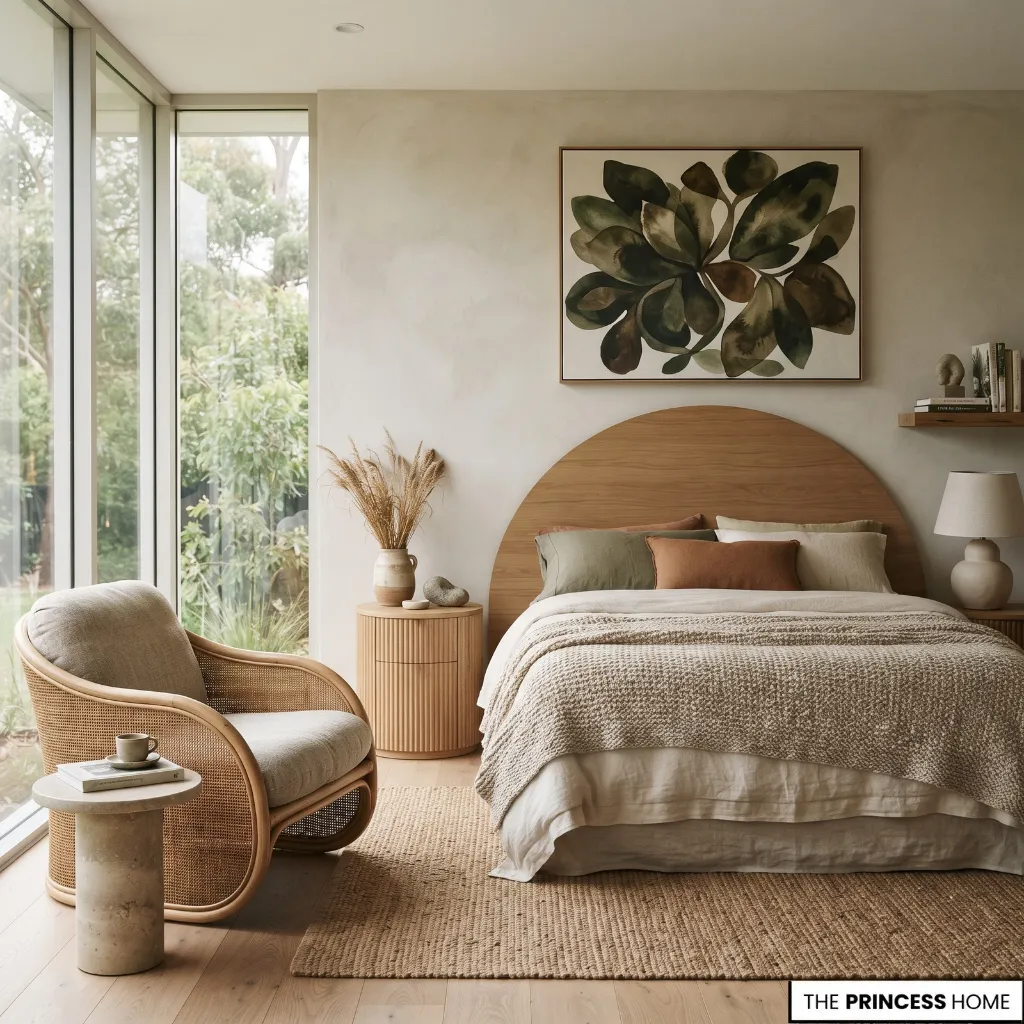
The natural influence appearing across 2027 bedroom design goes beyond adding a few plants. Nature can be introduced through wood grain, natural fibers, earthy colors, organic forms, stone, daylight, and artwork inspired by the natural world.
This makes the approach adaptable. A homeowner who cannot maintain plants can still introduce natural character through oak furniture, linen curtains, woven materials, a stone surface, or restrained botanical artwork.
Organic forms can also soften a room dominated by straight architectural lines. A curved headboard, rounded bedside table, or softly shaped lamp can provide this quality without making the bedroom overtly themed.
The strongest approach is usually selective. Choose several natural elements that relate to the existing architecture rather than trying to turn every surface into a nature-inspired feature.
Mix Old And New
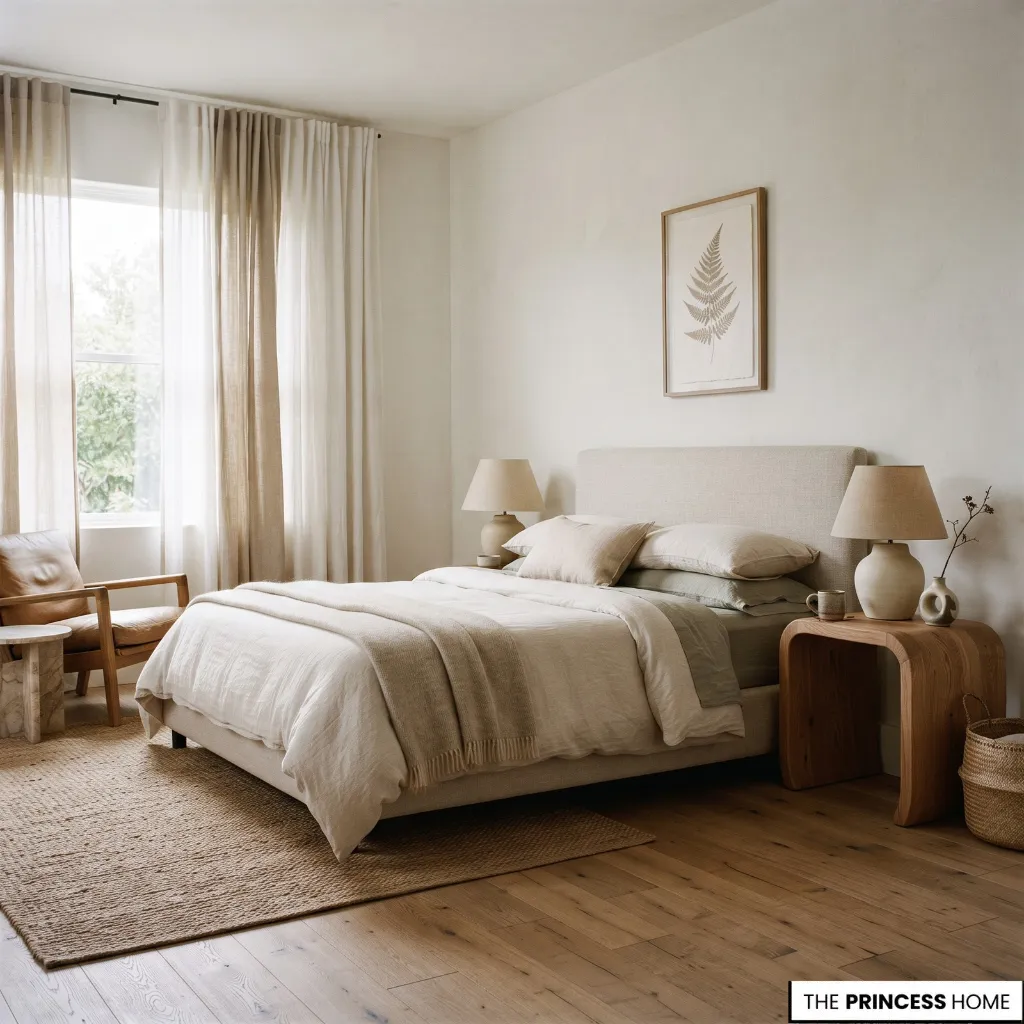
Bedrooms are becoming less dependent on perfectly matched furniture collections. Mixing older and newer pieces can produce a more personal room and gives existing furniture a useful role instead of requiring everything to be replaced.
A contemporary bed can work with a vintage nightstand. A traditional dresser can sit beneath simpler modern artwork. An antique-looking lamp can introduce character into an otherwise contemporary bedroom.
The combination needs a visual relationship. Color, scale, wood tone, shape, or material can connect pieces from different periods. Without those relationships, the room can feel accidental rather than collected.
This approach is also practical because a secondhand or existing piece can sometimes provide more character than a new matching item. The goal is not to make the bedroom look old; it is to create a room that feels assembled around the homeowner rather than purchased as a complete set.
You also do not need to combine every 2027 direction at the same strength. If a vintage dresser and patterned wallpaper are already strong features, quieter bedding and simpler lighting may provide enough contrast.
Think of one or two elements as the main expression, then let the remaining choices support them through color, scale, or material rather than competing for attention.
Use Personal Pattern
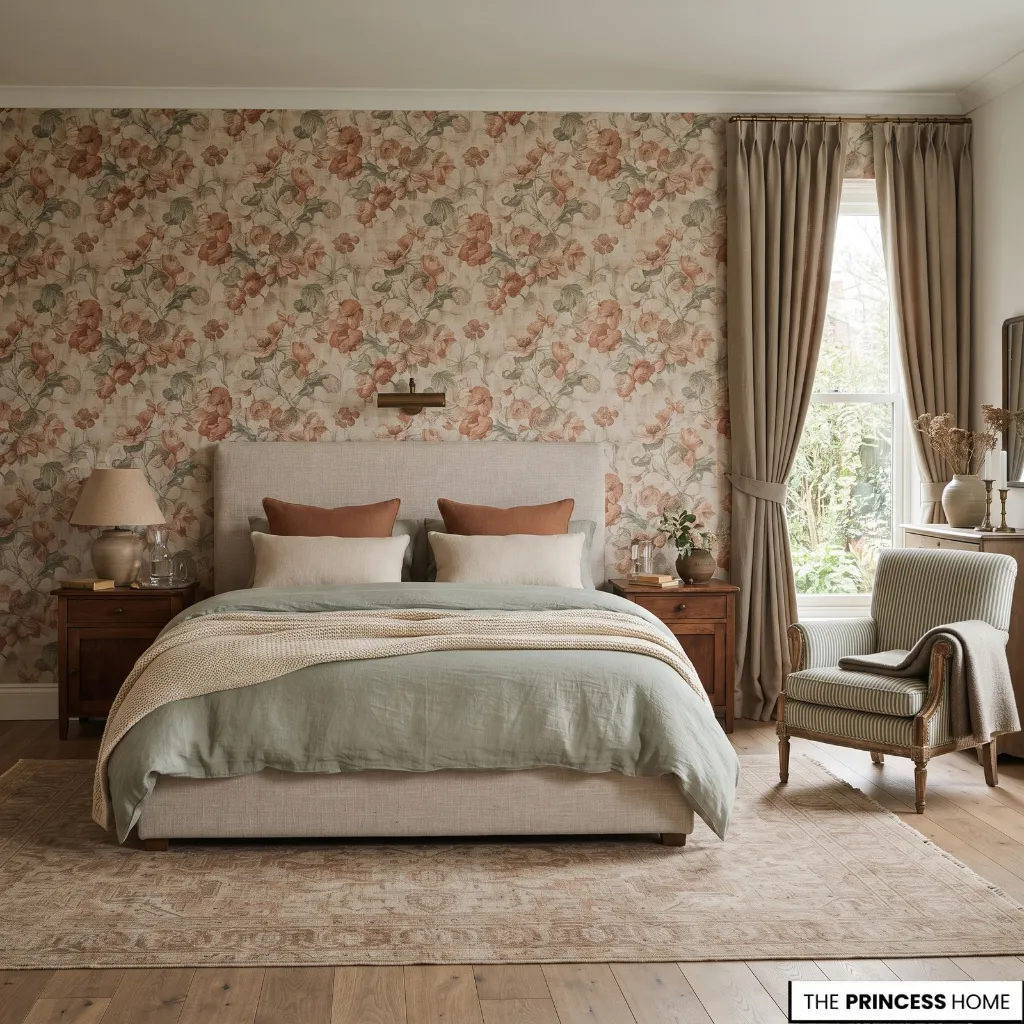
Pattern is returning to bedrooms in more deliberate ways. Wallpaper, block prints, stripes, florals, patterned bedding, rugs, curtains, and artwork can all introduce stronger visual expression. The safest way to combine patterns is to establish a hierarchy.
Let one pattern lead, allow another to support it, and use solid colors or quieter textures between them. Similar colors can also connect patterns that differ in scale or motif. For example, a larger floral pattern can become the main feature while a smaller stripe appears on a chair or cushion.
The surrounding bedding and walls can remain relatively quiet so the patterns have room to read. If wallpaper or patterned curtains feel too permanent, introduce the idea through a quilt, throw, cushions, artwork, or one upholstered piece. This gives you more freedom to change the room later.
Create A Restorative Retreat
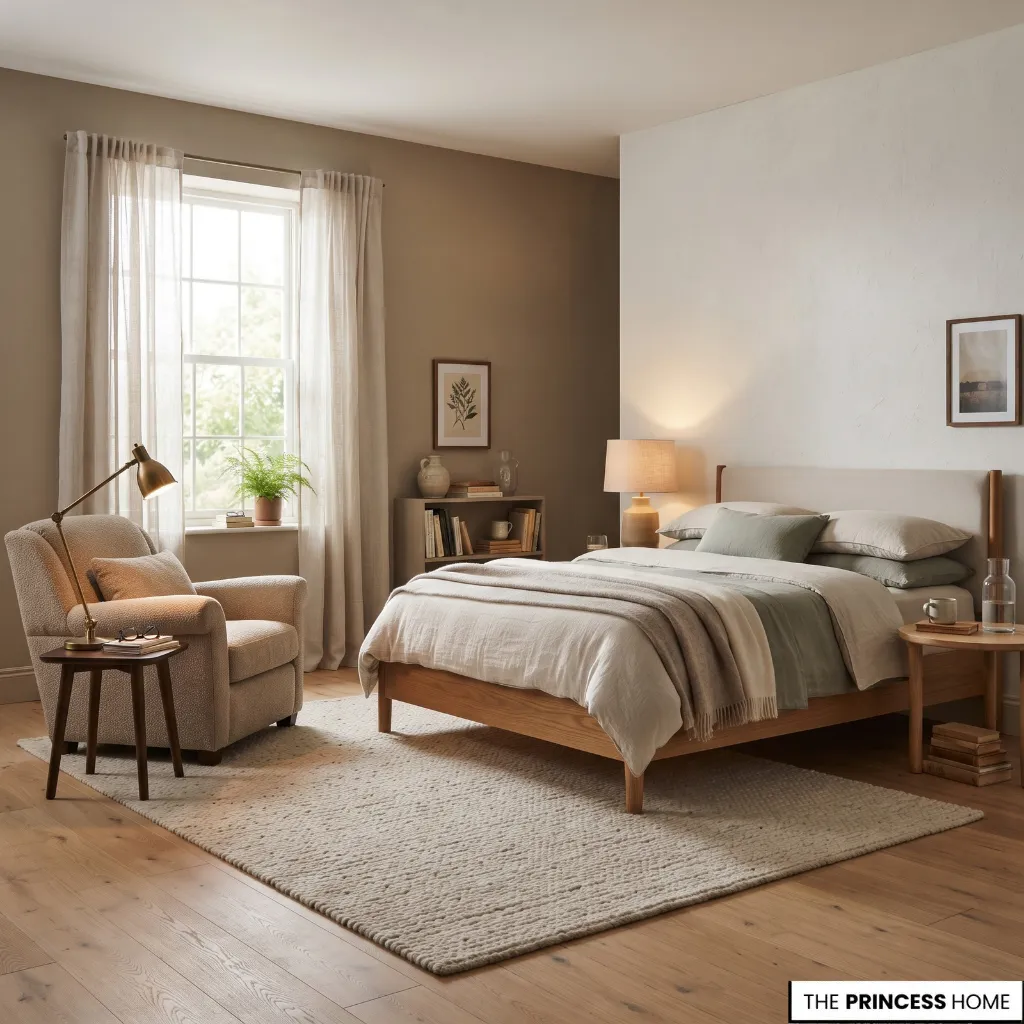
A major direction in bedroom design is the idea of making the room genuinely supportive of rest. This does not require turning it into a hotel-like sanctuary. It means designing around the activities that help you slow down. Reading before bed calls for a comfortable reading position and useful lighting.
For those who spend time getting ready in the room, the dressing area should be organized properly. When an uncluttered sleep environment is important, make storage part of the furniture plan instead of allowing everyday items to accumulate around the bed.
Comfort should also influence material choices. Bedding, rugs, curtains, upholstery, and seating should be selected according to how they feel in daily use rather than simply how they appear in photographs.
The most successful restorative bedroom is therefore personal. A room designed for someone who reads, listens to music, journals, or simply goes to sleep immediately will not need the same furniture or lighting arrangement.
Reduce Digital Distraction
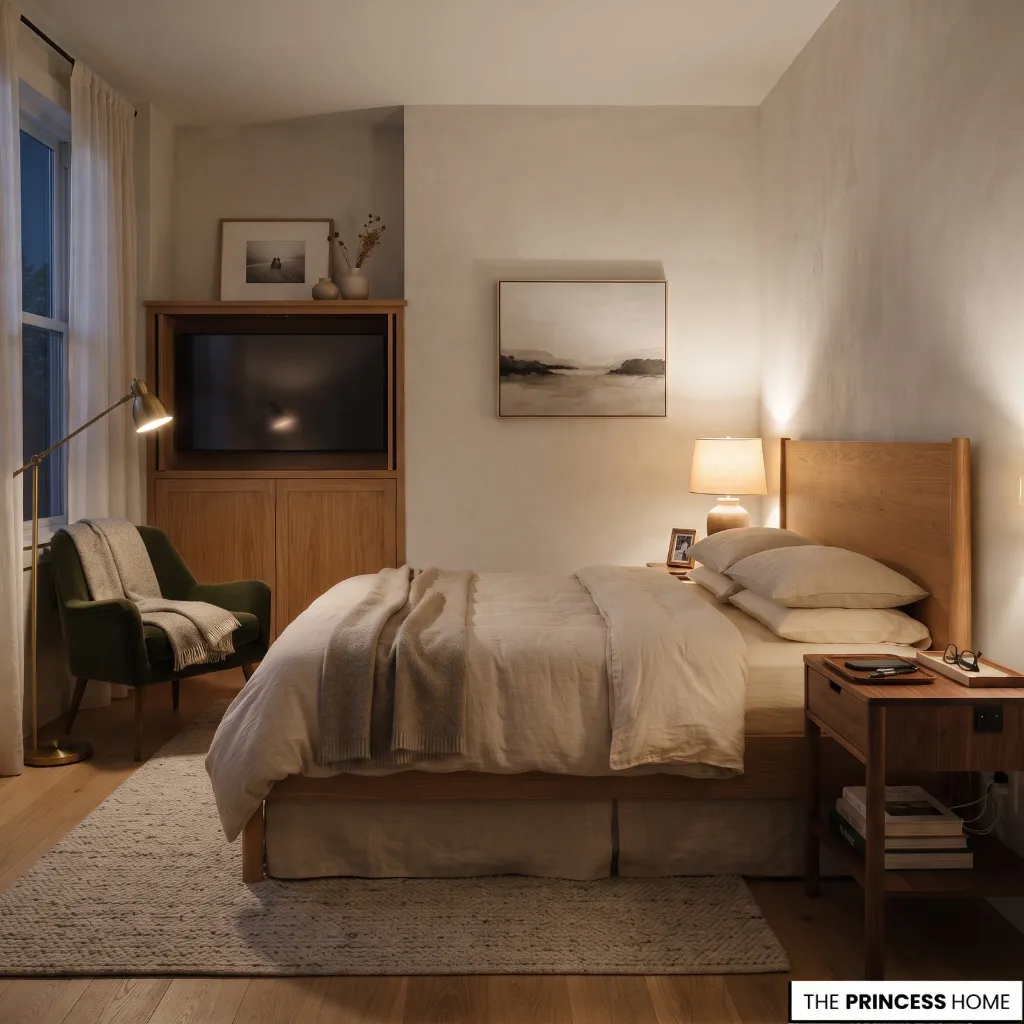
The growing interest in the “analog bedroom” reflects a desire to reduce the visual and practical dominance of technology in the sleeping environment. Concealed televisions, organized charging areas, books, reading spaces, and fewer visible screens can all contribute to this direction.
The design principle is not that technology automatically makes a bedroom poorly designed. Instead, technology should have an intentional place rather than becoming the visual focus of the room. A television can be concealed when possible.
Charging devices can be organized beside the bed rather than spread across visible surfaces. A reading lamp and a small table can make an alternative evening activity easier to use.
If your bedroom needs technology, integrate it discreetly. The goal is to support the routine you want rather than impose a completely technology-free lifestyle.
Choose Flexible Furniture
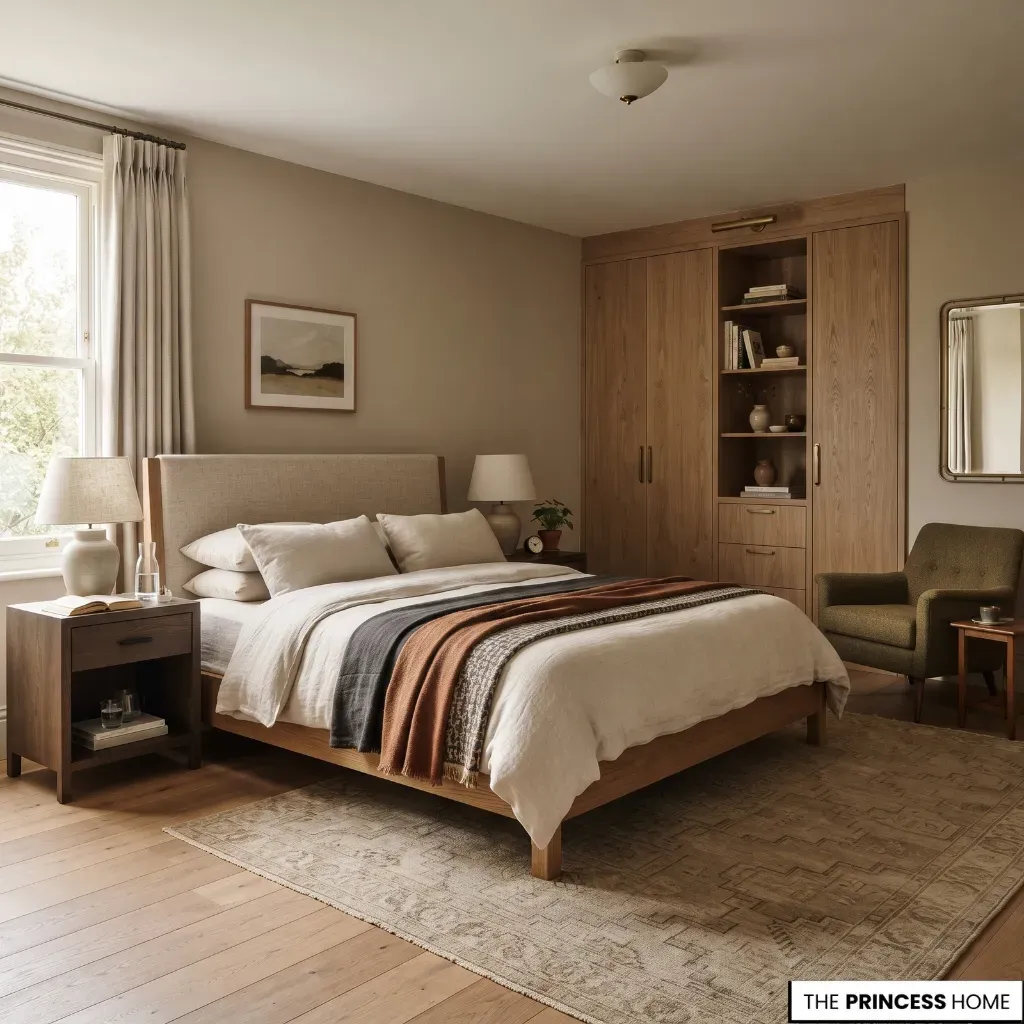
Bedroom furniture should support real routines, and this is becoming more important as bedrooms serve more individual purposes. Storage-integrated beds, practical nightstands, tailored storage, seating, and flexible furniture can help a room work harder without requiring more decorative pieces.
Start with the bed, circulation, bedside function, and necessary storage. Add a chair, desk, or additional furniture only if the room has enough space to accommodate it comfortably. A beautiful chair that blocks a wardrobe or narrows the walking path is not an improvement.
Furniture earns its place when it solves a real need while respecting the room’s proportions. This approach is particularly useful when trends introduce larger headboards, statement furniture, or additional seating. A trend should fit the room rather than forcing the room to accommodate it.
Design For Small Bedrooms
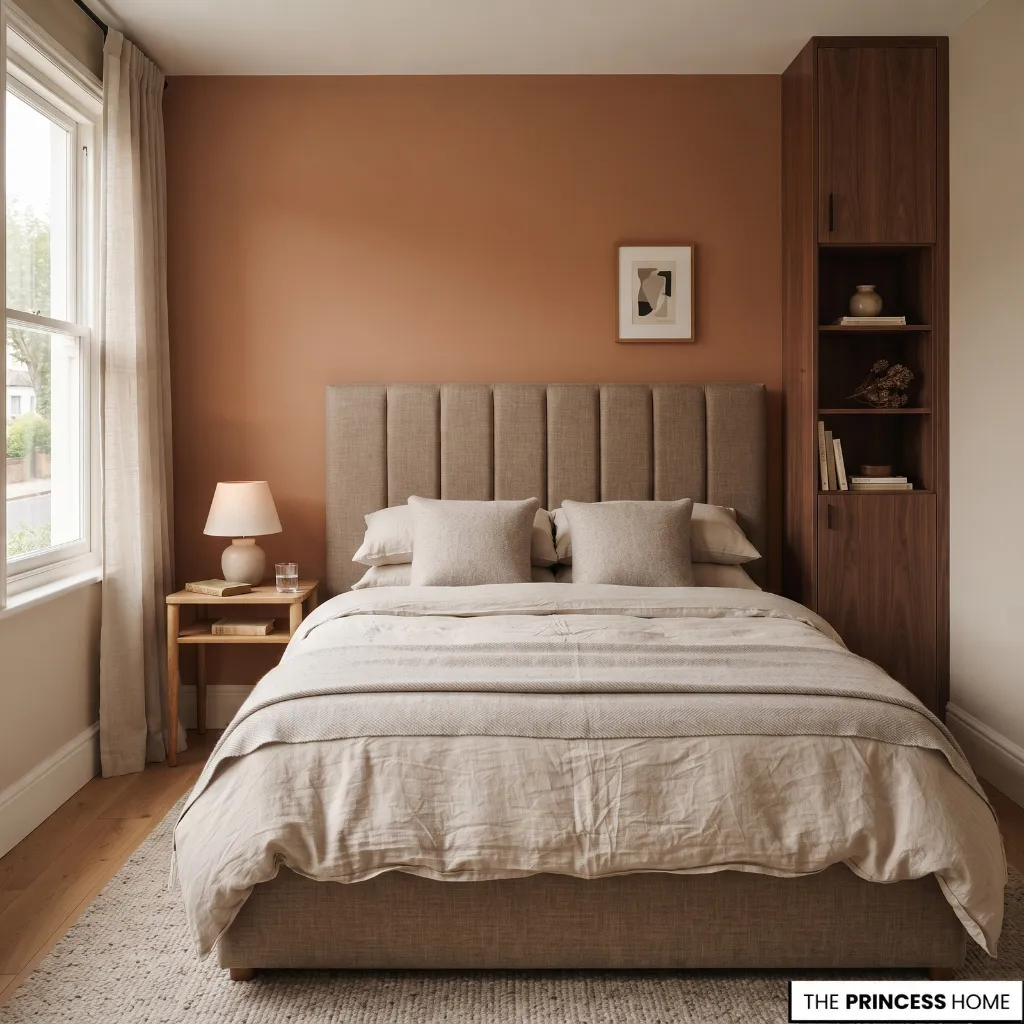
Small bedrooms can use the same 2027 ideas, but they need stronger editing. The objective is not to fit a miniature version of every trend into the room. Start by protecting circulation. Choose furniture according to the available floor area and use vertical space when storage is limited.
One strong headboard can provide more visual impact than several decorative pieces, while a well-chosen color can give the room character without requiring additional objects. Layer texture selectively.
A linen headboard, wool rug, and wood nightstand may provide enough material variation without adding numerous accessories. Storage should also be considered early.
When clothing and everyday objects remain visible because there is nowhere to put them, even a beautifully designed bedroom can quickly feel crowded. In a small bedroom, choose the trends that solve the room’s actual needs rather than trying to reproduce a larger bedroom’s entire composition.
A single strong color, a substantial headboard, or better layered lighting can carry the design direction without sacrificing circulation or storage. The best small-bedroom interpretation of a trend is usually the one that preserves the design principle while reducing its physical footprint.
For more ideas: Top 2027 Bedroom Trends Every Homeowner Should Know
Make Trends Timeless
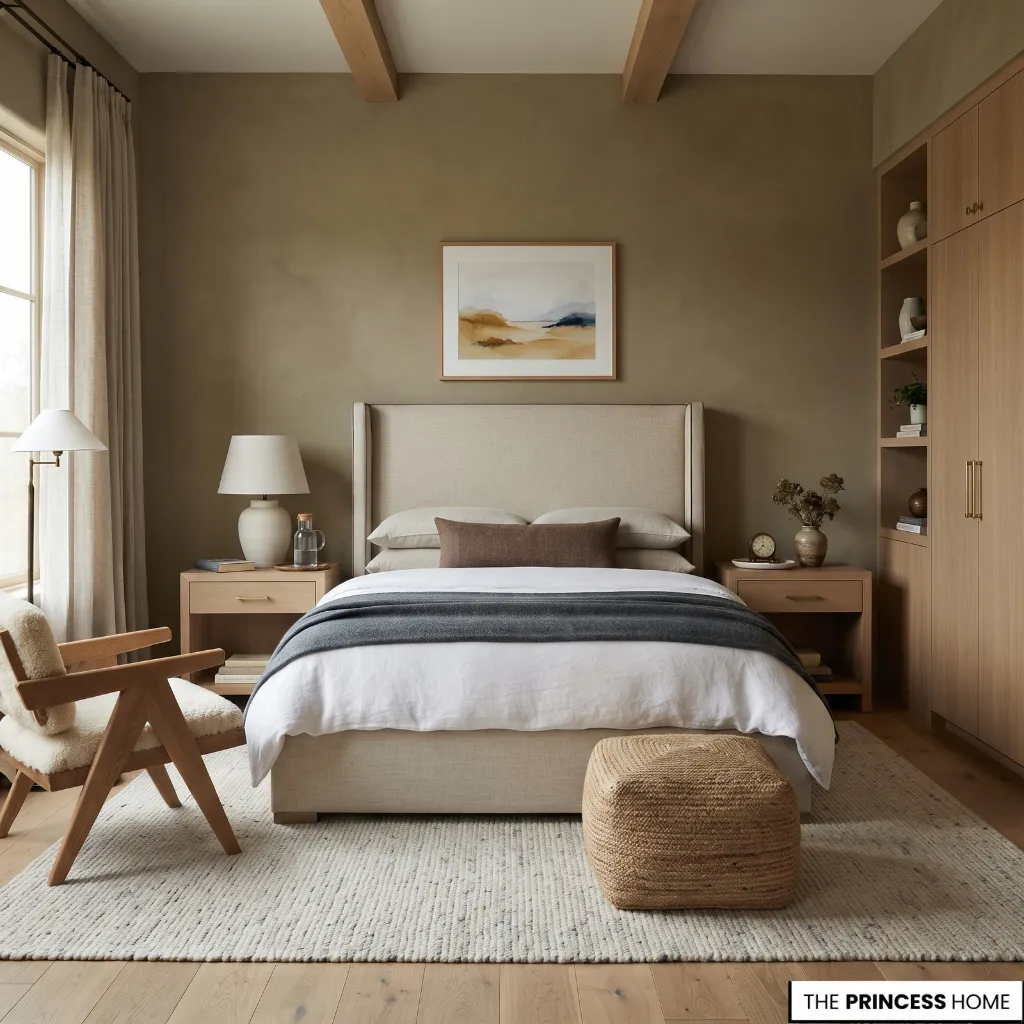
The most useful way to approach 2027 bedroom trends is to decide which elements deserve to last and which can change easily.
Permanent or expensive decisions such as flooring, major furniture, built-in storage, and architectural changes should be based primarily on quality, proportion, function, and personal preference.
Paint, curtains, upholstered elements, and rugs allow more flexibility, while bedding, artwork, throws, and smaller accessories are easier places to experiment. This does not mean every permanent choice must be neutral.
If you genuinely love a deep brown wall, expressive wallpaper, or a distinctive headboard, it can become a lasting part of the room. The important distinction is between choosing a feature because it suits you and choosing it simply because it is currently popular.
When the budget is limited, prioritize the decisions that affect how the bedroom works. Protect circulation, address necessary furniture and storage, improve useful lighting, then add tactile textiles, color, and decorative character.
Existing furniture can also be refinished, rearranged, or combined with secondhand pieces rather than replaced simply to follow a new trend. When choosing between several 2027 ideas, start with the one that solves the clearest problem in your room, then add supporting trends that work with it.
A bedroom might use warm color as its main direction, for example, with tactile materials and vintage furniture providing secondary character. This creates a more coherent result than giving every trend equal visual weight.
For more ideas: Bathroom Trend 2027 Timeless Design Ideas for a Luxurious Space
Conclusion
A successful 2027 bedroom does not need to contain every idea associated with the year. It should use the ideas that improve the room’s function, comfort, character, and connection to the person who lives there.
The strongest bedroom trend for 2027 may therefore be a more thoughtful approach to design itself: choosing fewer elements with greater intention, using trends where they genuinely improve the room, and allowing the bedroom to become personal rather than perfectly fashionable.