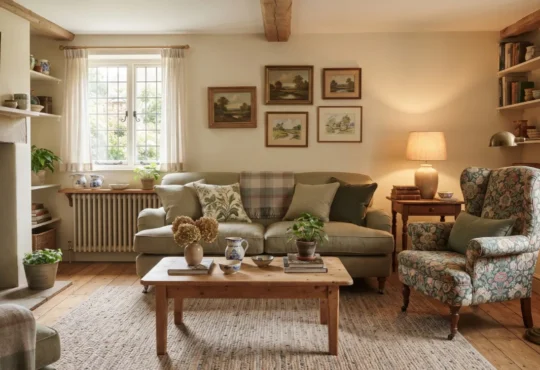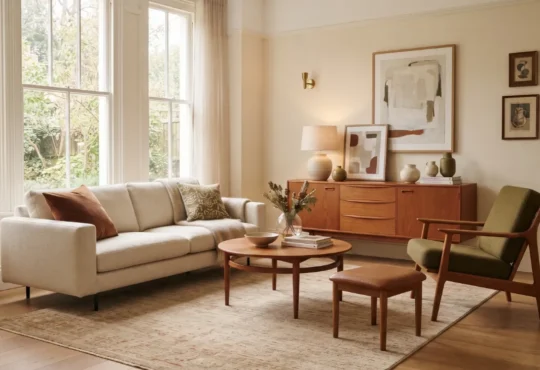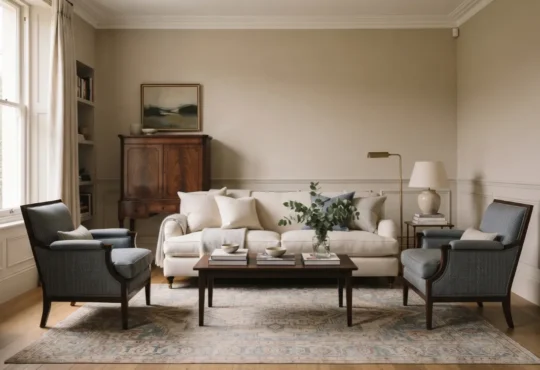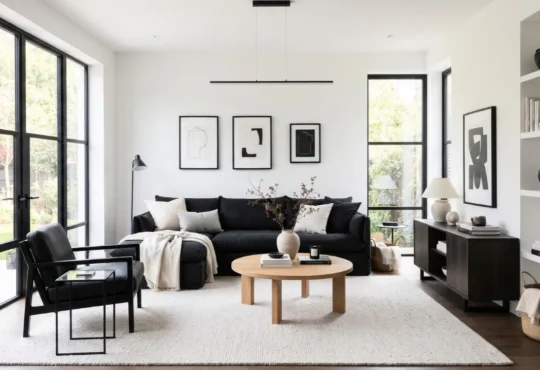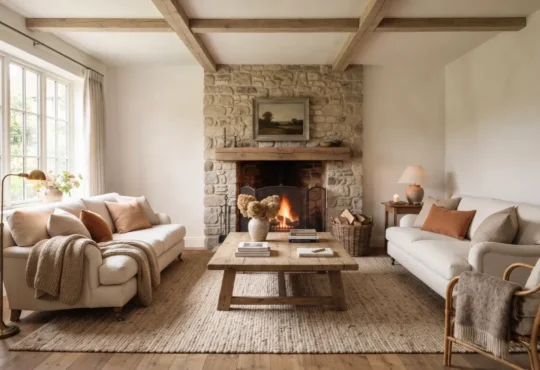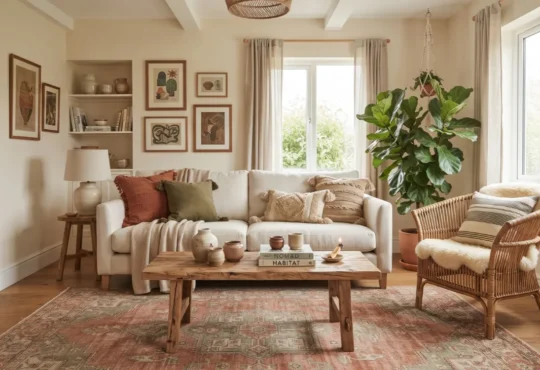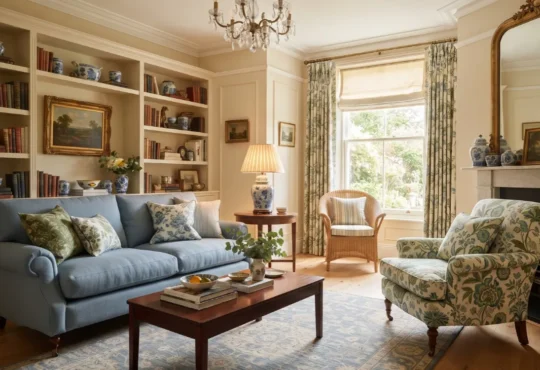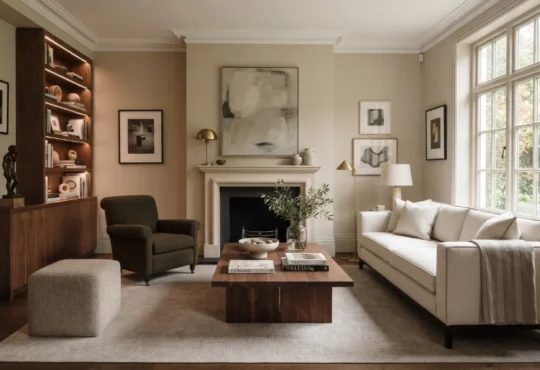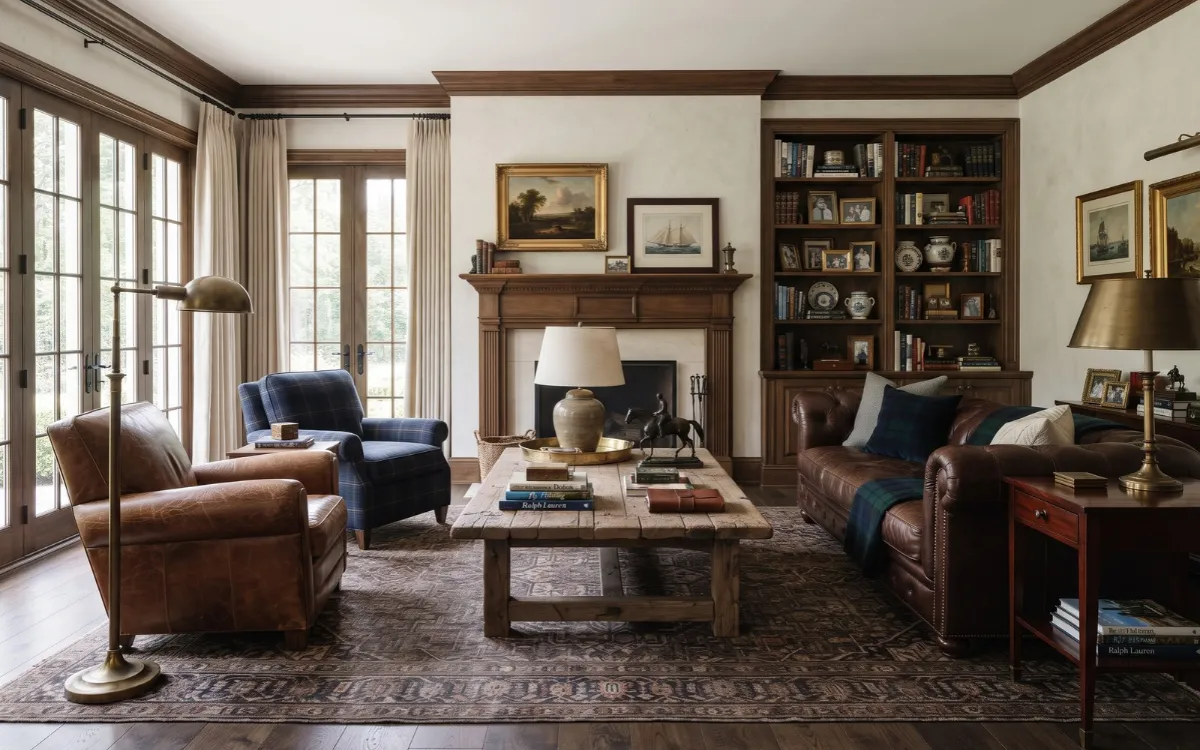
Ralph Lauren home decor is less about reproducing a recognizable room than understanding the design decisions behind it. Heritage references, tailored furniture, substantial materials, controlled color, warm lighting, and personal objects work together to create interiors that feel established and lived in.
The challenge is knowing which elements matter most and how to combine them without turning the home into a themed Americana set. This guide explains how to translate that design language into your own rooms, architecture, budget, and way of living.
Ralph Lauren Style
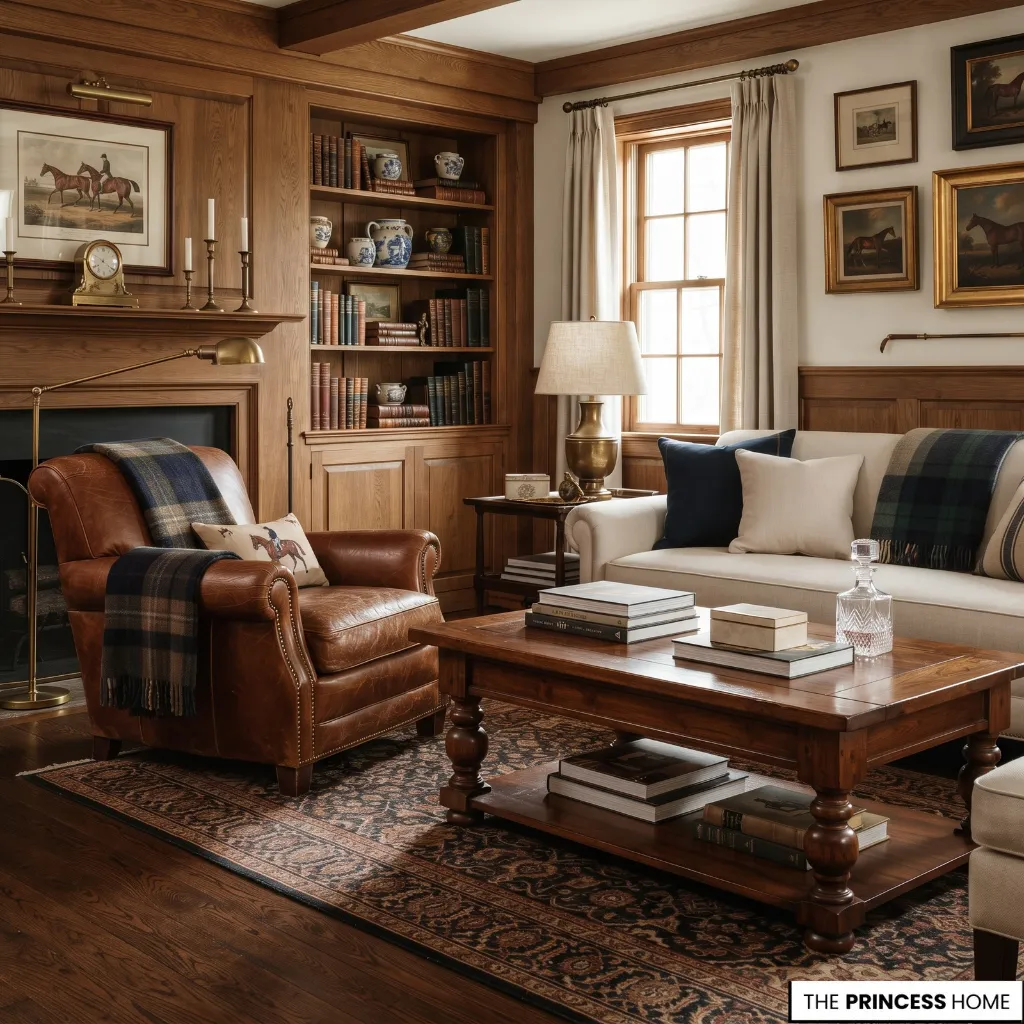
Ralph Lauren Home began in 1983 as an extension of Ralph Lauren’s lifestyle approach to design. The first complete home collection introduced four distinct worlds: Thoroughbred, New England, Jamaica, and Log Cabin.
These settings established a broad vocabulary built around heritage, craftsmanship, comfort, and a strong sense of place. That history helps explain why Ralph Lauren home decor cannot be reduced to one color palette or furniture style.
Its references move between traditional American and English interiors, equestrian details, coastal influences, rustic materials, and relaxed tropical elements. The consistency comes from how these references are combined. Think in terms of relationships rather than individual signatures.
A leather chair works because it relates to the wood, wool, brass, artwork, and colors around it. A tartan fabric works better when quieter materials give it room. A dark wood table becomes more useful when softer upholstery and lighter textiles balance its weight.
The original lifestyle worlds can also be treated as sources of inspiration rather than decorating packages. Thoroughbred can suggest leather, brass, tailored details, and equestrian references. New England can inform painted wood, stripes, and relaxed traditional furniture.
Jamaica can introduce lighter materials and a more relaxed tropical influence. Log Cabin can suggest wood, leather, wool, and substantial texture. You do not need to reproduce any one of these worlds. Select the references that suit your architecture and combine them with the furniture and objects you already own.
For more ideas: Modern Ralph Lauren Interiors Design Ideas for Apartments
Establish the Foundation
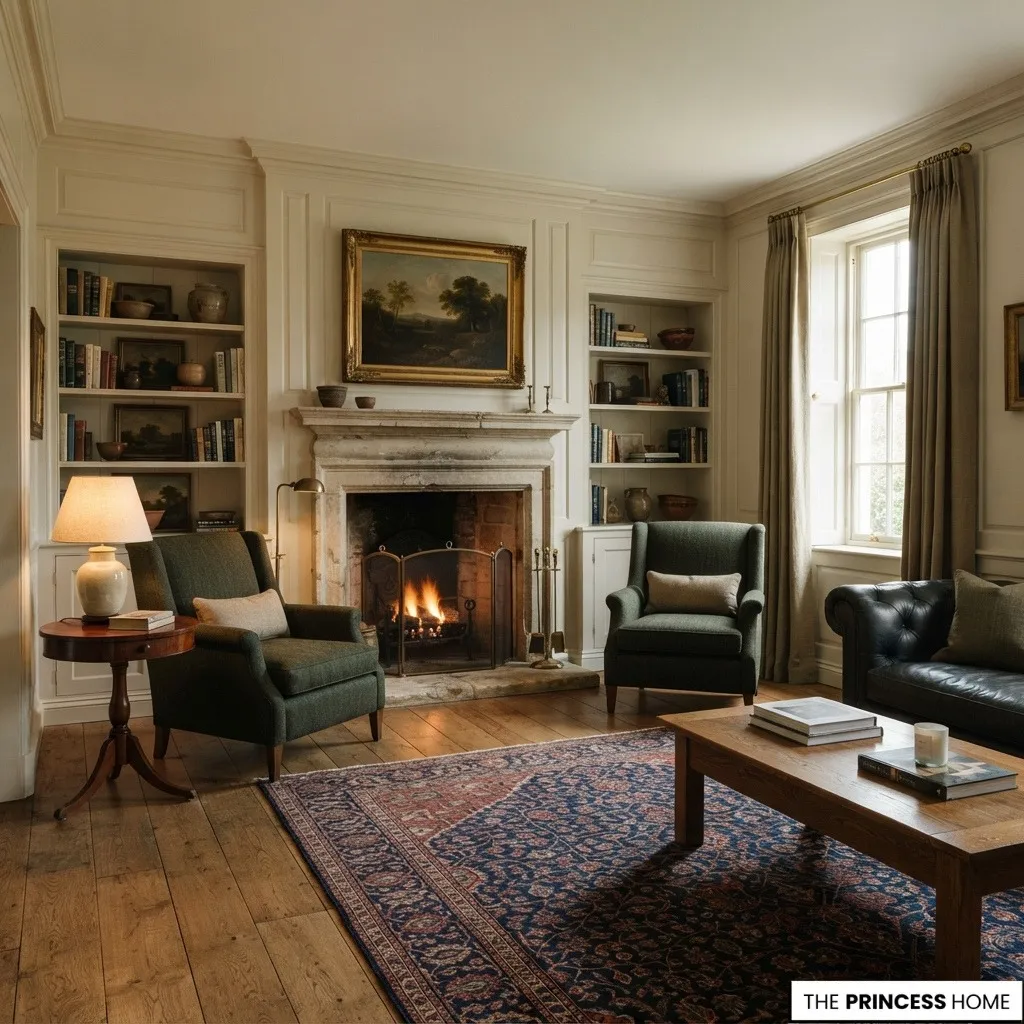
Start with the elements that are hardest to change: architecture, flooring, walls, doors, millwork, fireplaces, ceiling height, and existing built-ins.Ralph Lauren-inspired interiors benefit from a foundation with visual weight.
Wood floors, traditional trim, painted paneling, stone, fireplaces, and substantial built-ins can provide that character naturally. If your home already has one of these features, let it guide the room rather than covering it with decoration. This approach can also work in a modern home or apartment.
You do not need traditional architecture to introduce the style. Keep the existing clean structure and add contrast through substantial furniture, natural materials, heritage colors, traditional artwork, warm lighting, and collected objects.
The relationship between modern architecture and traditional furnishings can create a more relaxed interpretation of the style. When the architecture is plain, build visual weight through what you add.
A large rug, substantial wood furniture, full curtains, framed artwork, and well-scaled lighting can give a simple room a more established character. You do not need to manufacture historical architecture.
Adding decorative paneling or distressed finishes simply to make a new home look old can make the result feel artificial. Work with what exists and strengthen it through furniture, materials, and proportion. Before decorating, identify what should remain, what can change, and what needs visual support.
An attractive original floor may become the starting point. A blank wall may need artwork or furniture with greater scale. A weak focal point may need lighting or a stronger piece of furniture. The goal is to establish the room before adding the decorative layers that make the style recognizable.
For more ideas: Ralph Lauren Entryway Decor Ideas for Elegant First Impressions
Balance Room Proportions
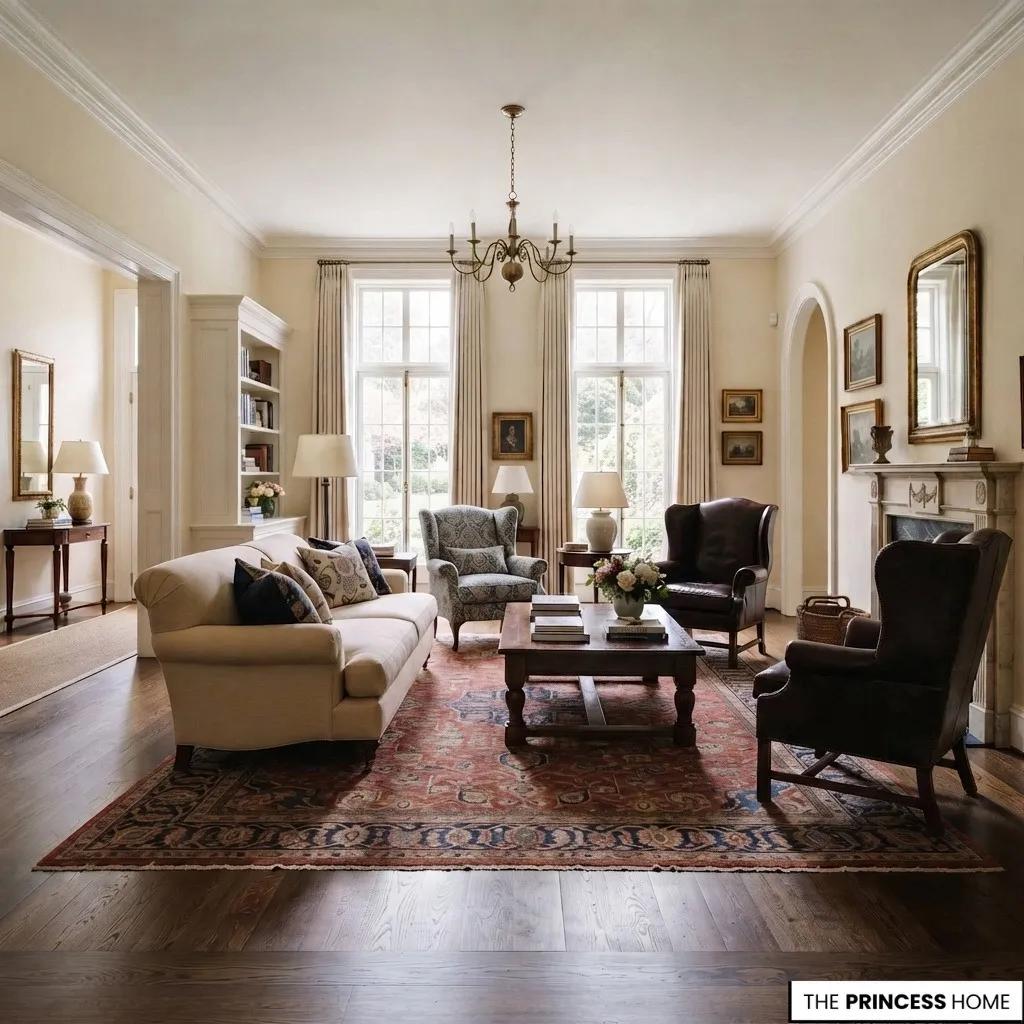
Good proportions matter more than owning recognizable Ralph Lauren pieces. Start with the largest elements. Consider the room’s ceiling height, floor area, windows, architectural focal points, and circulation before choosing furniture. A generous room can support deeper furniture, larger rugs, heavier wood, and stronger contrasts.
A smaller room needs the same sense of character at a reduced quantity. Keep enough open space around major furniture for comfortable movement. A sofa should relate naturally to the chairs around it, while the coffee table should connect the seating group without obstructing circulation.
Rugs deserve particular attention. A rug that is too small can make substantial furniture look disconnected. Where possible, use the rug to connect the principal seating pieces rather than placing a small rug only beneath the coffee table. For a small room, reduce the number of major pieces instead of buying miniature versions of everything.
One well-proportioned sofa, one useful chair, a properly scaled rug, and several layers of lighting can establish more character than a crowded collection of small furniture. Consider visual weight as well as physical dimensions.
A dark leather chair, solid wood cabinet, or deep-colored sofa carries more visual weight than a pale piece of similar size. Balance heavier elements with lighter textiles, open space, artwork, or brighter surrounding surfaces. The room should feel substantial without becoming crowded.
Choose Tailored Furniture
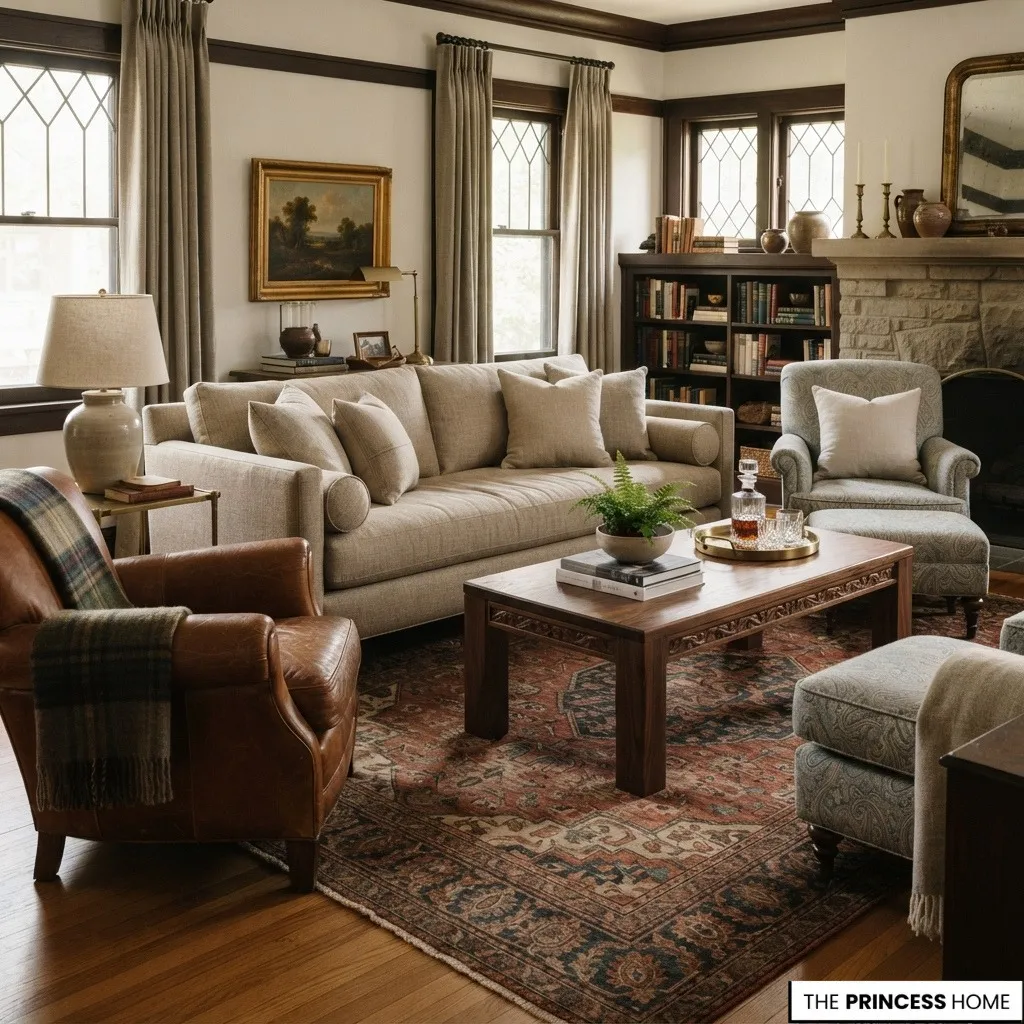
Furniture provides much of the structure in Ralph Lauren home decor. Look for pieces that feel classic, comfortable, and substantial rather than heavily decorative. Upholstered sofas and chairs can have traditional arms, structured backs, relaxed cushions, or familiar club-chair proportions.
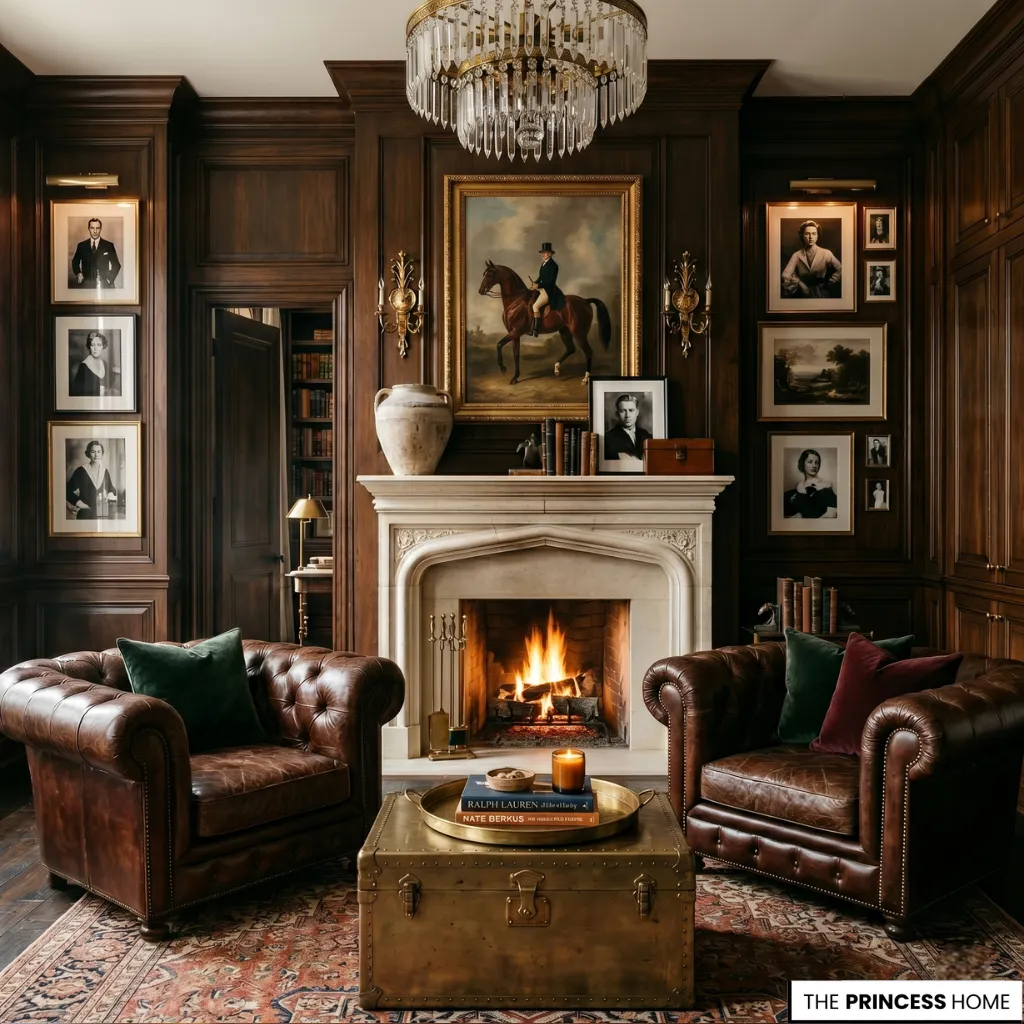
Leather works particularly well when balanced with softer upholstery and textiles. Wood tables, chests, desks, and cabinets provide another layer of visual weight. Tailored does not mean stiff or formal. Furniture should look considered while remaining comfortable enough for everyday use.
Choose major pieces according to three priorities: scale, shape, and material. The scale should suit the room and the people using it. Classic shapes generally have more staying power than highly fashionable forms.
Materials such as leather, linen, cotton, wool, and natural-looking wood provide a strong foundation without requiring ornate detailing. Choose furniture according to the architecture as well.
Traditional pieces can soften a contemporary room, while simpler tailored pieces can keep a more historic interior from feeling overly formal. The aim is to create a relationship between the furniture and the room rather than force every space into the same period.
Avoid filling a room with matching furniture. A sofa, two chairs, coffee table, and cabinet do not need to come from the same collection. Coordinate them through proportion, material, and color instead. Also avoid choosing furniture simply because it looks traditionally American.
A chair can have the right historical reference and still be wrong for the room if it overwhelms the space or is uncomfortable. If the ideal furniture is beyond your budget, preserve the design purpose rather than the brand.
A more accessible sofa can work when its proportions, upholstery, comfort, and visual weight support the same design language. It is usually better to buy one well-chosen main piece than several inexpensive pieces that weaken the composition.
For more ideas: Ralph Lauren Style on a Budget Timeless Luxury for Less
Layer Rich Materials
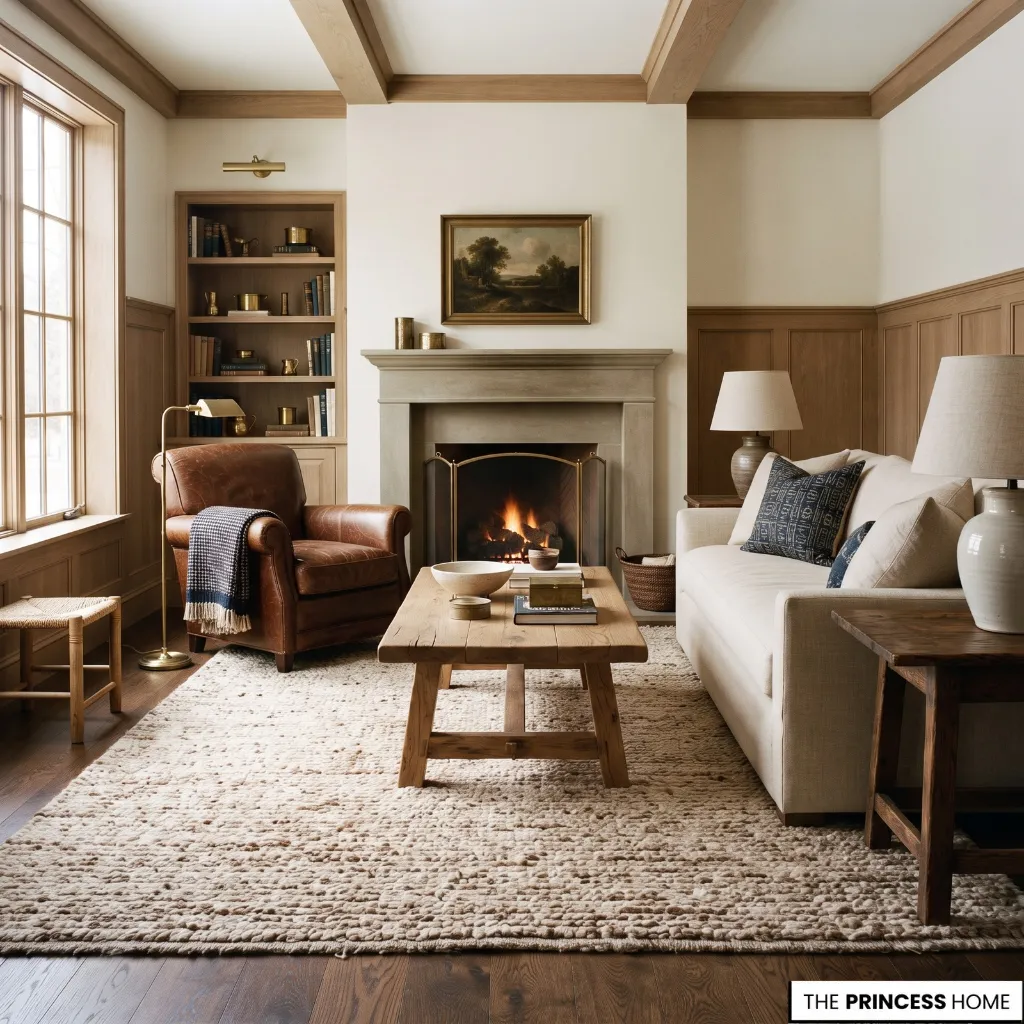
Material contrast is one of the most effective ways to build the depth associated with Ralph Lauren interiors. Start with a few substantial materials rather than trying to use everything at once.
Wood, leather, wool, linen, cotton, stone, brass, and woven textures can work together because they provide different surfaces and degrees of softness.
Useful combinations include smooth leather with textured wool, natural wood with linen, warm metal with dark wood, stone with upholstered furniture, and woven texture with a more polished surface. The aim is not to make every object expensive. Give each major material a clear role.
A wooden table can provide the hard anchor, upholstery can soften it, a wool rug can add texture underfoot, and brass can introduce a controlled reflective element. Repeat related materials across the home to create continuity. If walnut appears in the living room, a related wood tone can appear in the study.
If leather is important downstairs, a smaller leather detail can appear in another room. Material layering also helps when the architecture is modern. Smooth contemporary surfaces can be balanced with wood, linen, wool, leather, woven materials, or aged-looking metal to introduce warmth and depth without changing the architecture itself.
For a limited budget, concentrate spending where material has the greatest visual impact. The spending priority is:
Foundation → Main Seating/Furniture → Rug & Wood Anchor → Distributed Lighting → Textiles → Decorative Narrative
This keeps the strongest spending on the elements that determine scale, comfort, and the overall structure of the room. Decorative objects can be added gradually. Fewer convincing materials usually work better than many inexpensive finishes competing for attention.
For more ideas: Ralph Lauren Home Decor and the Art of Timeless Americana
Use Ralph Lauren Colors
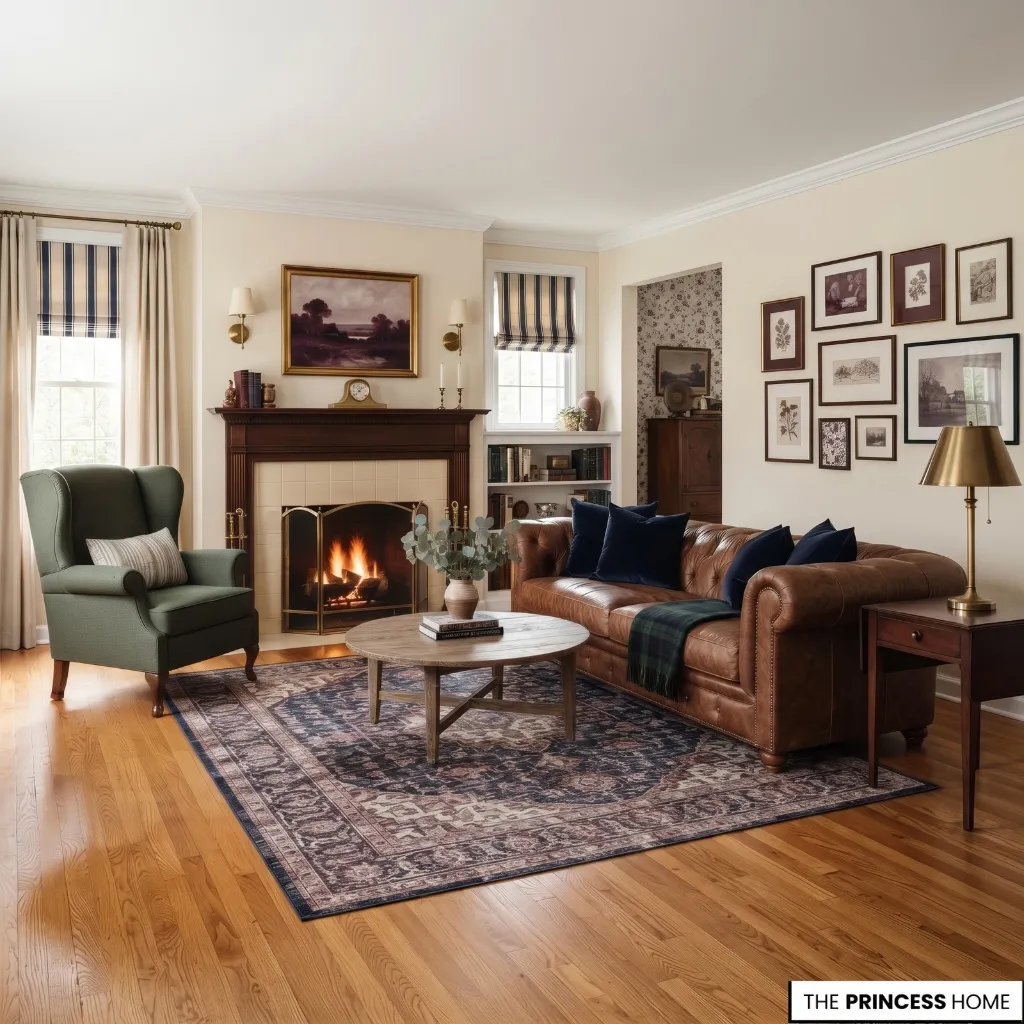
Color is an important part of the Ralph Lauren vocabulary, but there is no single official palette that every Ralph Lauren-inspired room must follow.
Deep navy, forest green, warm cream, brown, tobacco, camel, burgundy, muted red, charcoal, and warm white are useful starting points. These colors can reference traditional American, English, equestrian, and lodge influences without requiring the room to reproduce any one of them literally.
Begin with the colors already present in the room. Look at the flooring, walls, fixed cabinetry, upholstery, and large architectural elements before choosing new colors. Then establish one dominant color, a supporting neutral, and one or two secondary tones.
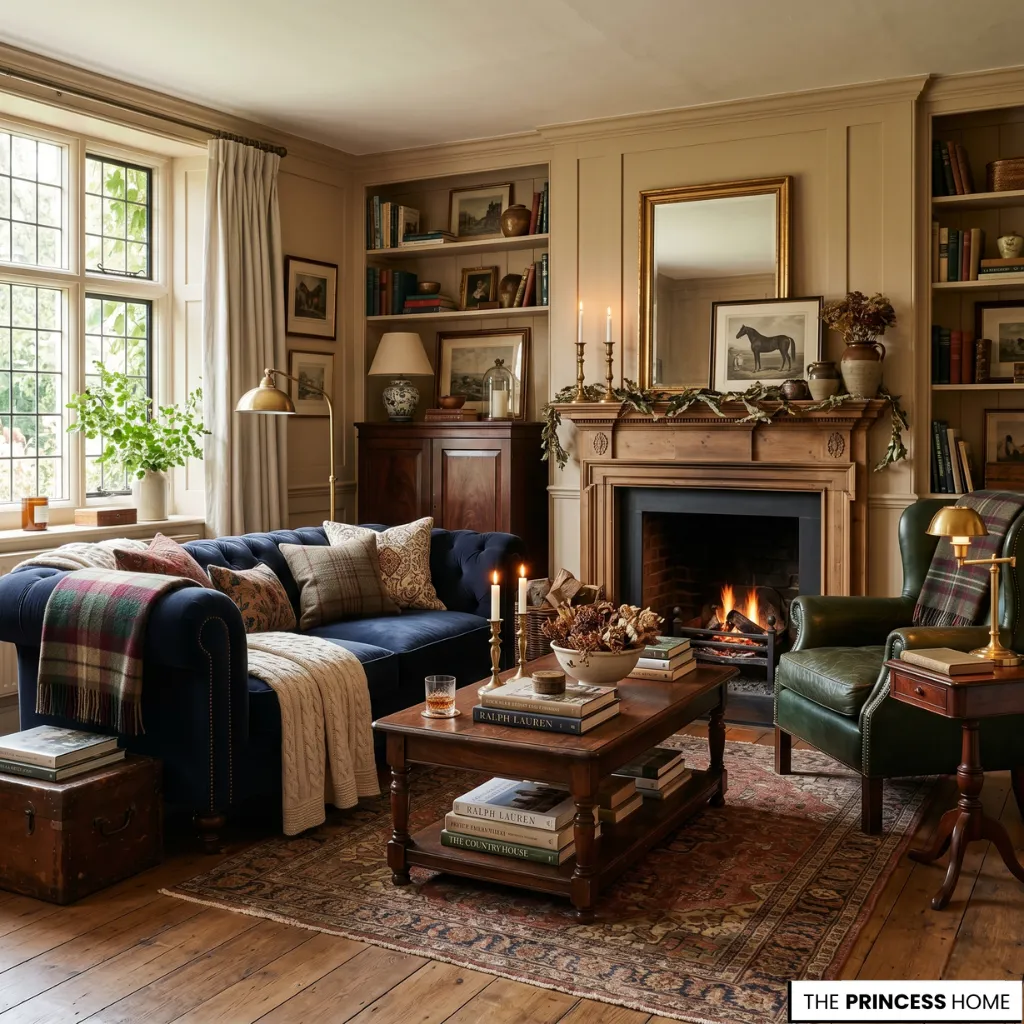
For example, a room with dark wood floors might use warm cream walls, brown leather, deep navy textiles, and small amounts of burgundy. A room with pale walls and lighter flooring could introduce forest green upholstery, warm wood, cream textiles, and muted brass.
Distribution matters more than the number of colors. If navy appears on the sofa, it does not need to cover the walls, curtains, cushions, and artwork as well. Allow some colors to appear only in small amounts so the palette remains controlled. Pattern should support the palette rather than compete with it.
Plaid, stripes, checks, florals, and traditional motifs can coexist when they share colors and vary in scale. A practical approach is to give one pattern the strongest presence, use a second pattern at a smaller scale, and keep the remaining textiles relatively quiet.
This allows several patterns to contribute character without making every surface visually active. In a small room, deeper colors can still work. Use them selectively on upholstery, one wall, curtains, cabinetry, a rug, or artwork, then balance them with lighter surrounding surfaces.
Avoid turning the palette into a formula. The goal is a controlled relationship between colors, not a prescribed list of shades.
Shape Warm Lighting
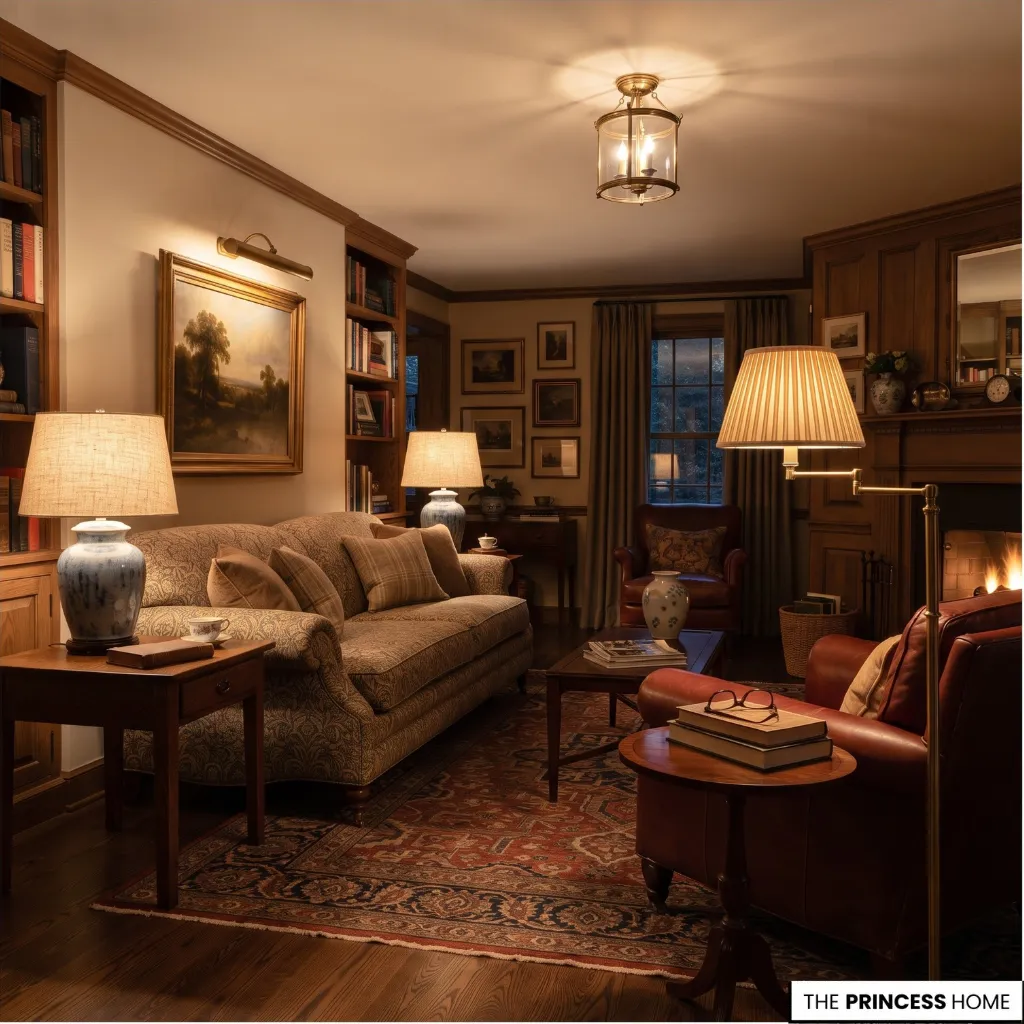
Plan lighting as part of the room rather than adding it after the furniture is finished. Use three layers: ambient lighting for general illumination, task lighting for reading or working, and accent lighting for artwork, architectural details, or decorative focal points.
The fixtures themselves can reinforce the design language. Brass or warm metal, linen or pleated shades, ceramic or wood lamp bases, picture lights, classic sconces, and substantial floor or table lamps can all work within a Ralph Lauren-inspired interior.
The fixture should suit the room first. A large traditional pendant may work over a generous dining table but overwhelm a small bedroom. A table lamp may be more useful beside a reading chair than a decorative floor lamp placed where nobody needs it.
For residential lighting, around 2700K is a practical warm starting point. Treat this as a general guideline rather than a Ralph Lauren specification; the appropriate result also depends on the room, bulb, fixture, and natural light. Avoid relying on one bright ceiling fixture to illuminate everything.
Place lamps where people actually use the room: beside seating, on a desk, on a console, or near a reading chair. Add accent lighting where artwork or architectural details deserve attention.
If the budget is limited, several accessible fixtures can achieve more than one expensive statement piece. Table lamps, warm bulbs, appropriate plug-in sconces or picture lights, and dimmers can establish a layered lighting system while preserving the character of the room.
For more ideas: Ralph Lauren Home Office Decor Create a Luxurious Workspace
Create Collected Rooms
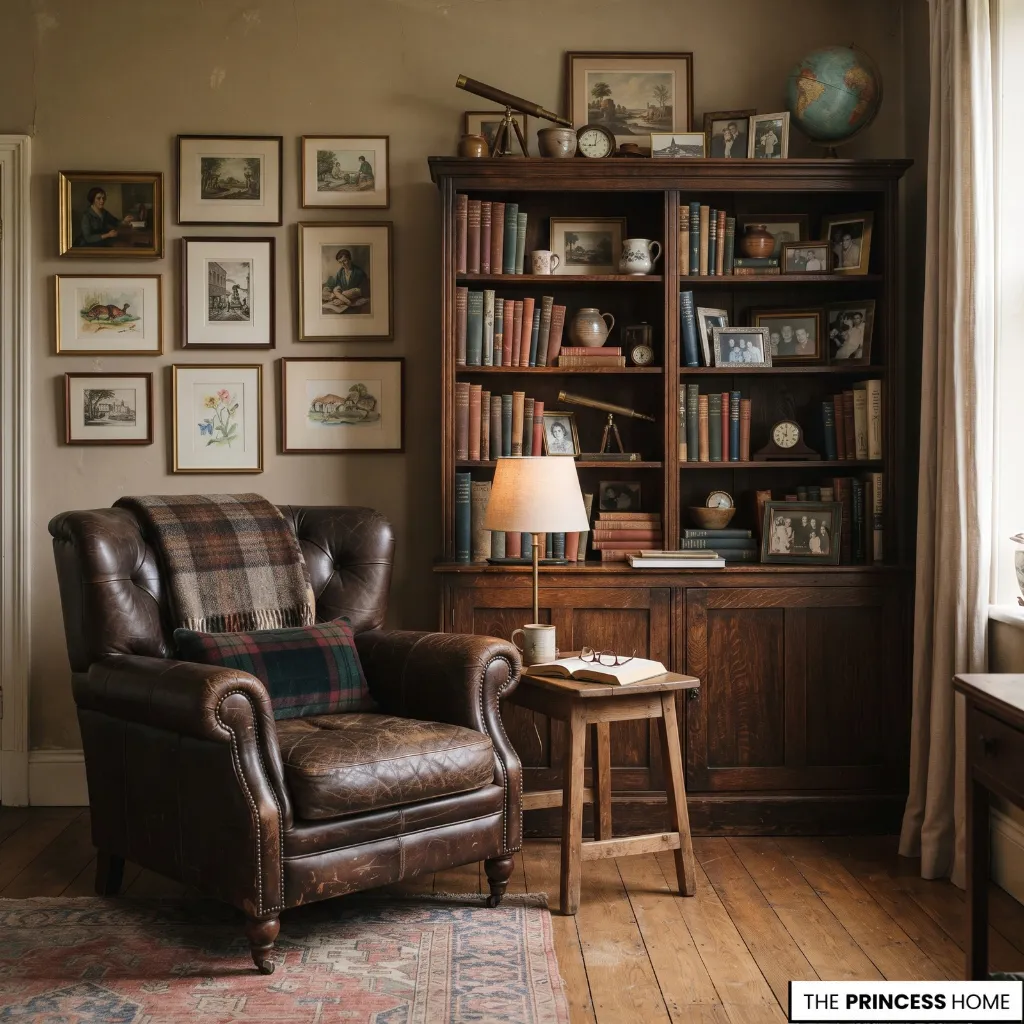
The final layer should make the home look lived in rather than newly assembled. Use books, artwork, photographs, ceramics, inherited objects, travel finds, vintage pieces, and textiles that have a genuine reason to be there.
These objects give the room a history that cannot be created by buying a complete decorative collection at once. When choosing artwork, consider the wall, furniture, and surrounding colors first. A large wall above a substantial sofa usually needs artwork with enough scale to relate to the furniture.
Smaller pieces can work when grouped intentionally rather than scattered across a large empty wall. Accessories should also relate to the room’s materials and purpose. A ceramic lamp, stack of books, framed photograph, brass object, or collected bowl can reinforce the design language when its scale and placement make sense.
Equestrian or Americana references can appear as individual details rather than repeated throughout the room. A collected room also benefits from variation. Furniture does not have to come from one period, and accessories do not need to match.
A traditional wood cabinet can sit beside a simpler contemporary lamp when their scale, material, and color relationships work together. Keep surfaces selective. Group related objects, vary their heights, and leave some areas quiet.
A collected room needs space around its possessions so that individual pieces remain visible. Avoid filling every shelf simply because the room is supposed to look collected. Accumulation works best when it appears to have happened naturally over time. This is where the style becomes personal.
Use the books you actually read, photographs that matter to you, objects inherited from family, artwork you want to see every day, and pieces gathered during your own travels.
Time, personal objects, and memory give a home its identity. The room should show evidence of the people who live there rather than look as though it was assembled from a single collection.
Decorate Each Room
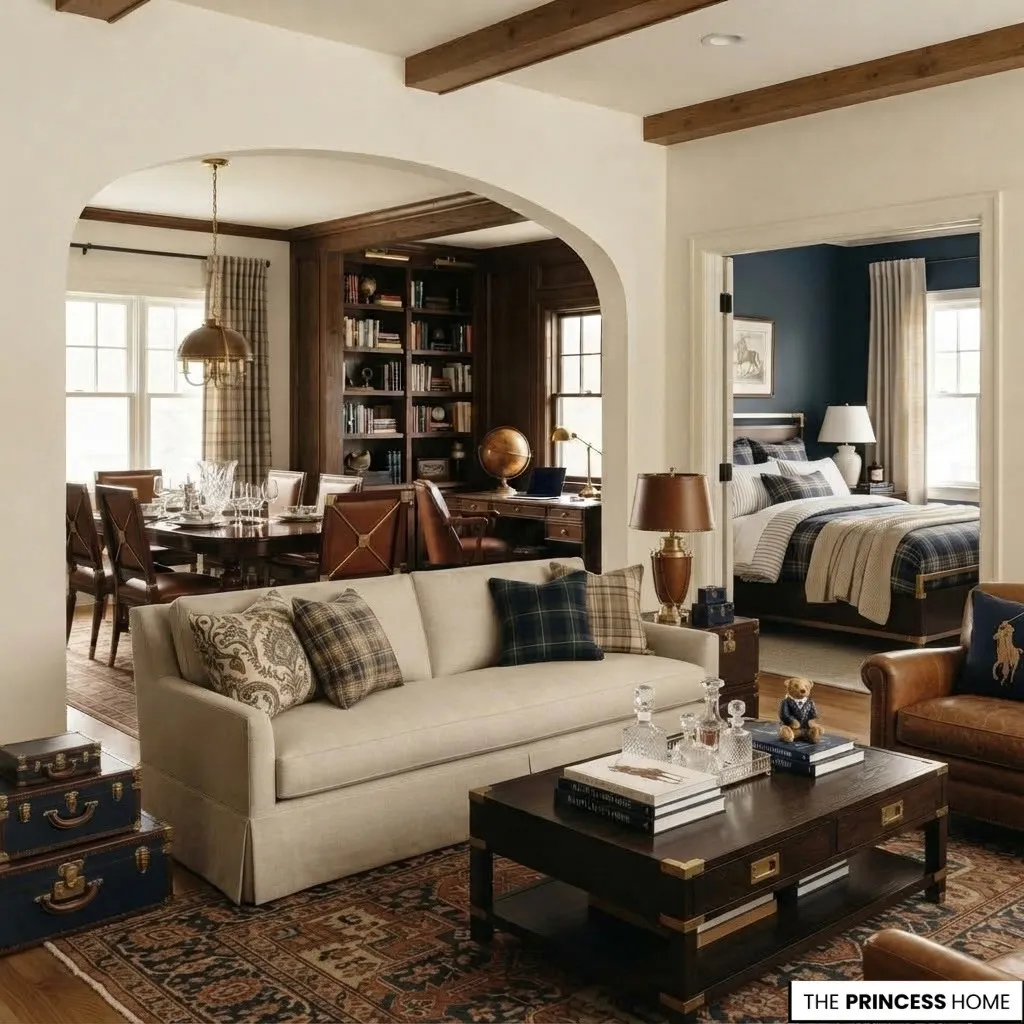
The same principles can move through the entire home, but each room should respond to its purpose.
Living Room
Start with comfortable, substantial seating and a properly scaled rug. Add wood or leather for structure, then build around the seating with warm lighting, artwork, books, and a controlled mix of patterns.
The living room should support conversation and everyday use. Keep enough open space for movement and avoid making every surface decorative. For more ideas: Ralph Lauren Inspired Living Room Timeless Design Guide
Bedroom
Use a substantial bed as the main anchor, then layer bedding, bedside lighting, curtains, and selected furniture around it. Pattern can be quieter here than in a living room. Stripes, checks, florals, or subtle plaids can appear through bedding or an upholstered chair rather than covering every textile.
Wood, warm neutrals, deep blue, green, cream, and natural textiles can connect the bedroom to the rest of the home while keeping it more intimate. For more ideas: Ralph Lauren Bedroom Ideas for Timeless Heritage Luxury
Dining Room
Let the dining table establish the room’s visual weight. Choose chairs that are comfortable enough for long meals and add a light fixture that defines the table without overwhelming it.
Artwork, curtains, a rug, or a substantial sideboard can reinforce the traditional character. Table settings should support the room rather than become permanent decoration. For more ideas: Ralph Lauren Dining Room Style: How to Achieve Timeless Luxury at Home
Study or Library
This is a natural setting for deeper color, wood, leather, books, traditional furniture, and focused task lighting. A desk, comfortable reading chair, bookcase, and layered lamps can establish the character without requiring a large collection of accessories.
Keep the furniture useful; the room should support reading, writing, or conversation rather than function as a display of decorative objects. For more ideas: Ralph Lauren Home Office Decor Create a Luxurious Workspace
Across the Home
Rooms should share a visual vocabulary without becoming identical. Repeat a few connecting materials, colors, or finishes so the home feels related. Then let each room emphasize a different part of the overall design language:
lighter and more relaxed in one space, deeper and more tailored in another. This creates continuity without turning the house into a showroom.
Avoid Common Mistakes
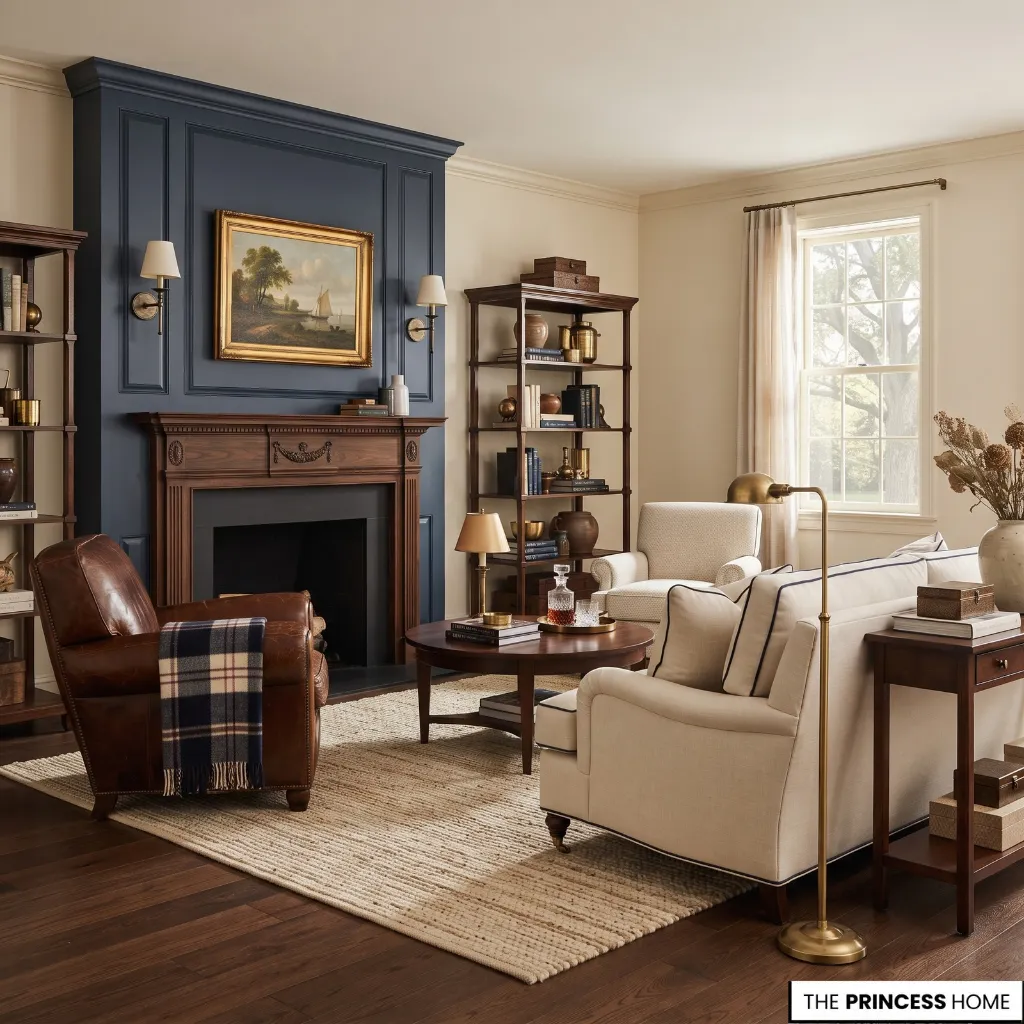
The easiest way to weaken Ralph Lauren home decor is to copy its most recognizable ingredients without understanding how they work together.
Copying a showroom. A perfectly coordinated room can look staged rather than personal. Build around your own architecture, furniture needs, and collections instead.
Using every signature element. Plaid, leather, horse imagery, dark wood, brass, navy, and traditional accessories can all belong to the vocabulary, but using them simultaneously at full strength can turn the room into a theme.
Correction: Choose a few strong references and let quieter materials support them.
Matching everything. A complete furniture set or identical textiles remove the variation that makes a collected interior convincing.
Correction: Coordinate through proportion, material, and color instead of matching products.
Making every surface dark. Deep colors and dark wood are useful, but a room also needs lighter surfaces to keep the composition open.
Correction: Pair deep upholstery or walls with cream textiles, warm whites, lighter artwork, natural materials, or controlled reflective surfaces.
Choosing style before scale. A beautiful traditional chair is still the wrong choice if it blocks circulation or overwhelms the room.
Correction: Measure first, establish furniture placement, then choose the character and finish.
Buying accessories before foundations. Decorative objects cannot compensate for poor furniture proportions, an undersized rug, or inadequate lighting.
Correction: Follow the spending priority: Foundation → Main Seating/Furniture → Rug & Wood Anchor → Distributed Lighting → Textiles → Decorative Narrative.
Treating Americana as a theme. Literal flags, excessive horse imagery, rustic props, or repeated Western references can make the room theatrical.
Correction: Express the reference through materials, proportion, craftsmanship, color, and restrained pattern.
Making every room identical. A home needs continuity, but every room does not need the same colors, furniture, or decorative formula.
Correction: Repeat a few connecting elements while allowing each room to respond to its function.
Ralph Lauren home decor works best when the references are recognizable but the room still belongs to the people living in it. The goal is not to reproduce a Ralph Lauren room piece by piece.
Build the foundation, control the proportions, choose substantial materials, layer color and lighting, and let personal objects develop the story over time. That is how a recognizable design language becomes a home with its own identity.
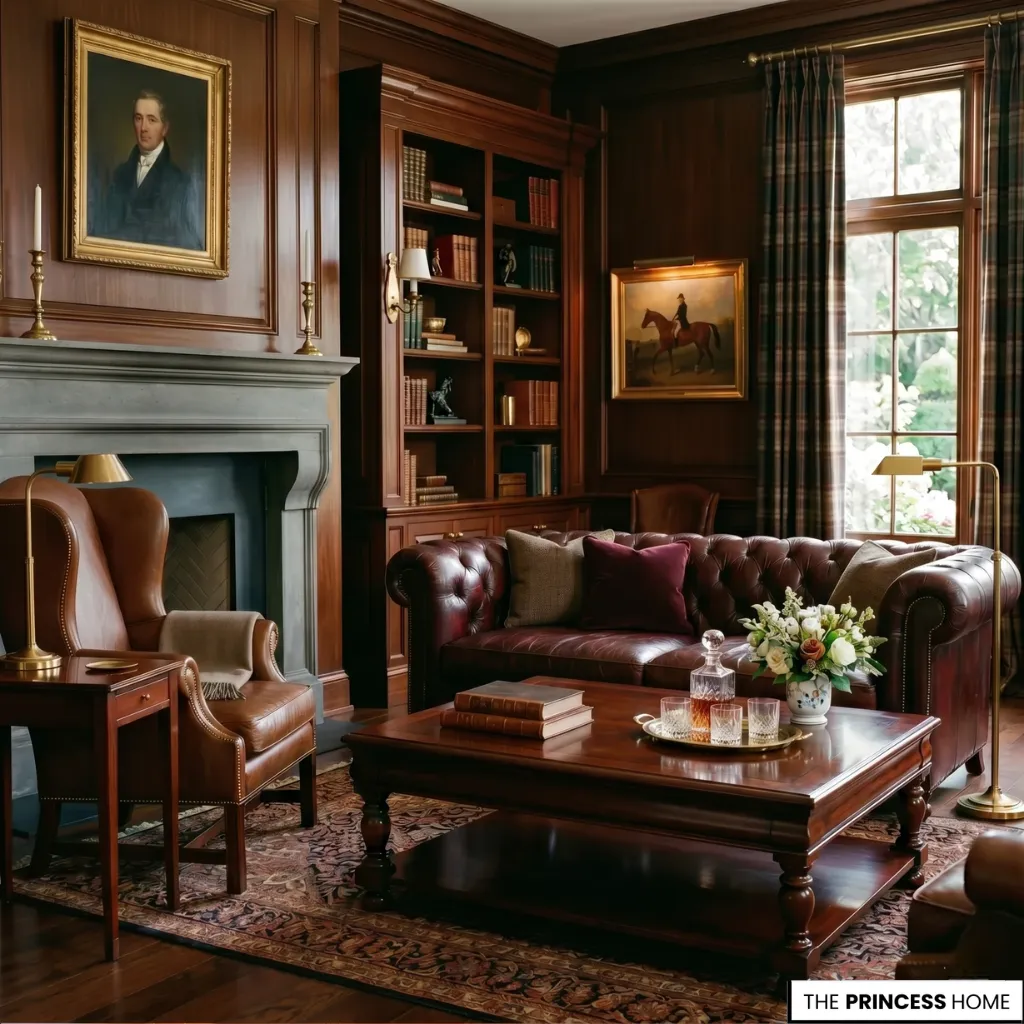
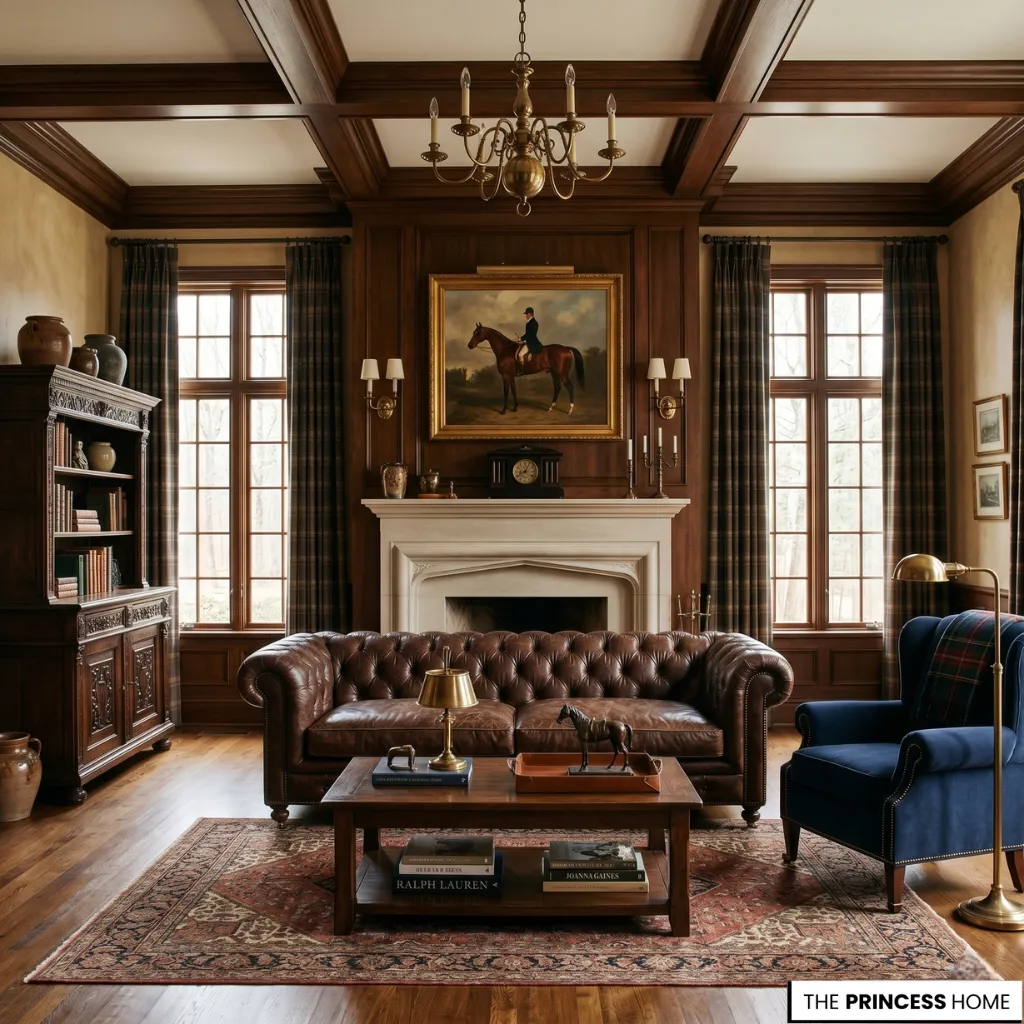
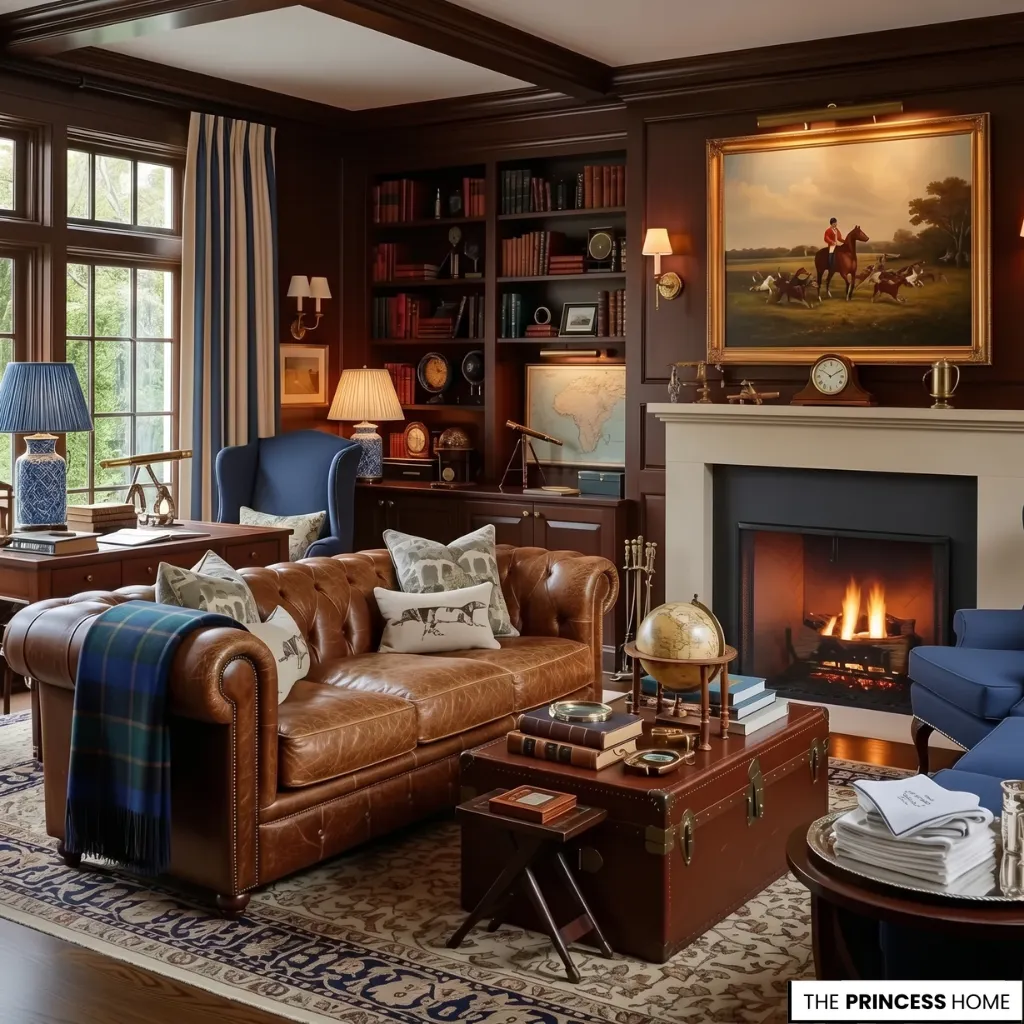
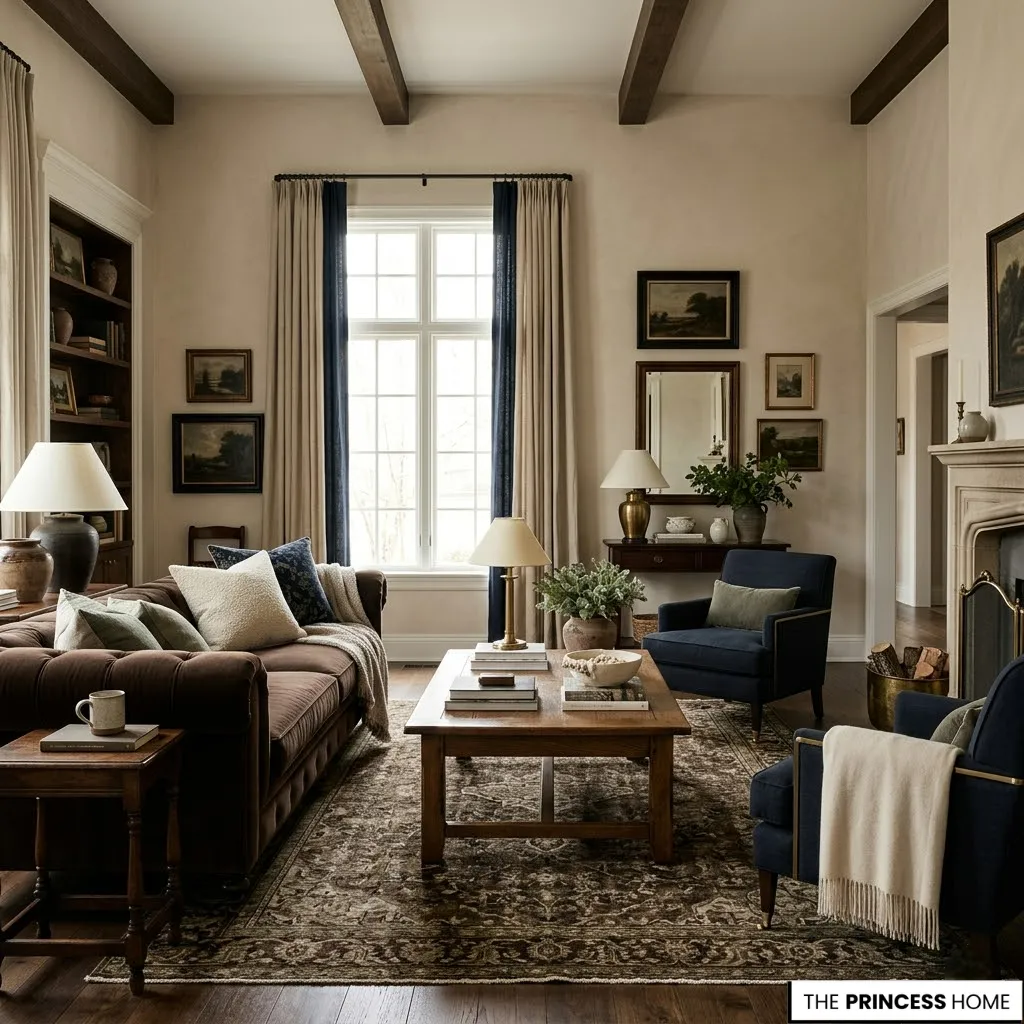
Explore the visual gallery below for inspiring ideas that bring this aesthetic to life in your home.
Watch this inspiring video from The Princess Home for more ideas and a closer look at how this aesthetic can come to life in your home.