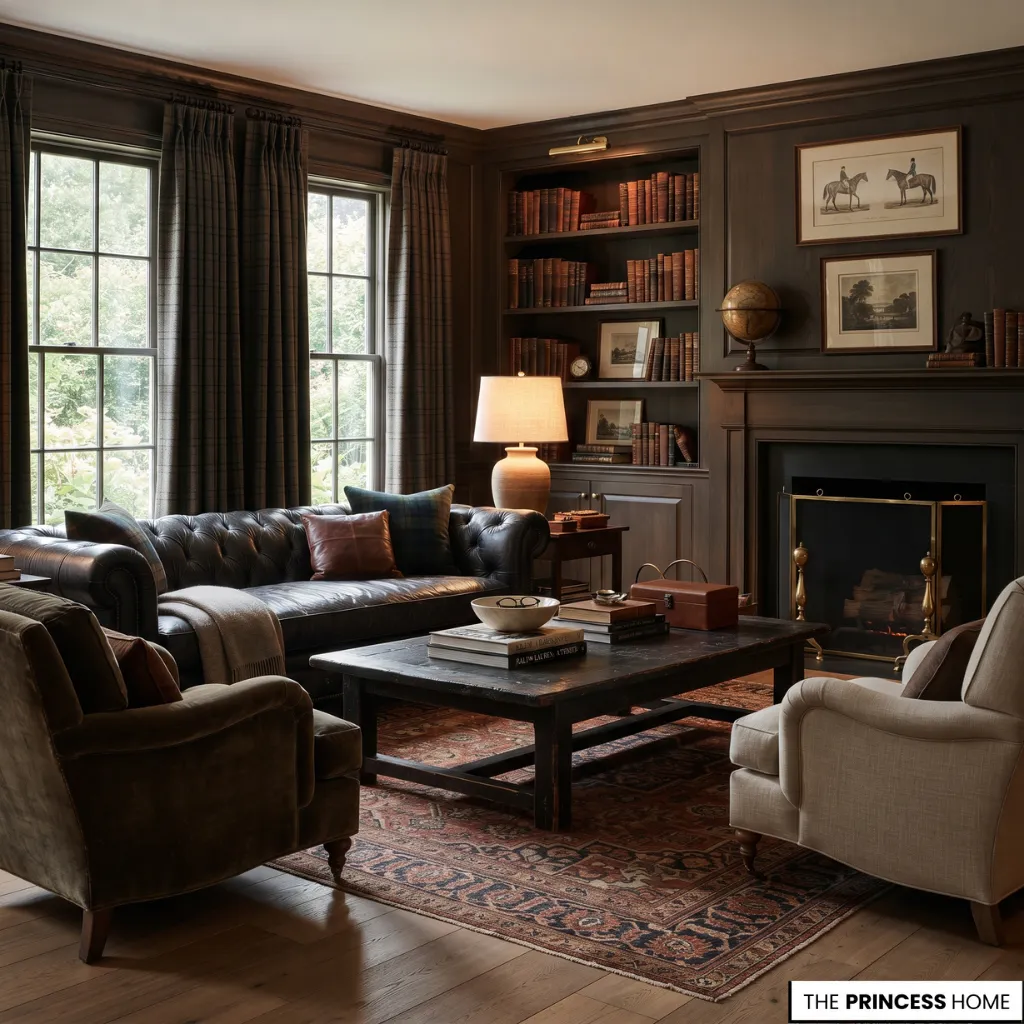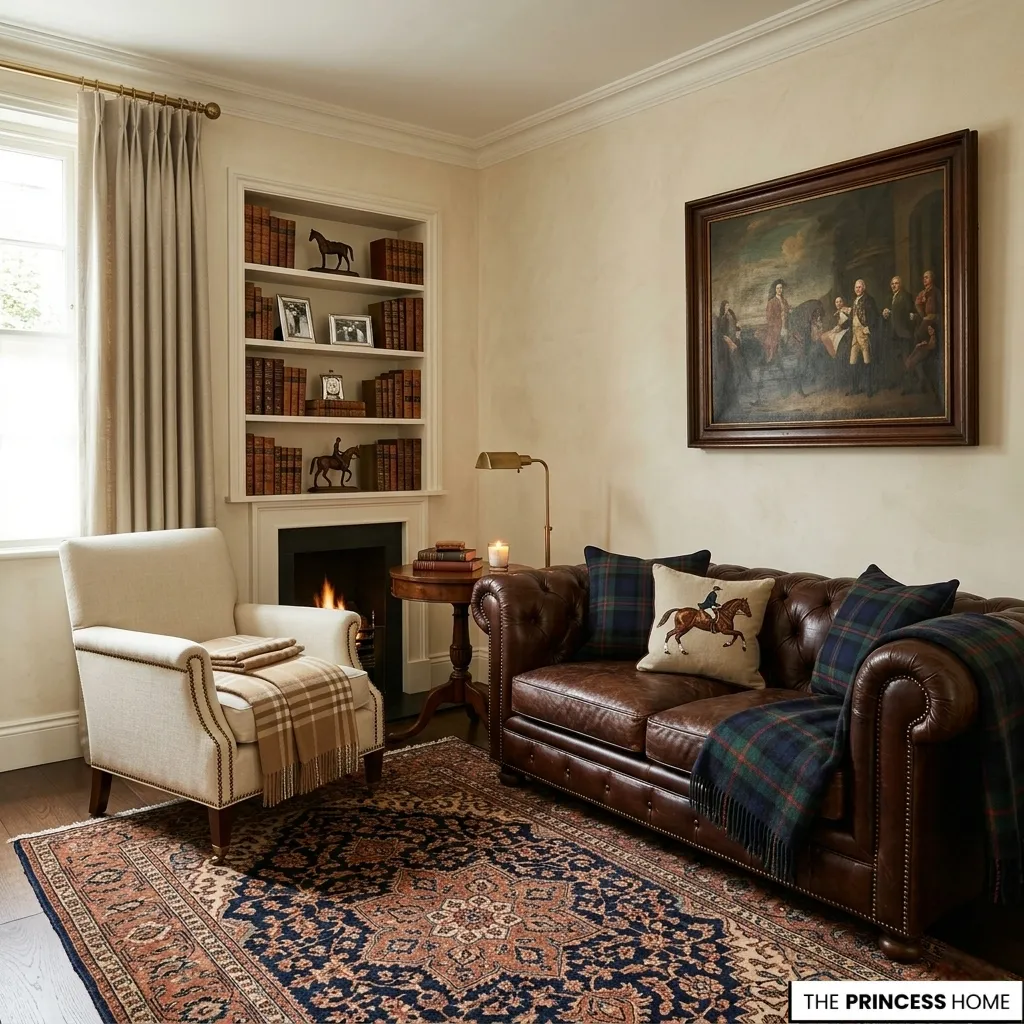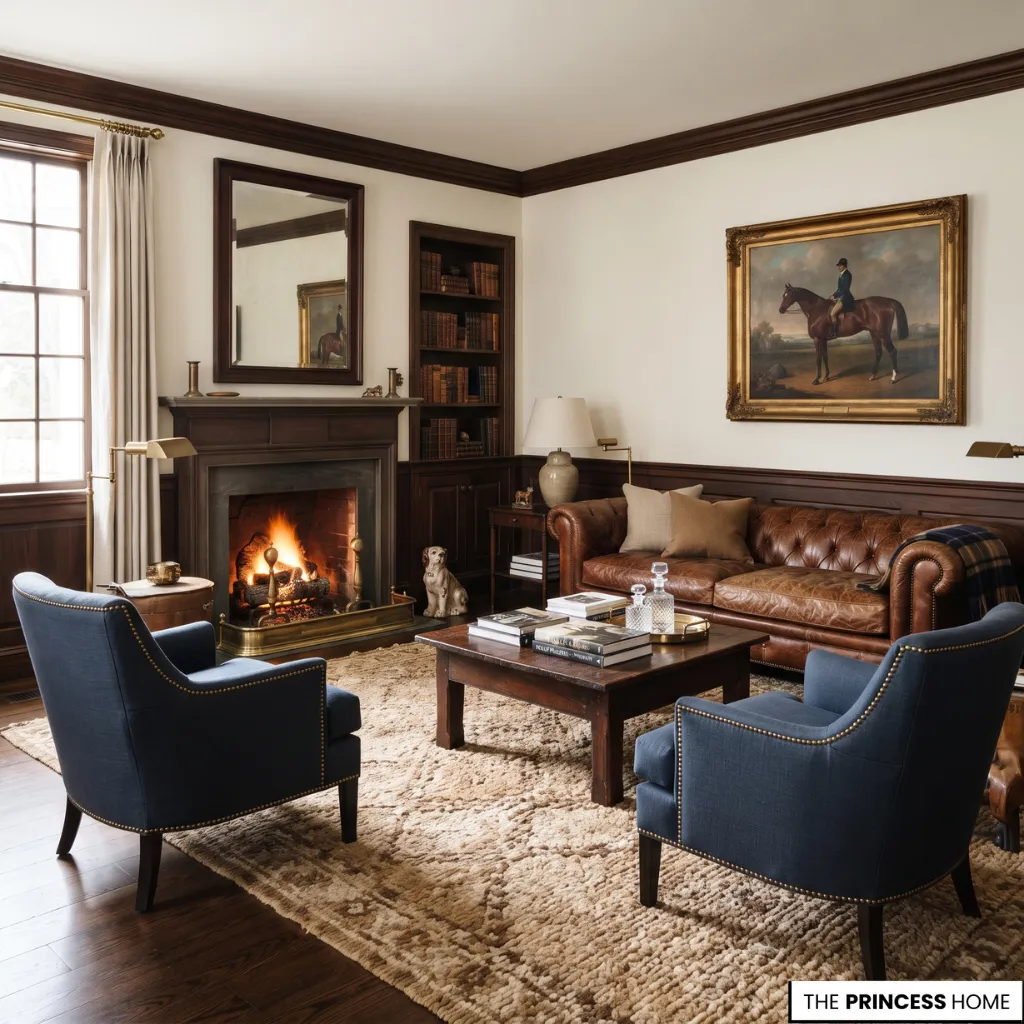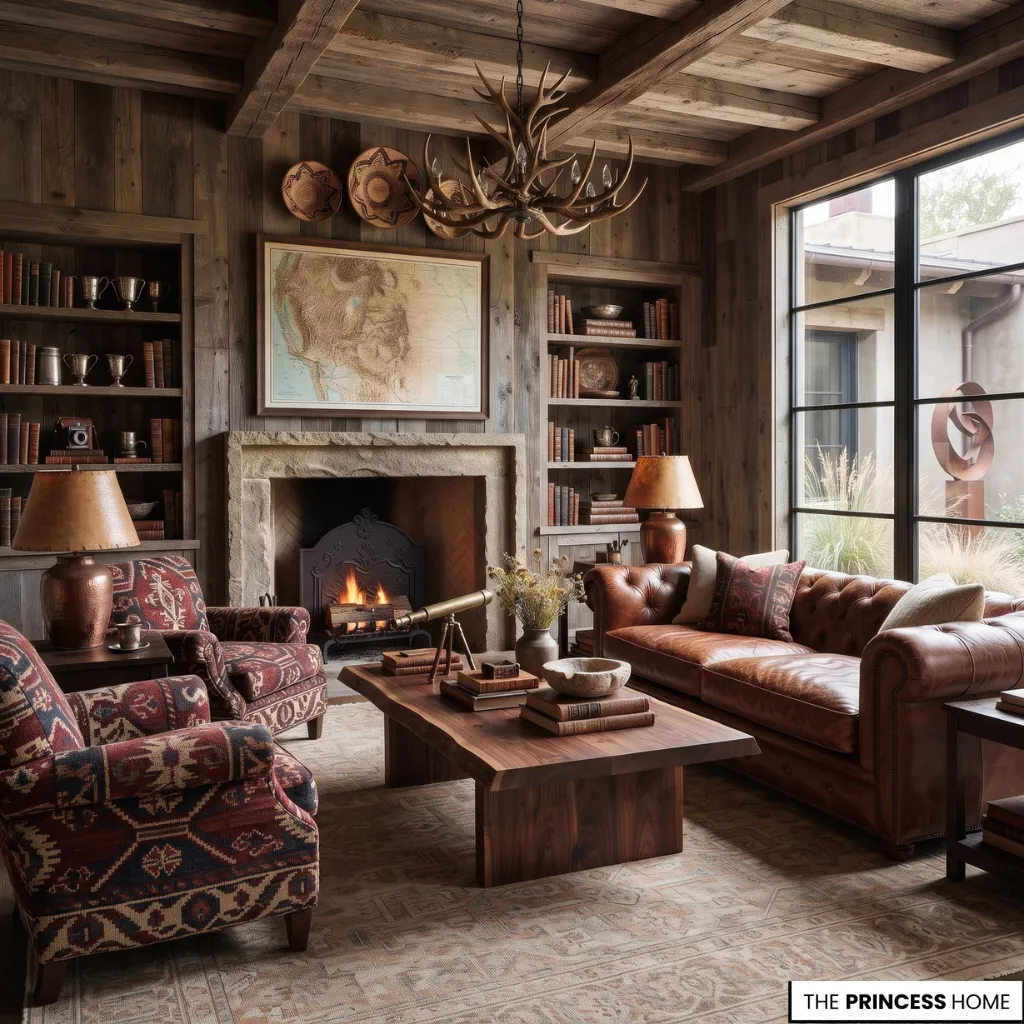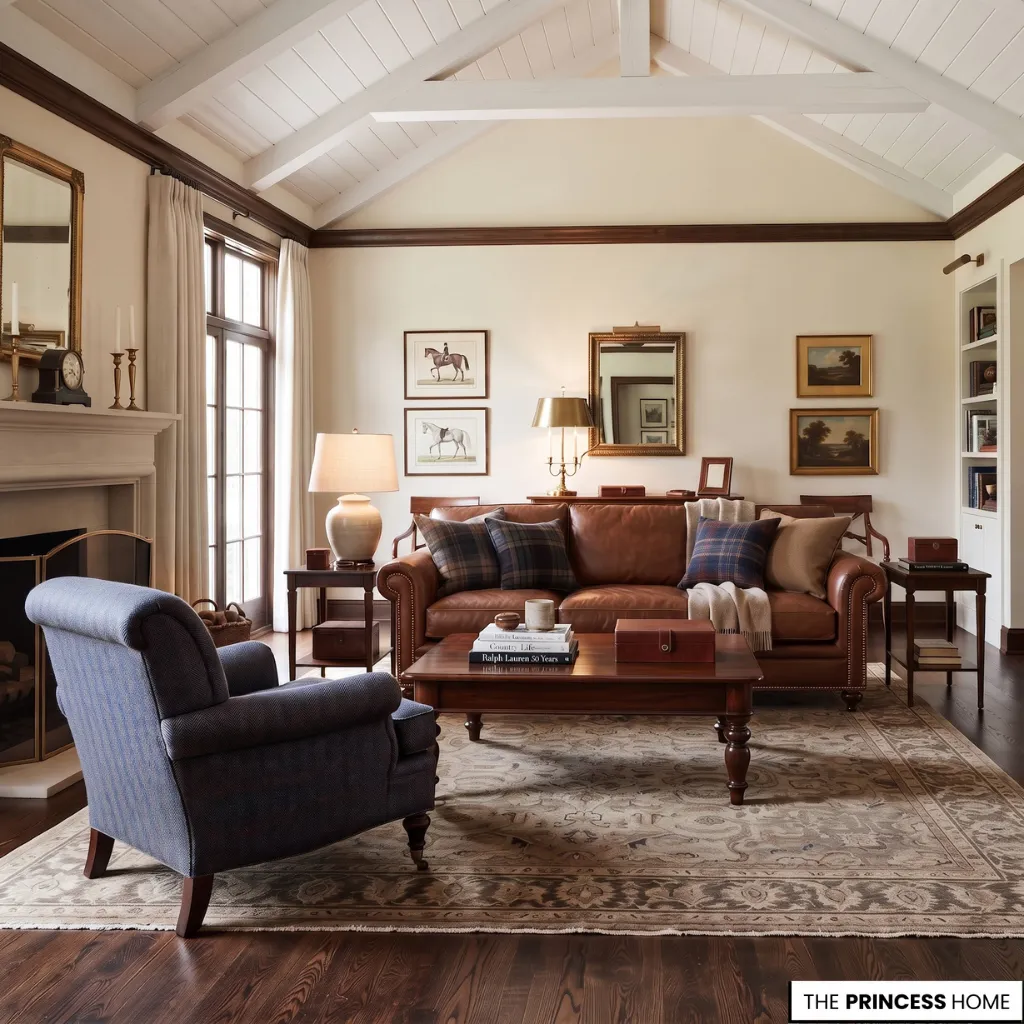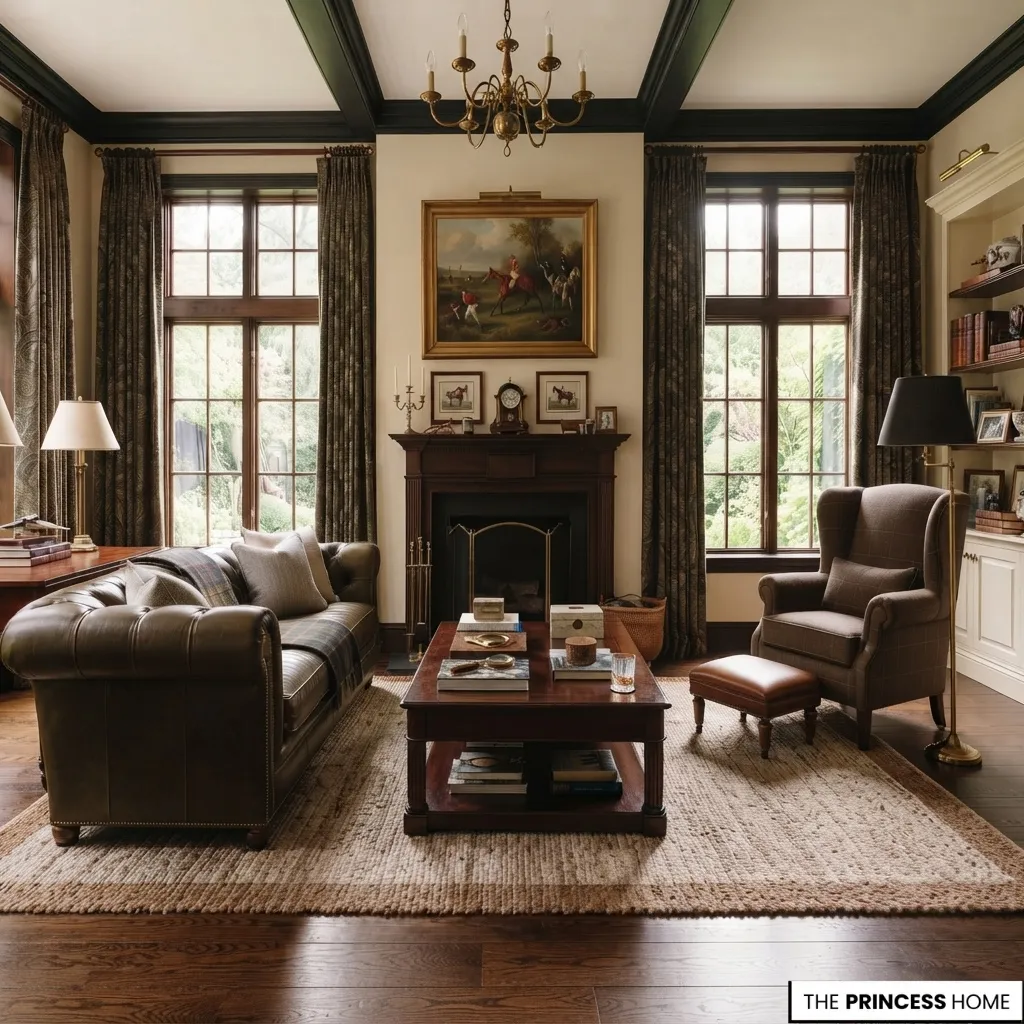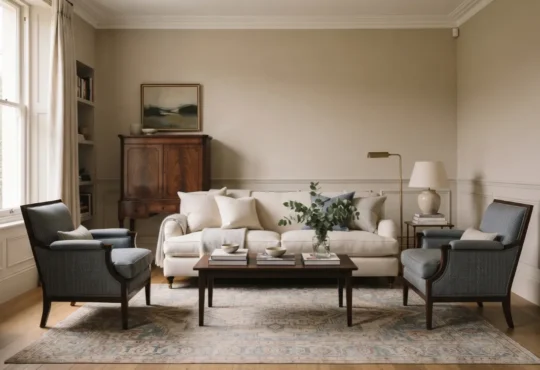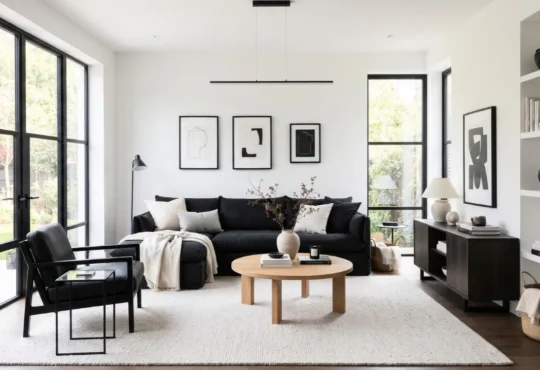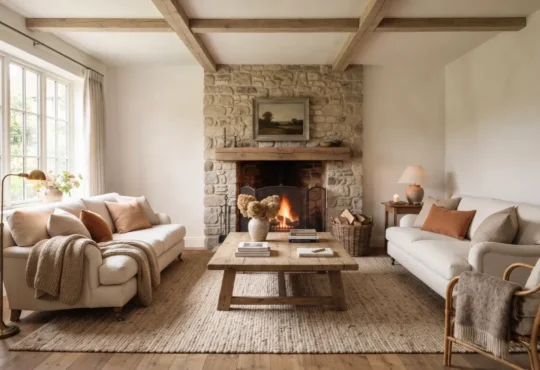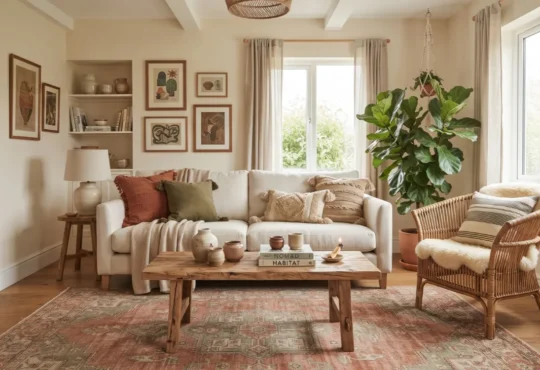
A Ralph Lauren inspired living room combines tailored comfort, substantial furniture, rich materials, controlled color, traditional patterns, and personal character. The challenge is using these elements without making the room feel too dark, heavy, formal, or themed.
Build the room through relationships rather than a checklist of recognizable pieces. Start with the foundation and proportions, then choose furniture, materials, color, pattern, lighting, and personal objects that support the same design language.
Ralph Lauren Style
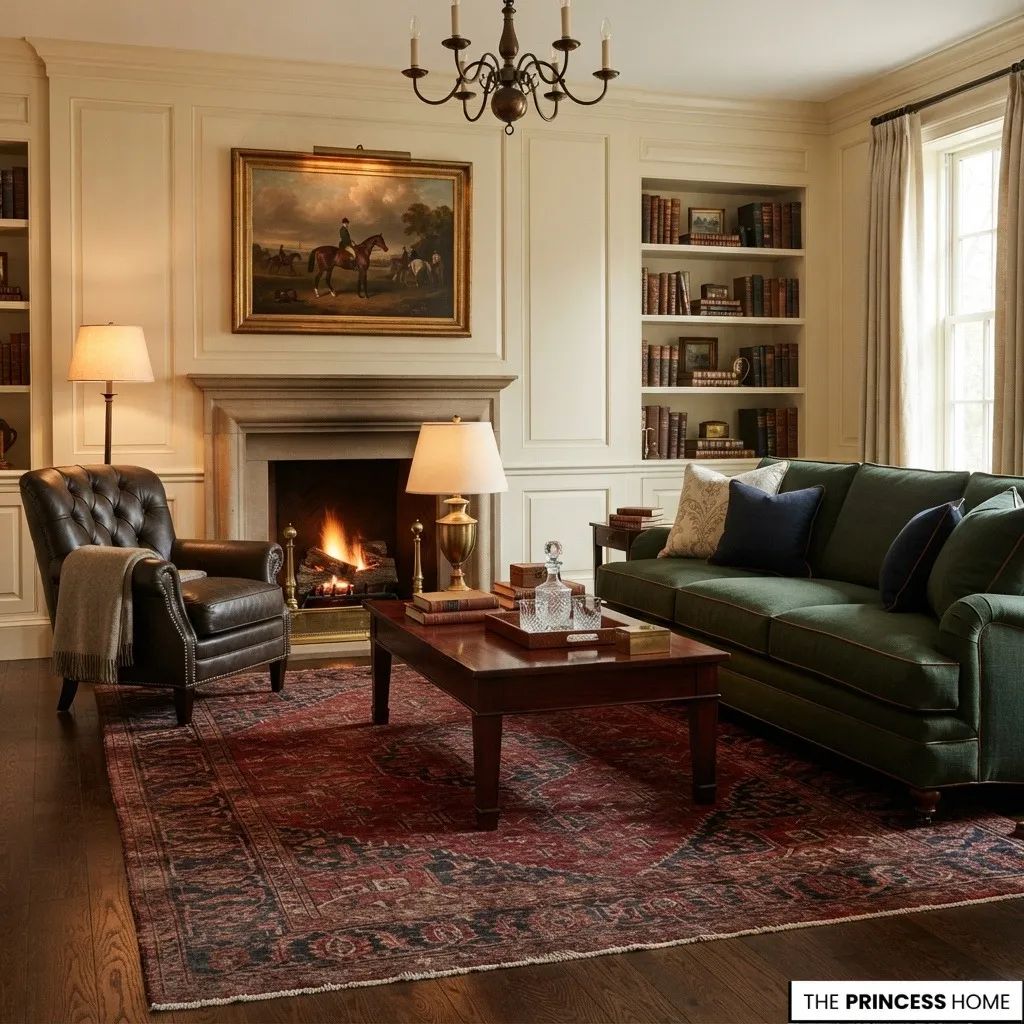
Ralph Lauren’s approach to interiors draws from American heritage, traditional craftsmanship, and English and European references, with different expressions shaped by place and lifestyle. Launched in 1983, Ralph Lauren Home originally introduced four lifestyle worlds:
Thoroughbred, New England, Jamaica, and Log Cabin.Later expressions have included Estate, Island, Western, and Penthouse, showing that the style can take very different forms.
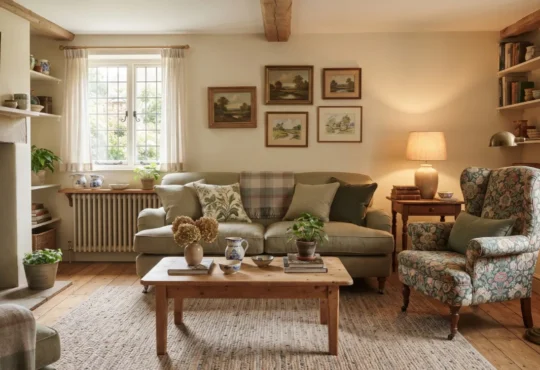
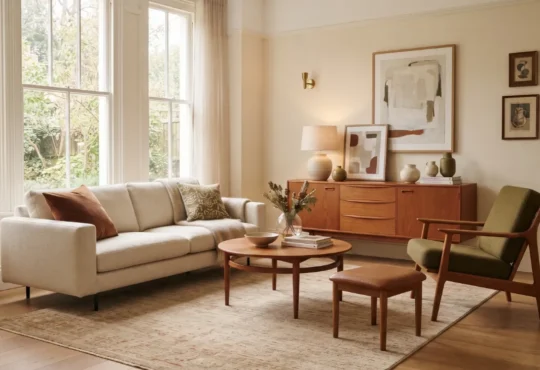
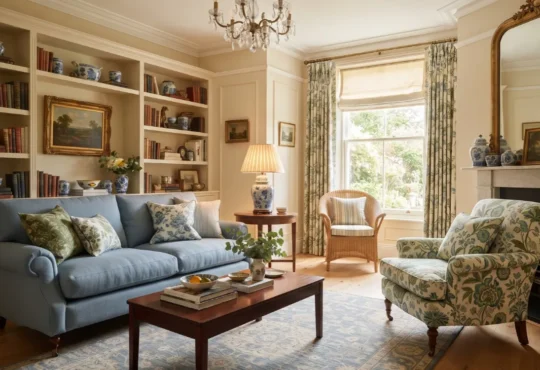
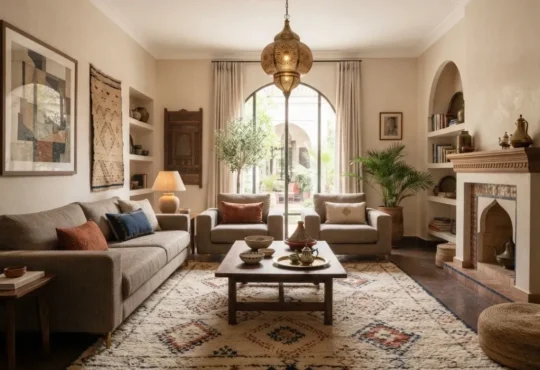
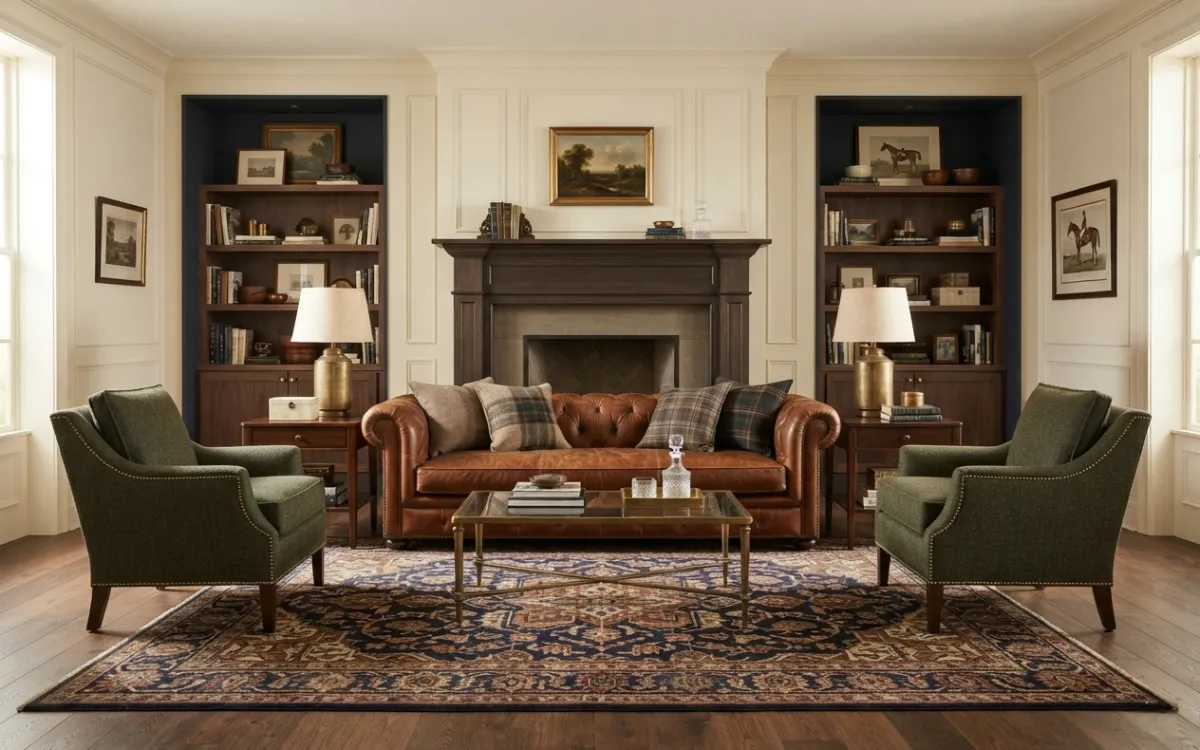
That variety matters when creating a Ralph Lauren inspired living room. There is no single furniture formula or required color palette. A room can lean toward an English-estate character with dark wood and leather, a lighter coastal interpretation with natural textures, a rustic American direction, or a more contemporary expression.
What connects these interpretations is the way the room is composed. Furniture tends to feel substantial and tailored rather than delicate or disposable. Materials have visible character, colors are controlled, traditional patterns are used with restraint, and personal objects keep the room from looking staged.
The goal is not to reproduce a Ralph Lauren showroom. It is to understand the design language well enough to make appropriate decisions for your own living room.
For more ideas: Ralph Lauren Home Decor and the Art of Timeless Americana
Build the Foundation
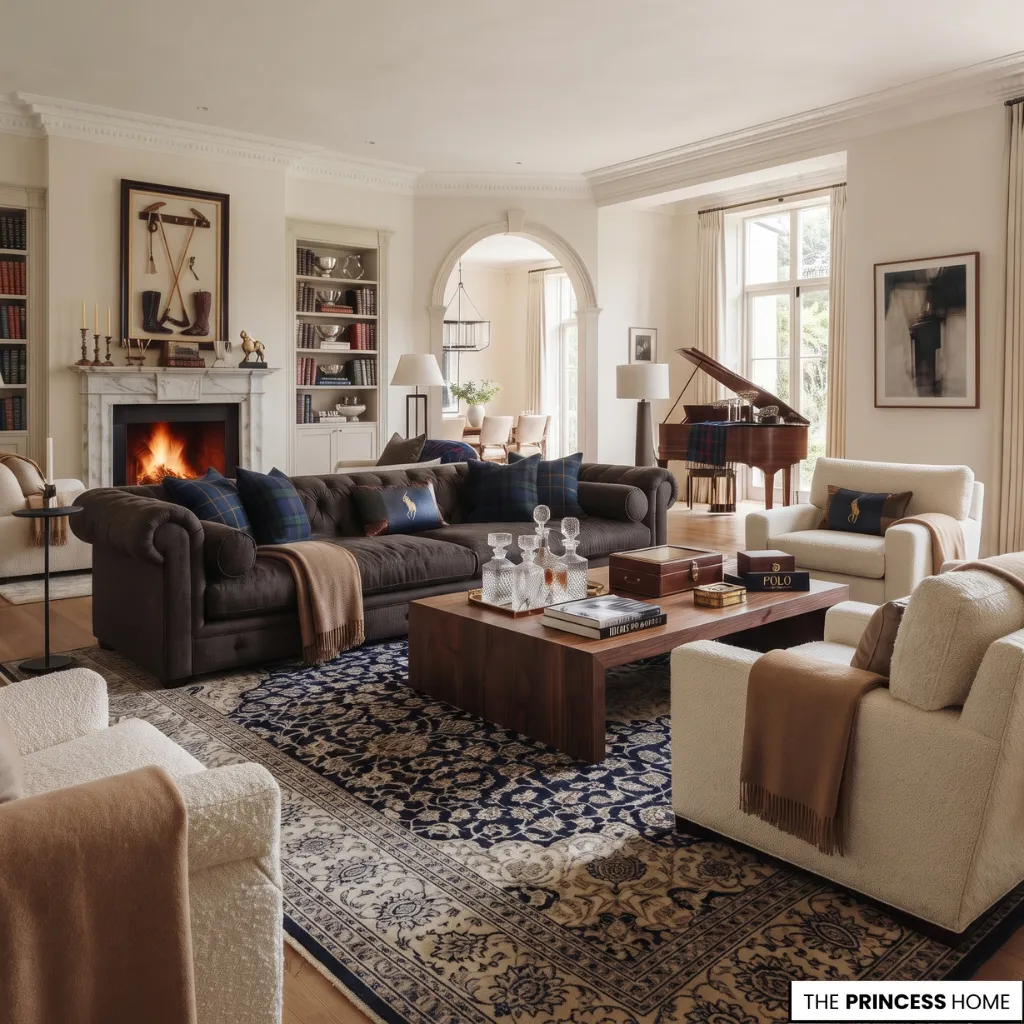
Start with the room itself before choosing decorative details. Identify the strongest architectural feature, establish the main seating arrangement, and decide how people will move through the space. Place the primary seating so it supports conversation rather than simply facing a television or wall.
Use a rug large enough to connect the main furniture pieces when the room allows it. As a practical starting point, the rug should extend far enough under the main seating that the arrangement reads as one connected group rather than separate pieces sitting around a small island of fabric.
Add tables and storage only after the main grouping is working. A useful order is architecture → rug → primary seating → secondary seating → tables and storage → textiles → lighting → art and objects. This keeps accessories from doing the work that furniture and proportion should already be doing.
A substantial room can support deeper furniture, larger rugs, heavier wood, and stronger pattern. A smaller room usually needs fewer major pieces and more visible floor. The goal is not to make every piece smaller, but to reduce the number of competing elements.
Leave practical circulation around the seating area. Roughly 30 to 36 inches can serve as a useful starting point for a main walkway, but the room’s architecture and furniture dimensions should determine the final arrangement.
For more ideas: Ralph Lauren Inspired Living Room Timeless Design Guide
Balance Room Proportions
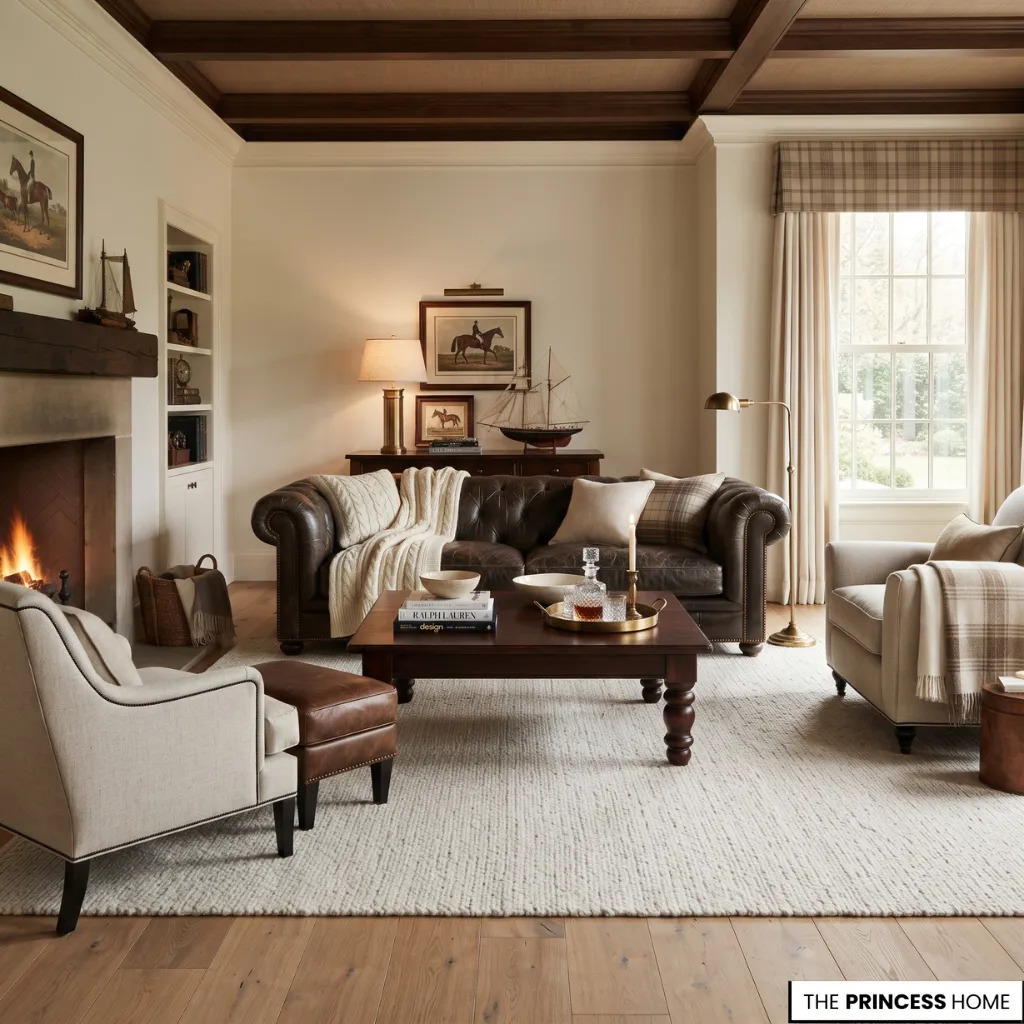
A Ralph Lauren inspired living room can accommodate substantial furniture, but visual weight needs to be distributed carefully.
A dark leather sofa, large wooden table, patterned rug, heavy curtains, and dark cabinetry may each work individually. Used together without enough contrast, they can make the room feel compressed.
Balance heavier elements with lighter ones. A substantial sofa can sit beside a lighter upholstered chair. Dark wood can be paired with a pale rug or warm ivory textiles. Dense pattern can be surrounded by quieter surfaces. Large furniture can be balanced by open floor, windows, or lighter walls.
Think about visual weight, not only physical dimensions. Dark colors, solid shapes, dense fabrics, low furniture, and strong patterns can all make an object appear heavier.
In a large living room, avoid leaving a small collection of furniture floating in an oversized space. The pieces need enough scale to relate to the architecture.
In a small living room, do not fill every corner with miniature traditional furniture. Choose fewer pieces with enough presence to anchor the room, protect circulation, and leave some floor visible.
Tailored Furniture
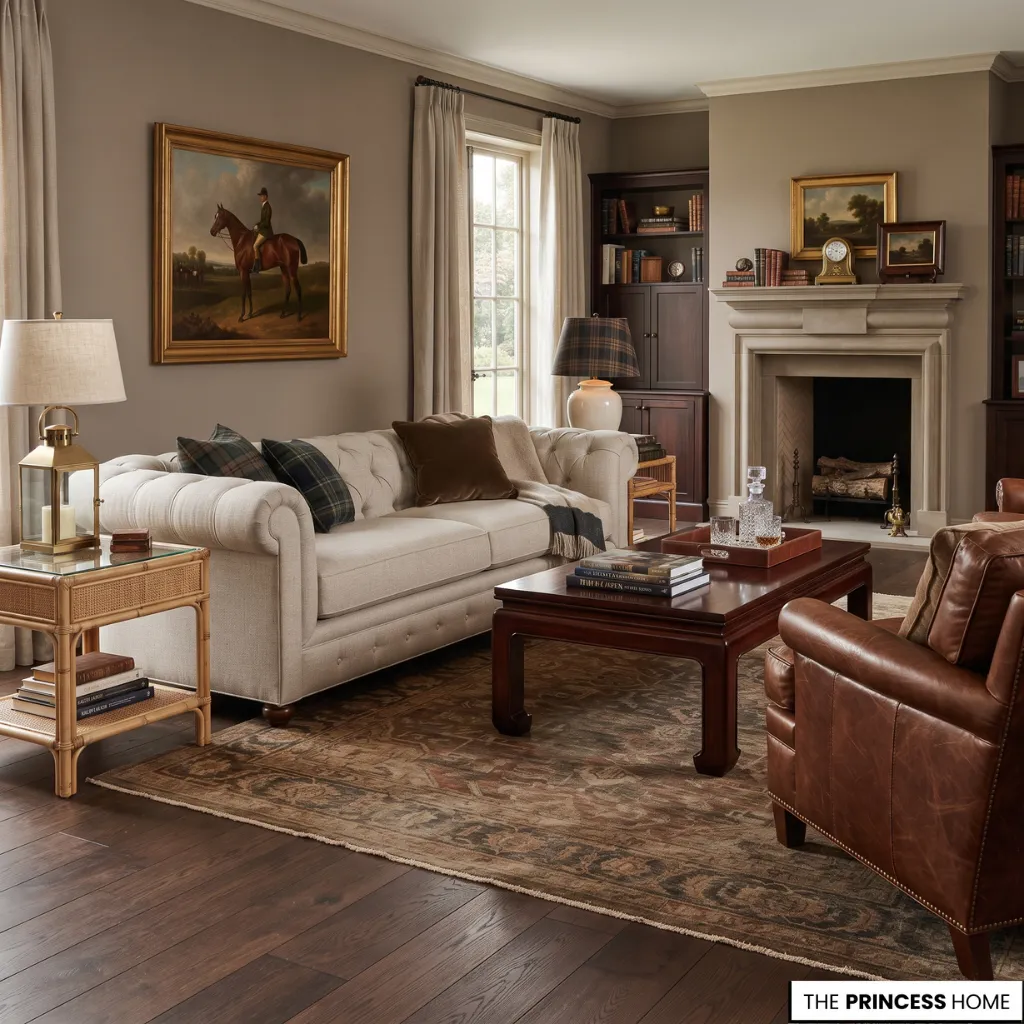
Choose furniture with enough visual presence to anchor the room without making every piece a statement.
A tailored sofa is usually the most important starting point. Club-style seating, rolled arms, tufting, structured upholstery, or a simpler classic profile can all work. What matters is that the shape feels substantial, comfortable, and considered rather than overly delicate or trend-driven.
Leather is useful when you want a stronger heritage or equestrian influence, but it is not mandatory. Linen, cotton, velvet, wool upholstery, and other durable fabrics can support the same design language when their texture and scale are appropriate.
Use secondary seating to introduce controlled contrast. A leather sofa can work with a fabric armchair, while a structured upholstered sofa can be paired with a more relaxed chair. The pieces should relate without becoming a matching set.
Choose tables for proportion as much as finish. Rich wood can provide a strong anchor, while glass or a lighter material can keep substantial upholstery from becoming too dense. A coffee table should relate comfortably to the seating around it rather than leave excessive gaps or block movement, while side tables should sit close enough to the chairs or sofa to be genuinely useful without crowding the seating area.
For a smaller living room, look for the same qualities at a more appropriate scale. A shallower sofa, a chair with visible legs, and fewer occasional tables can preserve the character without blocking movement.
If the budget does not allow for an expensive statement piece, prioritize scale and overall shape first, then look for durable construction and compatible materials. Decorative details can come later. A less expensive piece that belongs to the same design language is more useful than an unrelated piece chosen only because it is cheaper.
For more ideas: Ralph Lauren Style on a Budget Timeless Luxury for Less
Layer Rich Materials
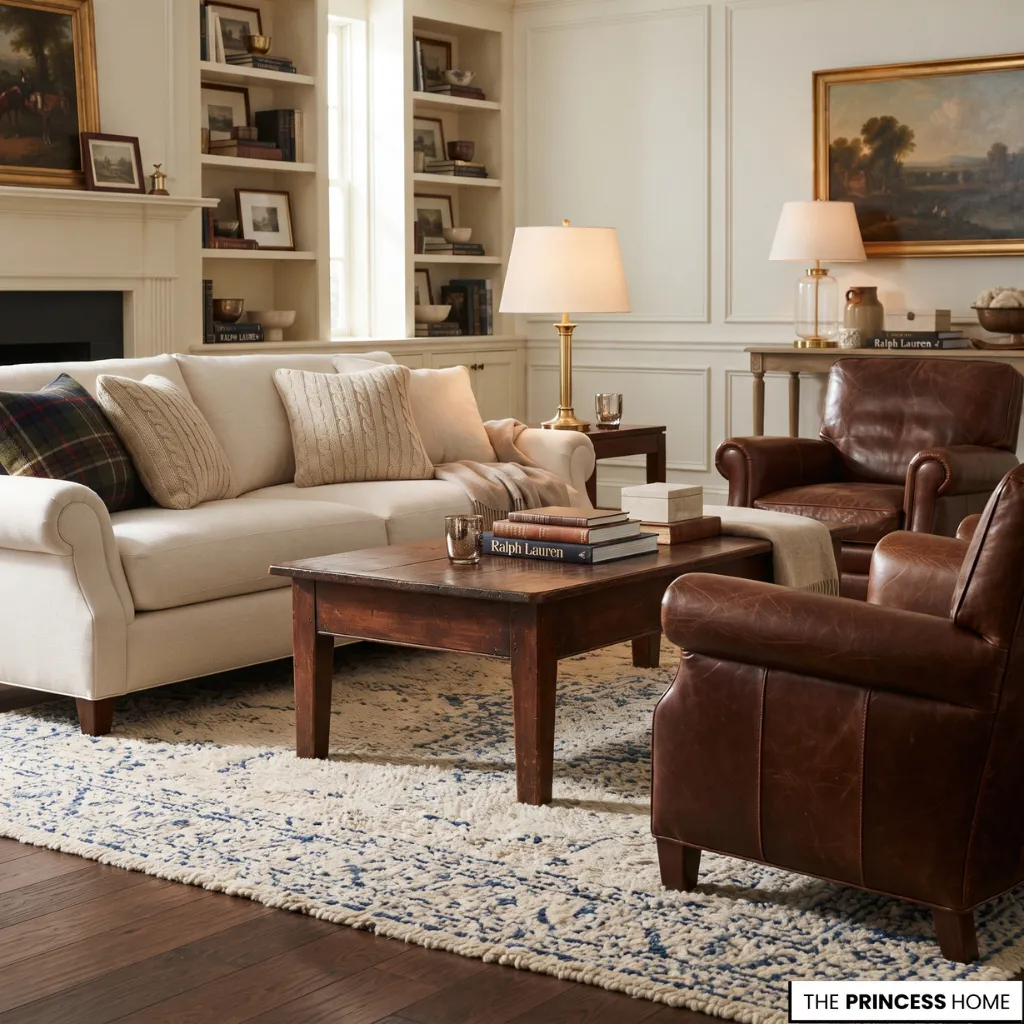
Use materials to create contrast rather than collecting every traditional material in one room. Leather, rich wood, wool, linen, velvet, brass, bronze, glass, and natural woven materials can all contribute to a Ralph Lauren inspired interior. Their value comes from how they interact.
Pair smooth leather with a textured wool rug. Place soft linen or cotton upholstery against polished or aged wood. Use a small amount of warm metal around darker furniture. Introduce glass or crystal where a reflective surface can lighten a composition.
The same material can also appear at different levels of intensity. Several wood pieces can belong to the same family without having identical finishes. Brass can recur through a lamp, picture frame, or hardware without becoming the finish of every object.
Avoid making every surface rich at the same time. If the sofa is dark leather, the rug does not also need to be dark and heavily patterned. If the furniture is visually substantial, lighter textiles can provide relief. The aim is material contrast with enough quiet surfaces for each material to remain distinct.
For more ideas: Modern Ralph Lauren Interiors Design Ideas for Apartments
Use Ralph Lauren Colors
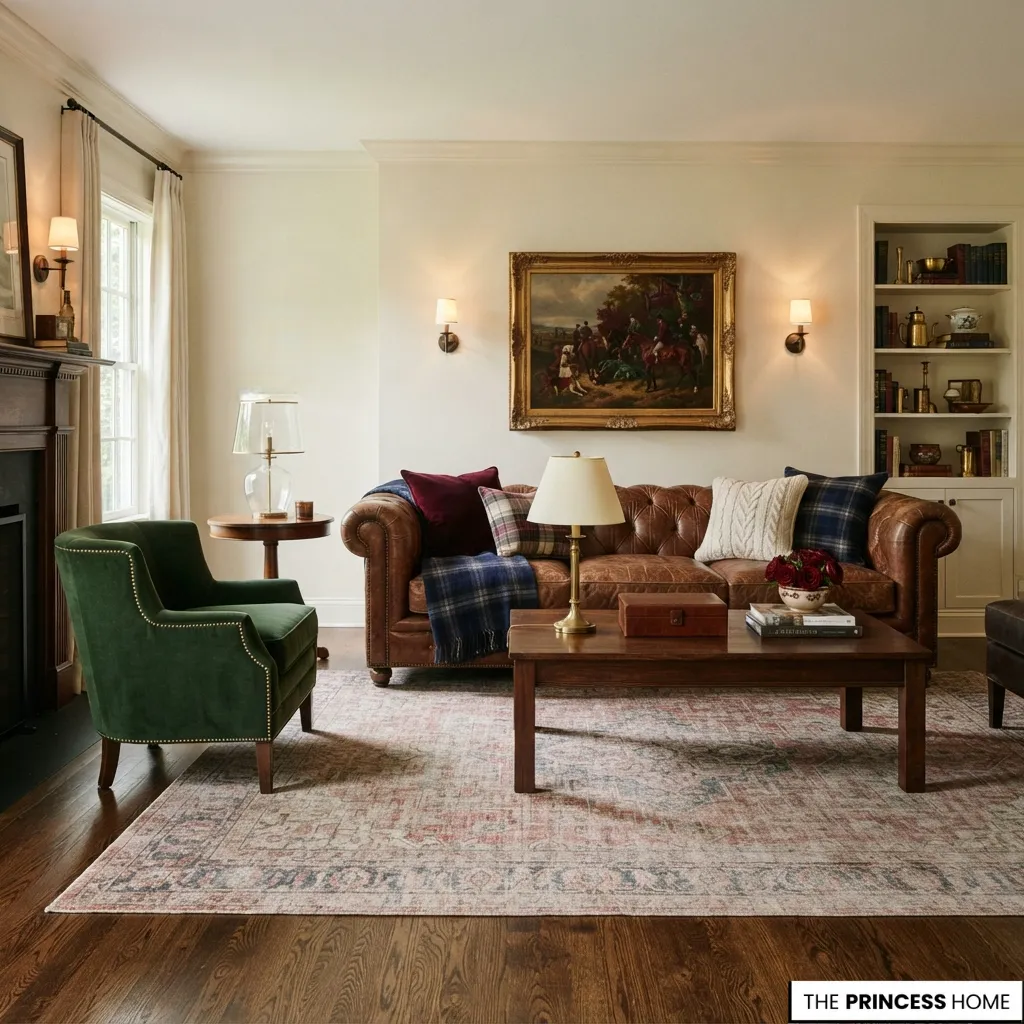
Build the palette around a few connected colors rather than trying to reproduce every color associated with Ralph Lauren interiors.
Deep navy, heritage green, burgundy, camel, cognac, tobacco, chocolate brown, warm ivory, cream, and muted neutrals can all work within different interpretations of the style. Treat them as options rather than a formula that requires every color.
Start with the largest surfaces. Walls, sofa upholstery, flooring, and the main rug establish most of the visual field. Add secondary colors through chairs, curtains, cushions, artwork, and smaller objects.
A useful structure is dominant field → secondary connection → concentrated accent.
For example, warm ivory walls can support a brown leather sofa, muted patterned rug, deep green chair, and small burgundy accents. A room with navy walls may instead need more warm wood and lighter textiles to keep the composition from becoming too heavy.
Dark walls are not required. If the architecture is already light, preserve that quality and introduce the Ralph Lauren character through furniture, wood, textiles, pattern, and lighting.
Repeat colors without repeating them everywhere. A deep green might appear in an armchair, artwork, and one or two textiles rather than covering every surface.
For more ideas: Ralph Lauren Summer Style for Elegant Seasonal Living
Control Pattern and Light
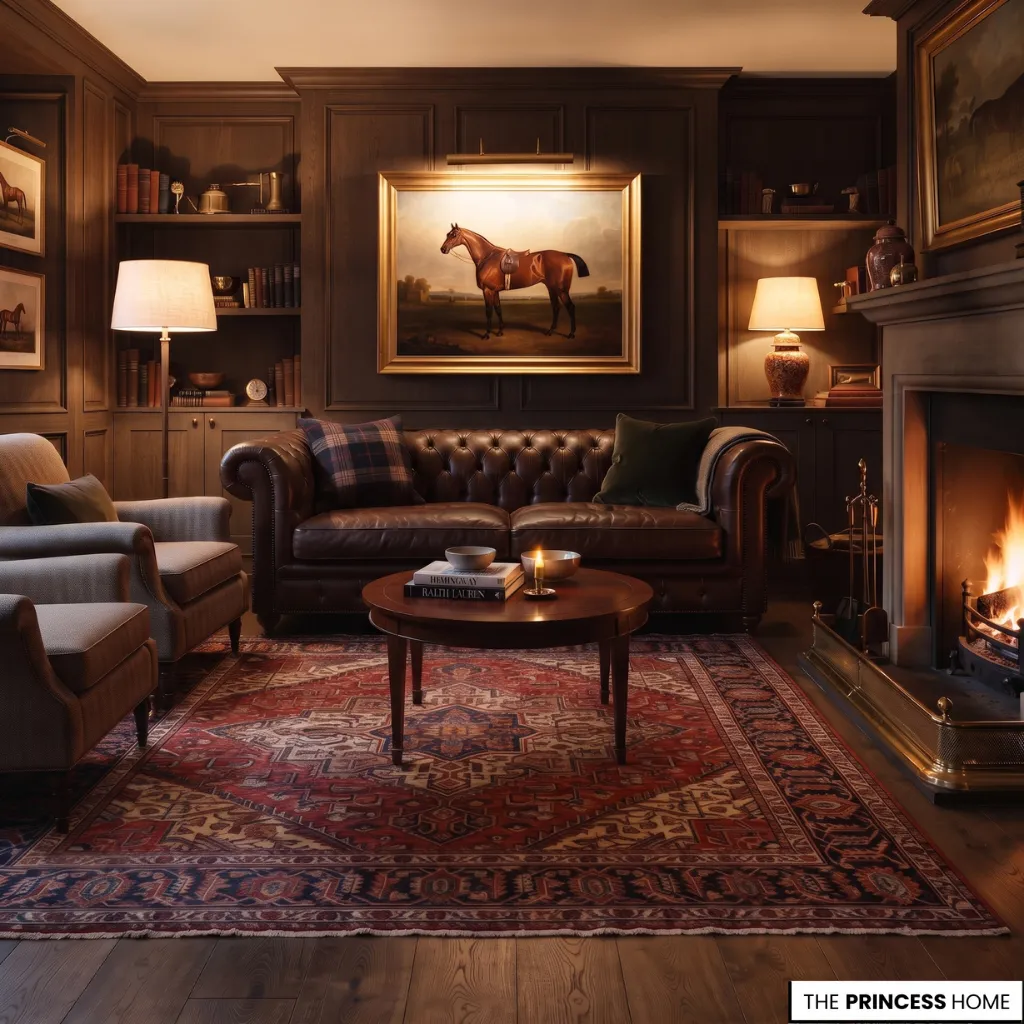
Use pattern with hierarchy. Choose one pattern strong enough to establish character, then support it with quieter motifs and solid surfaces. Plaid, tartan, stripes, checks, florals, and traditional rug patterns can all work, but they should not compete at the same scale and intensity.
A large patterned rug can become the main visual pattern while cushions remain simpler. Alternatively, a patterned chair can carry the strongest motif while the rug and sofa provide quieter surfaces.
Vary pattern scale as you layer. A large check beside a fine stripe is easier to control than several equally strong checks competing around the room.
Lighting requires the same kind of control. Use ambient lighting for general illumination, task lighting where reading or other activities take place, and accent lighting to draw attention to artwork or architectural features.
Table lamps, floor lamps, sconces, and picture lights can all contribute. Warm residential light is a useful starting point; around 2700K can work well for many living rooms. This is a practical lighting reference, not a Ralph Lauren rule.
Choose lamp materials and shapes that support the room. Brass, ceramic, wood, or aged finishes can work with linen or pleated shades, while picture lights can reinforce artwork without adding another large decorative object.
For more ideas: Ralph Lauren Bedroom Ideas for Timeless Heritage Luxury
Create Collected Rooms
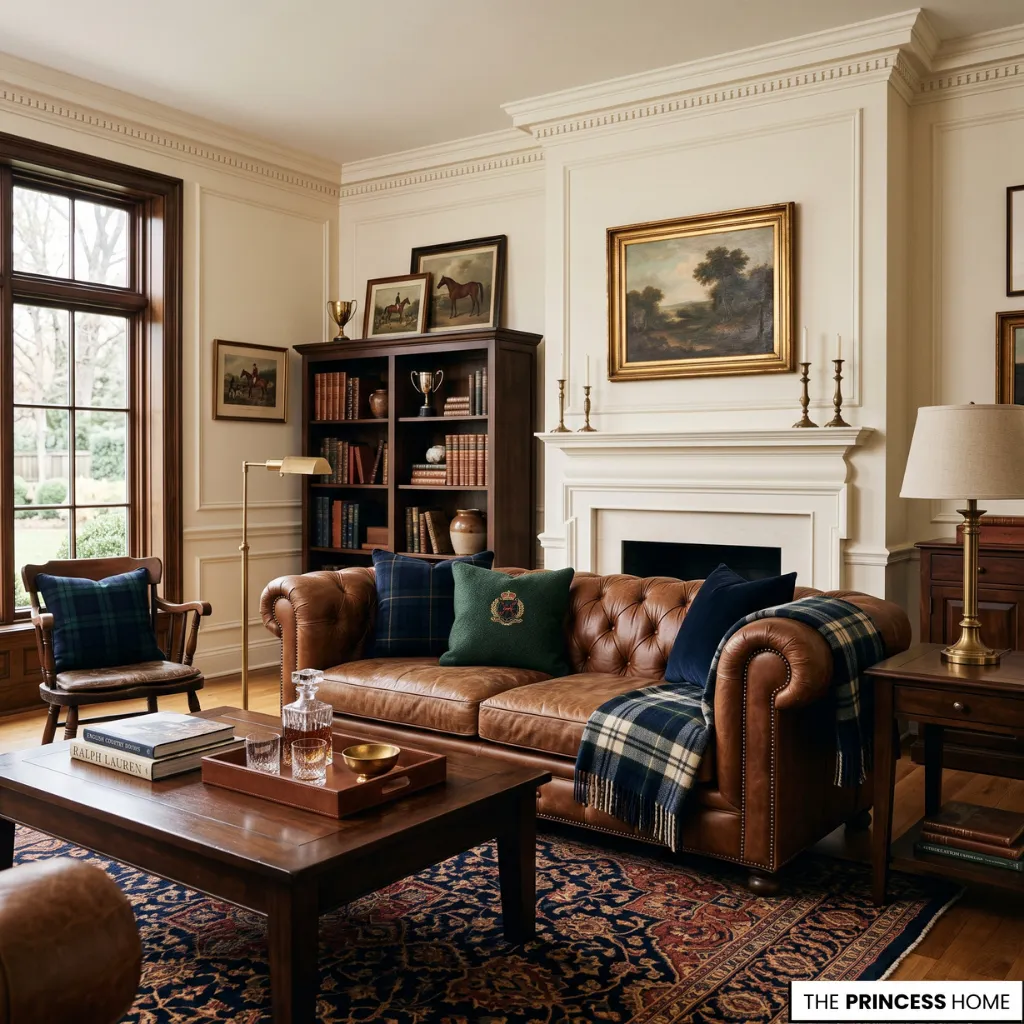
A collected room develops character through objects that have meaning, use, history, or visual value. This keeps a Ralph Lauren inspired living room from looking like a themed showroom.
Add books, artwork, inherited pieces, vintage finds, travel objects, useful objects, and personal collections where they genuinely belong. The room does not need to look old. New furniture can sit comfortably beside older or more personal pieces when their proportions and materials relate.
Repeat qualities rather than identical objects. A warm metal finish can appear on a lamp and picture frame without being repeated across every accessory. Dark wood can recur in the coffee table and a smaller cabinet without creating a matching furniture set. A color can appear in artwork, upholstery, and textiles at different strengths.
Keep the collection edited. An object should contribute through function, memory, texture, scale, or visual interest. More objects do not automatically create more character.
Build the personal layer gradually. Start with the pieces you genuinely want to live with, then allow the room to develop instead of buying a complete collection at once.
For more ideas: Ralph Lauren Dining Room Style: How to Achieve Timeless Luxury at Home
Adapt the Style
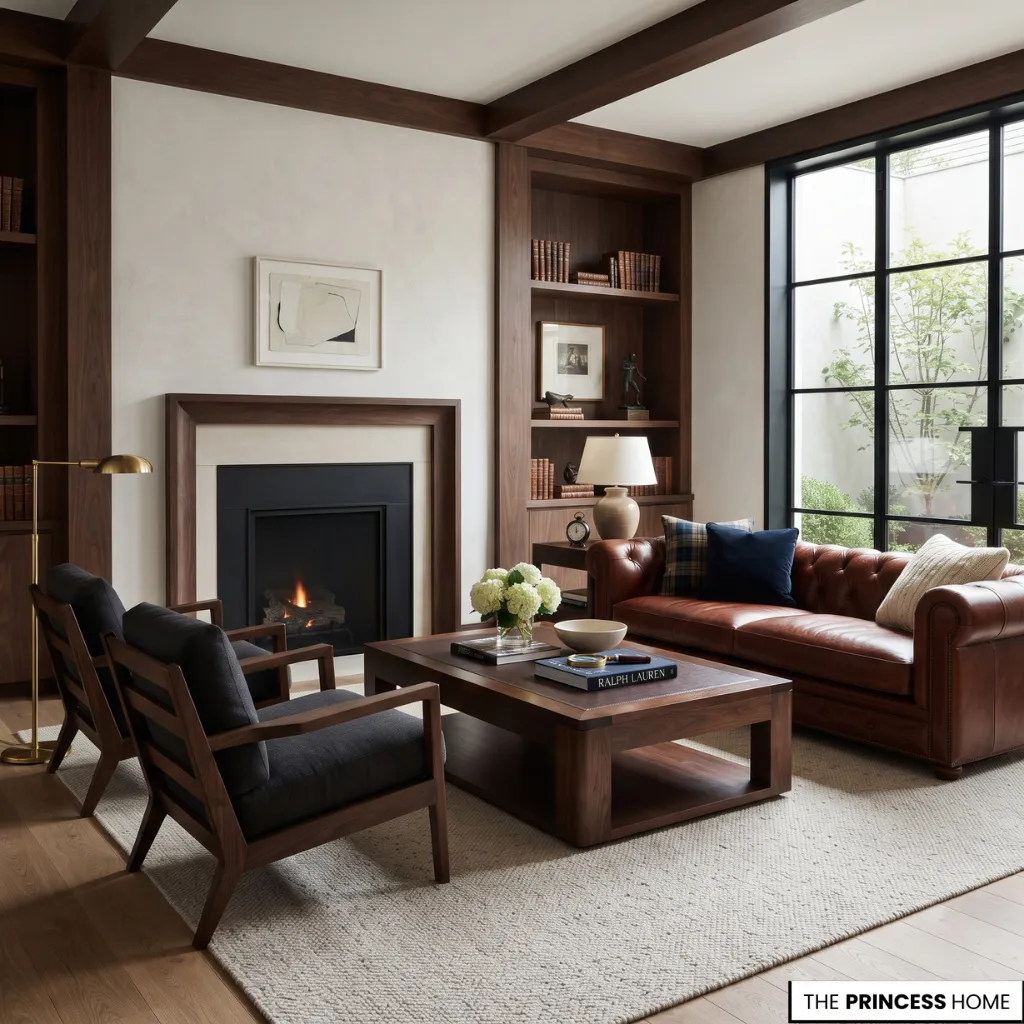
The Ralph Lauren design language can work in different architectural settings because its principles are more adaptable than any single furniture arrangement.
In a traditional living room, architectural details can support richer wood, classic upholstery, heritage patterns, and stronger traditional references. Let the architecture carry some of the character instead of adding decoration to every surface.
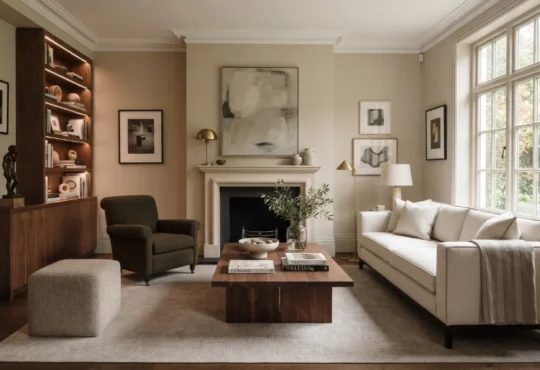
In a contemporary room, keep the modern architecture visible. Use fewer traditional decorative pieces and introduce the character through substantial furniture, rich materials, controlled color, artwork, and warm lighting. A simpler contemporary sofa can work if the surrounding materials and proportions carry the same sense of tailored comfort.
In a small living room, reduce quantity before reducing quality. Use fewer major furniture pieces, choose an appropriate scale, protect circulation, and leave some floor visible. One strong chair is often more useful than several small decorative seats.
In a rental, concentrate on reversible elements such as furniture, rugs, lamps, artwork, curtains, and textiles. You can establish much of the design language without changing the architecture. When the budget is limited, prioritize spending in this order:
Foundation → Main Seating → Rug & Wood Anchor → Distributed Lighting → Textiles → Decorative Narrative This sequence protects the decisions that have the greatest effect on the room. It is a practical starting point, not a universal financial rule.
If a defining architectural feature is unavailable, do not replace it with unrelated decoration. Instead, create a strong focal relationship through furniture, artwork, lighting, or material contrast.
For example, a substantial sofa can be anchored by a distinctive rug and artwork, while a well-placed lamp or picture light can give the composition a clear visual center. The aim is to create a relationship between a few strong elements rather than imitate an architectural feature that is not there.
The same principle applies to expensive antiques and specialty pieces. You do not need to replace them with cheap imitations. One character-rich vintage piece can provide history while simpler, well-chosen pieces handle the rest of the room.
For more ideas: Small Ralph Lauren Outdoor Decor Ideas for Timeless Spaces
Avoid Common Mistakes
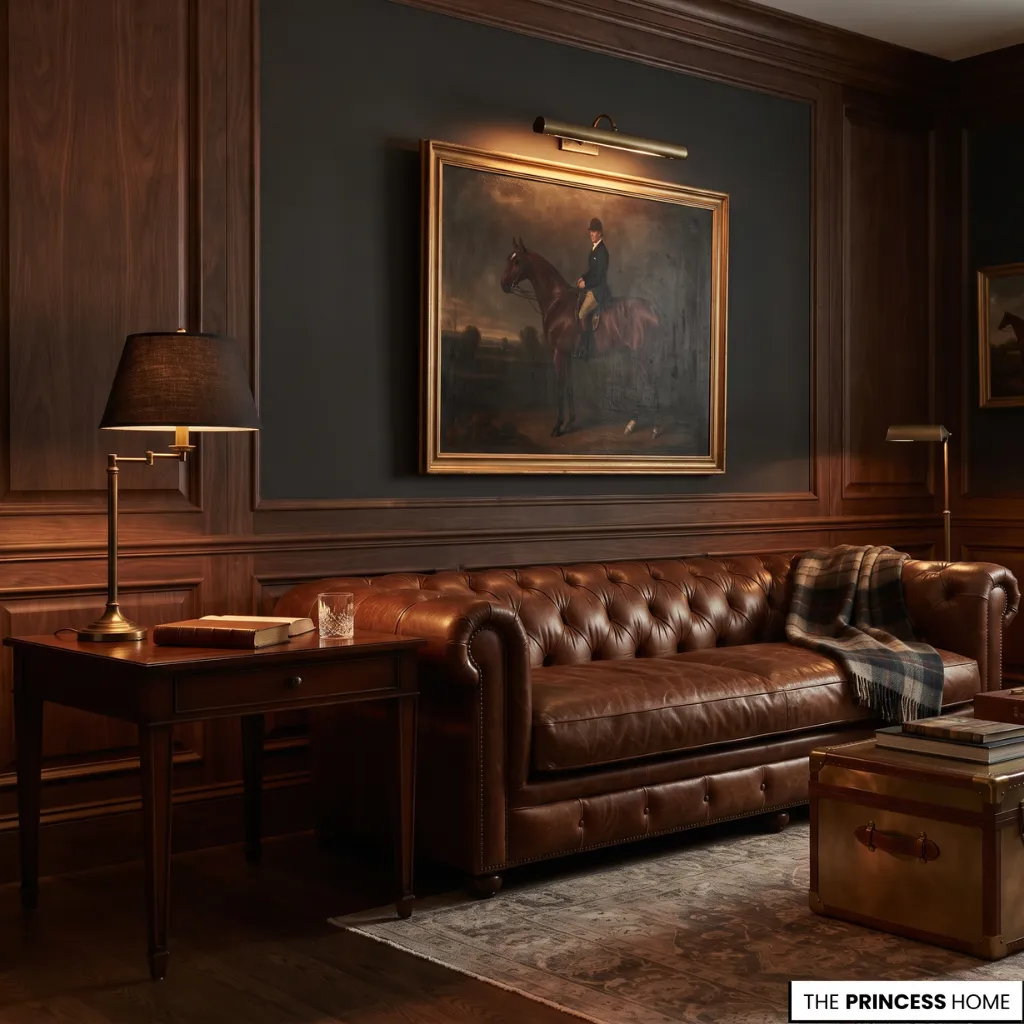
A Ralph Lauren inspired living room can lose its character when recognizable elements are used without enough control. The most useful corrections are usually about proportion, quantity, and hierarchy.
Making everything dark. Dark wood, leather, walls, rugs, and textiles can become too much when they occupy the entire room. Keep some surfaces lighter through warm ivory, cream, lighter upholstery, open floor, daylight, or reflective materials.
Making the room too themed. Repeated equestrian, hunting, nautical, Western, or heritage references can turn an inspired room into a decorative theme. Choose one or two references and let the rest of the room remain residential and personal.
Matching everything. A complete furniture set or identical finishes can remove the collected quality that makes the style interesting. Coordinate through color, proportion, material, and visual weight rather than matching every piece.
Using too much pattern. Several strong plaids, florals, stripes, and checks can compete for attention. Establish a pattern hierarchy and let one pattern lead while the others become quieter supporting elements.
Making the room too formal. Traditional furniture can become stiff when every piece is highly structured and decorative. Introduce comfortable upholstery, softer textiles, practical lighting, and objects that show the room is actually lived in.
Filling every surface. A collection becomes clutter when every table, shelf, and corner has been given an object. Remove pieces that do not contribute function, memory, texture, scale, or visual interest.
Making the room too generic. A brown sofa, wood table, beige rug, and a few books can produce a pleasant room without creating a distinct Ralph Lauren inspired character. Strengthen the relationships between tailored furniture, material contrast, controlled color, pattern, warm lighting, and personal objects.
Shrinking everything in a small room. Replacing every substantial piece with a tiny version can make the room feel disconnected and under-furnished. Keep one or two pieces with enough presence to anchor the space, then reduce the number of supporting pieces.
For more ideas: Ralph Lauren Bathroom Decor Ideas for Timeless Luxury Interiors
Conclusion
A successful Ralph Lauren inspired living room does not depend on a particular sofa, wall color, or collection of accessories. It depends on proportion, tailored comfort, material contrast, controlled pattern, warm light, and objects that make the room personal.
You can recognize the design language when these elements work together as a coherent whole, even when the room contains no Ralph Lauren branded piece. Choose the strongest elements first, let them support one another, and leave enough restraint for the room to feel lived in rather than staged.
Explore the visual gallery below for inspiring ideas that bring this aesthetic to life in your home.